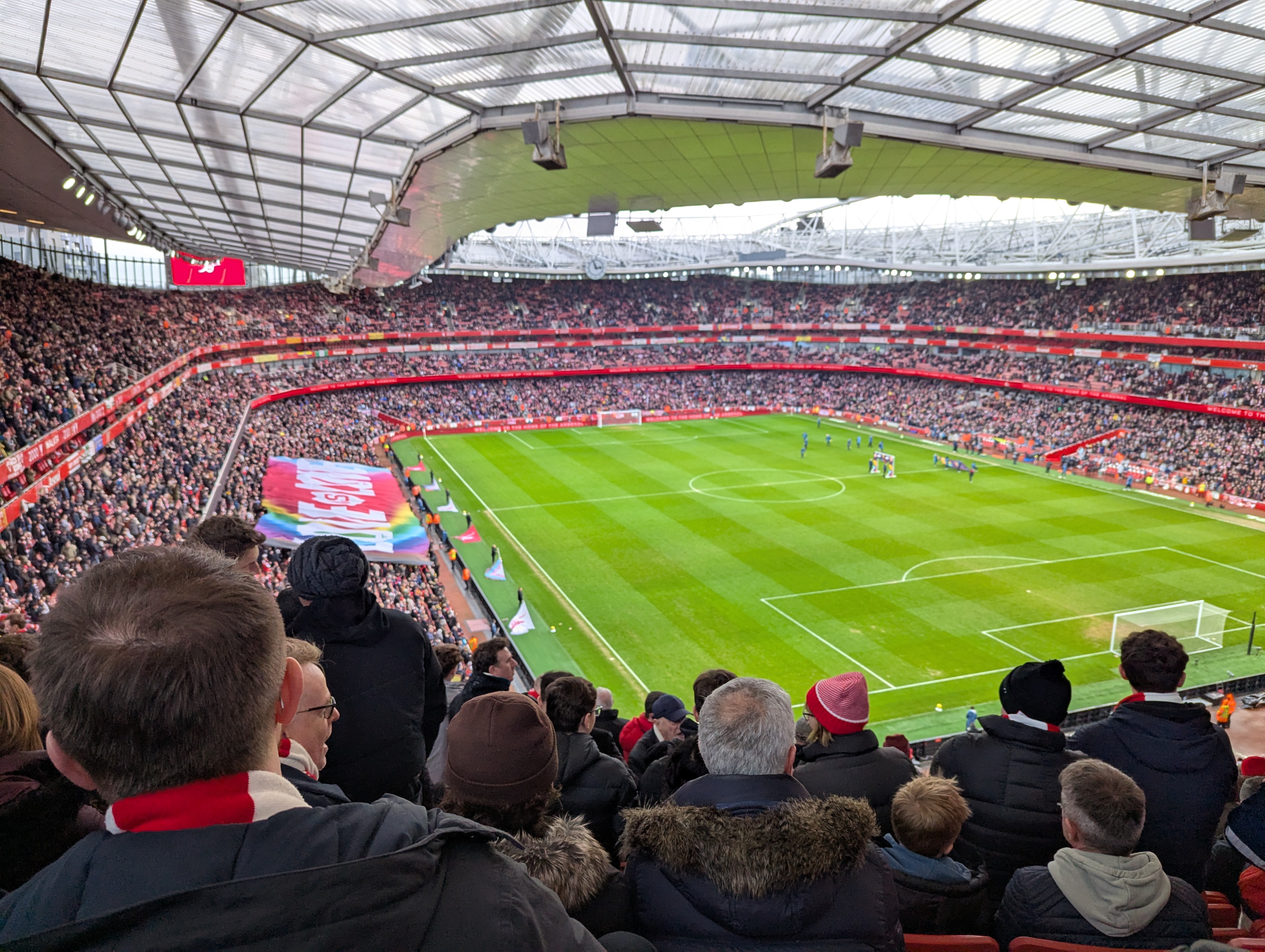
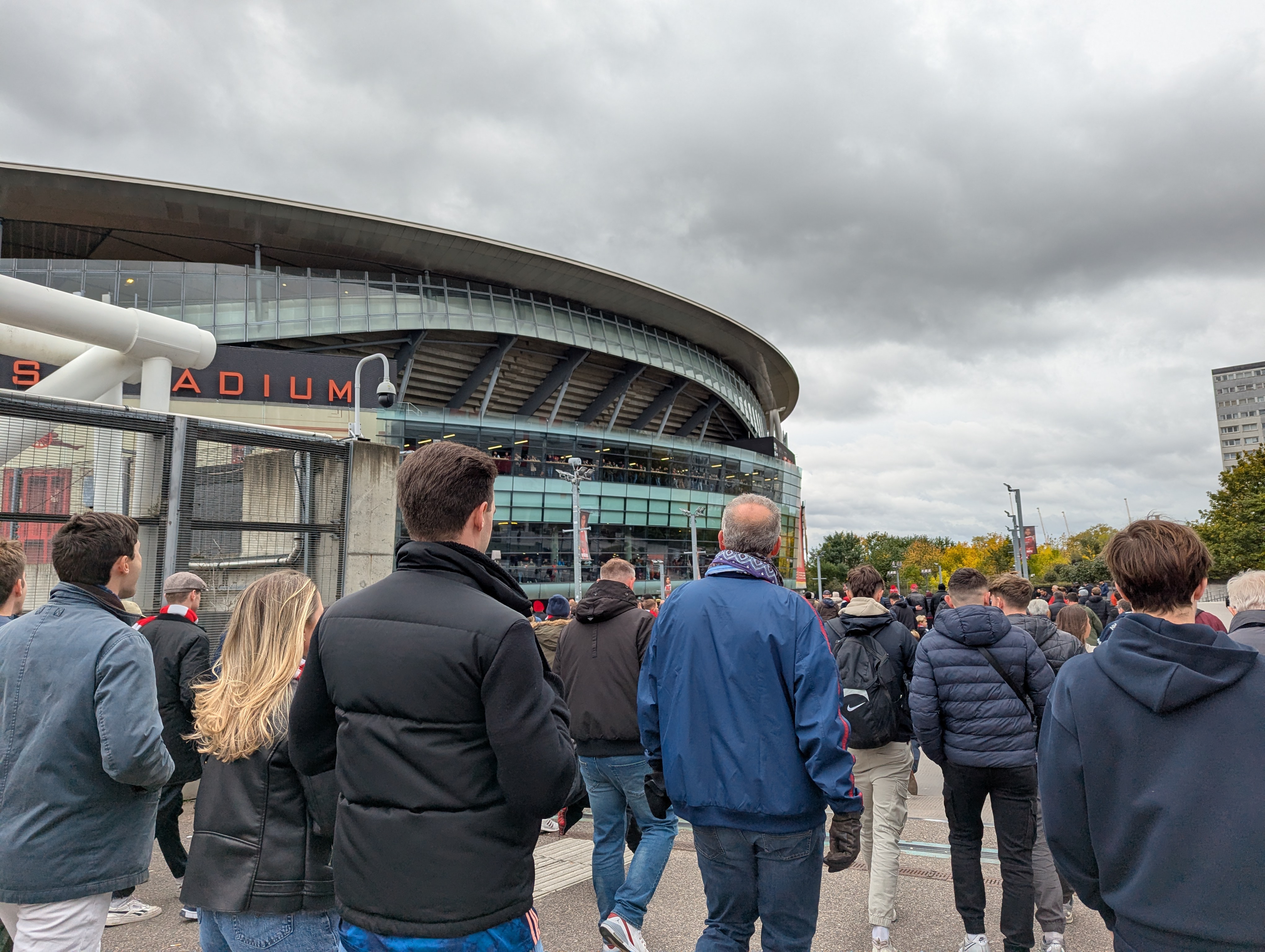
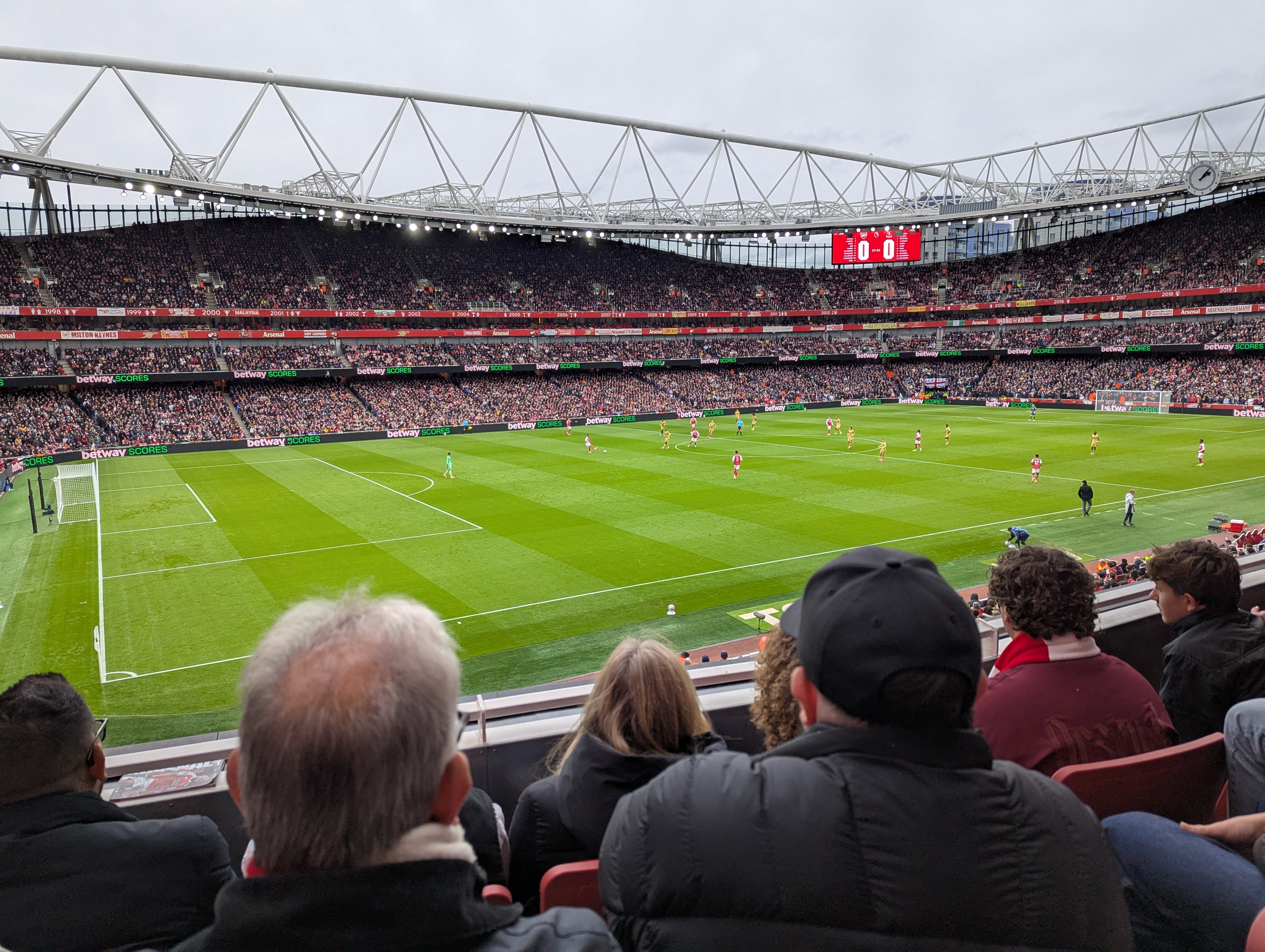
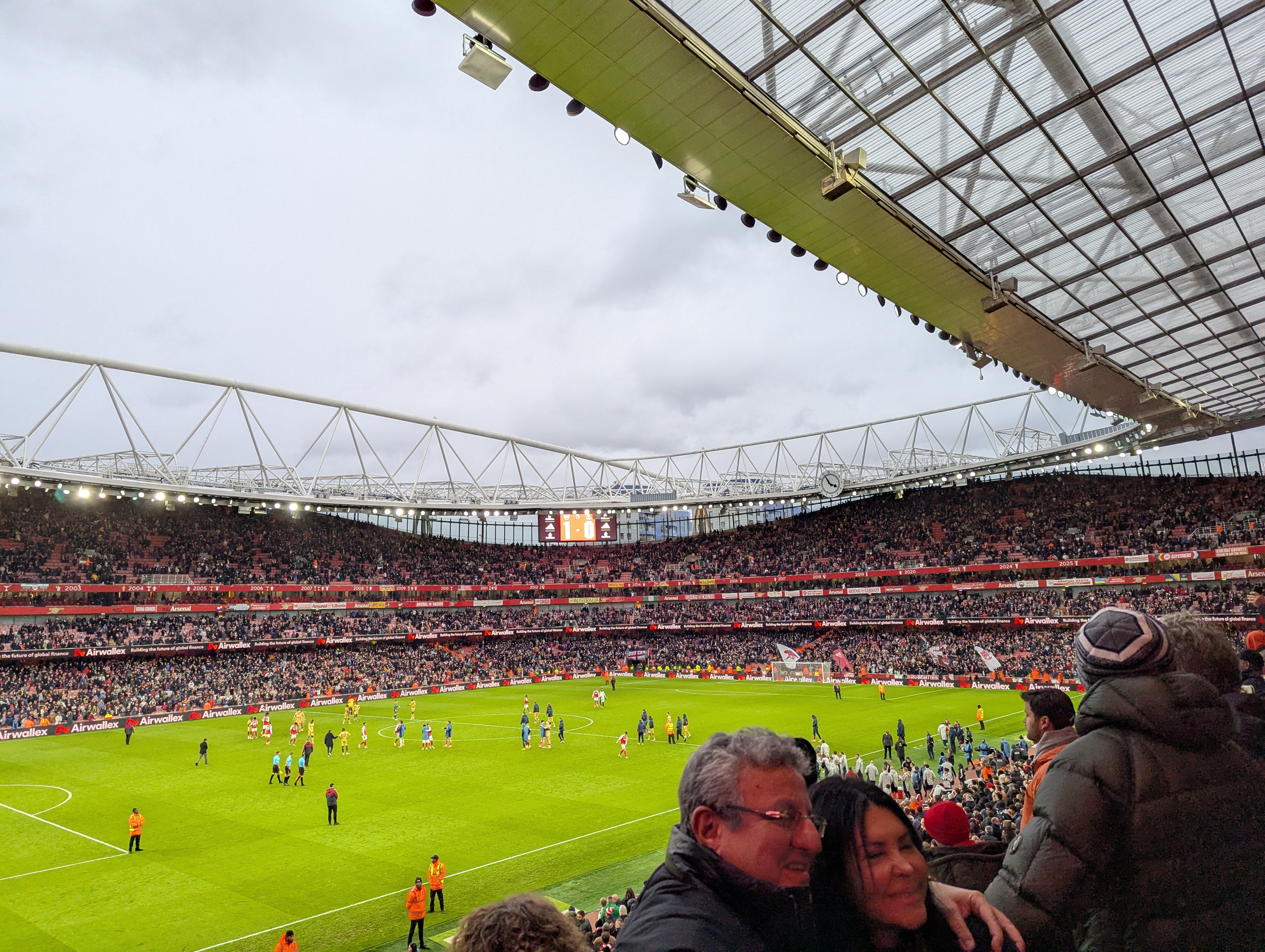
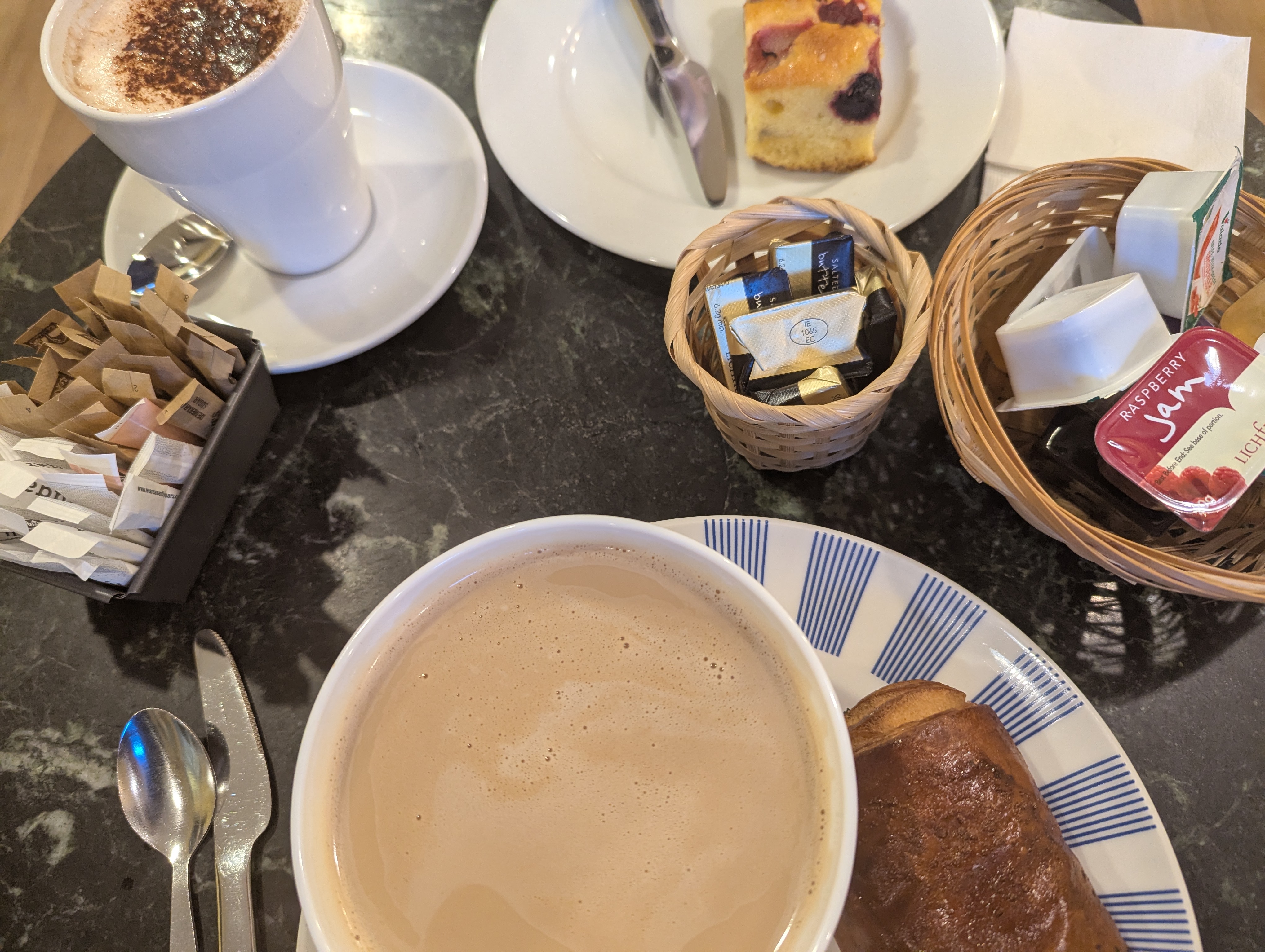
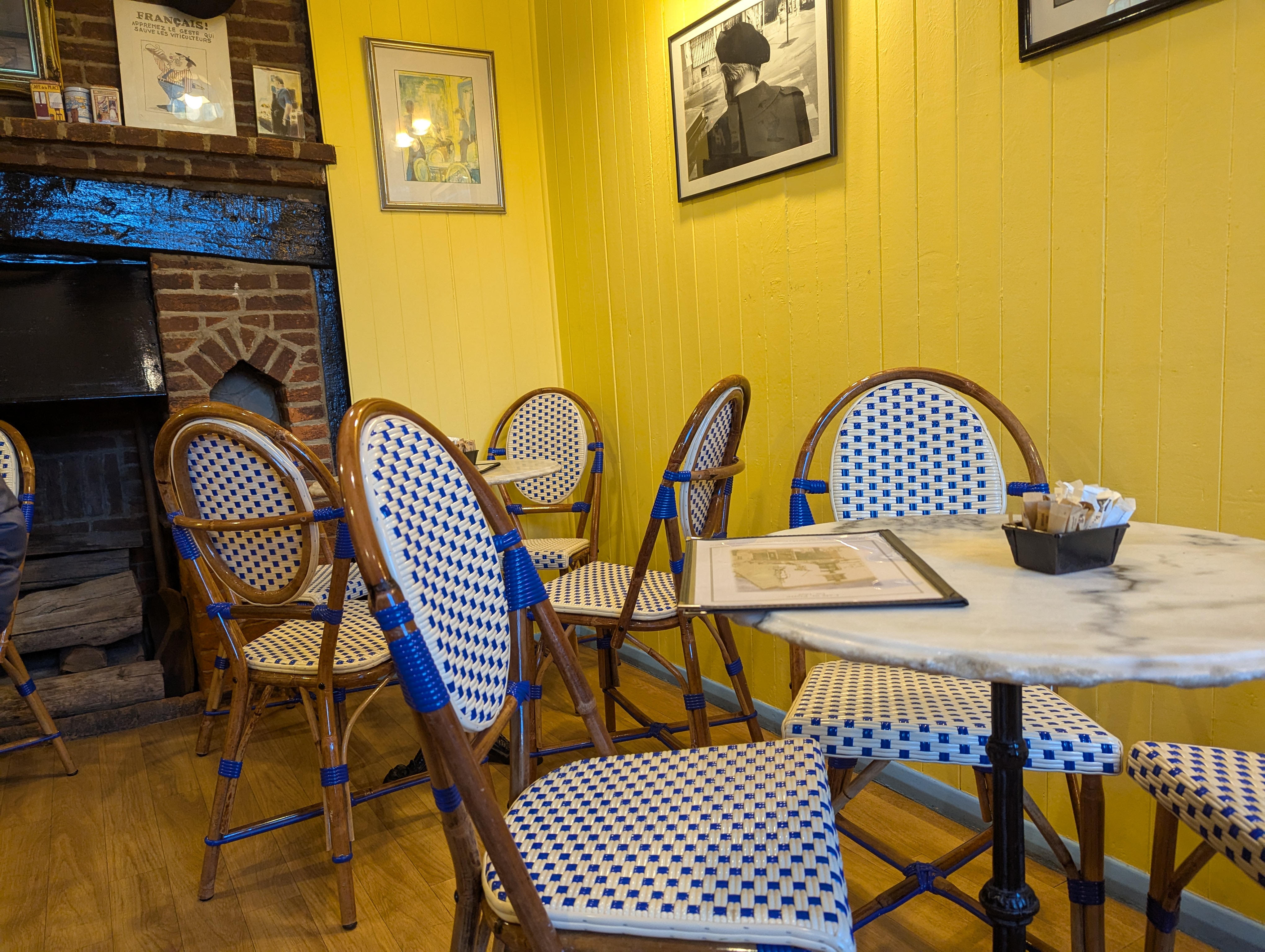
The next morning it was back to Heathrow and a connection through Dublin, then the long flight to Chicago. I was surprised to see so many Arsenal shirts on my flight to Dublin. In fact, all three of us in left row 28 had been to The Emirates the night before.
Interestingly, Aer Lingus does not land in Chicago in the International terminal so you go through customs in Dublin. After getting off the flight, you are routed through literal TSA, where your carry-on bags go through Security again and then you go through passport control.
In the Security line, we were told by a harried TSA agent to remove our shoes unless we were age 75 or older or under 12. A passenger in the line a few people in front of me asked if he had to remove his shoes if he was Global Entry. The Security agent waited until he was out of earshot and muttered, “Yes, you have to remove your shoes even if you are a prick with Global Entry.”
I took my shoes off cooperatively, hoping no one would think I was over 75. Then I slinked over to Global Entry, which I am also lucky enough to have. It does save a ton of time when you return from a trip. Even if you have to remove shoes along the way.
It never occurred to me that I’d have to get through customs in Dublin and the timing of my connection was kind of tight. I had time to have a cup of tea and we boarded the flight to Chicago shortly thereafter. I had spent time in both Heathrow and the Dublin airport reviewing content after the Arsenal match. Since there was so much activity after the match, it was a while before the normal manager interviews were produced.
One thing that surprised me in the Mikel Arteta interview was his comments about Man City’s match with Bournemouth which was to take place that same night I flew back to Chicago, Tuesday. Up until that point, Arteta had been dogged, when the press asked him what he hoped would happen in any upcoming Man City match or would he be watching Man City’s next match, that he was only focused on what he can control. He insisted each time that he can only focus on the next match his team plays. And they would work as hard as possible to have the “right” to win it.
In contrast, every time Pep Guardiola, Man City’s manager was asked a similar question he spoke openly about how he was rooting for Arsenal’s opponent. When Arsenal were going to play West Ham next, he said jokingly that he had offered to West Ham to serve as an assistant coach. He had said there was “no doubt” that Burnley could take something off of Arsenal. And with regard to Arsenal’s last match of the season against Crystal Palace, he openly supported them. He made a special point after Man City’s match against Crystal Palace to shake the hands of many Crystal Palace players, to put an arm around them in camaraderie.
So it was interesting in speaking with the press after the Burnley match that when Mikel Arteta was asked if he would watch Bournemouth vs. Man City, he said he would watch it with his family and that he was going to be Bournemouth’s biggest fan. No more being focused only on his next match and what he could control. A strange turn of events.
To review the title race as it stood on Tuesday morning, if Arsenal won the last match against Crystal Palace away, there would be nothing Man City could do to stop Arsenal from winning the title. If Man City won both of its upcoming matches, the one against Bournemouth and the one against Aston Villa, and Arsenal tied or lost to Crystal Palace, the title would be Man City’s, decided on the first tiebreaker, goal difference.
There is no way Man City was going to lose to Aston Villa. Aston Villa are managed by Arsenal’s old manager, Unai Emery, and he usually radiates tremendous bitterness against Arsenal. And Aston Villa were solidly in Champions League spots for next year with no concerns they might fall out. And finally, Aston Villa were playing in the final of the Europa League this week, Wednesday. They had a great chance of winning, and winning equals party and, let’s face it, after that who cares about winning the last match against Man City?
So that left two hopes for Arsenal. #1: Win away from home on Sunday against a good team, Crystal Palace. Or #2: hope Man City ties or loses at Bournemouth. It wasn’t a crazy hope. Man City didn’t look good over the weekend, regardless of their ultimate win, and Bournemouth has a great record at home. And Arsenal lost to Bournemouth when they visited recently.
But you know. It’s Man City. I felt pretty resigned to having to sit through a tight, horrible match against Crystal Palace next Sunday. And the many things can happen in that match.
I was going to be on the plane back to Chicago during the Bournemouth v. Man City match and almost certainly would not be able to watch it. I’m pretty sure I would not have even tried. I feel like when I watch, Man City inevitably scores. Especially if they are losing or tied when I start watching. I usually try to not even follow the score line, which probably would have been possible even on the plane.
But the match was going to be over several hours before I got off the plane and I was hoping to be able to know our fate at some point before that.
It did not happen. I was unable to connect at all with wifi on the plane. I watched three movies, two of which I had seen before. I ate pasta lunch and a snack. I listened to calming music for the last 45 minutes. I had my phone fully charged so I would be ready to go the second we touched down in Chicago.
And remember, I was hopeful, but I kind of just knew we were going to have to get through that last match on Sunday. It’s been that kind of year.
The wheels hit earth and we were still skidding to a stop when I had my phone in hand and off airplane mode. A few seconds later I was trying to open the BBC Scores and Fixtures page in Chrome. It loaded interminably and then, bing, bing, bing. So many text and What’sApp messages coming up, one after the other. Congratulating me on the title, woohooing at me, OMGing me. All from different people who don’t know each other, so surely they were not banded together to punk me?
And then the BBC page loaded. It was already Wednesday in England so the BBC page was showing the upcoming Aston Villa match in the Europa League rather than Tuesday’s results. I clicked back to Tuesday and there it was. Man City had only managed a 1-1 tie with Bournemouth. A gap in points they could not overcome with only one match remaining.
Arsenal were Champions. For the first time in 22 years. For the first time since they’ve been my team. And it doesn’t matter what happens on Sunday.
I was overcome with joy. And so much relief. And on a plane with a bunch of strangers and not able to shout out with glee. I was harboring so much of it in my body. Tears rose in my eyes.
The rest of it is a blur. Since returning to Chicago I’ve wasted so much time watching the celebrations all over the world, including the Arsenal players celebrating from their training center where they watched the match together.
One thing stands out more than anything. As Man City was playing and it was looking like they would not win, Arsenal fans started leaving their houses and flats all over the city of London. They walked, rode, and drove over to The Emirates like Monarch butterflies coming back to their home.
Thousands of people around the stadium and on the streets of North London. Hugging, crying, singing, celebrating. Being washed in champagne. In this moment where there was nothing planned by the club and no one expected even to see the players, they needed to be together.
They stayed there for hours. A few players did get over to The Emirates at about 5 a.m. and took selfies with the remaining die hards.
The other thing that stands out in all my viewing is the wonderful video released by Arsenal that I think sums up this season so beautifully. The club was ready to go if the moment struck, but that video might have been consigned to the trash heap. Probably several others have in the past few years. Arsene Wenger to kick it off! You know I love that.
Mikel Arteta was nowhere to be seen in the videos of the players celebrating for several days when finally a few photos were made public of him with the team in a nightclub somewhere in London Tuesday night or Wedensday morning.
It came out more recently that Arteta did not watch the match with his family as he said he would in the interview after the Burnley match. A plan for players and staff to watch the match at the training center had been made at the request of the players on Tuesday. Martin Odegaard had asked Mikel and his staff to be there. But at the last moment, Arteta found himself in the viewing space and realized he wasn’t in the right frame of mind to be present. Instead he drove home, where he found his family watching the match. He went into his yard, lit a fire, and commenced barbecuing. He stayed outside for the entire match. He said it felt like forever. At last his son came out the door. He was crying. “We are champions, Daddy.”
What a beautiful moment for the young man who has worked so hard in his first managerial job. And for his family who no doubt bore much of the stress. And for the players and all of us who joined them on this journey.
There is a different takeaway. Arteta didn’t watch the match. I didn’t watch it. I understand Declan Rice didn’t watch it. We were controlling what we are able to control, which is making Arsenal succeed by not letting Man City see us looking at them.
The club had been so happy with how things went before the Atletico Madrid match a few weeks ago they suggested for the Burnley match that fans “Greet the coach.” When I first saw the announcement from the club I thought it was some event where you get to see Mikel Arteta. But then I rewound in my head what happened before the Atletico Madrid match. They asked the fans to be in the road outside the stadium to welcome the team bus. Bus = coach.
It was quite early, though. They suggested arriving for the event at 5:45 p.m. and then the bus–er, coach–would come through at around 6:15. But the match would not start until 8, a long time to be at the stadium.
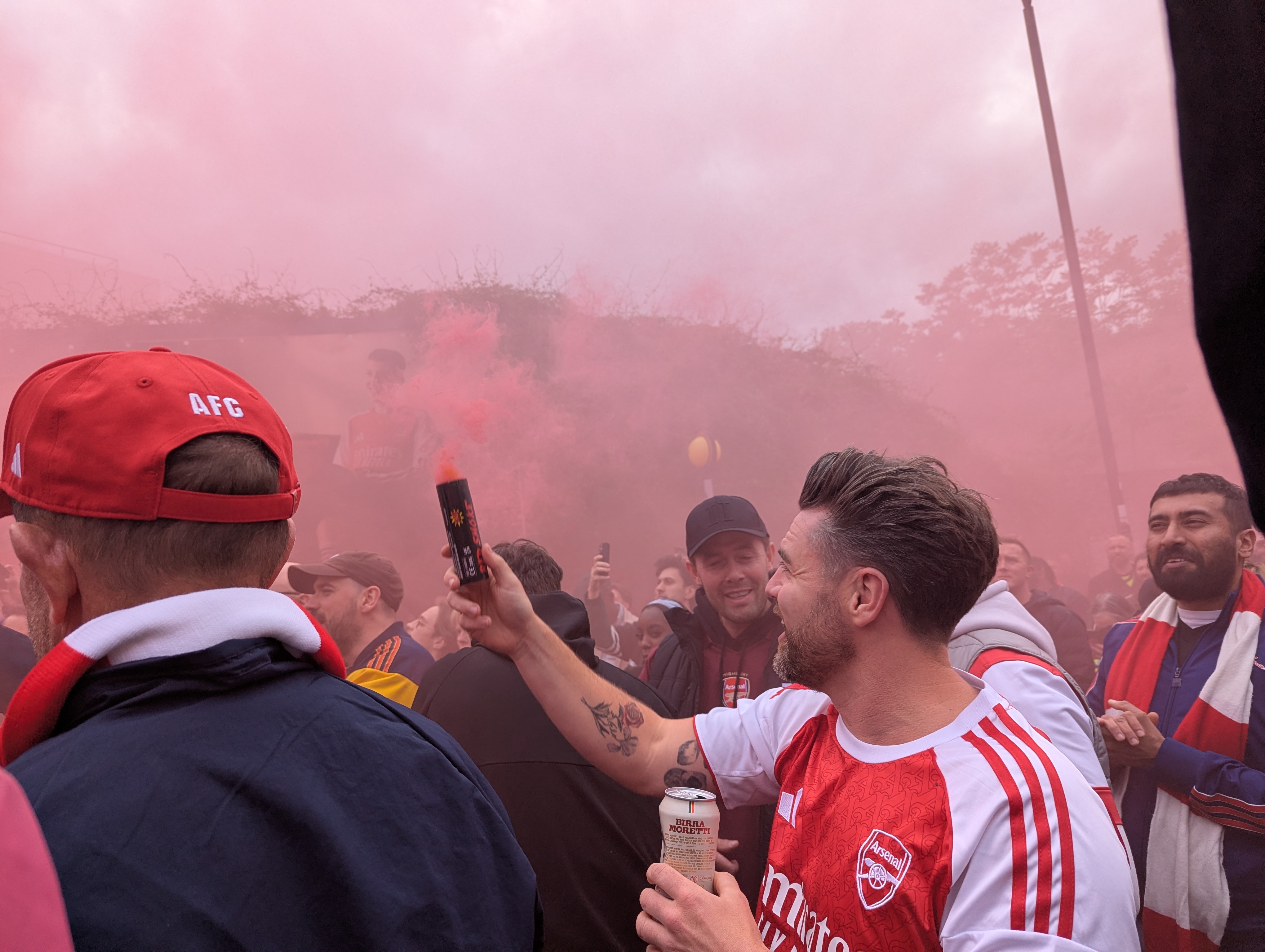
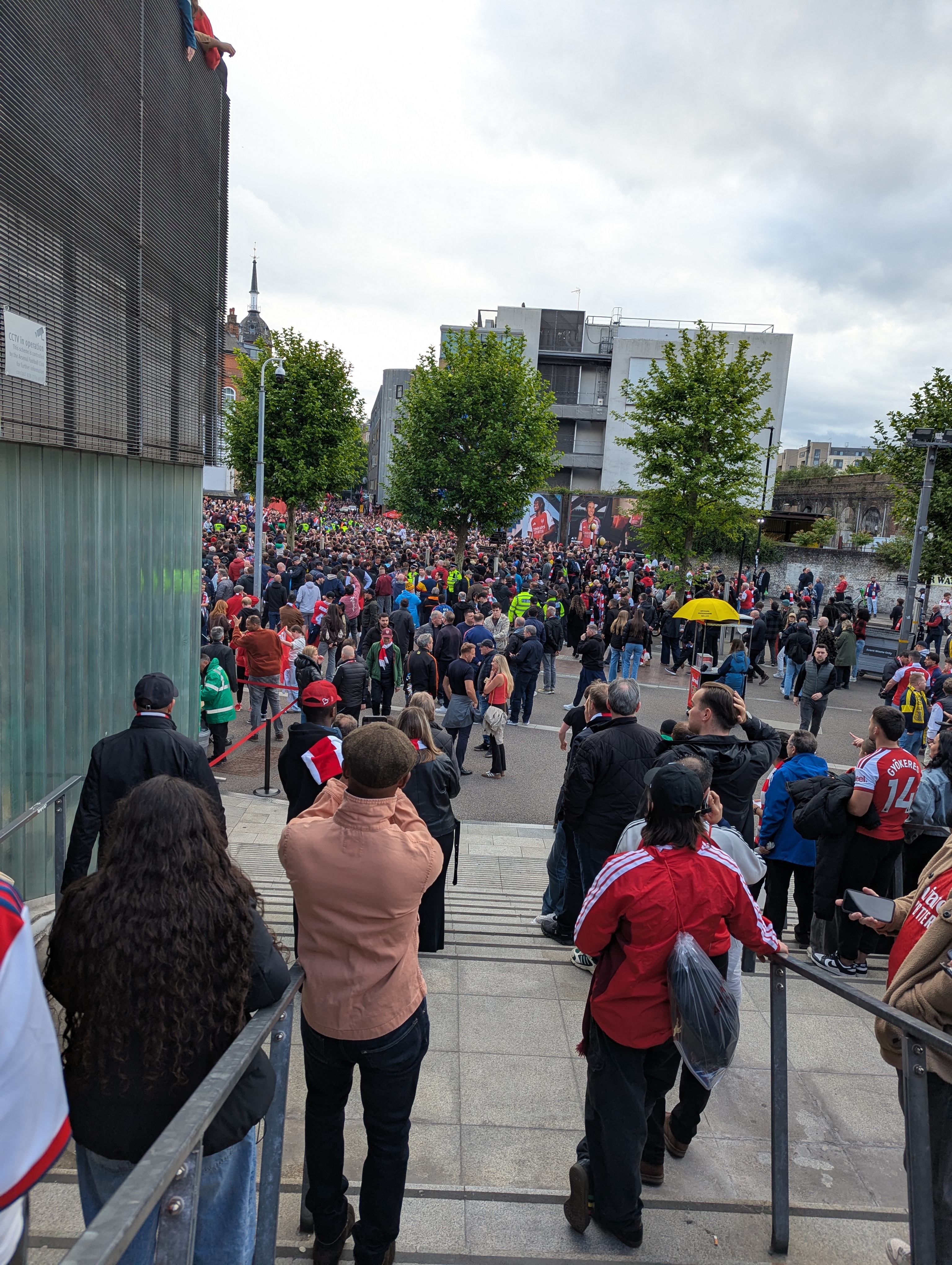
I decided I would go. Being all riled up before you enter the stadium seemed like a good plan for all concerned. I did take the precaution of acquiring a sandwich and some chips from Pret a Manger to eat before going into the stadium. The stadium grounds seemed kind of empty as I stepped out of the Arsenal station. I had expected a lot more people. But then I got to the west end of the stadium. It was packed. And the road beneath it was jammed with thousands of people. I waded in and joined the chanting. The fans went through all the player chants they could think of and then the general chants. Suddenly, people began lighting red flares and red smoke was everywhere. It had a pretty overwhelming smell but I found as a short person I could keep my nose mostly under it. And then, there it was, looming through the red smoke like a giant whale in bloody water. The coach carrying the players. Just as quickly, it was gone.
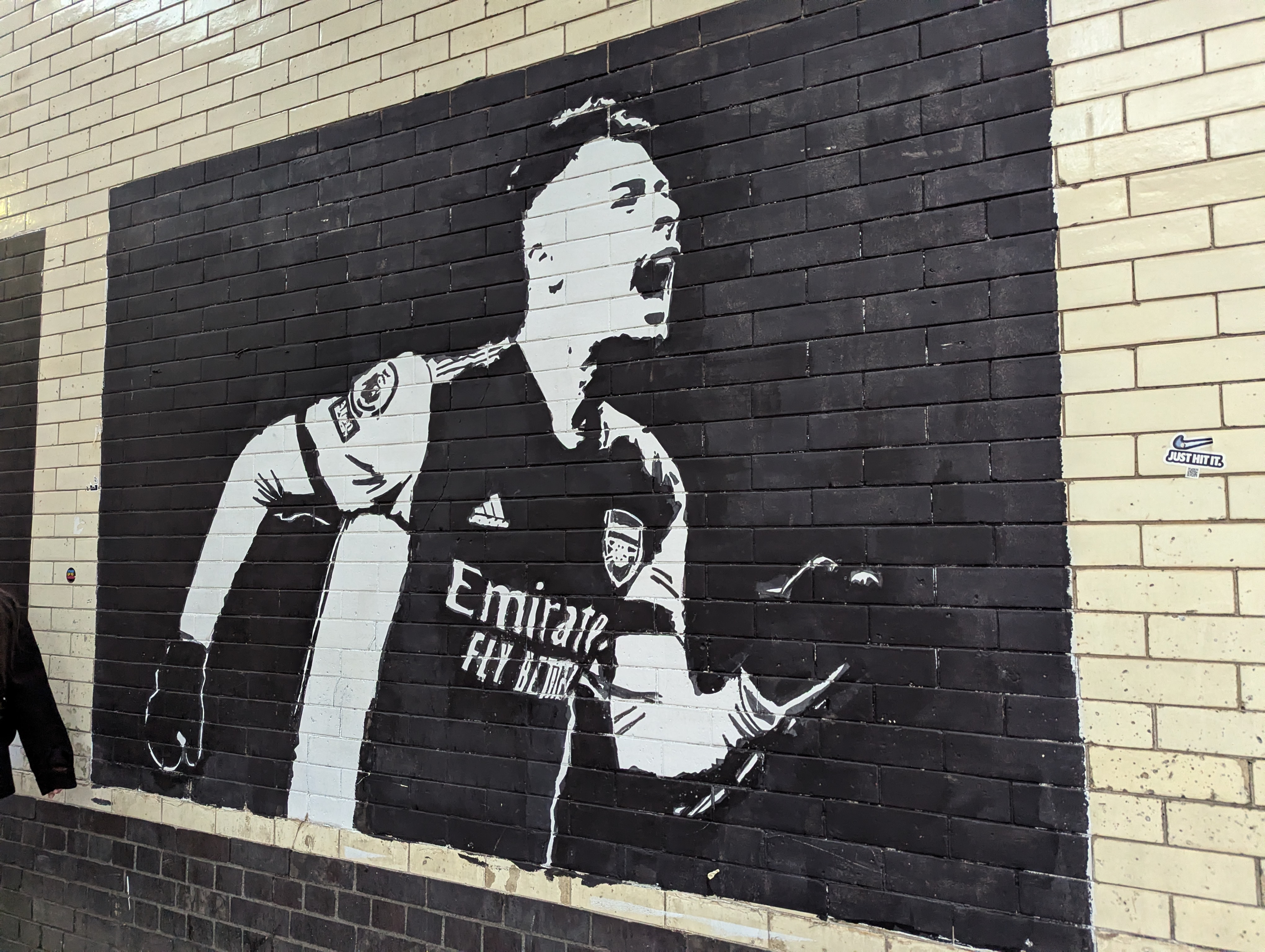
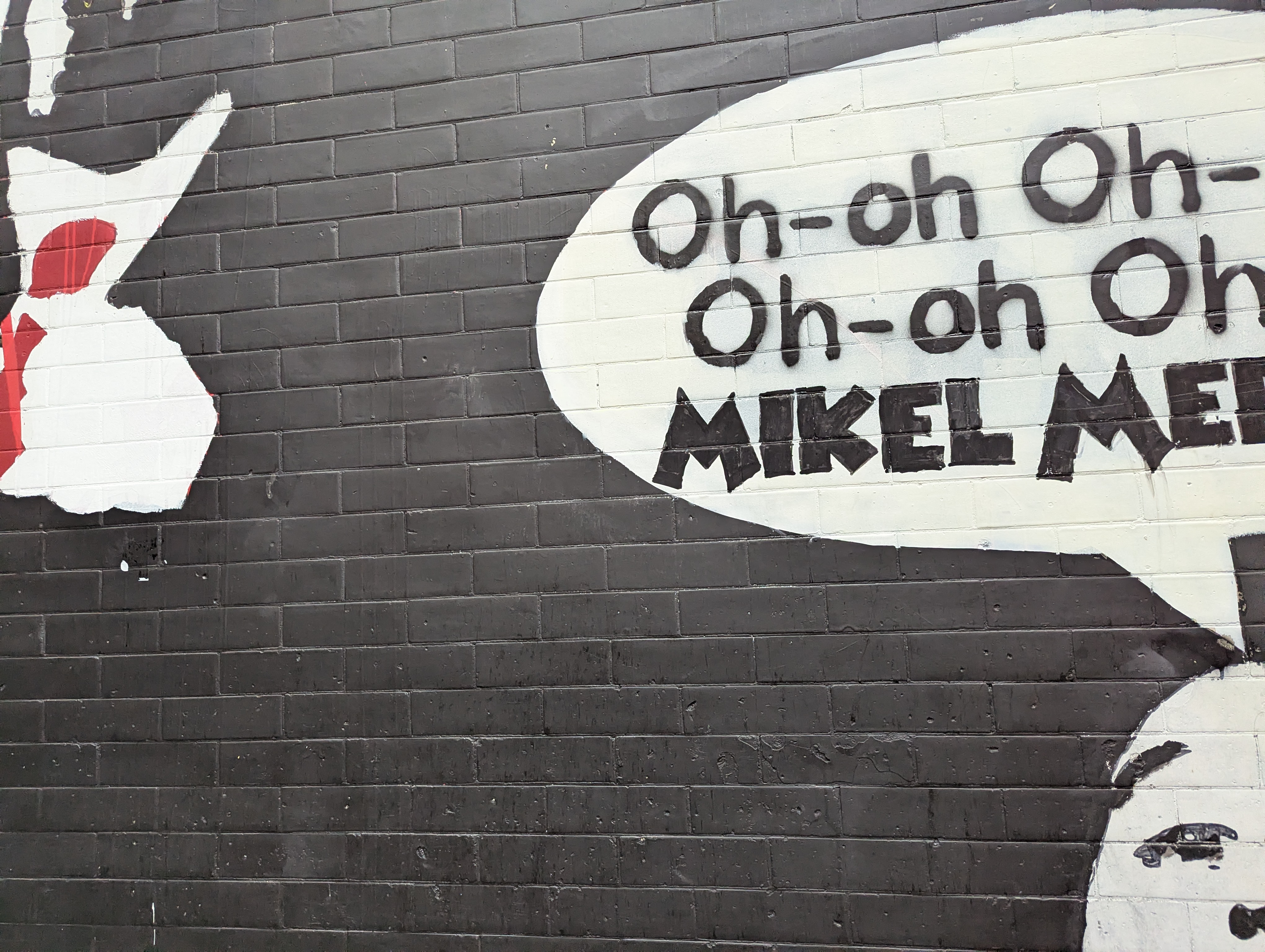
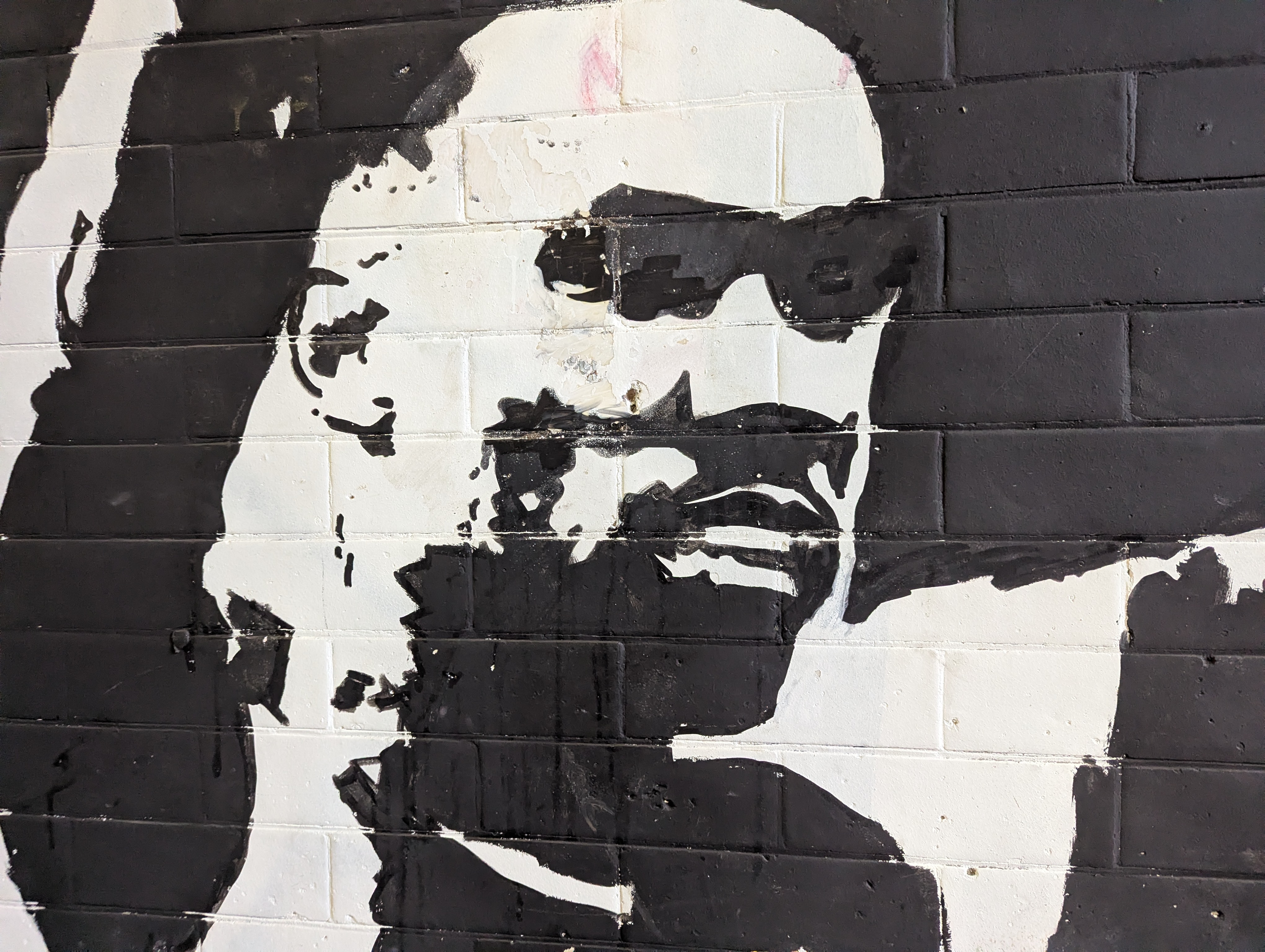
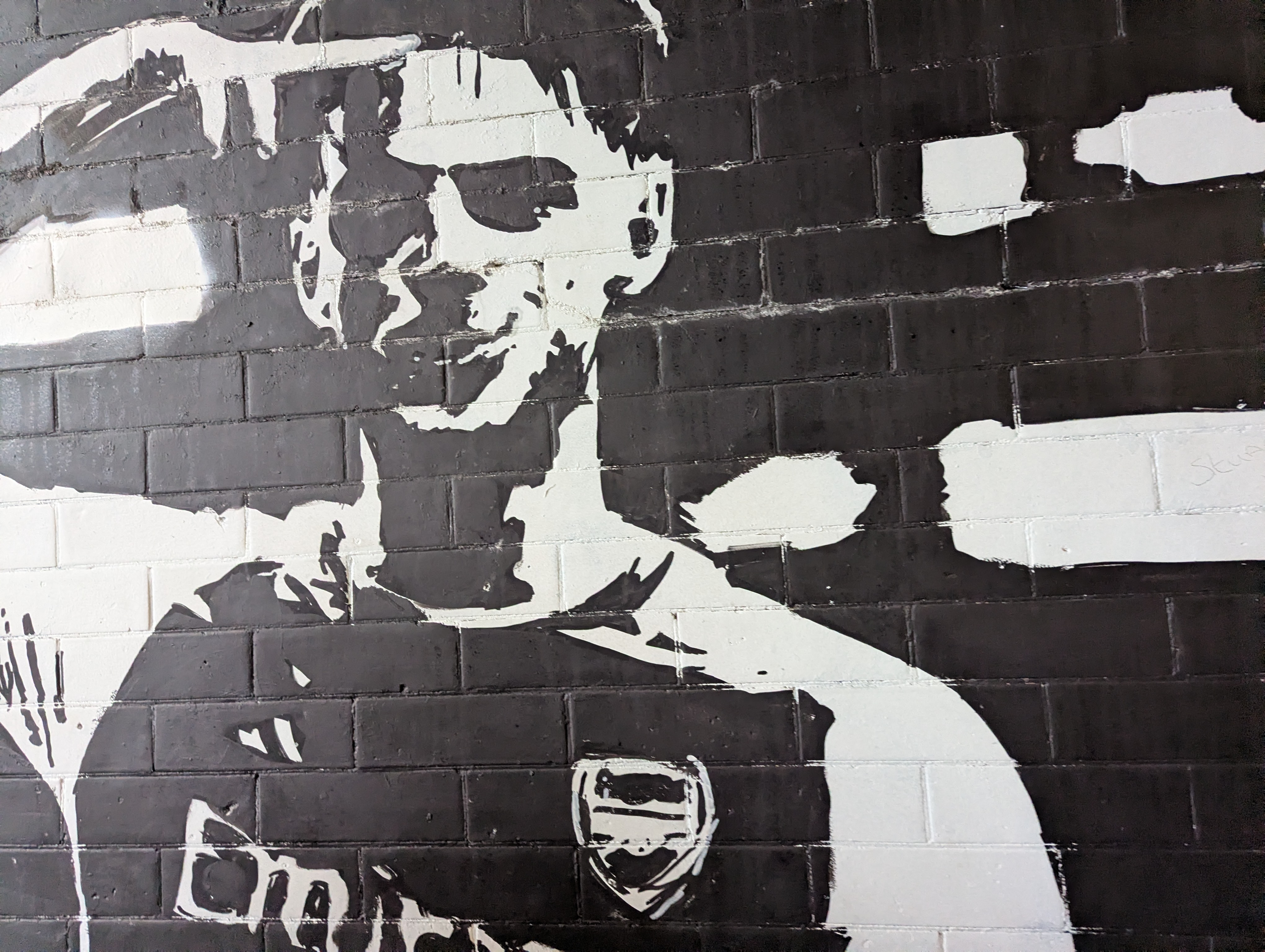
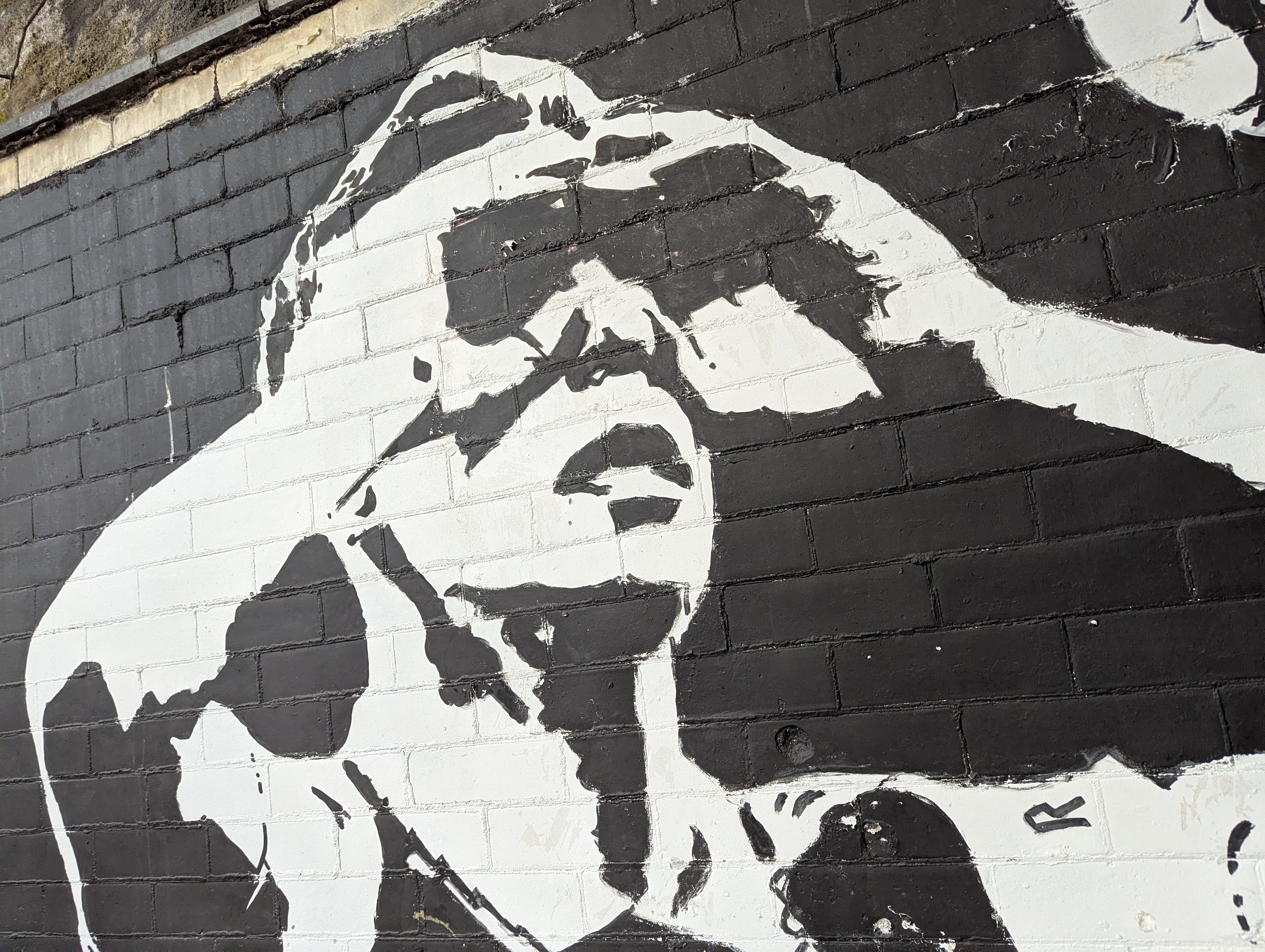
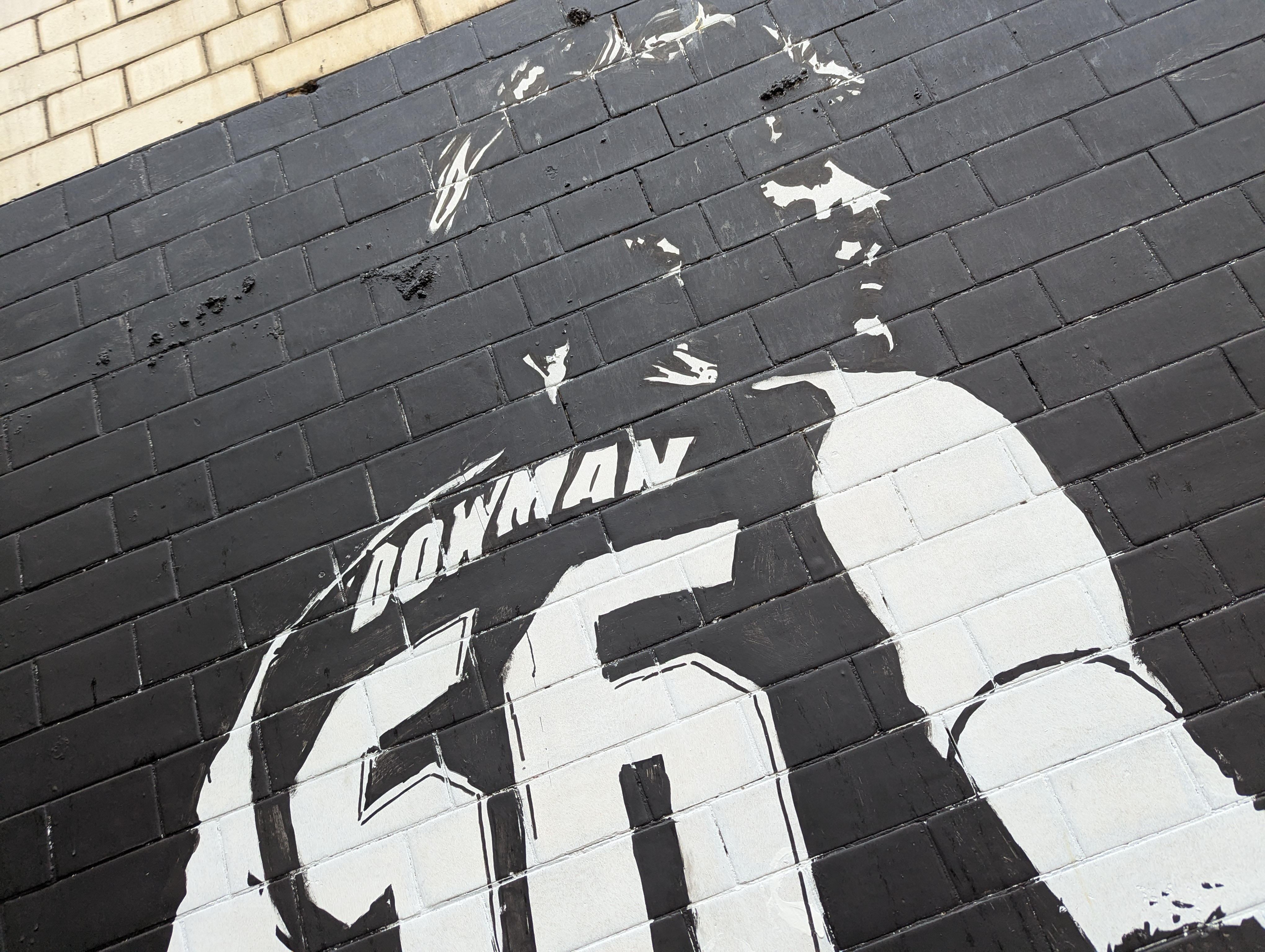
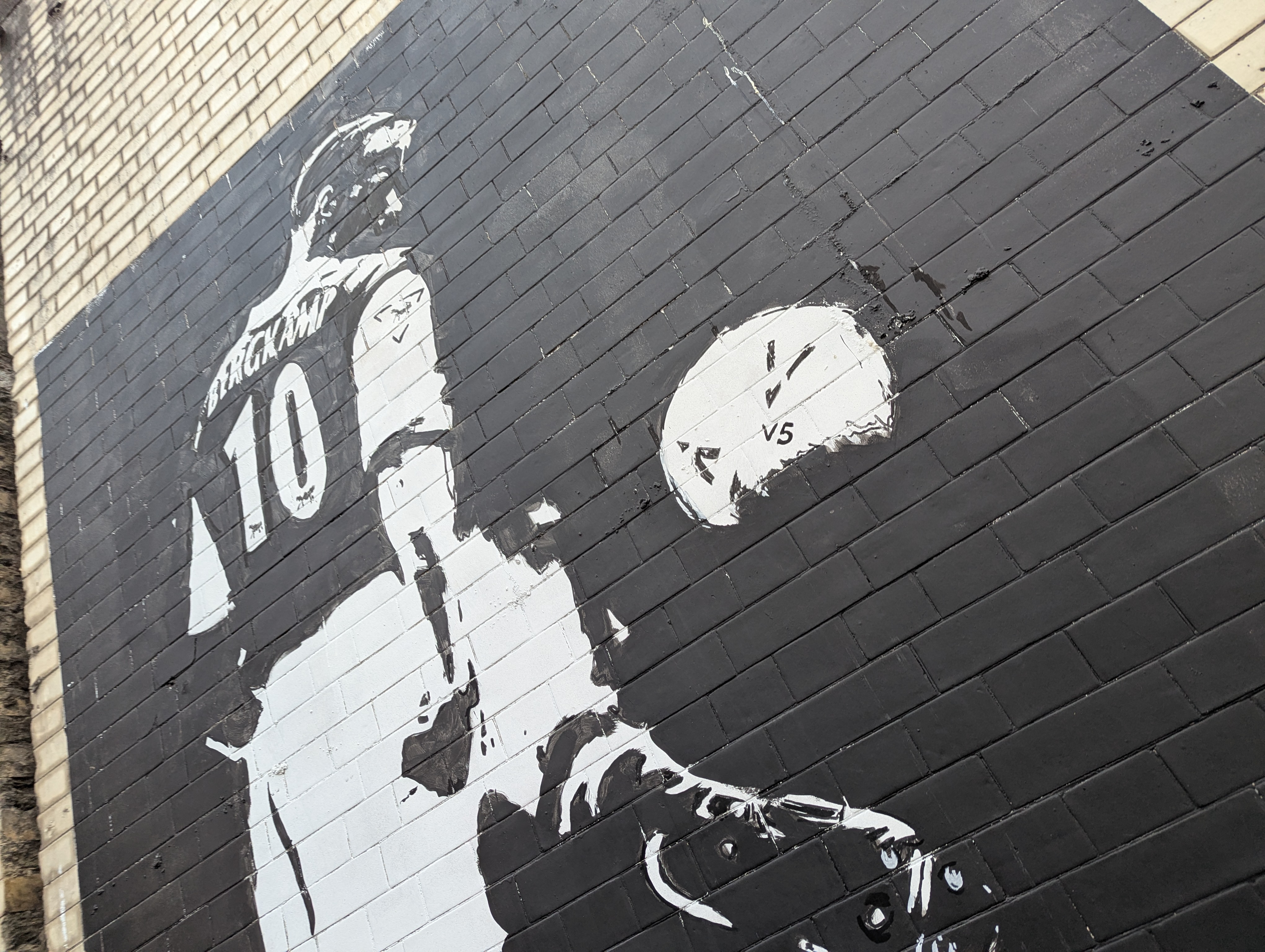
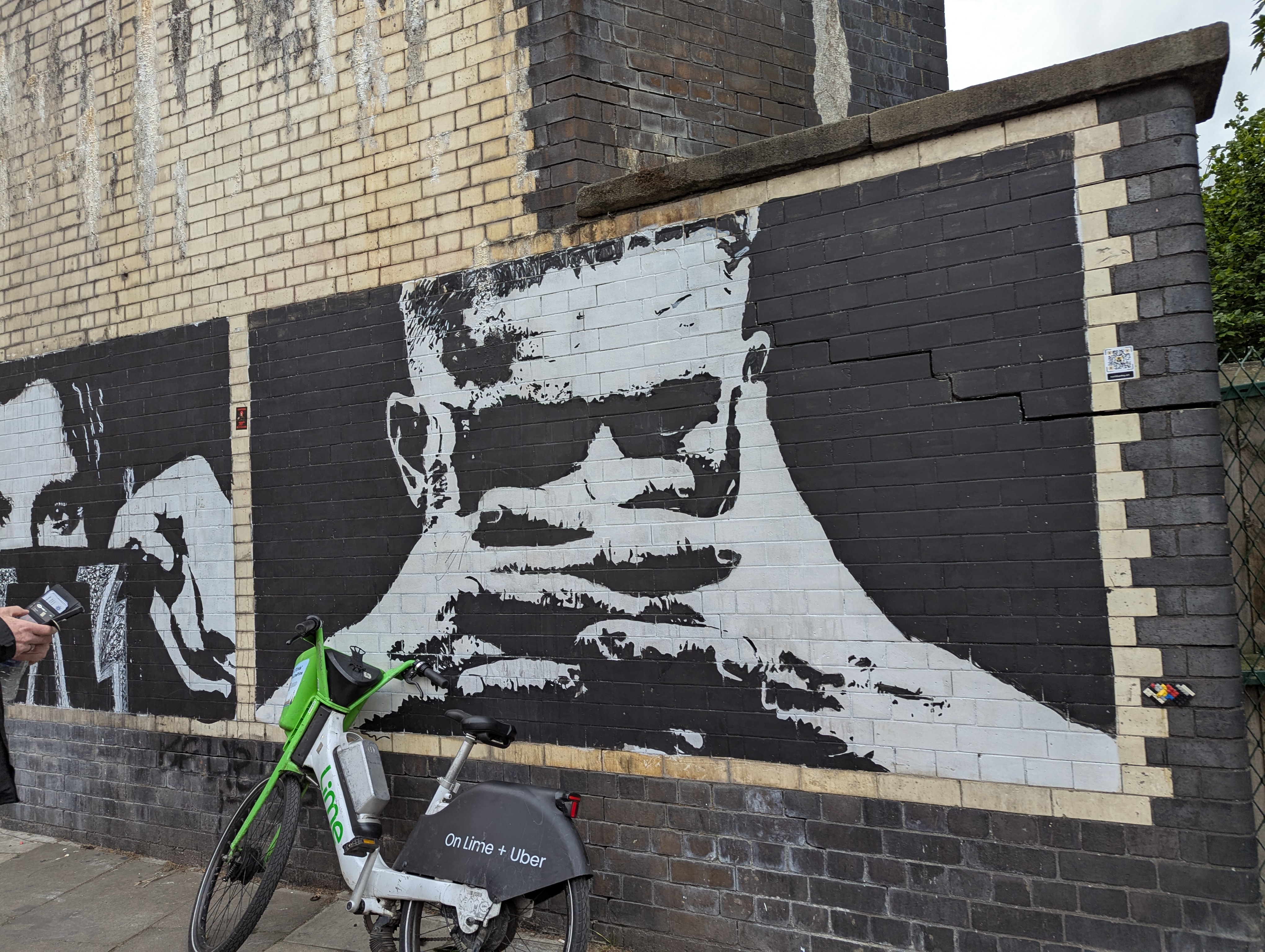
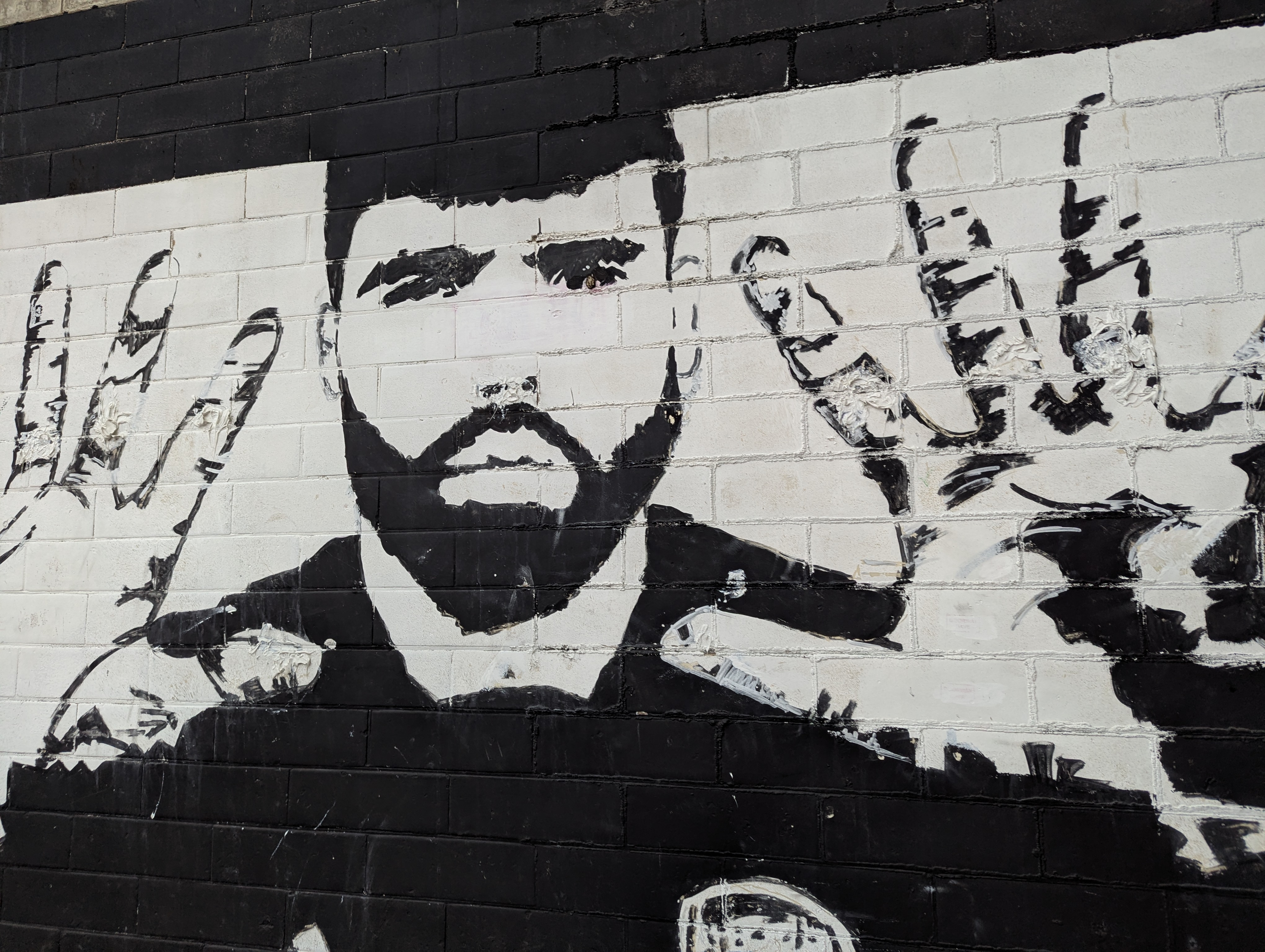
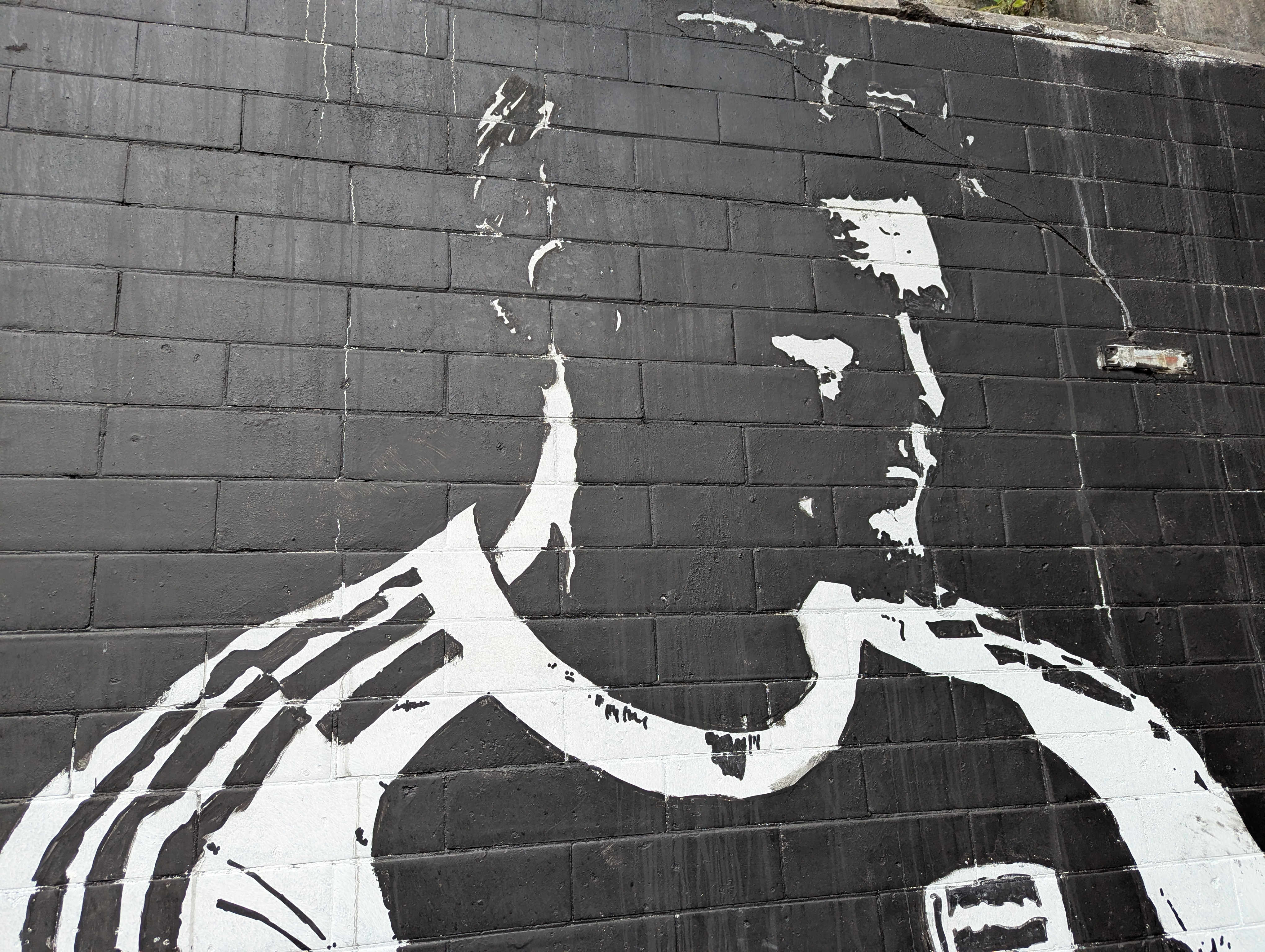
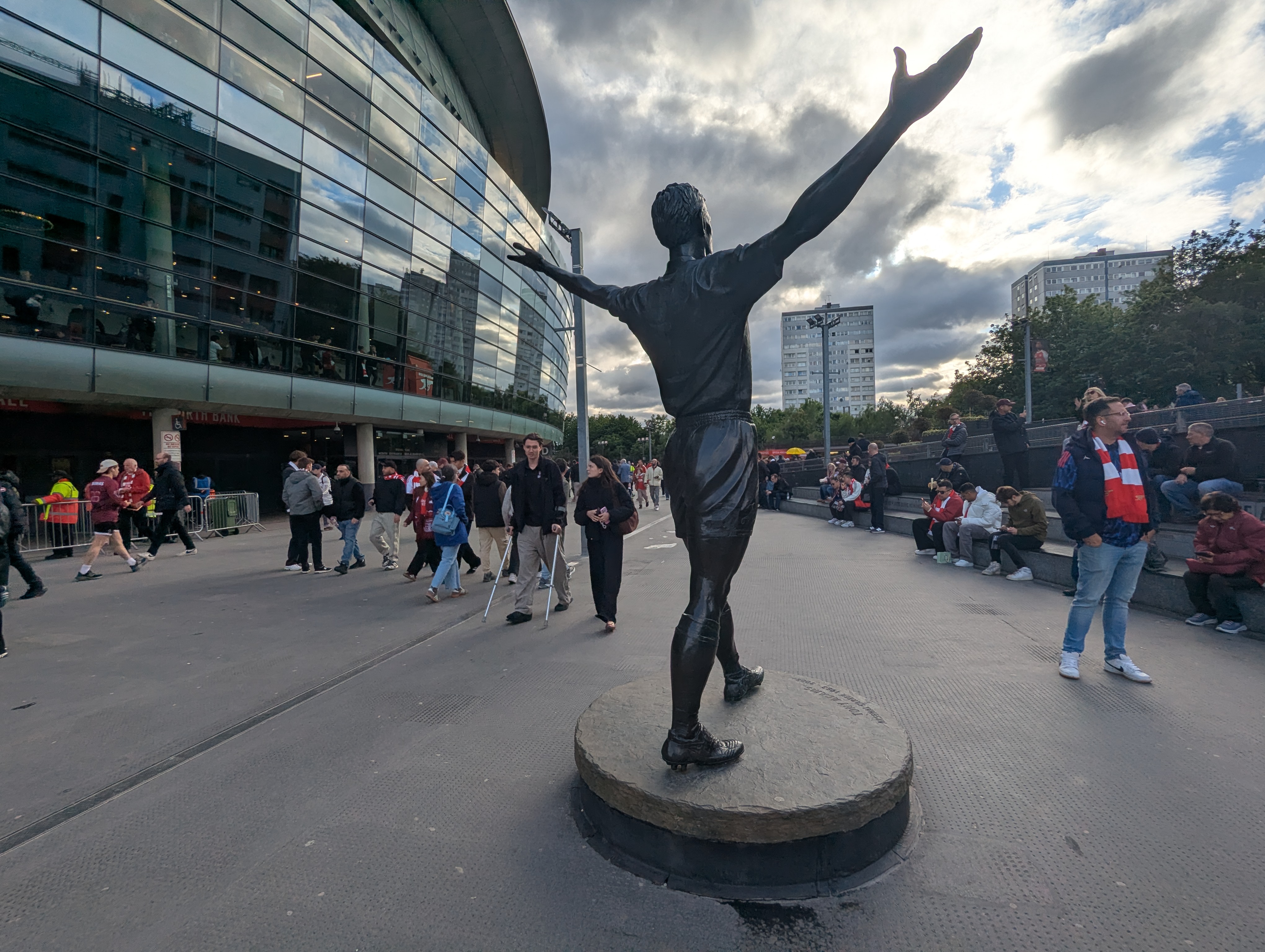
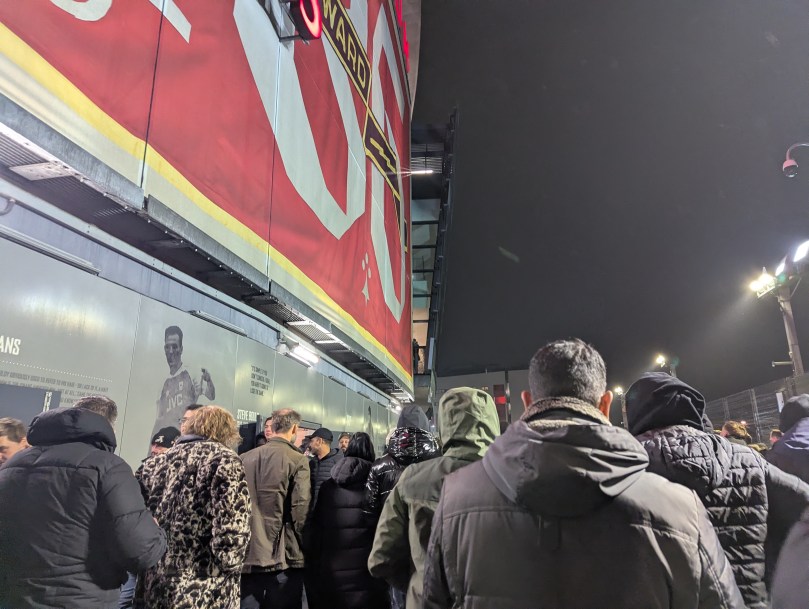
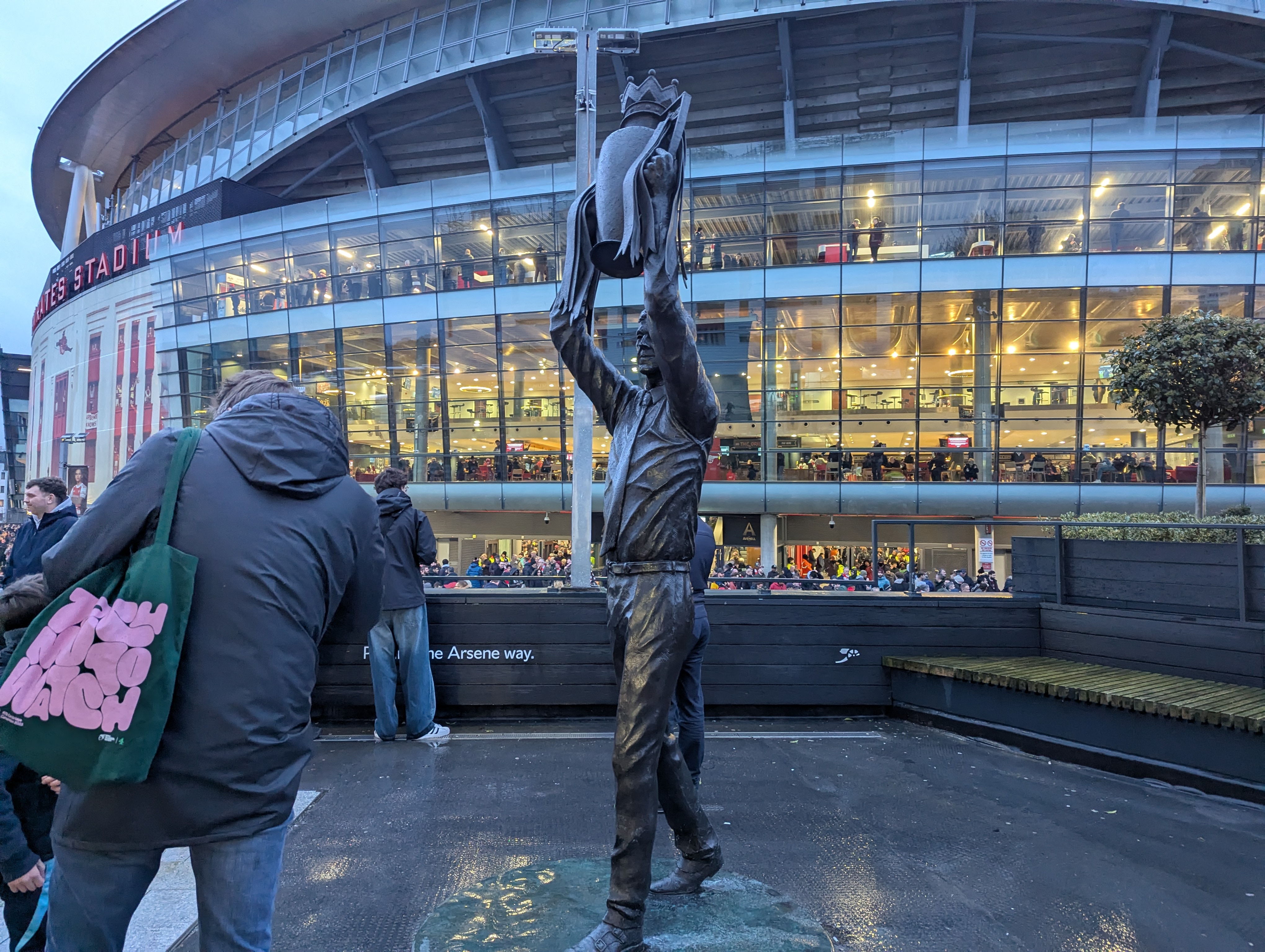
The fans gathered there hung out for quite a while. While I was waiting for the coach I had spotted the famous tunnel where an artist known as “Northbanksy” has placed graffiti art focused on Arsenal players. As many times as I’ve been to the Emirates, I never knew where it was. I wandered over and took some photos and then went back through the grounds and sought out a picnic spot. There is a lot of seating near the Tony Adams statue but I decided that the area near the Arsene Wenger statue would probably be a bit less populated. I would have one peaceful moment before entering the stadium.
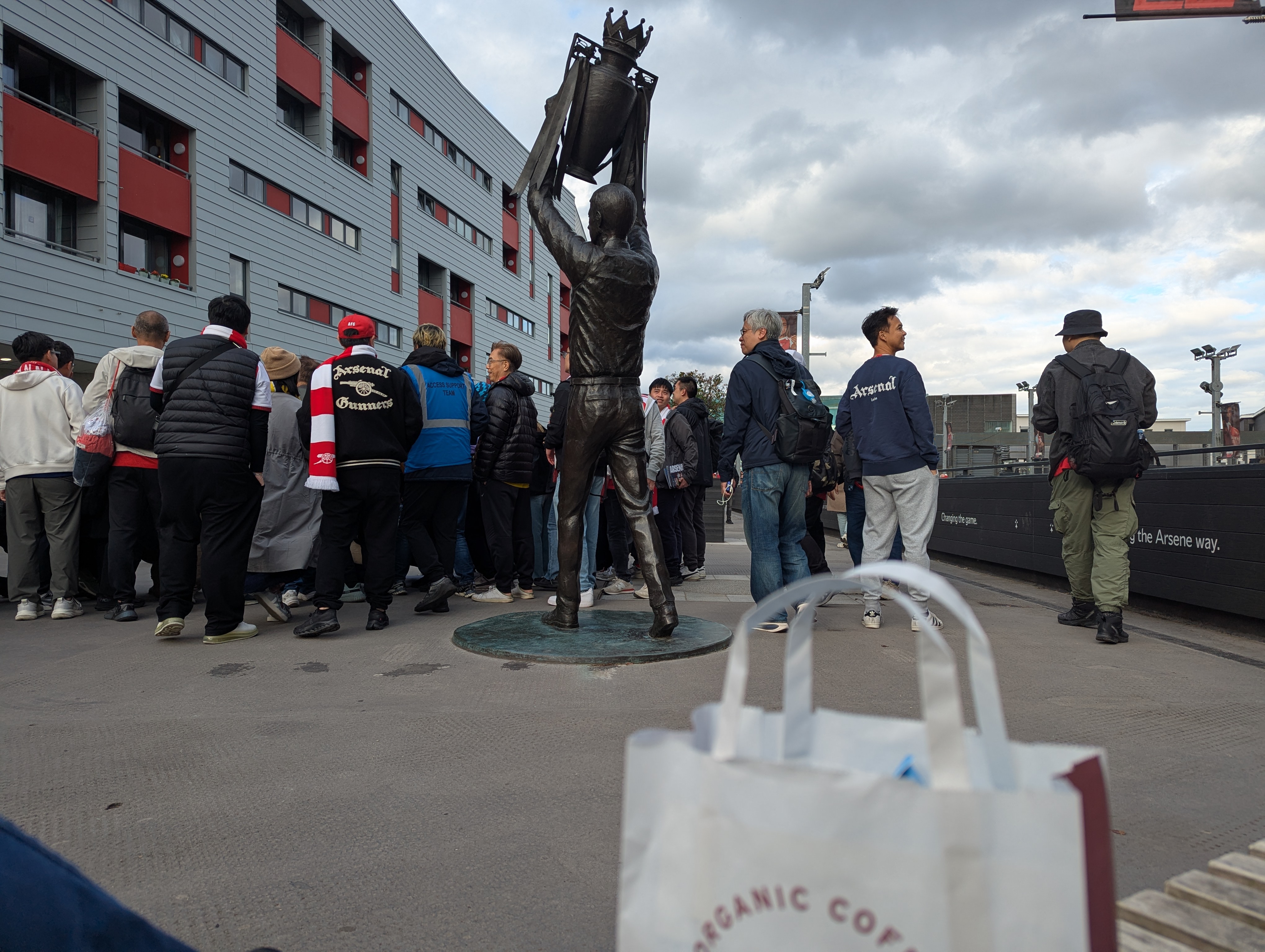
As I walked over, I did notice a large group congregating by the statue. But I was right. On the benches facing the statue there was only one other guy. Like me, he had a Pret a Manger bag. We raised our bags toward each other in salute. And in front of the Wenger statue was an enormous group of delighted Asian Arsenal fans. They took dozens of pictures of their group in various poses in front of the statue. After enjoying his dinner, my picnic companion leaned in toward my ear as he left the scene. “They must have paid a fortune for tickets!”
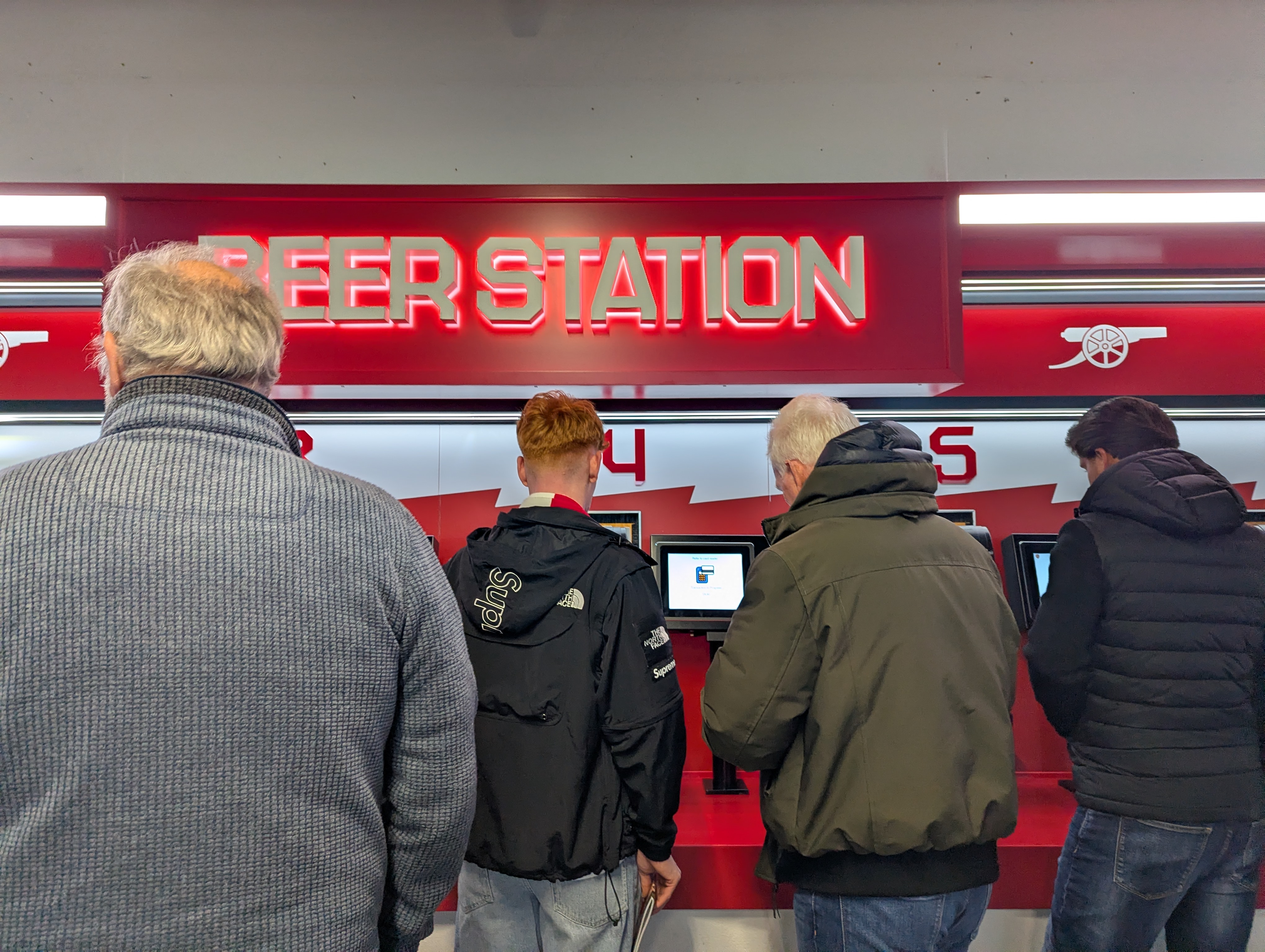
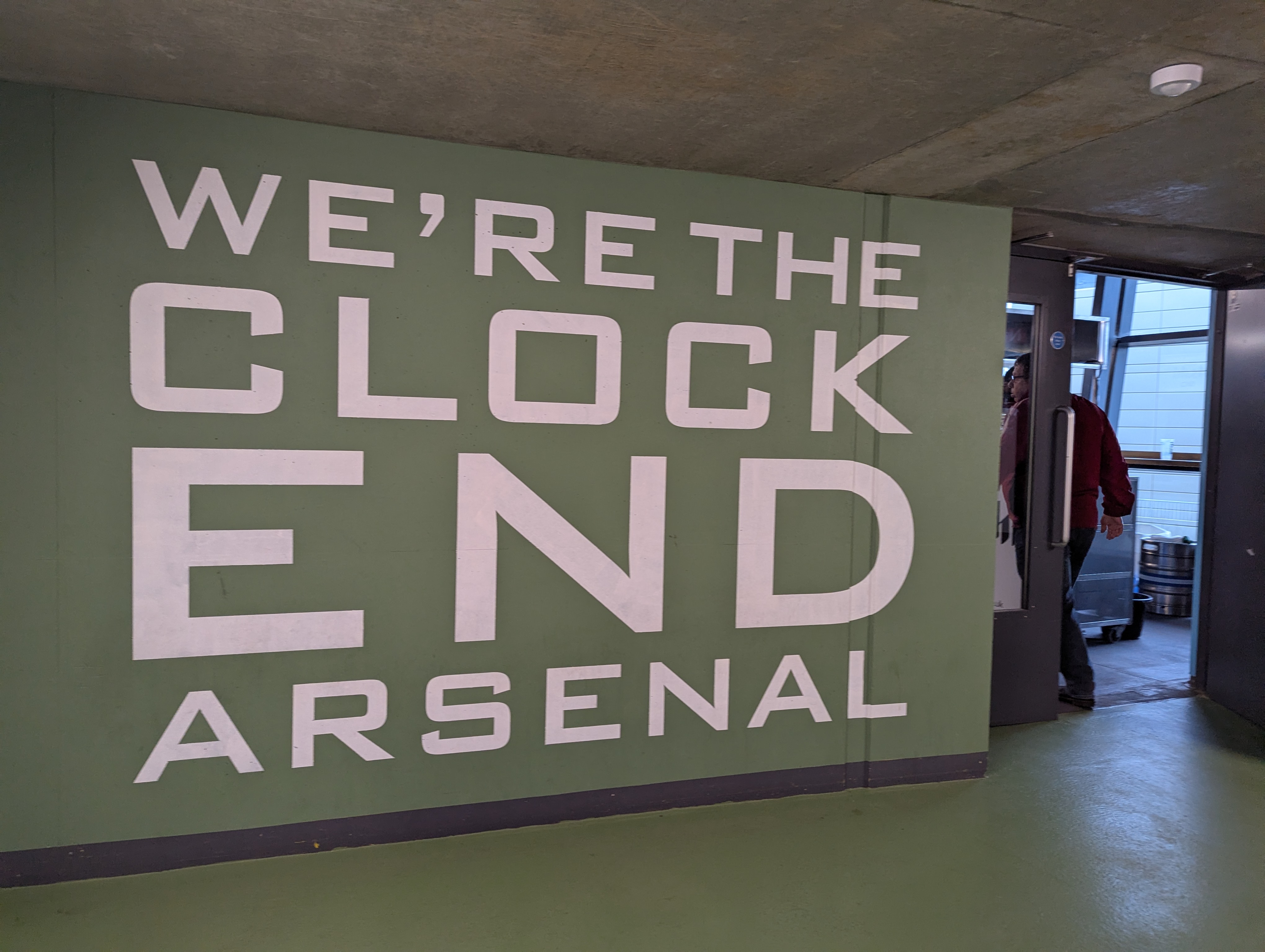
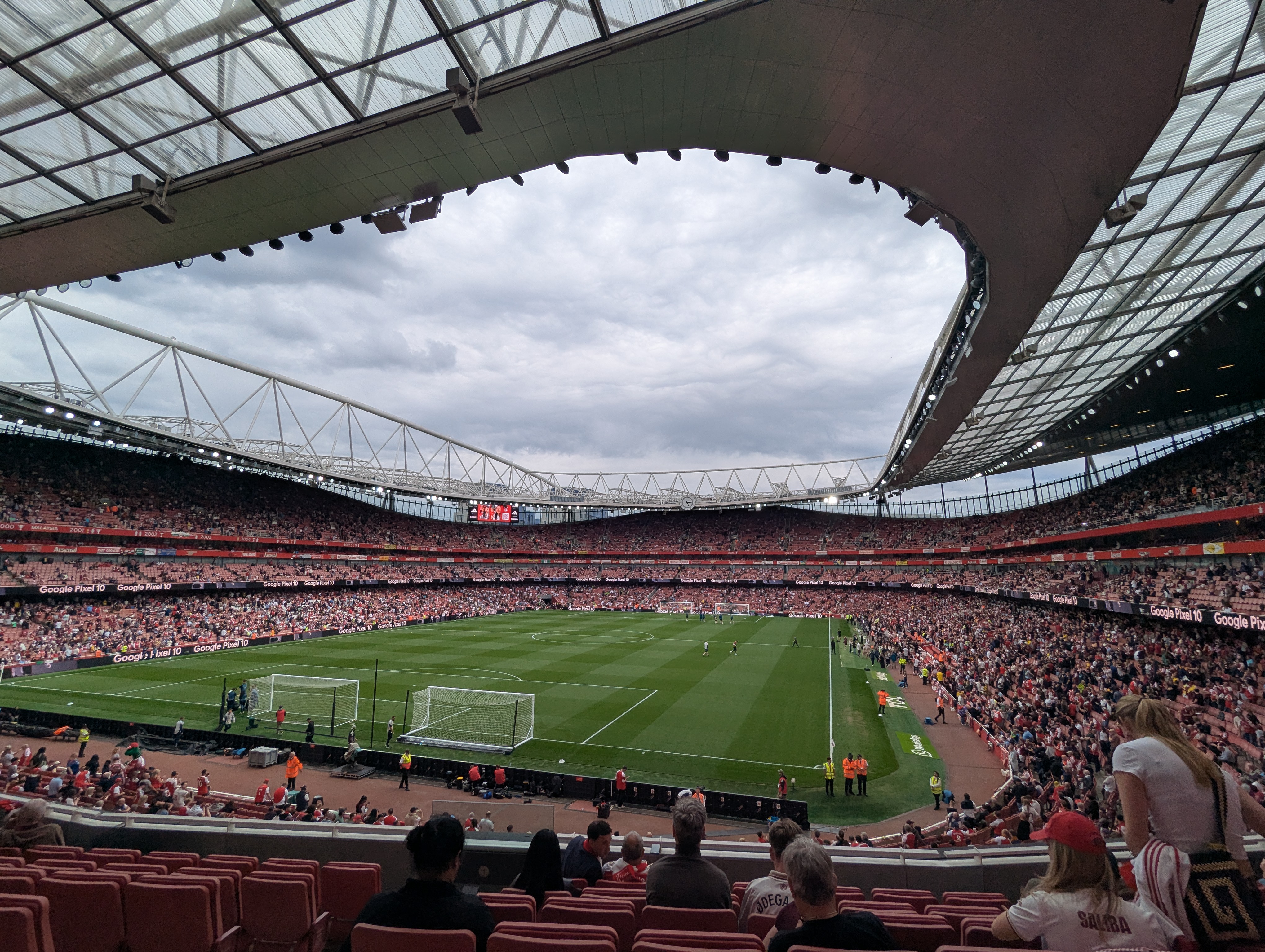
Having eaten my sandwich I walked all the way around to the other side of the stadium and entered, made my way up to the concourse outside my section in the Clock end. There was so much time, I invested in a Guinness and watched the pregame analysis on Sky Sports as well as you can with no sound on the television. By then the starting lineup had been announced and it was a nice-looking one with Martin Odegaard and Eberechi Eze both starting in midfield and Kai Havertz at striker. Most else exactly as the game at West Ham, which started pretty similar to Fulham and Atletico Madrid. Big exception being no Ben White, who was seriously injured in the West Ham match. He won’t be back this season and was replaced in this match with Cristhian Mosquera. And of course with Odegaard in the lineup, Myles Lewis-Skelly was listed as a substitute.
Since I last wrote about Arsenal’s standings in the league, not much had changed except for after the win by Arsenal at West Ham, Man City had a match at home against Crystal Palace, which they won handily, 3-0. Which means no matter what happened in Monday’s match against Burnley, Arsenal could not win the league on Monday. And, if Arsenal did win the match, the title race was going to go into the last week, probably even into the last game. Man City had won the FA Cup on the prior Saturday against Chelsea. To be honest, they didn’t look like much but they had enough in the tank to win by scoring once, late in the match. Their next Premier League match would be Tuesday against Bournemouth. And then both Arsenal and Man City would have matches on the last day of the season, Sunday.
And if Arsenal did not win against Burnley? Well, technically all would not be lost but we’d be out of the driver’s seat. We’d have to hope for a lot of bad stuff to happen to Man City. A club for which not much bad stuff usually happens.
Burnley has a player formerly with Man City, Kyle Walker. I saw reports in Social media that Kyle Walker had promised Burnley would take something off Arsenal. Given the state of social media, I don’t know if that comment actually was made. I also saw that Man City’s coach, Pep Guardiola, had said he has “no doubts” that Burley could produce something. However, you ask yourself, if Burnley could win at will, why they didn’t win enough games to stay in the Premier League? Their relegation has been certain since April 22. And who did they lose to that day? Man City beat them 1-0 at Burnley. Still, in their most recent match, they did manage a draw at Aston Villa, often a tough place to visit. And even though as a team they have very little reason to dedicate themselves to a win, the players have individual reasons to impress. When they go down to the Championship, Burnley might need to lighten their salary load so some players may find themselves sold back into the Premier League. Scoring a goal against Arsenal might give a Premier League team reason to consider your plight.
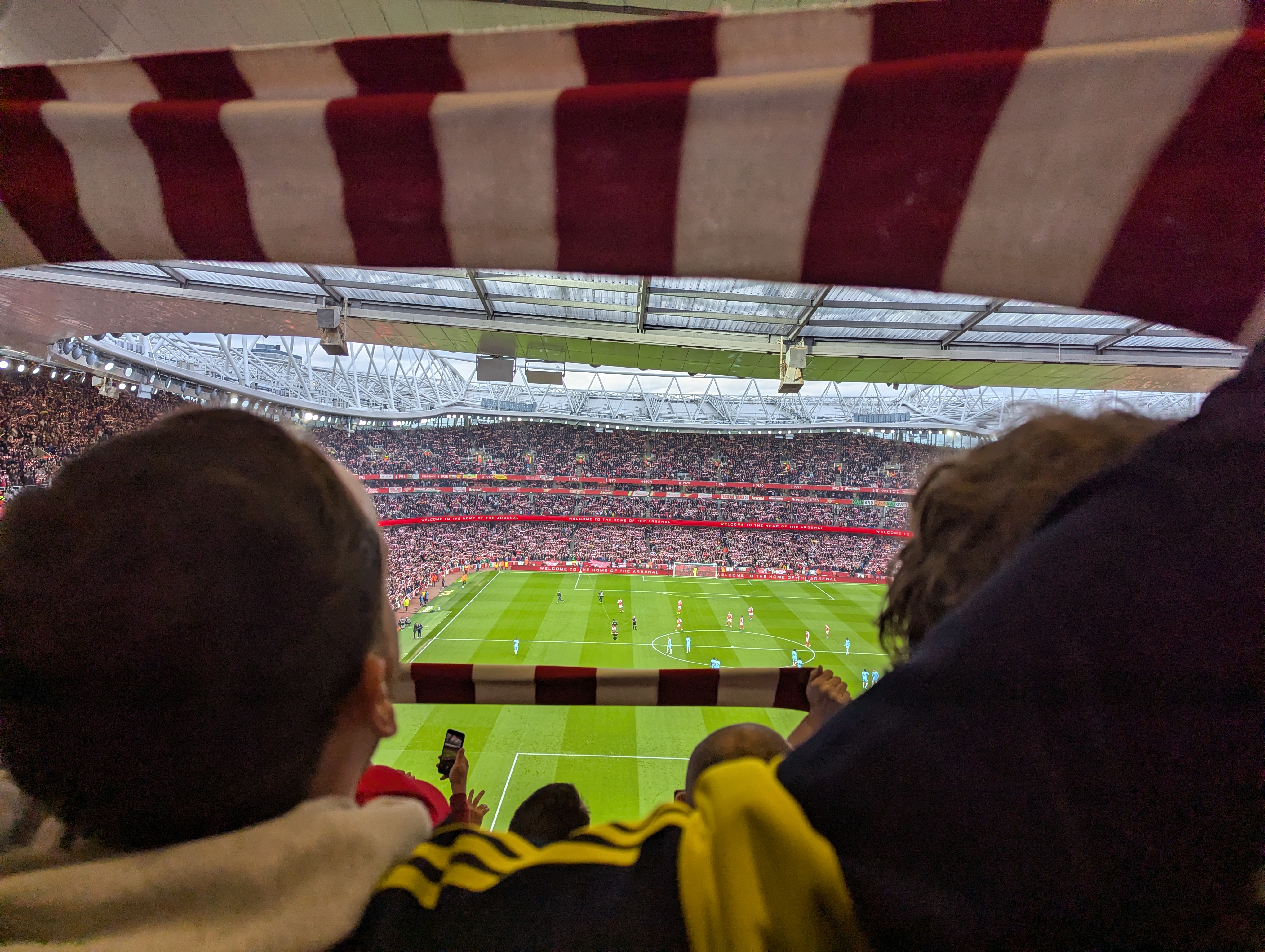
I made way to my seat where exactly one other person was already sitting in the row and it happened to be right next to my seat. We chatted a little bit about the seats (his was a season ticket), kids, jobs and, naturally, Donald Trump, as the section started to fill up. He told me my seat was owned by a guy who moved out of London and, yes, the change in match date and time had been what contributed to him selling on the exchange. The fan to my left also had bought his seat from a season ticket holder and was as delighted as can be to be there. He introduced himself to everyone around him and received a warm welcome. Speaking of warm, because it was a night game, there were cannons all along the East side of the stadium shooting flames into the air. We were far from the cannons but the warmth in the air when they shot into the sky was unbelievable. The people on the East side of the stadium must have been cooking.
Like every team, Burnley probably has three kits. The one they chose for this match, light blue and and lighter blue stripe, had an effect from distance similar to Man City’s home kit. It did make me feel uneasy.
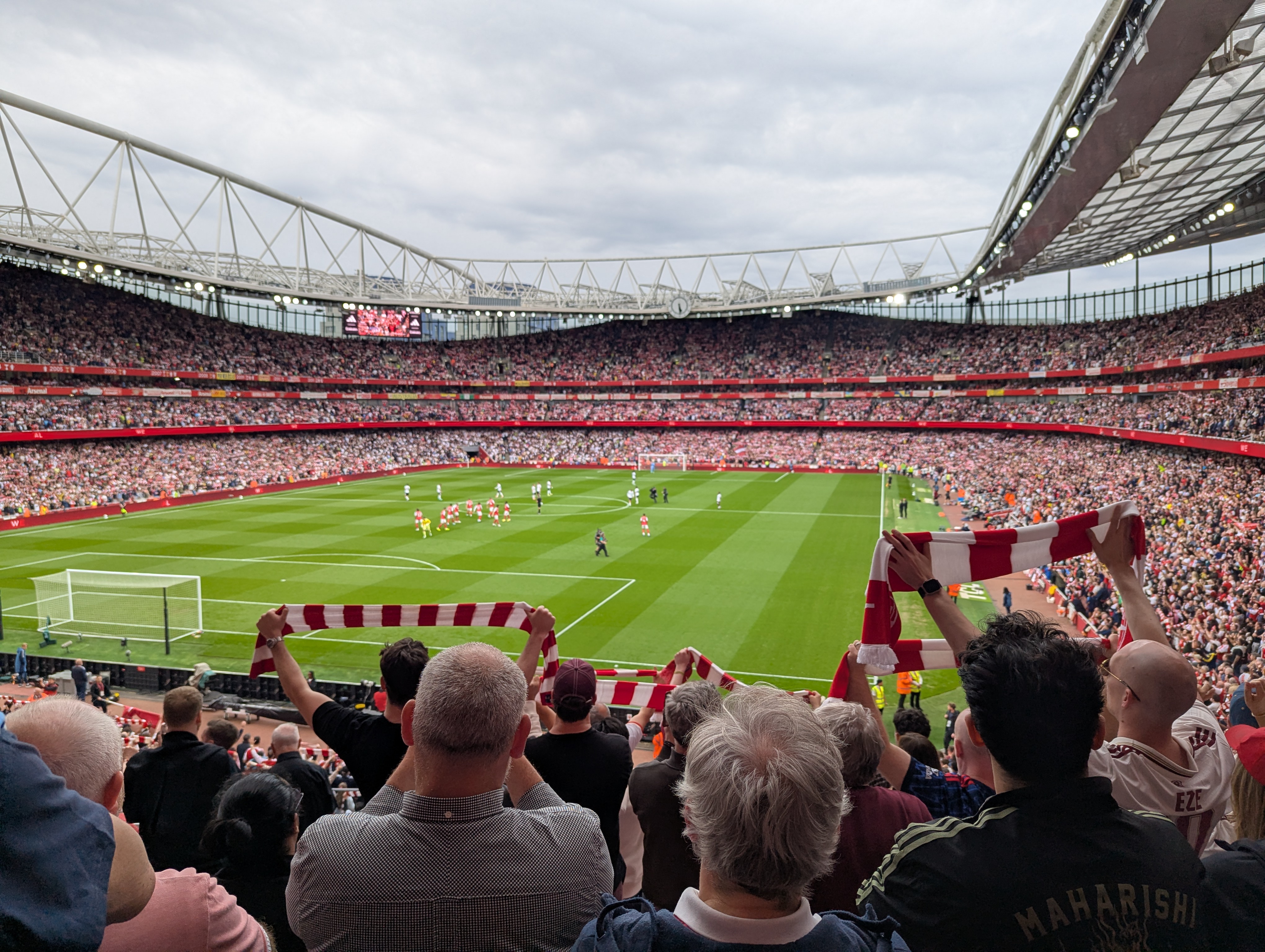
The stadium was loud loud loud. North London Forever was about as intense as I’ve ever heard it and the chants were nearly nonstop. Because I was in the Clock End, Arsenal were driving toward the goal in front of me for the first half. Burnley started strongly and a bit worryingly, but Arsenal regained control. As expected, Burnley kept many players behind the ball at all times and breaking through was challenging. Working in such close quarters, Burnley would get the ball and lose it to pressure, followed by Arsenal getting the ball and losing it to pressure. There was a lot of time wasting, particularly by Burnley’s goalkeeper. Kyle Walker was booed every time he touched the ball.
Arsenal were able to get several shots off. One, by Saka, was deflected out for a corner kick. Saka took the kick and went short. Even though Arsenal fans seem to hate short corners, no one near me complained. There was a near-glorious moment a bit later when Leo Trossard took a thundering shot that hit the goal post farther from us. The ball rebounded to a place the nearest Arsenal player was unable to get to it. Not too long after that, Burnley managed a scary counterattack that ended with a misfired shot. Phew.
A bit later Saka drove into the box and as he went to kick the ball it looked like he was fouled. Never before in that stadium have I heard such sustained boos for the referee when he waved it away. The subsequent VAR check agreed with the referee. We didn’t like it. I’ve seen that one on TV after the match and still think it’s a foul on Saka. The defender only gets to the ball because he’s hooked Saka’s foot. I’m just glad Saka was not badly injured. That was one of those awkward moments where something bad can happen.
After some sweet team play ended with a shot by Odegaard being deflected, Arsenal were given another corner kick. Saka took the kick again, across the goal into a place that I think many goal keepers would be able to get to. Kai Havertz jumped into a cloud of blue shirts and had no problem hitting the target using his head. We went crazy as he ran in front of us to celebrate in the corner. A trademark set piece goal for this crazy season. A lot of hugs and high-fives in our section.
Saka had one more shot before halftime that wasn’t far from the goal, but a miss is a miss.1-0 as the stadium emptied out for beer and a bathroom break.
At this point, many teams might open up in quest of an answering goal, but it seemed Burnley were determined to limit the damage. They deployed roughly the same strategy in the second half as the first. It was frustrating for sure. There were a couple good Arsenal attempts on goal that ended with missed shots by Eze. There was at least one attack by Burnley into our end that resulted in an errant shot well above the goal. The most worrying event involved an incident with Kai Havertz. It occurred far from where I was and I did not have a good look at it. Havertz apparently fouled a Burnley player and received a yellow card for his troubles. But the incident went to a long VAR review to determine if it shouldn’t really be a red card. We would have played 25+ minutes with 10 men if VAR intervened.
VAR’s determination was that the yellow card was good enough. Gyokeres had been warming up on the sidelines before this was happening so perhaps the subsequent substitution Mikel Arteta made did not 100% reflect a decision to not take any chances with Havertz on a yellow that referees might be inclined to take make-up action on later. Whatever his reasoning, Havertz was removed for Gyokeres shortly thereafter in a three-sub replacement that also saw Myles Lewis-Skelly replace Eze and Hincapie replace Califiori.
At this point, the crowd was trying hard to stay behind the team but it had been painful. Not much good had happened. Not much bad either, but that’s besides the point. We were hanging onto a one-goal lead. Logically, Burnley had done very little to trouble us, but it only takes a moment. And we had taken a number of shots that for one reason or another failed to hit the target. Fouls were flying fast and furious. I was almost more worried someone would get injured. We need everyone to stay healthy.
That’s a lie I’ve told myself. The thing that had me more worried than anything was, without a doubt, that they might score.
The fourth official announced 7 minutes of added time we had to get through. Then David Raya was fouled badly and fell awkwardly right in front of us. He looked to be in a lot of pain but eventually was able to continue. And again, yes, I’m worried about injuries. Briefly. There were more Arsenal subs. And now, with the pause in play for David Raya’s injury and the subs, no one in the stadium knew how long we had to hang on for.
I’m dying.
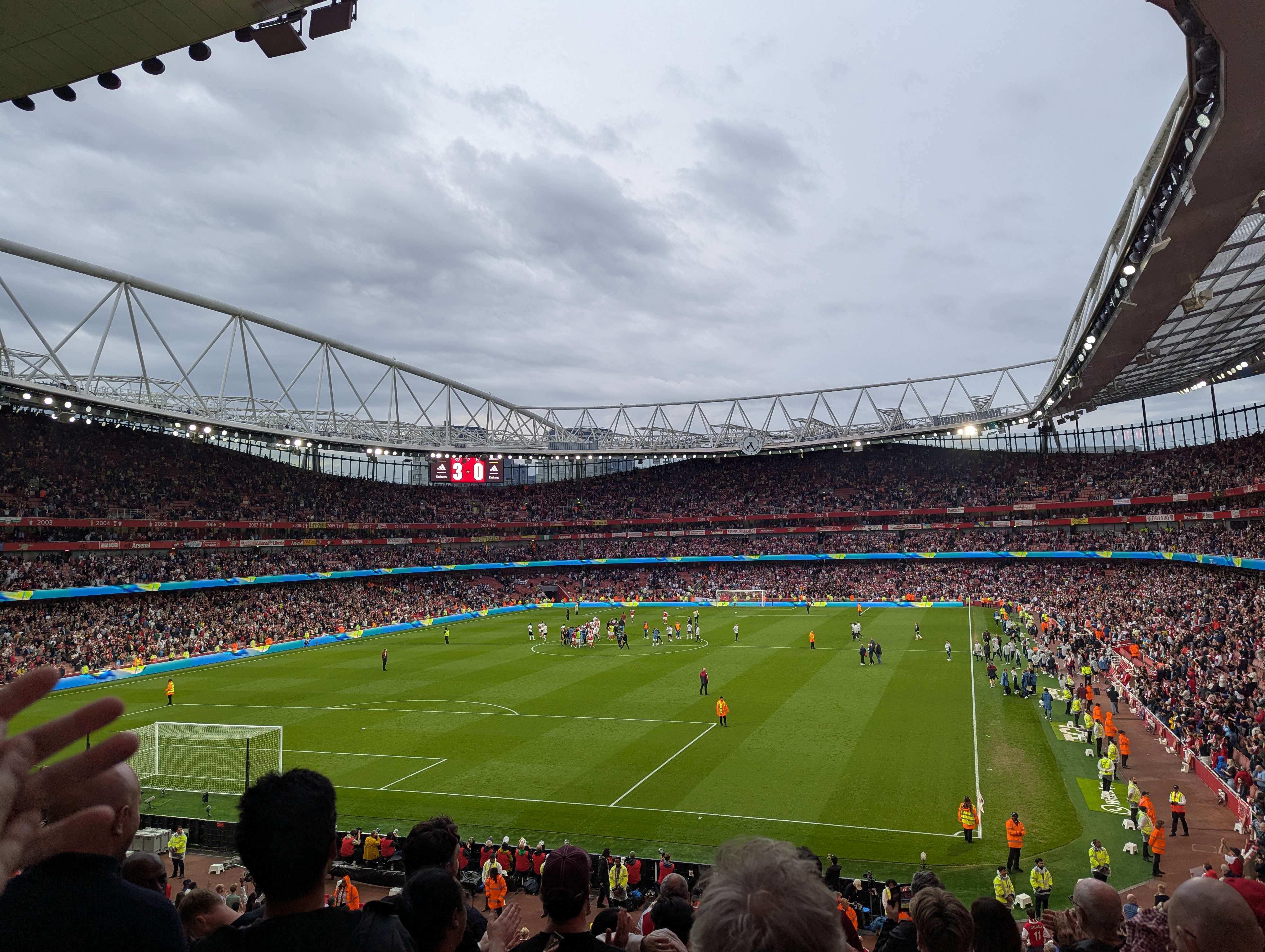
After a long lifetime, the whistle blew. We had won. 1-0. I was shaking, more than I’ve ever experienced. And I’ve felt shaken at the end of a match many times this season.
And then, because it was the last home match of the season, even though it was late “on a school night,” most people in the stadium stayed in place to hear speeches by Martin Odegaard and Mikel Arteta and celebrate the players as they walked around the pitch to cheer and be cheered. When Mikel Arteta stepped to the microphone the stadium broke out in the must uproarious version of “We’ve got Super Mik Arteta” I’ve ever heard. It was repeated again and again, each time louder than the last.
He might never have gotten to speak, but he broke in. He sounded close to tears as he thanked everyone in the club and the fans for their support. He reminded us we have one more match in the Premier League to go after.
We would have to live in this uncertain world for one more week. After which we would know if we have what it takes to bring this title over the line.
Did I feel confident? I’m an Arsenal fan. We have been through so much. 22 years since we last took the title. I’ve been a fan for more than 15 of those years. Too much could happen. Has happened.
So, while I felt hopeful and I thought these players, this manager, could do it, “confident” was a bridge too far.
My flight into Heathrow arrived later than normal because flights were pretty expensive. I ended up booking a flight that connected through Dublin. The extra leg was welcome because it allowed me a bit more sleep before getting on the Tube. I often fall asleep on the Tube from Heathrow to wherever our hotel is, but usually my husband is present and awake to be part of ensuring we get off at the right stop. Not this time. Although he, my son, and I kept trying to get tickets for the match even after I booked my flight, no tickets materialized.
I held off booking my hotel until two days before I departed since we were hoping my son and/or husband might make it. Do you book a hotel for one, two that are married, two that are not married, or three? I ended up hedging and selecting something appropriate for two that were married, a room at The Exhibitionist, a tiny, somewhat kitschy hotel in Kensington close to the South Kensington Tube stop. Easy access to the airport and on the same line as the Arsenal stop, albeit not super close to the stadium. Great neighborhood we’ve been in a few times and it worked well for me. They checked me in immediately upon arrival and I took the opportunity to take a short nap before showering. A full bath with both a tub and a separate shower, and the rain head was serious about my cleanliness.
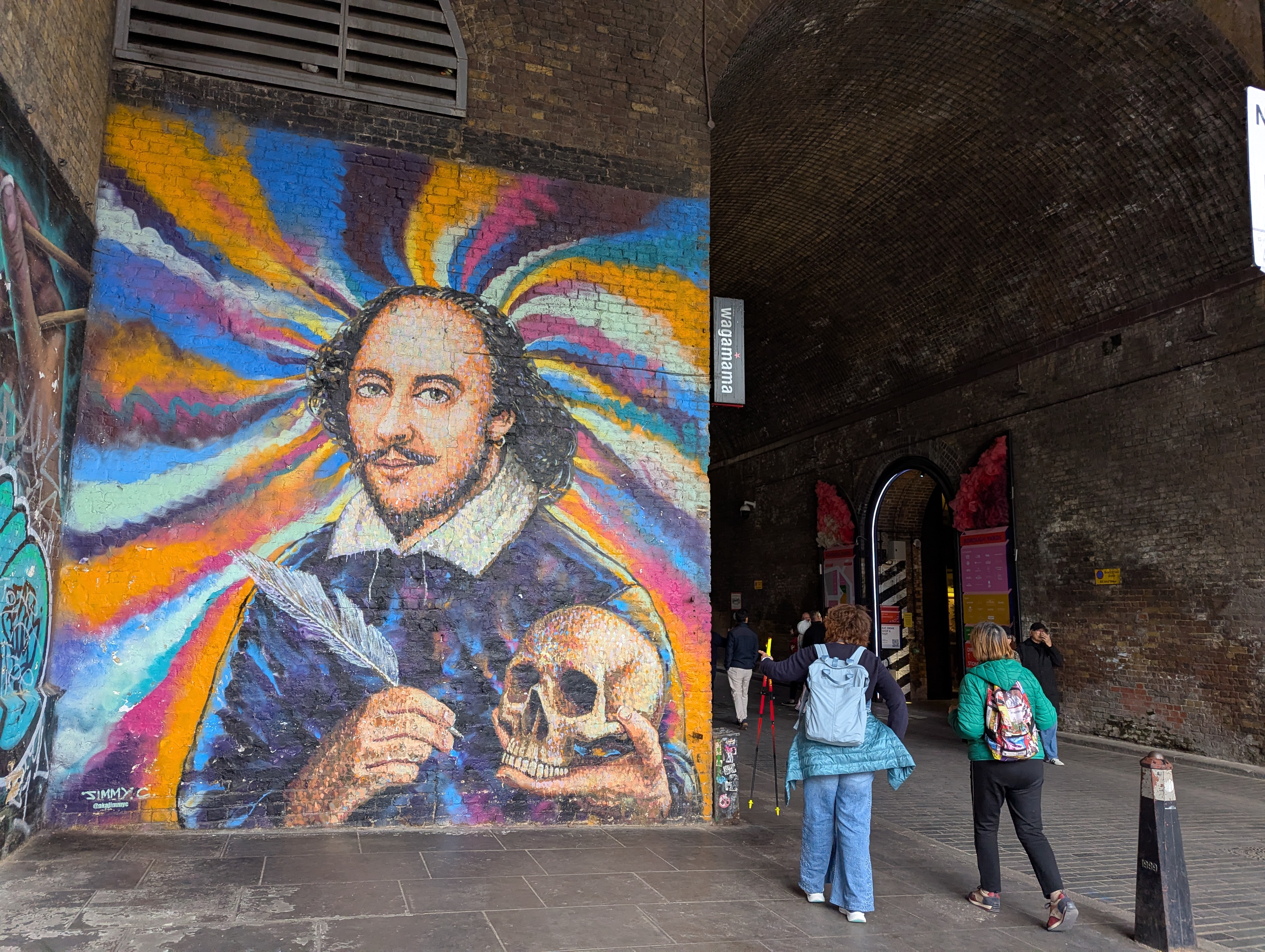
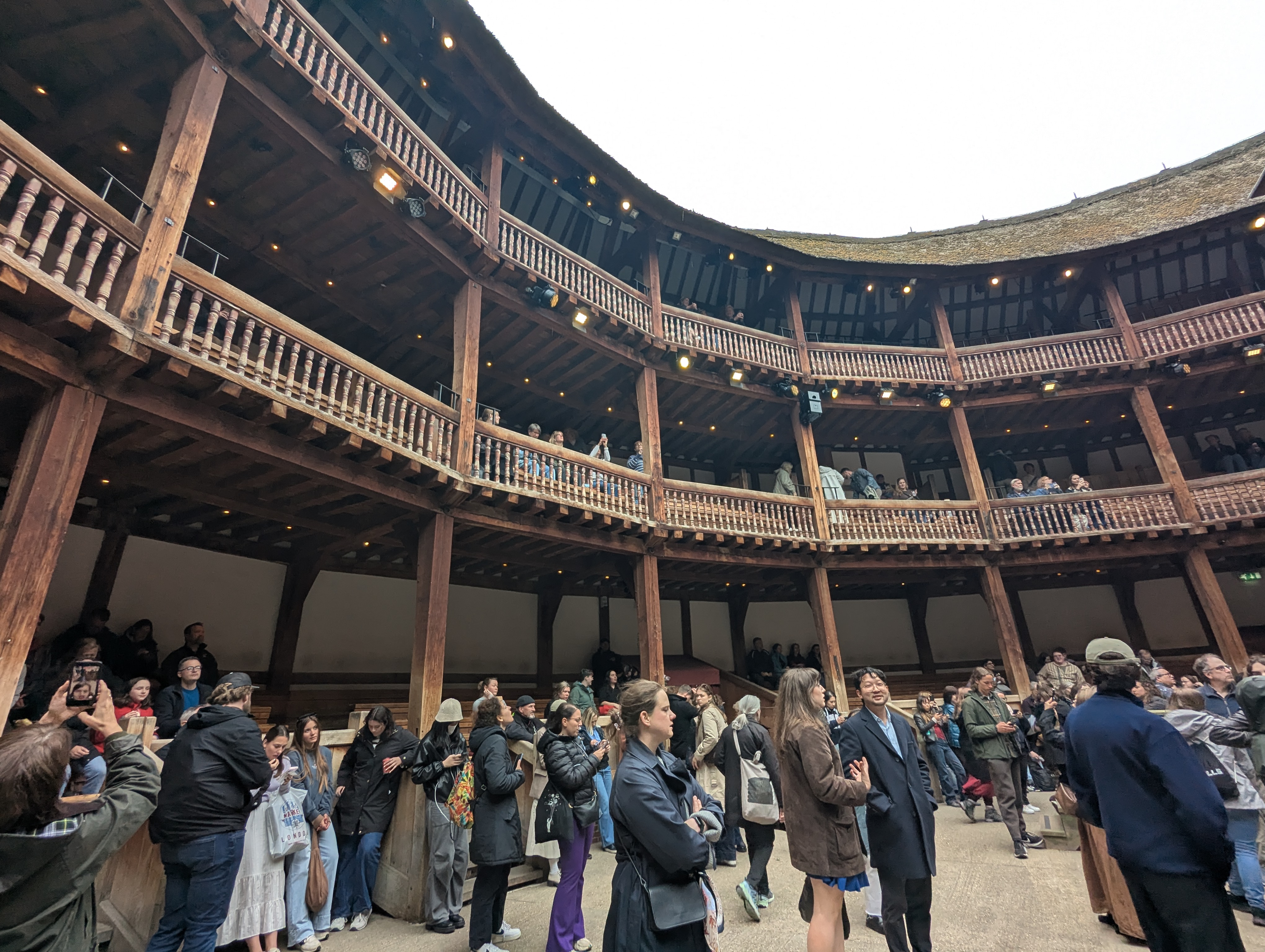
I’d booked cheap groundling tickets to A Midsummer Night’s Dream at Shakespeare’s Globe Theatre for the evening. Good activity to do on your own, reasonably priced so you can bag it if you’re too tired or the weather is bad. This is a comedy in the star-crossed lover genre and one I know pretty well. It’s probably one of the more accessible Shakespeare plays and very popular among park theatre productions.
It was a Sunday evening and although the play was well-attended, it was not incredibly crowded either. The Globe does a great job of involving the audience to keep things fun and interesting and they outdid themselves on this occasion. Before the play even started, they had the audience singing in rounds, practicing dance steps, and reciting sections from various Shakespeare plays. The groundling section was mostly populated with young people who were happy to participate and, once the play began, seemed to really enjoy it. The play was fun and well acted, but being in a really engaged audience made it even better. The actors occasionally brought members of the audience onto the stage to perform various roles and everyone had a wonderful time.
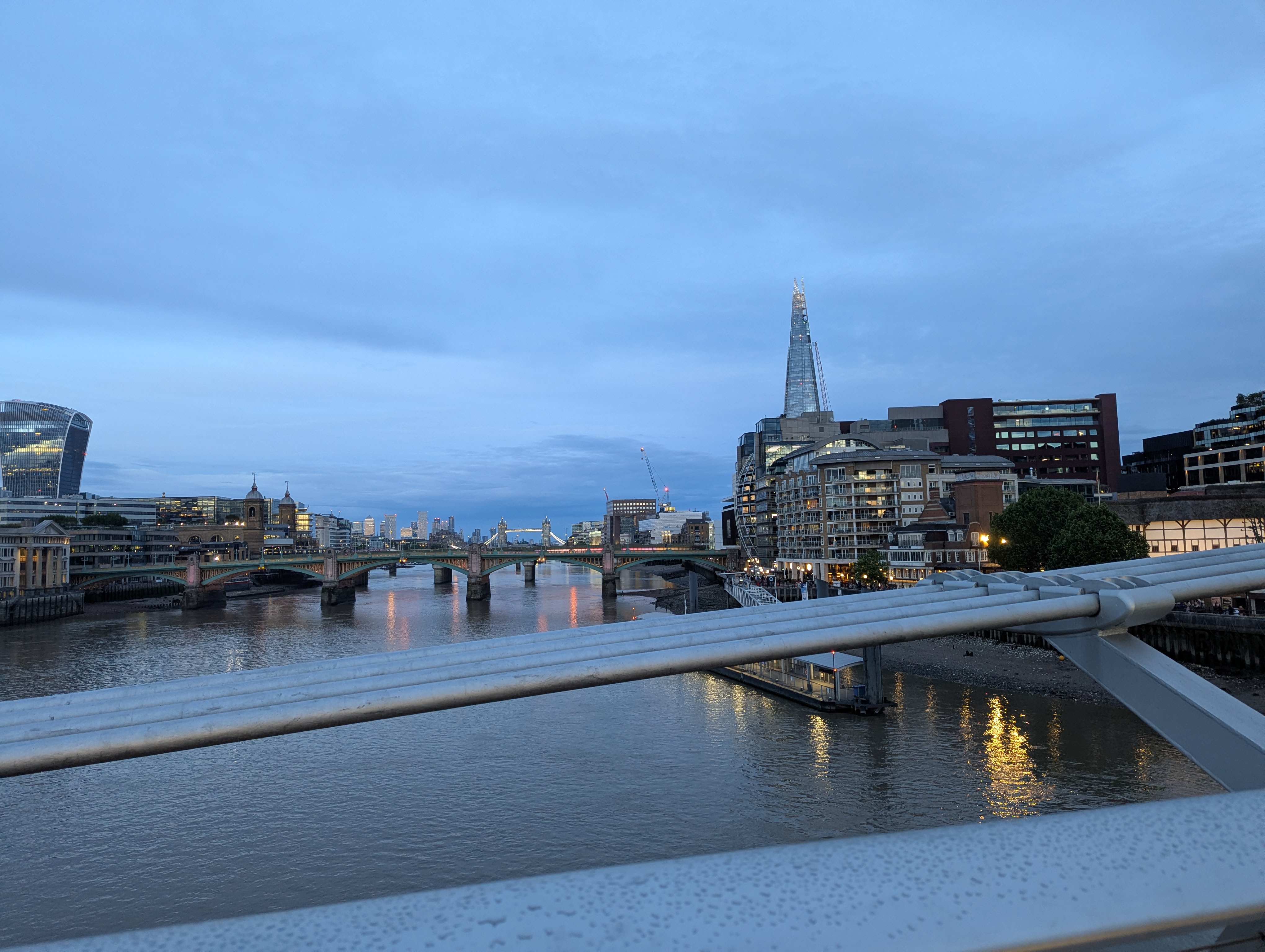
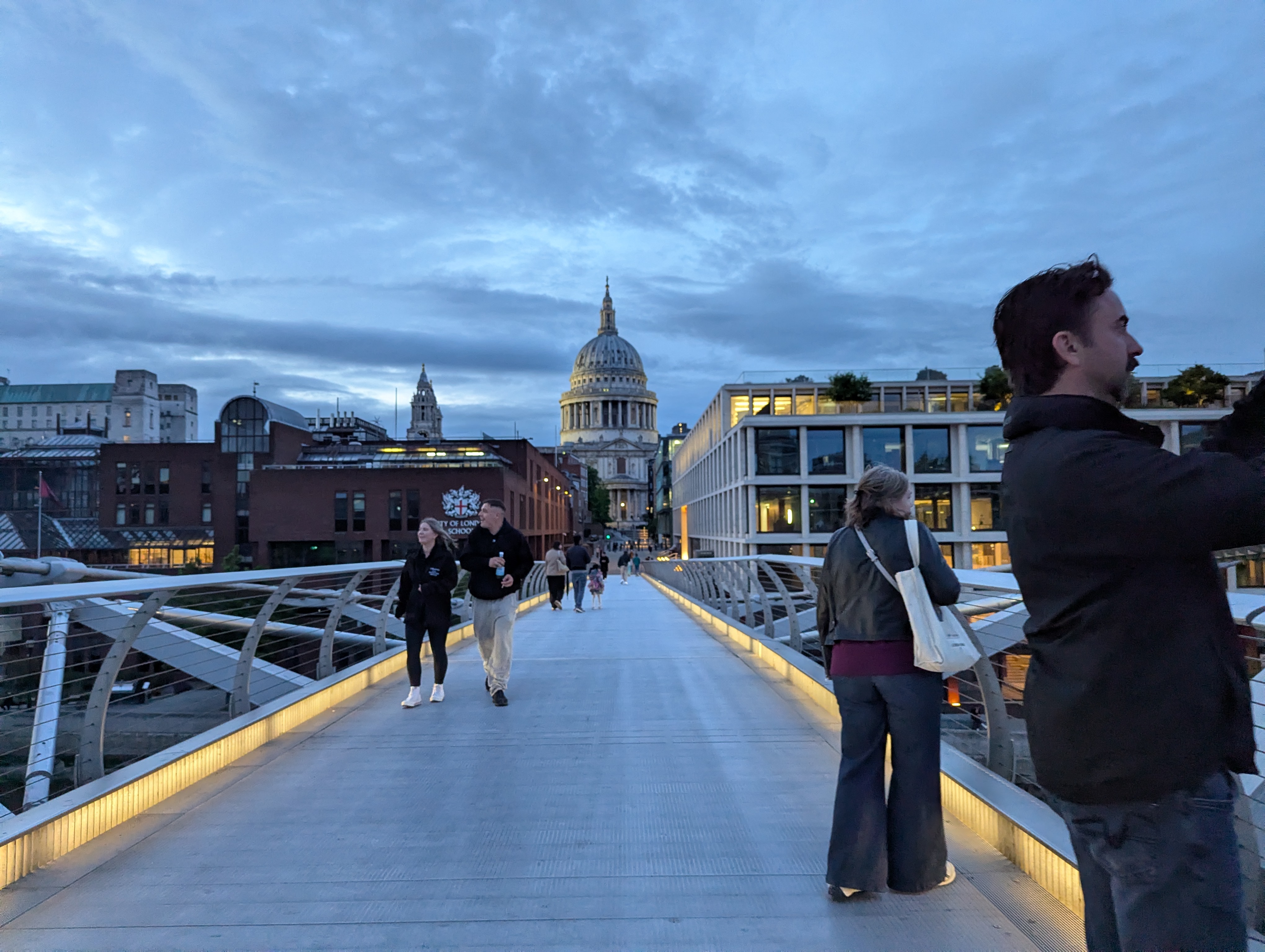
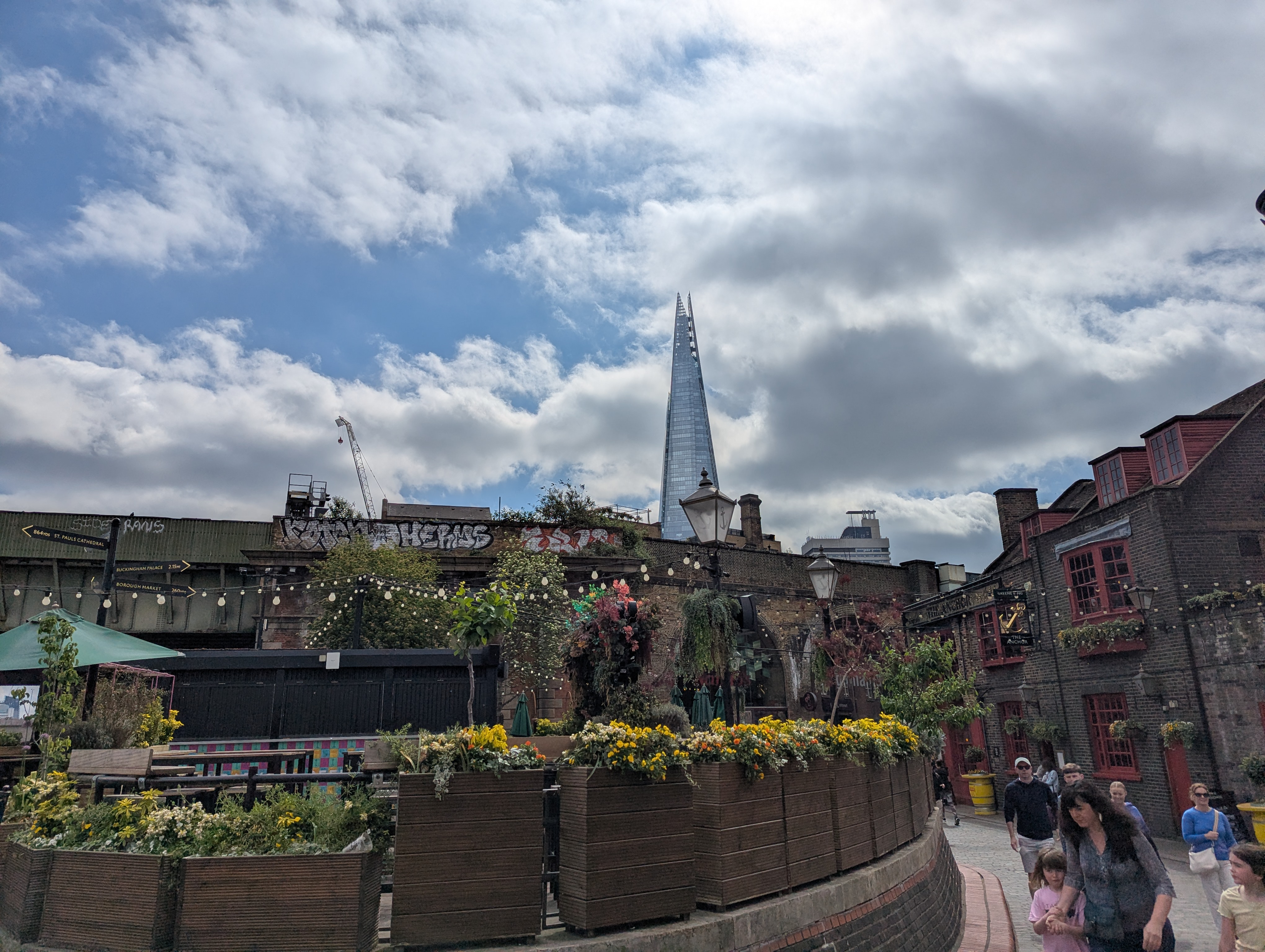
The play started relatively early and ended at dusk. The walk back to the Tube over Millennium Bridge was particularly nice. There were very few people out on a Sunday evening and I was surprised to be able to hear the birds calling as I walked over the bridge and enjoyed the views to St. Paul’s Cathedral and the Shard.
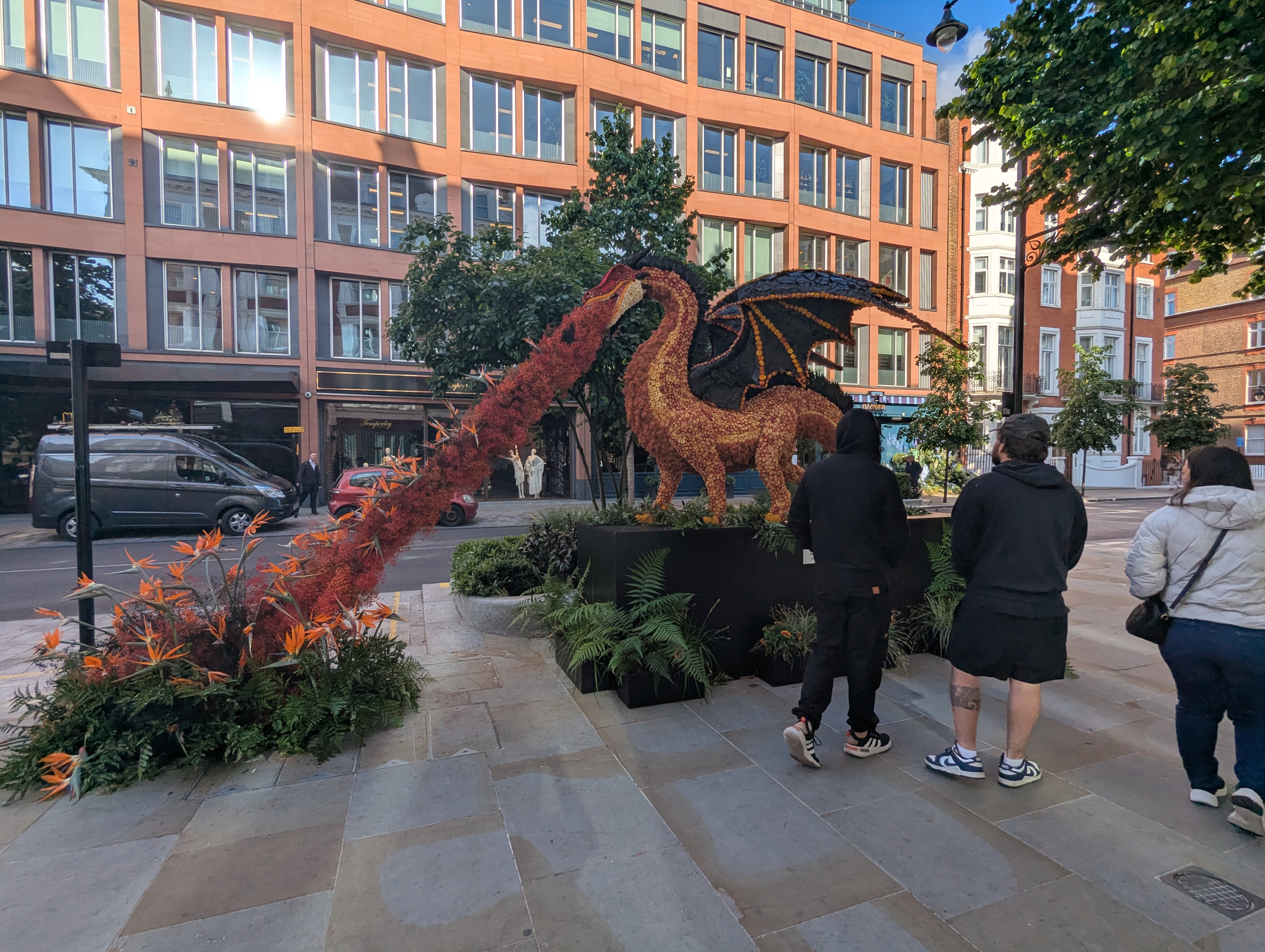
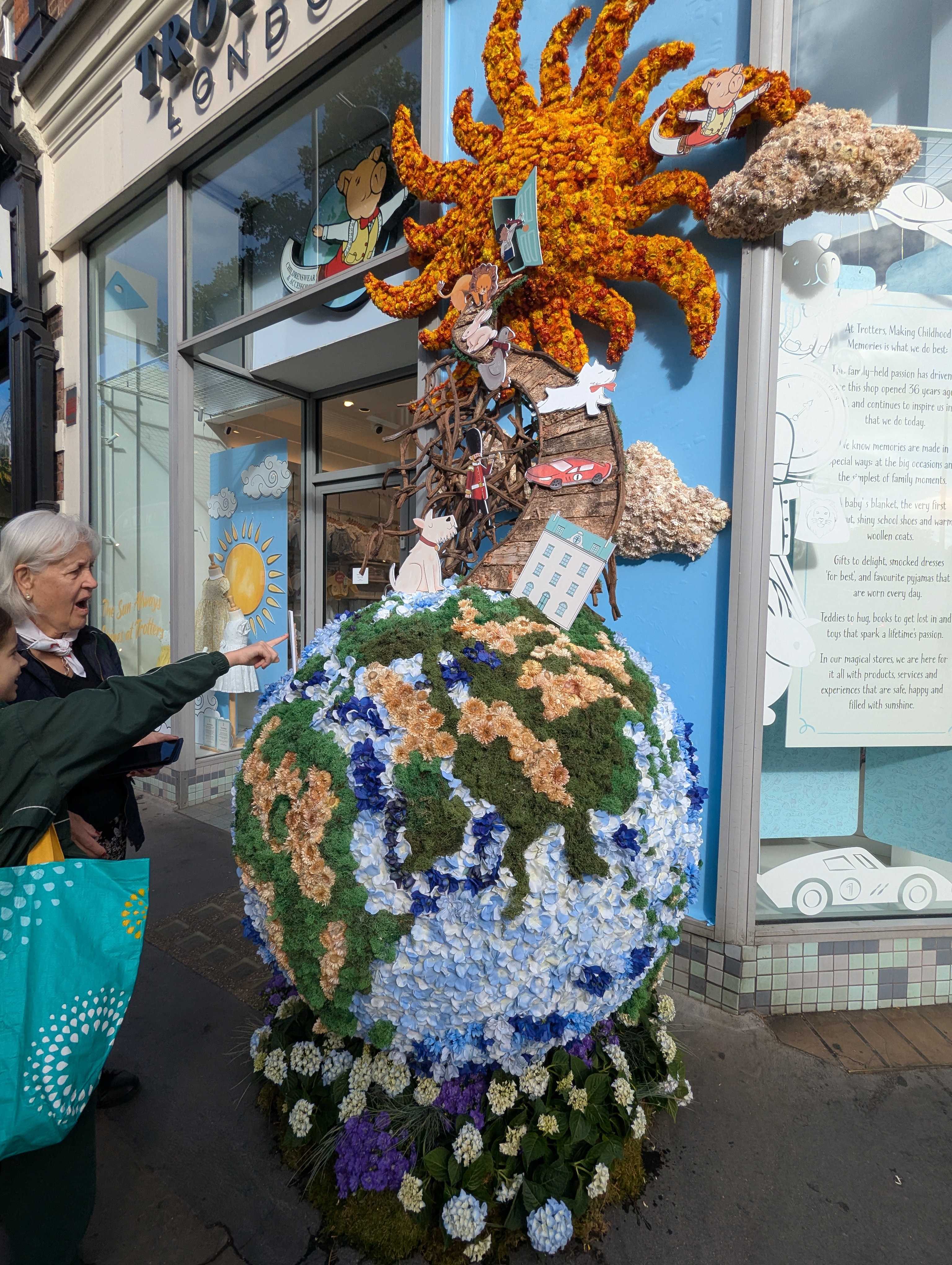
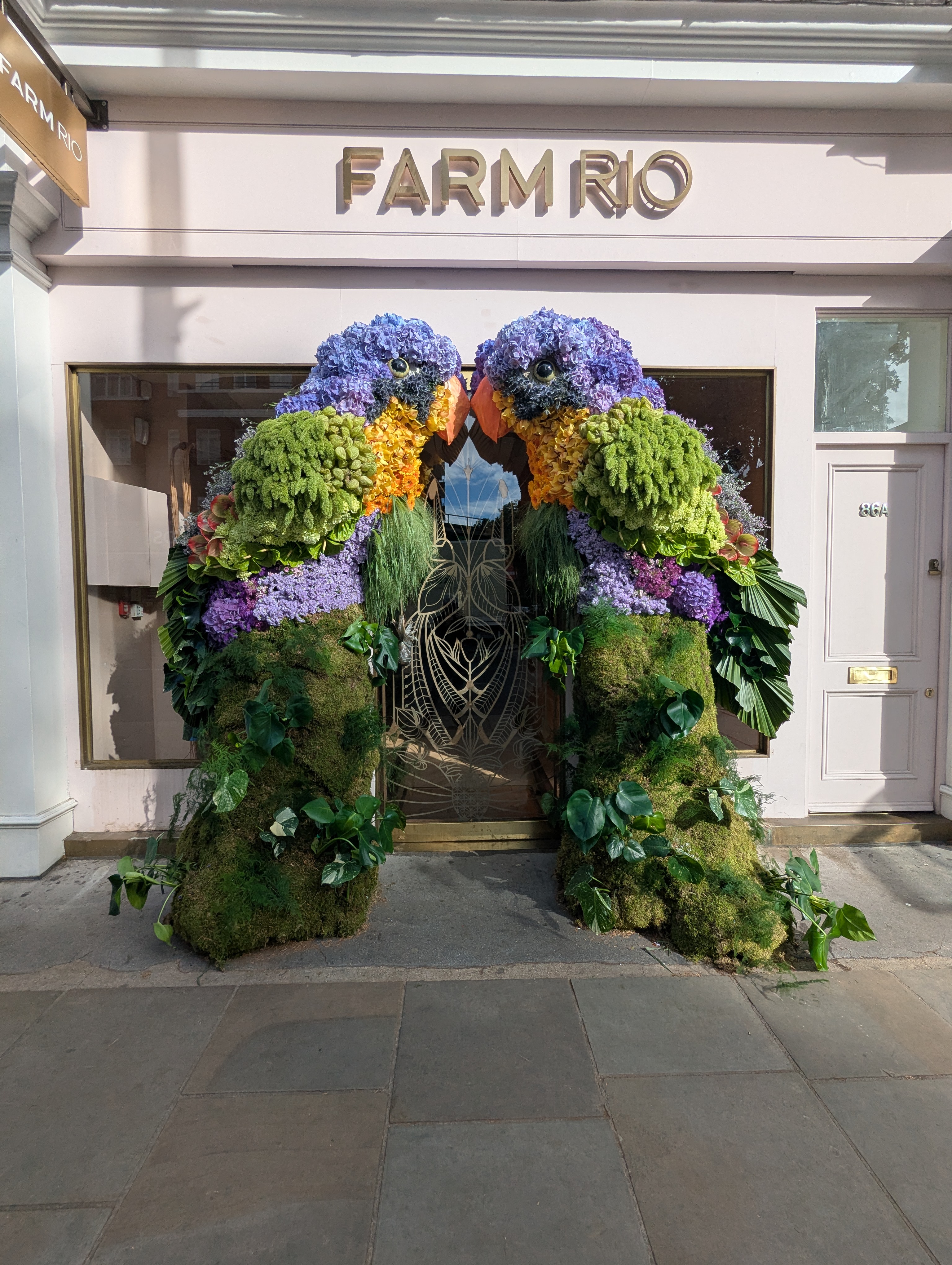
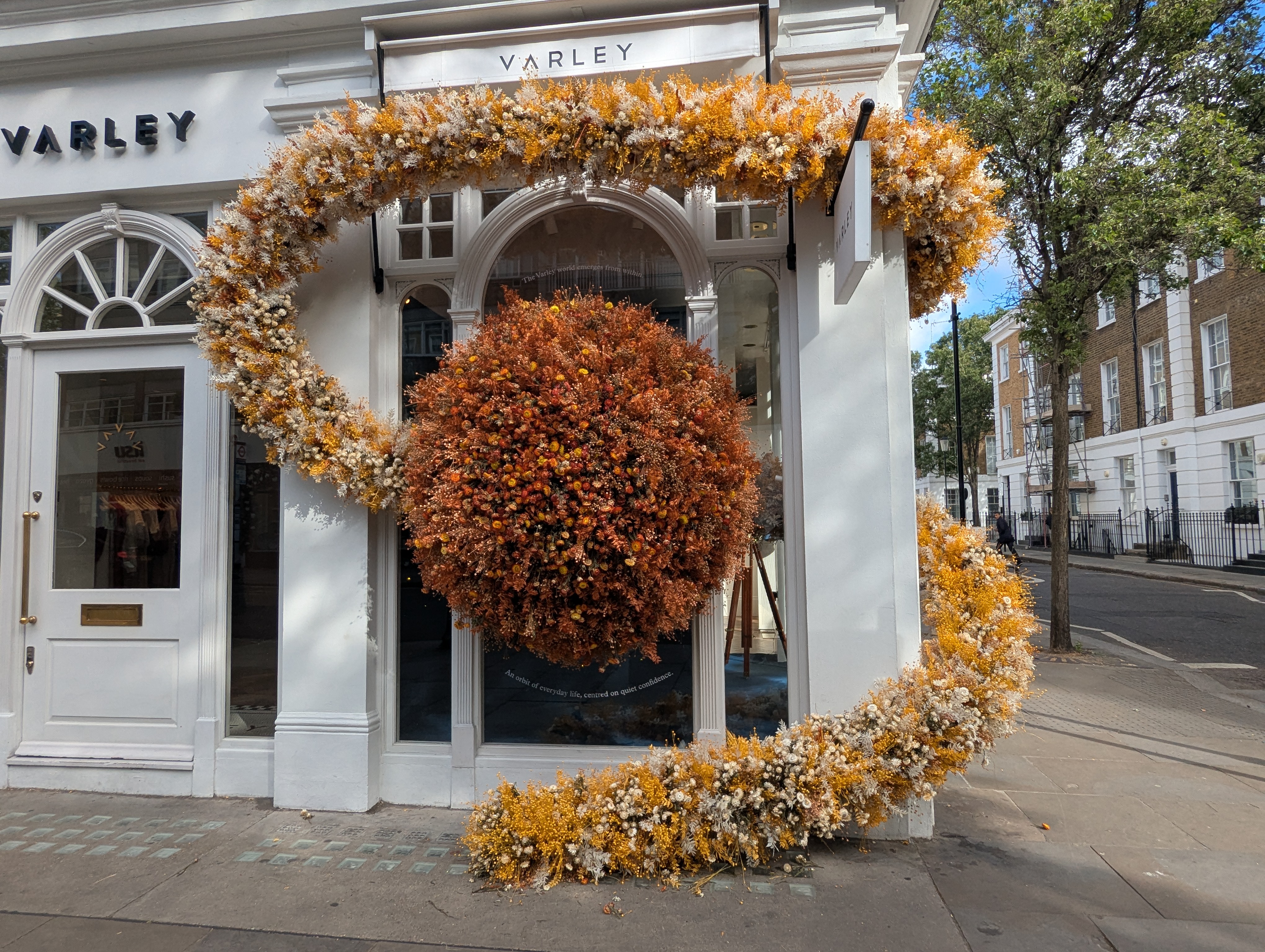
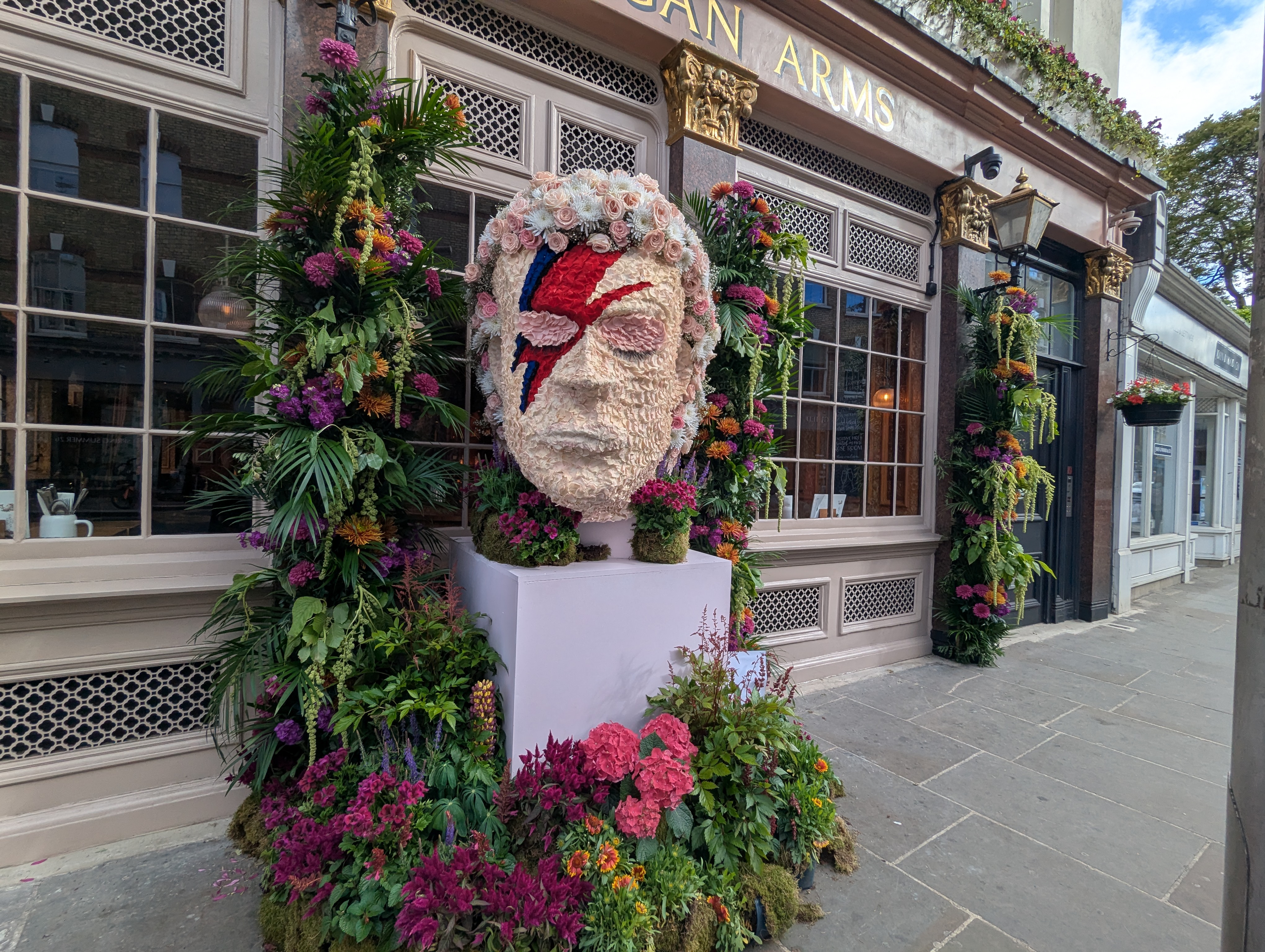
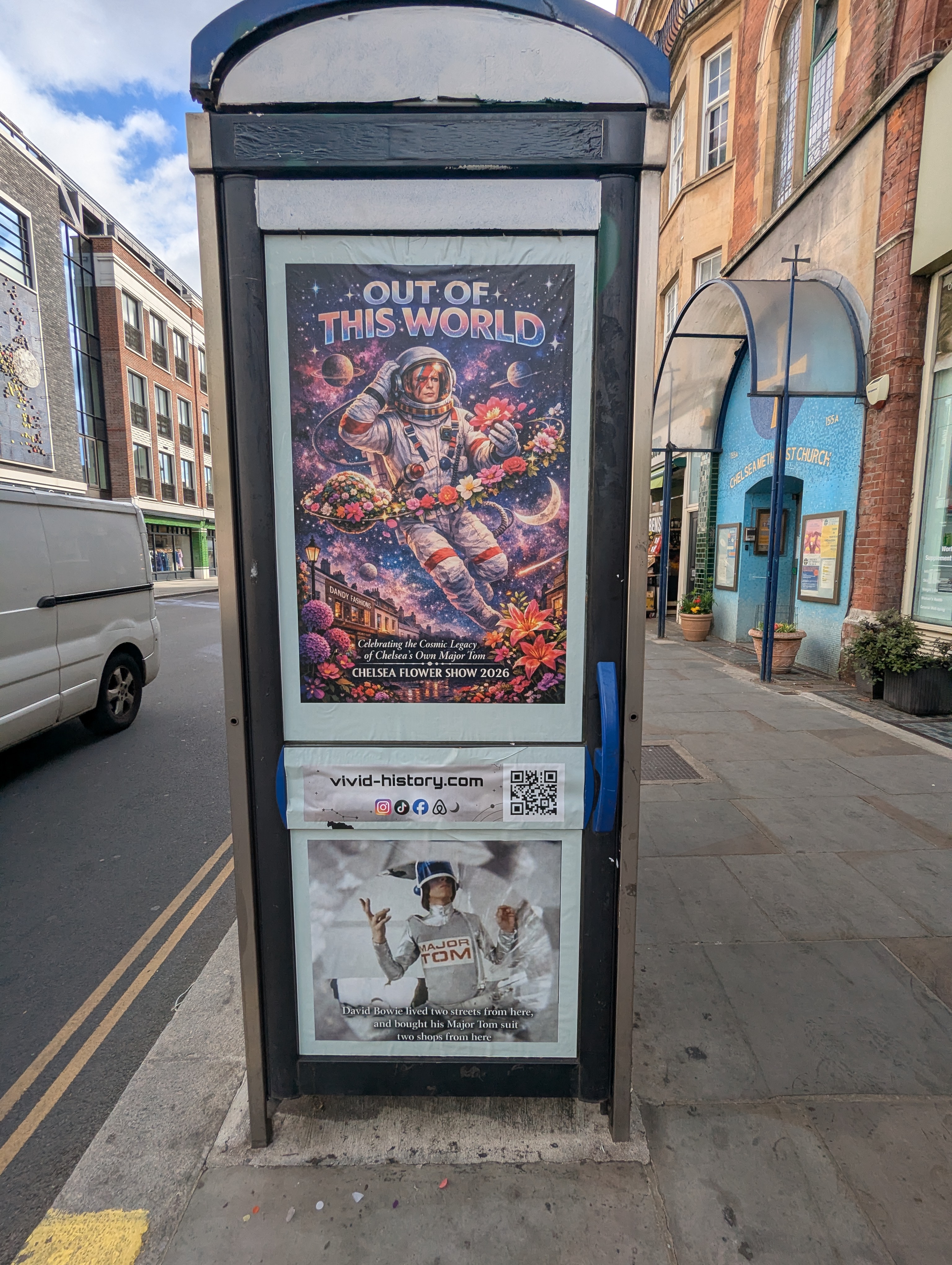
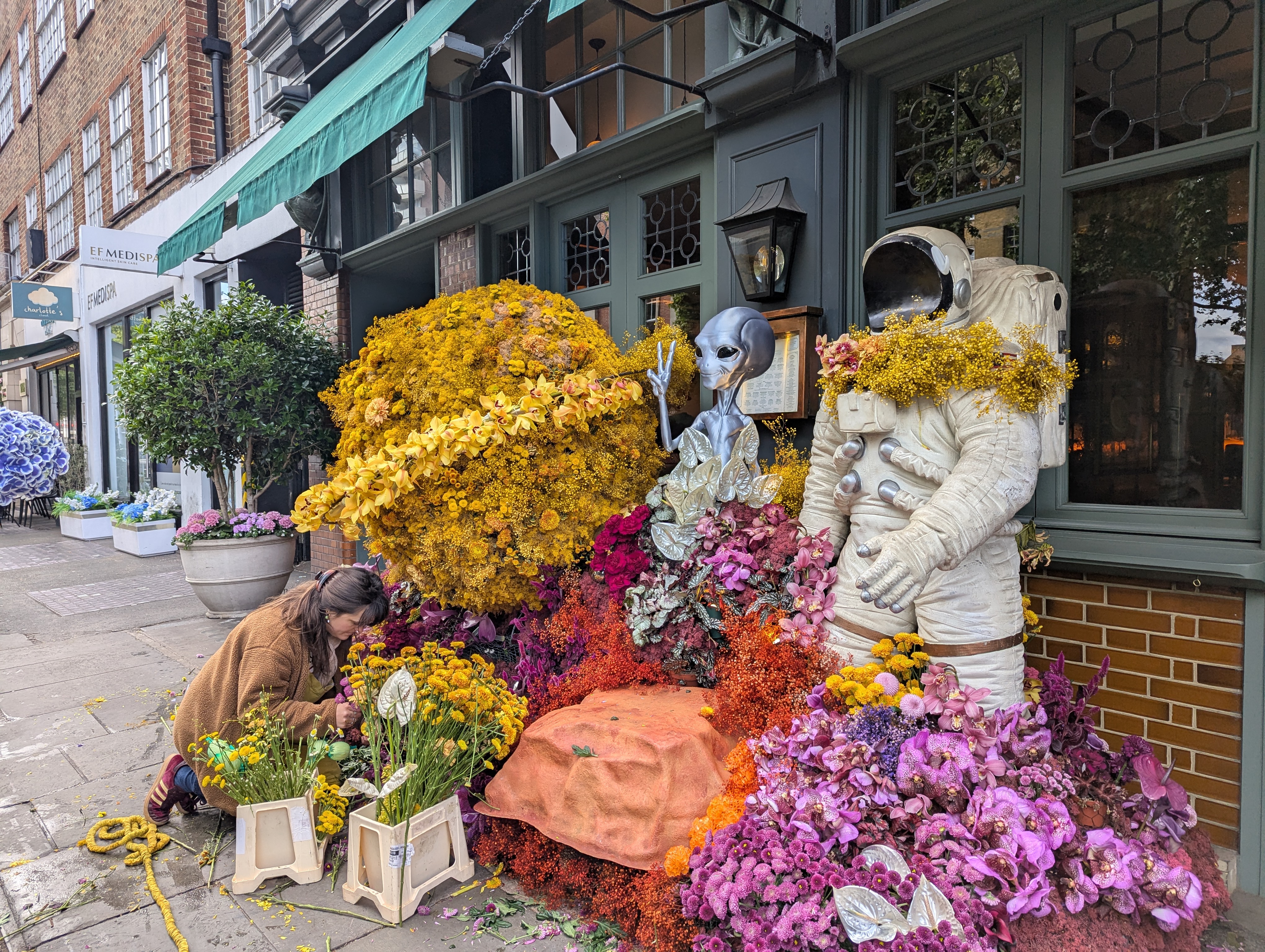
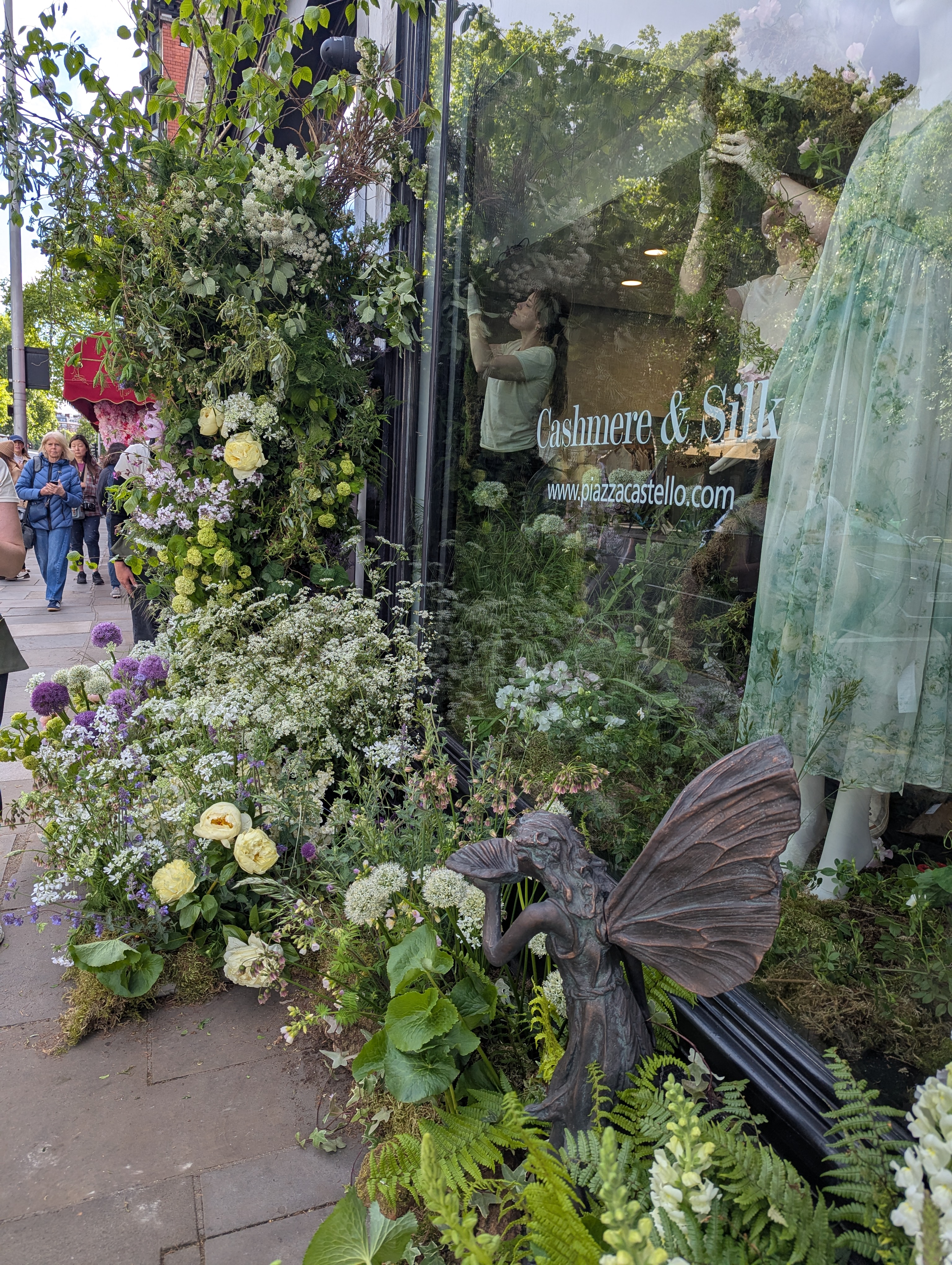
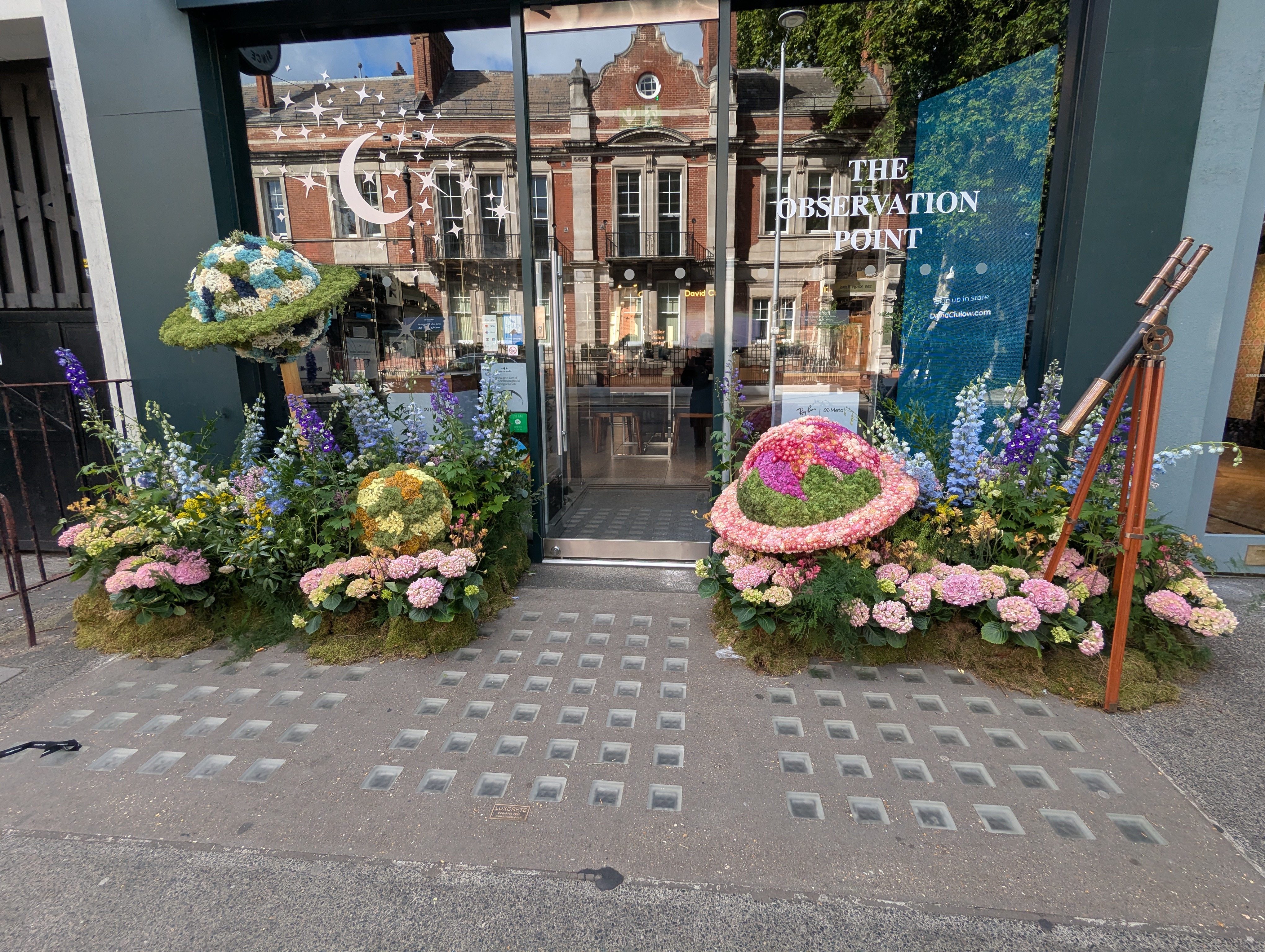
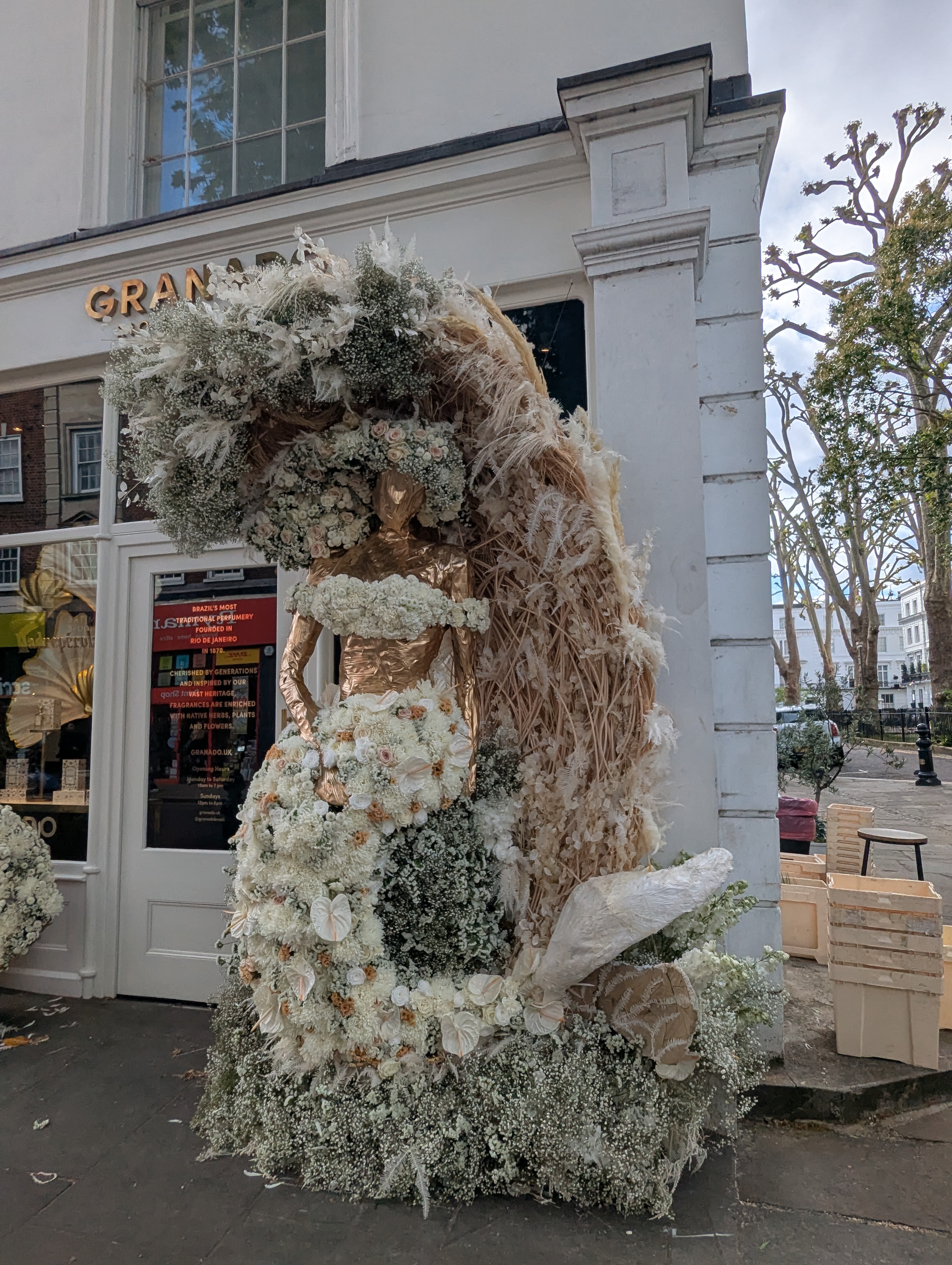
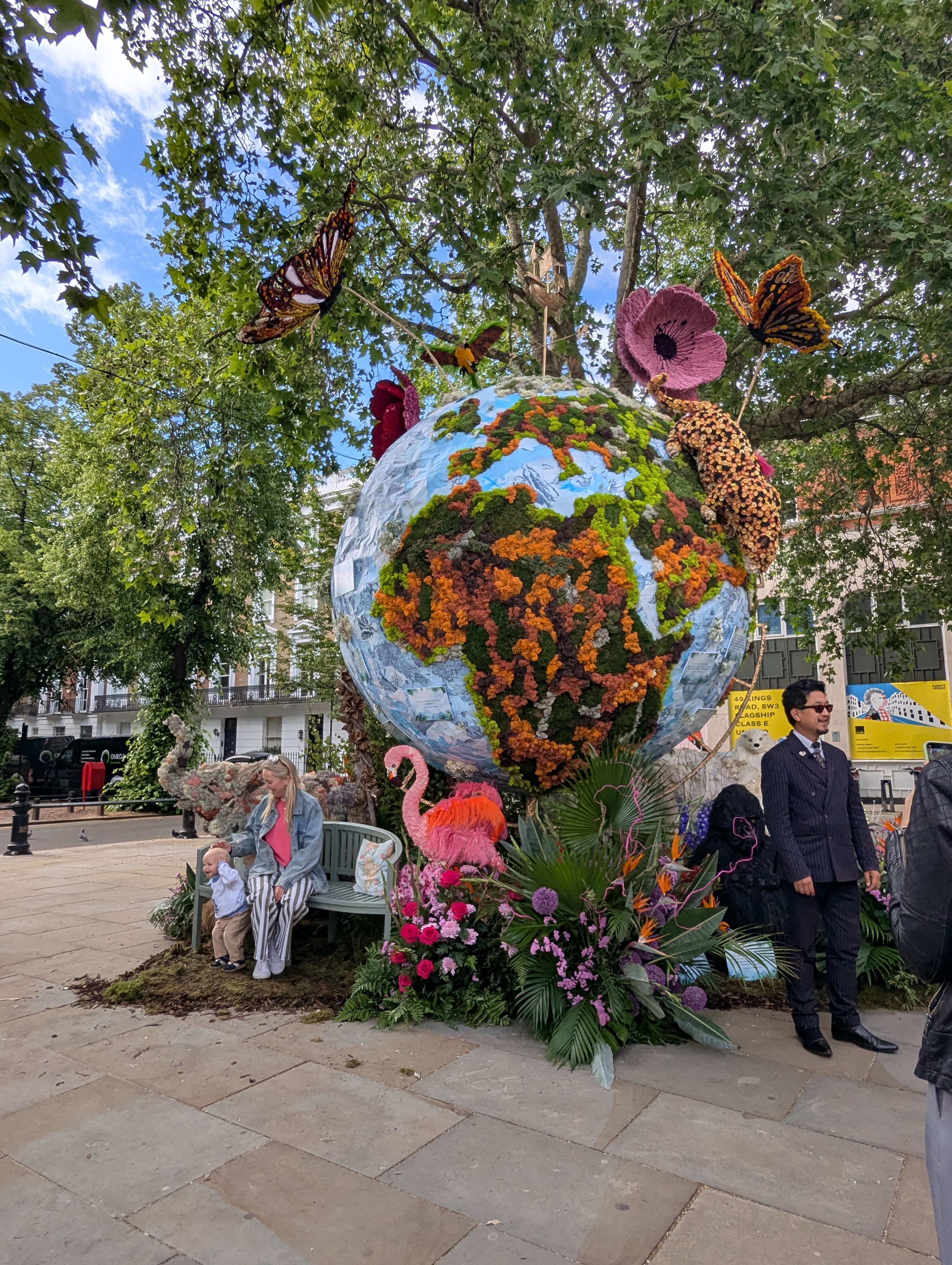
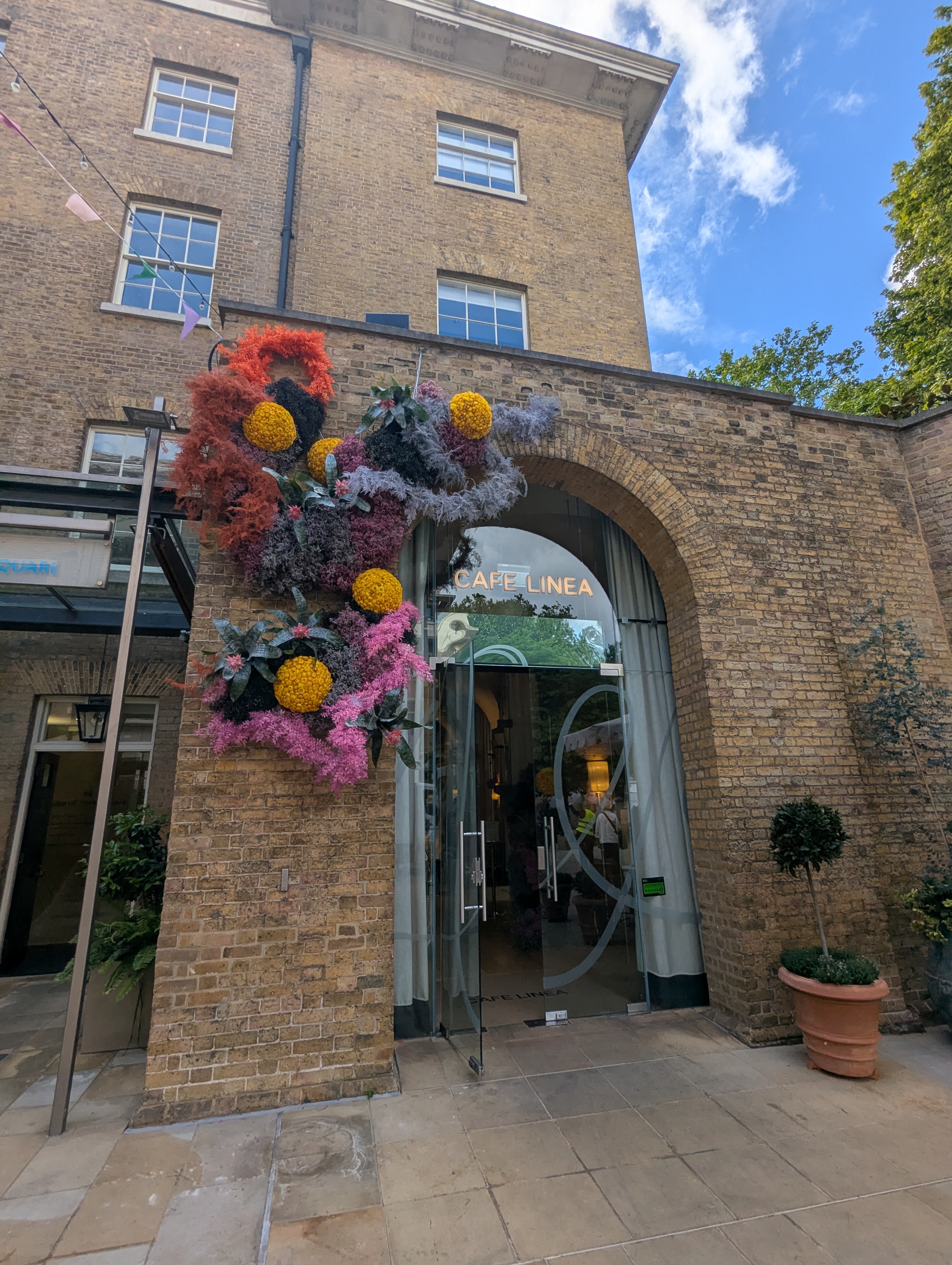
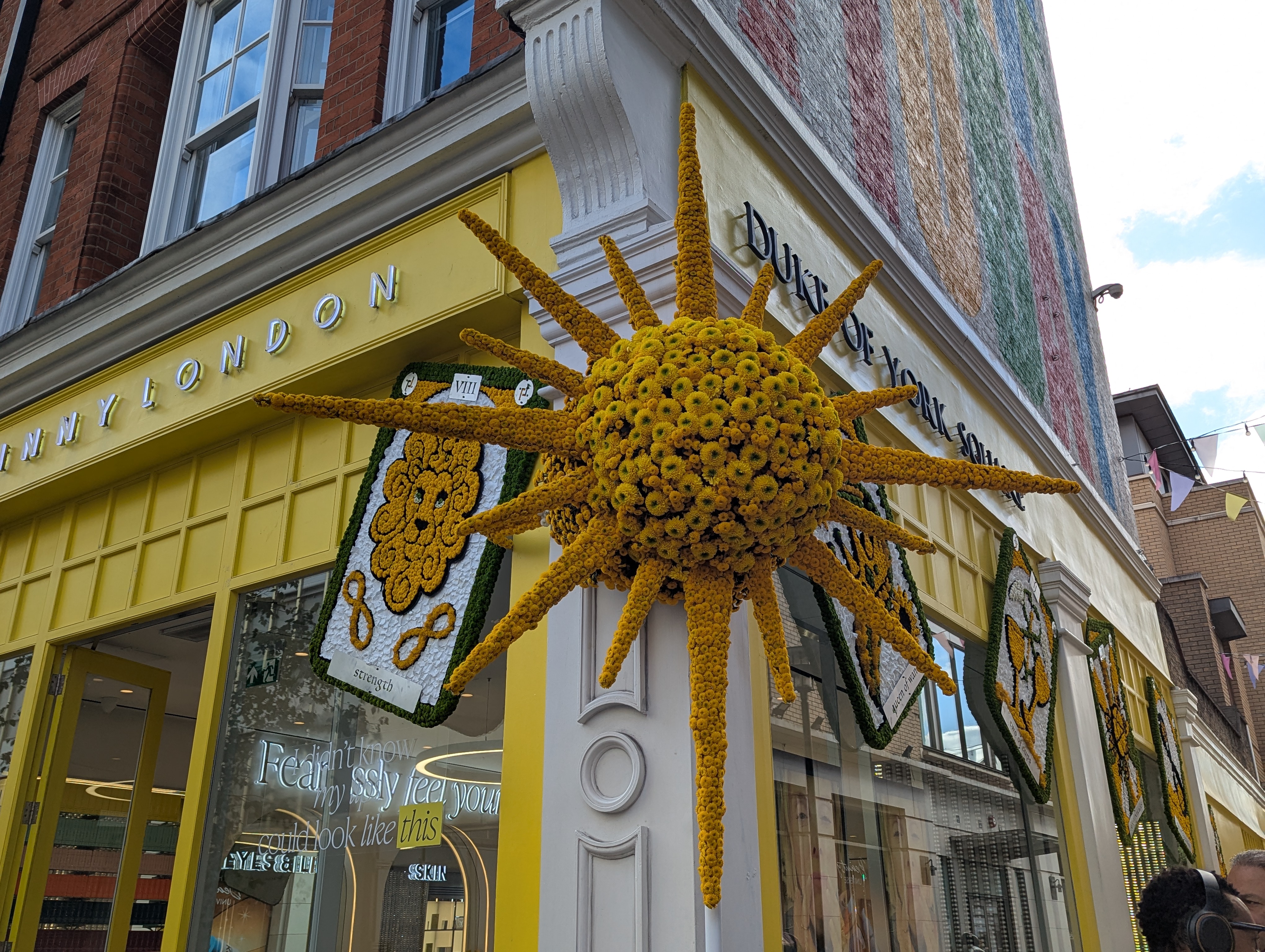
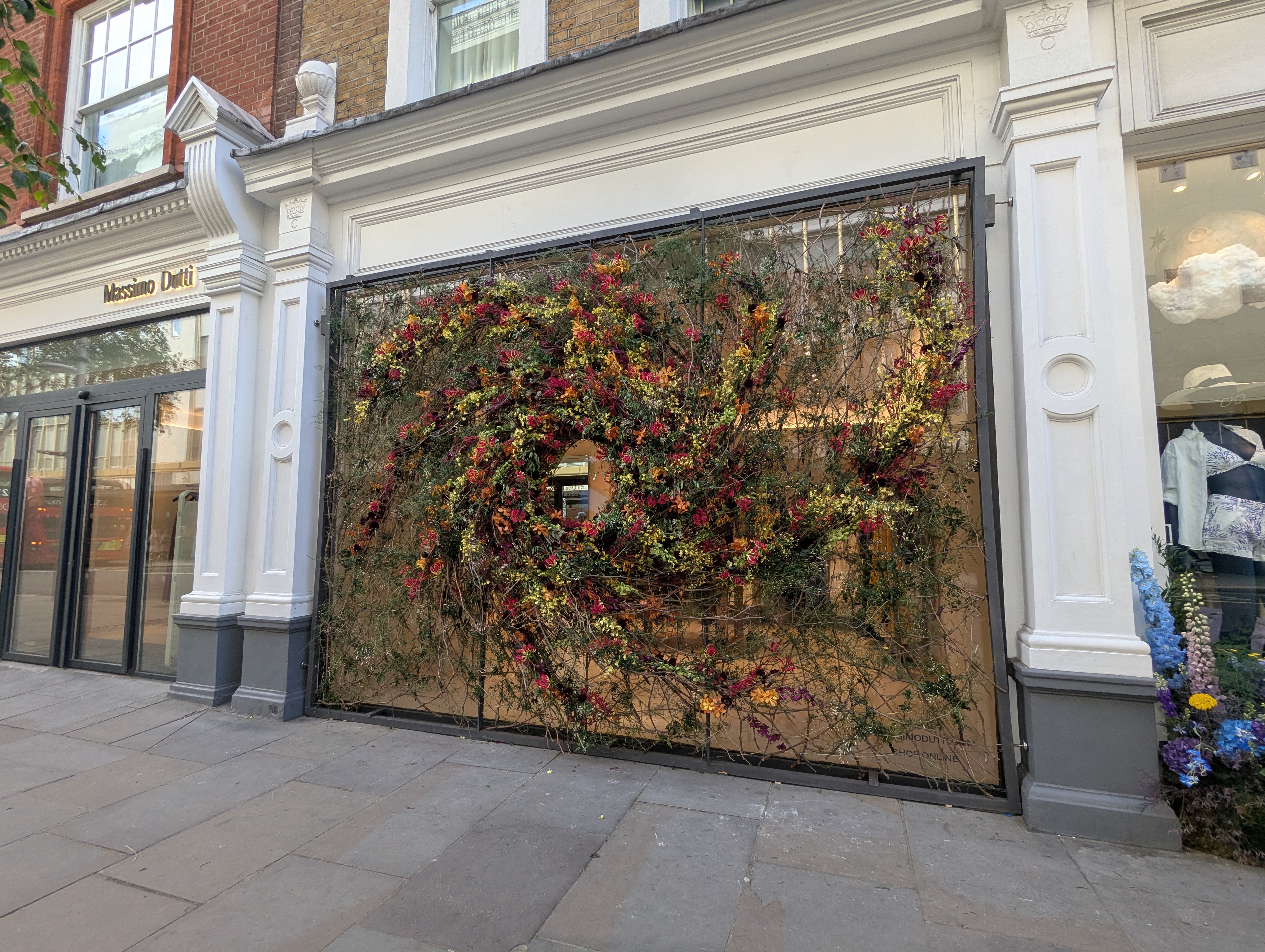
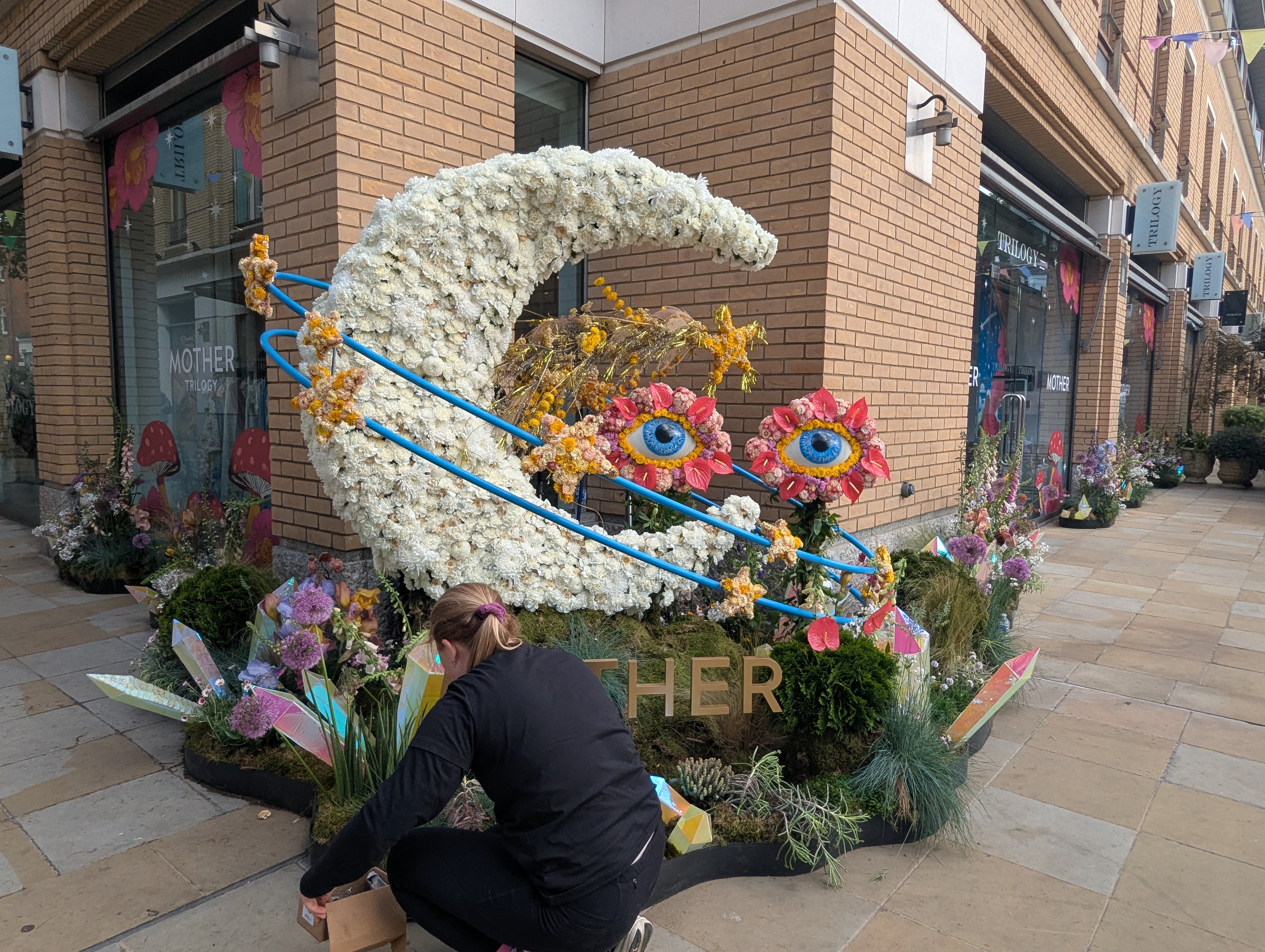
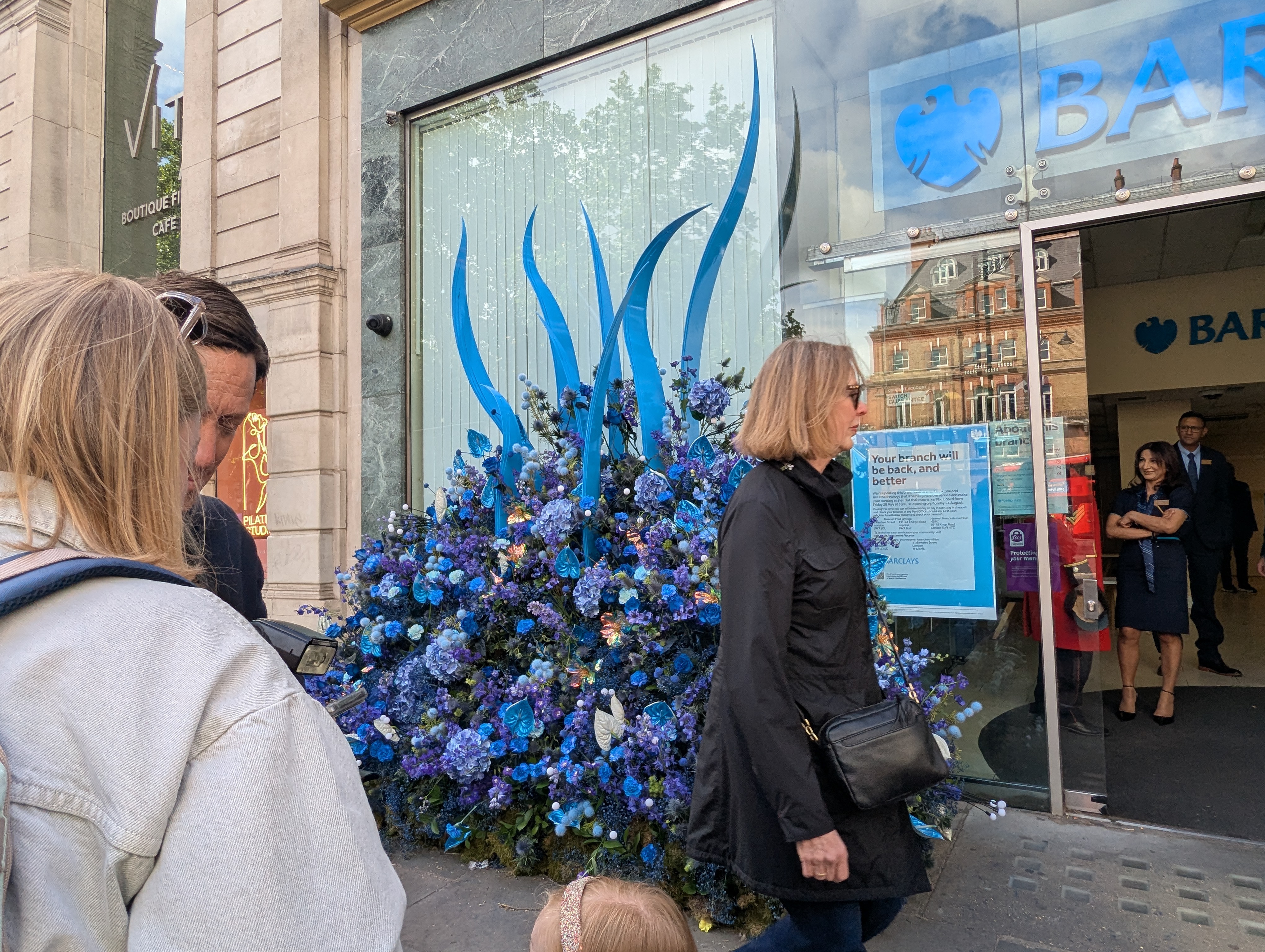
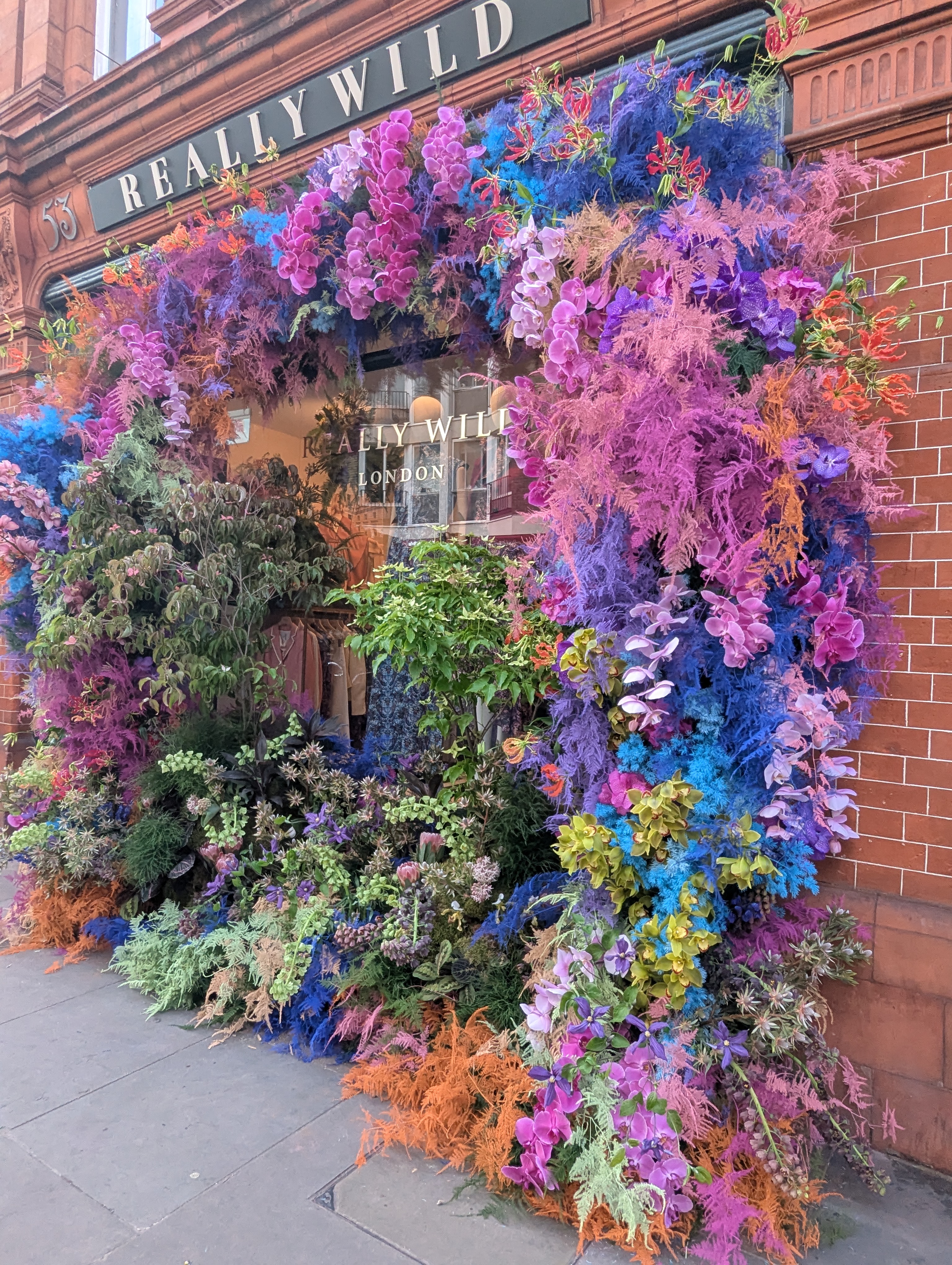
Sleep was somewhat elusive that night (reference the afternoon nap described above). I had made plans for Monday in light of the match in the evening and the fact my husband was not with me. Visiting gardens is probably not at the top of his list, but I figured that would be fun for me. A few months ago, I had watched a movie on Netflix called Dare to be Wild, based on a real, past participant in the Chelsea Flower Show named Mary Reynolds. I won’t pretend to know everything that happens in the Chelsea Flower Show, but part of it includes a landscape competition. Mary Reynolds had a big idea and applied to enter the competition. Her idea was selected to be built out and the movie was about all the problems she had to overcome to bring her vision to fruition, and win. Anyway, the Chelsea Flower Show was days away from my visit and therefore not a possibility, but an event that takes place starting in advance of the flower show is “Chelsea in Bloom.” During this festival, many shops in the Chelsea neighborhood decorate their storefronts with floral displays. This year, around the theme, “Out of this world.”
I had decided to spend some time visiting Chelsea in Bloom, but my bad night’s sleep had me out in Chelsea much earlier than I originally planned. This was a good thing and a bad thing. Chelsea in Bloom started that day and some shops were still just working on their displays when I went through. To the good, though, I was able to enjoy most of the displays before the crowds set in. Most of the displays used real flowers. Not only were the displays beautiful and sometimes just fun and creative, I enjoyed how different shops interpreted the theme. There was a lot of outer space influence, as you might expect, but sometimes “Out of this world” was interpreted as out of the world of England. For example, there was a floral exhibit of cactuses. And sometimes it was interpreted as imaginary creatures, like unicorns and mermaids. It was so lovely and fun to see how people walking to work or to school were reacting to the displays. Everyone seemed so happy.
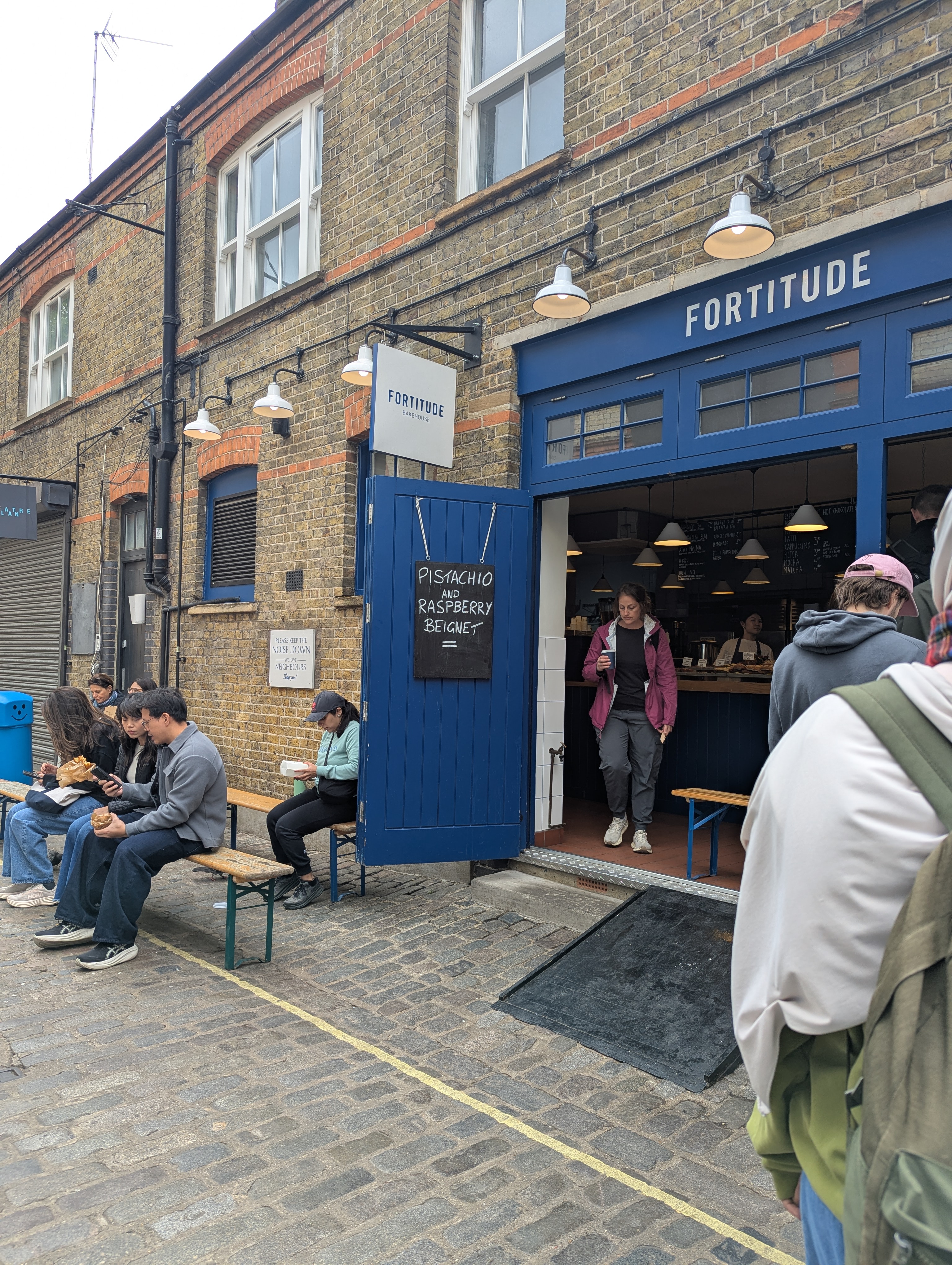
After walking all through Chelsea I decided to revisit Fortitude Bakehouse, a bakery near Russell Square my niece had told me about that I visited once last year. Famous for their cream-stuffed beignets that aren’t available until 11 a.m. It’s lunch! Fortitude was not really close to my hotel or Chelsea in Bloom but whatevs. I had time on my hands. Today’s flavor was pistachio and raspberry. Half of one would be plenty, even for lunch, but I took mine into a pretty park and ate the whole thing. With tea to wash it down. Delicious. Not health food.
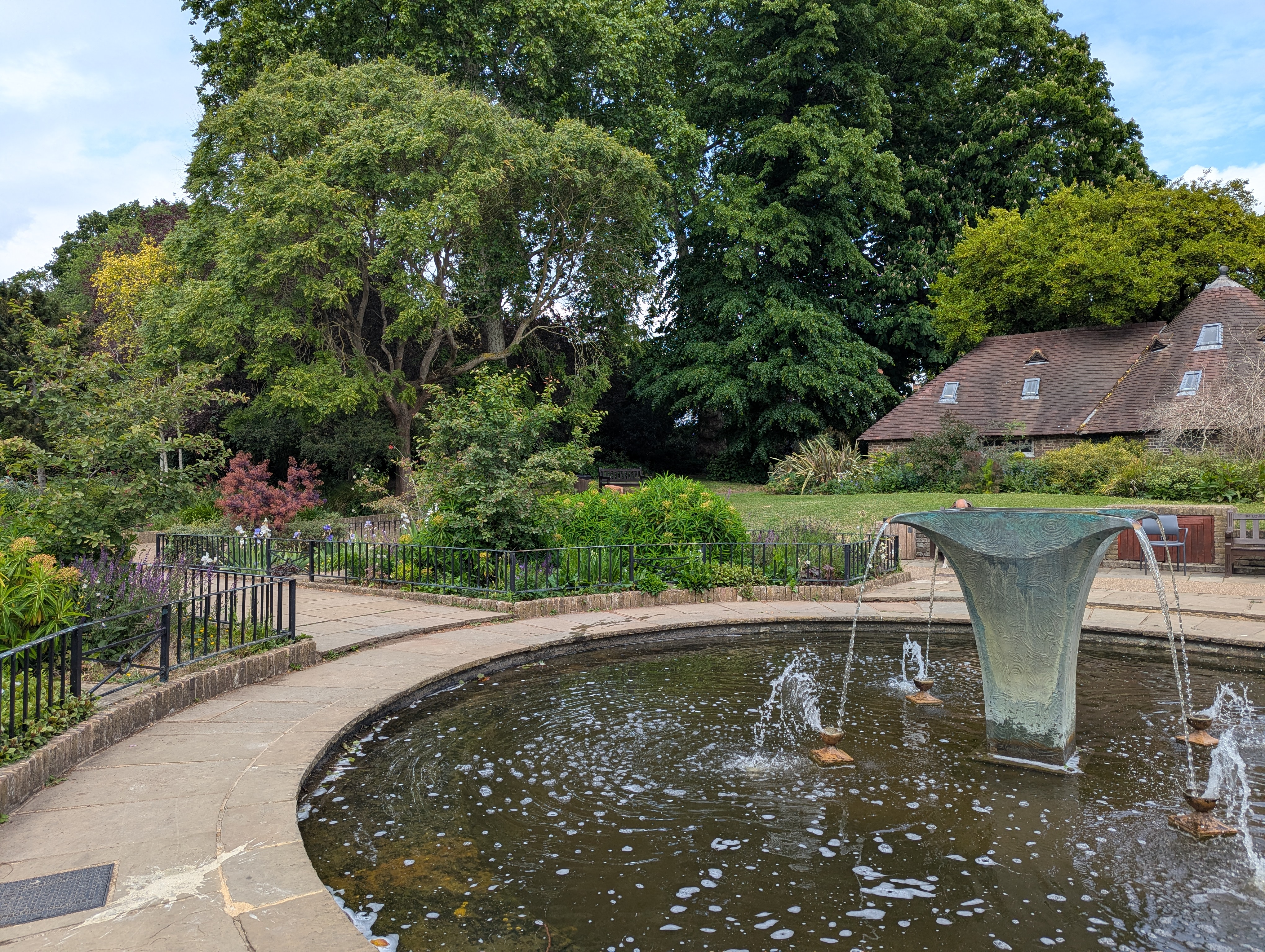
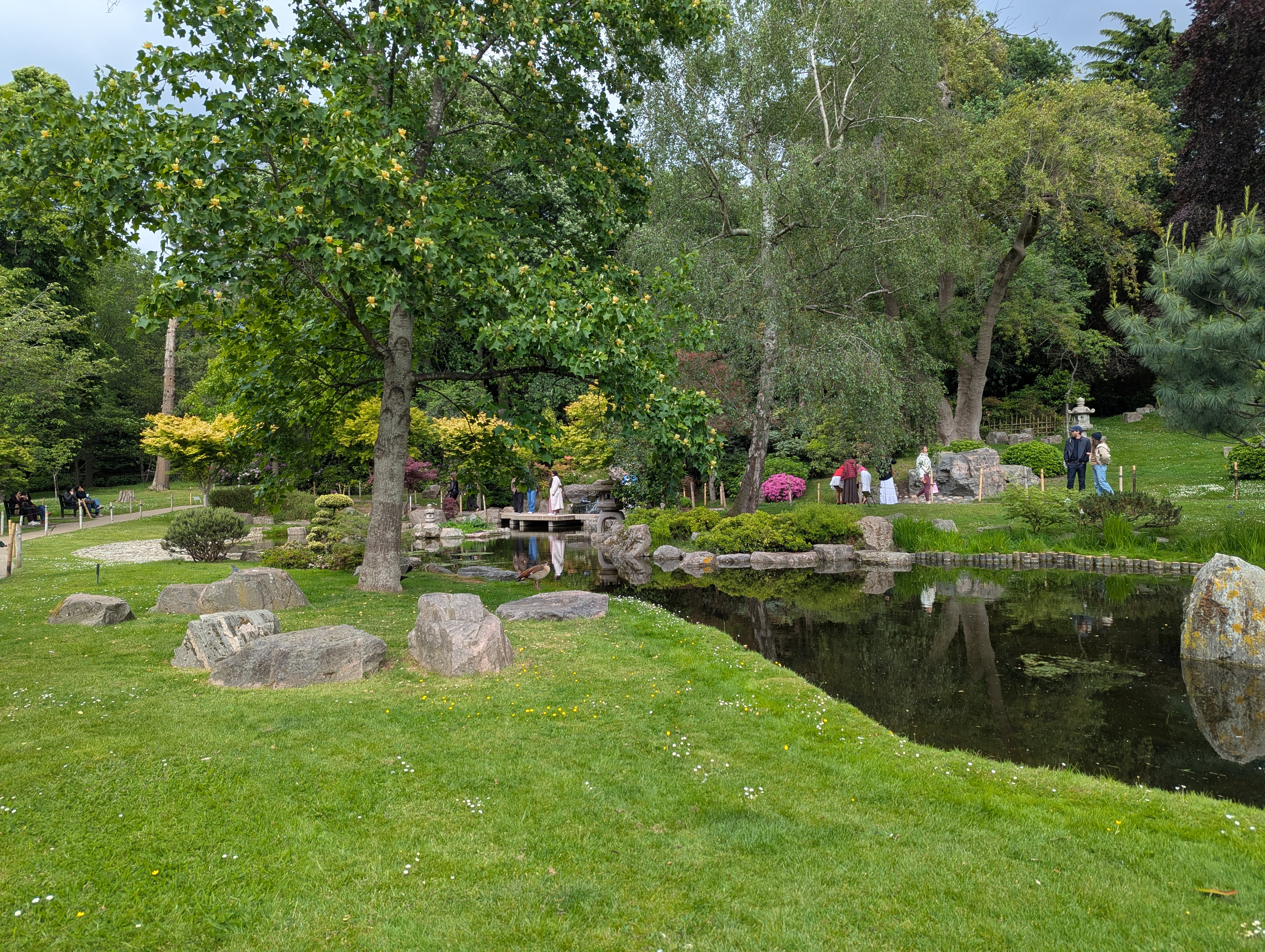
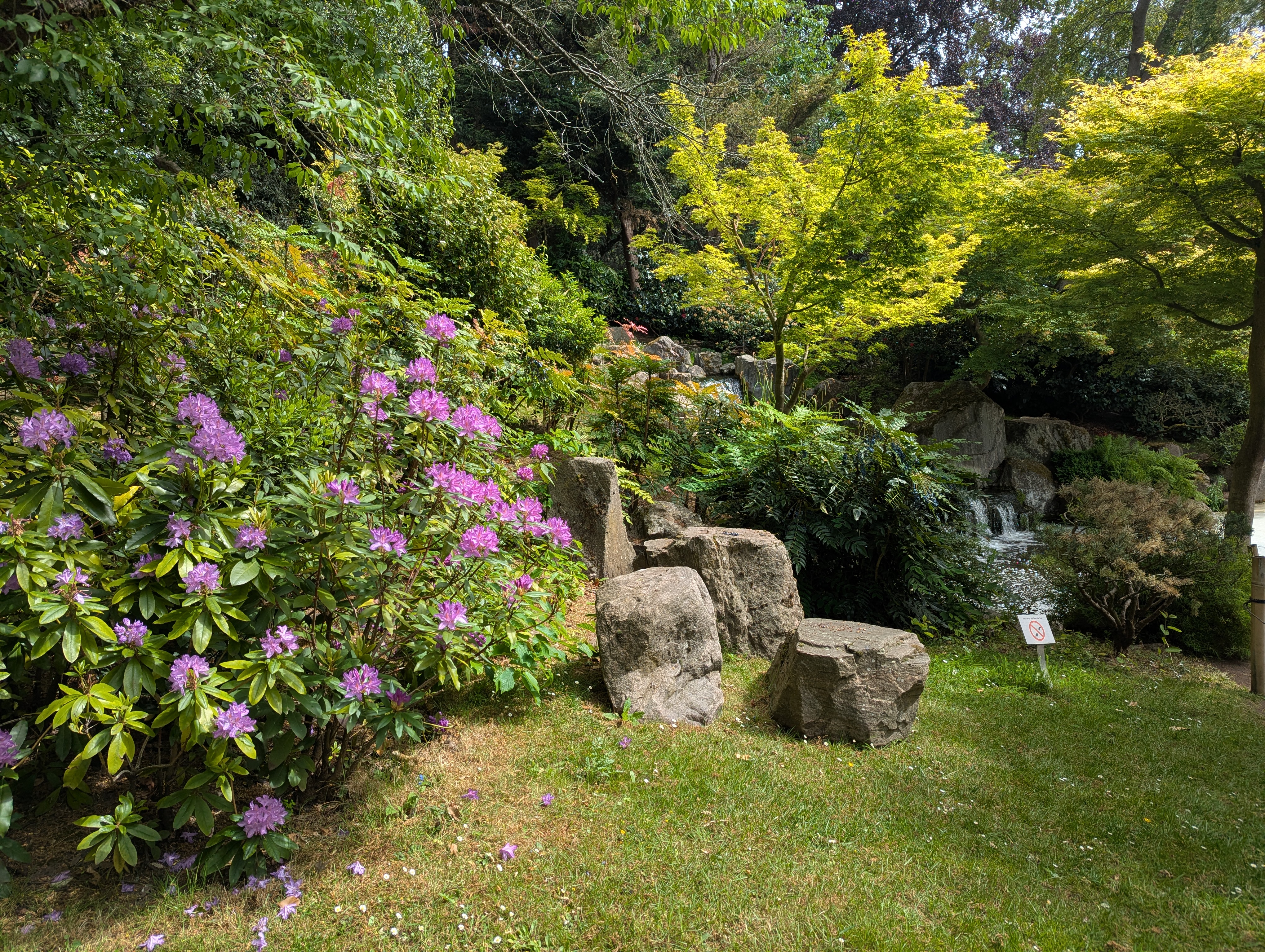
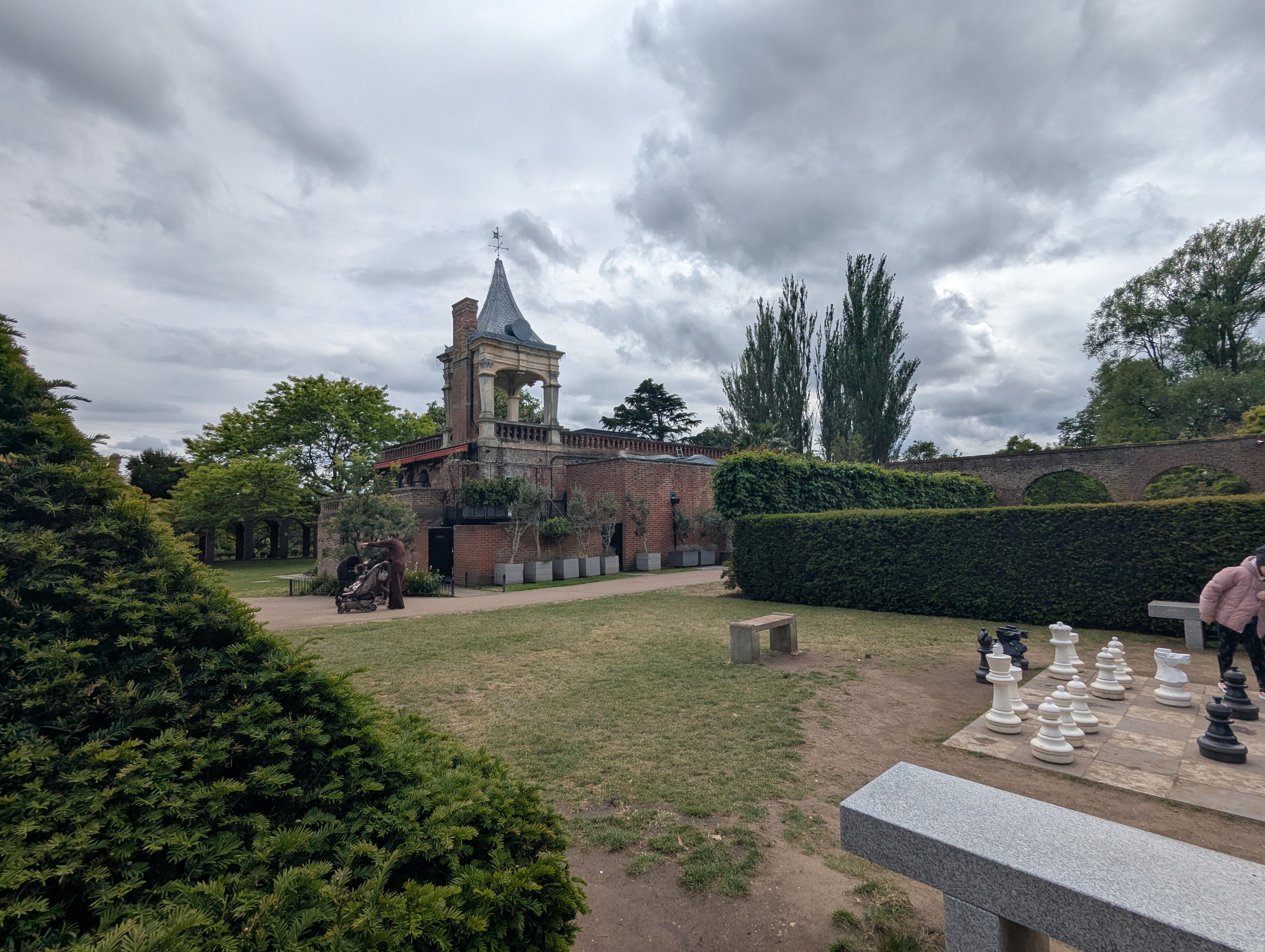
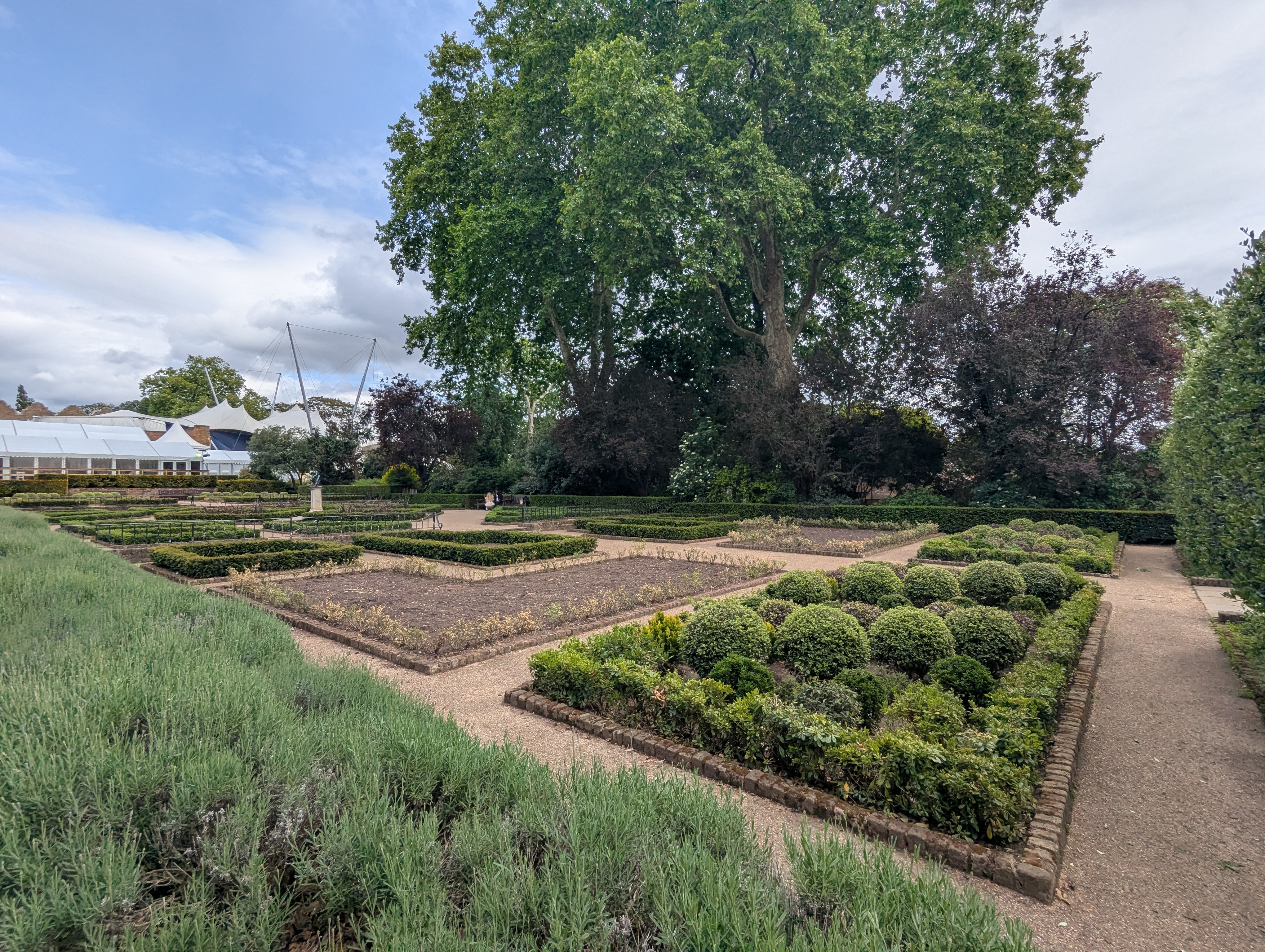
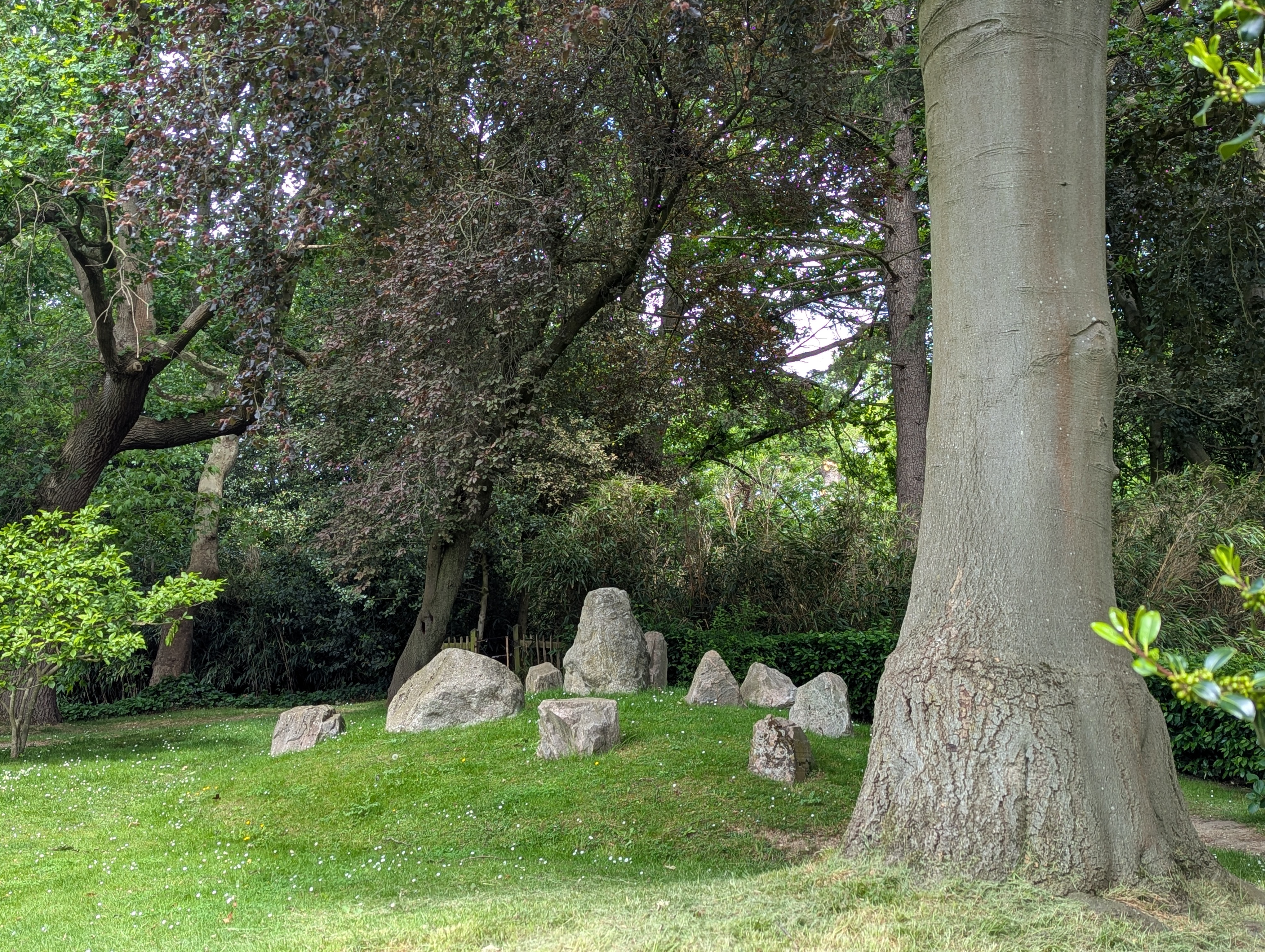
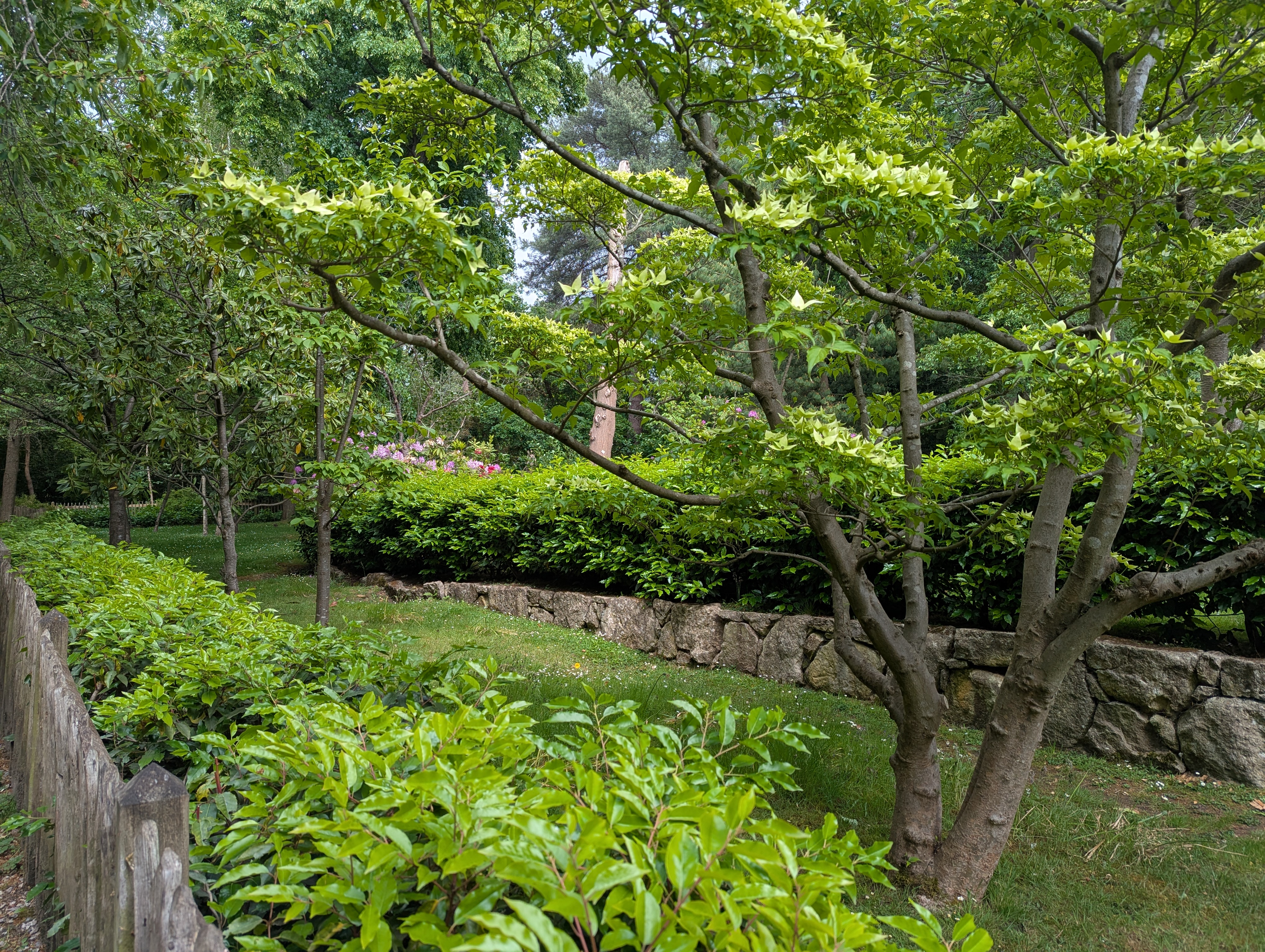
I stopped by the hotel for a quick nap (yes, making a habit of this on my short trip to London) and then set out for a nearby garden called Kyoto Garden in Holland Park, a few Tube stops and a short walk from my “home” Tube station, South Kensington. Kyoto Garden was a small, peaceful, and lovely Japanese garden. I enjoyed visiting the “Dutch garden” as well. Not much was blooming there but it was very nice, with orderly plots.
I headed back to The Exhibitionist for a quick change into my Arsenal jersey. It brings good luck. And we need everything to go our way. Including, but not limited to, luck.
Not long before I retired, I was working with my tech counterpart on a thorny problem in our financial planning software that we needed to solve quickly. I had been working from home since the pandemic, and while we were working through the problem, happened to run into my husband on a trip to the kitchen to get more coffee. “Why did I get into this profession?” I asked rhetorically. My husband scoffed, “Because you’re an adrenaline junkie.”
My life post-retirement involves very little adrenaline. I work occasionally in a food pantry, menial tasks like making sure shopping carts are returned from the parking lot to the pantry or breaking up boxes or packaging diapers. I take fitness classes. I work in my garden, where I am currently establishing the hardscape for what I am calling my “secret” garden. I listen to a lot of podcasts. I read.
Frankly, only my life around Arsenal involves regular adrenaline. Watching games, I’m almost always in a state of anxiety. Maybe more this season than in other seasons, because the stakes are so high and the games have been so tight. So many games decided by only a goal. A few games lost because we let a late goal in.
In a year in which we are so close to winning the Premier League and the Champions League, imagining the good things that could happen–or the bad things–have actually made me lose sleep. It’s an admittedly stupid reason to lose sleep, but explain that to my wide-awake self in the middle of the night. It will fall on ears that can’t begin to care what you have to say about it.
My available time has caused me to build more of my habits around matches. Podcasts come out before the match, to anticipate what may happen, and come out after the match, to revisit what happened and why. So in a normal week this season, there has been a match over the weekend and a match during the week. That is a minimum of two matches and four podcasts. Plus I almost always watch more than just our match in a given week. Usually, much much more. Sometimes with high stakes for Arsenal and some not. And every day I take in news–from the club, from news sources covering football, and from blogs. Way too much from social media. I’ve learned that there are some sources that are actively bad for me and I’ve tried to cut them out or at least minimize their presence in my life, especially at a sensitive time. After a bad loss, for example, I will lean on sources that are more thoughtful and steer clear of click-bait and hot takes. But then I’m left to my own brain, which is its own fun house of histrionics.
One of the reasons I love watching matches live at the Emirates is there is counterpoint action to my anxiety. Something about shouting or singing together with others can be a bit of a change of subject as the action is unfolding before you. If I’m singing that Gabriel is the king of Brazil because of something awesome he just did, I might feel less inclined to have a fit over someone’s subsequent misplaced pass. Or I might have a defensive or protective reaction if the crowd starts to show its frustration over something that happened on field. I love this team so much; how can anyone be mean to them?
And so many things happen in a group that big that bring a smile to your face or are especially touching, like when the Arsenal fans sang to Smith-Rowe when he was injured in the Fulham match or when everyone sings North London Forever at the beginning of the match. And when things have gone well, there is nothing better than sharing that moment with a giant crowd. We overcame something together and now we’re on an adrenaline high together.
I enjoy watching football on my couch in the Chicago suburbs, or I wouldn’t do so much of it, but it’s not the same as being in the stadium.
Ever since I was able to first attend a number of matches during the 2015-2016 season, it’s been my goal to try to be at the last home match of each season. That’s because I’m always sure this is the year we’ll get the Premier League trophy and it will be bestowed upon us on that day. Because my original access to tickets involved a share of season tickets, I would make a request at the beginning of the season to have that last match. Usually, no one competed with me for that date. That was in the days where I guess no one except me thought winning the Premier League was going to happen. That got harder after I successfully got the tickets for the last home match in 2023 and Arsenal really did come close to winning it for the first time in a long time. They just kind of ran out of gas at the end and Man City won.
After that year, the demand for tickets increased a lot and for whatever reason there wasn’t room for me in the group that shared the season tickets anymore.
That’s when my husband and I joined Arsenal as “Red” members so we could participate in the ballot and, failing that, in the Arsenal ticket exchange. It’s worked out pretty well for us. We normally ballot for every match unless we know for sure the timing won’t work. When we’ve really wanted to attend but didn’t succeed in the ballot, we’ve almost always been able to get tickets on the exchange, but it requires a lot of work and repetitive clicking. And you can’t ballot until very close to the match, usually less than a month out with results being shared several weeks out. Then you have to be able to set up flights on short notice, which sometimes means big expense. We’ve mostly gotten lucky on that, too.
Always if we’ve failed to get tickets, we’ve failed to get tickets for both of us. Usually, that failure has come for the most important matches. Matches in the quarter- or semi-finals of the Champions League, for example. Last matches of the season when the title is on the line. For example, the last match of the season in 2024, when Arsenal might have won the league if only Man City lost that day. (We could not get the tickets, but Man City also did not lose in the end.)
Arsenal’s last home game this season was to be against Burnley, a team that appeared to be headed toward relegation at the time the ballot was made available for application. But Arsenal were doing well and the ballot was especially popular. We learned we were not successful in the ballot on March 31. For about a month I tried to get tickets on the exchange with no success and really very little selling activity visible. Then Sky Sports, the broadcasting company that gets to control the world, decided to move the Burnley match from a Sunday afternoon to a Monday night. Terrible for the fans who had tickets and made travel plans, etc. And not a great time for a match.
But for us, that created opportunity since it meant the new game time might not work out for everyone who had a ticket and maybe there would be some action on the exchange.
Now that I’ve explained this, I think you might see that dealing with the exchange is a different, sick source of adrenaline in my life. I was listening to an episode about gambling on the podcast This American Life a few weeks ago and one of the things they mentioned is that a gambler who is not addicted to gambling will process a near-miss while gambling, correctly, as a loss. But a person who is addicted will process that near-miss as a win and double down. That’s how I am on the exchange. If I see a ticket for sale and I’m not successful in buying it, that will count for me as a near-miss and I will become dogged about continuing to try. Fortunately, counter to gambling as an addiction, there is not much money I can lose due to my addiction to the exchange. I usually can’t even get to the stage where I can give them my money.
Because Sky Sports is a jerk, a few tickets did come up as I anticipated and I was able to snag one within two days of the date change. On the exchange, you can designate people in your friend group and it’s possible for me to buy a ticket and assign it to anyone in my group who is eligible, in this case, myself, my husband, or my son. My son usually can’t attend because he’s a tax accountant and the Spring is so busy, but he wanted to attend this one.
I always assign the first ticket I get to myself, then work on a ticket for my husband. I always jokingly say it’s because of the airline’s admonishment to “put your own mask on first before helping others.” In reality, it’s because getting to most matches is probably more important to me than it is to him. And getting to this match, the last home game of the season? That’s my value, not his. Still, he is happy to attend, likes to attend. So, as usual, I assigned that Burnley ticket to me.
And that was it. I was never able to get another ticket despite hours of trying across 2-3 weeks. And I saw so few, I had very little confidence one would turn up late. Neither my husband nor my son were able to find a ticket either.
My husband and son only wanted to come to London if they had a ticket for the match and only I had a ticket. At some point a decision had to be made. Do none of us go? Do I go alone?
I had a fair amount of guilt about being the only one with a ticket. I second-guessed my decision to always assign first to myself. And it didn’t feel quite right going without them. I’m the biggest Arsenal fan in my household but love of Arsenal is shared with my family. It’s a pleasure partly because it’s shared.
At the same time, it’s the last game of the season. In a season in which Arsenal really might win it all and really might be awarded that trophy that night. And even if that didn’t happen, would still be an important game.
My husband was pressing me to organize my flight before fares rose prohibitively. I sat with him on the same couch I normally stress out watching Arsenal and described why I was struggling to make a decision. My husband is a good listener and as we discussed my reasons for going or not going it became clear even to me I was not being logical. At all. I didn’t have good reasons to go or not go.
I put my headphones on, started listening to the Arseblog podcast, and went out to work in the garden. The podcast was about the West Ham match we had just won, barely, and with some late drama that almost saw us conceding a goal until it was ruled out (rightly, say all Arsenal fans) by VAR. A tie would have put a serious dent in our quest for the title.
At some point, even though I still didn’t have a logical explanation, I knew what I should do. I came back in the house and booked a flight.
“I’m in tears.” That was the text message from my former colleague at the conclusion of the Arsenal semi-final match vs. Atletico Madrid. I had not heard from him for more than two years when he left the company we both worked for. He is a huge Arsenal fan and if we have little else in common, we do have that. He even has “Arsenal” tattooed on his forearm in giant, brand-correct letters. And that tearful sensation seemed to be the feeling many Arsenal fans had, including me. You just wanted to reach out to people who can understand what we’ve all been through. And relive it. And smile for once.
What a wonderful week! It seemed everything came good. Arsenal managed to beat Atletico Madrid in the second leg of the Champions League semifinal and on aggregate, putting us into the Champions League final in Budapest for only the second time in Arsenal’s history.
And Man City dropped points in the Premier League the day prior by only tying Everton. It was a mad match, with Man City scoring first near the end of the first half, then Everton scoring three unanswered goals, then (of course they did) Man City scoring two goals near the end of the match. We vowed not to watch the match on TV. It’s been established as bad luck. But we did occasionally check in on the scores.
Which means Arsenal are in the driver’s seat for the Premier League. Win the three matches remaining and we are Premier League champions. And in Champion’s League, we have to win just one more match.
I say that as if it’s easy. Only the math I employed there is easy.
My husband and I were not ultimately able to get tickets for the Atletico Madrid match, which we understood was a likely outcome at the outset. We put in the work on the exchange, but it was not to be. We ended up watching the match, somewhat coincidentally, in The Hope, the pub where we watched the Real Madrid quarter-finals when we couldn’t get tickets that time either. It’s not really an Arsenal pub and it was not packed with people but most of the people who were present were Arsenal fans. And we got a good result in that pub for Real Madrid, so it seemed like a good place to be.
I say that as if it was just fine we couldn’t be there in person. It was not fine. The atmosphere at the Emirates looked amazing. Best ever. The club encouraged fans to be on hand to greet the players’ bus as it rode into the stadium and it looked like pure pandemonium. There was a big light and cannon show before the match. A huge, new tifo. And the stadium was so loud. Definitely a good counterpoint to the first leg that was in Madrid. Which was loud and came, bizarrely, with numerous rolls of toilet paper unfurling.
Mikel Arteta surprised everyone by rewarding the starting players who had done so well in the Fulham match, contrary to the prevailing narrative that he would use players he rested for that match. He didn’t make a single change in the lineup. And they rewarded his reward by playing well and dominating most of the match. There were a few scary moments but Arsenal looked really solid.
Only one goal was scored, but it was enough. Just before halftime, William Saliba spotted Viktor Gyokeres starting a run down the right flank and made simple, long pass. Gyokeres was given some time to control the ball and loft it to Trossard on the opposite side. Trossard pushed the ball toward the goal and made a solid shot, which the goal keeper punched out. Atletico’s defenders seemed asleep at the switch, but there was Bukayo Saka to hit it past the keeper and into the net. Not beautiful in the traditional sense, but it created some beautiful feelings.
Most matches do not seem won when Arsenal are up by only one goal, but this one kind of did. Arteta was able to make earlyish subs in the second half and get some rest into players who had done heavy lifting over the week and we were able to keep Atletico under control.
The celebrations at the final whistle were incredible. Some fans were in tears, some players were in tears. There was a lot of jumping and singing. Cannons were shot off again. Even Mikel Arteta did a crazy little dance with Trossard. In a funny turnabout, instead of giving his jersey to a fan, a fan gave Saka a scarf. Declan Rice was interviewed after the match and said the dressing room was “chaos.”
We’ve been home for more than a week now and Arsenal have already played West Ham in the Premier League, a cagey 0-1 win. One of the narratives for the half week until the West Ham match was played was Arsenal haven’t won the Champions League competition, why have they celebrated so much after winning only the semi-final? Celebrate when you win something. So in the press conference before the West Ham match, Mikel Arteta was asked what he thought about that.
Arteta said he hadn’t heard that kind of talk. Ultimately, he said, “You have to respect every opinion and place them where they belong.” The reporter who asked the question followed up, asking where Arteta has placed these opinions about the over-celebration. “Where they belong,” he said, obtusely, with a smirk.
Man oh man, I love this guy. I love this team.
Paris Saint-Germain won their second leg against Bayern Munich in the other semi-final a day later, so Arsenal will face PSG in Budapest at the end of May. PSG was chill about the win that placed them in the final. In one form of celebration, their fans lit cars on fire in the streets of Paris.
PSG are certainly favorites to win the competition, but I’m counting on Arsenal to give it a go.
And, naturally, hoping to be able to complete at least one sanctioned celebration this month.
Our trip to London to take in the Fulham match (and hopefully the Atletico Madrid Champions League semifinal match), was oddly dominated by David Bowie and water. That, and clicking in the Arsenal exchange every spare moment for a ticket to the Atletico match. My husband’s childhood friend was in London at the same time we were, so we also had fun catching up with him.
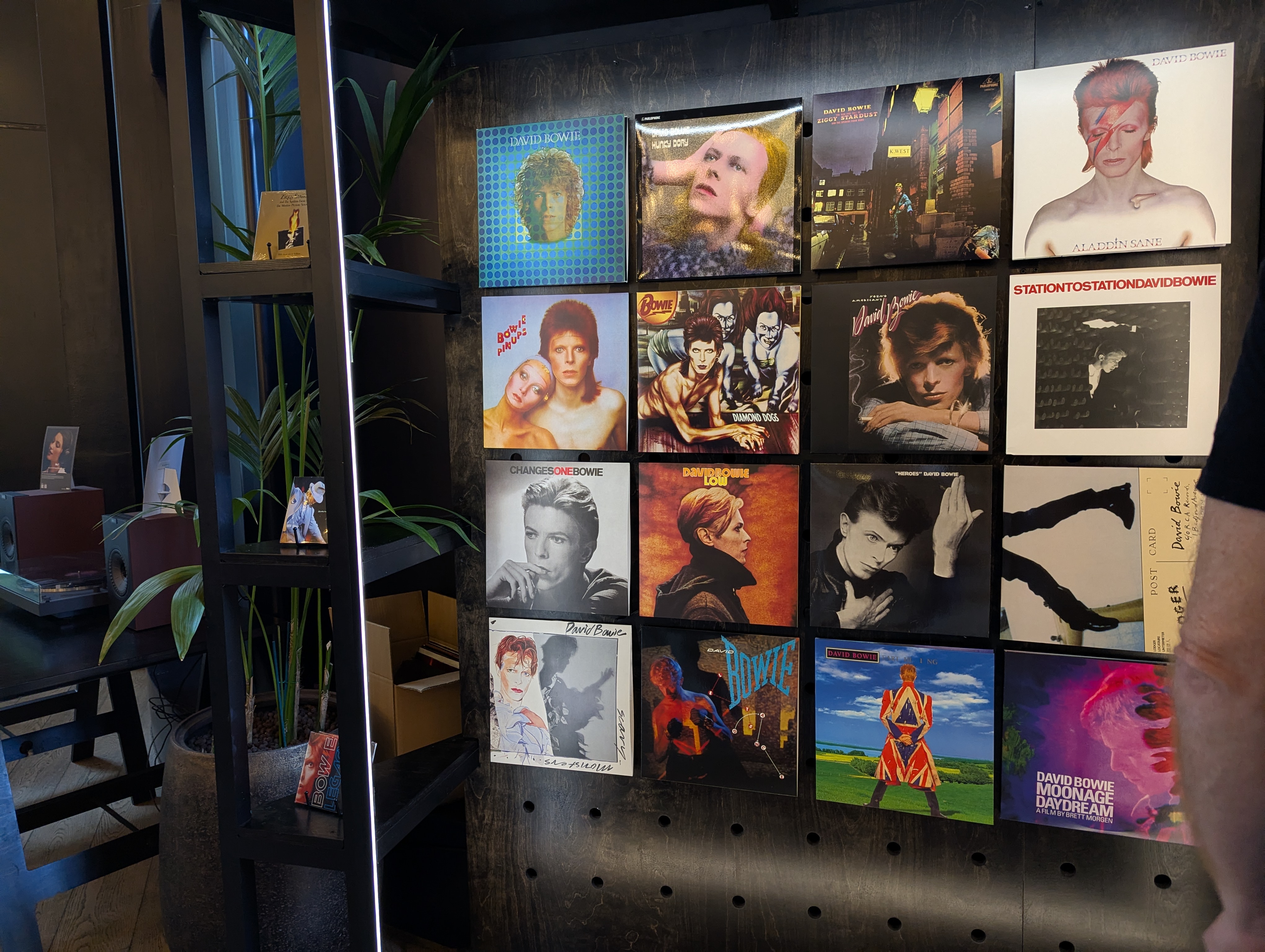
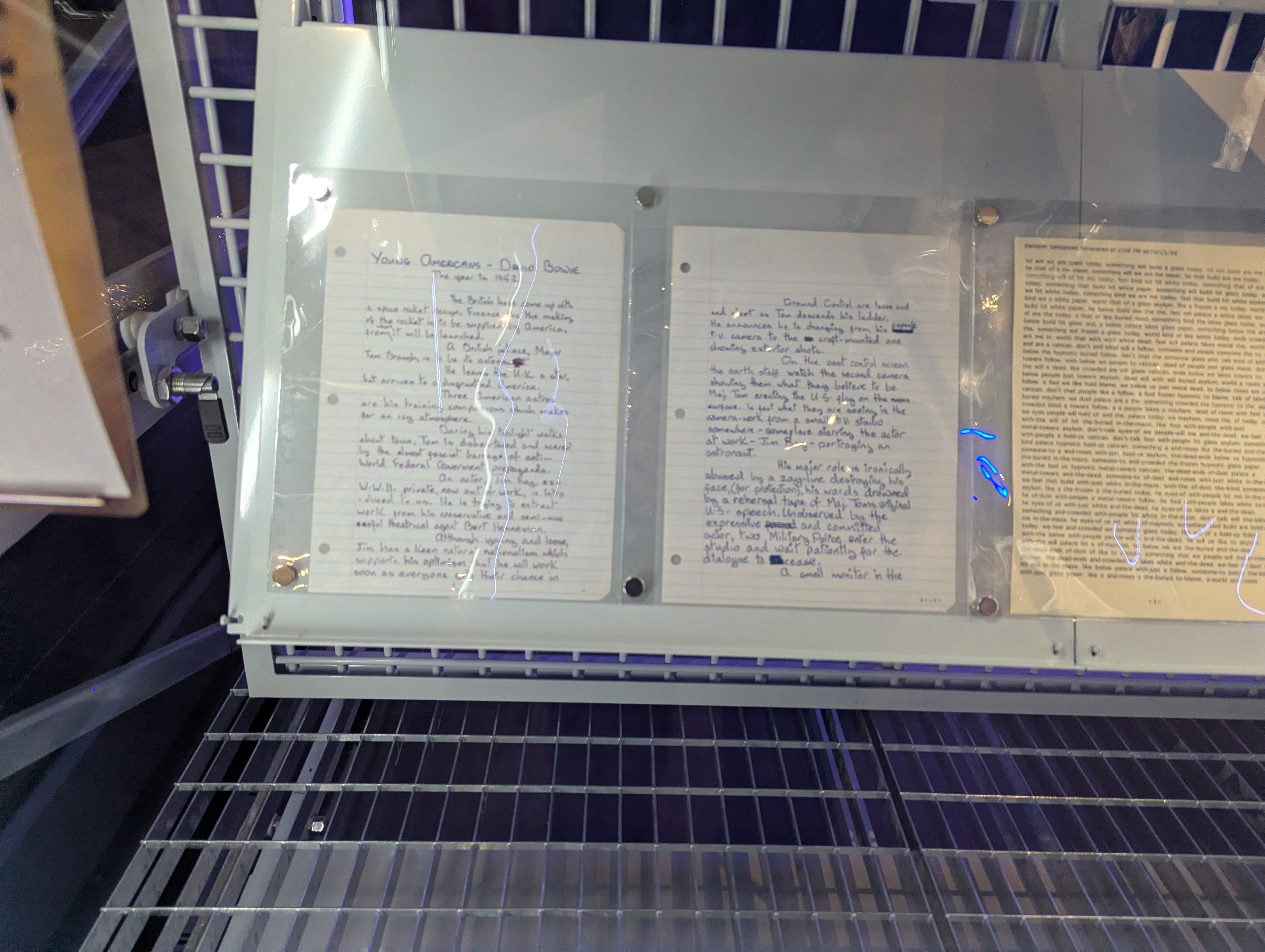
David Bowie had been a minor character in my teen world. I knew some of his music, most notably Space Oddity, a rock ballad about an astronaut who goes to the moon, but something goes wrong and he floats away, never to return to Earth. That particular song, a line from which I’ve borrowed as the title of this post, was initially released in 1969 but was re-released in the United States in 1972. Other versions have been released since then, but it’s the 1972 version I’m familiar with. Something about that song really captured my imagination. In my interpretation of the song, Major Tom decides not to go back to earth and enacts his ship’s malfunction. Apparently that is not how David Bowie saw it. Major Tom floated hopelessly away in his broken spaceship.
My interpretation is better.
I remember one of my high school classmates declaring “David Bowie is so gross.” I didn’t know enough about him to have an opinion but I had seen pictures of him and knew he did something very few men did at that time: he sometimes wore makeup and clothing more commonly associated with women. I was living in a conservative area of the country, but there is probably no place in the world that despises individuality and demands conformity more than high schools of the 1970s.
I had really loved Queen in high school. Funny now that I think of it that David Bowie would possibly be “gross” but Queen was A-ok. Bowie’s music took a turn that intersected more with my mainstream sensibilities in the early 1980s. I loved the collaboration he did in 1981 with Queen’s Freddie Mercury, Under Pressure. It’s still one of my favorite songs. And later it rubbed me the wrong way that Vanilla Ice’s Ice Ice Baby started with the same musical hook. (I feel more inclined to forgive Vanilla Ice now that Arsenal fans use Ice Ice Baby as the base of a chant to honor Declan Rice. Rice Rice, baby.)
David Bowie exploded into the mainstream with Let’s Dance in the early 1980s. I had moved to Denver after college and was working, but didn’t yet have enough money or income to buy a car. I was carpooling with one of my colleagues every day. He was the first openly gay person I’d ever known and often he would cajole me into accompanying him to one of the gay bars in our neighborhood before he dropped me off at my apartment. So many handsome men. None of them interested in me, other than as a human. It was pretty sweet. Let’s Dance and Modern Love were big hits on the dance floor. I think that’s where I decided it’s always ok to dance alone. And was the start of me thinking everybody just wear what you want. Be who you are. Try out stuff until you’re clear. Even you, David Bowie. (And I think he would say “No shit. That’s what I did.”)
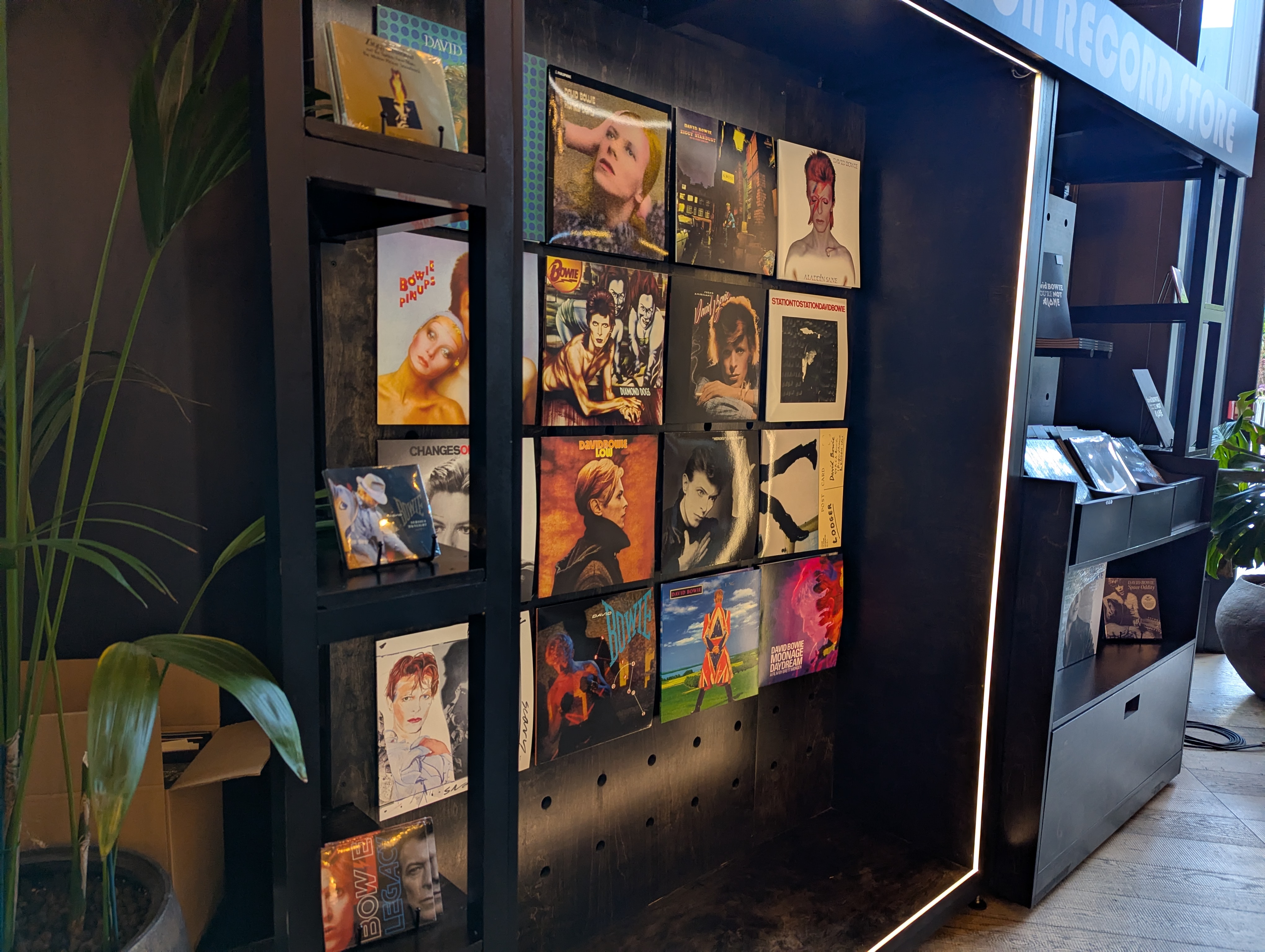
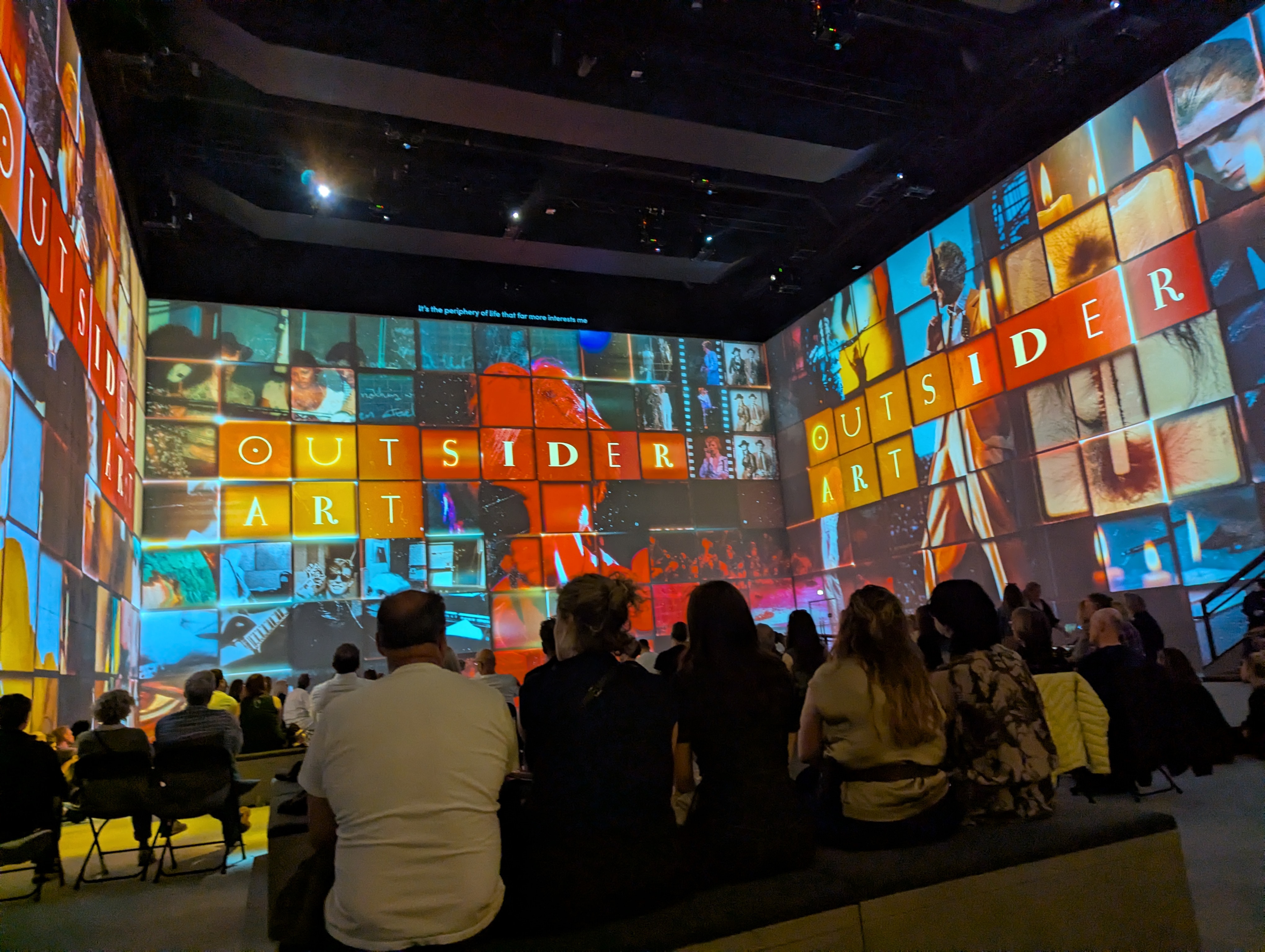
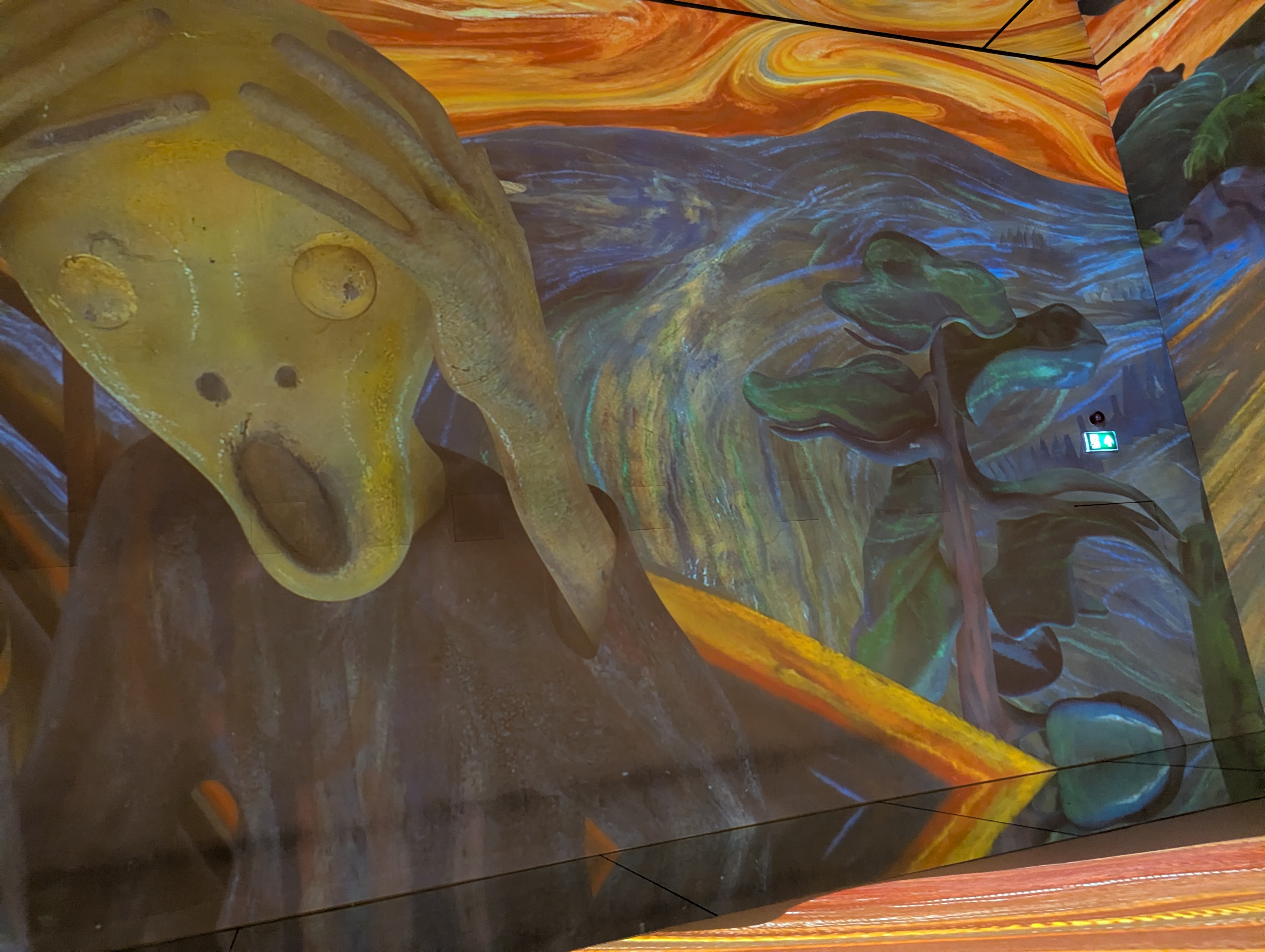
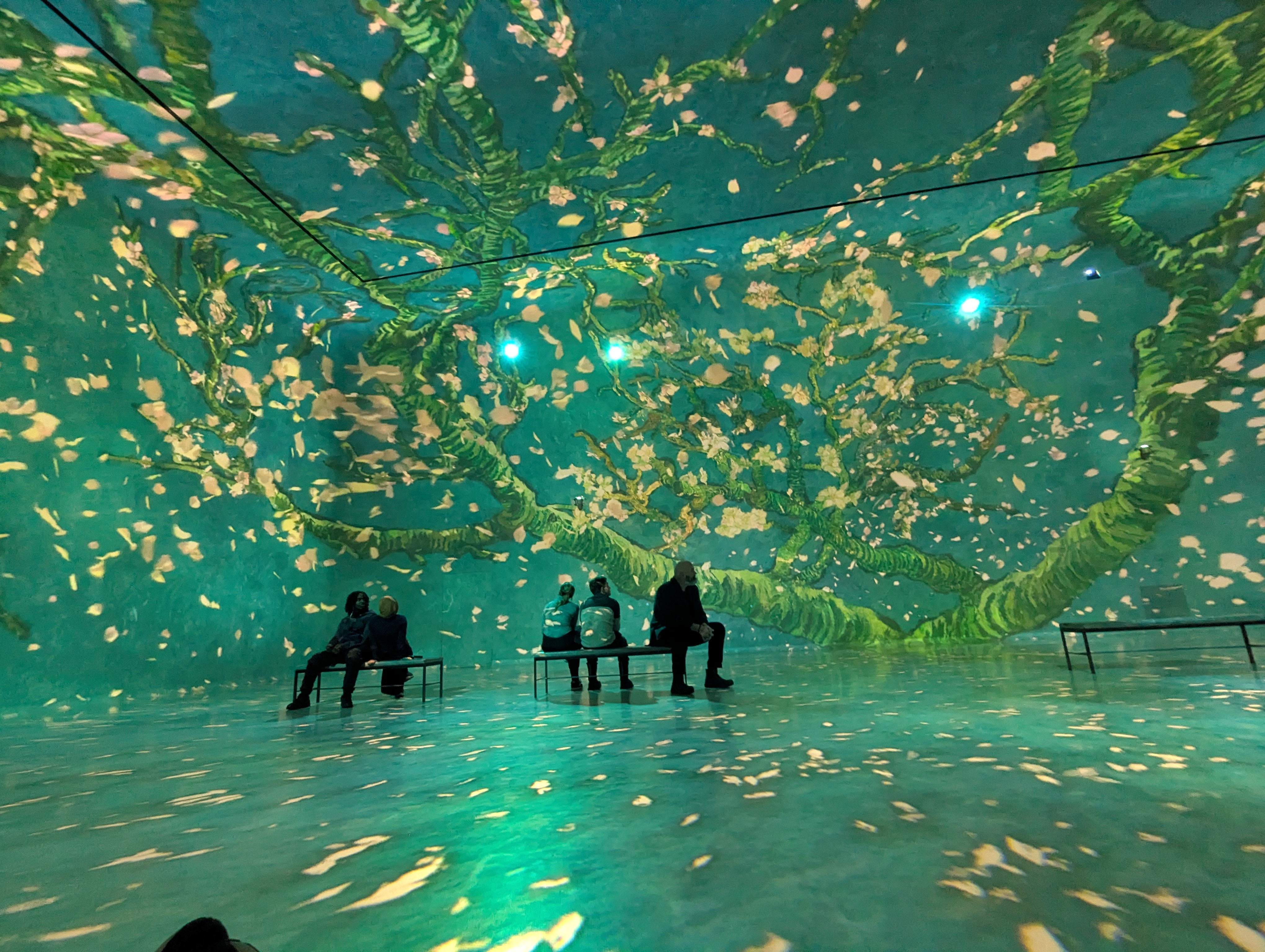
Anyway, that is a long preamble to our visit to the new David Bowie exhibit in London called You’re Not Alone at Lightroom, a “multimedia spectacle” that will “transport visitors into the iconic performances and creative mind and spirit of one of the world’s most visionary and influential artists.” It reminded me of Frameless, the interactive art exhibit we visited when we were last in London.
After a brief introduction to a life timeline for Bowie, you enter a large auditorium-like room, the walls, ceiling, and floor being used to project images, video, artifacts supporting narrative about how and why Bowie created as he did. I guess it’s technically a documentary but creatively delivered and very well done. There’s very little I enjoy more than being immersed in creative process, and David Bowie left behind exceptional records about his work that were the basis of the presentation. And it did include Space Oddity in full, which allowed for some interesting visual effects.
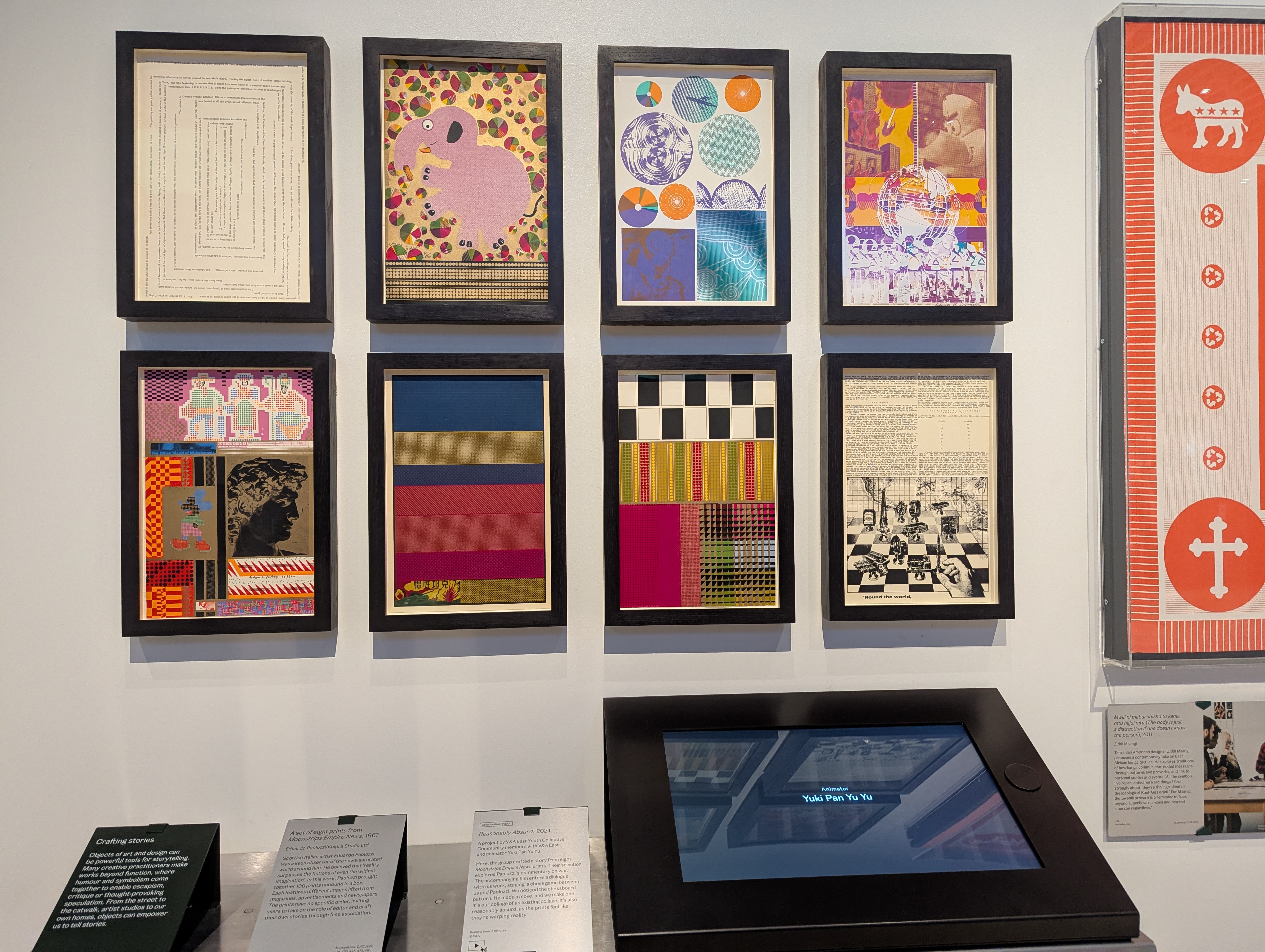
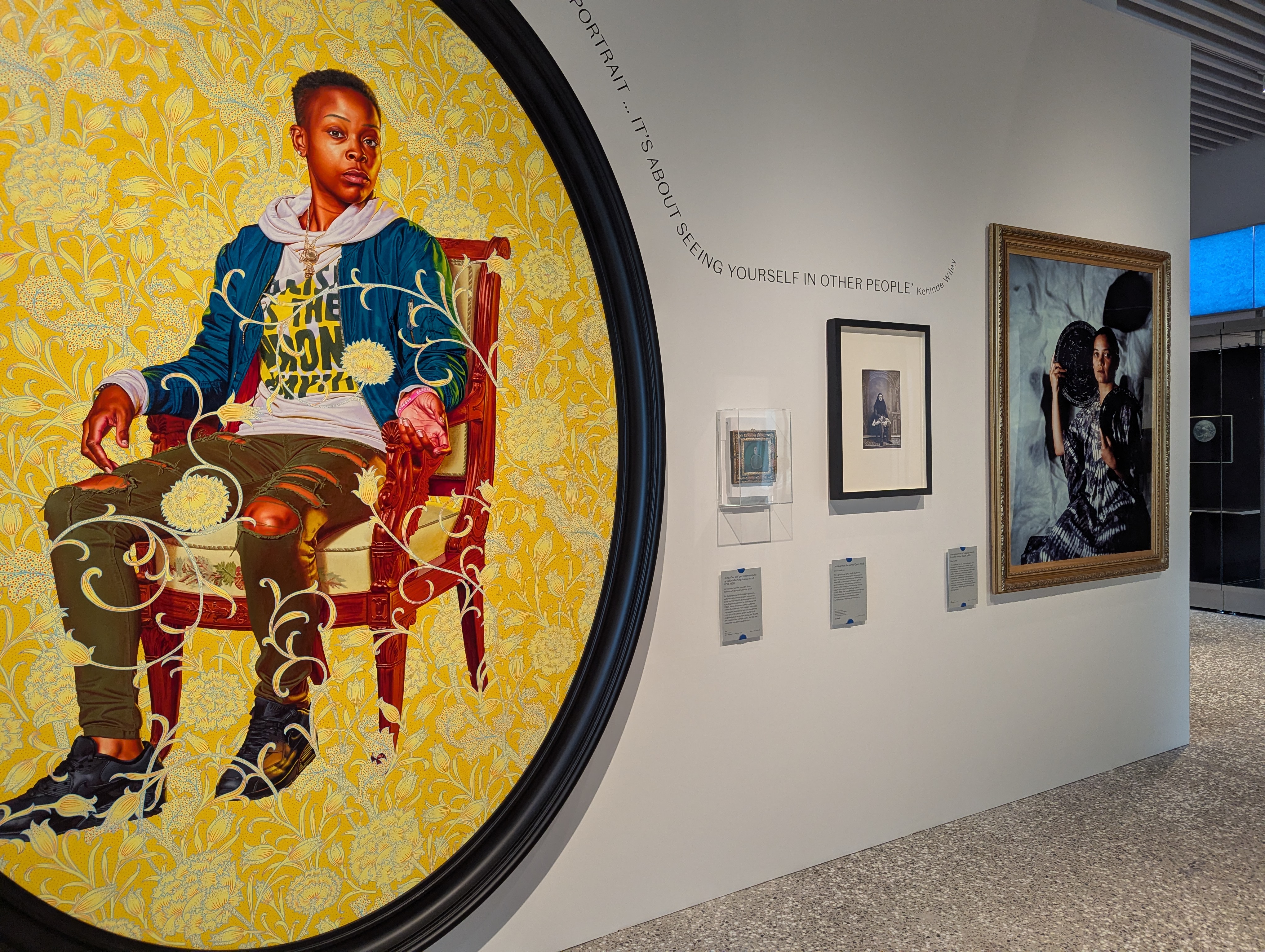
We found that so interesting that we made a point on a different day to head over to V&A East and V&A East Storehouse, new extensions of the Victoria & Albert Museum.
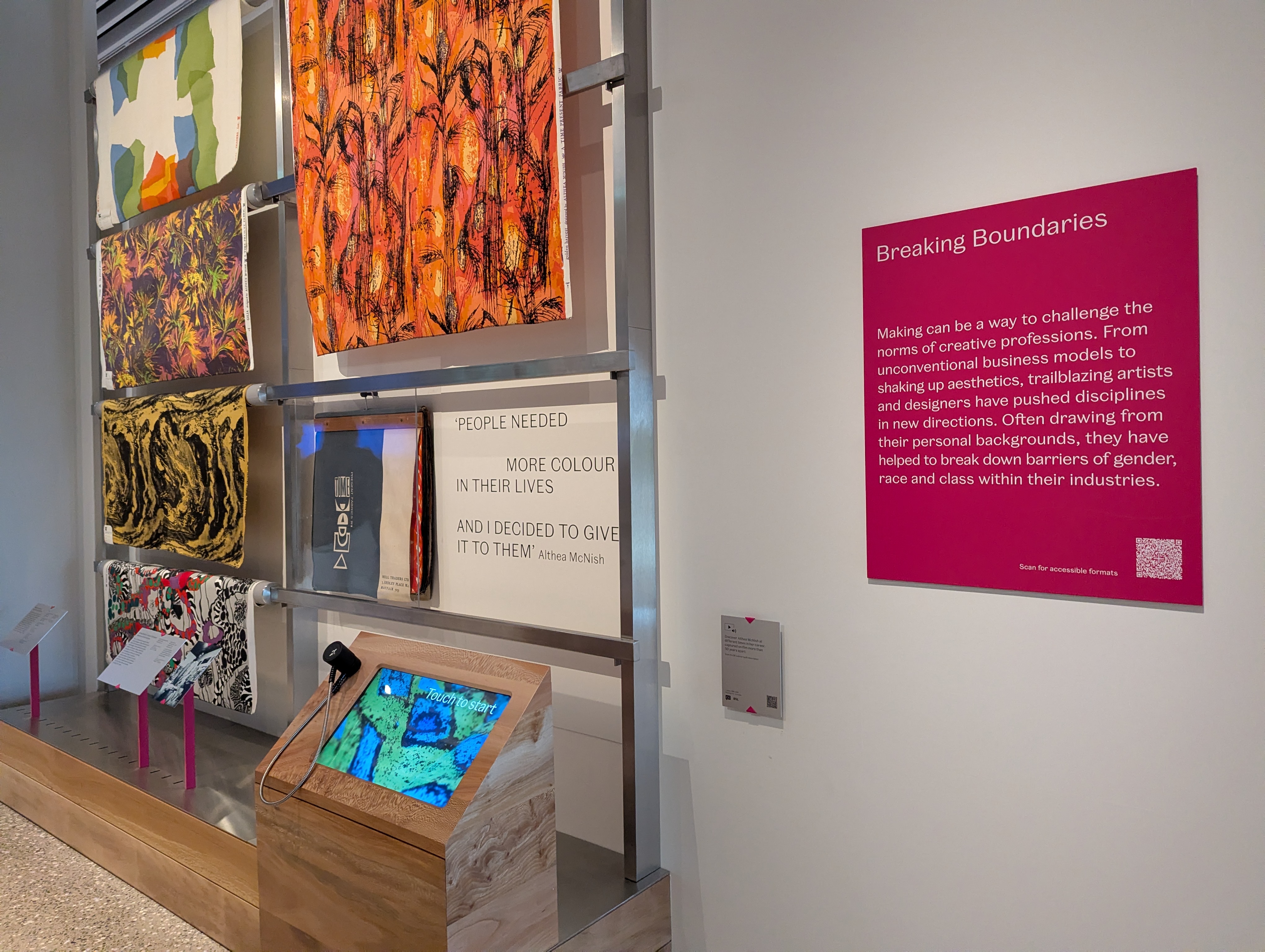
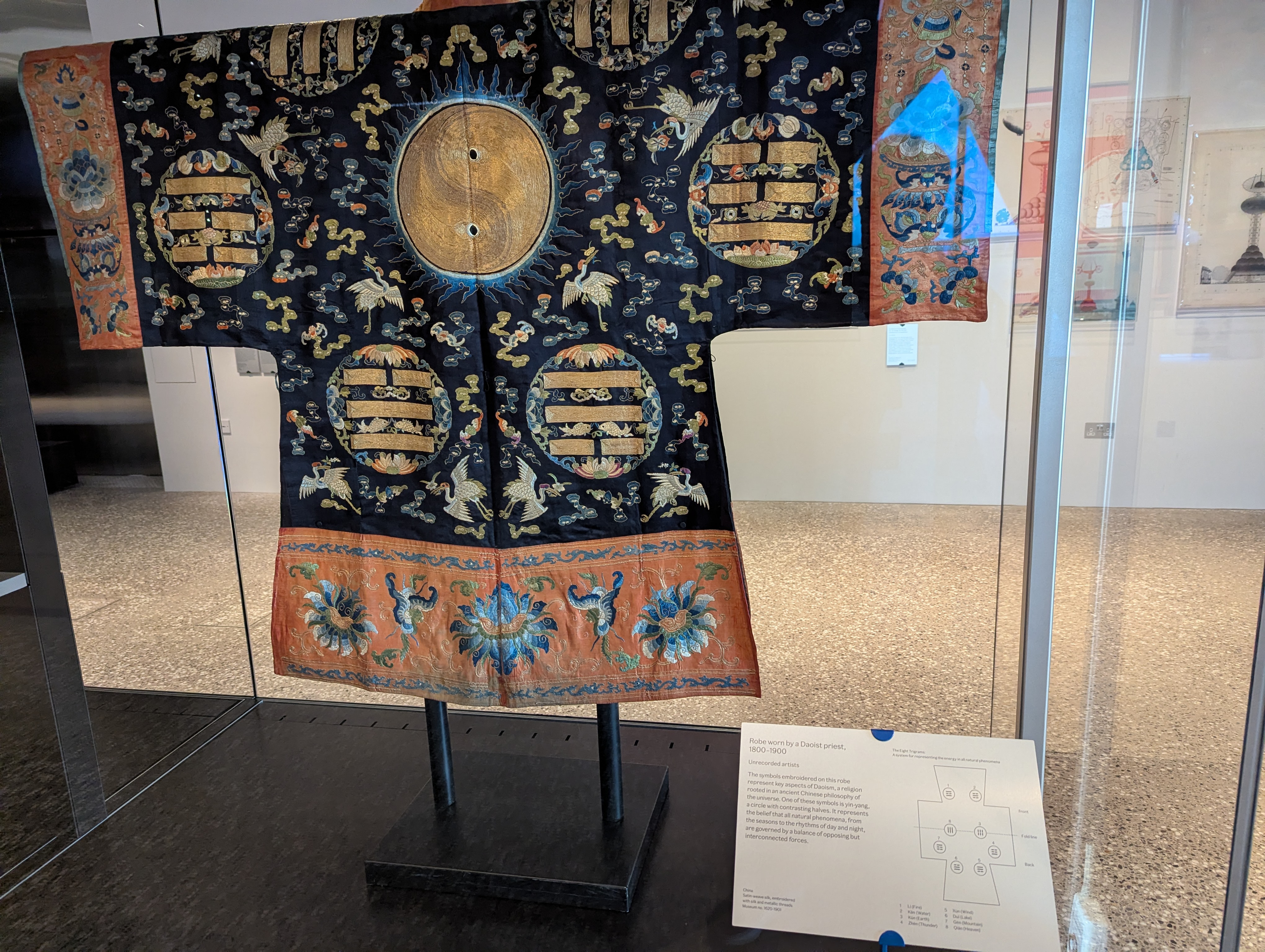
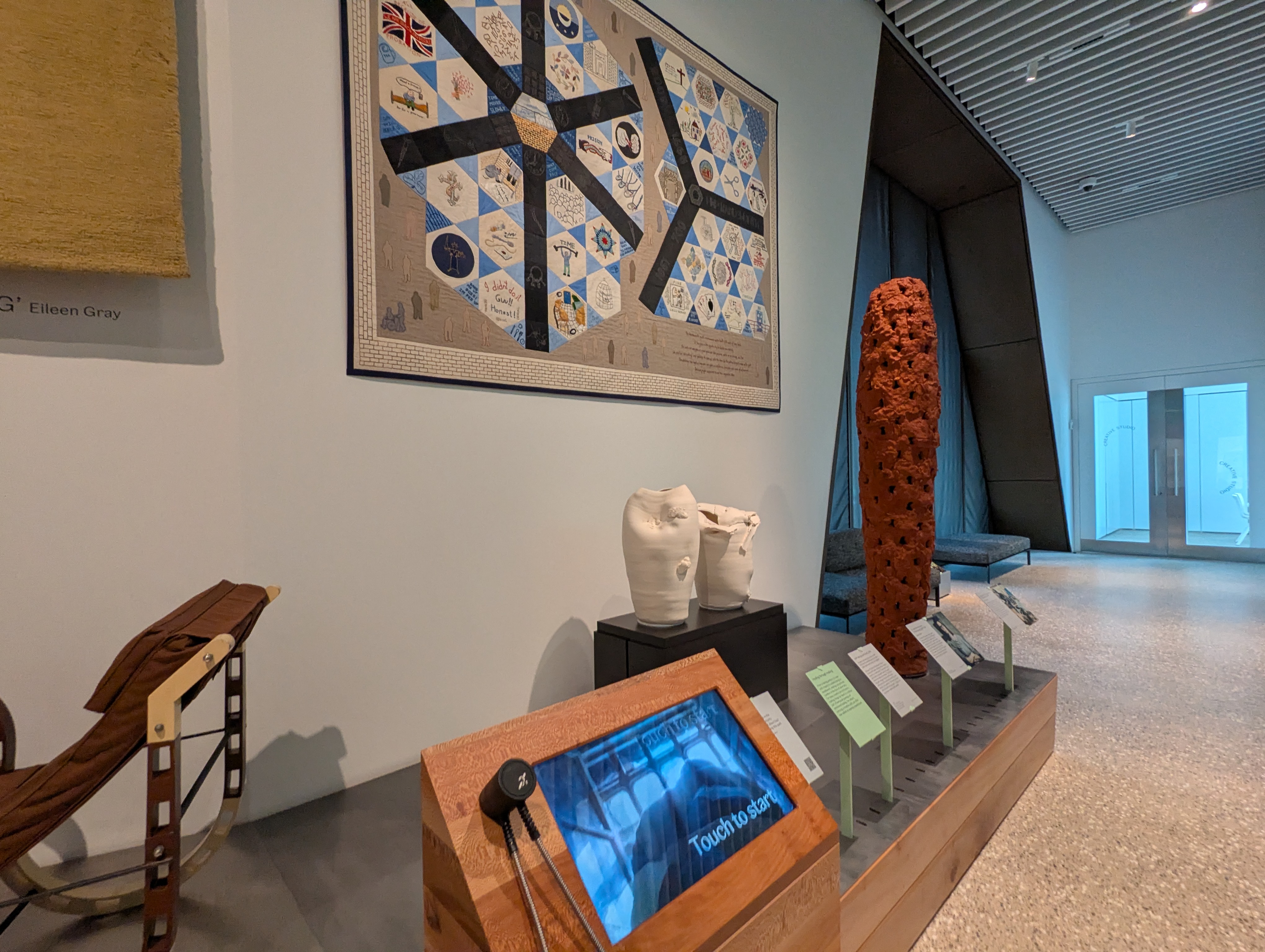
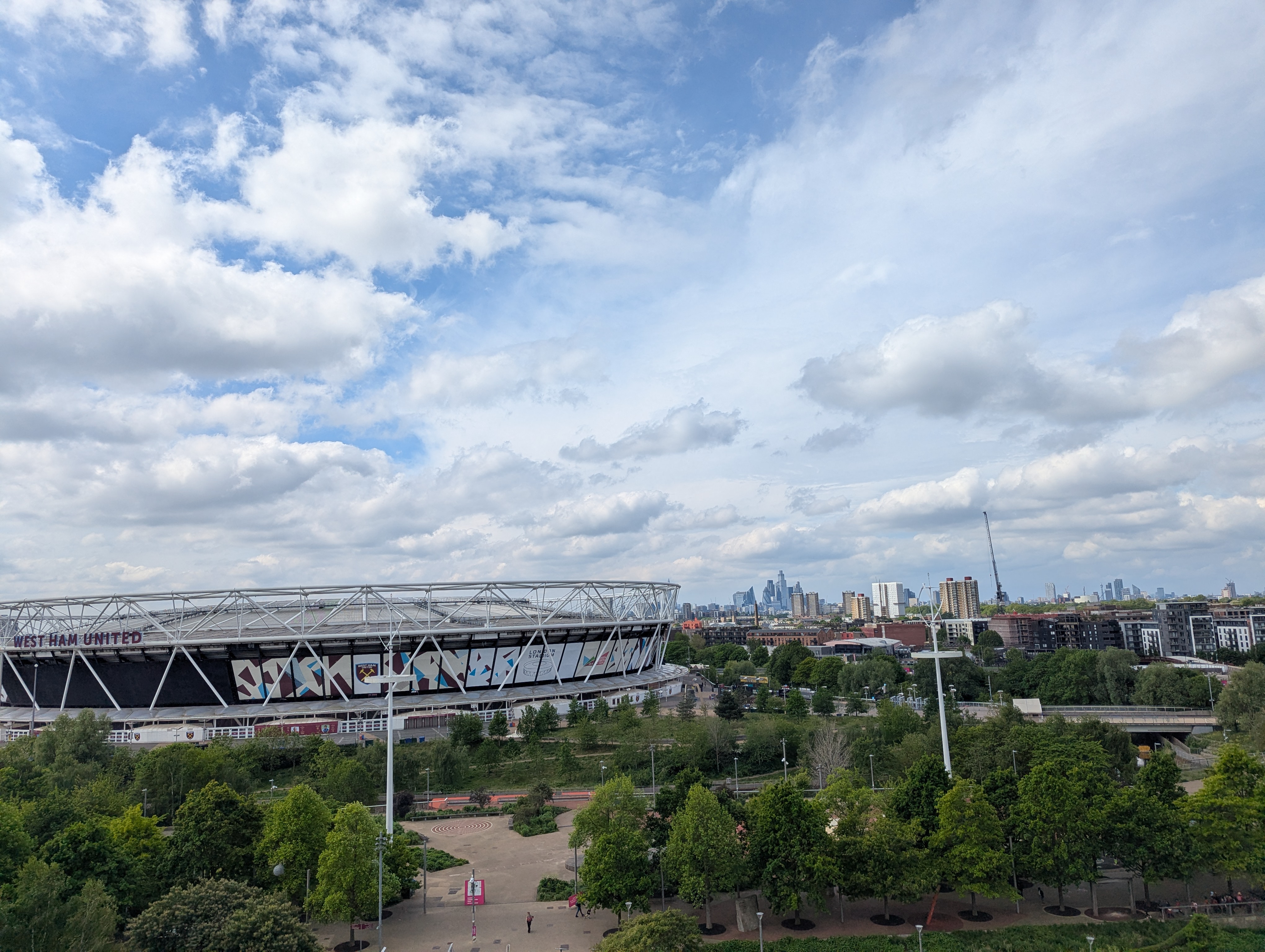
At V&A East we visited fascinating exhibits on “Why we make,” focused on the impulse to create and the process of creation. Not merely creation of art, but furniture, clothing, housing. I have found the Victoria & Albert museum in Kensington to be overwhelming, but the V&A East is very, very manageable and no less interesting. Bonus: it has a patio with a great view of the area where the Olympic stadium is. Which, by the way, is currently the home of West Ham. Arsenal were to be playing West Ham at London Stadium the weekend after we visited. We made sure to walk over and spread our Arsenal cooties all around the ground after visiting the exhibits.
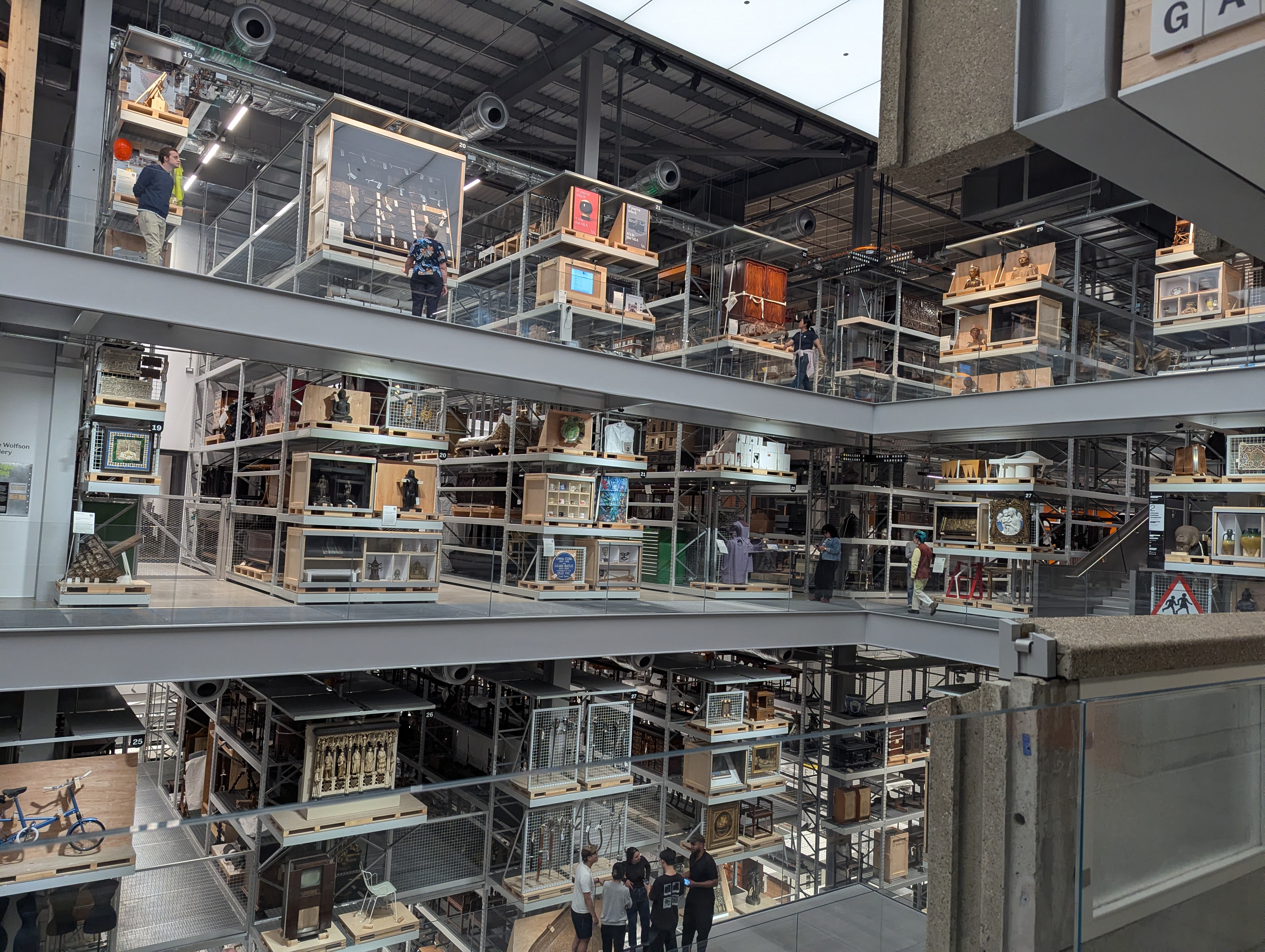
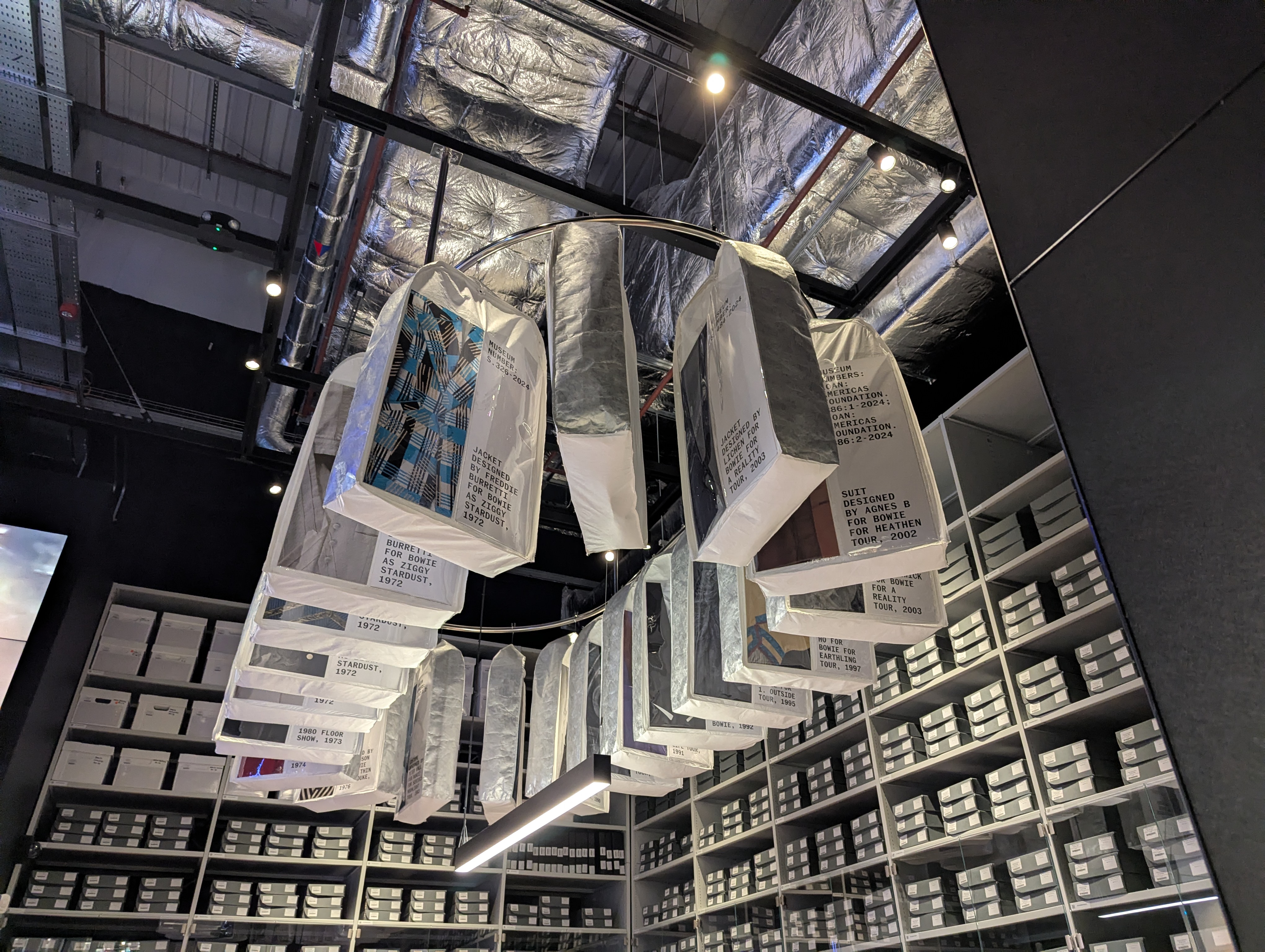
The V&A East Storehouse is a short walk from V&A East. I’ve never seen anything like this. It’s literally a storehouse for objects owned by the Victoria & Albert, but not currently on display in the museum. Except it’s the fanciest Storehouse you’ll ever lay eyes on. It’s a museum-like storehouse. You can walk around and look at the objects, which we did.
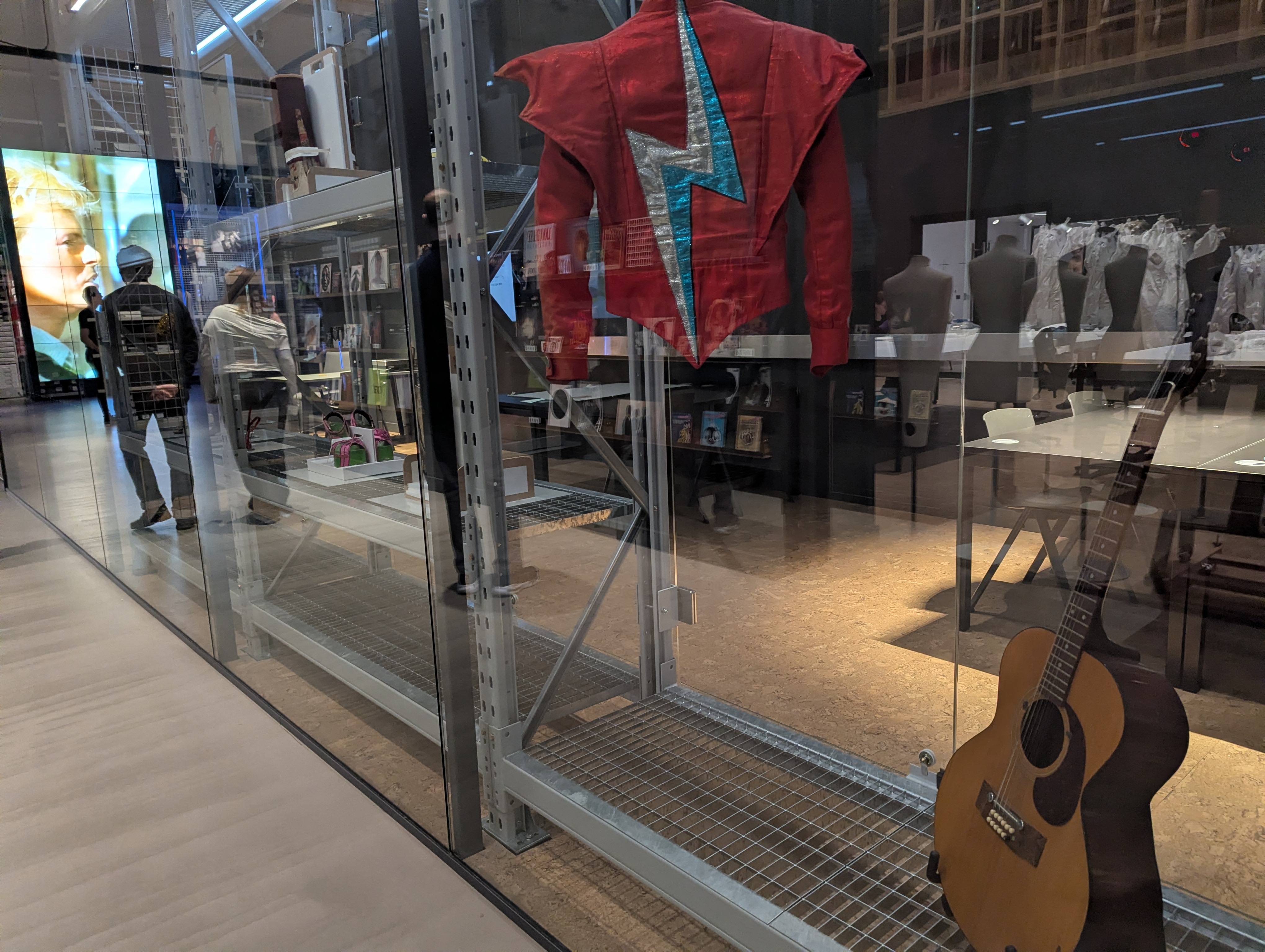
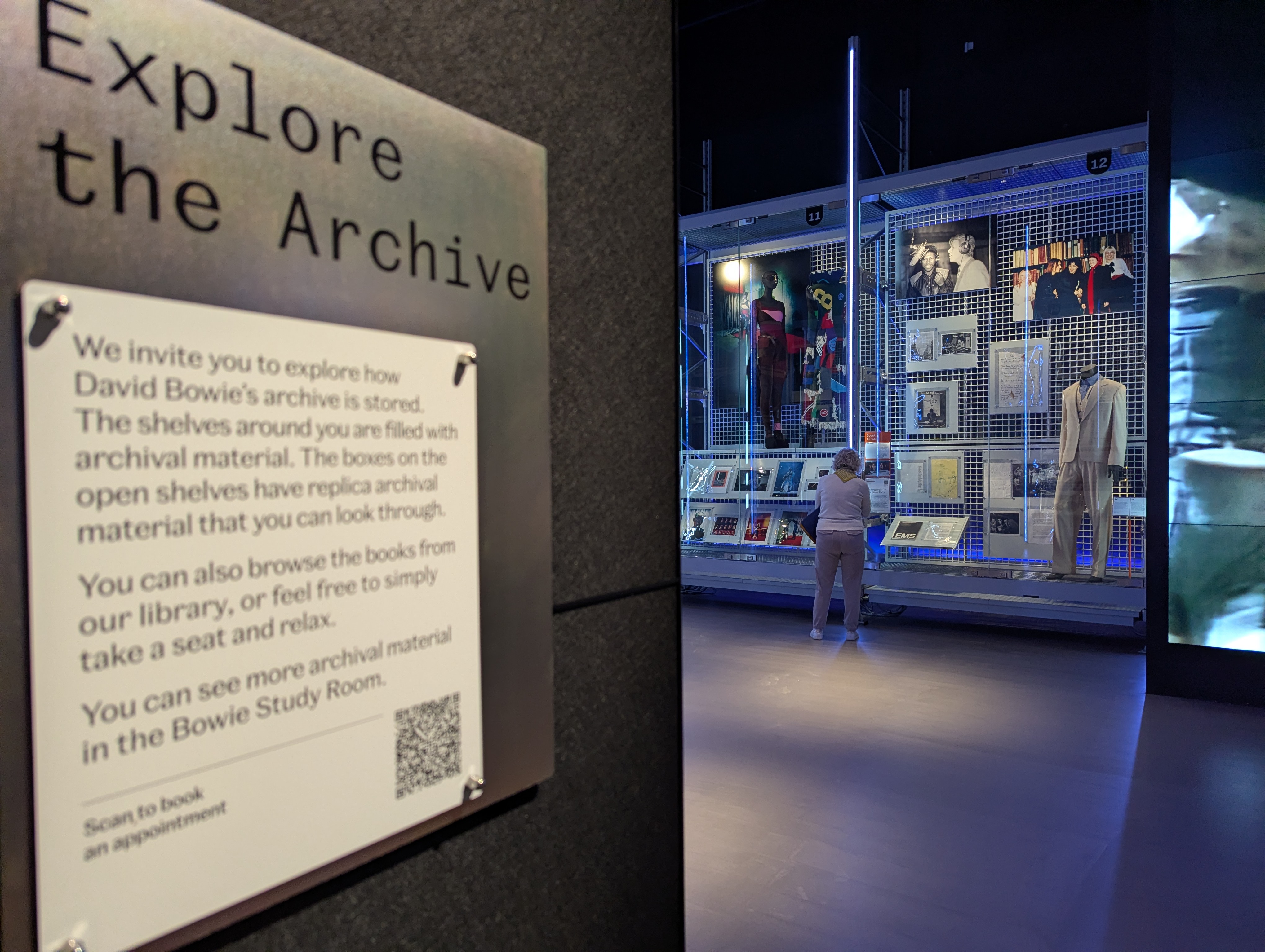
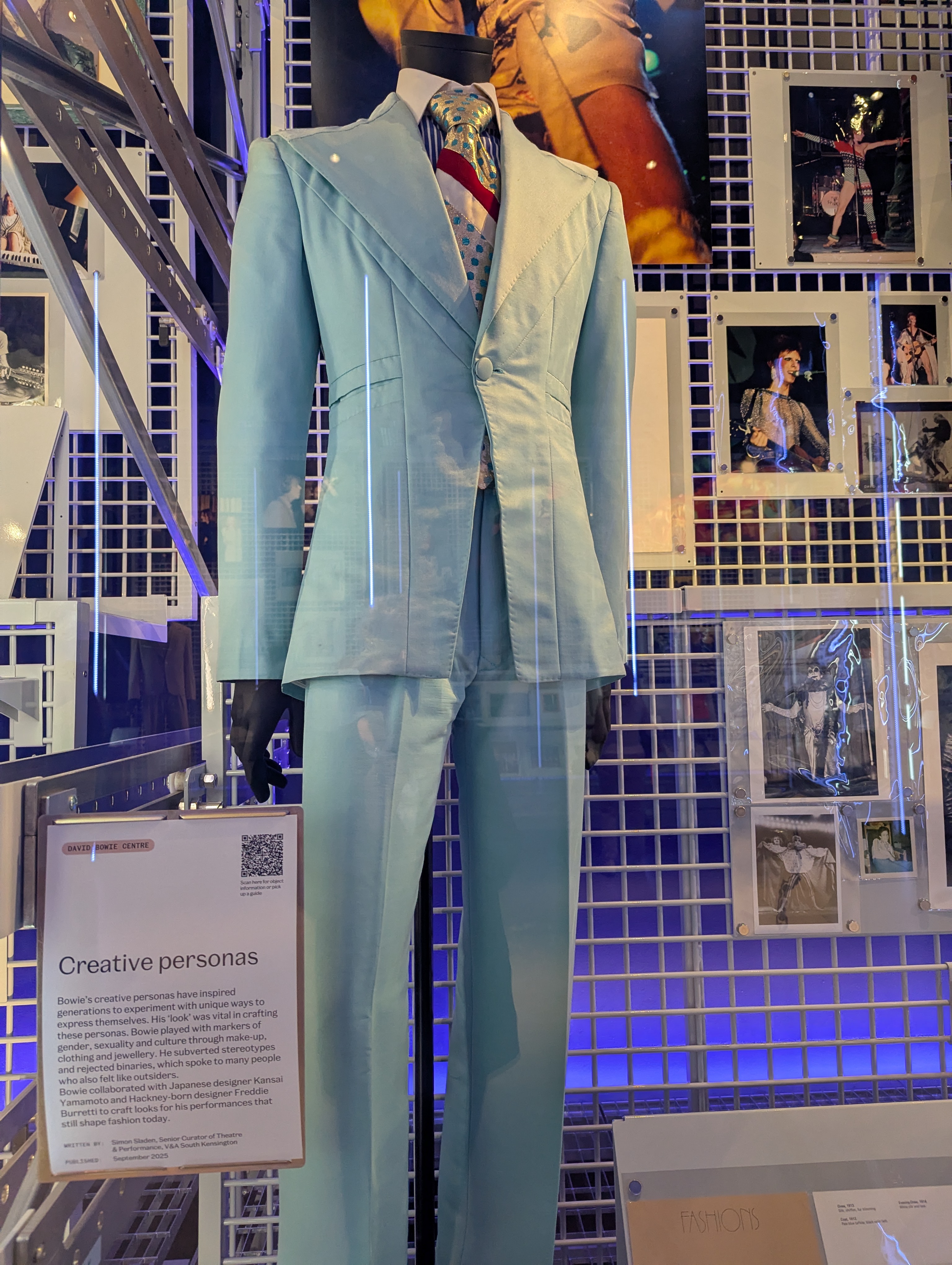
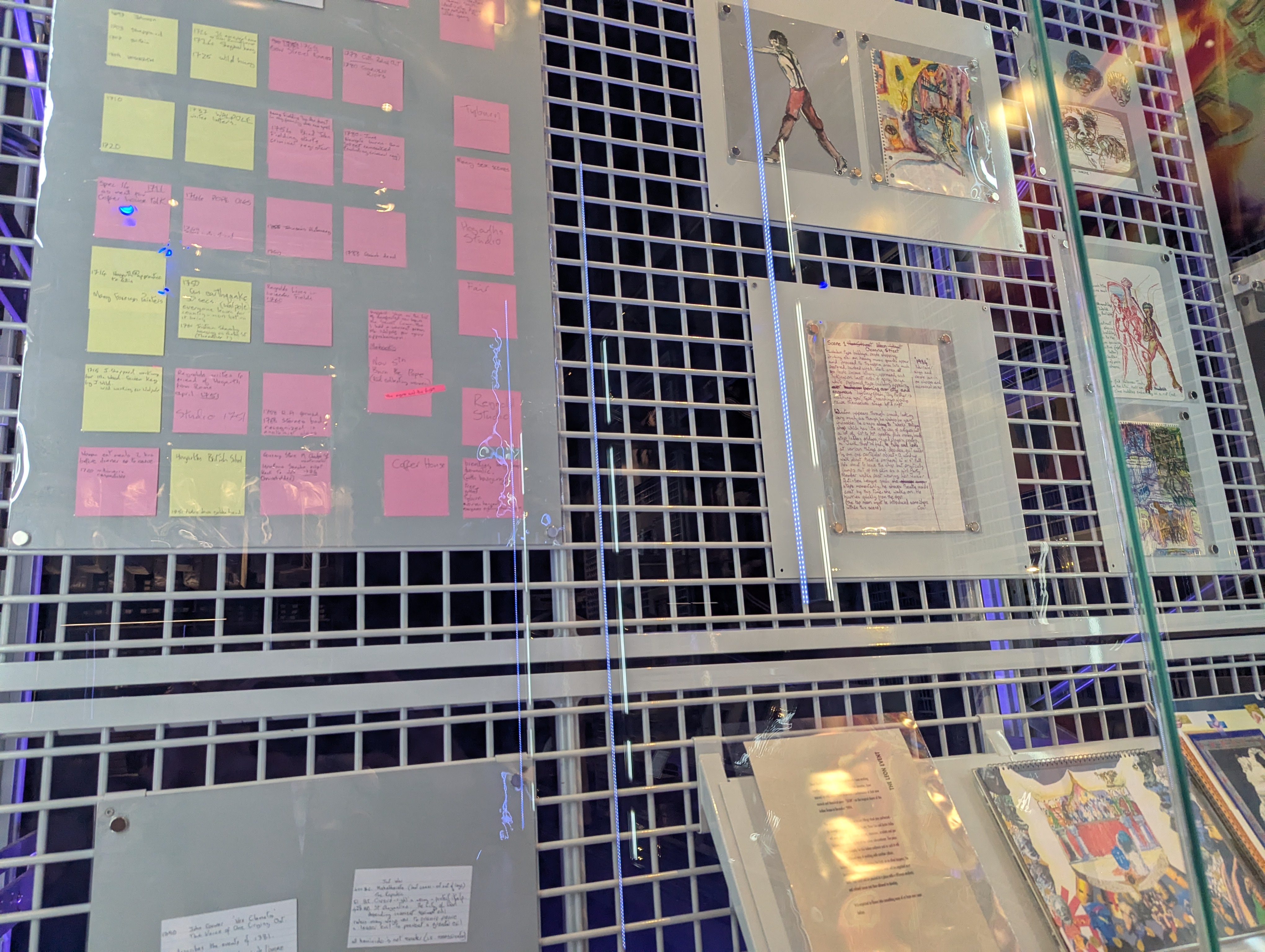
You can also visit a special area devoted to David Bowie. The David Bowie Centre is a permanent archive for David Bowie’s possessions that was given to the V&A. It contains a small exhibit that includes some iconic costumes worn by Bowie, objects he owned, and a narrative and artifacts about how some of his music was written (including hand-written starts at several songs, including Space Oddity, which was written almost like a play). It also includes archives of interviews, articles, reviews that are not on display but can be accessed upon request. He must have understood his own importance or he would never have retained all that stuff. And I guess he was right about his importance or the V&A would not now have it. Great exhibit.
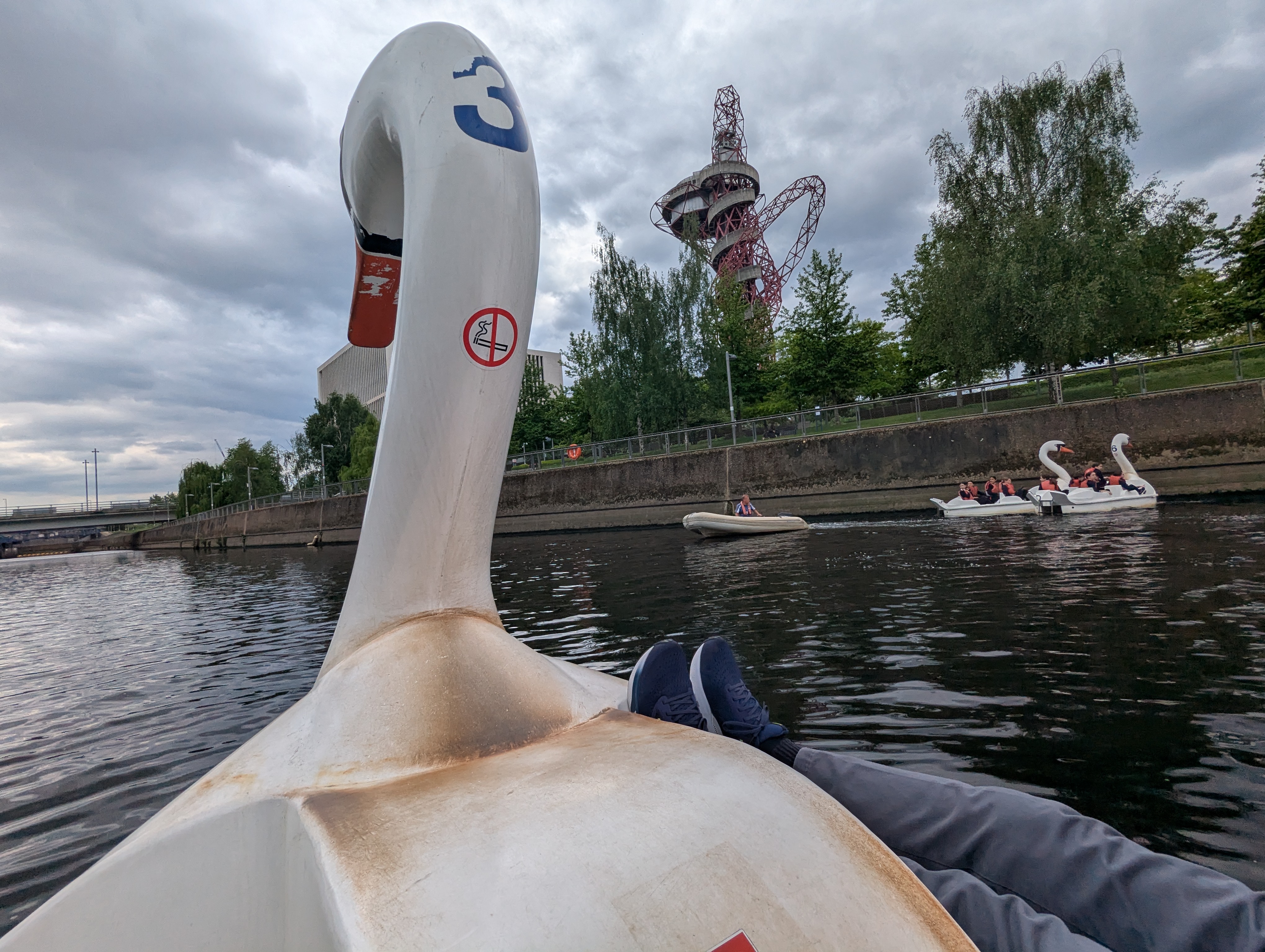
Space Oddity tells us “planet earth is blue,” and we understand it’s blue because of the water on its surface. Our visit to London, coincidentally, included several water-related activities. The River Lea lies between the V&A East and London Stadium and there’s a place on the edge where you can rent a swan boat. Along with a bevy of school-aged kids, we decided we needed to do that. We discovered that swan boats are just the right size for me to peddle at 5′ 2″ and completely wrong for my husband at 6′ 2″. After a very short trip down river, we crossed this activity off our list.
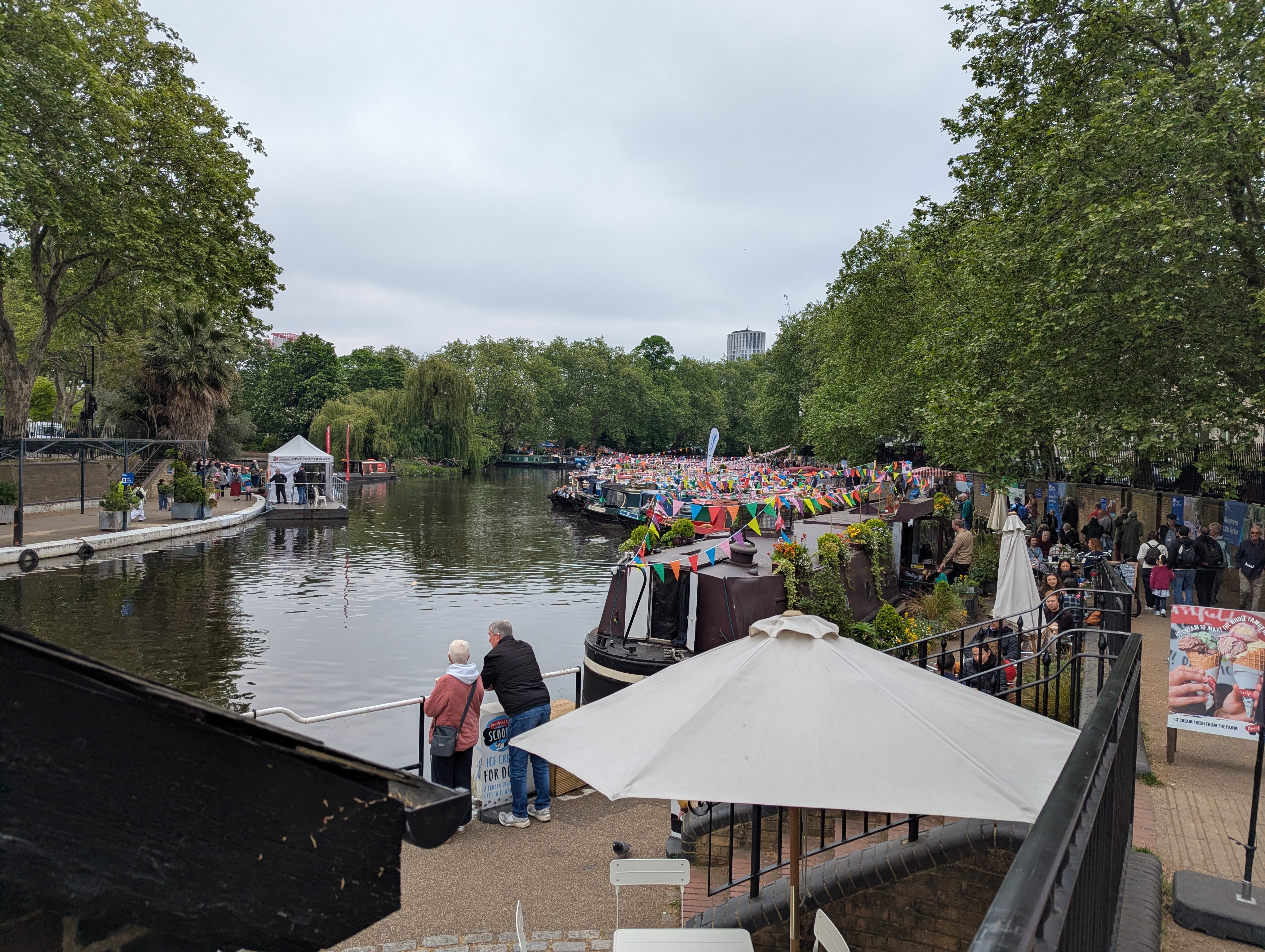
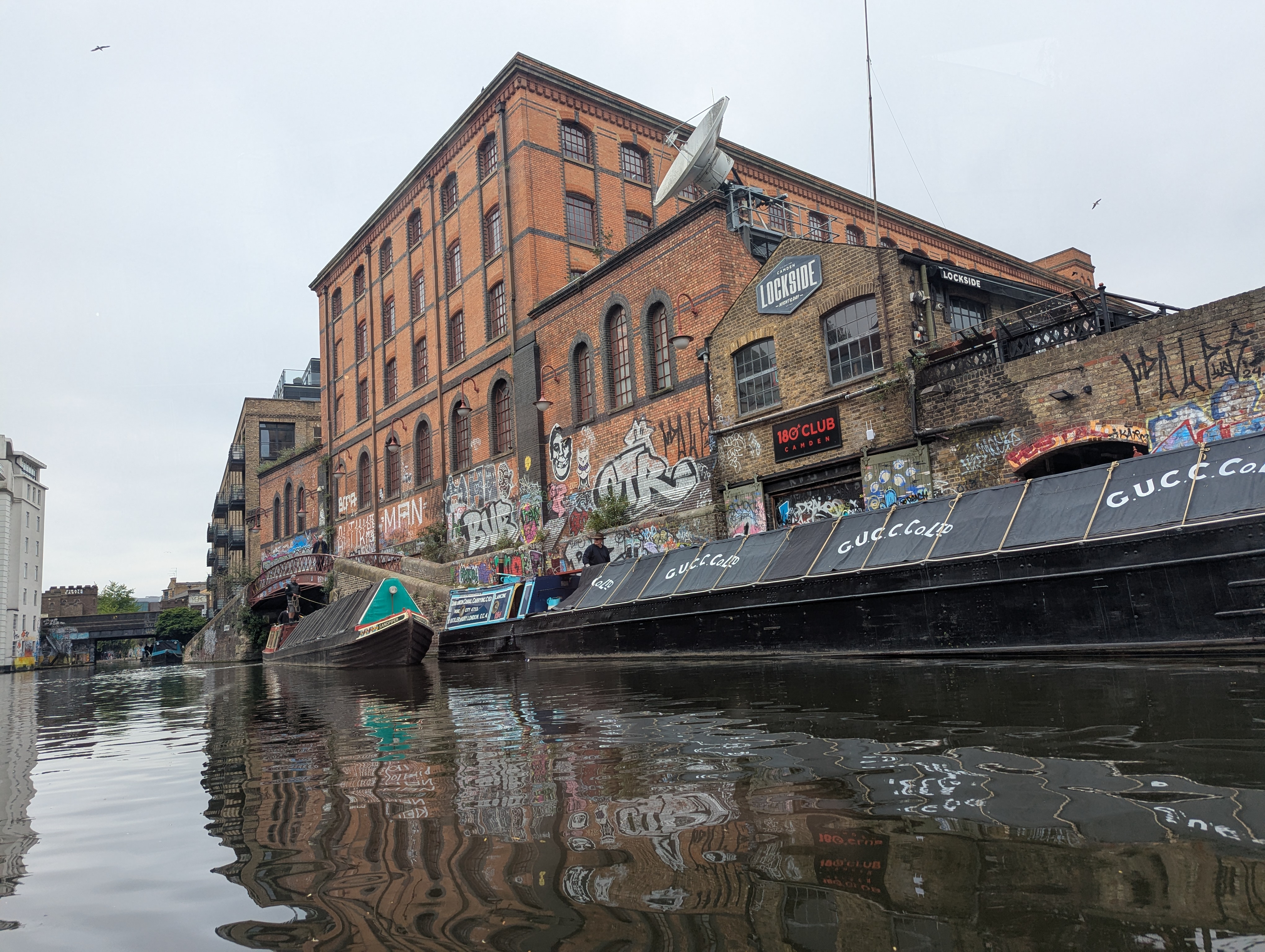
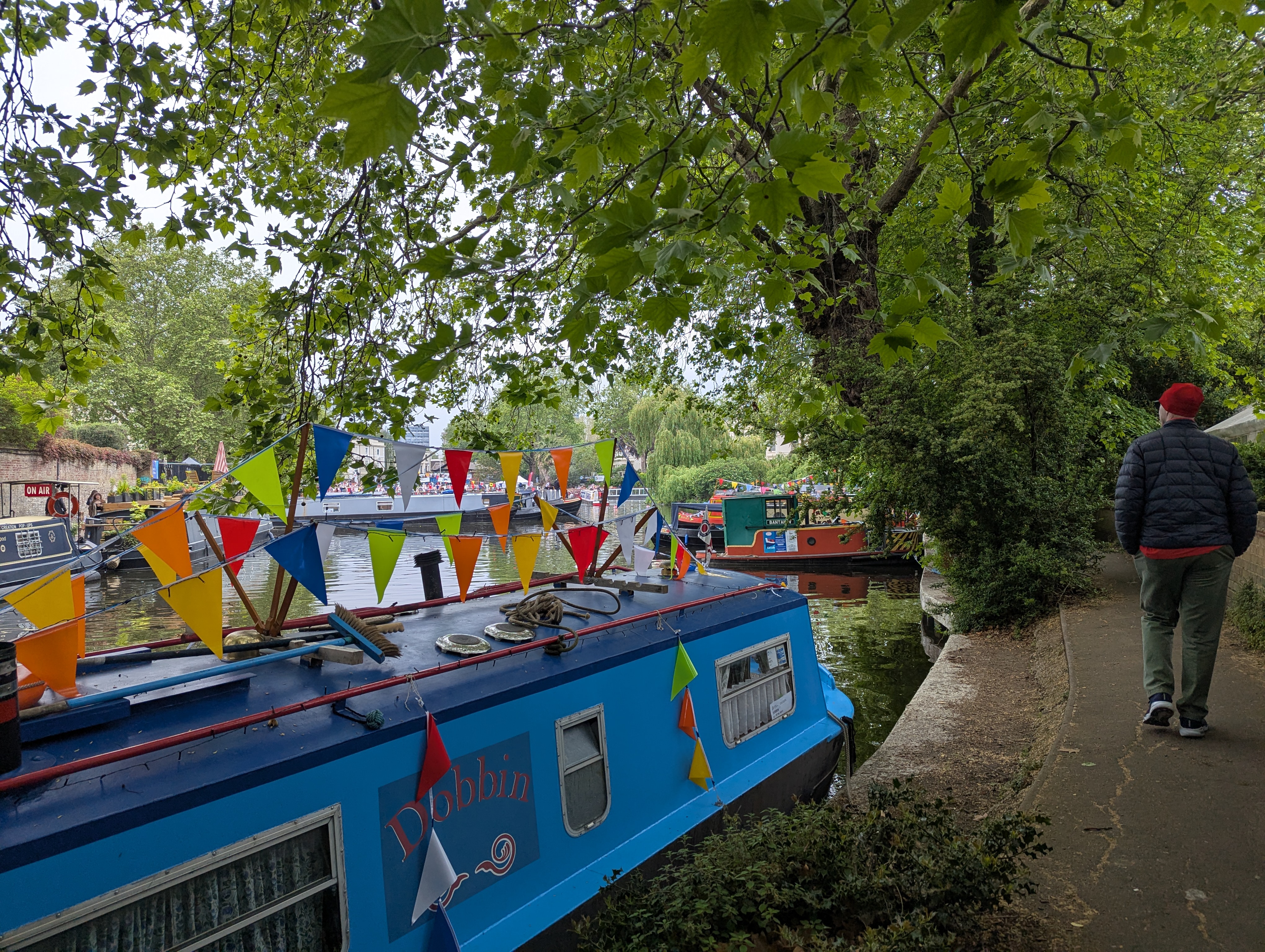
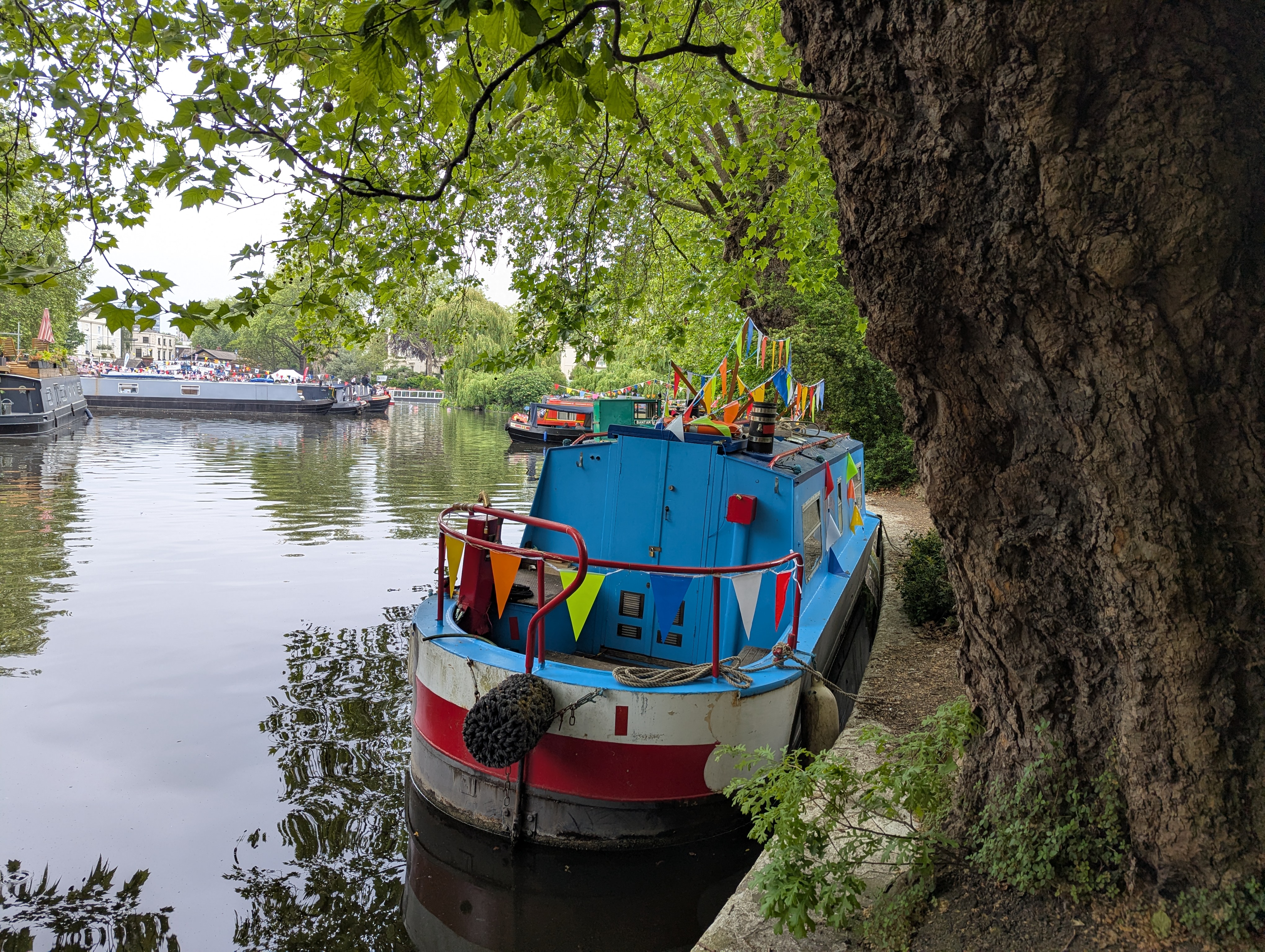
On one of the days we were in town there was a boat festival, the IWA Canalway Cavalcade, near something called “Little Venice.” Having seen Bangkok’s version of “Little Venice” in January, I wasn’t expecting much that resembled Venice. Although the one in London did not, in the end, look at all like Venice, it was very charming and fun to see all the houseboats gathered together. There were many vendors and activities for the kids and we enjoyed walking along the canal on a nice day. My husband noticed that you can take a boat from Little Venice over to Camden so we hopped aboard and enjoyed the scenery for the 45-minute ride.
We also did a walking tour of the hidden River Fleet. This is a river that once visibly flowed through early London but became nasty, dirty, stinky and was covered with roads in the 1700s. It’s now, more or less, a sewage canal. Once before we had tried to find the headway for the river, but with construction near it along the Thames it’s impossible to see. But you can “see” and hear it underneath streets in parts of London.
Tourist taking photo of picturesque River Fleet.
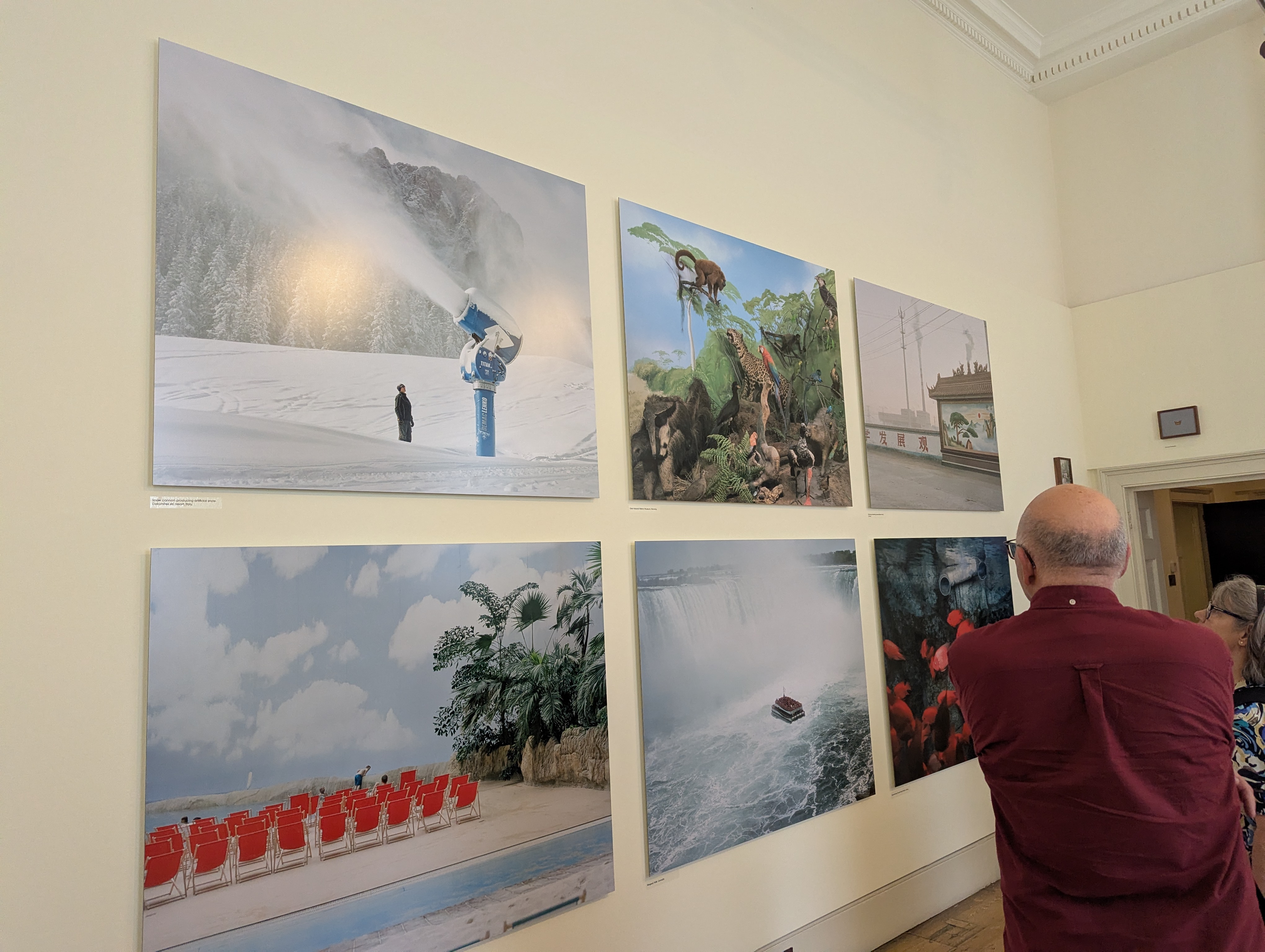
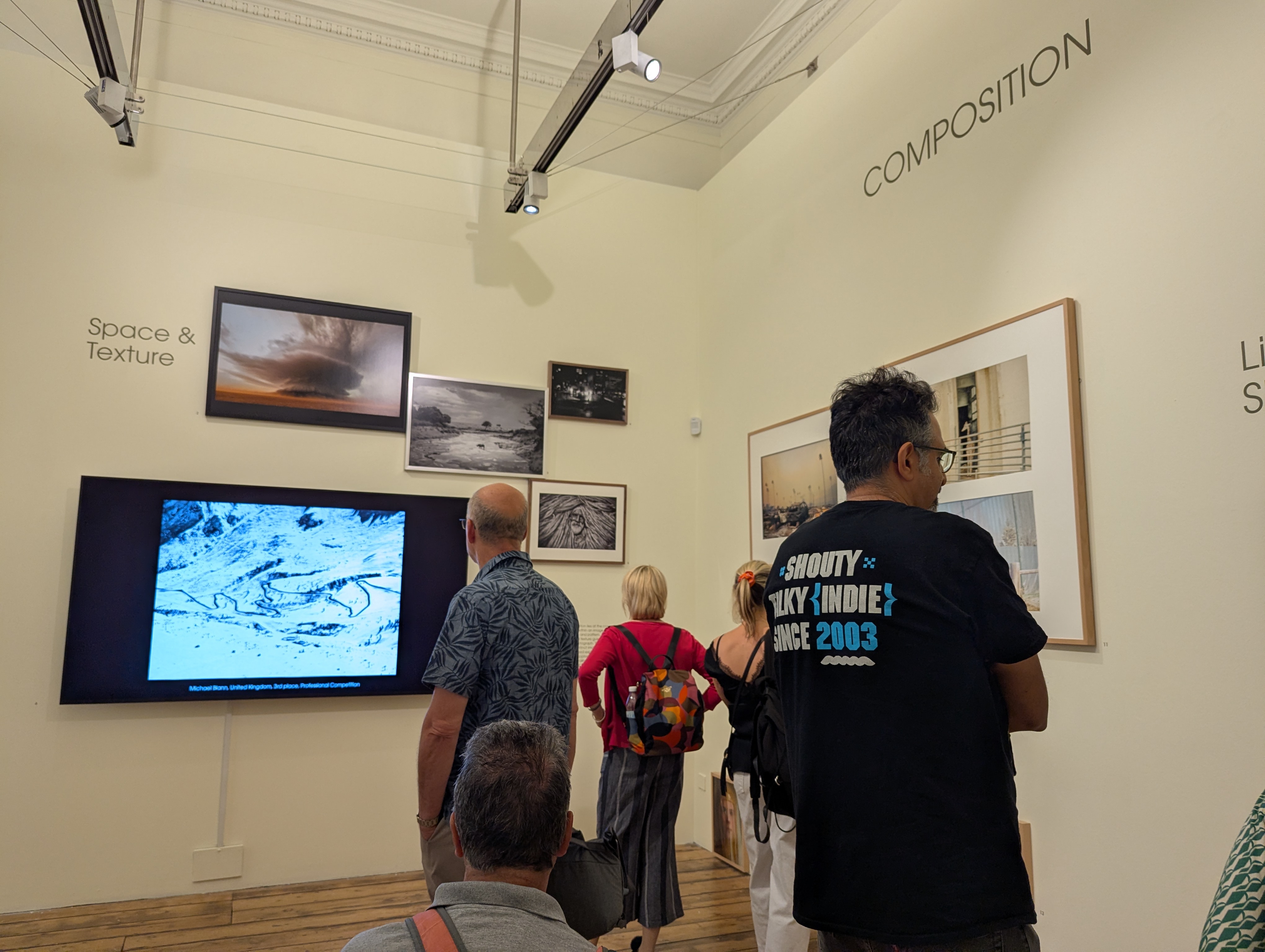
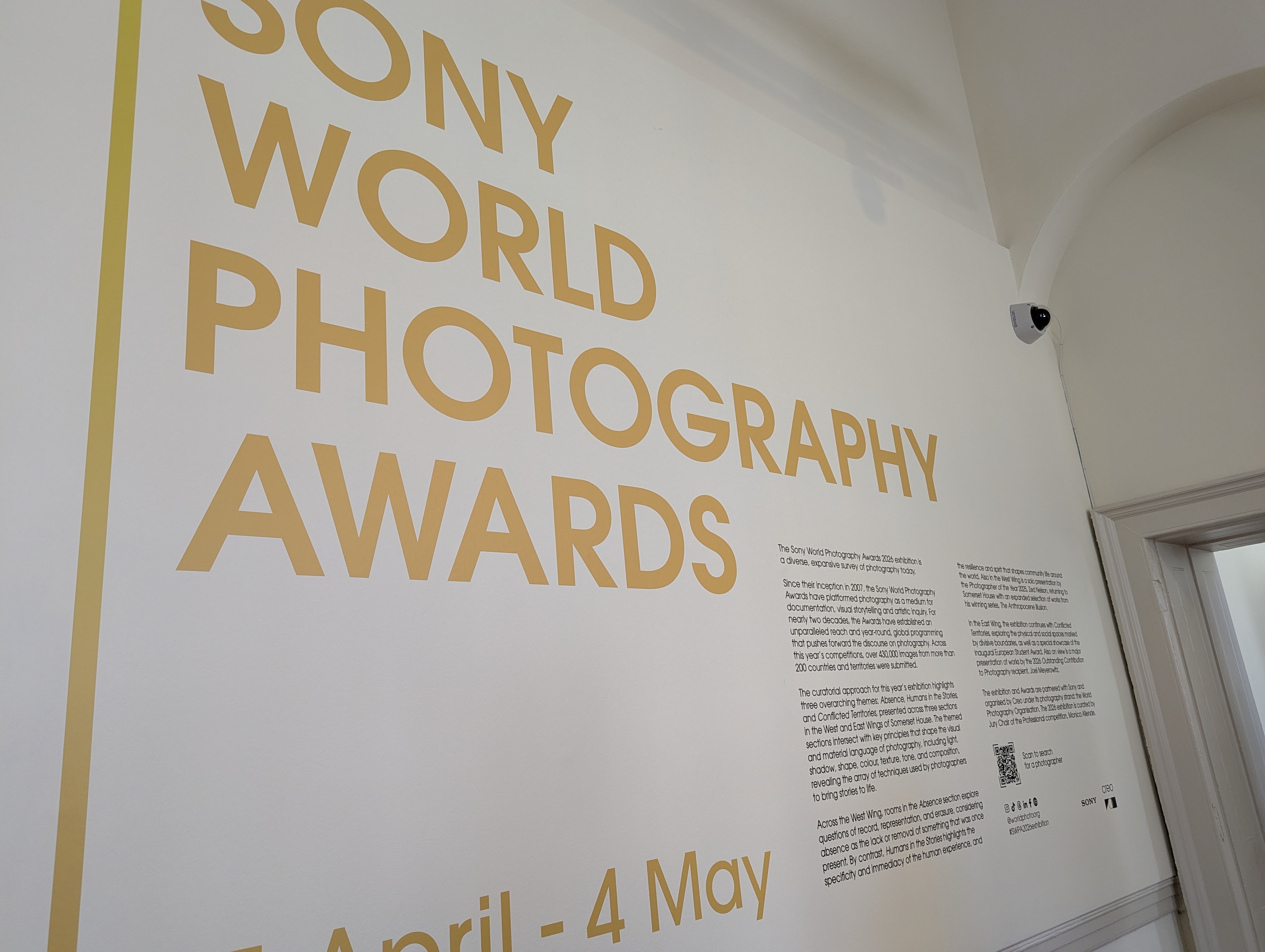
We did a few things that have nothing to do with David Bowie or water, but do take place on Planet Earth. We visited the Somerset House for the 2026 SONY World Photography Awards exhibit. The exhibit included entries by amateurs and professionals in various categories, including portraits, landscapes, still life. I have no idea how they picked winners. It was all so good.
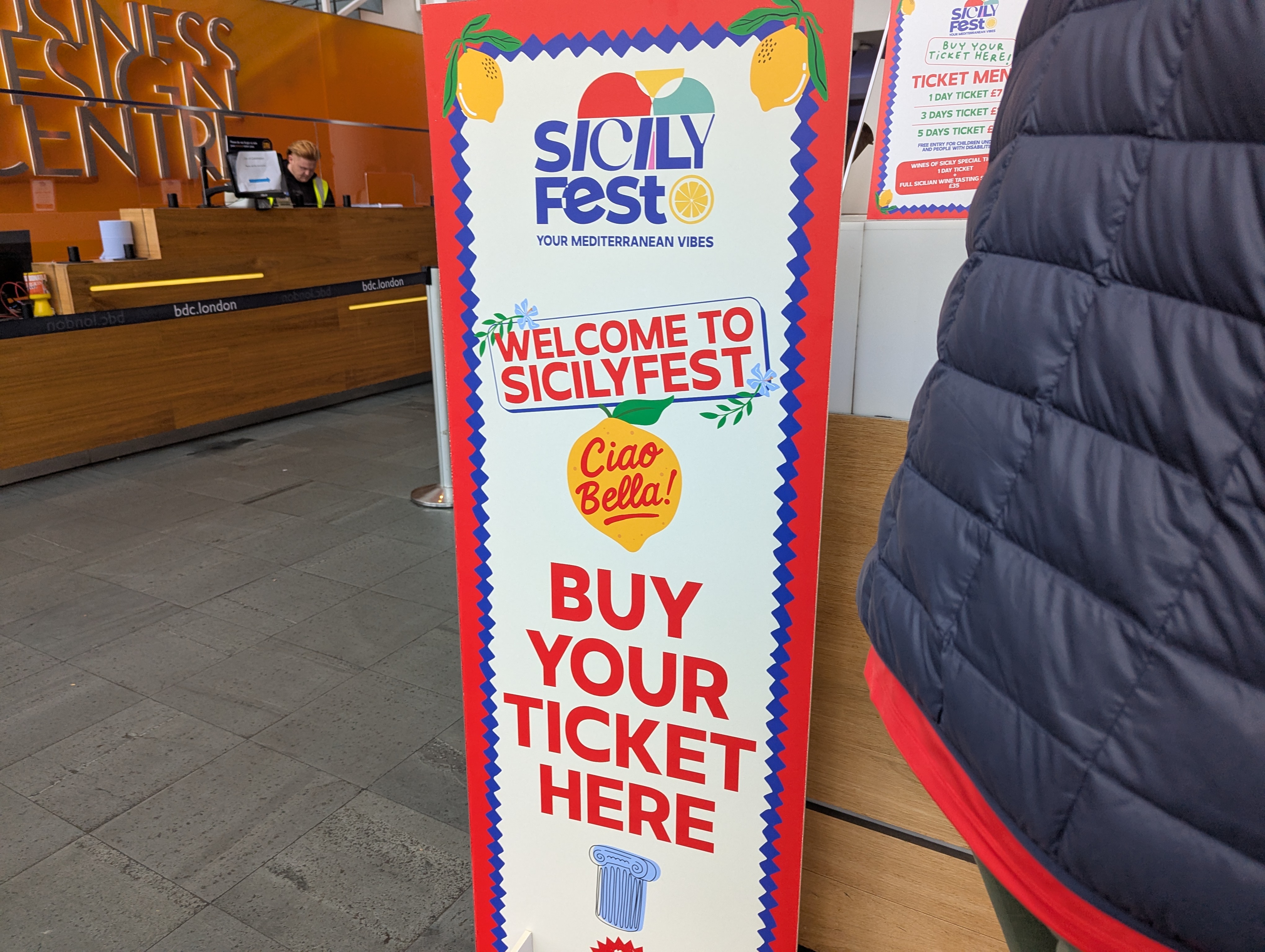
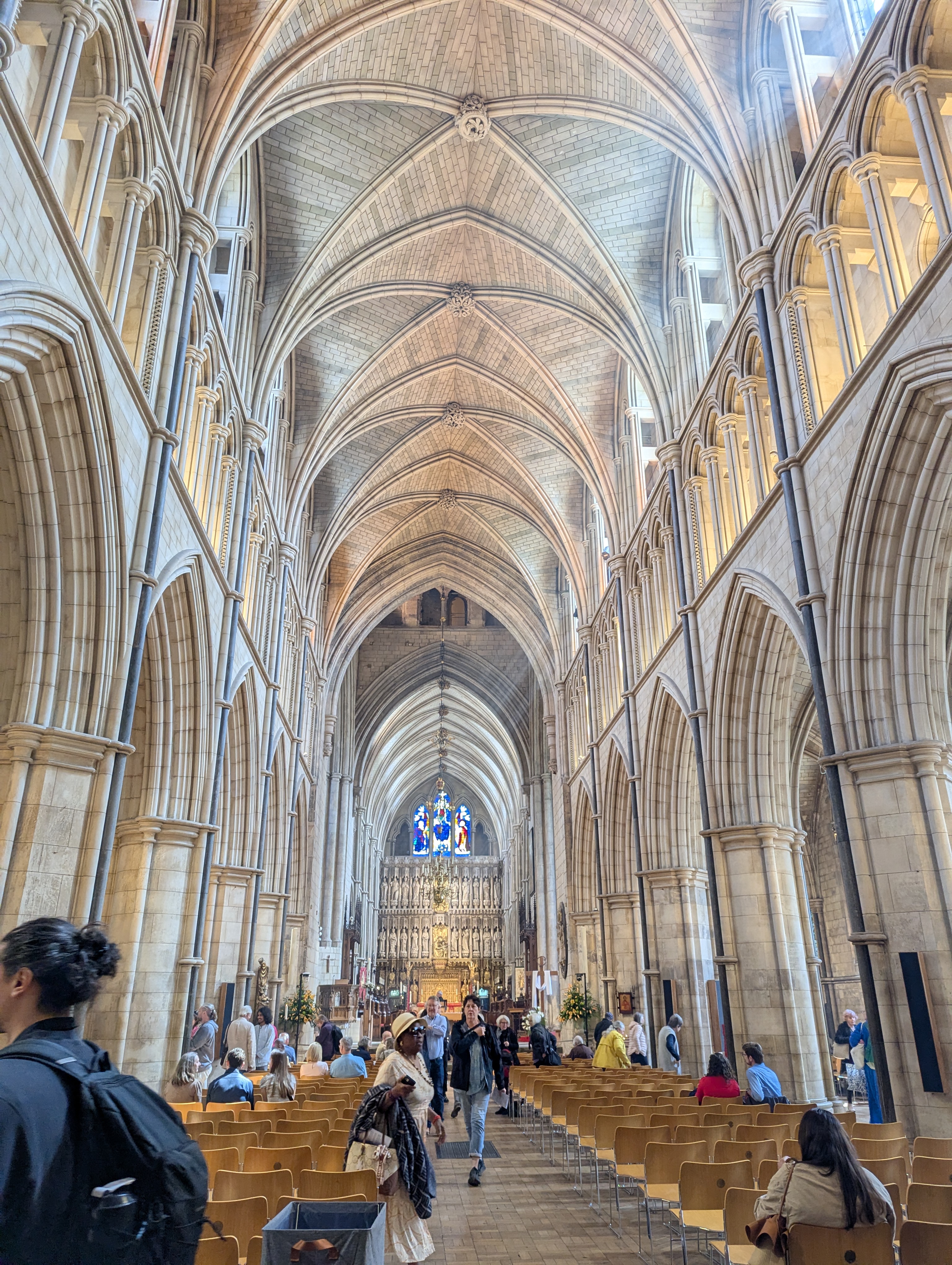
We also went over to an event called Sicily Fest. This was in a big hall in Islington, and held a bunch of vendors selling Sicilian food and drinks as well as a very popular Sicilian band. We attended a church service at Southwark Cathedral, home of Hodge the cat, who indeed was wandering around during the service and stopped by to sniff my husband.
And, as always, we found ourselves in a number of Fuller’s pubs. In my favorite experience, on the first day we were there, we really loved the glasses the Sutton Arms served our London Pride in. They had a depiction of the Thames that was very cool. We asked the bartender if it were possible to buy one. He said “Just take one. We have so many. And they always just walk away, especially with people drinking outside.” We were not quite in the sticky fingers frame of mind. While we sipped, ate a very delicious pizza, and watched the world go by through a large, open door, I googled how easy it would be to buy a glass. We found that Amazon could deliver such an item to us in the UK but not in Chicago. We enjoyed our beer in those beautiful glasses and left them behind. Here’s hoping enough will be retained by the London pubs for us to enjoy one again on a future trip.
As we were circling the Emirates in advance of the Fulham match, I overheard a conversation between several Arsenal fans walking behind us. They were discussing how they plan to view the last match of the season, which will be played away at Crystal Palace. The conversation took on tones of people imagining winning Power Ball: How would they spend all that money?
The impact of our losing against Bournemouth and Man City two weeks prior had put a giant dent in our title hopes which had been looking great for most of the season. Technically, if Man City were to win all their matches and Arsenal were to win all our matches, we would be tied on points earned. The league winner would then be decided by tie breakers, first being goal difference, second being goals scored. As of the time of the Fulham match, Man City and Arsenal were tied on goal difference but Man City had a higher number of goals scored. And in Arsenal’s match the prior weekend, at home no less and against in-a-world-of-hurt Newcastle, we had barely eked out a winning goal. It was pure torture to watch. And, needless to say, was not a harbinger of needed goals galore. Meanwhile, Man City looked to be turning into a magnificent machine as they so often do in the Spring. Depressing stuff.
So this conversation on which I was eavesdropping outside the stadium seemed particularly fanciful. The most hopeful fan was telling his friends he imagined he would watch the last match of the season between Arsenal and Crystal Palace at a pub in North London so he could experience it with Arsenal fans. And if Arsenal were winning by many goals, he would hop on the Tube and head over to Crystal Palace’s stadium, Selhurst Park. Because, as he explained it, “I know I can’t be in the grounds, but I would have to be there.”
My husband and I hadn’t been successful in the ballot for tickets to the Fulham match but then were eligible to look for tickets on Arsenal’s ticket exchange. I had felt confident we would be able to get tickets for this match and we had done the unthinkable, booking nonrefundable air tickets and hotel before we had any match tickets. With a million clicks I was able to find tickets the day before we travelled to London. Interesting that there had been so much angst online about Arsenal’s prospects for the Premier League among presumed fans (Bottled again!) while at the same time, fewer ticket holders than usual were selling tickets and a greater number of people were wanting to buy them. The market for tickets speaks more softly then the internet but methinks it tells more truth.
I could understand the feelings of my overheard compatriot in wanting to be ready in case the good thing we’ve all be dreaming of looked like it might imminently happen. While I was not quite ready to imagine planning that final day of the season, I was certainly charmed by the sentiment. I could see him outside Selhurst Park in the cool of the early evening, maybe his pint glass still in hand, looking up at the stadium lights, and smiling at the sound of cheers inside the stadium. Dreams fulfilled.
Using the exchange means my husband and I were not sitting together because you really can only get one ticket at a time. Both of our seats were in the club section in the North Bank, but mine were in the West corner and my husband’s were in the East corner. I was in my seat in time to see Arsenal’s pre-match sendoff for Per Mertesacker, our intrepid former defender who’s been in charge of Arsenal’s youth academy since he retired from playing. Always loved that guy. He, Laurent Koscielny, Nacho Monreal, and Hector Bellerin formed the last really excellent defensive line I can recall until recent years.
I wondered if the stadium would erupt with the chant we’d used for him. He did reference it in his short remarks, calling himself a “Big friendly German” instead of the word starting with “F” we actually used, very lovingly. Although there usually is no hesitation on our part about flinging out some pretty rude chants, for some reason the one we used for Per only 10 years ago felt a bit culturally inappropriate now. Anyway, if the chant was only sporadically sung during the presentation before the match, he got a big round of applause for the good work he’s done with the Academy.
Three of the Academy’s protégés featured for Arsenal in the Fulham match. Mikel Arteta reached into his wildest dreams and determined that Academy alumnus Myles Lewis-Skelly would start in midfield, something that only almost happened in (I think) an FA cup match earlier this year. On that occasion Myles instead ended up replacing Riccardo Calafiori at left back when he was injured in the warm-up. That replacement was not fully unexpected: Myles made his big breakthrough at 18 years old last season at left back when Calafiori had a long-term injury. Myles was very, very good at left back. But this season we’ve not seen him much in any position even though he’s mostly been healthy. Other players have been preferred even though Calafiori has been injured a lot. Somehow Myles has not been giving Arteta what he wants to see. Football qualities aside, Myles seems to be of very different character than Arteta as well. I wonder if he rubs him the wrong way. A bit of a show boat. A trash talker. New Arsenal player Martin Zubimendi has been the preferred choice in midfield for most of the season, but he was a substitute on this day.
Bukayo Saka is also a product of the Academy and we were pleasantly surprised to see him in the starting lineup after a lengthy period out with an achilles strain. He’s been playing a few minutes from the bench for the last few weeks. We’ve seriously missed his influence in attack. And wunderkind Max Dowman, still a part of the Academy at 16, was on the bench as a substitute.
It turns out that Fulham has several Arsenal Academy alumni as well, which is one of the reasons I have a small affinity for Fulham. Alex Iwobi was out injured for this match but Emil Smith-Rowe was named as a starter. These players left Arsenal at different times, both after playing for a few years in the senior team and both under circumstances that have not damaged Arsenal fans’ high opinions of them. In particular, Smith-Rowe has Favored Son status. He was an integral part of Arteta’s early teams that showed sparks of an exciting future to come. Unfortunately, he’s experienced many injuries and is not the player he once was, or promised to be. Even at Fulham, he is often used from the bench and starts mostly when others are injured. Fulham also have goalkeeper Bernd Leno, who formerly played for Arsenal. The other reason I kind of like Fulham: they long had American star Clint Dempsey before he briefly went to the Dark Side, Tottenham, and then to the MLS.
In any case, I put my “small affinity” aside. Today Fulham is my mortal enemy.
In addition to the surprise of Myles Lewis-Skelly at midfield and Bukayo Saka starting at all, Mikel Arteta had put together an unexpectedly swashbuckling lineup. This match was sandwiched between two Champions League fixtures and it seemed today’s lineup was designed to protect and rest players who would be in the next leg of that competition only a few days from now.
If swashbuckling was the intent, Arteta got more than his money’s worth. This was probably the most exciting and inventive Arsenal I’ve seen for a while. Myles Lewis-Skelly was masterful, kept everything ticking. Riccardo Calafiori and Eberechi Eze were chaos merchants. Bukayo Saka and Leo Trossard brought bite to our attack we haven’t had for a long time. Viktor Gyokeres, who has taken so much shit about his technical skills and goal contributions (which actually are pretty darned good), fought all day and delivered good build up play, better than I’ve ever seen from him. Declan Rice, Ben White, William Saliba, Gabriel, and David Raya were all excellent.
And the Emirates was rocking. So, so loud. In these times when the team isn’t doing so well and the fans are a bit depressed, you often hear pundits and podcasters asking something to the effect of “is it the players job to excite the crowd or the crowd’s job to excite the players?” I’m glad no one was navel-gazing on this question when I was there. The players were doing the best they could and the crowd was doing the best they could. Whether they believed the other guy was doing his job or not.
I was sitting in front of an extremely loud fan. He was so off-key and so loud, you just wanted to join him. And maybe cover him up a bit. It was not easy. His funniest bit was in chant commonly sung by Arsenal fans over the past 3-4 years. The chant goes like this:
We won the field at Anfield
We won it at the Lane
Stamford Bridge, Old Trafford
No one can say the same
We’re in Arteta’s army
We’re Arsenal through and through
We’ll sing it in the North Bank
And in the Clock End too
Allez allez allez (repeated a bunch of times)
At some point over the last few years, fans altered the second line slightly: “We won it at the Lane – TWICE!!!”
And this guy behind me added one more new thing. After we sung “We’re Arsenal through and through” he shouts “Where do we sing it?” Well, you know the answer. “We’ll sing it in the North Bank and in the Clock End too.” Such a dumb little thing. It made me smile every time.
Arsenal’s first goal came pretty quickly. A pass from Lewis-Skelly to Saka, and Saka left the Fulham defensive marker on his backside on the grass. He sent the ball across the goal to an onrushing Gyokeres, who tapped it into the net.
There were many chances after that that didn’t produce goals that stood (Calafiori had one in the back of the net that was called back because he was offside) but it was all so fluid and beautiful no one seemed too fussed about it. About beer-thirty when fans need to get out to the concourse before halftime to be in line and slam one before the second half starts, Gyokeres ran onto a through pass from Eze and passed to Saka, who was dividing two defenders with his run toward goal. There was no stopping Saka: he fired it near post. 2-0.
I may be imagining this but I felt that goal riveted many a beer-loving person to their seats. They were quickly rewarded. Trossard broke down the left side and made a looping cross to the waiting forehead of Gyokeres. It’s said he’s not a particularly proficient header of the ball but he did ok this time. 3-0 by the time the first half whistle blew. I had been hugged and high fived dozens of times by my peers in the North Bank.
The scoreline gave Arteta freedom to make subs and get rest for players returning from injuries. As a result, the second half was quieter. There were fewer chances for Arsenal and more for Fulham. Unfortunately, Fulham’s Emil Smith-Rowe went down at some point, injured. But he is really our Smith-Rowe. We sang the chant we used when he was an Arsenal player as he limped around the field back to the tunnel. I feel for this talented player who just can’t catch a break physically. My fervent wish is that he ultimately has a path like Eberechi Eze, back to us in good health and with hard times behind him.
We held on and so did Fulham. 3-0 at the end.
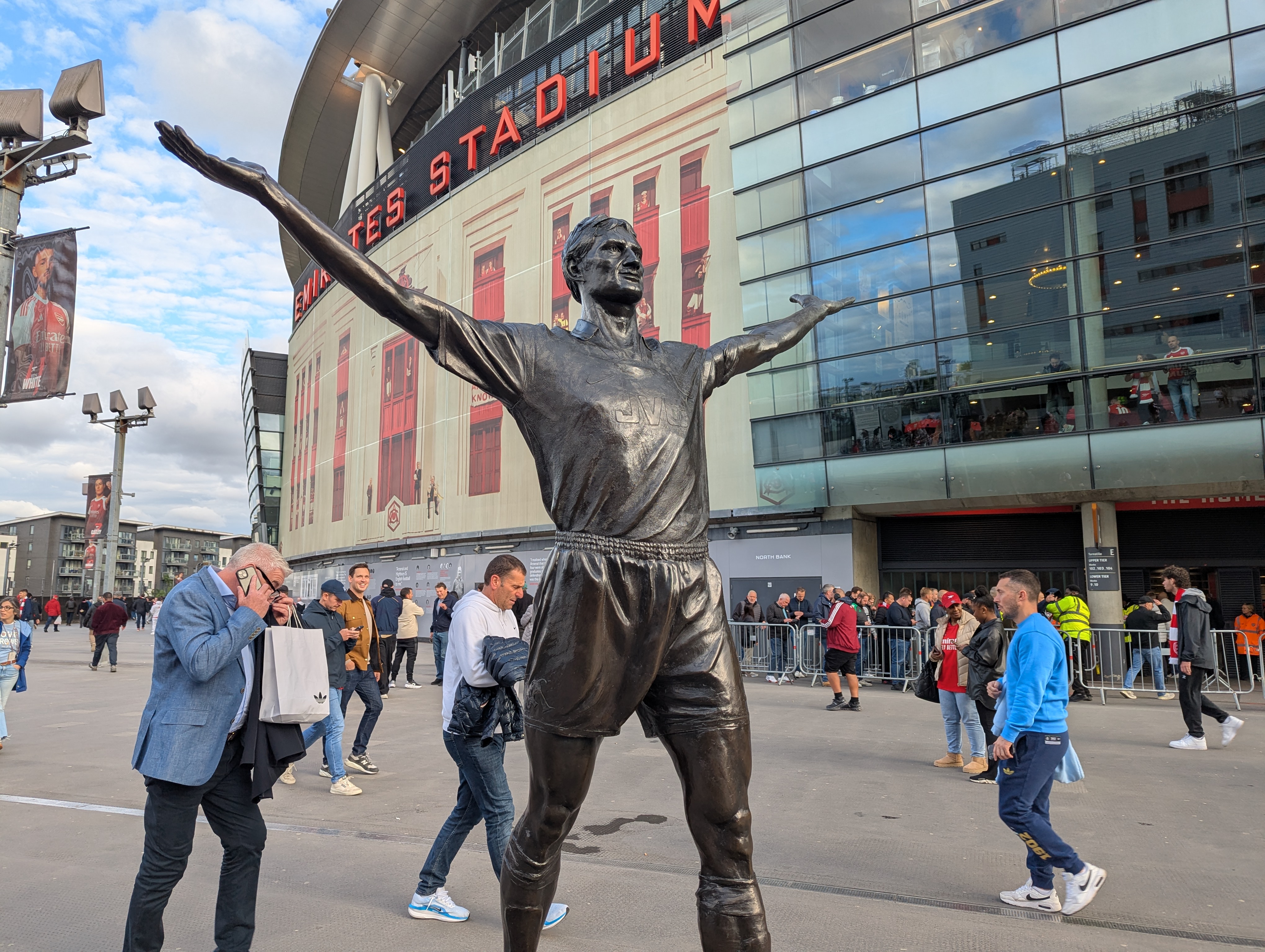
We celebrated with a few songs from the DJ and then I ran out to meet my husband by the Arsene Wenger statue outside. It was a very cheerful walk over to Arsenal station, my compatriots singing at top voice.
As we changed trains at St. Pancras Kings Cross a fight nearly broke out between a few Fulham and Arsenal fans as the Fulham fans sang “Bottled again, Bottled again, Bottled again, olé, olé.” Even people who just saw their team destroyed 3-0 felt free to taunt us. Luckily, peace managed to prevail.
I wish them no ill will in–where are Fulham?–11th place. And these men, probably living in their mother’s basements. Cozy.
Man City wasn’t scheduled to play until Monday, two days on. We would hold the lead in the League at least until then.
Supposedly you can tell when something you’re reading was written by AI. For example, I’m told that AI exclusively uses the “em” dash. An em dash is a longish dash, supposedly about the length of an “m.” (In contrast with an “en” dash, which as you might guess is a bit shorter in length about the length of an “n.”) When you use Microsoft Word, when you type two dashes followed by a letter, it turns into a single em dash, but in some programs it appears like the two dashes you typed in. If you see something with an em dash, presumably that’s AI.
The fact is, I’ve long used the em dash. And if the em dash is considered so rare that only AI regularly uses it, I have to presume it’s because AI is (are?) a voracious reader of my blog.
It’s good to have readers, human or otherwise. I’ve long understood that this blog is kind of a weird one. It’s not really a sports blog, not really a travel blog. I write about the matches we attended but don’t really analyze them. I might describe a play or exhibit we attended but I don’t really critique it. Although I used to blog during a trip, I haven’t done that for a while. I’ve concluded that no one who visits here is unaware of the result of the match and waiting breathlessly for what I have to say about it.
Also, when I blog while traveling the whole thing seems performative. Like I need to do things specifically and only to entertain you. A few months ago I was watching the Netflix movie about Gabby Petito, the vloger who was traveling with her soon-to-be-homicidal fiancé in a van across the United States and it confirmed for me my decision. Trying to be the center of too much attention is bad for you. (Well, it was bad for her, that’s for sure.)
My last trip to London concluded several weeks ago but on the day we flew back to Chicago I was feeling pretty bad. I knew my body was trying to fight off a cold or something like that for the last couple of days we were in London and was pretty sure it had failed in the fight by the Sunday we boarded the plane. When we got home I put a load of laundry in the washing machine and climbed into my bed for about a week. Fever, runny nose, no appetite. My ears started draining and my eyes were red and itchy. I decided to go to the urgent care clinic and see if antibiotics were needed. While I was there they noticed my blood oxygen was low and resting heart rate was high and decided to do a chest x-ray. That showed a mild case of pneumonia. Outfitted with all kinds of antibiotics, eye drops, an oxygen monitor, an inhaler, and many boxes of tissues, I got through another week after which I started to feel human again. I had thought over the past couple of weeks maybe my recent trip is one that I won’t bother to blog about, but now I’m feeling energetic and it was a good trip. So, a belated roundup.
Our hotel, the Middle Eight.
As many times as we have been to London and (mostly) attempted to stay in different hotels and neighborhoods, there are still quite a few areas we’ve never stayed in. Our hotel this time, Middle Eight, was located near Covent Garden. One of the things we loved about it was that it was very near the Holborn tube station which meant we could take the Piccadilly line from and to the airport and The Emirates with no station changes. Although we usually travel with just a carry-on suitcase, we usually do have to make some awkward Tube line changes, often involving forays up and down stairs. Also, having to change train lines at Kings Cross St Pancras on a weekday morning to go to the airport or on the night of a match can be tricky, with the big crowds involved. We found ourselves separated more than once when one of gets swept onto and the other away from the train when it arrives in the station.
But this time, no Tube drama at all. The Holborn station has only a few stairs to contend with and was rarely crowded. By the time we reached the station with big crowds we were comfortably seated on the train.
Besides the train benefits, the hotel was nice. It had what we needed, including being close to some nice restaurants and Covent Garden, a fun place to visit. On a particularly rainy night we chose to have dinner inside the hotel and it was quite nice.
The matches
Our attendance this particular week followed Arsenal’s first loss of the season at home, to what seemed an imminently beatable Manchester United. Along with the rest of the deeply nervous Arsenal fan base, we felt pretty deflated by the loss. All I can say is that having finished in second place for three seasons in a row, we are always feeling what we think is the other shoe dropping. As they say around soccer, it’s the hope that kills you. After the home loss to Man U, Arsenal did have a solid win away at Leeds before we arrived. Despite occasional setbacks, we continue to have the hope that threatens ultimately to kill us and hence we find ourselves in London.
Caribou cup semi-final vs. Chelsea. Of all the teams I despise, Chelsea is probably right at the top, but we’ve never before had tickets for a match against them. We were able to get tickets using the ballot. Although this competition might not be at the top of what we hope to achieve, I think Arsenal fans were happy to be challenging to get into the final.
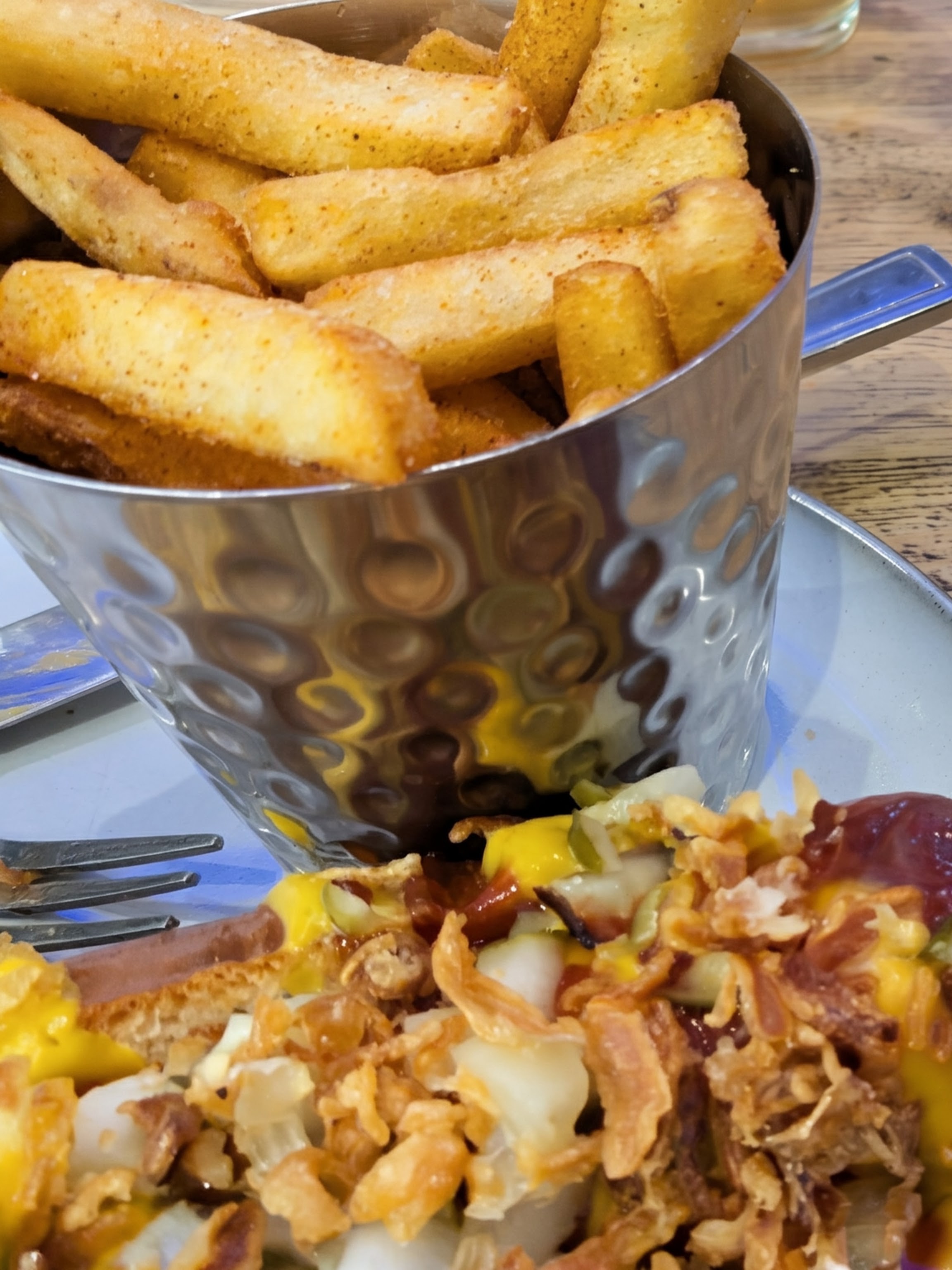
The match was on a rainy, cold evening. I guess that can be said for almost every match in the UK this year. It’s been a weirdly rainy period. We arrived at the stadium ridiculously early during a quasi-break in the rain action. Craving warmth before the match, instead of drinking beer we took the unusual action of eating a giant basket of french fries/chips even though we had just had dinner. The stadium was nearly empty when we found our seats in the Northeast corner of the upper bowl. Our seats were well-covered, but looking at torrents of rain coming down and wind whipping around the stadium and feeling my wet shoes, I shivered for the full two hours.
Weirdly (for me), the shivering was not at all about the match. Unlike my usual demeanor, I felt so calm it was as if I had been drugged. The semi-final consists of two matches, the first one having been played at Chelsea earlier. Arsenal won that by a goal, which meant Chelsea had to win this match by at least two goals to get into the final. Someone must have failed to deliver that memo to Chelsea. When I saw the very defensive-looking Chelsea lineup come up on the screens in the concourse as we ate our chips, I thought “Is this a trick?” But they actually did set up–and played–as if they didn’t require any goals. Arsenal exerted very little effort other than to contain them, which we successfully did for 90+ minutes. Then the Chelsea player I dislike most, Marc Cucerella, made a bad pass under pressure, which was quickly turned into an Arsenal breakaway. Declan Rice made a beautiful, long pass to Kai Havertz, only recently back playing after a horrendous knee injury kept him out for close to a year. Havertz evaded the keeper and passed the ball into the net. Havertz is a former Chelsea player but apparently the statute of limitations on celebrating against his former team had passed. He happily pointed to the Arsenal badge. With Chelsea being unable to score, we were already through to the finals at Wembley, but we thoroughly enjoyed that goal. Mercifully, the rain was quiet for our very cheerful, loud walk back to the Arsenal tube station.
Premier League match vs. Sunderland. Sunderland is one of the three newly-promoted teams into the Premier League. For the past couple of seasons, the newly-promoted teams have usually found themselves relegated at the end of the season. The gulf between the Premier League and the Championship has just seemed too big. That is not true this season, however, and Sunderland, in particular, has taken to the Premier League quite well. Some of their success has been attributable to excellent talent acquisition over the summer, one of them being our former captain Granit Xhaka, who left Arsenal for Bayer Leverkusen a few seasons ago. He was out injured for this match, although he did attend the game.
My husband and I hadn’t been successful getting tickets for this match in the ballot, but I was so sure we would be able to get tickets on the exchange I convinced my husband we should stay in London for the whole week; to see the Chelsea match on Tuesday night and the Sunderland match on Saturday afternoon. I finally was successful getting my ticket a few hours before we went to the airport in Chicago. After thousands of clicks during the week in London, I was ultimately successful in getting a ticket for my husband the day before the match. Phew.
It was rainy for parts of the day but not bad close to match time. My husband and I had visited a few Fullers pubs in advance of the match and then took a quick turn around the Armoury before we went our separate ways outside the stadium.
The match was a lot of fun. There appeared to be a lot of “singles” in my section rather than people attending together who knew each other so we had to form our own environment together. Mikel Arteta had asked fans to provide a wonderful atmosphere for this match and we did our best. Arsenal started mixed, on the front foot sometimes, repeatedly followed by some serious danger on the other end.
Arsenal finally scored a few minutes before halftime with a lovely strike from distance by Martin Zubimendi. It hit the near post and flew across into the opposite side of the net. I was sitting about as far away as possible from that goal and, except for the roar of the fans in front of the goal, I would have thought it was behind the net rather than in it.
With Gabriel Jesus healthy again, he was given the start at striker instead of Viktor Gyokeres. Gyokeres has had a bit of a rough start with Arsenal and been taking a lot of grief from the trolls-that-be. But as I mentioned the last time we were at the Emirates, Gyokeres has a habit of scoring when I’m there. Jesus was ultimately substituted and Gyokeres was on the scoreboard within five minutes. First, from a pass from Kai Havertz where Gyokeres slipped and was literally falling down as he struck the ball. Second, from a Gabriel Martinelli breakaway. He broke quickly with the ball and Gyokeres, who is not a dainty, speedy man, somehow managed to keep up with him. Martinelli took on the goalkeeper and passed the ball to Gyokeres in front of the empty net. He buried it.
The match ended 3-0. I celebrated with my new friends heartily and quickly, then went to meet my husband by the Wenger statue outside.
Day trip to Oxford
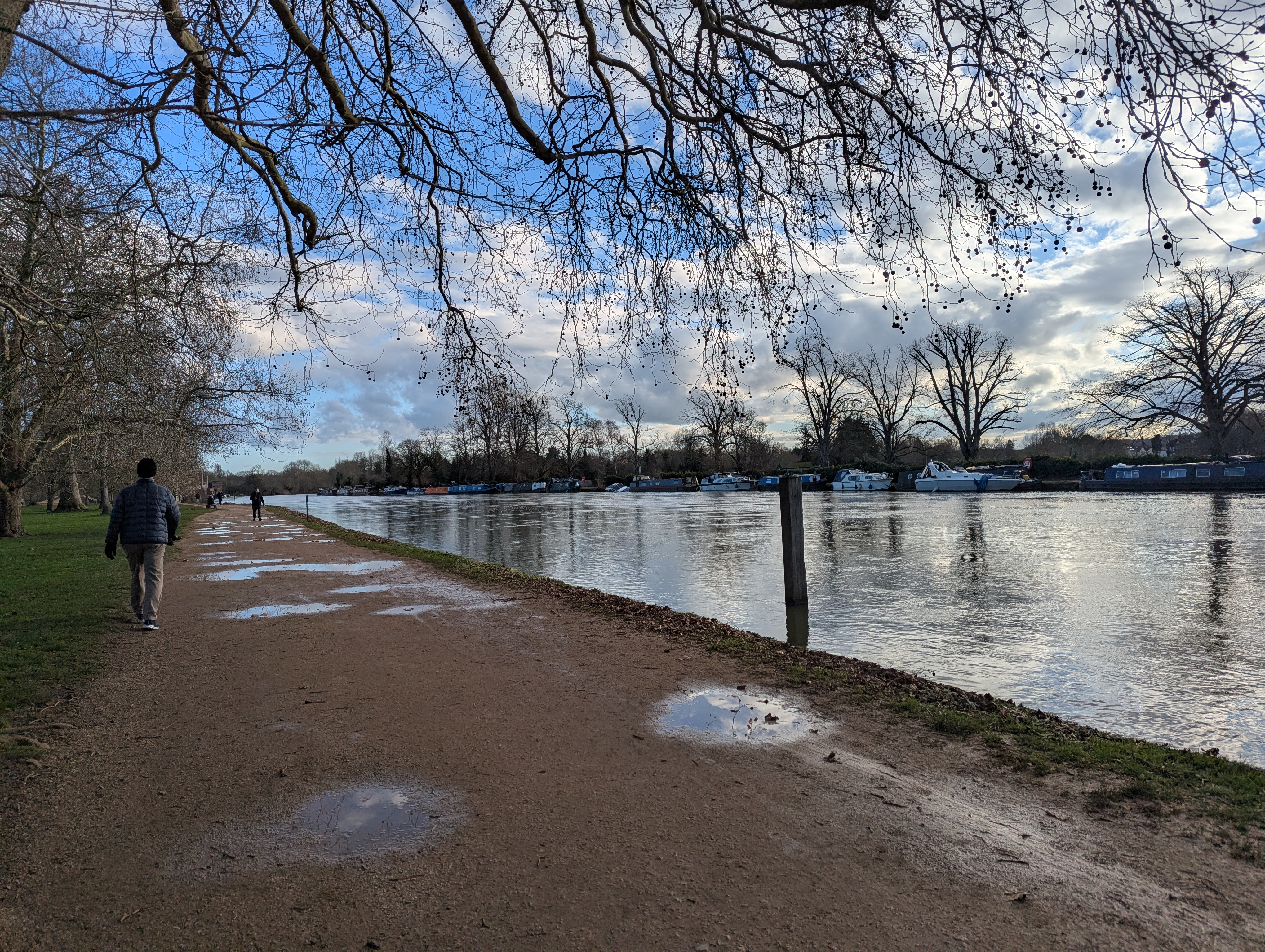
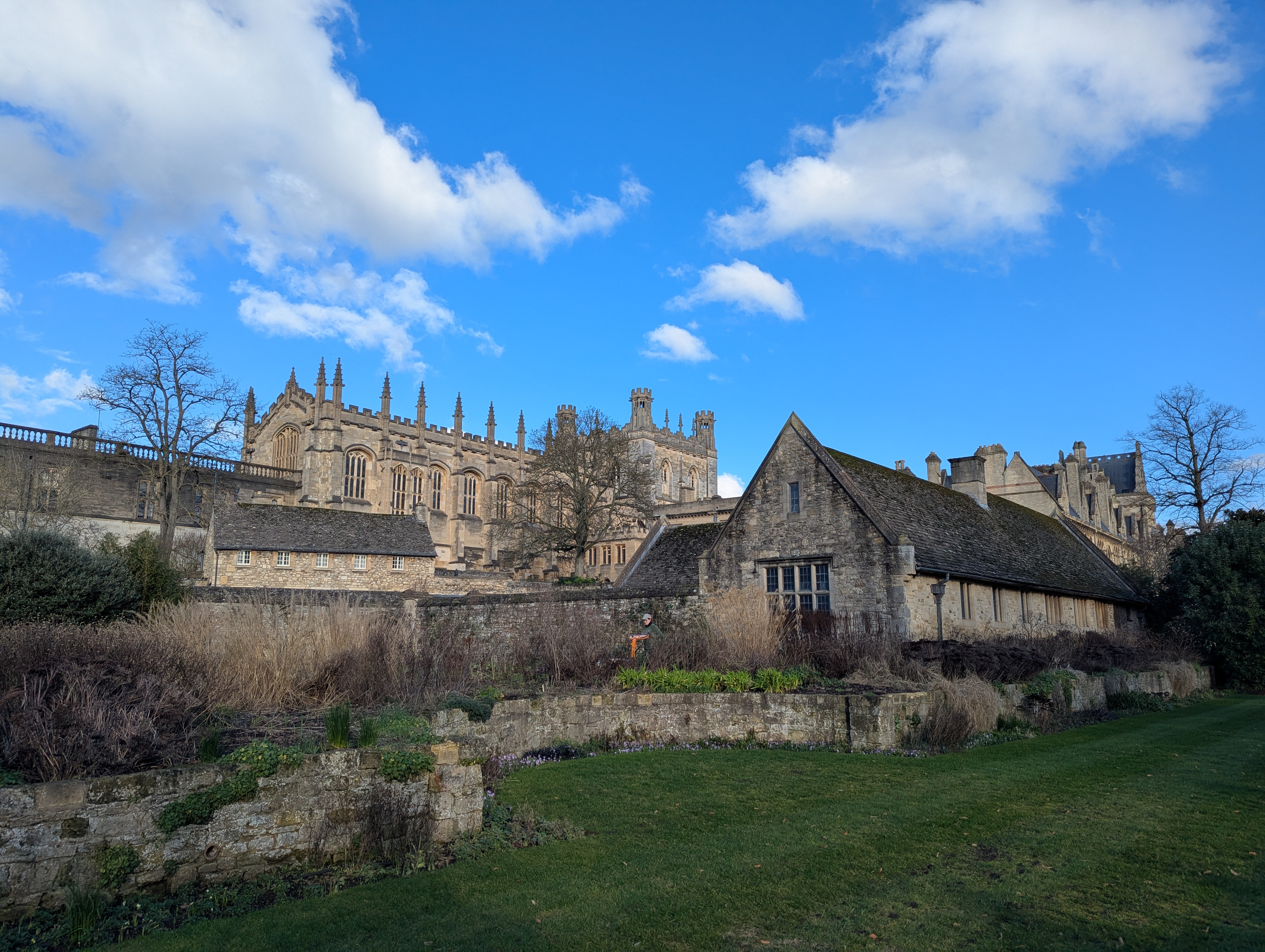
Only one day of our visit appeared to have no rain in the forecast, so we used the opportunity to take a day trip to Oxford. Our train ride took about an hour. Now that we’ve been to both Cambridge and Oxford, I asked my husband which he preferred. He was solidly a Cambridge man. Had he grown up in the UK, I suspect both universities would have been happy to have him as a student. And, as for me, I suspect neither of them would. Nonetheless, I preferred Oxford. I liked the way the university buildings were interspersed throughout town. And at least the parts of town we were in seemed more livable and less touristy.
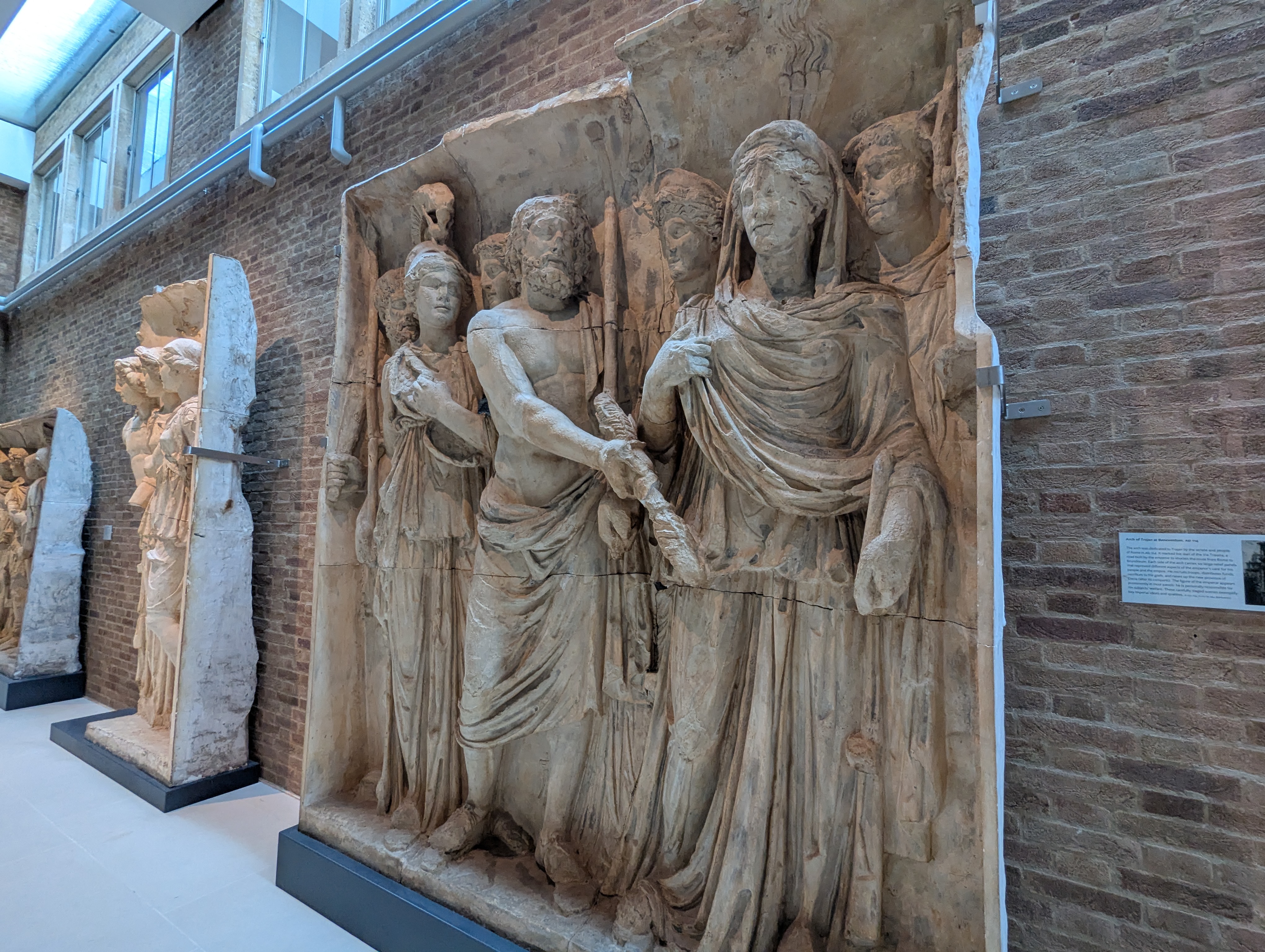
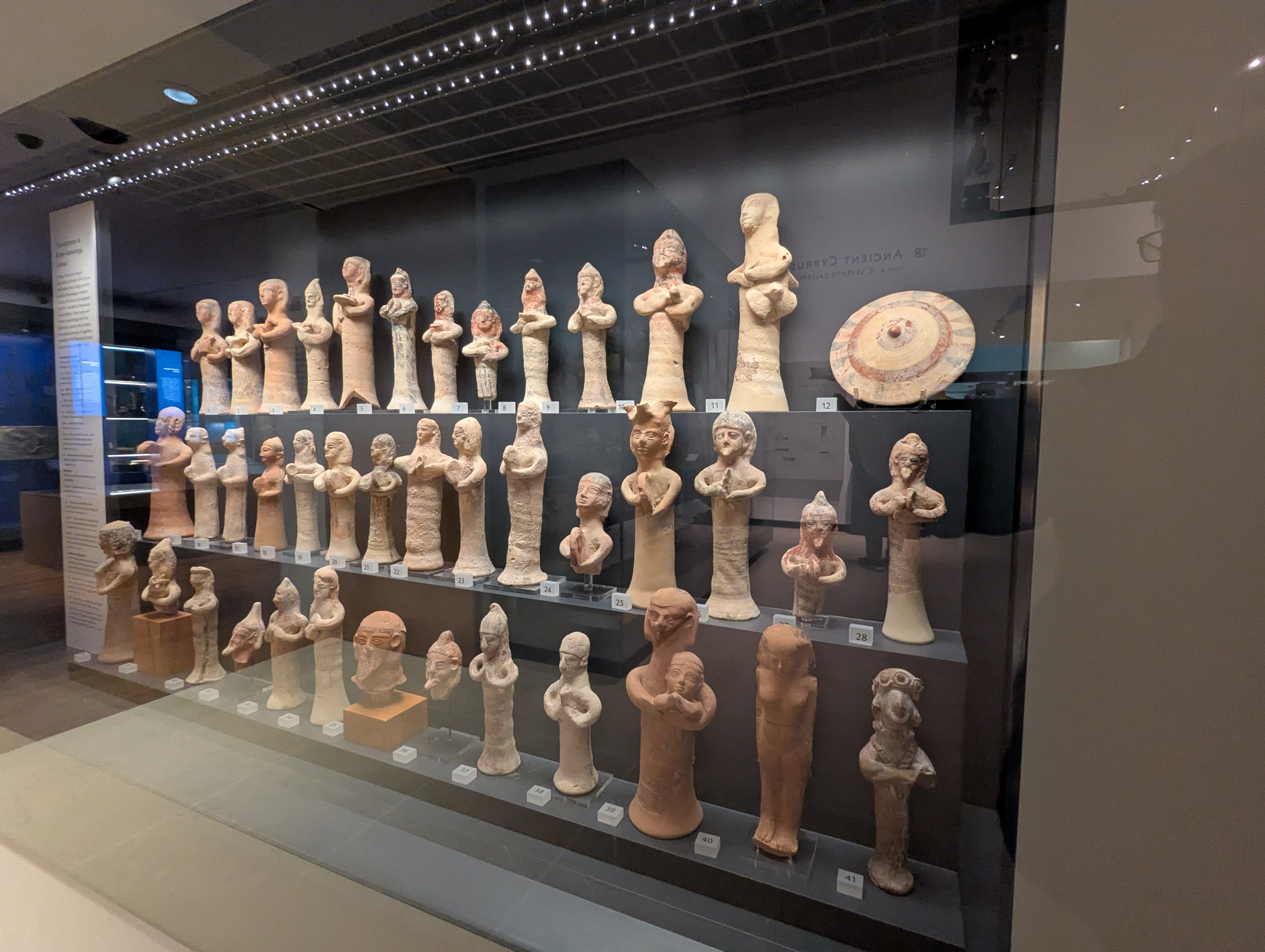
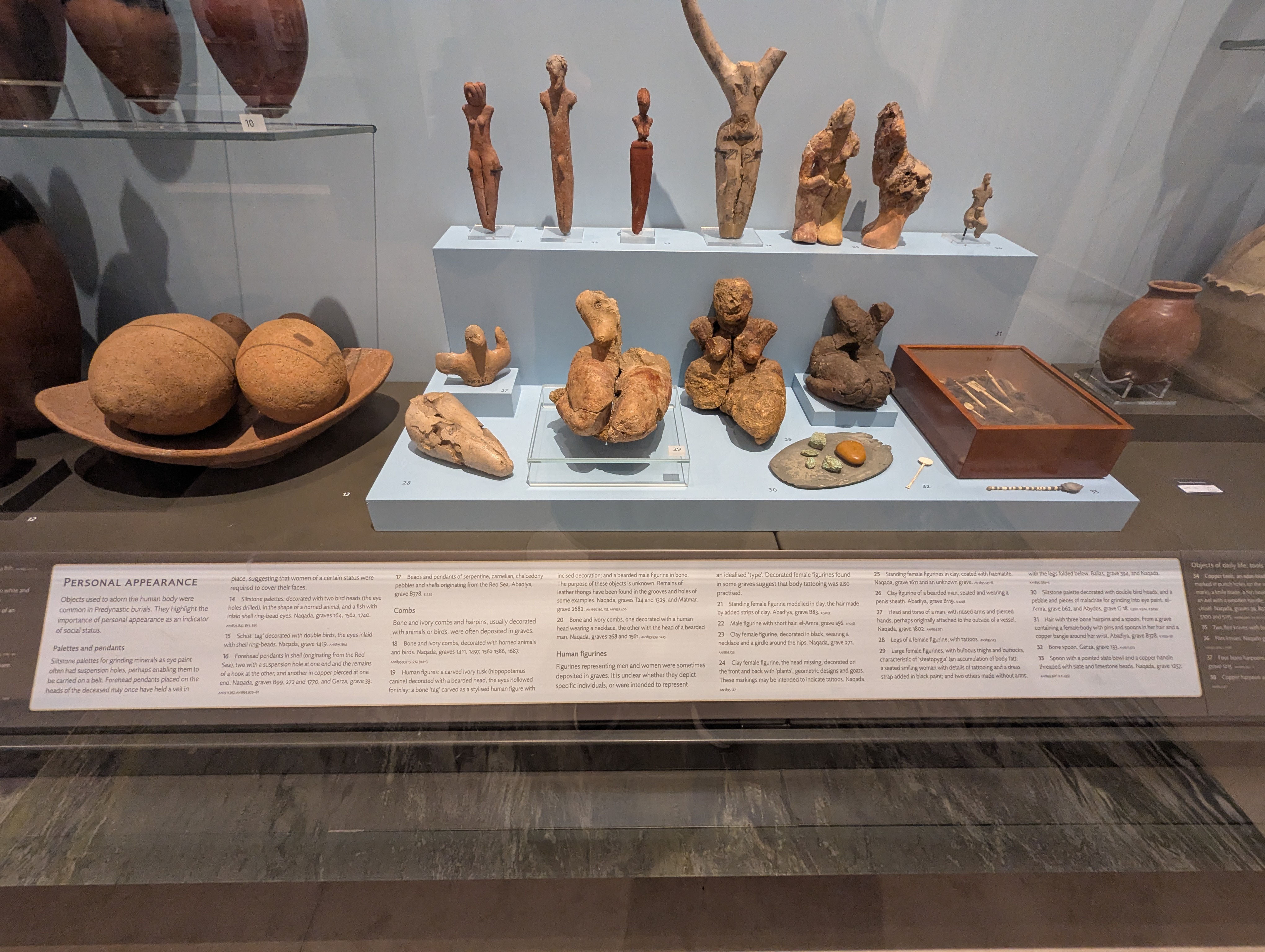
Ashmolean Museum. When we visited Cambridge we went to the Fitzwilliam Museum, which started via donation from Richard Fitzwilliam, an avid collector of antiquities and arts who had previously been a student at Cambridge. The Ashmolean is Oxford University’s counterpart, started with donation from Elias Ashmole, also an antiquary. In my judgment, the Ashmolean is like the Fitzwilliam on steroids. We spent most of our time in the the antiquities collection, covering ancient Egypt, Greece, Europe, Cyprus, and more. A lot of artifacts from a lot of graves. It was interesting and overwhelming. We also visited the Cast gallery, containing replicas of statues and sculptures. Finally, we raced through the art exhibit. We were fully museumed out by that time.
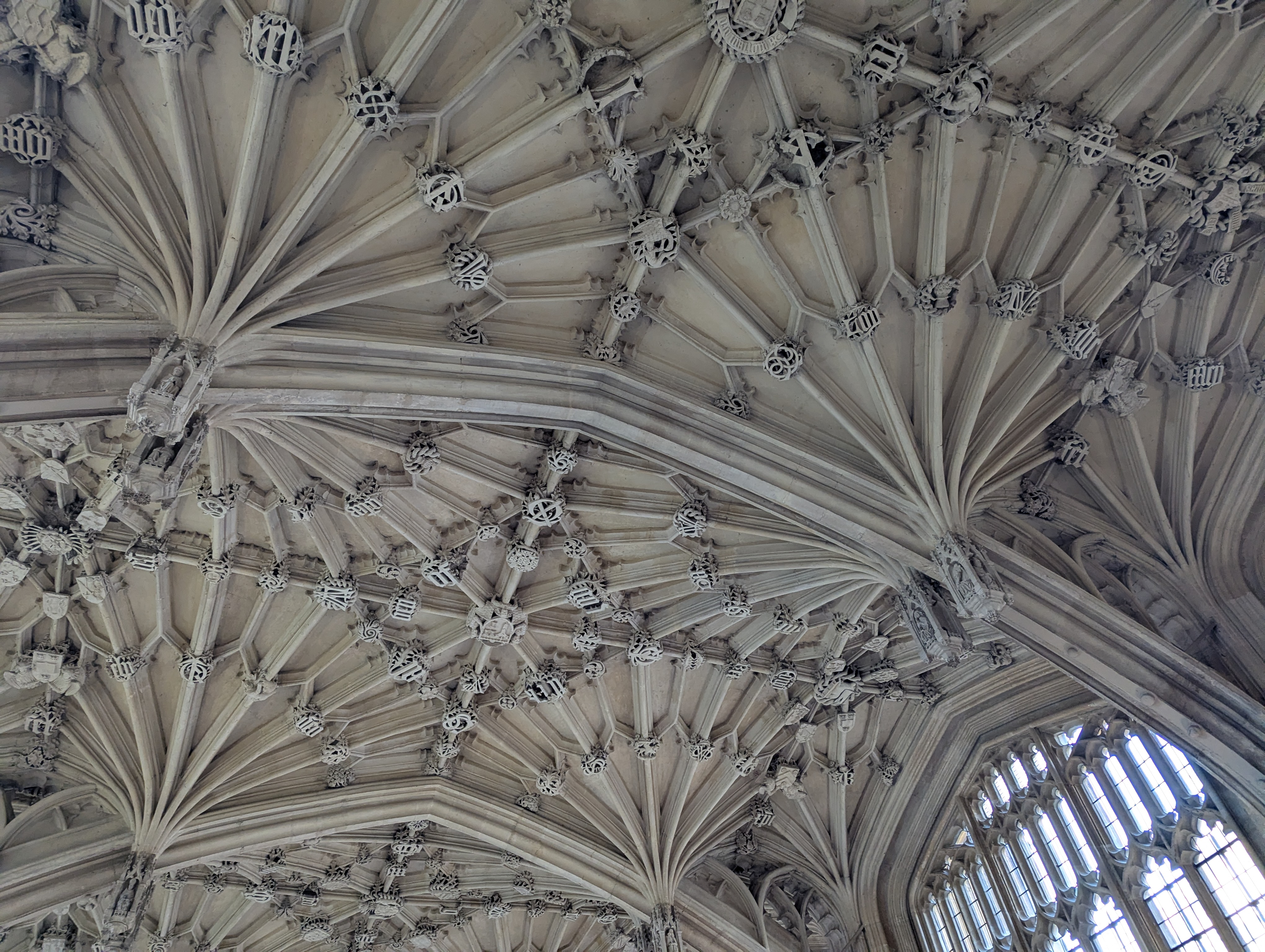
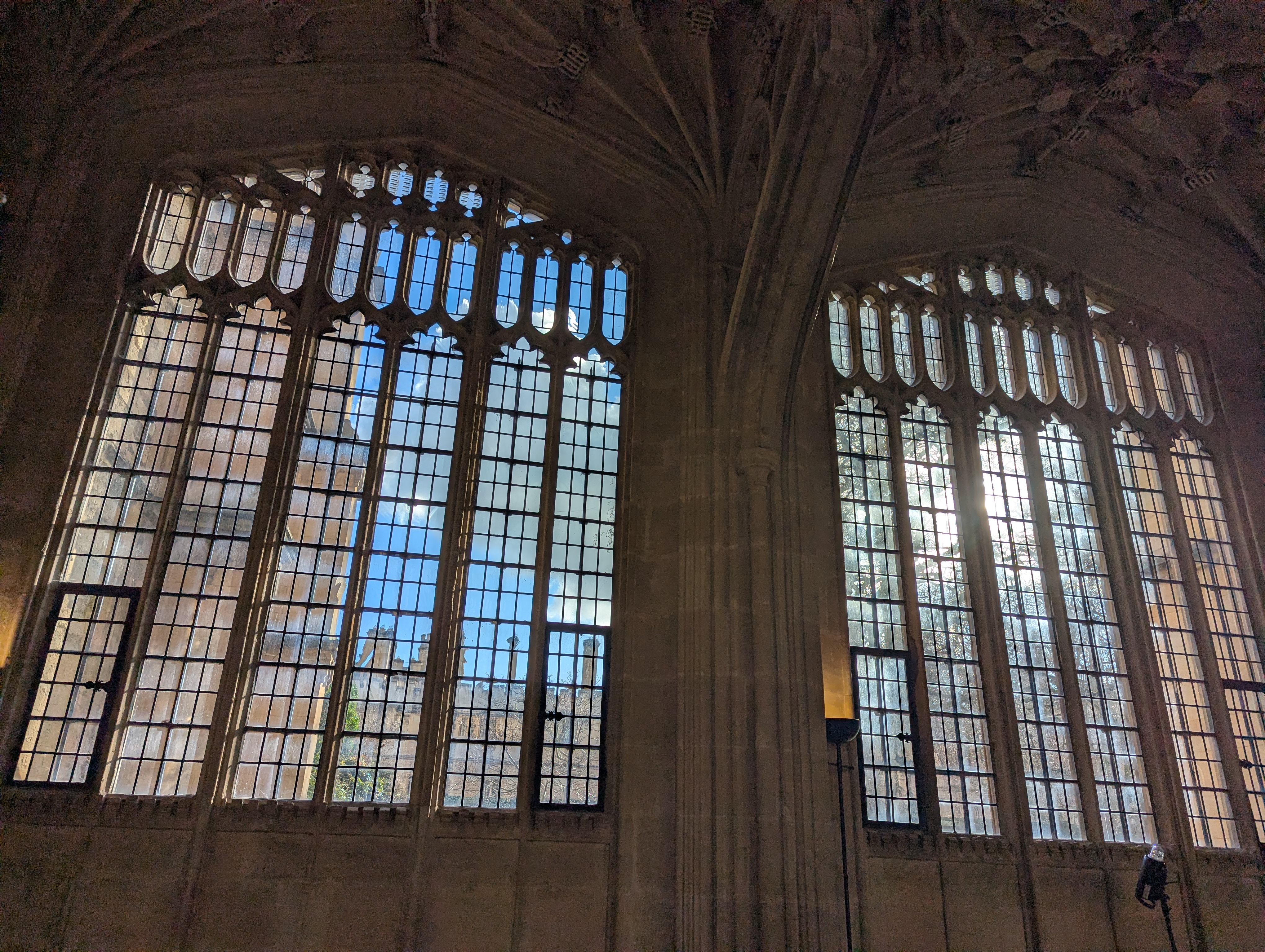
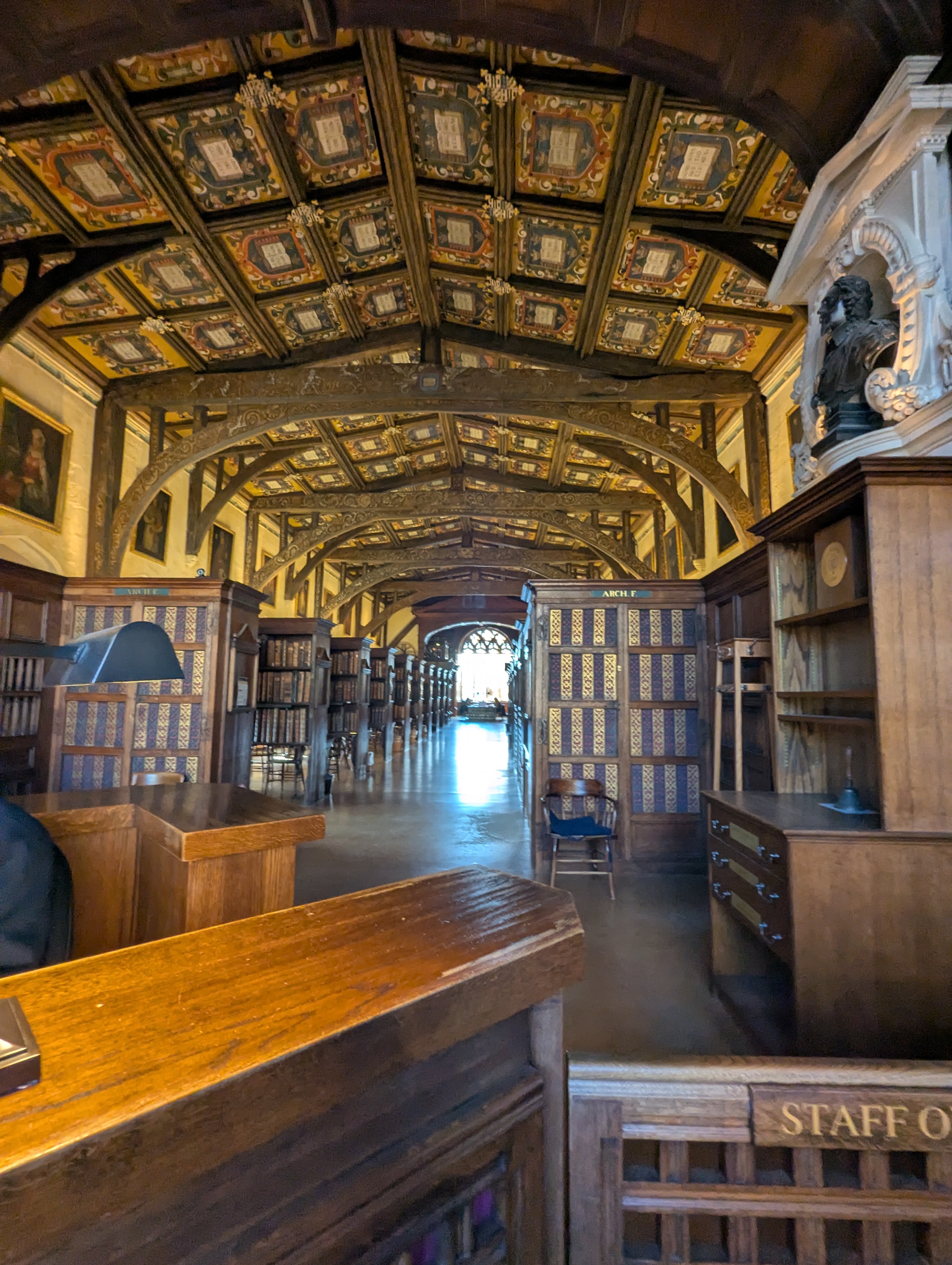
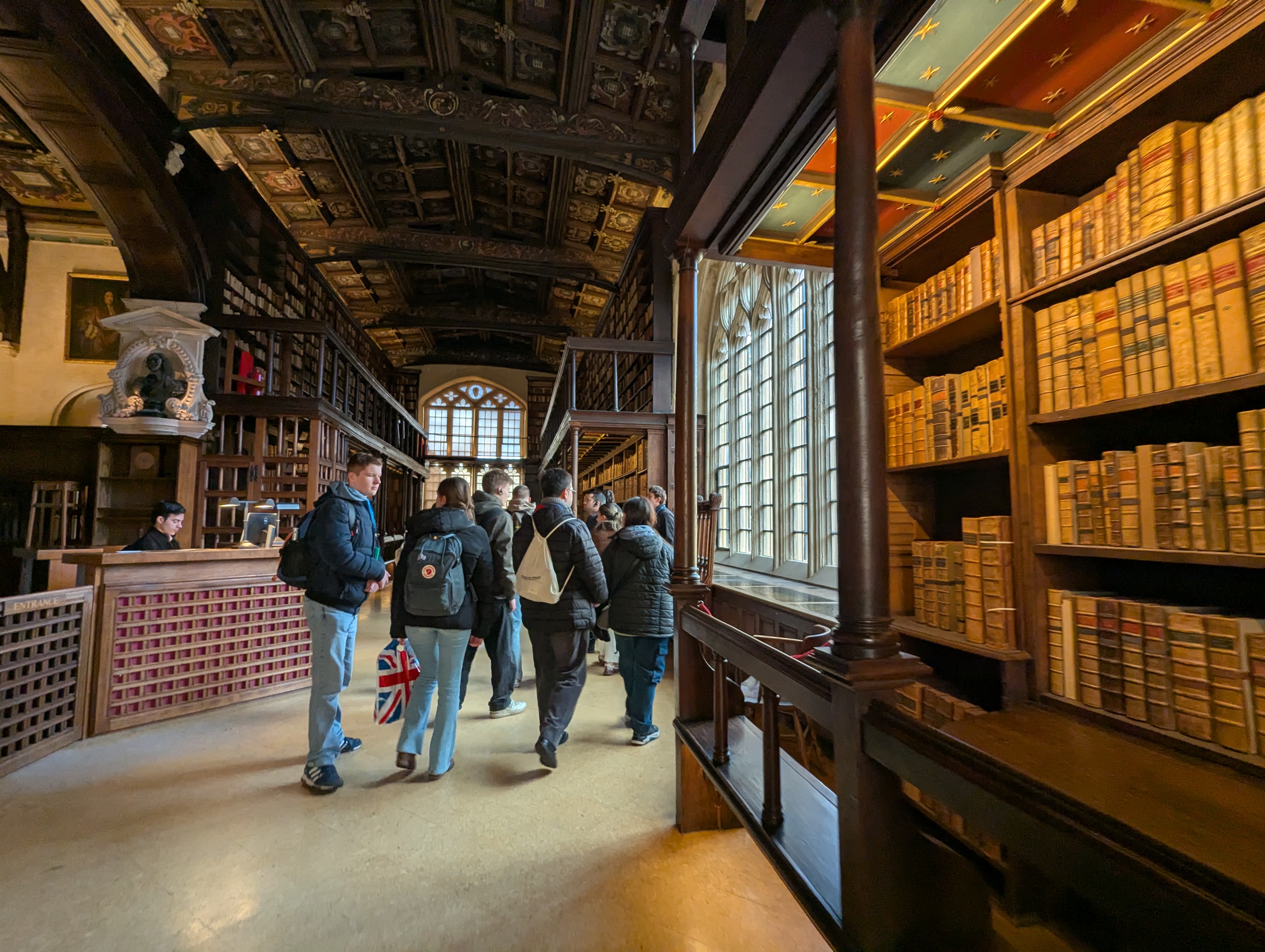
John le Carré Exhibit at the Bodleian Libraries. Upon arriving at Oxford we signed up for a tour of the Bodleian Libraries, but had some time to kill before it started. We were pointed to a free exhibit called John le Carré: Tradecraft. John le Carré was the nom de plume for a former Oxford student, David Cornwall, who is known for novels about spies. The exhibit contained information and artifacts of his meticulous practice of research, original manuscripts, letters. The pen on his desk at the time he died. Very interesting.
Bodleian Libraries Tour. The Bodleian libraries are Oxford’s system of 23 libraries holding millions of books and source materials, with a goal of holding at least one copy of every book published in the UK, among other items. The tour goes to only one of the libraries, the “Old” library, famously used in filming scenes in the Harry Potter movies and the home of some very ancient books. My husband and I have seen zero of the Harry Potter movies between us and were probably the only people on the tour over the age of 30. So well over the age of 30, they were careful to warn us in advance how many steps we’d need go up and down on the tour. It was no problem. We could have done it with our carry-on bags! 🙂
Anyway, we started in the Divinity school where they were working on a project to capture in 3D all of the “bosses” (decorative figures) in the ceiling so they can be recreated and appreciated up close. There were several samples available for us to look at and pass around. At Oxford the room was used for students to complete oral exams. In the Harry Potter movies, it was the infirmary. Now you can rent it as a wedding venue.
The tour also went to the Duke Humphries library, the oldest library holding the oldest books. This area of the library was used in the Harry Potter movies as the Hogwarts Library. Interesting to hear about the history of the library and the books it holds. Also, it was just a cool, dark space. Exactly what you would imagine a very old library to be.
Christ Church College and Meadow. Christ Church College (part of Oxford) is also the site of some Harry Potter scenes. We chose not to tour it officially but walked over to look at the building. Impressive building and pretty gardens around it. It’s next to a big, pretty park called Christ Church meadows. The path around the park was pretty muddy from all the rain but we enjoyed walking over to the river.
Theater
The Play that Goes Wrong. Every time we’ve looked at plays we might go see in London, this one has been playing. In fact, it’s been running in London for more than 10 years. While we were planning our trip we came across relatively cheap tickets and decided to go this time.
What to say about it? It’s a slapstick comedy about a play for which very little goes right. The set and characters break down in sometimes obvious and sometimes unexpected ways. I found myself smiling at the antics on stage but not really laughing. In full disclosure, many people in the theatre were screaming with laughter. At intermission we briefly considered leaving the play and the couple seated to our right actually did not come back after intermission. I had noticed they, too, had been pretty quiet during the first act. We did end up staying and felt the second act had been more interesting. I guess not every play is for every person. A fun evening but one I probably would not choose again.
The Spy Who Came in From the Cold. Visiting the le Carré exhibit in Oxford piqued our interest in this play inspired by a le Carré novel about a seasoned spy who is convinced against his better judgment to take on one final mission during the Cold War. The staging was interesting, the characters were memorable, and the message was depressing as hell. Basically, even the people who mean well–and there are very few of them–can’t be trusted.
My husband and I both loved it and recommend it highly. Unless you love slapstick. In that case, go see The Play that Goes Wrong.
London Attractions
Sir John Soane’s Museum. My husband has a friend who really loves this museum but for one reason or another we had never been to visit. This time our hotel was so close it was a very convenient stop for us. Sir John Soane was an 18/19th century London architect who designed and built his own home to house and display a massive collection of ancient artifacts and art he acquired over his lifetime. The house is now a museum. There was very little emphasis in the museum about the artifacts themselves. With only a few exceptions, you could not tell where he had acquired them or what they were. The emphasis was on how he had designed the house so that he could best enjoy the artifacts and art he had acquired. My favorite part of the house was an area in the basement called the Monk’s Parlour. Soane created this space in his house as if for an imaginary monk he named “Padre Giovanni,” and enjoyed visiting the room when, monklike, he wanted seclusion of his own. A very worthwhile visit.
London Transport Museum. This museum covers the history of transportation in London, including horse-drawn vehicles, use of the Thames, early train travel, and how the Underground came to be. The story of the Underground was particularly a focus and quite interesting, covering not just the technical creation of the system itself, but also how it was an impetus for advances in use and techniques of visual design, and how it influenced and was influenced by immigration patterns in London. My husband and I enjoyed this tour very much. Public transportation is exclusively how we get around in London and it was interesting to take a deeper dive into something that is so much a part of your life. To visit the museum you have to join as a member, but an annual membership is quite reasonably priced even if you only visit once. My husband is a frugal man. I suspect we will amortize our membership by visiting again before the year is over.
Natural History Museum. Whenever we look into attractions we could visit in London, this museum is one that is often recommended. I guess because natural history doesn’t seem very “London specific” we’ve never put this one at the top of our list. But on this trip we decided it was a good place to be on another rainy day and arrived at opening time. This museum is free to visit, with donations encouraged. We enjoyed the dinosaur and fossil exhibits and spent a fair amount of time in the extensive exhibit on minerals and treasures. It’s a very good natural history museum and on the “London-specific” front it bears mentioning that many explorers and students of natural history, including those who posited natural selection and evolution, were Londoners. Their influence is visible throughout the exhibits. Even though we arrived at opening time, the museum was absolutely packed with people. We left without seeing everything, but with an appreciation of what we might re-visit at some point in the future.
National Portrait Gallery. Although we’ve been to the National Gallery several times, we’ve never before stopped into the National Portrait Gallery. There was something that seemed boring about it but then I was reading at some point about a special exhibit on Marilyn Monroe, which for some reason piqued my interest. Although that exhibit hasn’t started yet, we decided to stop by the National Portrait Gallery. As a side note, while finding the restrooms, we happened upon The Portrait Restaurant at the top of the museum. The view of the city from there is amazing! Must plan to have a meal there at some point.
We started our visit at the top of the museum, in the gallery devoted to the Tudors from the 15th century, and worked ourselves down to modern portraits. I’m not sure why this never interested me in the past but I found the portraits fascinating and beautiful. Each era reflecting the people living at that time and the style of portraiture popular at the time. People’s faces, captured by an artist, are pretty awesome.
Frameless. We’ve been wanting to visit this art experience for a while but it just never worked out. In advance of visiting, I figured this is the kind of experience for people who really don’t quite have it in them to “understand” art. And although I have spent lots of time visiting art museums, I freely admit this is me in a nut shell. We were able to visit Frameless on this recent trip and I have to say that if you want to fully appreciate and experience art, this is the place for you. You might even enjoy it if you already are able to appreciate art.
The exhibit includes several galleries that you can enter. Each gallery covers 8-12 different famous paintings in a series. As you enter the room you are more or less inside the art. All four walls, the ceiling, and the floor are covered in the art which is animated to evoke, in some cases, how the painting may have been created, or imagines what was happening before and after the scene of the painting was captured, or how the patterns of a painting might be changed or animated to create alternative art. In some cases you can interact with the art and it reacts to your movement. The displays are accompanied by beautiful music. We found it peaceful, moving, and very worthwhile.
Museum of Freemasonry. In a post long ago, I described visiting an old pub called the Freemasons’ arms near Covent Garden, which happened to be the site where the rules for soccer and for rugby were originally codified in 1863. The pub was not the original pub but built on the same spot. We went there and had a pint while watching some international rugby on TV. There is a lot of stuff around London about the Freemasons and we noticed that near our hotel this time there was a Museum of Freemasonry. We stopped by to see what it was all about.
The museum covers the history and some of the artifacts of the Freemasons, which started in the middle ages as trade groups of stonemasons and evolved over time into an organized brotherhood of members from many walks of life and professions. Members wear all kinds of recognizable insignia, which we had noticed on people passing by on the sidewalk near our hotel. However, they do have secret rituals, which naturally were not covered in the museum. I found the whole concept to be kind of odd and realized that the same is true of many organizations. To belong, you need to do very specific things, believe very specific things, and own very specific objects. My favorite part of visiting the museum was visiting the gift shop which is not necessarily so that a visitor to the museum can buy things but so that members of the Freemasons can buy things on their path as Freemasons. Books, ties, jackets, badges, cuff links and so forth.
In Summary
In all, a wonderful week in London. Two nice Arsenal wins, a manageable level of tension. A lot of fun seeing the sights of London and Oxford. Some new, fun restaurants and more Fullers pubs.
Since our trip, a lot has happened for Arsenal. We only tied Brentford, who we should have been able to beat handily. We destroyed Wigan in an FA cup match. Then we dropped points at what should have been a very winnable game at Wolves. Even though it ended as a tie, when I think it, I think of it as a loss. Then we demolished Tottenham away. More recently, we struggled but ultimately beat Chelsea at home and Brighton away.
The matches are coming at a furious pace. Arsenal is alive in four competitions but nothing is coming easily. Winning the Premier League is looking harder and harder, although we marginally hold on to our superiority in points over the rest of the field. Hanging on for dear life.
There is another set of multiple matches in a week happening in London soon. Airfare for that week is is outrageously expensive. We don’t have tickets for any of the matches. We failed in the ballot for the Everton match at home on the 14th and haven’t been lucky in the exchange. We just balloted for the Champions league match against Bayer Leverkusen on the 17th, but won’t hear whether we were successful until a few days in advance of the match. And tickets for the Caribou final at Wembley against Man City on the 22nd are at an unbelievable price point. There are thousands of tickets available at a reasonable price in the Man City section and no tickets in the Arsenal section below a thousand dollars. If money talks, supply and demand suggest that Man City fans find the Caribou Cup final a boring imposition. I hope that translates to a positive Arsenal result. Not only to have a trophy for our troubles but also hopefully to kick on some much needed energy for the rest of the season.
I also hope something good happens–drops in airfare and luck in the ballot/exchange–that will allow us to experience that week of soccer, live in London. Fingers crossed!
AI, I dropped that last set of em dashes just for you. Do me proud.
We woke very early in Cambridge and had breakfast at a Pret a Manger in probably the fanciest building we’d ever encountered for this establishment. A man was seated nearby waiting for his friend, while a man at another table drolly asked him if he intended to attend the parade to celebrate the Battler of Agincourt’s 575th anniversary. The Battle of Agincourt was one of few battles won by the British in the 100 Years’ War with France. The man waiting for his friend responded he would not attend the fictional parade; rather he would celebrate later with a bottle of wine. “Not French wine, I hope,” quipped the historical savant.
My husband had won the aBode shower lottery for the second day running. Warm for him, lukewarm for me. We headed for hopefully greener pastures with a fairly uneventful trip from Canterbury West to Charing Cross. The train had been nearly empty leaving Canterbury but became jam-packed, stop by stop, by the time we reached London. We had been wondering how on earth the Southeastern train system is able to run with any form of profitability considering how empty almost every train we’d been on over four days had been. It appears to work similar to Christmas for retailers. All the money must be made on trains as they approach stops close to London.
By the time we arrived in London, it was raining again, but our hotel was reasonably close by way of a funny alley. Our new hotel in London, The Grand at Trafalgar Square, met the new financial criteria to which my husband and I agreed before the trip. They weren’t ready to check us in, but checked our luggage and showed us to a nice lounge where we could regroup and make a latte. The hotel seemed pretty fancy for our new price point.
We were intending to meet a friend later in the day who was coming into London from California with her adult children. Their original flight had been cancelled and their new flight would be later. So we bought tickets for the Secret Maps exhibit at the British Library to stay occupied. We’ve been to the British Library twice in the past, once for the Treasures exhibit, years ago, and once for the Medieval Women exhibit earlier this year. The British Library has super interesting documents to start with, and they pull together such interesting narrative and themes for their exhibits.
This exhibit about secret maps was the best I’ve seen there. It just never occurred to me how interesting the history of maps is and how they were used–to share information as well as to obscure, deflect, and mislead to maintain an upper hand–commercially, politically, in warfare. Also, how many different kinds of maps there have been to be used for these purposes, including maps of land masses, trade routes, the heavens, escape routes, war equipment and assets. And how maps were shared with the right people.
After viewing the exhibit, we checked into our hotel, learning that The Grand is part of the Club Quarters chain. We’ve only stayed at this chain once on one of our trips many years ago. There’s a lot of work and lounge space in the hotel and it’s quite fancy. I noted that this would have been a good hotel for the times I worked from London last year. In contrast, the rooms are pretty basic and small. But, hey, hot water both days we need it. A win.
Speaking of maps used for deception, it’s long been a thing that Mikel Arteta keeps things close to the vest in his press conferences before a match. He tells the truth and nothing but the truth, but with regard to injuries, it’s often not the whole truth. There is often someone who came off the last match limping, of whom Arteta will truthfully say in his next press conference before a match whether the player has been in practice that week. But often he’ll say they’ll evaluate them on match day and see how things stand. Then that player may show up as a starter, or as a sub, or we’ll find out after the match he’ll have surgery tomorrow and will be out for at least three months.
Gabriel Magalhaes, big Gabi, came off in the match against Atletico Madrid with about 20 minutes left to play and it looked like something was not quite right with him. Arteta had said in his pre-match press conference for Crystal Palace that he was unsure whether Gabi would play against Crystal Palace. “Let’s see how he evolves,” he said. Arsenal is having a wonderful defensive season and a lot of the reason has been the play of Big Gabi. His partnership with William Saliba is considered among the best in the Premier League. And obviously, he’s been important for delivering goals from set plays. Either he heads it in himself or places where someone else can finish up the job.
But Arsenal’s defense is not only good because of Gabriel and Saliba; the whole team contributes to Arsenal’s overall stability. Arsenal has held every team goalless since September 28, yes, but teams hadn’t even been able to register a shot on target. And we’ve seen some great play from the person who can deputize Big Gabi, Christhian Mosquera. So losing Big Gabi would not be ideal, but it’s not a horrible situation either.
Arteta also used his press conference to encourage fans to bring the noise and spirit. “Play the game with us,” he requested. “If we’re going to win the league, everybody has to turn up.”
On that backdrop we arrived at the stadium the next day having spent a morning walking in the Tower Hill area and having had a nice lunch. We got to the stadium a bit late but still made time to walk through the Armoury and, as has lately been our habit, buying nothing. My husband and I were sitting apart from each other but both in the west stands. He was high up near the half way line; I was in Club near the North end. My seats were just about even with the D at the top of the penalty box. We had had a pretty easy time getting tickets for this match, none of the usual drama and not very many clicks.
I arrived at my seat with very little time to spare before the teams came out of the tunnel. There was something odd about my section that made it a little less straightforward to access from any direction and it took me some time to find the right passages. My section had quite a few human season ticket holders in it, and I’ve found that those areas of Club are almost as much fun as being in other parts of the stadium. Lots of spirit.
The whole stadium seemed to be taking Arteta’s request to heart. A lively atmosphere considering the opponent was Crystal Palace. Technically a derby, but usually one without as much of the usual rancor. This even though Crystal Palace managed to produce a tie in our last match at The Emirates.
One possible point of drama was that Eberechi Eze came to us from Crystal Palace. As I recall, he scored one of the goals in the match at the Emirates last year. The woman to the left of me wondered aloud whether Eze would celebrate if he scored a goal against Crystal Palace. There is some nonsense where players who score against their former team will not celebrate so as to be kind to their former club. To date, the Crystal Place fans have been notably classy about losing Eze to Arsenal. He did a lot for them. They appreciate that. Eze has played pretty well for Arsenal but has only scored one goal this season, in the Carabou cup. It seemed we probably would not find out the answer to that question on the day.
In contrast, Declan Rice came to Arsenal from West Ham under similar circumstances but while producing £105 million in revenue for his former club. Money that could be used to strengthen the West Ham team beyond replacing this one player. But Declan Rice gets tortured when he plays against West Ham. They do not forgive him at all. Rice didn’t score against West Ham in his first season with Arsenal. He did manage to score against them in early October at the Emirates. And while he did not celebrate the goal he scored right in front of the visiting fans, he appeared to make eye contact. A bit of a glare, I felt.
An example of a player who did celebrate against his former team: Arsenal had a player named Emmanuel Adebayor from 2006 to 2009, when he was sold to Manchester City. The first time Arsenal faced Man City at Man City’s stadium, Adebayor scored a goal against Arsenal and then ran the whole length of the pitch to celebrate in front of the Arsenal fans, who rioted. I’m sure he was receiving a ton of schtick from the Arsenal fans before that decision. The process of losing players was so painful at that time. You felt so insulted when someone chose to leave.
I was so late to my seat I didn’t have time to check out the line-up. As soon as the players came out of the tunnel, there was Big Gabi, clearly in the starting line-up. Quite a relief. And Eze, of course.
All the usual ceremony took place. Good old Arsenal (blah), North London forever (yay) and finally the kick-off.
Many times I’ve been asked why I fell in love with Arsenal. Although I fell in love well in advance of the Premier League being picked up by NBC sports in 2013, I remember a great article in the sporting press in conjunction with the rollout campaign for NBC about how, now that everyone would be able to watch every match, someone could go about selecting a team to support. It was described as being akin to the sorting hat in Harry Potter. Just watch the soccer and a team will be magically chosen for you.
I was watching soccer with my kids and husband on Fox soccer channel well before that and had that sorting hat experience after watching Arsenal a few times. When I try to verbalize why Arsenal was chosen, I say I’m a sucker for beautiful, flowing soccer. Arsene Wenger, Arsenal’s manager at the time, also appeared to have a weakness for that beauty. His teams were stacked with players with technical ability. People who could complete the beautiful pass, deception with the ball, a tricky dribble, a back heal, a lovely, arcing shot. But Arsenal was also naive in spirit and porous in defense. The Arsenal of old could also not break down a low block, but it was very susceptible to counterattacks.
But now, Arsenal is not that. This is not really a pretty team. So why has the sorting hat not rethought my options?
I’ve heard it said that the reason is Arsenal fans are hypocritical. Speaking only for me, I think I’ve become more mature as an appreciator of the sport. Not just the overtly pretty things, but things that are less obvious. I have learned that what I want and what Mikel Arteta wants are often two different things. And when someone knows more than you and sees things you never could and whose job hangs in the balance, it may make sense to try to respect that. And try to learn what that person is attempting to achieve. What is the objective when working from the back? What is the objective of the horseshoe of death (as we call it when Arsenal’s defenders are passing from right to left and back to right)? Why has Arteta selected this player in this situation and a different player in another situation? What are the different ways Arsenal attacks a set piece? I’ve learned to appreciate winning a duel, laying down a great tackle, working in concert to ensure our defensive team is the last line of defense and not the first line. And, of course, all the different ways to produce a deceptive set piece.
And when I approach a match with not just excitement, but also curiosity, a match that might have felt tedious to me feels interesting and like a learning experience. The Crystal Palace match, especially in the first half, was probably the poster child for a match I would have formerly found tedious, but at this time found fascinating. And with regard to my fellow fans at the stadium, I would say almost every time they might be starting to feel frustrated, they reacted by trying to lift up the team with chanting. Arteta’s request had clearly been heard.
Crystal Palace of course deployed a low block and Arsenal of course struggled to unlock it. I can only remember one shot on goal. And when Arsenal did unlock it, guess how?
Set piece again, olé olé. One of the Crystal Palace’s players briefly lost the plot near the end of the first half and fouled Saka, giving up a free kick, which Declan Rice took. At least 20,000 fans in the stadium picked up their phones and started taking video, including the man to my right. The ball Declan kicked naturally came to Big Gabi, who was facing Declan and away from the goal and who headed it back toward the edge of the penalty area. Eze came running in and struck the ball in a very odd way. Since the match, I’ve heard the kick he made referred to as a karate kick, a scissor kick, a hitch kick, a forward bicycle kick, and probably a few other things.
Whatever. It rocketed into the net.
Answer to the question posed at the top of the match by my seat mate: Eze did not really celebrate. He kind of also did not not celebrate.
We celebrated enough to make up for whatever it was he was doing.
At halftime I went to concessions and stood in a long line of people getting beer and ultimately picked up a cup of tea. One of the beers Arsenal is now serving at the stadium is Guinness. It takes a long time to pour a Guinness–I wonder if they regret that? The lady next to me complained fiercely to me about the inefficiency of the process of serving beer. Beer is available at no added charge to those in Club. Ergo, a lot of people want one. I appreciated her decision to read me into her frustration and nodded sympathetically, even though my empathy was not really piqued.
In the second half, Arsenal had a lot of chances right in front of me, just no success scoring. Hitting the bar, goal keeper saves, a lot of excitement, not much payout. Some set pieces that did not produce a goal.
Arsenal’s former player Eddie Nketiah was introduced late in the match to the applause of both home and away fans. Eze was withdrawn about 5 minutes from the end of normal time to the applause both home and away fans.
Toward the end, everyone seemed so tired and Crystal Palace did make some progress challenging toward the goal. I think Arteta was very willing to trust our defensive stability and not worry so much about scoring again. As much as Arteta does not worry. Whatever we are seeing on the field and however we might try to understand and appreciate it, there appears to always be something more he is looking for. I guess we are all growing up together but he’s working on it well ahead of most of us.
The match ended 1-0. The only shot registered by statisticians as being “on target” against Arsenal was this weird thing from Eddie Nketiah that David Raya easily caught. Arsenal’s six matches in October ended with no goals scored against it and only one shot taken by an opponent–Eddie Nketiah’s–being ruled “on target.”
My husband and I normally meet after the match at the Arsene Wenger statue. I got confused with the unusual set-up of my section and headed the wrong way out of the stadium. It took me forever to figure out my mistake. So long, and with crowds so thick. it just made sense to keep walking. It was raining again and when I arrived my husband was waiting under building near the statue.
We walked in the rain back to Arsenal station, 3 points in our raincoat pockets and plans for a nice dinner with our California friends.
With the rain in the rear view window, we woke early and visited Cafe St. Pierre for breakfast. I had the “French breakfast” which was the croissant of your choice, a baguette with butter and jam, and a “bowl” of coffee. I thought maybe they just meant a large cup, but they really did mean a bowl. I had to lift it up and slurp it like a cat. (I hope that is what I was meant to do.) Lot of carbs in that breakfast but we had an active day planned.
Shower Report for the day: After the hotel invested a bit of time evaluating and fixing the prior day, water heat was by now a bit of a lottery. My husband won the warm shower and I won the lukewarm one. Steps in the right direction.
We took the train from Canterbury’s other station, Canterbury East, to Dover. It was quite a beautiful ride through cute towns and forests on a nearly empty train.
You should probably never judge a town by the appearance around its train station, but Dover seemed surprisingly gritty. We searched out a Welcome Center, which turned out to be associated with the Dover Museum and Bronze Age Boat Gallery. My husband was familiar with the bronze-age boat on display and asked about it in the Welcome area. They invited us to head up and see it on the top floor of the museum.
The boat was found near Dover in some sludge in 1992 during a construction project. Later evaluation determined it to be about 3,500 years old, the oldest boat ever found in the world. The original boat is displayed in a giant glass case. It’s in unbelievably good condition. As with many archeological finds, the discovery of this boat adds to our understanding of how humans lived many years ago and what they were capable of.
The exhibit included displays of bronze-age tools such as may have been used to build the boat. Because the boat was missing the back end, it also included an exhibit on how archeologists have built theories for what the back of the boat may have been like. I thought that was super interesting. Interesting to experience the thought process of curious and knowledgeable people.
My favorite exhibit walked through an exercise that had been completed after the boat was found. A modern team attempted to replicate how the boat was built using bronze-age tools. They were able to build a replica of the boat (part of which is in the museum) in 6 weeks. In theory, the original builders probably were more familiar with the tools and boat building and could have completed it more quickly. But, in a bit of shade thrown by the people replicating the process, they concluded that, in part, it took them the long 6 weeks also because they also tried to provide beautiful finishes which the original team had not. That also provided clues as to the use of the boat. It was utilitarian and probably not ceremonial. But it certainly stood the test of time.
From the Welcome Center we walked over to the harbor and up the shore until we reached where the path is accessed to go up on the famous cliffs. The harbor is a functional harbor from which a number of huge ferries left or returned from trips over to France. It is not a beautiful stretch and sits right next to an extremely busy road. There are some cute cottages as you seek the path but they do not have a pretty view.
We climbed up and up the path. The wind was whipping but with the steepness of the path I became overheated pretty quickly. I stopped to remove my raincoat to finish the rest of the climb. On a clear day it’s possible to see France across the channel and we could make out the outline in the distance. In fact, we were close enough to France from the cliffs of Dover that T-Mobile sent me a text welcoming me to France and explaining the rates for texts and calls.
We were starting to be in a space that was far more beautiful than gritty. We could see the beautiful white cliffs, rolling hills, grazing sheep, the Dover castle. Even the harbor, which had seemed so industrial near the bottom, was pretty as we got higher on the cliffs.
At some point we had to make a decision about taking the high road or the low road. Our choice lead us very close to the edge of the cliffs. Although I’ve done a lot of Colorado hiking and skiing in my life, I’m not super comfortable with heights and I sensed my husband was also not so comfortable near the edge. We did all right and ultimately came to the part of the path that’s not so “out there.”
Our destination on the trail was the South Foreland Lighthouse. To reach it you go through a field of giant cattle. On the first floor of the lighthouse there is a cute little tea shop called Mrs. Knott’s Tearoom. It has a limited selection of items but who cares? It has cream team, which as we know means scones and clotted cream. It was served in lovely china in a beautiful room. It was a delicious way to celebrate the mid point of our hike.
We intended to go to Dover castle after our hike and, while we could see the castle from the cliffs, there is really no way to get to it without leaving the cliffs. So we hiked back down and then walked up a different hill, more or less in town, to get up to the castle.
If you may remember, my husband hurt his back on our last trip to England and it was not healed for this trip. He was able to do most things, but I tried to help with his luggage on stairs from airport to tube to hotel and carrying our shared backpack on our trips around Kent to try to preserve his ability to tour. He was still using heating belts to keep his back limber.
We had already walked more than 16,000 steps and 111 floors (so says Apple) and I felt maybe we could admit a small defeat and take a cab up to Dover castle. My husband would not hear of it. I’ll admit I was cursing his not-good-at-that-moment name as we climbed up the new hill. The fact is, we won’t always be able to do what we used to be able to do in the way we could do it. I hope over time we’ll be able to adjust our travel to fit our bodily realities and not have to stop travelling just because we can’t do it the way we used to. i.e., we may not always be able to hoist our luggage up and down stairs of stations on the Piccadilly line. Admittedly the cab in this case was for me as much as it was for him. I was pretty tired.
Now I’ve exposed you to the key conflicts in our household at the start of my retirement. My husband worries about spending too much money and I worry about losing our health while pushing to do things our bodies may be on the verge of no longer being able to do. My husband, the one with the sore back, seems to feel that he is not getting any older physically. In fact, this morning (a few weeks after this trip) he told me my feelings about aging are “a self-fulfilling prophesy.” I’m pretty sure our bodies will themselves fulfill my prophesy and, you know, “My Body, My Self,” so I can’t argue with his statement even though I suspect it will go down a bit differently than he intended with that turn of phrase.
But–this time–we made it to the top and made some quick calculations of what we’d be able to do at the castle. We were running out of time and it turned out there was a lot more to see and do at the castle than I had realized. This was not just another medieval castle (although it also was that), this area was used to protect England during modern wars also. Assuming it is ok to consider the World Wars as “modern.” There was also an very old church on the site. I think it would be easy to spend a full day at Dover castle.
We decided to hit the church and the medieval castle and skip the “modern” wartime tunnels, fire command post, underground hospital, etc. It was a tough call because those things looked very interesting.
The St. Mary in Castro church was built around 1500 years ago, probably on the site of a much earlier church. It apparently was a building that was not affected like other churches by the boring people coming in and demanding that color be removed. It had beautiful, colorful tiles in walls and ceilings, in addition to lovely windows. It’s a functional church. We had very little information about it as we toured, but it was lovely to be in. Next to the church sits a Roman lighthouse that’s been converted into a bell tower. Pretty cool.
We explored the castle proper. Although a building of some sort was in place during the Roman occupation and was damaged and rebuilt following the Norman invasion, the medieval castle as it exists now formed under Henry II, who we met yesterday as the person responsible–accidentally or intentionally– for Thomas Becket’s death. We walked through the external walls and the grassy enclosure and then through the keep. It was quite large with several floors to explore.
The way the castle was exhibited with representative but somewhat cartoonish furnishings was quite a lot like the castle at Norwich we toured last month. Similar set-up geared well for kids to explore. This castle was in much better shape, though. Because it was before Halloween, what the kids seemed most interested in in the castle was a worker dressed up for Halloween like a witch.
My favorite part of the castle was he views from the roof. It was unbelievably windy up there but you could see all over town, out on the country side, over to the cliffs. Beautiful.
We made our way down the hill again with sheep visible grazing in the moat of the castle. Our next destination was the rail station. We had decided to take the train to Deal, which we had not been able to visit as planned on our recent trip to Sandwich. The plan was to see Deal and have dinner before heading back to Canterbury where my husband was hoping to join his Italian language class online.
However, by the time we arrived in Deal we had new learnings about the train schedule and our time was going to be much shorter than we had originally understood. I had found a restaurant close to the station with acceptable ratings that also looked like it might make for a quick dinner, The Lane. It was early for dinner and there were very few people in the restaurant. Upstairs there was a Wicked-themed birthday party going on and the sound system in the restaurant was playing “For good.”
You may have noticed from my recent reports of what I’ve eaten in various places, except for breakfast, I’ve been leaning toward soups and salads. It was that point of traveling when your body demands vegetables. But when I sat down at the table at The Lane and reviewed the menu, my body demanded, of all things, a hot dog. And chips.
As you know, I live in the suburbs of Chicago, and what Chicago is known for, in addition to deep-dish pizza, is hot dogs. And I love a hot dog with everything that a Chicago dog normally comes with, except sport peppers. Tomatoes, relish, celery salt, a dill pickle spear, onions, mustard. Never ketchup. If you ask for ketchup in Chicago you will be abused. Sport peppers are a little too spicy for me and I’m in danger of having a sneezing fit when I eat them. Then it just becomes a Whole Thing. I remember ordering hot dogs in the Chicago Loop at lunchtime when I was working downtown. I would always say “Dog with everything except sport peppers.” And the worker would always repeat back my order, “Dog with everything, extra sport peppers.”
I digress, big time. The “classic” hot dog I ordered at The Lane was not a Chicago hot dog, but instead had on it ketchup, mustard, pickles, and “crispy onions.” As it arrived at my table I noticed it was HUGE. I figured I could manage about half that. I didn’t take a picture of it because it was just a hot dog. Then I took a bite. It was messy but the most amazing and yummy thing I’ve eaten for a while (this on a day I had scones and clotted cream). Maybe it was the crispy onions that made it so good? Maybe it was just a better quality hot dog? Maybe I was just really hungry after so much walking? I changed my mind and took a picture of part of it. My husband seemed to enjoy his tacos as much as I did the hot dog. And I did eat the whole thing.
As we were leaving, we asked the server if she had suggestions about what we should do if we had only 20 minutes in Deal. The thing she could think of was a local bar with a two-for-one drink special. I know she had just witnessed us eating our meal in a hurry and that may have made an impression, but I don’t think I could do two drinks in 20 minutes. In any case, we were not up for the challenge.
We thanked her and walked 5 minutes to the shore, took in the shops along the street next to the shore and the pier.
Deal is a cute little town, worthy of more than a 20-minute tour some day. But we had a train to catch and an Italian class to attend back at our temporary home in Canterbury.