
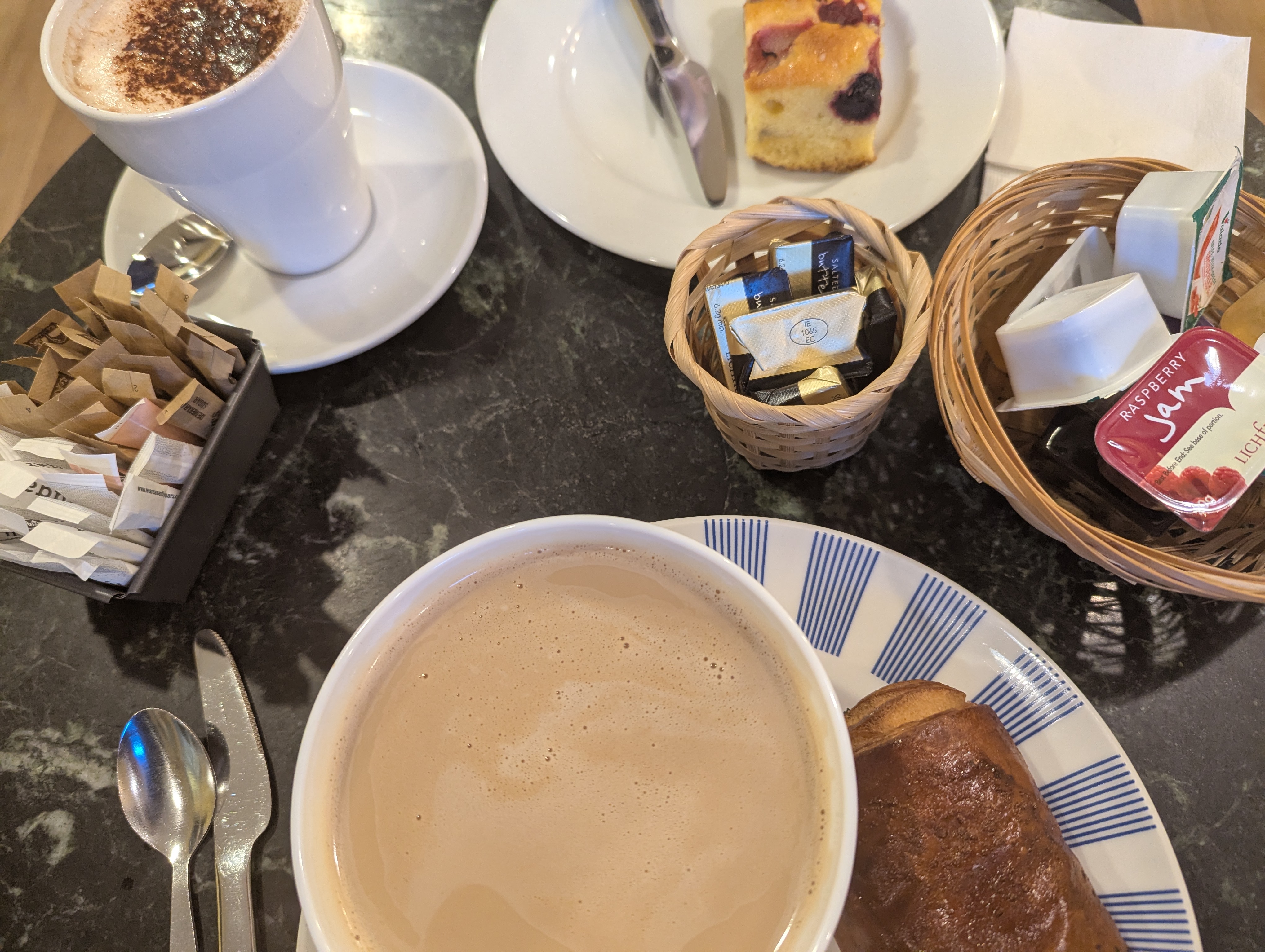
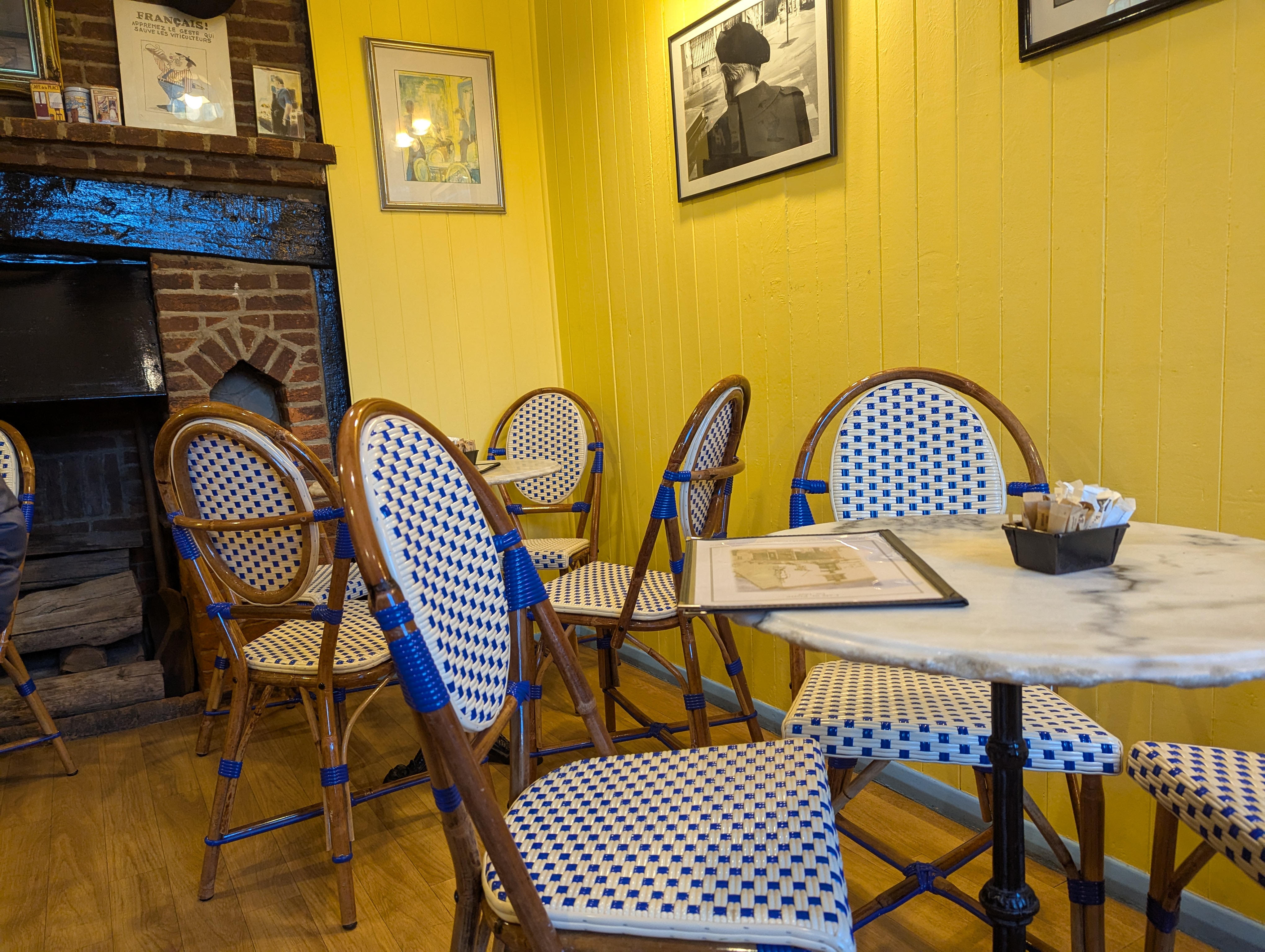
With the rain in the rear view window, we woke early and visited Cafe St. Pierre for breakfast. I had the “French breakfast” which was the croissant of your choice, a baguette with butter and jam, and a “bowl” of coffee. I thought maybe they just meant a large cup, but they really did mean a bowl. I had to lift it up and slurp it like a cat. (I hope that is what I was meant to do.) Lot of carbs in that breakfast but we had an active day planned.
Shower Report for the day: After the hotel invested a bit of time evaluating and fixing the prior day, water heat was by now a bit of a lottery. My husband won the warm shower and I won the lukewarm one. Steps in the right direction.
We took the train from Canterbury’s other station, Canterbury East, to Dover. It was quite a beautiful ride through cute towns and forests on a nearly empty train.
You should probably never judge a town by the appearance around its train station, but Dover seemed surprisingly gritty. We searched out a Welcome Center, which turned out to be associated with the Dover Museum and Bronze Age Boat Gallery. My husband was familiar with the bronze-age boat on display and asked about it in the Welcome area. They invited us to head up and see it on the top floor of the museum.
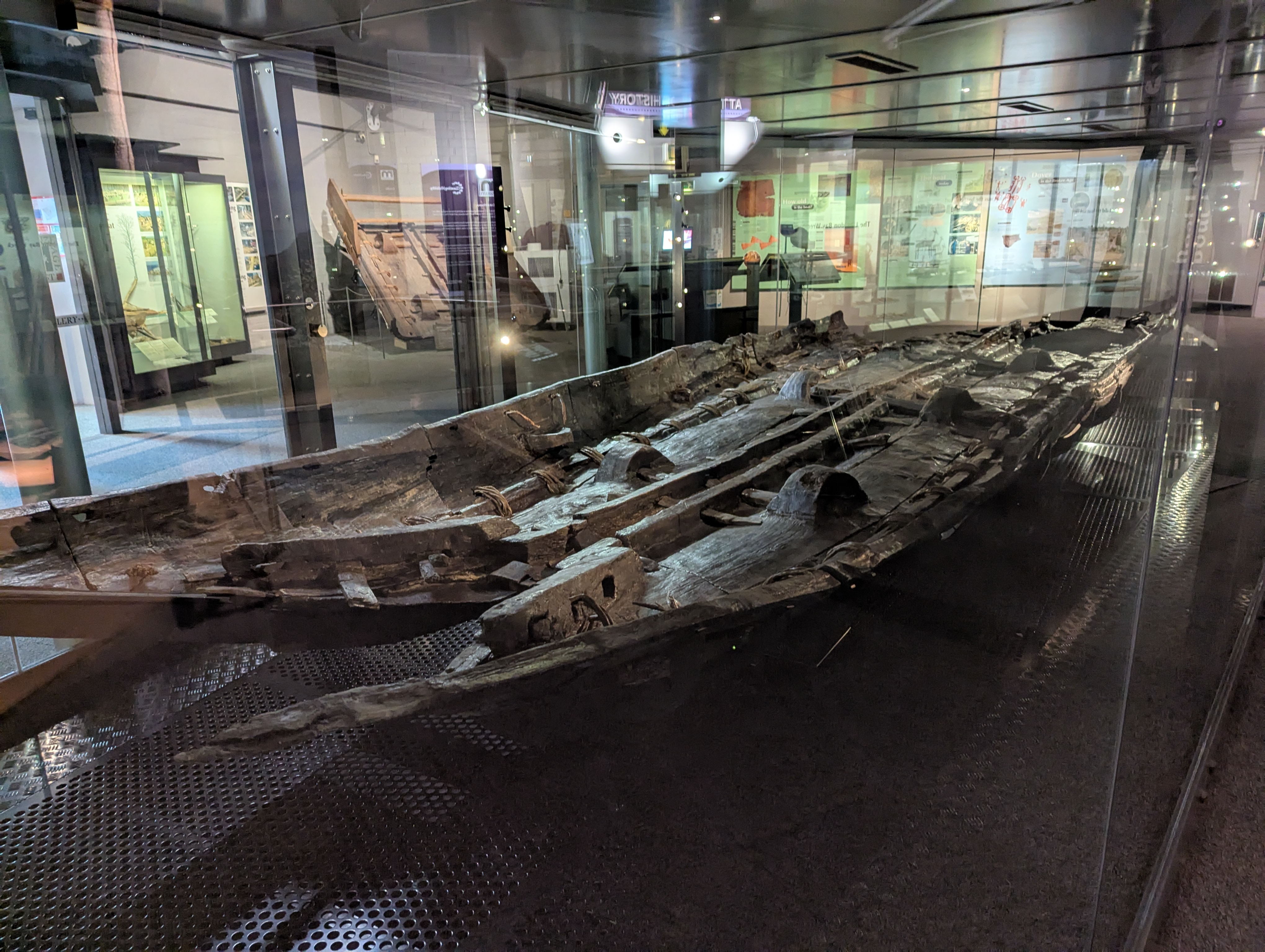
The boat was found near Dover in some sludge in 1992 during a construction project. Later evaluation determined it to be about 3,500 years old, the oldest boat ever found in the world. The original boat is displayed in a giant glass case. It’s in unbelievably good condition. As with many archeological finds, the discovery of this boat adds to our understanding of how humans lived many years ago and what they were capable of.
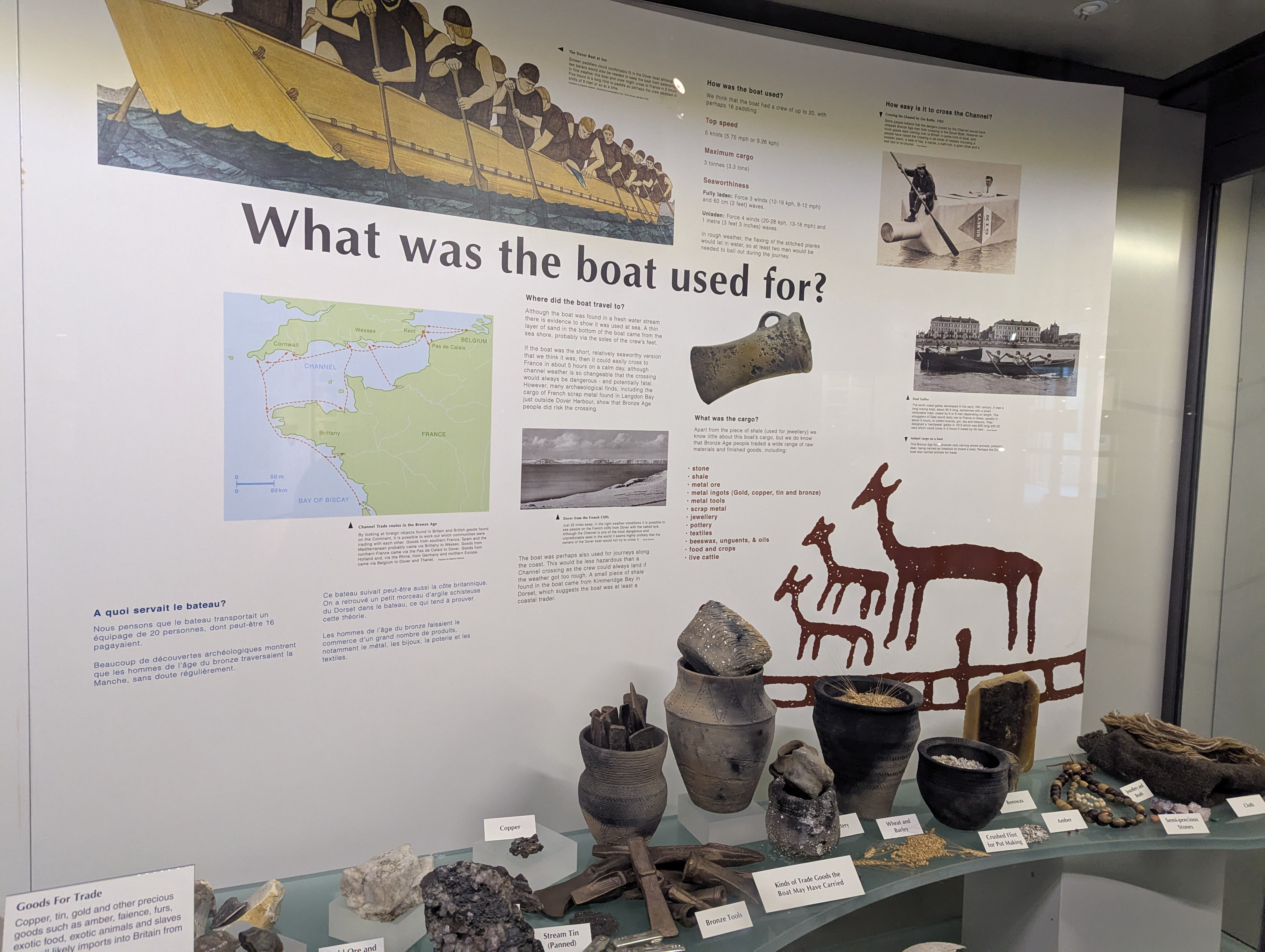
The exhibit included displays of bronze-age tools such as may have been used to build the boat. Because the boat was missing the back end, it also included an exhibit on how archeologists have built theories for what the back of the boat may have been like. I thought that was super interesting. Interesting to experience the thought process of curious and knowledgeable people.
My favorite exhibit walked through an exercise that had been completed after the boat was found. A modern team attempted to replicate how the boat was built using bronze-age tools. They were able to build a replica of the boat (part of which is in the museum) in 6 weeks. In theory, the original builders probably were more familiar with the tools and boat building and could have completed it more quickly. But, in a bit of shade thrown by the people replicating the process, they concluded that, in part, it took them the long 6 weeks also because they also tried to provide beautiful finishes which the original team had not. That also provided clues as to the use of the boat. It was utilitarian and probably not ceremonial. But it certainly stood the test of time.
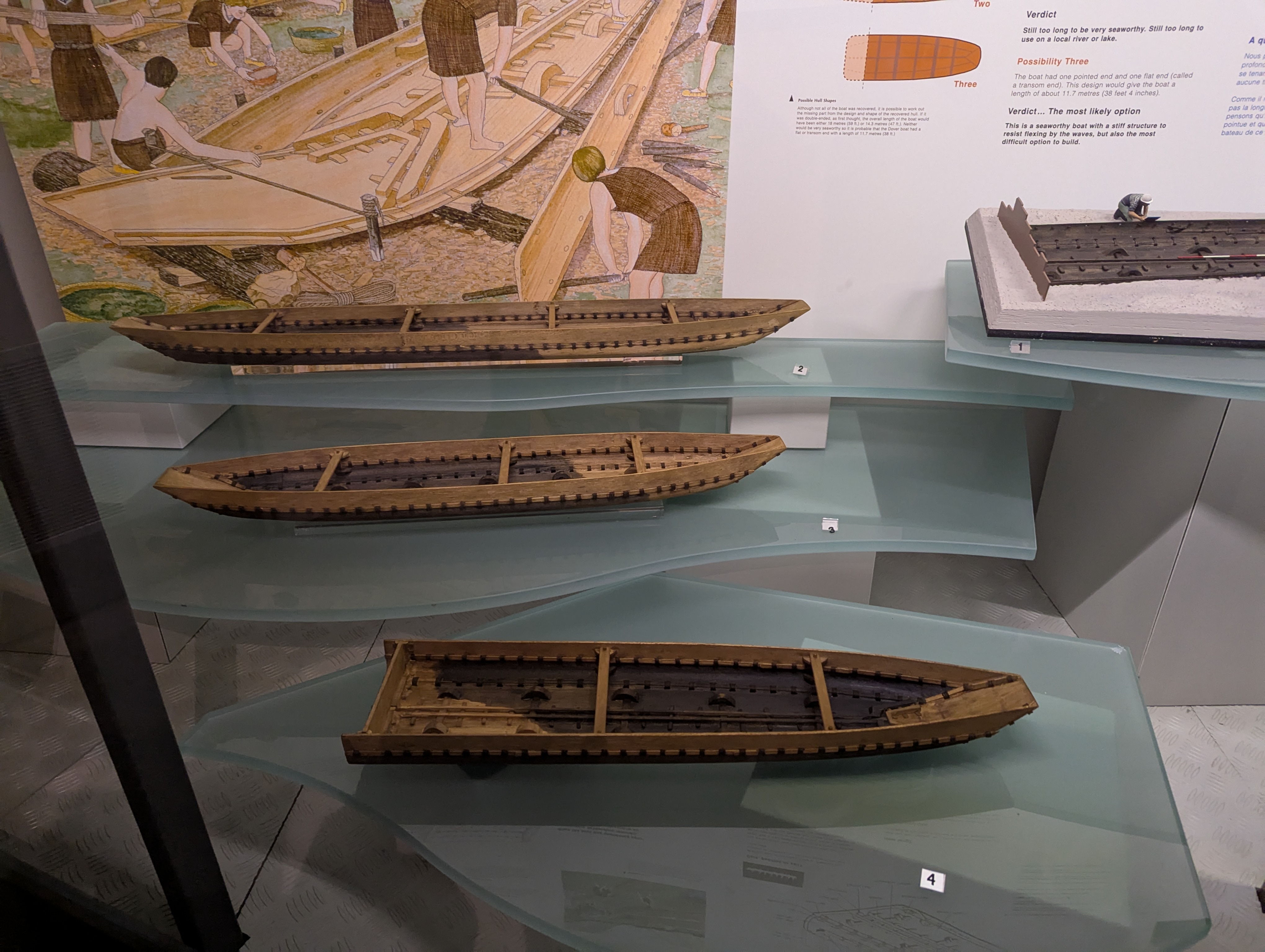
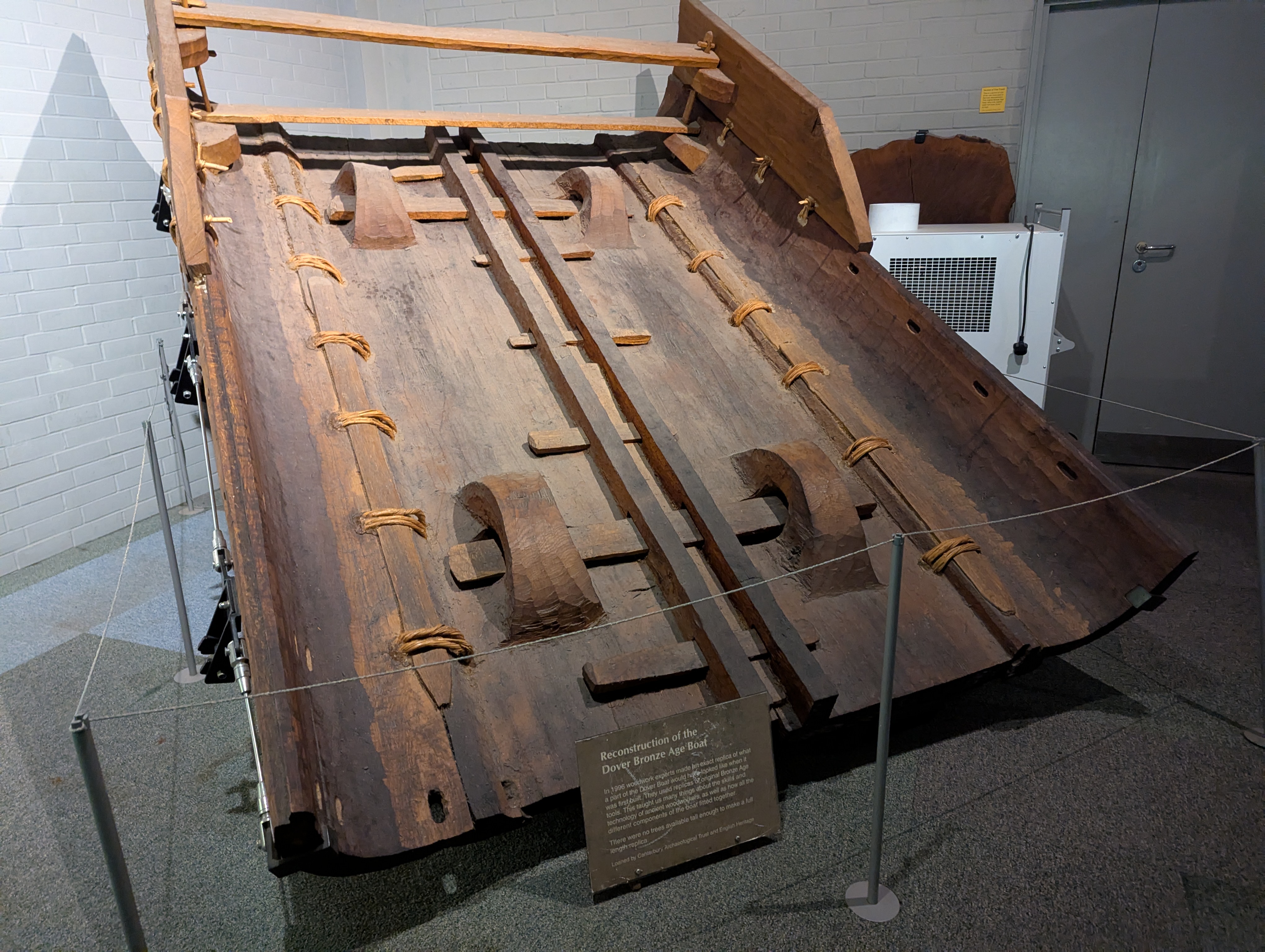
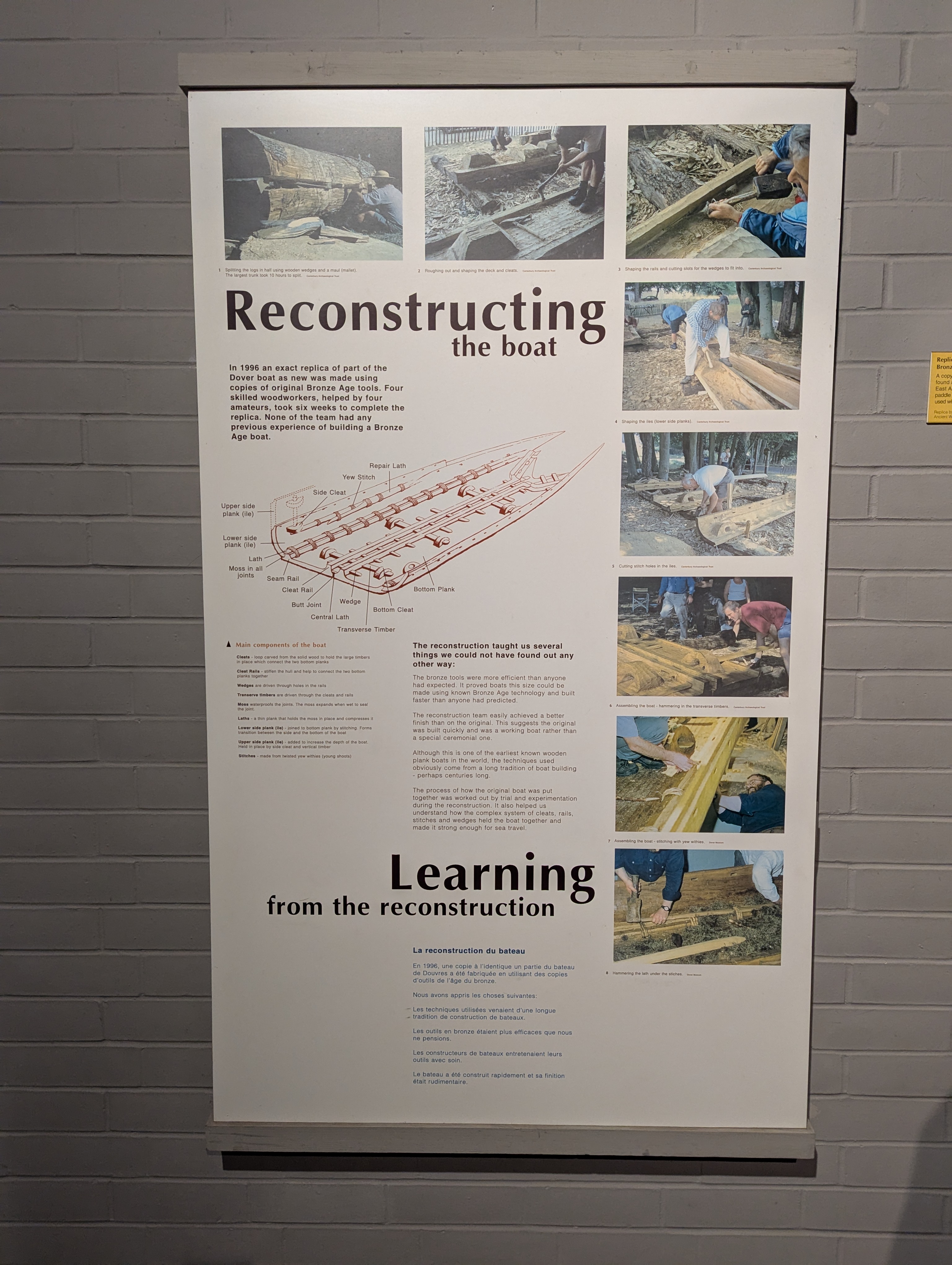
From the Welcome Center we walked over to the harbor and up the shore until we reached where the path is accessed to go up on the famous cliffs. The harbor is a functional harbor from which a number of huge ferries left or returned from trips over to France. It is not a beautiful stretch and sits right next to an extremely busy road. There are some cute cottages as you seek the path but they do not have a pretty view.
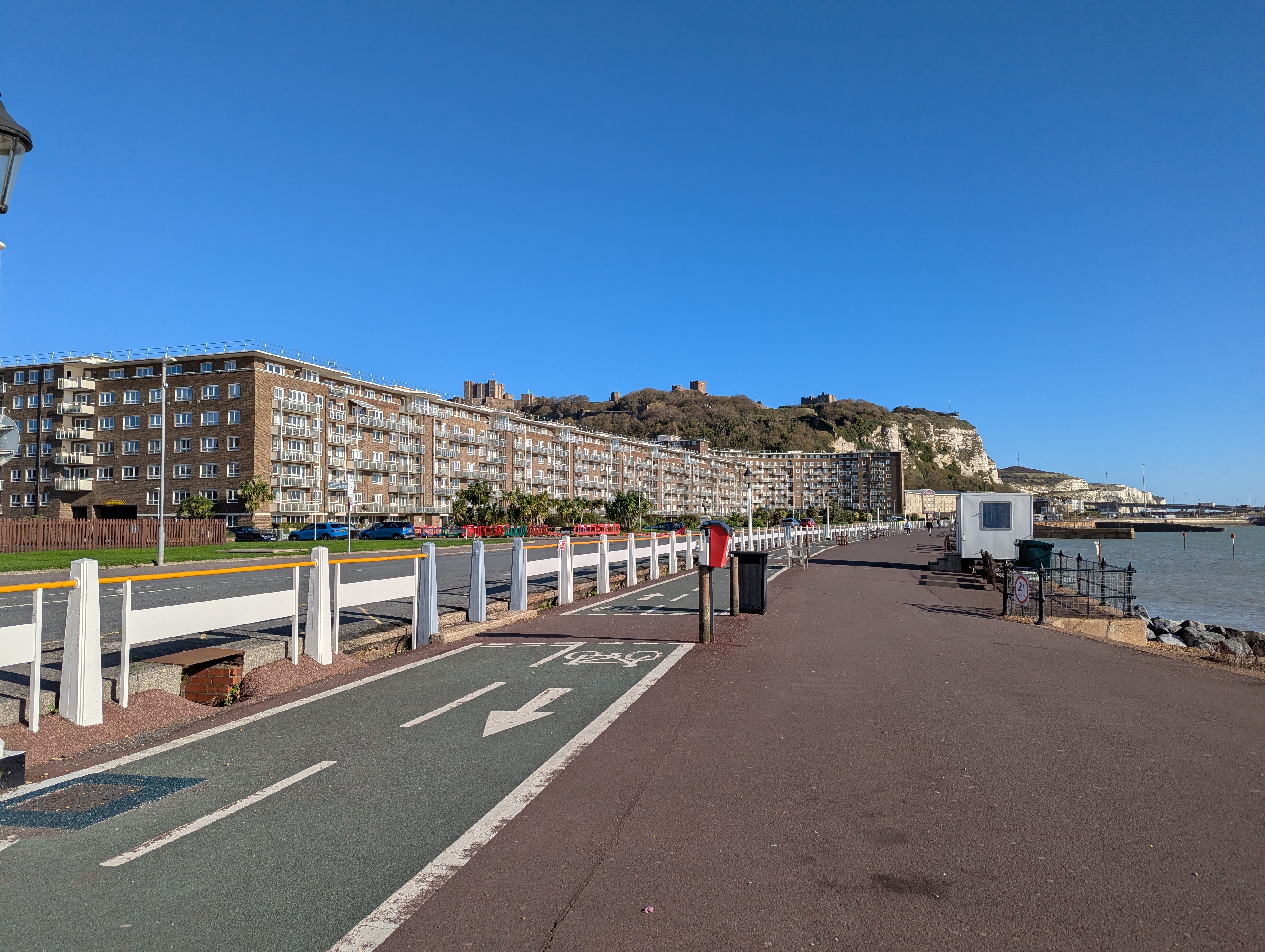
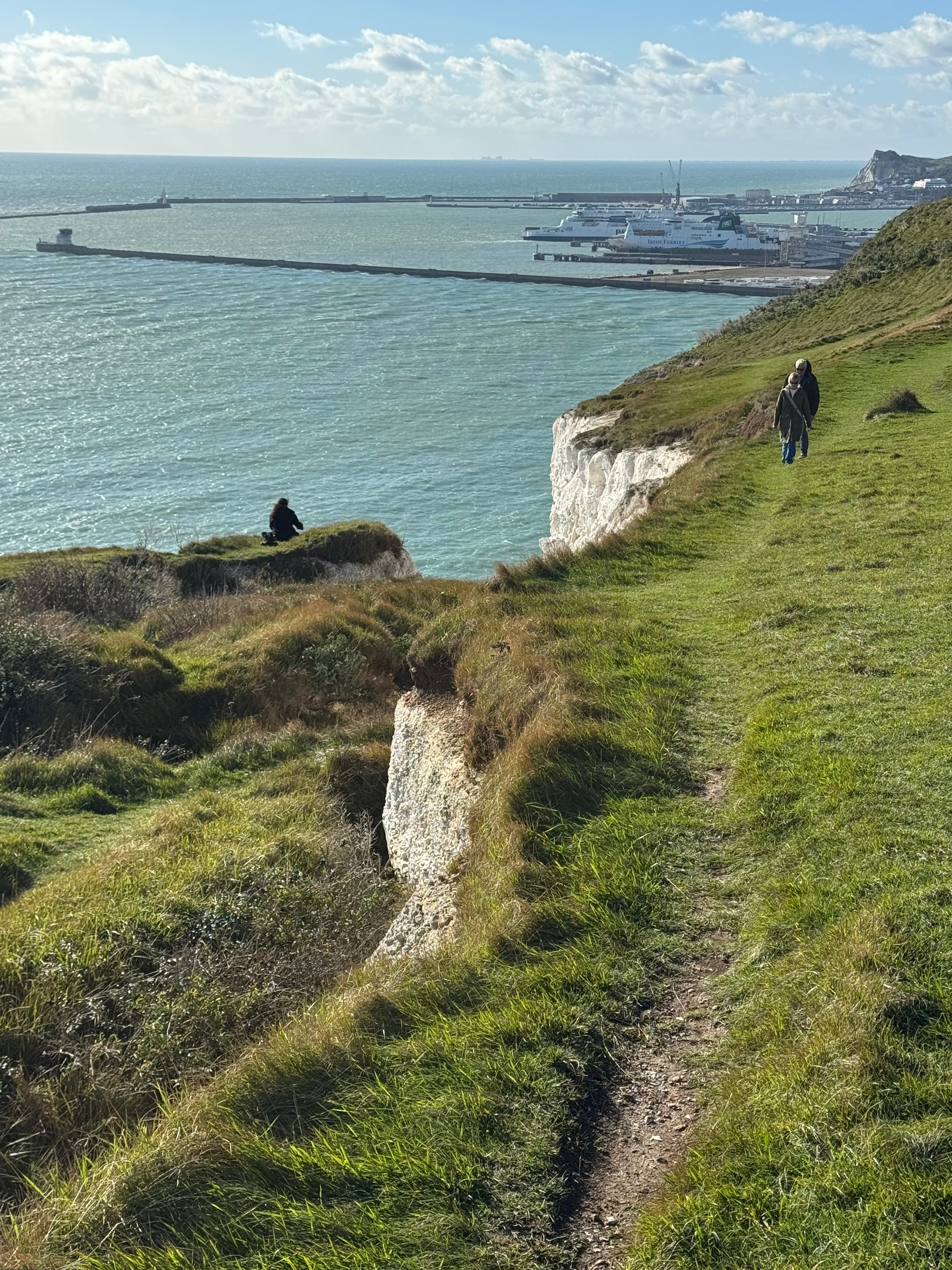
We climbed up and up the path. The wind was whipping but with the steepness of the path I became overheated pretty quickly. I stopped to remove my raincoat to finish the rest of the climb. On a clear day it’s possible to see France across the channel and we could make out the outline in the distance. In fact, we were close enough to France from the cliffs of Dover that T-Mobile sent me a text welcoming me to France and explaining the rates for texts and calls.
We were starting to be in a space that was far more beautiful than gritty. We could see the beautiful white cliffs, rolling hills, grazing sheep, the Dover castle. Even the harbor, which had seemed so industrial near the bottom, was pretty as we got higher on the cliffs.
At some point we had to make a decision about taking the high road or the low road. Our choice lead us very close to the edge of the cliffs. Although I’ve done a lot of Colorado hiking and skiing in my life, I’m not super comfortable with heights and I sensed my husband was also not so comfortable near the edge. We did all right and ultimately came to the part of the path that’s not so “out there.”
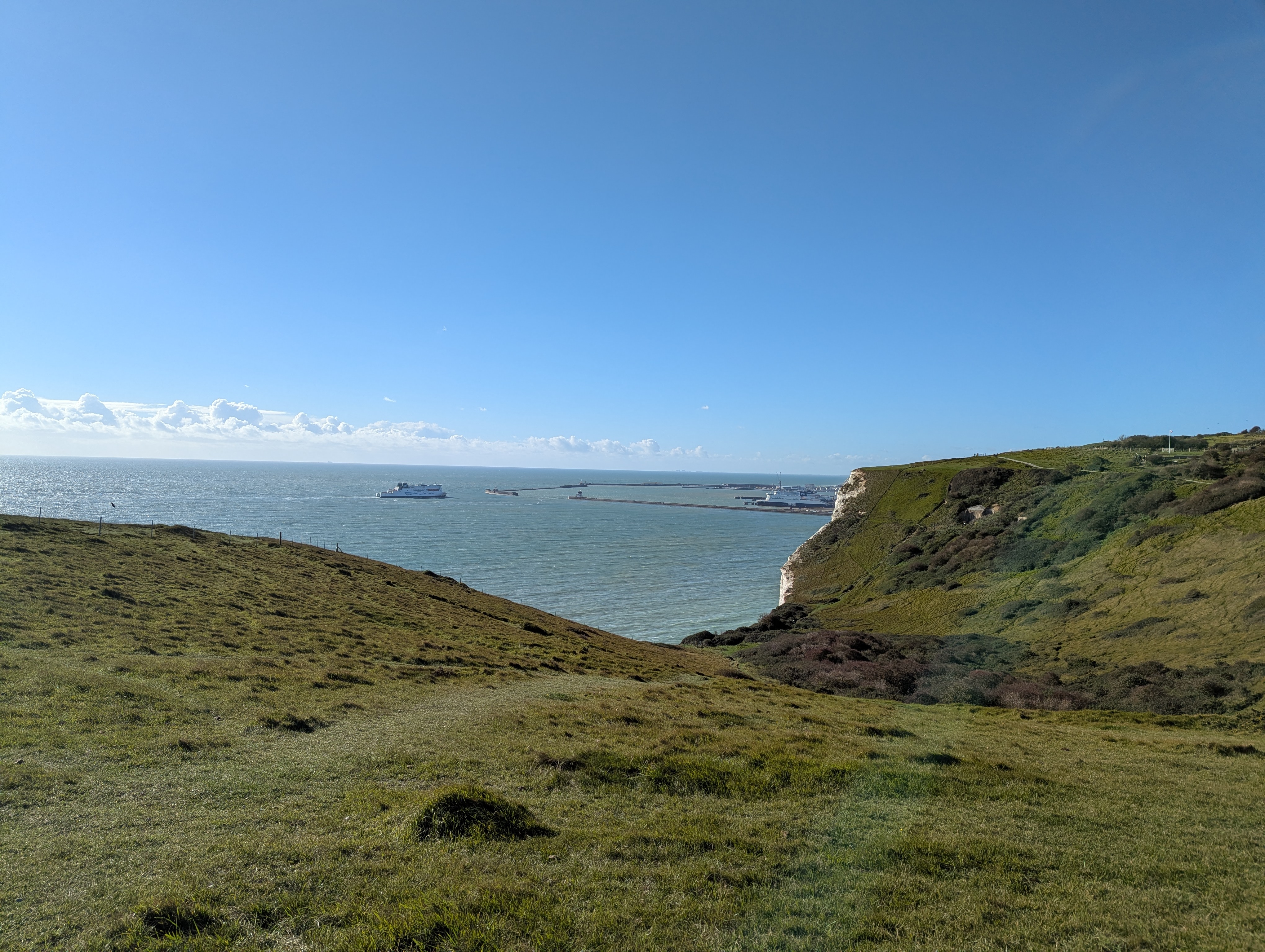
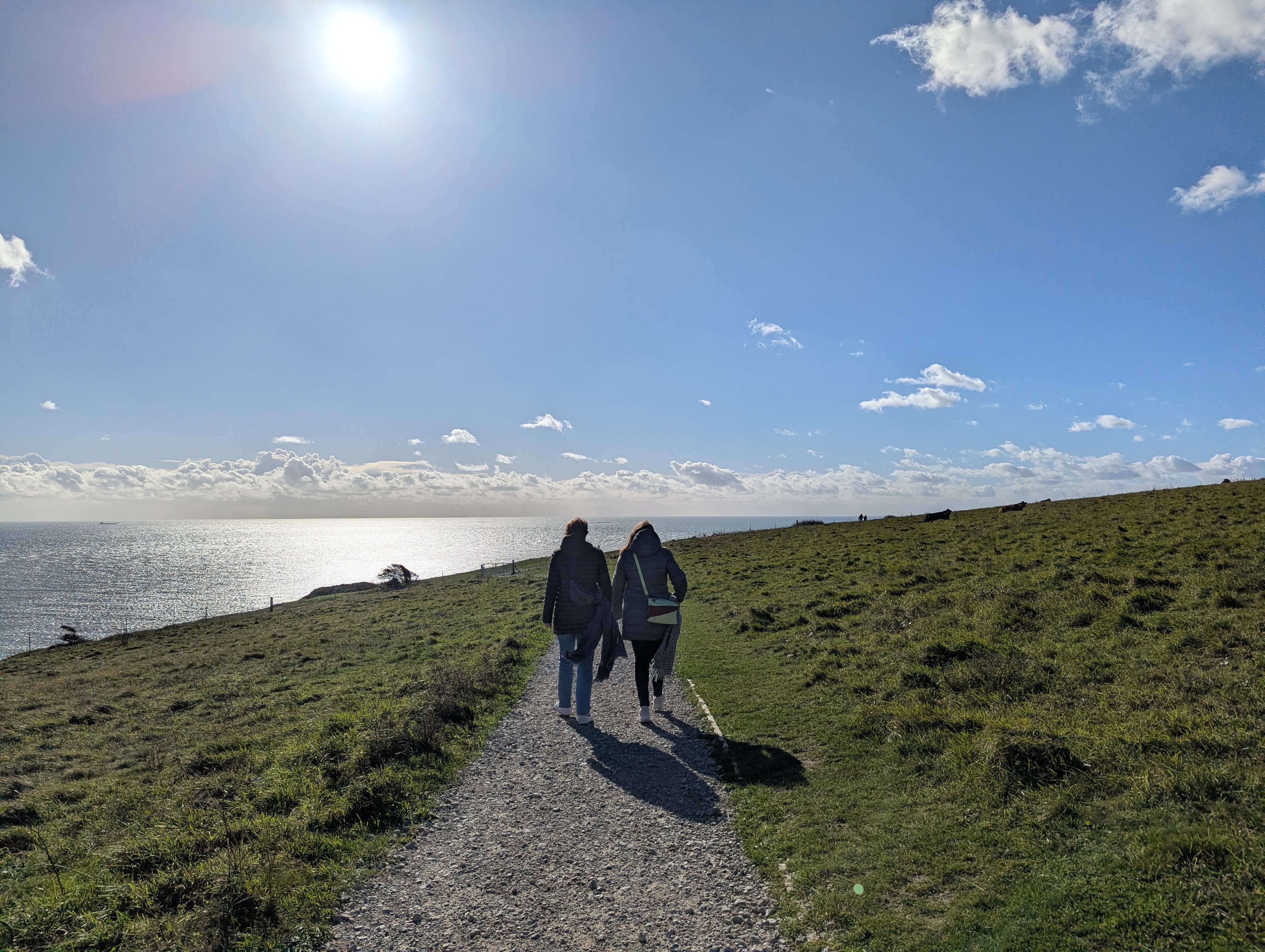
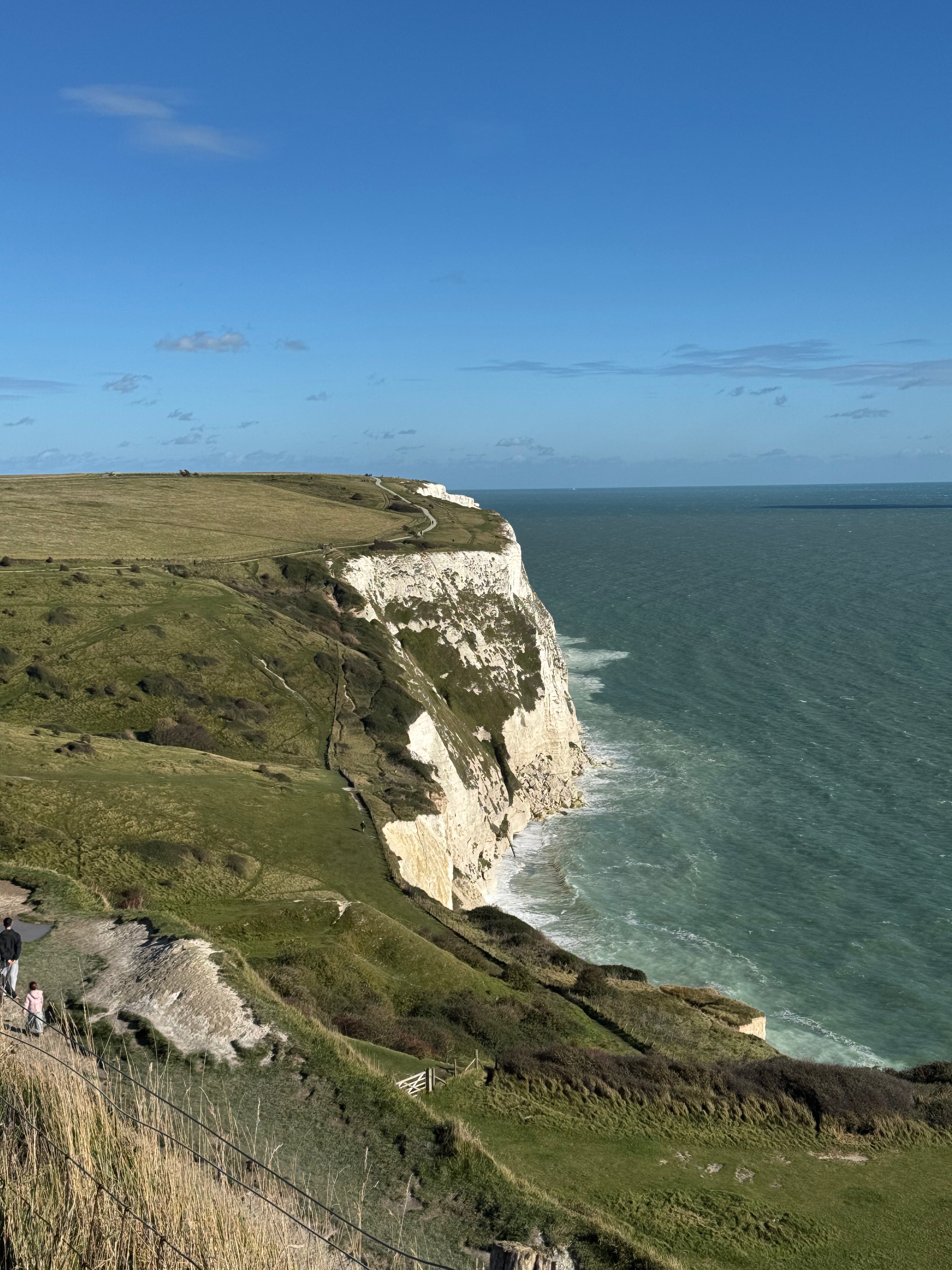
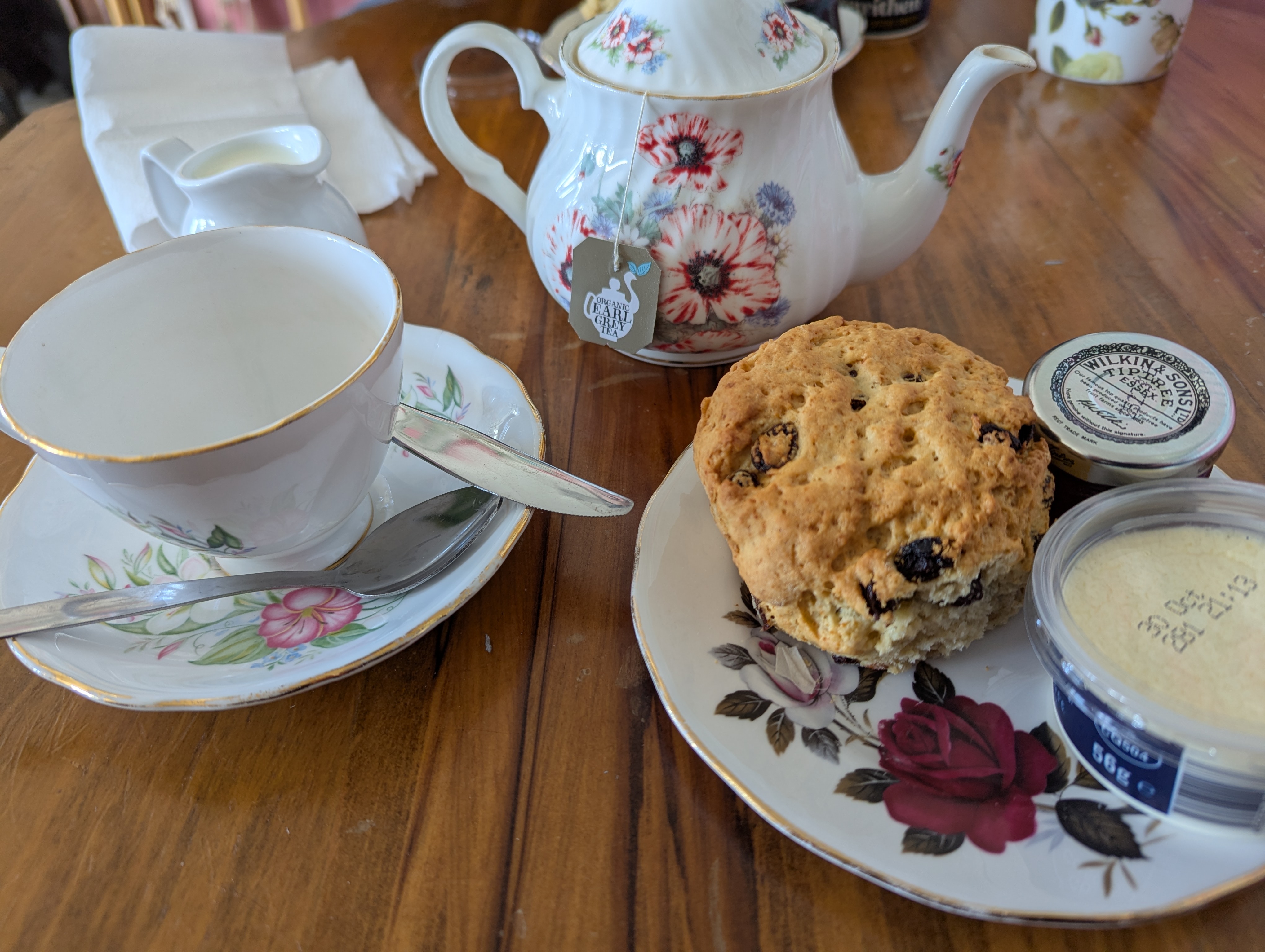
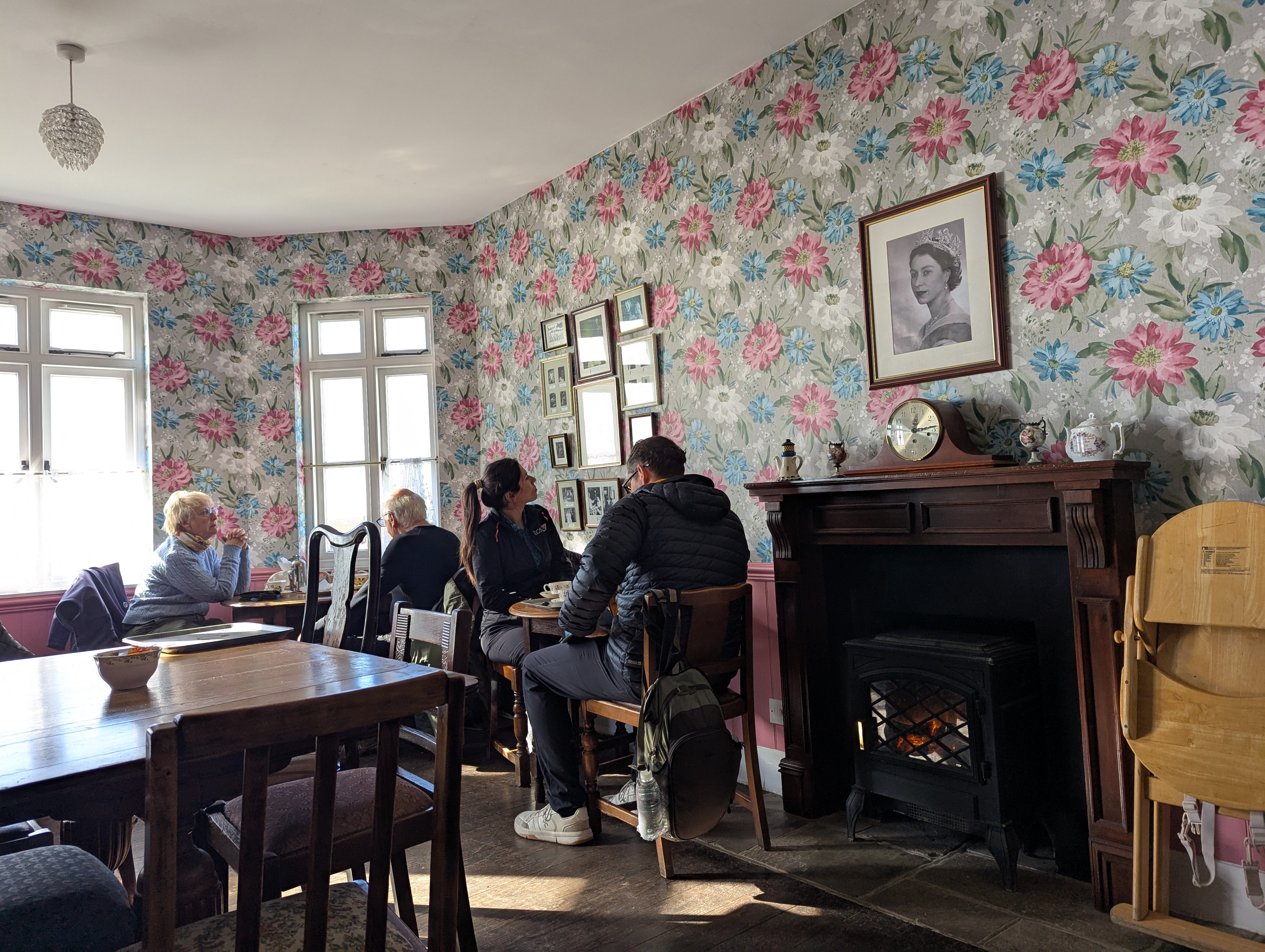
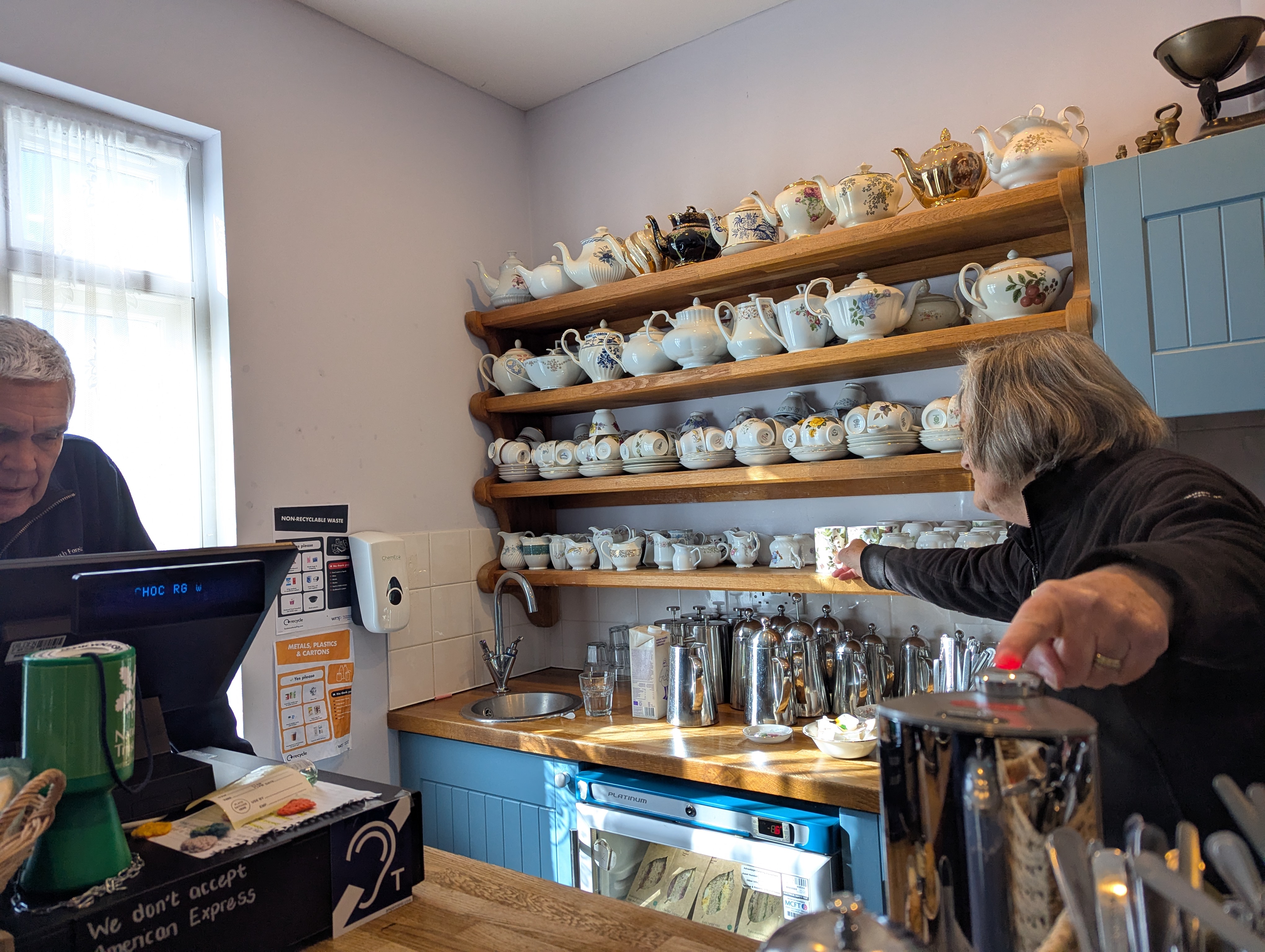
Our destination on the trail was the South Foreland Lighthouse. To reach it you go through a field of giant cattle. On the first floor of the lighthouse there is a cute little tea shop called Mrs. Knott’s Tearoom. It has a limited selection of items but who cares? It has cream team, which as we know means scones and clotted cream. It was served in lovely china in a beautiful room. It was a delicious way to celebrate the mid point of our hike.

We intended to go to Dover castle after our hike and, while we could see the castle from the cliffs, there is really no way to get to it without leaving the cliffs. So we hiked back down and then walked up a different hill, more or less in town, to get up to the castle.
If you may remember, my husband hurt his back on our last trip to England and it was not healed for this trip. He was able to do most things, but I tried to help with his luggage on stairs from airport to tube to hotel and carrying our shared backpack on our trips around Kent to try to preserve his ability to tour. He was still using heating belts to keep his back limber.
We had already walked more than 16,000 steps and 111 floors (so says Apple) and I felt maybe we could admit a small defeat and take a cab up to Dover castle. My husband would not hear of it. I’ll admit I was cursing his not-good-at-that-moment name as we climbed up the new hill. The fact is, we won’t always be able to do what we used to be able to do in the way we could do it. I hope over time we’ll be able to adjust our travel to fit our bodily realities and not have to stop travelling just because we can’t do it the way we used to. i.e., we may not always be able to hoist our luggage up and down stairs of stations on the Piccadilly line. Admittedly the cab in this case was for me as much as it was for him. I was pretty tired.
Now I’ve exposed you to the key conflicts in our household at the start of my retirement. My husband worries about spending too much money and I worry about losing our health while pushing to do things our bodies may be on the verge of no longer being able to do. My husband, the one with the sore back, seems to feel that he is not getting any older physically. In fact, this morning (a few weeks after this trip) he told me my feelings about aging are “a self-fulfilling prophesy.” I’m pretty sure our bodies will themselves fulfill my prophesy and, you know, “My Body, My Self,” so I can’t argue with his statement even though I suspect it will go down a bit differently than he intended with that turn of phrase.
But–this time–we made it to the top and made some quick calculations of what we’d be able to do at the castle. We were running out of time and it turned out there was a lot more to see and do at the castle than I had realized. This was not just another medieval castle (although it also was that), this area was used to protect England during modern wars also. Assuming it is ok to consider the World Wars as “modern.” There was also an very old church on the site. I think it would be easy to spend a full day at Dover castle.
We decided to hit the church and the medieval castle and skip the “modern” wartime tunnels, fire command post, underground hospital, etc. It was a tough call because those things looked very interesting.
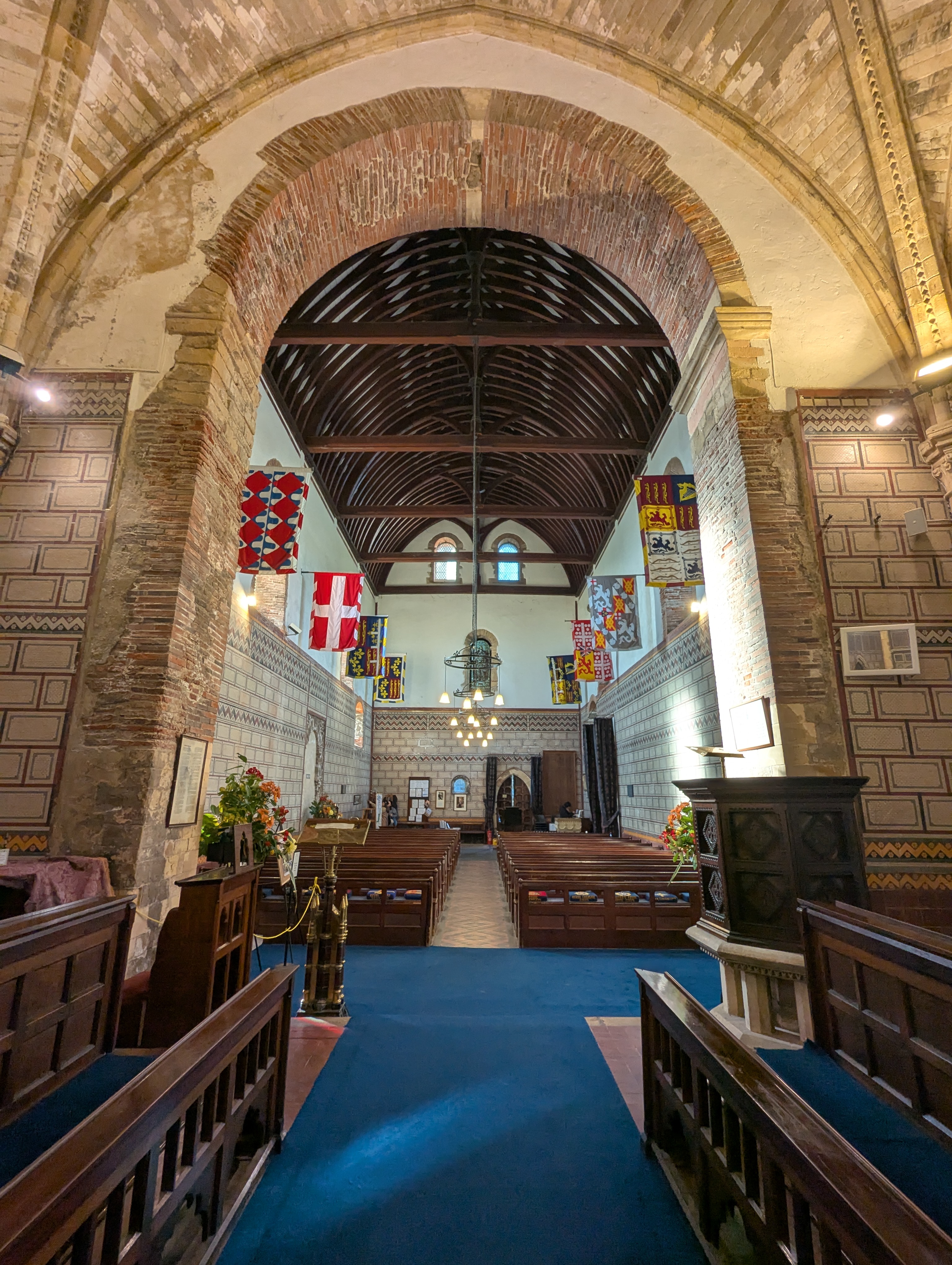
The St. Mary in Castro church was built around 1500 years ago, probably on the site of a much earlier church. It apparently was a building that was not affected like other churches by the boring people coming in and demanding that color be removed. It had beautiful, colorful tiles in walls and ceilings, in addition to lovely windows. It’s a functional church. We had very little information about it as we toured, but it was lovely to be in. Next to the church sits a Roman lighthouse that’s been converted into a bell tower. Pretty cool.


We explored the castle proper. Although a building of some sort was in place during the Roman occupation and was damaged and rebuilt following the Norman invasion, the medieval castle as it exists now formed under Henry II, who we met yesterday as the person responsible–accidentally or intentionally– for Thomas Becket’s death. We walked through the external walls and the grassy enclosure and then through the keep. It was quite large with several floors to explore.
The way the castle was exhibited with representative but somewhat cartoonish furnishings was quite a lot like the castle at Norwich we toured last month. Similar set-up geared well for kids to explore. This castle was in much better shape, though. Because it was before Halloween, what the kids seemed most interested in in the castle was a worker dressed up for Halloween like a witch.
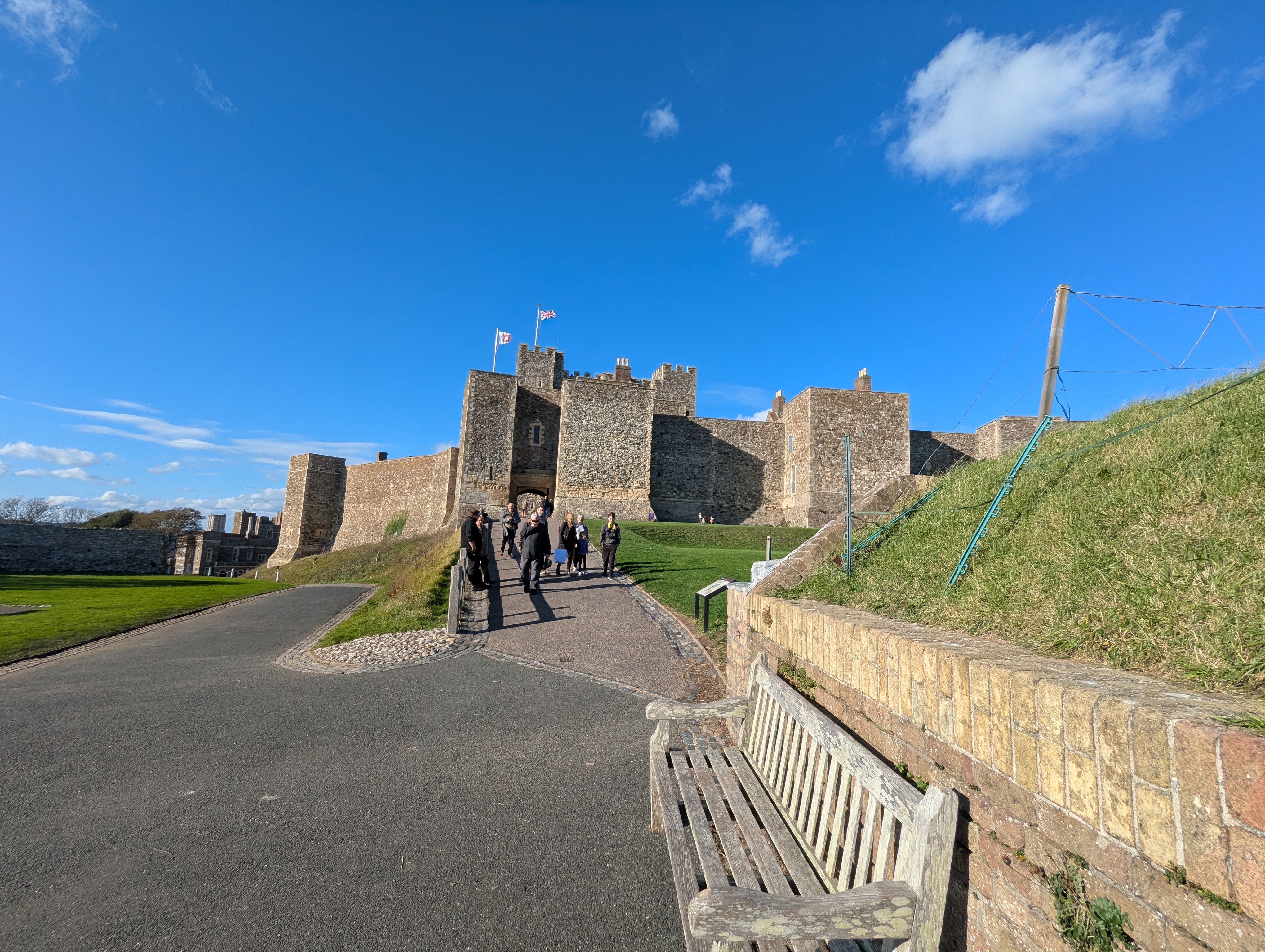
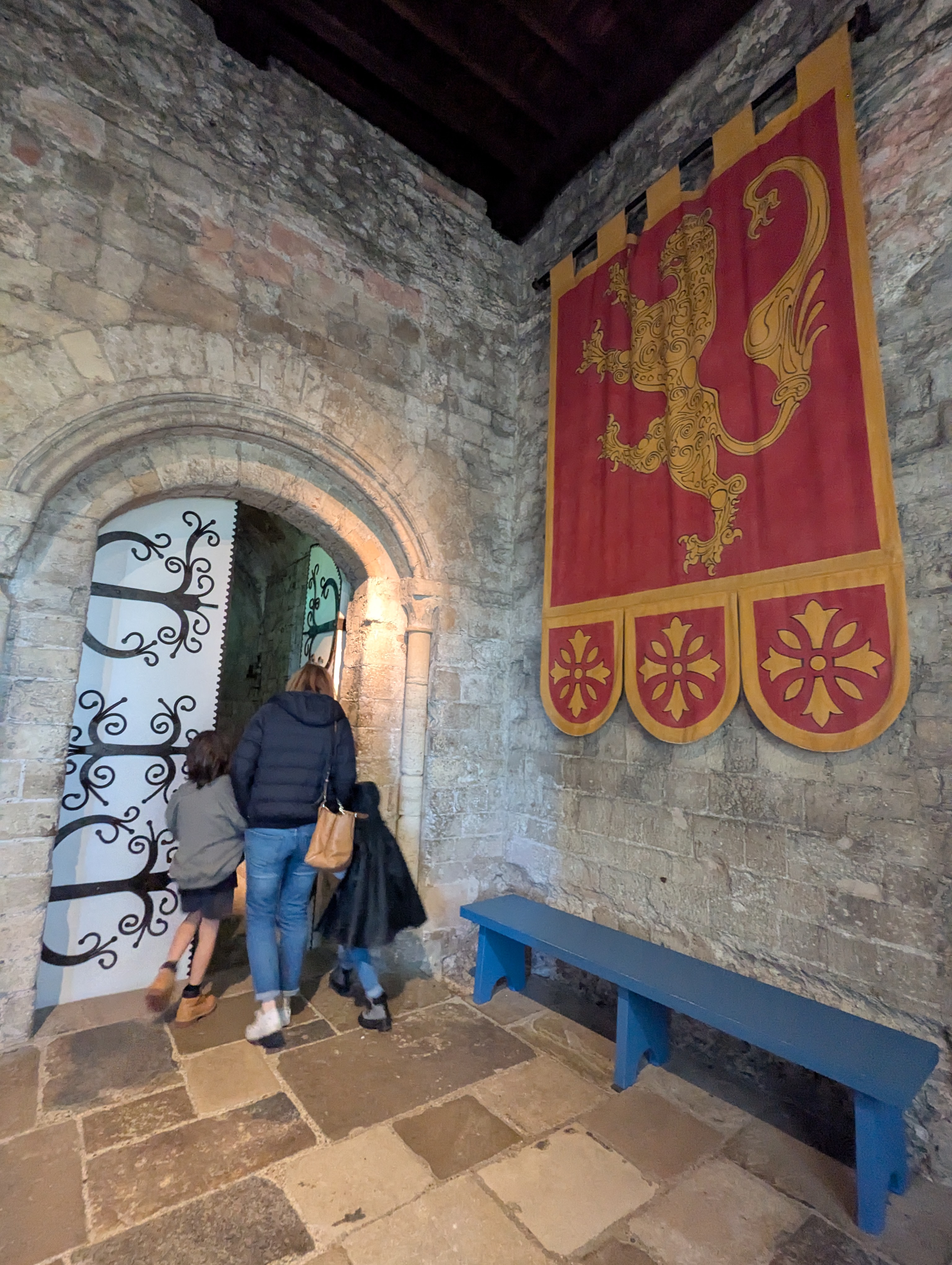
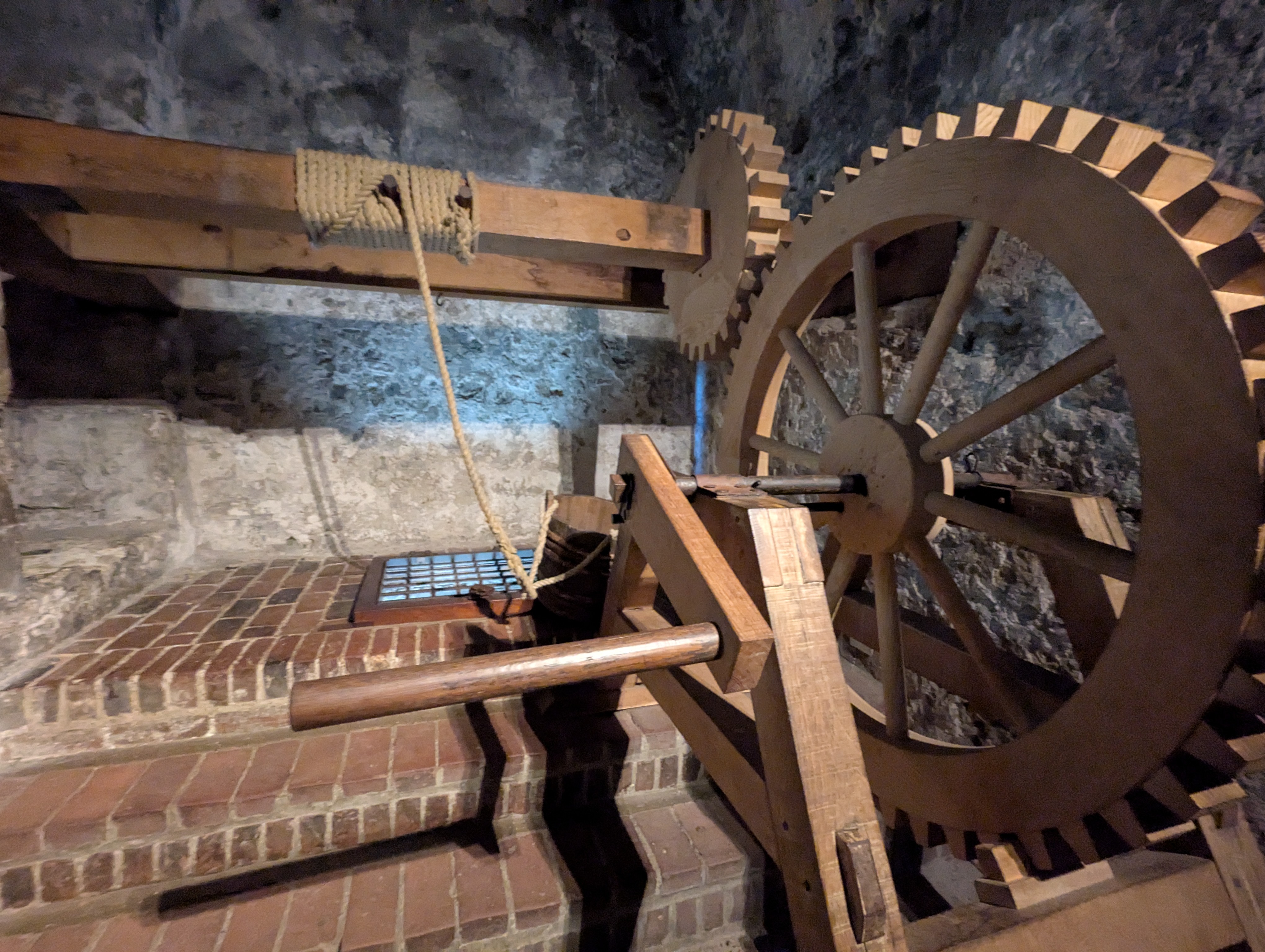
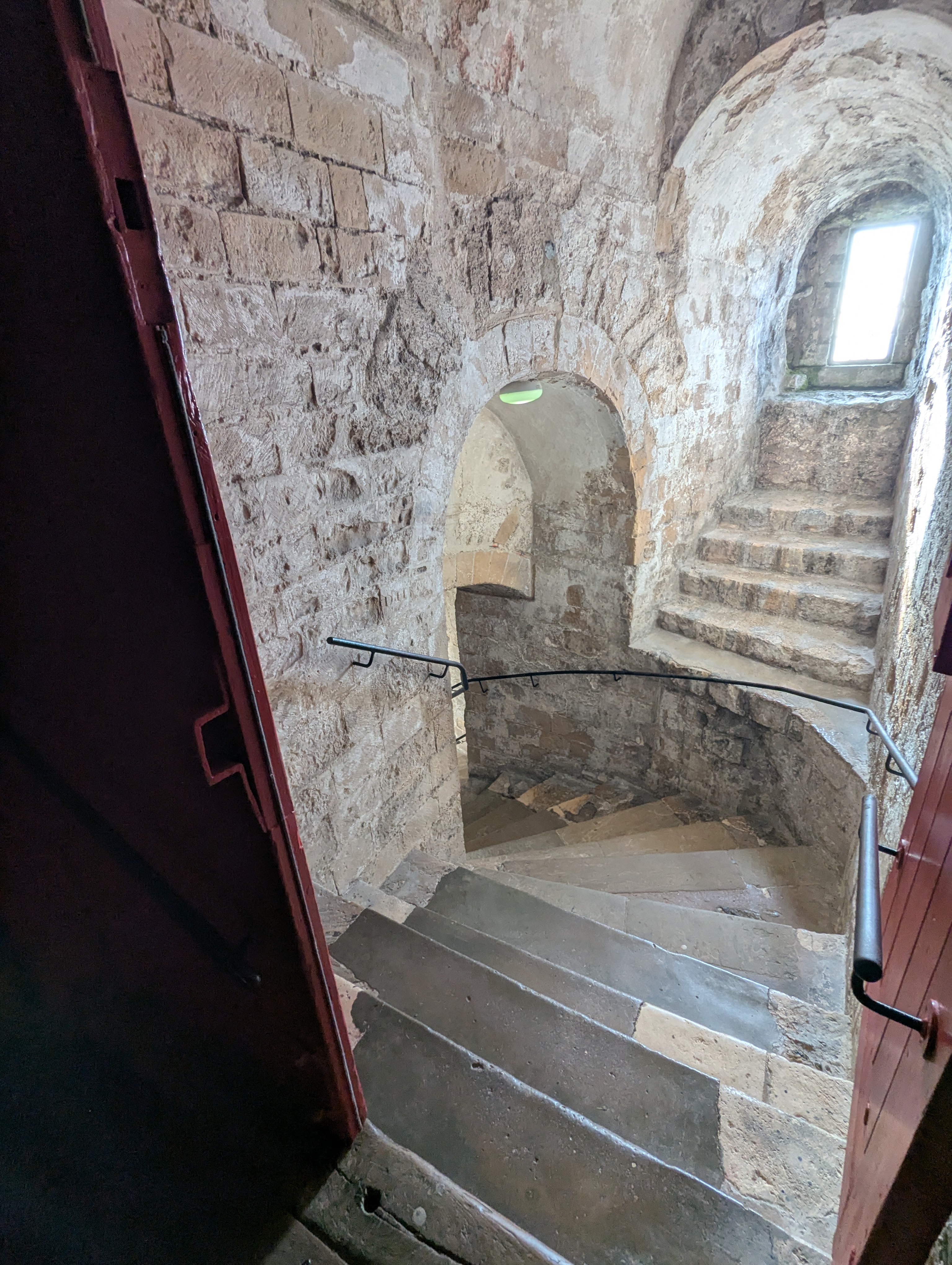
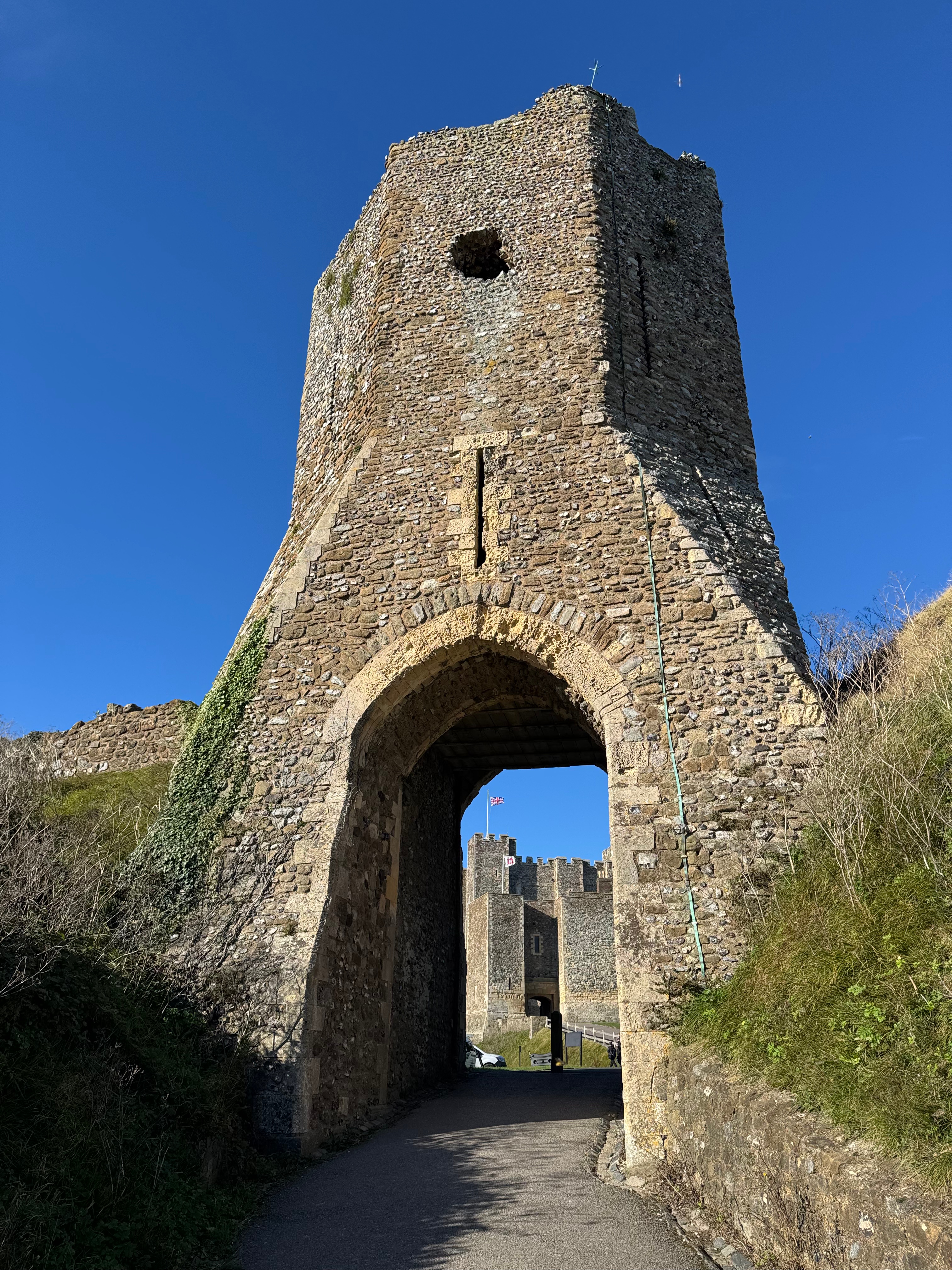
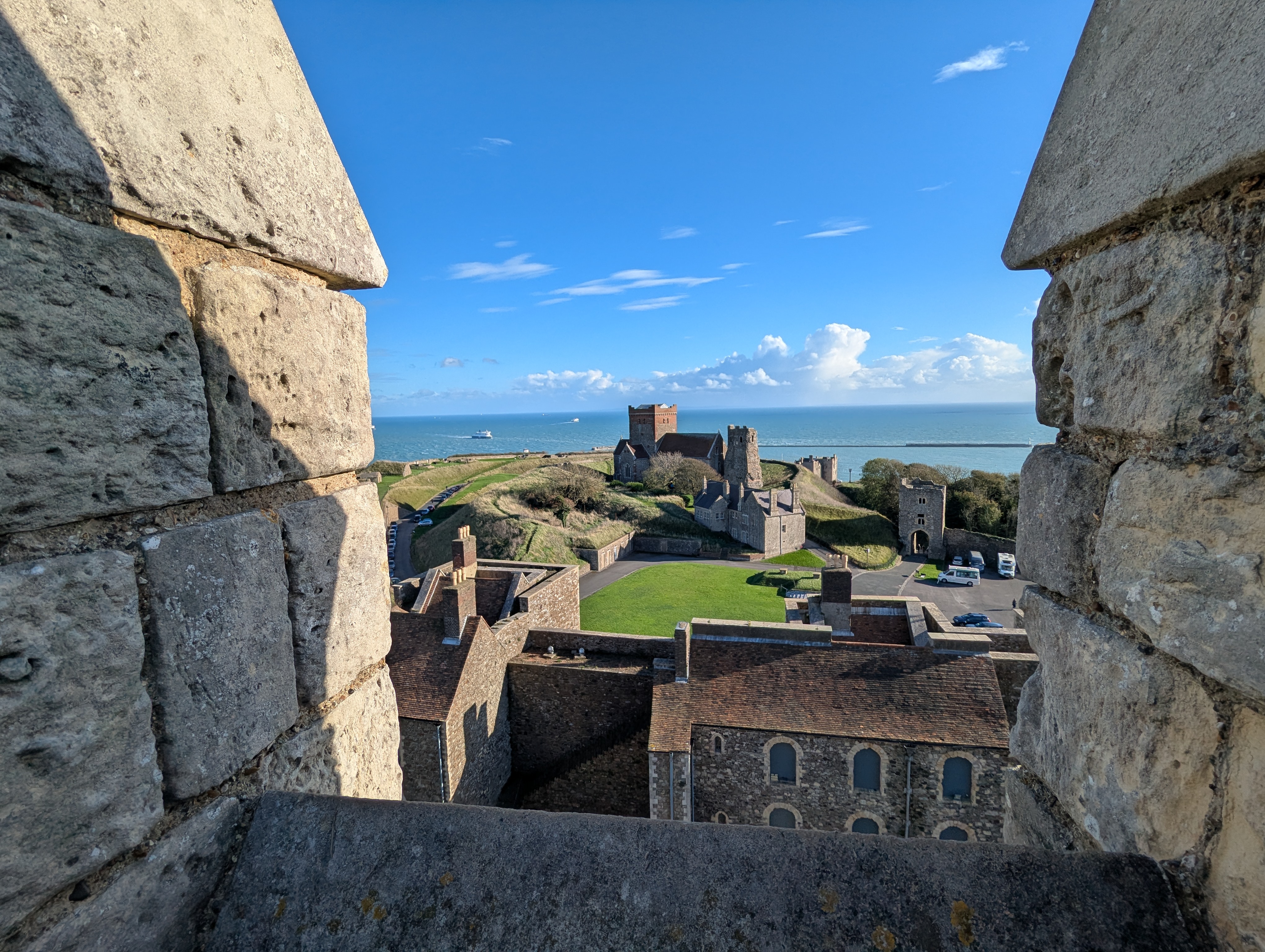
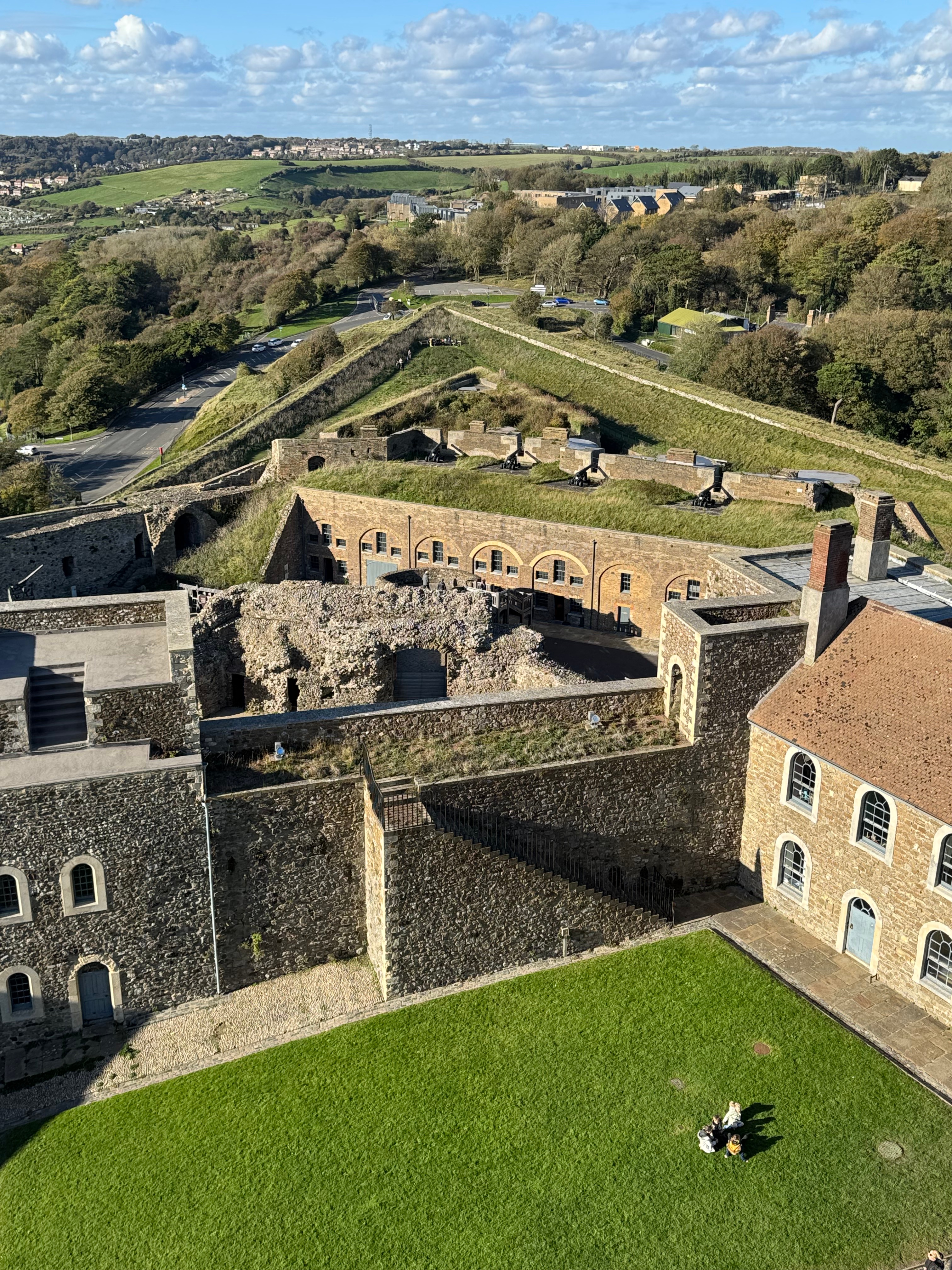
My favorite part of the castle was he views from the roof. It was unbelievably windy up there but you could see all over town, out on the country side, over to the cliffs. Beautiful.

We made our way down the hill again with sheep visible grazing in the moat of the castle. Our next destination was the rail station. We had decided to take the train to Deal, which we had not been able to visit as planned on our recent trip to Sandwich. The plan was to see Deal and have dinner before heading back to Canterbury where my husband was hoping to join his Italian language class online.
However, by the time we arrived in Deal we had new learnings about the train schedule and our time was going to be much shorter than we had originally understood. I had found a restaurant close to the station with acceptable ratings that also looked like it might make for a quick dinner, The Lane. It was early for dinner and there were very few people in the restaurant. Upstairs there was a Wicked-themed birthday party going on and the sound system in the restaurant was playing “For good.”
You may have noticed from my recent reports of what I’ve eaten in various places, except for breakfast, I’ve been leaning toward soups and salads. It was that point of traveling when your body demands vegetables. But when I sat down at the table at The Lane and reviewed the menu, my body demanded, of all things, a hot dog. And chips.
As you know, I live in the suburbs of Chicago, and what Chicago is known for, in addition to deep-dish pizza, is hot dogs. And I love a hot dog with everything that a Chicago dog normally comes with, except sport peppers. Tomatoes, relish, celery salt, a dill pickle spear, onions, mustard. Never ketchup. If you ask for ketchup in Chicago you will be abused. Sport peppers are a little too spicy for me and I’m in danger of having a sneezing fit when I eat them. Then it just becomes a Whole Thing. I remember ordering hot dogs in the Chicago Loop at lunchtime when I was working downtown. I would always say “Dog with everything except sport peppers.” And the worker would always repeat back my order, “Dog with everything, extra sport peppers.”
I digress, big time. The “classic” hot dog I ordered at The Lane was not a Chicago hot dog, but instead had on it ketchup, mustard, pickles, and “crispy onions.” As it arrived at my table I noticed it was HUGE. I figured I could manage about half that. I didn’t take a picture of it because it was just a hot dog. Then I took a bite. It was messy but the most amazing and yummy thing I’ve eaten for a while (this on a day I had scones and clotted cream). Maybe it was the crispy onions that made it so good? Maybe it was just a better quality hot dog? Maybe I was just really hungry after so much walking? I changed my mind and took a picture of part of it. My husband seemed to enjoy his tacos as much as I did the hot dog. And I did eat the whole thing.
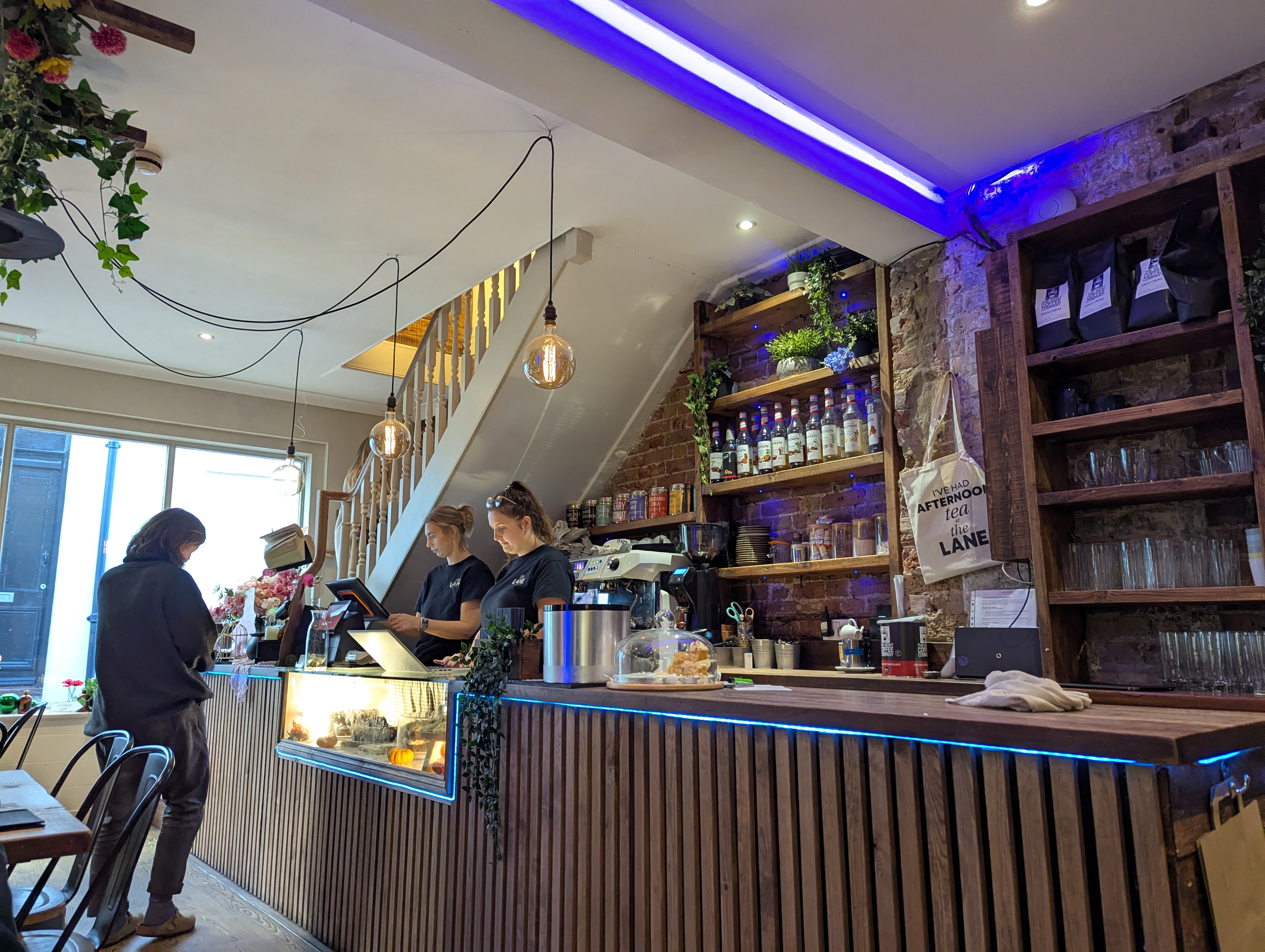
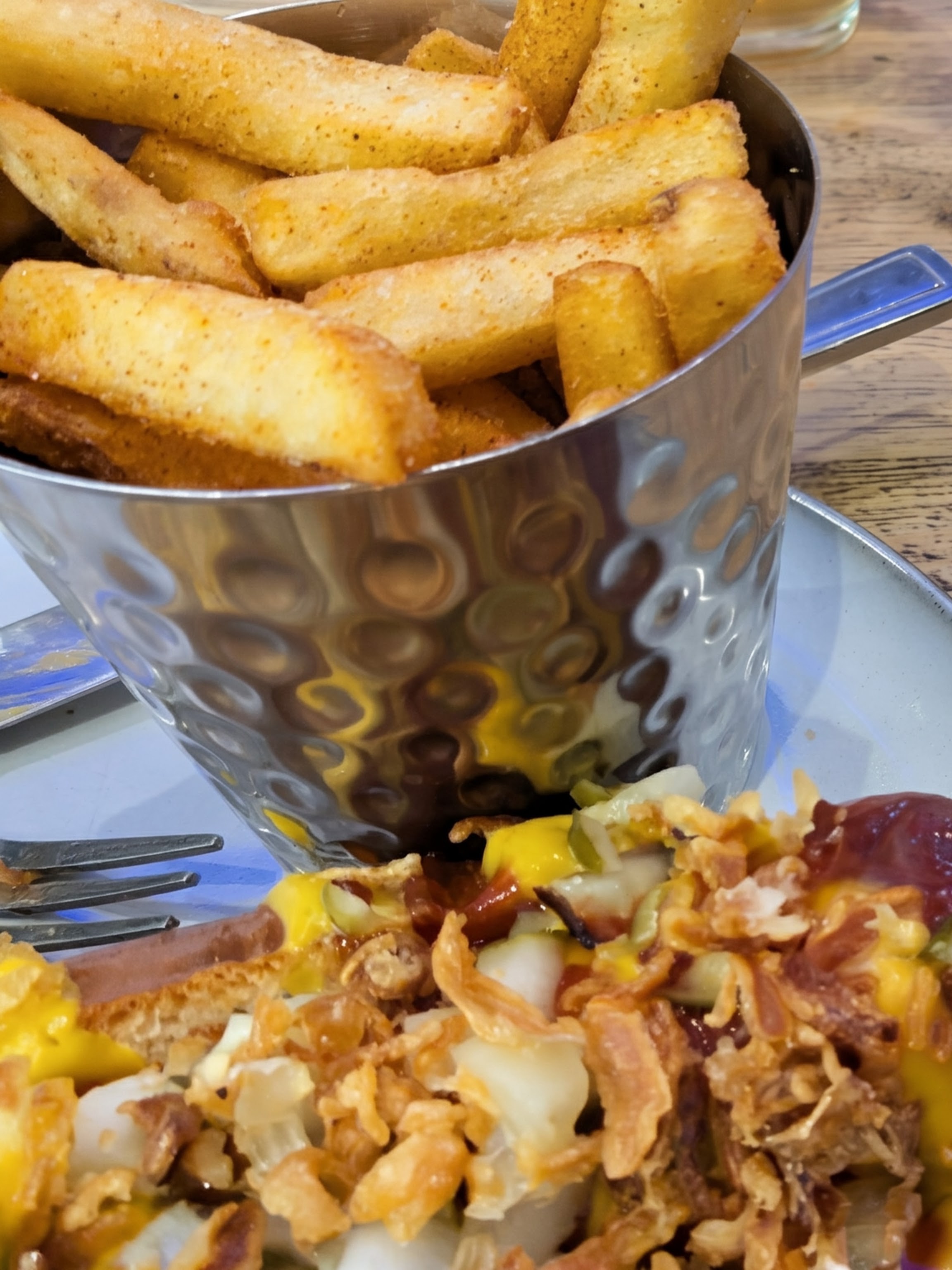
As we were leaving, we asked the server if she had suggestions about what we should do if we had only 20 minutes in Deal. The thing she could think of was a local bar with a two-for-one drink special. I know she had just witnessed us eating our meal in a hurry and that may have made an impression, but I don’t think I could do two drinks in 20 minutes. In any case, we were not up for the challenge.
We thanked her and walked 5 minutes to the shore, took in the shops along the street next to the shore and the pier.
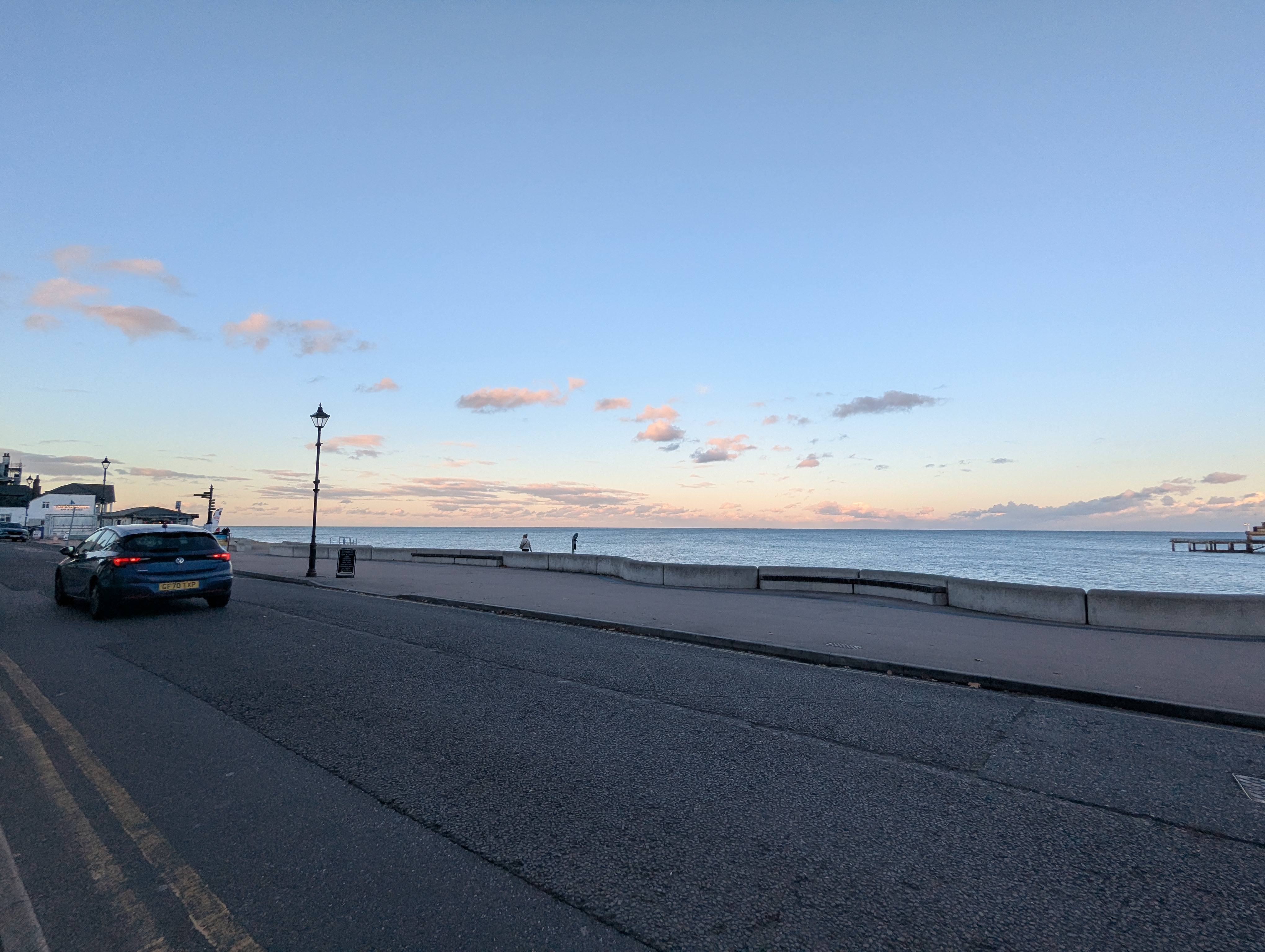
Deal is a cute little town, worthy of more than a 20-minute tour some day. But we had a train to catch and an Italian class to attend back at our temporary home in Canterbury.



 WholeArsed