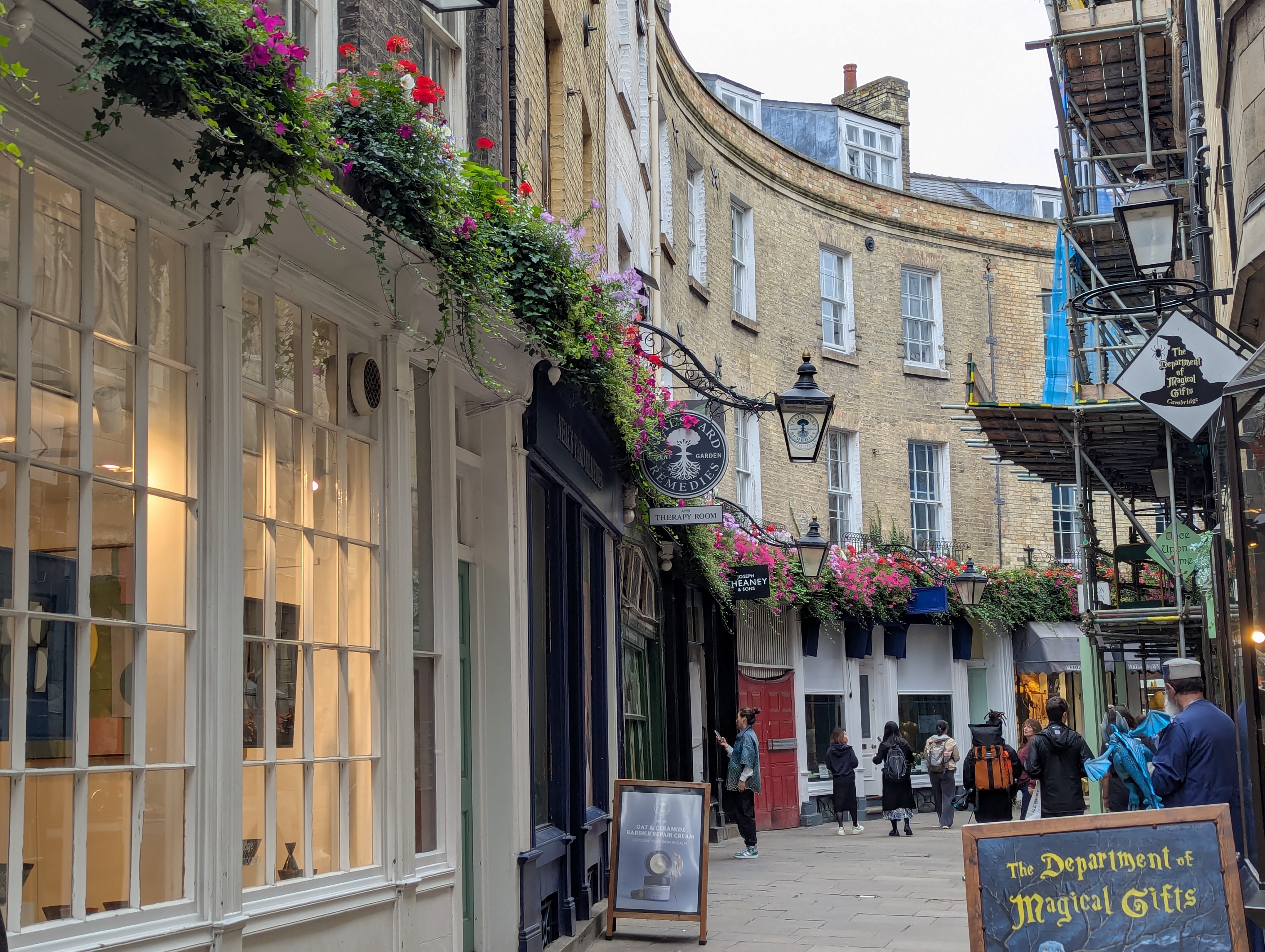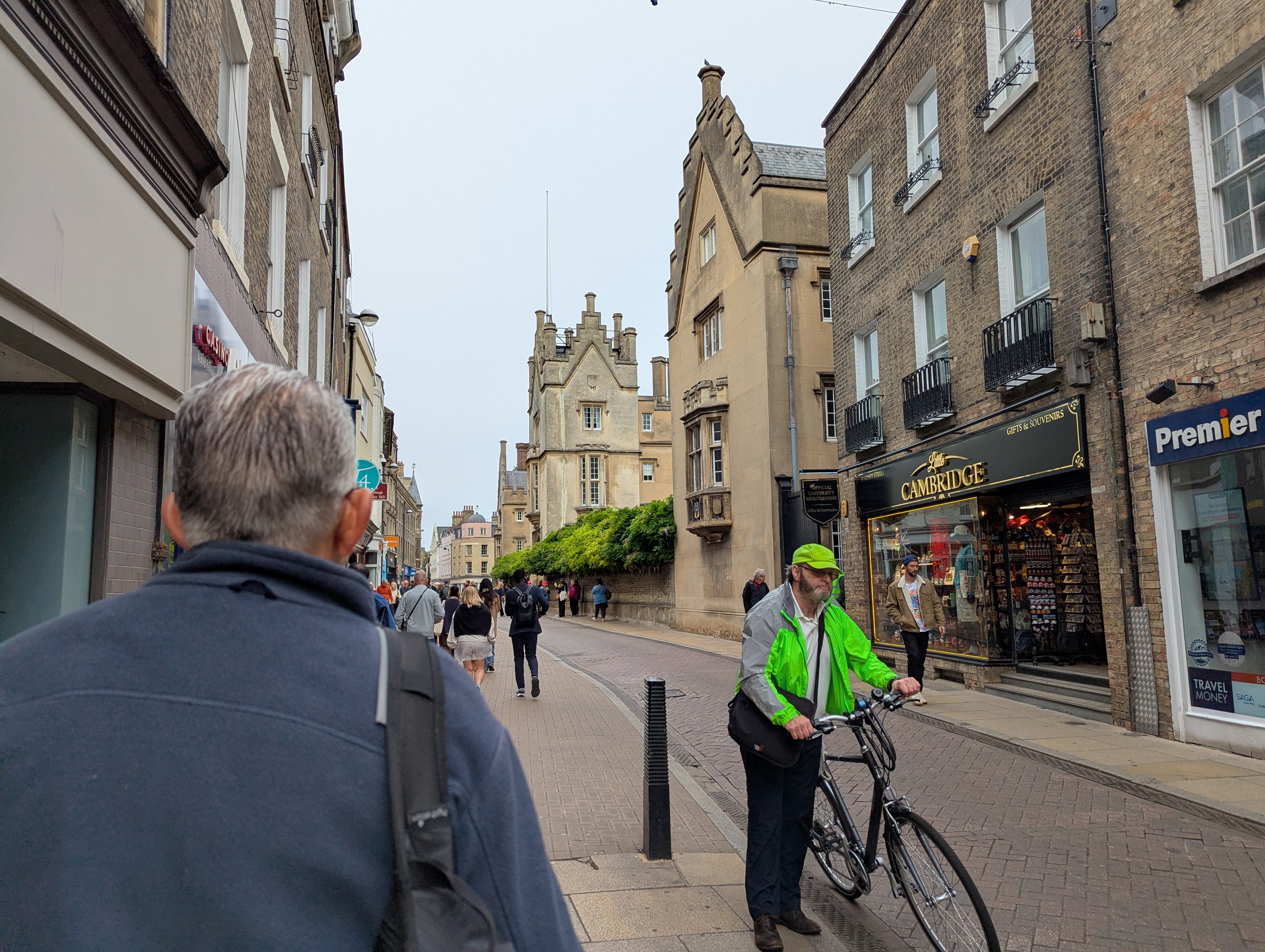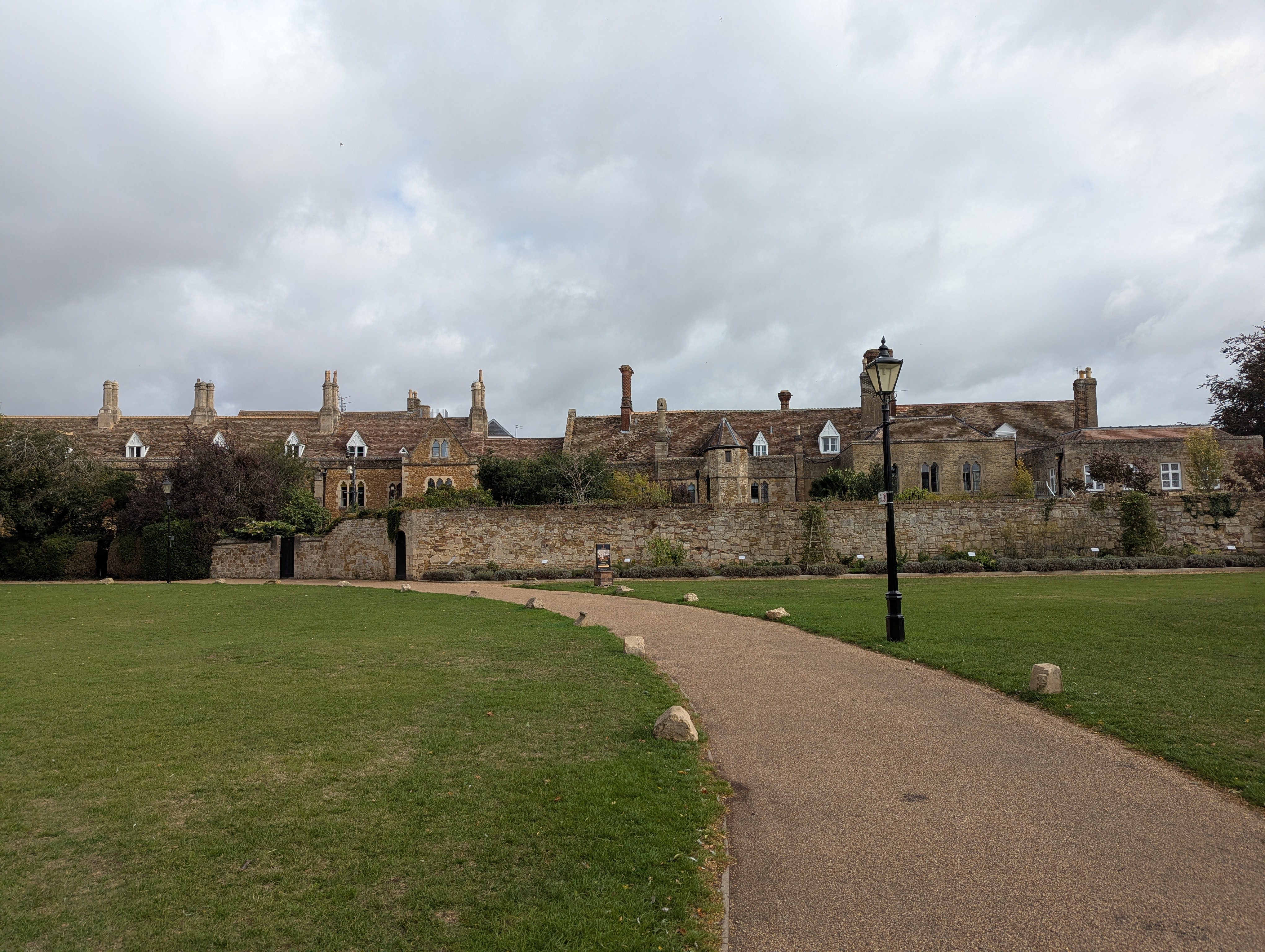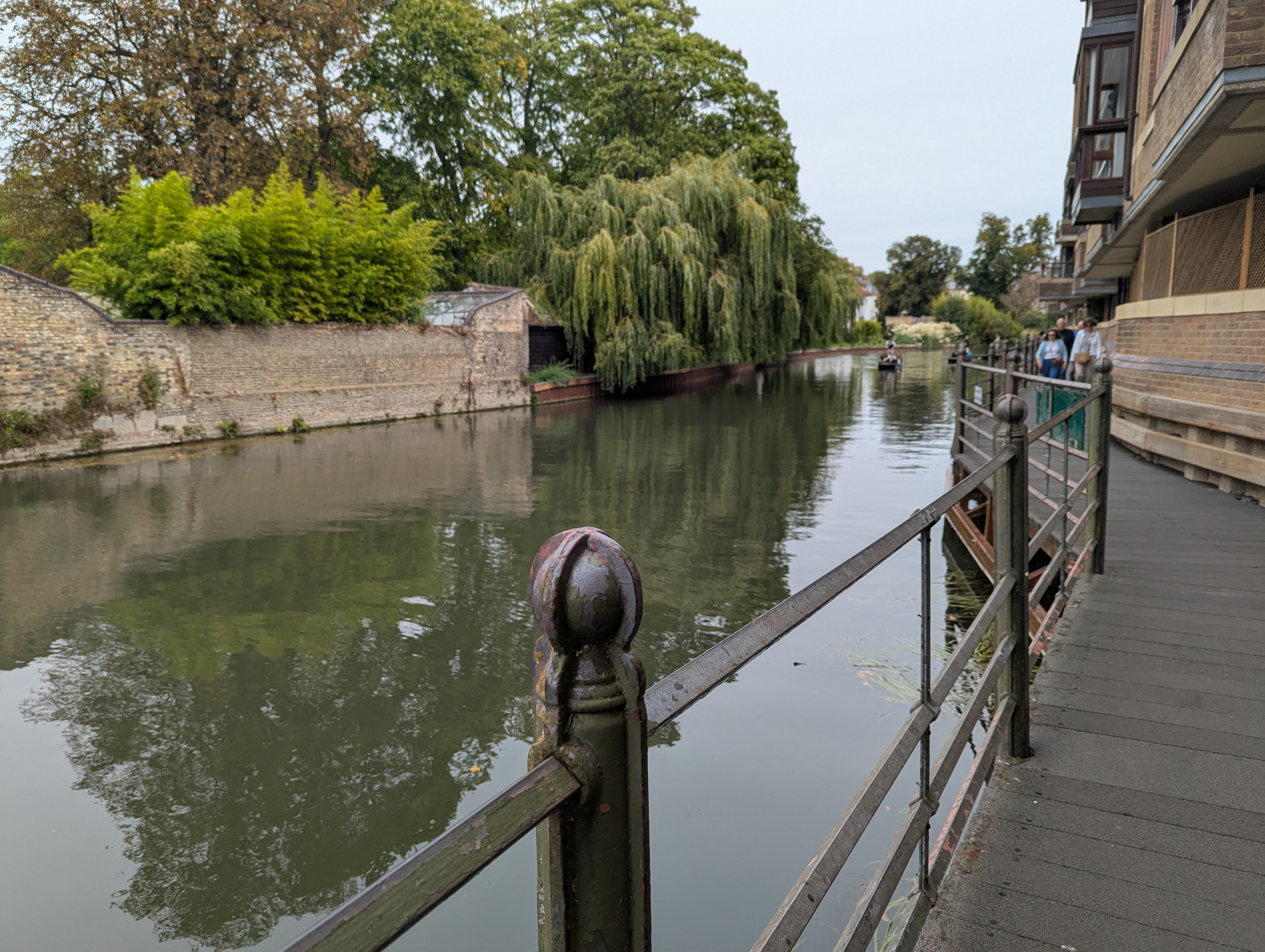
On a clear day

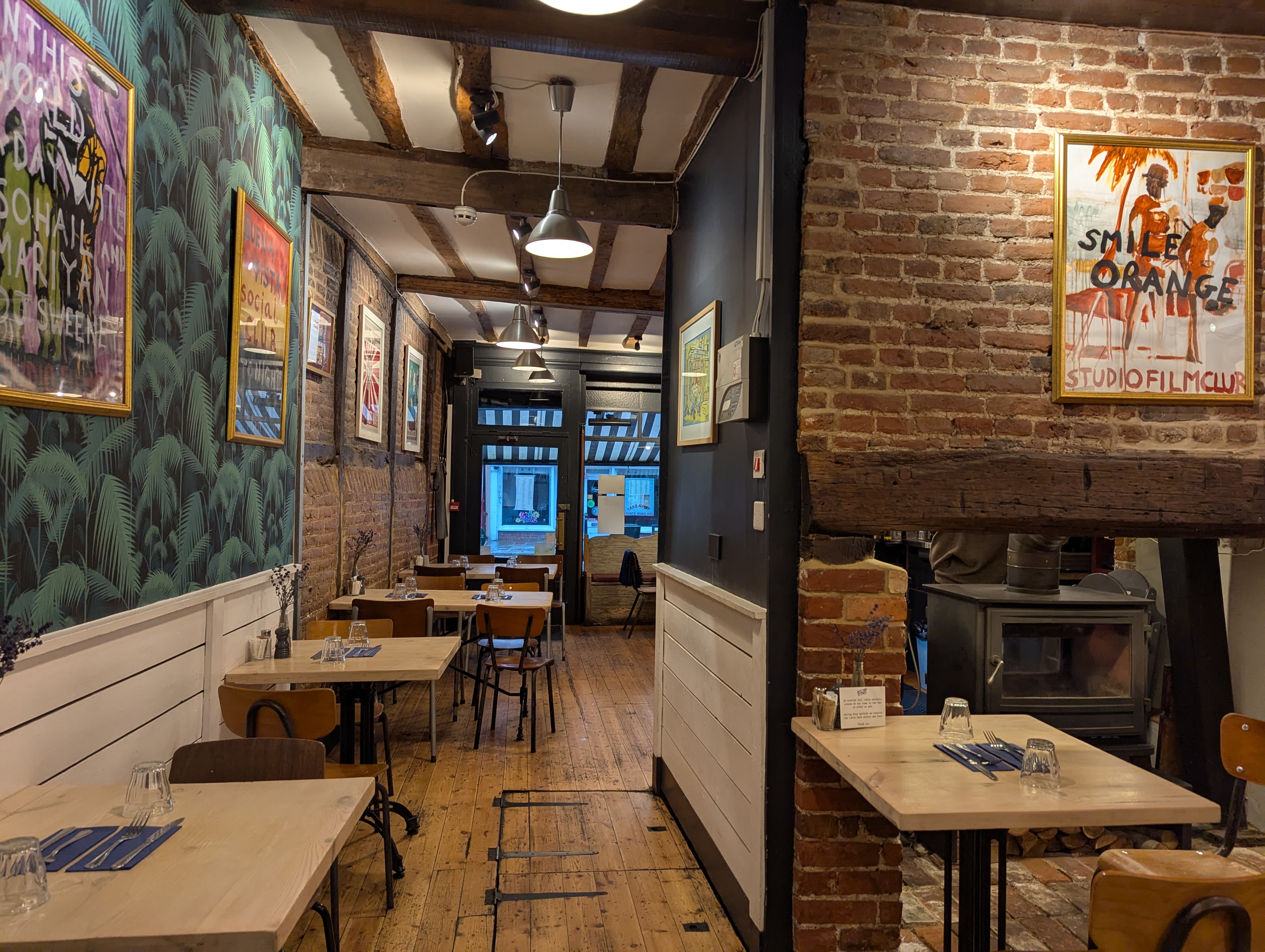
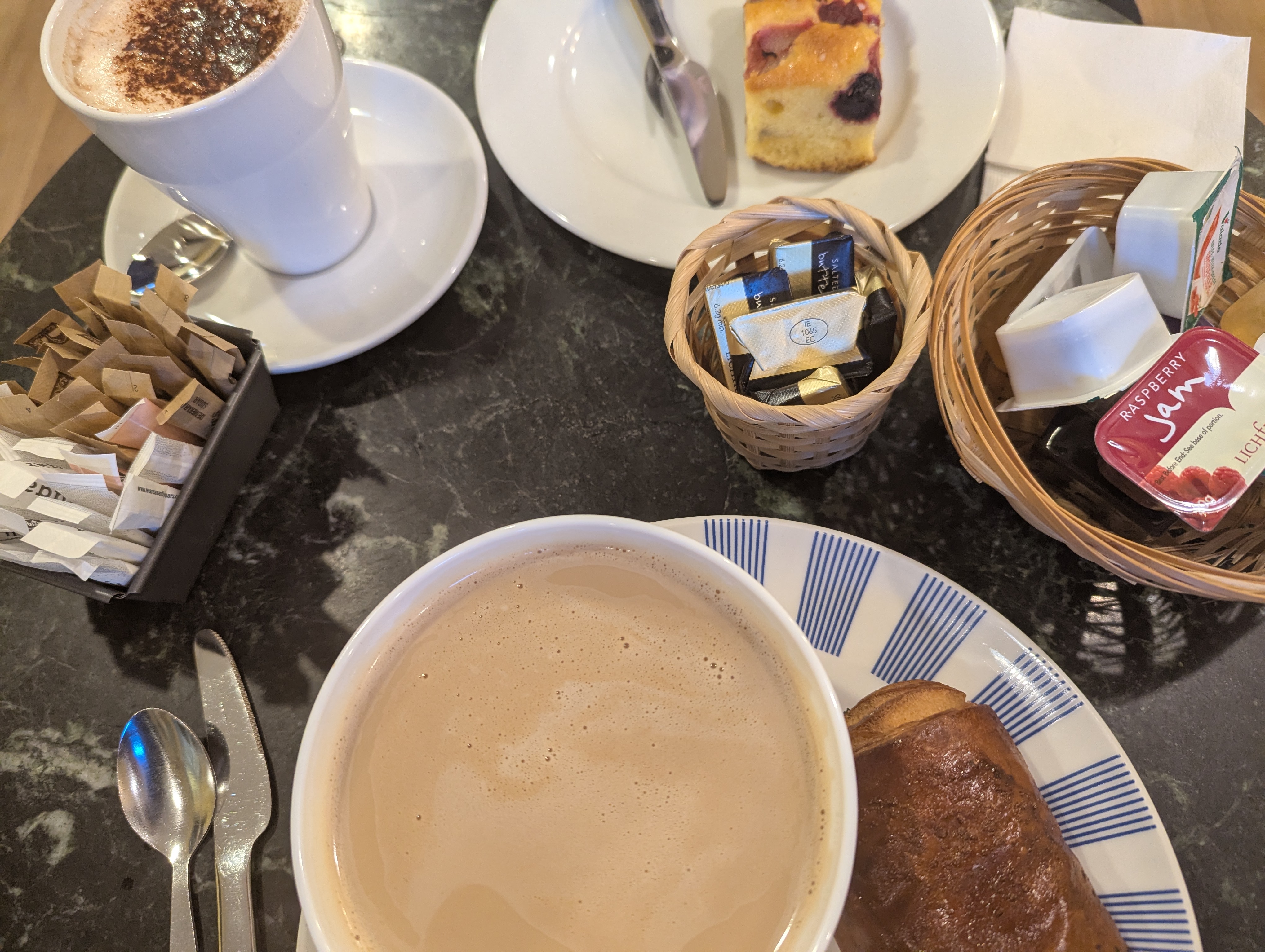
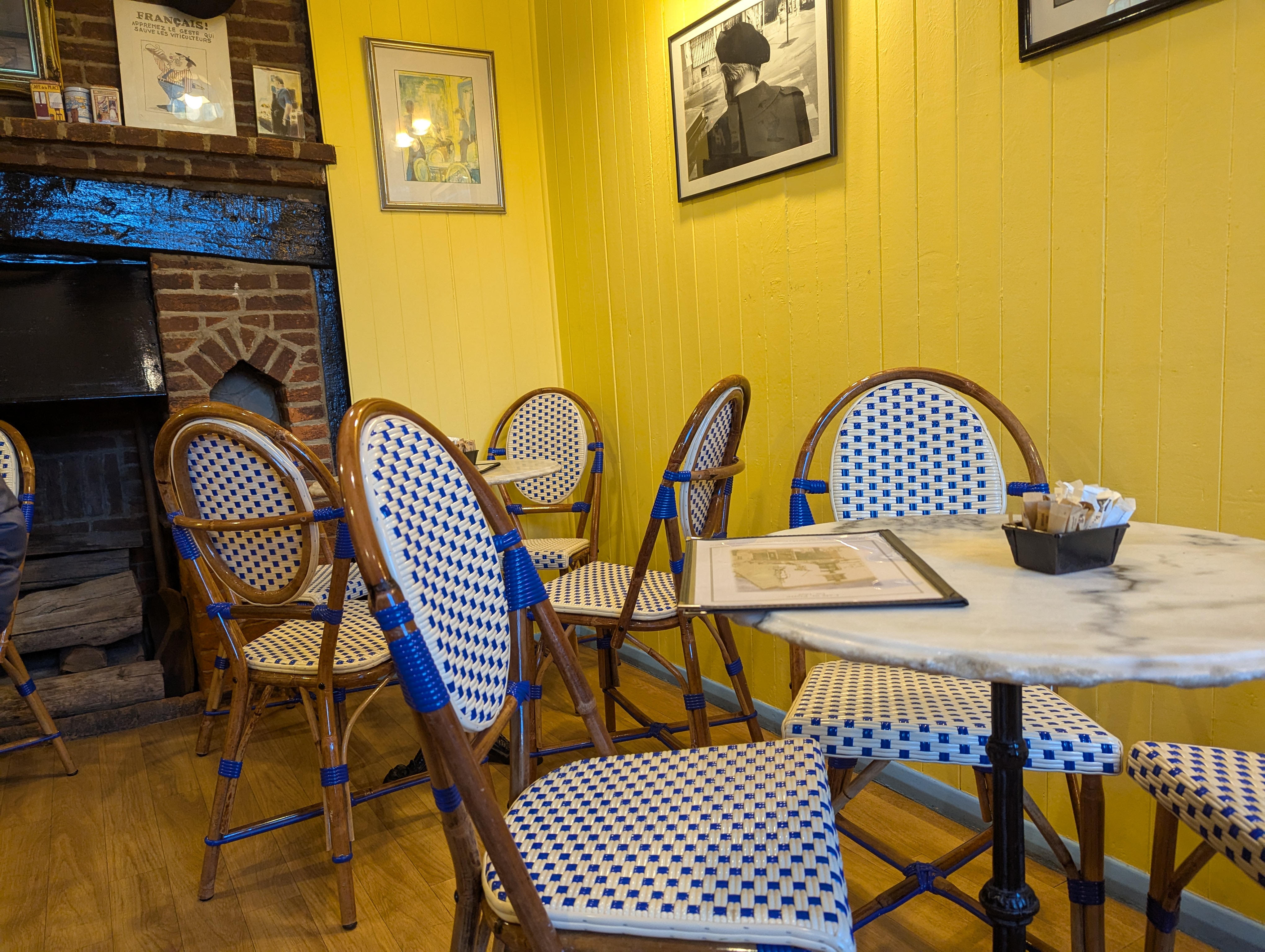
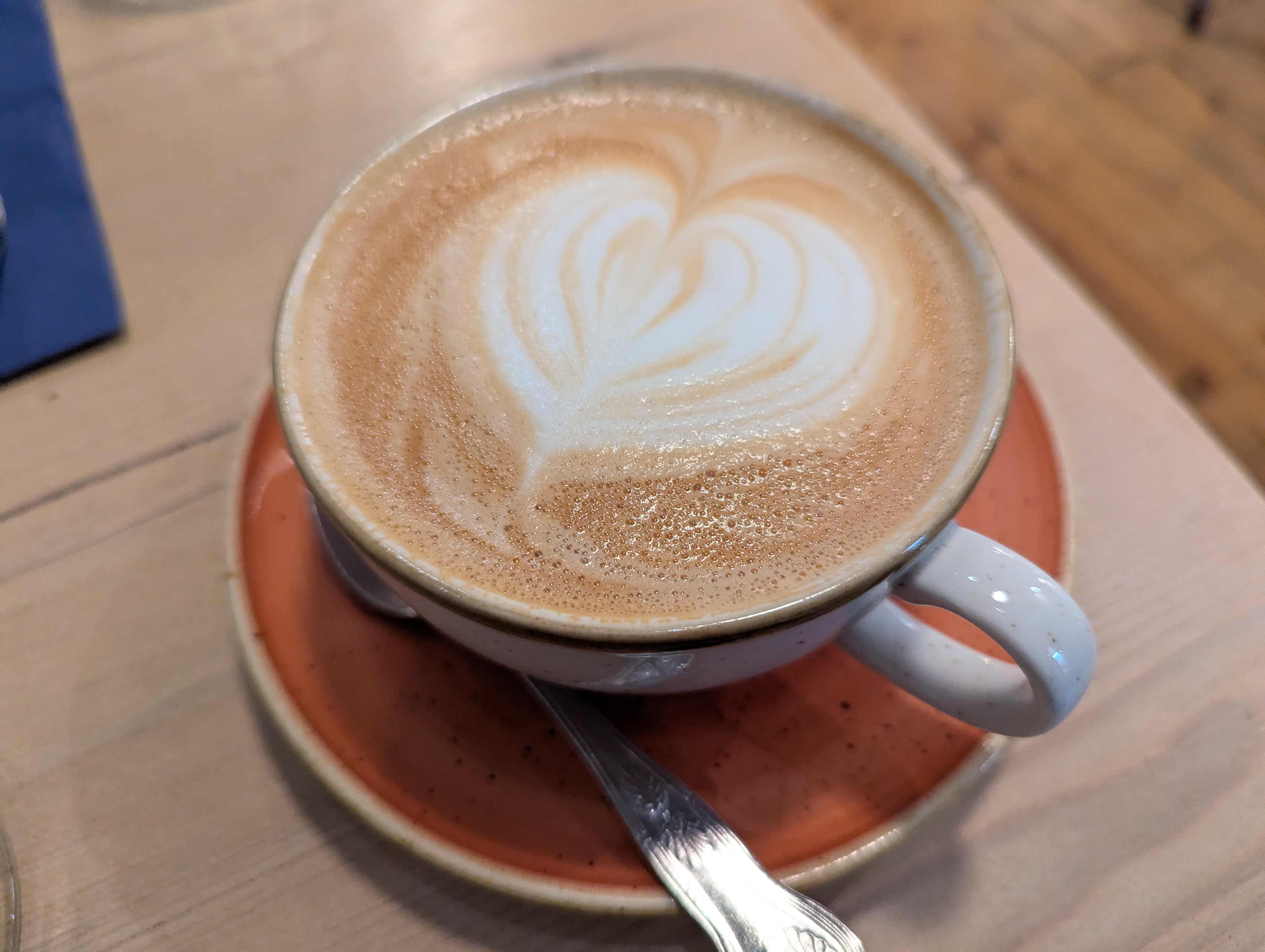
With the rain in the rear view window, we woke early and visited Cafe St. Pierre for breakfast. I had the “French breakfast” which was the croissant of your choice, a baguette with butter and jam, and a “bowl” of coffee. I thought maybe they just meant a large cup, but they really did mean a bowl. I had to lift it up and slurp it like a cat. (I hope that is what I was meant to do.) Lot of carbs in that breakfast but we had an active day planned.
Shower Report for the day: After the hotel invested a bit of time evaluating and fixing the prior day, water heat was by now a bit of a lottery. My husband won the warm shower and I won the lukewarm one. Steps in the right direction.

We took the train from Canterbury’s other station, Canterbury East, to Dover. It was quite a beautiful ride through cute towns and forests on a nearly empty train.

You should probably never judge a town by the appearance around its train station, but Dover seemed surprisingly gritty. We searched out a Welcome Center, which turned out to be associated with the Dover Museum and Bronze Age Boat Gallery. My husband was familiar with the bronze-age boat on display and asked about it in the Welcome area. They invited us to head up and see it on the top floor of the museum.

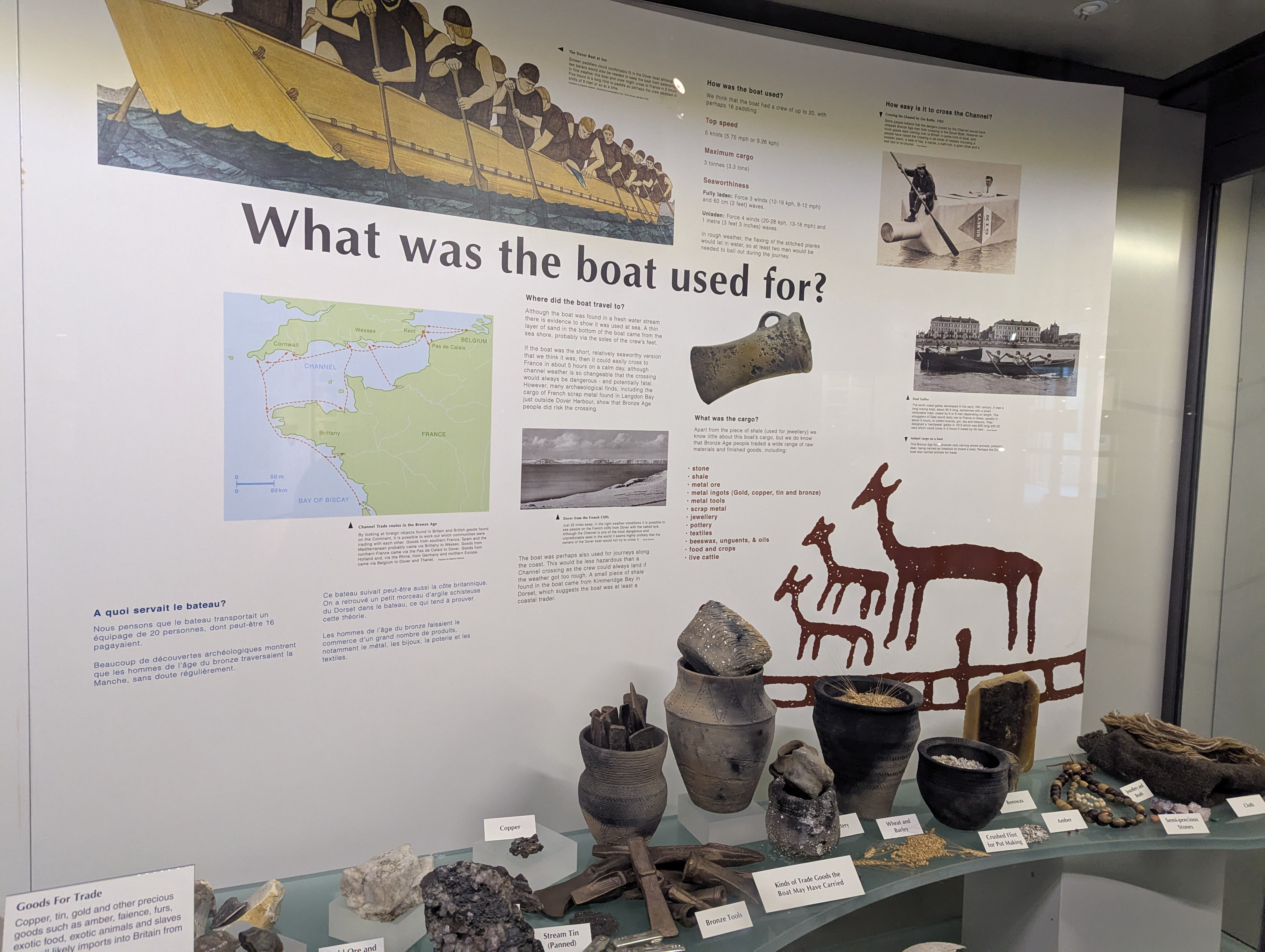
The boat was found near Dover in some sludge in 1992 during a construction project. Later evaluation determined it to be about 3,500 years old, the oldest boat ever found in the world. The original boat is displayed in a giant glass case. It’s in unbelievably good condition. As with many archeological finds, the discovery of this boat adds to our understanding of how humans lived many years ago and what they were capable of.
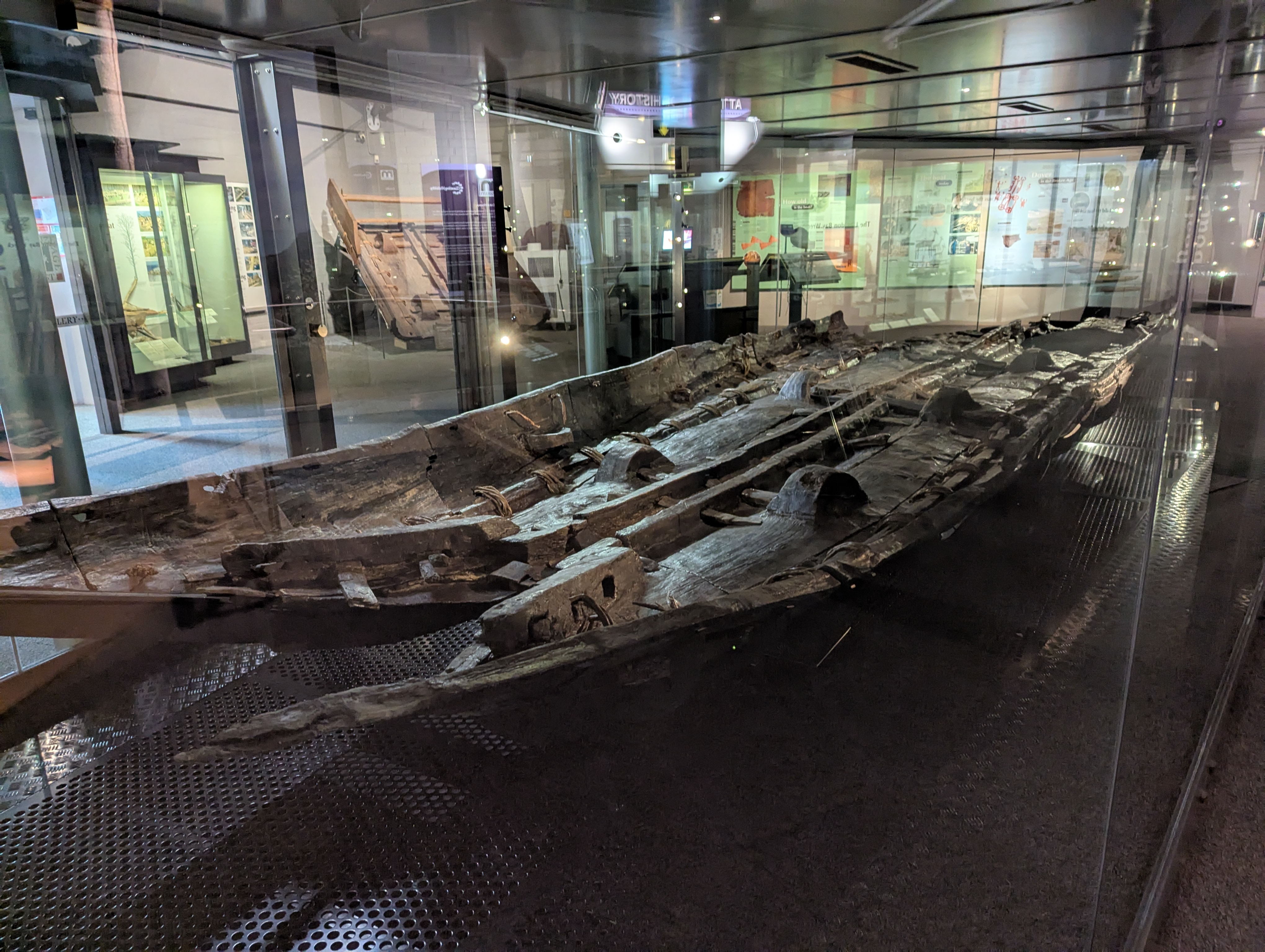
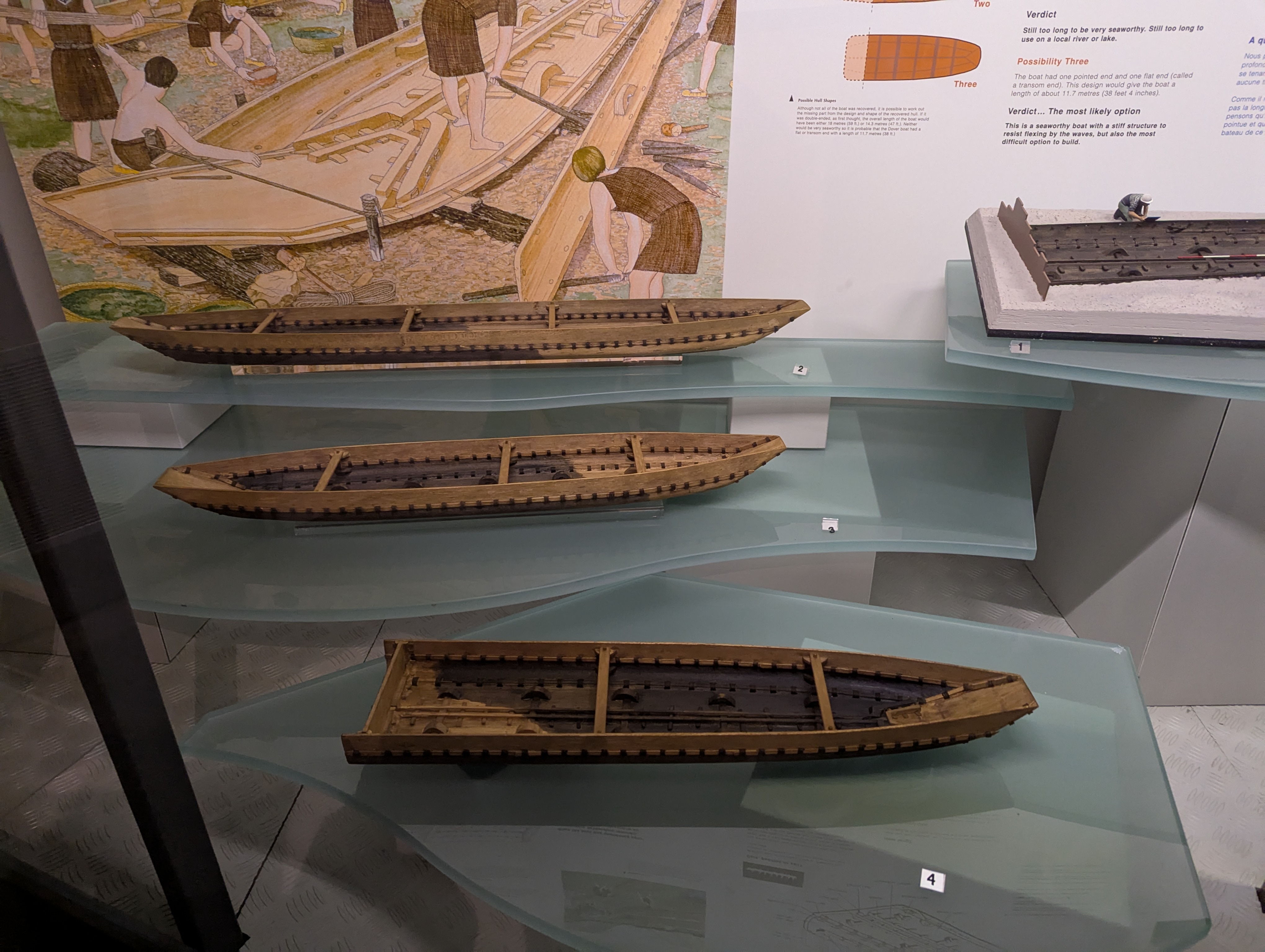
The exhibit included displays of bronze-age tools such as may have been used to build the boat. Because the boat was missing the back end, it also included an exhibit on how archeologists have built theories for what the back of the boat may have been like. I thought that was super interesting. Interesting to experience the thought process of curious and knowledgeable people.

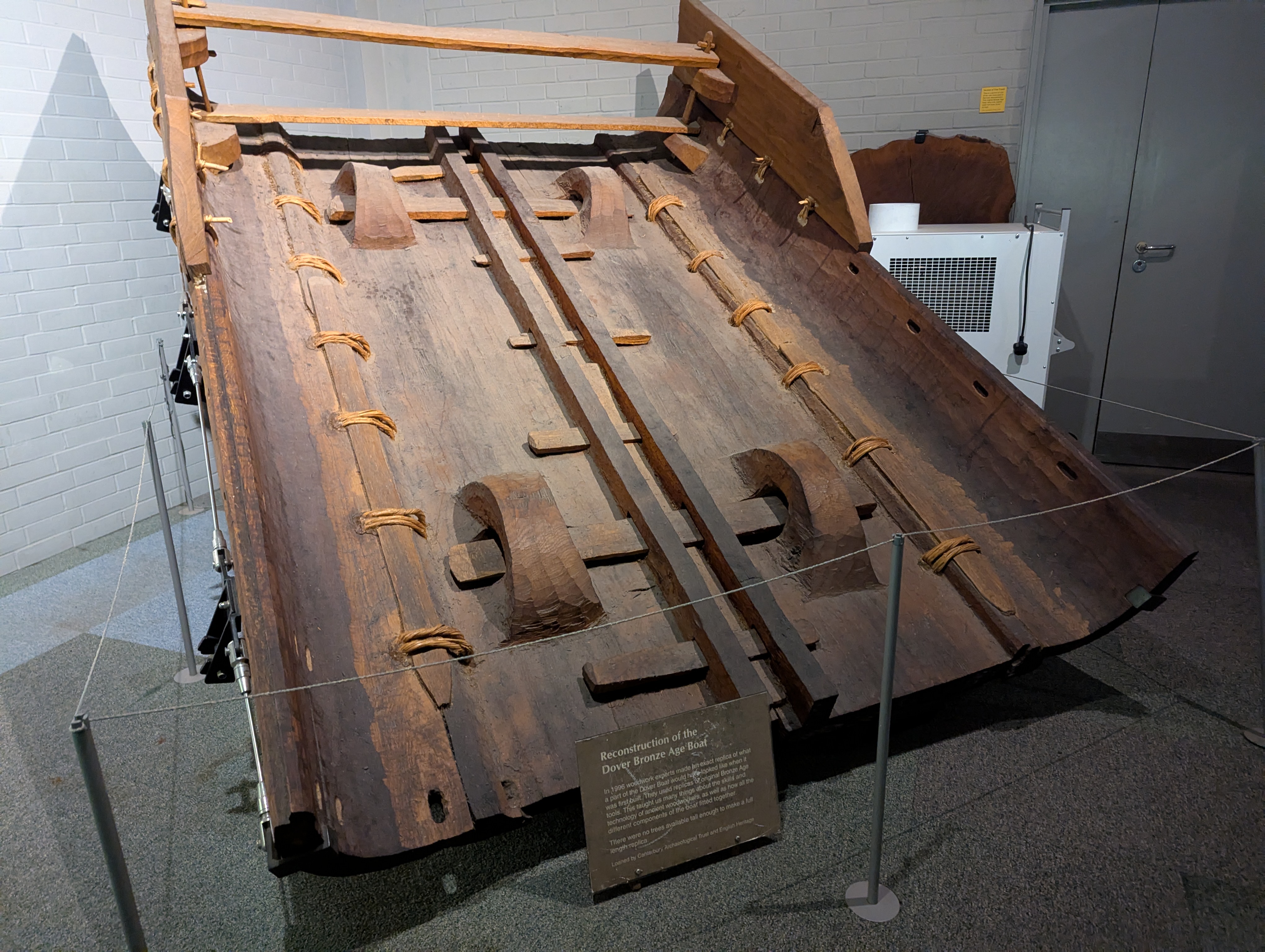
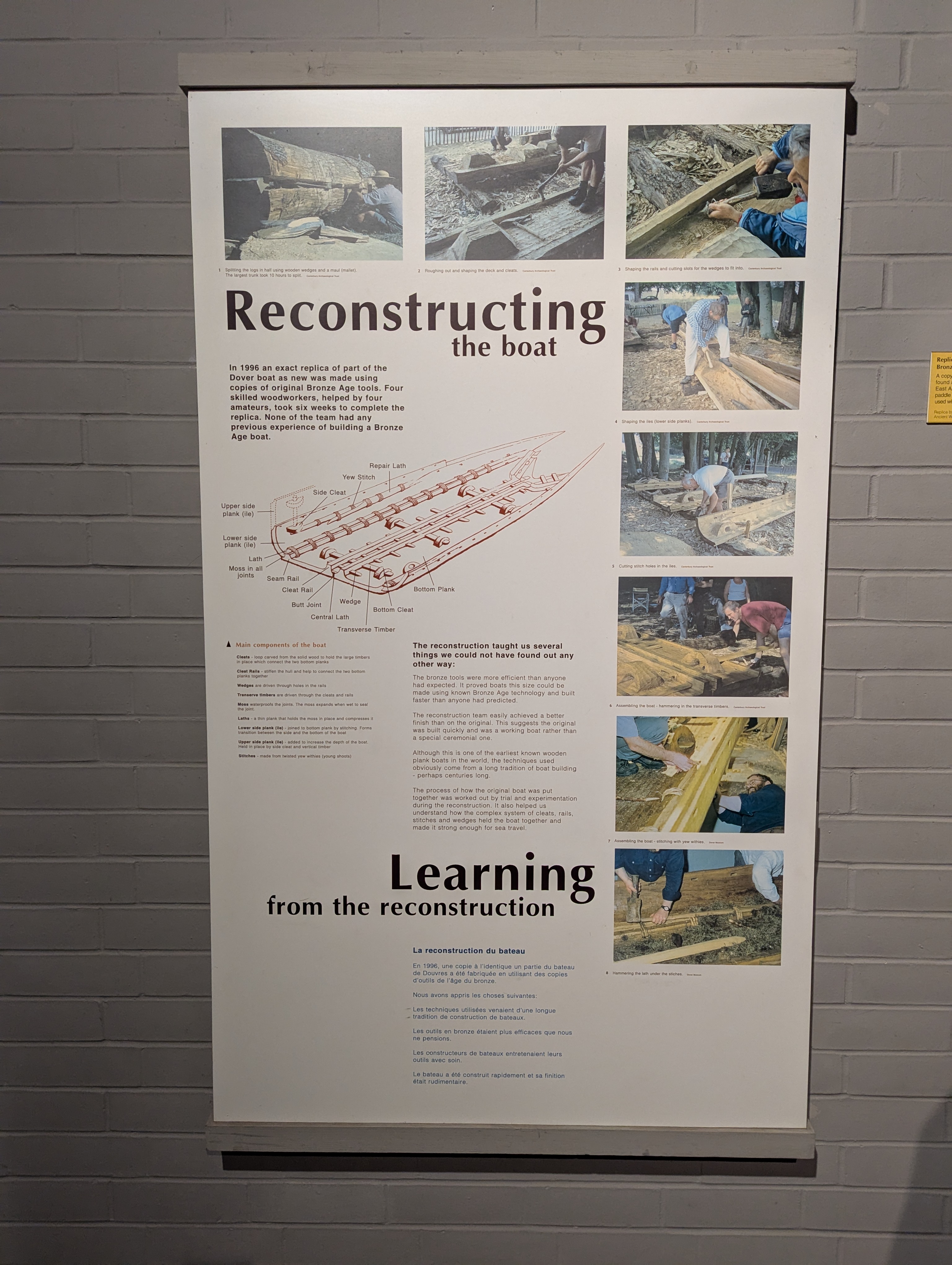
My favorite exhibit walked through an exercise that had been completed after the boat was found. A modern team attempted to replicate how the boat was built using bronze-age tools. They were able to build a replica of the boat (part of which is in the museum) in 6 weeks. In theory, the original builders probably were more familiar with the tools and boat building and could have completed it more quickly. But, in a bit of shade thrown by the people replicating the process, they concluded that, in part, it took them the long 6 weeks also because they also tried to provide beautiful finishes which the original team had not. That also provided clues as to the use of the boat. It was utilitarian and probably not ceremonial. But it certainly stood the test of time.
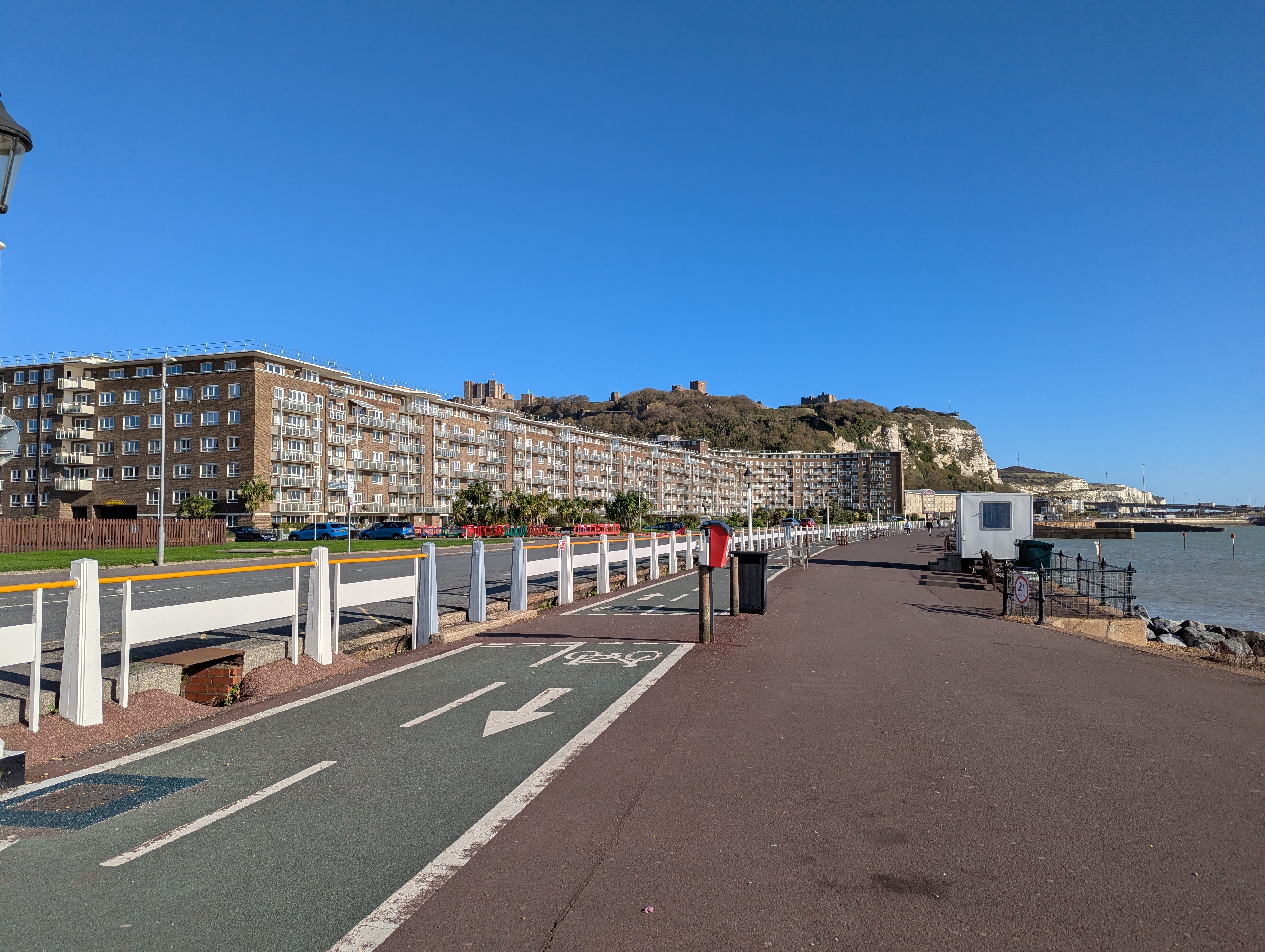
From the Welcome Center we walked over to the harbor and up the shore until we reached where the path is accessed to go up on the famous cliffs. The harbor is a functional harbor from which a number of huge ferries left or returned from trips over to France. It is not a beautiful stretch and sits right next to an extremely busy road. There are some cute cottages as you seek the path but they do not have a pretty view.
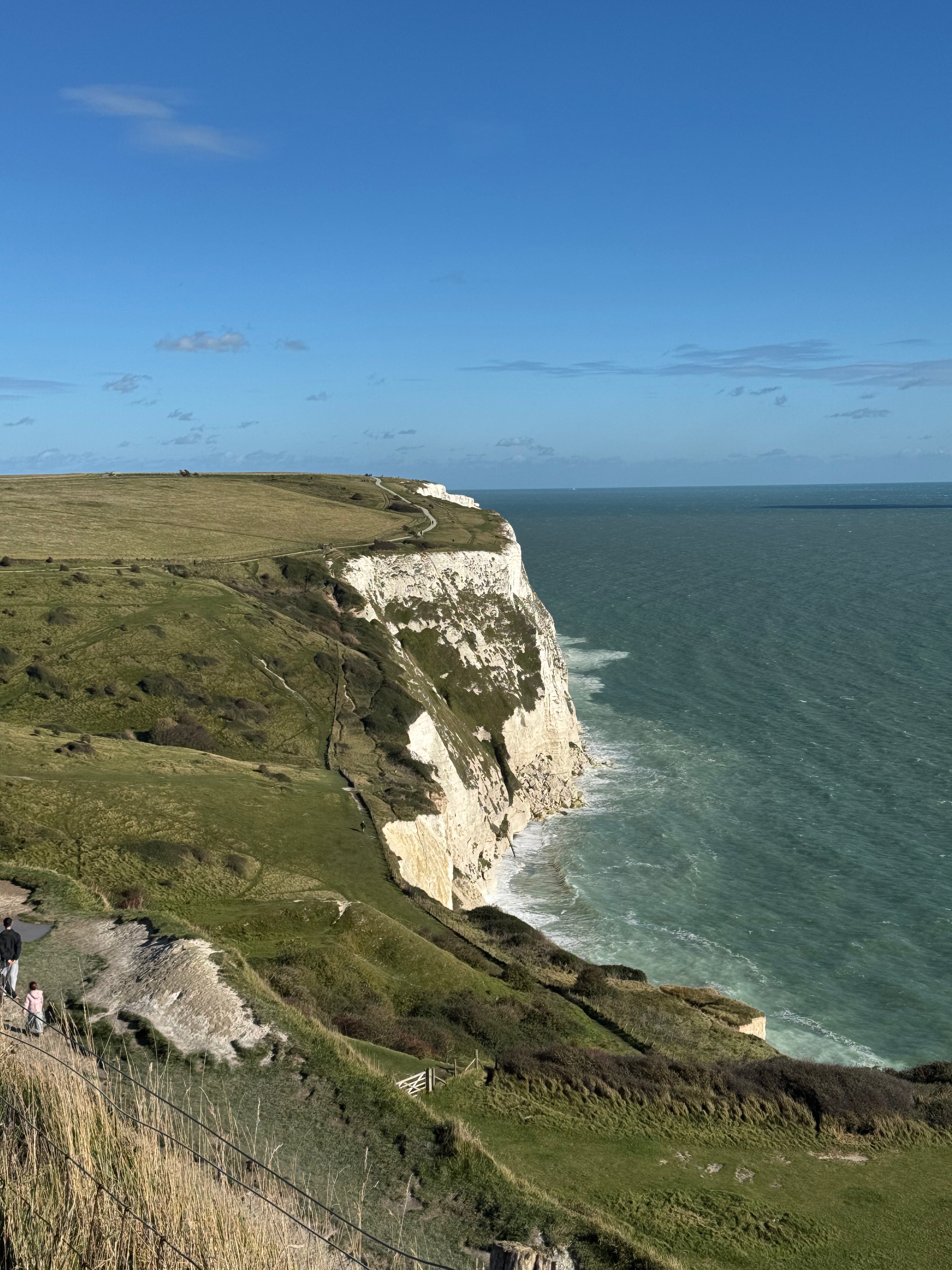
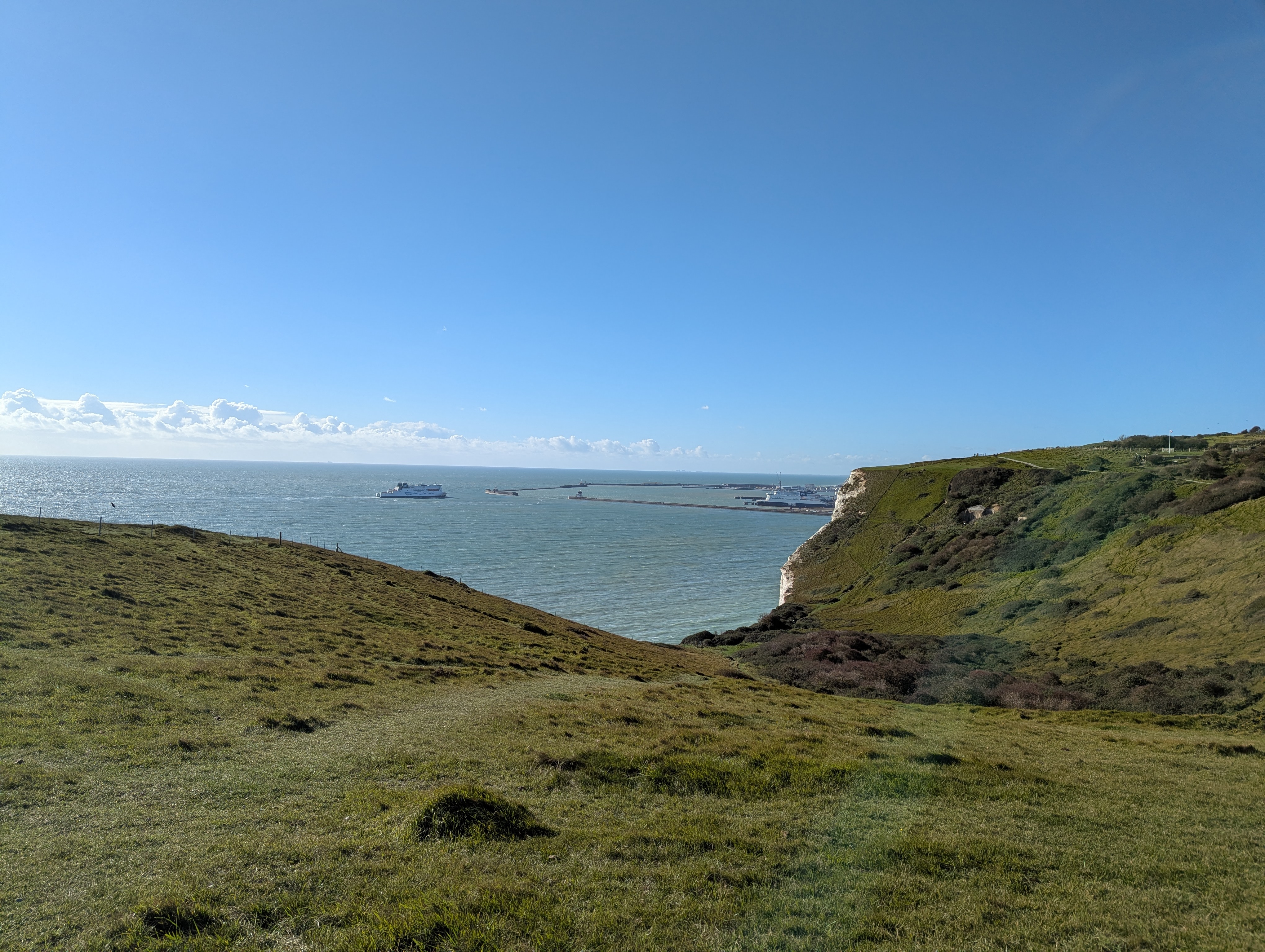
We climbed up and up the path. The wind was whipping but with the steepness of the path I became overheated pretty quickly. I stopped to remove my raincoat to finish the rest of the climb. On a clear day it’s possible to see France across the channel and we could make out the outline in the distance. In fact, we were close enough to France from the cliffs of Dover that T-Mobile sent me a text welcoming me to France and explaining the rates for texts and calls.

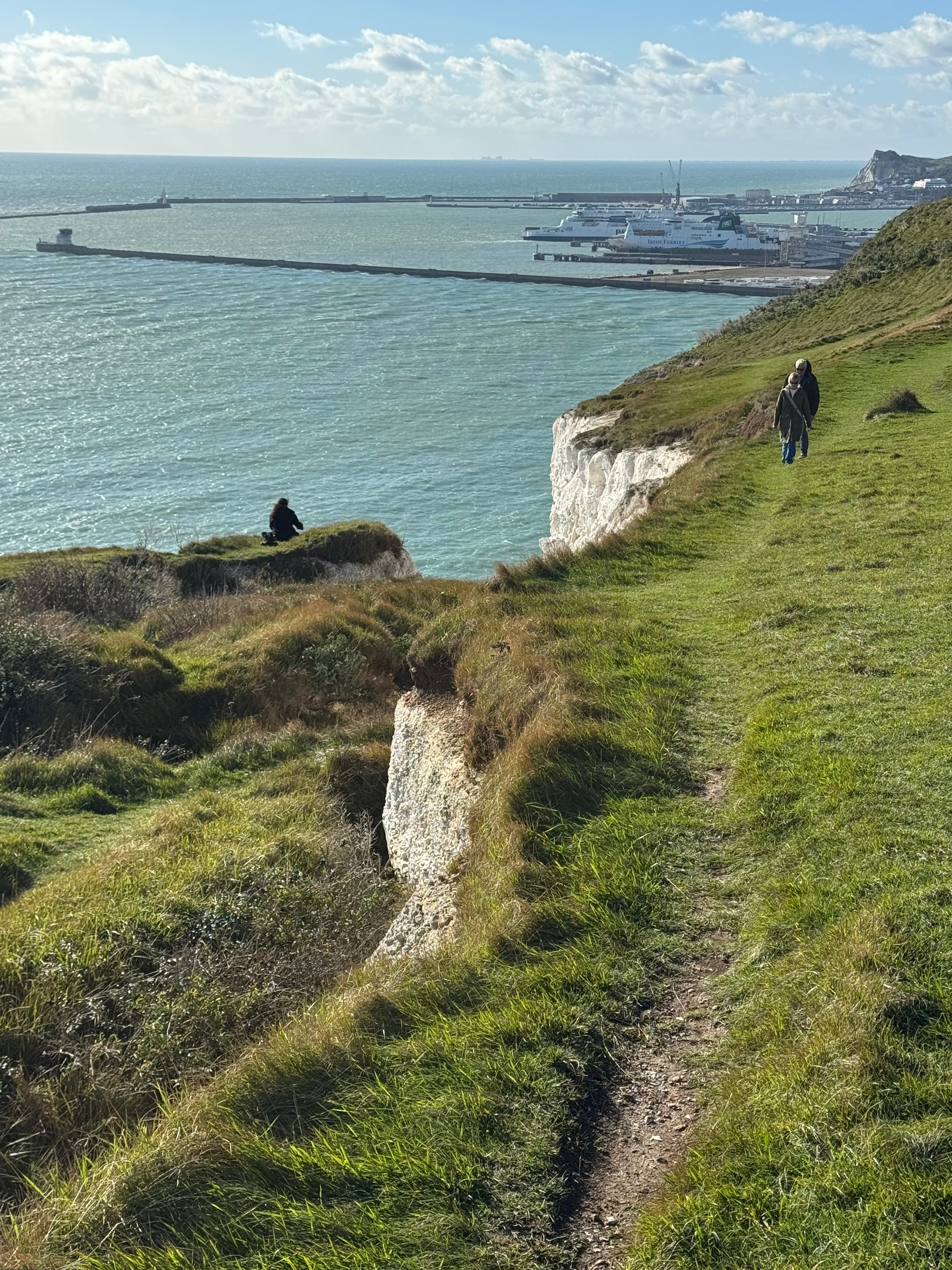
We were starting to be in a space that was far more beautiful than gritty. We could see the beautiful white cliffs, rolling hills, grazing sheep, the Dover castle. Even the harbor, which had seemed so industrial near the bottom, was pretty as we got higher on the cliffs.

At some point we had to make a decision about taking the high road or the low road. Our choice lead us very close to the edge of the cliffs. Although I’ve done a lot of Colorado hiking and skiing in my life, I’m not super comfortable with heights and I sensed my husband was also not so comfortable near the edge. We did all right and ultimately came to the part of the path that’s not so “out there.”
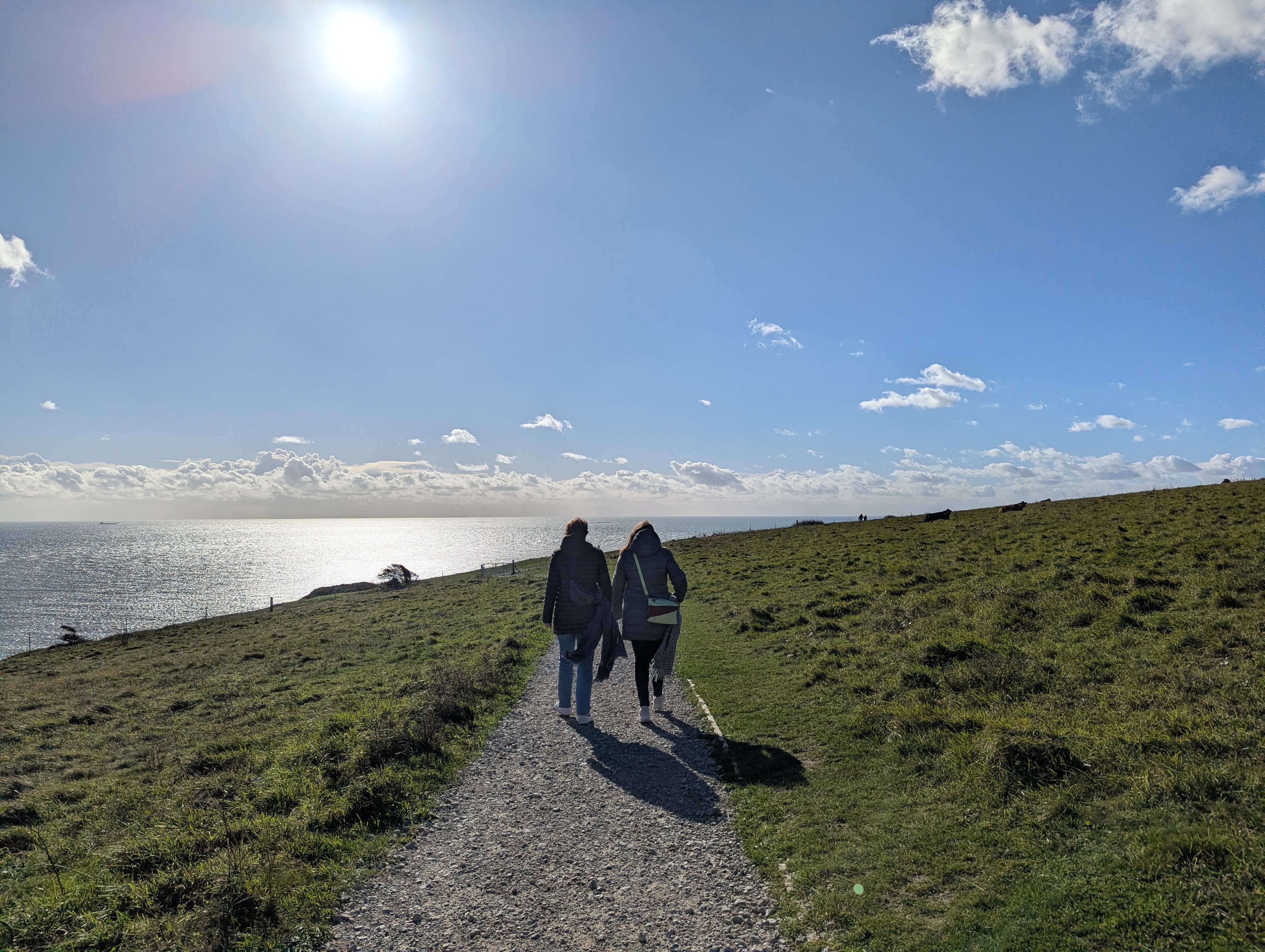
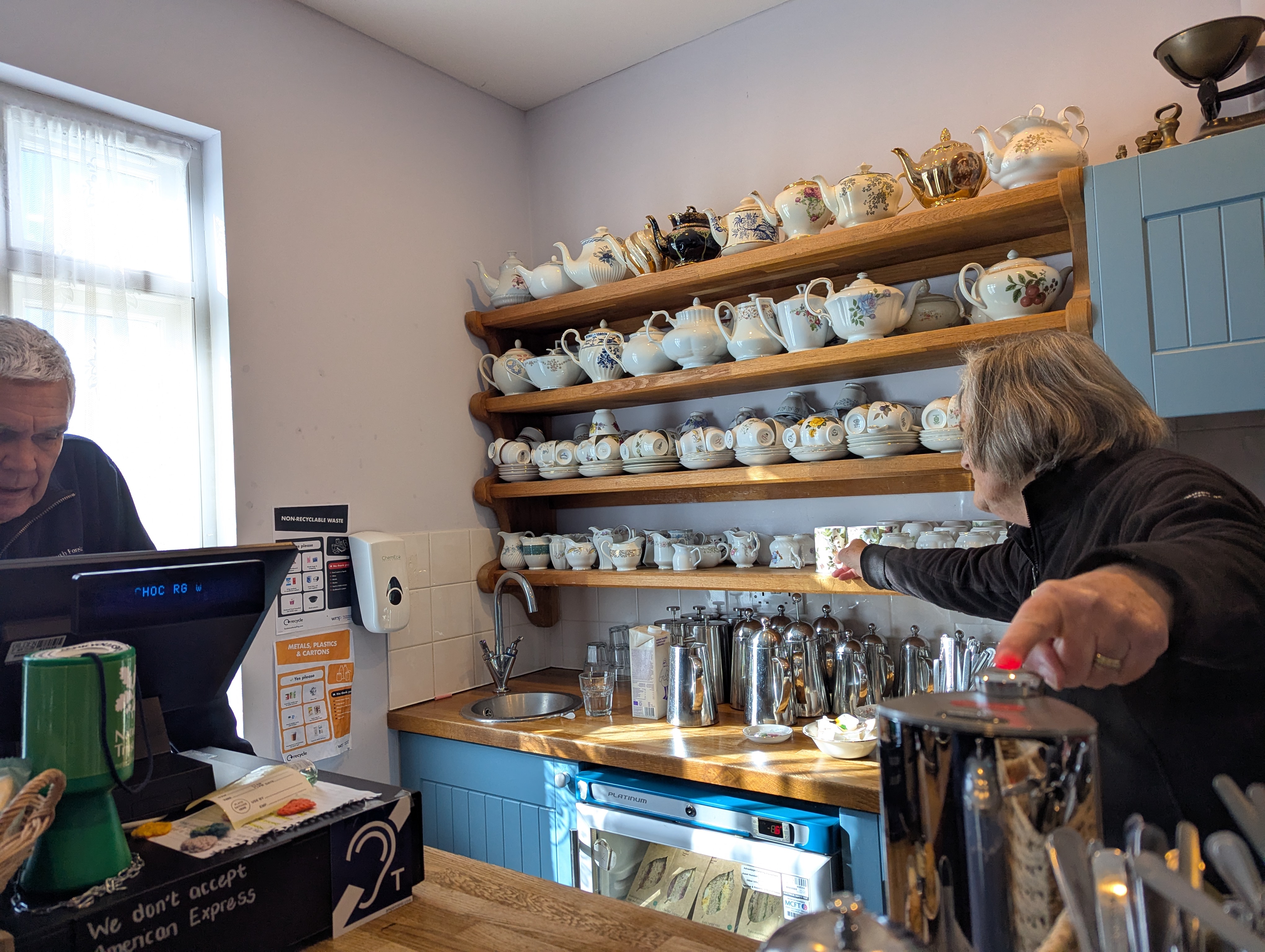
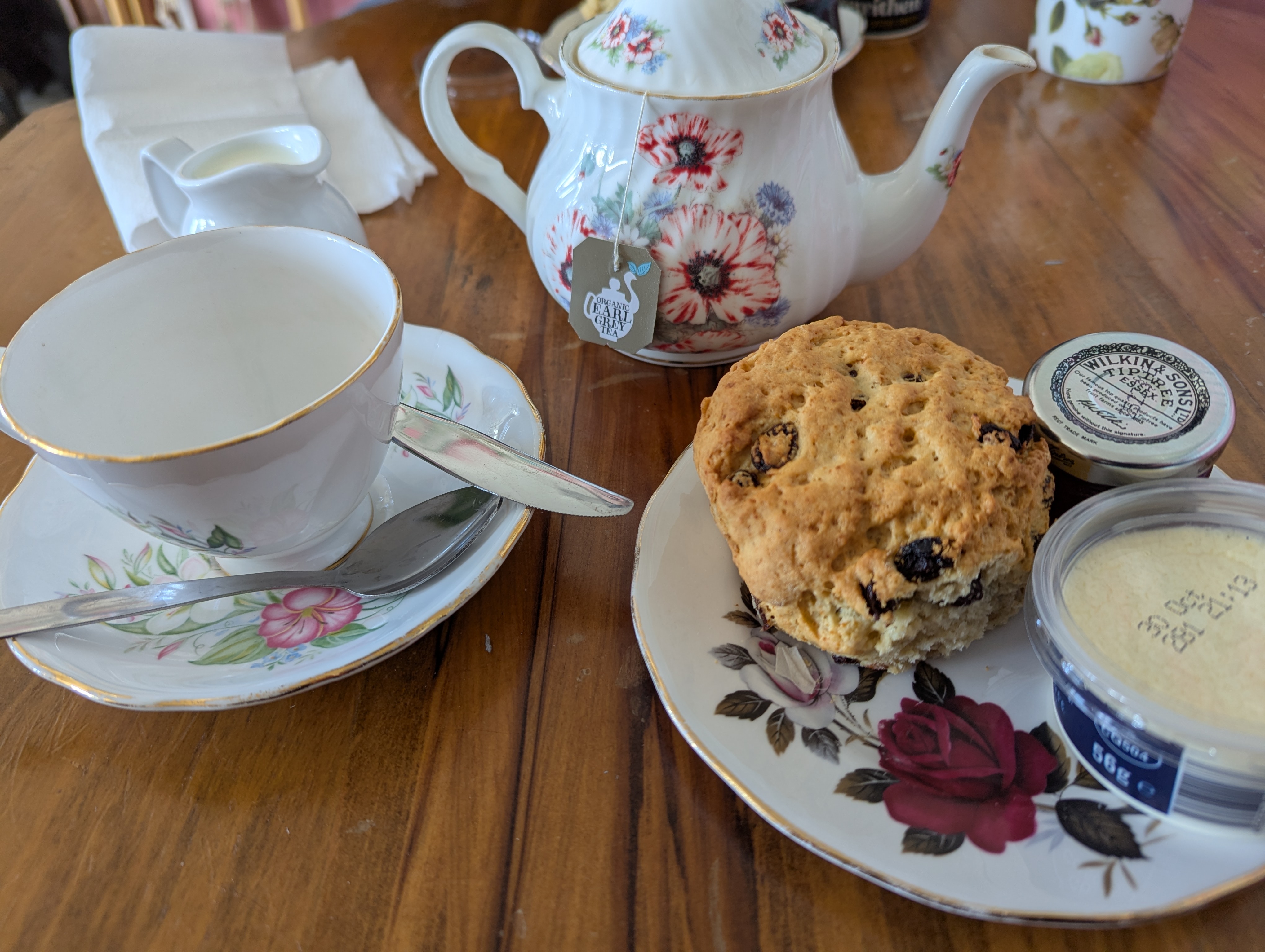
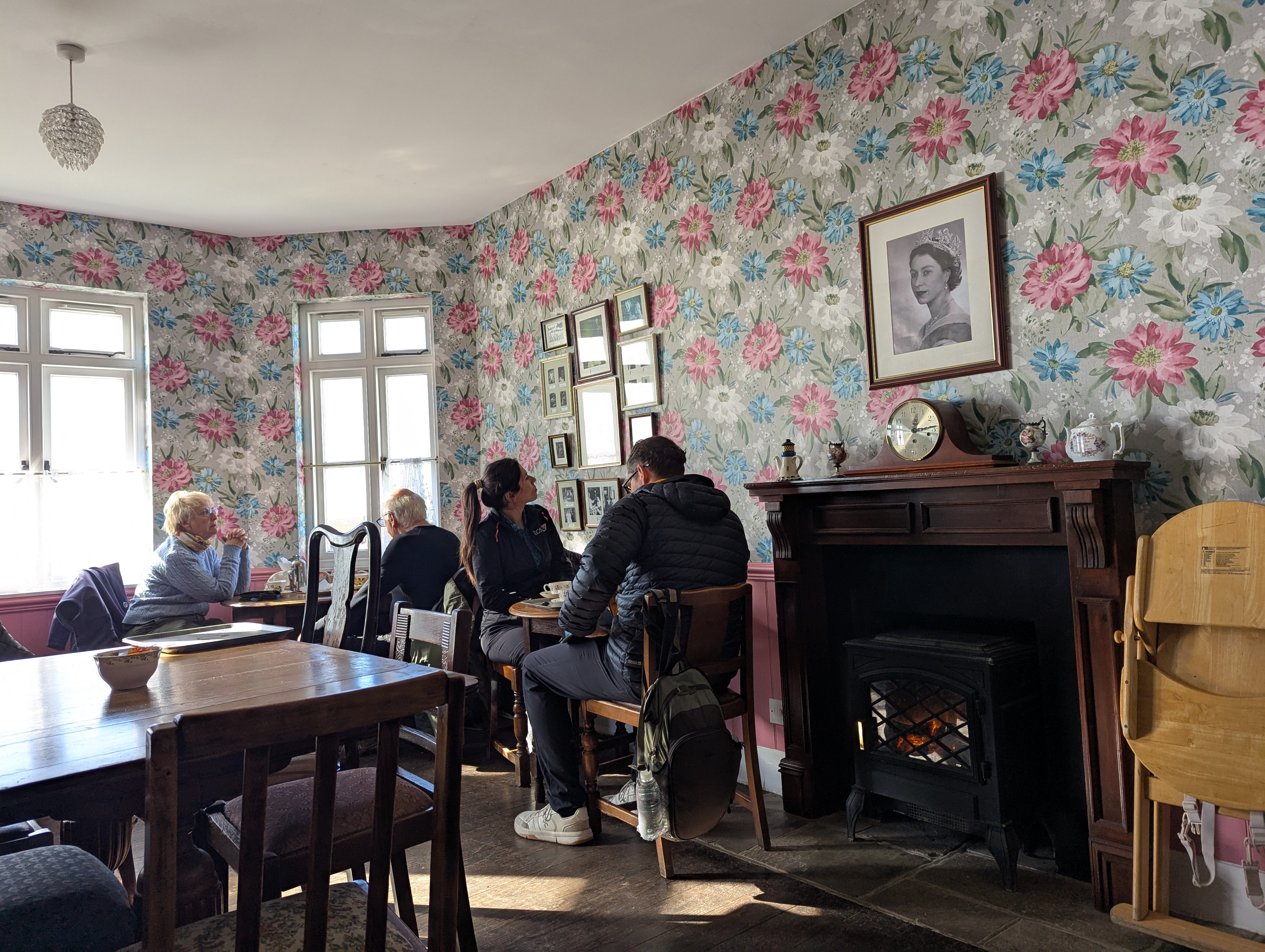
Our destination on the trail was the South Foreland Lighthouse. To reach it you go through a field of giant cattle. On the first floor of the lighthouse there is a cute little tea shop called Mrs. Knott’s Tearoom. It has a limited selection of items but who cares? It has cream team, which as we know means scones and clotted cream. It was served in lovely china in a beautiful room. It was a delicious way to celebrate the mid point of our hike.
We intended to go to Dover castle after our hike and, while we could see the castle from the cliffs, there is really no way to get to it without leaving the cliffs. So we hiked back down and then walked up a different hill, more or less in town, to get up to the castle.
If you may remember, my husband hurt his back on our last trip to England and it was not healed for this trip. He was able to do most things, but I tried to help with his luggage on stairs from airport to tube to hotel and carrying our shared backpack on our trips around Kent to try to preserve his ability to tour. He was still using heating belts to keep his back limber.

We had already walked more than 16,000 steps and 111 floors (so says Apple) and I felt maybe we could admit a small defeat and take a cab up to Dover castle. My husband would not hear of it. I’ll admit I was cursing his not-good-at-that-moment name as we climbed up the new hill. The fact is, we won’t always be able to do what we used to be able to do in the way we could do it. I hope over time we’ll be able to adjust our travel to fit our bodily realities and not have to stop travelling just because we can’t do it the way we used to. i.e., we may not always be able to hoist our luggage up and down stairs of stations on the Piccadilly line. Admittedly the cab in this case was for me as much as it was for him. I was pretty tired.

Now I’ve exposed you to the key conflicts in our household at the start of my retirement. My husband worries about spending too much money and I worry about losing our health while pushing to do things our bodies may be on the verge of no longer being able to do. My husband, the one with the sore back, seems to feel that he is not getting any older physically. In fact, this morning (a few weeks after this trip) he told me my feelings about aging are “a self-fulfilling prophesy.” I’m pretty sure our bodies will themselves fulfill my prophesy and, you know, “My Body, My Self,” so I can’t argue with his statement even though I suspect it will go down a bit differently than he intended with that turn of phrase.

But–this time–we made it to the top and made some quick calculations of what we’d be able to do at the castle. We were running out of time and it turned out there was a lot more to see and do at the castle than I had realized. This was not just another medieval castle (although it also was that), this area was used to protect England during modern wars also. Assuming it is ok to consider the World Wars as “modern.” There was also an very old church on the site. I think it would be easy to spend a full day at Dover castle.

We decided to hit the church and the medieval castle and skip the “modern” wartime tunnels, fire command post, underground hospital, etc. It was a tough call because those things looked very interesting.

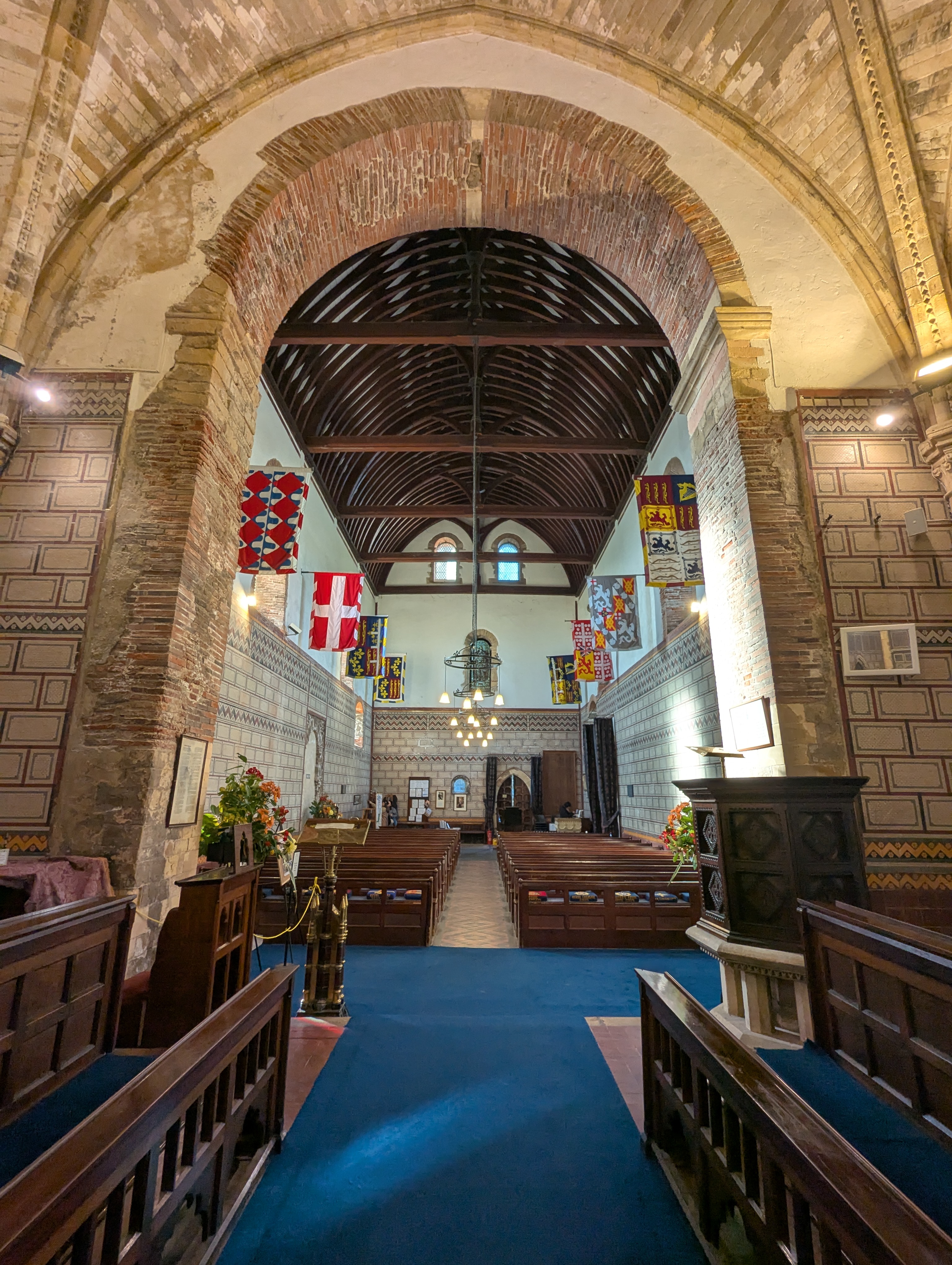
The St. Mary in Castro church was built around 1500 years ago, probably on the site of a much earlier church. It apparently was a building that was not affected like other churches by the boring people coming in and demanding that color be removed. It had beautiful, colorful tiles in walls and ceilings, in addition to lovely windows. It’s a functional church. We had very little information about it as we toured, but it was lovely to be in. Next to the church sits a Roman lighthouse that’s been converted into a bell tower. Pretty cool.

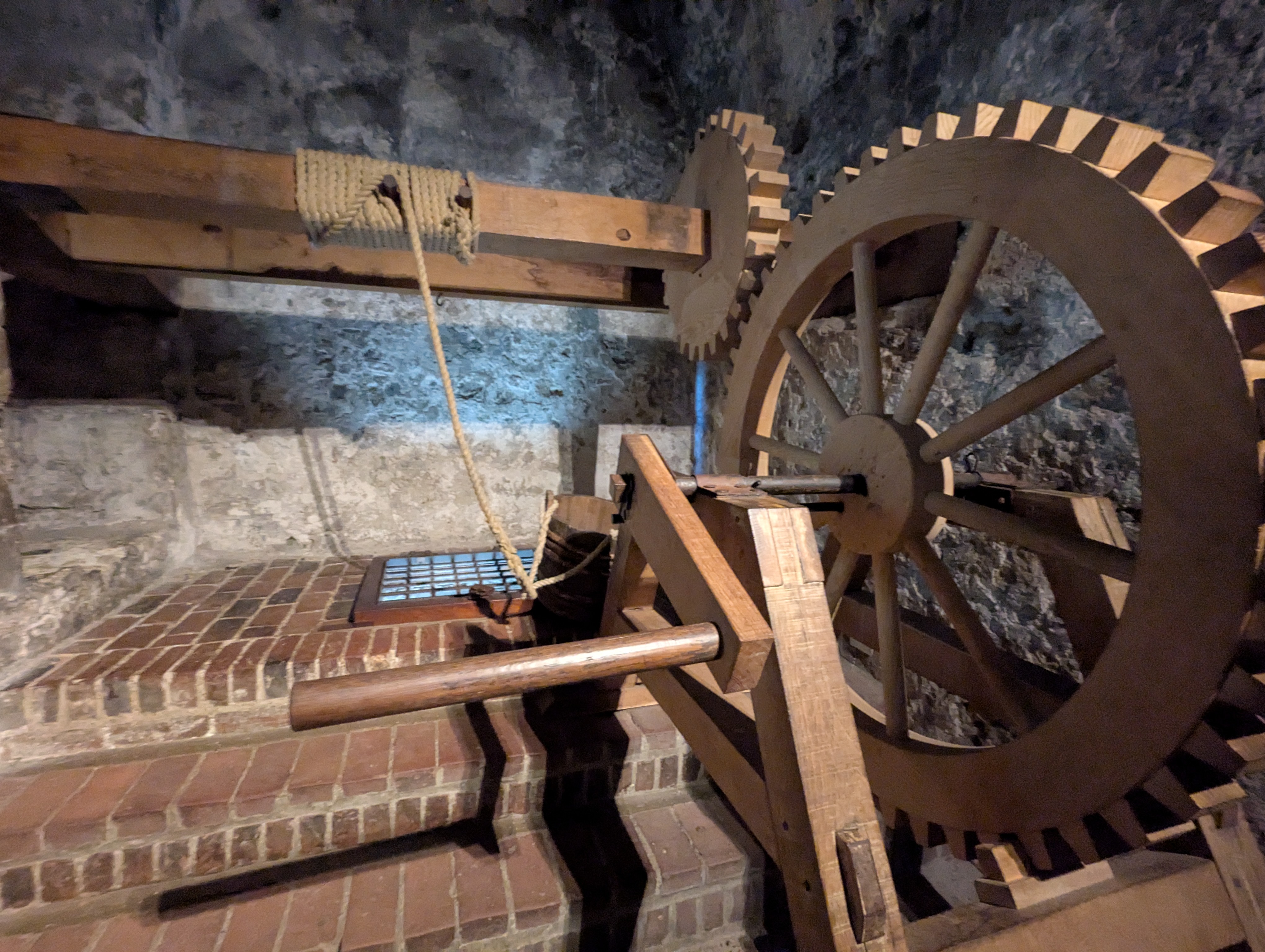
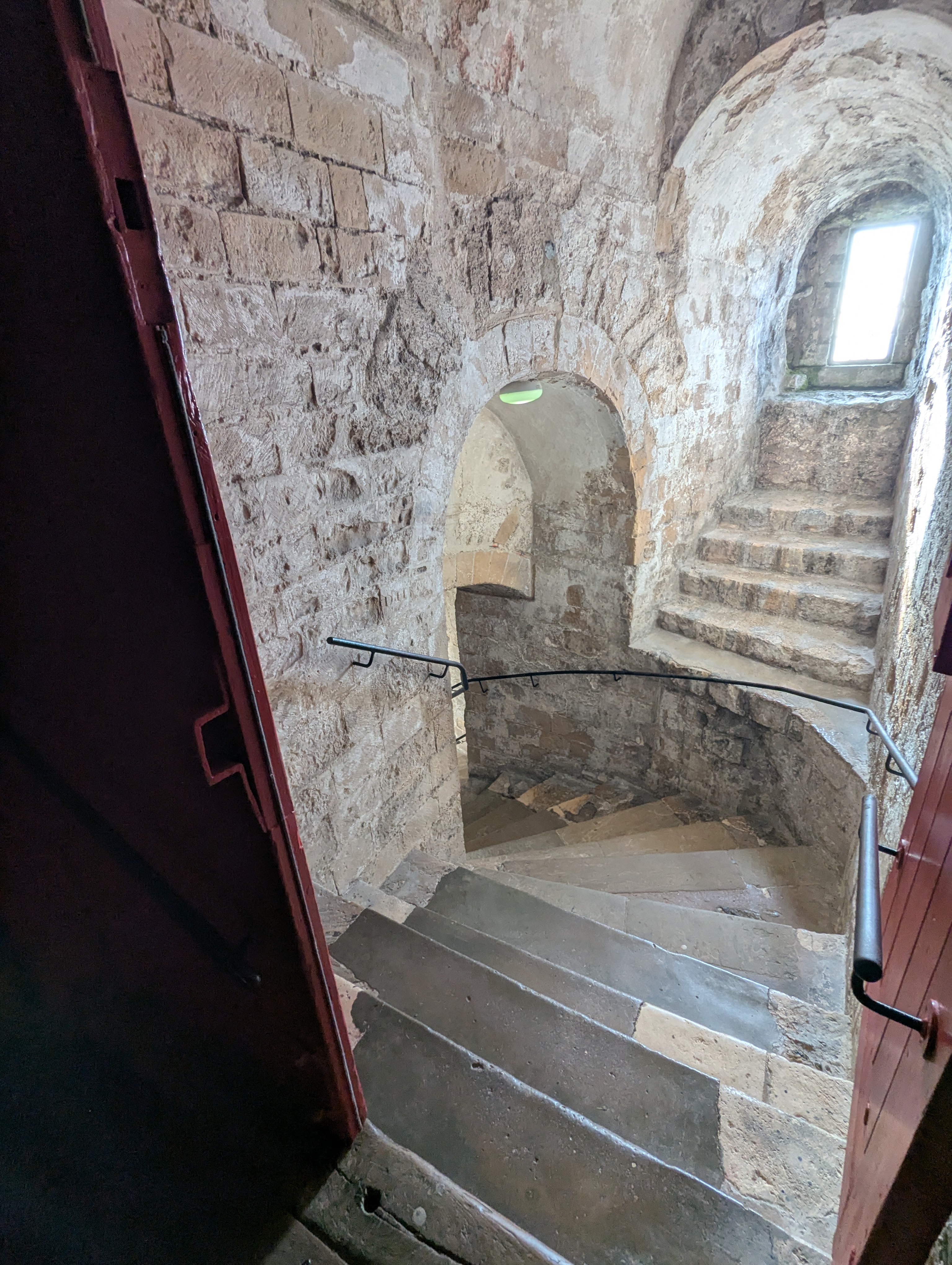
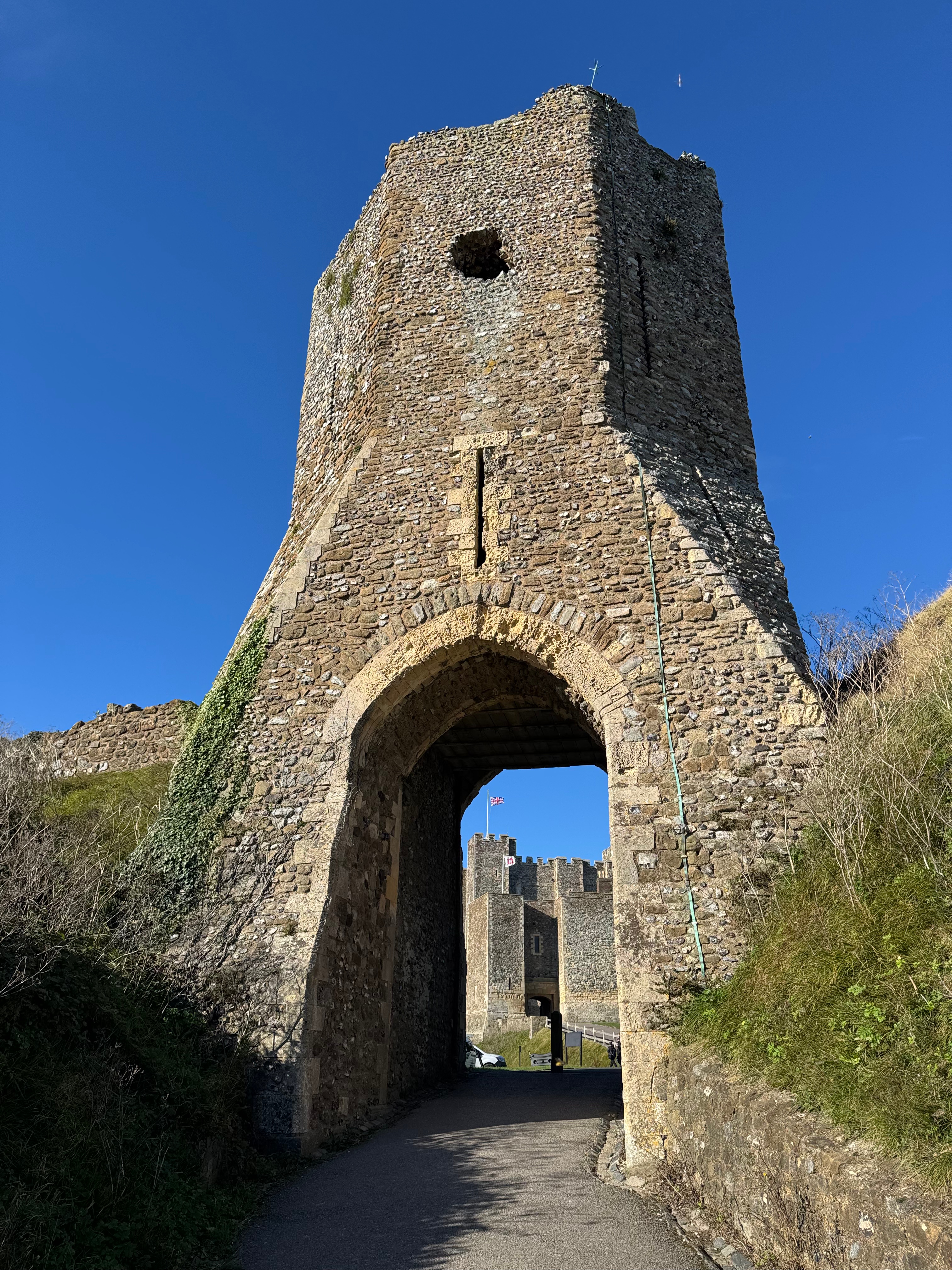
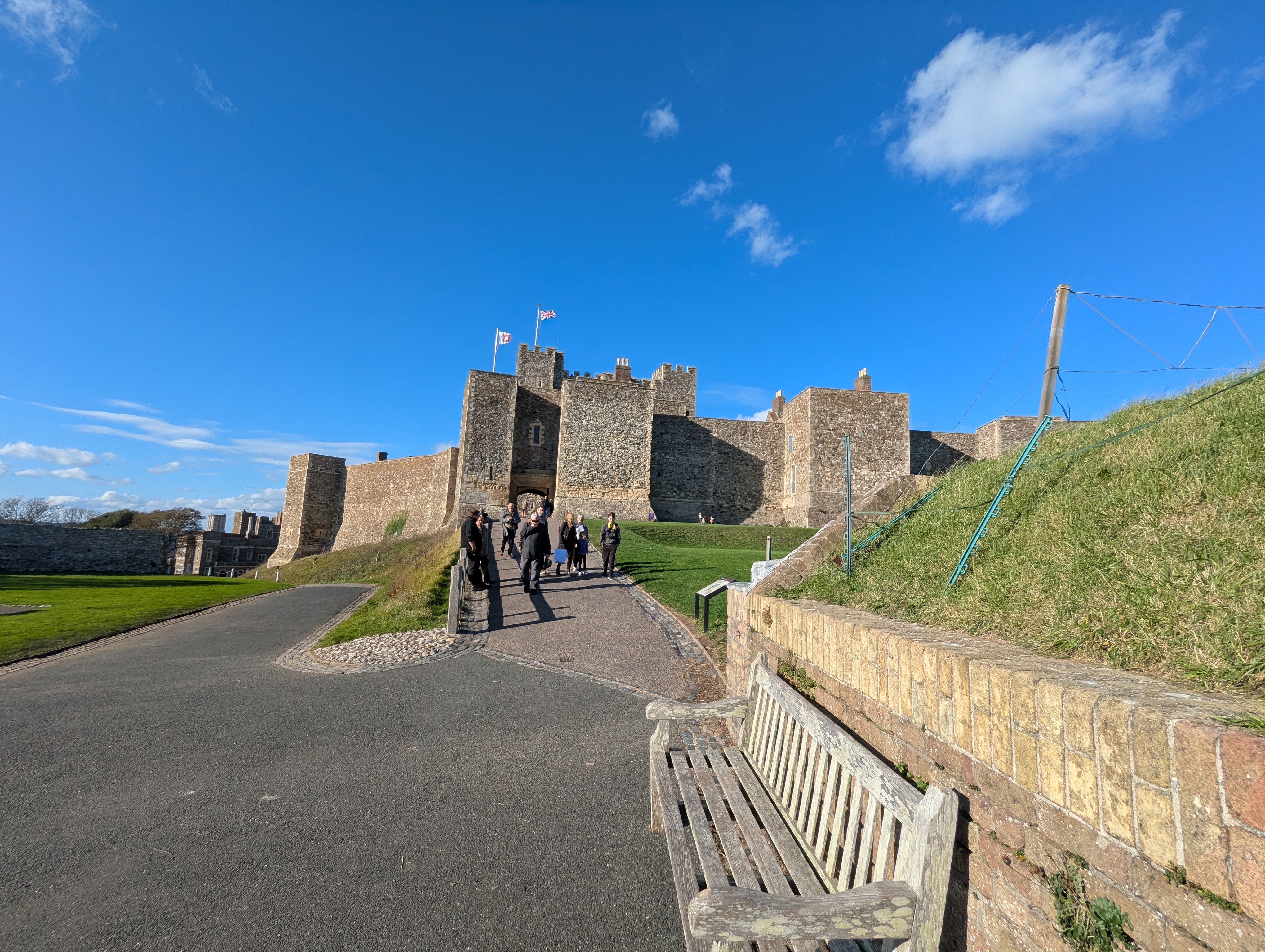
We explored the castle proper. Although a building of some sort was in place during the Roman occupation and was damaged and rebuilt following the Norman invasion, the medieval castle as it exists now formed under Henry II, who we met yesterday as the person responsible–accidentally or intentionally– for Thomas Becket’s death. We walked through the external walls and the grassy enclosure and then through the keep. It was quite large with several floors to explore.

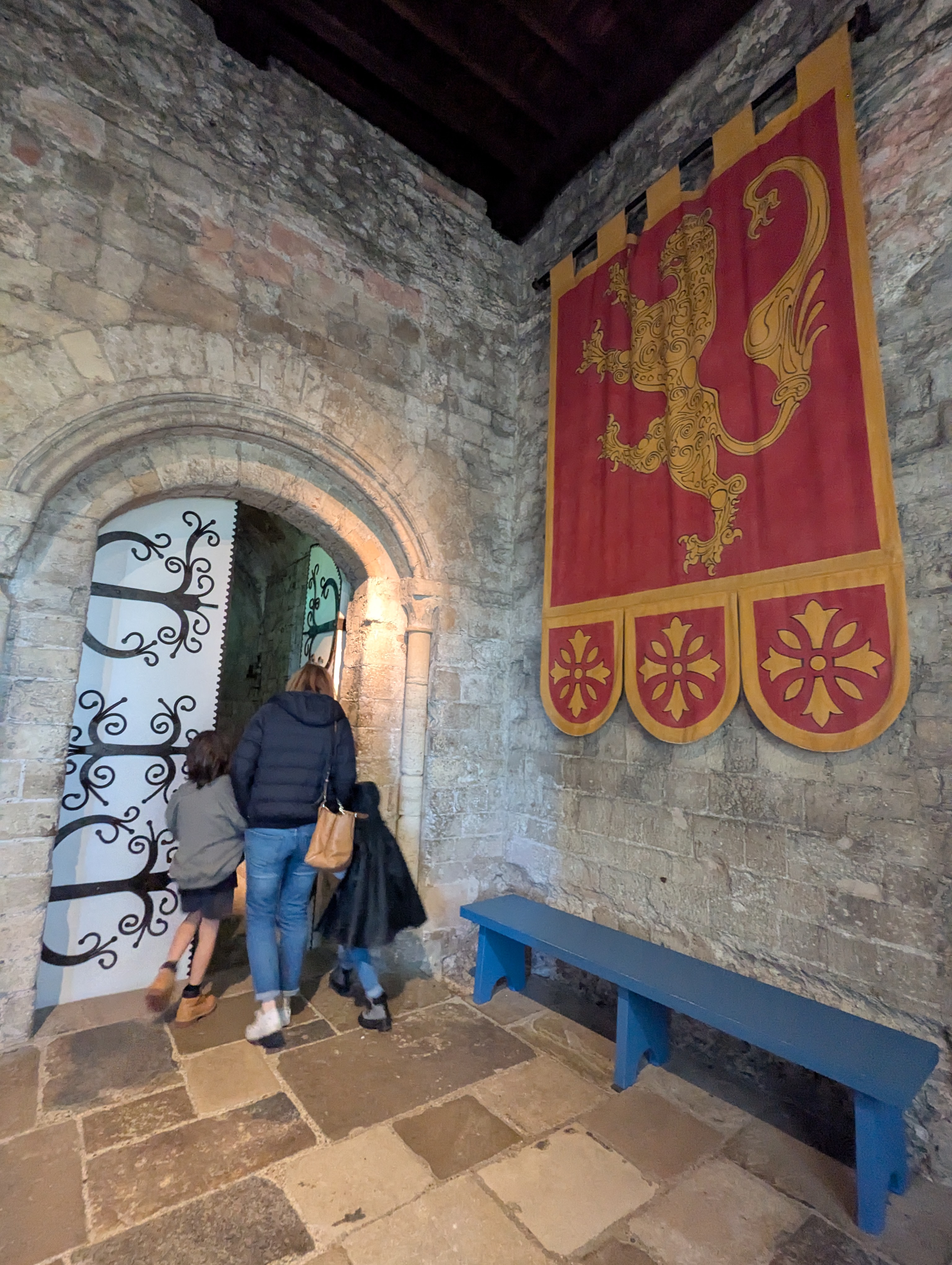
The way the castle was exhibited with representative but somewhat cartoonish furnishings was quite a lot like the castle at Norwich we toured last month. Similar set-up geared well for kids to explore. This castle was in much better shape, though. Because it was before Halloween, what the kids seemed most interested in in the castle was a worker dressed up for Halloween like a witch.
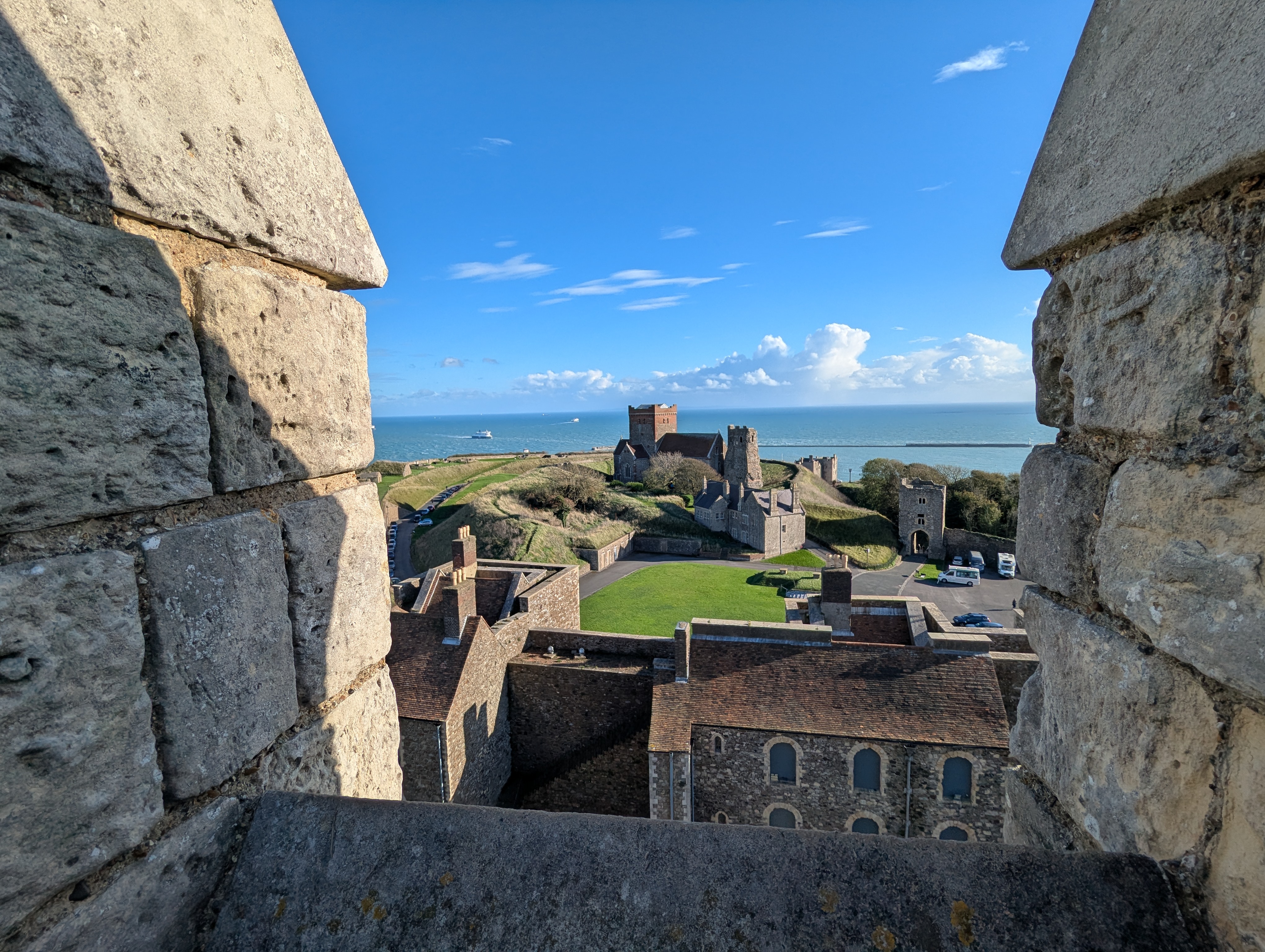
My favorite part of the castle was he views from the roof. It was unbelievably windy up there but you could see all over town, out on the country side, over to the cliffs. Beautiful.
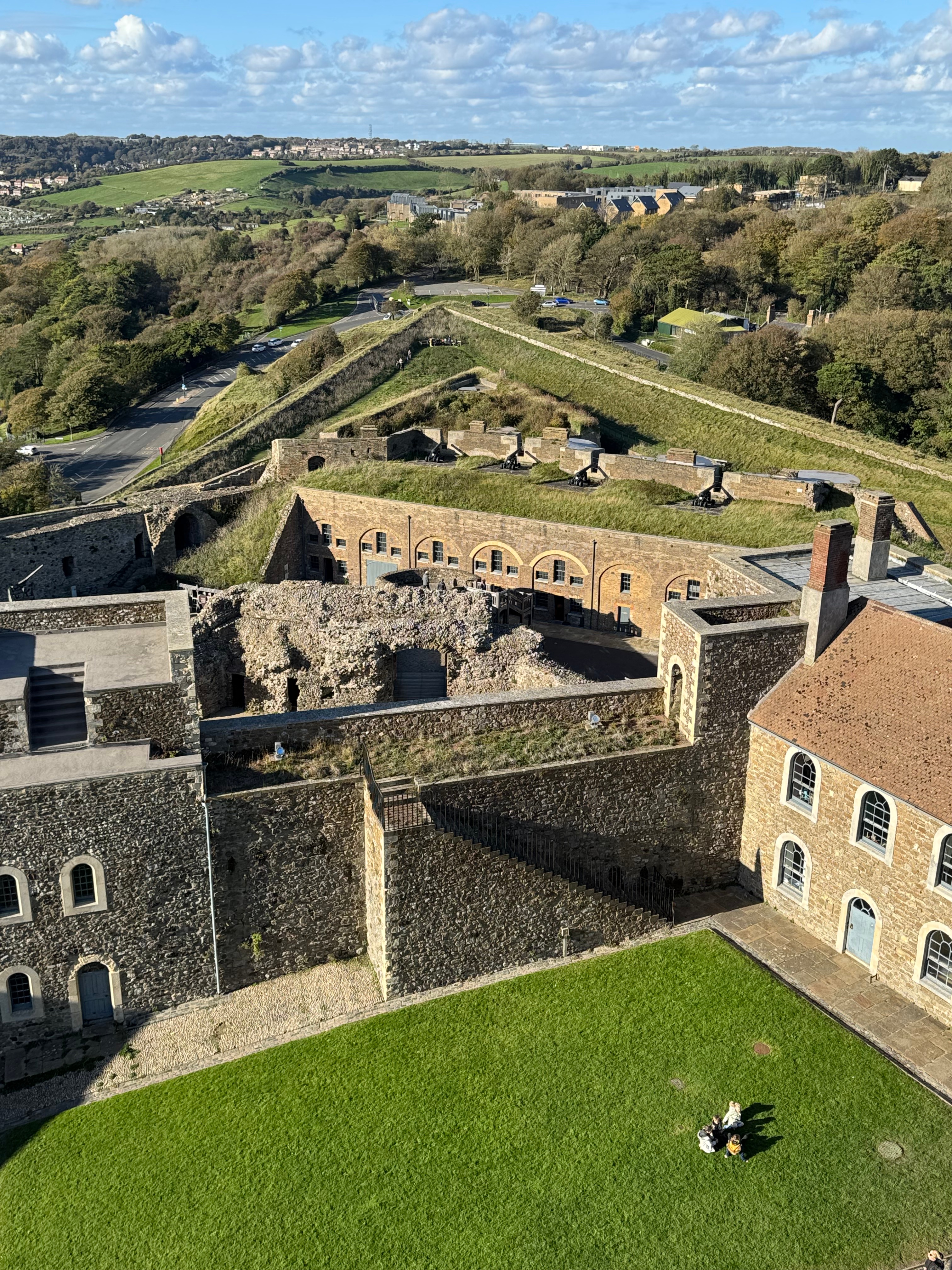
We made our way down the hill again with sheep visible grazing in the moat of the castle. Our next destination was the rail station. We had decided to take the train to Deal, which we had not been able to visit as planned on our recent trip to Sandwich. The plan was to see Deal and have dinner before heading back to Canterbury where my husband was hoping to join his Italian language class online.

However, by the time we arrived in Deal we had new learnings about the train schedule and our time was going to be much shorter than we had originally understood. I had found a restaurant close to the station with acceptable ratings that also looked like it might make for a quick dinner, The Lane. It was early for dinner and there were very few people in the restaurant. Upstairs there was a Wicked-themed birthday party going on and the sound system in the restaurant was playing “For good.”

You may have noticed from my recent reports of what I’ve eaten in various places, except for breakfast, I’ve been leaning toward soups and salads. It was that point of traveling when your body demands vegetables. But when I sat down at the table at The Lane and reviewed the menu, my body demanded, of all things, a hot dog. And chips.

As you know, I live in the suburbs of Chicago, and what Chicago is known for, in addition to deep-dish pizza, is hot dogs. And I love a hot dog with everything that a Chicago dog normally comes with, except sport peppers. Tomatoes, relish, celery salt, a dill pickle spear, onions, mustard. Never ketchup. If you ask for ketchup in Chicago you will be abused. Sport peppers are a little too spicy for me and I’m in danger of having a sneezing fit when I eat them. Then it just becomes a Whole Thing. I remember ordering hot dogs in the Chicago Loop at lunchtime when I was working downtown. I would always say “Dog with everything except sport peppers.” And the worker would always repeat back my order, “Dog with everything, extra sport peppers.”

I digress, big time. The “classic” hot dog I ordered at The Lane was not a Chicago hot dog, but instead had on it ketchup, mustard, pickles, and “crispy onions.” As it arrived at my table I noticed it was HUGE. I figured I could manage about half that. I didn’t take a picture of it because it was just a hot dog. Then I took a bite. It was messy but the most amazing and yummy thing I’ve eaten for a while (this on a day I had scones and clotted cream). Maybe it was the crispy onions that made it so good? Maybe it was just a better quality hot dog? Maybe I was just really hungry after so much walking? I changed my mind and took a picture of part of it. My husband seemed to enjoy his tacos as much as I did the hot dog. And I did eat the whole thing.
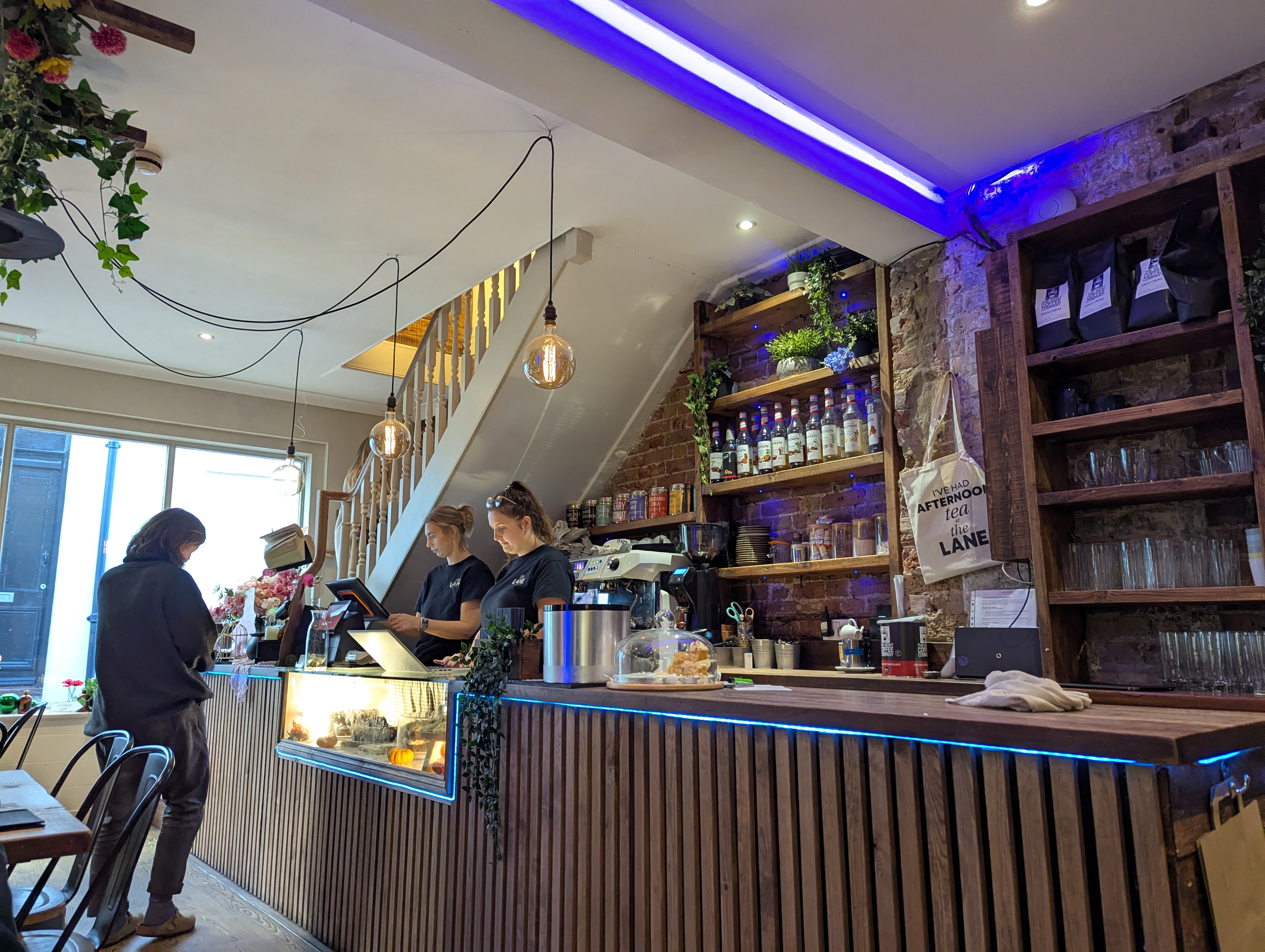
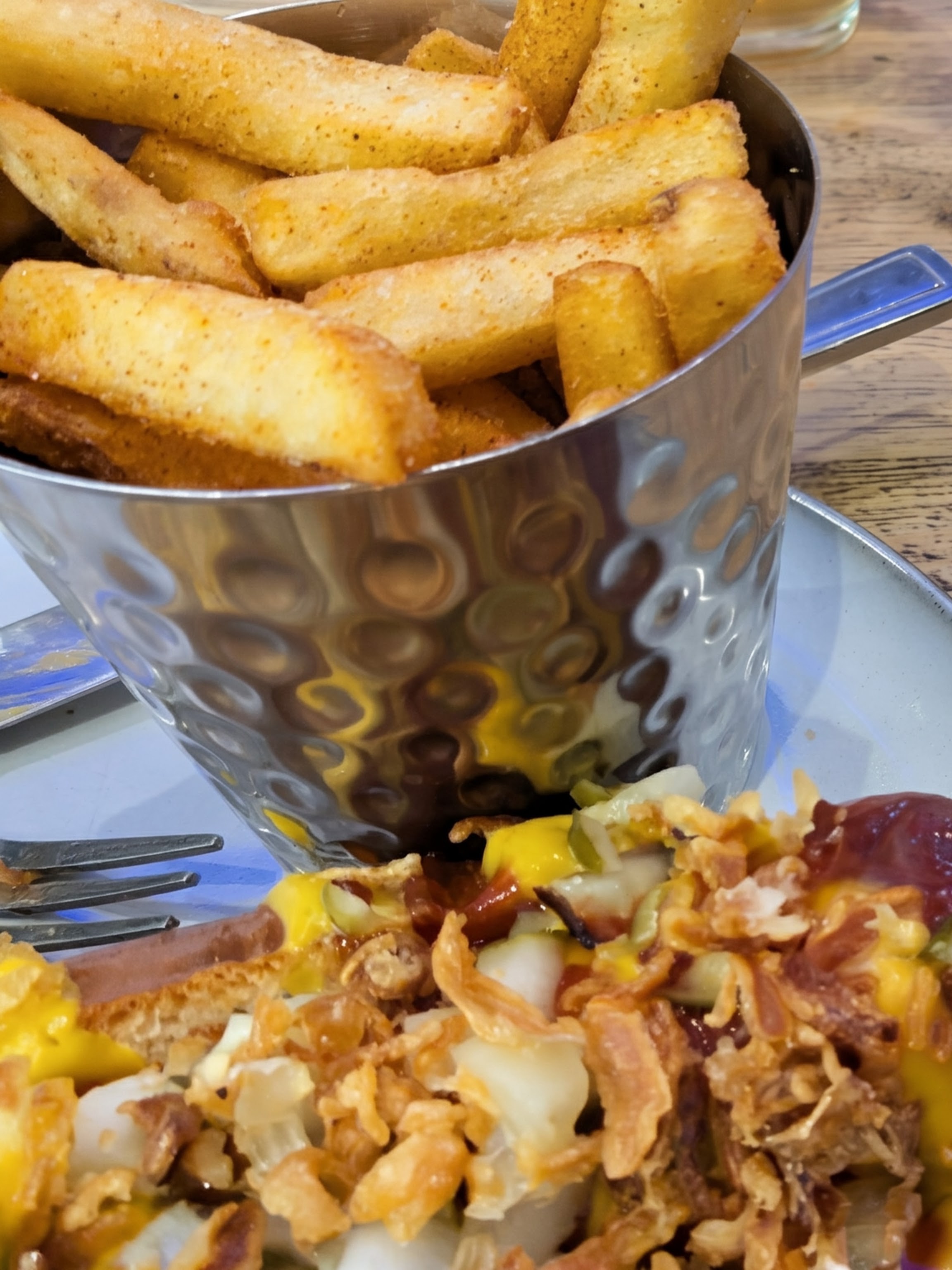
As we were leaving, we asked the server if she had suggestions about what we should do if we had only 20 minutes in Deal. The thing she could think of was a local bar with a two-for-one drink special. I know she had just witnessed us eating our meal in a hurry and that may have made an impression, but I don’t think I could do two drinks in 20 minutes. In any case, we were not up for the challenge.

We thanked her and walked 5 minutes to the shore, took in the shops along the street next to the shore and the pier.
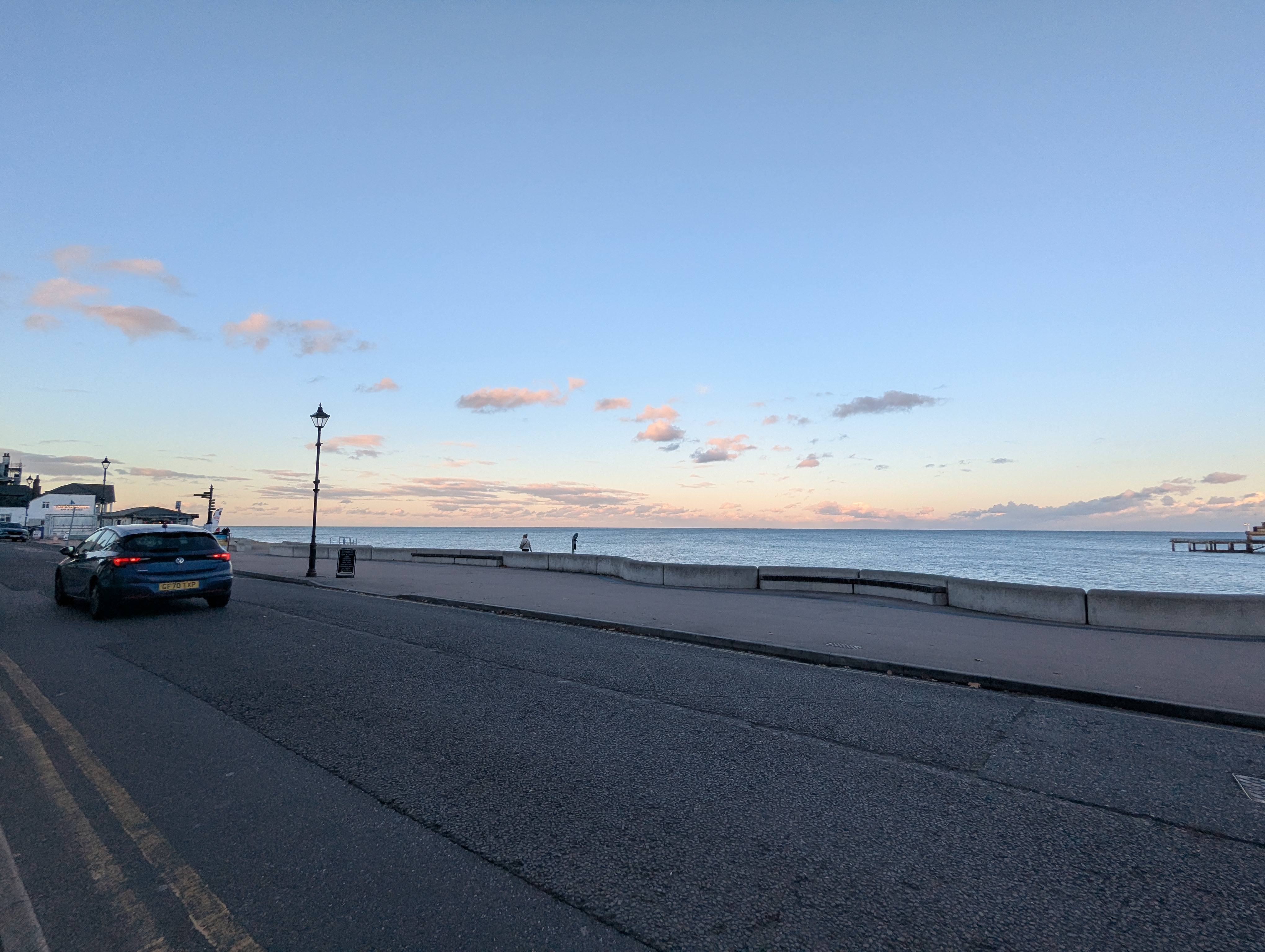
Deal is a cute little town, worthy of more than a 20-minute tour some day. But we had a train to catch and an Italian class to attend back at our temporary home in Canterbury.
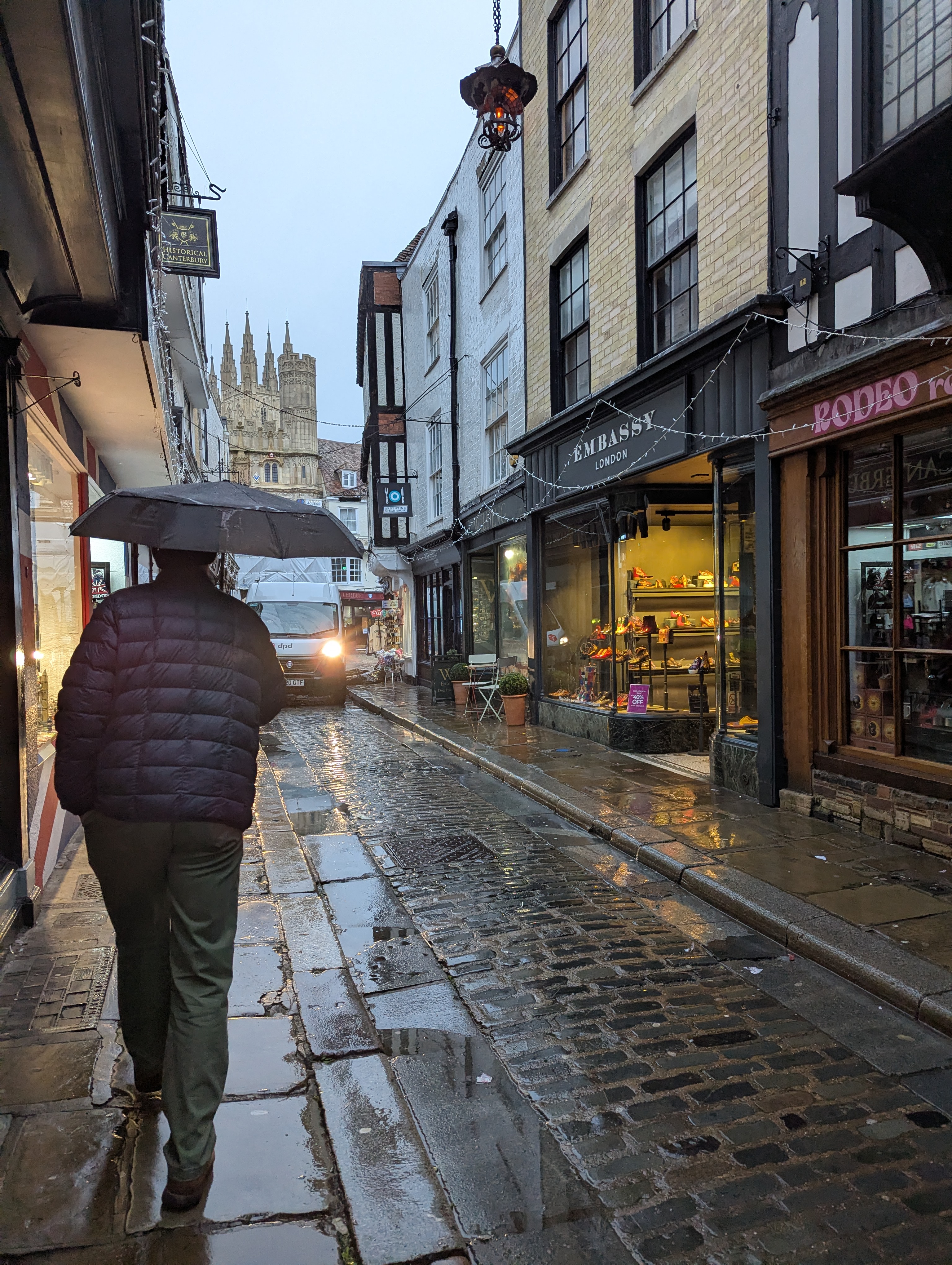
Canterbury Tales

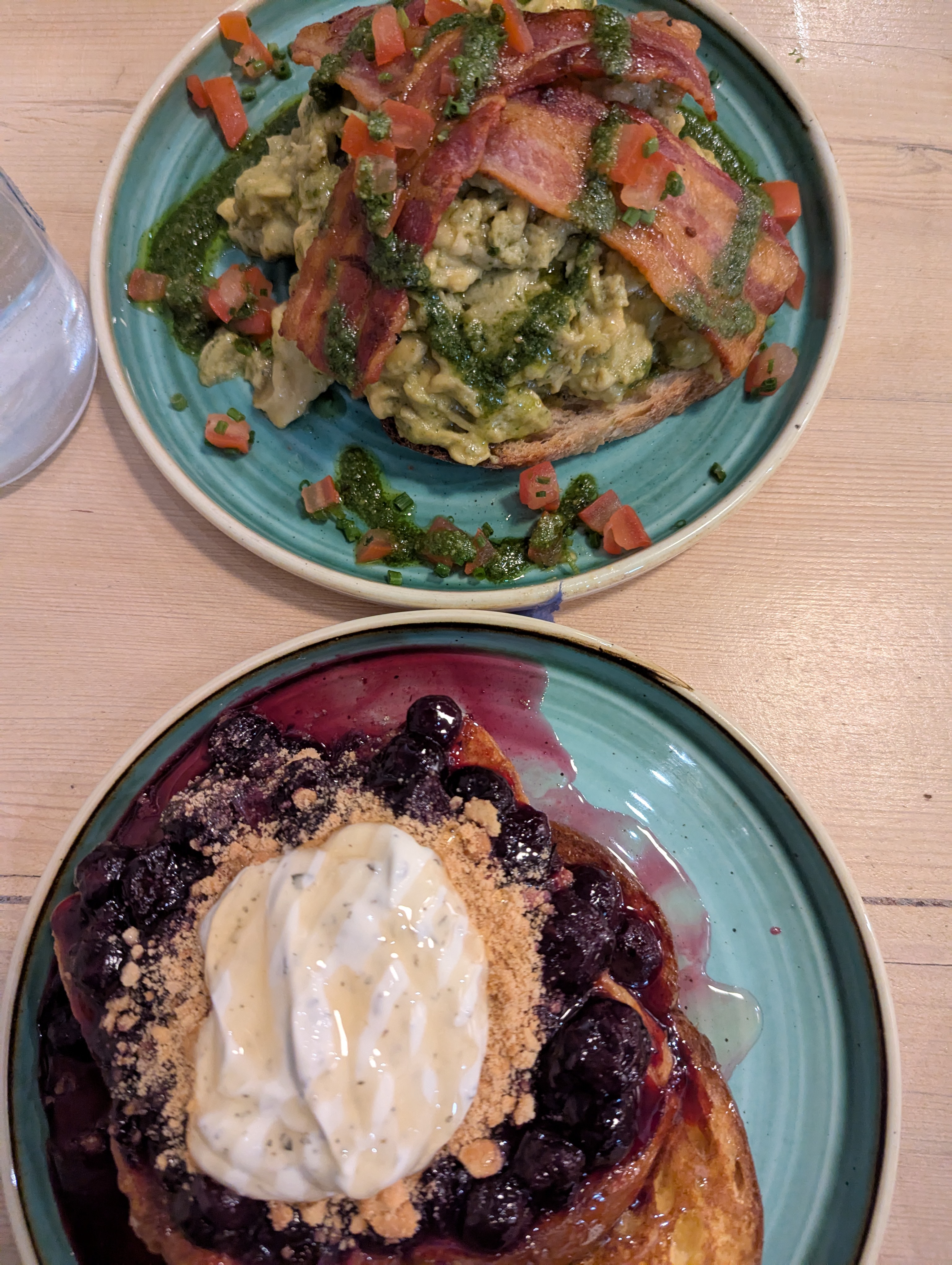
We woke to a raw, wet day, endured the cold showers I mentioned in my last post, and then walked several blocks to the highly recommended Refectory Kitchen for breakfast. We made a point to sit far from the door and were quickly served a much-needed warm drink. My husband had a dish called “Green eggs and ham” (green because of pesto) and I had a French toast with blueberry compote. Great way to start the day.

We steeled ourselves and walked through the rain in our practical footwear over to the Canterbury Cathedral. We’ve seen a lot of Cathedrals lately and I know that, to some people, they start to be all alike. While it may be true that many parts of the physical cathedral are similar to others, what I usually find so interesting is the unique history of the people connected with the Cathedral. The Cathedral at Canterbury has a notably colorful history. We used the audio tour available and found it interesting and useful.

Canterbury Tales by Geoffrey Chaucer includes imagined stories of pilgrims who traveled to Canterbury Cathedral. I read parts of it either in high school or college and, although I’ve forgotten so much from many books I’ve read, the details in some of those stories are still fresh in my mind.

People made the pilgrimage to Canterbury in homage to Thomas Becket. Thomas Becket had been a nobleman and friend of King Henry II who was made Archbishop Of Canterbury. Kings and archbishops had great power over the subjects and King Henry II had reason to believe that by installing the like-minded Becket he would be able to exert more influence on the church. But as soon as Becket was made Archbishop, he began to go his own way to the great frustration of the king.

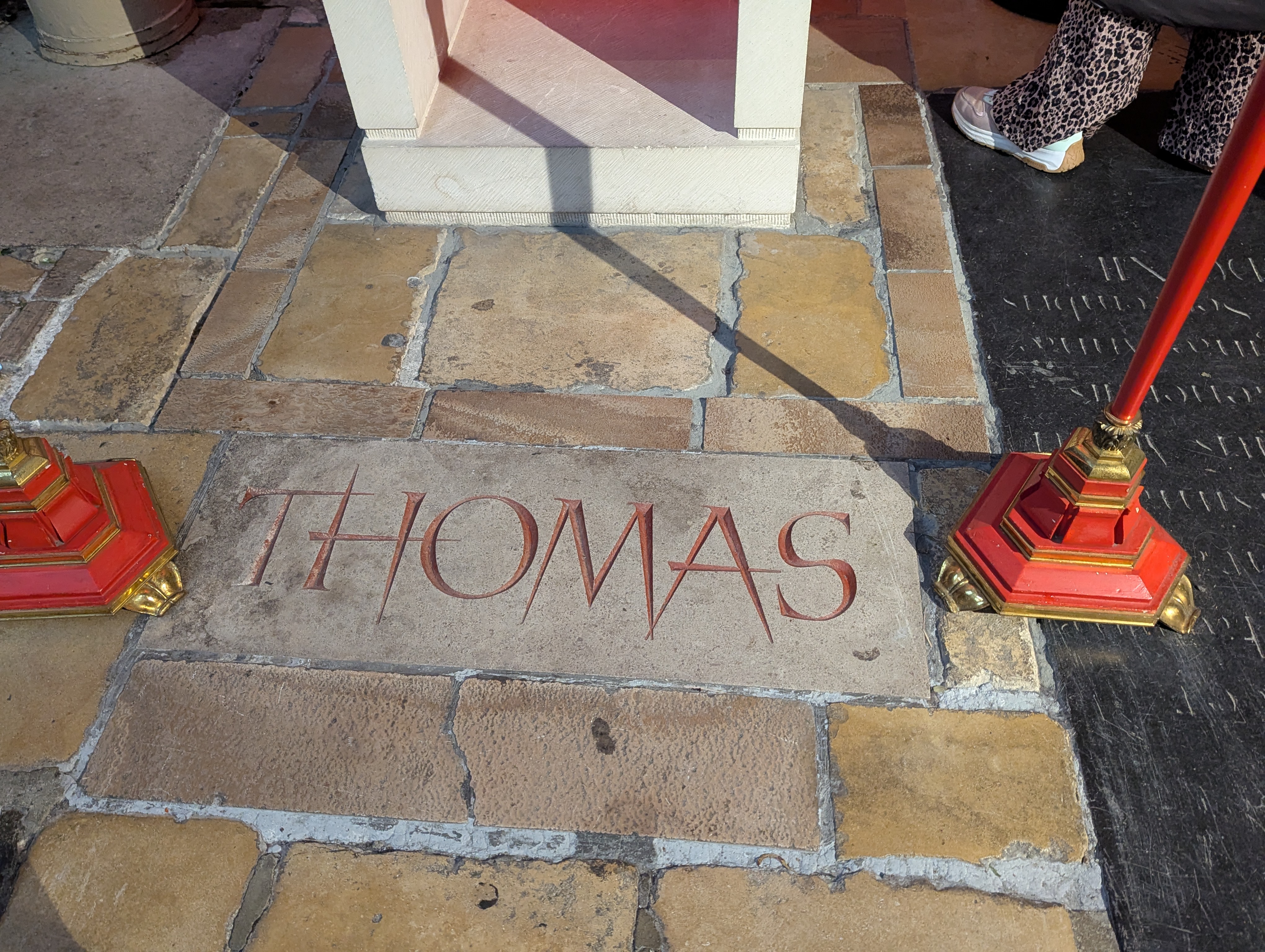
What happened ultimately is in dispute. Henry II either A) sent soldiers to kill Becket or B) said something innocuous that made the soldiers incorrectly believe they were being sent to kill Becket. Regardless of Henry II’s actual intent, the soldiers went to Canterbury and killed Becket inside the Cathedral.

Now martyred, he was named a saint by the Pope. And although pilgrims previously trickled to Canterbury Cathedral, Becket’s martyrdom and subsequent canonization turned that trickle into a deluge. Becket’s remains are buried in the cathedral and formerly could be viewed by visitors who were willing to pay for the privilege. I believe that is not possible today. (Maybe I should have displayed my crypto.)

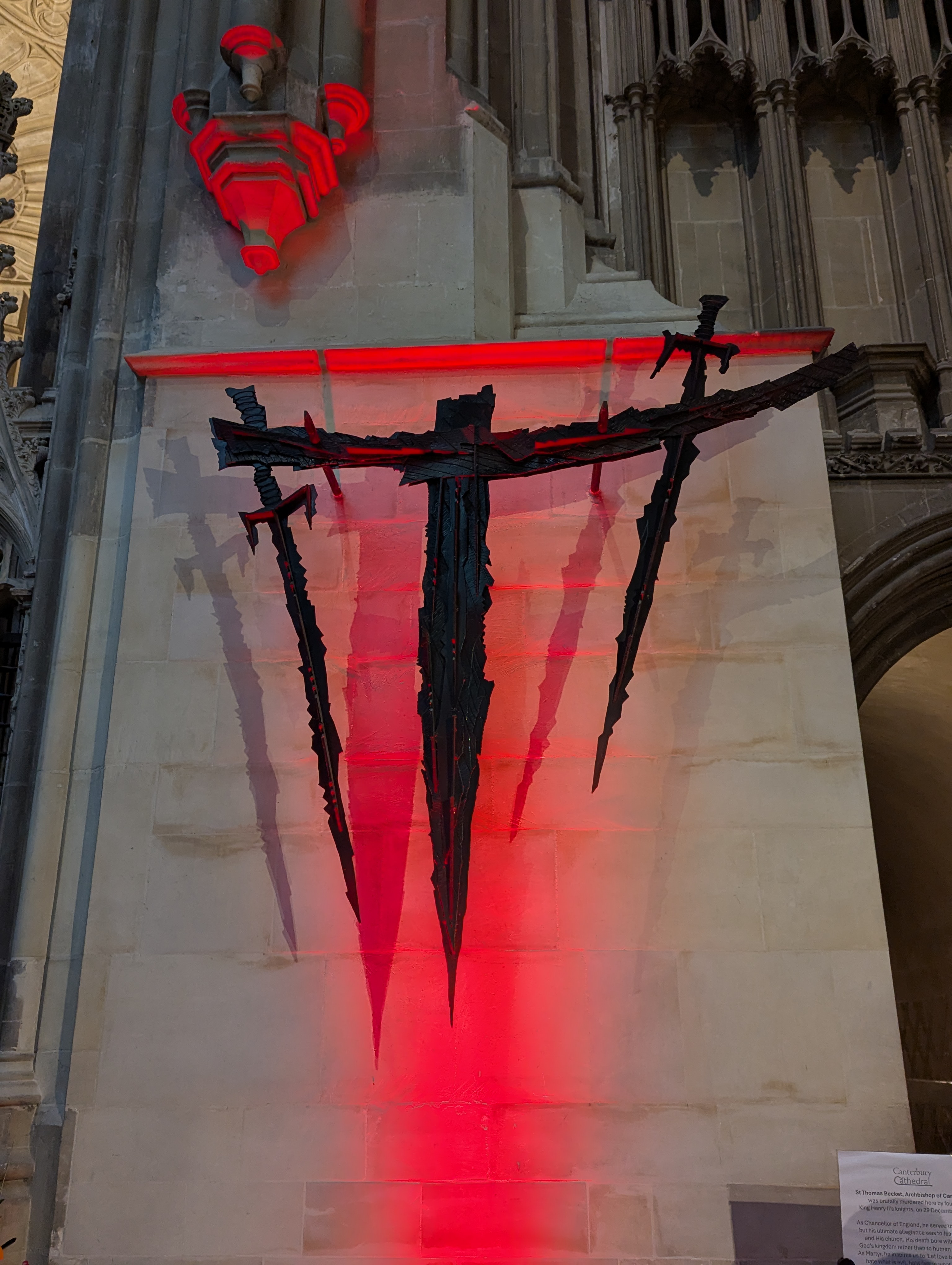
The site where Becket was murdered is commemorated with some art that includes representations of the swords of the soldiers.

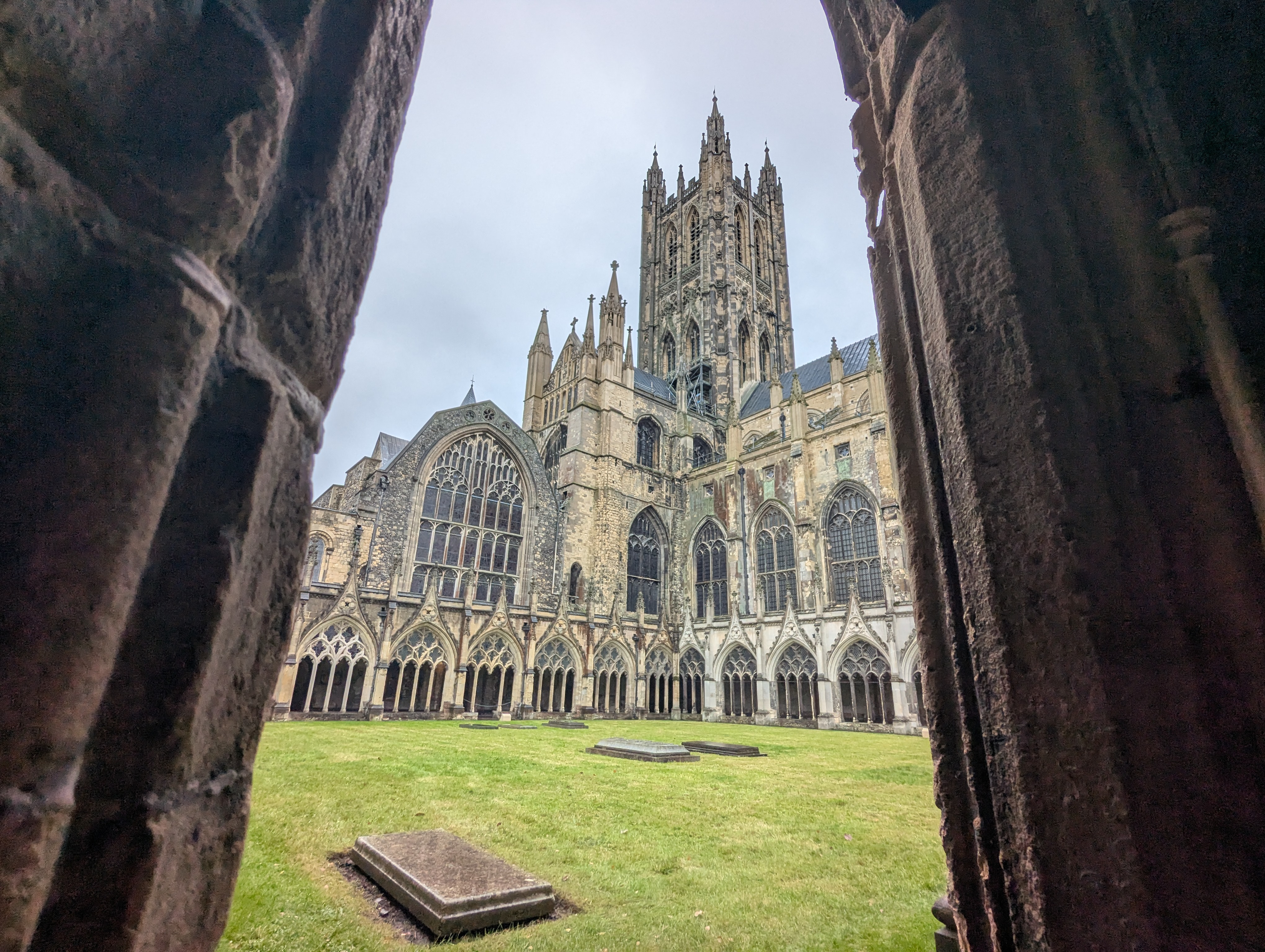
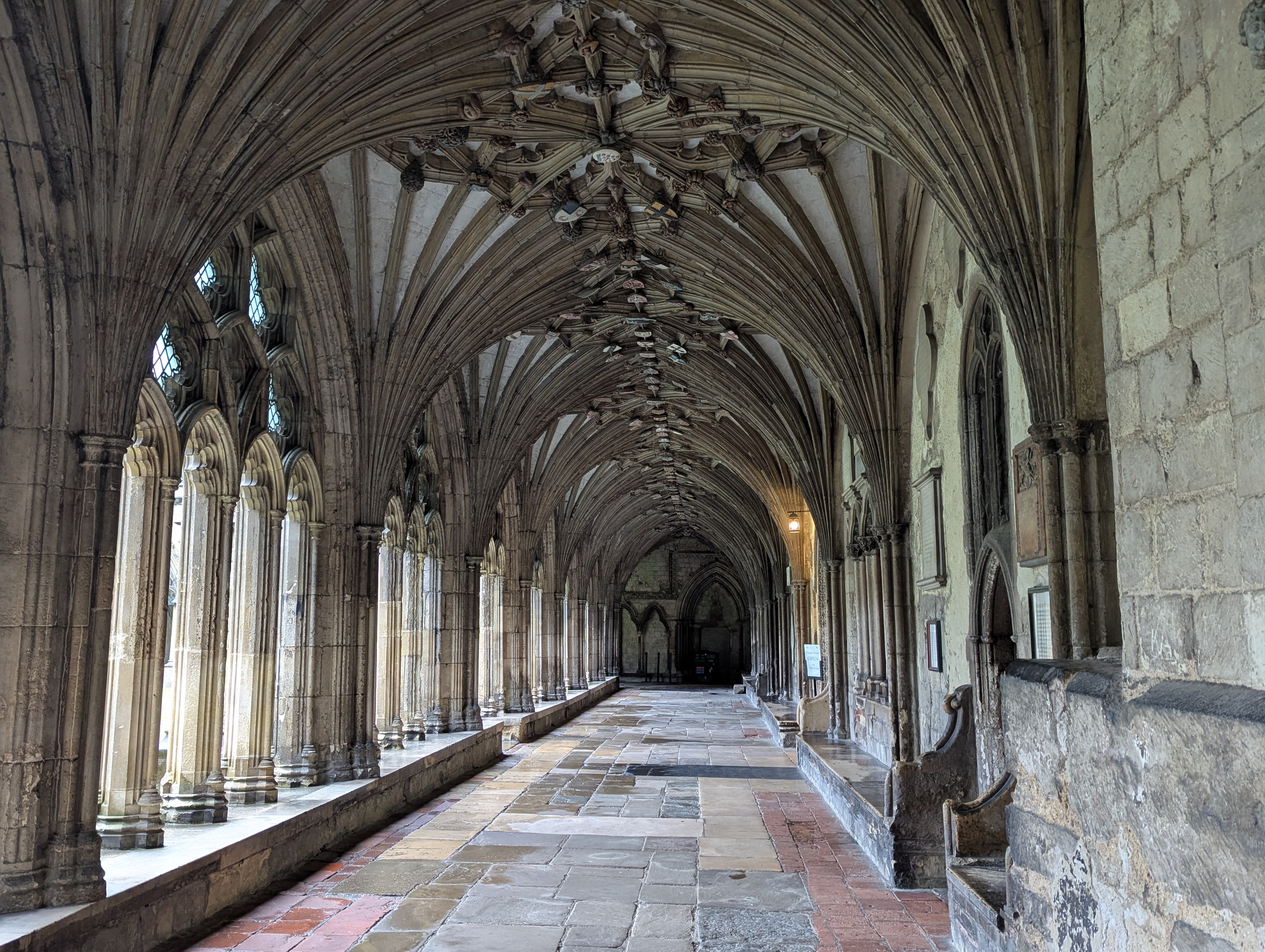
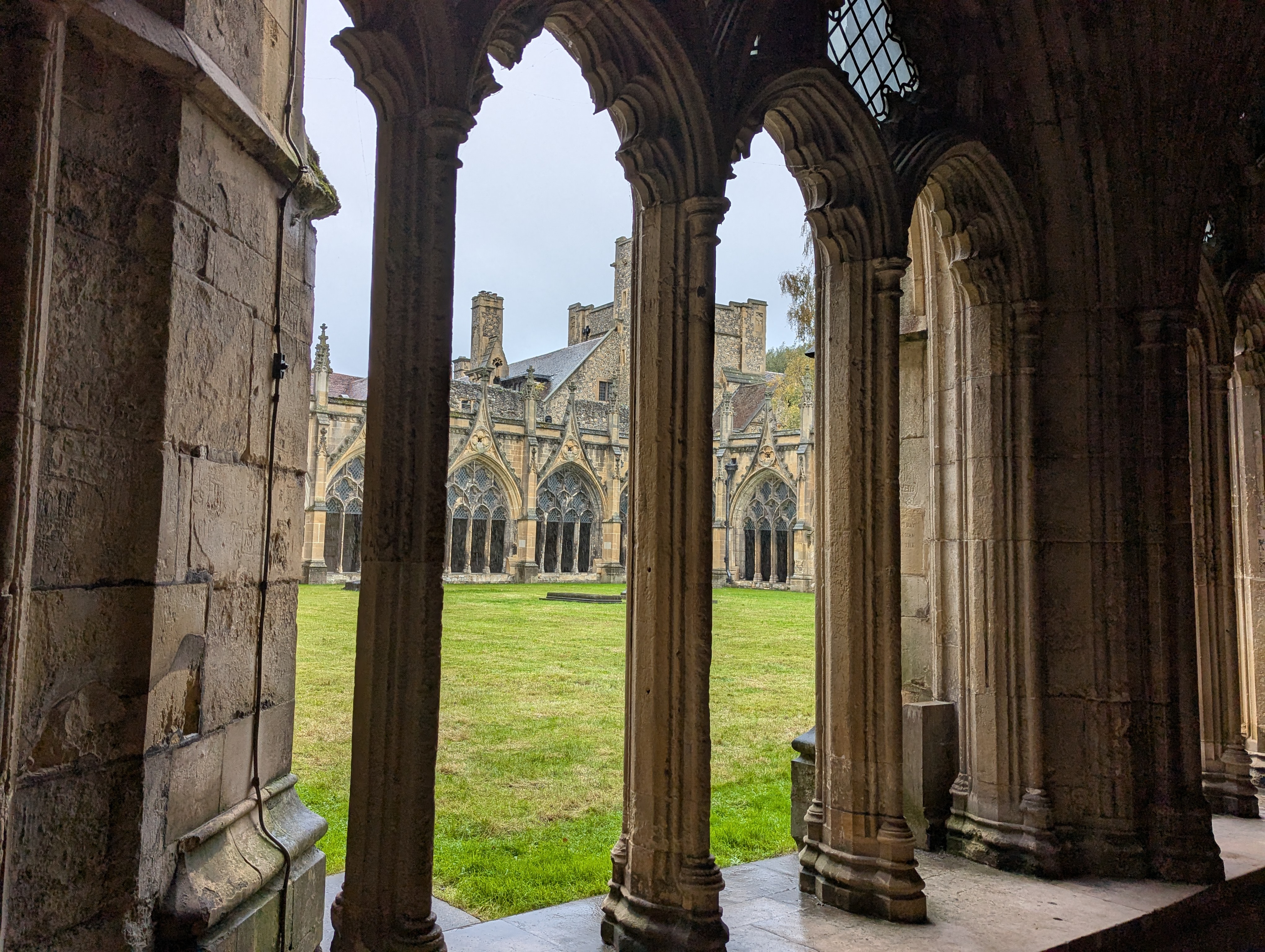
I’m a sucker for the cloisters in a Cathedral. It was still dark and rainy when I stepped out and took these photos which I think made them feel even more alive. You can just picture hundreds of years of monks coming and going.

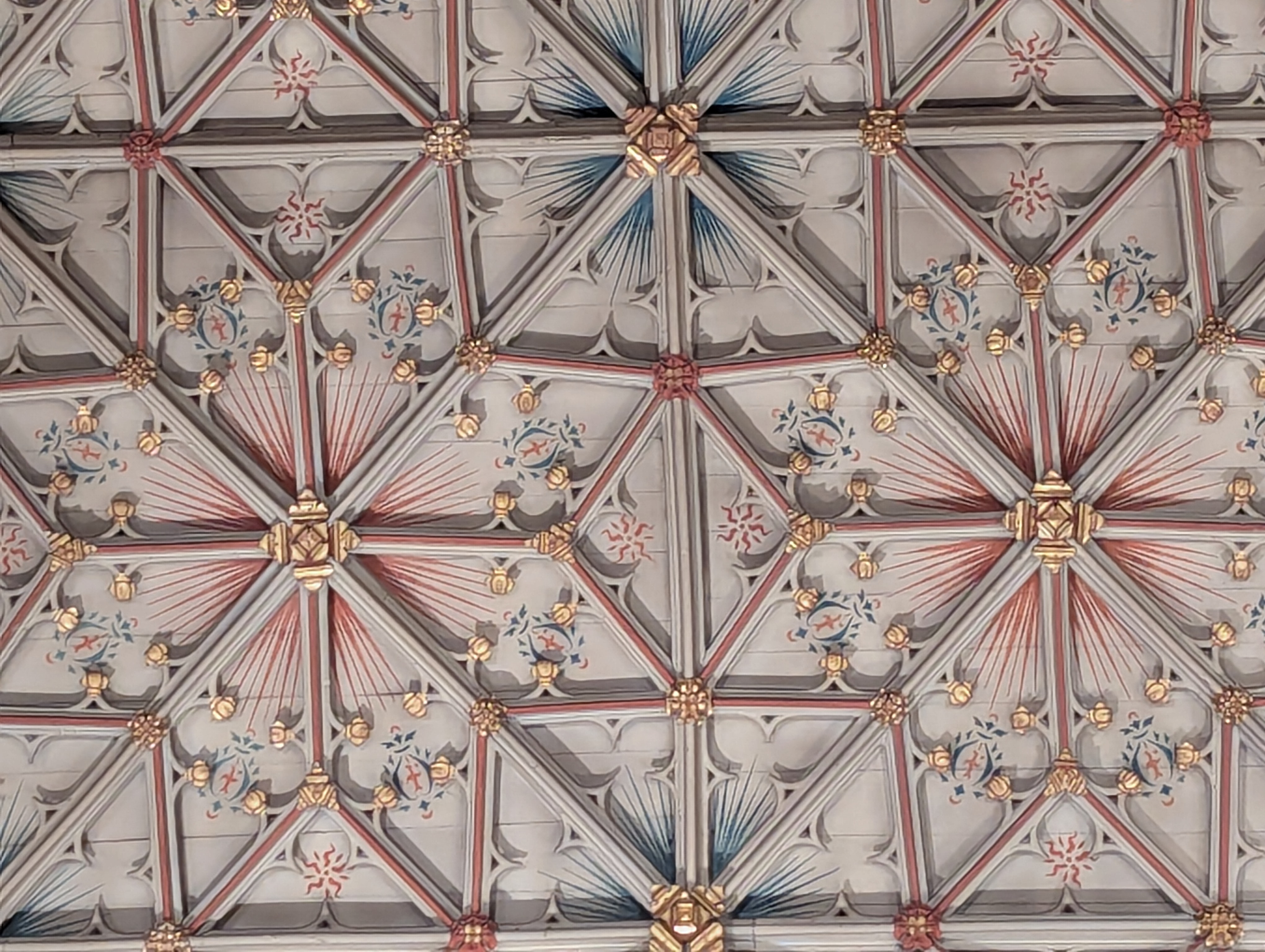
My husband and I also loved the area called the Chapter House, which served as a place where monks learned the rules of the order. The carvings in the ceiling are gorgeous.

In the crypts, the sculpture called Transport is especially interesting. Created by British artist Antony Gormley, it’s made of nails from the Cathedral formed in the shape and size of a typical human body. It hangs from the ceiling using wires or strings. Photos aren’t allowed in the crypt but I found a picture of the sculpture online here. My husband enjoyed the display in the Water Tower that described how ink was made back in the day and also included a pocket sundial.

There is only one monarch entombed in the Cathedral, Henry IV. His uncle Edward, referred to as the Black Prince, is entombed close by. The Black Prince has an inscription on his tomb: “Such as thou art, sometimes was I, Such as I am such thou shalt be.” There is a lot more gory detail in the inscription, but that’s a good summary. You’re no different from me. The end is coming and you can’t avoid it.

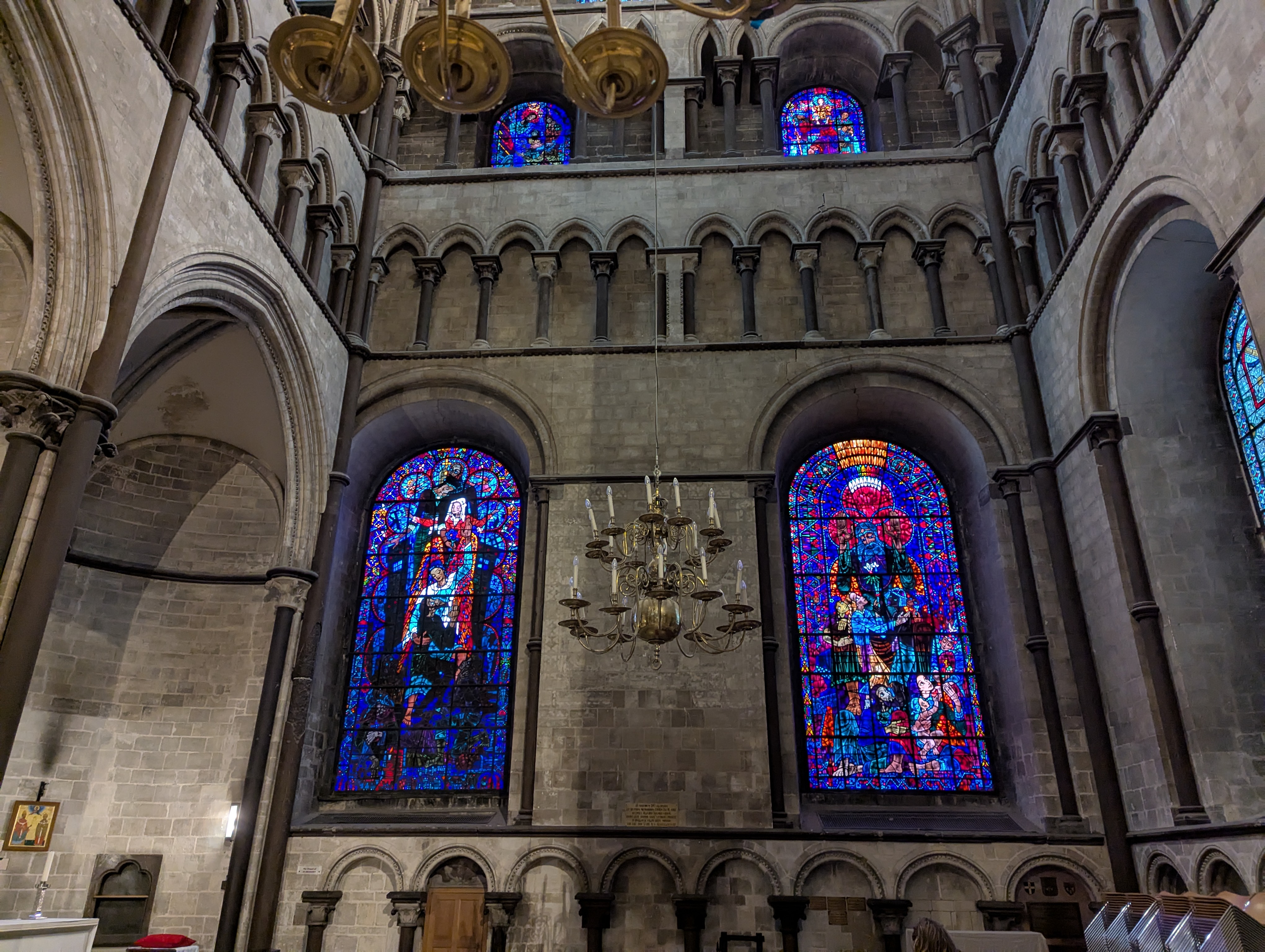
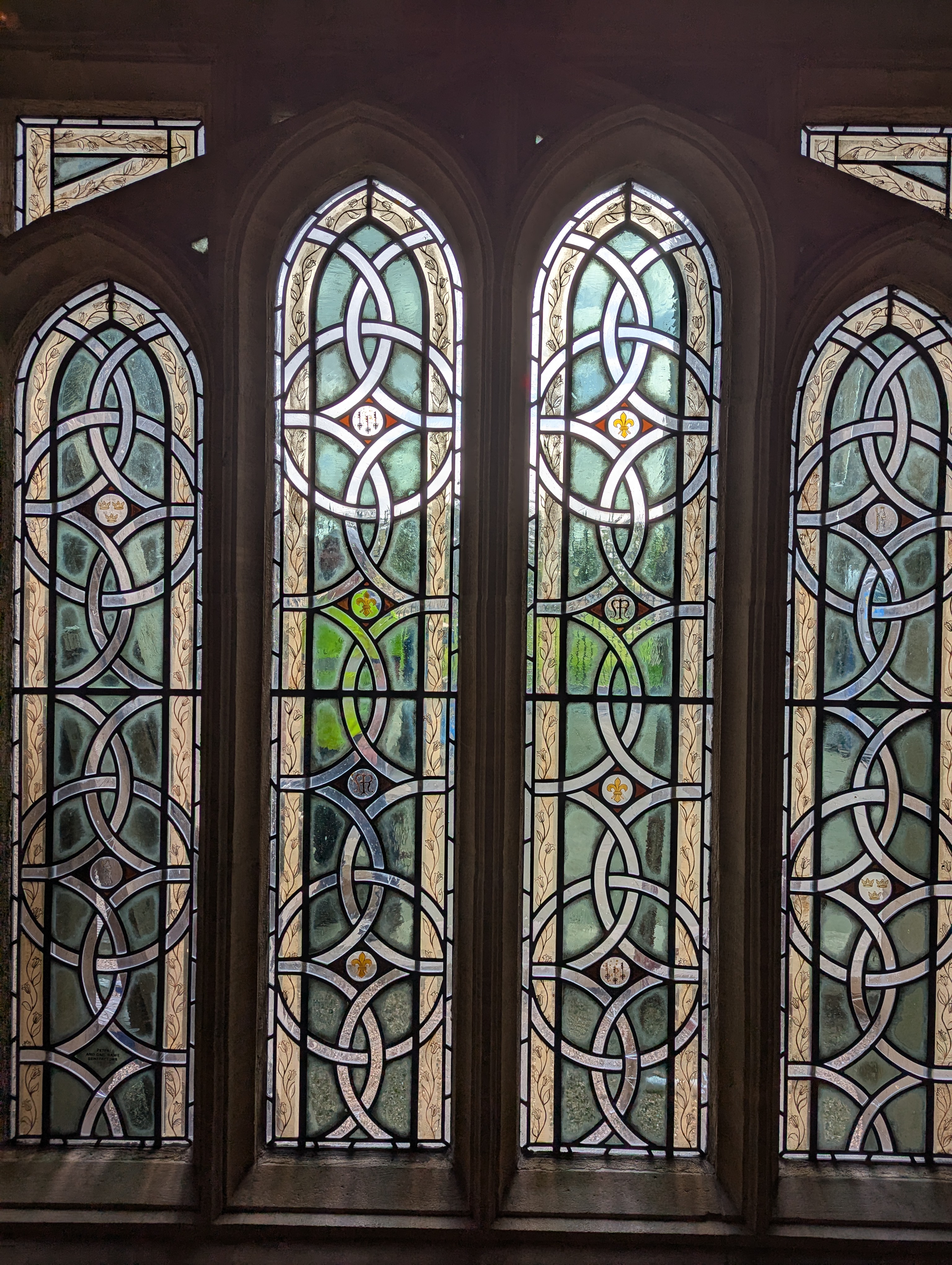
As with all Cathedrals, there are some beautiful stained glass windows as well as some very plain windows that were forced into place during periods in history in which the powers that be disliked color in church and got rid of it. Or that had been removed to protect them from bombing in World War II and then had to be painstakingly reinstalled. Or that had not been removed and had been bombed and replaced. I particularly enjoyed the windows created by the Hungarian artist Ervin Bossanyi that were installed in 1960 and commemorate themes around World War II, salvation and peace.

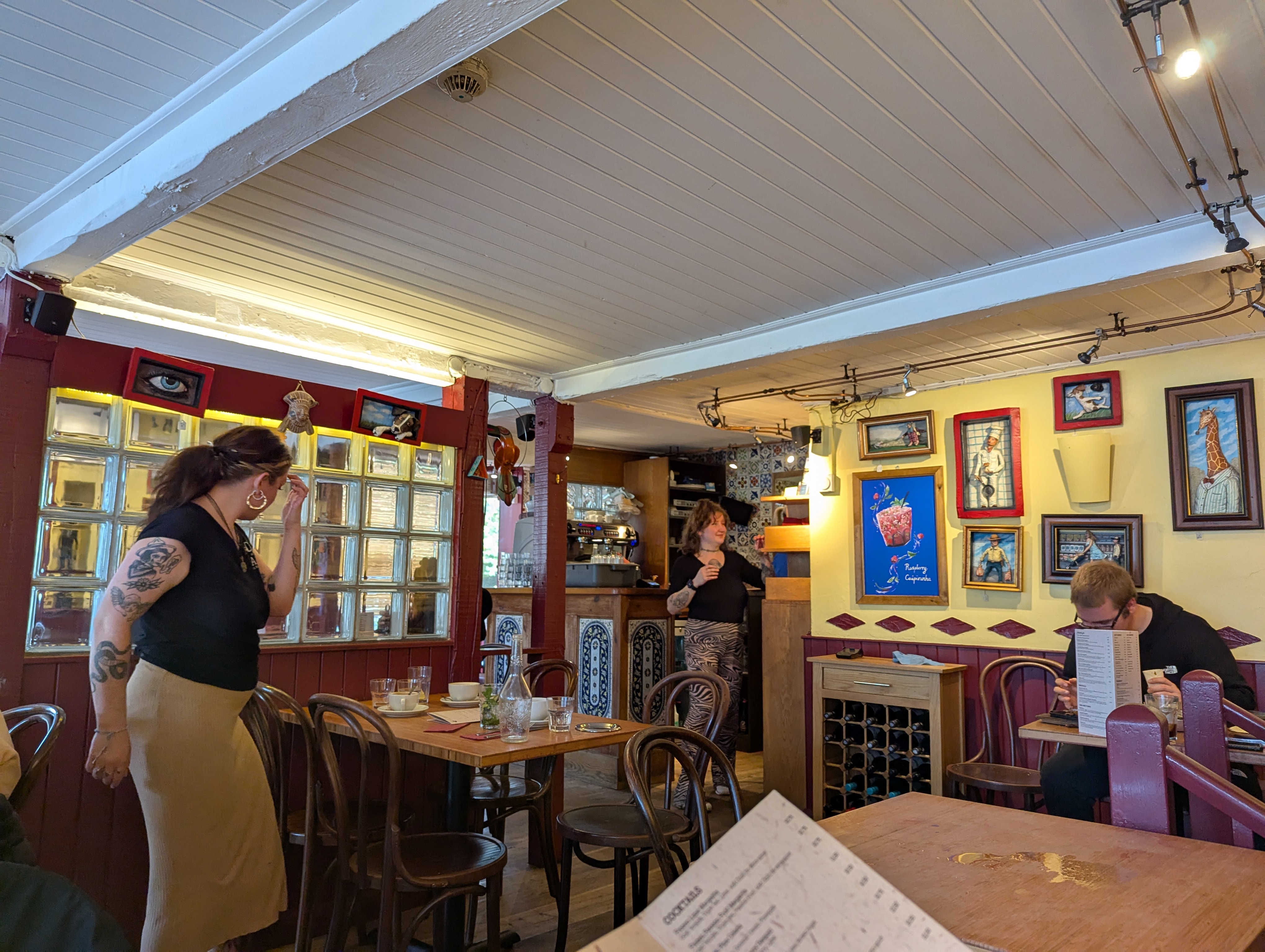
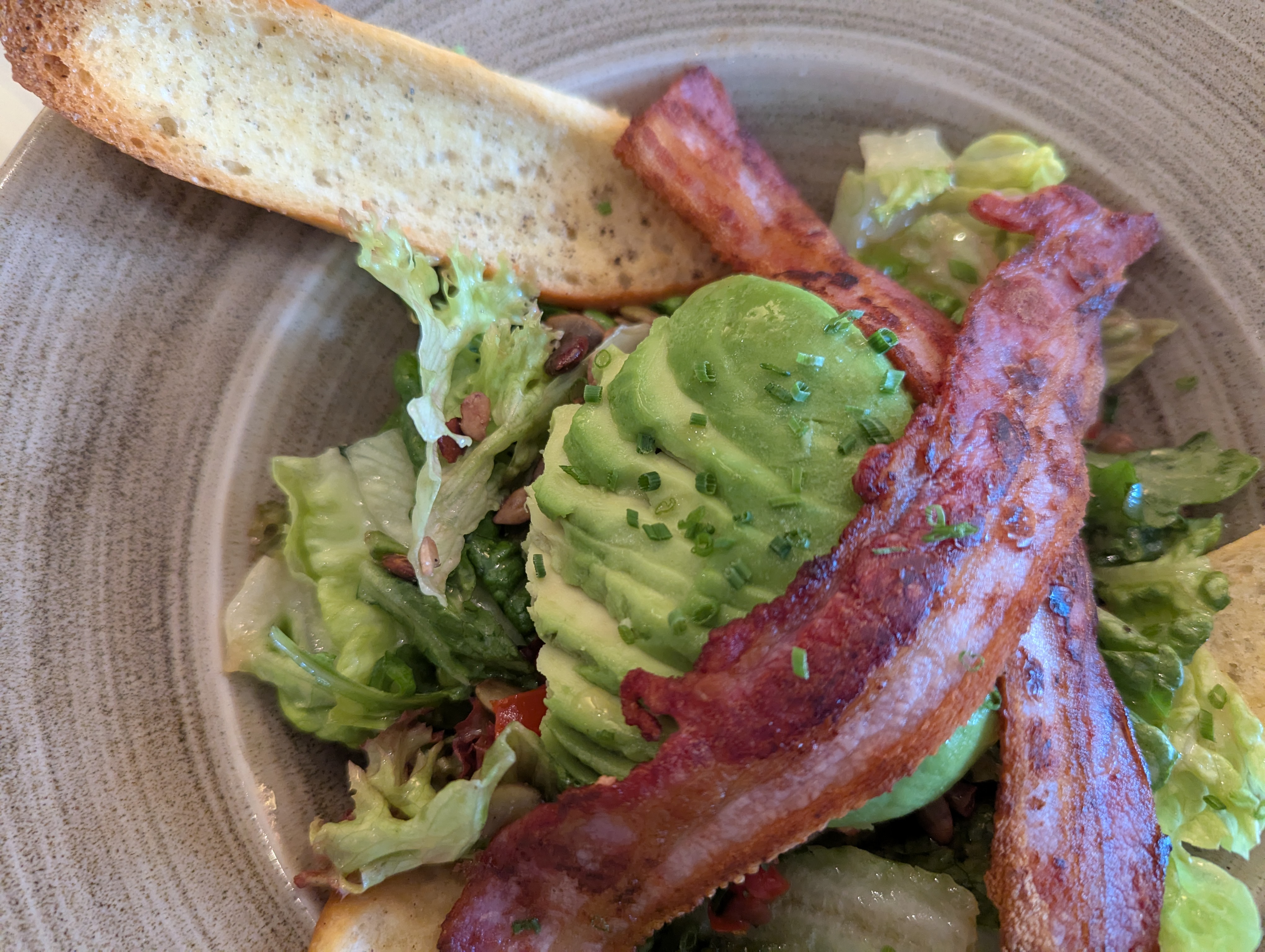
We took a lunch break at a cute Mexican restaurant called Cafe des Amis du Mexique. I had a salad that was so yummy I’ve tried to recreate it at home. Don’t quite have it right as of this writing. I really enjoyed the papier mache art on the walls by Total Pap, which was available for sale.

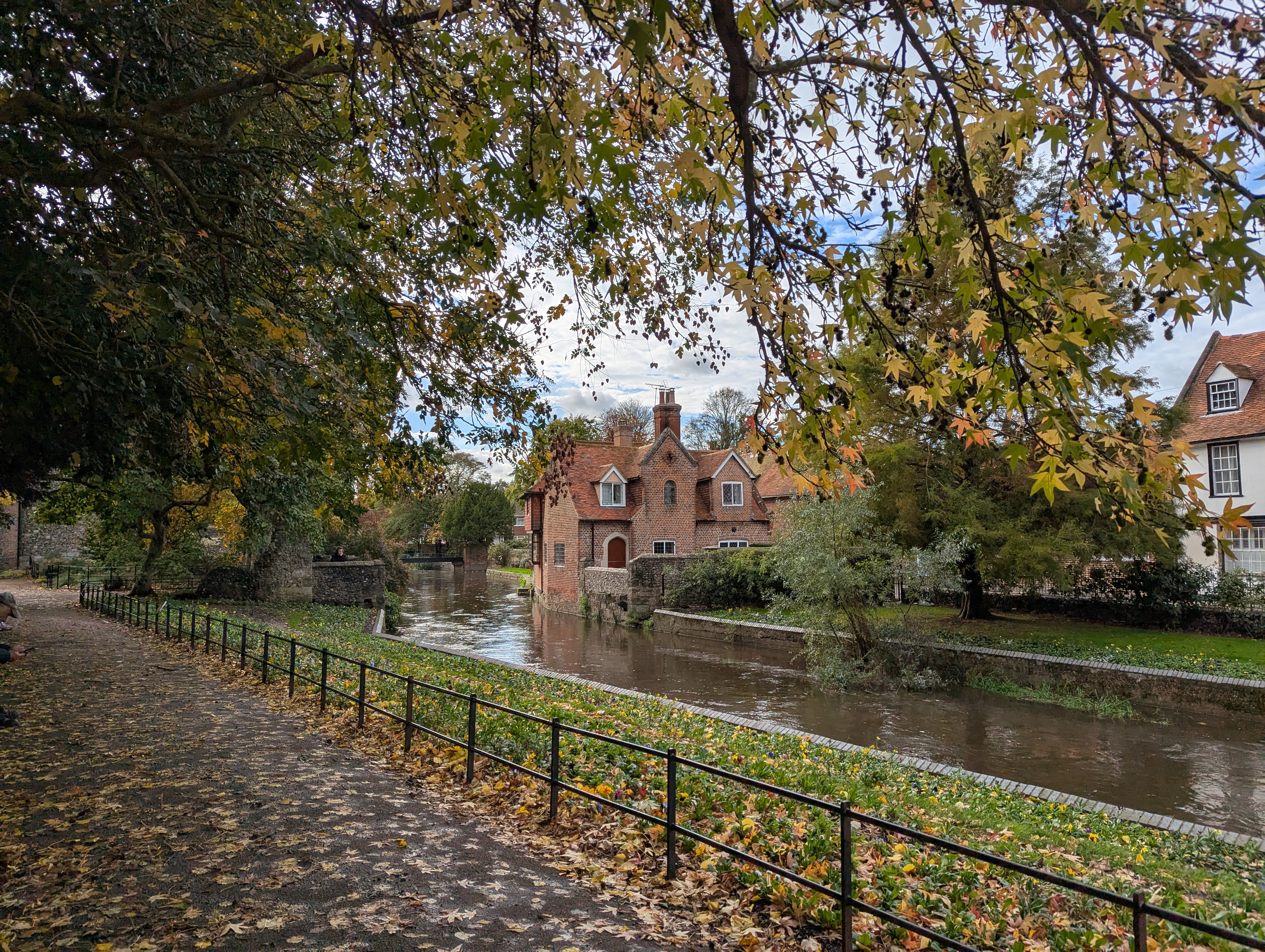
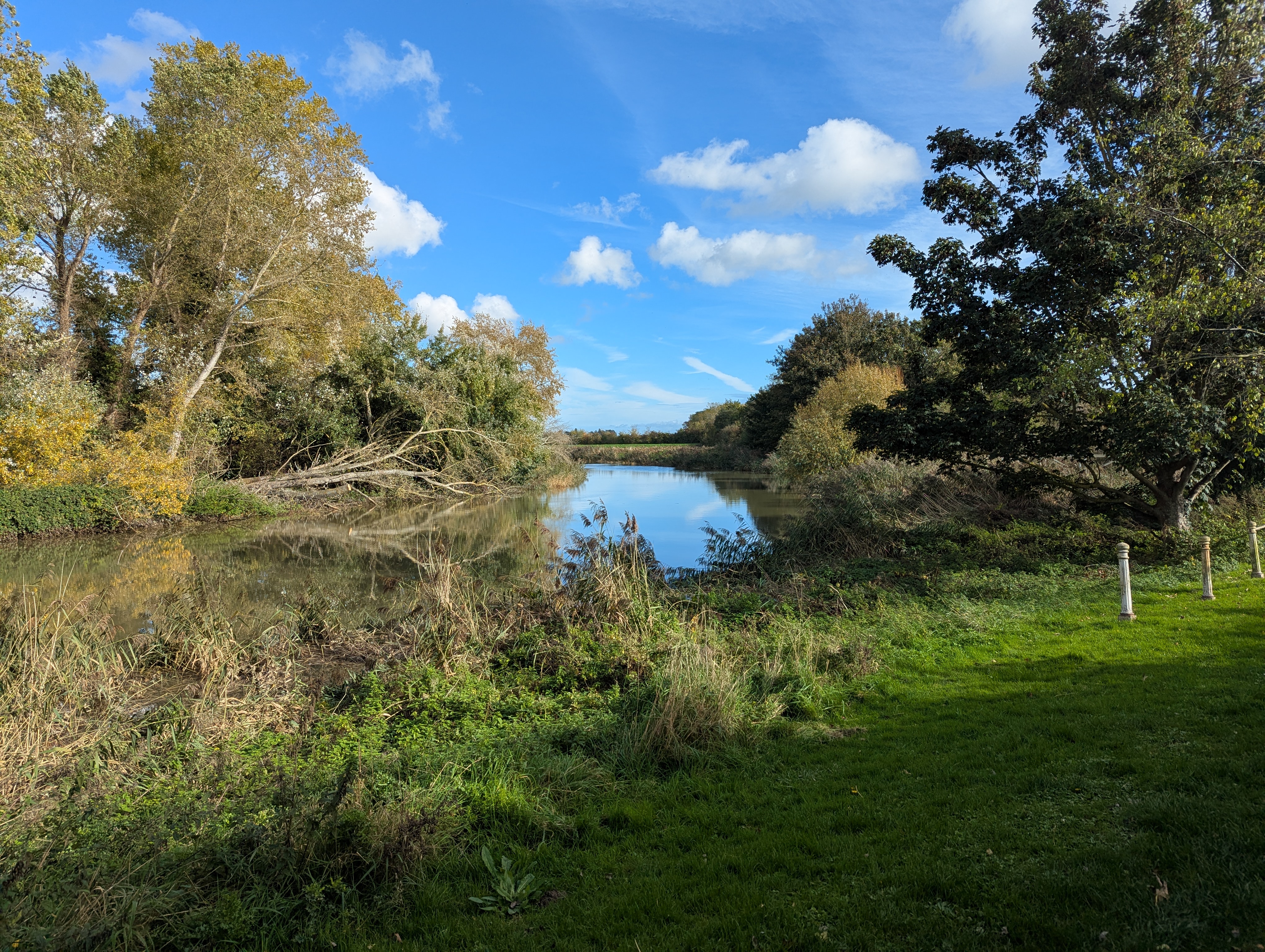
With the rain now stopped, we took a short walk along the River Stour.

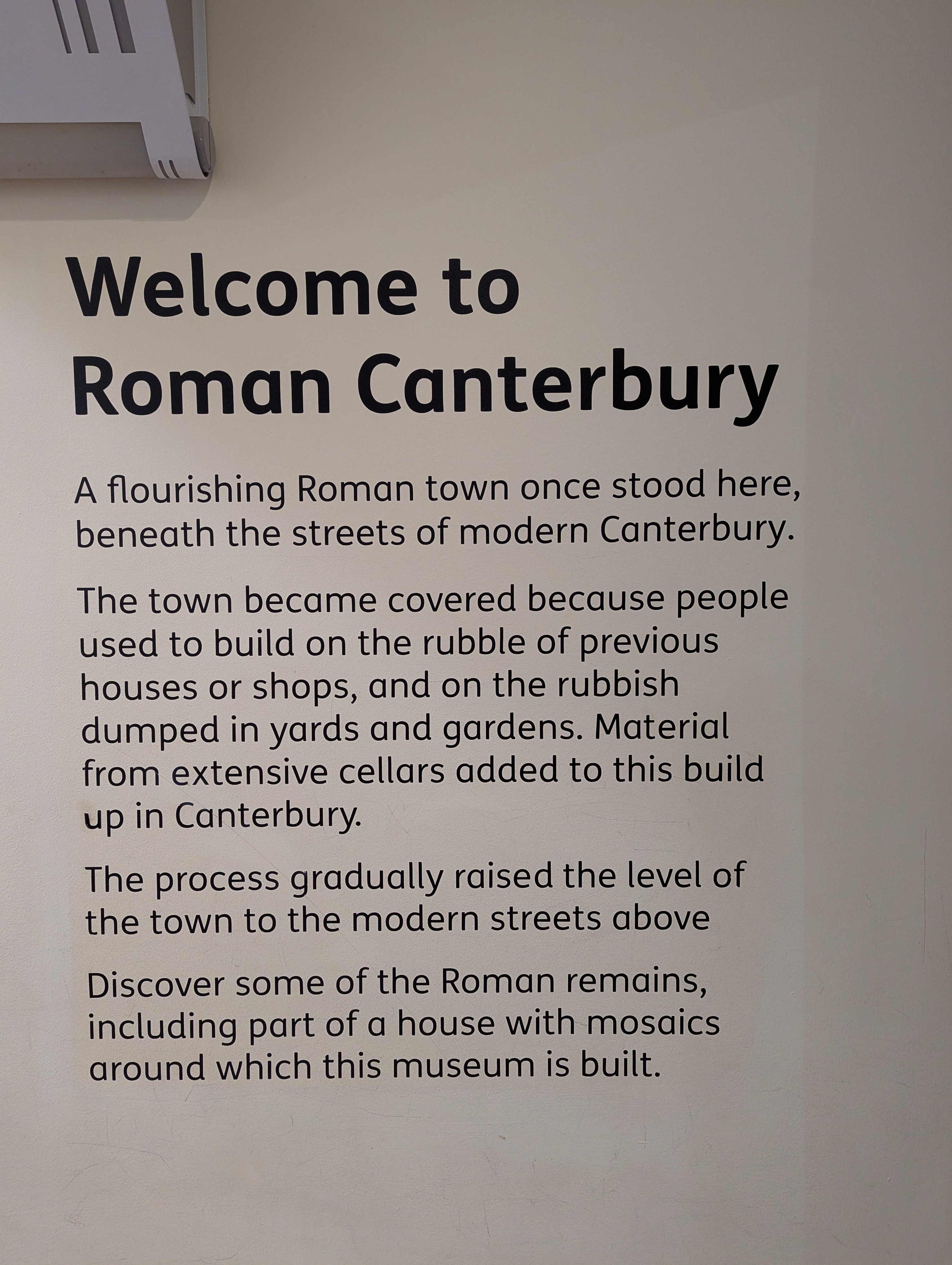
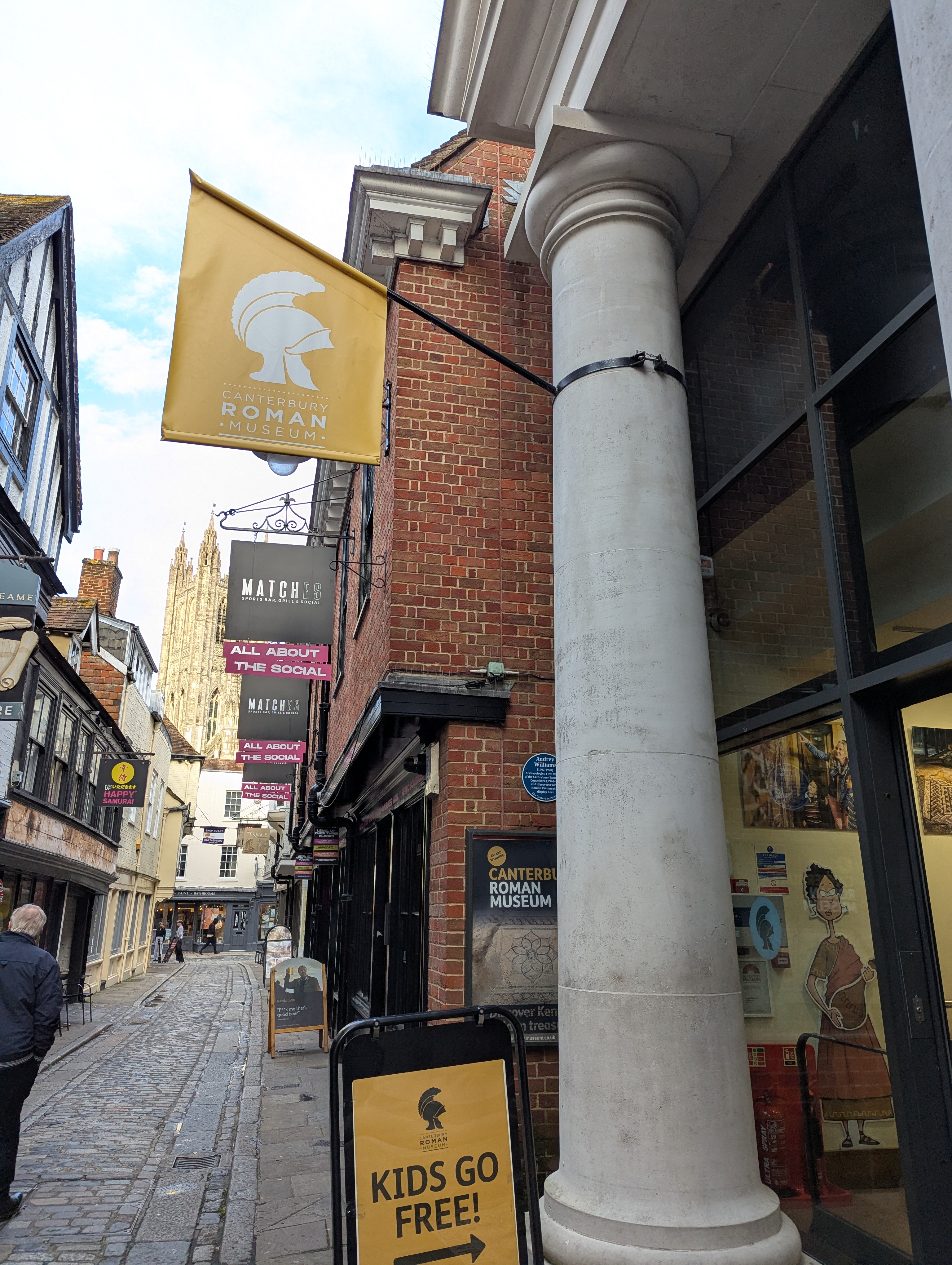
Our final serious destination for the afternoon was the Canterbury Roman museum.

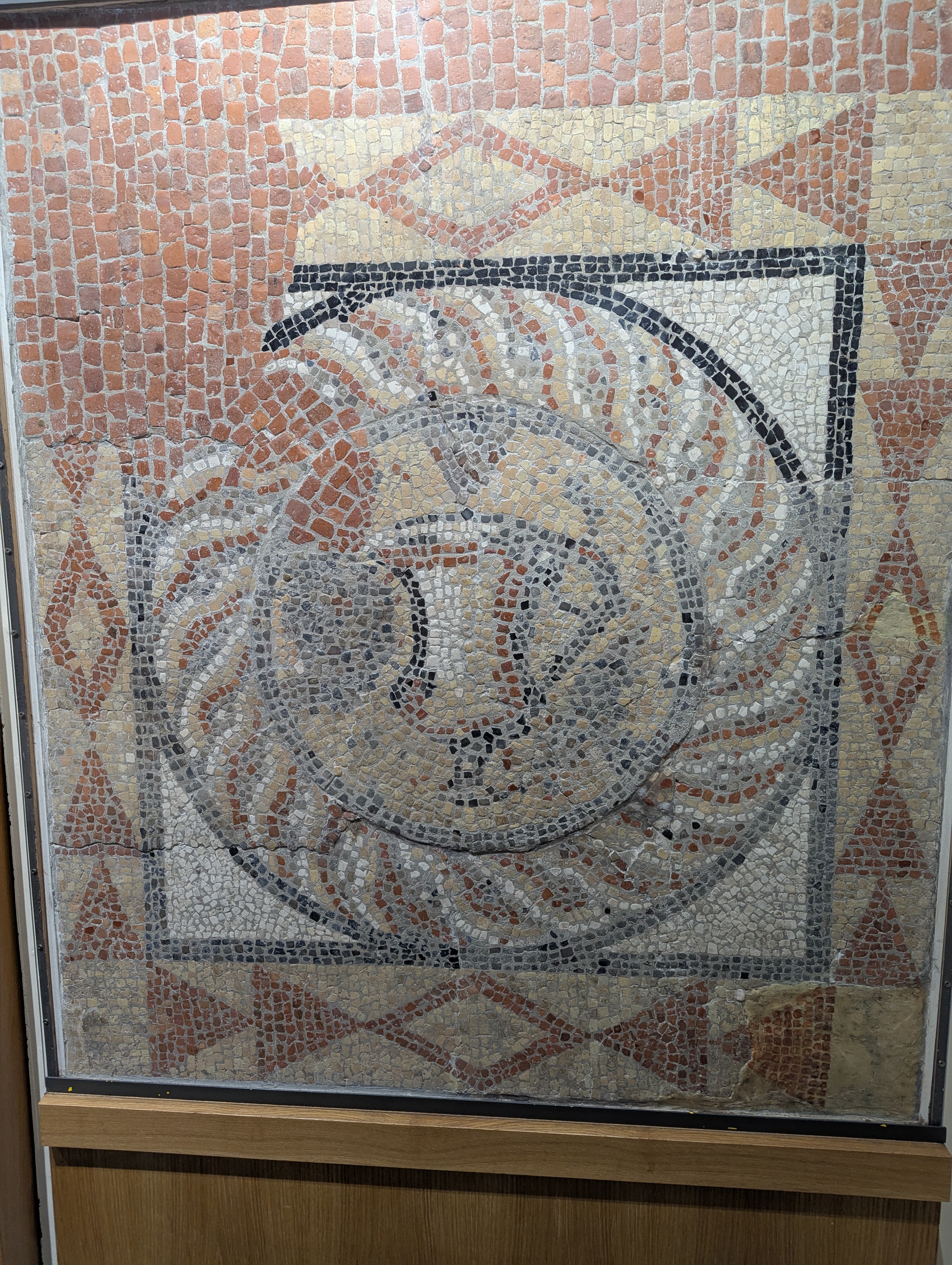
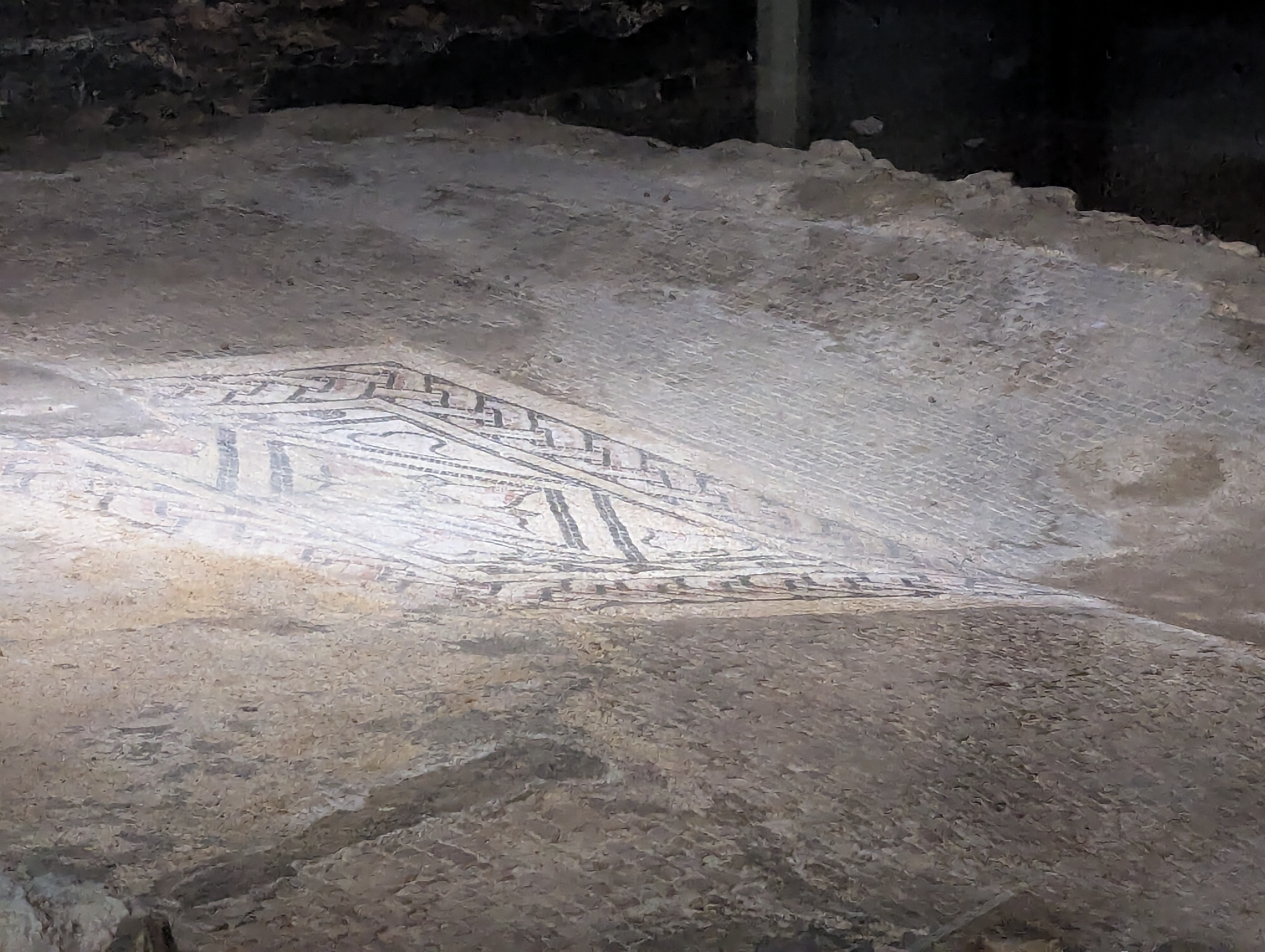
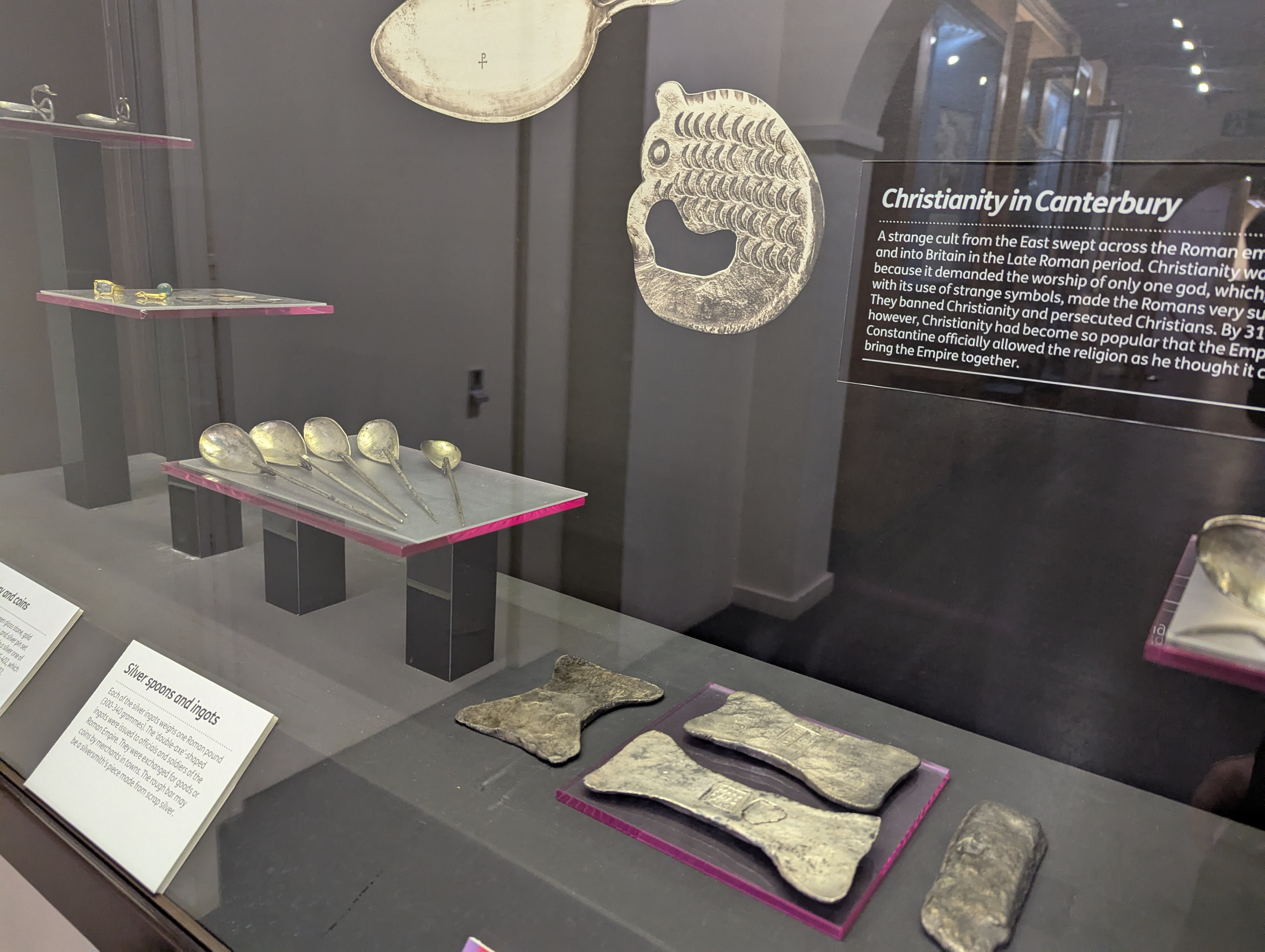
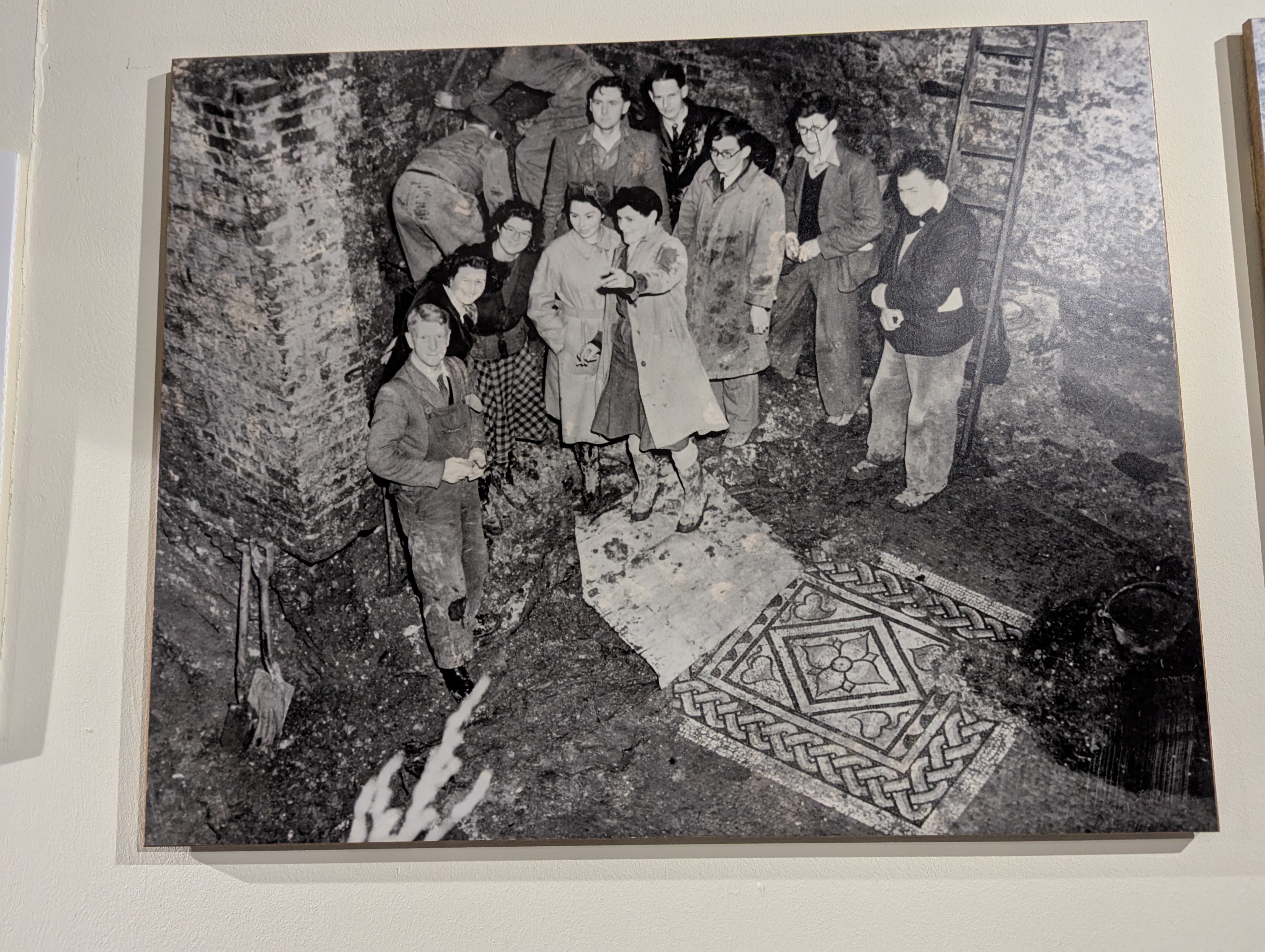
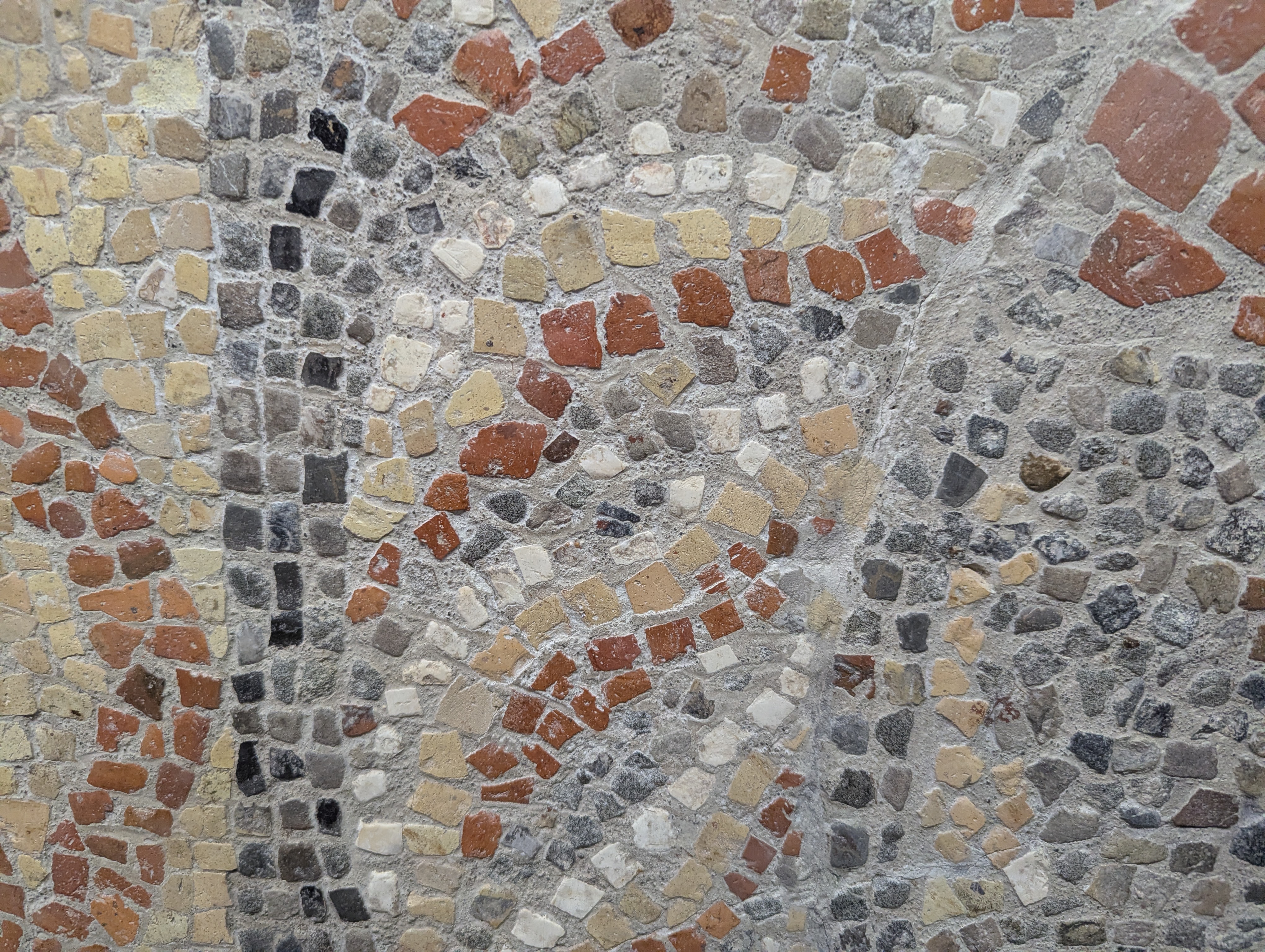
This museum is built on the site where a Roman floor mosaic was unearthed by a public works drainage modernization project. Later, work to excavate rubble from World War II bombings exposed further elements of a Roman home on the same site. These elements are encased and visible for viewing in the museum. Prior to the section of the museum that contains the Roman house, there are interesting exhibits about Roman history in England and Roman life. By the time you get to the excavation site, you feel awfully darned smart about the Romans.

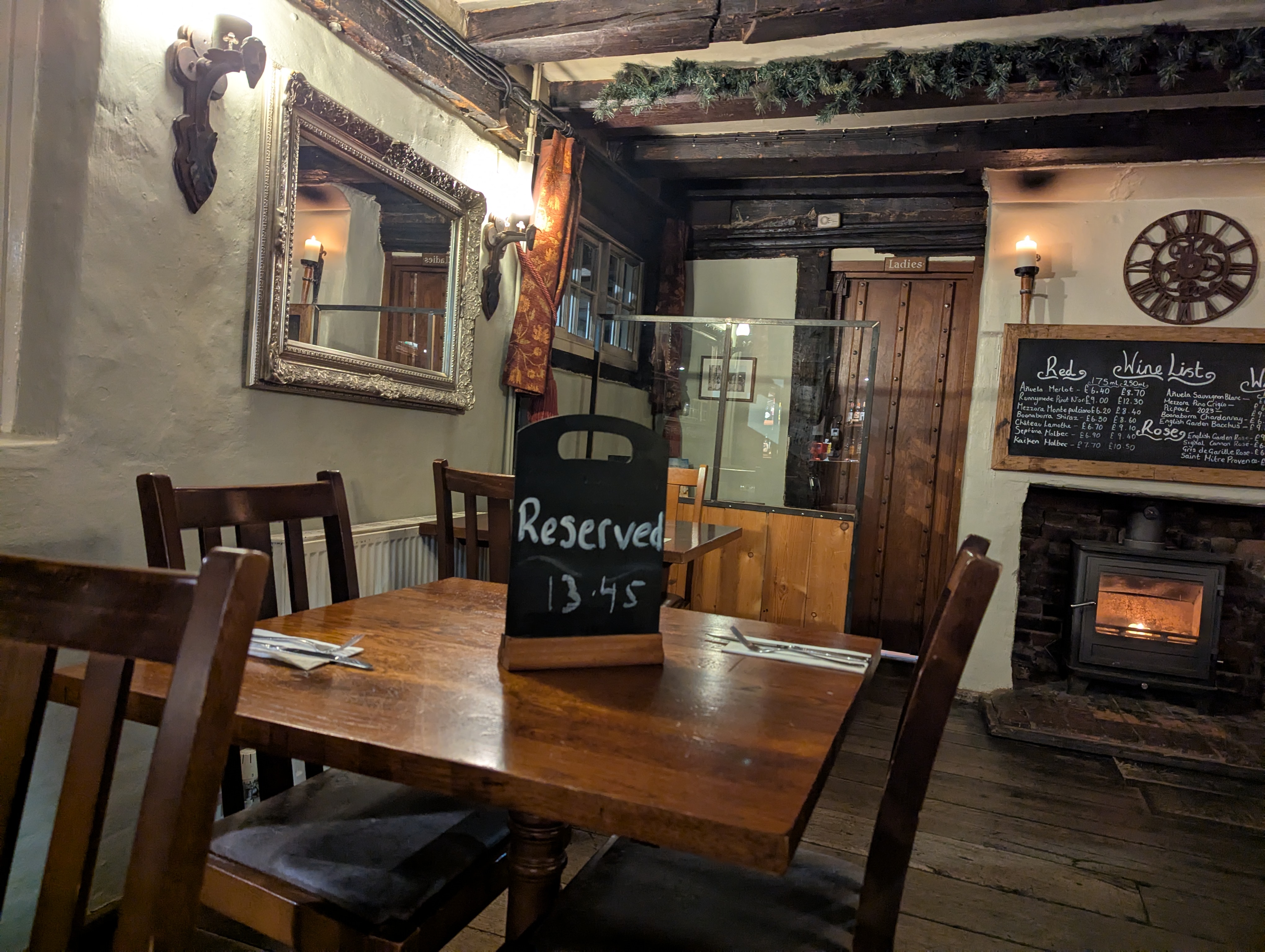
We ended the day with a nice walk through town and along the river and dinner at the oldest pub in Canterbury, the Parrot, dating back to the 1400s. Pretty cool place for a pint.

Charing Cross to Royal St. George’s

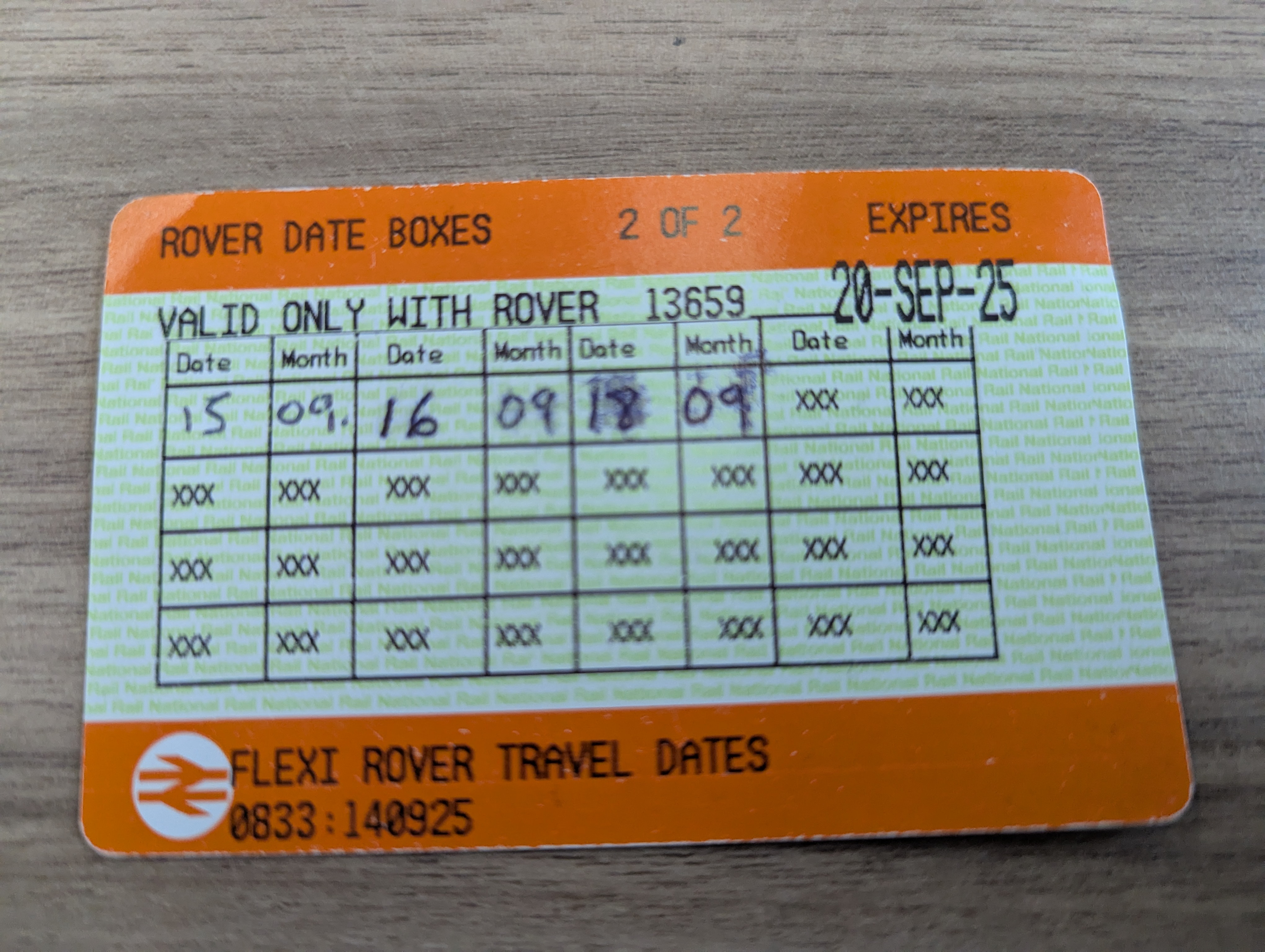
We had such a wonderful time in East Anglia on our last trip that, with four days between matches on this trip, we decided to spend some time in Kent. The regional train system is a bit different there from East Anglia. Instead of a pass you can use any three days over a seven-day period, you can buy a three-day pass. That worked well for us given the relatively shorter time we would have in Kent versus East Anglia.

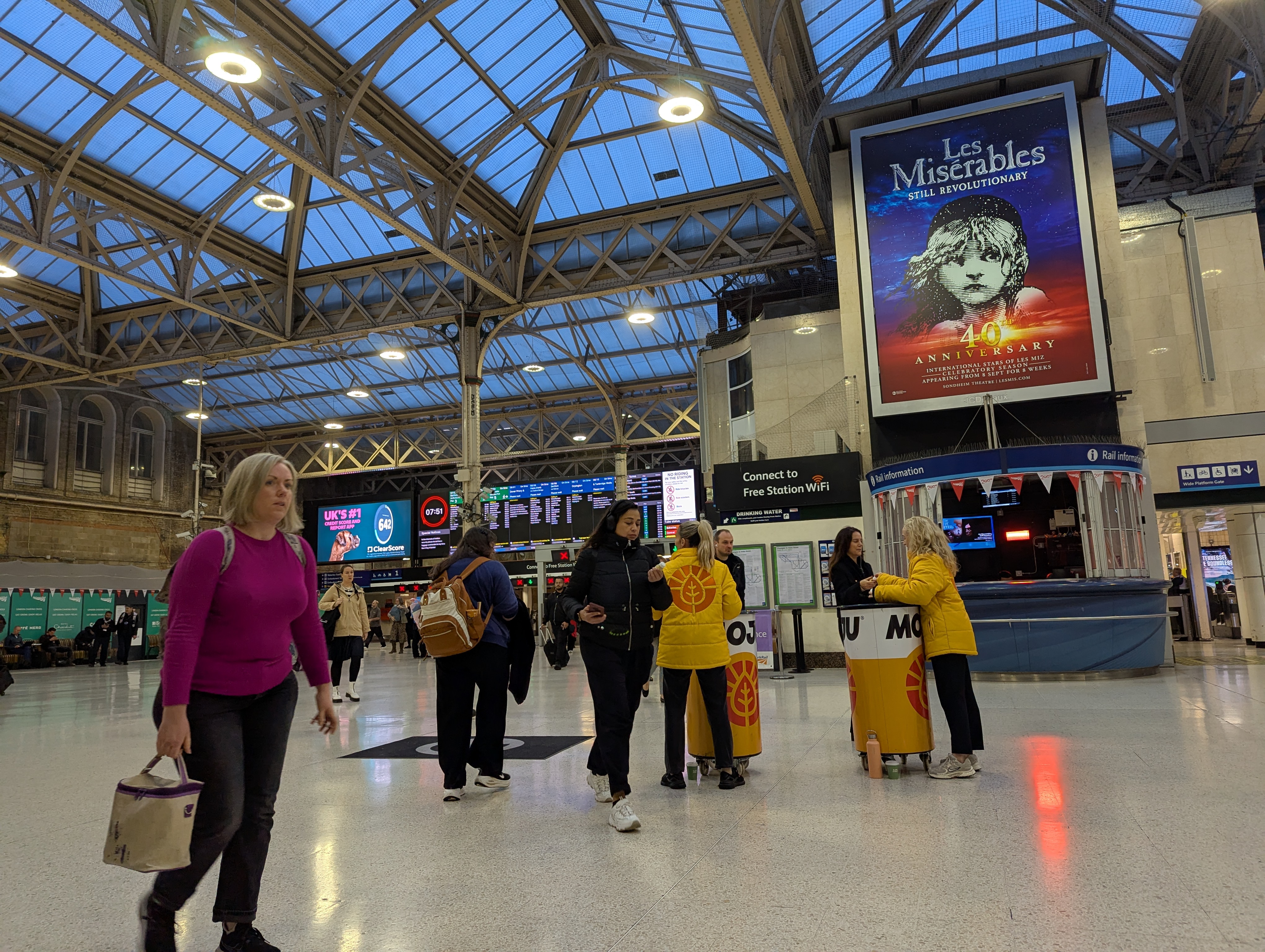
On Wednesday morning we got up relatively early to get on a train from Charing Cross. As we waited for the track the train would be on to be announced at Charing Cross, some workers were handing out samples for an immunity drink called Moju. In contrast with other samples I’ve seen handed out around London, this one seemed very popular with the arriving passengers. I saw very few decline the small bottle. My husband decided to give it a try. He was unimpressed. “Unimpressed” is the wrong word. He seems to think that rather than being given this spicy mango juice for free at the train station, people should be paid to drink it. Hopefully, he is now immune to whatever it is that Moju will guard against. After his critique, I decided to take my chances with the germs that be.

We ultimately boarded the train and rode to Swanly, changing again at Sevenoaks to ride the rest of the way to the Canterbury West station. The weather was brisk as we waited for the train changes and I was glad I had my hat and gloves.

We were expecting rain the next day, Thursday, so we designated Thursday as the day we would spend time in Canterbury. After arriving in Canterbury on Wednesday, it was our plan to drop our luggage off at our hotel, aBode Canterbury, grab a quick lunch, and then take the train to Sandwich.
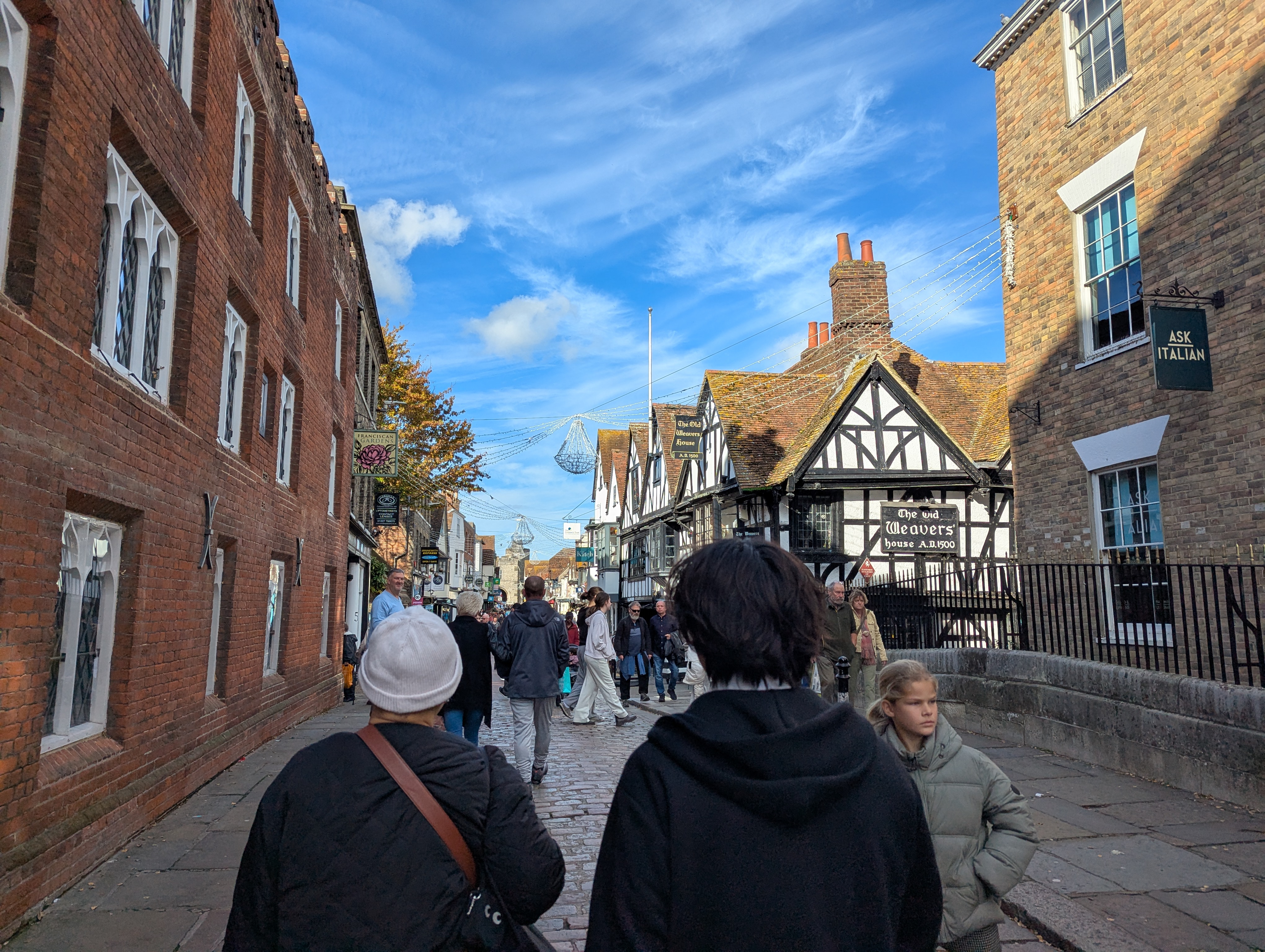
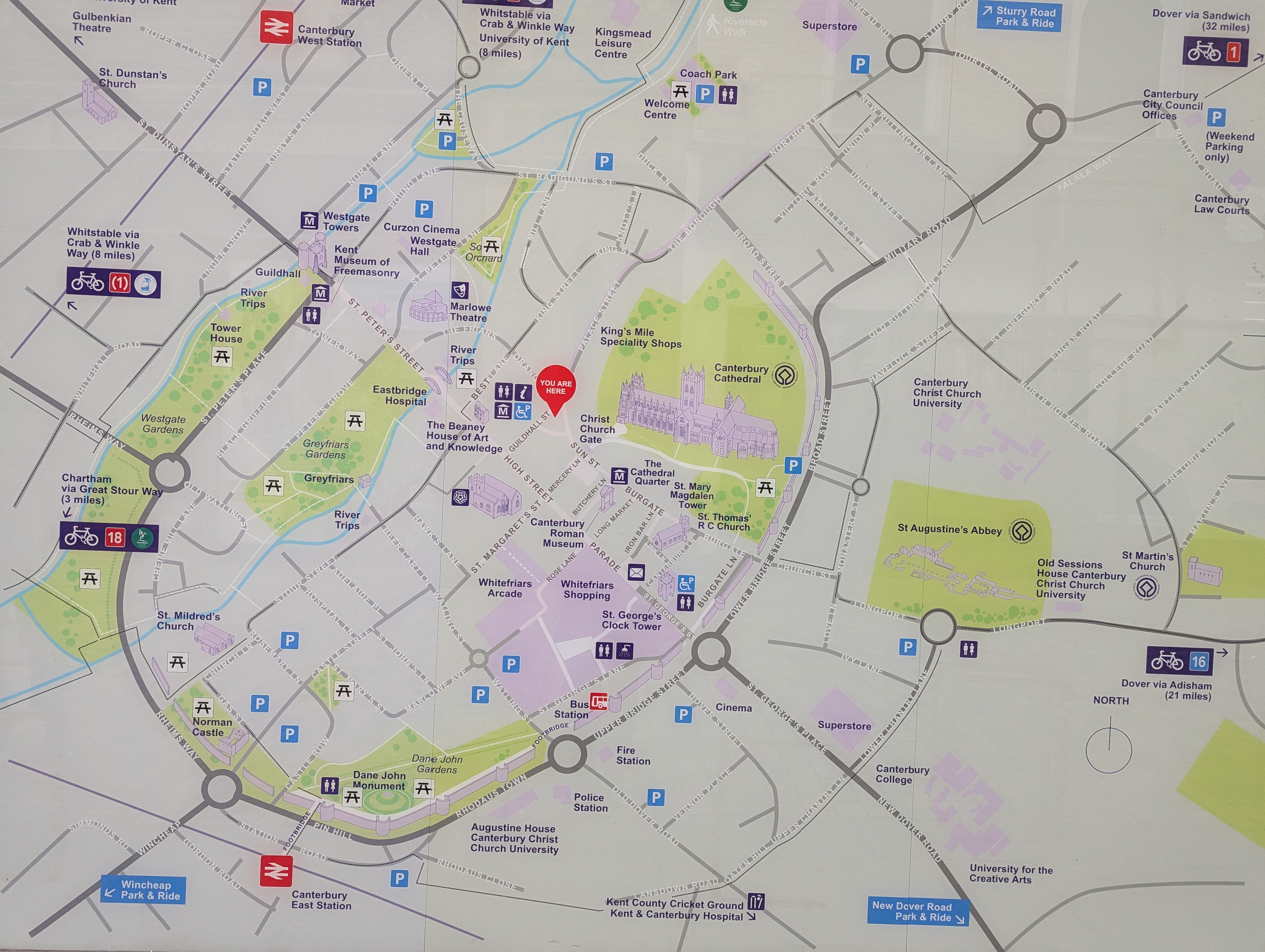
Canterbury city center is roughly in a circle, like Chicago’s Loop but a thousand times smaller. (That may not be a factual representation of scale.) aBode is on High street, which cuts the circle in half, quite well located. One of the things we noticed right away on our way to the hotel was signs for punt boat operators in Canterbury. Since we had just done that in Cambridge, it was not in our plans for this trip.

We completed all the steps of our actual plan, returning to the train station to get the next train to Sandwich. What he had planned to do in Sandwich was find the Saxon Shoreway trail that allows you to walk South along the coast for seven miles to a town called Deal.

We successfully found the trail but took what I perceived as a detour on the part of the path that went through The Royal St. George’s Golf Club. I’m not a golfer, have golfed maybe three times in my life excluding the decidedly not-real golf activity of mini golf. My husband, on the other hand, is a prolific golfer and also loves to watch the sport. As an insomniac, I watch the sport when I desperately need to catch up on sleep. In retrospect, my husband was doing the navigating at this point, so I suspect the “detour” to the golf course was not quite as unplanned as I may have initially believed.

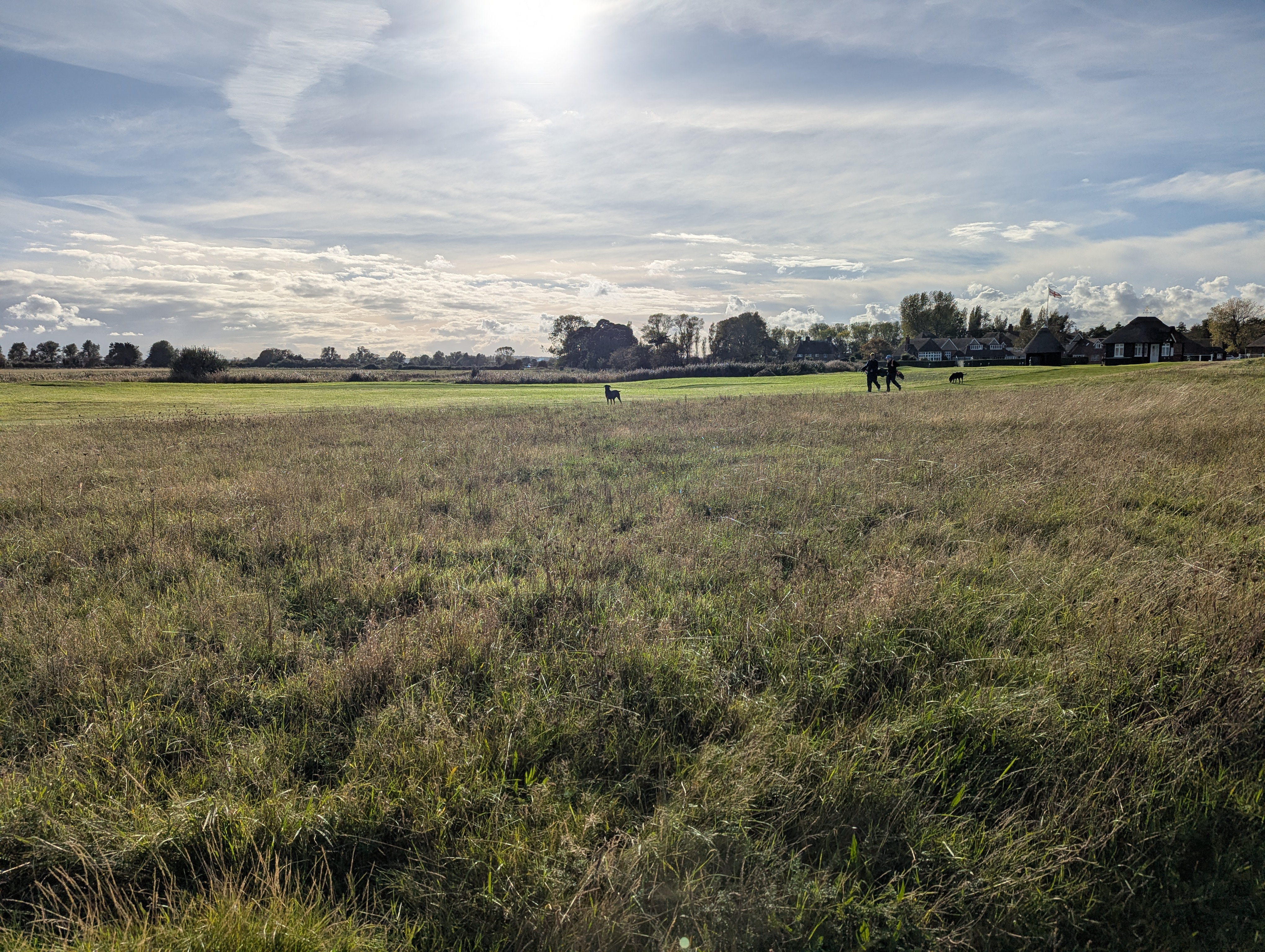
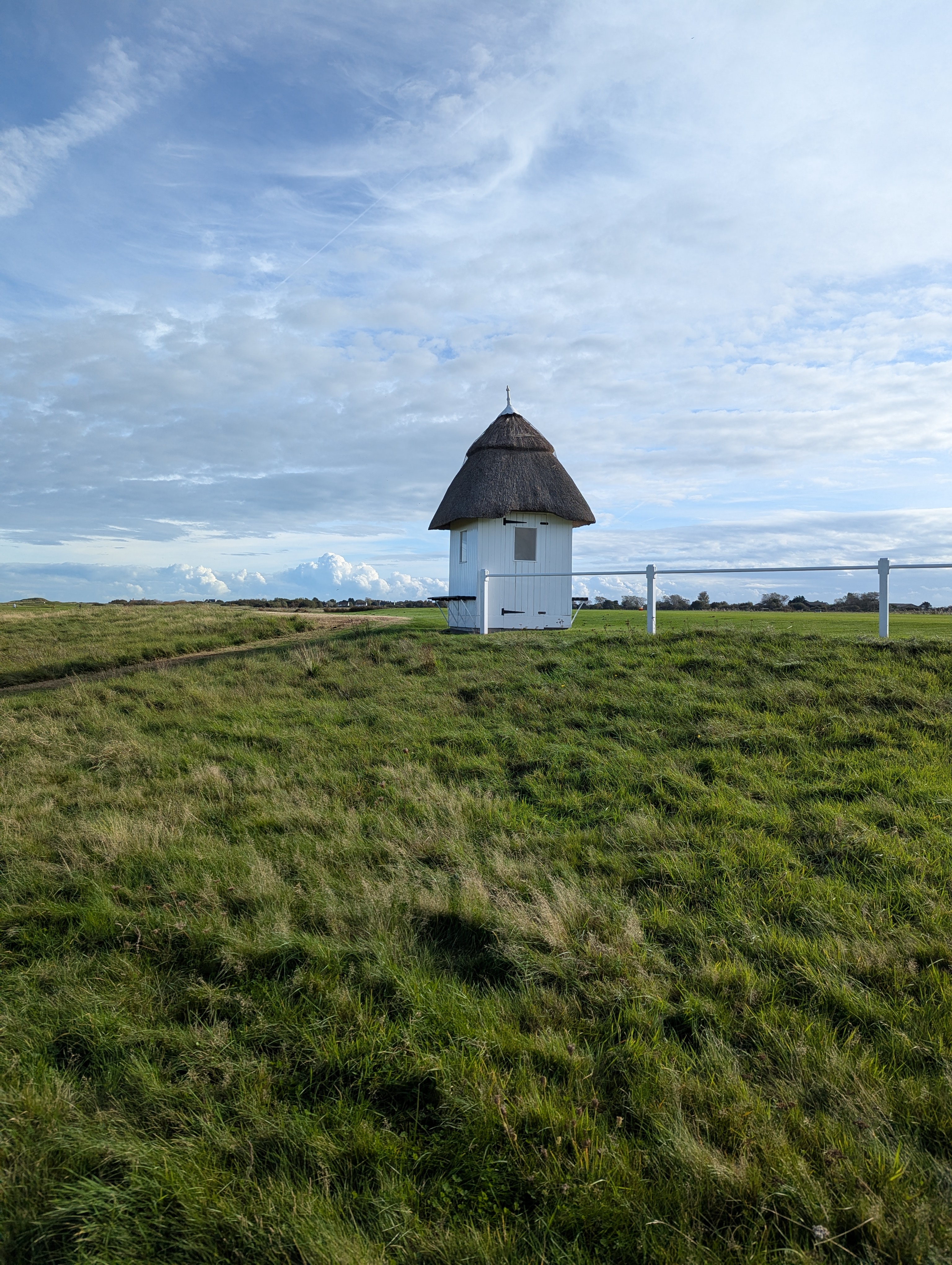
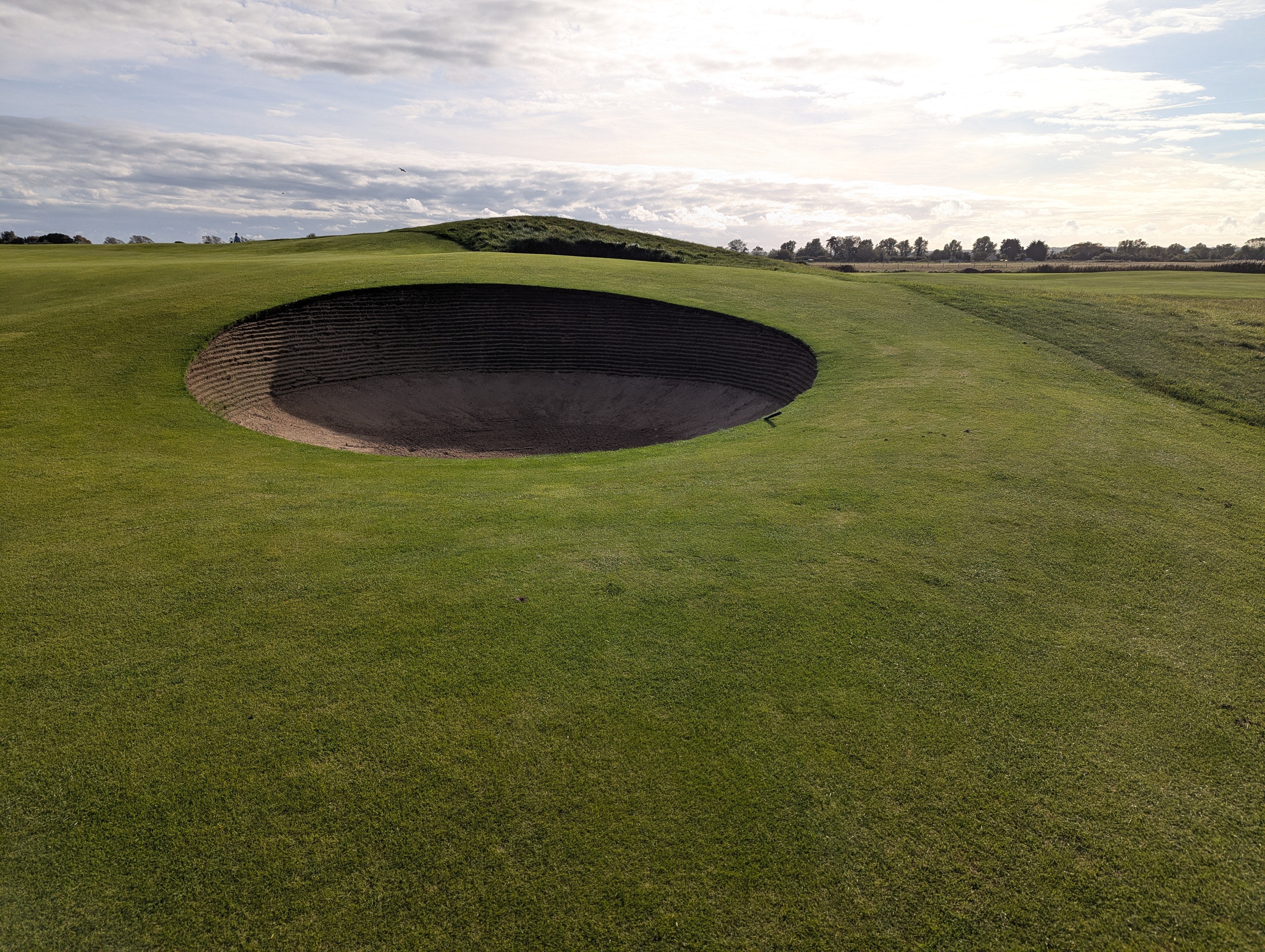
I think golfers and non-golfers can all agree that most golf courses are quite lovely places to be. As we arrived on the public foot path at the edge of the course, I could see that the Royal St. George’s was something special. Undulating hills, amazing shadowy bunkers, grassy roughs and the sun shining just so on all of it. The pubic foot path goes right through the course on its way to the Sandwich Bay. At the edge of the course we stopped in the Pro shop which was open to the public and my husband reviewed some gaudy shirts, which he appeared not to be tempted to buy. Then we followed the path over the course and across the street to the Bay.

I gave my husband a chance to review this before I published it and it was very important to him that I make sure you understand that this course was the host of 15 British Opens and that he merely hoped to be able to see it from the path. The fact that he got to walk across this hallowed ground was both a surprise and a life experience he treasures.

By the time we reached the bay we had hiked quite a long way and I was ready to find a bathroom. We had seen no bathroom options since leaving the train and there clearly were none along the path to Deal. It was also getting to be a bit late to start a big hike and we suspected it might be dark before we arrived in Deal. So we made a decision to turn back toward town and see what there was to see in Sandwich.

As we left the golf course we saw two golfers starting a round with their dogs. What a place to walk your dog.

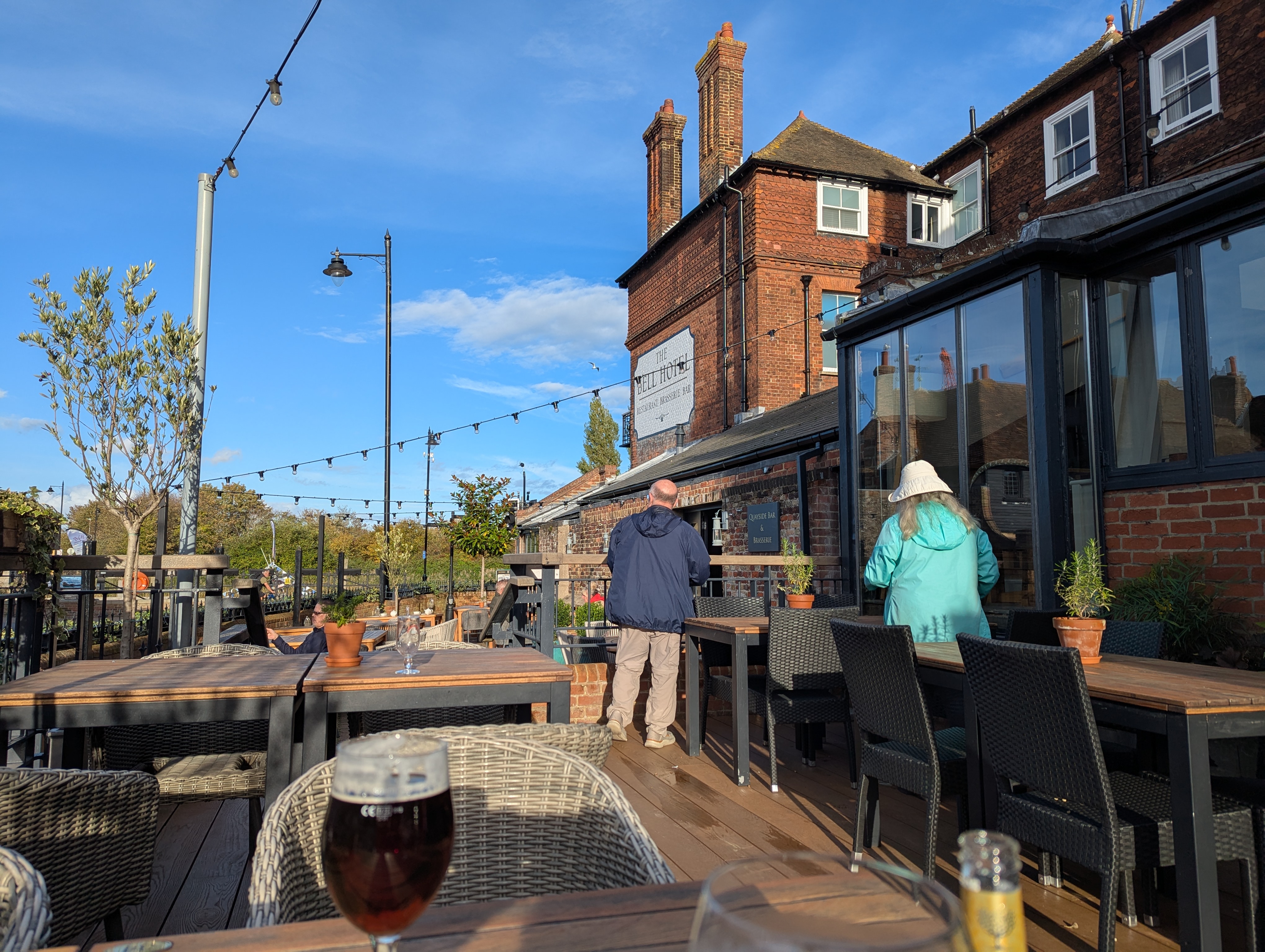
In Sandwich we stopped at the lovely Bell Hotel near the water and had a drink and an early dinner on the porch. I had wild mushrooms on toast and a tomato pepper soup along with a gin & tonic.

While the patio was bathed in sun, it was lovely. As the sun went down, a cloud of mosquitoes emerged so we closed shop and headed to the train station. Even the train station, which was pretty far from the water, had a lot of mosquitoes. We kept moving up and down the platform until the train came to avoid them.

Upon arriving back in Canterbury we were able to check into our room. The backstory of our hotel selection in Canterbury was that after we returned from our last London trip, the one in which we traveled through East Anglia, my husband did something he had never done following a trip to London. He counted up every expenditure we had made and worried about it. Not having a paycheck coming in has been a real mental challenge for him and, in a life that did not include me, I think he’d be tempted to live on his Social Security check.

As I mentioned before, my job before I was retired was helping my employer create financial planning software for planners employed by our firm. The software could complete a monte carlo analysis to understand, based on assets and likely expenditures, what is the probability you’ll have enough money to live on for the rest of your life. I used software many times to run our own projections. To be clear, I have some guilt about using money in this way in a world that has so many needs, but I know we can afford these trips for a while. It would be ideal and better for our financial future if Arsenal could just go ahead and win the Premier League this year.

In any case, I realized that the hotel price point we originally set when we started this going-to-London-to-watch-Arsenal thing had slid upward a bit over time, maybe more than inflation would suggest, and it’s been a long time since we had anything but a great hotel experience. To give my husband greater peace of mind, I suggested that we could downgrade our preferred price point and save a bit there and take a bit more risk that maybe every place we stay is not delightful. So this trip, that’s what we tried to do. We could not do it for the first weekend in London–hotels were just too tight due to what seemed to be Diwali celebrations and a literature convention–but we did it for our hotel in Canterbury and for our hotel after our return to London.

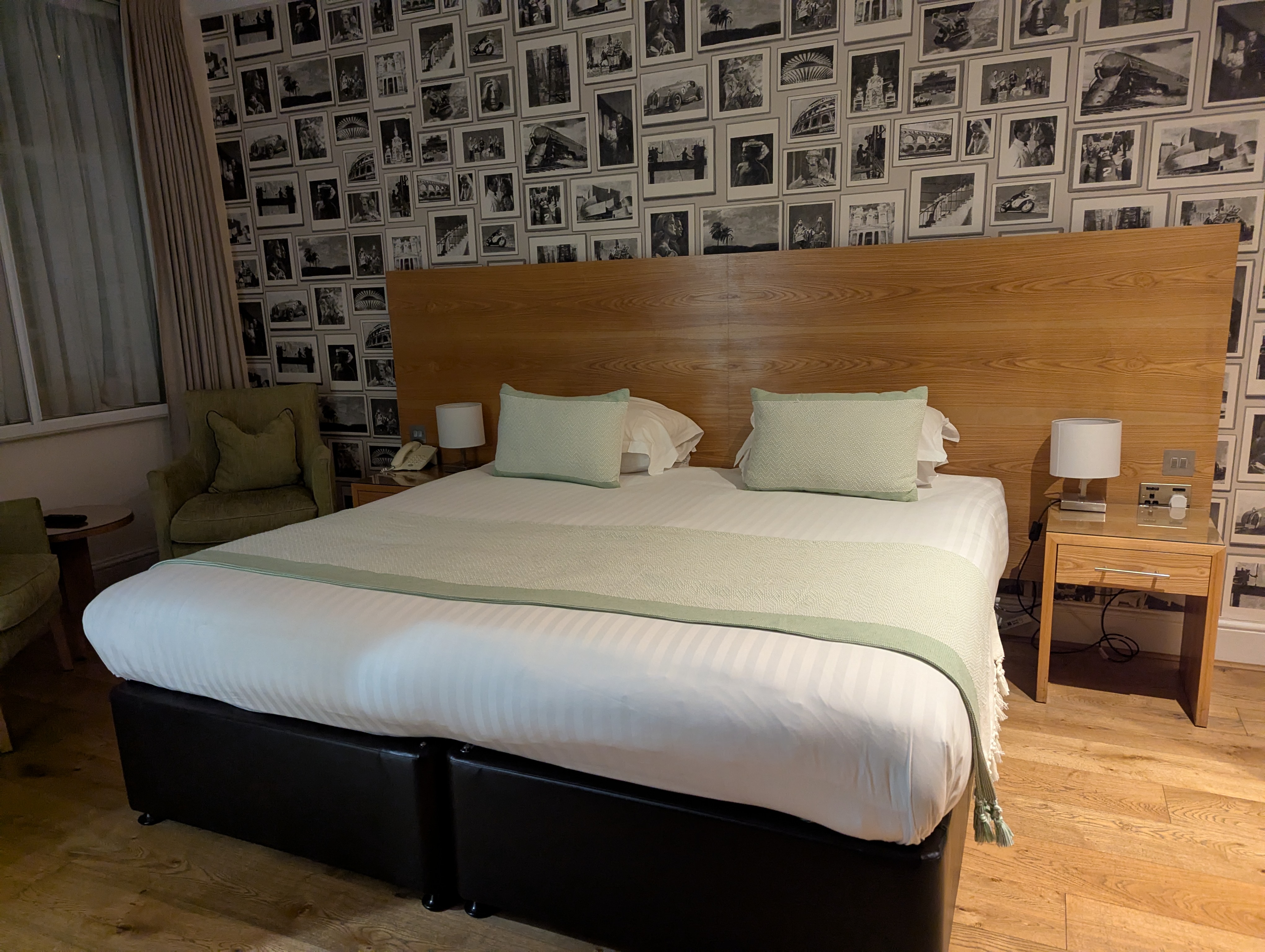
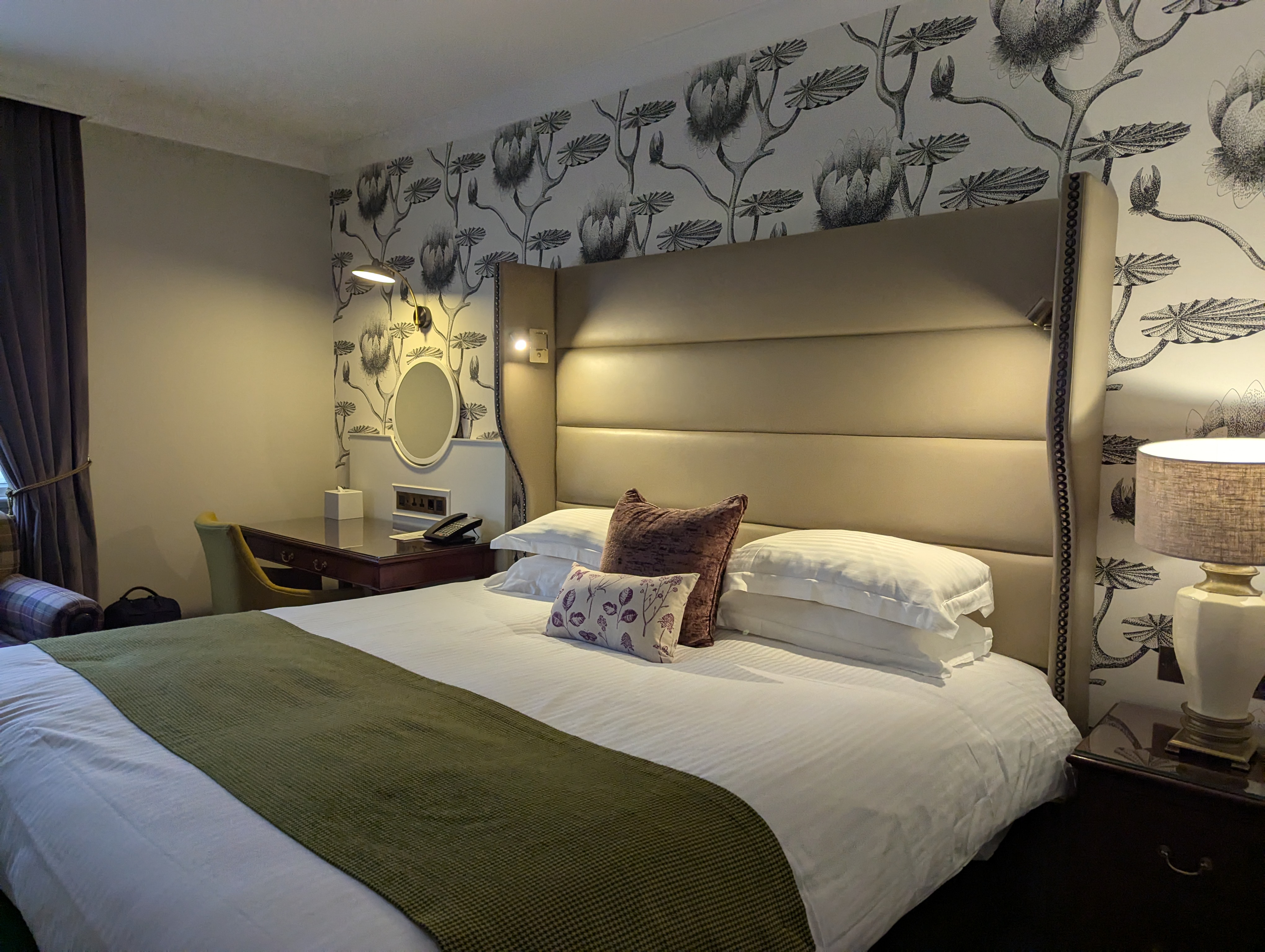
And on this backdrop, I can tell you our hotel in Canterbury was maybe not the luxe experience that you long to reach at the end of the day but was just fine. Our room was spacious, had wooden floors which I like, and nice lighting that made it appear to have more character than maybe it actually had. The bathroom was fine and had a combined shower/tub combo. It had a very functional towel warmer that like all towel warmers, it seems, was not quite close enough for you to be able to reach from the tub. You have to either remove it first and place it closer (no longer warm) or not remove it before your shower and stand dripping on the floor to retrieve it (beautifully warm). Or, what I did at the aBode, call my husband to deliver it. This warm towel became especially important, as I’ll explain.

But first, some context. On the train ride to Canterbury we had been reading in sports news that on the day before the match we had just seen, Atletico Madrid had held a practice at the Emirates. Upon arriving they noticed that the hot water was not functional in the visitors’ locker rooms and had complained to the club. They ended up having to shower back at their hotel and made an official complaint against Arsenal. Arsenal was ultimately forced to apologize. Arsenal’s side of the story was that upon learning the hot water was not working they managed to restore it before the end of the scheduled practice, but Atletico had ended their practice early. Both an excuse and maybe a bit of shade against the team Arsenal just beat. Maybe practice a bit longer and you’ll have both hot water and a win.

In any case, when I woke up on Thursday my husband informed me I was about to get a lesson in empathy. Our room, which had very warm towels available assuming appropriate steps were taken, had no hot water.

London autumn

Fall has always been my favorite season. Cool, crisp days. Red and yellow leaves. Apple pie. I feel melancholy in Fall–an end is near–but for some reason I like that.

This Fall hasn’t much happened in Chicago. It’s been warm, sunny and while some leaves have dropped, they’ve mostly just dropped brown. While I hoped that was an anomaly, it seems Fall is delayed in London as well. Not much going on in the Fall leaves department although I can confirm that the days are cool. Wet and rainy as well. Not that that is necessarily a Fall thing. It’s kind of a London thing.

Hotels were in short supply for this trip and we ended up getting one in the Kensington area. My husband has never loved that area. In his mind, there are more interesting neighborhoods. After staying there once many years ago, we’ve never been back. A very nice thing about Kensington is that it’s closer to Heathrow than some of the other places we’ve stayed so a very quick trip in and out. It’s on the Piccadilly tube line so you can go straight to The Emirates without the crazy switch at Kings Cross St. Pancras where hundreds of Arsenal supporters are stacked up trying to change trains. It’s also kind of quiet and relaxing. There are many restaurant options without the hustle and bustle. In short, perhaps worthy of reconsideration for hotel selection.

Anyway, we found ourselves back in London on Monday for a Tuesday match. Our flight arrived after noon on and a driving rain was visible out the windows at Heathrow.

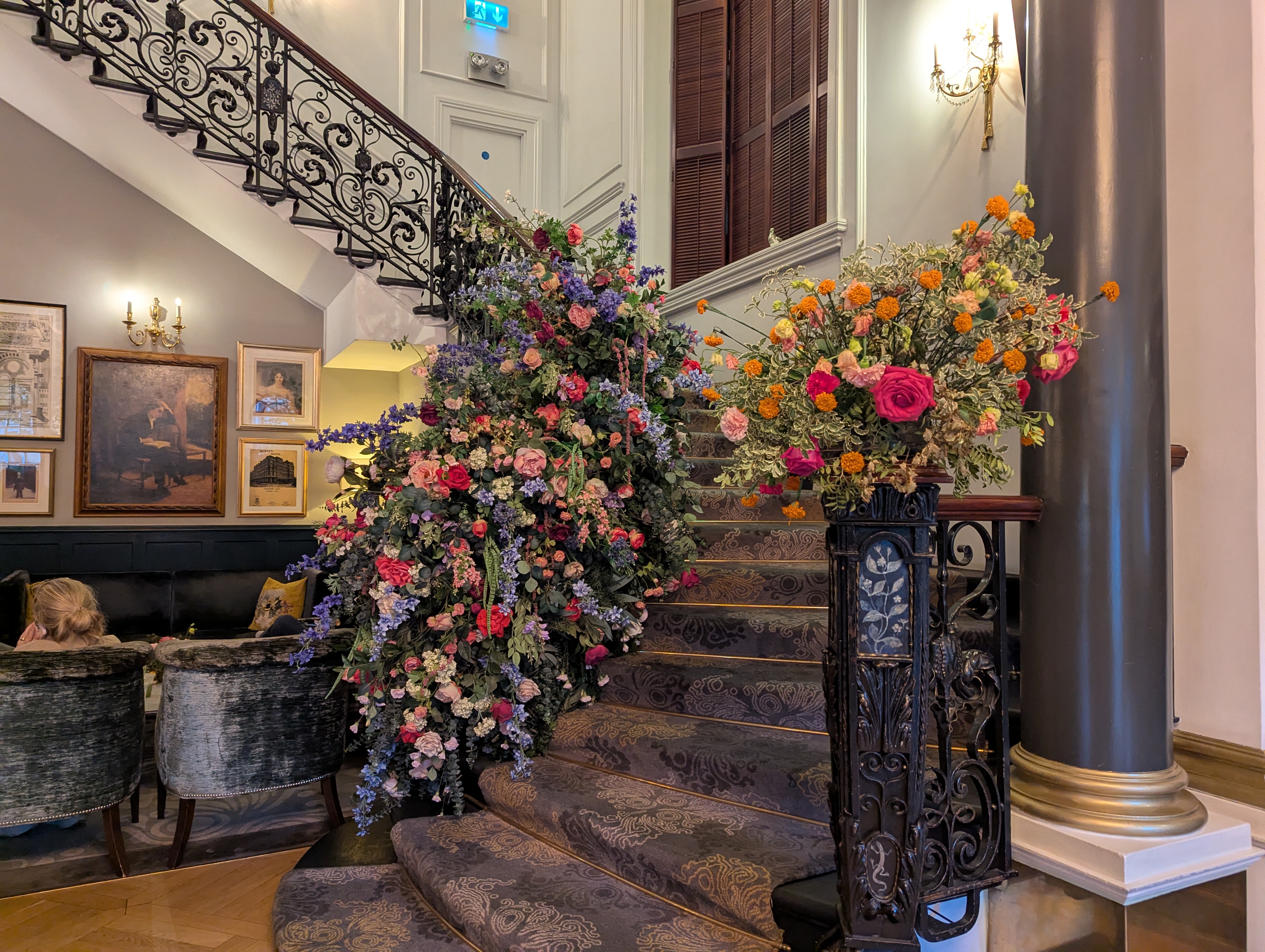
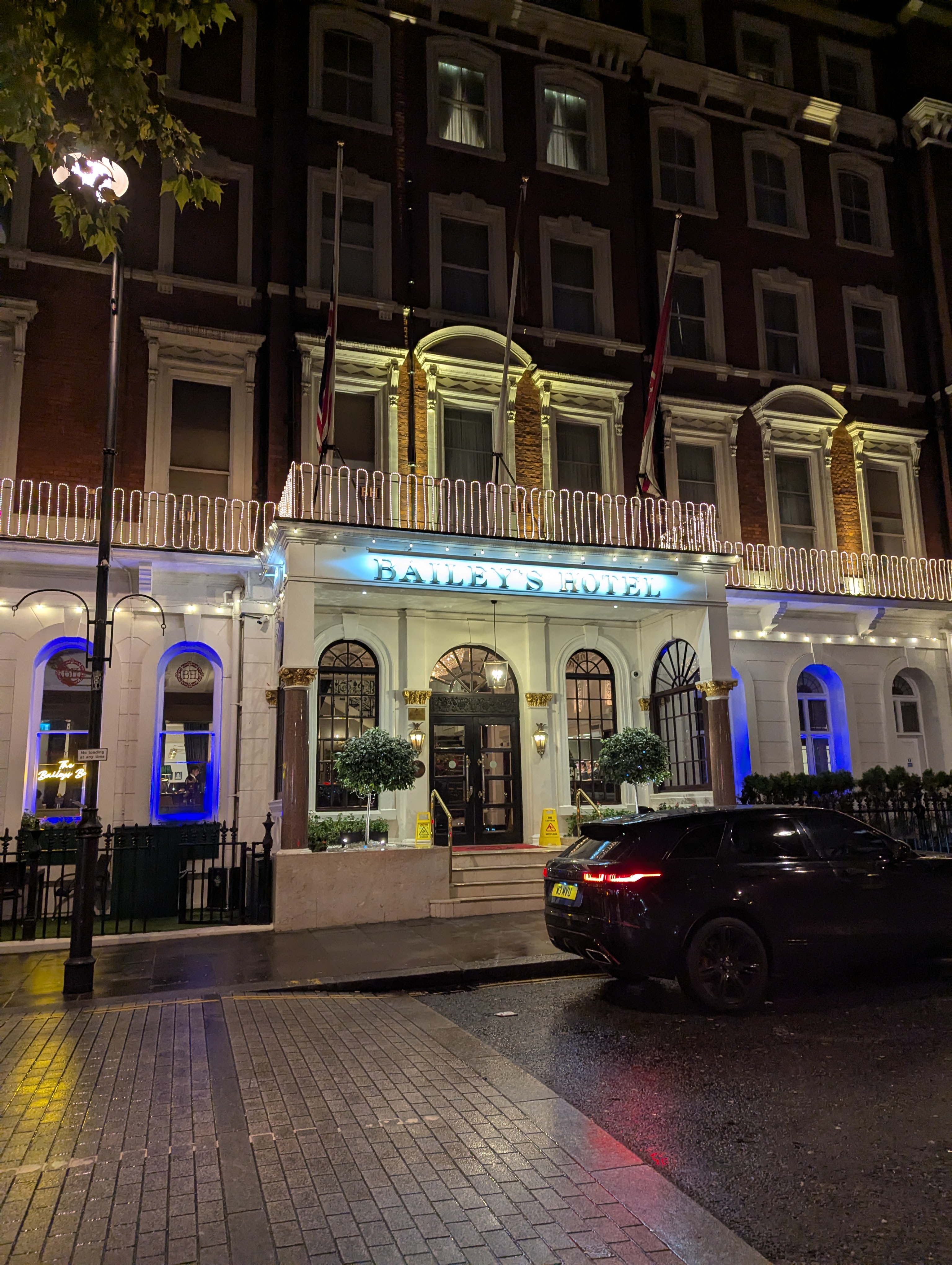
A big advantage of the hotel we chose this time, The Bailey’s, is that it’s across the street from the Gloucester Road tube station. I really appreciated not being out in that rain for more than a street crossing, even with my knee-length rain coat. It’s also kind of a quintessential charming, old London hotel. Small, pretty rooms with character. This hilarious stuffed cat decor in the lobby.

We got settled in our room and went out to get lunch at the Hereford Arms. We’ve been to this pub before. It’s always good. And, for my husband, they have the London Pride beer he enjoys. I enjoyed one, too, this time.

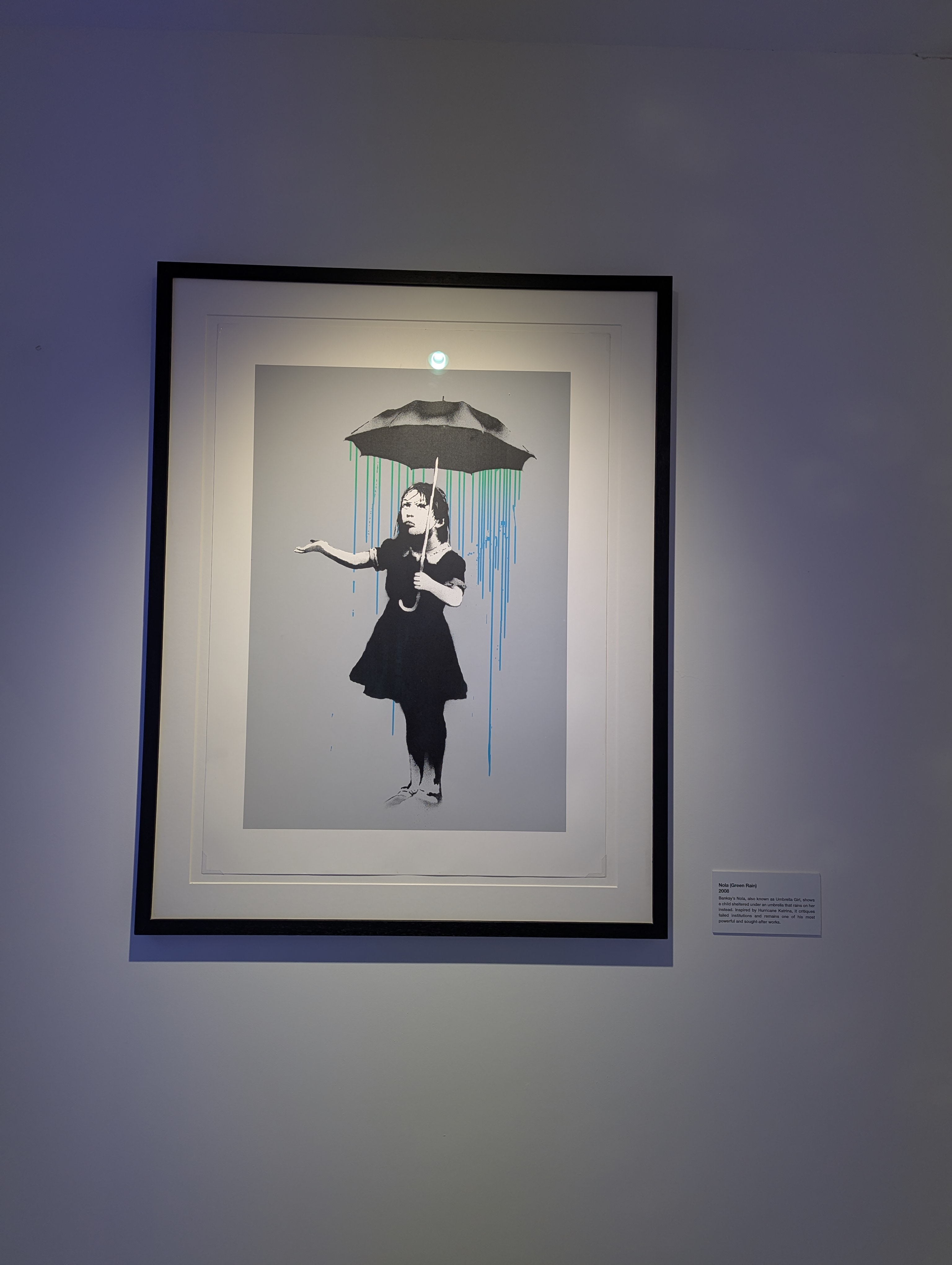
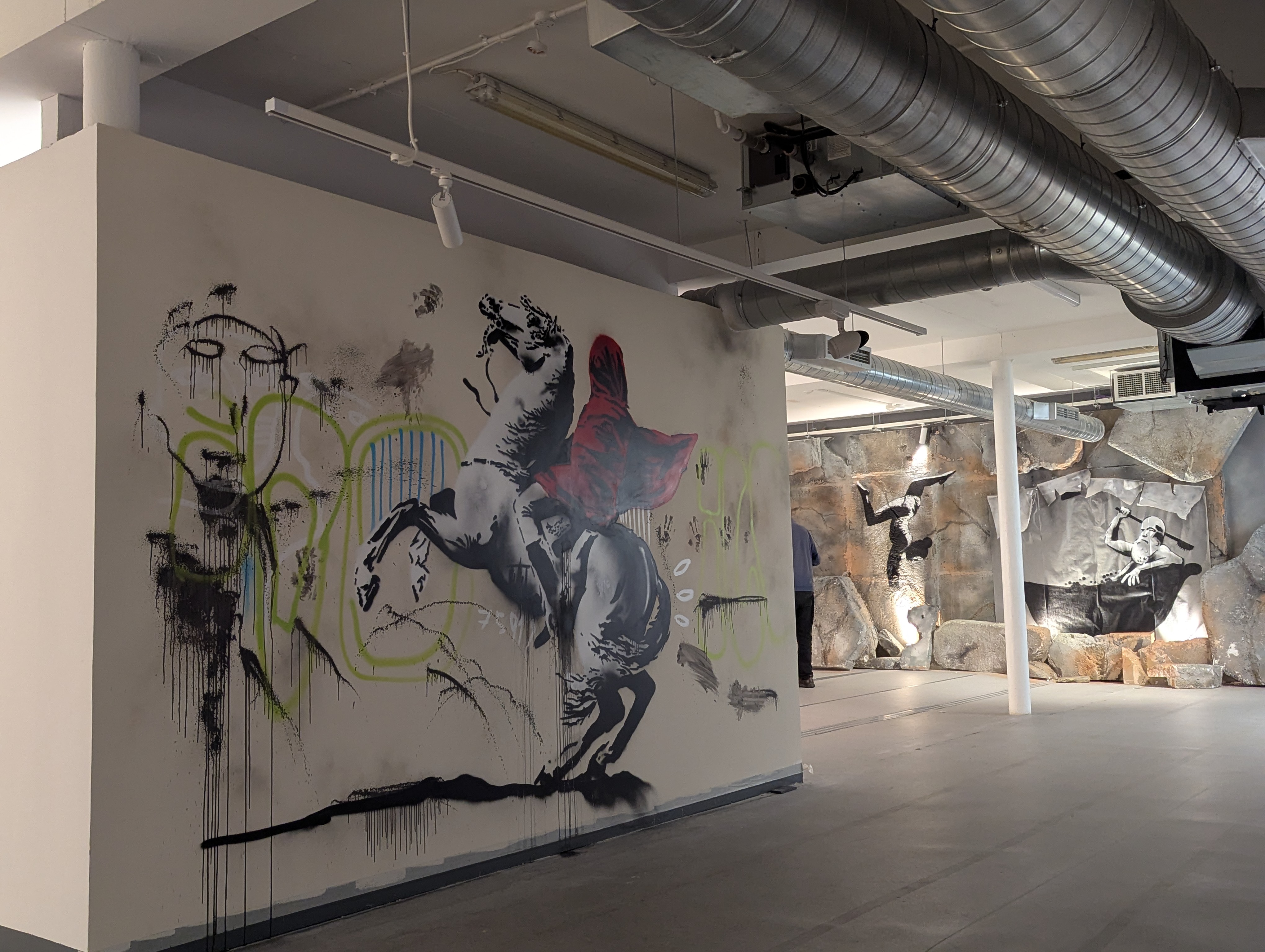
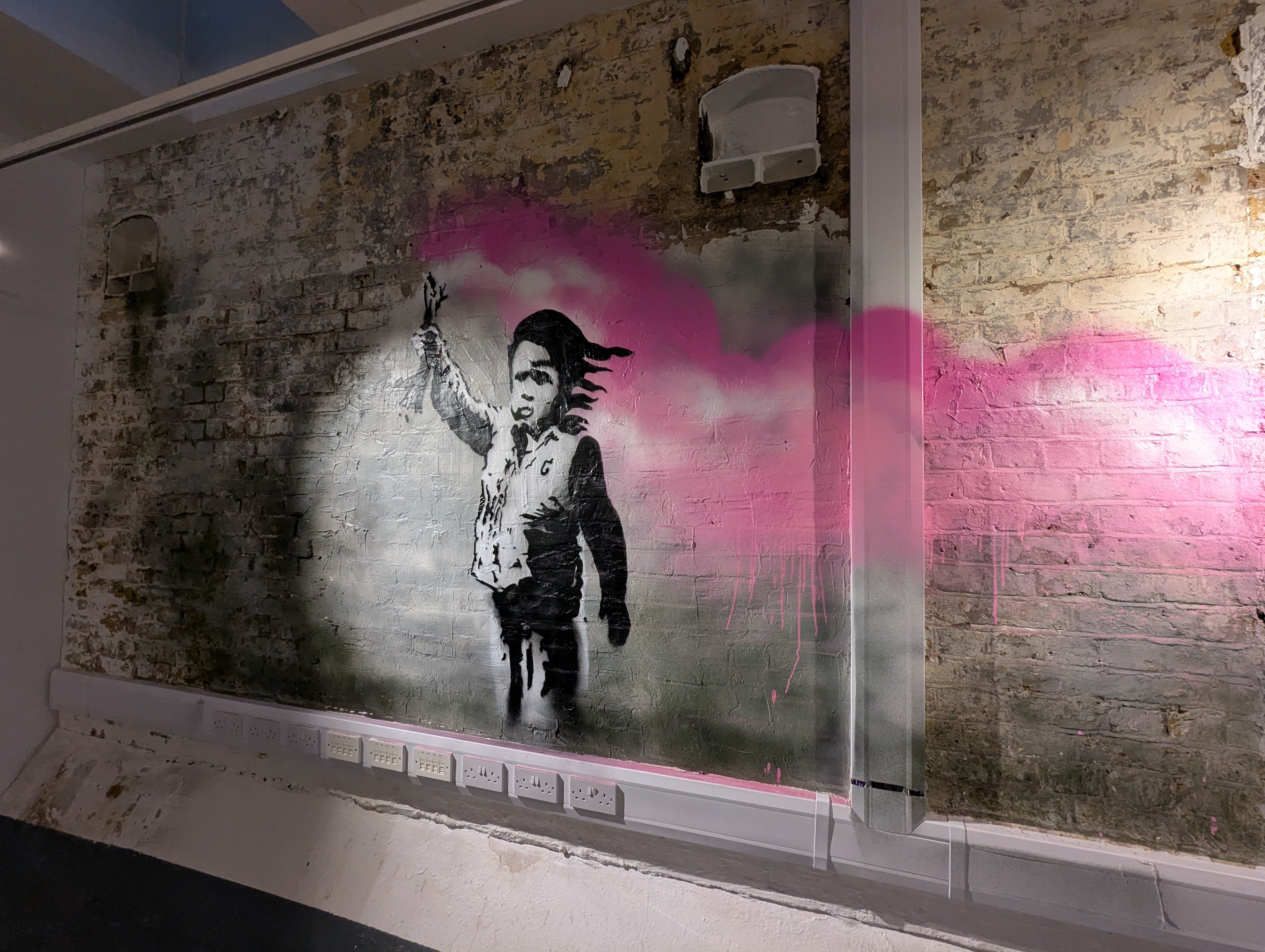
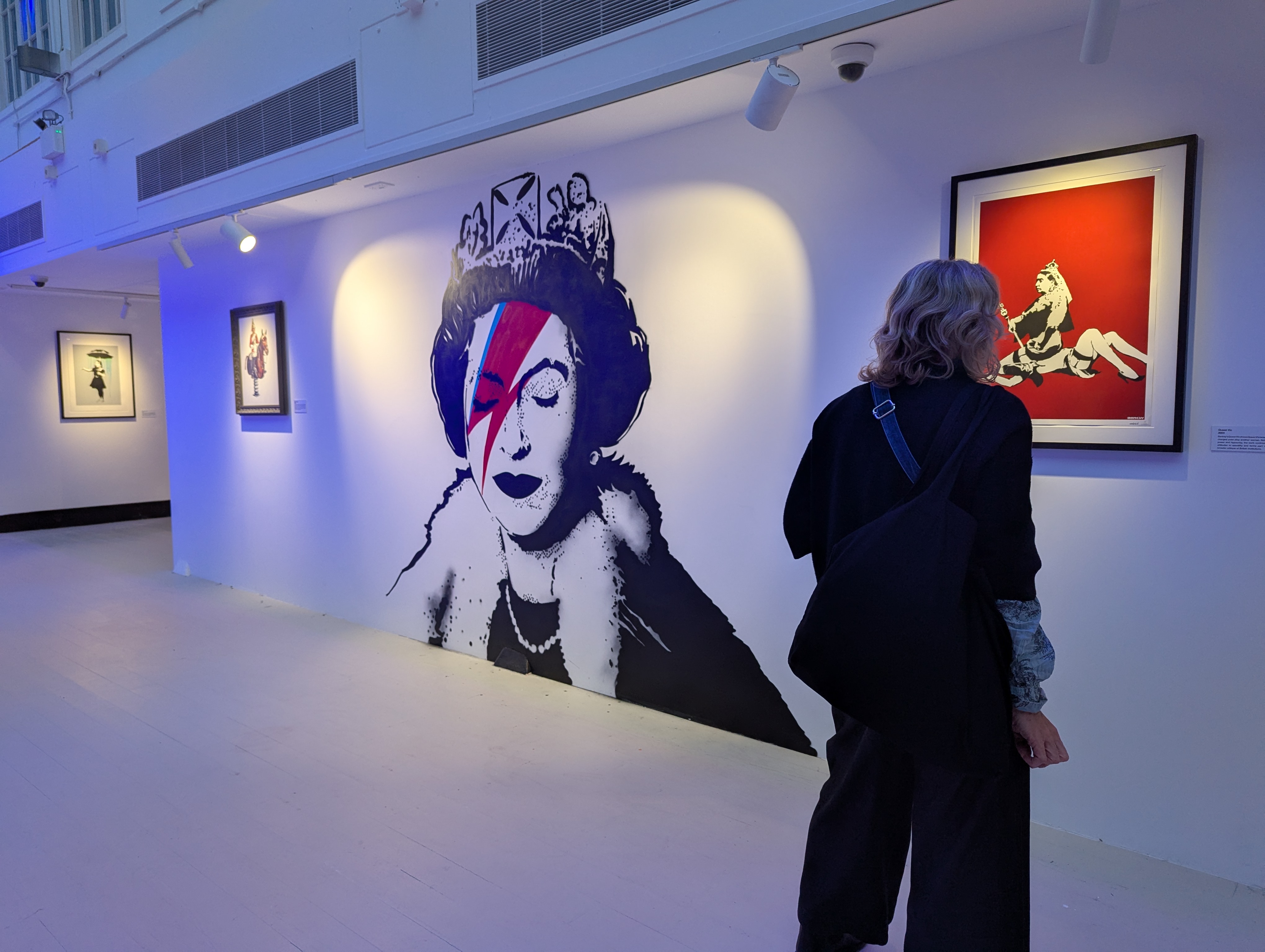
After that we went to Banksy Limitless, an exhibit of Banksy art and history. I enjoy street art and Banksy is interesting given his anonymity–for a famous guy. He is also quite prolific. This exhibit, clearly put together by Banksy or with his blessing, includes a timeline of his art and themes and images of the art he’s created over the years. In most cases, reproductions of the art. In reality, a lot of his art has been covered over across time. He uses stencils that he’s created so it’s possible to do a reasonable reproduction.
It’s unusual to view art at the same time as seeing the artist’s narrative interpretation of what he wanted to communicate. In most cases we view art long after the artist has passed. My husband observed that he likes to decide for himself what the art is about and found it distracting to always be told in this exhibit the artist’s meaning. I suspect the interpretation was necessary because the art is itself commentary on some recent occurrence or social norm. Does the art have meaning if you don’t know to what it refers? In that respect, I guess Banksy’s form of art is like comedy. It’s funny in the moment but does every moment have long-term significance such that it would be funny a few years later when you’ve forgotten what inspired it? And maybe in that sense, when we don’t yet know until much later if the moments were significant, we can’t yet tell if the art is significant. On the other hand, maybe we don’t have to care. Meaning in the moment can also be art.

My favorite exhibit was the film in which they captured the moment Banksy’s picture of the girl with a ballon was sold in auction. As soon as it was announced sold, a shredder built inside the frame activated and the picture was partially destroyed. The people in the auction looked sickened. (I saw some reporting that the buyer was offered to be allowed to void the sale but did not. Later, it was even more valuable after it was destroyed.)

Although one of Banksy’s themes is the peril of commercialism, Banksy himself did not fail to capitalize on this exhibit. In addition to the entrance fee, the final step of the exhibit was a big gift shop. Although we participated in the entrance fee we did not buy the t-shirts or mugs.

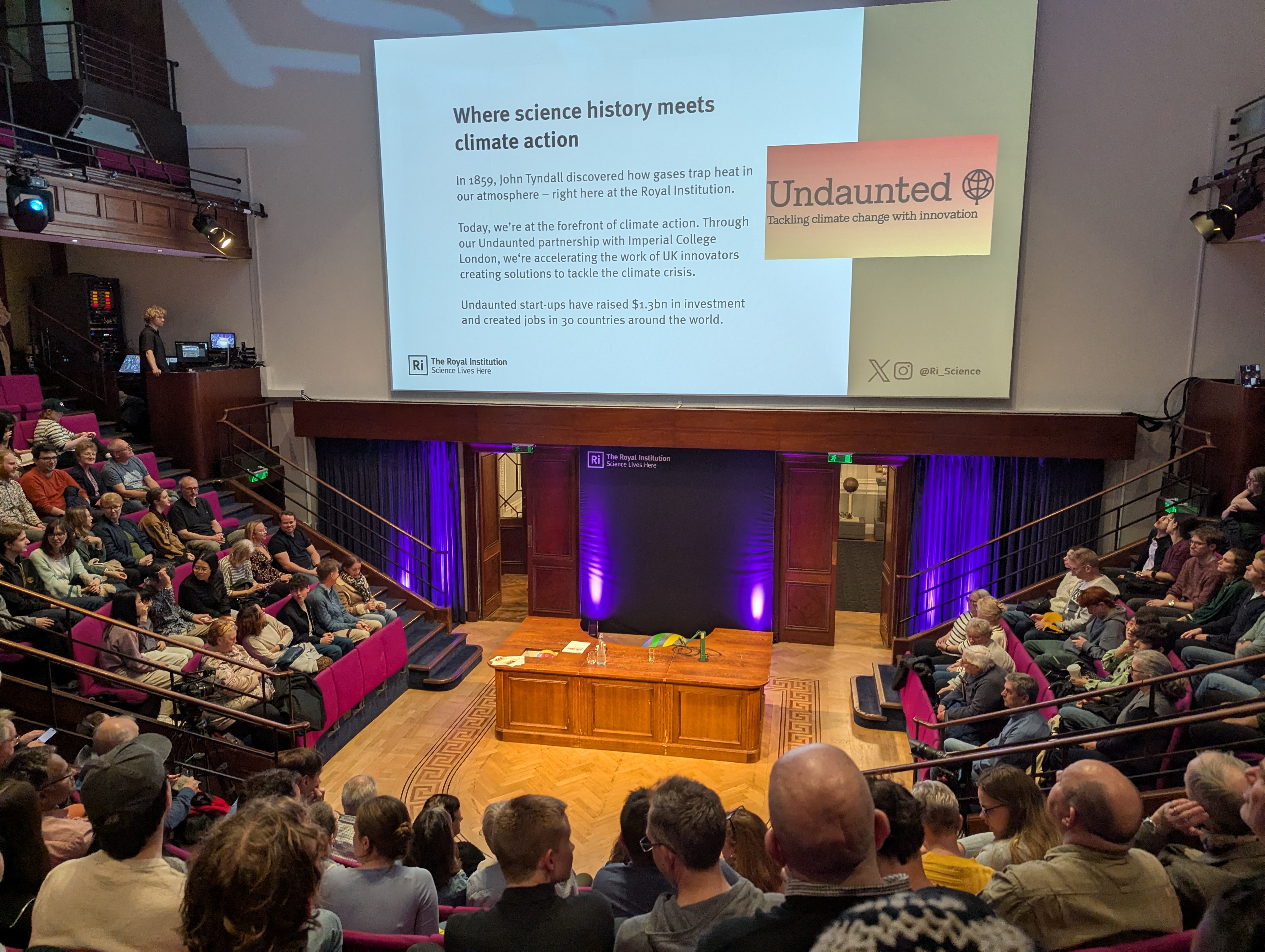
We are very slow learners because after a flight in which I barely slept we decided to attend a lecture on how chemistry is used in forensic science at the Royal Institution. The speaker, Kingston Associate Professor Baljit Thatti, brought in a full auditorium and she must have been amazing, because the presentation was followed by one of the most energetic question and answer sessions I’ve ever witnessed. But I can tell you very little about her obviously excellent presentation. It was a good amuse-bouche for a great night of sleep back at The Bailey’s.

In the morning, we took an hour-long bus ride to Richmond Park. Before coming to London I had googled all the events in London and what kept coming up instead of events was ways to enjoy Autumn in London. Richmond Park is part of the Royal Parks and was highly recommended as a way to take in Fall colors.

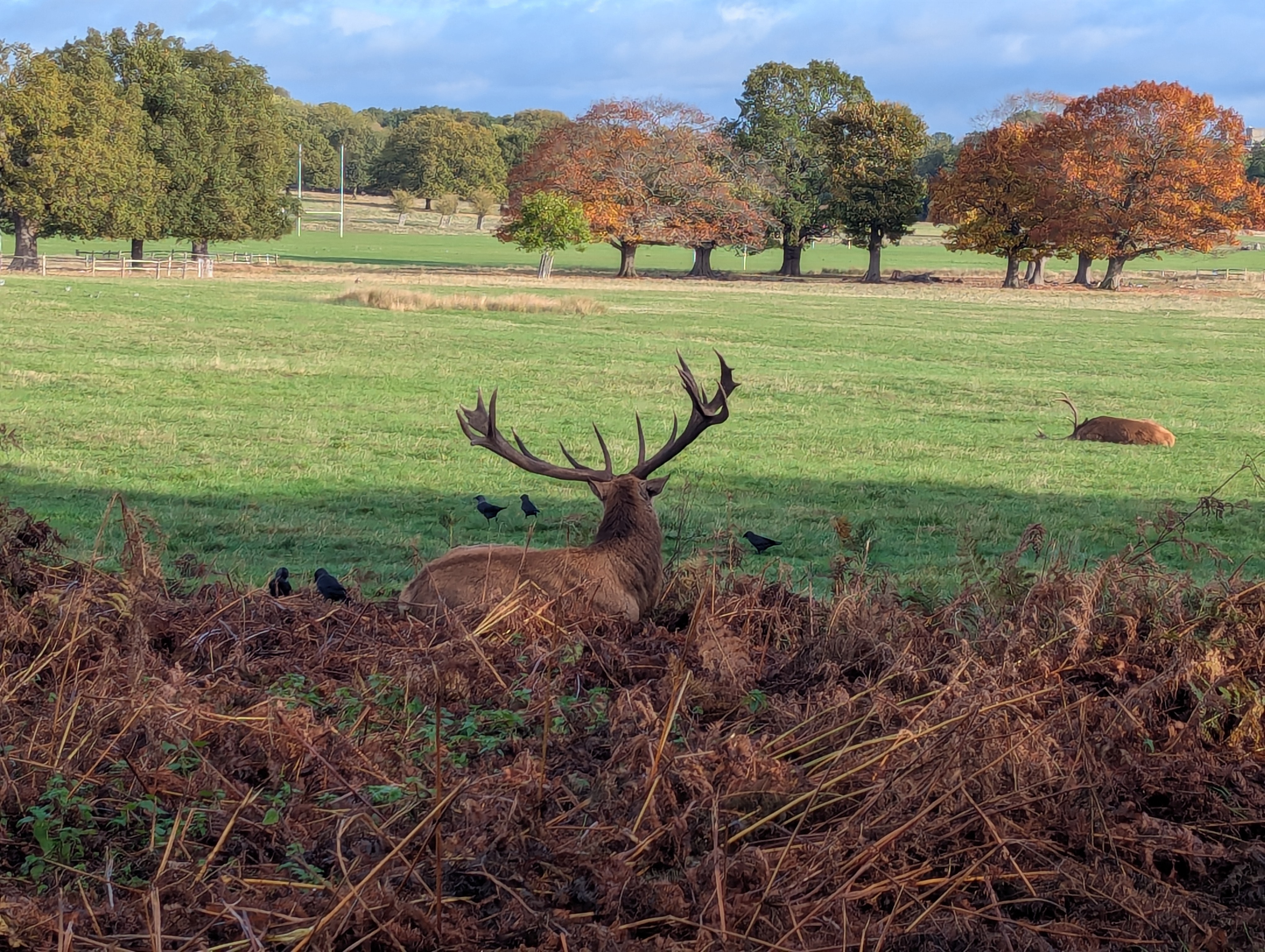
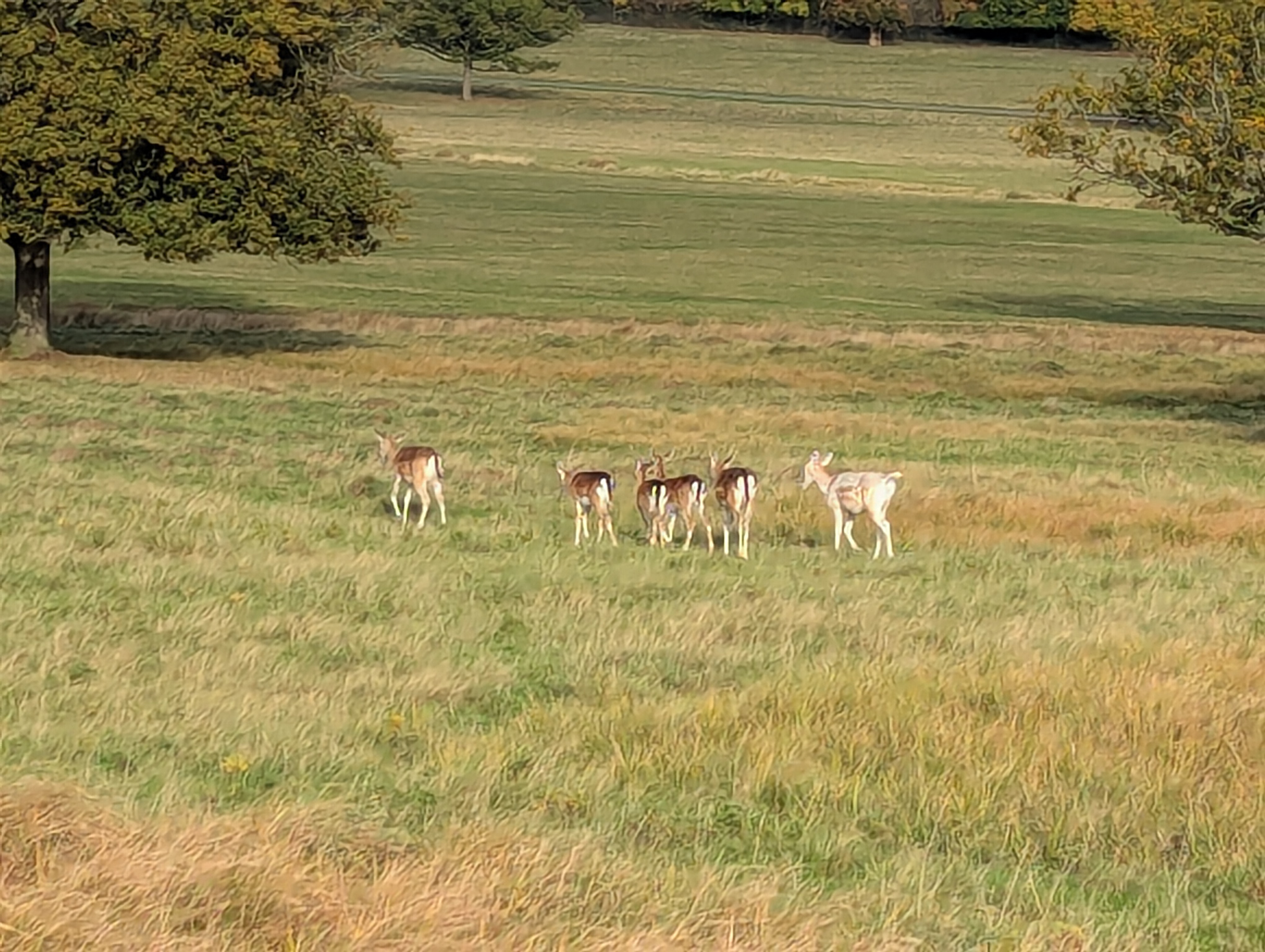
It’s possible to rent bikes and ride the 7-mile loop around the park but unfortunately bike rental is only on weekends this time of year. Instead we made our way across a huge, golden meadow on a grass path on our way to a garden called Isabella Plantation. As we walked we could see grazing animals in the distance that almost appeared to be sheep. Upon closer inspection, they were the famous wild red deer herd that had been introduced in the park by King Charles I in the 1600s.

As we were walking toward the red deer in the field to get a closer look we happened upon a much larger deer laying in the field, one of the fallow deer. We almost didn’t spot the huge buck in vegetation very close to our path.

Leaving the meadow and heading into the forest, the birds were unbelievably loud. I use an app called Merlin to identify bird calls I don’t know. Admittedly “calls I don’t know” is almost all bird calls. The app is produced by Cornell Lab of Ornithology in NY. It can be a bit spotty about identifying birds in England, but on this day it detected Eurasian Jackdaws and Rose-ringed Parakeets.

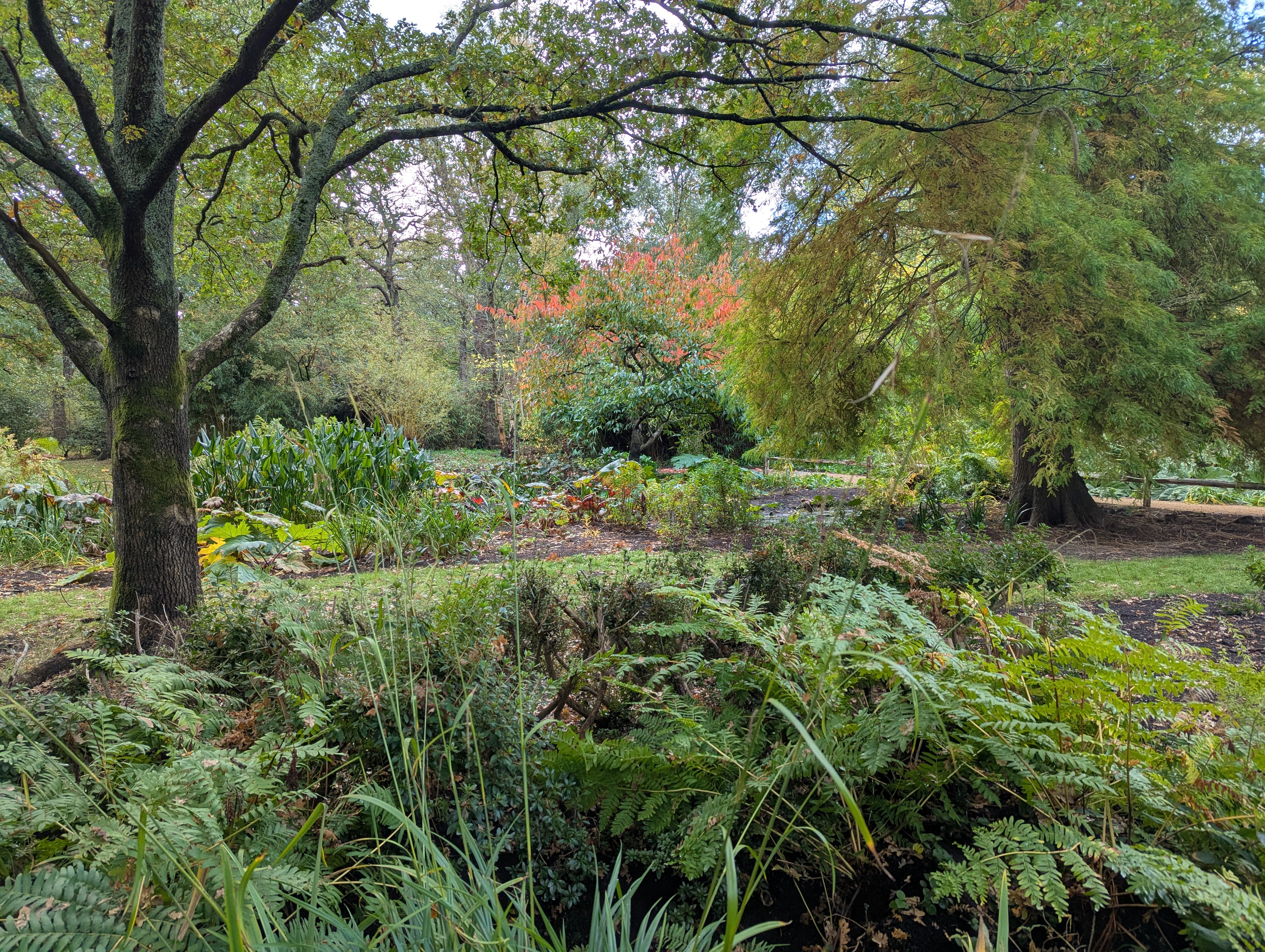
We got lost several times but ultimately found Isabella Plantation, a lovely, lush garden.

Even without colorful fall leaves, Richmond Park was, as the internet promised us, a great way to experience the beauty of Fall in London.

We took a bus into Fulham, had a nice, late lunch at an Italian pizza chain, took the train back to Central London to work out logistics for travels the next day, pre-gamed at the Admiralty, and then headed off to The Emirates for the Champion’s League match against Atletico Madrid. Despite a lovely, calm day in nature I felt very, very nervous.

New territories, Norwich edition: part 1

One “downside” of the Anglia Plus Three-Day Ranger train pass was that you can’t use it before 8:45 a.m. This was a downside only for my husband. He is the early bird for whom the worm is waiting. For me, a consummate midnight oil burner, mostly because I’m too wound up at night to sleep, it meant very reasonable departure times each day. On Tuesday morning, we packed up our suitcases and rolled them to the Cambridge train station across from which we had scones at the bakery chain Gail’s. At the allowed time, we boarded the train to Norwich.

While on the train, we learned that the weather was going to be rainy on Wednesday across East Anglia so we made a quick change on the planned order of activities to take advantage of the rather better weather on Tuesday. Upon arriving in Norwich, we carted our luggage to our Norwich hotel, The Maids Head, and checked it at the desk. Then, instead of touring Norwich as planned, we went back to the train station and took a short trip to a seaside town called Cromer and walked the short distance to the city center.

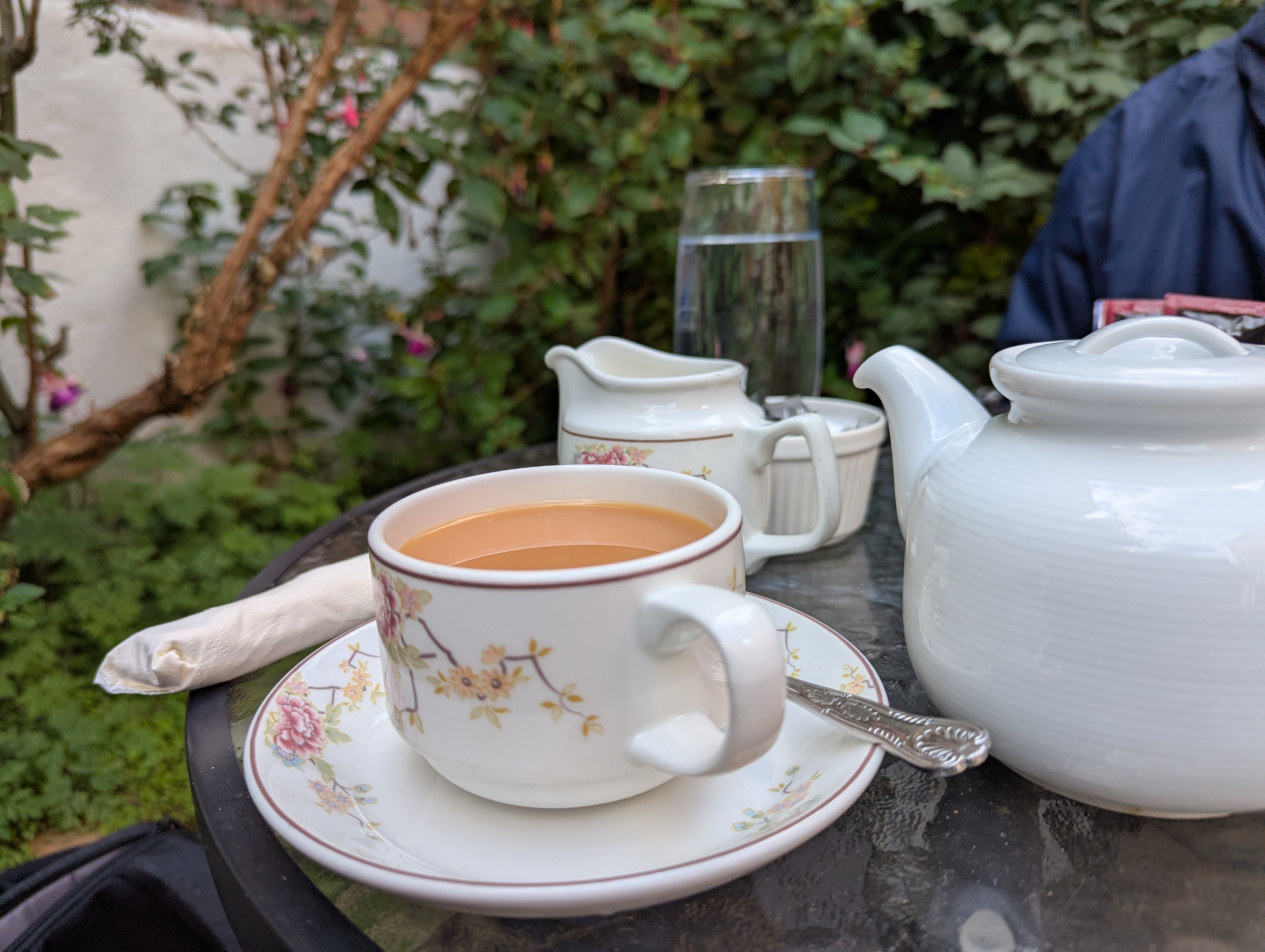
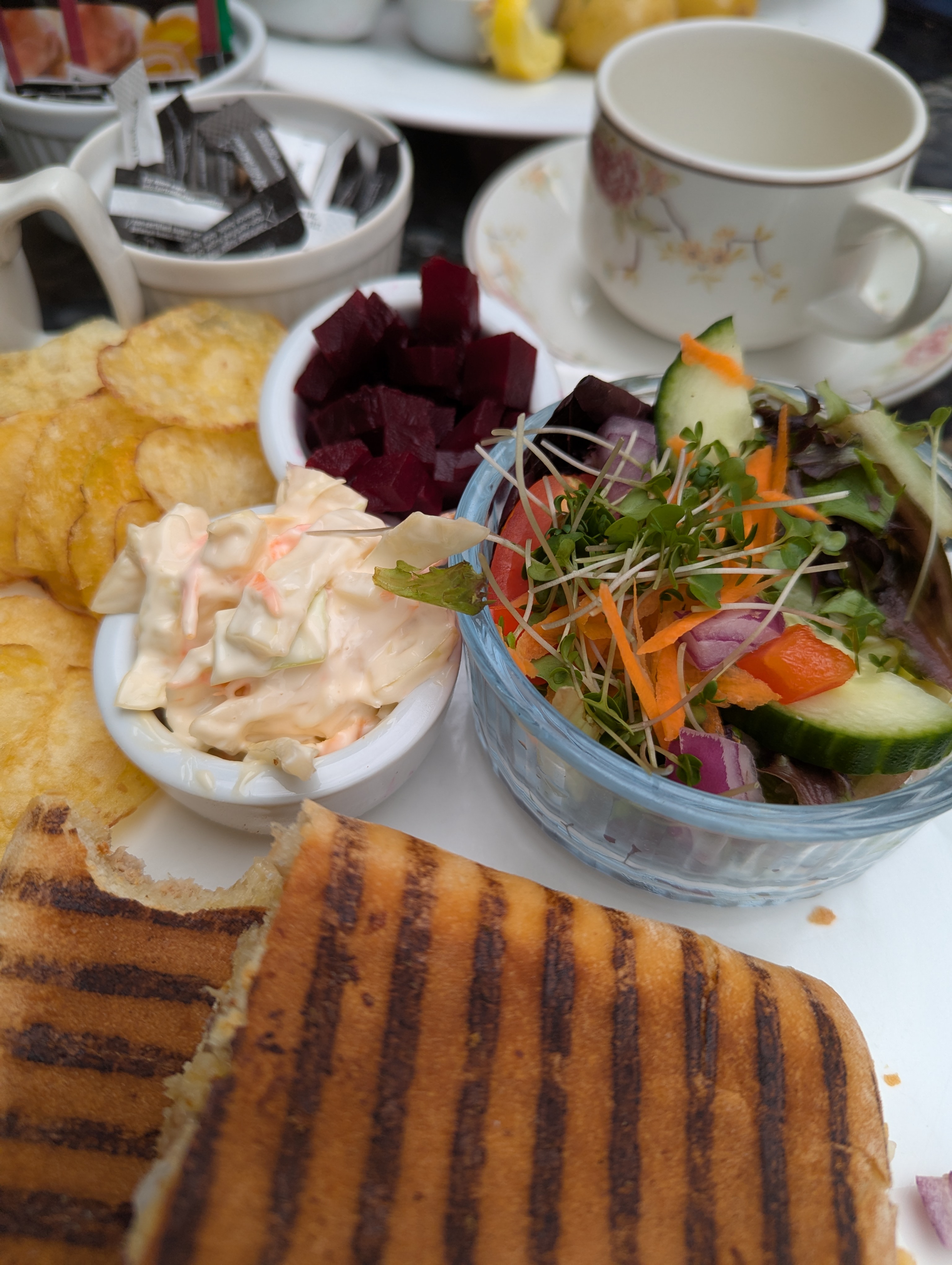
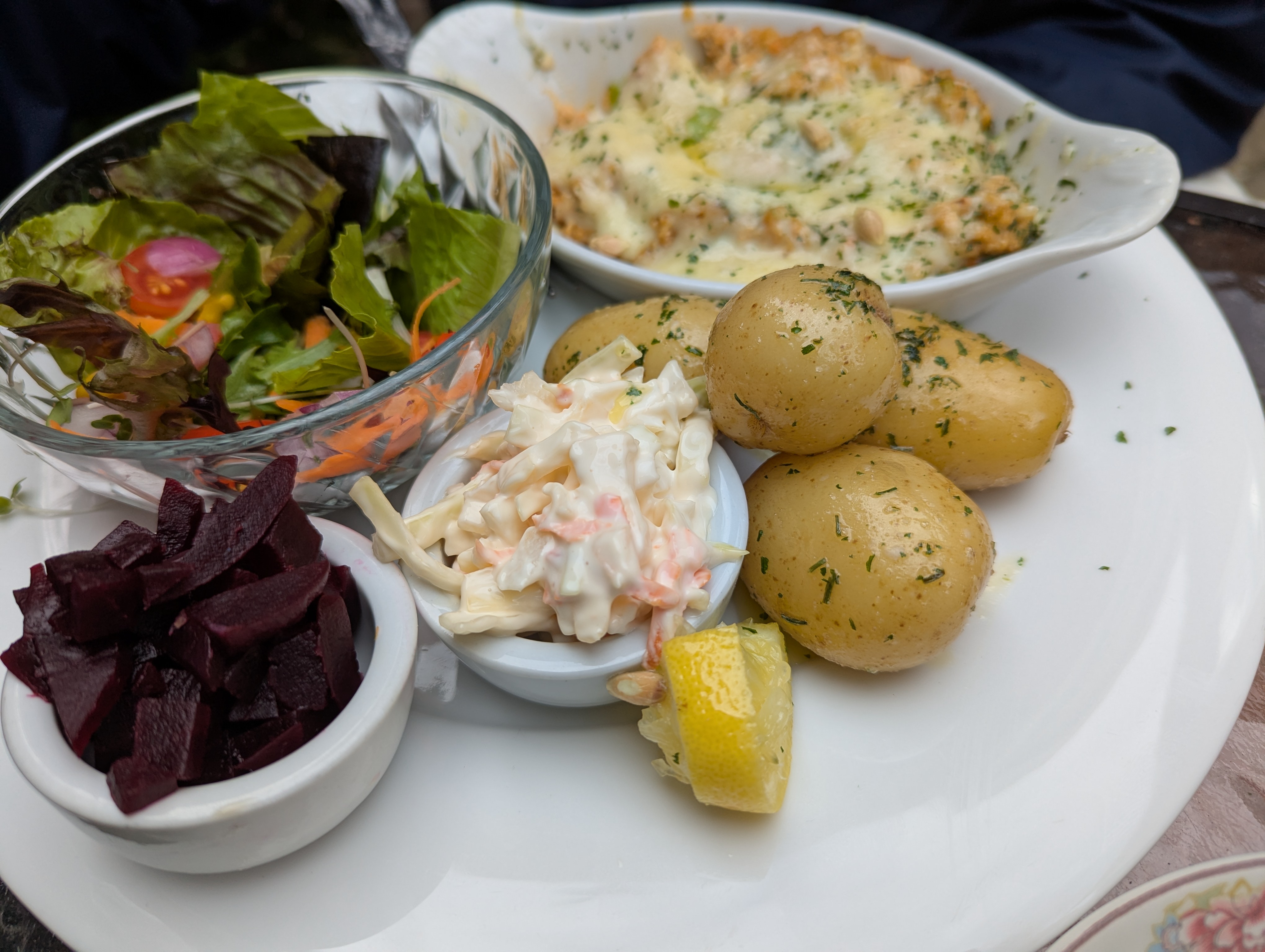
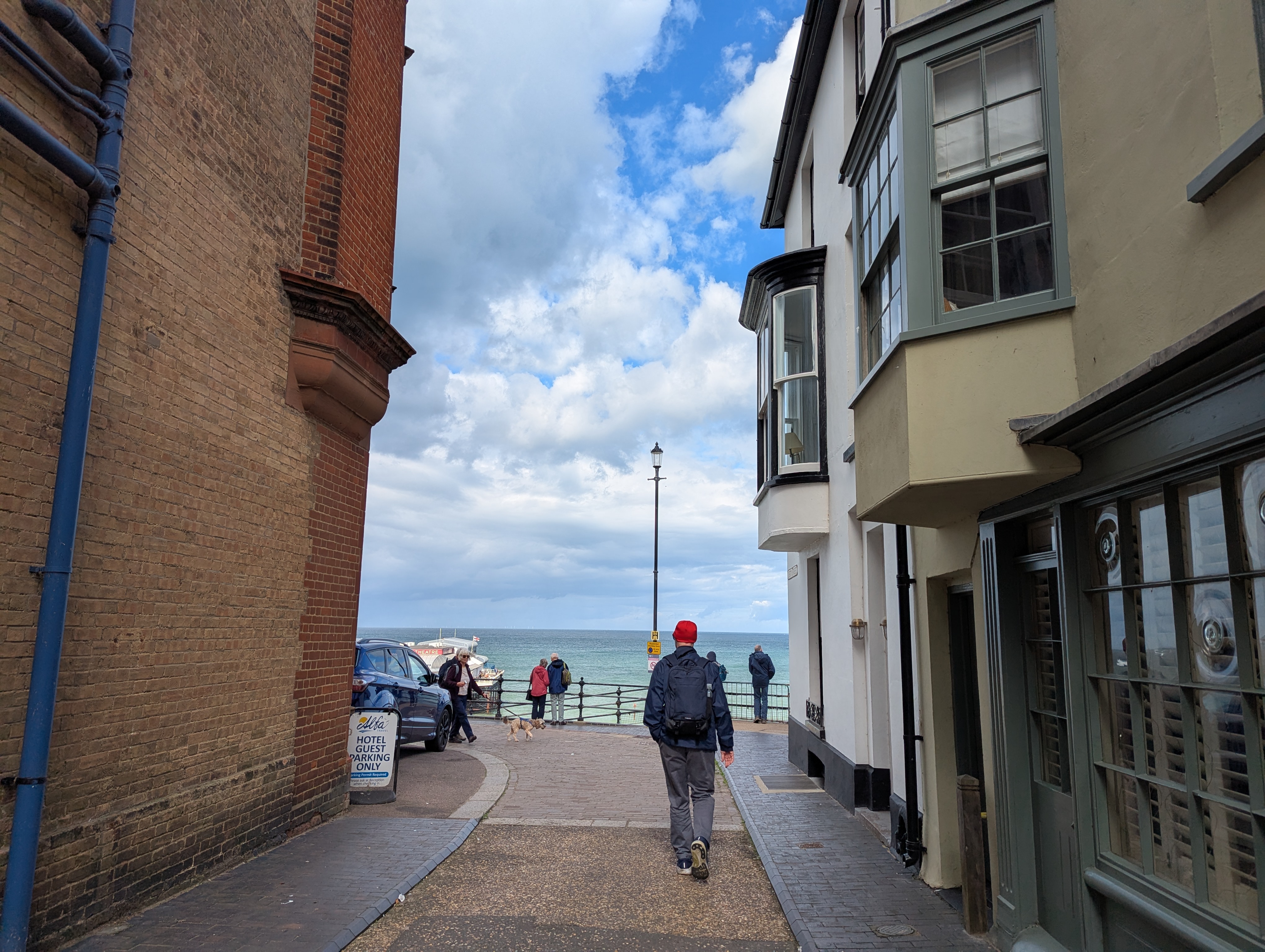
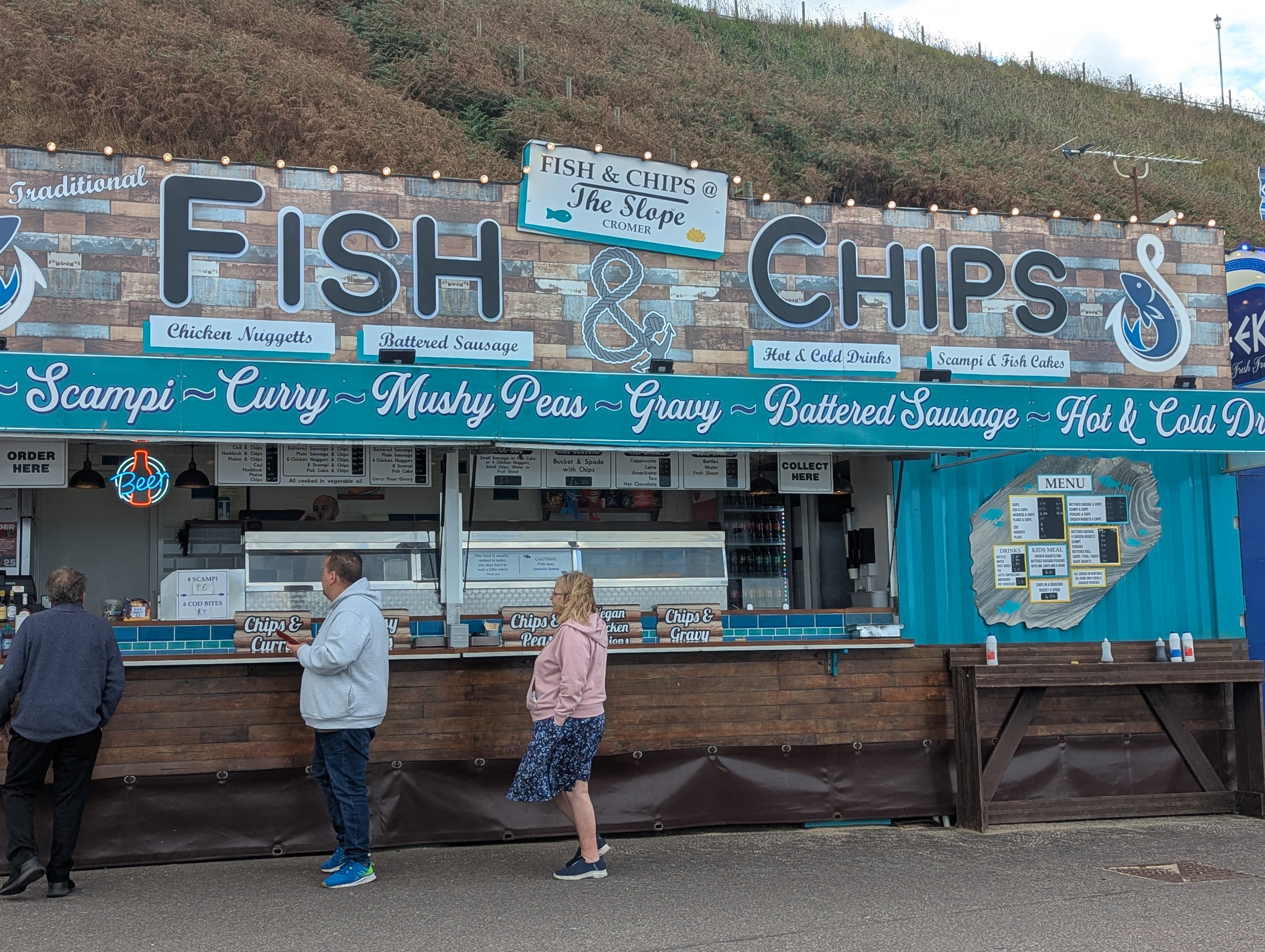
Cromer was lovely. We walked though a charming district looking for where we might have lunch. At last we found a sign pointing from the main drag to a neighborhood for a restaurant called Browne’s on Bond Street. After consultation of very good online reviews we walked over. They were fully booked inside and offered a table in the garden. It was a chilly day but we were dressed for it and happy to have the table. I started with a pot of tea. Having tea was starting to become habitual away from London. My husband had the local dish of Cromer crab prepared kind of like a gratin and I had a tuna melt. Quite yummy.

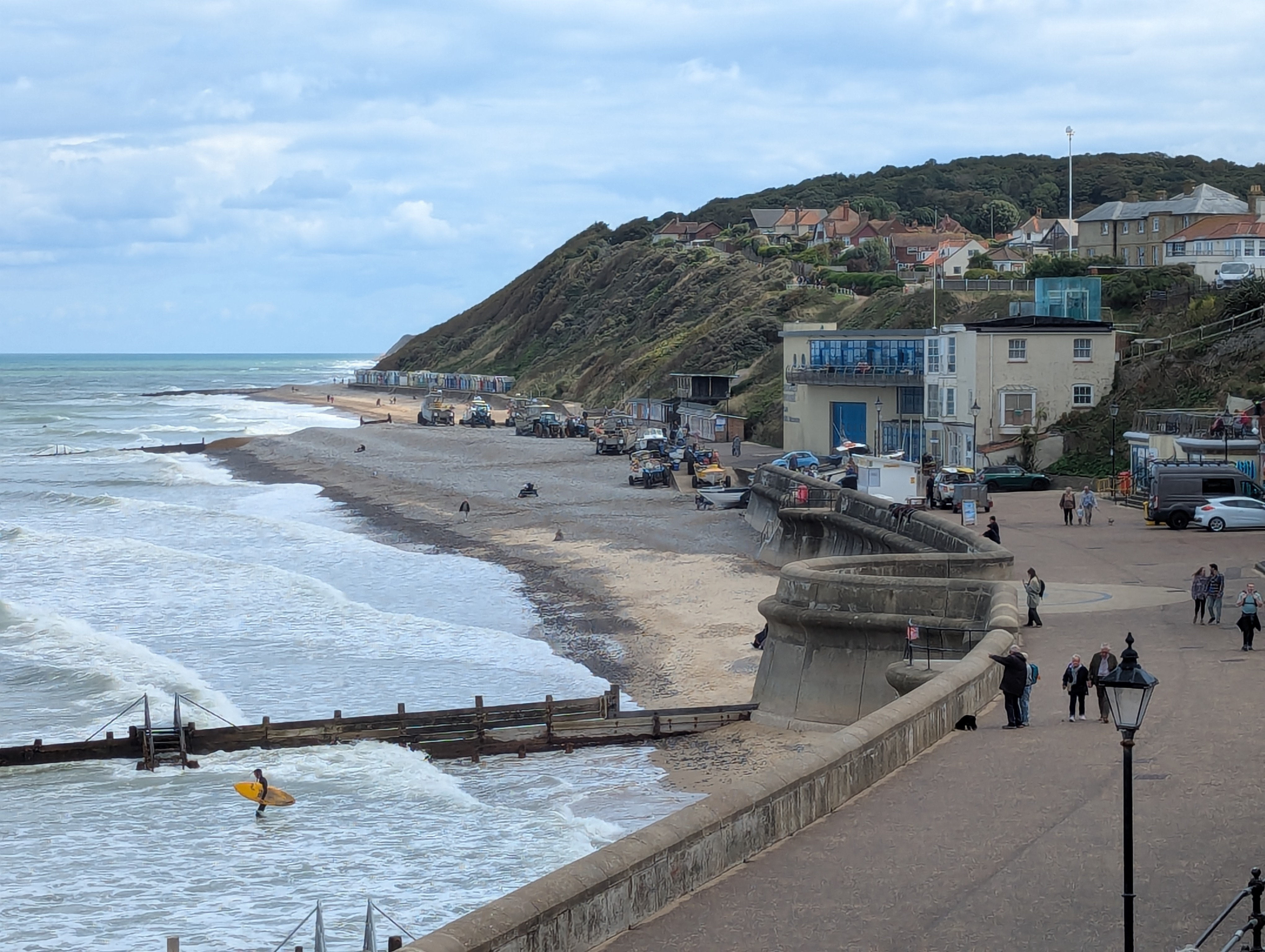
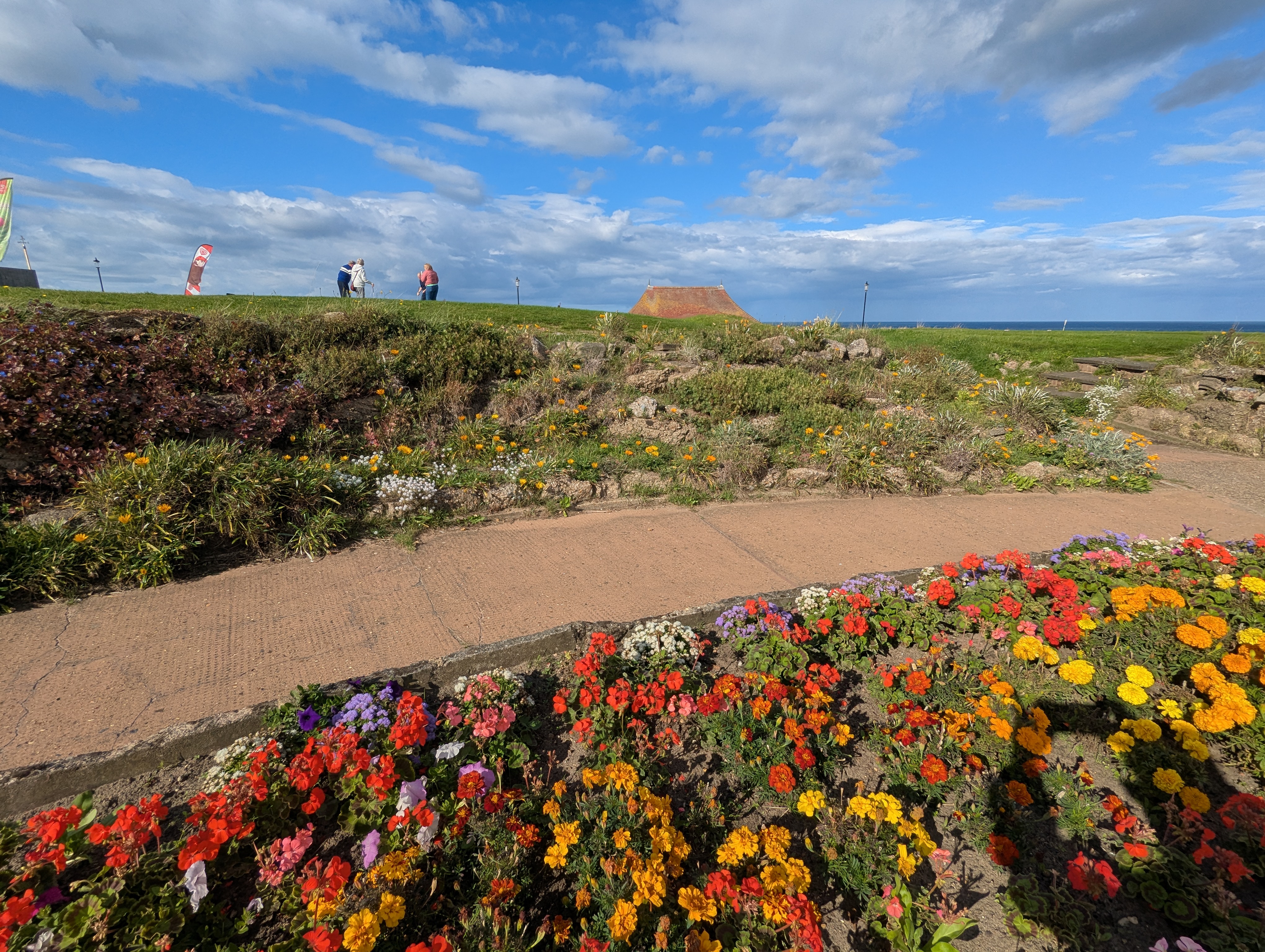
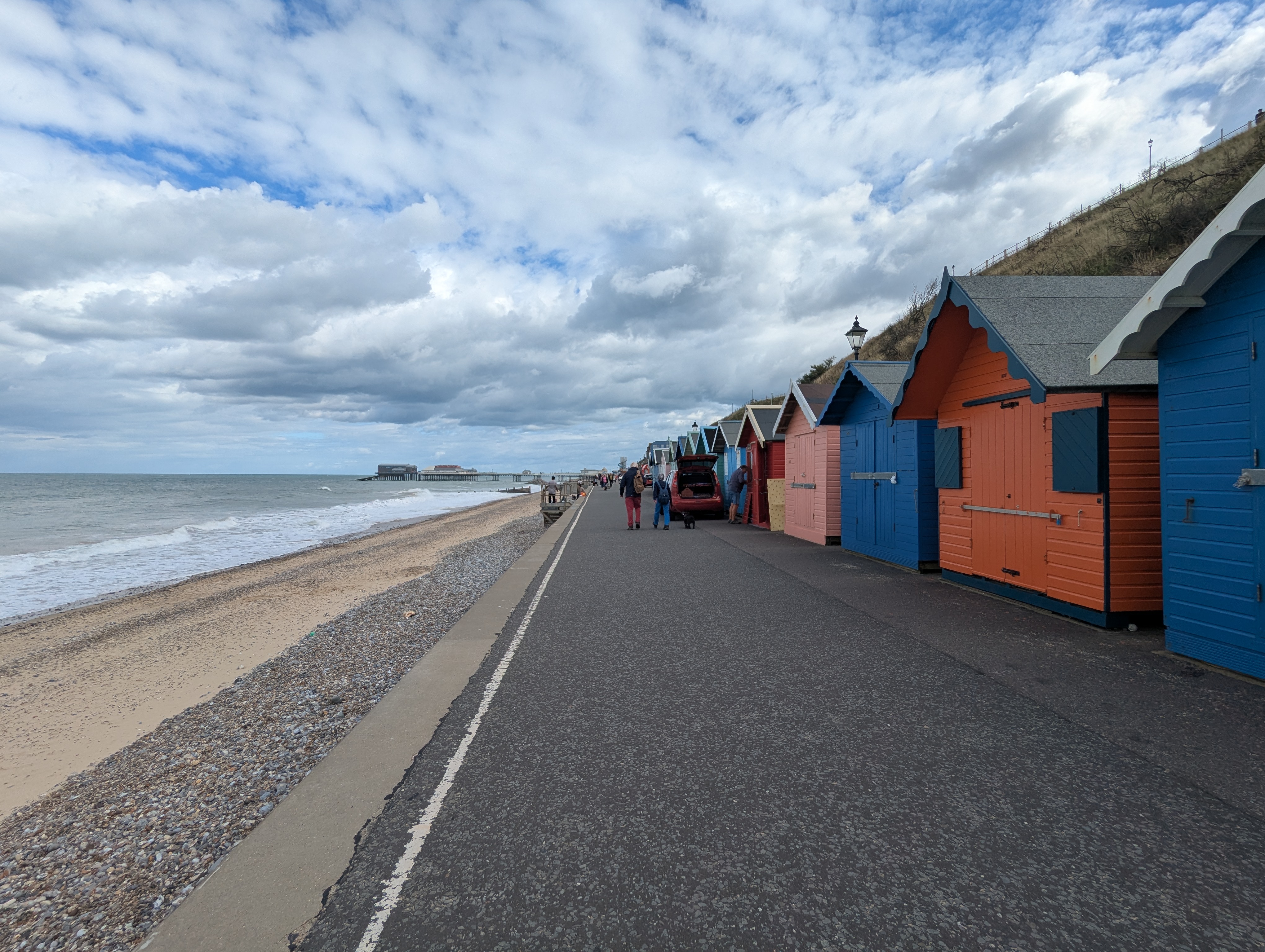
After lunch, we wandered over to the seashore. The wind and waves were wild. A group of wet-suited surfers were having some great rides. We walked on the promenade along the shore and Cromer Pier. Our fellow wanderers included a lot of dogs who were enjoying the walk and the beach. We took a small detour back to town and The Craft Bakery in search of a baked good. I had a delicious Orange shortbread cookie and my husband had something called a white chocolate rocky road cookie which was kind of like a giant block of fudge. (It was so good that on a later date on the trip my husband said “maybe we should go back to Cromer for a cookie?”) We had to work that off, so back to the beach and to a very cool miniature gold course on a bluff above the ocean.

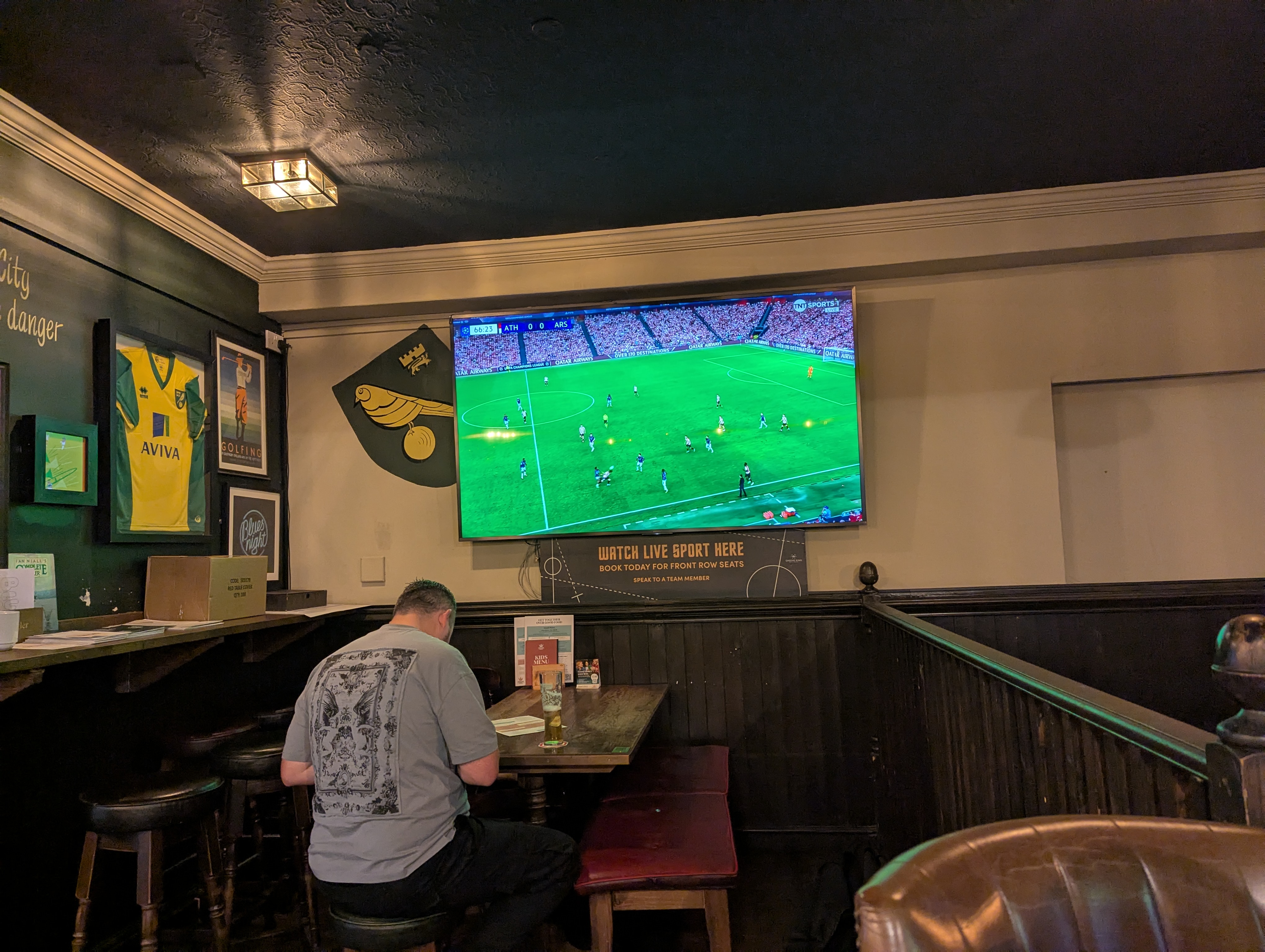
The planned activity for the evening was to watch Arsenal’s first round Champion’s League match against Athletic Bilbao. It was being played in Spain rather than home. Upon returning on the train to Norwich we had to nail down a pub option where the match would be televised. We’ve found using internet search engines to produce unreliable results, so we made an insurance stop at the pub we’d chosen to make sure. It was on the way from the Norwich train station to our hotel. Sure enough, The Compleat Angler intended to televise the match. After quickly checking into our hotel we doubled back to the pub where a kind bartender had reserved us a table.

It was a pretty interesting match. Manager Mikel Arteta selected the same forward line and the same back line as for Nottingham Forest but obviously had to make a decision about what to do in the midfield in the absence of Martin Odegaard. He’d been re-injured in the Nottingham Forest match and didn’t even take the trip to Spain. In the Nottingham Forest match Arteta had replaced Odegaard with 18-year-old Ethan Nwaneri and he did quite well, but in this match he chose Declan Rice along side an unchanged Martin Zubimendi and Mikel Merino. That Declan Rice did NOT start against Nottingham Forest was a bit of a surprise.

The atmosphere in Bilbao was nuts. That must be a wonderful place to attend a match if you’re a fan of the home side. Arsenal dominated possession for most of the match but struggled to produce a goal. Eberechi Eze, who was so wonderful against Nottingham Forest really struggled in this match. Noni Madueke continued to impress. Viktor Gyokeres struggled and, in the second half, also took a blow to the head that produced a big gash that was taped up. Lots of tape. He was ultimately removed, replaced by Leandro Trossard, as was Eze, replaced by Gabriel Martinelli. Good changes that sparked something in Arsenal. About 70 minutes into the match, the Athletic keeper kicked a ball into Arsenal’s defensive half which we cleared out to the halfway line. Trossard dinked it over the defender, perfect for Martinelli to run on to. Keeping two defenders at bay he slotted it under the Athletic keeper into the net. Later Martinelli returned the favor, driving toward the left corner and passing to Trossard who’d made great movement to open up space. Trossard’s shot bounced off a guy’s foot and into the goal. The match ended 0-2, not a bad outing.

Meanwhile, beer and dinner for us.

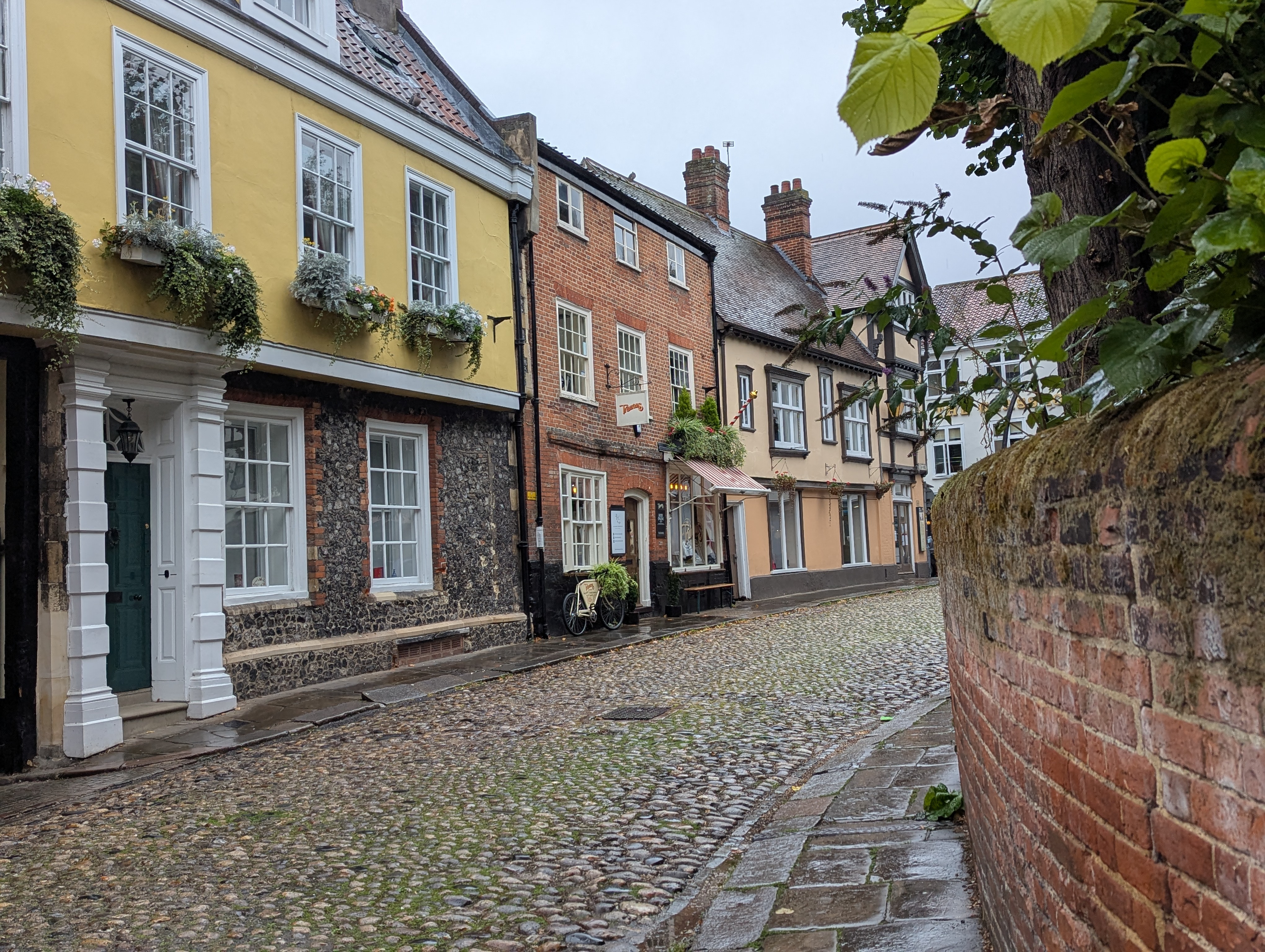
The weather forecast had been accurate. Rain had started early on Wednesday and our new plan was to see Norwich during that rain. Our hotel was very close to a historic area in Norwich called Elm Hill. Like all “Elm” hills in all the world, there are very few remaining Elms due to Dutch Elm disease, but there are cool cobbled streets and interesting old buildings.

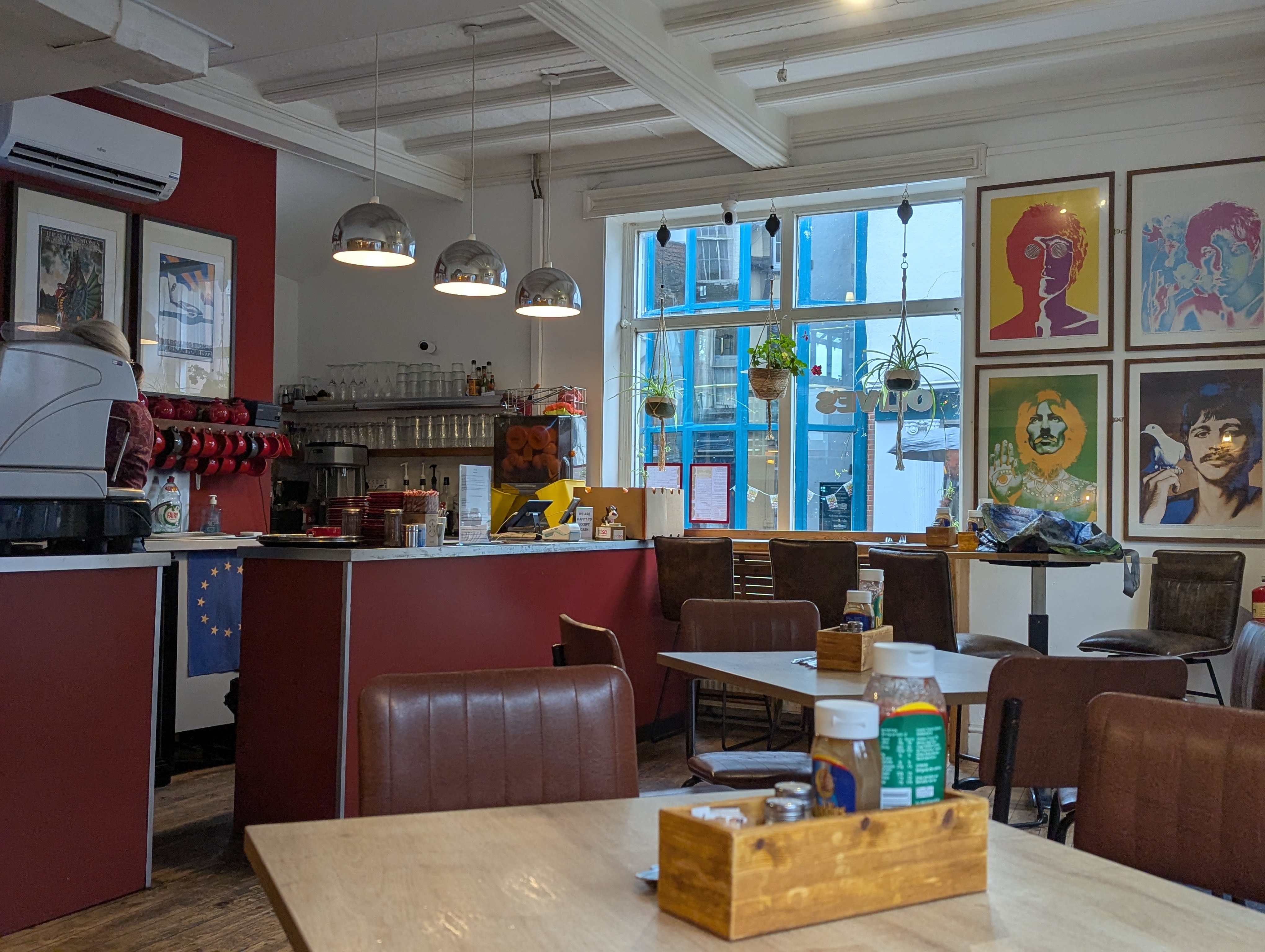
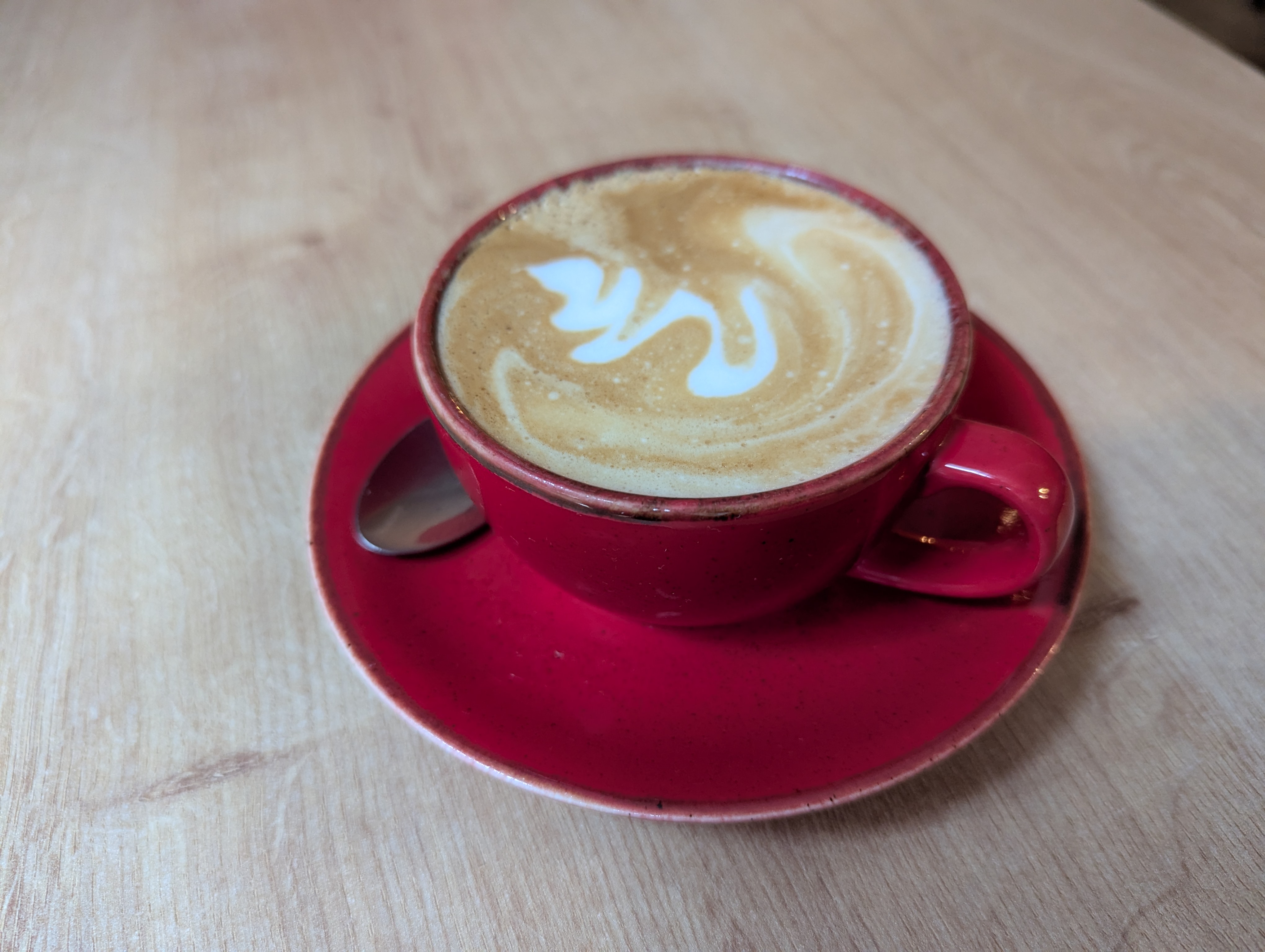
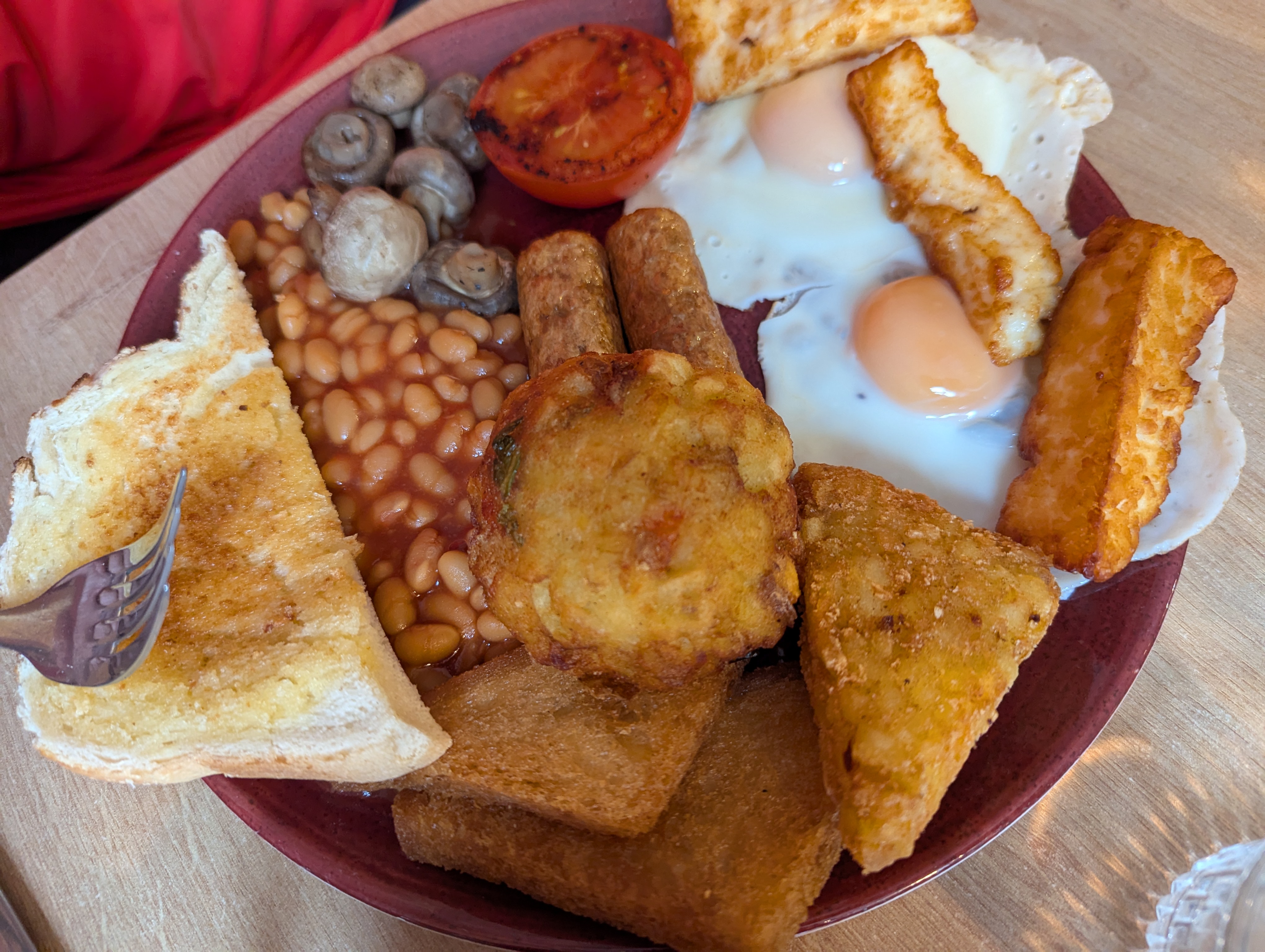
We stopped for breakfast at a place called Olive’s. Mostly traditional British fare. I had a Benedict that had hash browns in place of the usual English muffin. My husband had the veg version of a traditional English breakfast: eggs, sausage, baked beans, bubble & squeak. We had long heard about the thing called “bubble & squeak” but never had it and did not know what it was. Our helpful server pointed it out on the plate and explained it. It’s kind of like hashbrowns but includes cabbage. It was pretty delicious.

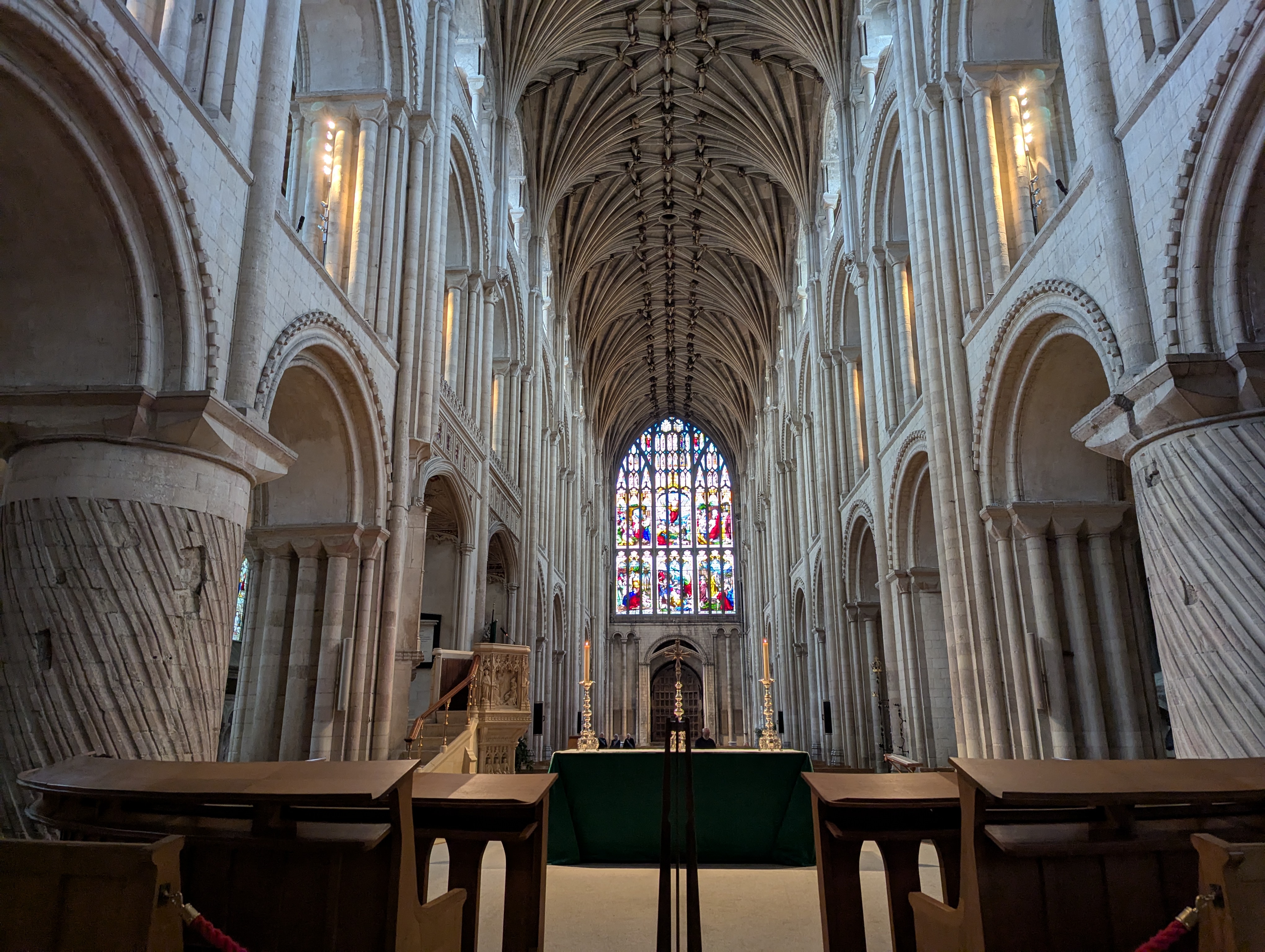
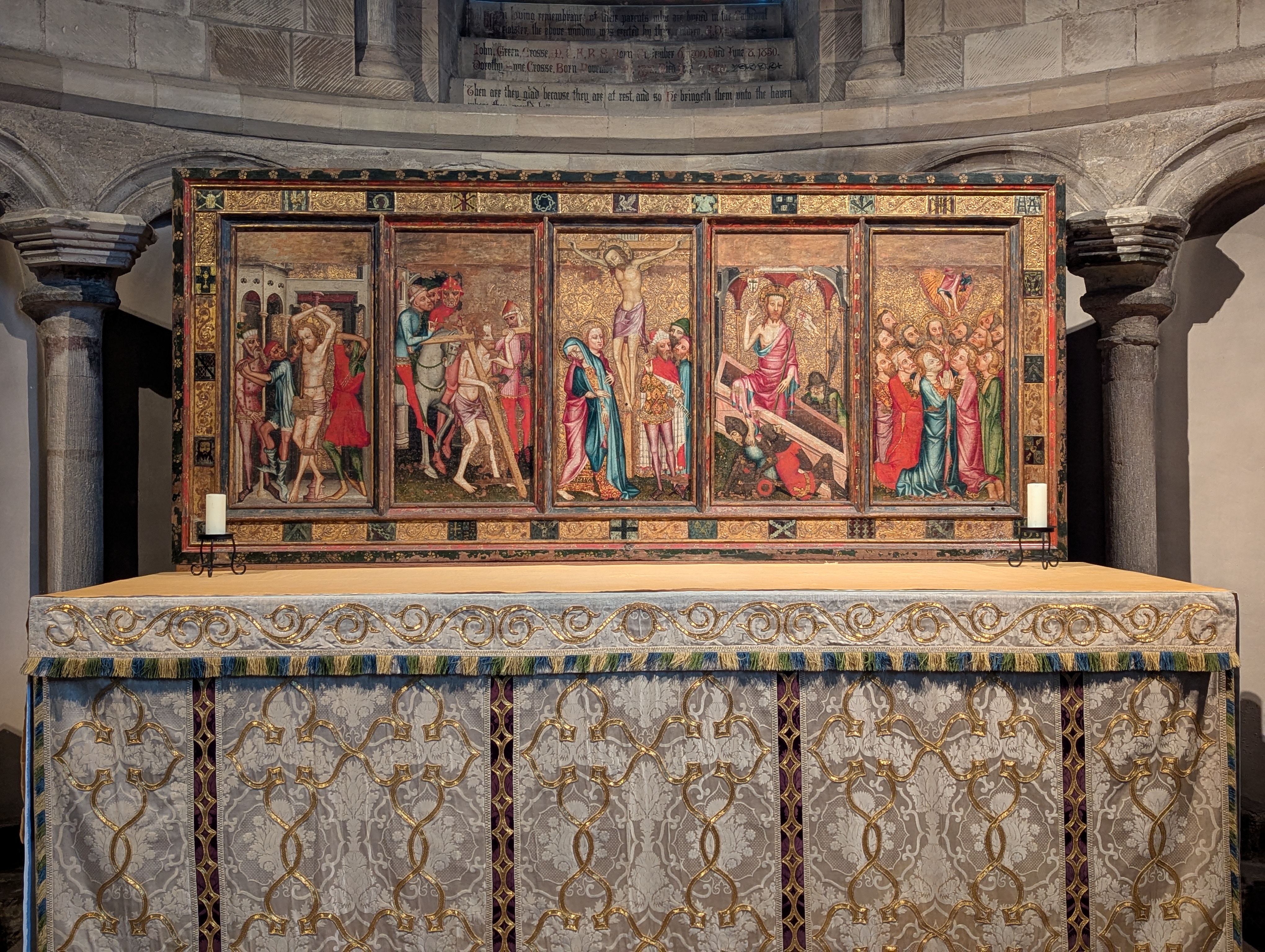
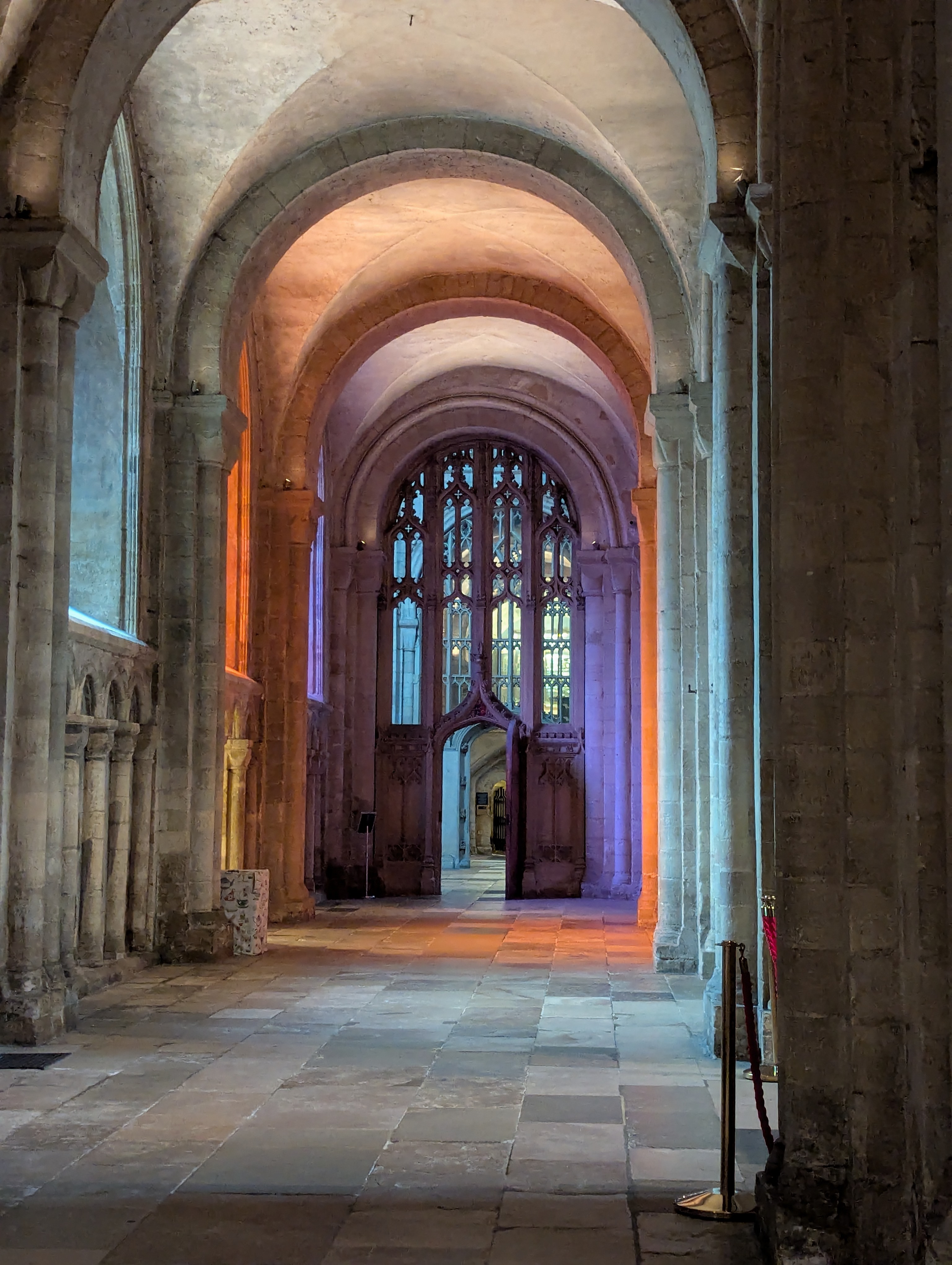
Because it was very rainy by this point, we took our tour inside to the Norwich Cathedral. This cathedral is not quite as old as the one in Ely but it’s old, 900 years worth. We were given a wonderful 1-hour tour of the cathedral by an enthusiastic, elderly volunteer and member of the active church since childhood. Not only did we learn about the very interesting history of the cathedral, she pointed out interesting details, like ancient graffiti, the cool glow from the McClean stained glass windows that were installed in 2014, the misericord in the choir that’s intended for the assistant dean and includes a carving of the Norwich Canaries football team logo, and the amazing 12th century Despenser Reredos that was protected and preserved from destruction allegedly by hiding it as the bottom of a table. We also heard about the cat called Budge that lives in the Cathedral and unofficially serves as the Bishop. Budge did not make an appearance while we were there.

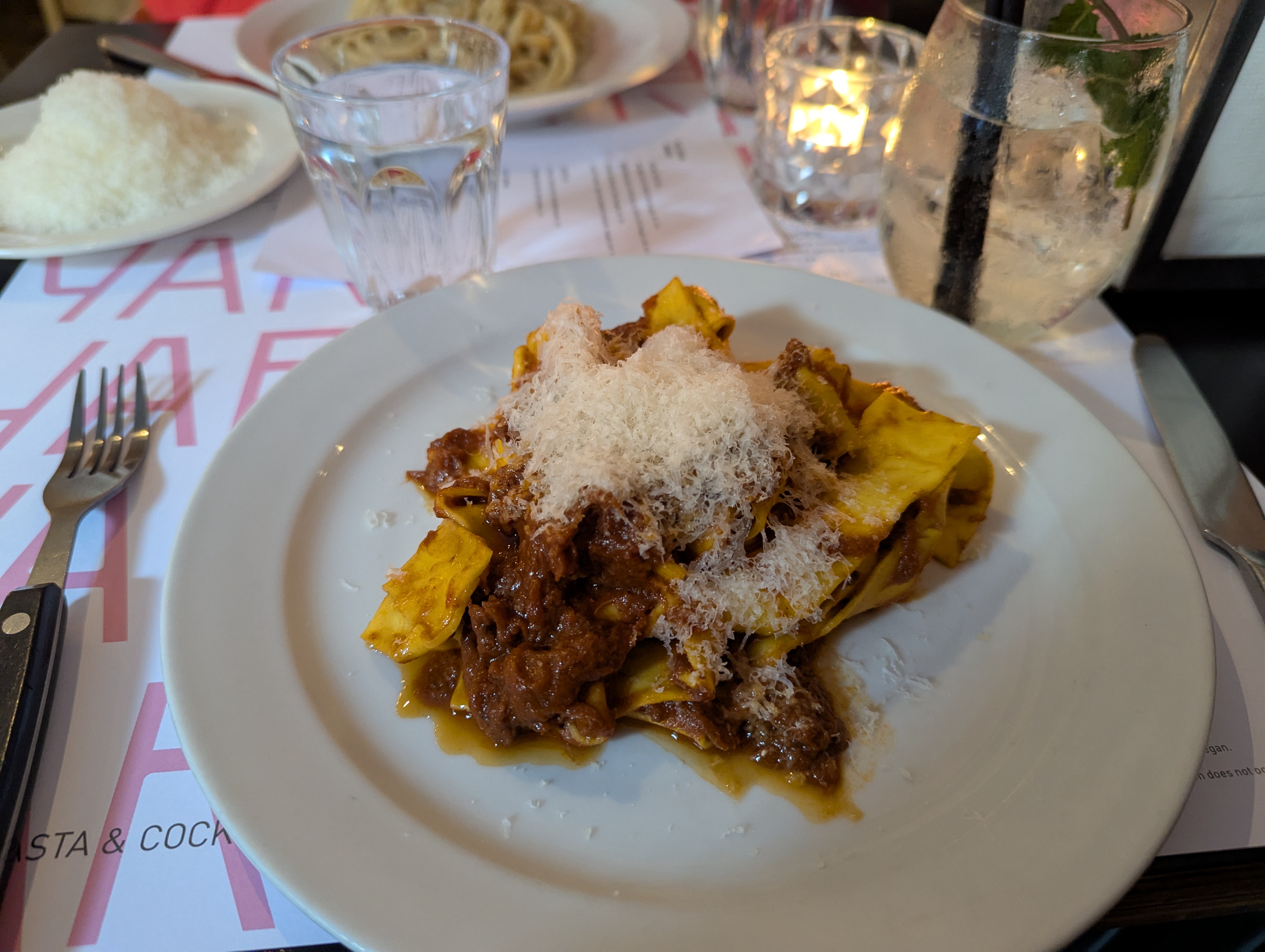
Following our tour we walked near the city center for lunch at an Italian restaurant called Yard. Freshly-made pasta with delicious sauces. I had the Pappardelle with 12-hour beef shin ragu and my husband had Bucatini cacio e pepe. I followed mine up with this crazy and amazing dessert that was a croissant filled with salted caramel ice cream. Oof. Very delicious lunch.

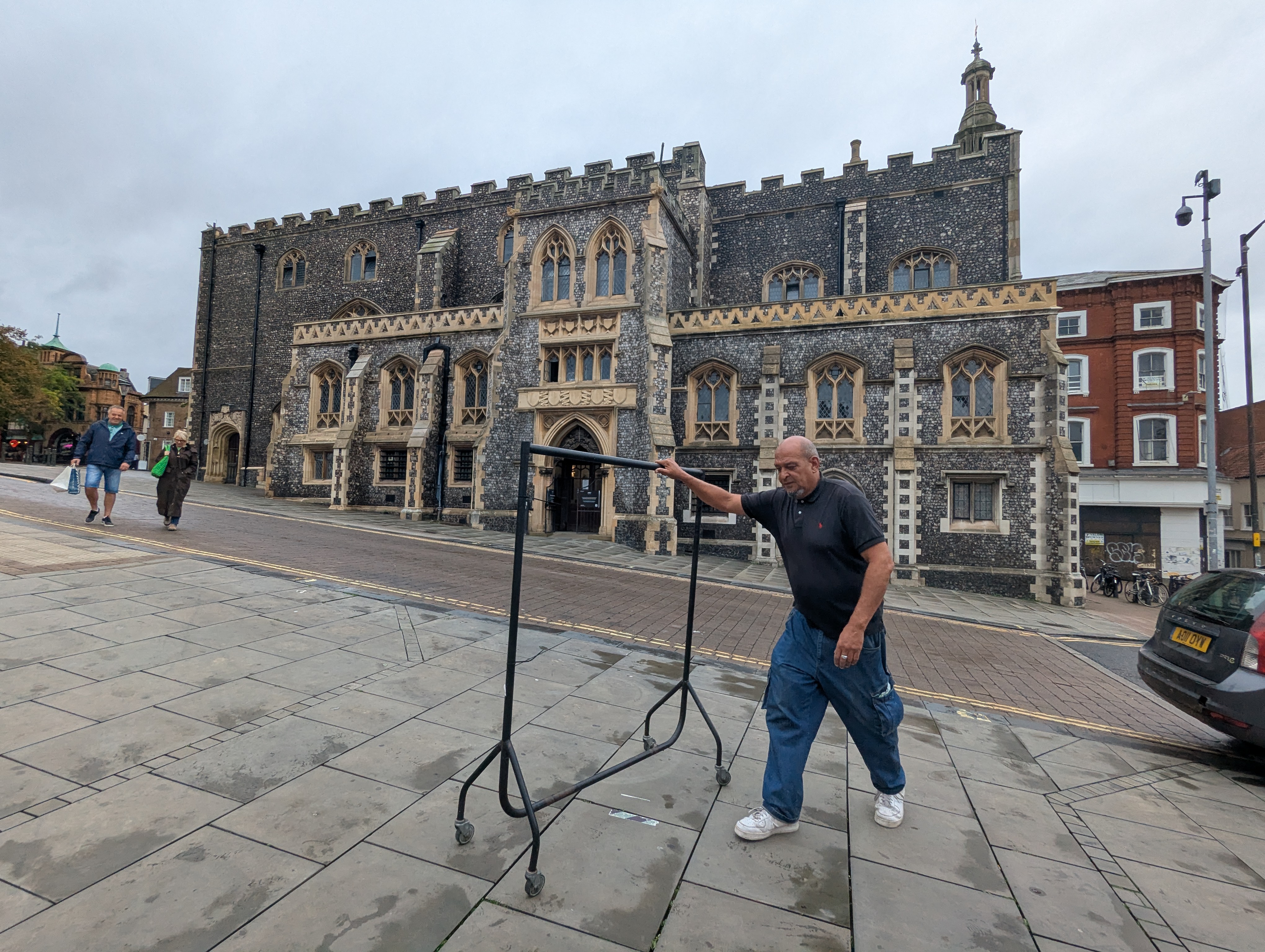
We walked by the beautiful medieval Guildhall and art deco City Hall City Hall and walked through the cool Norwich market. It was a bit late so many stalls were closed but enough was open that you got a flavor for the diverse products on offer. Spices, wine, prepared food, produce, clothes.

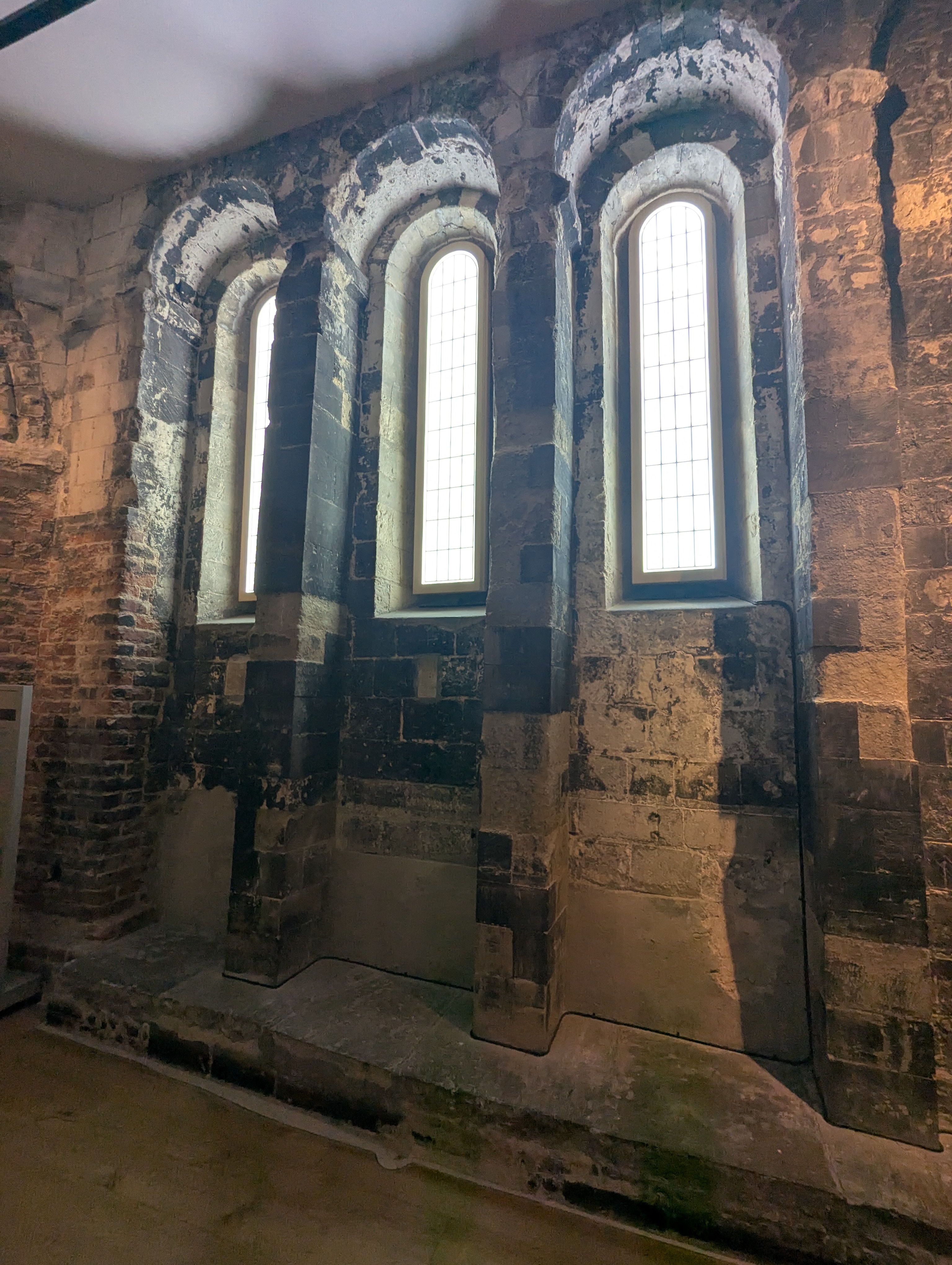
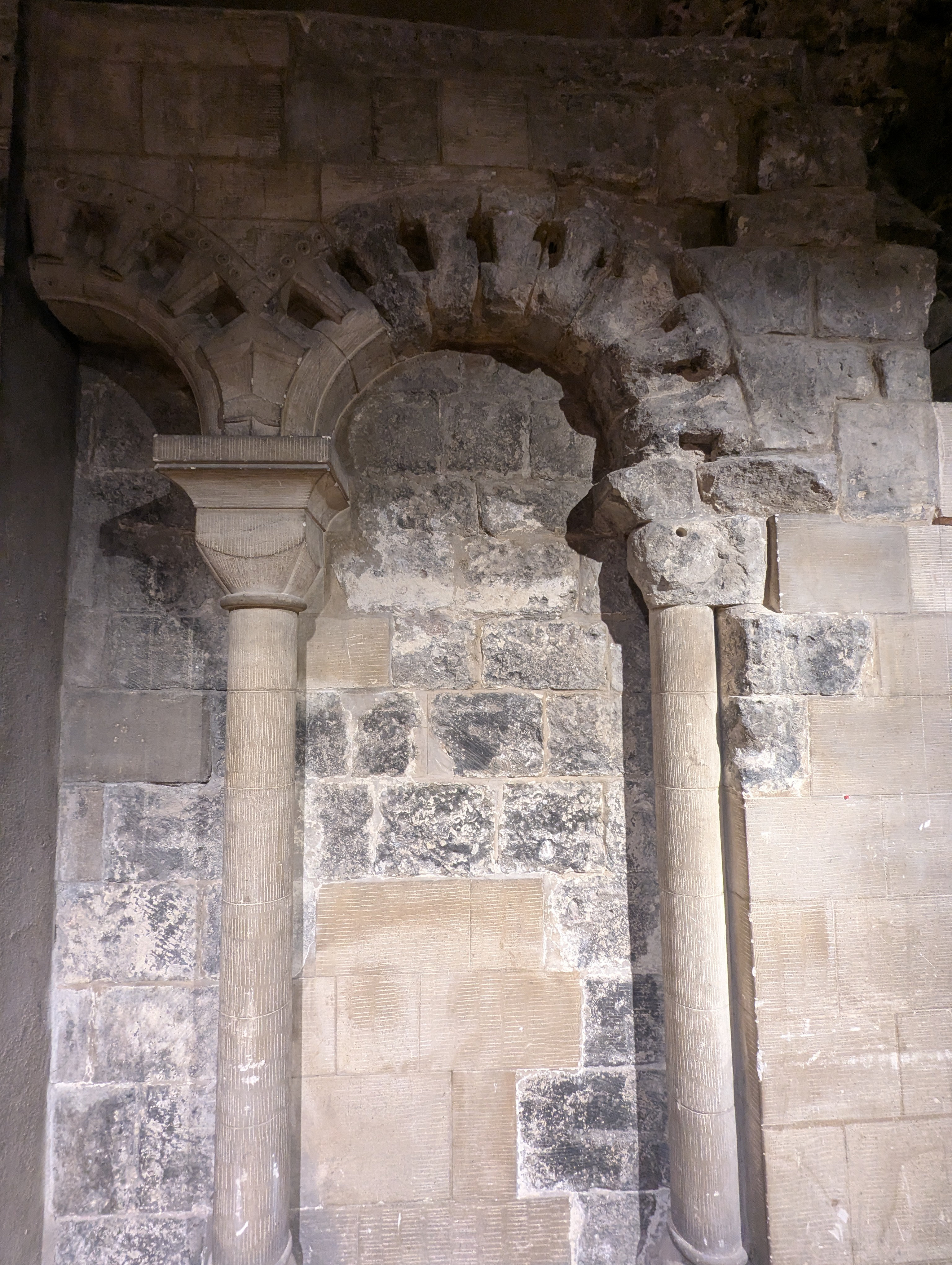
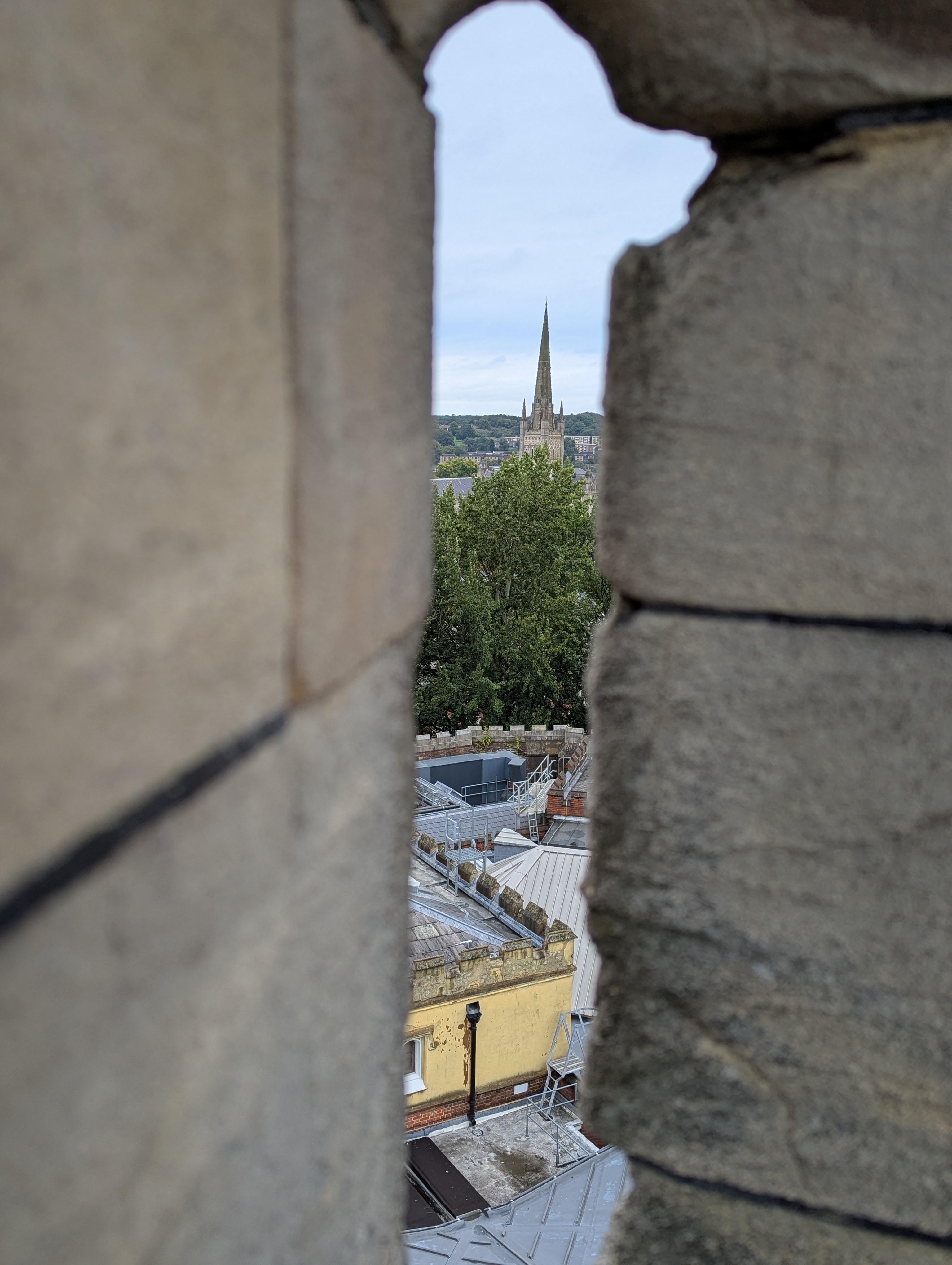
Our last big stop for the day was at the Norwich Castle. This was kind of a crazy, interesting experience. It is a museum that’s built in and around the ruins of an actual Norman castle. The castle was started by order of William the Conqueror in the late 11th century and was only briefly and very occasionally used by a monarch. It also was used as a jail. Where the museum can include the actual remnants of the castle it does; where it cannot, it includes recent building intended to help depict what the original castle looked like. When you stand within any one room you might see one original wall (it’s very clear which one that is) with three new walls that help you imagine what it must have been like. You can also go to the rooftop to see the defensive structure. From the rooftop, I could see all the sights we had seen that day.

We did a quick refresh at our hotel after visiting the castle and then went back over to the Norwich Cathedral for the Evensong service. Our guide from the morning had told us that the Cathedral had had Evensong services every day for the last 900 years. One of them included us. The music was quite beautiful, from a choir of adults and children.

After the service, we went to dinner at St. Andrew’s Brew House, so named because it’s across from a church called St. Andrew’s. A bit comical since they were out of almost everything we wanted to order for dinner. We were together able to cobble something together that worked.

Norwich surprised me. I’m not sure what I expected but it was not that. Such a great city! We thoroughly enjoyed our time there.

New territories, Cambridge edition

Now that I’m retired it’s less important to keep our trips to London brief. It occurred to us that when we are able to get tickets for two Arsenal matches a weekend apart it would be possible for us to travel outside of London during the week. In planning for this trip, we looked at possibly going to Sicily or Norway between the two matches. However, my husband got the idea of visiting East Anglia, the area in England northeast of London. He did some work with Chat GPT to plan out the trip, ultimately settling on a trip that would involve touring from bases in Cambridge and Norwich. We’ve done very little touring outside of London and were both excited about seeing more of the country.
So bright and early Sunday morning we headed over to Liverpool Street Station with our suitcases to confirm our plan with the train ticket agent. My husband had scouted out a train pass for train routes in East Anglia that allow 3 days of unlimited travel in a 7-day period. We also needed to buy tickets separately to get from London to Cambridge. The ticket agent helpfully uncovered that a one-way ticket was more expensive than a round trip ticket, so we bought the round trip ticket with the intention of not using the return trip.

One of the things people do when visiting Cambridge is take a punt boat tour on the River Cam. When we arrived at the Cambridge station mid-morning, we encountered an employee of a punt boat touring company who was speaking to another tourist about the fact that it was expected to rain in the afternoon and that would not be a good time to take a tour. So, upon arriving at out hotel and leaving our bags at the desk, we set out to see the city center and River Cam and scope things out. Our hotel was walking distance from the city center and we were able to look at the lovely old buildings and churches and shops as we walked along.

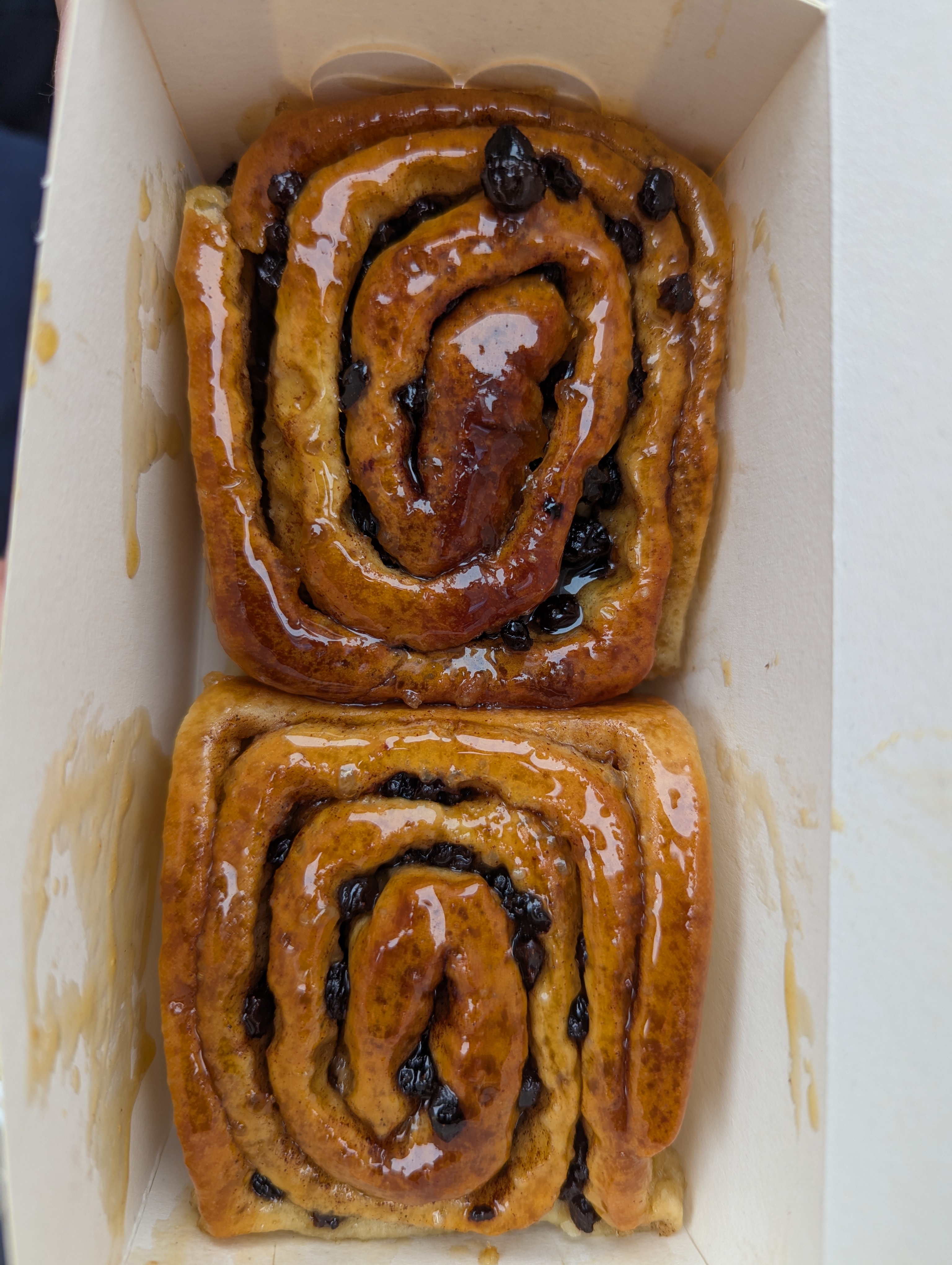
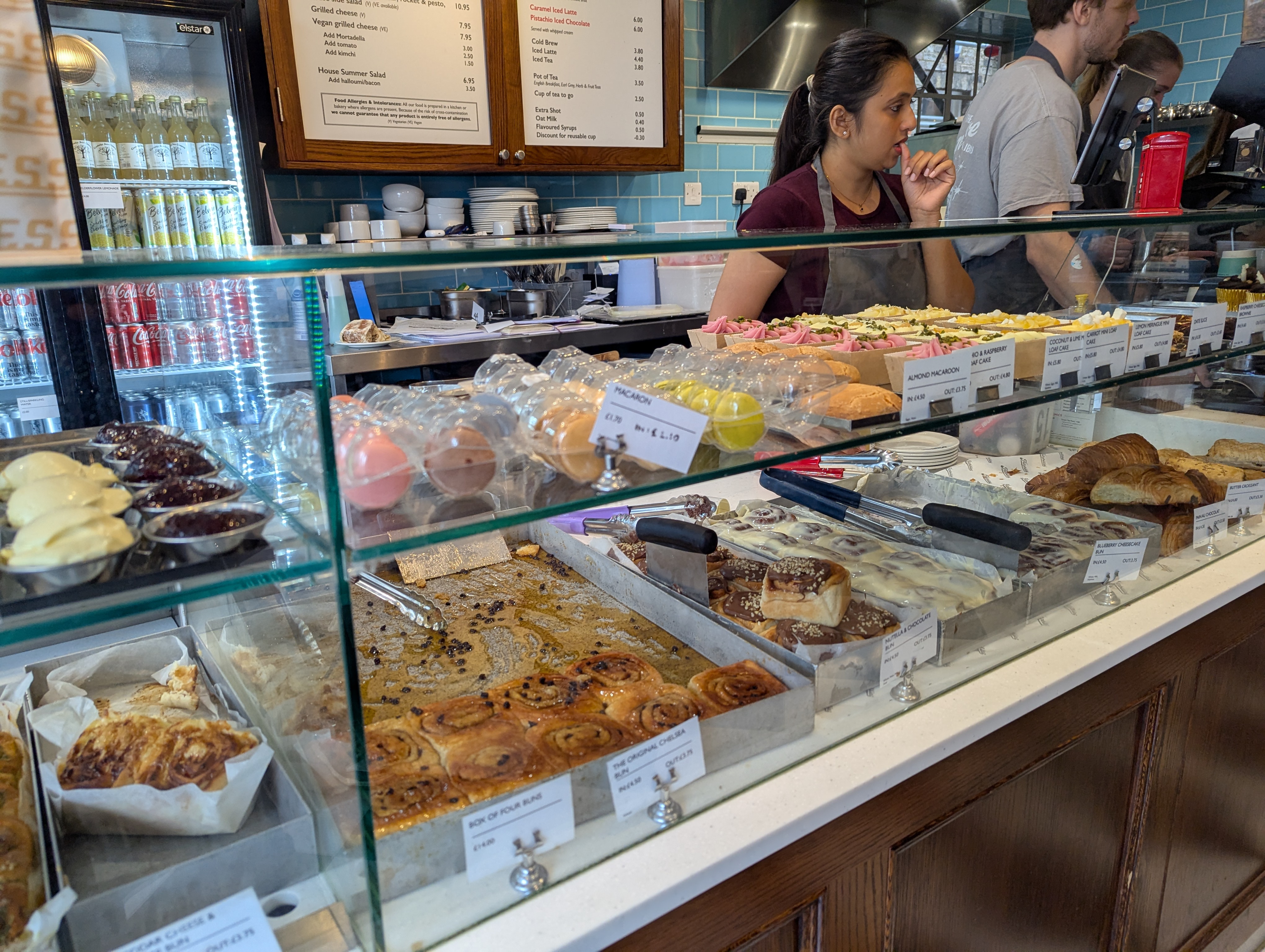
Once at the city center we followed a path along the River Cam where we encountered a great many punting companies soliciting business. We ended up selecting a tour from Cambridge Punt Company. The operator suggested we bide our time until the tour started by visiting Fitzbillies bakery and ordering the Chelsea buns. It was a messy but delicious suggestion.
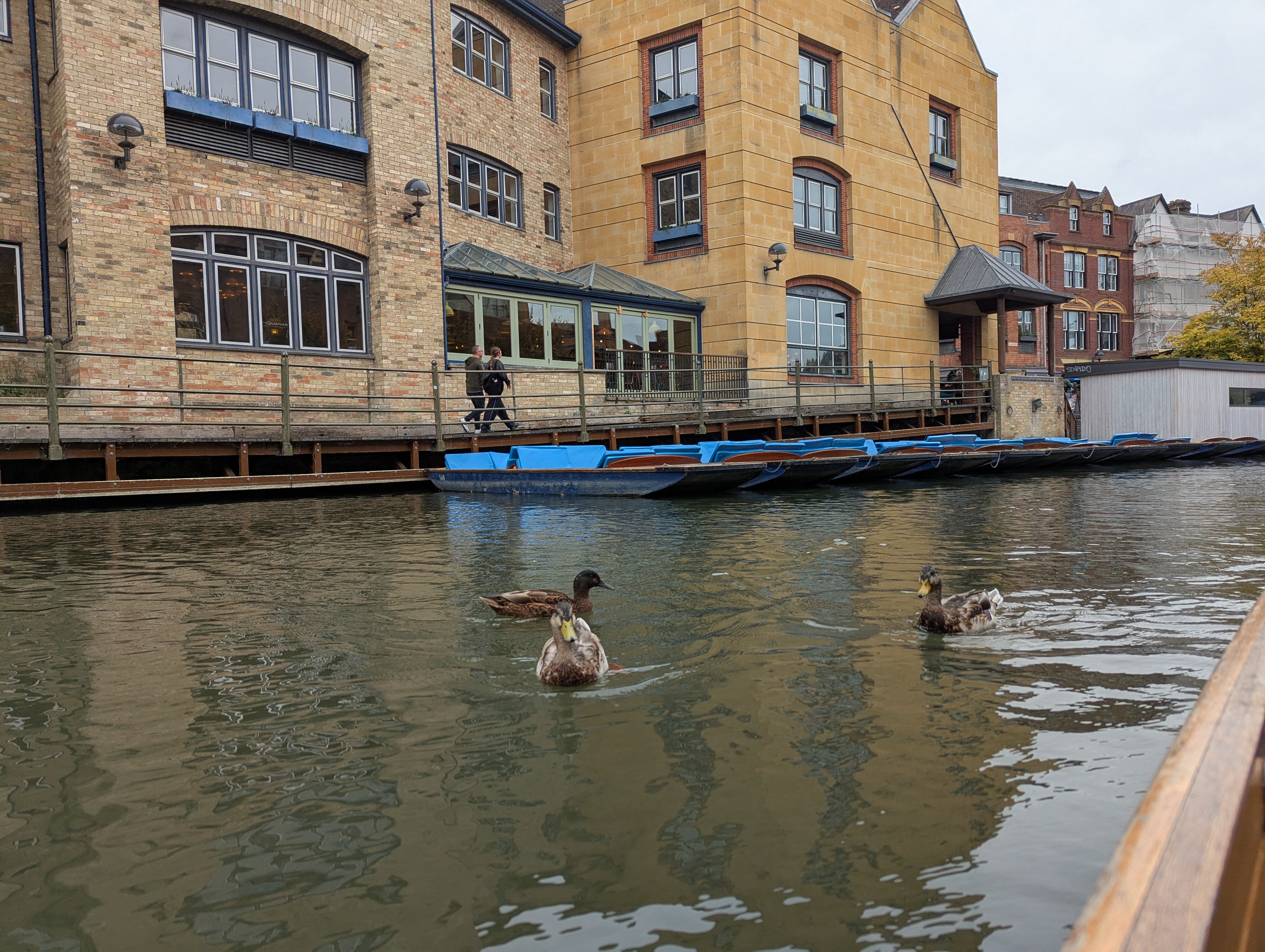
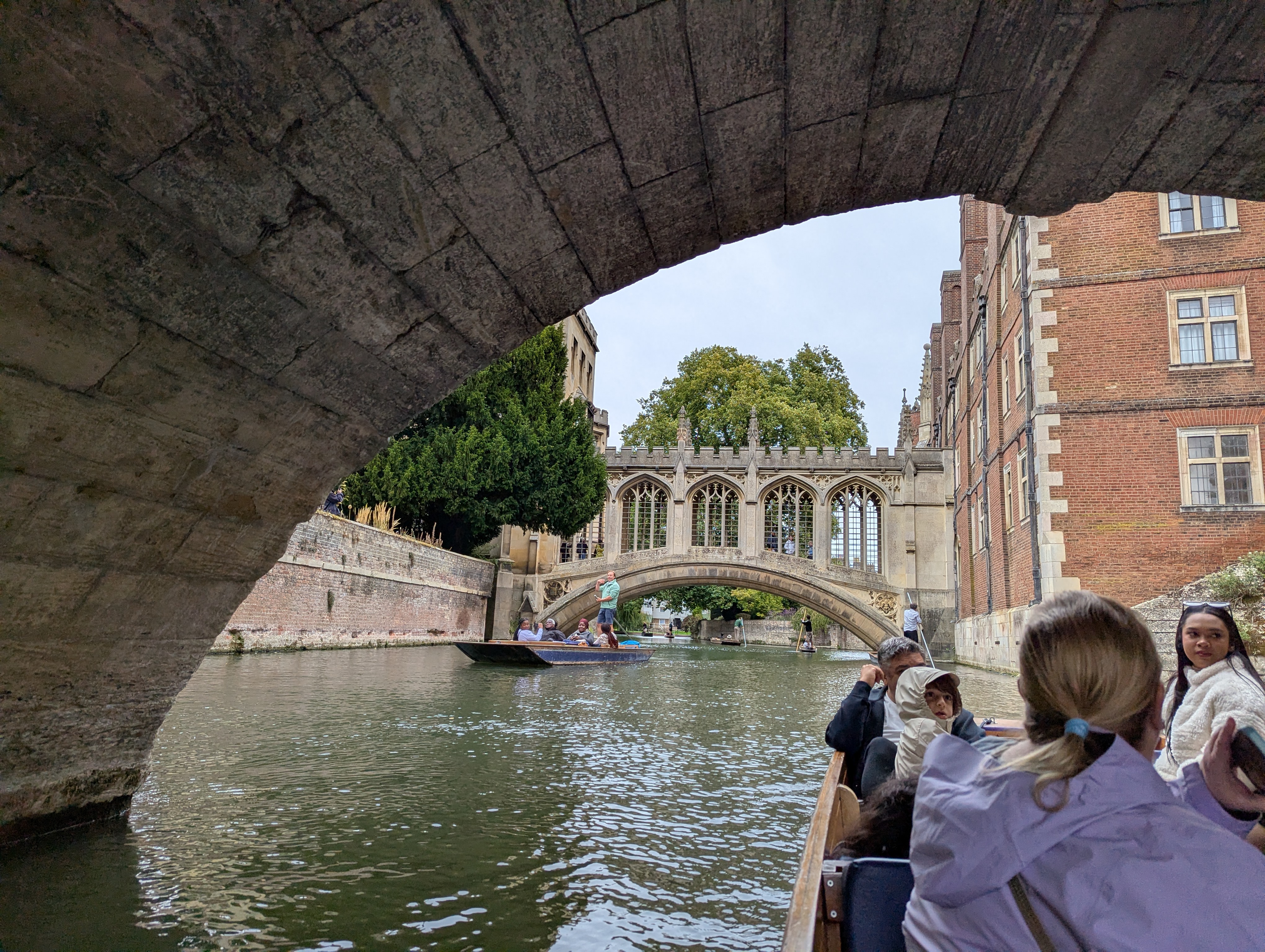
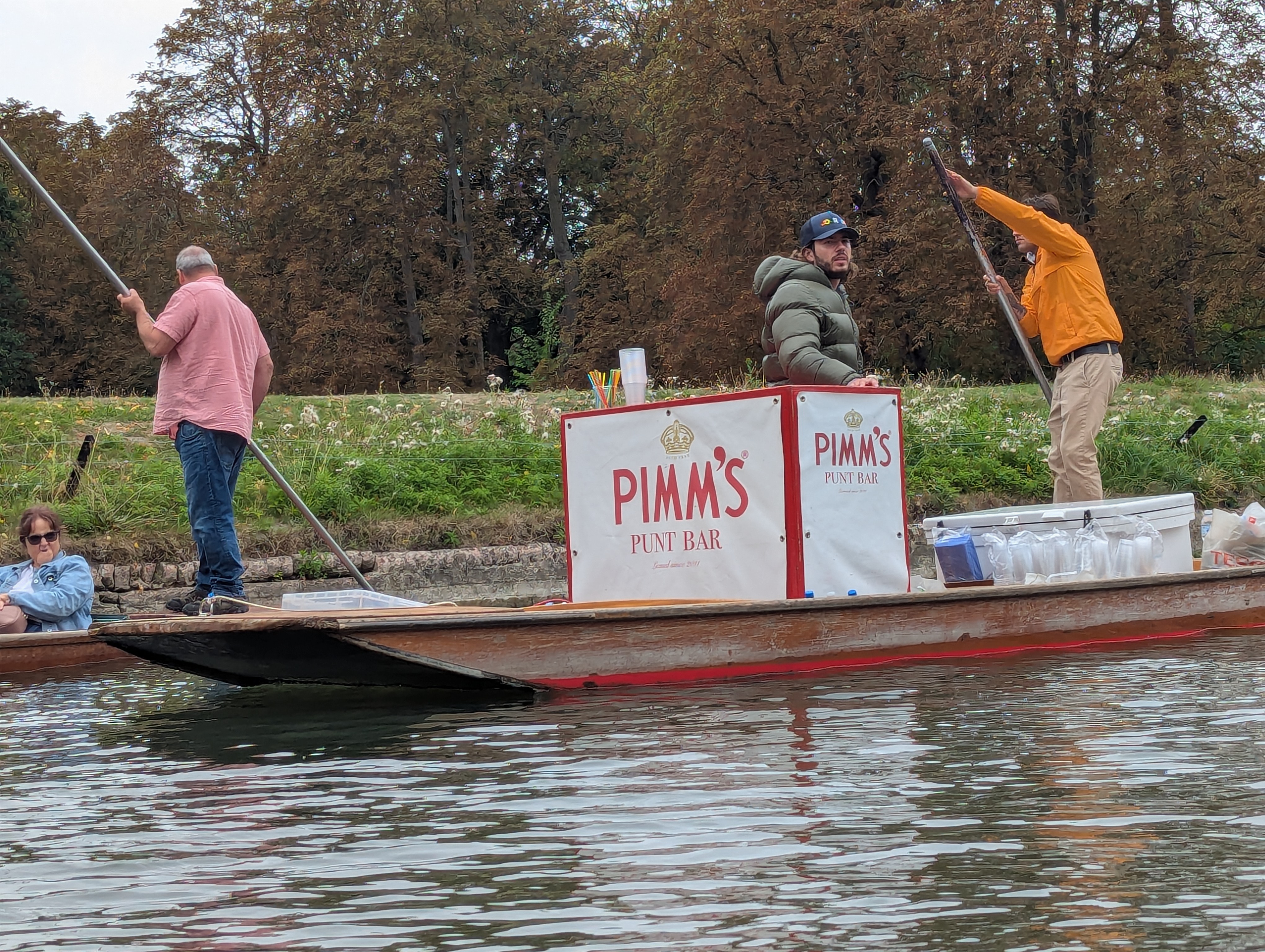
Upon arriving back at the Cambridge Punt Company’s dock we boarded the boat. A punt boat is kind of awkward to board. The seats are near to the bottom and you sit with your legs stretched out in front of you, lounge style. Our boat could hold 8 -10 people. The guide stands at the back of the boat and uses a big pole to muscle the boat along the river. It looked like a tremendous amount of work. But that is work for someone else. For me it was delightful, floating down the river past university buildings and hearing all about the river and the town and Cambridge college.

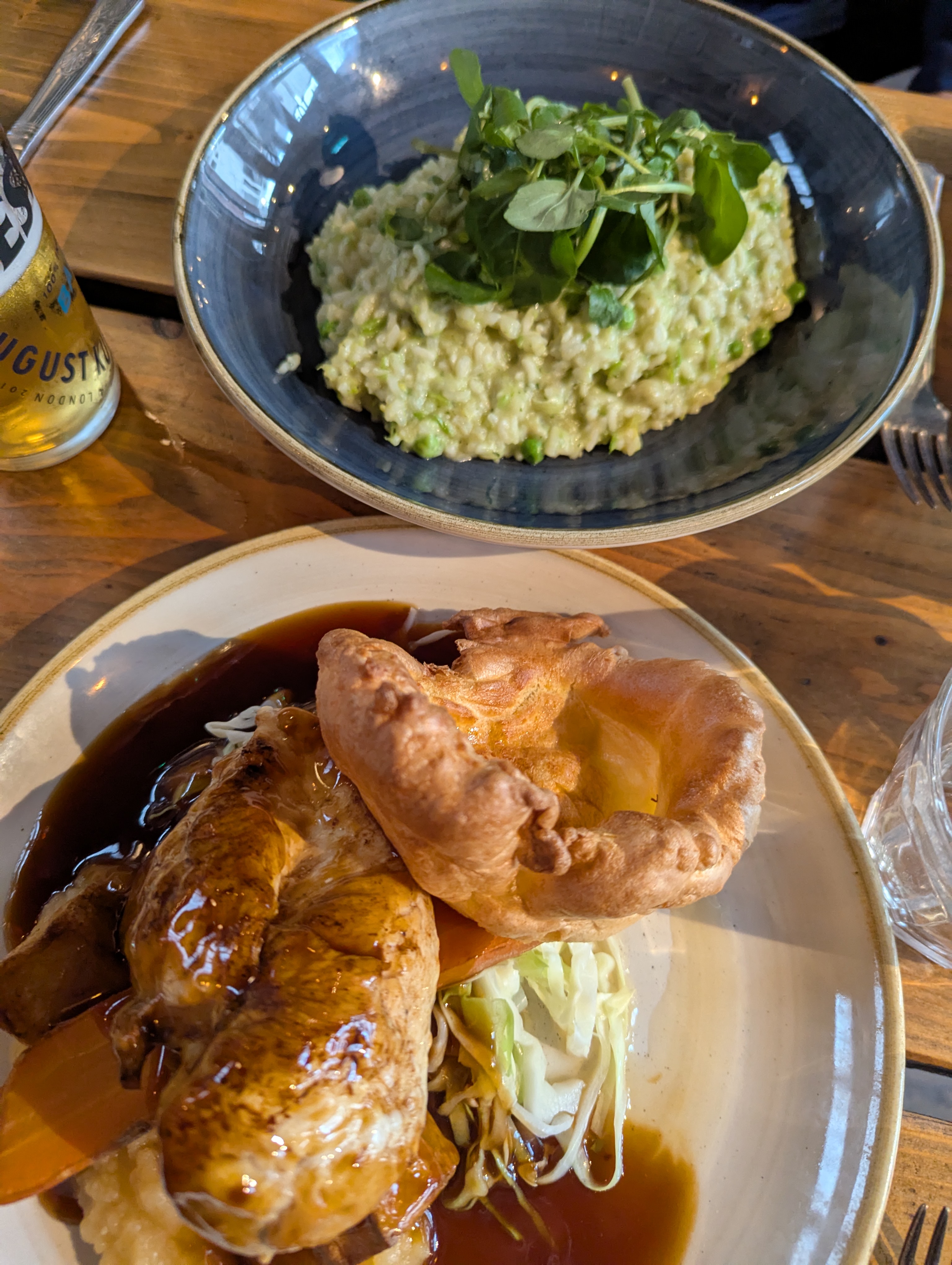
After the punt tour we walked around the city center some more and then returned to our hotel. They were still not quite ready to check us in and suggested that we get lunch at The Old Bicycle Shop, which was a few blocks away. This pub actually is in the same spot as a historic bike shop where supposedly Charles Darwin bought a bike in the 1800s. It was a Sunday so they did have Sunday Roast, which I happily ordered. My husband had risotto. We both had dessert, Eton Mess for me and Sticky Toffee Pudding for him.

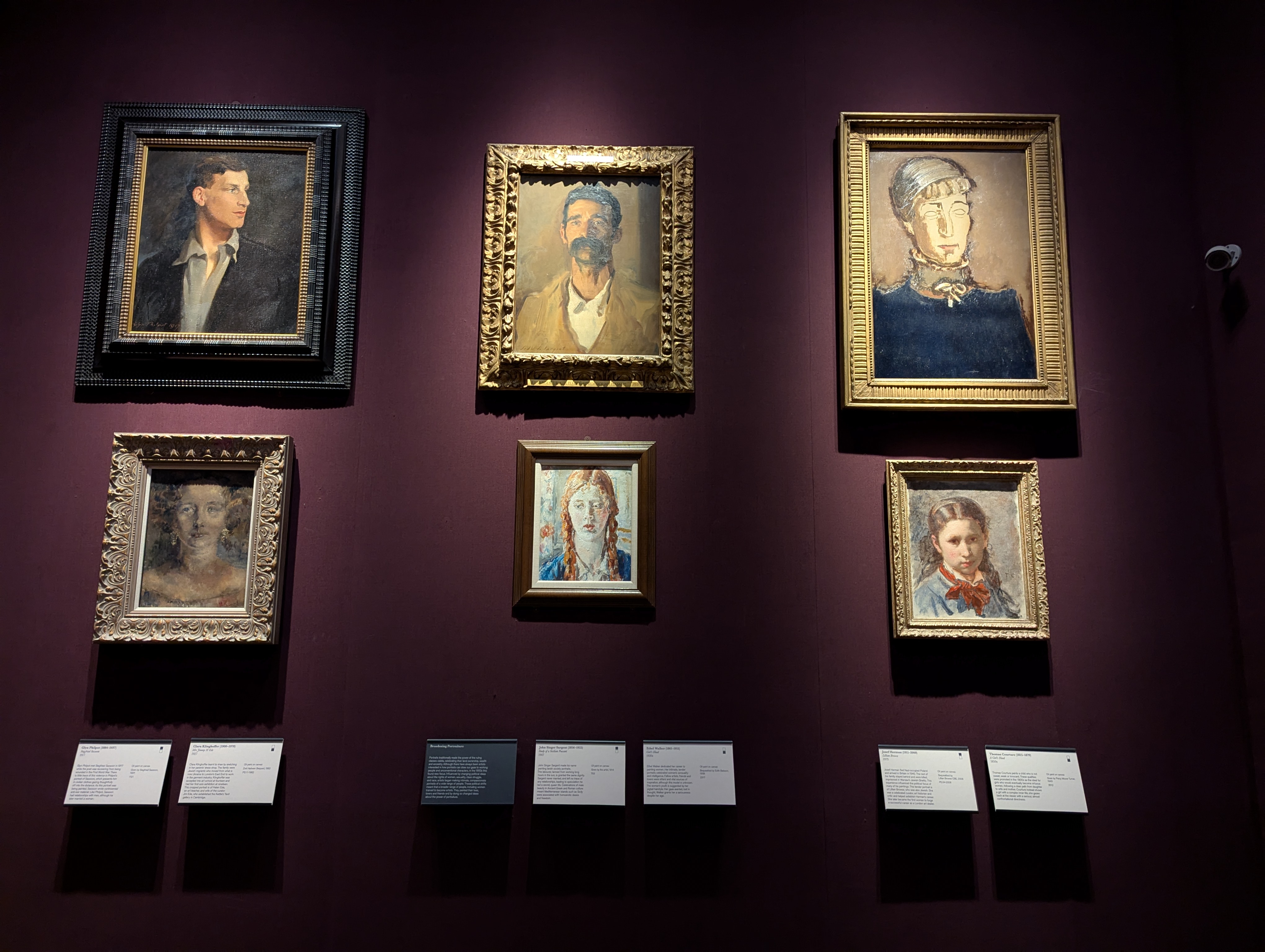
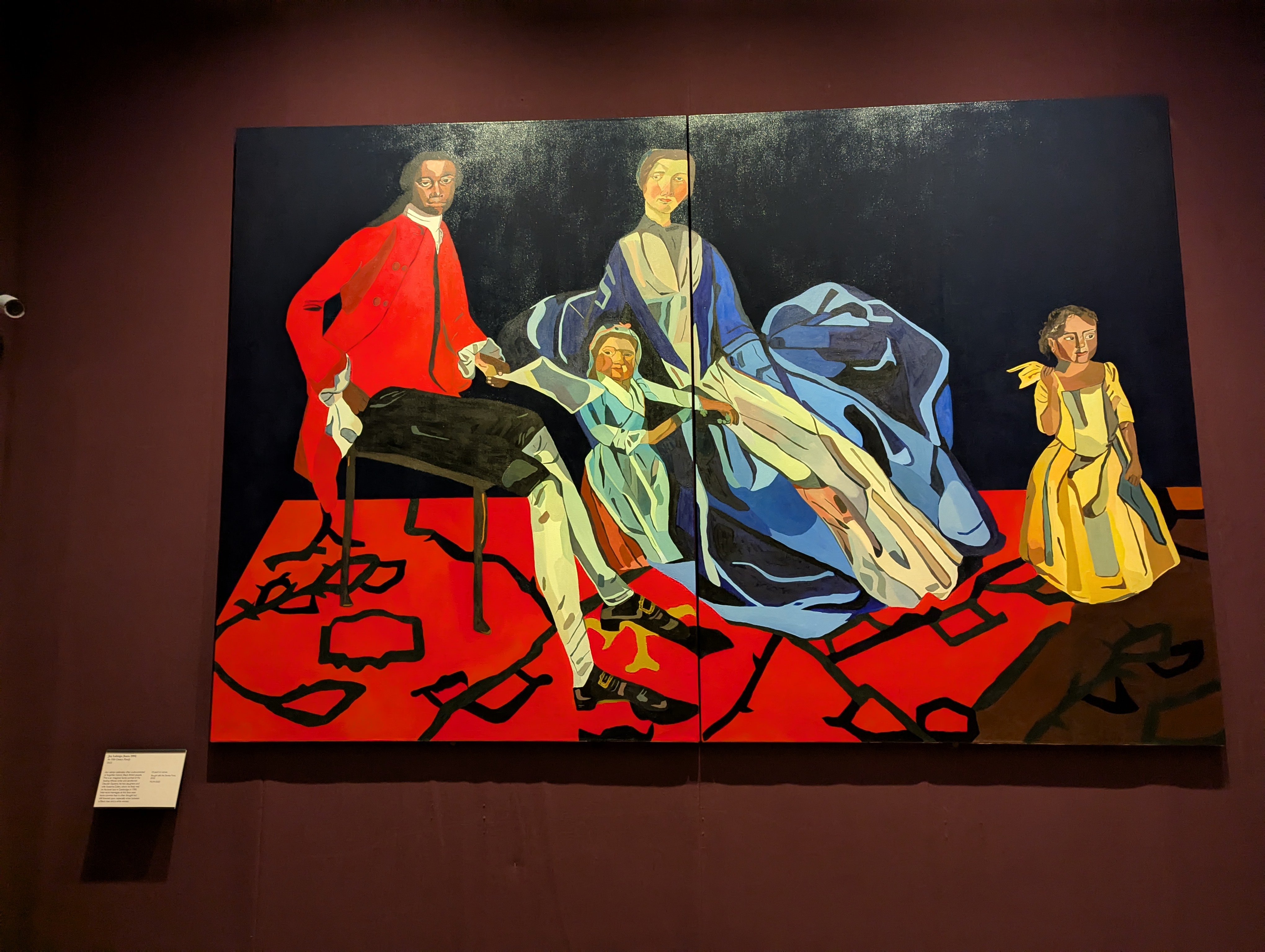
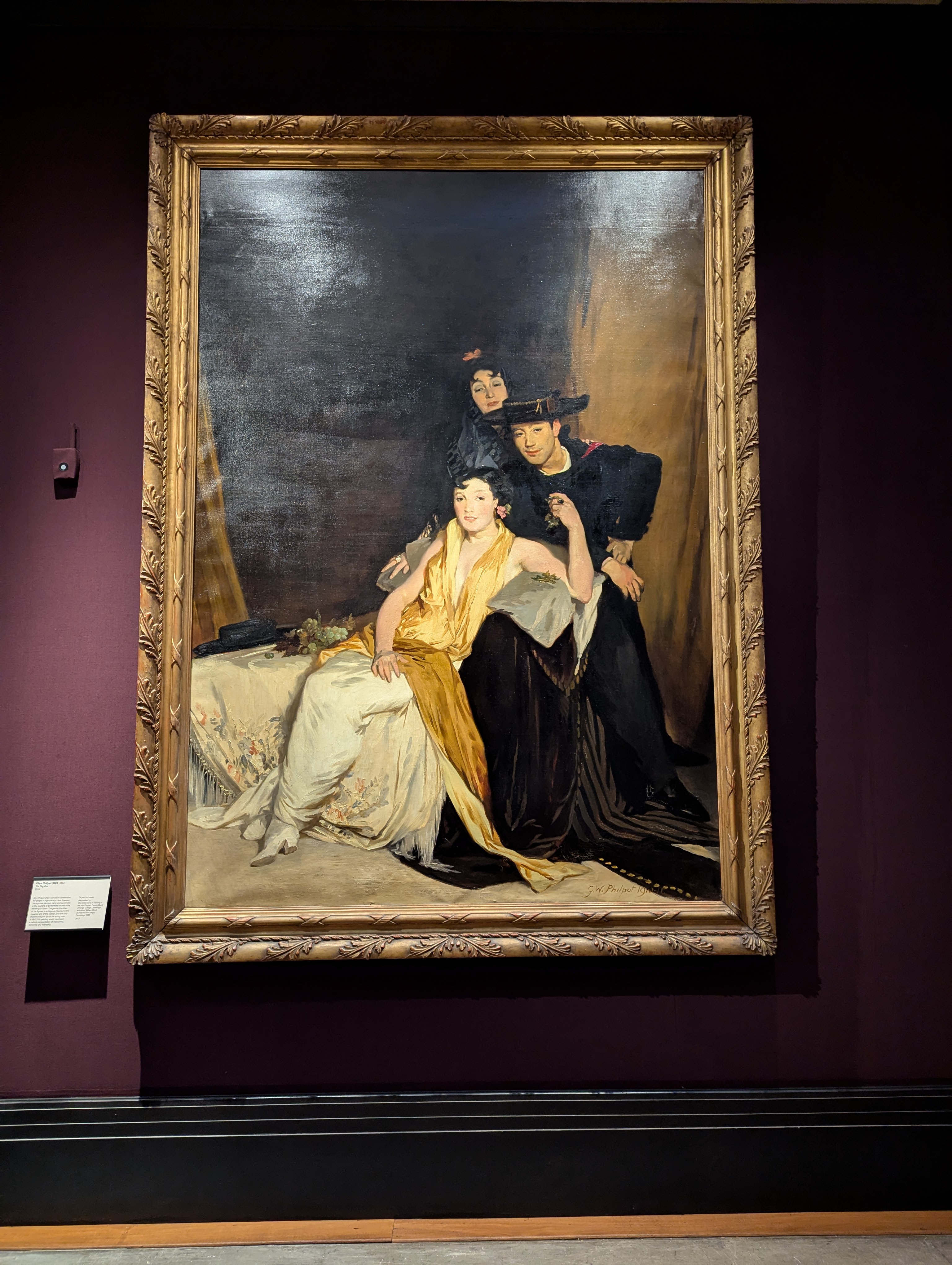
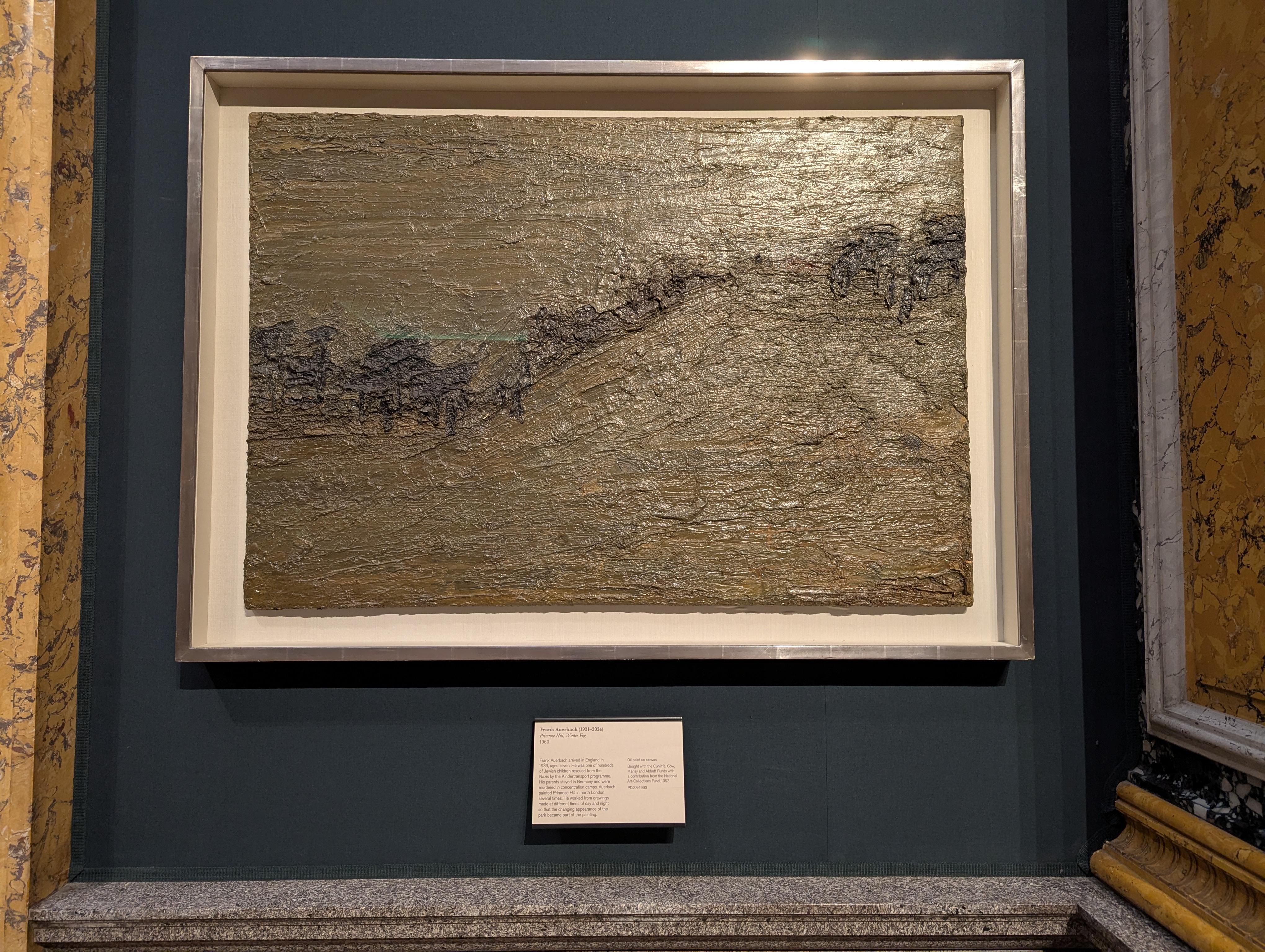
The pace of service and eating at The Old Bicycle Shop had been on the leisurely side and we found that we had about an hour before the Fitzwilliam Museum was to close. The Fitzwilliam museum has collections of objects and art and is operated by Cambridge University. It was started with a bequest of art, books, and money by the Irish-born British Parliamentarian Richard Fitzwilliam in the early 1800s. We walked the few blocks to the museum and went our separate ways inside it. My husband really enjoyed the exhibits on ancient Egypt. I spent some time in the exhibits about domestic objects before moving on to look at the art collection. The exhibit mostly included artists I’m not familiar with but it does have some paintings by Degas, Seurat, Renoir, Picasso, and Cezanne. Yes, I have heard of them. I found the paintings below to be interesting.

We were shooed out of the exhibit at 5 p.m. with our fellow museum goers into a driving rain. By the time we got back to our hotel, The Gonville Hotel we were drenched. But our room was ready and our suitcases had been ferried to it. We changed into dry clothes and tried to figure out dinner plans. Hopefully dinner plans that did not involve going out again into the rain. In the end we went to the Gonville Bar where they were serving a limited menu that was good enough for us. I had a delicious white onion soup and my husband had a chicken sandwich. The Gonville Hotel is nothing fancy but we found it charming and well located.

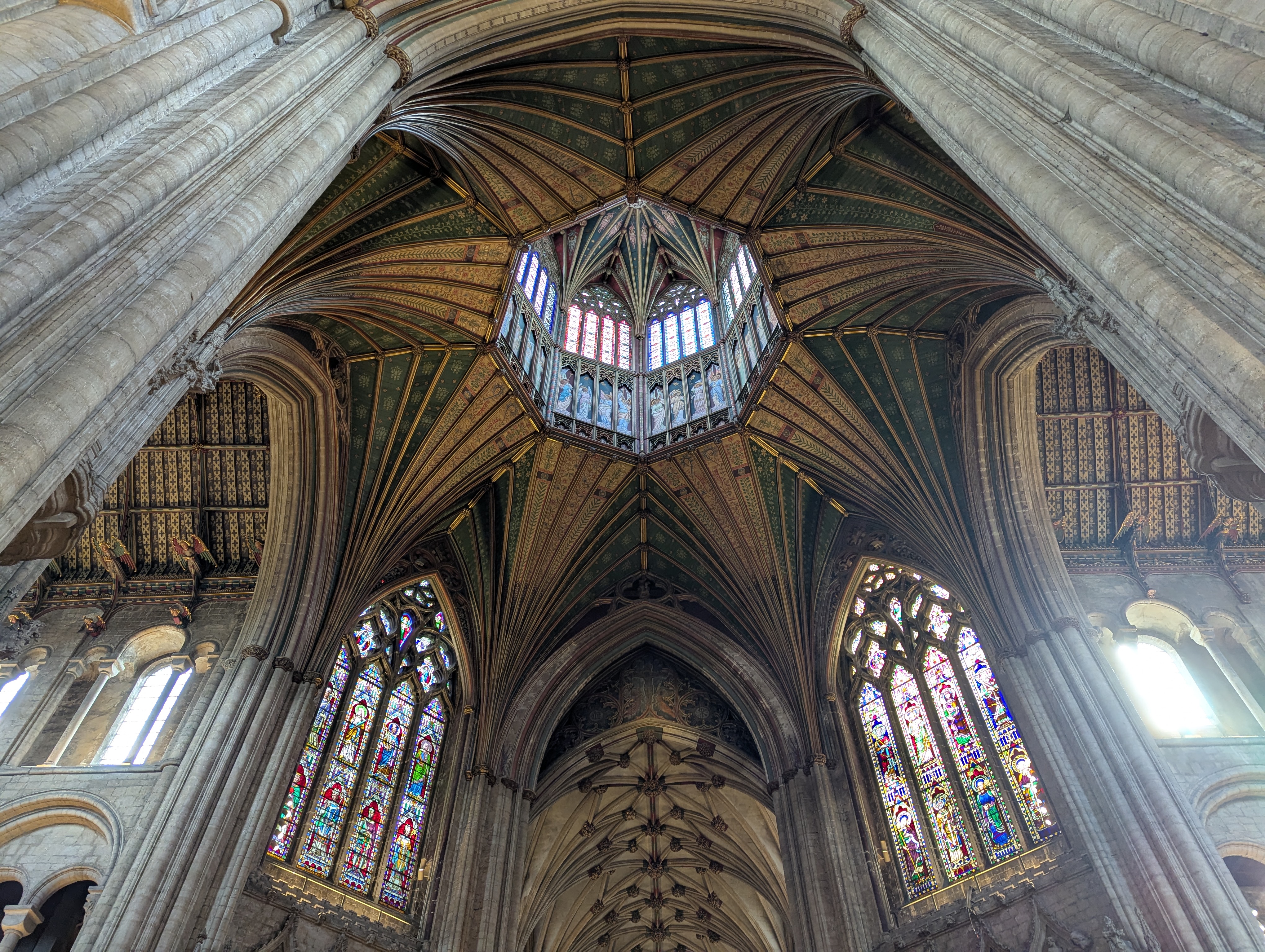
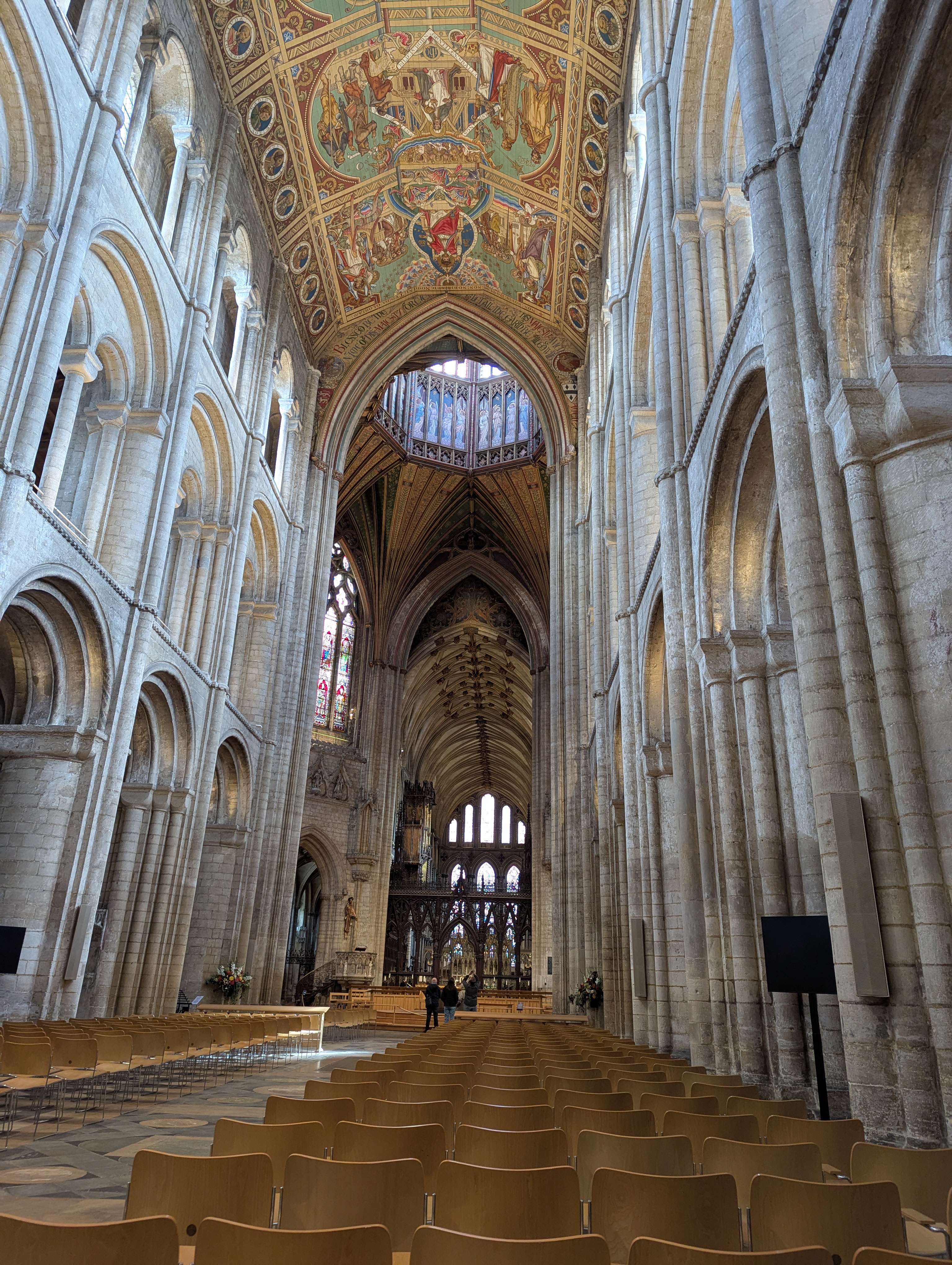
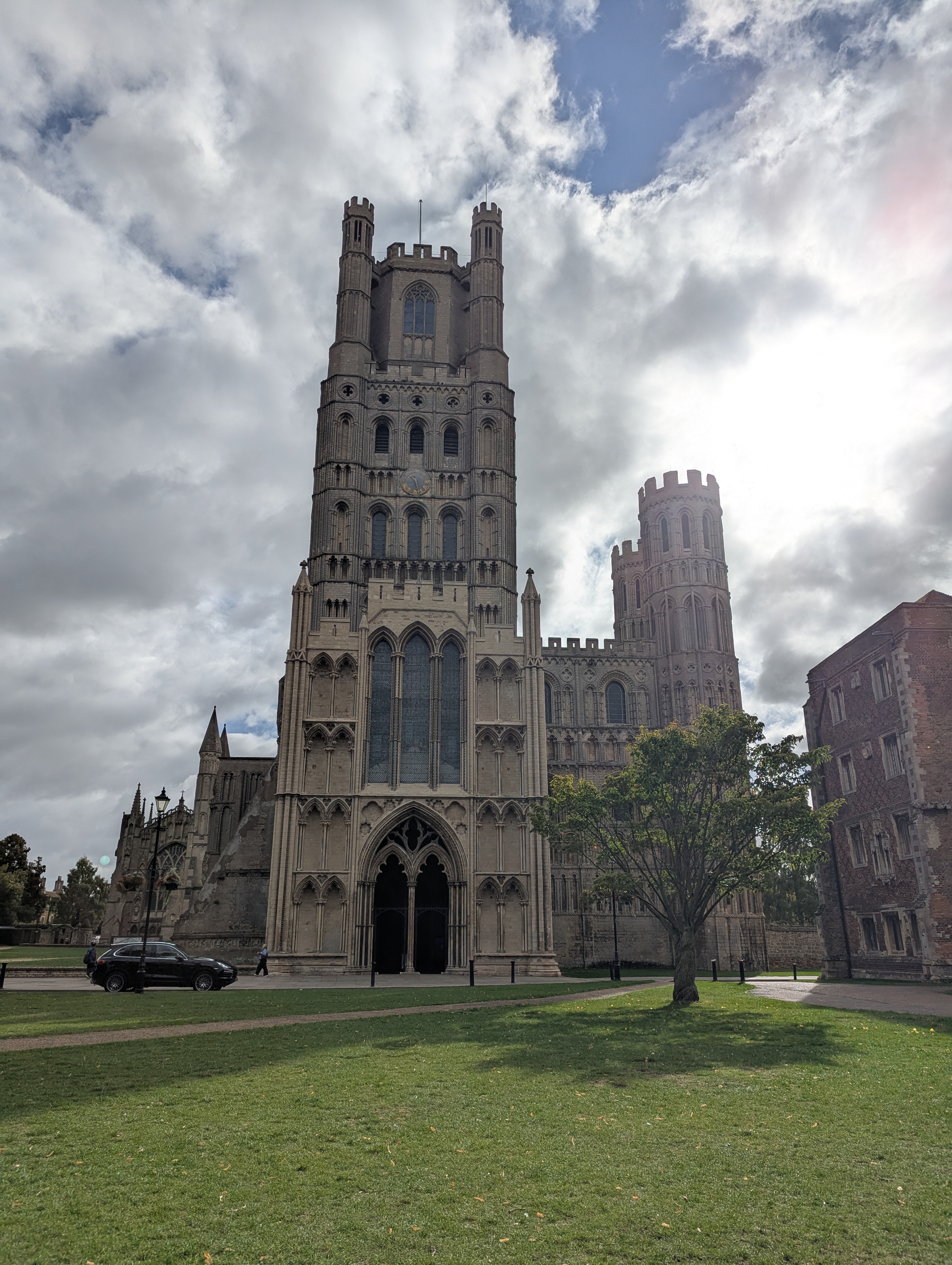
In the morning we headed back to the train station with our Anglia Plus passes and took the train to Ely. The main attraction in Ely is the Ely Cathedral, built in the early 11th century and still in active use. Upon walking out of the train station in Ely we could see it towering over the village. We walked though town, stopping into the Almonry Kitchen just outside of the cathedral for breakfast of scones, clotted cream, and strawberry jam. Really yummy. As I’ve explained before, my husband is always alert to Italians we might meet as we travel so he can practice speaking Italian with them. The Almonry had such a person on staff so my husband started his day happy.

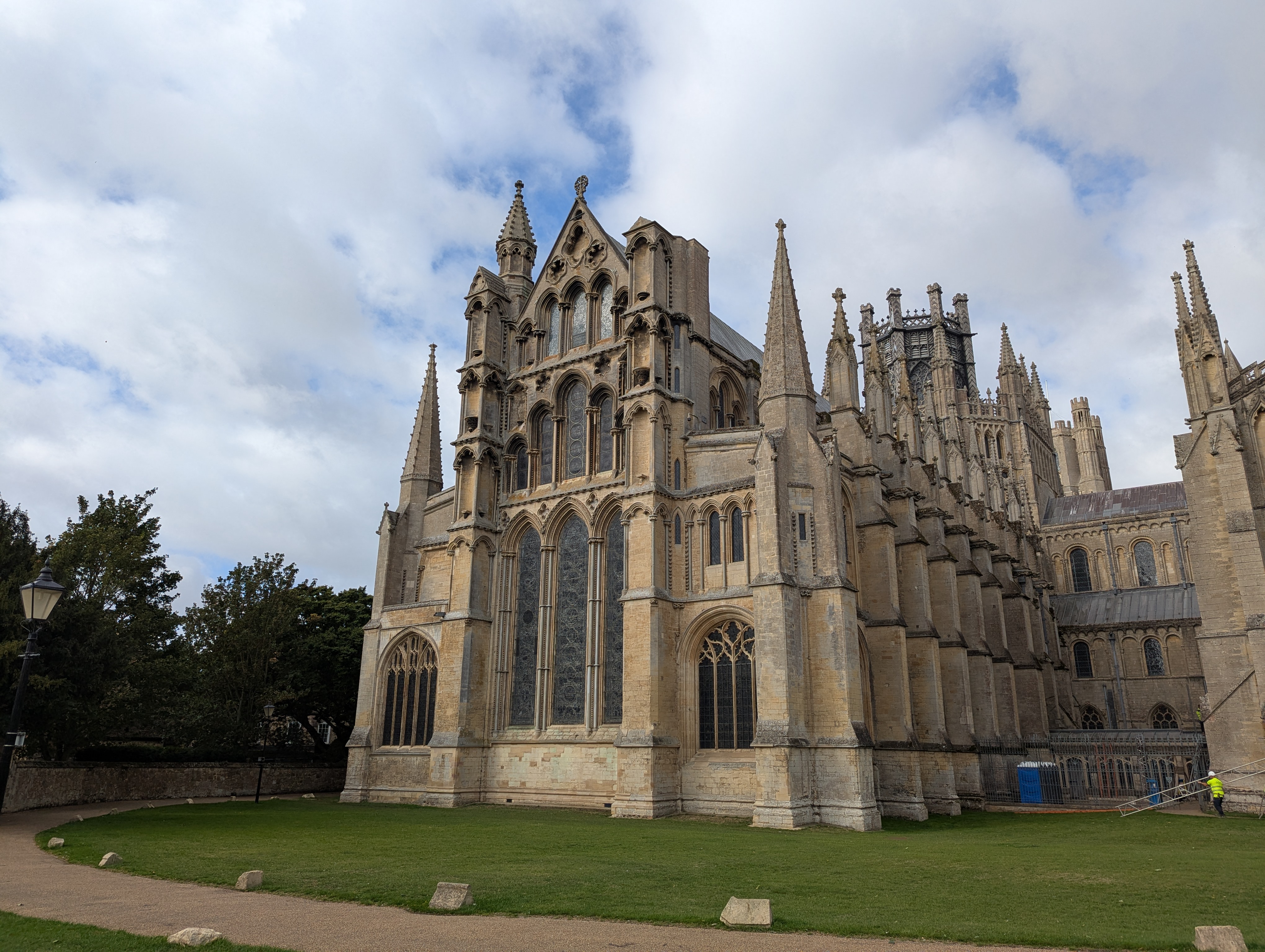
The Cathedral offered audio tours so we could proceed at our own pace and listen to as much or as little as we chose. The audio guide was very well done and I highly recommend using it. We learned all about the history of the cathedral which stood on the grounds of an Abbey founded in the 600s by Etheldreda, the daughter of an East Anglia King. More about her in a later post. The cathedral architecture heavily reflects influences of the Normans who conquered England not long before building occurred. But England history has been tumultuous and the cathedral has been impacted by all of it. Fascinating tour. We spent way more time there than we had planned.

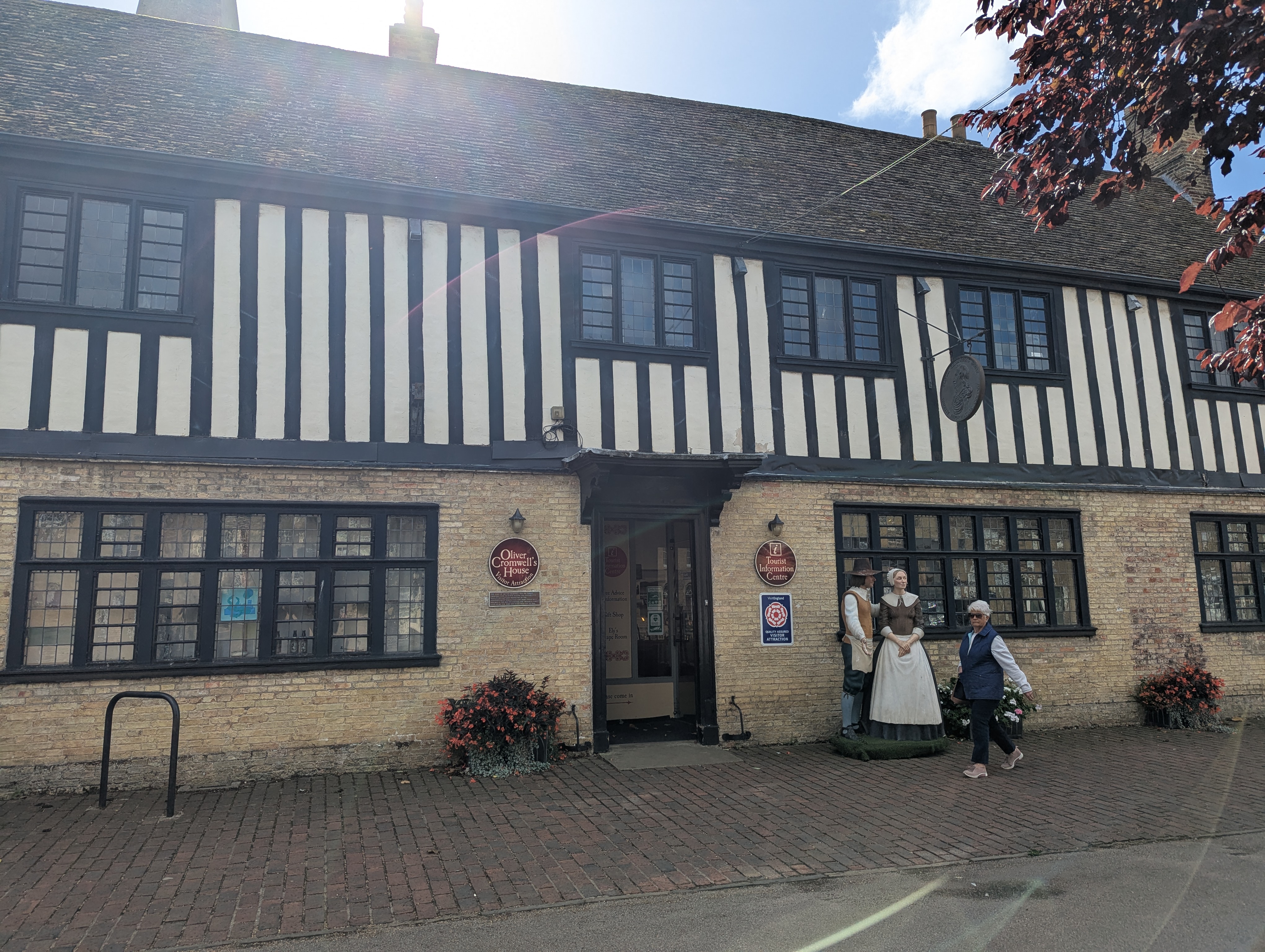
To keep our day on schedule we decide not to tour the Oliver Cromwell house in Ely but we did walk by it and snap a photo. Oliver Cromwell was a controversial figure and Parliamentarian who participated in and led incidents that resulted in overthrowing the monarchy in the 1600s. He was ultimately named “Lord Protector,” kind of like a President. But he behaved pretty much like a King. He was a complete killjoy, outlawing everything fun in England. Fun fact: after he died (of natural causes) and his son, who was named the new Lord Protector was himself overthrown, Oliver Cromwell’s body was dug up and publicly hung. His head was cut off and publicly displayed on a roof for more than 20 years.

Good times.

We walked back toward the train station and, in the few spare moments we had, walked along a fen by the River Ouse.

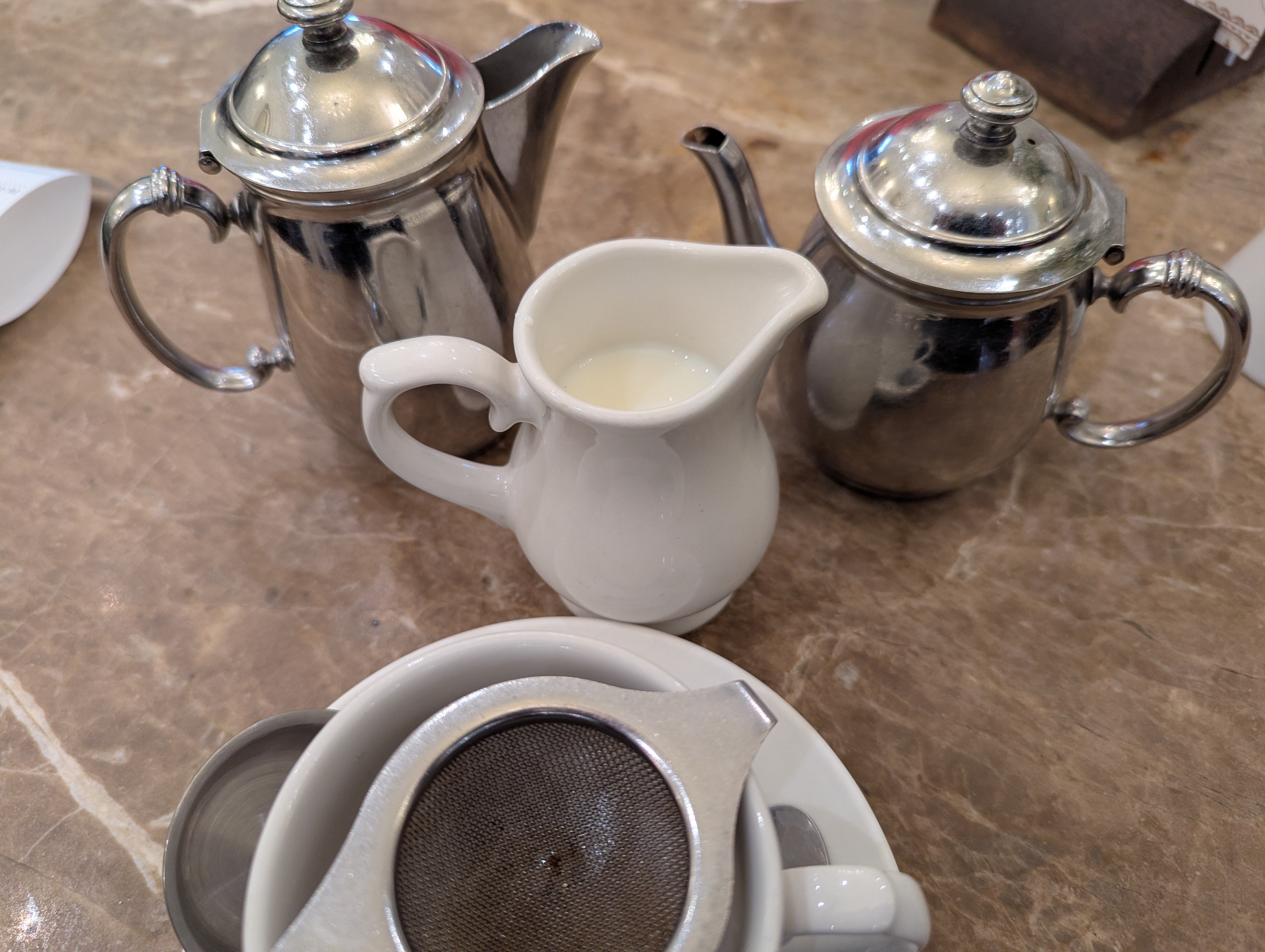
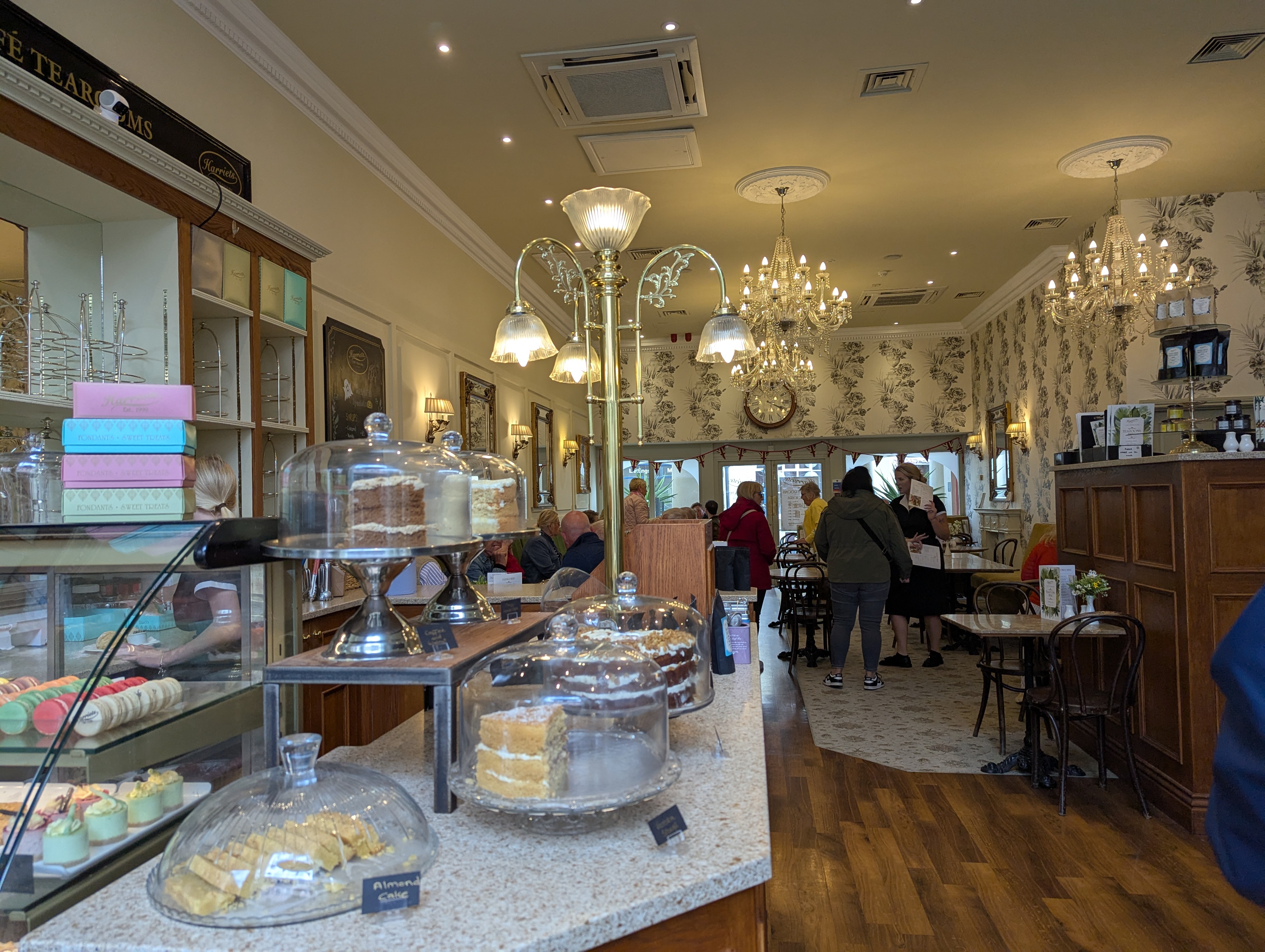
Our next train ride was to a town called Bury St. Edmunds. We stopped to have lunch in a chain called Harriet’s Cafe and Tearooms. We had been wandering about the town trying to find someplace that looked interesting and that place appealed to me. I’d been noticing throughout the trip how much tea rooms seemed to be taking on greater prominence in the towns away from London. Maybe they just attracted more of my attention outside of London. In any case I did have delicious tea with milk along with my cheddar cheese sandwich.

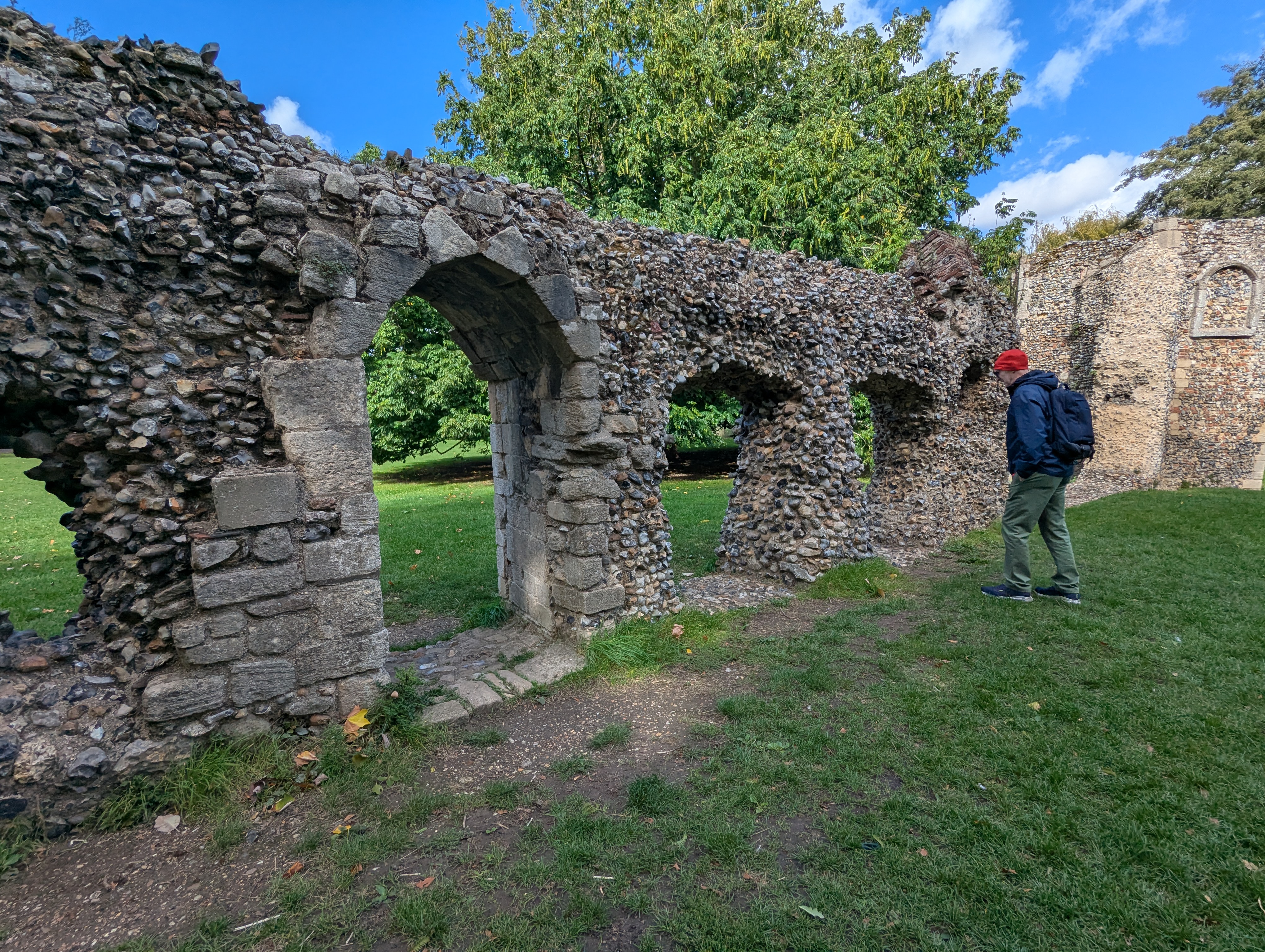
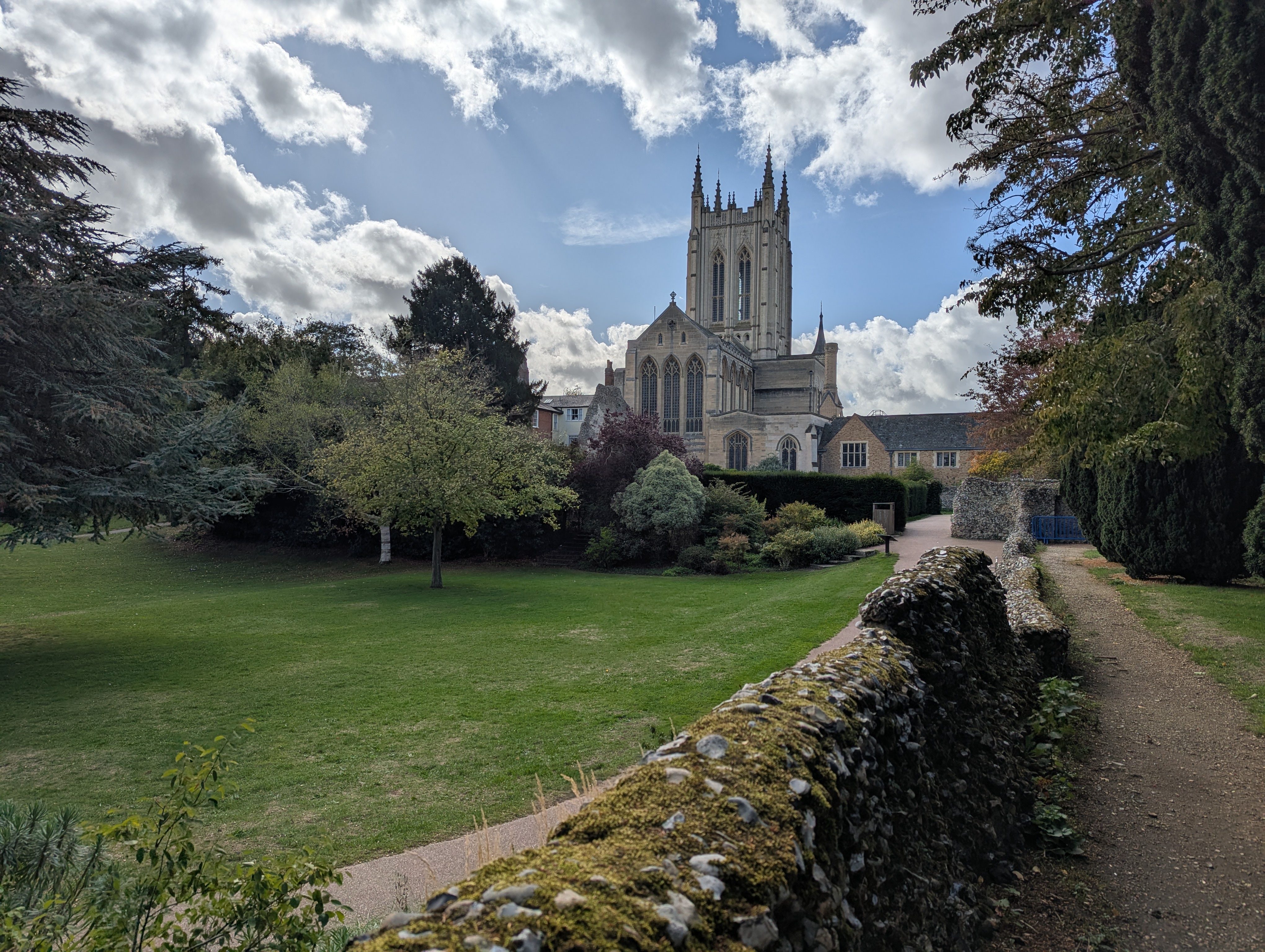
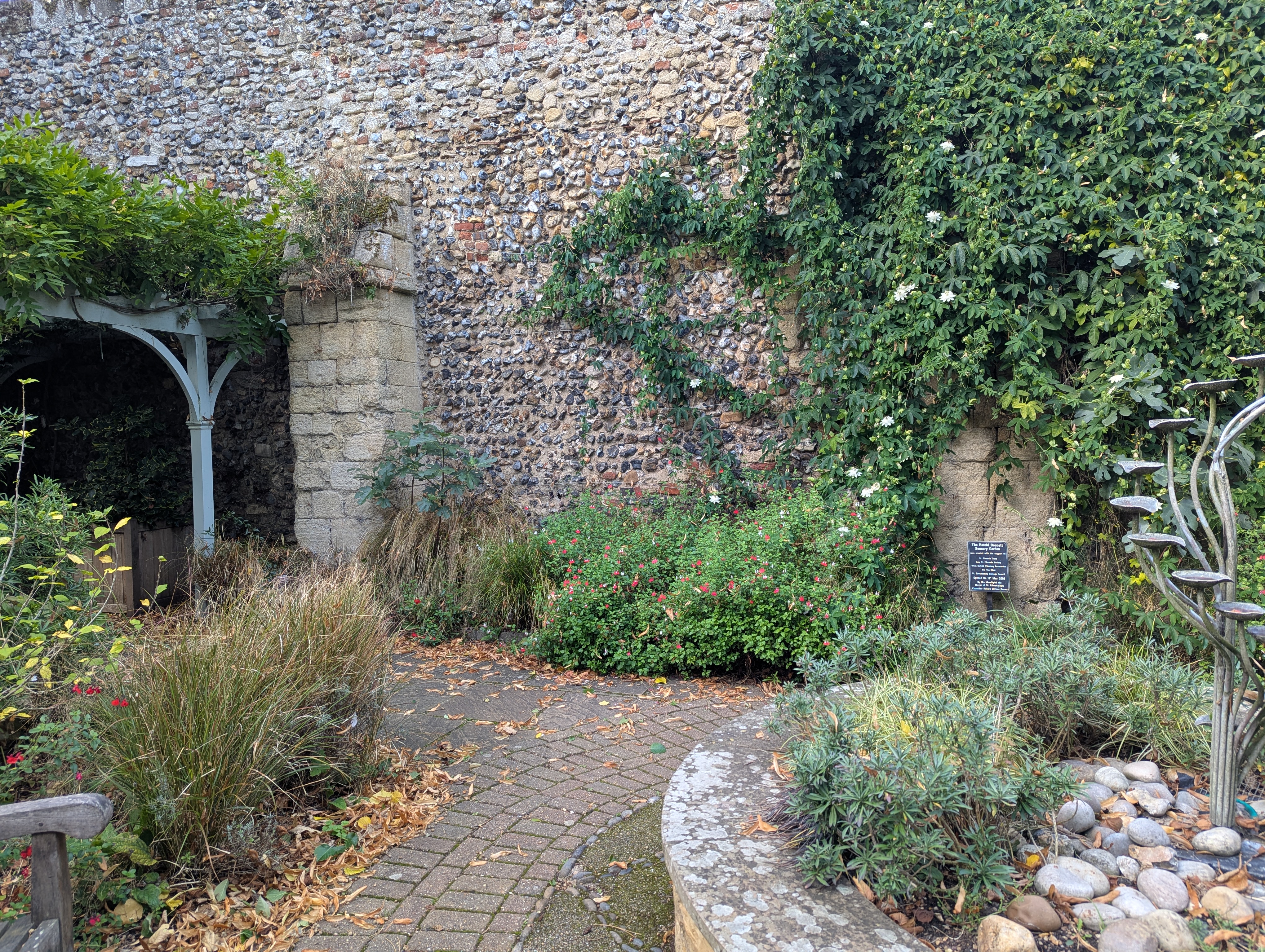
Our main destination in Bury St. Edmonds was Abby Gardens, a lovely garden near the St. Edmundsbury Cathedral. We did spend some time in the Cathedral, but the real attraction is the visible ruins within the garden of an 11th century monastery.

In our final stop in Bury St. Edmunds we wandered over to the Greene King Brewery. We had hoped to tour it and sample their beer, but it was closed, at least for the day. A man passing by told us it had been recently closed permanently. With all due respect to the passerby, it looked like an active brewery. But not on the day we were there, so back to the train station and back to Cambridge for a relaxing dinner at The Pickerell Inn, a delicious and beautiful gelato at Amorino, and a good night’s sleep.

Our footprint in East Anglia by this time looked something like this:

A little work, a little play

So we were back in London for the week and, as has been the case the last few times, I worked from London. But this time is different because I am retiring at the end of May. My replacement has already been hired and she is a good one, rapidly coming up to speed. So while I did work every day and almost put in a full week, it was also pretty chill. Every day I got up and put in an hour or two of work and then my husband and I had a planned activity. We’d enjoy that, have lunch, and then I’d go back to our room to work until dinner time.

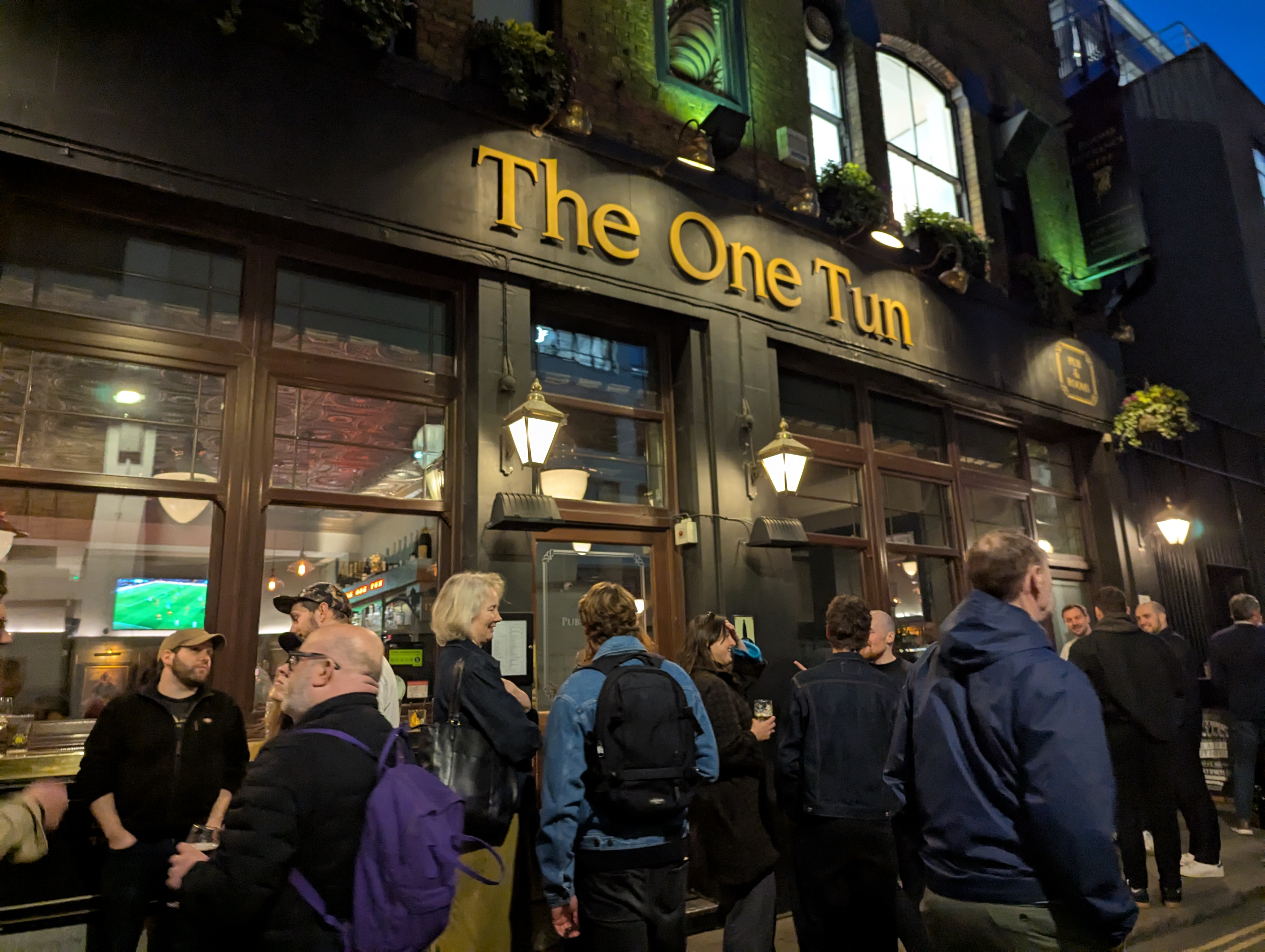
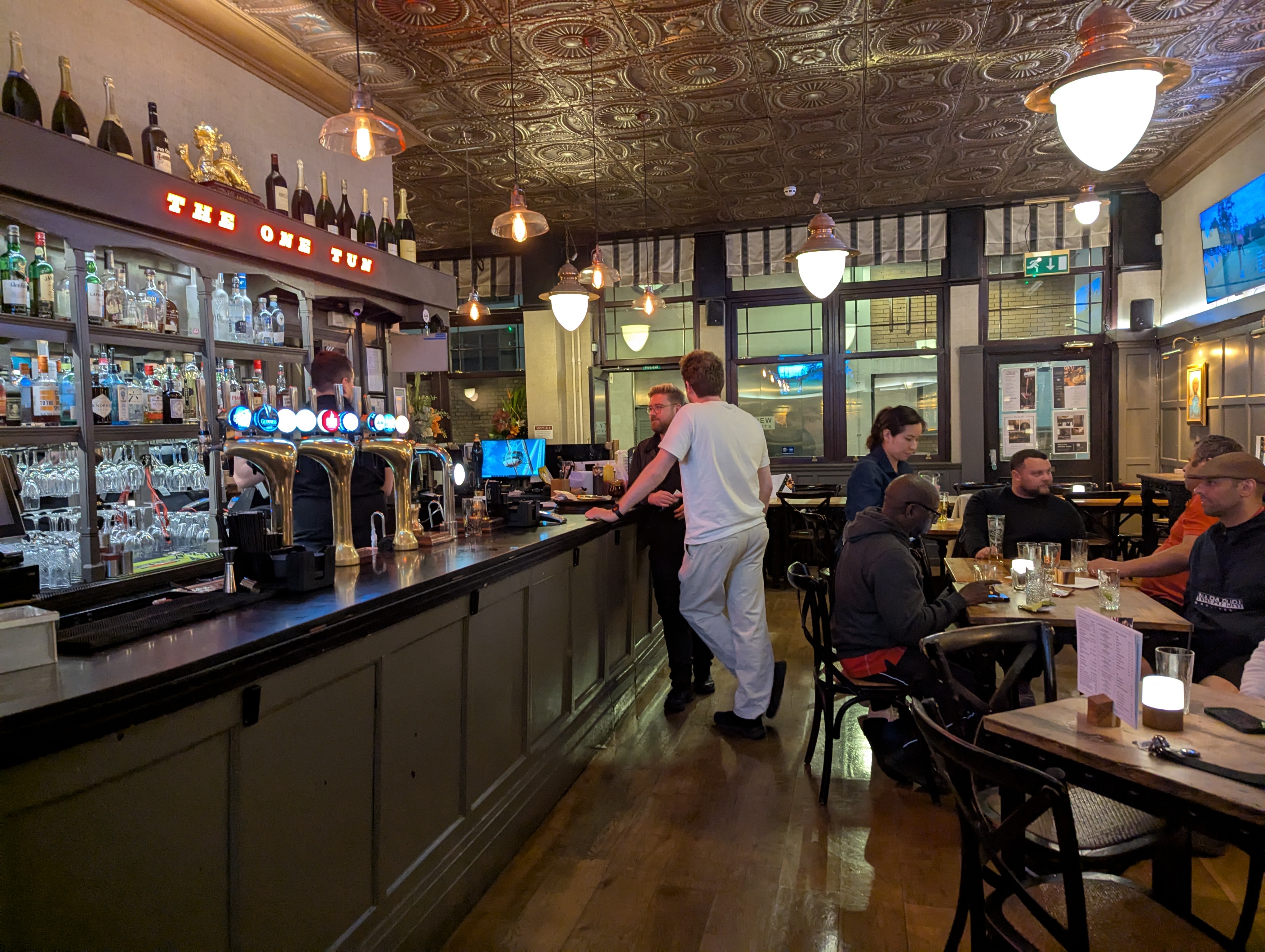
There are a series of “Pub & rooms” in London where a small “hotel” stands above a historic pub. We’ve stayed at one before, The Bull and Hide. This time we tried The One Tun Pub & Rooms near Farringdon station, a pub supposedly patronized, in some earlier version, by Charles Dickens. From the outside, the pub didn’t seem like much and it wasn’t as thronged as other pubs nearby. When I finally saw the inside of it on–I’m ashamed to admit–the last day, it was so awesome. Cozy, fun, with delicious Asian food.

The rooms had a separate door, up some steep stairs. There were 3-4 rooms on our floor and more up a level. Cute and large room with lots of character. We were just above the pub. About 3:30 each day the noise from people gathering both downstairs and in the street outside and music playing would ramp up until about 9 p.m. By 10:30 each night it was pretty quiet.

The location was great. Farringdon station was a block away, so it was easy to get where we wanted to go, and there was a good selection of coffee shops, restaurants, and pubs nearby. This was the first time we visited London where it was more convenient to take the Elizabeth line than the Piccadilly line to and from the airport. Have to say the Elizabeth line is an easy way to travel. New, spacious cars, and there was never a time when we had to schlep our stuff up a bunch of stairs. Hotel excepting. I only packed a carry-on, but a week’s worth of crammed-in stuff is still kind of heavy for a near-retiree.

In the daily “fun hour” we managed the following attractions:

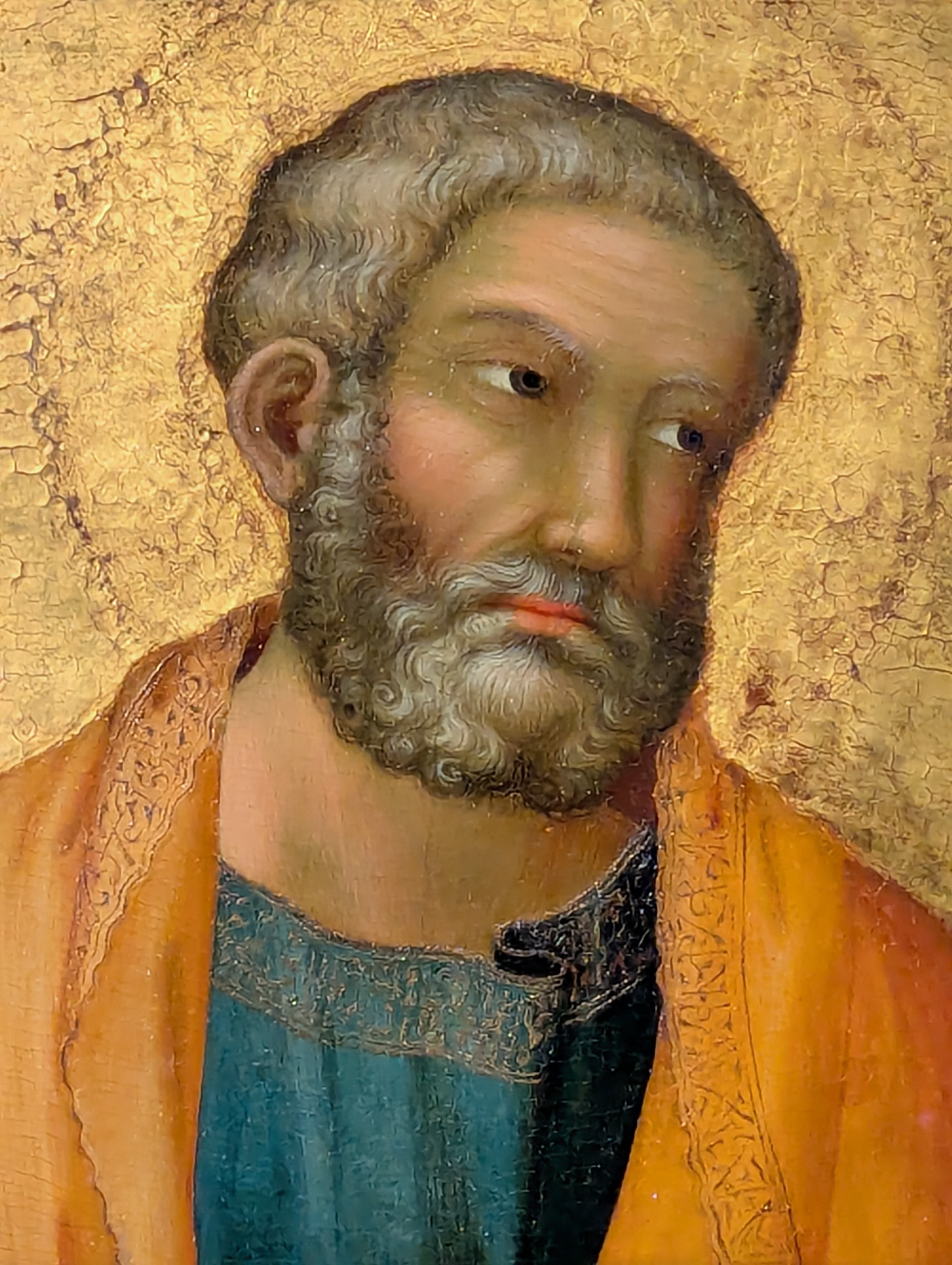
Siena: The rise of painting 1300-1350 at the National Gallery. This exhibit explores the art movement in 14th century Siena, dominated by Christian themes, drama, bright colors, and metallic finishes. That is a big oversimplification from an unsophisticated viewer of art. We sprung for the added mobile audio tour, which I highly recommend especially if you are an occasional art dabbler like me. It helped set the stage and provide details around what to look for, what was unique about the pieces it focused on. We’ve visited the National Gallery before and it has some great works with free admission. We only did a speed walk through the gallery on our way out of the exhibit this time. It felt a bit sinful to walk past Van Gogh’s sunflowers with only a sidelong glance.

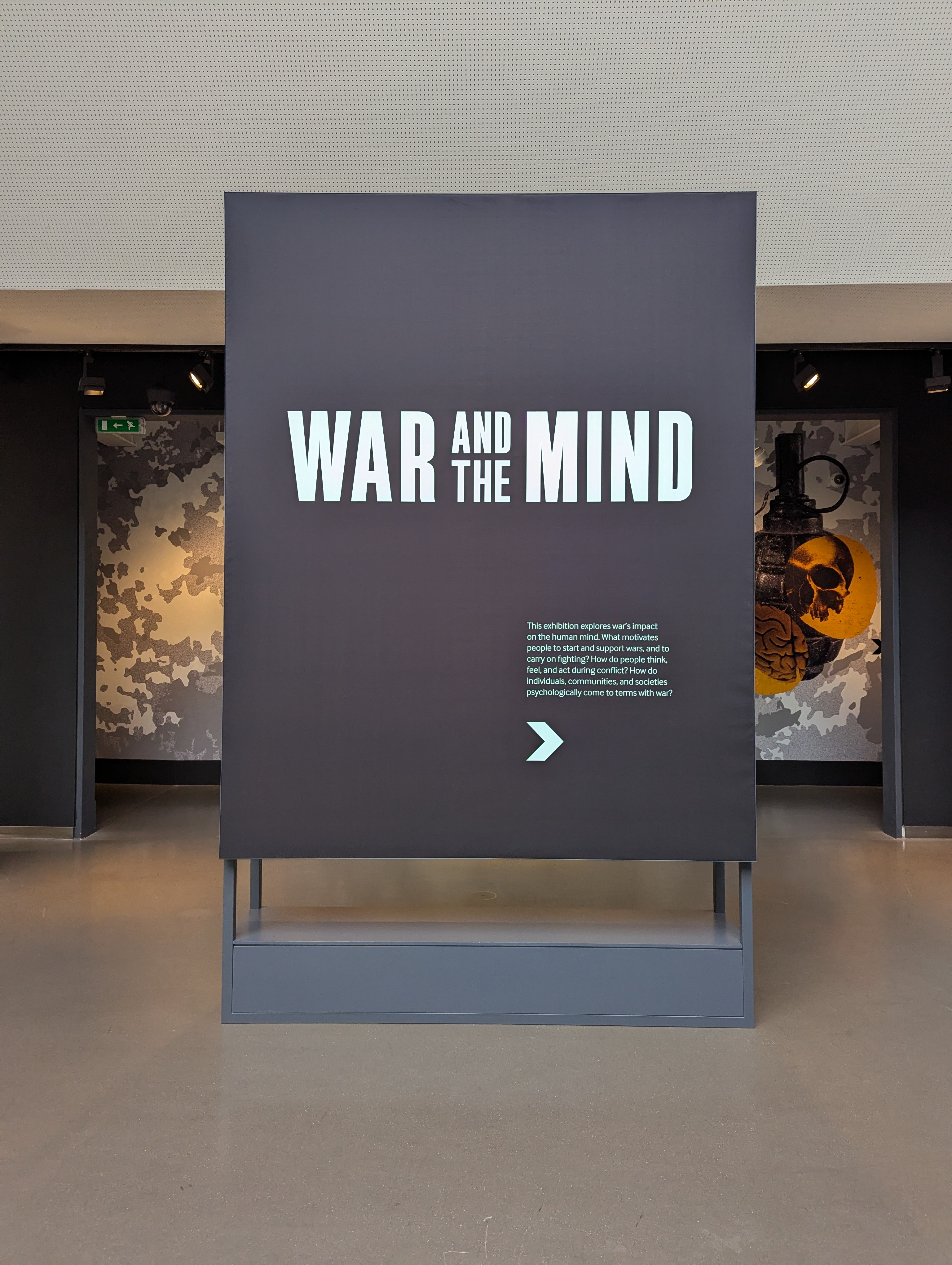
War and the mind exhibit at the Imperial War Museum. The Imperial War museum is a great little attraction and it often has interesting exhibits. They are always thoughtfully done and thought-provoking, and this exhibit on “War and the Mind” was no exception. It covered how people become motivated to start and accept (even support) war, the impact war has on the psyche (and the reverse), both for soldiers and civilians, and then how we are motivated to bring war to conclusion, and think about it in the aftermath. There have been no wars on the mainland of America in the lifetime of anyone I’ve known, but things are different in England. Although the exhibit was not just about impact of war on England, the rich examples and artifacts available particularly from the second World War drew you in, made you think about things at a different level than you might normally. Than I might normally. Excellent exhibit, and I highly recommend it.

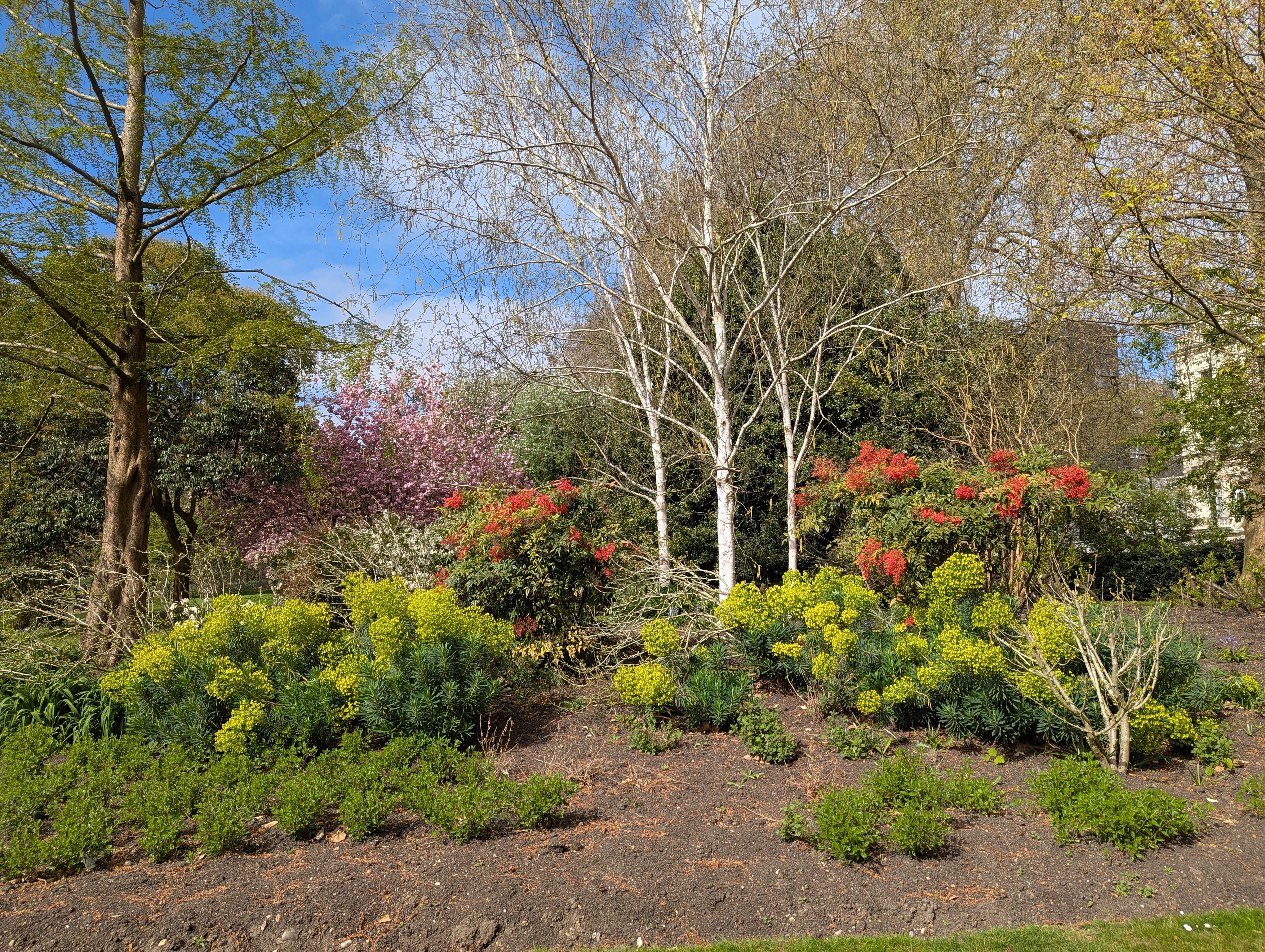
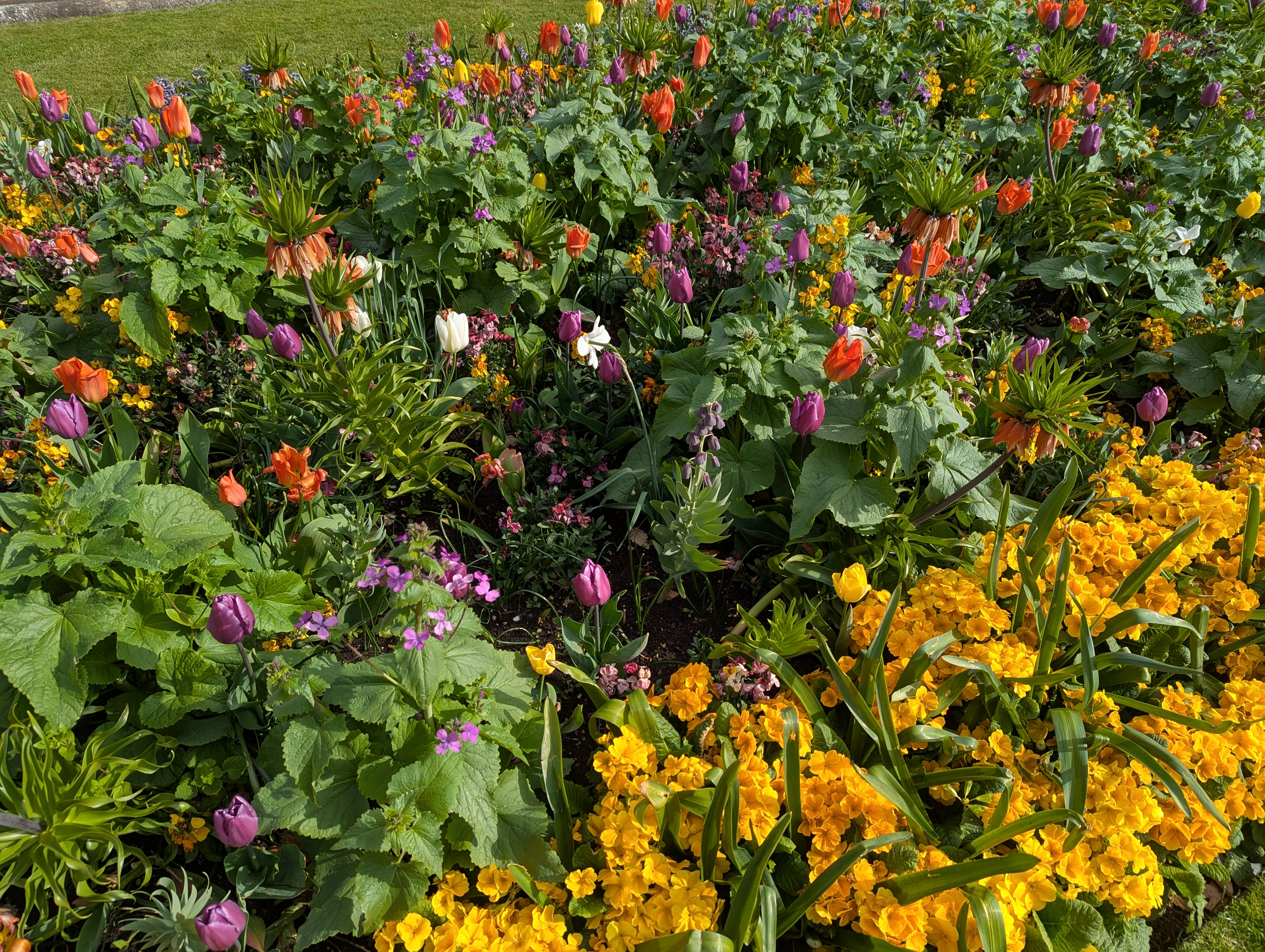
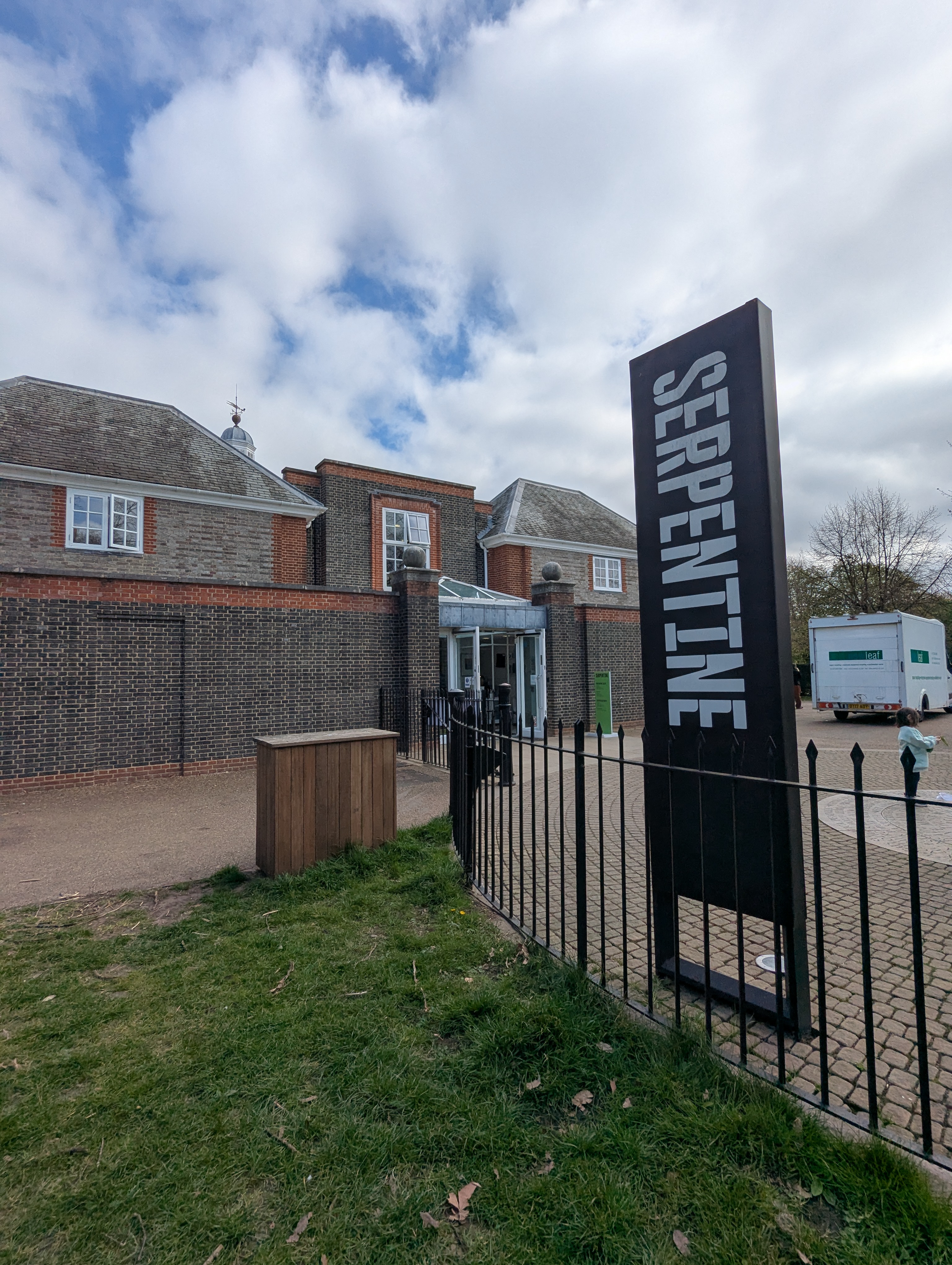
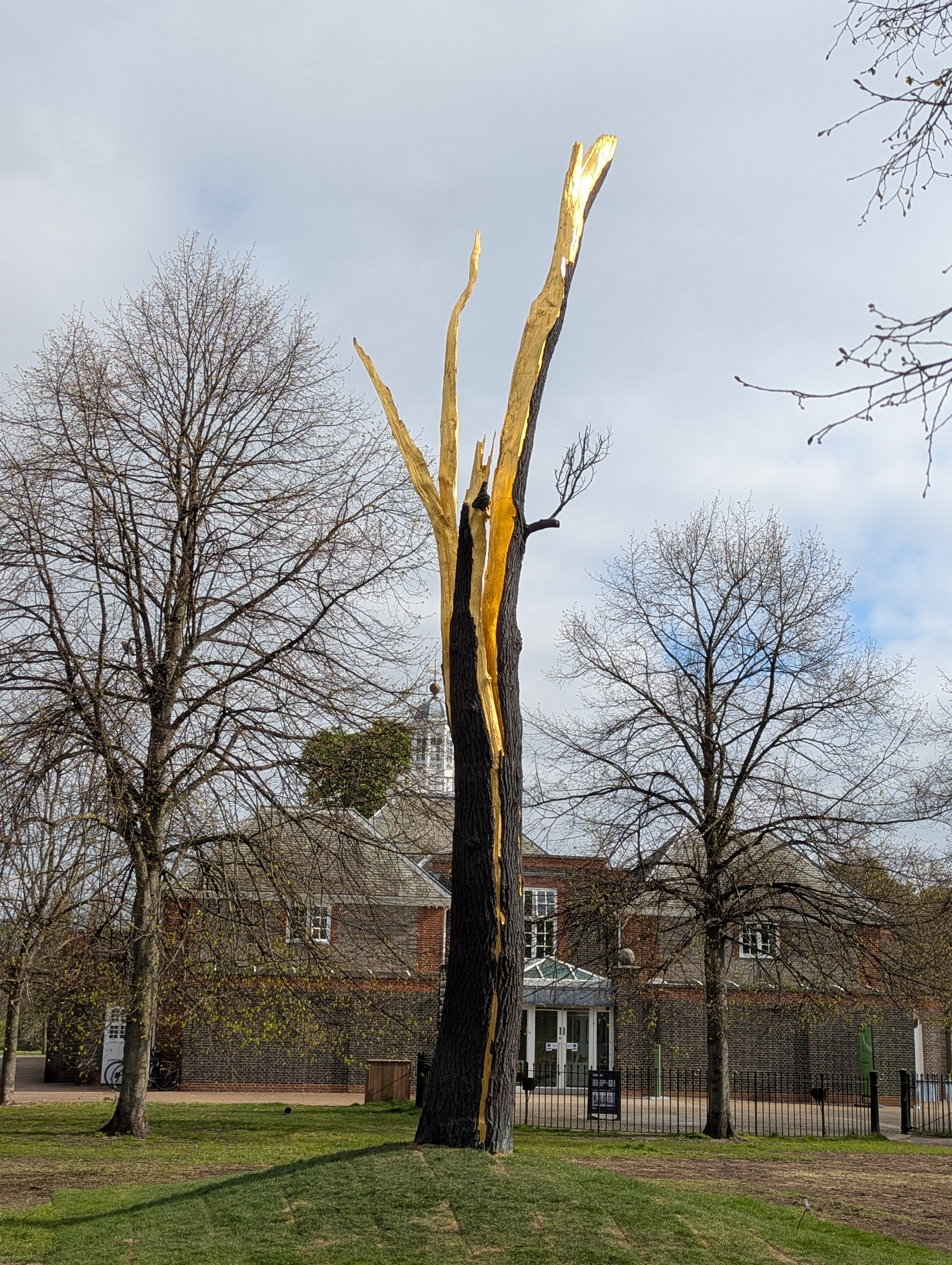
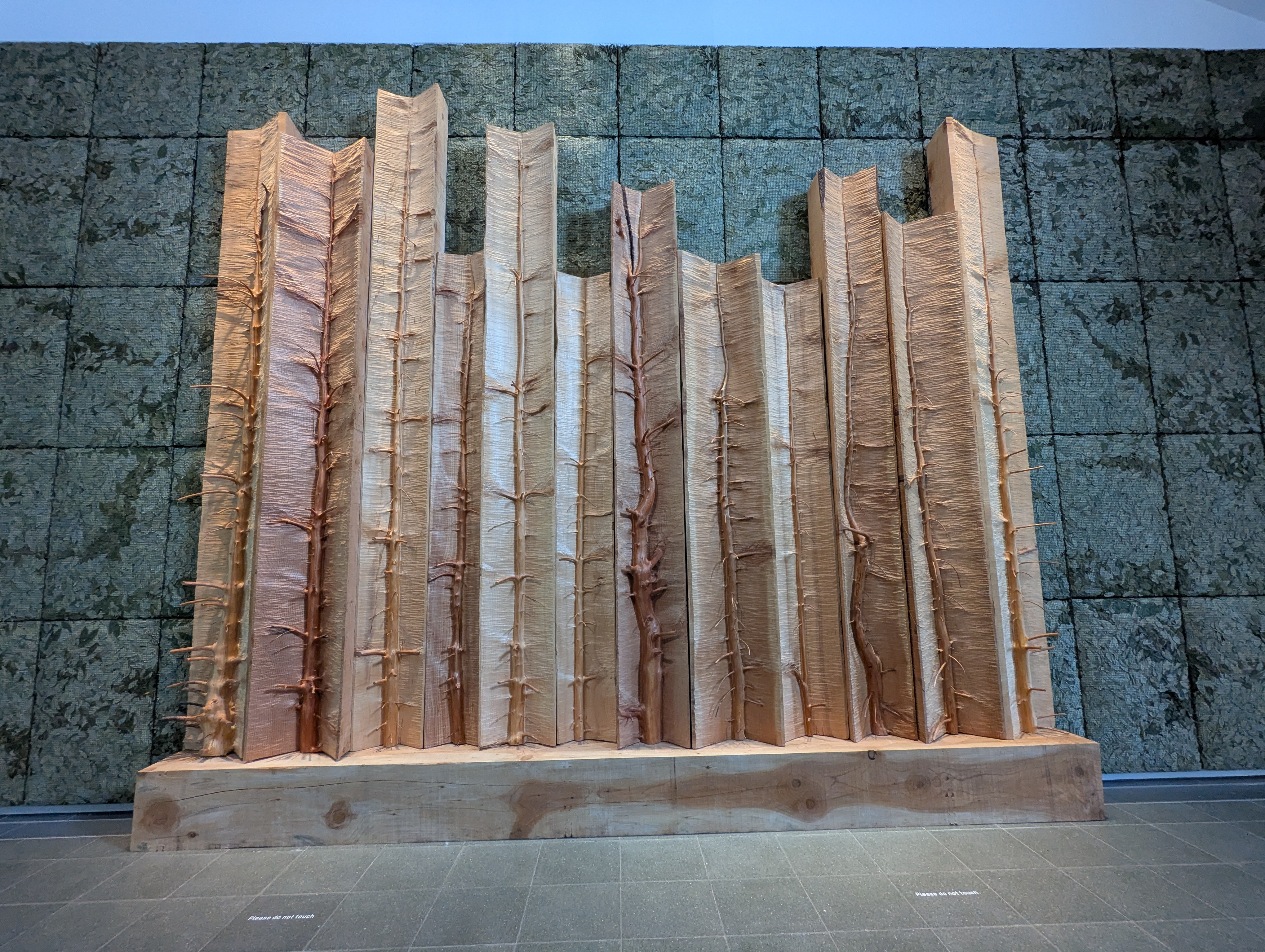
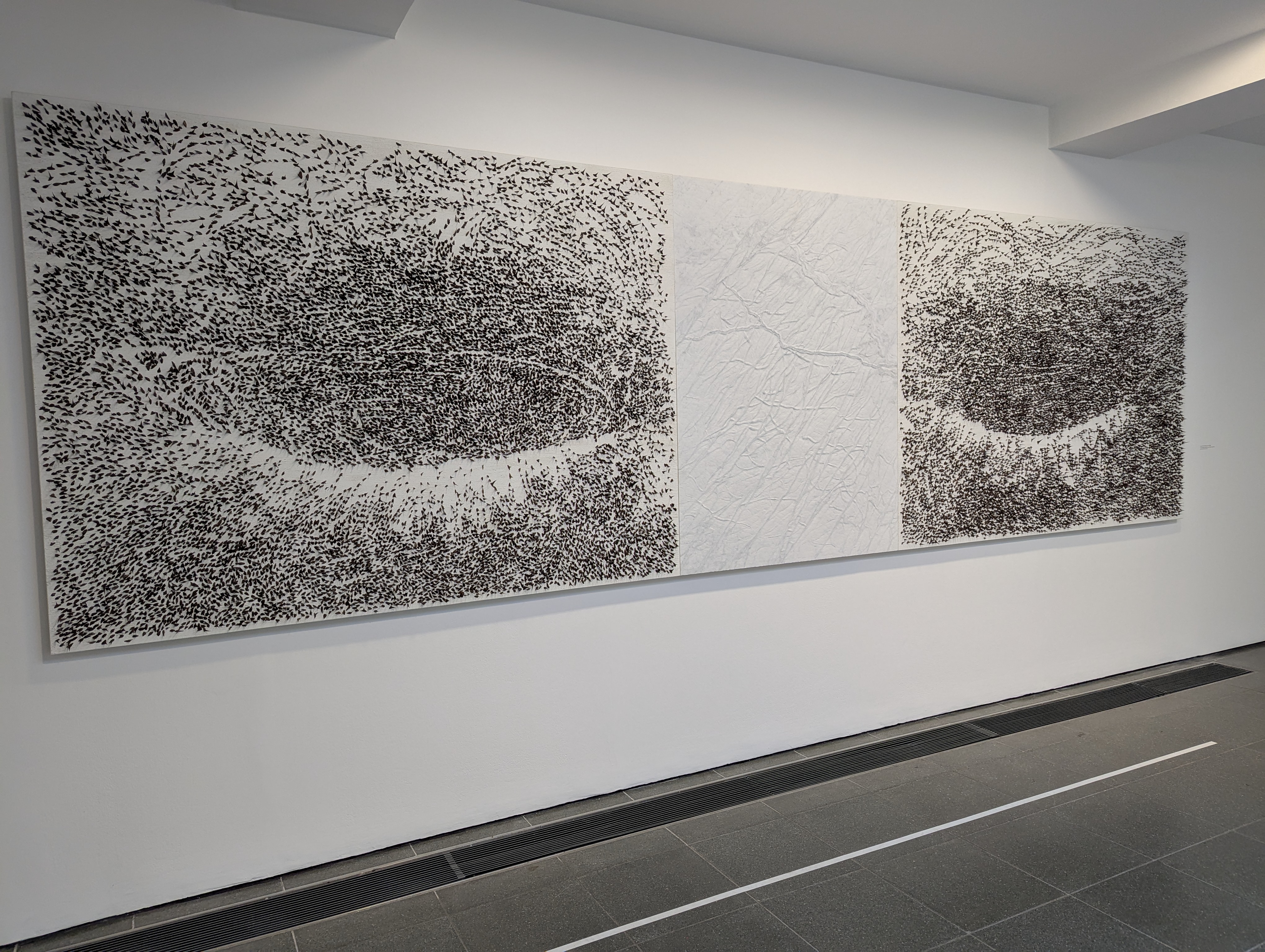
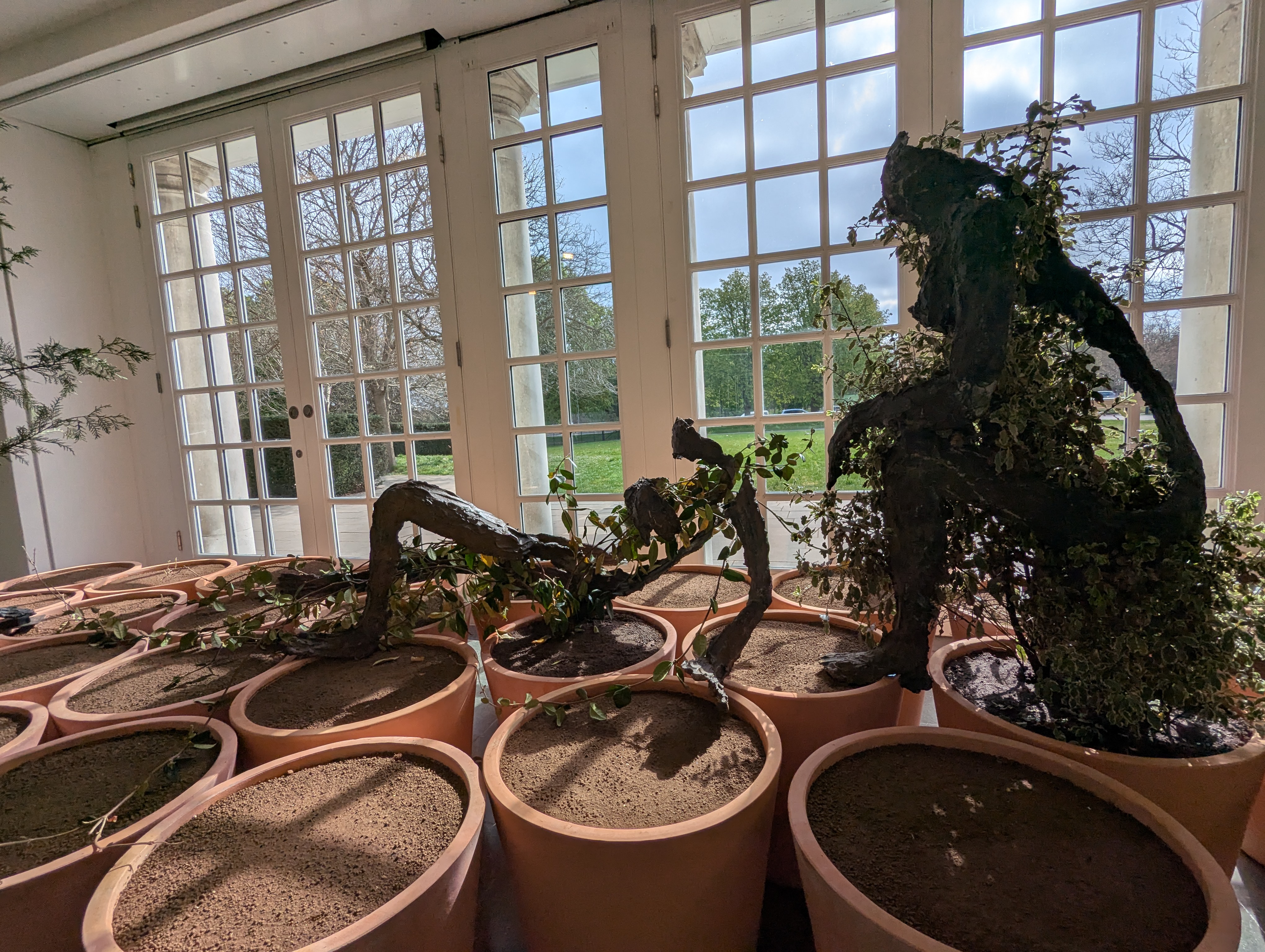
Giuseppe Penone: Thoughts in the Roots at Serpentine Gallery. The Serpentine gallery is located in the Kensington gardens. The day we went was sunny and springlike and the walk over to the Serpentine gallery was peaceful. Every dog in London seemed to be out for a happy romp among colorful flowers.

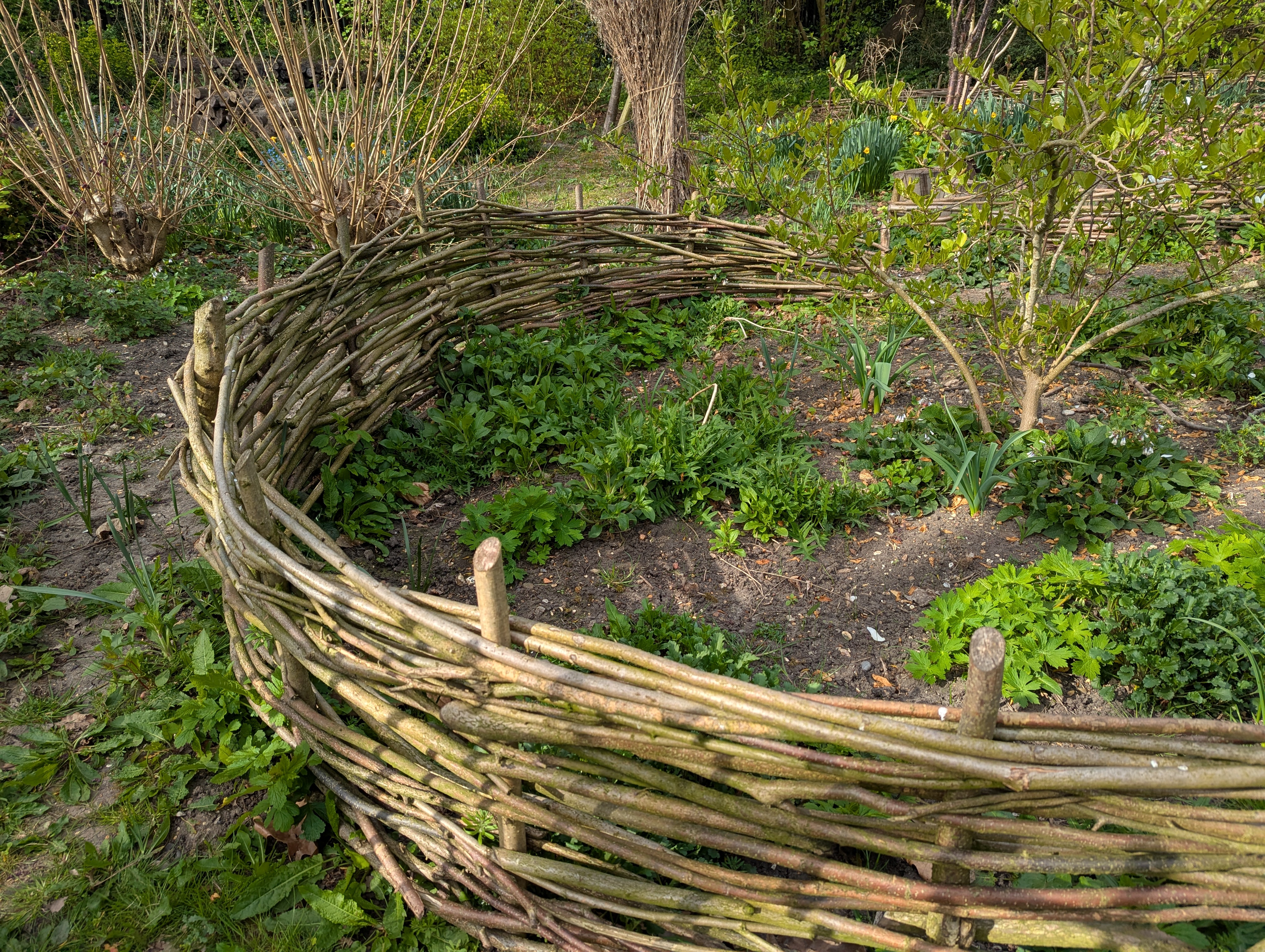
It was the perfect precursor to the Penone exhibit focused on the relationship between humans and nature. There were cool installations of fabricated trees just outside the gallery which we enjoyed until the gallery opened. The exhibit inside the gallery was also awesome. I might be guilty of overusing the word peaceful, but that is what I felt while seeing Penone’s works. My favorite exhibit was in a room in which the installation included sections of encased laurel leaves from floor to ceiling. There were also fabricated tree stumps that were probably the main point of the exhibit and they were lovely, but the smell of the Laurel leaves and their appearance, well, it was amazing.

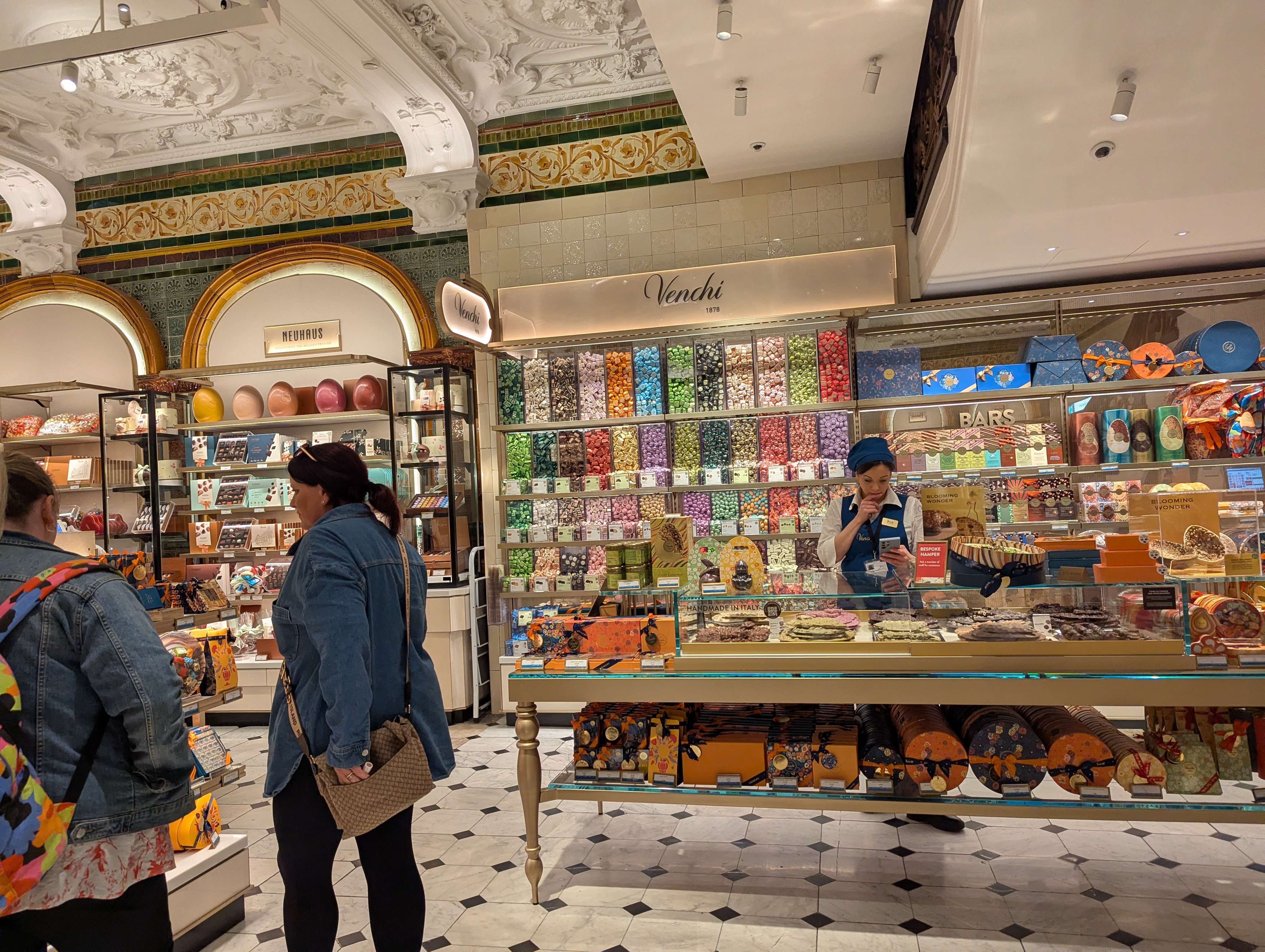
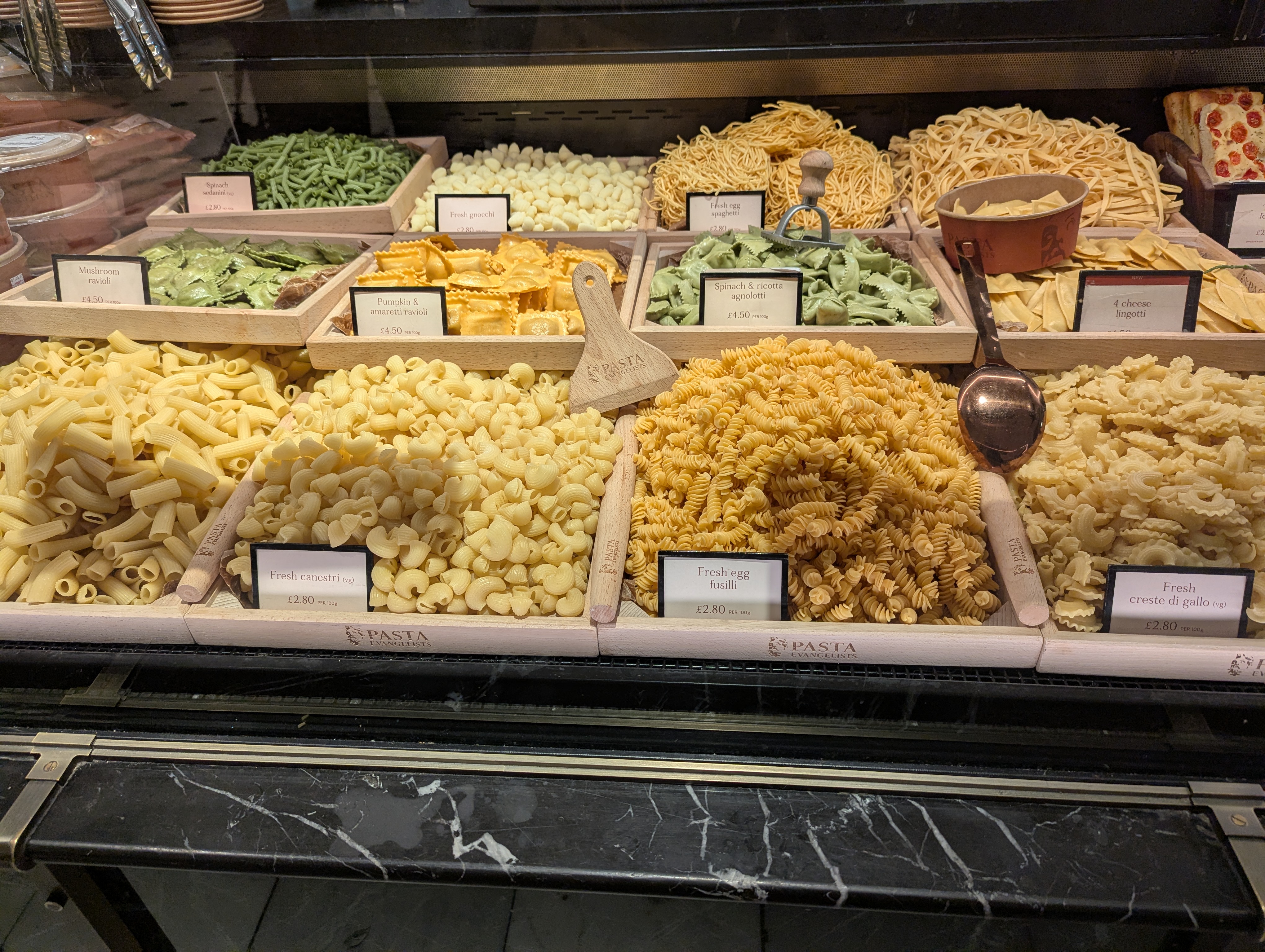
Shopping at Harrods’ food halls. No matter how long you’ve read this blog, never have you ever heard me talking about shopping in London other than at The Emirates. I hate shopping, hate to be in stores. In this case, I took a special trip over to Harrod’s because I’d long heard about the food halls and I was hoping for some Easter candy inspiration. (My husband was on a loftier and more diverse quest elsewhere to London Wetlands, the 24-hour Pianothon at Liverpool Street station, and Traces of Belsen exhibit at Wiener Holocaust Library. Maybe I can convince him to tell us about it here.) The Tube station is right next to Harrod’s and it took some strolling through the departments before I located the Food Halls at the back of the building. If I felt out of place among expensive purses, shoes, scarves, and impeccably-dressed sales people, I clearly was not the only one. Not one person I saw in the store probably had any business shopping there. Anyway, the Food Halls were a special-occasion exception. I visited the room with chocolate, the one with cheeses and meats, and the one with teas, jams, etc. Every thing was so beautiful it was an experience just to look. I ended up buying some chocolate and tea.

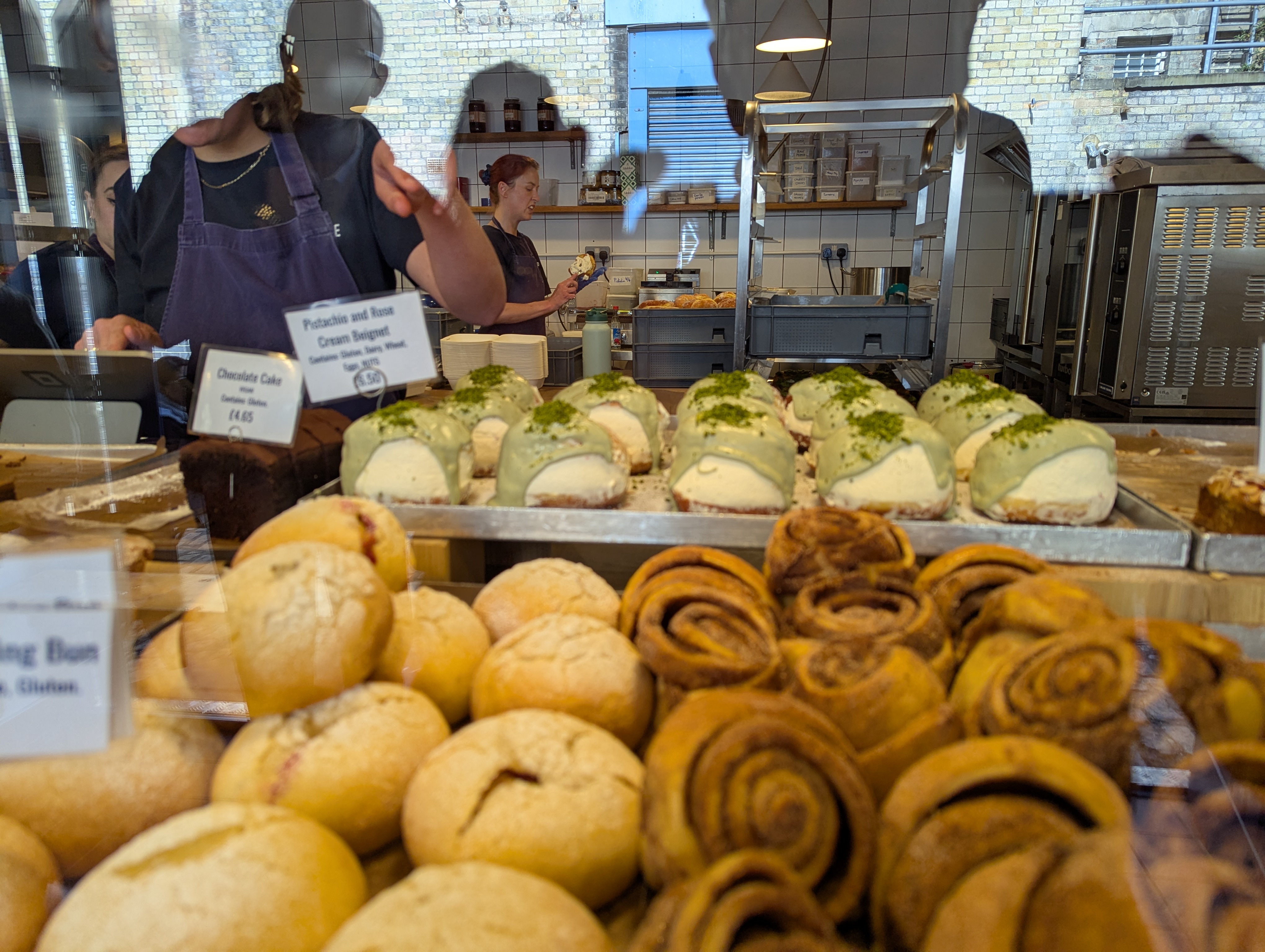
Cream beignets at Fortitude Bakehouse. My niece long ago found out about Fortitude bakehouse online and every time for the past year it’s been on my list to get there. This is a bakery that has a famous cream beignet. I understand that people line up for them for hours. They are ready at 11 a.m. and are available until they sell out each day. But somehow I’ve never managed to get there. I made a mental note on my way from Harrod’s that I had to change trains at the station closest to Fortitude, Russell Square. The bakery is only about a block away from the train station. It was my lucky day because I arrived at about 11:30 to find a bunch of people sitting outside the bakery gorging on cream beignets and other yummy- looking pastries. And only a few people in line ahead of me. It appears they make one flavor each day. On the day I was there it was was pistachio and rose, something like that. What I have to say about the hype about the beignets is that it is simply not enough. Flaky, fried dough dipped in granulated sugar, split and coated with jam, then filled with thick, delicious whipped cream, and glazed on top, in this case with pistachio glaze and nuts. One cream beignet was all I could manage for lunch that day. That, and enough tea to wash it down. It occurs to me that I wrote significantly more about cream beignets than about any other activity. This is not an error.

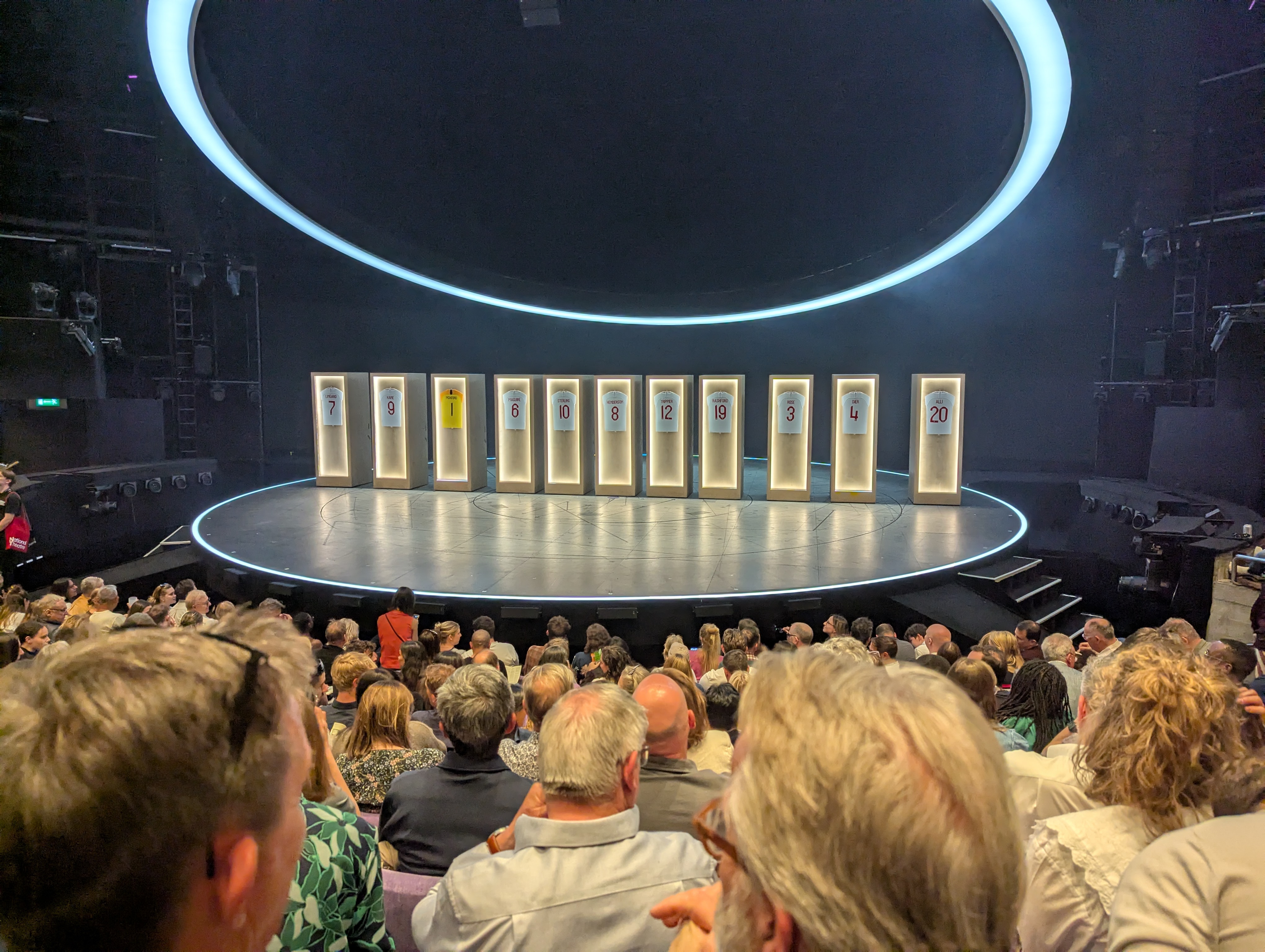
Dear England at the National Theatre. We had intended to attend the play, Three Sisters at Shakespeare’s Globe, but on the day it was supposed to play we received a notice that they had to cancel that evening’s production. We scrambled and found a very different alternative, Dear England, written by James Graham. The play covers the foibles and fortunes (mainly misfortunes) of the real England national soccer team during England’s history and especially Gareth Southgate’s tenure as National Team manager. It’s named after an actual letter that Gareth Southgate wrote during the Covid era before England’s participation in the Euros, the tournament held for only European national teams. How to characterize the real letter? It’s a reflection on the importance of football to the English as well as sort of a plea to take it easy on the very real people who play for the team. The staging was wonderful, the play was interesting, and the characters both lovable and laughable. We thoroughly enjoyed it. The only nit was the poor football technique of the actors. But considering how much of the play focused on England’s misfortunes with penalty kicks, maybe that was intentional?

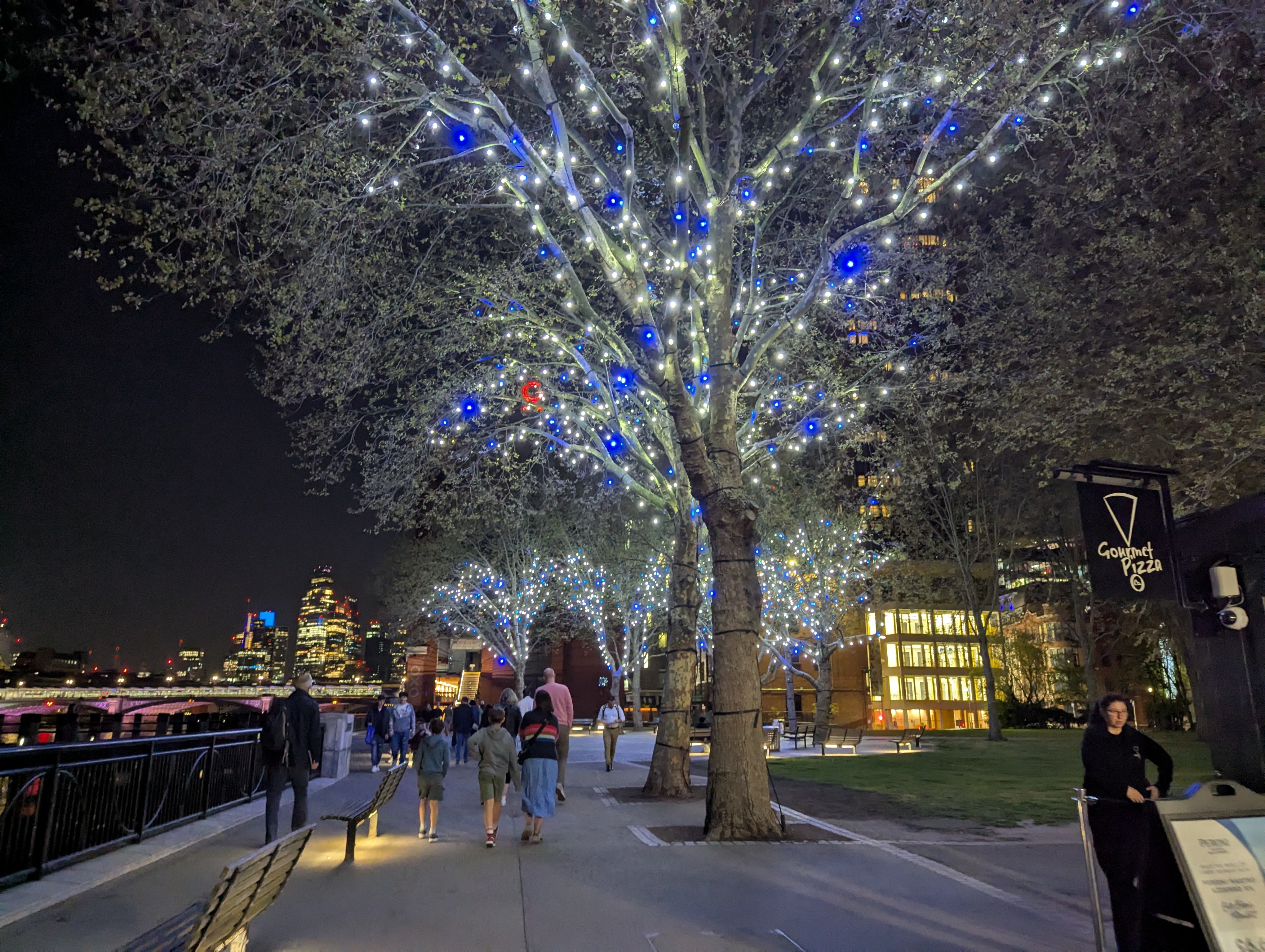
We went to the play on a beautiful warm night and were able to enjoy lovely scenes along the Thames on our walk back home to the One Tun.

A new hood & Fuller’s pub crawl

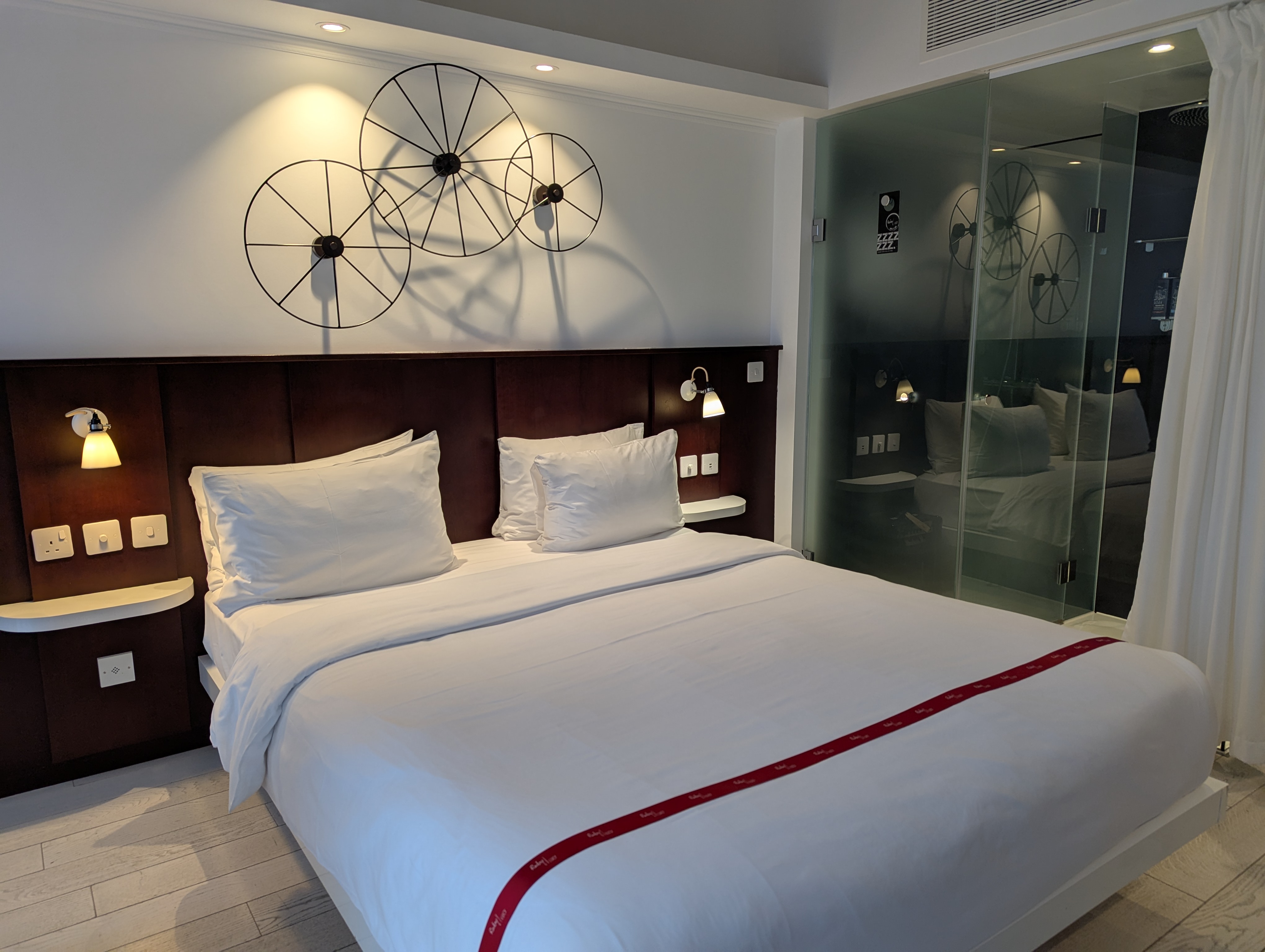
After so many recent stays in Tower Hill, we were ready for a fresh, new place we’d never been. So for this trip, my husband selected a boutique hotel called Ruby Lucy in Lambeth. Lambeth is a neighborhood south of the Thames. It’s situated close to the Waterloo train and underground station, kind of a cool, old station. The station was exceedingly busy at all times, droves of people standing in front of the entrance to the tracks, staring at the board on which their track was to be assigned.

Ruby Lucy was a quirky little hotel with a great lobby and fairly spacious rooms. Each floor has an open tea station just outside the elevators and a communal iron board. Our room had a comfy queen bed and one of those crazy showers that is open-glassed on two sides to the room. It had a curtain on the outside of the shower; i.e., if you’ve failed to plan before you start your shower, the person in the room gets the choice of whether to draw the curtains or not. Good to be well enough acquainted before the trip so the choice made by the person not in the shower creates no drama.

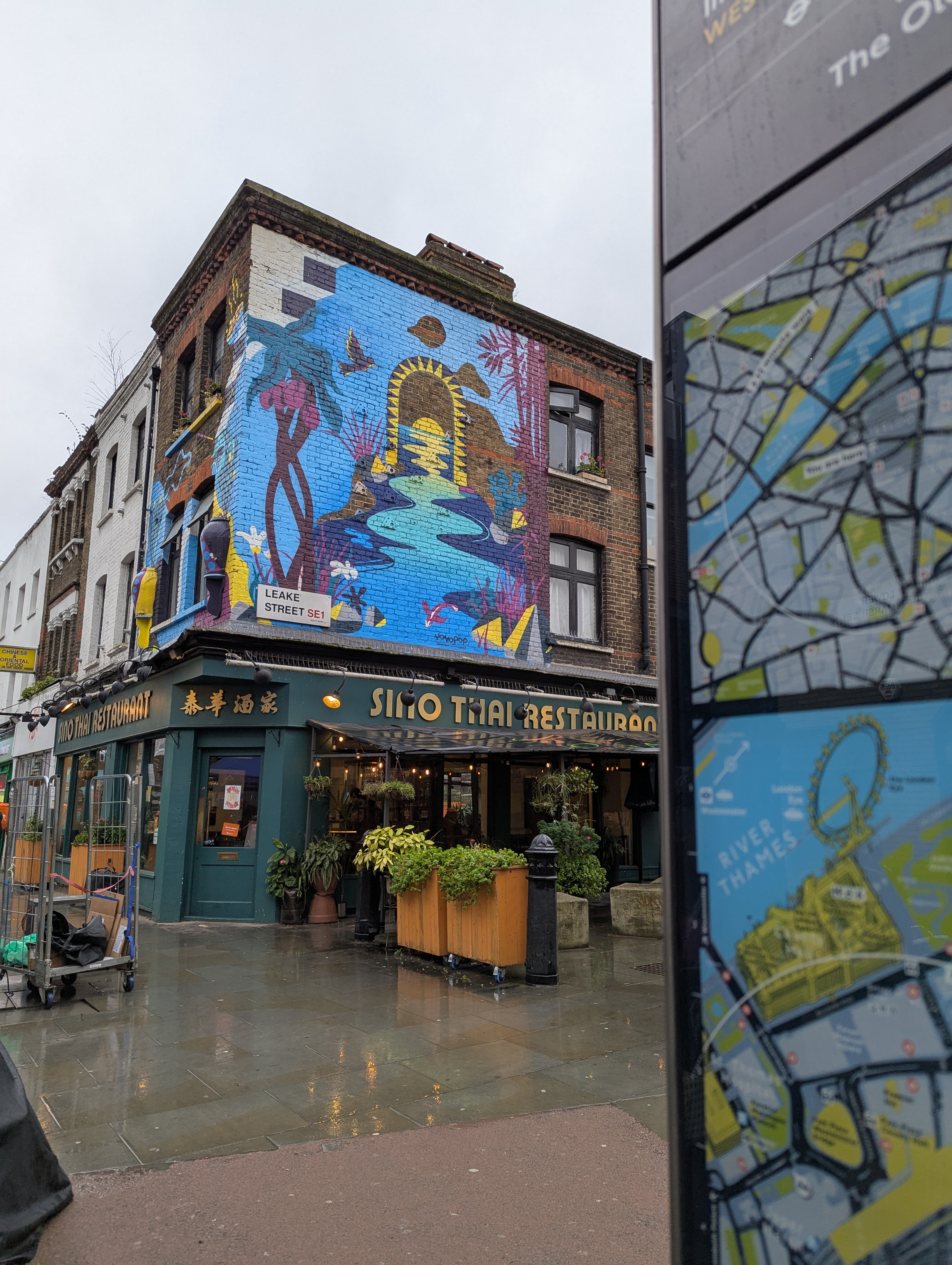
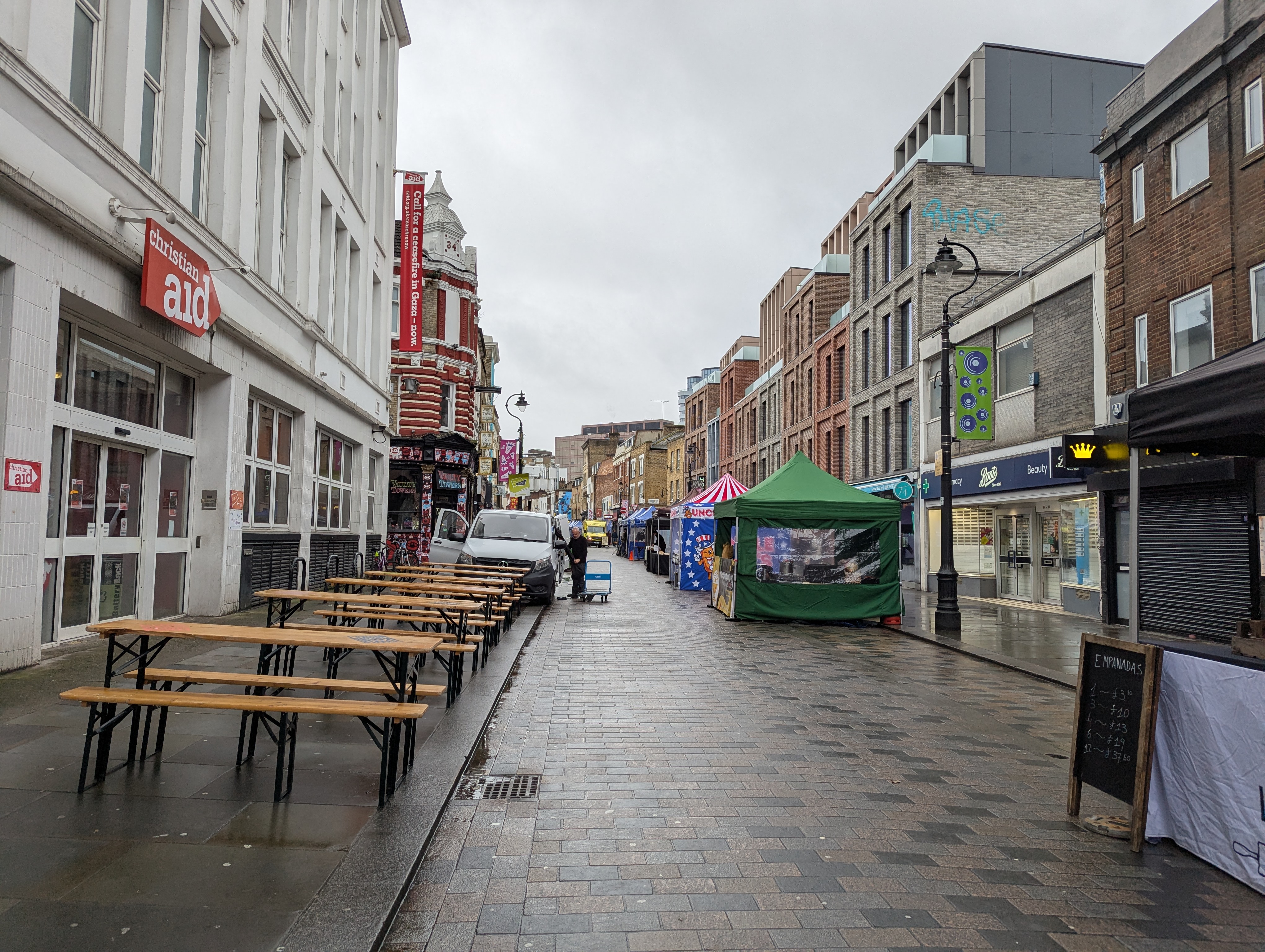
The hotel is located on Lower Marsh Street, which was a real find. Although we were quite close to the London Eye, Big Ben, the Houses of Parliament, the neighborhood had the feel of being very far from all of those things. Funky and a bit gritty, the street was closed to all but bike and foot traffic and, during the day, had a great little market with mostly street food. There were so many other food options available that we never partook of the street food, but it was extremely tempting. We went to a nice Thai restaurant, Sino Thai, for dinner on the day we arrived and enjoyed Cuban tapas at Cubano the next night. We had a yummy breakfast at Balance one morning.

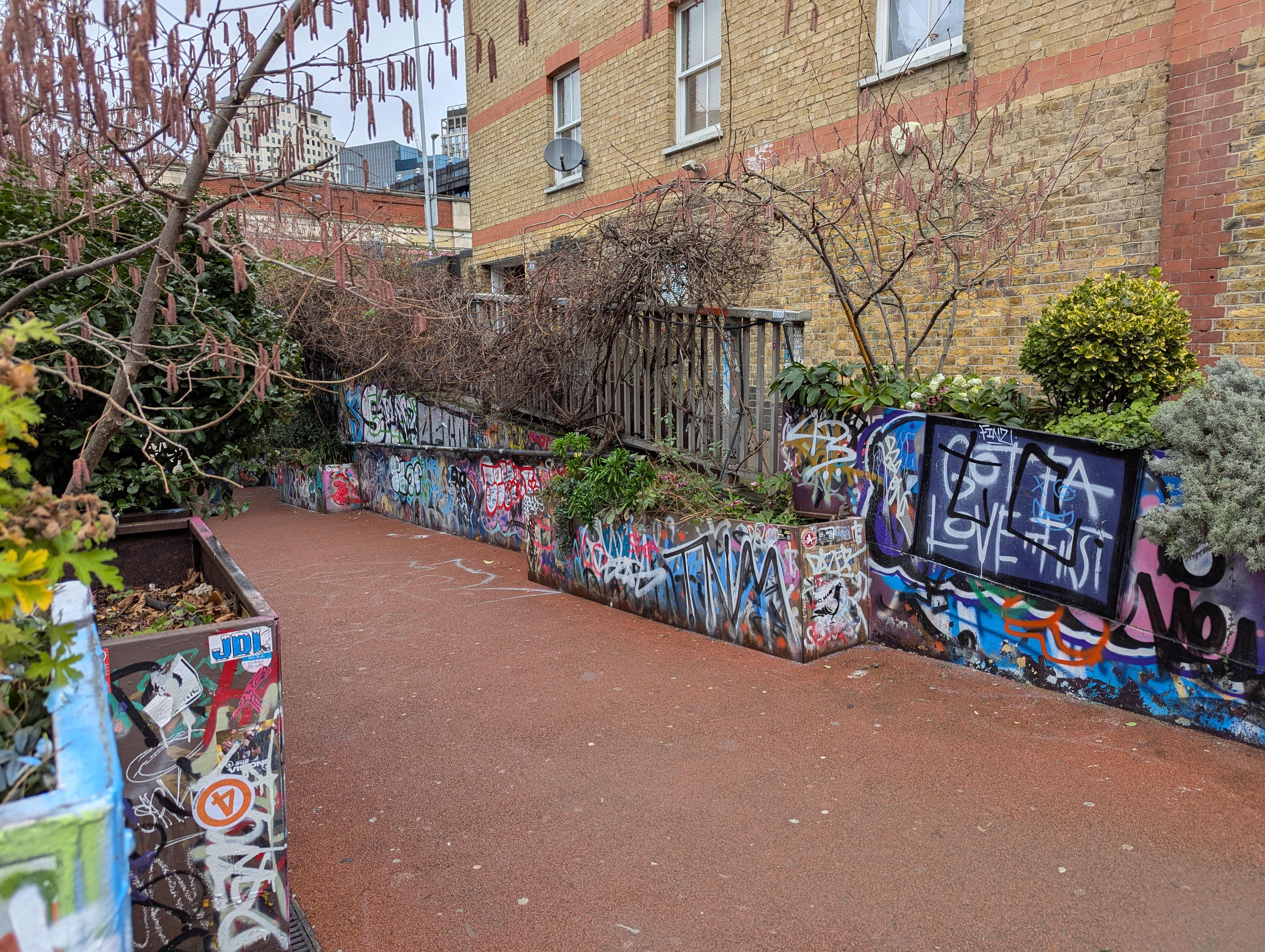
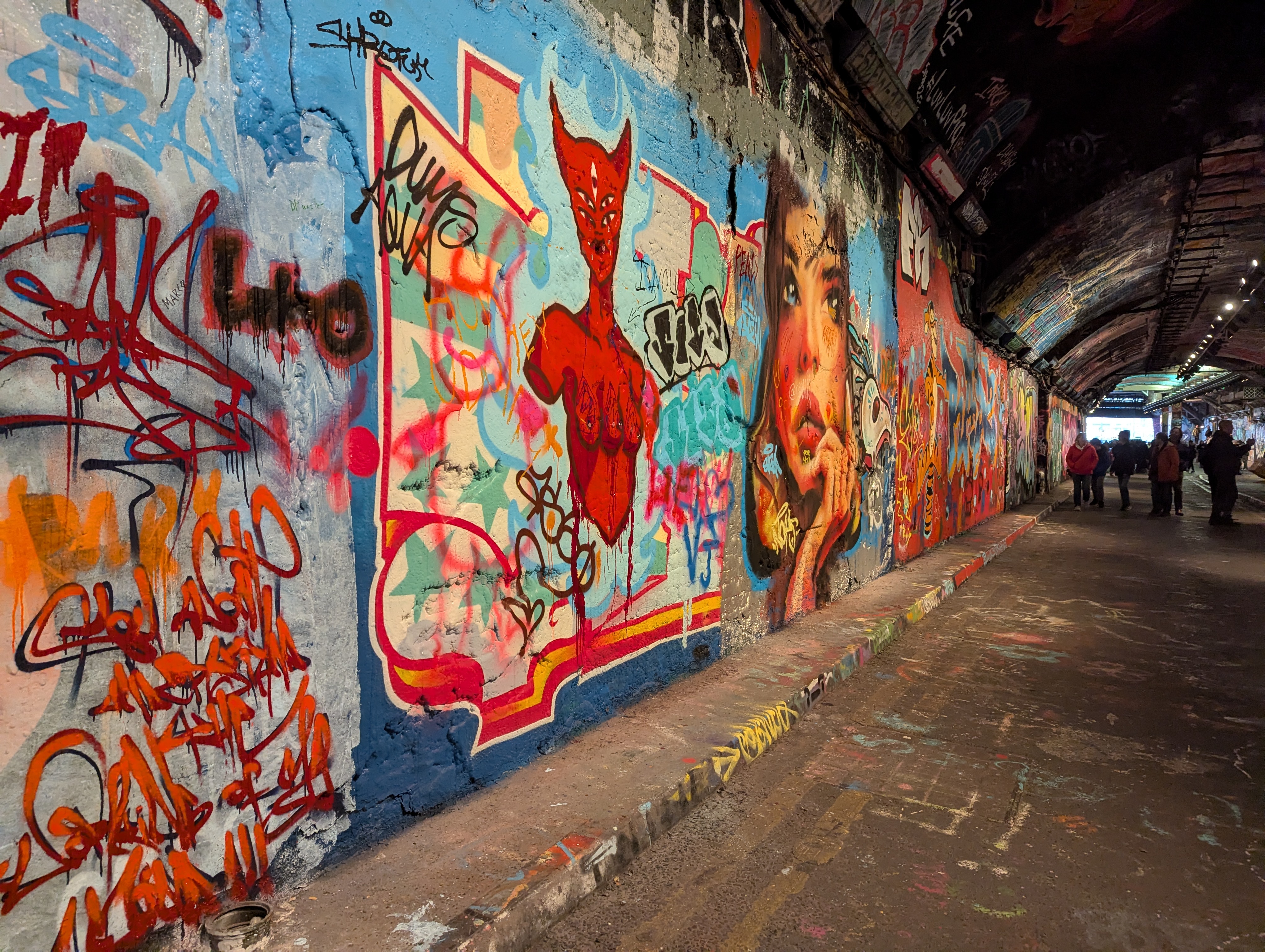
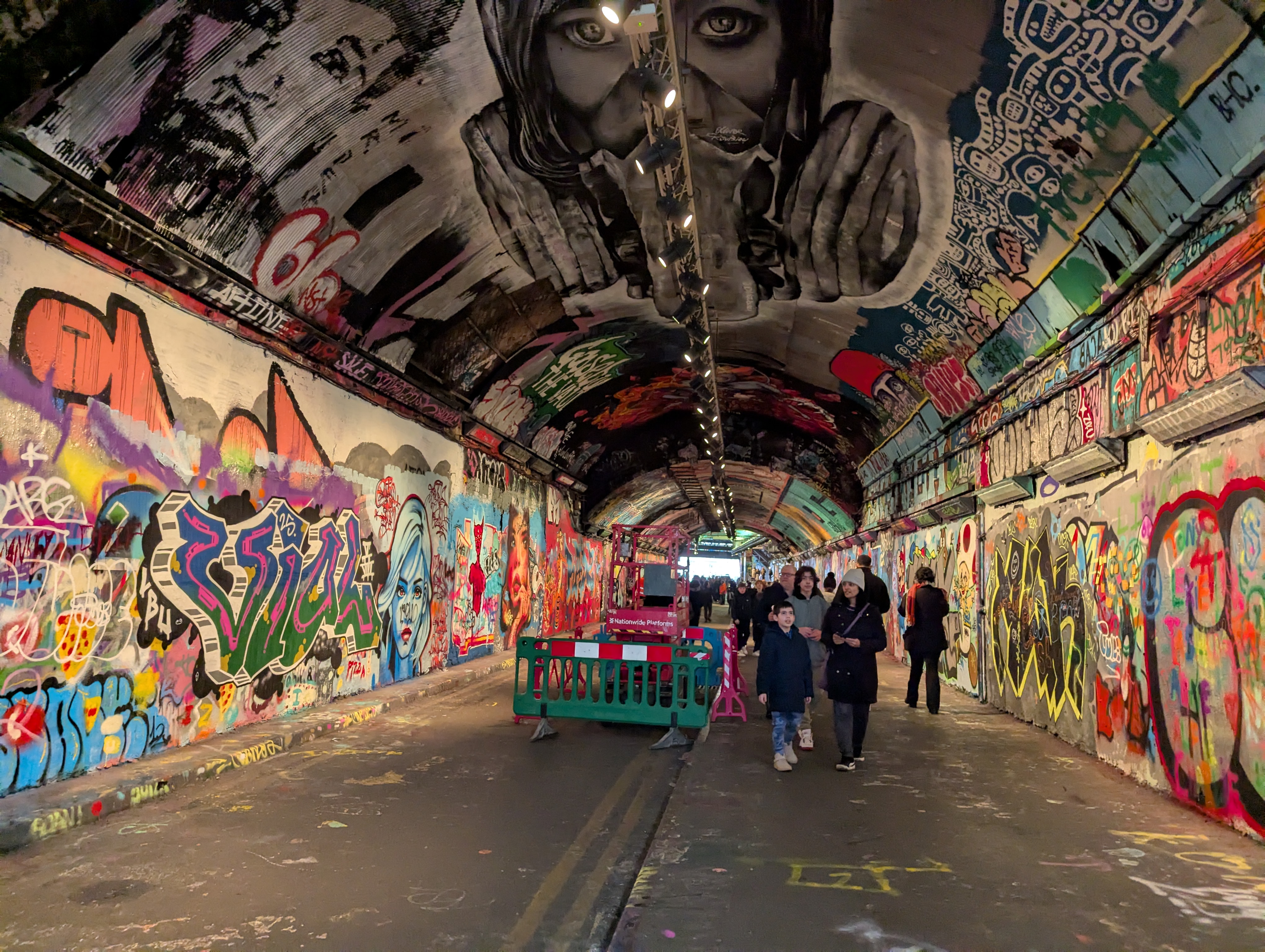
One of the cooler things about the neighborhood was an attraction I’d never heard of before, Leake Street Arches. We had been walking down Lower Marsh Street waiting for our hotel room to be made up when I noticed a garden path leading to what looked like an underground tunnel. Inside was a broad arch covered with some of the coolest graffiti I’ve ever seen. According to the web site, “London’s largest legal graffiti wall.” An artist was working on some fresh art with a can of spray paint.

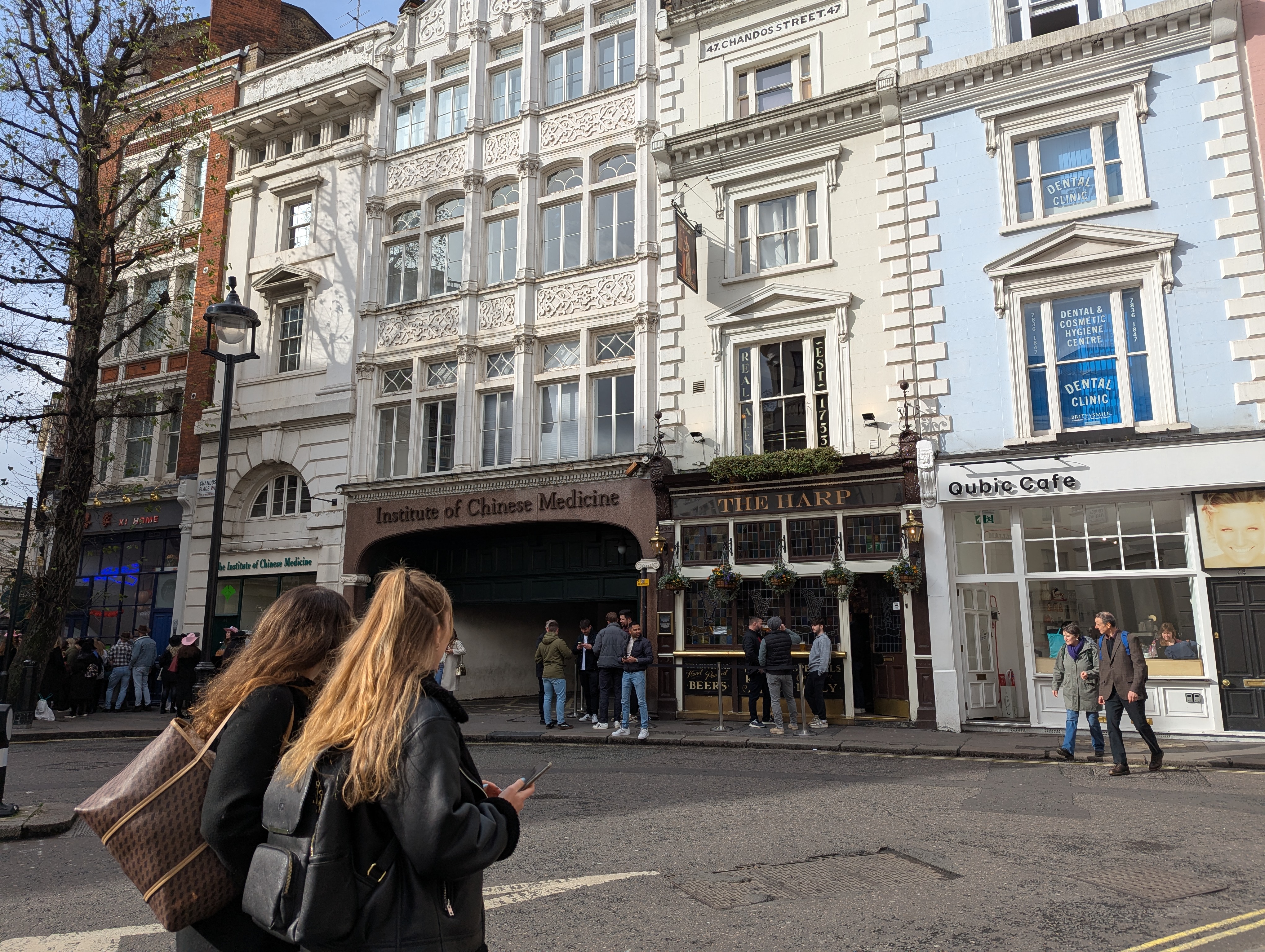
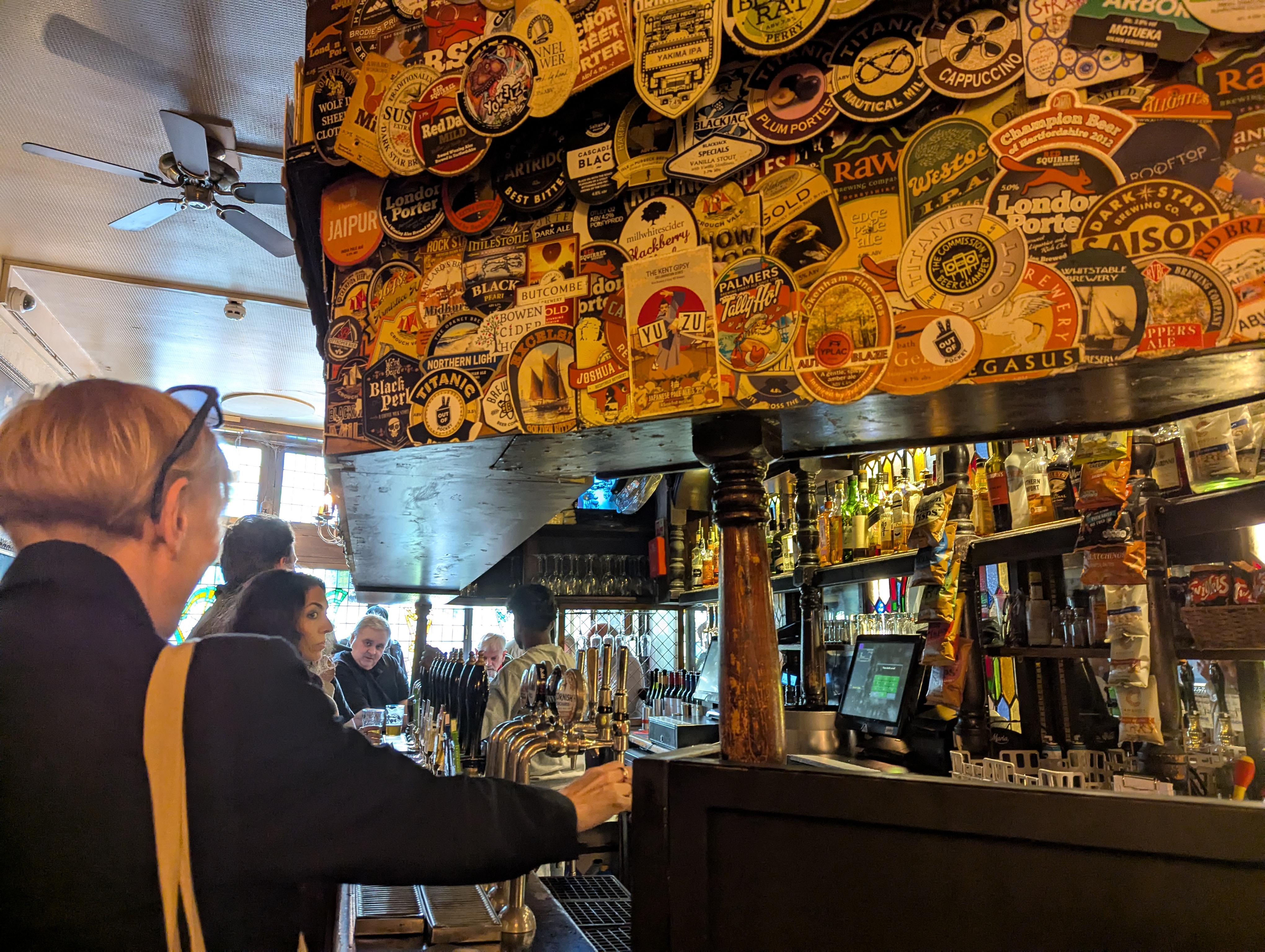
My husband, who you may recall was recovering from a concussion on our last visit and not drinking, was looking forward to visiting all the Fuller’s pubs we could. With three in the immediate neighborhood, we were able to make a good dent in his goal. His favorite beer is a Fuller’s product called London Pride. I bought some for him for Christmas at Binny’s but it’s just not the same as knowing that it is being drawn from a cask in the basement of the pub. Or so I’ve heard. The Fuller’s pubs in our neighborhood were nice but not quite the pub experience we wanted. One day we left our neighborhood for the highly rated The Harp in Covent garden. Great pub with a fun crowd AND the requisite London Pride. But no food, so after one round and a great conversation with some interesting folks, we crossed the street to visit The Admiralty, a place we’d eaten on one of our visits in December. Also a Fuller’s pub. 5 Fuller’s pubs in all; not bad for a trip with boots on the ground for three nights.

Concussed London

Because of the concussion my husband experienced the day we left for London, he was pretty well drugged for much of the trip and somewhat limited in what he felt like doing. My work hours could have enabled us to have some morning fun, but that was often not a time when he was moving around. He is normally a much earlier riser than I, but on this trip I was often awake before he was. Many breakfasts alone in lovely cafes. Solitary walks along the Thames. This does not suck.

We were staying at the Apex City of London, which happened to be a place we had stayed in the distant past. I remembered really liking that hotel but couldn’t picture what it was like. Staying at the Apex Temple last month reminded me how much I liked the Apex City of London, so when it came into our price point–a relatively rare event over the past few years–we booked it. It is very nice. Apex Temple seems a bit more recently refreshed and I would say is nicer. But this hotel is also pretty and had everything we needed, including plenty of space in our room and a good, public space to work. Apex City of London is in the Tower Hill area. We’ve stayed in Tower Hill a lot and there are always favorite places in the neighborhood we want to re-visit. It requires a bit of effort to do new things. But, given conditions of the spousal noggin, on this trip we did more of letting the activities present themselves to us.

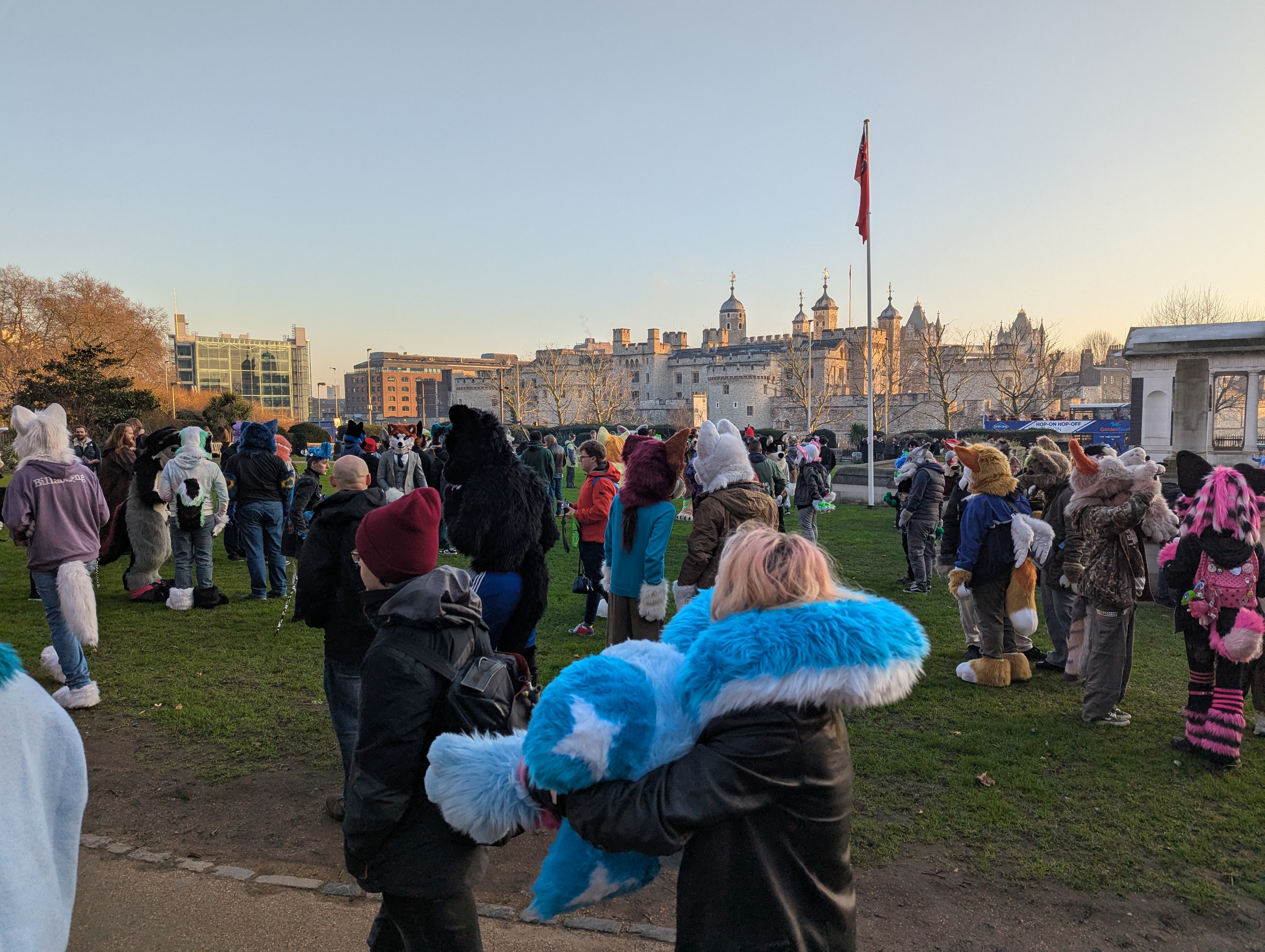
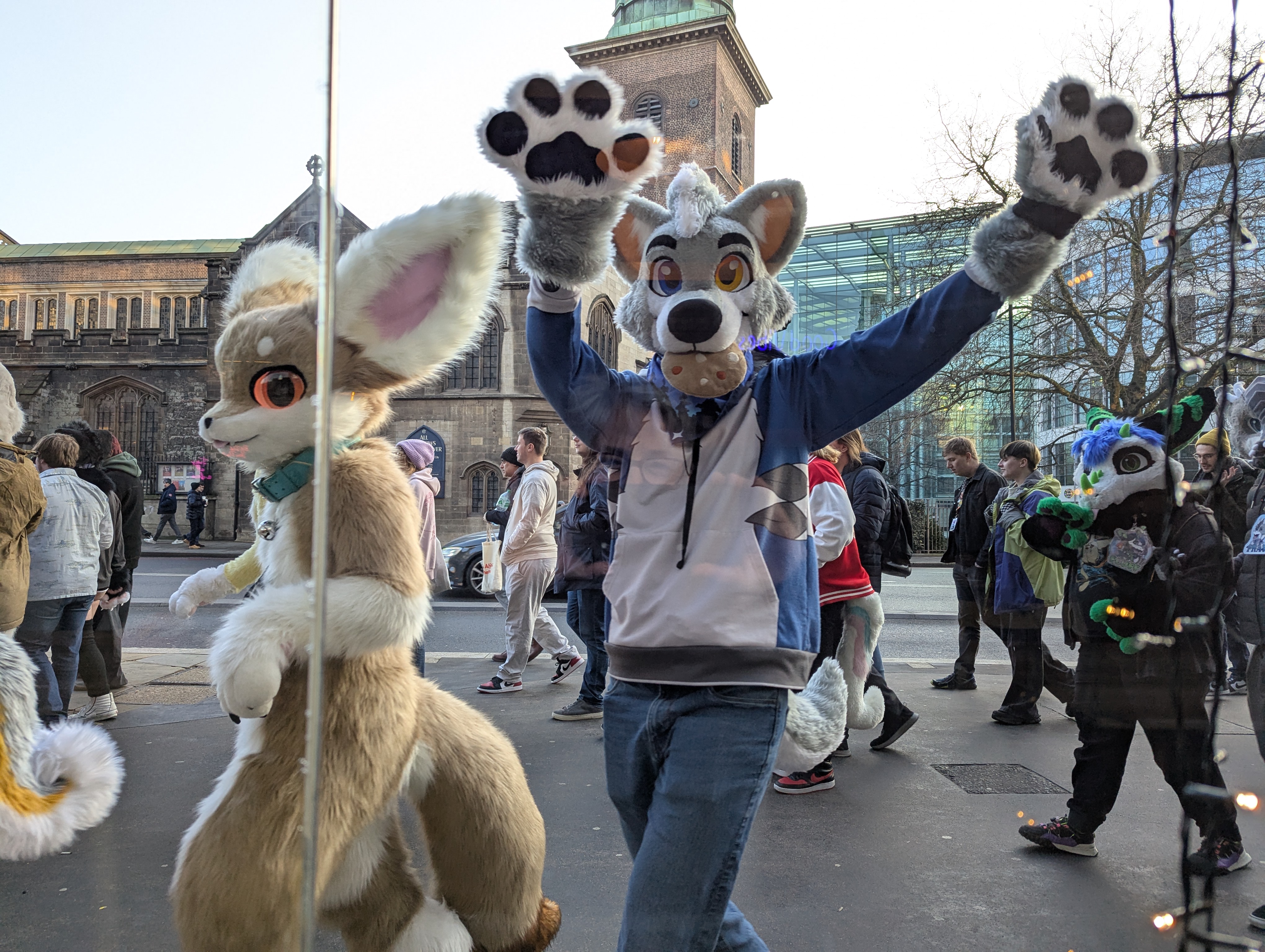
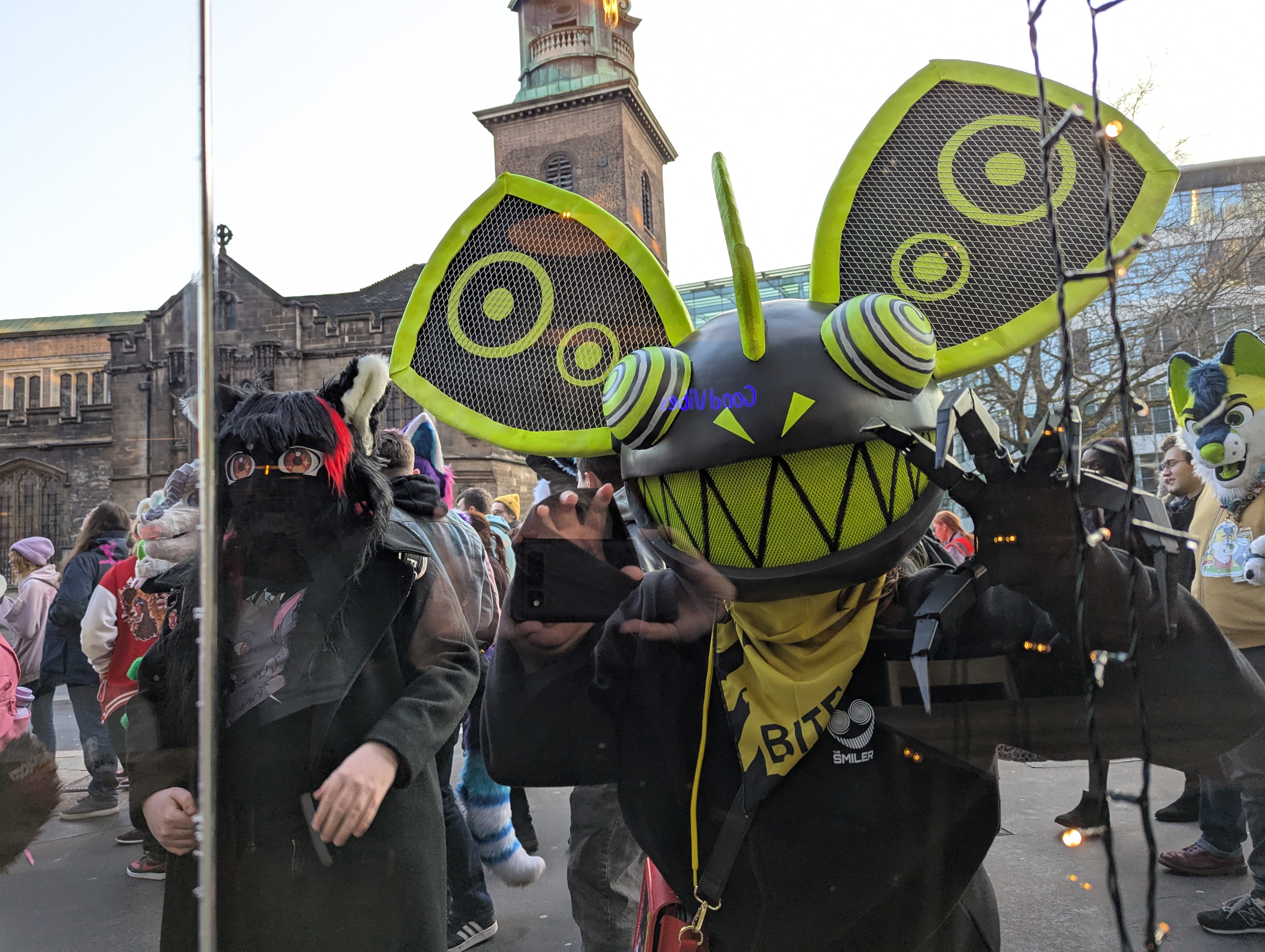
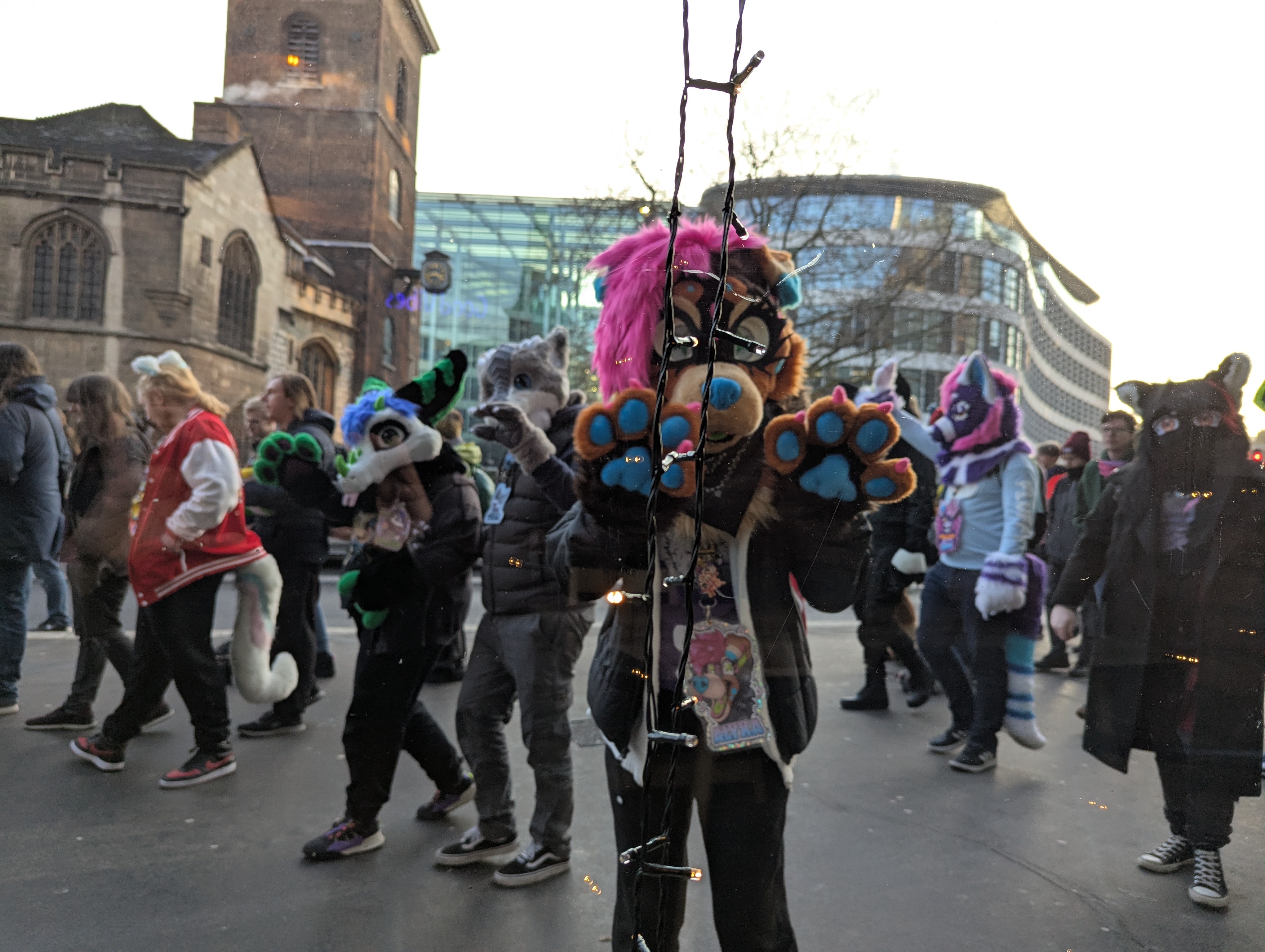
Furry fandom meet-up. On the day we arrived in London, Saturday, my husband went right to sleep after reaching our hotel. I went out to get coffee at a shop I’d never been to before just up the street, Carter’s cafe. I was sitting at a table with my back to the window when I noticed other people in the shop taking pictures of the window. I turned around to see what I later learned was a gathering of the Furry fandom. They were on their way over to the Trinity Square Gardens so I wandered over to watch them parading into the park.

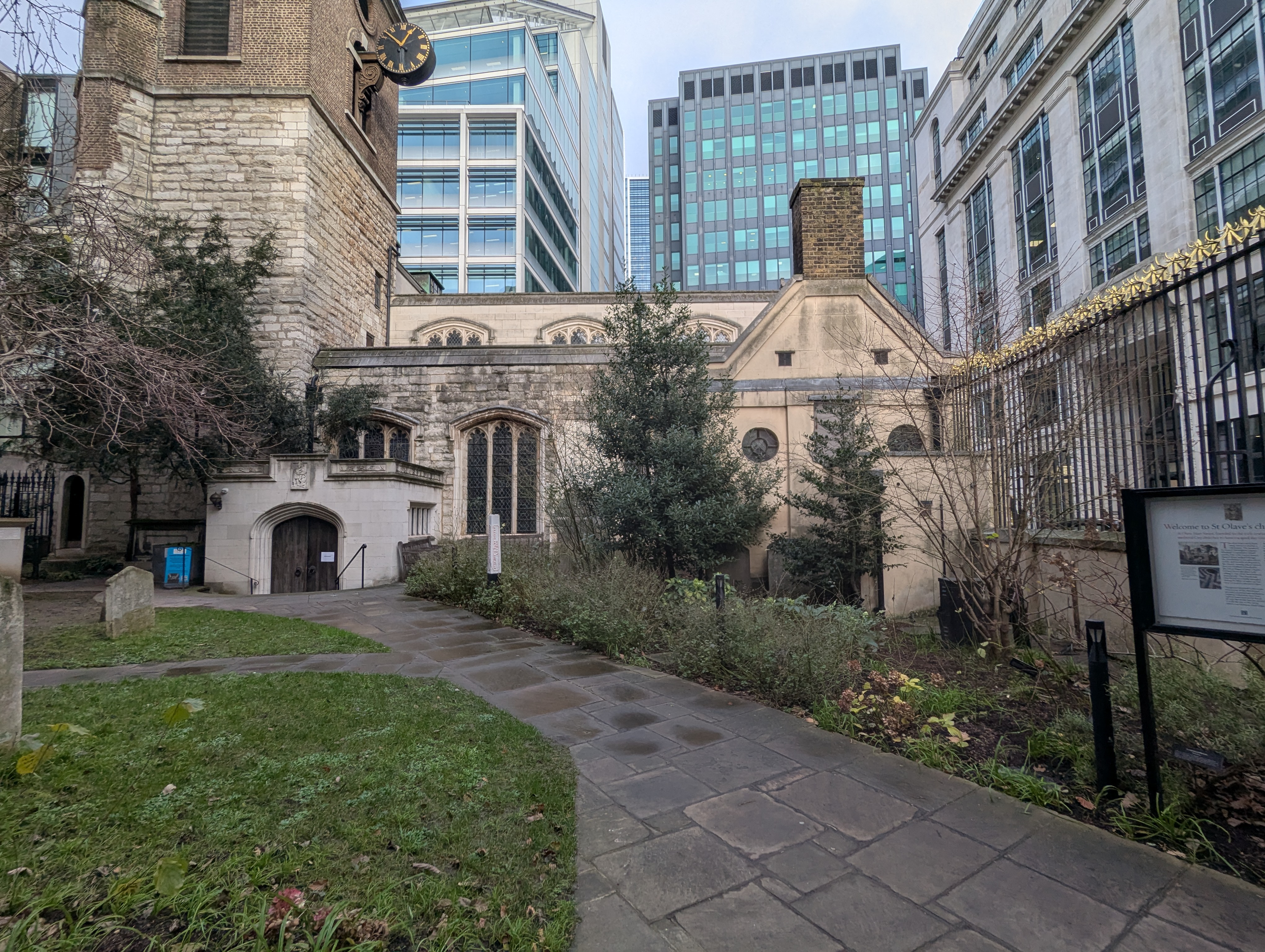
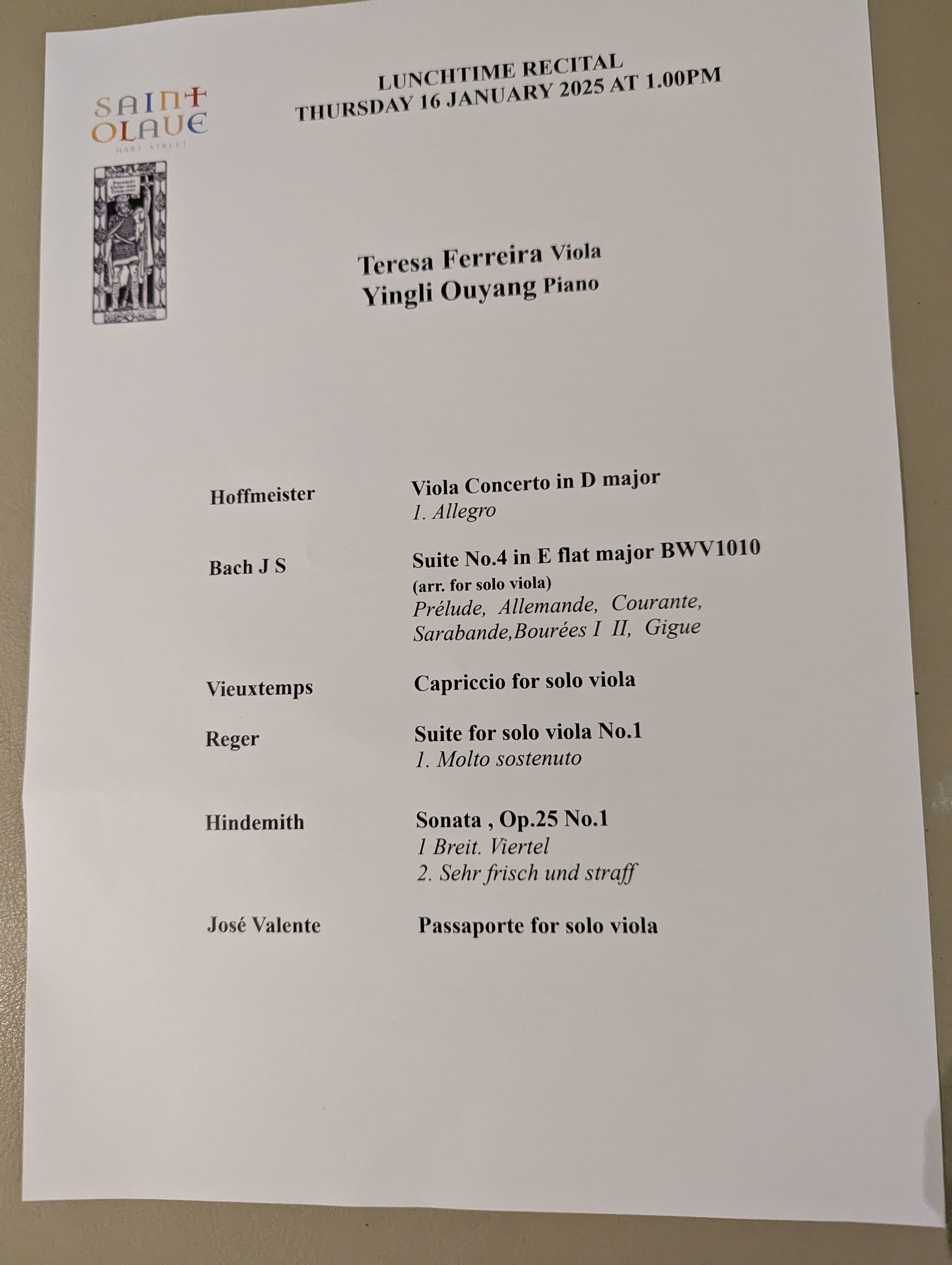
Music concerts. The hotel is located just next to St. Olave church, as I mentioned in another post. Twice during the week they had lunchtime concerts, one a piano concert and the other a viola concert. My husband went to both and I went only to the viola recital. The church is a bit dreary outside, though with a lovely garden. Inside was very beautiful and, to my very untrained ear, had great acoustics for the music. The violist was Teresa Ferreira and she beautifully played a great selection of music from baroque to contemporary with interesting commentary between each piece. What do I know about music? Not much. But I enjoyed the concert very much.

Medieval Women at the British Library. We visited the The British Library a few years ago to see its excellent exhibit of famous books and documents, including the Magna Carta, original compositions from the Beatles, the Gutenberg Bible, and lots of other amazing treasures. During this visit, we went for a new exhibit, Medieval Women: In Their Own Words. This was a great exhibit culled from collections of books, documents, and artifacts and describing facets of life impacting Medieval women. Yes, the overall message was “life is not so good for us Medieval women, and when it becomes good, bad things happen” but it was a lot richer than that. There were bright spots where women could express themselves with poetry, song, writing, business, power, beauty. We loved the exhibit and recommend it highly.

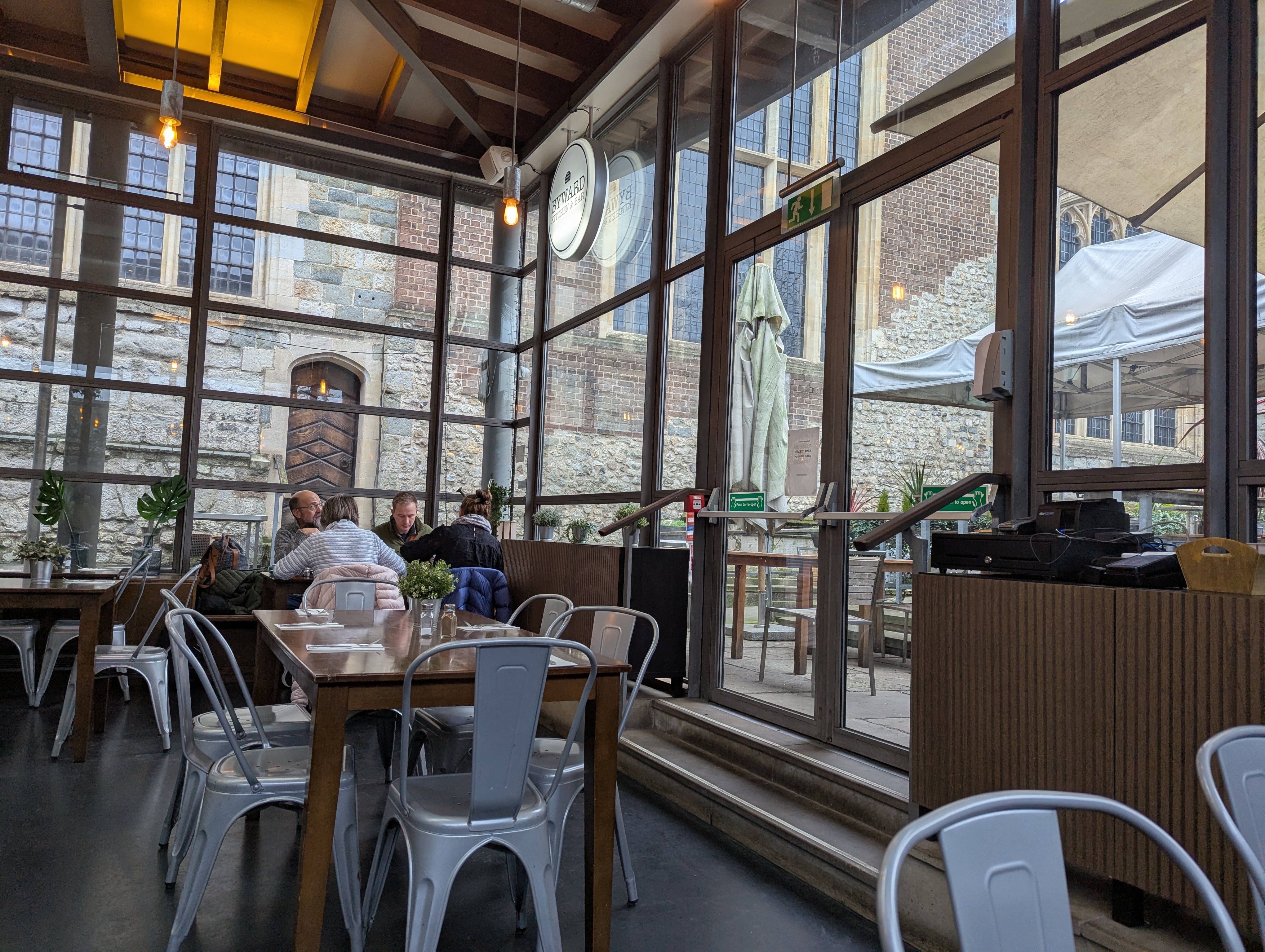
A tour of All Hallows by-the-Tower. We’ve walked by and seen this old church dozens of times but it never occurred to us to visit until we happened upon the restaurant Byward Kitchen & Bar for breakfast one morning. To get into the restaurant you more or less enter the church hallway, and I think the restaurant might be owned by the church. The ambiance of the restaurant is awesome. So awesome I fully forgave it the good-enough-but-nothing-to-write-home-about food that was served.

After breakfast, we wandered into the All Hallows by-the-Tower church for a tour. It was amazing. The church itself is very old, parts of it older even than the Tower of London. It was repeatedly bombed during WWII and significantly rebuilt after that. There is an interesting area in the basement where remnants of melting lead from the roof flowed down the wall after the bombings. The church contains notable art and exhibits of artifacts. Most interesting to us was tiled floors that were found during a renovation that were clearly remaining from the Roman settlement in place from 40 – 410 A.D. The exhibit also included an interesting diorama of the Roman settlement in London.

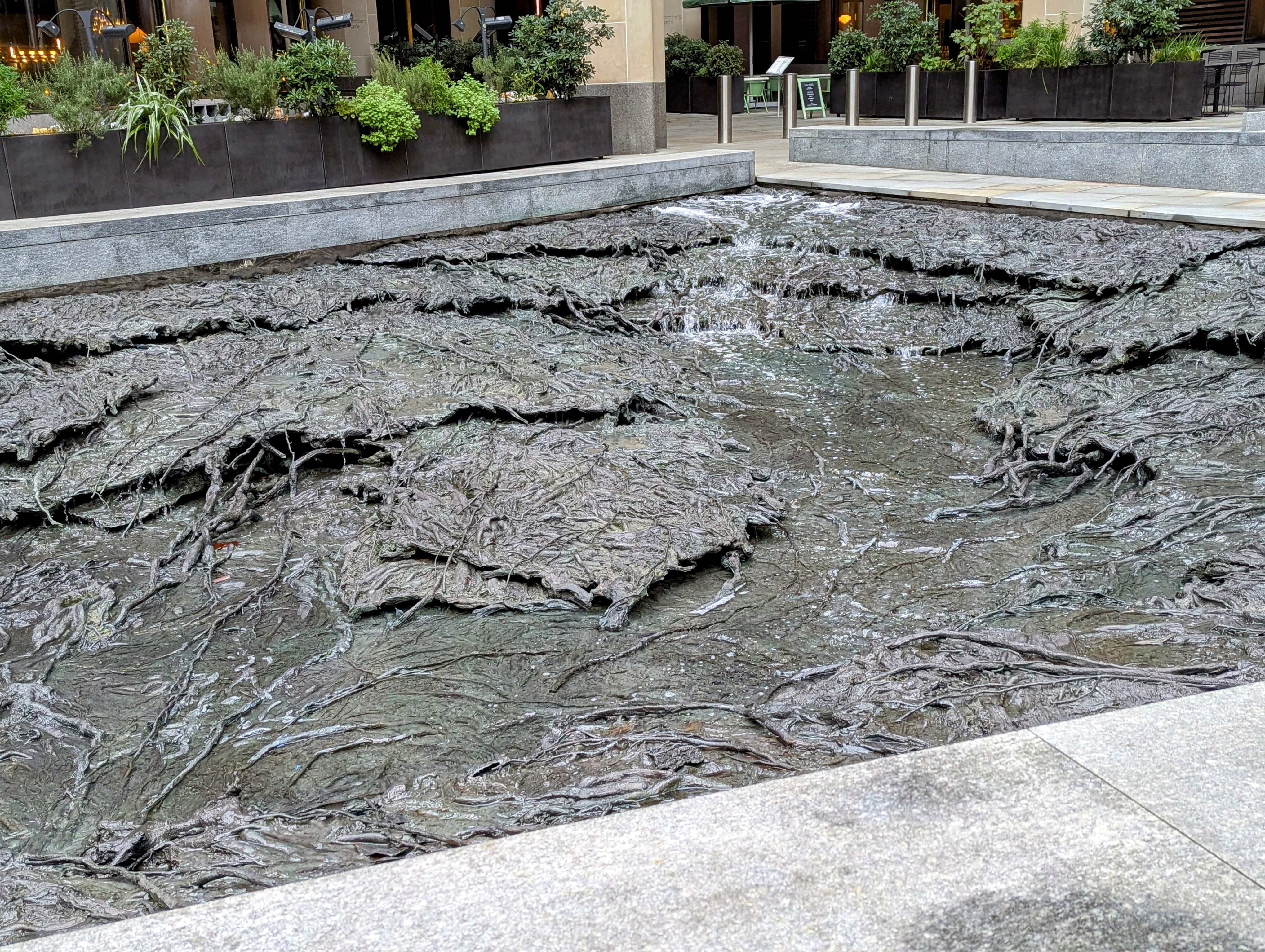
A search for Roman era rivers. One day my husband and I were out walking and my husband showed me one of his public art finds from a prior day, Forgotten Streams, a piece by Cristina Iglesias. The piece depicts the ancient River Walbrook which historically started near modern day Shoreditch and emptied into the Thames but is now a sewer, according to the London Museum. It had been a boundary of the early Roman settlement. I couldn’t find a good vantage point to get a decent photo, but it was a pretty cool installation.

That prompted us, along with seeing the diorama and Roman tiled floors at All Hallows, to try to find two lost rivers, the River Walbrook and The Fleet. The Fleet starts near Hampstead Heath and ends at the Thames somewhere near Blackfriar’s station. We found the Walbrook with greater ease than the Fleet. In the end, we concluded that the Fleet might not be able to be seen due to construction on the Blackfriar bridge.

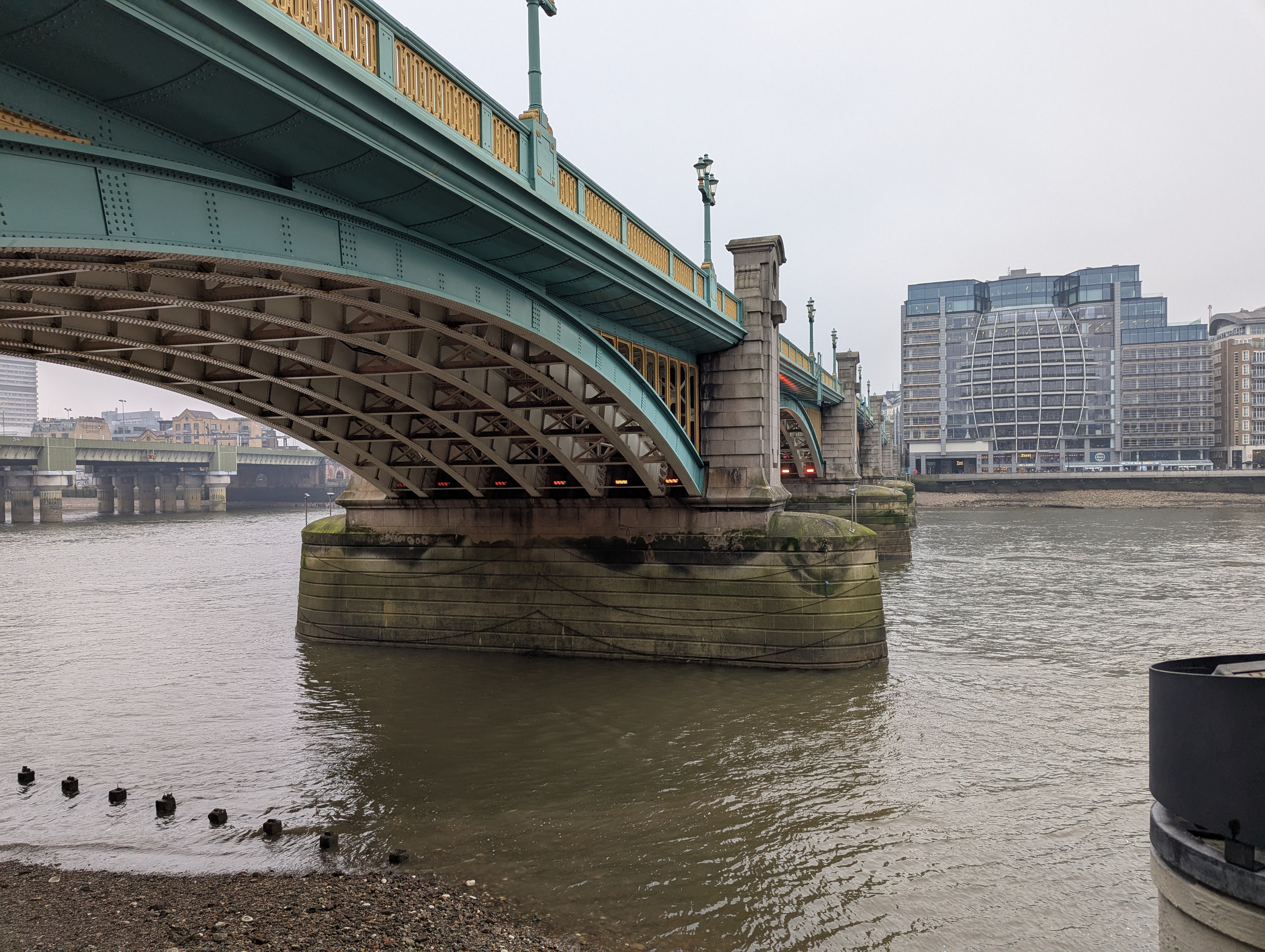
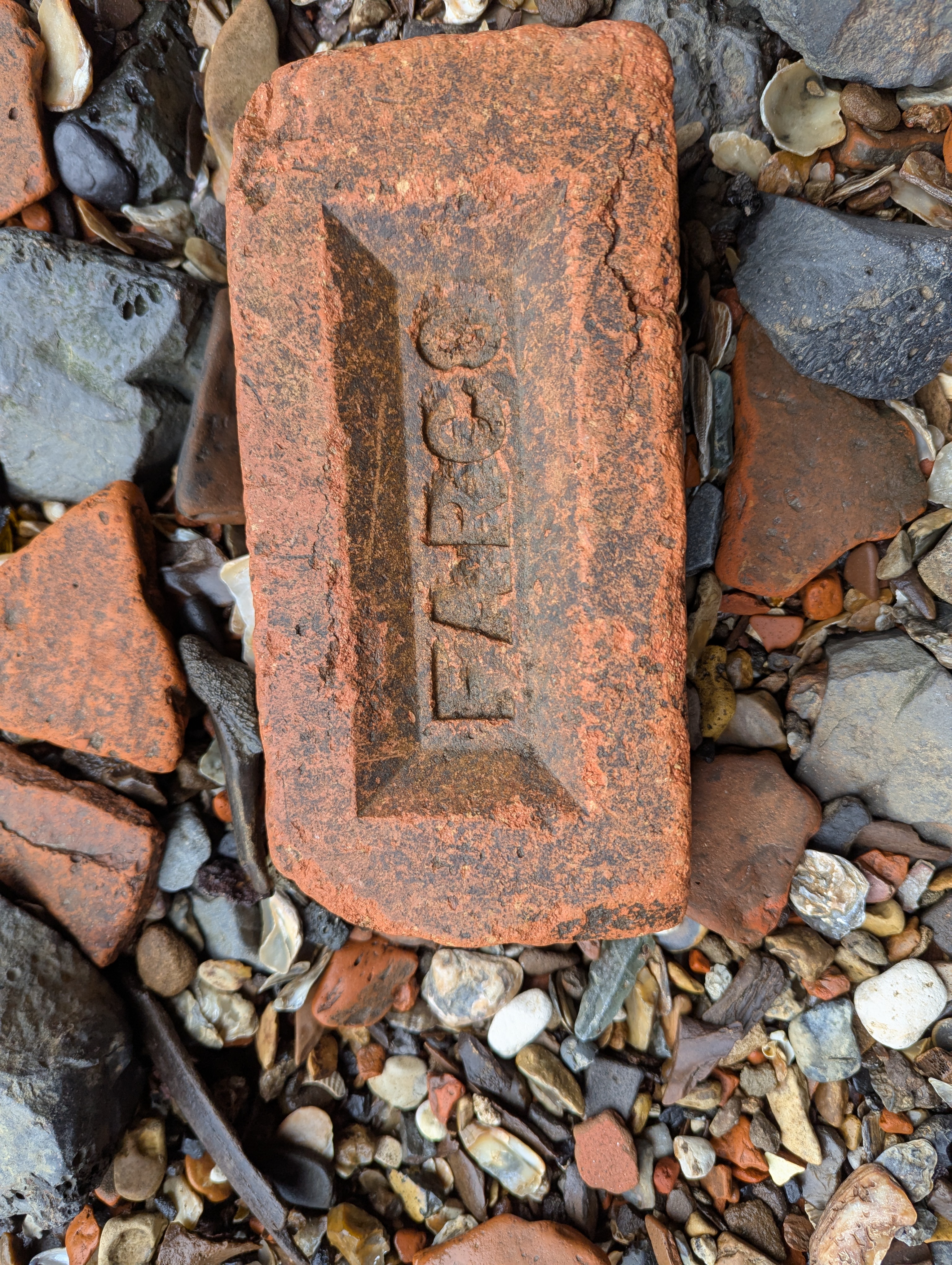
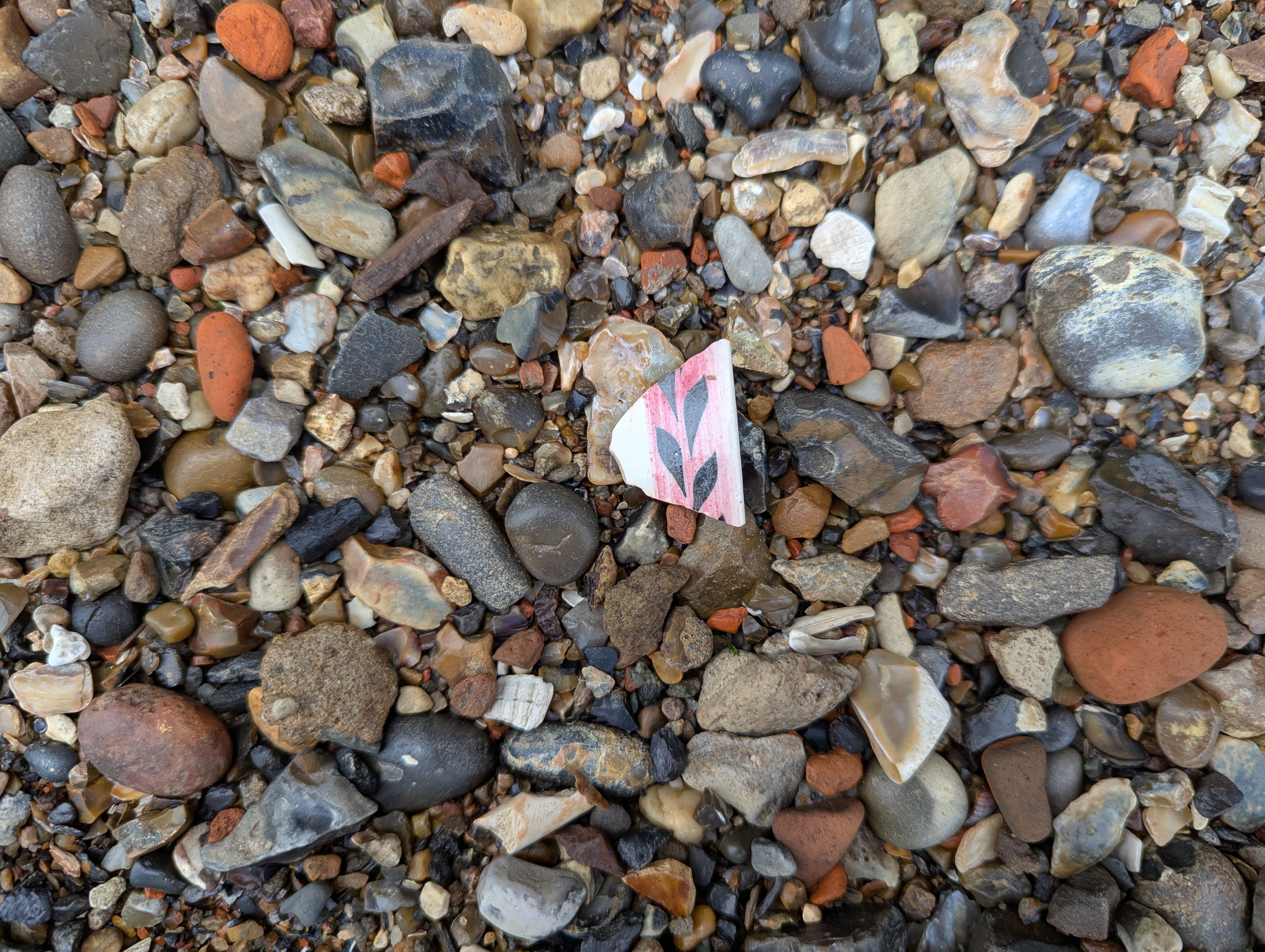
Some very amateur mudlarking. The tide was well out as we were walking along one day so we availed ourselves of some muddy stairs going down to the banks of the Thames to look at shells and other treasures piled up. After our attendance at the Mudlarking Exhibit last year I was curious to what extent it might be possible to recognize ancient objects. I found something that looked like an old pipe, similar to some we had seen at the exhibit, some broken dishes, and an interesting brick. Our finding was all catch-and-release not only because of the rules that govern mudlarking but, let’s face it, I had struggled enough before the trip to fit a week’s worth of clothing into a carry-on bag. I did not need to find room for a brick. Because the mudlarkers we met at the exhibit seemed to enjoy most of all the research into objects they found, I did a little research on the brick I found. According to the internet (yeah, I know, not really deep research), my brick was from a company that existed only for 30 years, and was at least 100 years old.

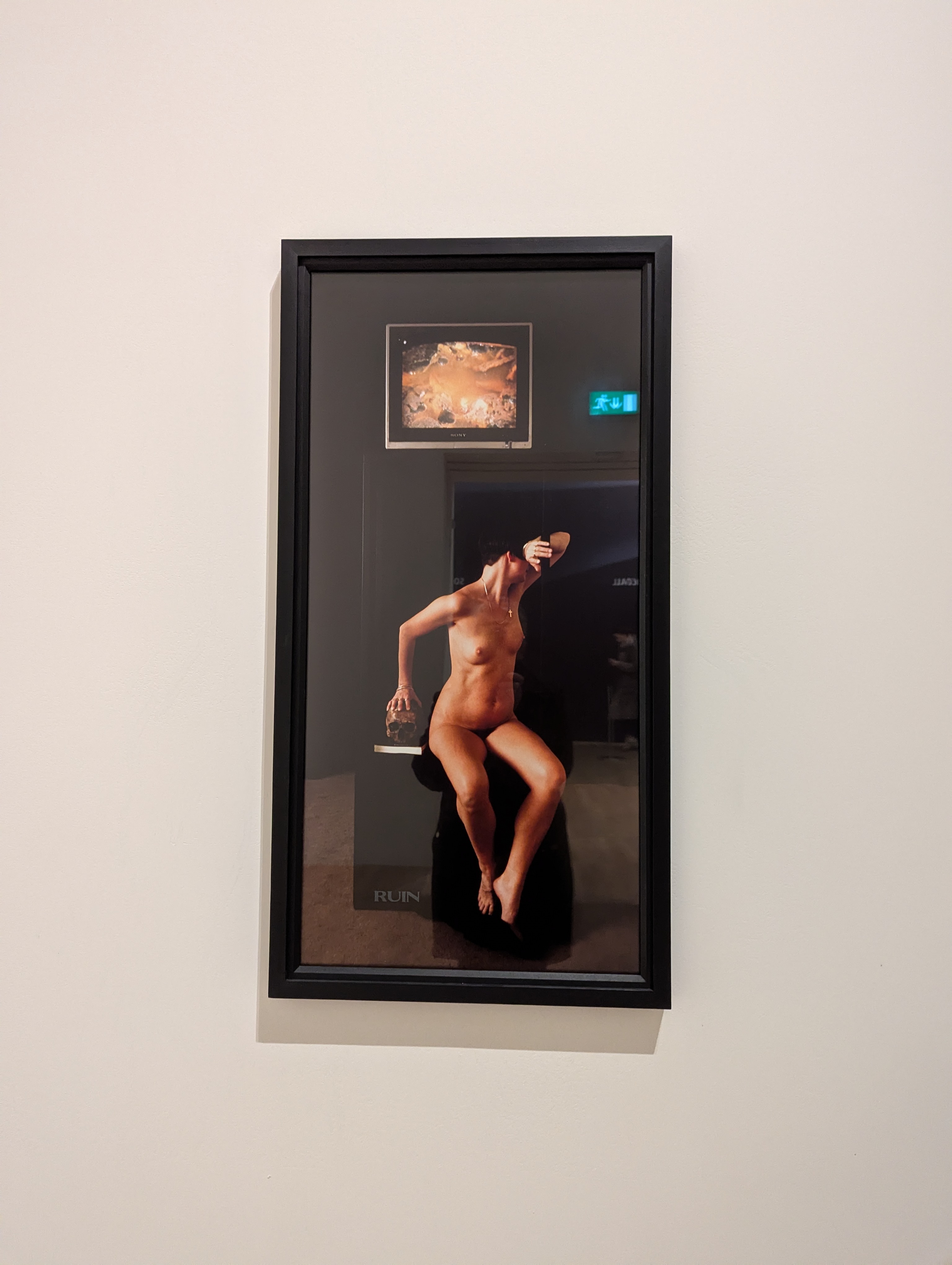
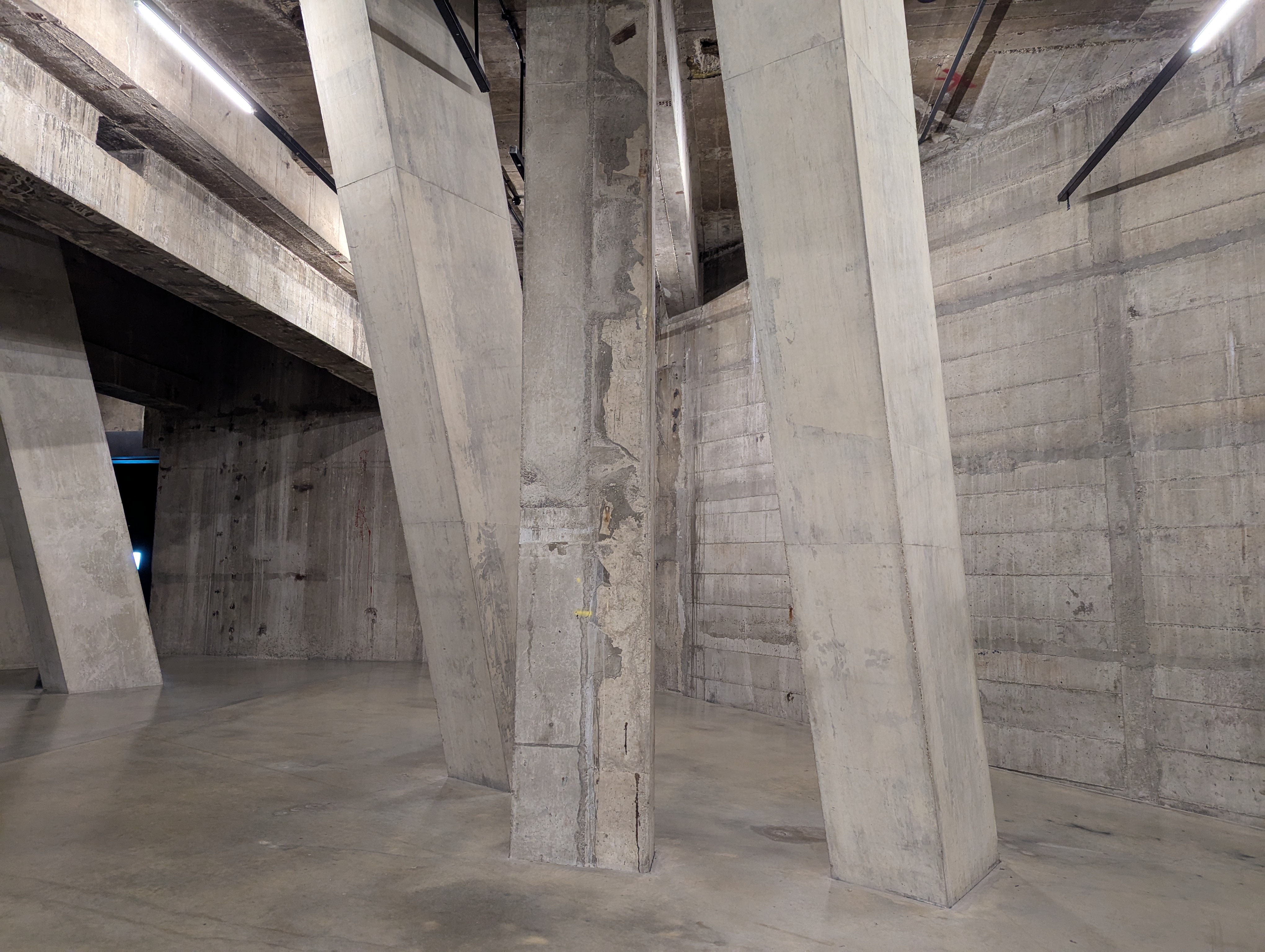
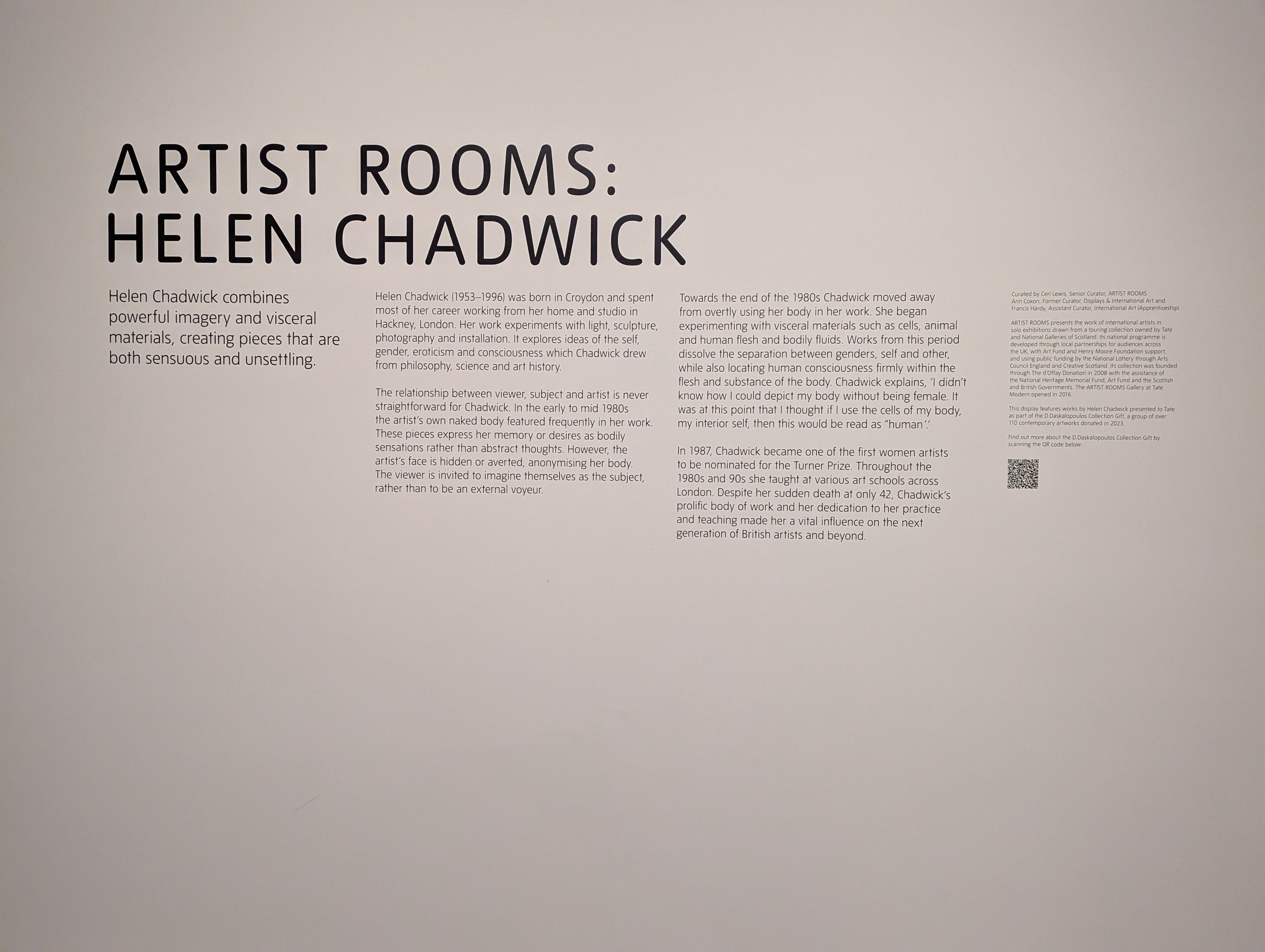
Helen Chadwick room at the Tate Modern. We arrived at the Tate Modern with limited time and mental capacity so we decided to take in a single room of the museum. The room we choose this time was the room devoted to British artist Helen Chadwick. Chadwick is known for her studies of the human body, early on mostly her own body, but later, on all the things that make a body a body. My favorite part of the exhibit was from her work in an IVF clinic and art she created with photos of fertilized eggs and dandelion seed heads.

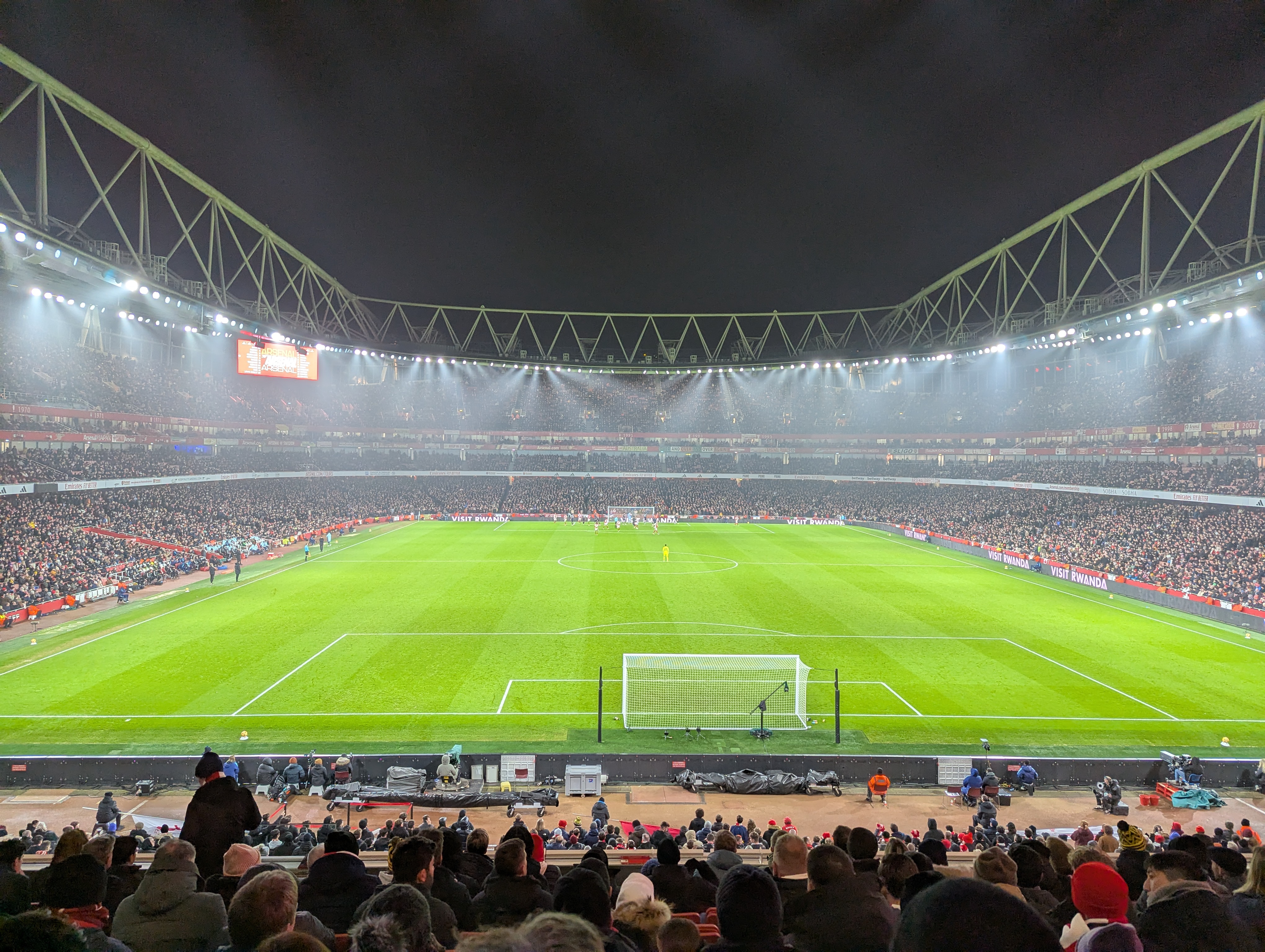
And, of course, our week ended at the Arsenal vs. Aston Villa match. This was the only match that we had tickets for when we started our journey. Aston Villa has been tricky for us lately and this match proved no exception. I was seated next to a fun family that included a young boy whose favorite player was Bukayo Saka. His father showed me dozens of picture of the boy with members of the Arsenal team: Saka, Martin Odegaard, Leandro Trossard. On numerous occasions they had stopped by hotels that Arsenal stay at the night before matches and stalked them.

Arsenal played well and scored two goals, both by players who have been a bit short of goals lately, Gabriel Martinelli and Kai Havertz. But somehow Arsenal lost its footing and allowed two goals from Aston Villa. The second goal really knocked the stuffing out of the Arsenal fans and the family next to me went negative. The dad actually changed seats with the kid so he could mutter dark thoughts and feelings in my left ear. I don’t share this level of negativity, but I let him vent.

With the injuries so far this season, there were no great options on the bench to try and turn things around. Despite some excellent efforts from Arsenal (including a goal that was disallowed for a handball) and attempted late heroics, nothing good came of it and the match ended 2-2.

We saw three matches during the week and got all three possible results–a loss, a win, and a draw. Not an ideal week of results but, even limited by spousal concussion, I can’t complain about the week we had. It was awesome.

Merry, miserable Christmas trees

Ridiculously, after returning to Chicago for a few days in which we purchased a Christmas tree and put lights on our house and I worked during normal U.S. working hours, my husband and I returned to London for the weekend.

Both of the aforementioned Christmas activities in Chicago involved challenges. We had a lot of burned out lightbulbs on our Christmas tree last year so I threw quite a few strings out. Naturally, I forgot about that so when I went to put lights on our tree this year, the usual selection was not available. I pulled some options from a different box and put them up, only to discover they were flashing lights. We lived with that for a few days until we concluded we felt stressed after turning on our Christmas tree. I ended up removing my first attempt and completing the effort again with newly-purchased options.

The lights for the house also had burned-out sections and my husband spent time–both before and after our trip–trying to find replacement bulbs, seeking suitable replacement light strings, rejecting such replacements, seeking others, and compromising until the exterior of the house was finally decorated to his–probably compromised–satisfaction.

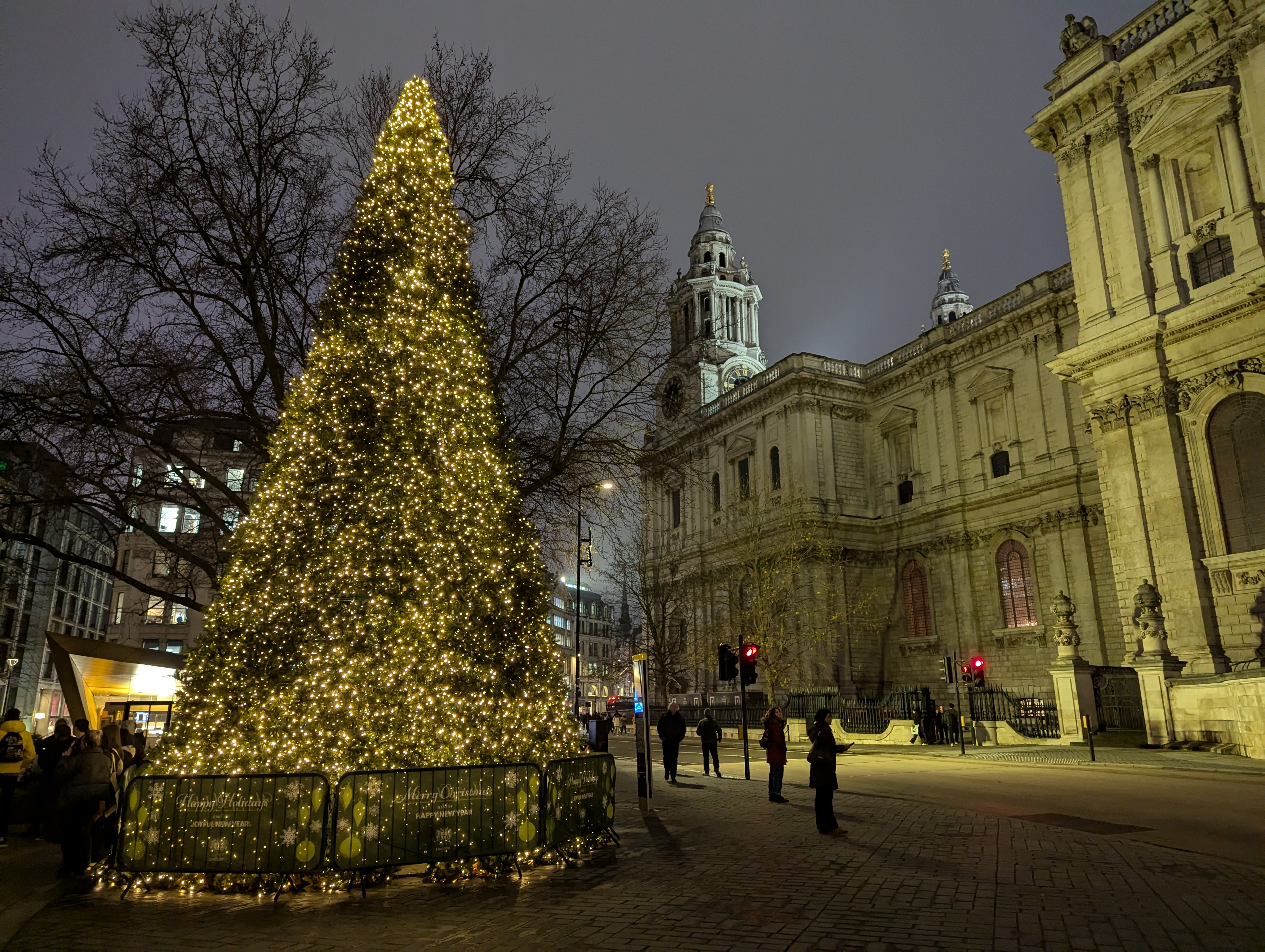
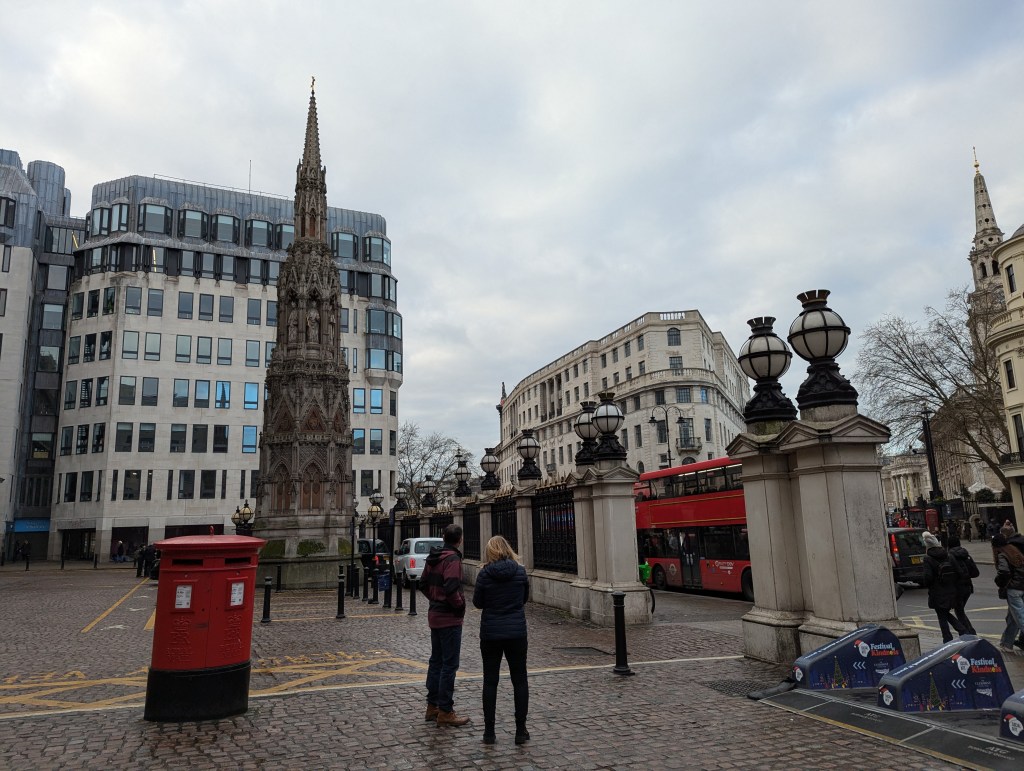
Although our trip to London was brief, it was fully devoted to relaxation and enjoyment. We walked around town, enjoyed the beautiful lights and decorations, visited a pop-up skating rink at Somerset House, and visited a winter festival featuring (for us) choirs performing under a Christmas Tree in Trafalgar Square.

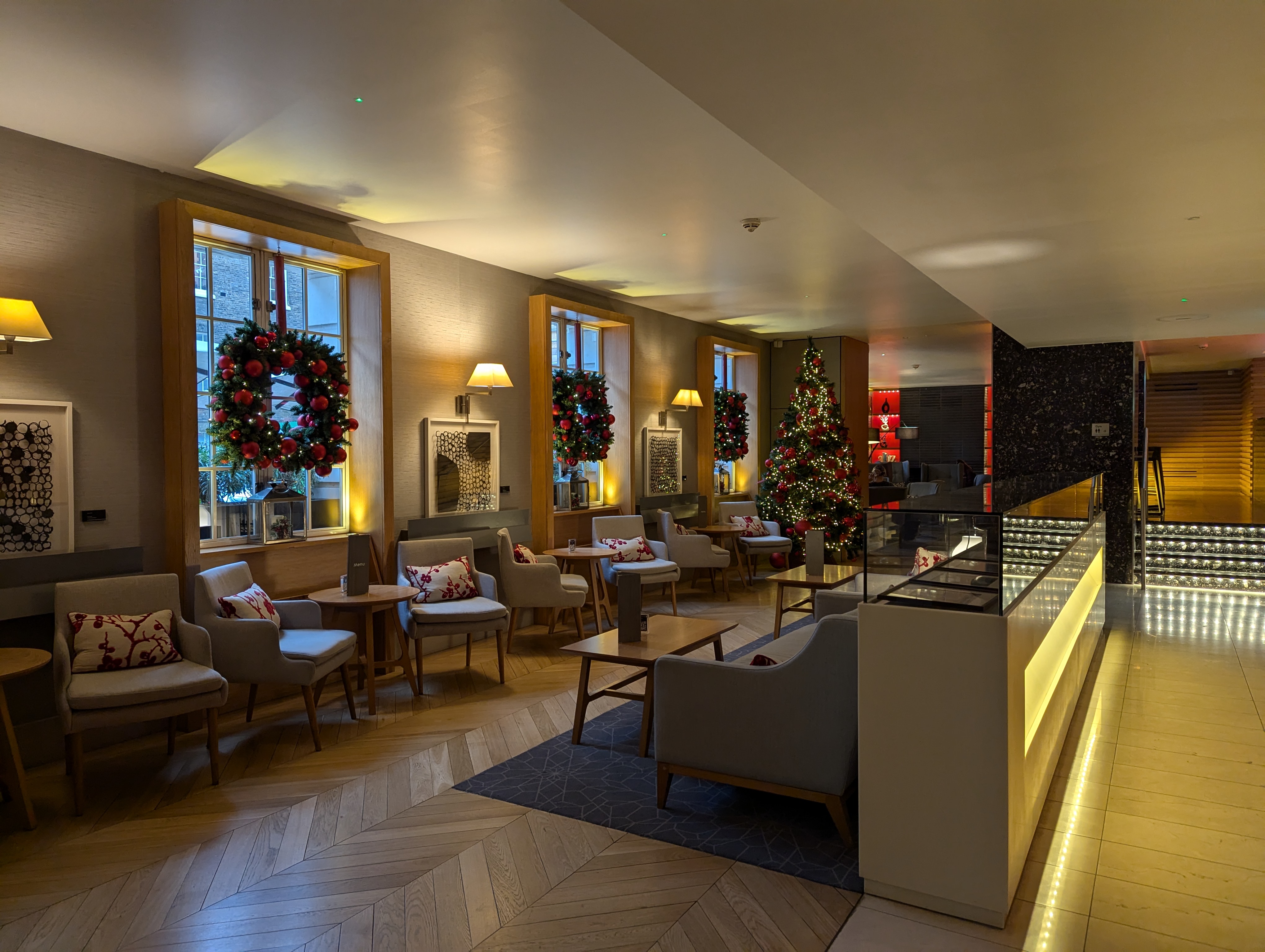
We enjoyed our new hotel neighborhood near the Temple tube stop. Walking from the Tube stop to the hotel, the area felt like no place we had ever stayed in London even though it was relatively close to other areas we’ve stayed in. Every time we were walking around I was hit with the sensation of novelty which would morph into familiarity and back into novelty. Our hotel was the Apex Temple Court, which had a lovely lobby and pretty, spacious, and practical rooms. The hotel was serving mulled wine and tiny mince pies near the reception desk. Mulled wine = fabulous. Mince pie = not my thing. Mince pie was ubiquitous in London. But so was mulled wine.

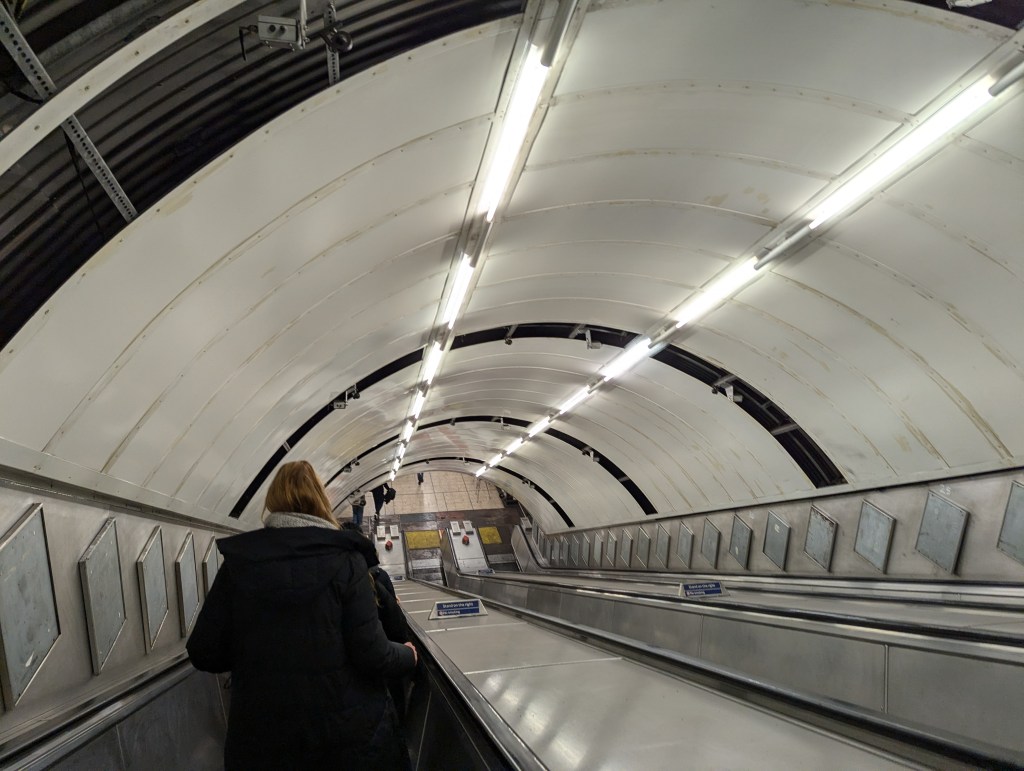
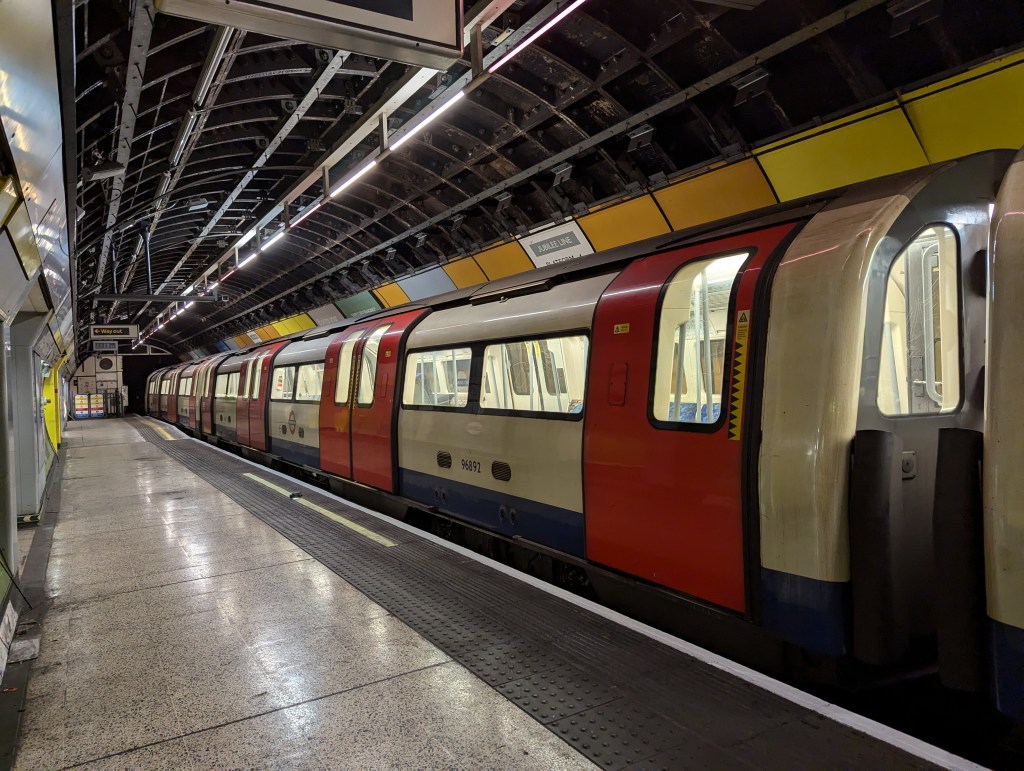
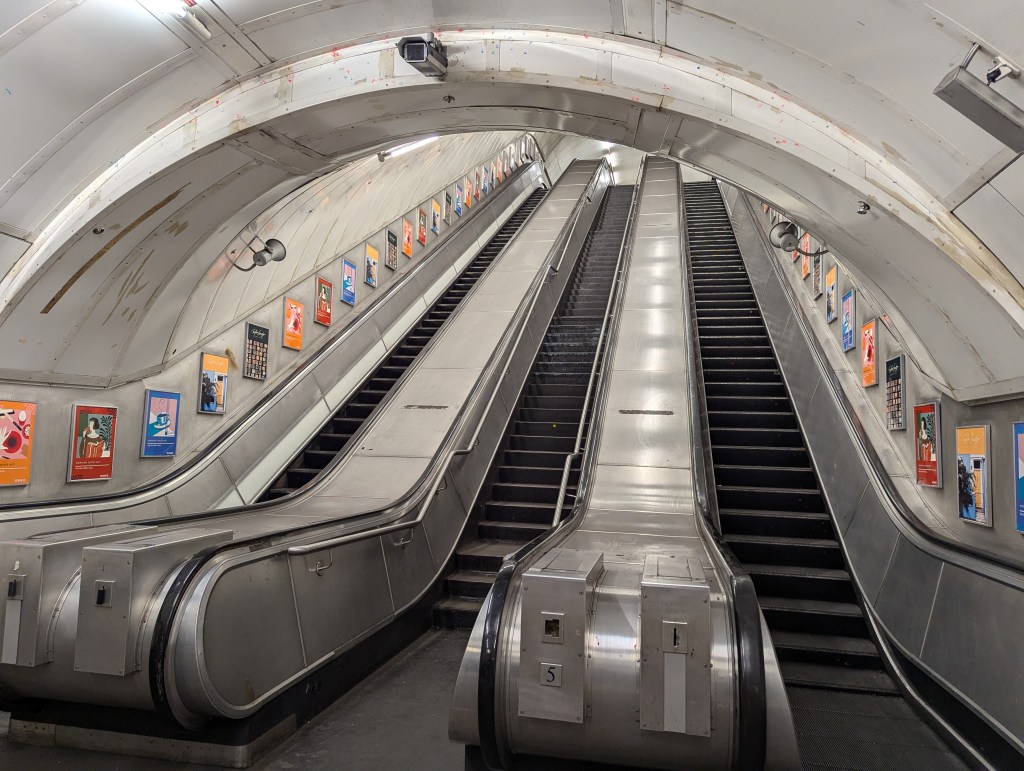
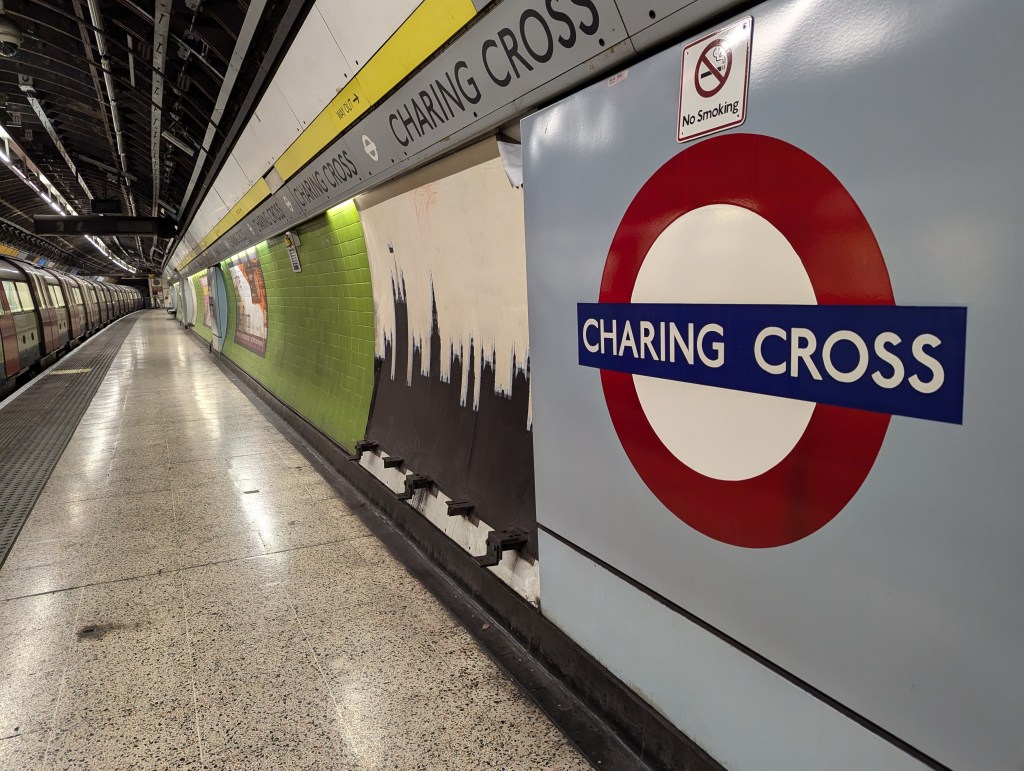
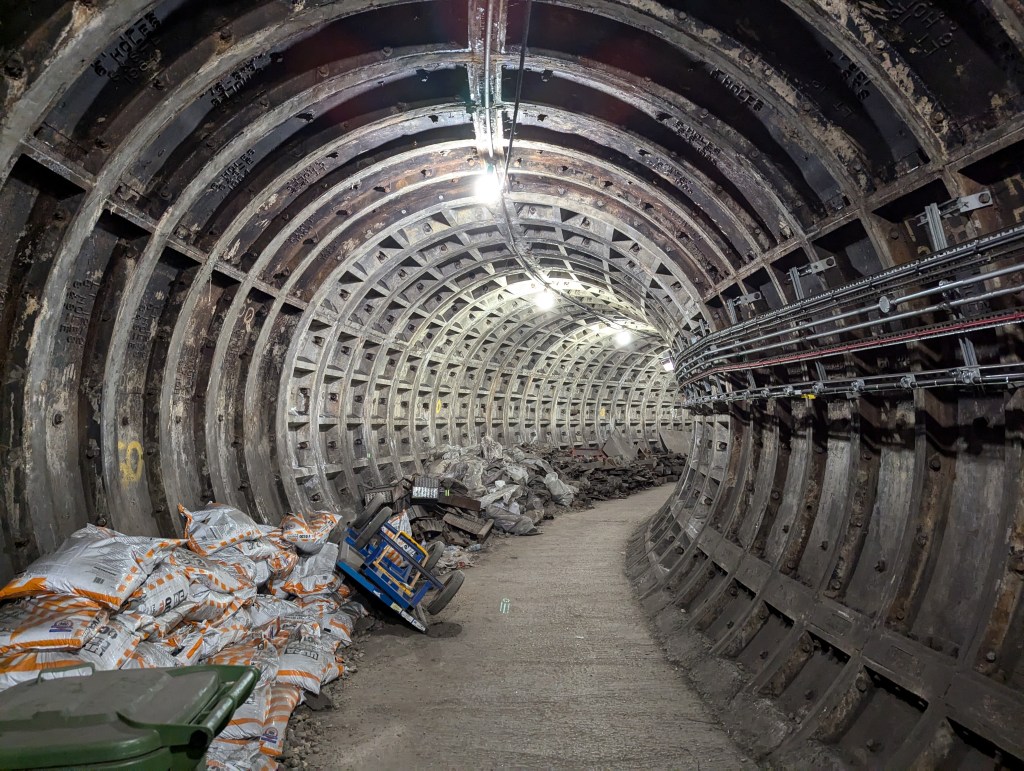
Our main entertainment, other than the Arsenal match, was a Tour via the London Transport Museum of Jubilee line platforms at Charing Cross Underground station that have been closed to the public for 25+ years. It still has working tracks that can be used for storing trains during slow transit periods, that then can be whisked into service during rush hours. The other use for this part of the station is filming movies and TV shows that have scenes in Tube stations. It was used in Skyfall, The Bourne Ultimatum, and even Paddington. They showed us clips from the movies during our tour. We got to go into construction tunnels and even in a ventilation shaft above train platforms currently in use. Interesting way to experience history and a part of the train system you rarely see.

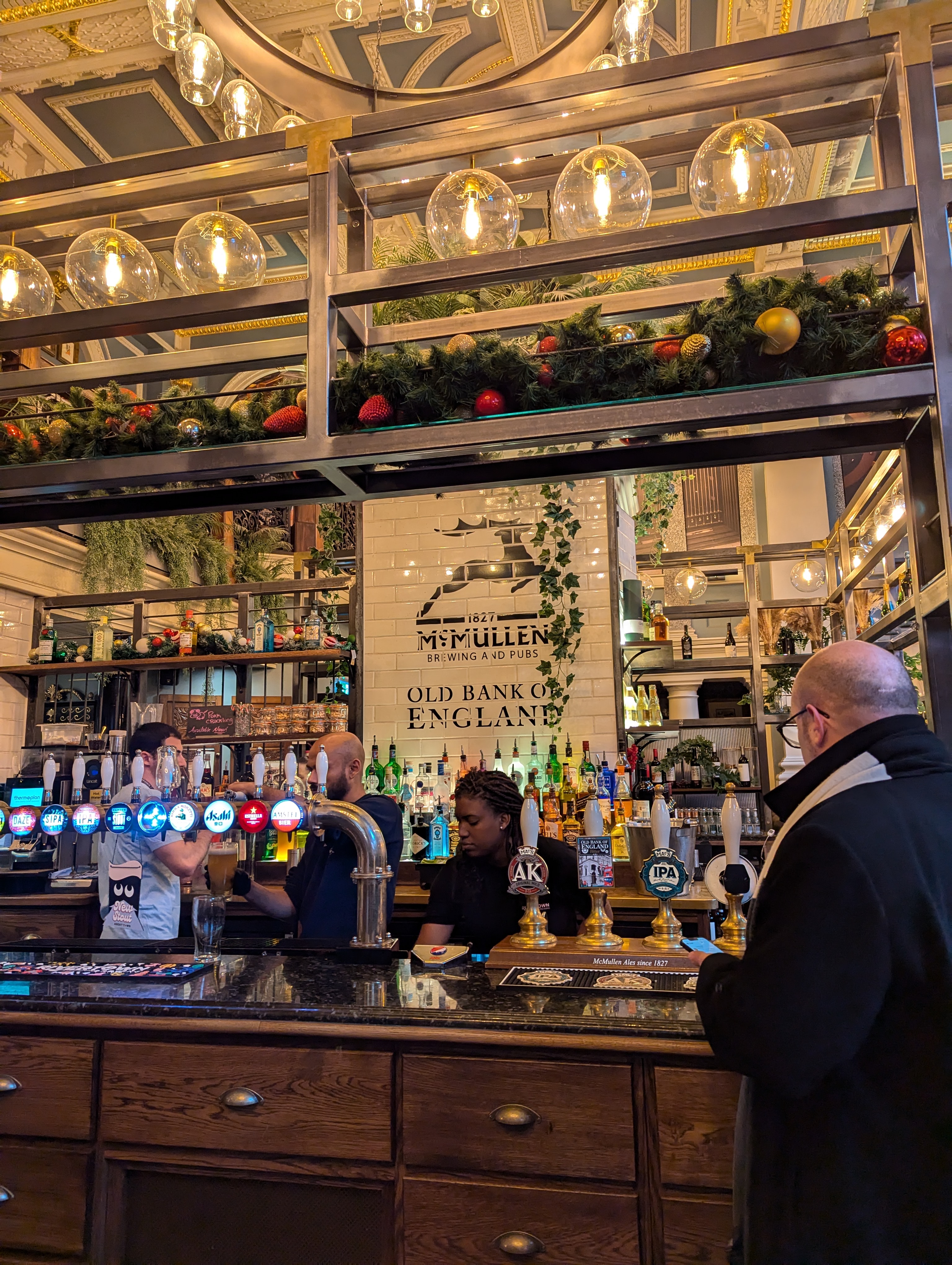
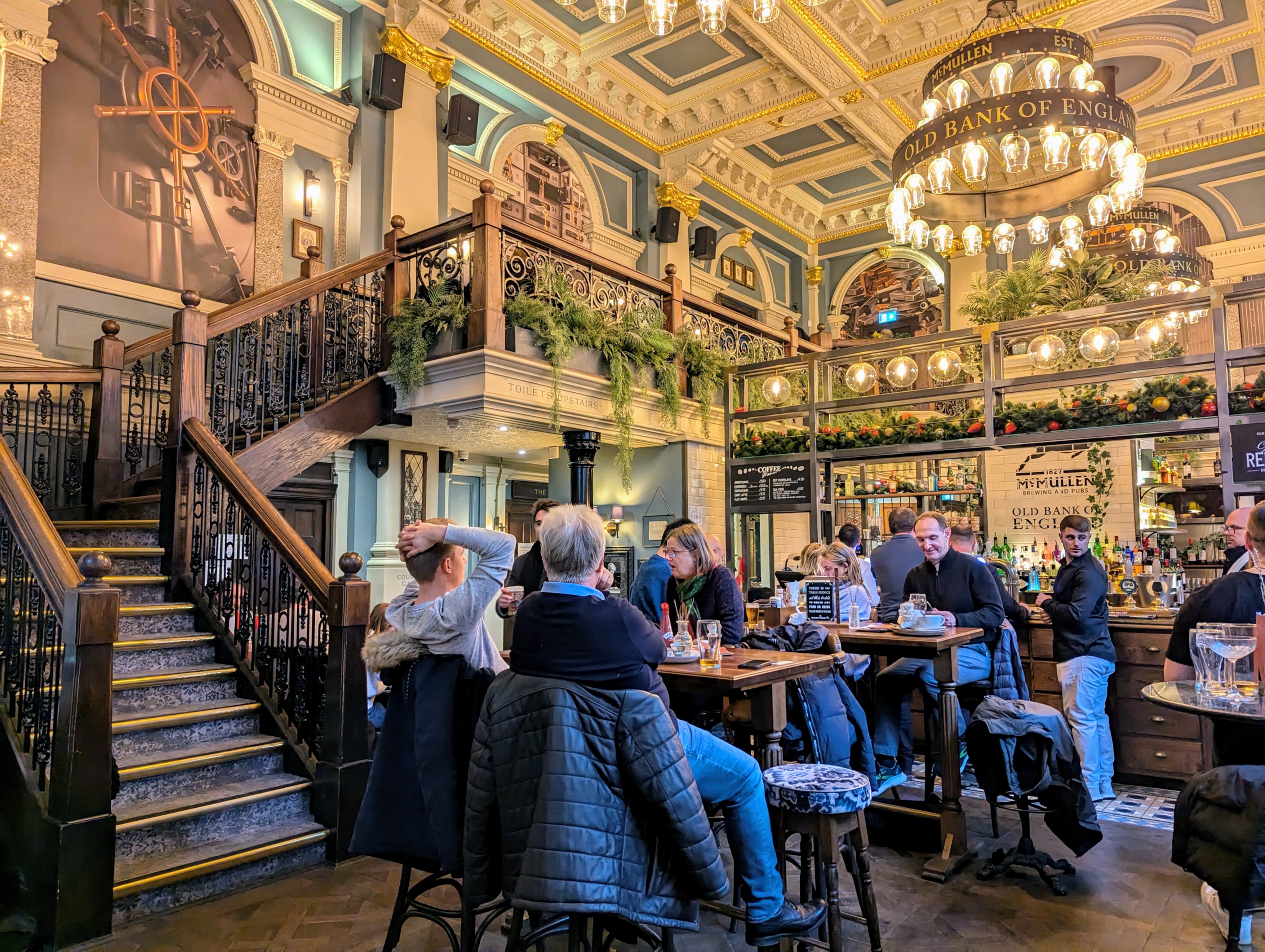
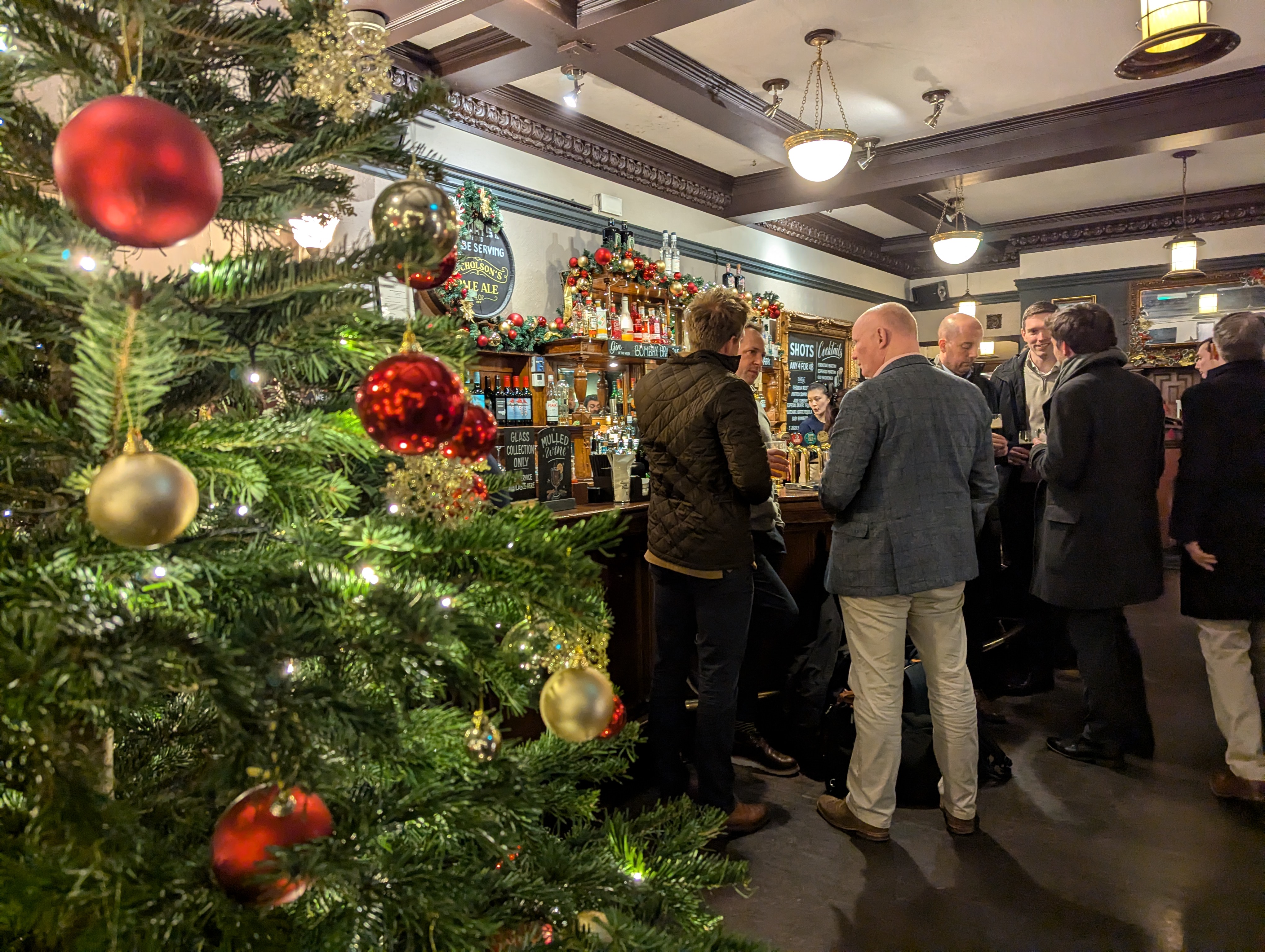
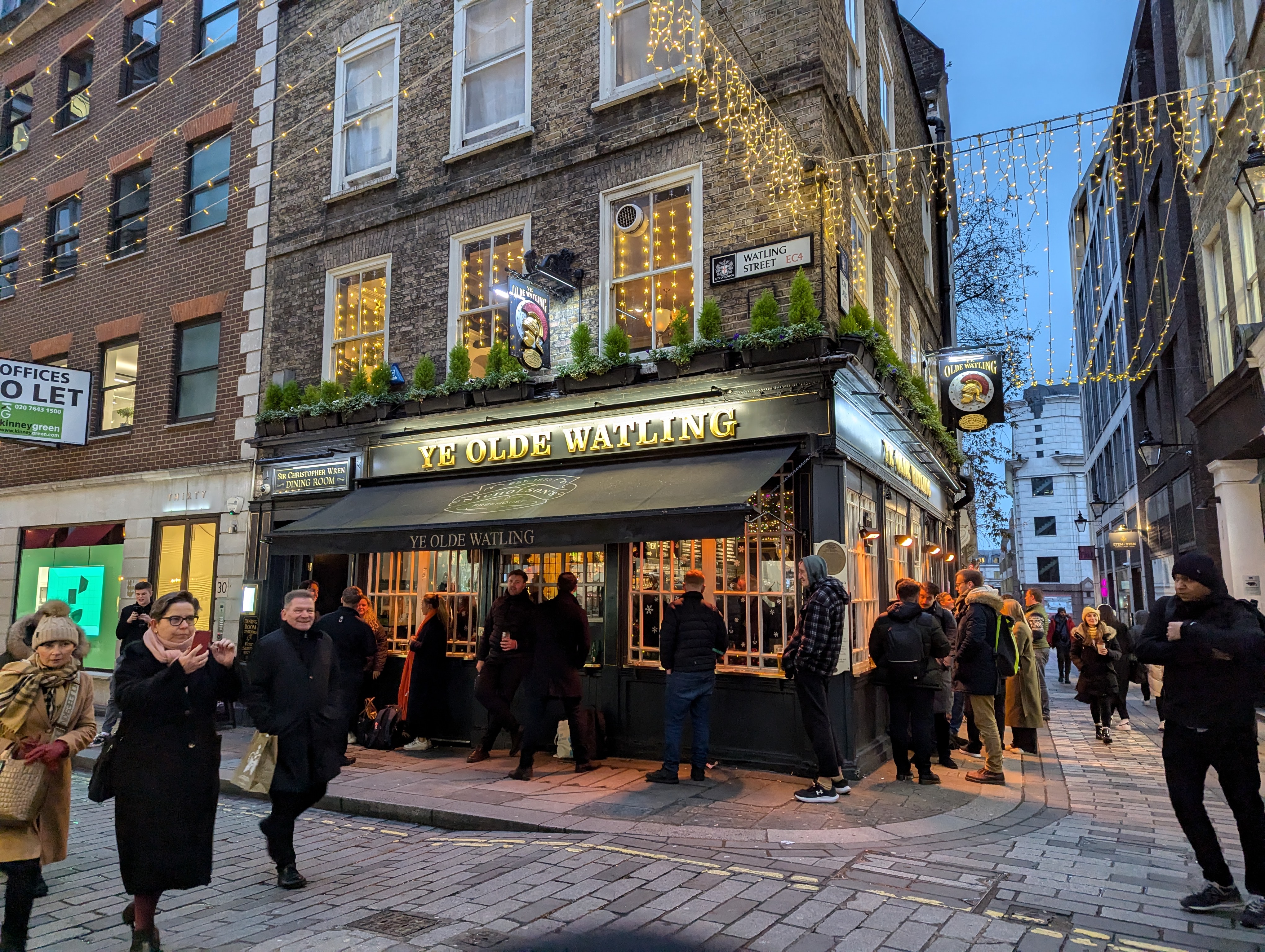
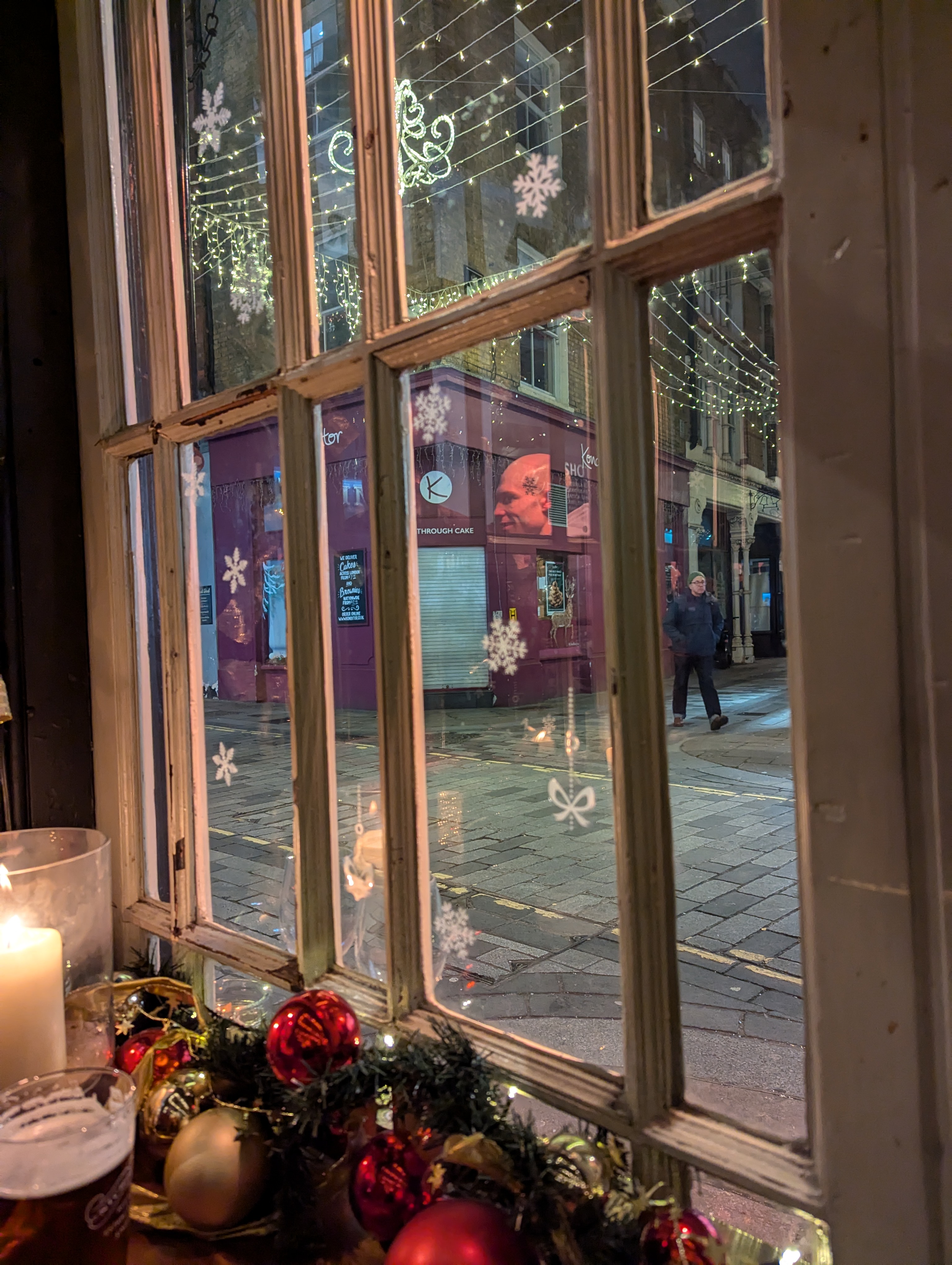
With regard to relaxation, we visited the historic Gordon’s Wine Bar, one of our favorite places to hang out and have a glass of wine in an outdoor garden under a very functional heating unit. We also visited a ridiculous number of pubs considering we were in town only for a long weekend. I love the pubs in London under normal conditions but during the holiday season they are beacons of warmth and cheer. They are decked to the hilt with lights and candles and garland, have special, fun menus and drinks, and are full of cheerful Londoners in Santa hats and Christmas sweaters and holiday tights. We visited Old Bank of England, Williamson’s Tavern, The Admiralty, and Ye Olde Watling. Old Bank of England is one of the grandest pubs I’ve visited, which I would have said about The Admiralty if the prior day I had not been in Old Bank of England. Williamson’s and Ye Olde Watling were cozy and friendly. My husband declared the Blade of Beef & Ale pie served in Old Bank of England to be the best beef pie in all of London. I think my favorite meal was just a delicious hamburger from The Admiralty. And the Hedgerow Berry Mess was also yummy.

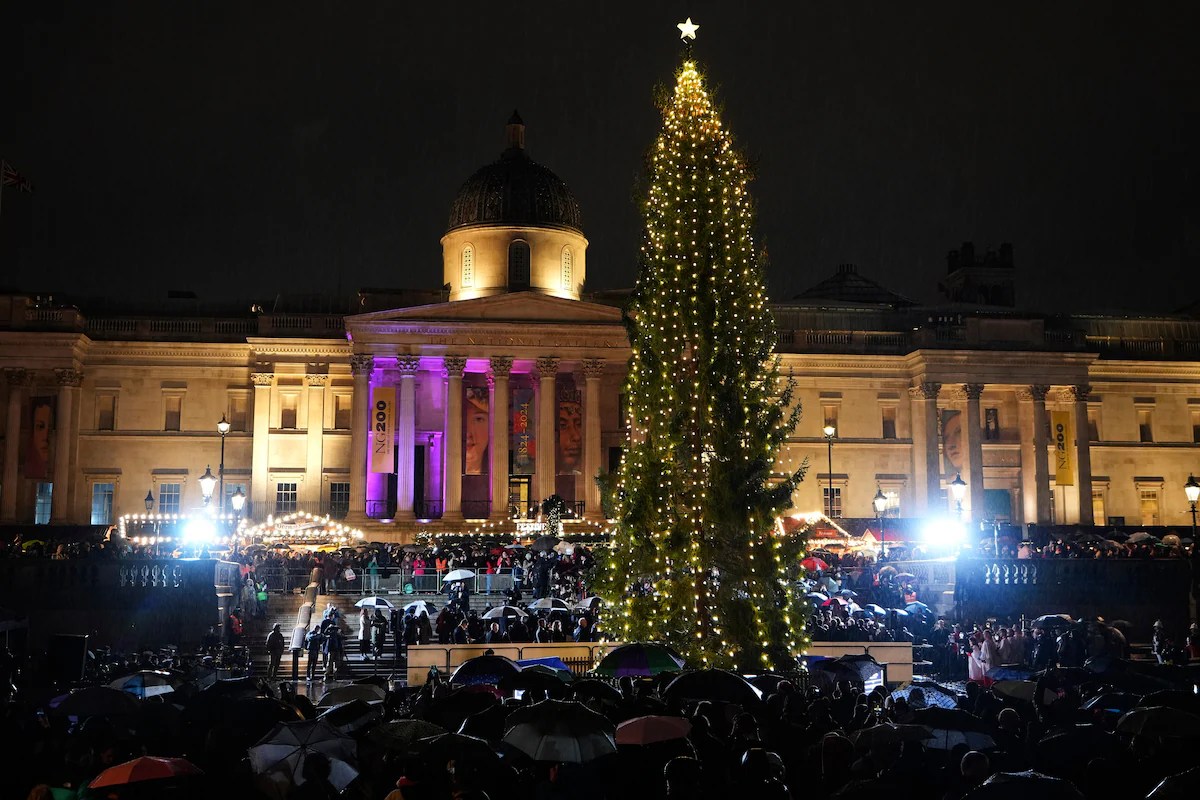
It was all so very lovely, I was surprised upon returning back to Chicago to see an opinion piece in the Washington Post entitled Britain’s merry, miserable Christmas trees. I know this is behind a paywall so let me give you a synopsis. The author, Mark Lasswell, describes a national pastime in Britain of “lashing out at the comically forlorn approximations of holiday trees on public display.” The leading photo is of a tree in Trafalgar Square. A member of Parliament is quoted in the article as saying this tree resembles “a wonky corn on the cob.” It did look a little sad in the photo.

Photo credit: Kristin Wigglesworth/AP as shown in The Washington Post 12/17/2024

Then I realized I had been standing near that very tree only three days ago. How did I not notice it looked like that? What I remembered: everything was so pretty. So festive.

I dug through the photos on my phone to see if that really was the tree in Trafalgar Square. I did not have a photo, but I had a video of a choir performing right next to the tree shown in the Washington Post. It never struck me in the moment as a “comically forlorn approximation” of a holiday tree. But, yes, it’s not the most glorious. The fact checkers for The Washington Post had done their jobs admirably.

I can only guess that the persons decorating the tree at Trafalgar Square said, “Everything else looks so amazing, no one will even notice this tree. Let’s get this over with and make better use our time with mulled wine at The Admiralty.”