
After a great few days in Dublin, we took the train to Belfast. We arrived late in the afternoon, dropped our stuff off at our hotel, The Europa, and hurried out on the Titanic walk over to the Titanic museum.
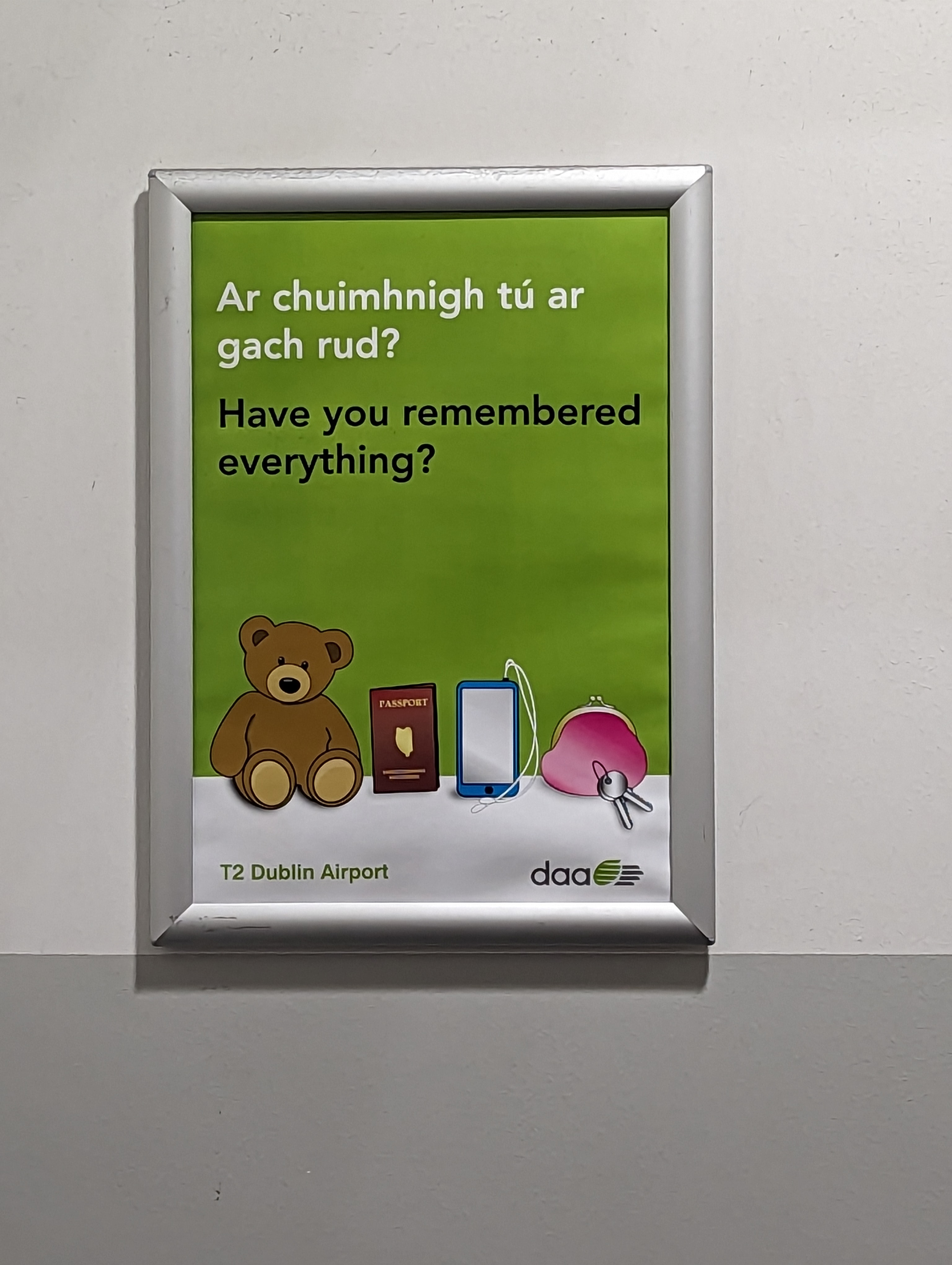
Belfast is in the Northern Republic of Ireland, a different country than Ireland, and part of the UK. Why am I telling you something you probably learned in third grade? Because I myself forgot that. The biggest difference I noticed right away is that in Dublin, every sign is displayed in Irish and English. That is not true in Belfast. I made the incorrect assumption that the people of Northern Ireland were comfortable being part of the UK. The truth is significantly more complicated.
Because it was late in the day when we arrived, the Titanic Museum was fairly empty. We had a few hours to explore before it would close, just enough time to take it in. Ireland of the late 1800s and early 1900s, like many European countries was experiencing industrialization, with many people transitioning to life in city centers, and migration both to and from the country influencing products in development. Belfast was (and still is) the home of a large ship manufacturer, Harland + Wolff. In the early 1900s the company build a number of luxury ships, including the Titanic.
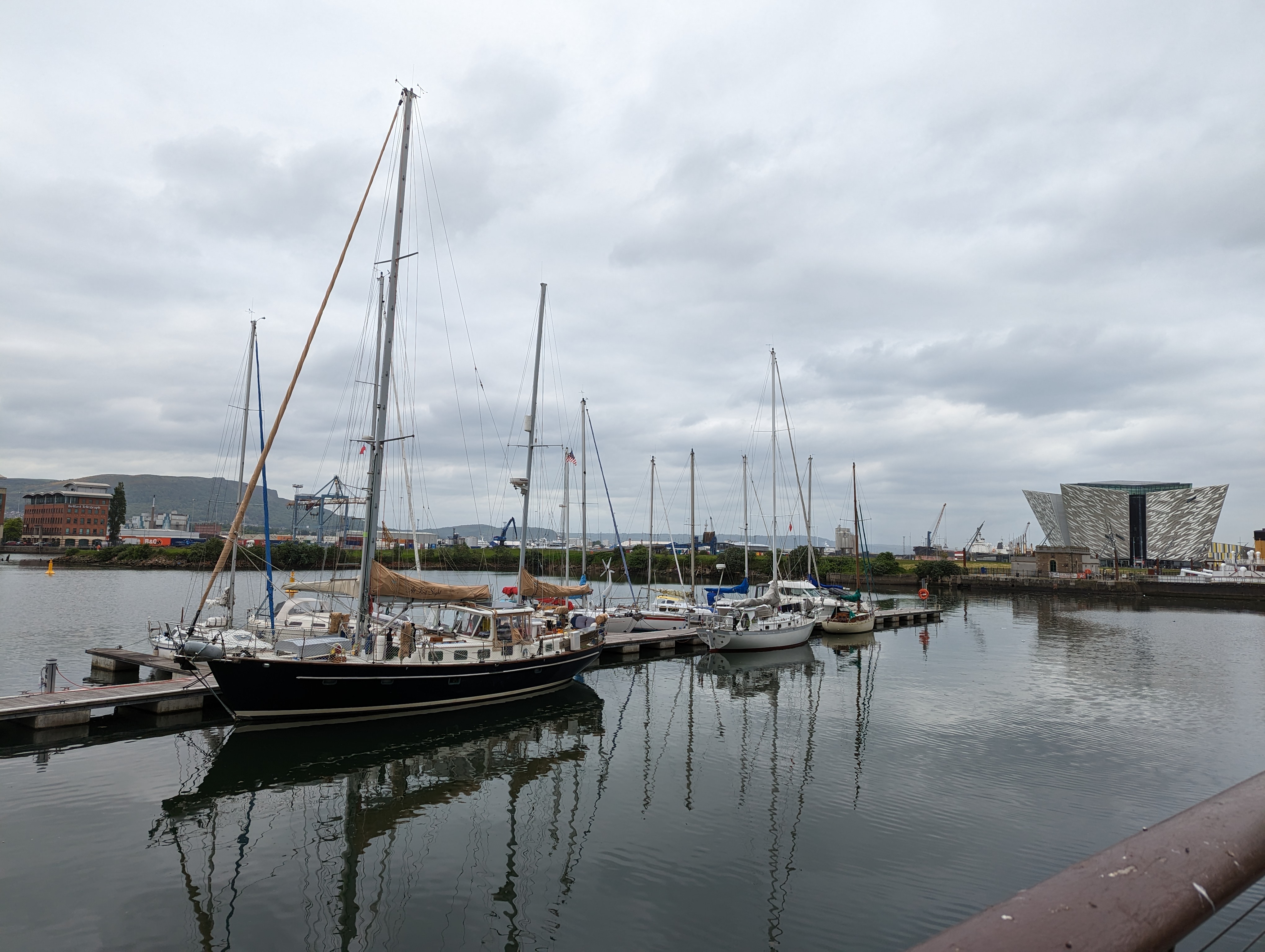
The company spent two years building the hull of the ship, at which point it was moved into water, where all the finishes and mechanics were added. That took another two years. When the ship was finished in time for its planned maiden voyage, many of the employees involved in the project were rewarded with trips on that voyage. The ship set sail for Southampton, where it picked up the actual passengers on their way to New York. We all know the rest of the story. The ship hit an iceberg within a few days of setting out and sunk within hours, killing more that 1,500 people. Belfast was devastated by the loss of a ship that had been so carefully worked on by many of its citizens so soon after they proudly sent it on its way, and by the many lost citizens who had been on board.
Because the ship was built after the advent of photography, the museum includes photos of progress from the start of the project, plans, and recreations of both the ship building environment and the ship itself, including life-sized models of sleeping quarters. It also includes a recreation of the sinking, what was learned about the cause and the great loss of life during the sinking, and efforts to locate the ship many years after it sunk.
The exhibit was excellent. I learned a lot, and the exhibit also struck an important understanding of the emotional toll. Kind of a dark, sad day.
The next day, we registered for a bus tour of Giants Causeway, a place I have always wanted to visit. Using touring companies is often a great and inexpensive way to get to more remote locations while traveling. We searched using Viator and ended up on a bus run by Paddywagon Tours.
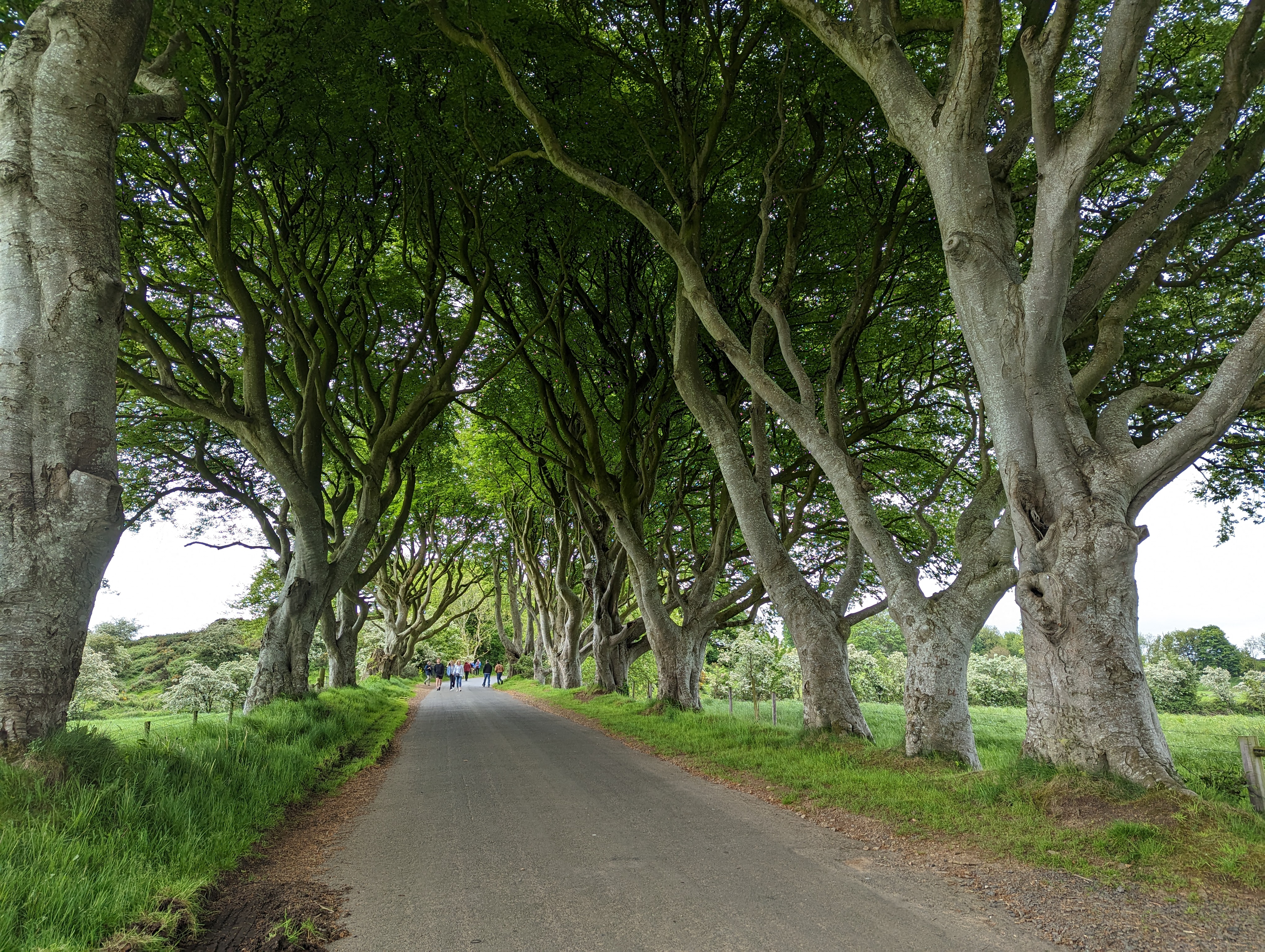
On the way to Giants Causeway we stopped and walked at the Dark Hedges, a road lined with Beech trees. As the only person on earth who never saw Game of Thrones, I take it on faith from our guide that the Dark Hedges appear in Season 2.
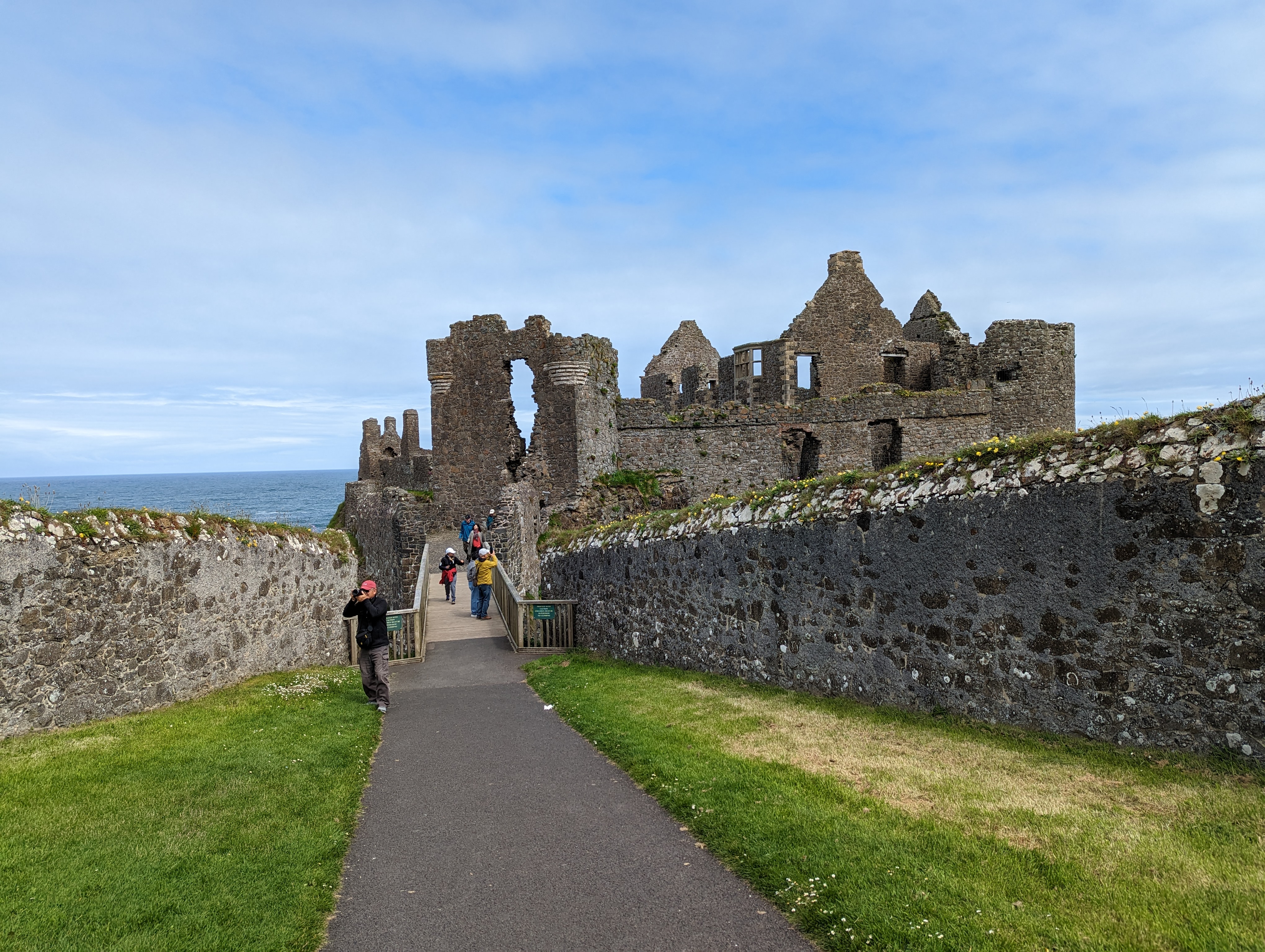
That was followed by a visit to an ancient castle, Dunluce Castle, where we walked among the ruins above a wild sea.

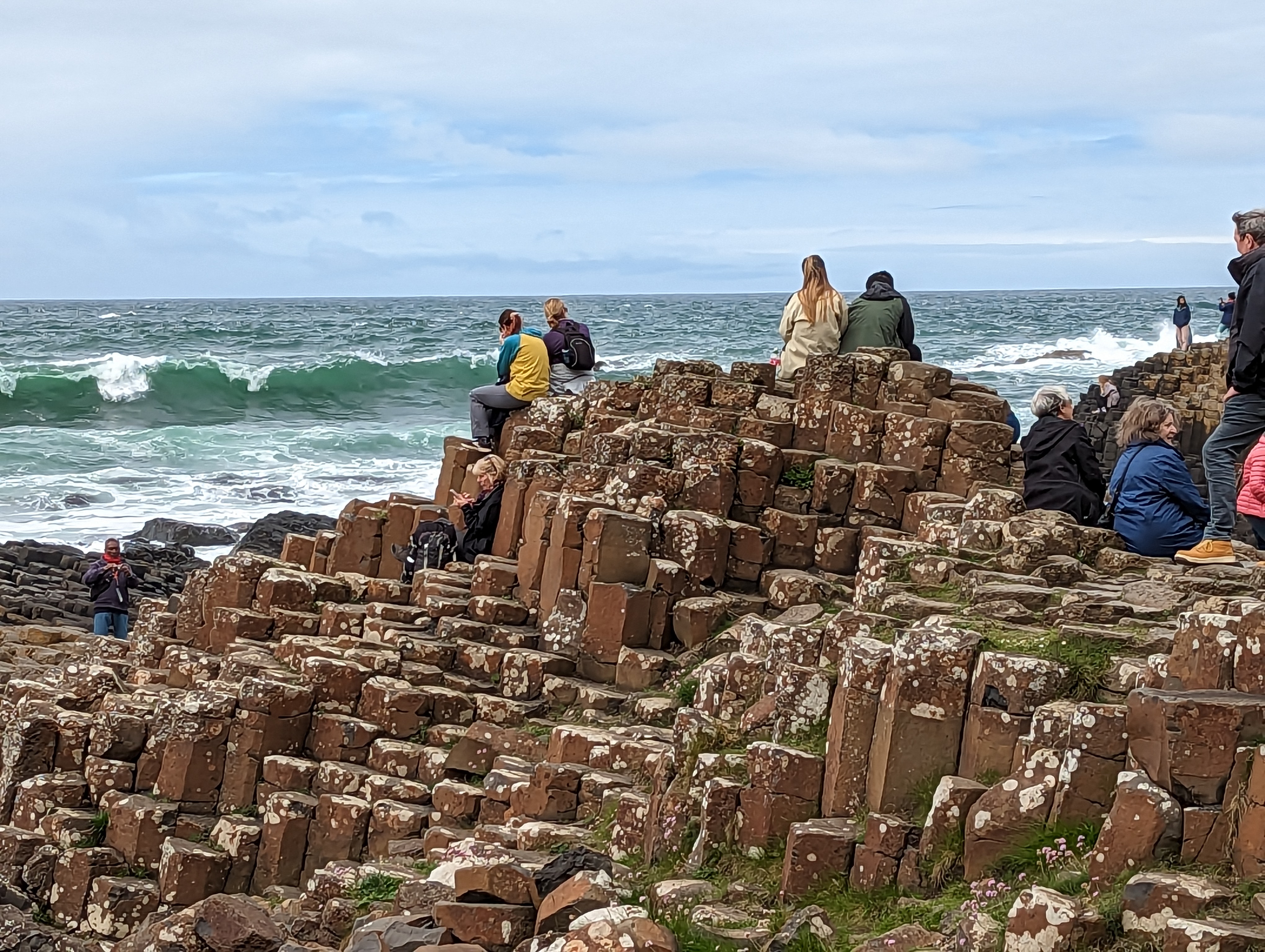
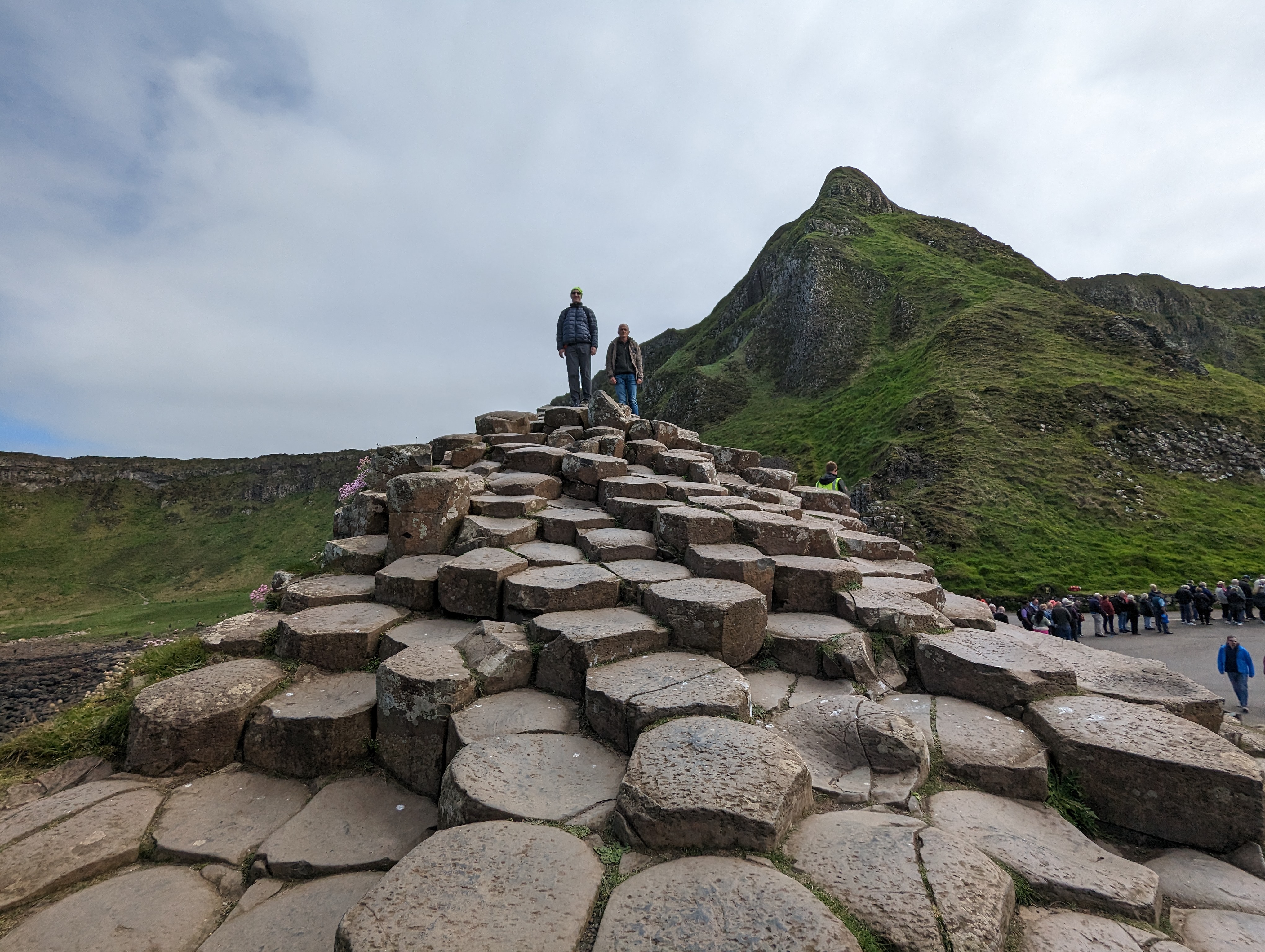
Finally, we had a few hours at the main event, Giants Causeway. As we walked from the parking lot down a steep hill, I started to fear that, while beautiful, it was nothing like the pictures I had seen that made me wanted to go for so many years. When we really got to the site, that fear was hugely unfounded. It was beautiful and, as my husband said, like a playground for grownups. We spent a long time climbing on the rocks, and a long time watching the waves crash on the rocks, just enjoying a sunny day above a craggy sea. I always feel so peaceful near the sea, even a wild one.

On our final day in Belfast, we took one of the Black Cab Tours called Politics & Murals, basically a private tour by a cab driver to sites associated with the Troubles. Our particular driver had been active in one of the splinter groups associated with Catholics. He told us our hotel, The Europa, had been one of the most bombed hotels in Europe, all due to the Troubles. It had been bombed more than 30 times times. He took us to various sites in the city where killings took place and where “Peace walls” still exist today. Although he assured us that things were changing, I realized how naïve I’d been about the peace that actually is in place. It is true that people are not being killed daily by feuding factions in Belfast. But that peace is still clearly uneasy. For example, it is still the case that the Peace wall gates are closed every evening to keep Catholics and Protestants separate from each other. My husband asked the guide if he had any friends that were Protestant. He hemmed and hawed a bit and said there are Protestants with whom he is acquainted, but in the back of his mind he could not forget about Catholic people he had known who had built trust with Protestants and were betrayed.

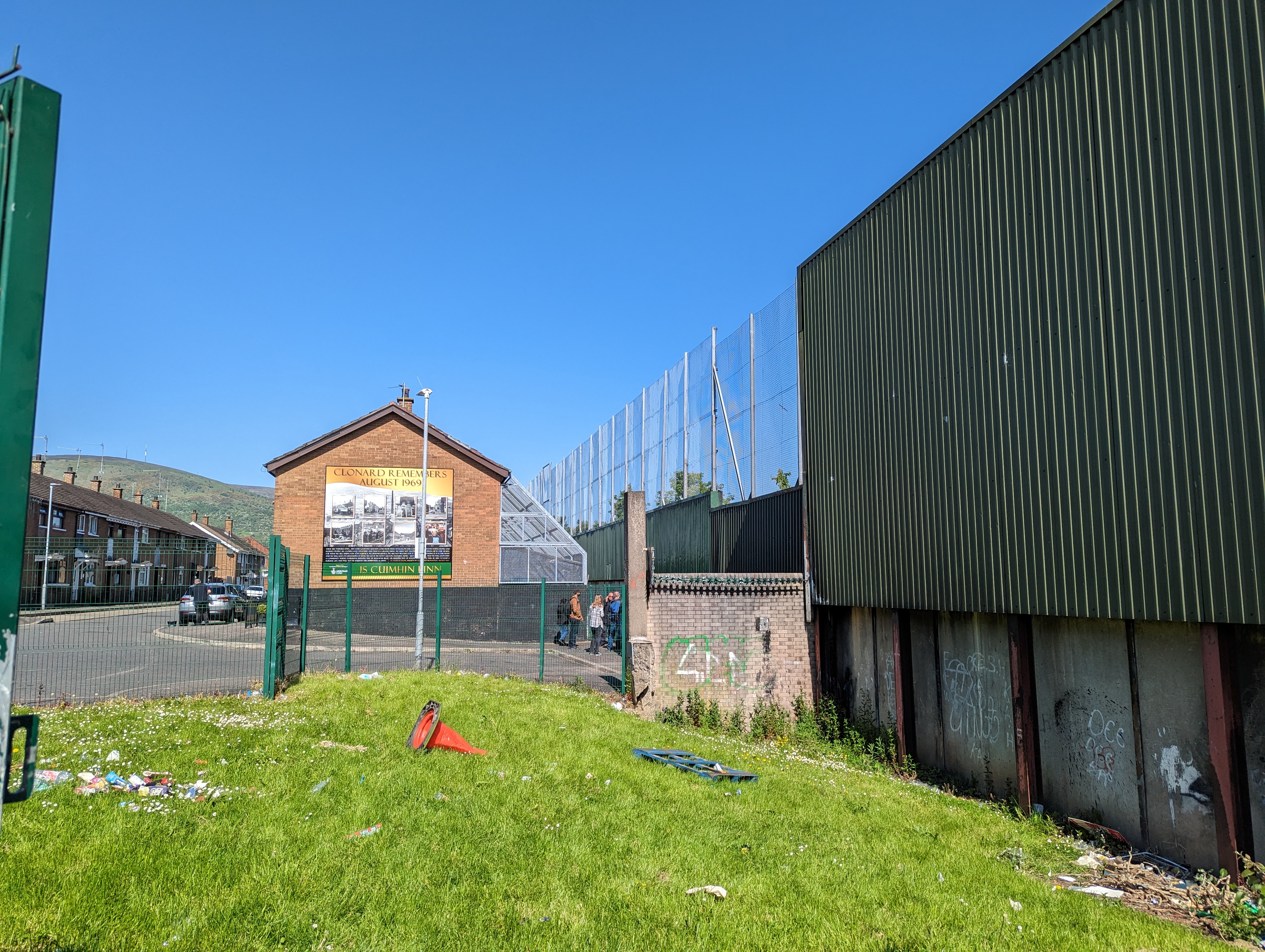
Our driver seemed to think that it was only a matter of time before demographics would be changed enough for Northern Ireland to vote itself out of the UK. But does that mean a unified Ireland? Our driver did not think so. There are a lot of mines to avoid in this particular field.
The tour was excellent and thought-provoking, but it was hard to stop thinking about the futility of avoiding conflict, not just in Northern Ireland, but everywhere. On the surface, the Belfast conflict is between Protestants and Catholics, but I could not detect much about the conflict that has specifically to do with religious differences. In the United States of the present, what was being described was not so different from gang warfare. You could see how issues and misunderstandings could take this even further. A group lives in some poverty which feels to be influenced by discrimination. People struggle to reach agreement about how to tackle the problem, with varying levels of violence involved. Opposition is dehumanized. Rumors are rampant. We kill for rumors because some part of us can believe them to be close enough to truth. We kill for actual vengeance against killings of our own. Things escalate quickly. And solutions come hard, over many years. Or maybe never come, not completely.
We returned to England the same day. Once we got to London, we saw that the Imperial War Museum we had visited in the past had an exhibit starting on The Troubles, so we headed over to learn more in the morning. In this exhibit, a very careful attempt was made to provide balanced coverage of the Troubles, for Catholics, Protestants, and the British. From all angles, it tried to look at how it started, why it continued, how it stopped. A very good exhibit, although we came to no happier conclusions.

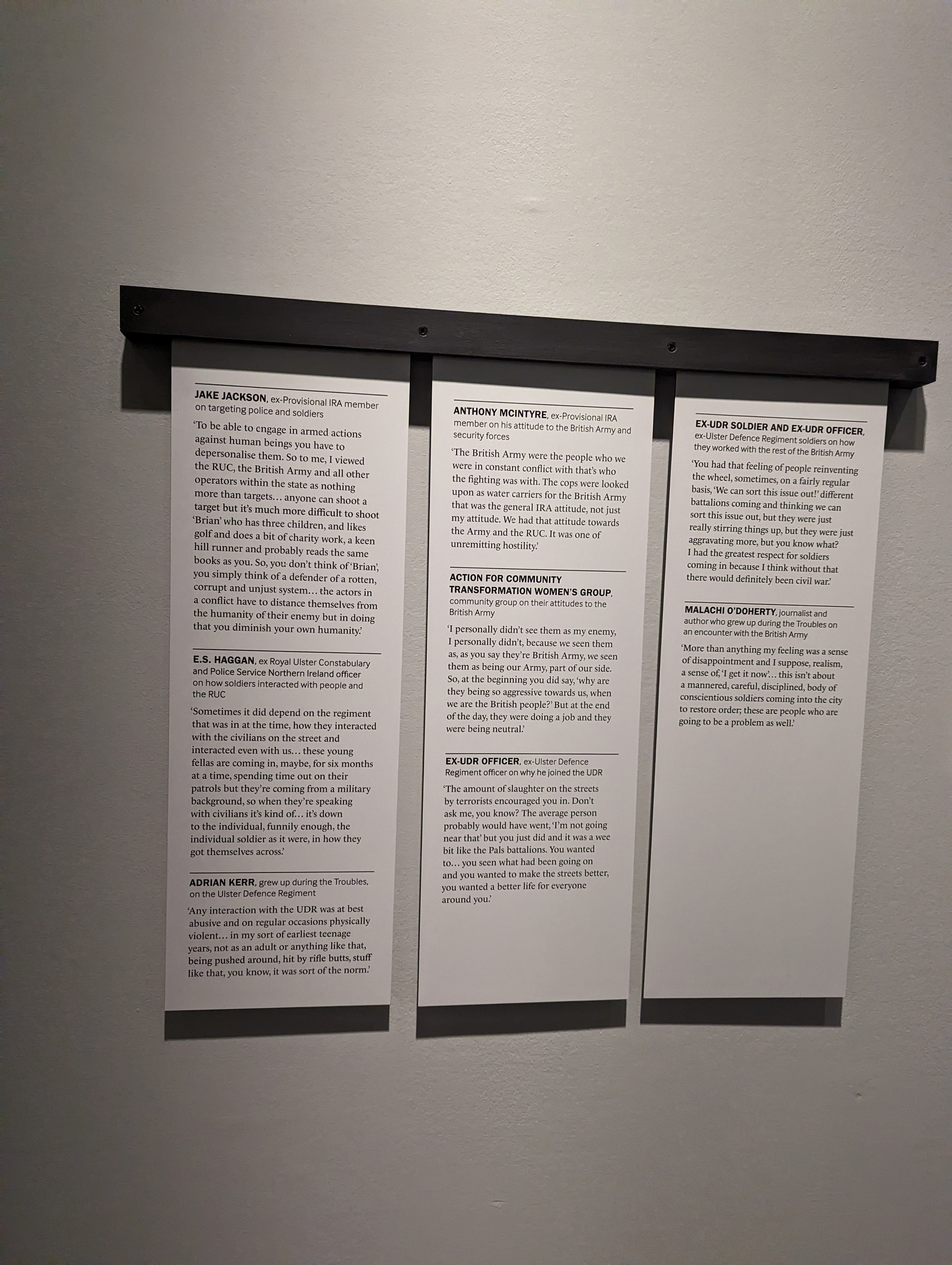
On our way into the exhibit, we overheard a fellow attendee telling someone that he was from Belfast. After we finished the exhibit I excused myself to find the rest rooms. When I returned, my husband was deep in conversation with the guy who had said he was from Belfast. I’ve told you how my husband just meets people wherever we go. This guy looked like a business executive you’d meet at a friend’s cocktail party. Turned out he was one of the IRA participants interviewed for the exhibit. He’d been jailed twice during the Troubles and was incarcerated for many years, ultimately having been released as a part of the agreement that ended the conflict. My husband asked him if he’d ever bombed The Europa hotel, and he laughed a bit. He said everyone bombed The Europa.
And this is the thing. We were talking to someone who seemed to be a perfectly reasonable guy. This perfectly reasonable guy at some point of his life concluded that there was only one, probably violent, way to solve the problems he and his people faced. Are we all this guy?
 WholeArsed