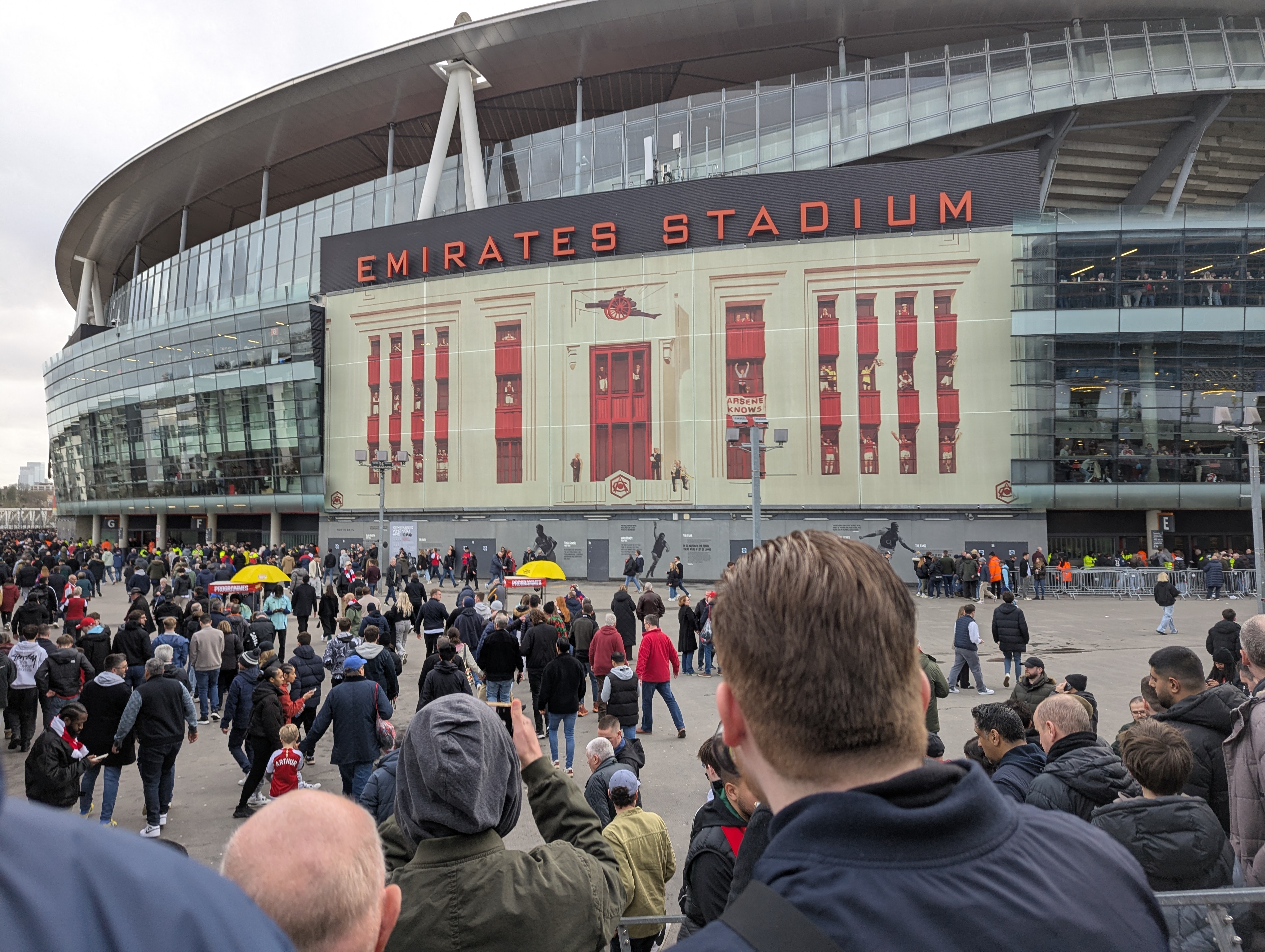
Charing Cross to Royal St. George’s

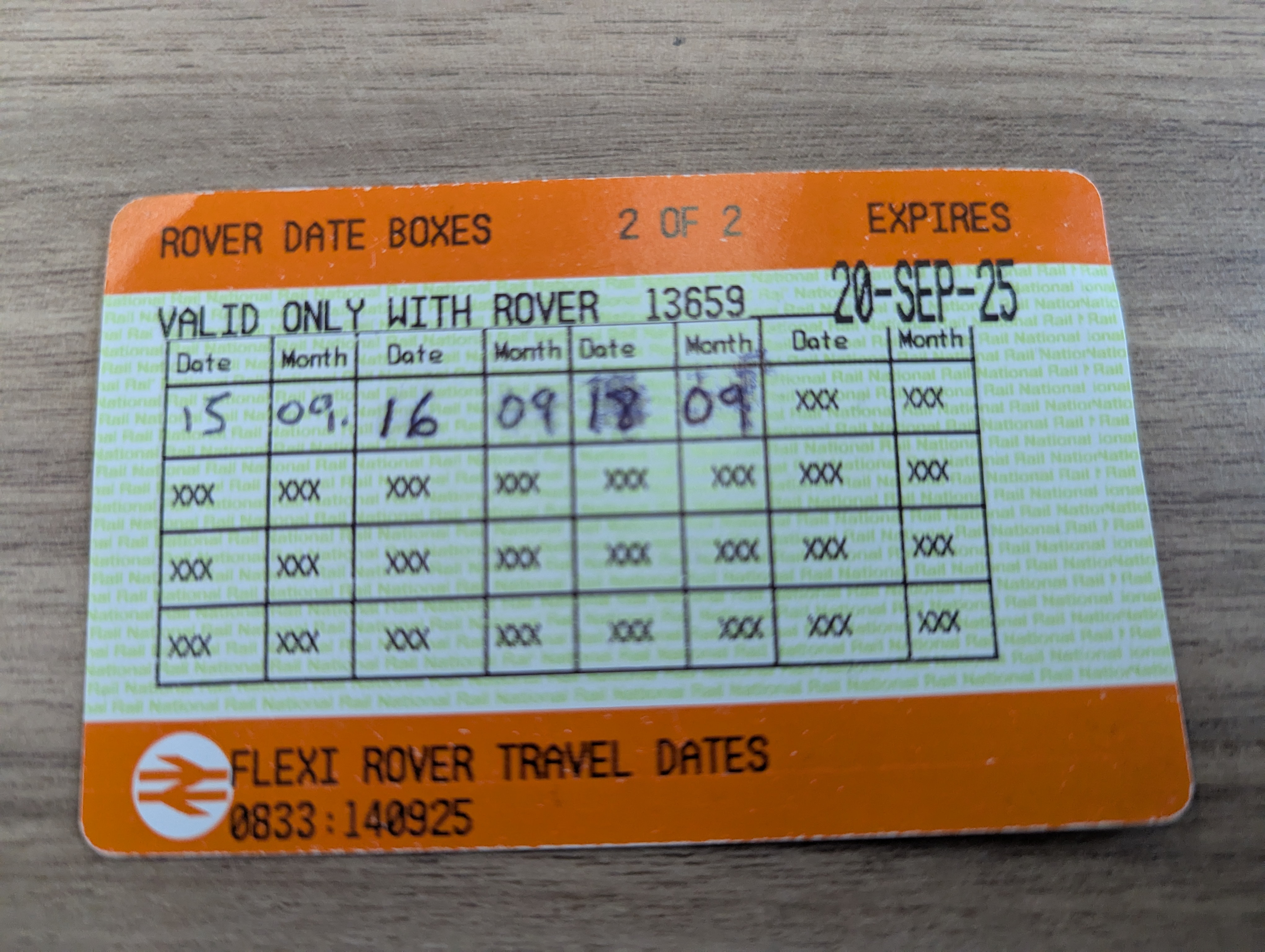
We had such a wonderful time in East Anglia on our last trip that, with four days between matches on this trip, we decided to spend some time in Kent. The regional train system is a bit different there from East Anglia. Instead of a pass you can use any three days over a seven-day period, you can buy a three-day pass. That worked well for us given the relatively shorter time we would have in Kent versus East Anglia.
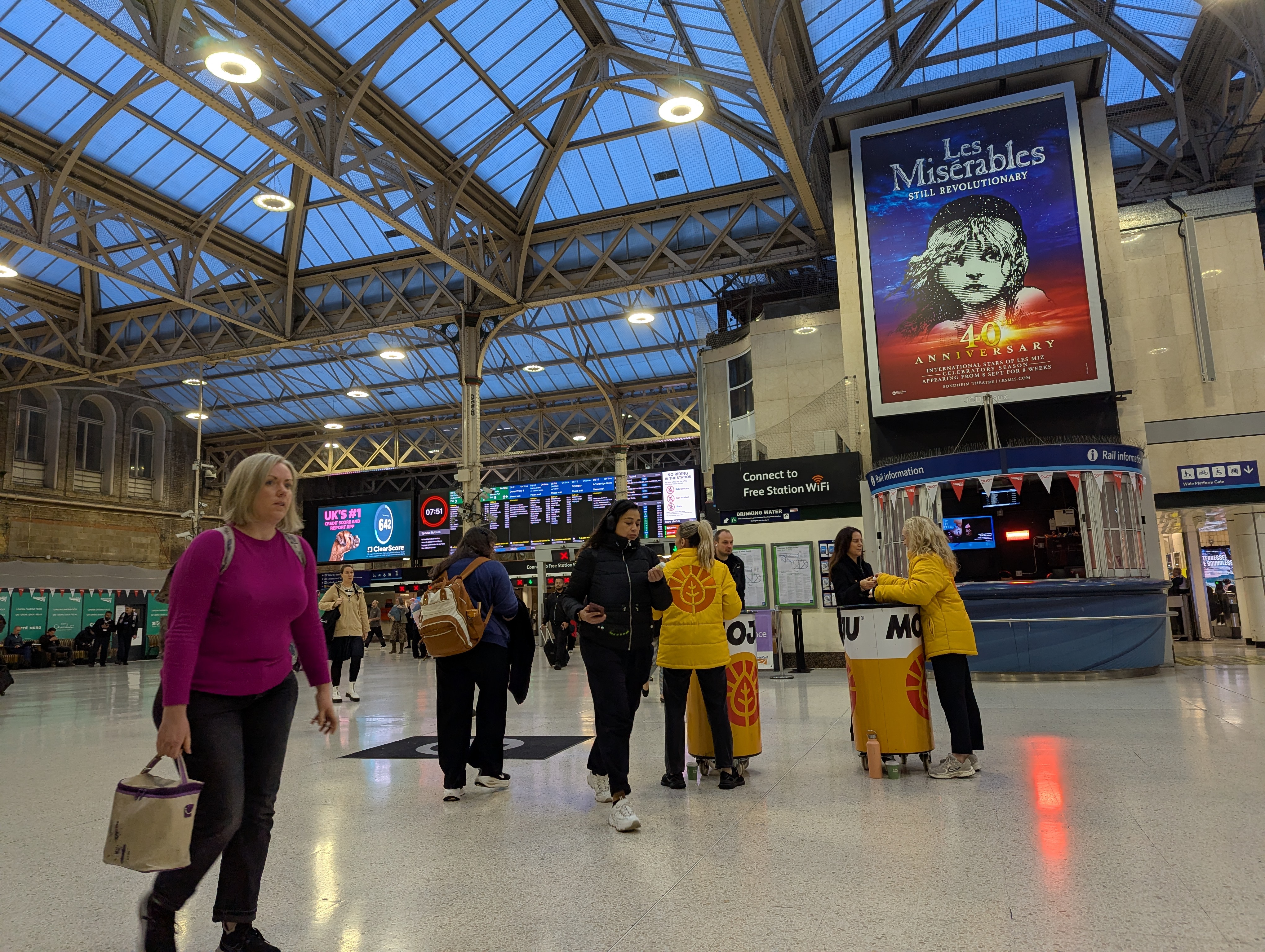
On Wednesday morning we got up relatively early to get on a train from Charing Cross. As we waited for the track the train would be on to be announced at Charing Cross, some workers were handing out samples for an immunity drink called Moju. In contrast with other samples I’ve seen handed out around London, this one seemed very popular with the arriving passengers. I saw very few decline the small bottle. My husband decided to give it a try. He was unimpressed. “Unimpressed” is the wrong word. He seems to think that rather than being given this spicy mango juice for free at the train station, people should be paid to drink it. Hopefully, he is now immune to whatever it is that Moju will guard against. After his critique, I decided to take my chances with the germs that be.

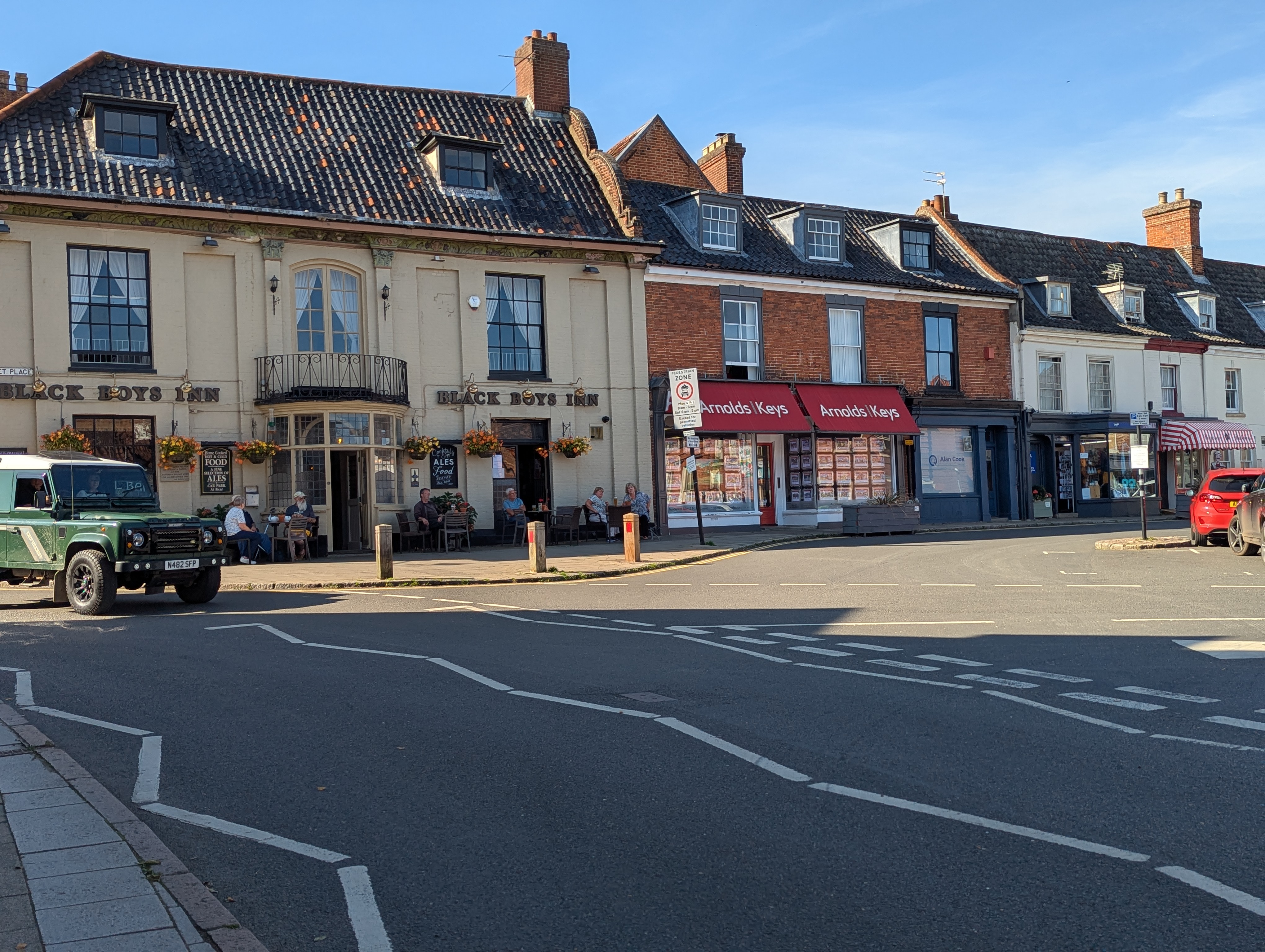
We ultimately boarded the train and rode to Swanly, changing again at Sevenoaks to ride the rest of the way to the Canterbury West station. The weather was brisk as we waited for the train changes and I was glad I had my hat and gloves.

We were expecting rain the next day, Thursday, so we designated Thursday as the day we would spend time in Canterbury. After arriving in Canterbury on Wednesday, it was our plan to drop our luggage off at our hotel, aBode Canterbury, grab a quick lunch, and then take the train to Sandwich.

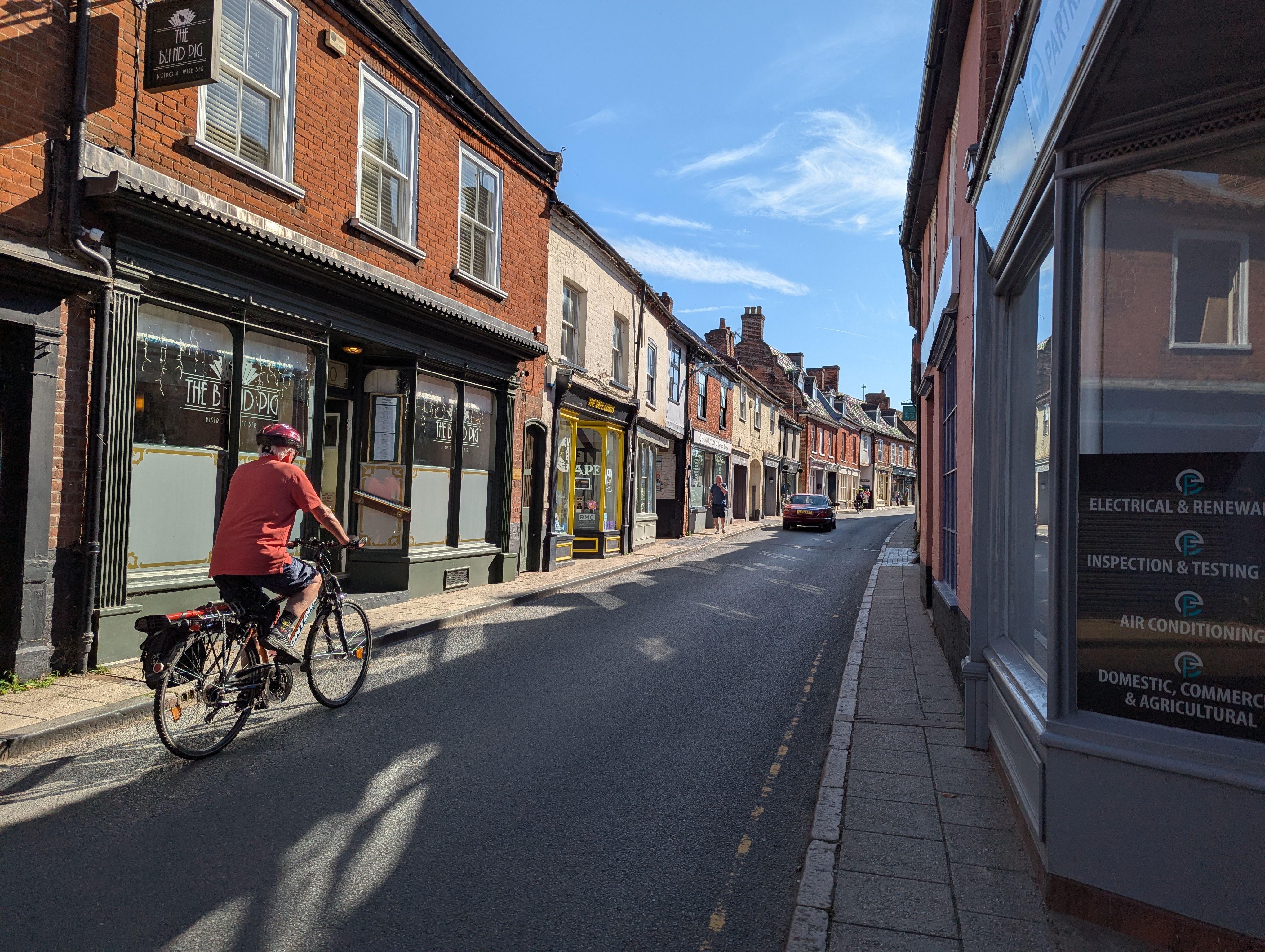
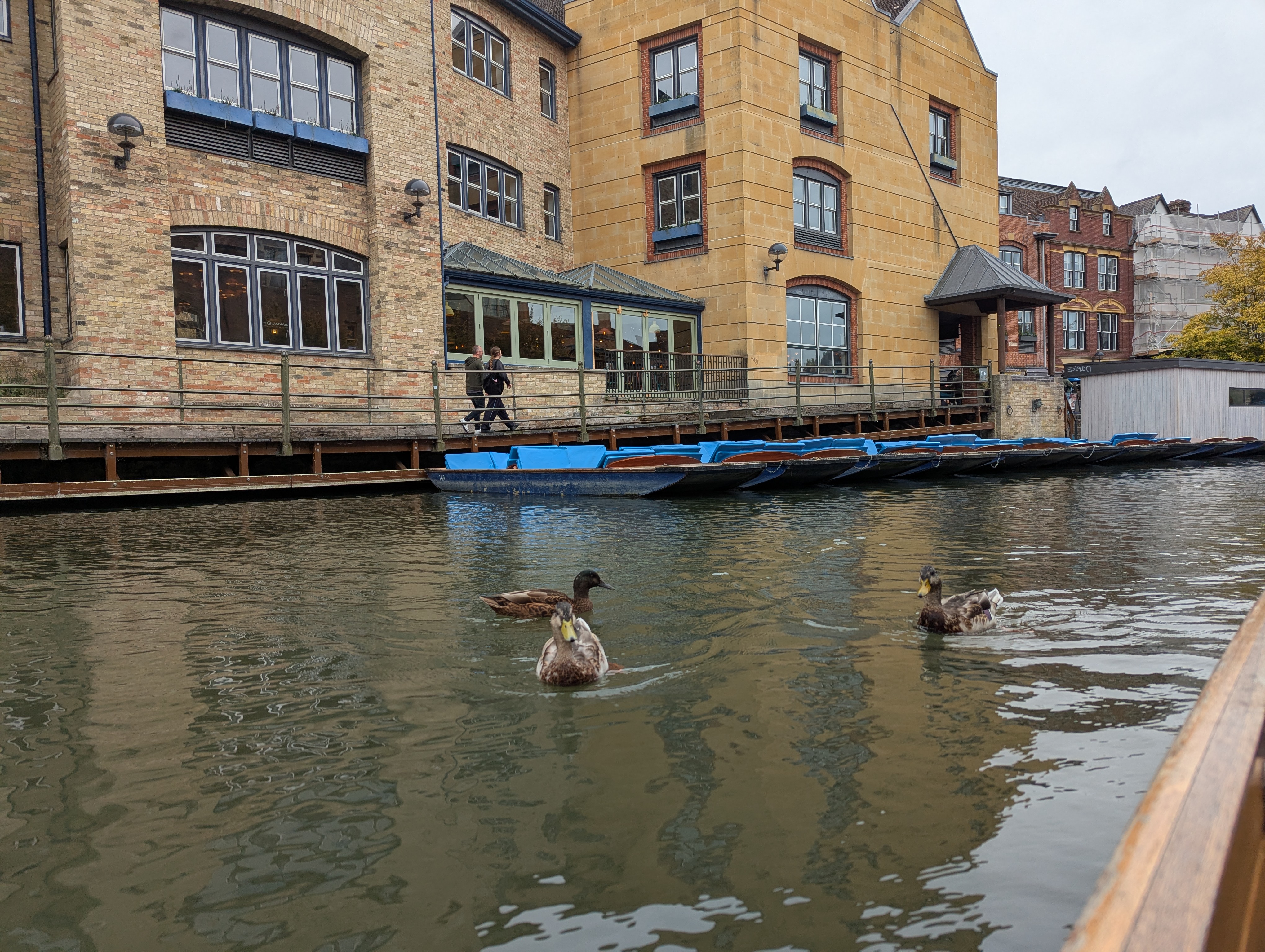
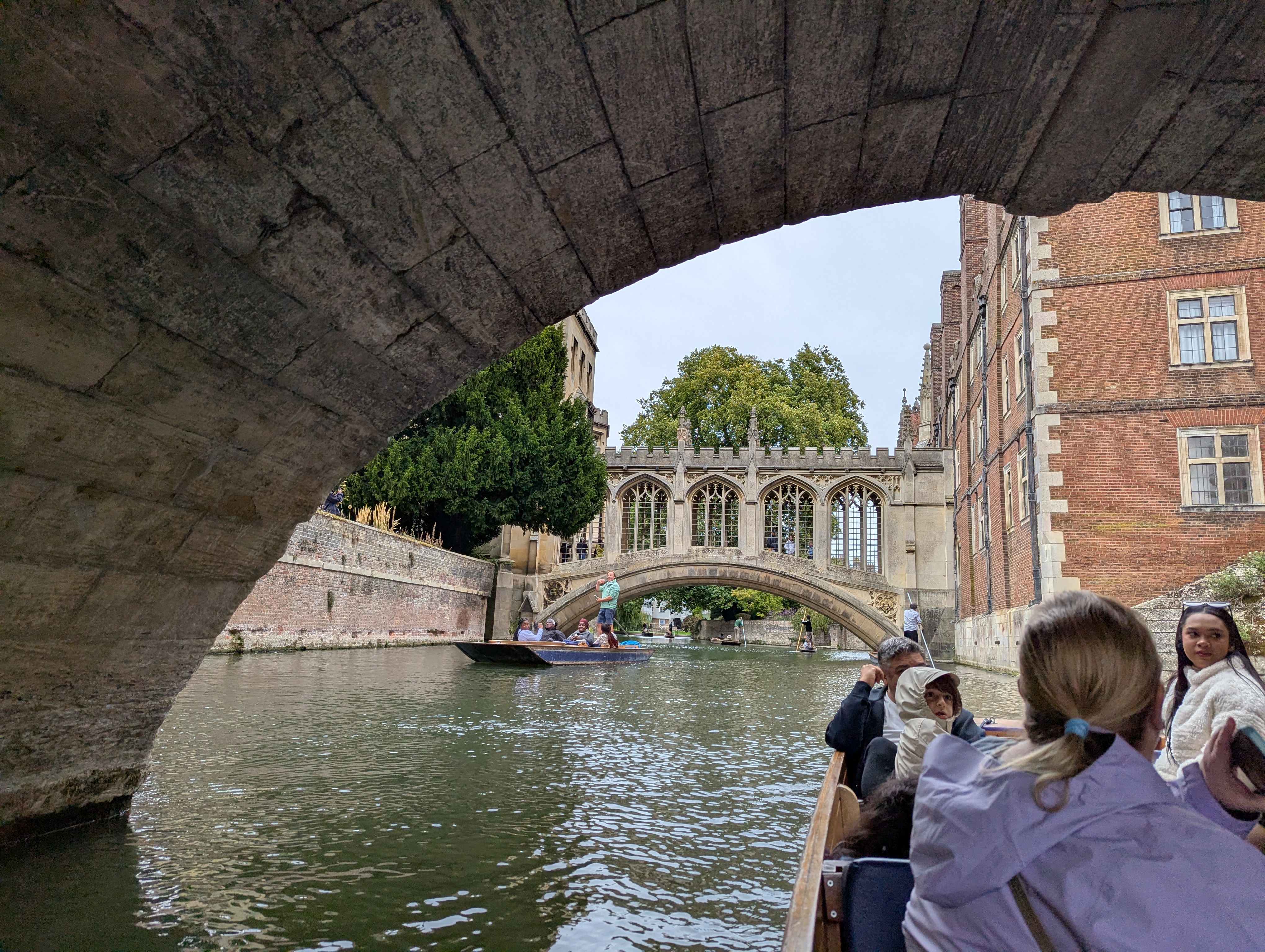
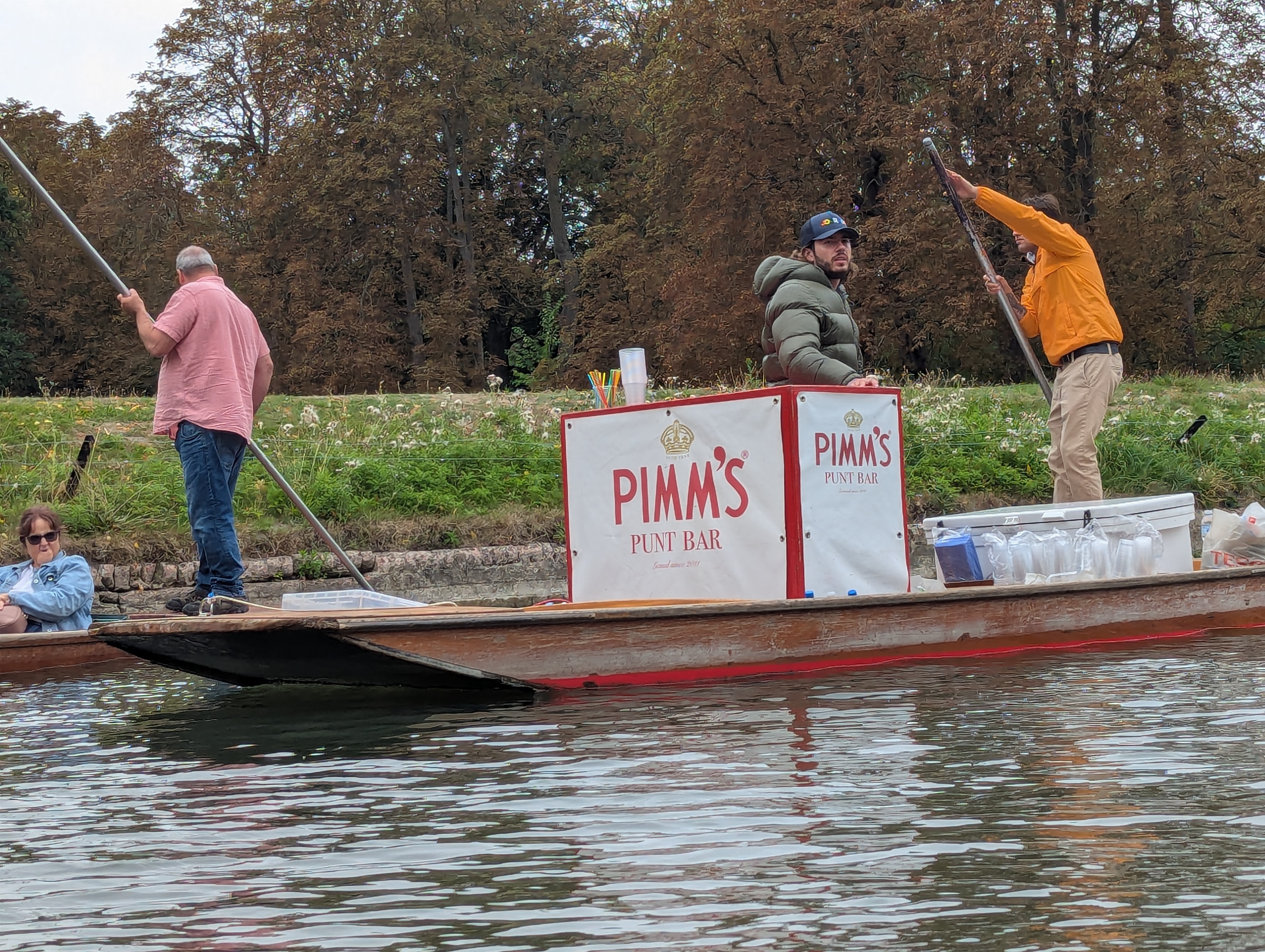
Canterbury city center is roughly in a circle, like Chicago’s Loop but a thousand times smaller. (That may not be a factual representation of scale.) aBode is on High street, which cuts the circle in half, quite well located. One of the things we noticed right away on our way to the hotel was signs for punt boat operators in Canterbury. Since we had just done that in Cambridge, it was not in our plans for this trip.
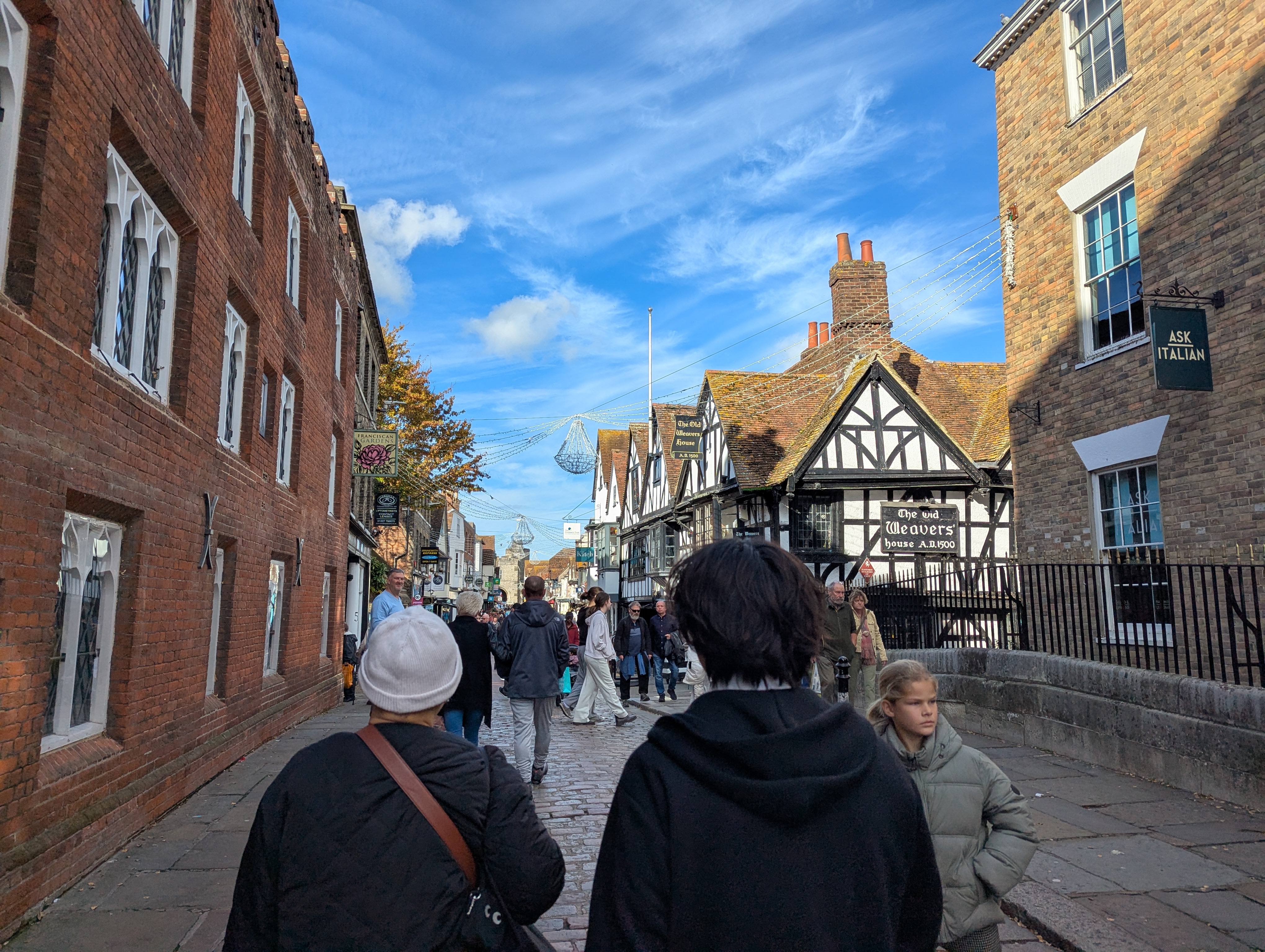
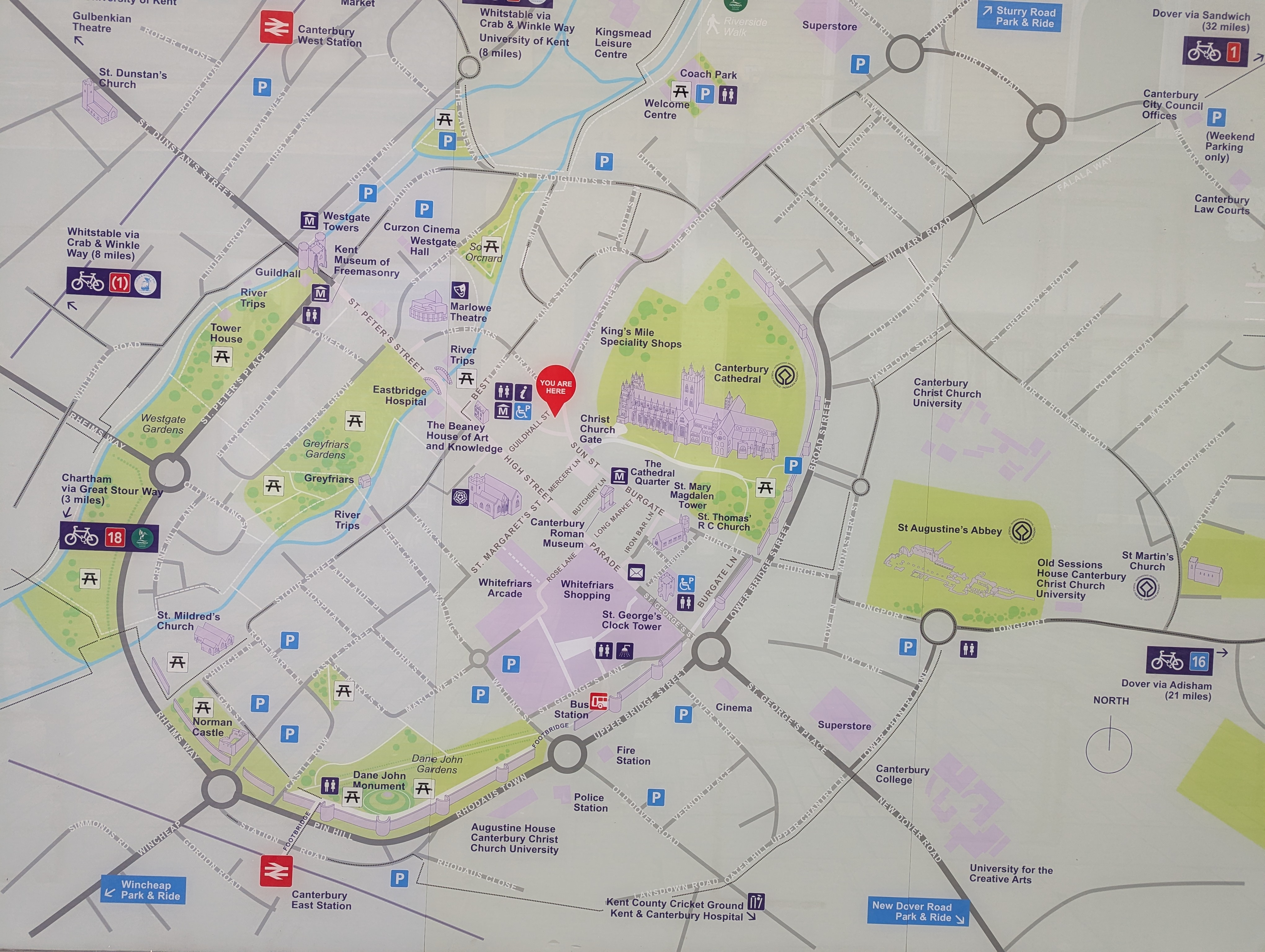
We completed all the steps of our actual plan, returning to the train station to get the next train to Sandwich. What he had planned to do in Sandwich was find the Saxon Shoreway trail that allows you to walk South along the coast for seven miles to a town called Deal.

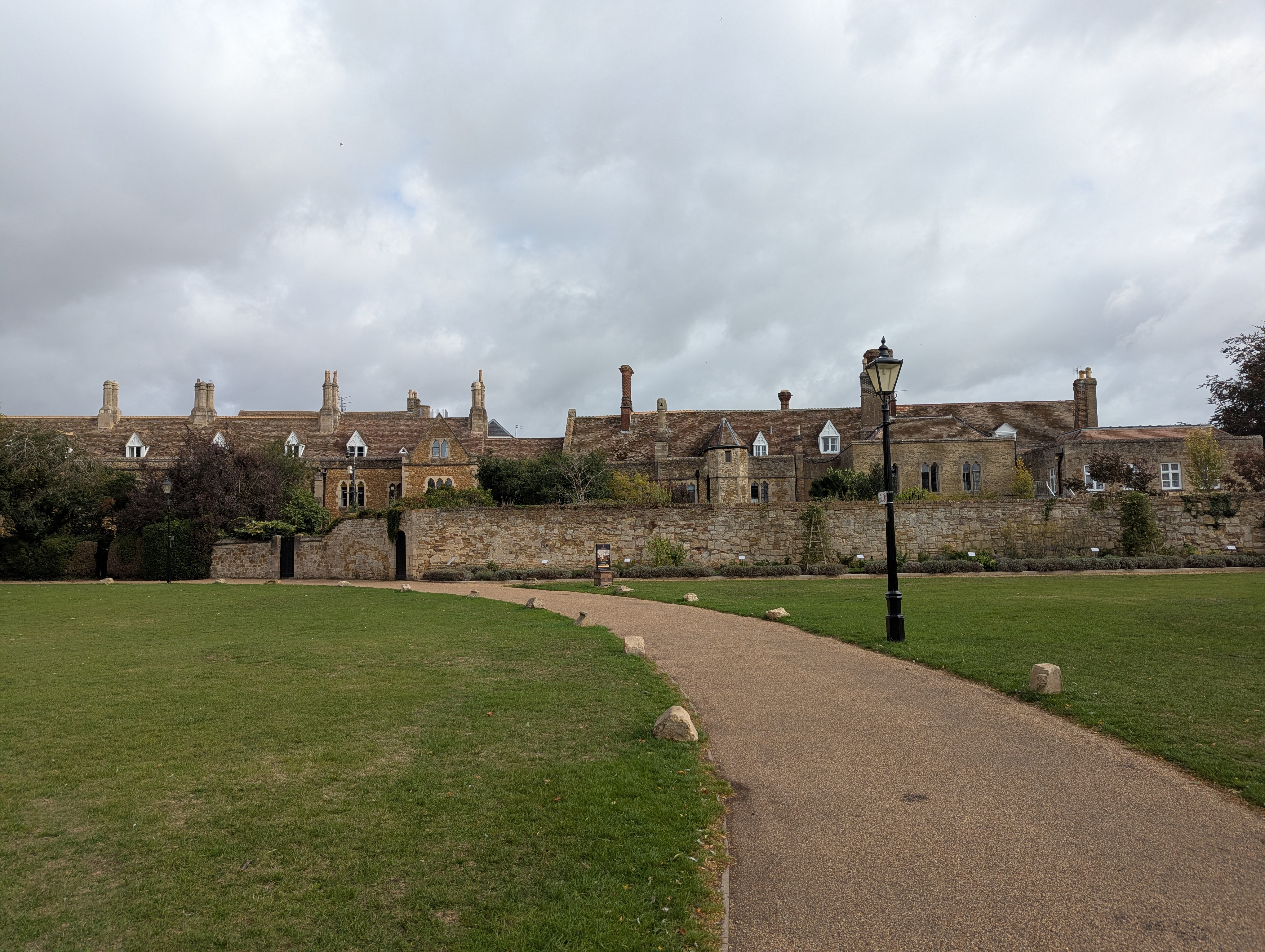
We successfully found the trail but took what I perceived as a detour on the part of the path that went through The Royal St. George’s Golf Club. I’m not a golfer, have golfed maybe three times in my life excluding the decidedly not-real golf activity of mini golf. My husband, on the other hand, is a prolific golfer and also loves to watch the sport. As an insomniac, I watch the sport when I desperately need to catch up on sleep. In retrospect, my husband was doing the navigating at this point, so I suspect the “detour” to the golf course was not quite as unplanned as I may have initially believed.
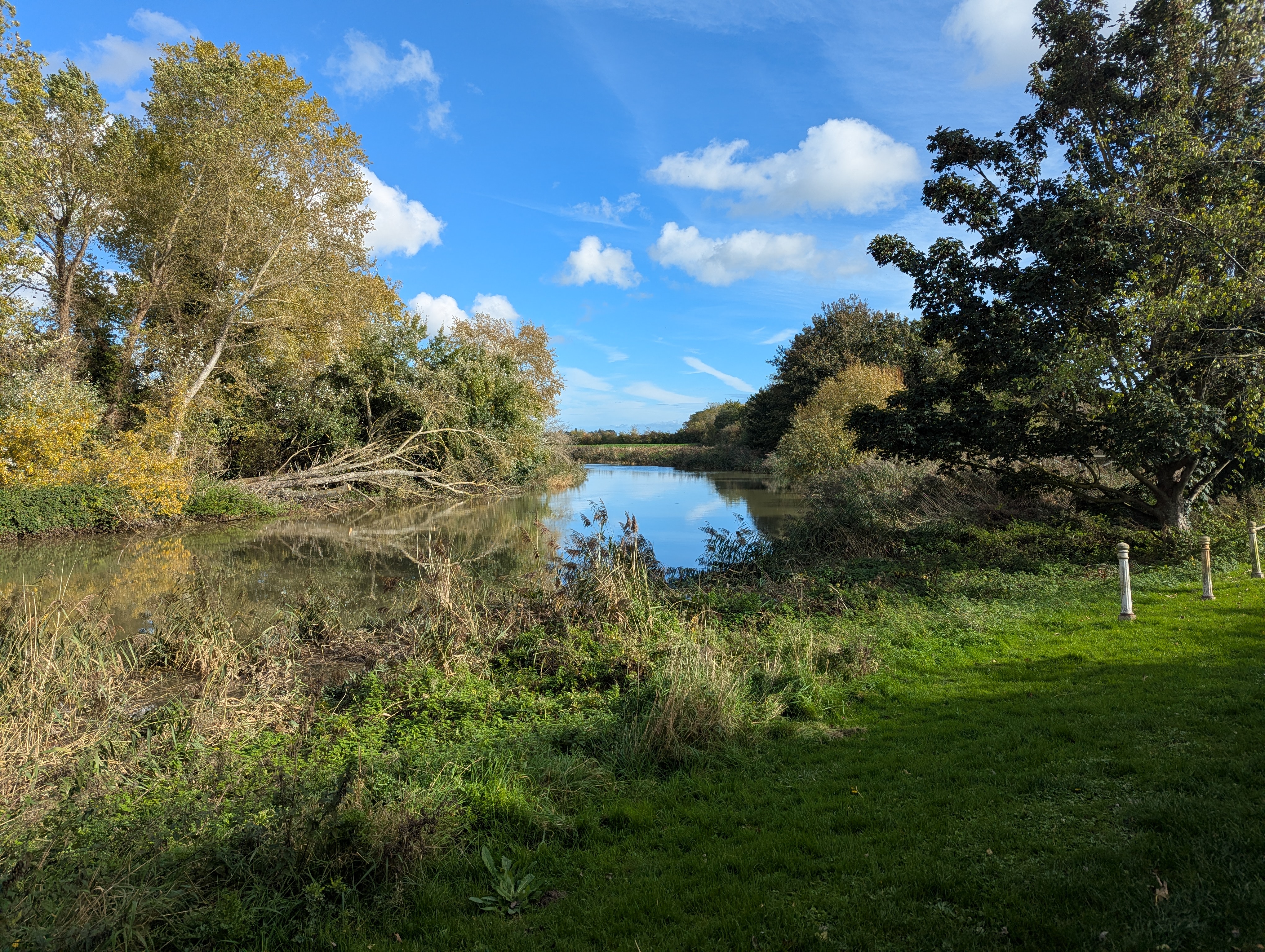
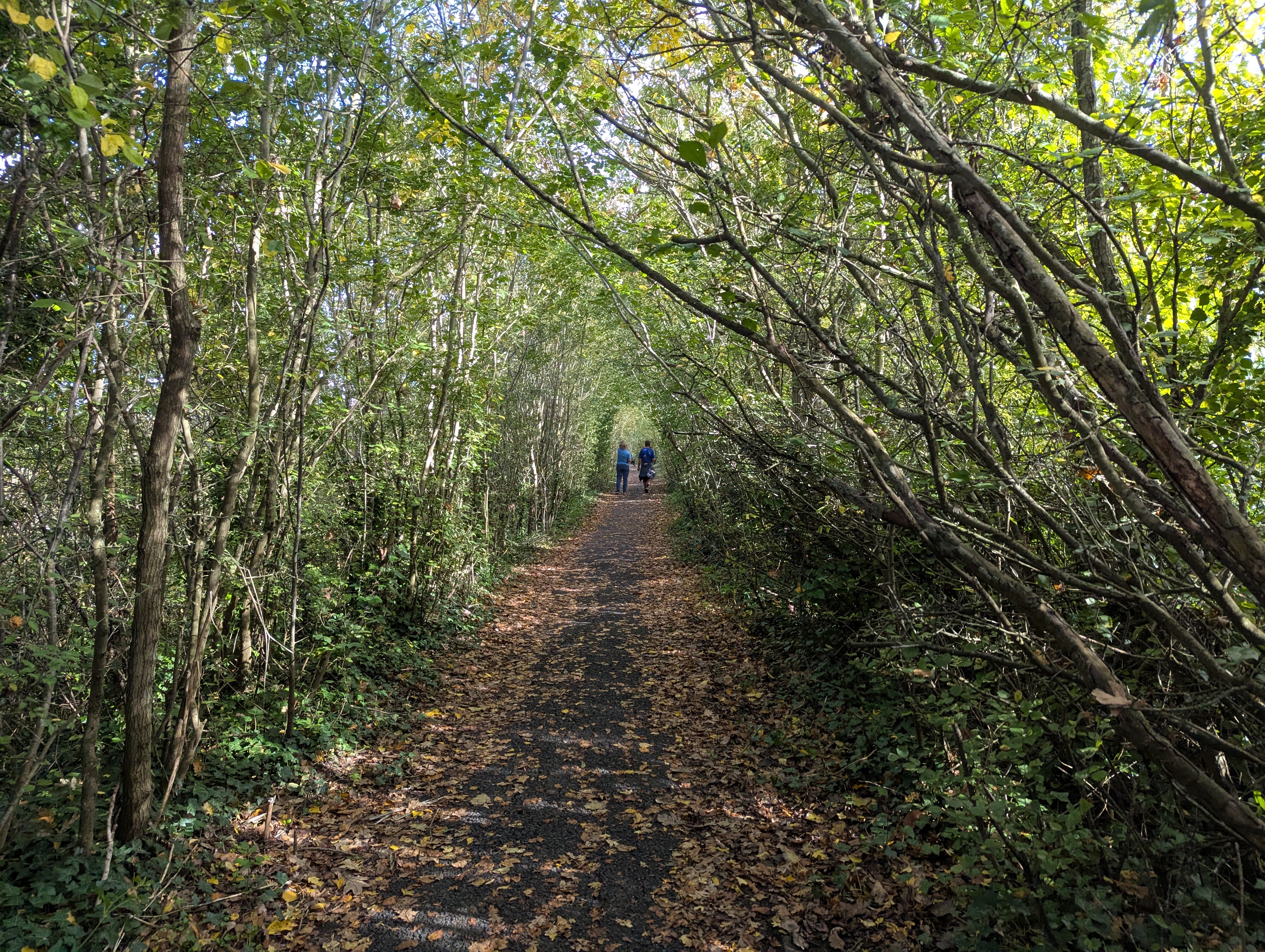
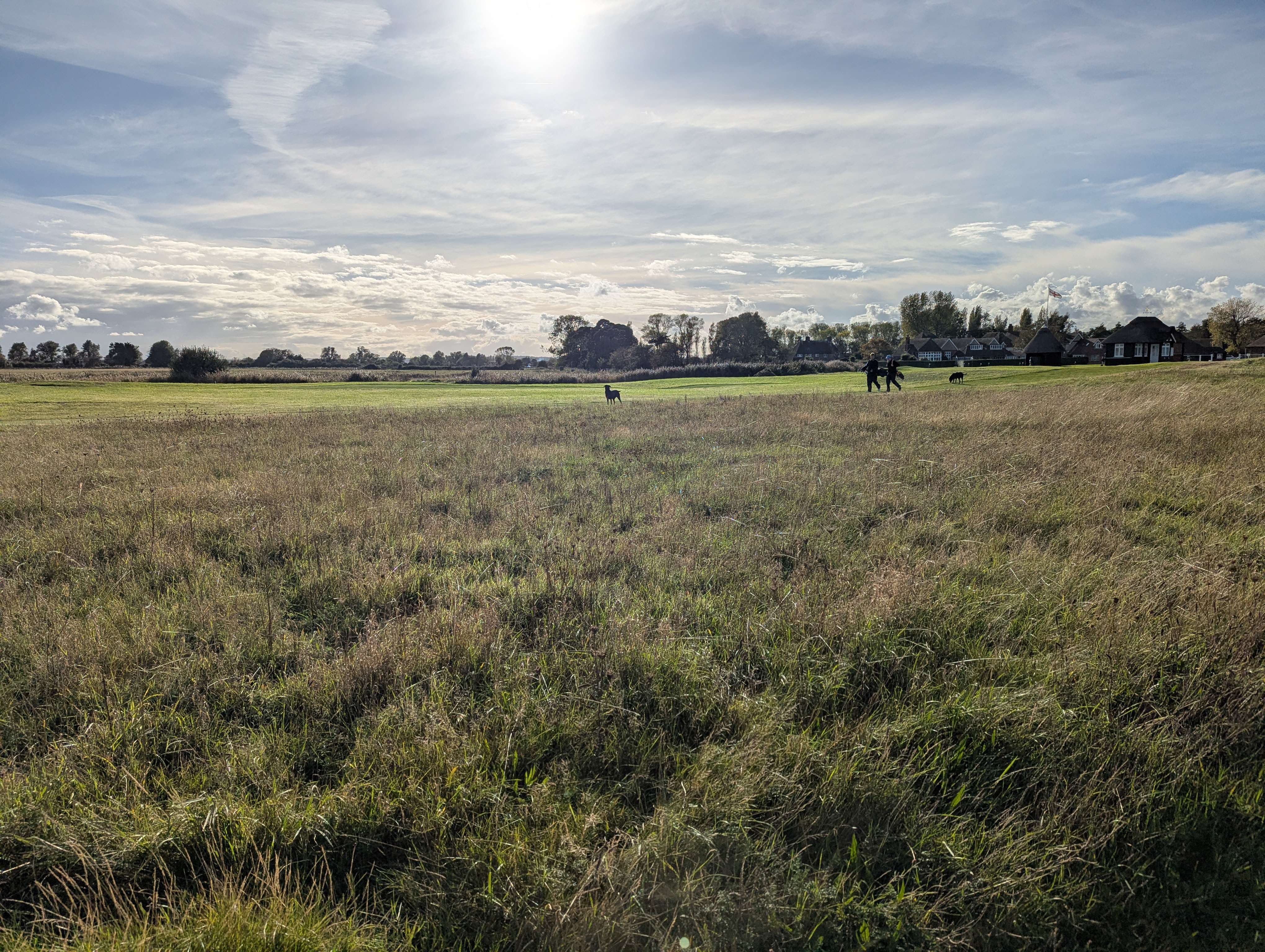
I think golfers and non-golfers can all agree that most golf courses are quite lovely places to be. As we arrived on the public foot path at the edge of the course, I could see that the Royal St. George’s was something special. Undulating hills, amazing shadowy bunkers, grassy roughs and the sun shining just so on all of it. The pubic foot path goes right through the course on its way to the Sandwich Bay. At the edge of the course we stopped in the Pro shop which was open to the public and my husband reviewed some gaudy shirts, which he appeared not to be tempted to buy. Then we followed the path over the course and across the street to the Bay.

I gave my husband a chance to review this before I published it and it was very important to him that I make sure you understand that this course was the host of 15 British Opens and that he merely hoped to be able to see it from the path. The fact that he got to walk across this hallowed ground was both a surprise and a life experience he treasures.
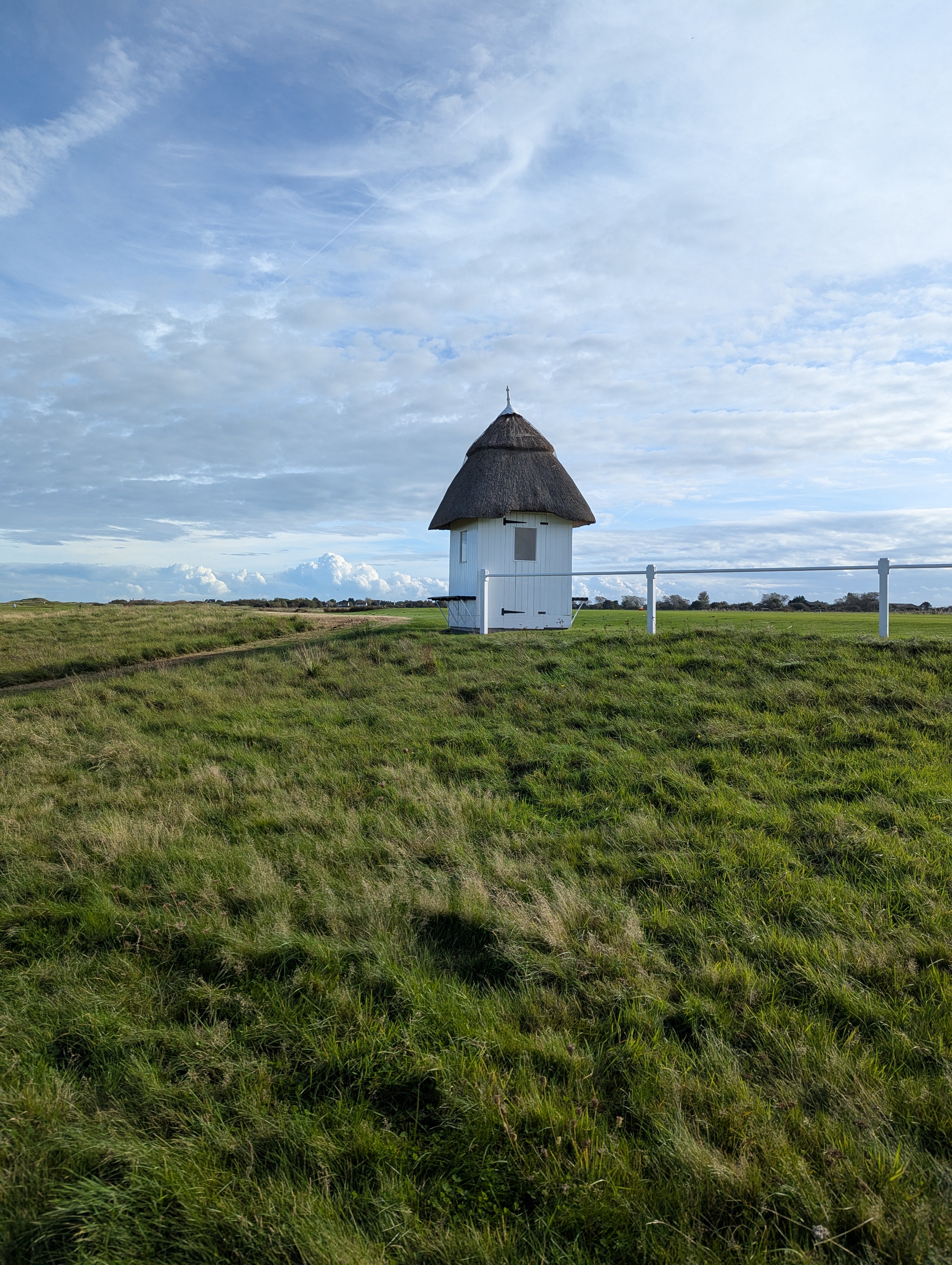
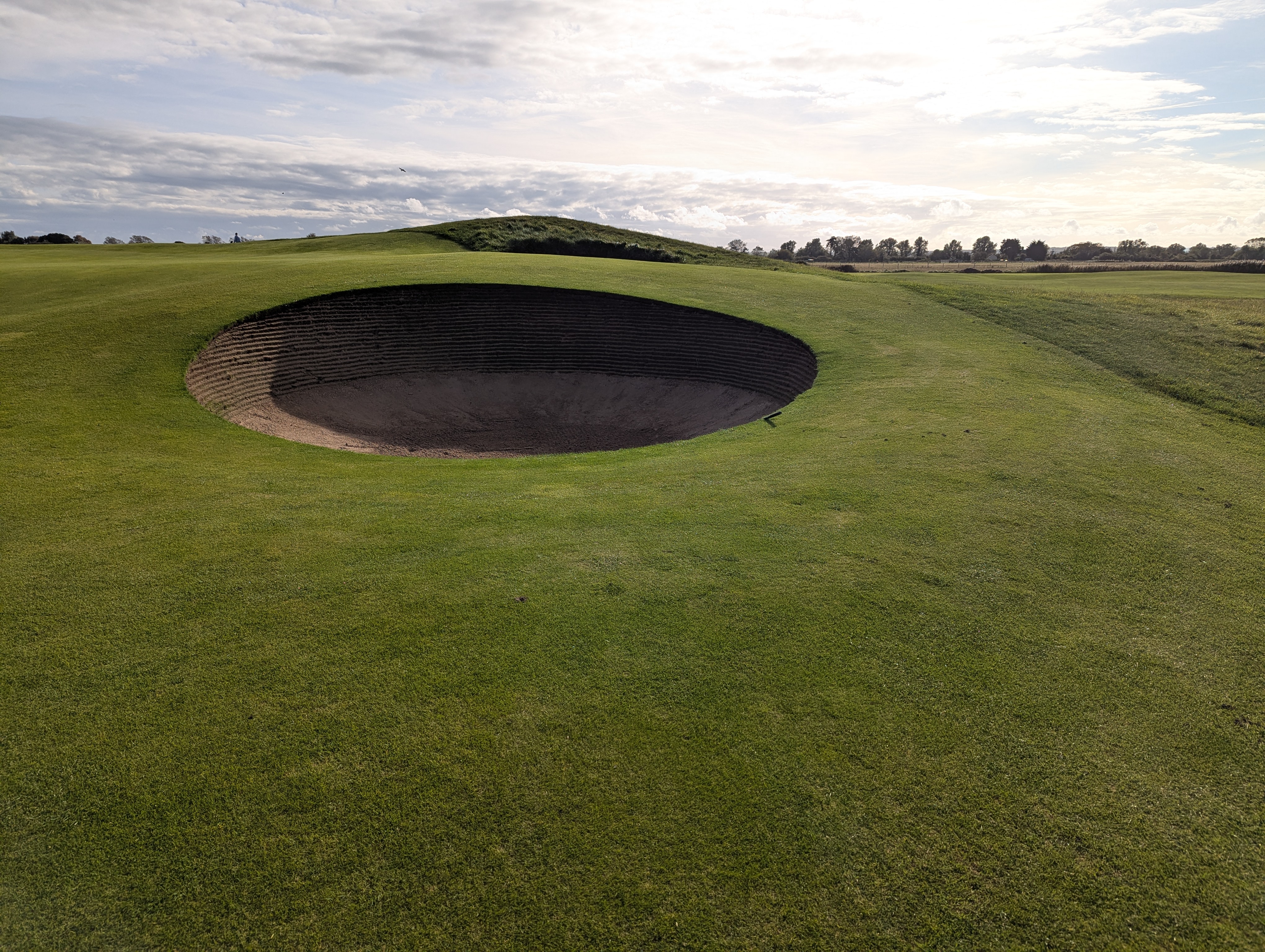
By the time we reached the bay we had hiked quite a long way and I was ready to find a bathroom. We had seen no bathroom options since leaving the train and there clearly were none along the path to Deal. It was also getting to be a bit late to start a big hike and we suspected it might be dark before we arrived in Deal. So we made a decision to turn back toward town and see what there was to see in Sandwich.

As we left the golf course we saw two golfers starting a round with their dogs. What a place to walk your dog.

In Sandwich we stopped at the lovely Bell Hotel near the water and had a drink and an early dinner on the porch. I had wild mushrooms on toast and a tomato pepper soup along with a gin & tonic.
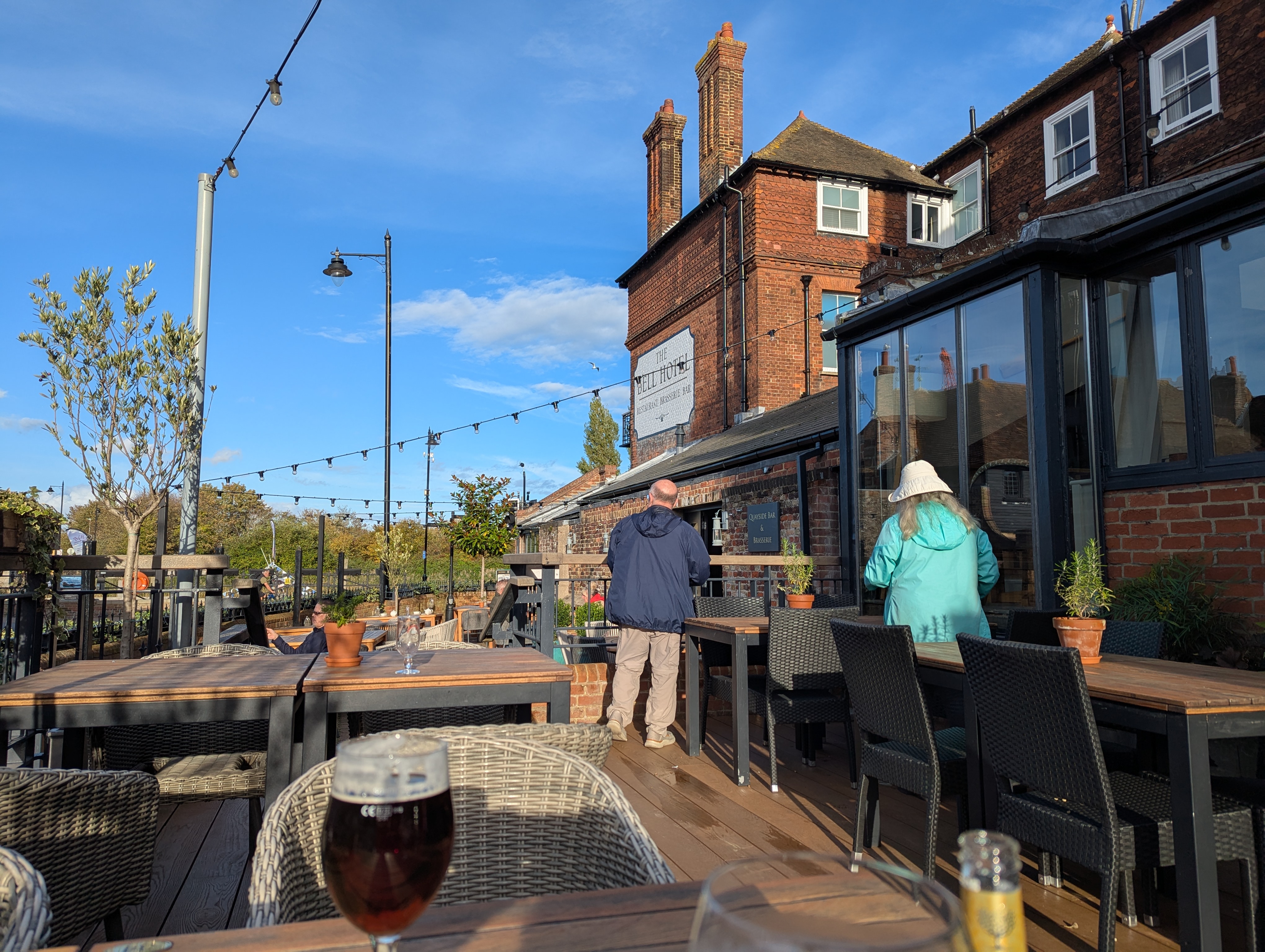
While the patio was bathed in sun, it was lovely. As the sun went down, a cloud of mosquitoes emerged so we closed shop and headed to the train station. Even the train station, which was pretty far from the water, had a lot of mosquitoes. We kept moving up and down the platform until the train came to avoid them.

Upon arriving back in Canterbury we were able to check into our room. The backstory of our hotel selection in Canterbury was that after we returned from our last London trip, the one in which we traveled through East Anglia, my husband did something he had never done following a trip to London. He counted up every expenditure we had made and worried about it. Not having a paycheck coming in has been a real mental challenge for him and, in a life that did not include me, I think he’d be tempted to live on his Social Security check.

As I mentioned before, my job before I was retired was helping my employer create financial planning software for planners employed by our firm. The software could complete a monte carlo analysis to understand, based on assets and likely expenditures, what is the probability you’ll have enough money to live on for the rest of your life. I used software many times to run our own projections. To be clear, I have some guilt about using money in this way in a world that has so many needs, but I know we can afford these trips for a while. It would be ideal and better for our financial future if Arsenal could just go ahead and win the Premier League this year.

In any case, I realized that the hotel price point we originally set when we started this going-to-London-to-watch-Arsenal thing had slid upward a bit over time, maybe more than inflation would suggest, and it’s been a long time since we had anything but a great hotel experience. To give my husband greater peace of mind, I suggested that we could downgrade our preferred price point and save a bit there and take a bit more risk that maybe every place we stay is not delightful. So this trip, that’s what we tried to do. We could not do it for the first weekend in London–hotels were just too tight due to what seemed to be Diwali celebrations and a literature convention–but we did it for our hotel in Canterbury and for our hotel after our return to London.
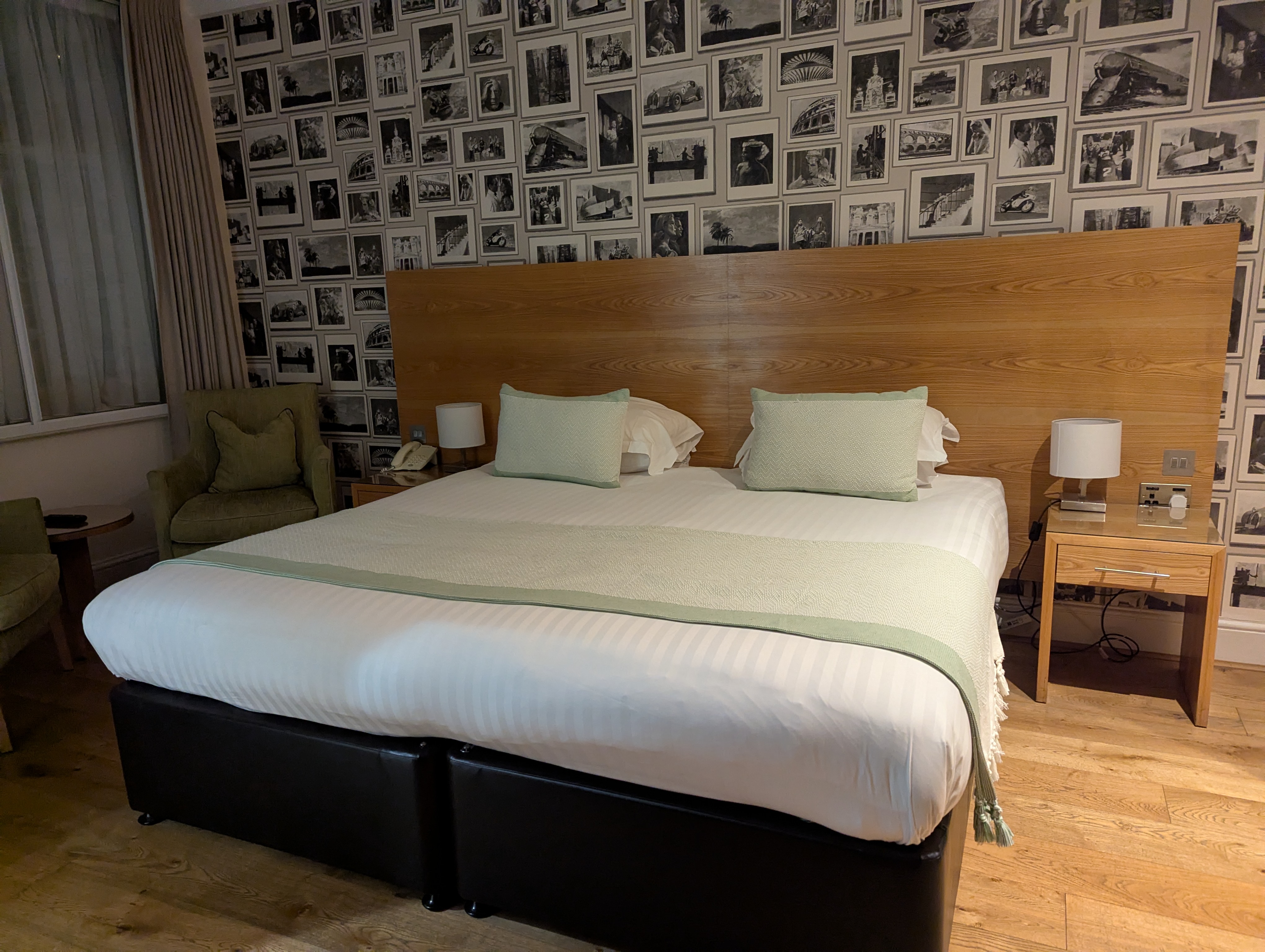
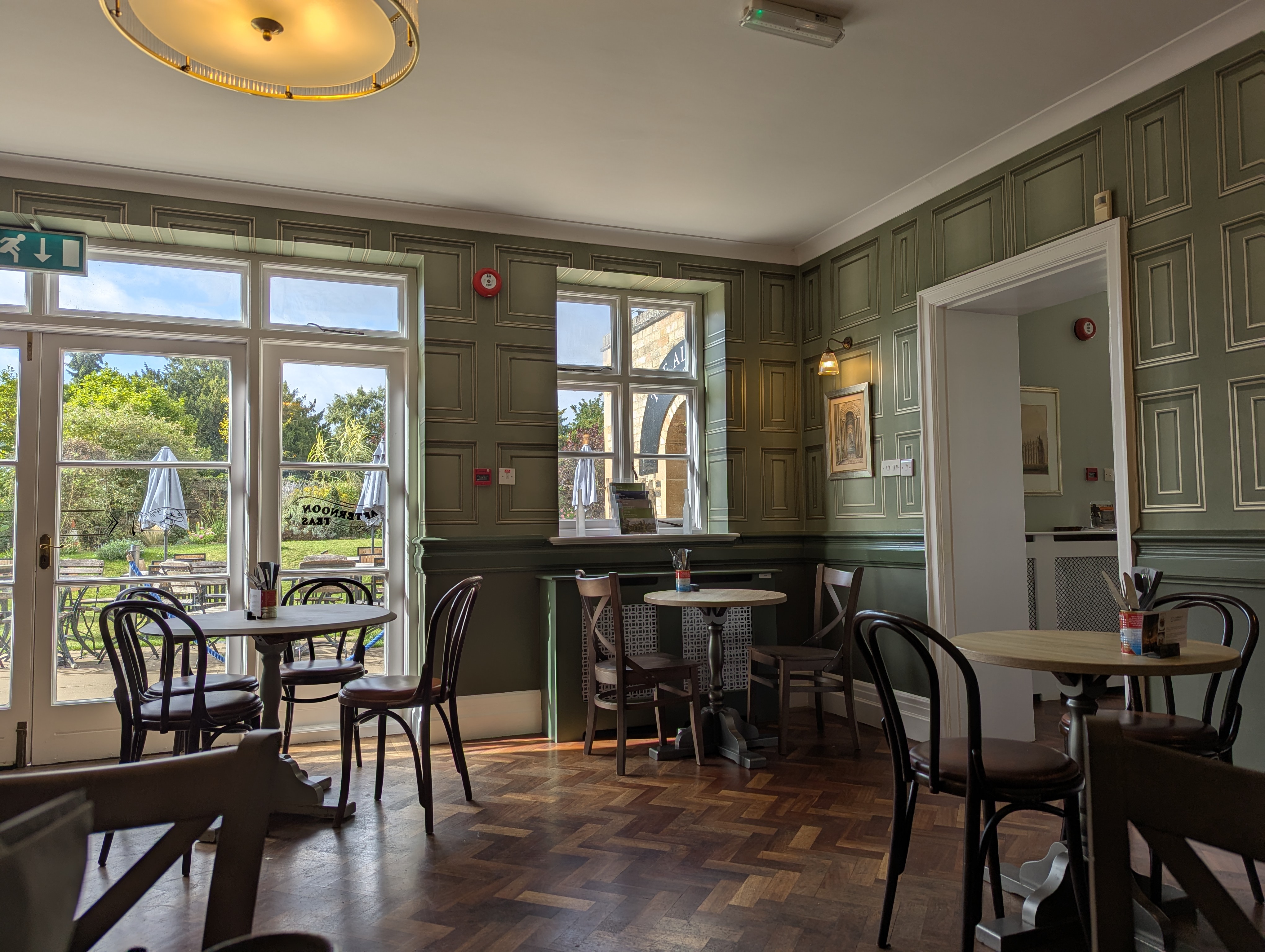
And on this backdrop, I can tell you our hotel in Canterbury was maybe not the luxe experience that you long to reach at the end of the day but was just fine. Our room was spacious, had wooden floors which I like, and nice lighting that made it appear to have more character than maybe it actually had. The bathroom was fine and had a combined shower/tub combo. It had a very functional towel warmer that like all towel warmers, it seems, was not quite close enough for you to be able to reach from the tub. You have to either remove it first and place it closer (no longer warm) or not remove it before your shower and stand dripping on the floor to retrieve it (beautifully warm). Or, what I did at the aBode, call my husband to deliver it. This warm towel became especially important, as I’ll explain.

But first, some context. On the train ride to Canterbury we had been reading in sports news that on the day before the match we had just seen, Atletico Madrid had held a practice at the Emirates. Upon arriving they noticed that the hot water was not functional in the visitors’ locker rooms and had complained to the club. They ended up having to shower back at their hotel and made an official complaint against Arsenal. Arsenal was ultimately forced to apologize. Arsenal’s side of the story was that upon learning the hot water was not working they managed to restore it before the end of the scheduled practice, but Atletico had ended their practice early. Both an excuse and maybe a bit of shade against the team Arsenal just beat. Maybe practice a bit longer and you’ll have both hot water and a win.

In any case, when I woke up on Thursday my husband informed me I was about to get a lesson in empathy. Our room, which had very warm towels available assuming appropriate steps were taken, had no hot water.

London autumn

Fall has always been my favorite season. Cool, crisp days. Red and yellow leaves. Apple pie. I feel melancholy in Fall–an end is near–but for some reason I like that.

This Fall hasn’t much happened in Chicago. It’s been warm, sunny and while some leaves have dropped, they’ve mostly just dropped brown. While I hoped that was an anomaly, it seems Fall is delayed in London as well. Not much going on in the Fall leaves department although I can confirm that the days are cool. Wet and rainy as well. Not that that is necessarily a Fall thing. It’s kind of a London thing.

Hotels were in short supply for this trip and we ended up getting one in the Kensington area. My husband has never loved that area. In his mind, there are more interesting neighborhoods. After staying there once many years ago, we’ve never been back. A very nice thing about Kensington is that it’s closer to Heathrow than some of the other places we’ve stayed so a very quick trip in and out. It’s on the Piccadilly tube line so you can go straight to The Emirates without the crazy switch at Kings Cross St. Pancras where hundreds of Arsenal supporters are stacked up trying to change trains. It’s also kind of quiet and relaxing. There are many restaurant options without the hustle and bustle. In short, perhaps worthy of reconsideration for hotel selection.

Anyway, we found ourselves back in London on Monday for a Tuesday match. Our flight arrived after noon on and a driving rain was visible out the windows at Heathrow.

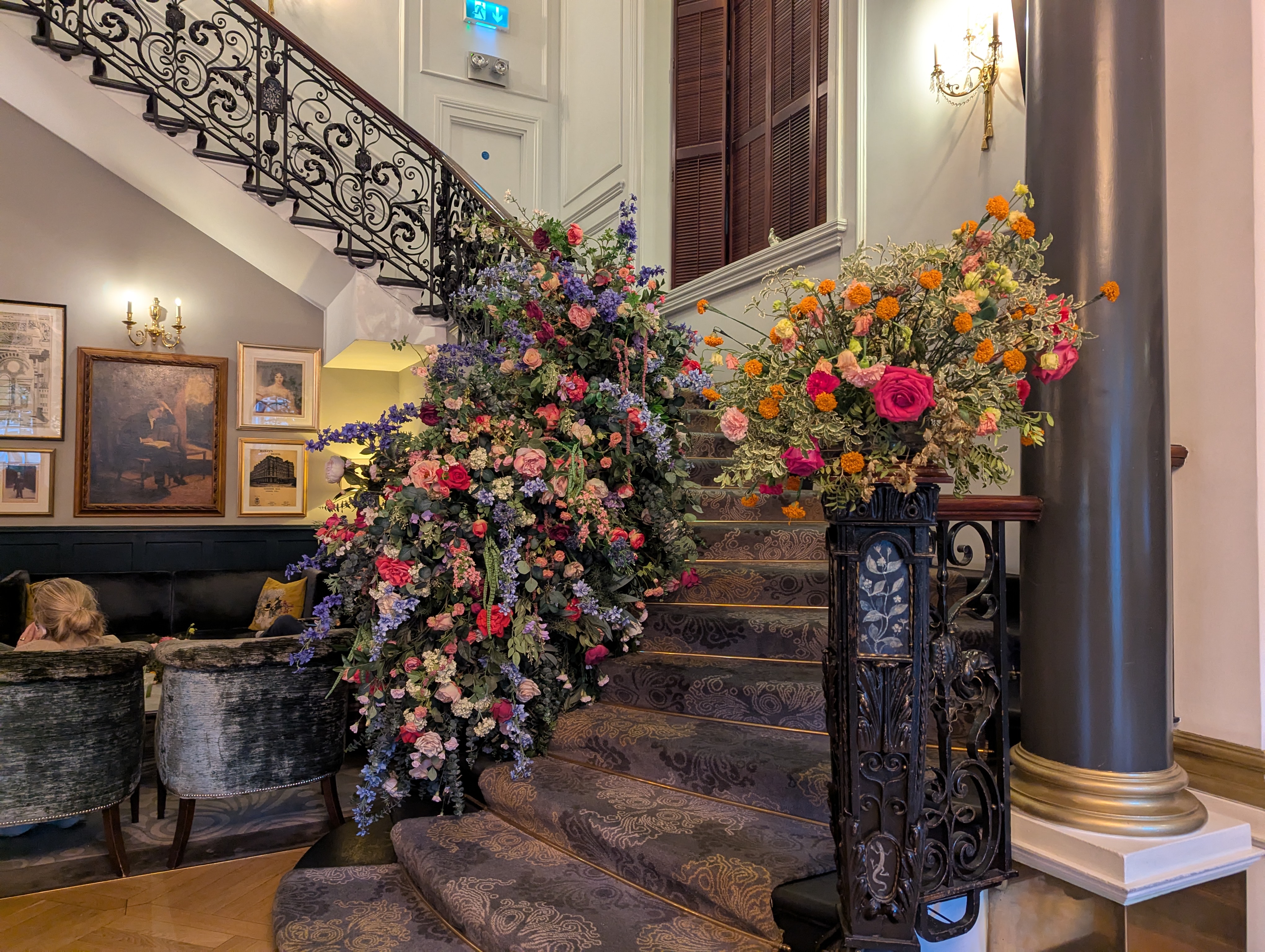
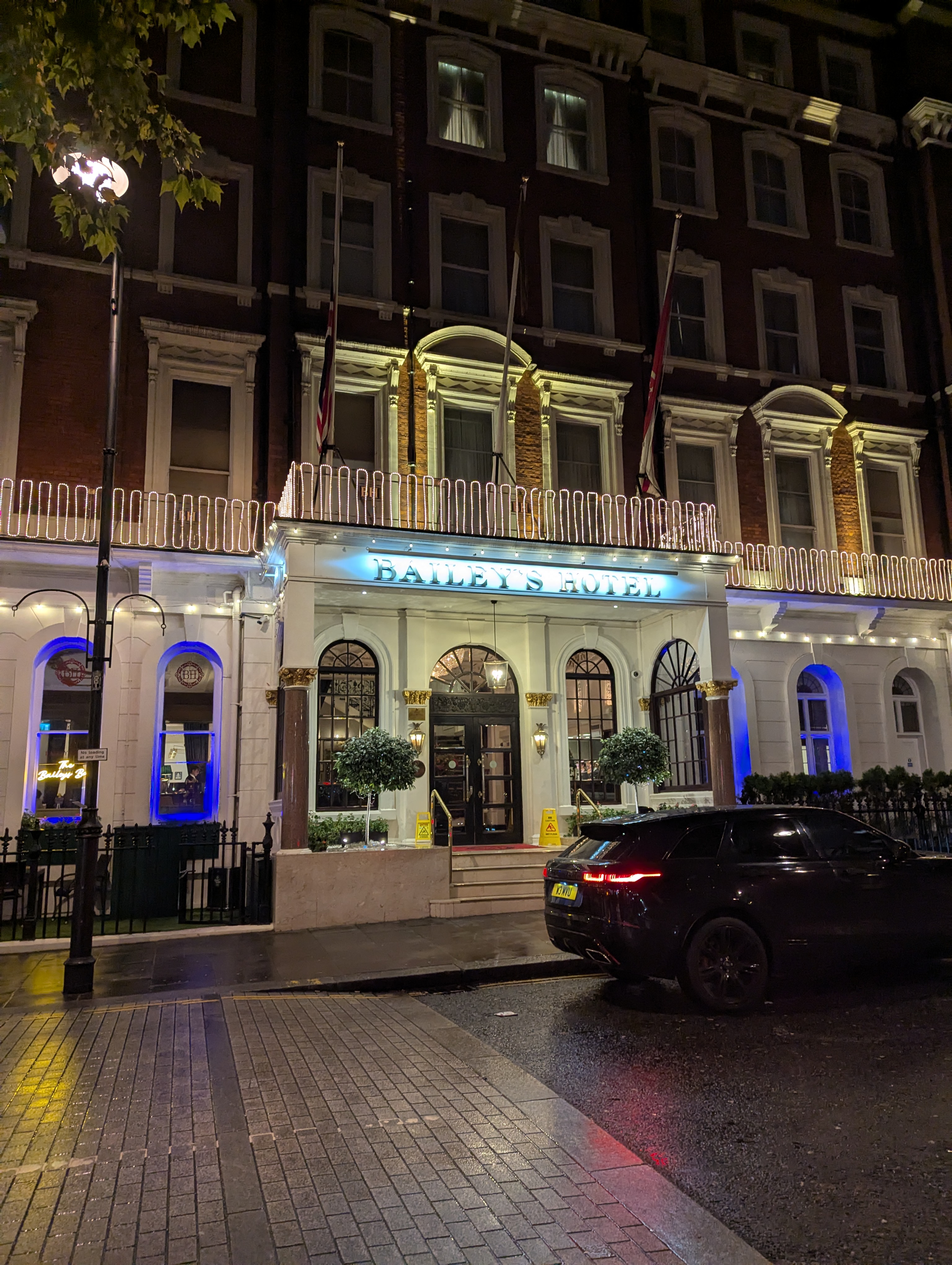
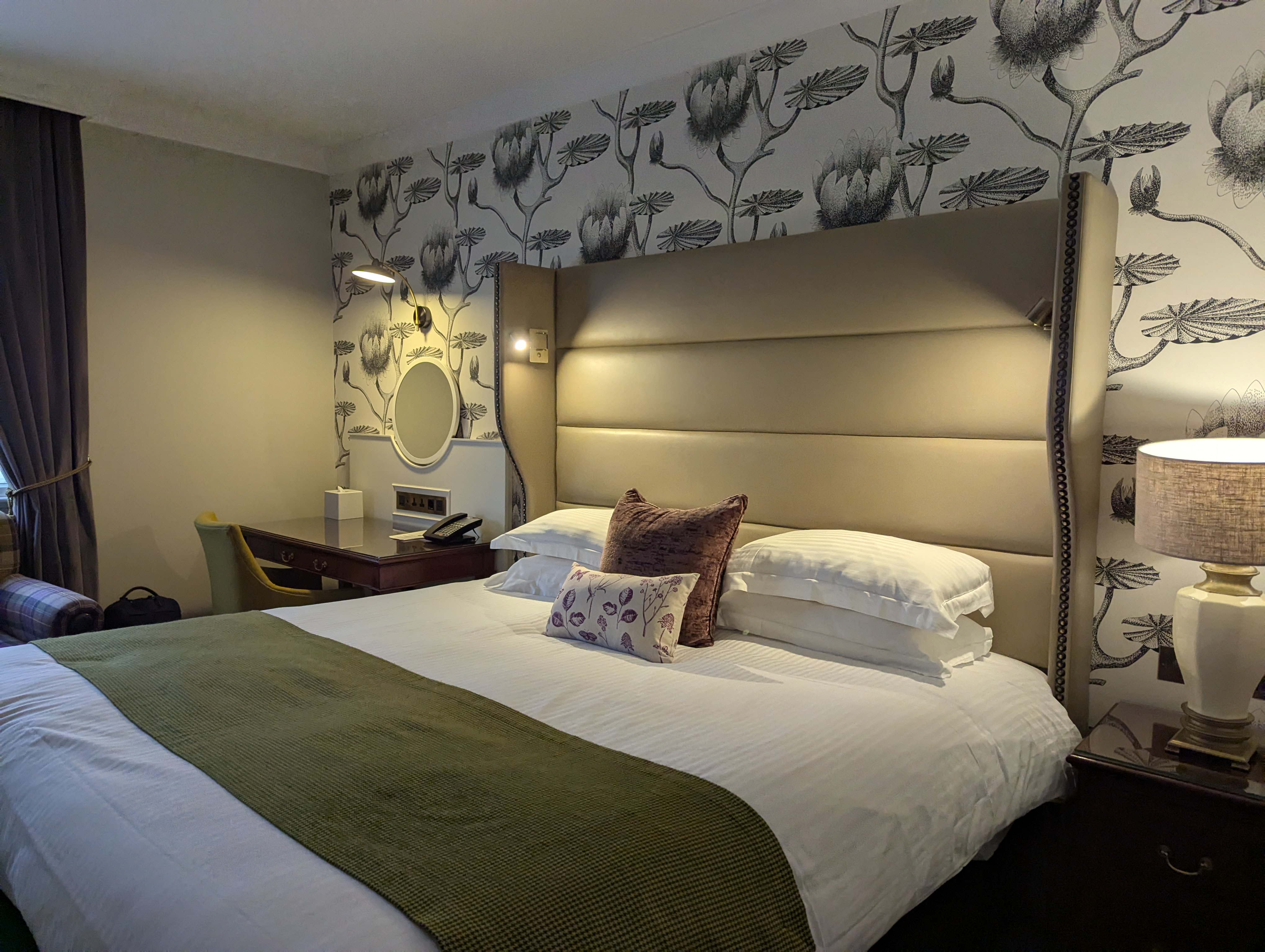
A big advantage of the hotel we chose this time, The Bailey’s, is that it’s across the street from the Gloucester Road tube station. I really appreciated not being out in that rain for more than a street crossing, even with my knee-length rain coat. It’s also kind of a quintessential charming, old London hotel. Small, pretty rooms with character. This hilarious stuffed cat decor in the lobby.
We got settled in our room and went out to get lunch at the Hereford Arms. We’ve been to this pub before. It’s always good. And, for my husband, they have the London Pride beer he enjoys. I enjoyed one, too, this time.

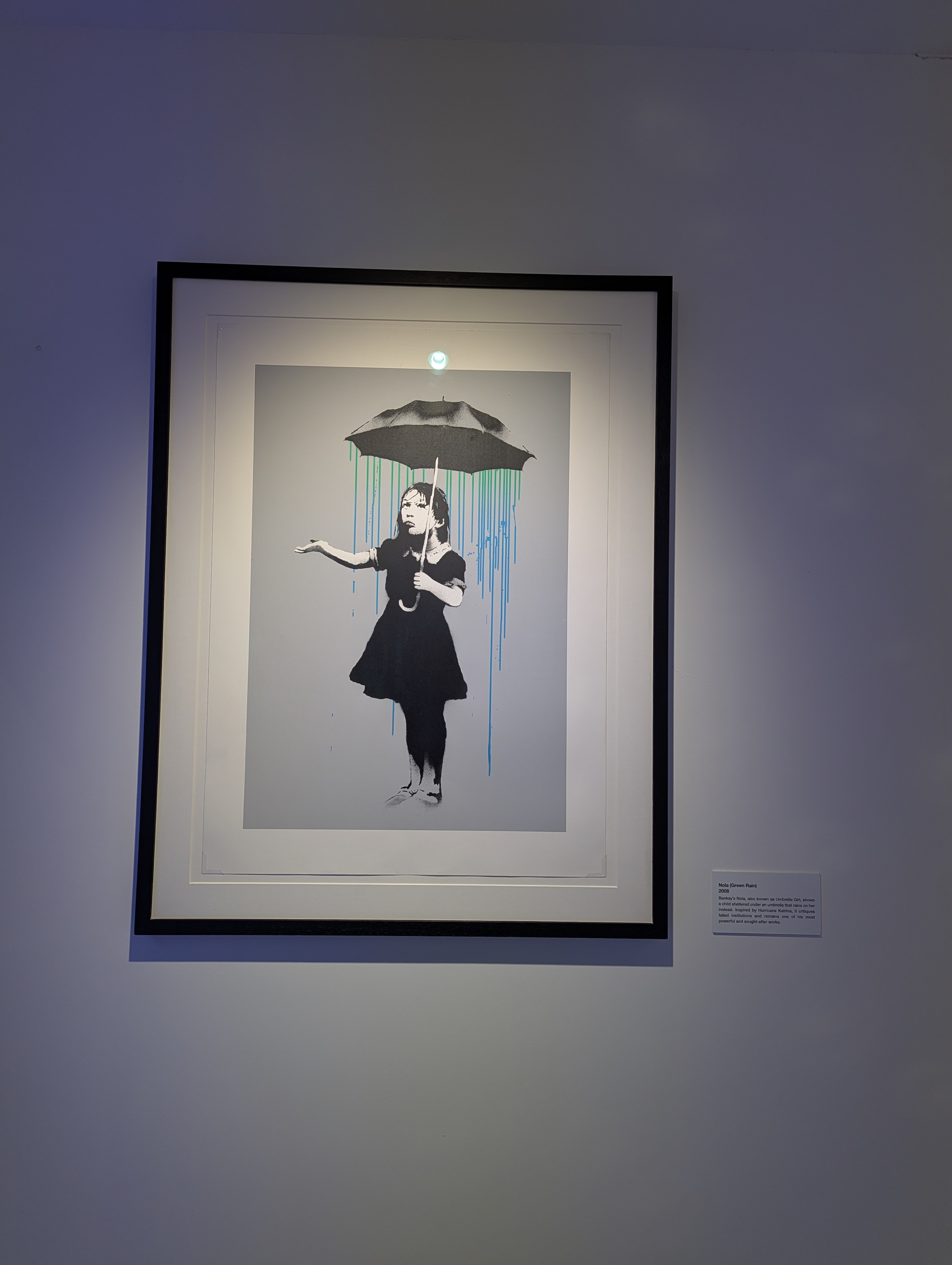
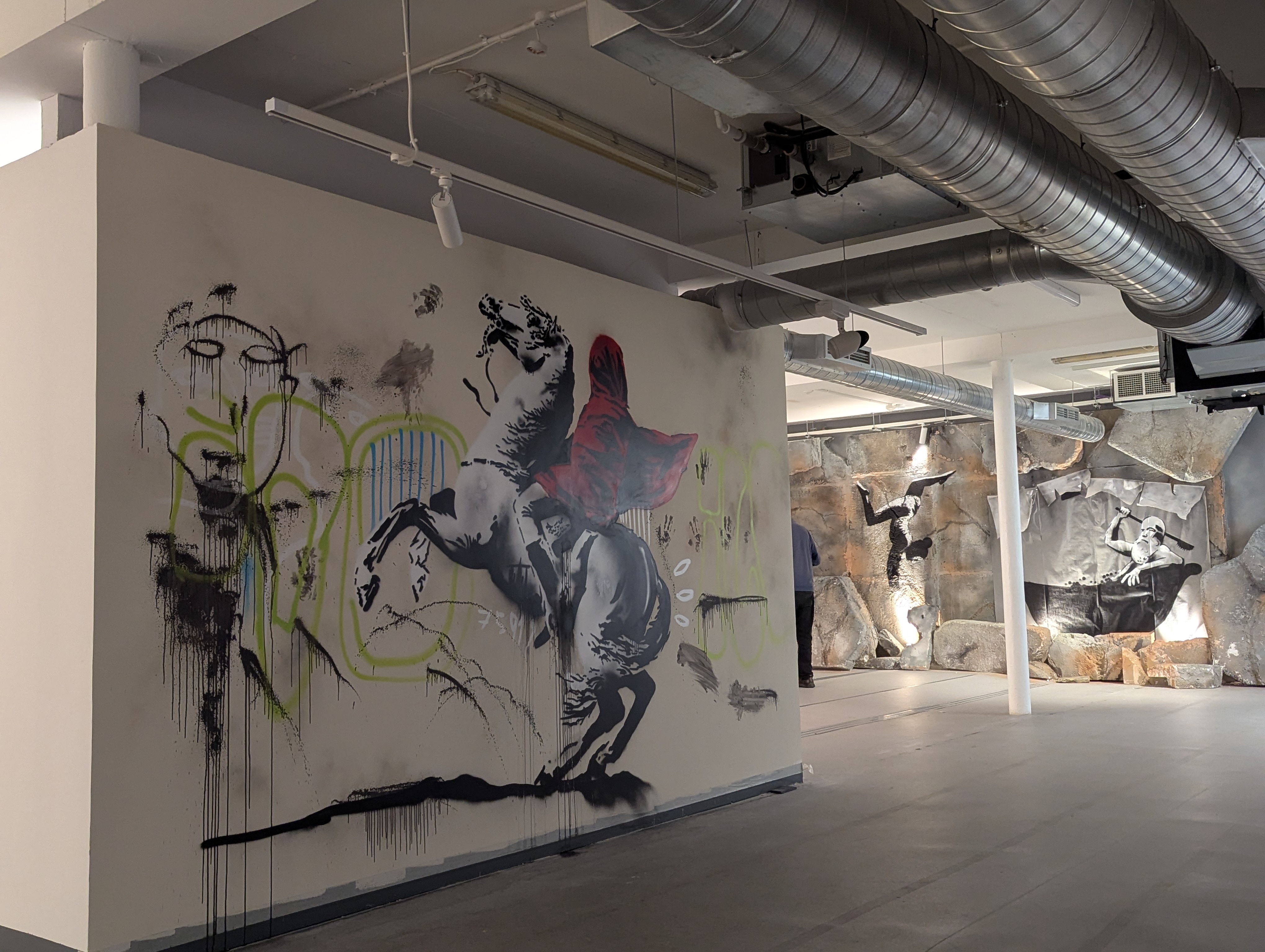
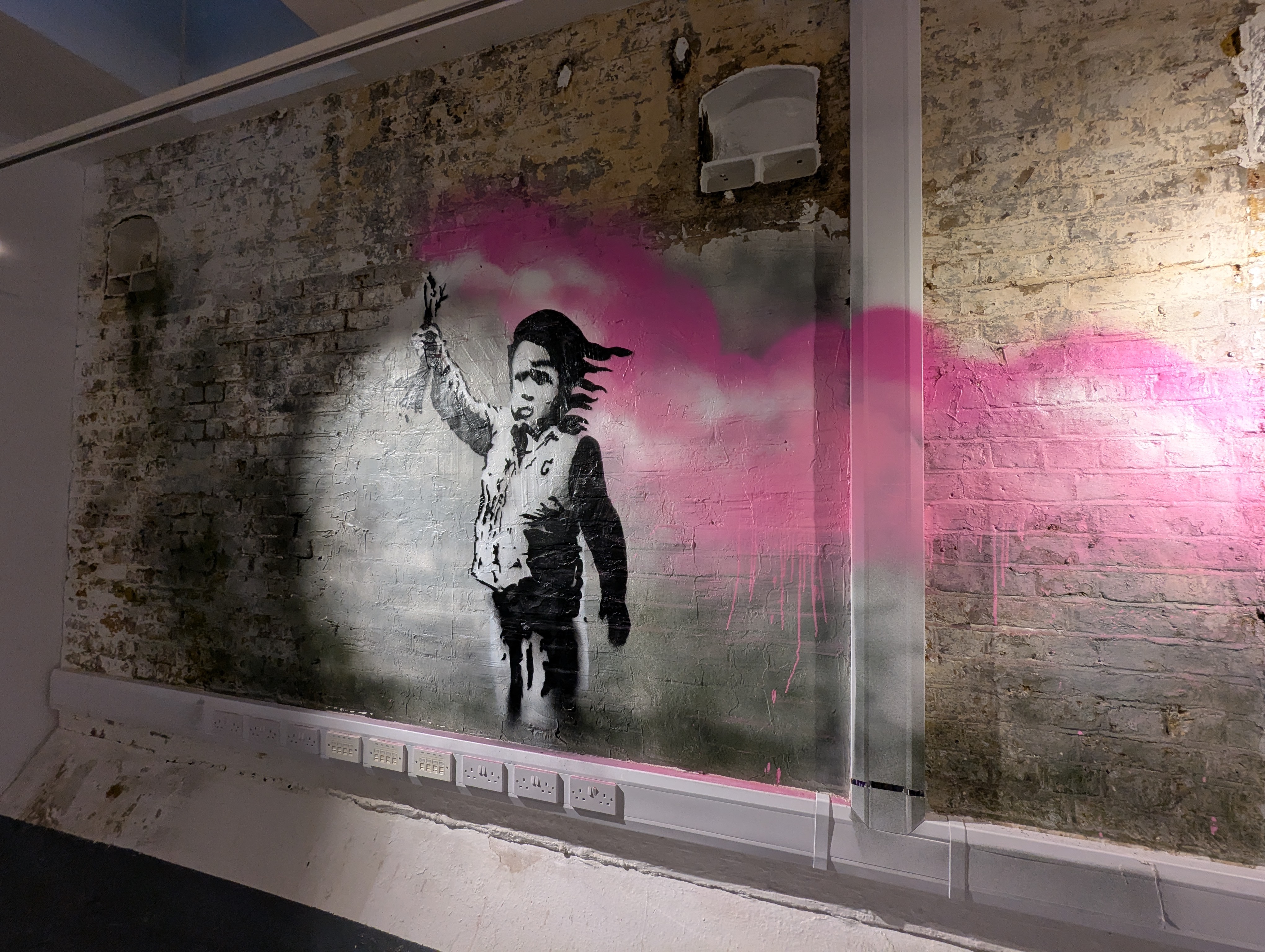
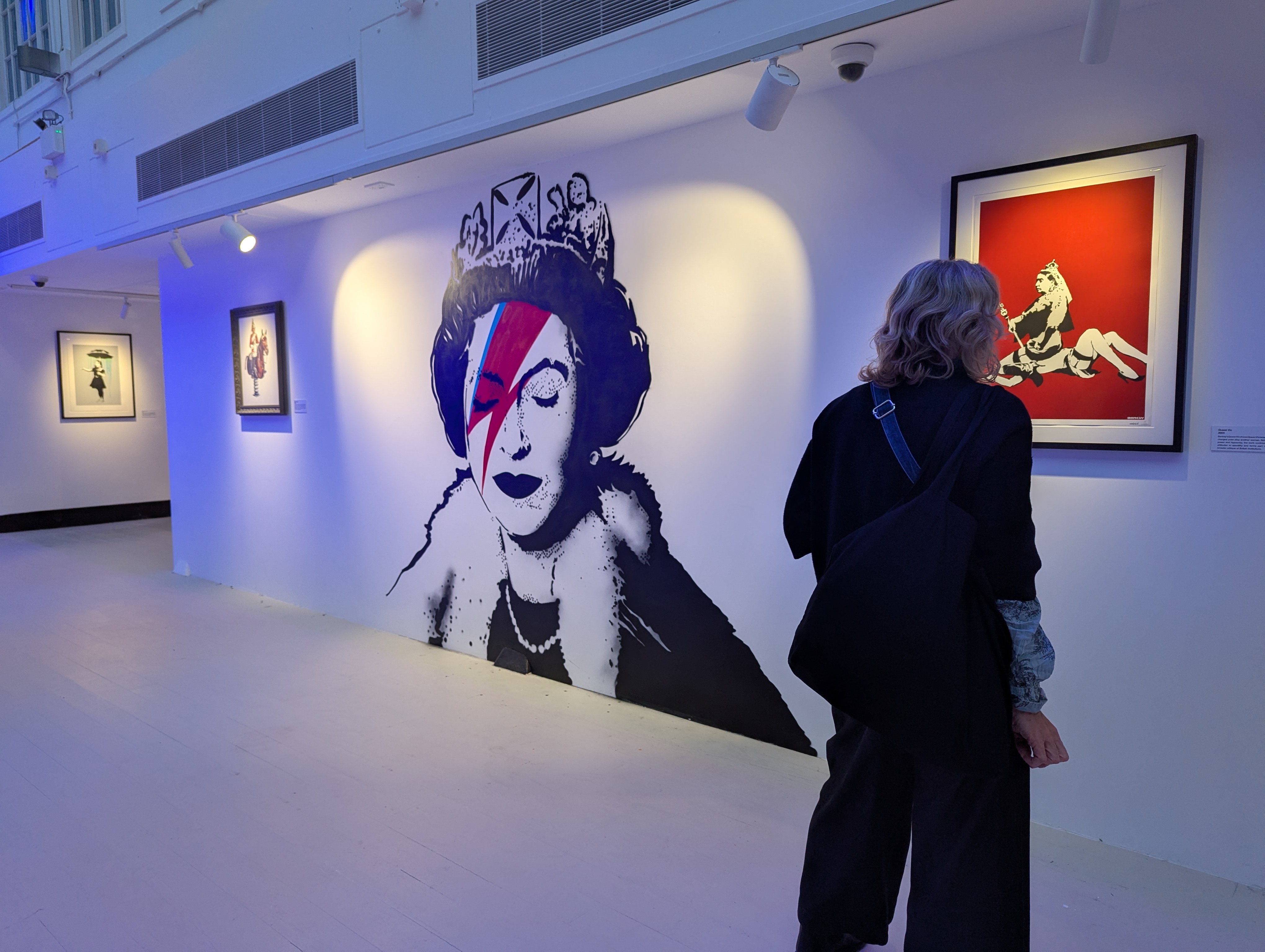
After that we went to Banksy Limitless, an exhibit of Banksy art and history. I enjoy street art and Banksy is interesting given his anonymity–for a famous guy. He is also quite prolific. This exhibit, clearly put together by Banksy or with his blessing, includes a timeline of his art and themes and images of the art he’s created over the years. In most cases, reproductions of the art. In reality, a lot of his art has been covered over across time. He uses stencils that he’s created so it’s possible to do a reasonable reproduction.

It’s unusual to view art at the same time as seeing the artist’s narrative interpretation of what he wanted to communicate. In most cases we view art long after the artist has passed. My husband observed that he likes to decide for himself what the art is about and found it distracting to always be told in this exhibit the artist’s meaning. I suspect the interpretation was necessary because the art is itself commentary on some recent occurrence or social norm. Does the art have meaning if you don’t know to what it refers? In that respect, I guess Banksy’s form of art is like comedy. It’s funny in the moment but does every moment have long-term significance such that it would be funny a few years later when you’ve forgotten what inspired it? And maybe in that sense, when we don’t yet know until much later if the moments were significant, we can’t yet tell if the art is significant. On the other hand, maybe we don’t have to care. Meaning in the moment can also be art.

My favorite exhibit was the film in which they captured the moment Banksy’s picture of the girl with a ballon was sold in auction. As soon as it was announced sold, a shredder built inside the frame activated and the picture was partially destroyed. The people in the auction looked sickened. (I saw some reporting that the buyer was offered to be allowed to void the sale but did not. Later, it was even more valuable after it was destroyed.)

Although one of Banksy’s themes is the peril of commercialism, Banksy himself did not fail to capitalize on this exhibit. In addition to the entrance fee, the final step of the exhibit was a big gift shop. Although we participated in the entrance fee we did not buy the t-shirts or mugs.

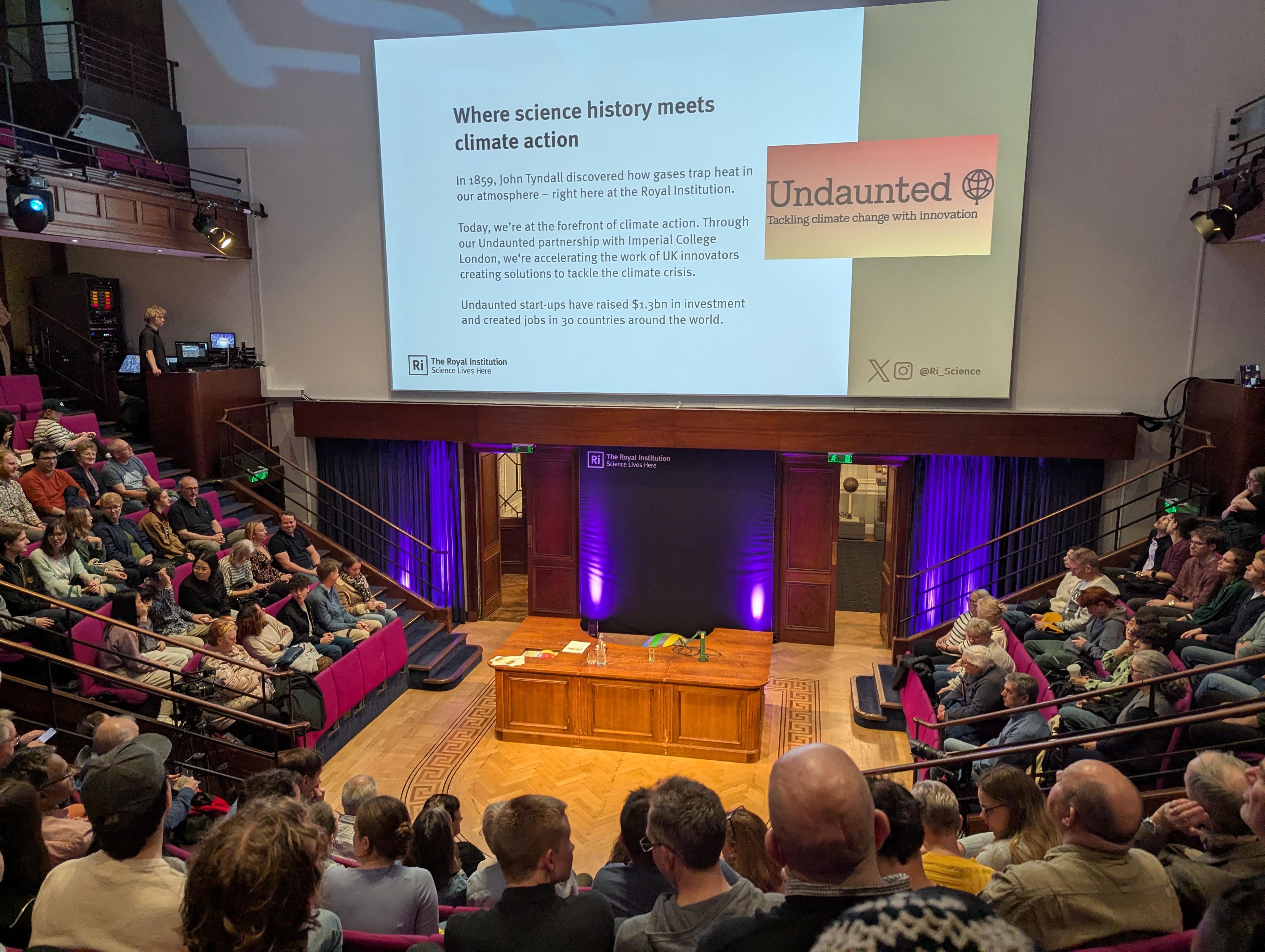
We are very slow learners because after a flight in which I barely slept we decided to attend a lecture on how chemistry is used in forensic science at the Royal Institution. The speaker, Kingston Associate Professor Baljit Thatti, brought in a full auditorium and she must have been amazing, because the presentation was followed by one of the most energetic question and answer sessions I’ve ever witnessed. But I can tell you very little about her obviously excellent presentation. It was a good amuse-bouche for a great night of sleep back at The Bailey’s.

In the morning, we took an hour-long bus ride to Richmond Park. Before coming to London I had googled all the events in London and what kept coming up instead of events was ways to enjoy Autumn in London. Richmond Park is part of the Royal Parks and was highly recommended as a way to take in Fall colors.

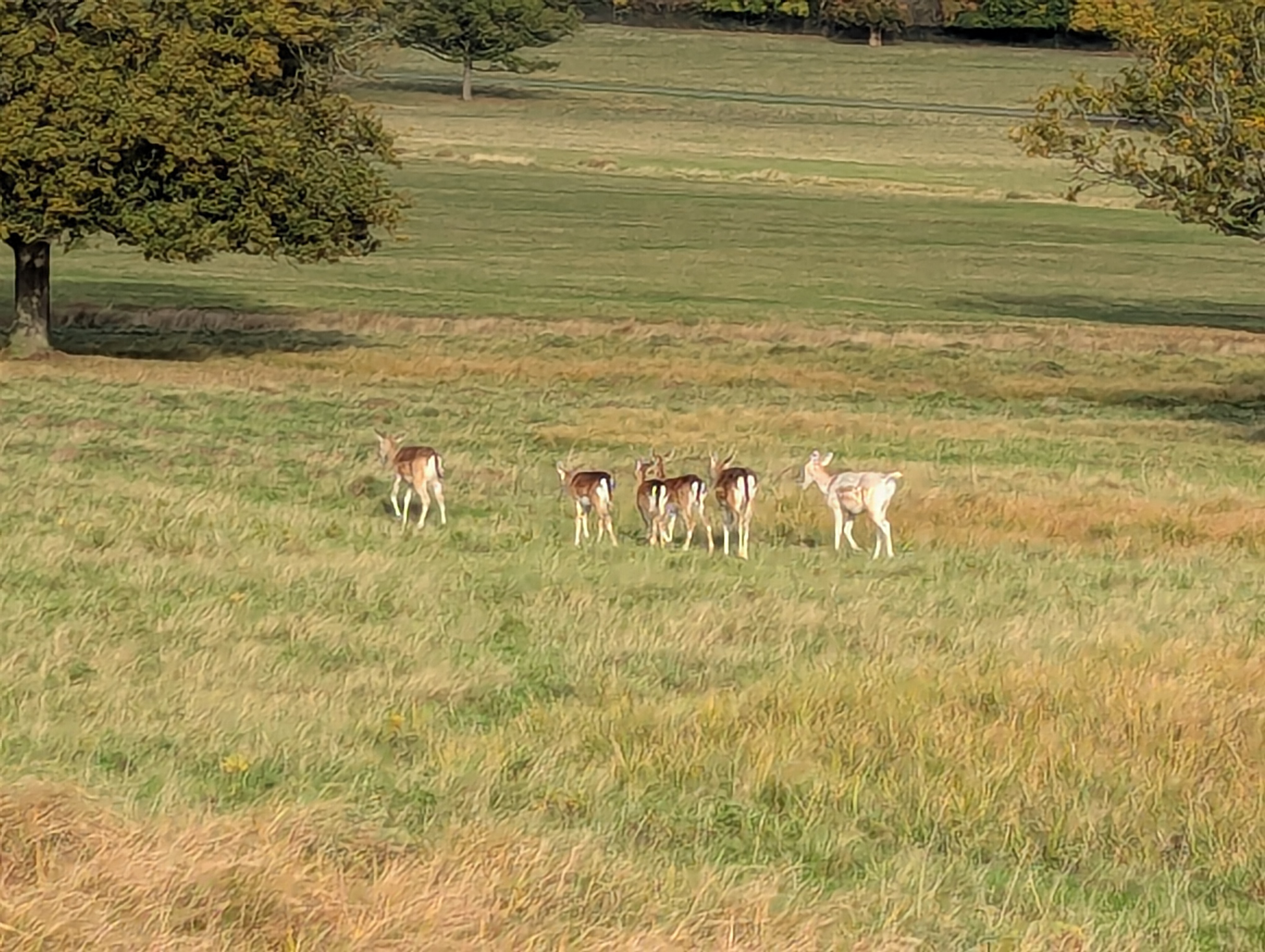
It’s possible to rent bikes and ride the 7-mile loop around the park but unfortunately bike rental is only on weekends this time of year. Instead we made our way across a huge, golden meadow on a grass path on our way to a garden called Isabella Plantation. As we walked we could see grazing animals in the distance that almost appeared to be sheep. Upon closer inspection, they were the famous wild red deer herd that had been introduced in the park by King Charles I in the 1600s.

As we were walking toward the red deer in the field to get a closer look we happened upon a much larger deer laying in the field, one of the fallow deer. We almost didn’t spot the huge buck in vegetation very close to our path.
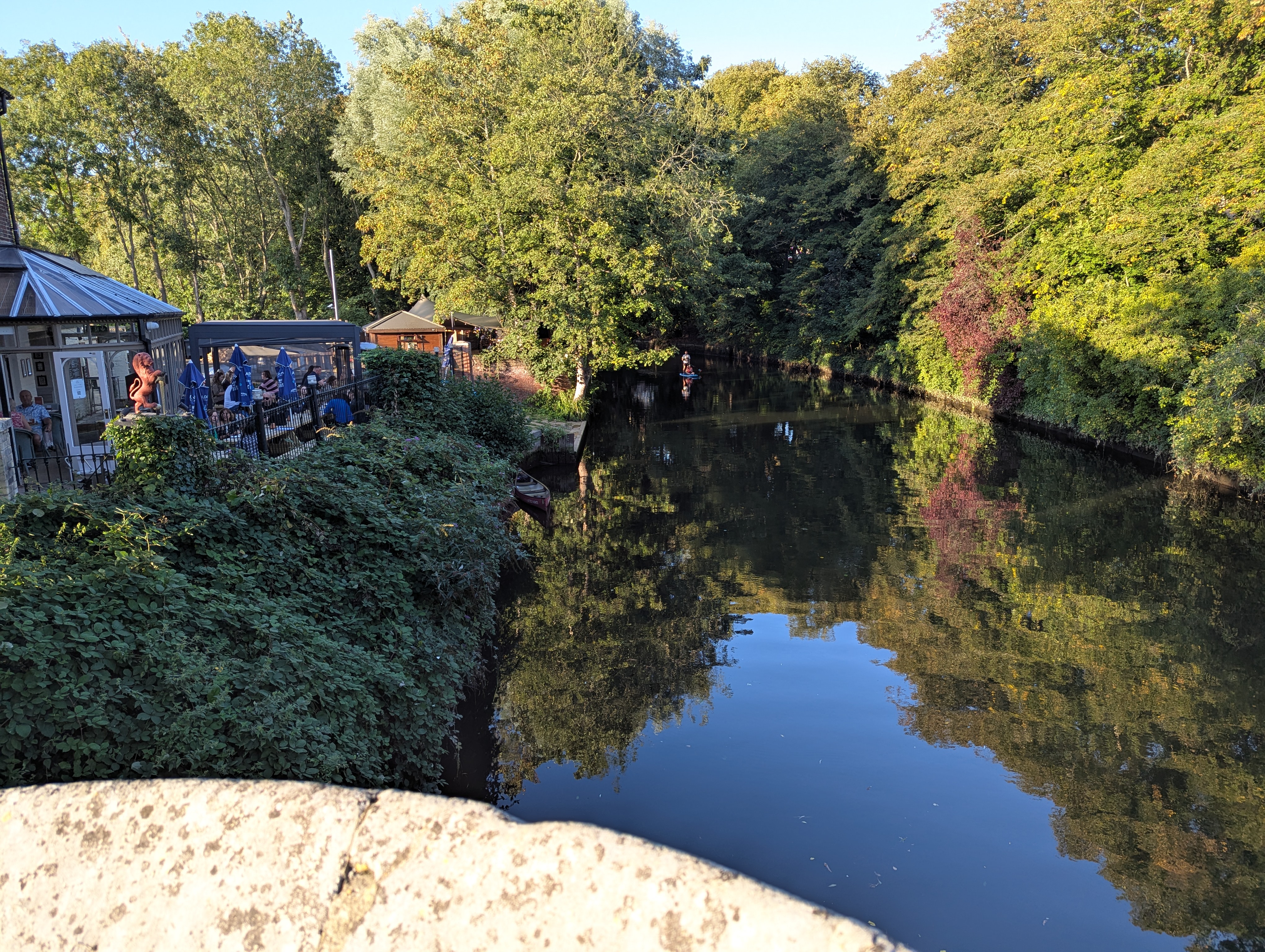
Leaving the meadow and heading into the forest, the birds were unbelievably loud. I use an app called Merlin to identify bird calls I don’t know. Admittedly “calls I don’t know” is almost all bird calls. The app is produced by Cornell Lab of Ornithology in NY. It can be a bit spotty about identifying birds in England, but on this day it detected Eurasian Jackdaws and Rose-ringed Parakeets.

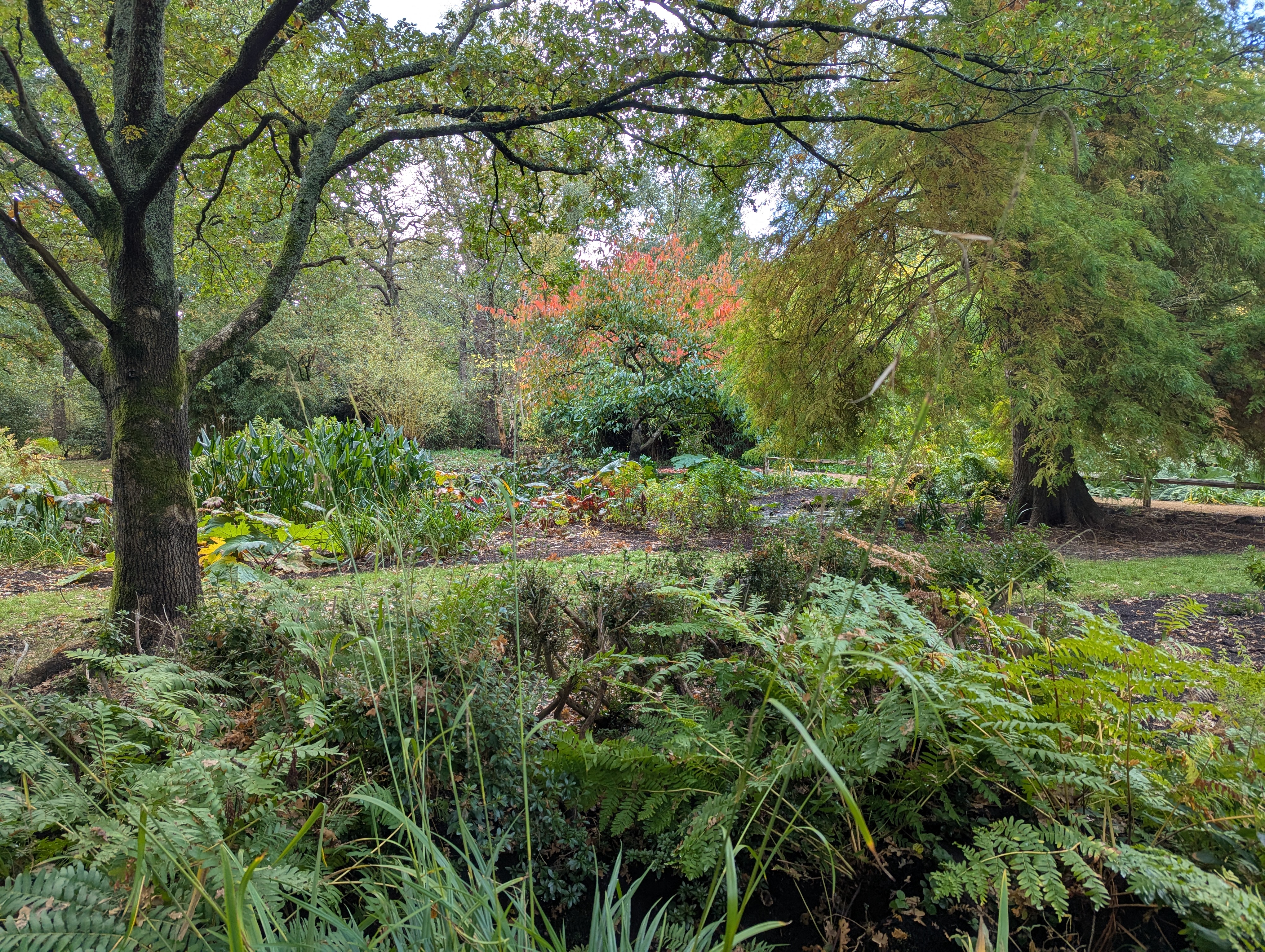
We got lost several times but ultimately found Isabella Plantation, a lovely, lush garden.

Even without colorful fall leaves, Richmond Park was, as the internet promised us, a great way to experience the beauty of Fall in London.

We took a bus into Fulham, had a nice, late lunch at an Italian pizza chain, took the train back to Central London to work out logistics for travels the next day, pre-gamed at the Admiralty, and then headed off to The Emirates for the Champion’s League match against Atletico Madrid. Despite a lovely, calm day in nature I felt very, very nervous.

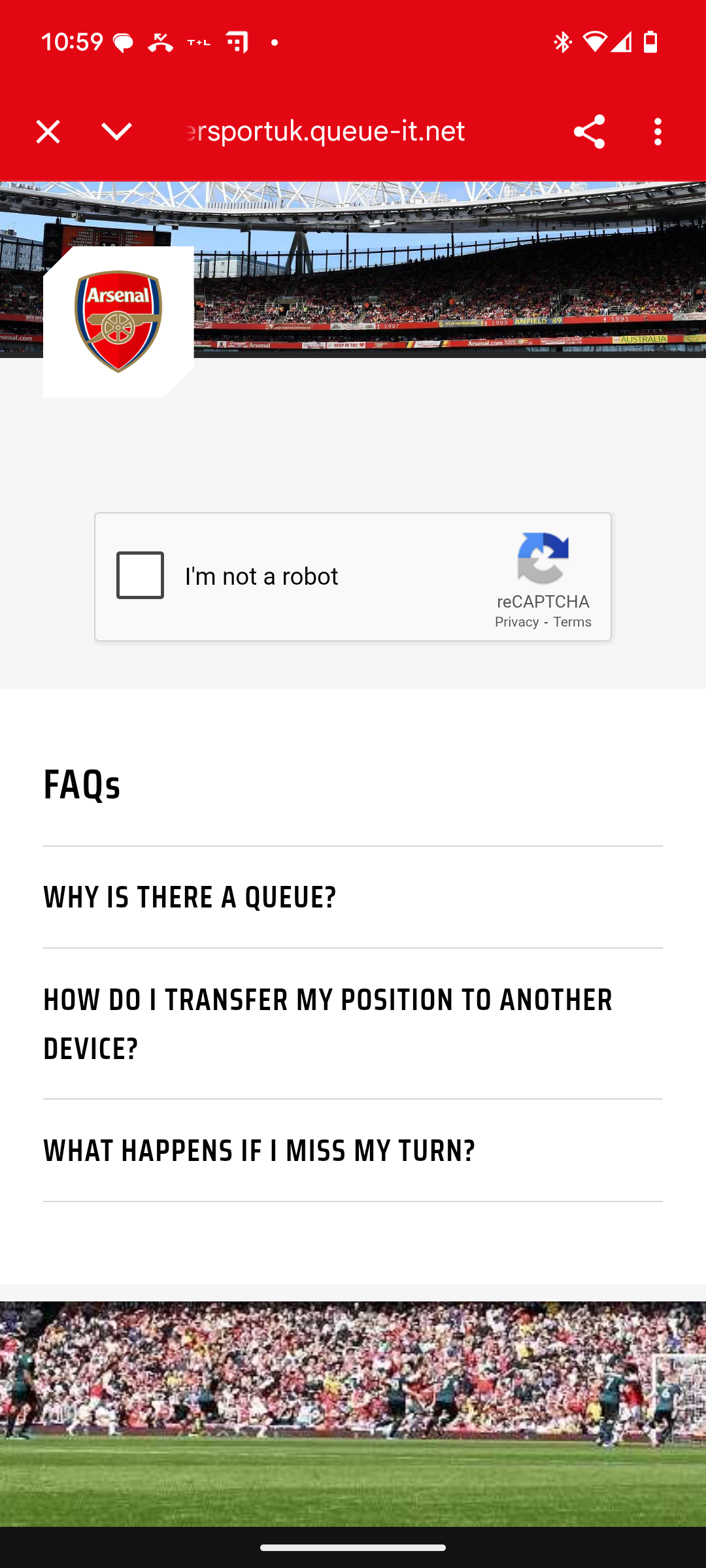
I’m not a robot

At the time we flew to London, both my husband and I had tickets for the Nottingham Forest game but only I had tickets for the Man City game. That remained true across thousands of clicks on the Arsenal web site. Each time I logged in to try to get a ticket, I had to affirm that I was not a robot. Sometimes I had to prove it by reviewing photos and click on all the ones, for example, that contain street lights. And sometimes even though I seemingly passed all the anti-robot tests put in front of me, I could still take repetitive action on the ticket exchange that made the exchange believe I might have fibbed about being a robot. Then you get the white screen of death and have to start over. Fortunately, I finally found my husband a ticket the very day before the match.
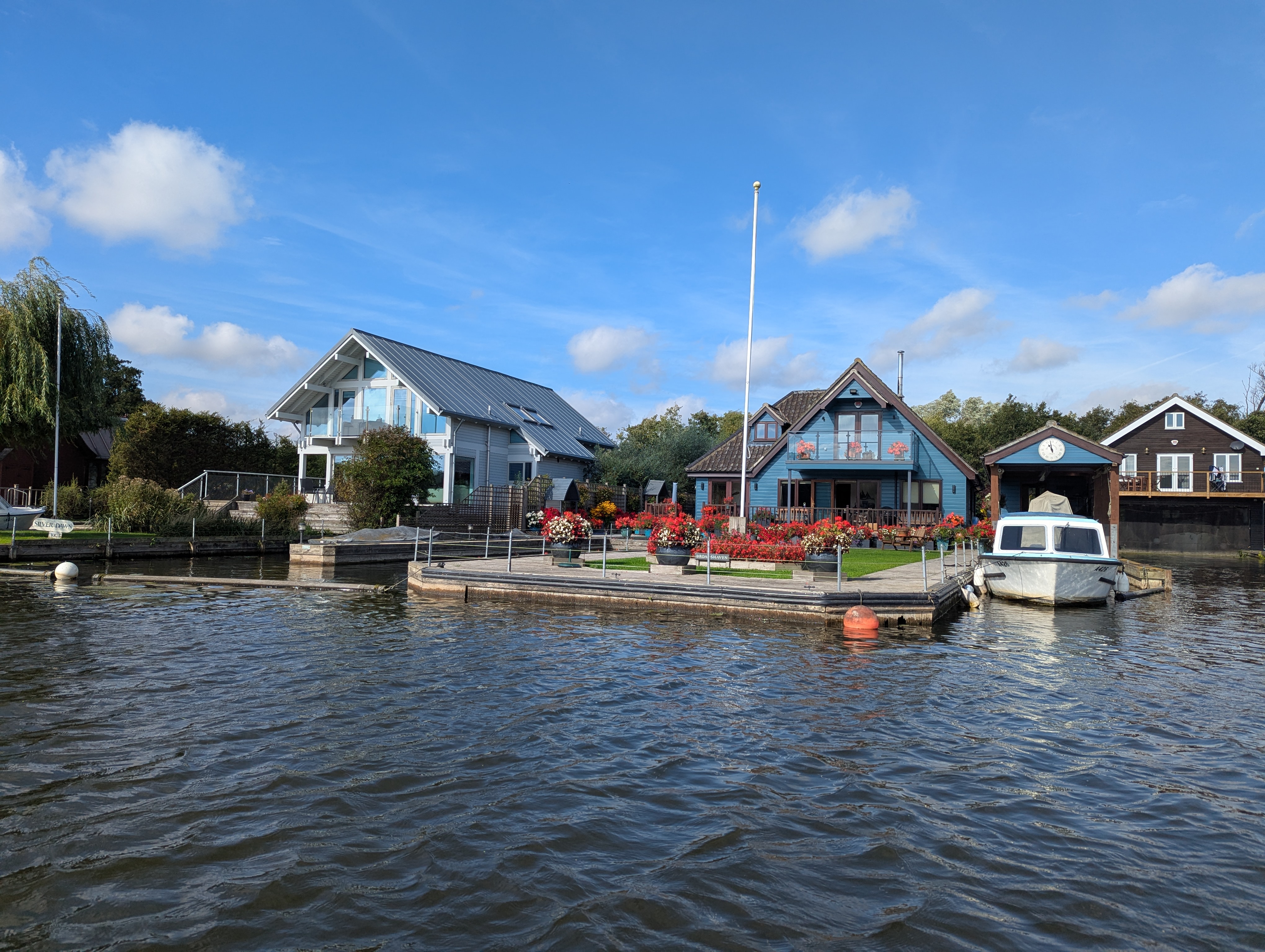
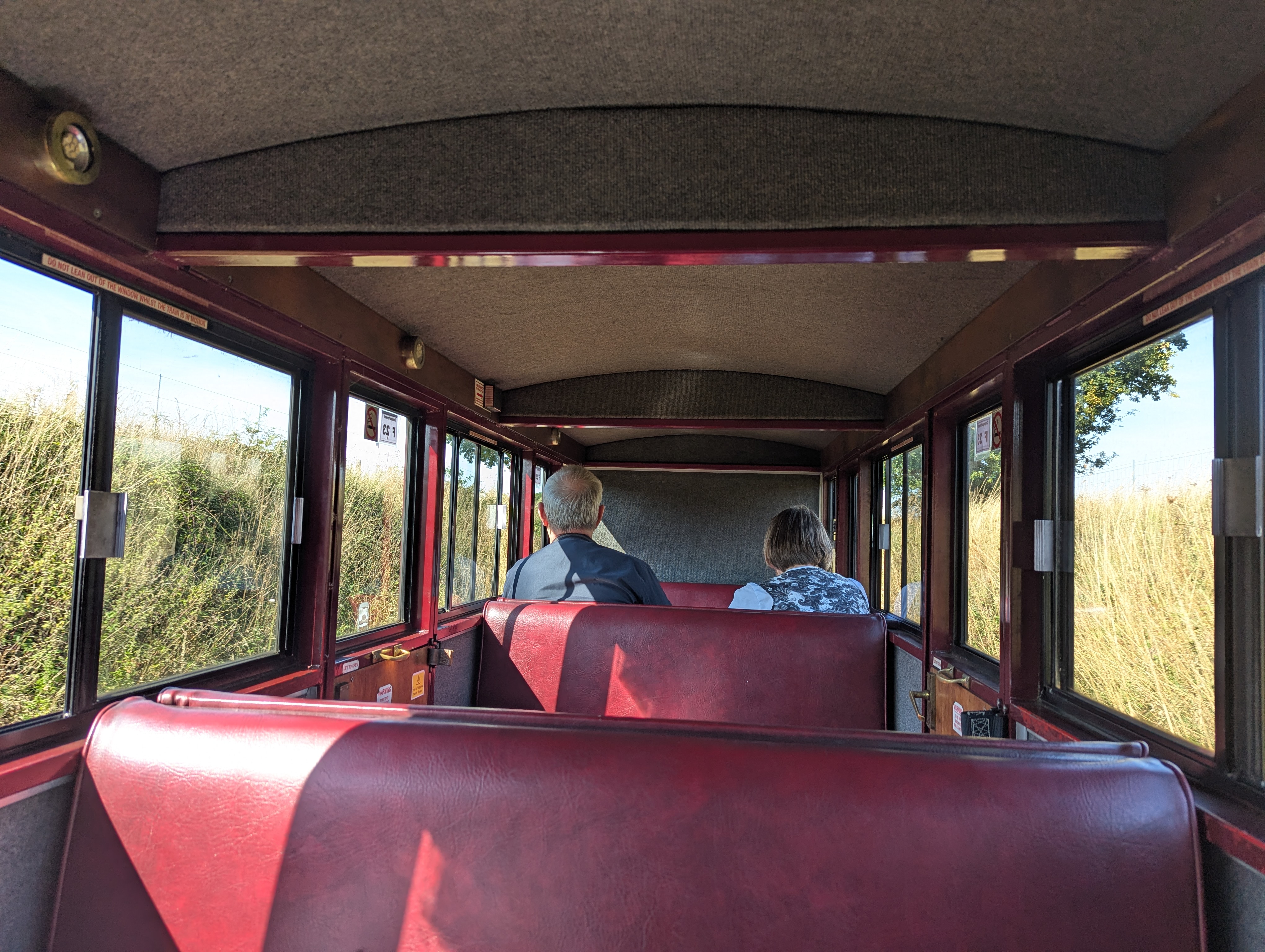
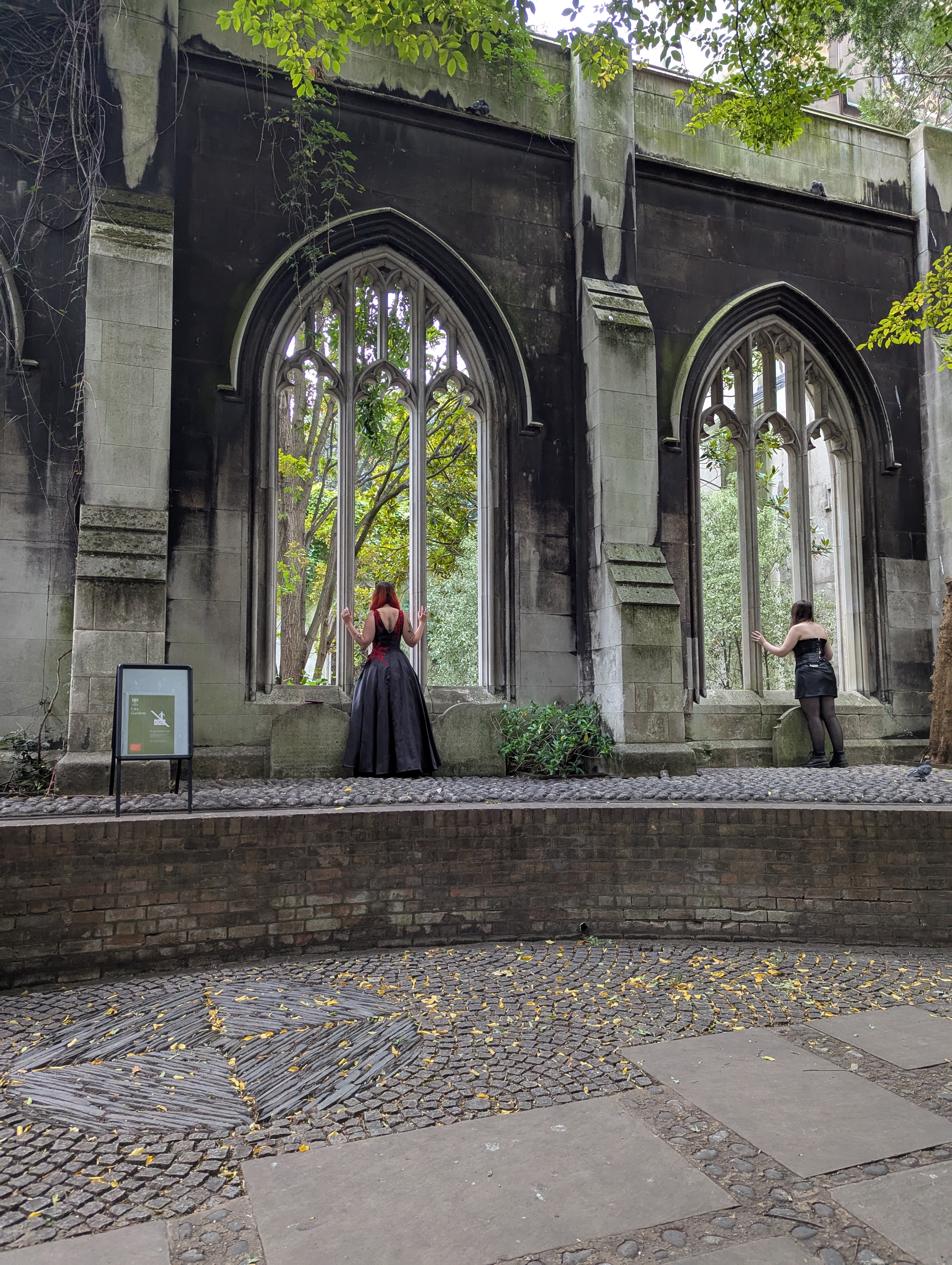
That was the day we travelled back to London from Norwich also. Tracks from Ipswich to Colchester were under maintenance so we had to take a bus for that leg of the trip. It was well organized by the train service and it occurred with very little drama. As we walked from Liverpool Street Station to check into our hotel, The Clayton Hotel London Wall, we crossed through the very pretty Finsbury Circus Gardens. Upon reaching the hotel, my husband was ready to relax. I was feeling inspired by the garden so I set out to find the St. Dunstan in the East Garden. This is a garden associated with a church. It looked lovely and peaceful, except on the day I visited there was a large contingent of goth-dressed women and photographers doing a photo shoot. I took advantage of the poses for my own photos.

Sometimes I recognize what a shame it’s been that we’ve visited so many hotels in London but not really used the opportunity to rank hotels. It happens that we had previously visited the Clayton Hotel London Wall in the past, but I had forgotten what a good option this is. The rooms are spacious, there is tons of storage, and the bathroom is nice. The mattress was like a concrete slab. I happen to be a fan of the concrete slab mattress. This may seem like a weird thing, but the bathroom has an enclosed shower with a ledge that prevents water from entering the rest of the bathroom. You’d be surprised how many do not. The only downside of this hotel is that it’s located in the business district so a lot of restaurants and pubs nearby are closed on the weekend.

We booked a play to attend that night, The Full English at Baron’s Court Theatre. This was a one-woman show by a linguist, poet, and actor Melanie Blanton, literally about the English language and how it developed across time as England both was impacted by migrating, and sometimes invading, forces as well as England’s own experience colonizing other countries. The Baron’s Court Theatre is a tiny space in the basement of a pub called Curtains Up. Before the play people gathered in the pub and then brought their drinks into the space and during intermission, they repeated. The theatre was so tiny that it was in my mind that it would be really bad to sleep in this play because the actor would for sure be able to see that. I was at my alert best. Perhaps because I’d for once had time to acclimate to the time change having been in England for a week. Two older ladies in the first row did not get the same memo. They both slept through a lot of the play. Then again, they availed themselves of several pints. In a warm, dark space we all know what that can lead to for us aged folk.

What I just said might sound like not a ringing endorsement of the play, but I actually loved it. It was entertaining and I learned a lot. I feel like this whole trip reinforced for me how England developed. We’ve spent time in London in the past looking into the Roman invasion, but this trip (including this play) gave insight into the migration of Anglo-Saxons as well as invasions by Vikings and Normans.

The match was the next day, Sunday. Unfortunately, that morning my husband tweaked his back and really could not walk or sit without a lot of pain. He’s had this problem before so he always travels with muscle relaxants which helps get through the night or a long flight in Basic Economy. However, those aren’t good for getting through a day or a soccer match so we invested a bit of time trying to find an electric heating pad or something to help loosen things up. We were successful in locating a disposable heating belt that you can affix under your clothing and that heats for 12 hours. A great solution for our day and for the plane trip back on Monday and it seemed to help quite a bit.

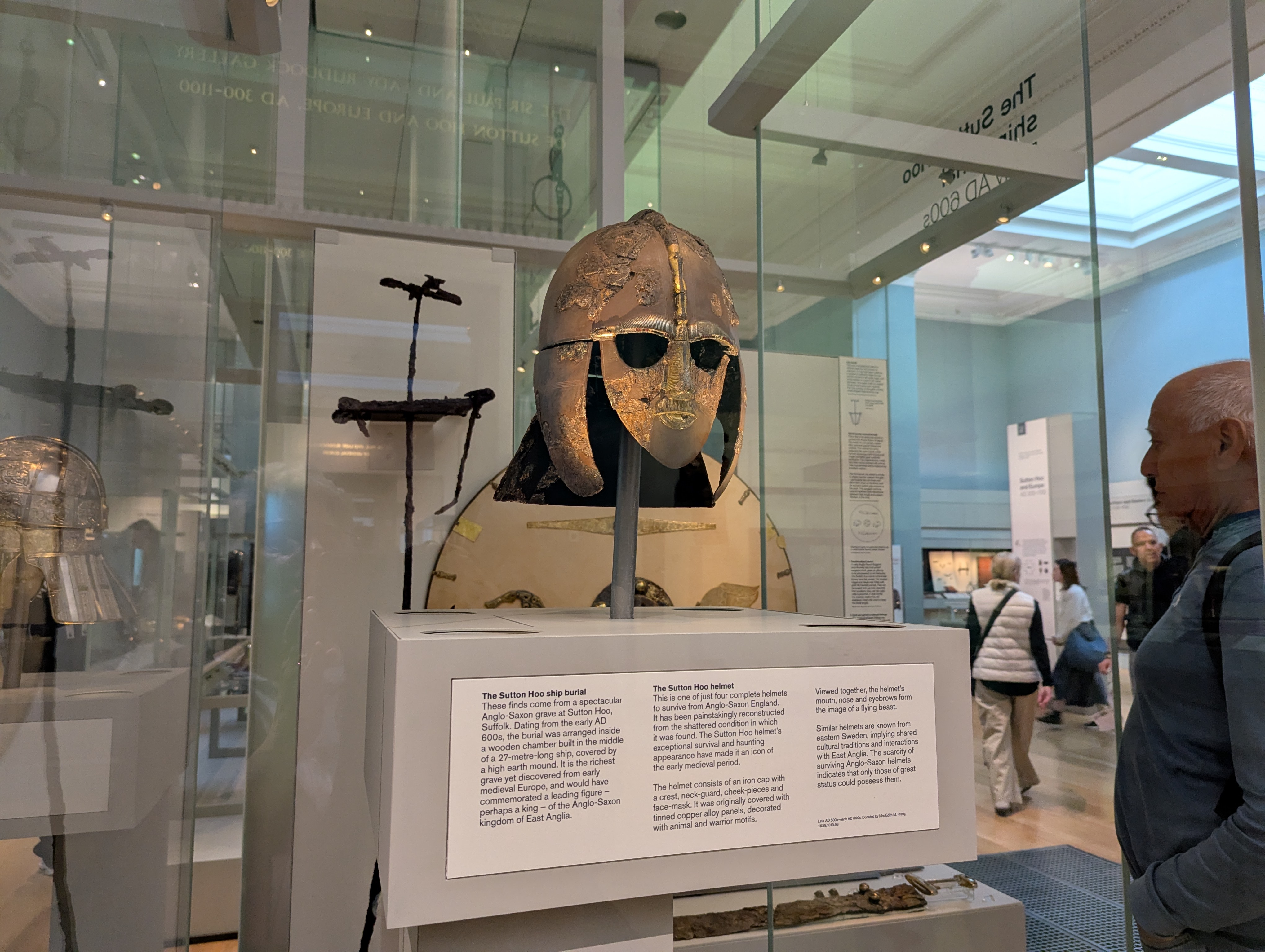
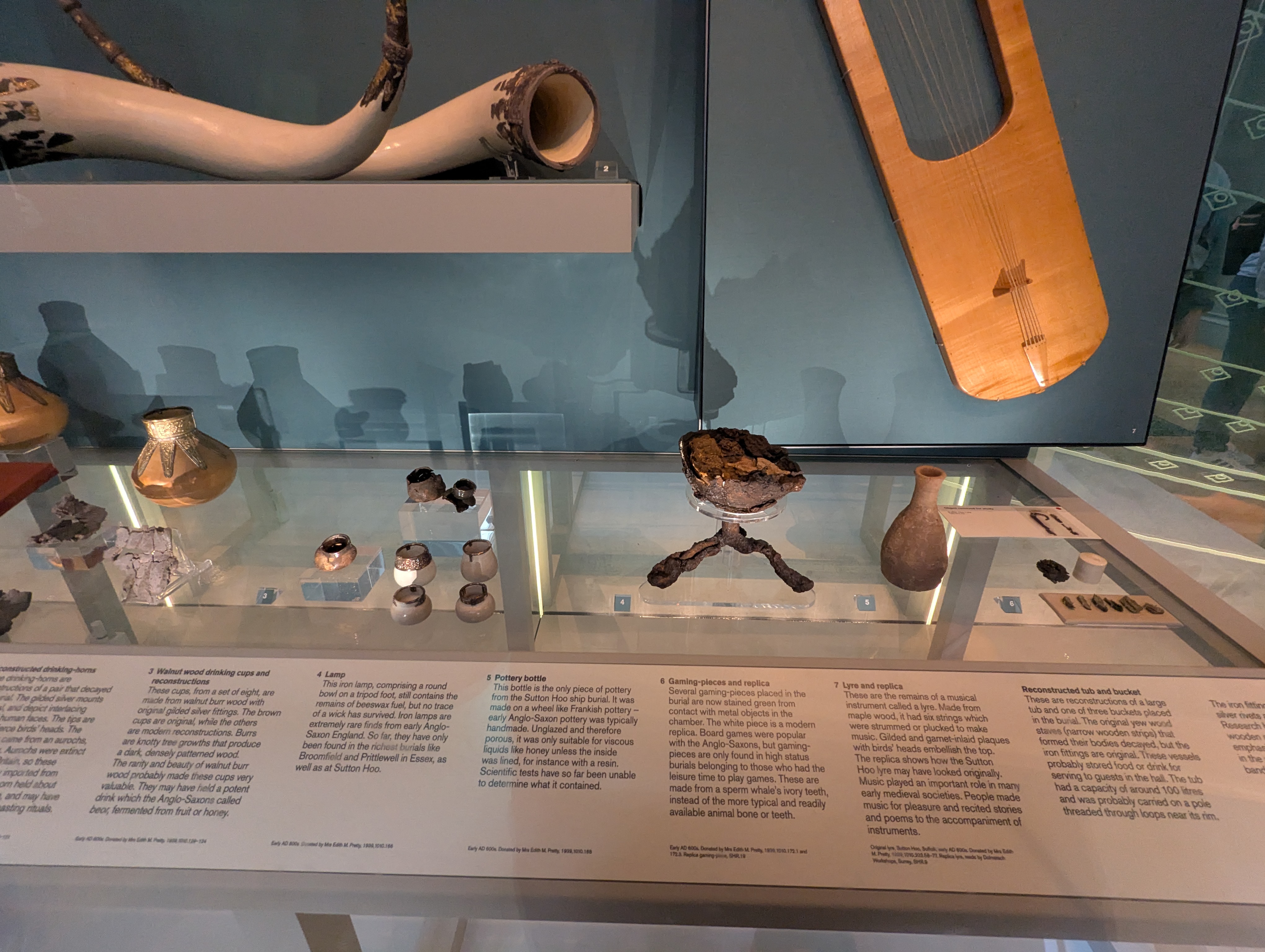
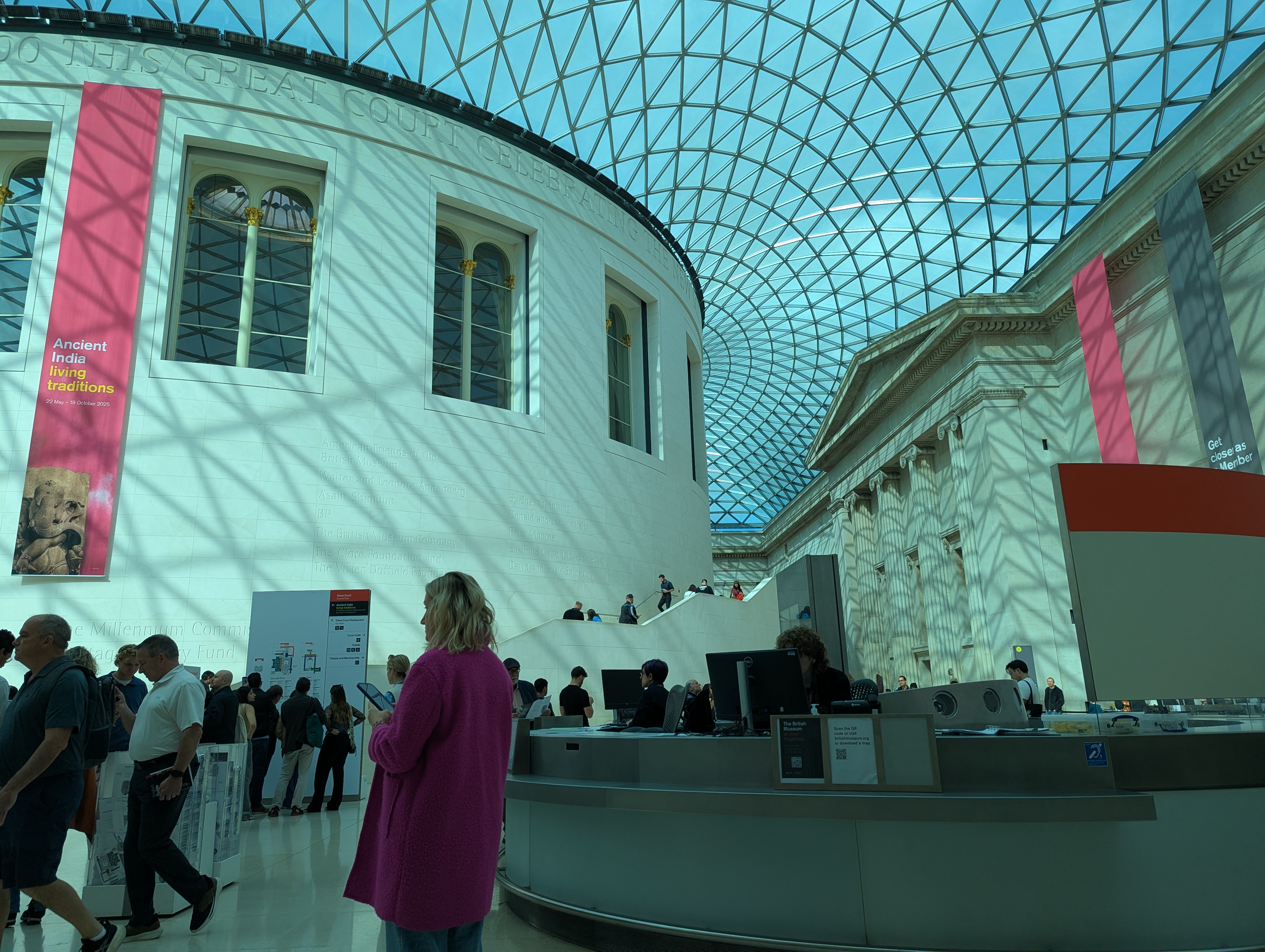
We didn’t want to overdo it so we decided to keep it simple that morning by only visiting one exhibit at the British Museum, the one displaying the treasures found at Sutton Hoo. As you may recall, once it was established that Edith Pretty had full rights to the artifacts found on her property, she donated all of them to the British Museum. One of the most interesting objects was the helmet found–crushed, where the burial compartment of the Anglo-Saxon ship in one of the mounds had collapsed. The British museum made two efforts to put the pieces together, one that they felt good about. The actual reconstructed helmet is displayed, as is a replica of what it may have looked like originally. The display also includes coins, dishes, and other objects of Anglo-Saxon life. Fascinating exhibit and a perfect follow-up to our visit at Sutton Hoo. The British Museum, like many other attractions in London, is free to visit but so expansive it’s really nice to be able to feel like you can just see what you want to see on the day without feeling guilty about wasting admission.

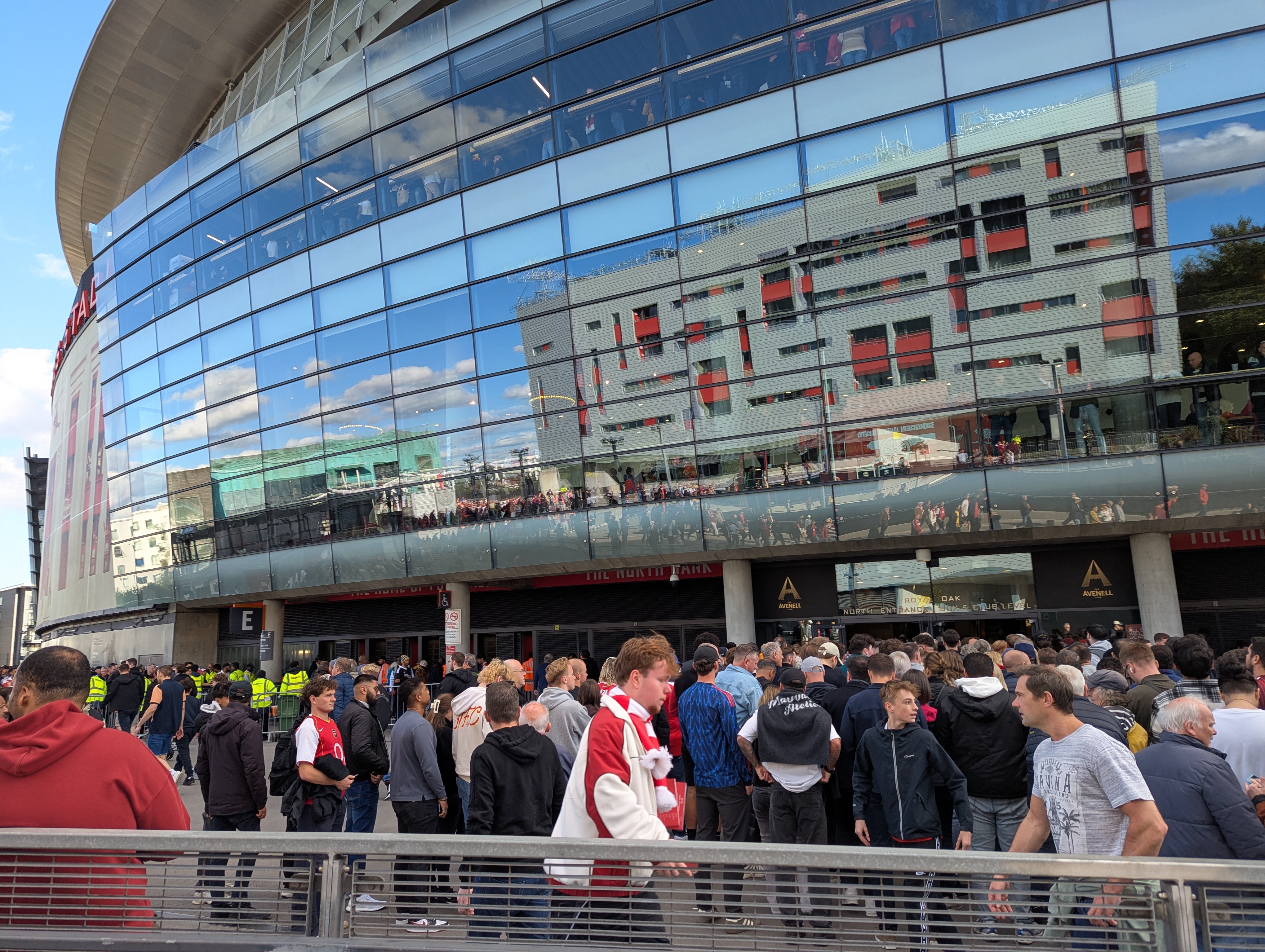
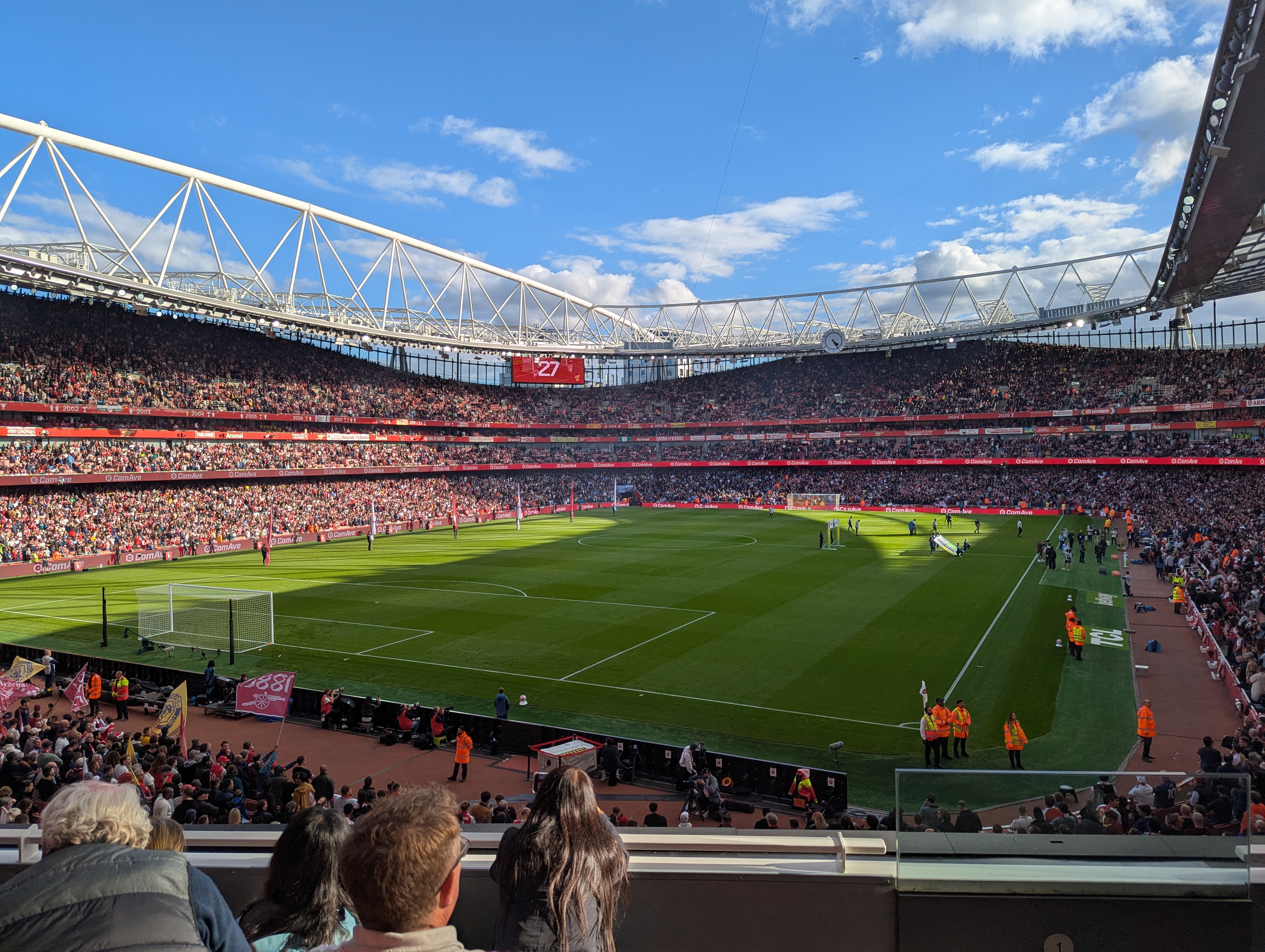
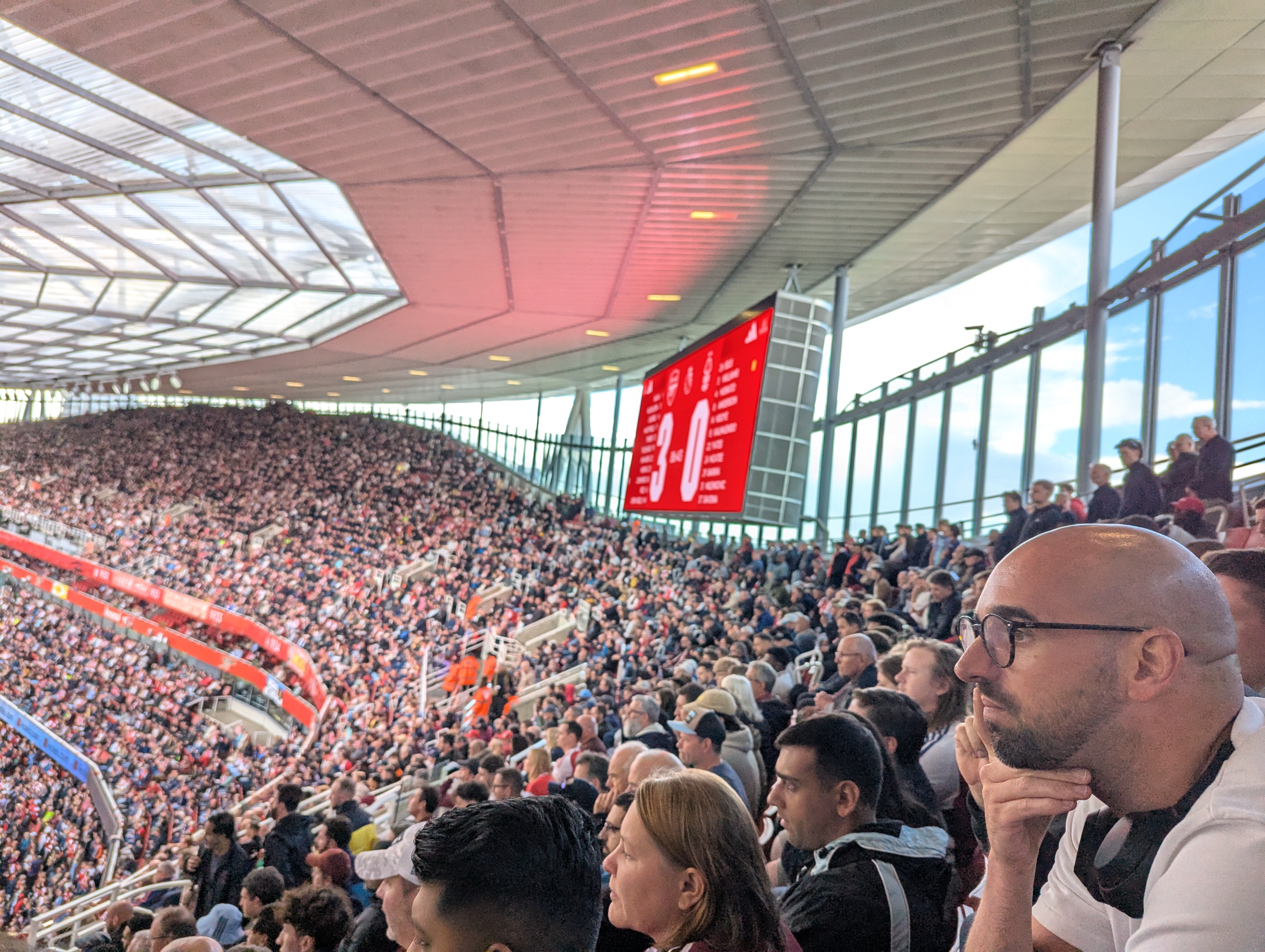
After lunch we travelled over to the Emirates for the match. It took more time than usual to get into the stadium, at least where I was seated in the North Bank. I was lucky to be in my seat as the teams were coming out on the field. You’ve heard me speaking about how much I love singing and being in the stadium as “North London Forever” is being played, but there is a song played at every Arsenal match that I despise. It’s called Good old Arsenal. It’s played both before the first half and the second half. It sounds like it was invented in the 1940s, but my quick google just now tells me it first made its appearance at the stadium in 1971.

Good old Arsenal

We’re proud to say that name

While we sing this song

We’ll win the game

They usually get through it 2 times before the rest of the pomp happens. I was in my seat for it and it annoyed me, like always. I do sing it because while we sing this song we win the game. How can I decline? I’m a model fan. Note: it does not always produce the results it claims.

With Martin Odegaard still injured, Mikel Arteta started exactly the same midfield he had selected for the mid-week Champions League match. He made one change in the forward line, replacing Eze with Leandro Trossard. This was maybe a bit surprising considering the opposition. Kind of a very secure but not very adventuresome lineup. William Saliba was restored to his normal center half position after an ankle injury having not played much since then. He seemed a bit rusty.

If you consider the totality of the match, we were mostly successful at being secure. But there was this one insecure moment pretty early in the first half where there was a turnover on a mistake and Man City’s excellent striker, Erling Haaland, got forward on a breakaway where Man City had three players on two Arsenal players. Haaland didn’t have the ball early in the breakaway but he was clearly the one you didn’t want to see the ball come to. We didn’t have him covered well and he did get the ball. He had no problem placing it in the Arsenal goal beyond David Raya.

All through the match Man City was pretty much bunkered in and we were unable to find a way through. Although I understood after the match everyone watching seemed to find it boring, I thought it was a fascinating match. Kind of like watching chess. I know not everyone likes watching chess when they came to watch football. But obviously frustrating, going at them again and again and never finding a way through.

After halftime, the Arsenal team came out to the the sound of “Good Old Arsenal,” like always. But this time, Man City didn’t come out for ages. It played 6 or 7 times. I enjoyed it less than usual which, as I mentioned, is not at all.

Mikel Arteta made increasingly creative substitutions across the second half and we did start to make headway in penetrating the Man City defense, which by now was just a big, old bus parked in front of the goal. He even removed a defender to put on an attacker, Gabriel Martinelli.

Everyone refers to the players who start the match as “starters.” Lately, Arteta has notably been referring to players who are substituted on as “finishers.” I don’t know where this started but I do know this is terminology that Sarina Wiegman, the winning manager for women’s Euros, used to describe her very accomplished substitutes. One of whom was Chloe Kelly, the Arsenal player who visibly improved the England team in many matches and scored the deciding penalty kick in the final. In my opinion, language matters and I think this is a good development for Arteta’s players. All of the players are good enough to start, but not all of them can be selected. Instead, Arteta needs to be able to use them to change the course of the match. And they are just as important to the match in their different role.

While Arteta was replacing defenders with attackers, Man City’s manager was replacing attackers with defenders. Even Erland Haaland was removed. (The manager said afterward he did this because Haaland said he was tired.) Both managers wanted points from this match but Man City’s manager was definitely working from the preferred position.

It seemed like the match was going to end a Man City win as we entered injury time. But never say never. Eberechi Eze, who ultimately found himself playing, managed to slip a ball over the Man City defenders to a breaking Martinelli, who managed to evade them as the goalkeeper rushed out toward him. The lightest loft of the ball with the edge of his foot and the ball was floating into the air over the keeper and against the far netting. Then a roll into the back of the net to the excitement of an entire stadium. A finisher’s finish. Until it hit the back of the net from my seat–closer to where the ball was lofted and farther from where it nestled into the netting–I was not sure it was in.

With the few minutes remaining, we continued to try to score and Man City made more offensive progress than it had tried in a while. In the end, a 1-1 tie was all we could get done.

Sometimes a late tie like that feels like a win but in this case, well, even though I was really happy the goal happened, it mostly felt like a tie. And you know the stadium DJ was feeling it, too because he played another song I’ve come to really hate at the Emirates, the song he usually plays for a tie (and I think maybe also for a loss): Tears for Fears’ Everybody Wants to Rule the World. Maybe I once liked it, but now I’ve been conditioned. It’s like a song you associate from your youth with the summer some boyfriend broke up with you. Bah. Dislike.

Better luck next time? We shall see.

After the match, Mikel; Arteta took a shellacking in the press conference and in commentary for the week for the starting line-up he used which, again, was the same forward and midfield line as in the Champions League win on Tuesday. “Why are you keeping the handbrake on?” I’ve already seen an “Arteta Out” message on social media. A writer on Football 365, which lately has been on a clickbait tear, likened Arteta to Donald Trump. Admittedly the writer is English so he may not have the clearest picture of Donald Trump’s traits, but I can assure anyone that whatever you might dislike in Trump and whatever you might dislike in Arteta, these are NOT the same traits.

Such is the state of his life. No matter what Arteta does, it’s used as a stick to beat him with. This is a great, young manager in his first head coaching role. He has a large, excellent, diverse team with 8 new players to incorporate, and figuring that out takes time. Which members of the team work together well under the varying conditions you can expect or that unexpectedly are in place?

A 1-1 tie against Man City nearing the end one of the most difficult early schedules in the Premier League while we’re sorting that out? Whatever Mikel does at this time, I’m with him. While Social Media and football commentators try their best to get me riled with media’s proven strategies to rile, I am capable of resisting.

Because, remember, as I have sworn so many times to the Arsenal web site, I’m not a robot.

All the single ladies

I’ve found that when I travel I’m drawn to certain themes and narratives. When I was working in software the themes were often around how projects came about. In software, a big project is usually completed through a series of smaller projects that can involve multiple teams and stages toward the desired end. How that comes about can be quite complicated and is part of why I found my job interesting.

So while traveling and touring I’m drawn to the project aspect of anything. Last week, I was at the Gustave Caillebotte exhibit at the Art Institute of Chicago and especially enjoyed looking at the methodology for completing his projects, how his trial sketches were a key part of the process of producing the final painting. I remember touring the iconic Sydney Opera house years ago and learning that the design for the Opera house was based on an artist’s rendering. After it won a competition, architects had to figure out how to build it somehow. It was a project in which there was a tremendous amount of trial and error toward producing the artist’s vision. Kind of the original Agile project. In this trip around East Anglia, one of my favorite parts of the audio tour for the Ely Cathedral was a representation of the stages of building across close to a thousand years. Every hundred years or so a big project would happen. What made me laugh when reviewing the time lapse representation of the build timeline was the times they would add something in one century that in the next century they would remove. Human nature. One man’s innovation is another man’s mistake.

In this trip, one of the themes that was present in my mind was the impact of women across East Anglia. Don’t get me wrong: history always includes the stories of men, and in our touring of cathedrals and museums there were plenty of male historical figures of note. But the history of East Anglia introduced me to several interesting and notable female figures.

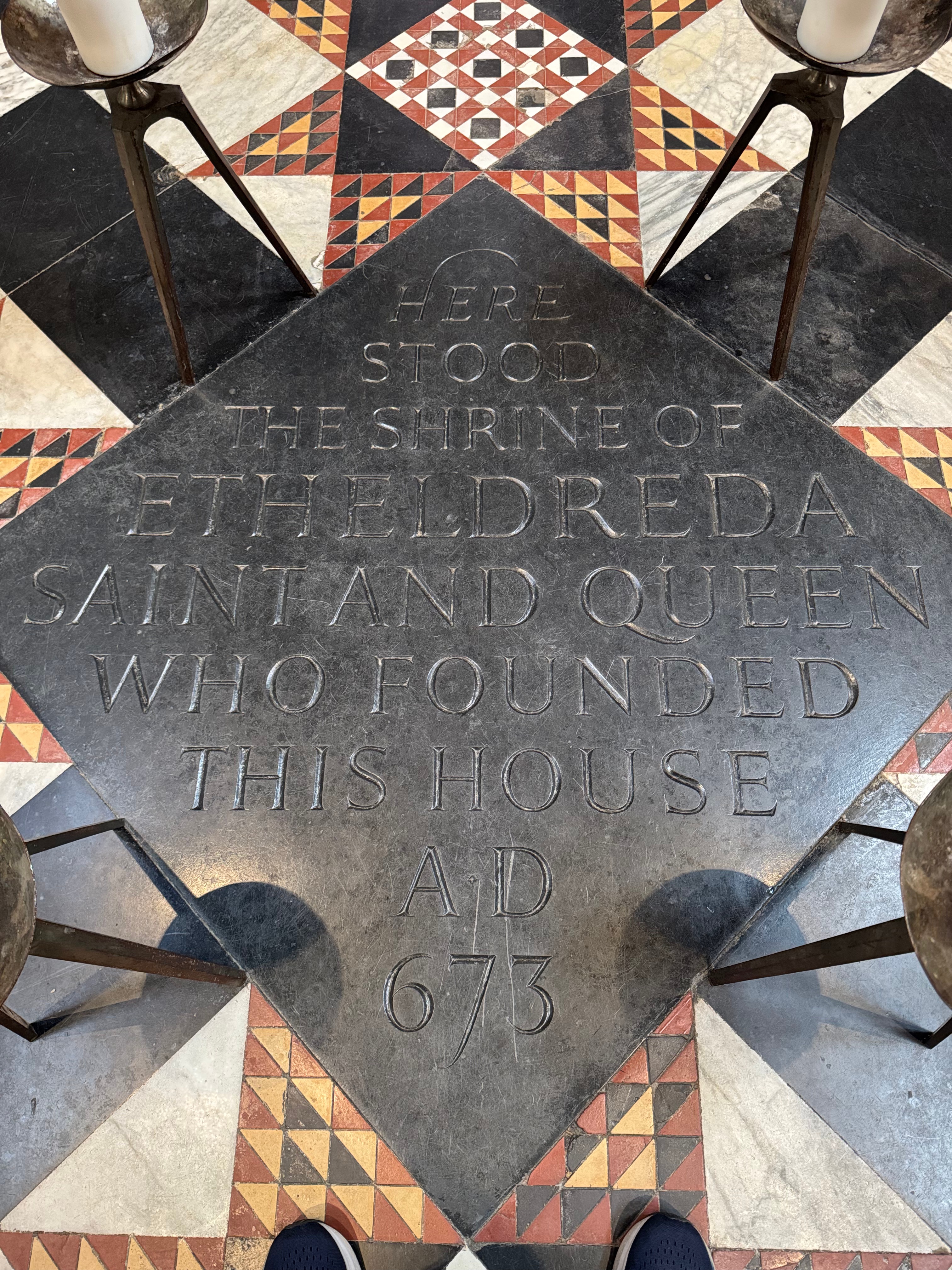
The first one was Etheldredra, important in Ely. Ultimately, she became the founder and abbess for a monastery in Ely in the 7th century, the land on which The Ely Cathedral was later built. But before that she was a king’s daughter and was married off to an elderly king. The audio guide at the cathedral tells us that her husband died before they could consummate the marriage. It says she married a second time, different king, and was released from that marriage since she was still a virgin.

A lot to take in and it made me curious. For one, when I heard about the first marriage in the audio guide, I had the impression that the first husband must have died quickly after the marriage. But other sources indicated they were married for several years. Some sources claim that the deal that was made prior to both marriages–which had been political in nature–that she would be permitted to remain a virgin.

Apparently her second husband came to regret that deal many years in, which led to the marriage being dissolved.

To doubly prove that she really, really was a virgin at the end of that marriage, the audio guide tells a story of her walking stick sprouting leaves overnight.

Interesting that it was an acceptable deal in both marriages that she would remain a virgin when the marriage was presumably for political reasons. The tale of Henry VIII communicates that producing an heir–about 900 years later–is a very big expectation for a royal wife. A lot must have changed in the ensuing years.

Anyway, by today’s standards, kind of a weird origin story for a woman who ended up doing something very, very important when she was allowed to stop getting married off and fulfil her longtime dream of starting an abbey. As an abbess she was highly influential and successful, both in life and after her death, after which she was officially sainted.

The buildings Etheldreda was part of building were destroyed and rebuilt in subsequent centuries. The Ely Cathedral was built on the land starting about 300 years after Etheldreda died. Coincidentally, the monastery at Ely–by then a Benedictine monastery–was closed down by Henry VIII himself.

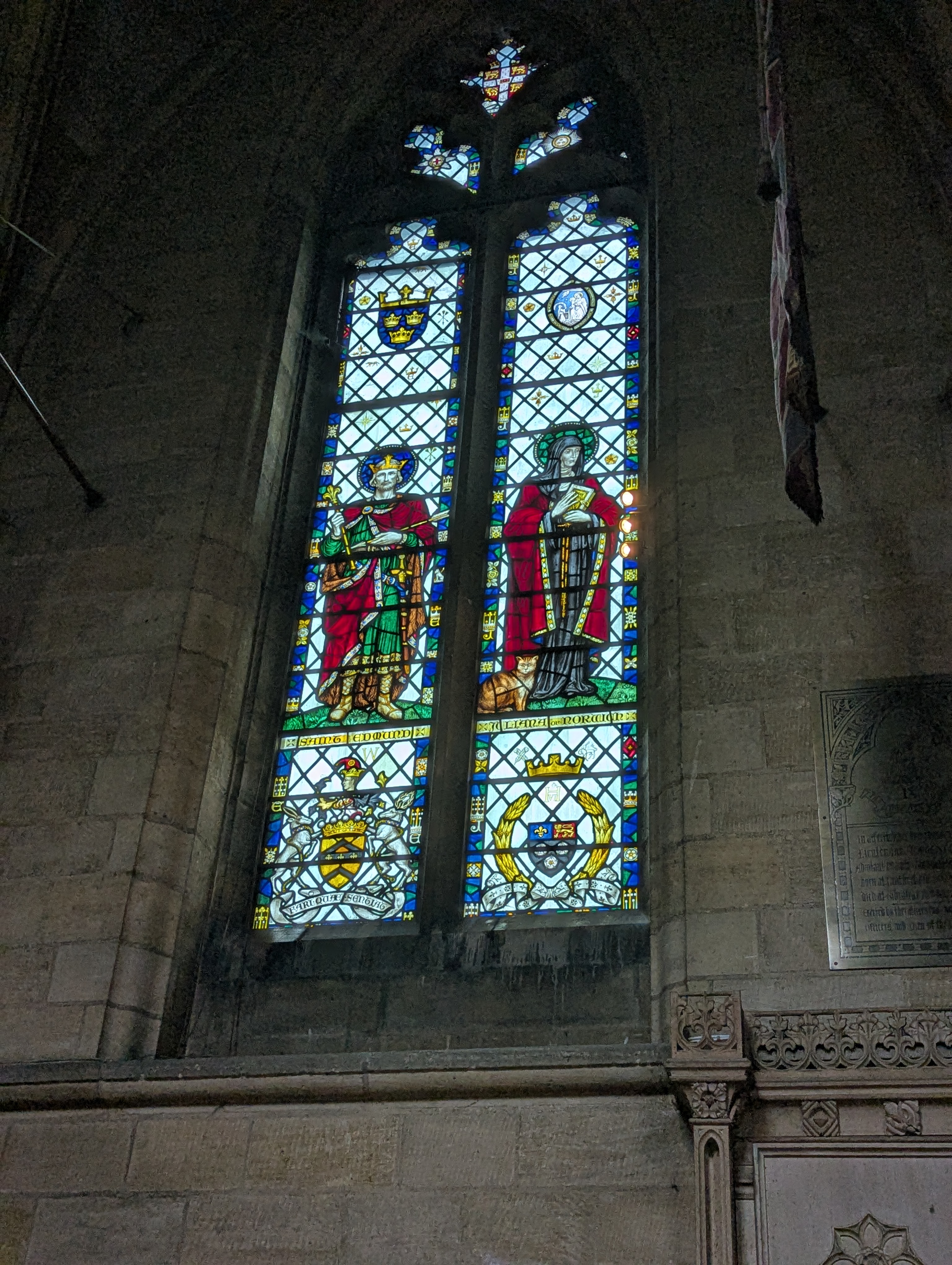
Another woman we became re-acquainted with in Norwich was the mystic and theologian referred to as Julian of Norwich. We had encountered some of her writings when we visited the British Library exhibit Medieval Women: In Their Own Words a few months ago. In the 14th century, Julian wrote the first English language book known to have been written by a woman. Very little is known about Julian, including whether Julian is even her name. She was an anchoress–a religious devotee who lives in a cell–in St. Julian’s church, and her understood name may have come from the church itself. She was inspired to write two versions of a book titled Revelations of Divine Love following an illness in which she was close to death and experienced visions relating to Christ’s death. The first version was written shortly after she recovered from the illness and the second one, much longer, after many years of intellectual and spiritual exploration. Her manuscripts were preserved for 200 years before being published. Although she claims in her writings to be uneducated, her work continues to inspire theologians even in our time. Famously, she posited that God is much like a mother. Our guide at the Norwich Cathedral quoted some famous words of the book that she found comfort in: “All shall be well, and all shall be well, and all manner of things shall be well.” Julian is commemorated in stained glass in the Norwich Cathedral we visited. Note in the picture the woman on the right pane carrying a book.

Photo from Norwich Cathedral web page

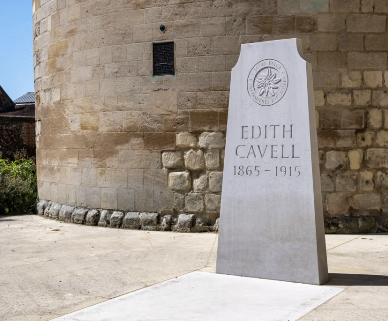
Moving on many years, we quasi-encountered Edith Cavell who was born at the end of the 19th century. As we were walking for the first time from the Norwich train station to The Maids Head I saw a pub named The Edith Cavell. Then once we checked in to The Maid’s Head, on the way to our room, there was a meeting room labeled The Edith Cavell Room. I asked myself “who is this Edith Cavell?” She sounded familiar but I couldn’t remember why. It turns out she was the daughter of Norwich-area clergy and had an increasingly interesting nursing career that presumably started either because experienced a failed romantic relation OR because she helped her father through a serious illness. Or both. Her nursing took her into teaching and administration and allowed extended travel in Europe. She was notable as a nurse in the first World War for treating war wounded from both sides but ended up running afoul of the Germans for aiding the escape of more than 200 soldiers from Belgium. She admitted her “guilt” and was executed at age 49 by a German firing squad. She showed virtually no fear leading up to her death, glad to die for her country and with her soul at peace. Her body is buried outside the Norwich Cathedral.

And finally, we encountered Edith Pretty, the woman responsible for sharing the Anglo-Saxon treasure of Sutton Hoo with the world in the mid 20th century. Born into a wealthy family, she became deeply interested in archeology and, with her husband, purchased the Sutton Hoo property on which the burial mounds were located. (Interesting side note: before her marriage she, too, was a nurse and served in Belgium in the first World War.) Although many people believed the mounds had already been robbed, as indeed they had been, she was convinced that they contained additional treasure. After her husband passed away, she hired a local excavator, Basil Brown, to explore the site further. He is often credited with the find, as he should be, but the excavation occurred only because she was willing to invest toward the work. She waited patiently for the coroner inquest that would rule on who had rights to the treasures, rejected rewards from the crown for gifting the property, and as soon as it was clear it was hers to dispose of as she wished, she donated all artifacts to the British Museum to add to our understanding of the Anglo-Saxon culture and be enjoyed by everyone. Like our other women, Edith Pretty was a Boss.

It occurred to me that every one of these women became known for what she did when she was single, regardless of how she came to be that way. Perhaps being single contributed to their being able to pursue a deep-seated interest given the times in which they lived. You have to admit we are looking at a very long period, more than 1000 years, in which it seems true that it has been quite difficult for a married woman to pursue the kind of work that speaks to them as a person, unless that work happens to be taking care of family. (I do note that some of these “jobs”–like being in a monastery–just require being single.)

To be clear, we know about these women because they became famous. In my mind, fame is not the object for most of us. The object is being able to do work that interests one greatly.

And as much as I note that women have made progress since Edith Pretty’s death in the 1940s, it seems there are still forces that hold us back. In fact, forces that existed in the past that were briefly weakened seem lately to be coming to greater strength.

Ominously, women leaving the workforce at high rates. Although unexplained, some factors believed to be involved include rapidly increasing cost of child care and the newly growing wage gap between men and women workers. Removal of women from government positions under a new regime, where the claim is that they are insufficiently qualified. And my social media feeds over the summer included a video in which a well-known male operative, leading seminars for young women, encouraged them not to work or attend college. Or if they attended college not too work hard at it. Ok to pursue “an MRS degree,” where you are only attending college to meet eligible bachelors. Indeed, ready yourself for a life of servitude where you take care of family and be subservient to your husband, the boss of your family. Sorry for the bad luck of the accident of your gender.

As a recent retiree from a job I loved I’m so thankful for the period in time in which it’s been possible as a woman to pursue interesting work. My fervent hope for all women is that one is not required to be single or childless to be able to freely choose and grow in an occupation. That women be judged on their objective merits instead of assumptions about people of your gender. That when partnered, their partners support their self-actualization, just as they support the same in their partners.

I bet all the single ladies of East Anglia agree.

New territories, Norwich edition: part 2

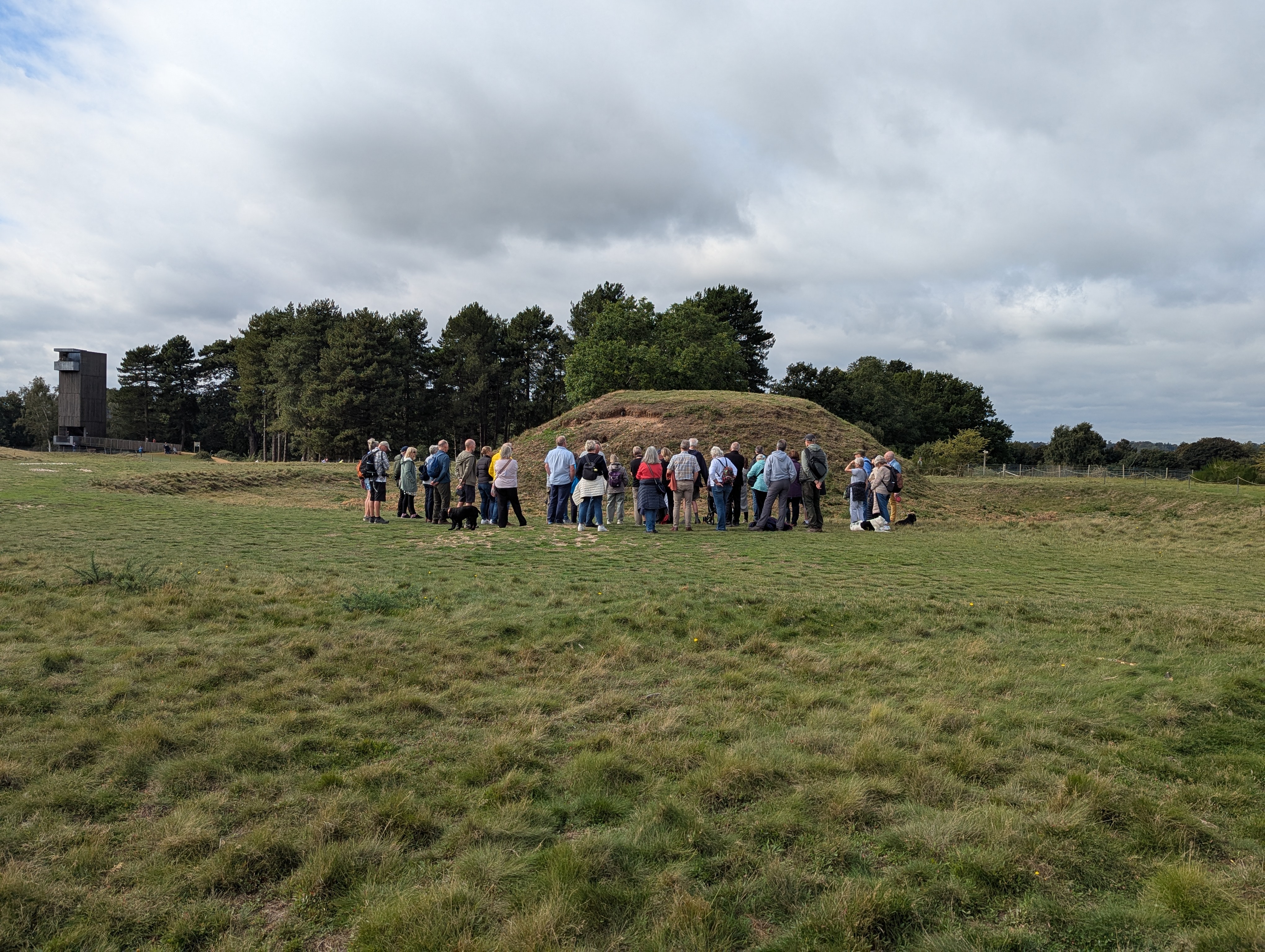
With the rain more or less behind us, we had breakfast at the hotel and then took the train to Melton. The Melton train station has the best butcher shop I’ve ever seen….and very little else. We walked along a narrow sidewalk very close to a busy thoroughfare for 15 minutes to arrive at Sutton Hoo. We initially learned about Sutton Hoo from the Netflix movie called The Dig. The movie tells the true story of how one of the most significant archeological finds in England–an Anglo-Saxon burial ground–came to be discovered. For perversely quick and hopefully not inaccurate history from a touring American, Anglo-Saxons migrated to England starting in the 5th century A.D., about the time the Roman occupation was coming to an end. The find provided a new picture of how Anglo-Saxons lived. They had been much more sophisticated than originally believed.

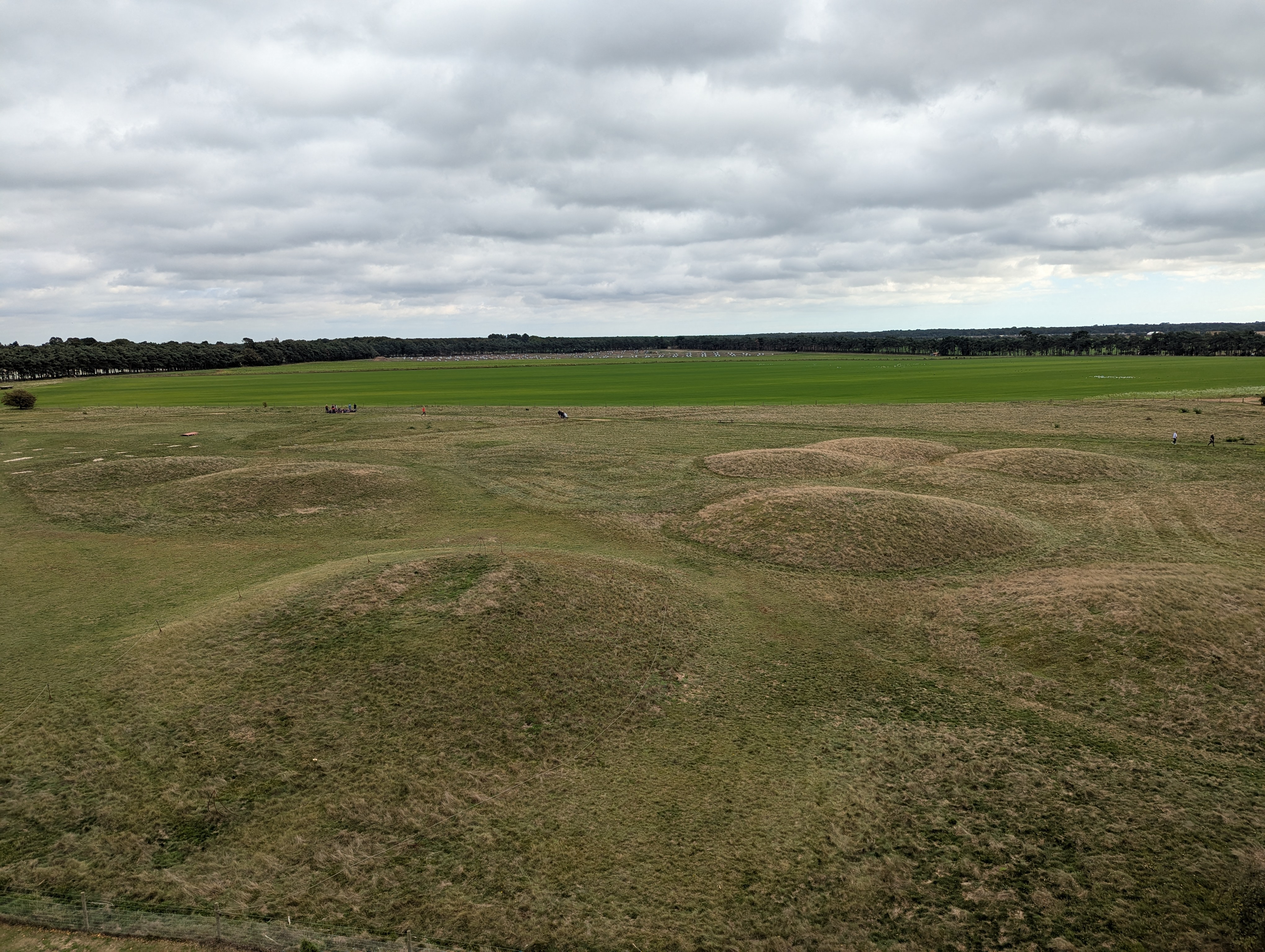
Sutton Hoo was property owned privately by a woman named Edith Pretty that, after her death, was gifted to the National Trust. You can visit the site and walk the property, including into her home and to the location of the burial mounds. There’s an observation tower near the mounds so you can climb up and look down at the mounds. A displayed map on the observation tower describes what was found in each mound. Edith Pretty’s home includes exhibits about her life and details about how the excavation project came about. There’s also a museum about Anglo-Saxon life on site. Outside of the museum, there’s a replica of one of the most interesting objects found in the mounds, the fossilized outline of a ship that was used to bury an important Anglo-Saxon leader. At Sutton Hoo, they seem convinced that the leader was King Readwald. The British Museum, which ultimately received most of the objects found in the mounds, including a famous war helmet believed to belong to the person buried, seems less certain. Pretty’s gift of the artifacts to the British Museum came after a coroner’s inquest into the ownership of the artifacts found on her land. As soon as the inquest established that she alone had rights to the artifacts, she gifted them for all to enjoy.

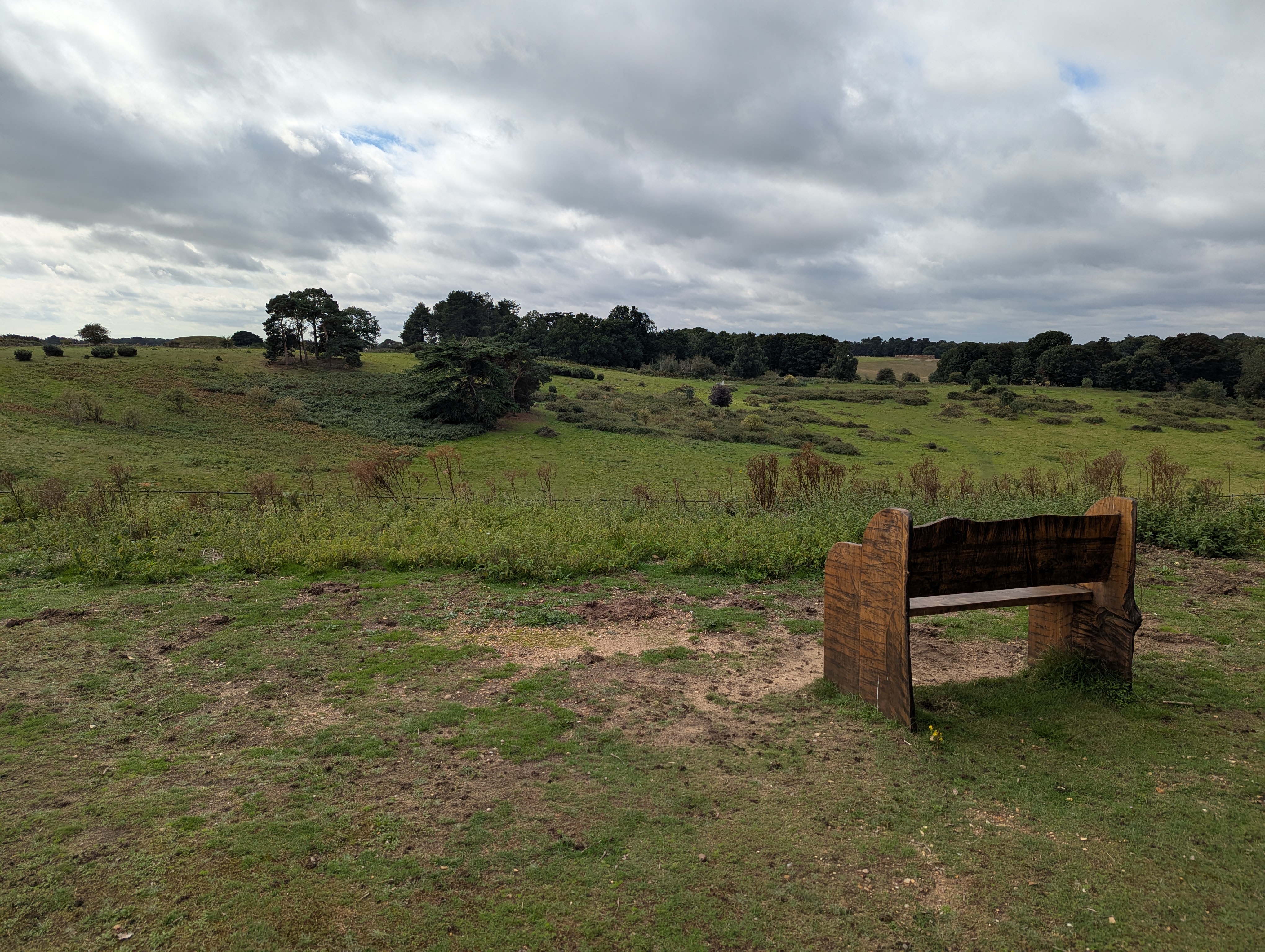
The property is beautiful, rolling hills, wild grasses and flowers. We explored a path through and near the property trying to find the River Deben, which is what the Anglo-Saxons are believed to have used to drag the ship to the burial place. We got to where we could see it but there are a number of beautiful and gated private properties blocking access.

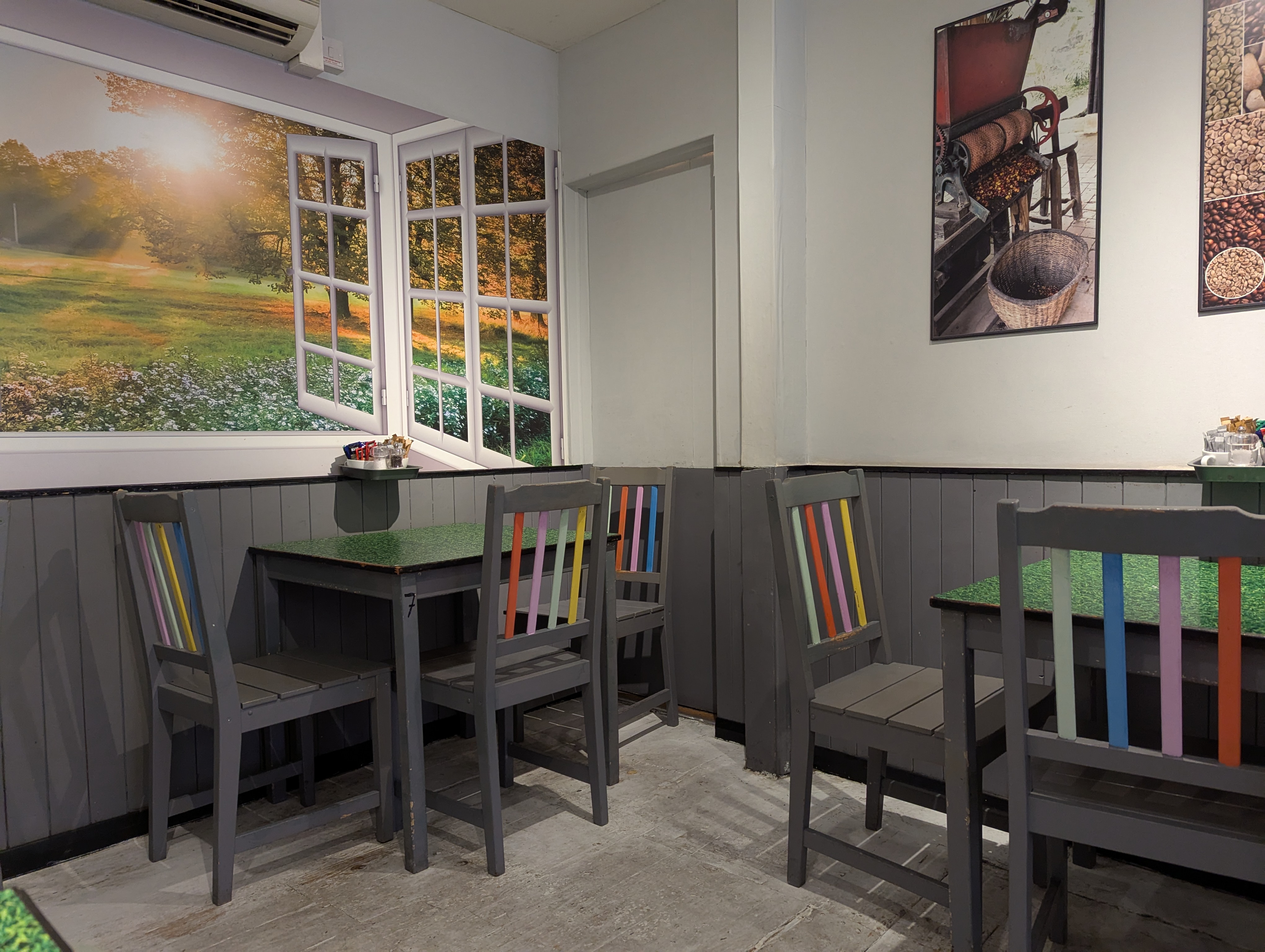
After visiting Sutton Hoo and returning to the train station, we headed to Ipswich. Like Norwich, Ipswich’s football stadium is also near the train station. It’s quite nice from the outside. We walked to the city center and searched out a place for lunch, settling on the highly rated Blends Coffee House. Cute on the outside and kind of rough on the inside, with a menu far too big for the size of the shop, we were pleasantly surprised by how good everything was. I had a pot of tea (third day running, really enjoying this habit) and a BLT. English bacon is really different from bacon in the U.S. and I love it. It’s a bit more like U.S. ham. To be clear, I love all bacon, the English way or the U.S. way. I could easily be vegetarian, except bacon. I guess I would have to be a vegebacontarian. What was so so good about the BLT was the artisan bread. Not to go all crazy about a BLT, but it has long been my belief that what is important in a BLT beyond the quality of the B, the L, and the T is the right proportion of each ingredient and the balance of mayo and bread. Theirs was just about perfect.

As we were paying our bill the person who waited on us asked if we were Canadian. Honestly….there are reasons I would like to pretend to be Canadian while traveling in Europe at this time in history. At all times, America’s relationship with Britain is a bit complicated. But the week we were there, our President was also, and that brings feelings to the fore. But we were honest and that led to a general conversation about why we were in England. We asked if he was an Ipswich fan and he ran to the back of the kitchen to bring out his coffee cup bearing the logo of his favorite team. It was Port Vale. We laughed because that’s who Arsenal was to play in the Caribao Cup the week after we were there. (I am writing this more than a week after the trip; Arsenal ended up winning the match on Wednesday 0-2.) The other worker at the coffee shop was an Ipswich fan. We asked him about the rivalry with Norwich. He said “oh yeah–we hate them.” He was looking forward to the first match in a long time between Ipswich and Norwich. Both teams have been up from the Championship and into the Premier League and then back down to the Championship in recent years, but not at the same time. Both are in the Championship now.

After some good natured trash talking and some advice from the guys about what we should consider doing in Ipswich (they recommended nothing in Ipswich but had ideas about other places we should go in England), we went off to find baked goods. Ultimately, we found a chain called Cookie Barista. We walked back to the train enjoying the scenery and downing our cookies.

Back in Norwich, we made another visit to St. Andrew’s Brew House, this time to try some of their beer. It was Thursday, kind of a popular day for people to meet up with friends at the pub so a bit livelier than our last visit. We had the Anglo-Saxon amber. It was pretty yummy. We walked over near the Guildhall for an easy dinner at my husband’s go-to chain in England, Pizza Express. This one had a great view over Norwich and the market.

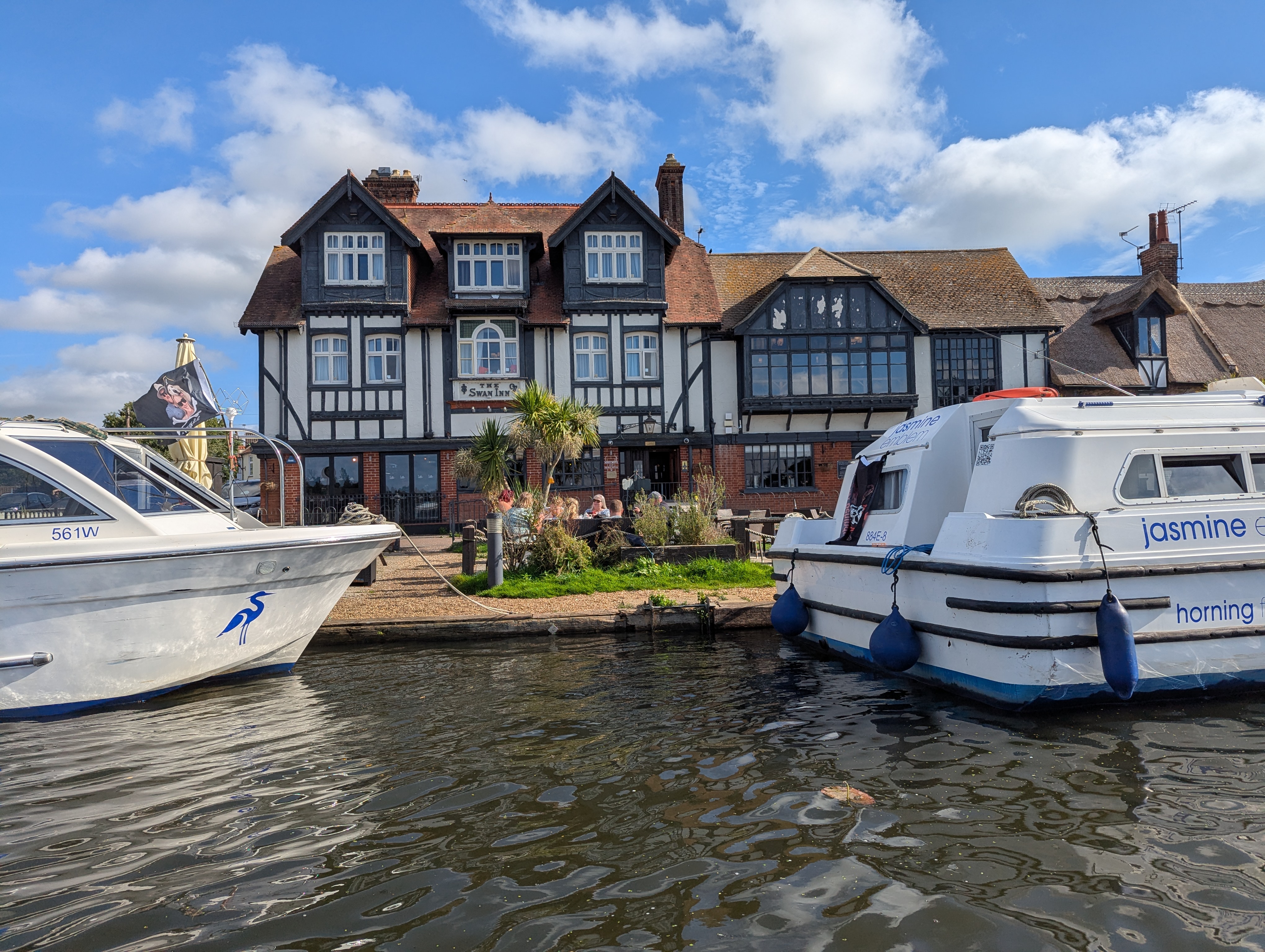
Our last full day in East Anglia was going to be a warm one. We took the train to Hoveton and Wroxham to enjoy the Norfolk Broads. The understood way to enjoy the Broads is to rent watercraft and tool around the Bure river. We found Norfolk Broads Direct and rented a motor boat for 3 hours. It was a September Friday so not too busy on the river, but they had a lot of boats available to rent and had plenty of competition from our boat outfits. I had zero confidence about driving the boat but my husband had full confidence. It was a bit hairy getting out of the dock area but he quickly became comfortable and we enjoyed looking at the beautiful homes along the river, the wildlife, and the scenery. You can only go a maximum of 5 miles an hour on the river so it was quite chill. When people rent for a whole day they are able to dock and go into little towns and pubs along the river. 3 hours was too short for us to do that, but we got a sense for the lifestyle.

We walked back to the train station in Hovetown/Wroxham to embark on our next adventure, a ride on the Bure Valley Railway up to Aylsham. We had to grab a quick lunch so we stopped at an establishment near the station called Fizz and Fromage. I saw they had BLT on their menu but it was not just “BLT.” It was “Famous BLT.” After waxing lyrical about the BLT in Ipswich, you know I was tempted. I really can’t explain how it is possible, but the BLT at Fizz and Fromage was the best I have ever had. By far. My husband was just as enthusiastic about his hummus and sourdough.

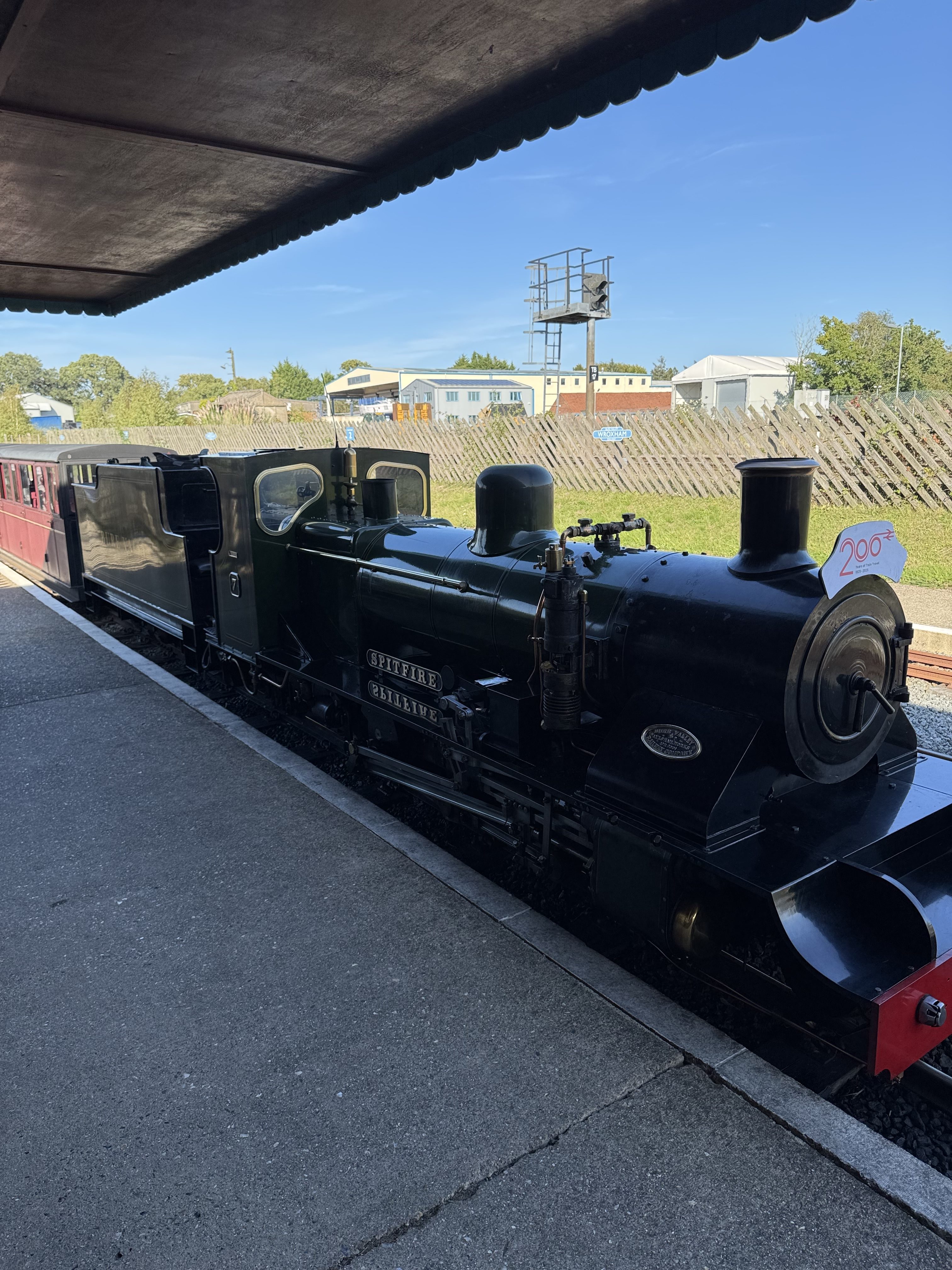
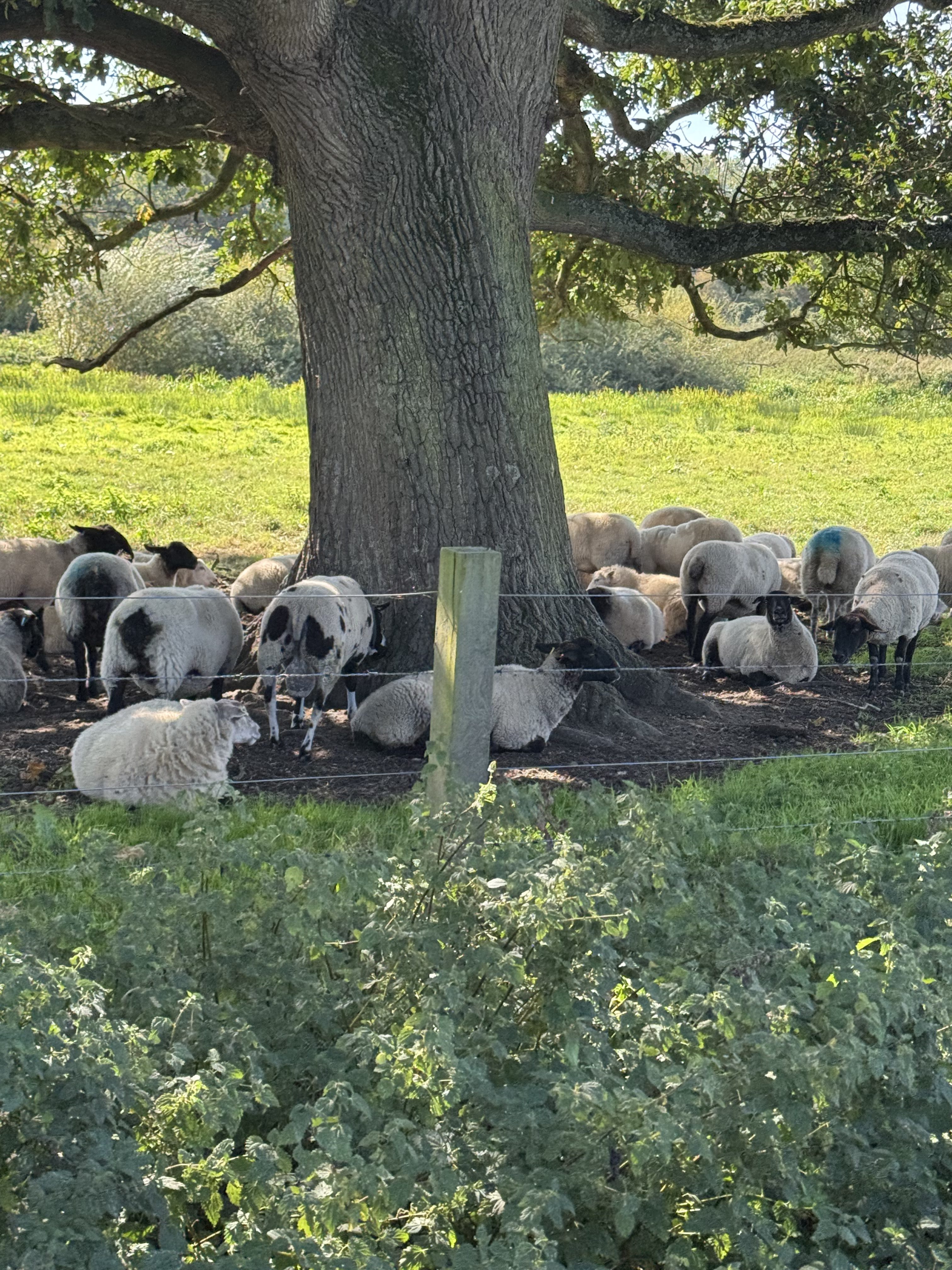
The Bure Valley Railway was a lot of fun. The train was pulled by a steam engine. It was not an old steam engine as we had believed when we booked but rather a new one. The whole railway was actually constructed in 1990. The train went through lovely country side, past villages and the Bure river, and sheep. We passed bikers and hikers using a path next to the tracks, and sometimes they passed us. We arrived in Aylsham and had about an hour to explore before returning by rail to Wroxham. Cute little town.

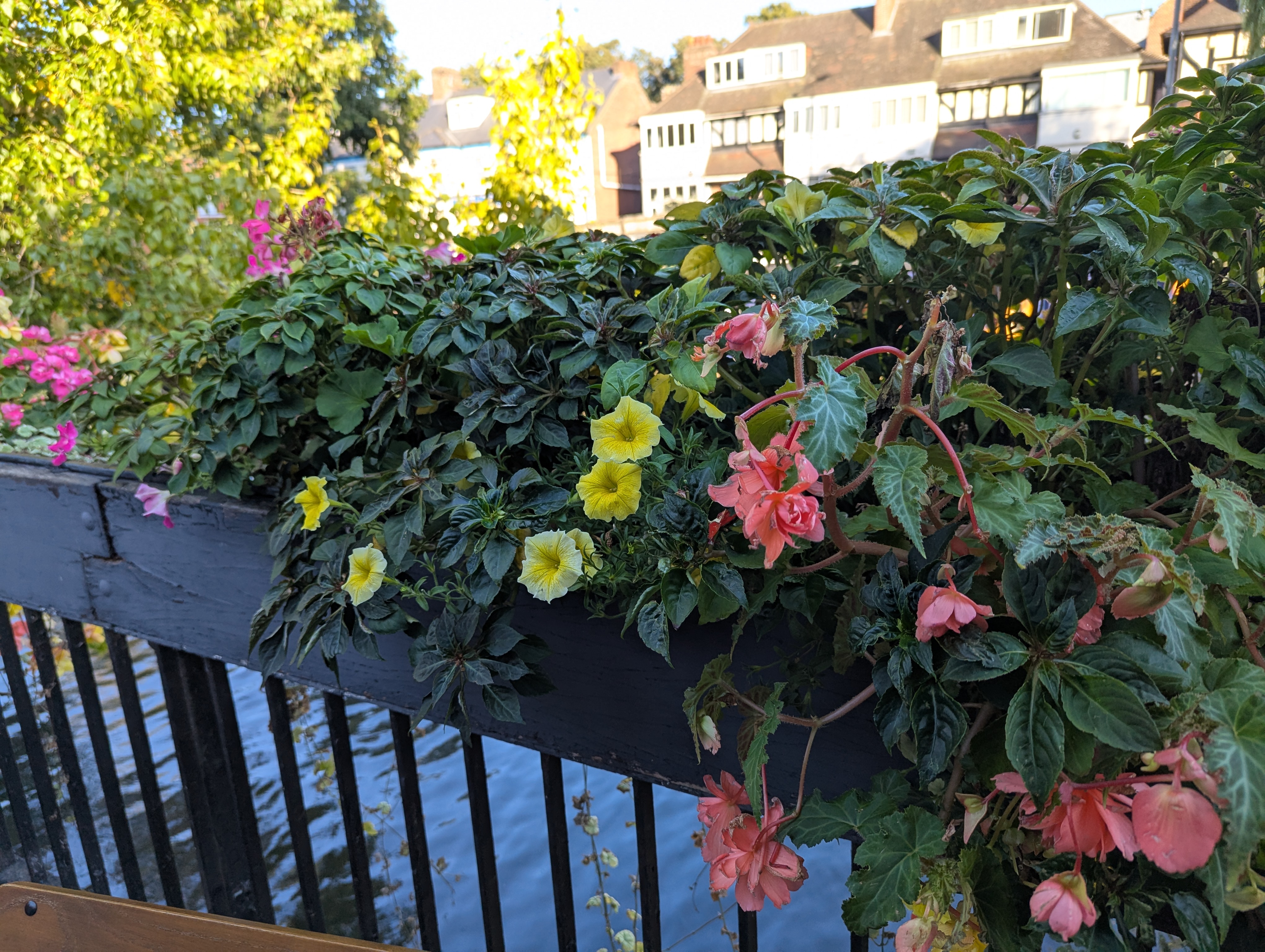
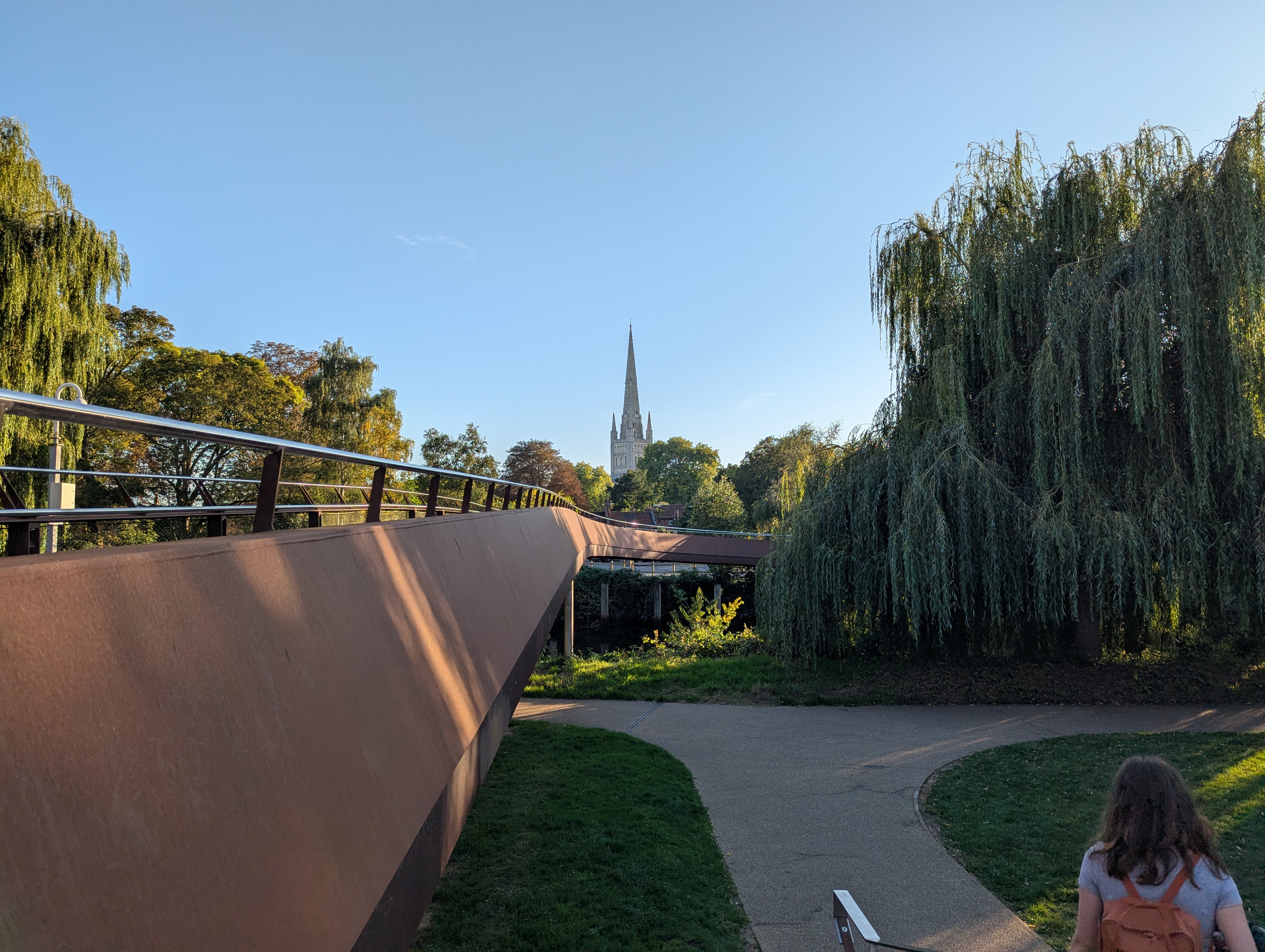
Upon our return to Norwich, we made one more stop at The Compleat Angler for a beer to celebrate our trip to Norwich. It was still so warm and nice we sat out on the porch over the lovely River Wensum. The flower boxes on the exterior of the pub were so pretty. Afterward we followed the path along the river as far as we could on our way back to the Maids Head. It occurred to me that you can see the Norwich Cathedral from many parts of town. I wondered what kind of impact that has on your living when your spiritual home is visible from most places you are.

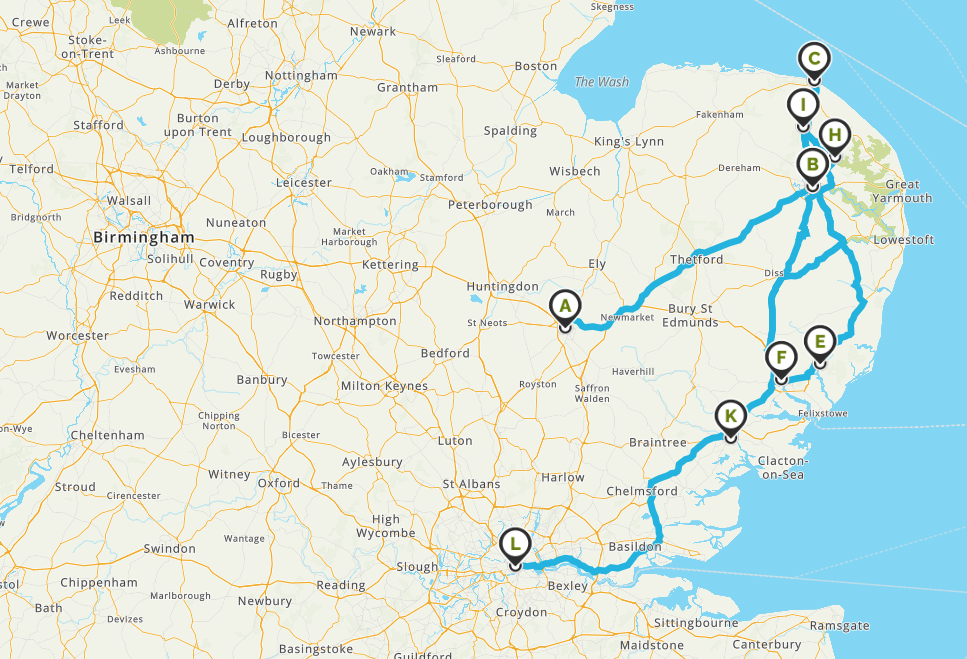
The Norwich leg of our trip, including the ride back to London, looked something like this:

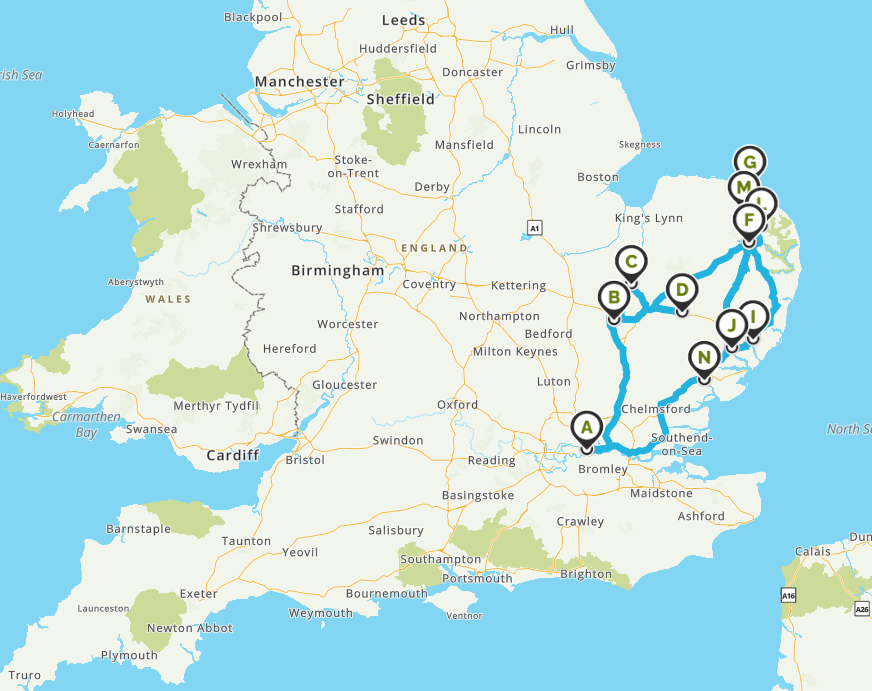
And our whole trip to East Anglia looked like the map below.

We saw and did a lot in East Anglia. Still, I’m left with the feeling that there is so much more to see and do.

Another time….

New territories, Norwich edition: part 1

One “downside” of the Anglia Plus Three-Day Ranger train pass was that you can’t use it before 8:45 a.m. This was a downside only for my husband. He is the early bird for whom the worm is waiting. For me, a consummate midnight oil burner, mostly because I’m too wound up at night to sleep, it meant very reasonable departure times each day. On Tuesday morning, we packed up our suitcases and rolled them to the Cambridge train station across from which we had scones at the bakery chain Gail’s. At the allowed time, we boarded the train to Norwich.

While on the train, we learned that the weather was going to be rainy on Wednesday across East Anglia so we made a quick change on the planned order of activities to take advantage of the rather better weather on Tuesday. Upon arriving in Norwich, we carted our luggage to our Norwich hotel, The Maids Head, and checked it at the desk. Then, instead of touring Norwich as planned, we went back to the train station and took a short trip to a seaside town called Cromer and walked the short distance to the city center.
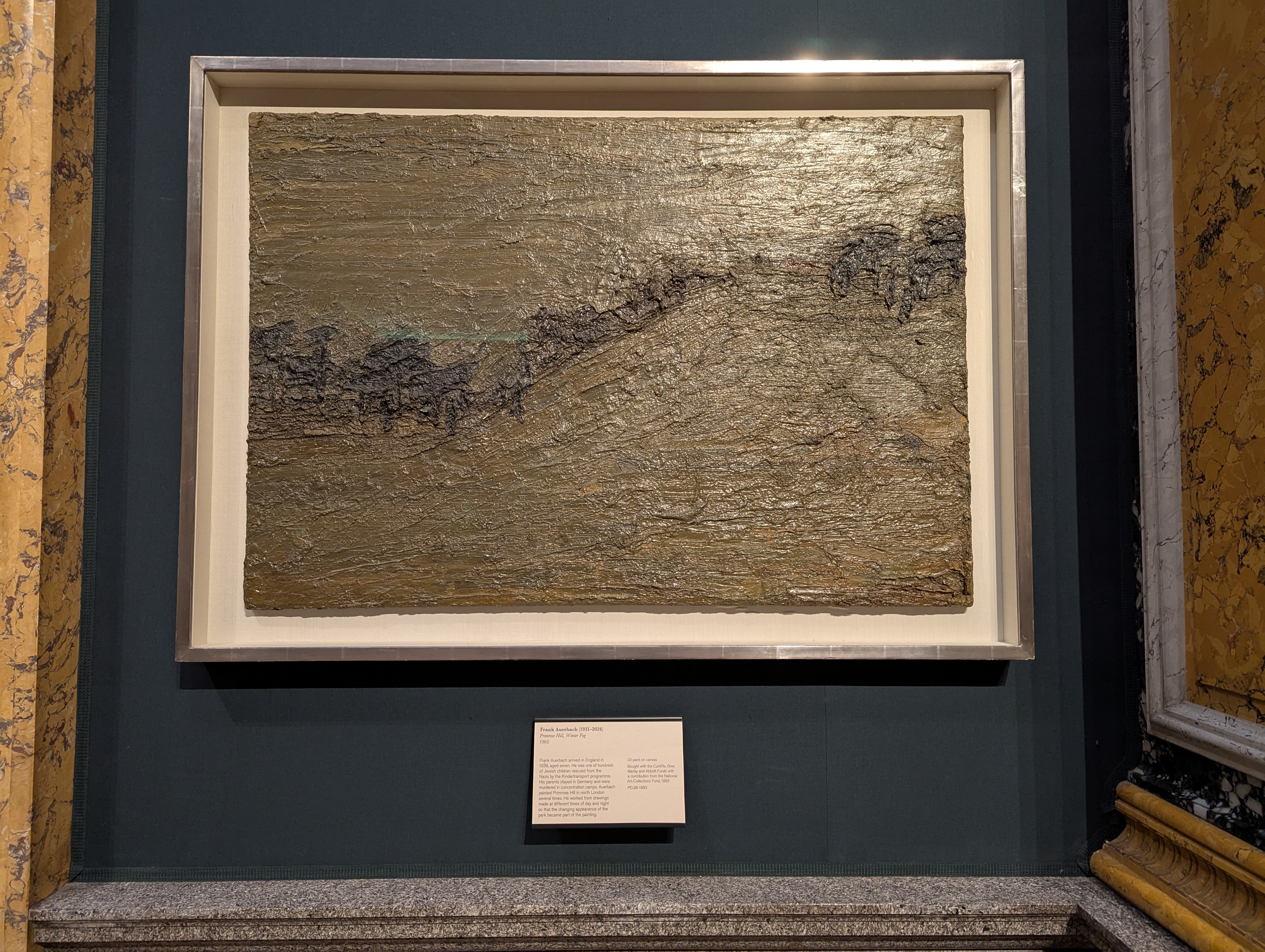
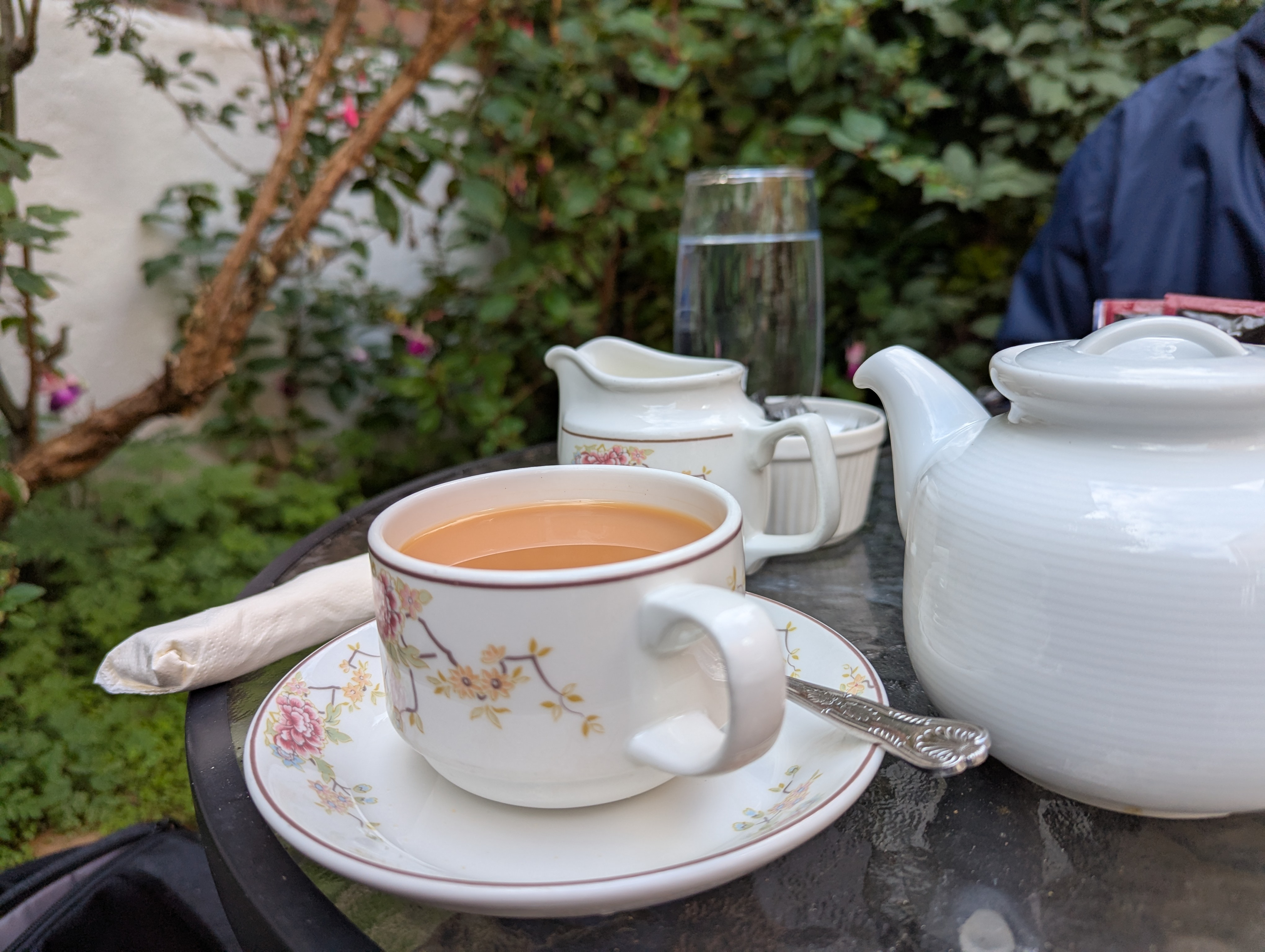
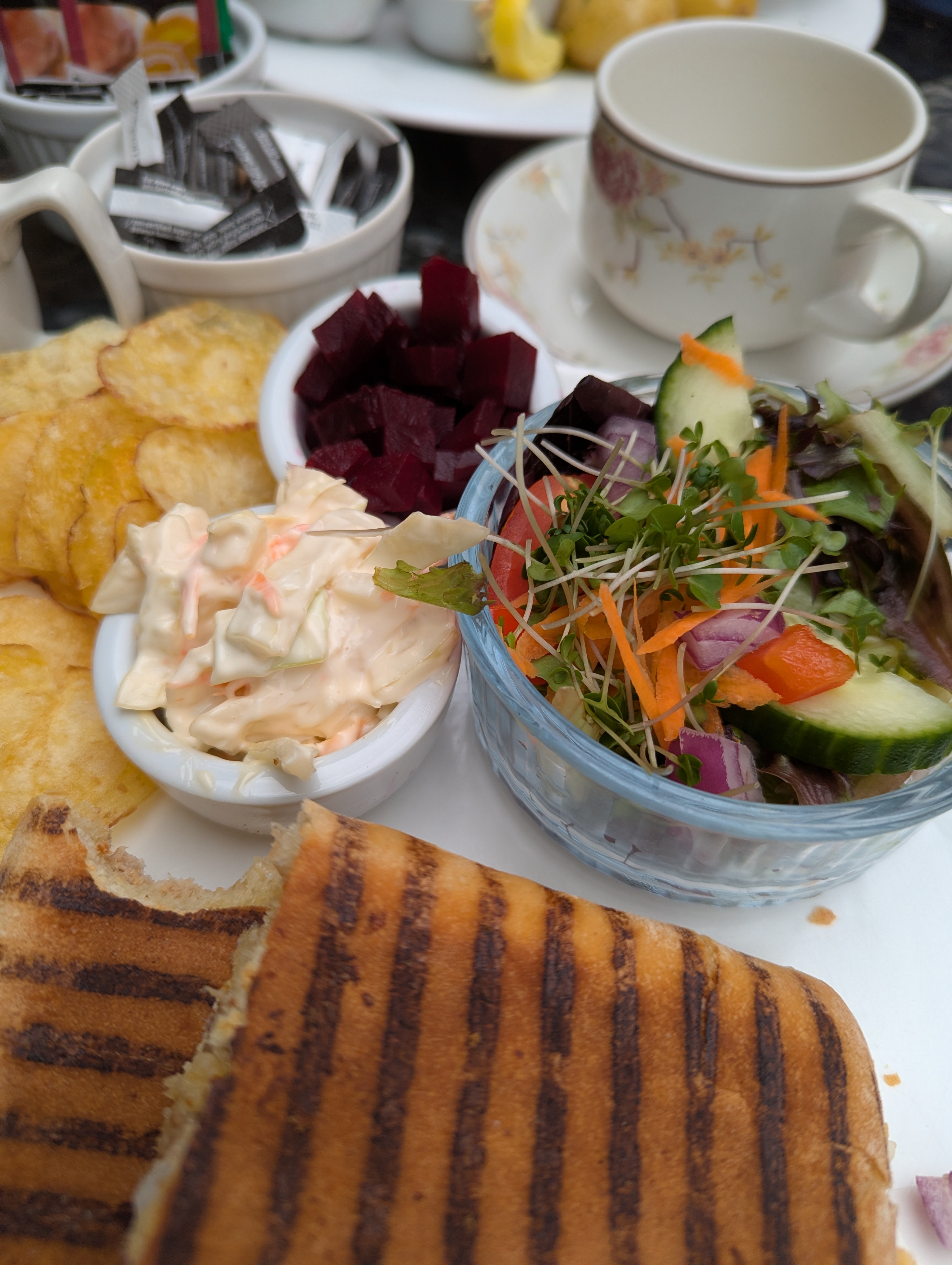
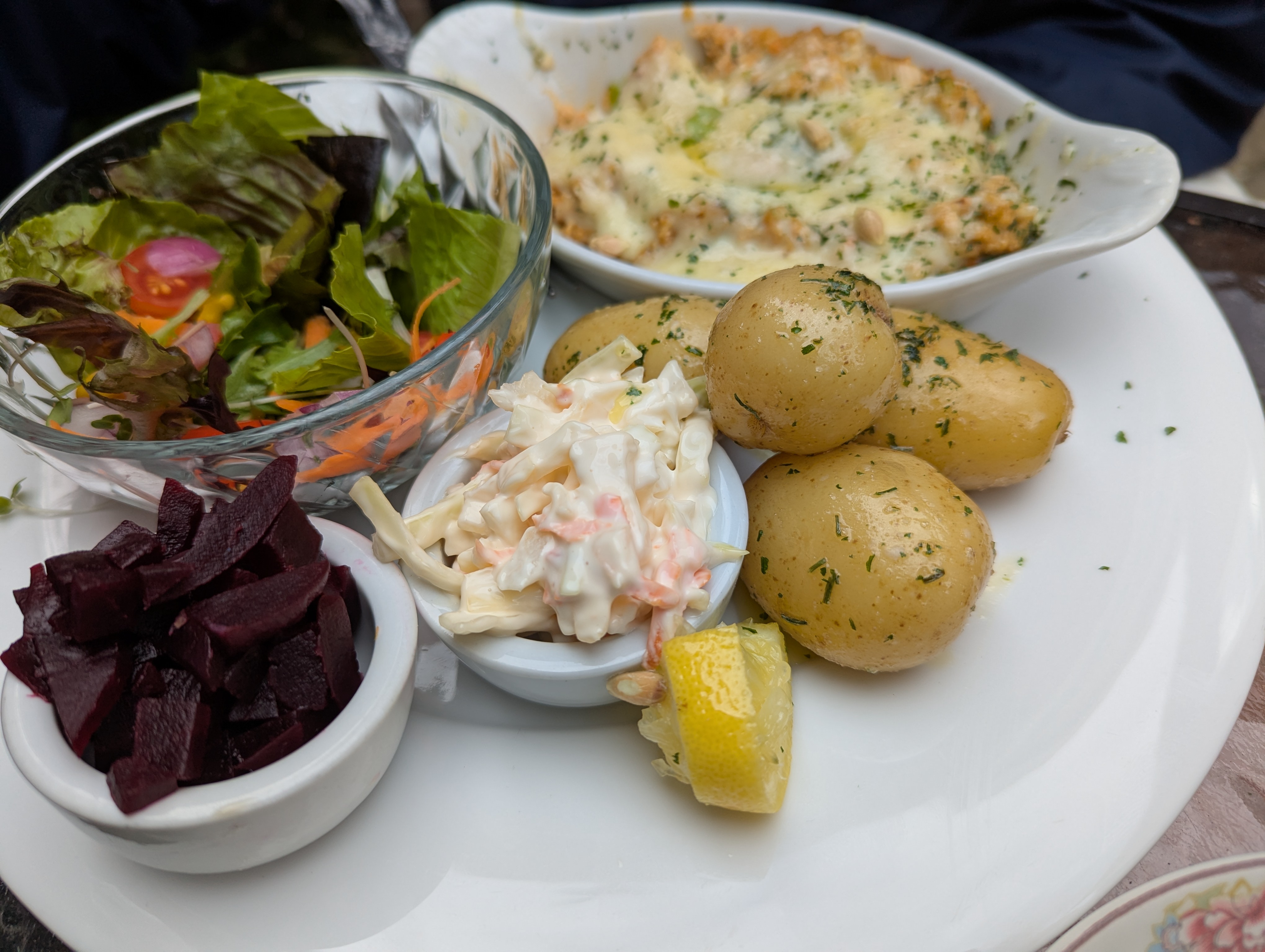
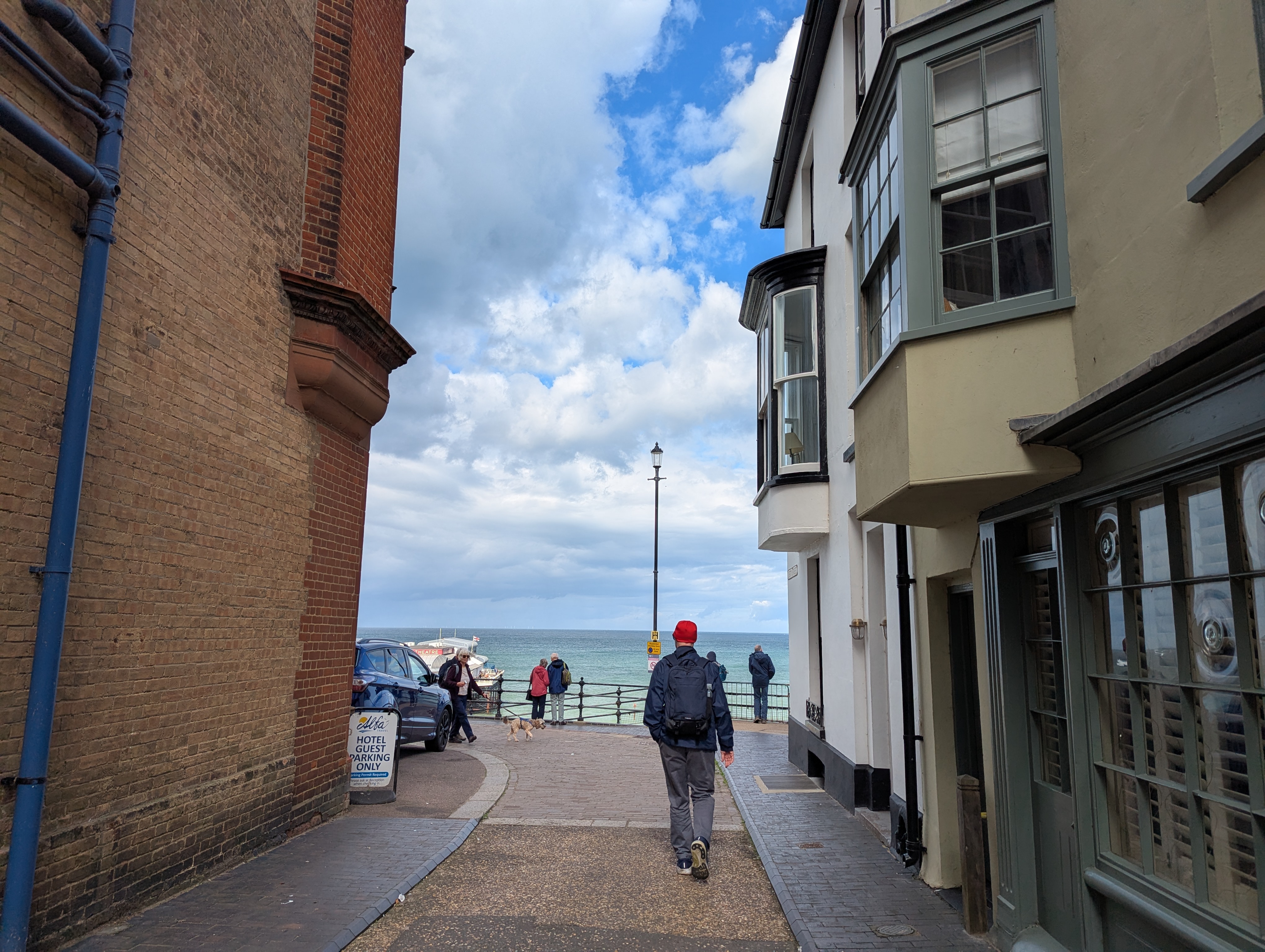
Cromer was lovely. We walked though a charming district looking for where we might have lunch. At last we found a sign pointing from the main drag to a neighborhood for a restaurant called Browne’s on Bond Street. After consultation of very good online reviews we walked over. They were fully booked inside and offered a table in the garden. It was a chilly day but we were dressed for it and happy to have the table. I started with a pot of tea. Having tea was starting to become habitual away from London. My husband had the local dish of Cromer crab prepared kind of like a gratin and I had a tuna melt. Quite yummy.
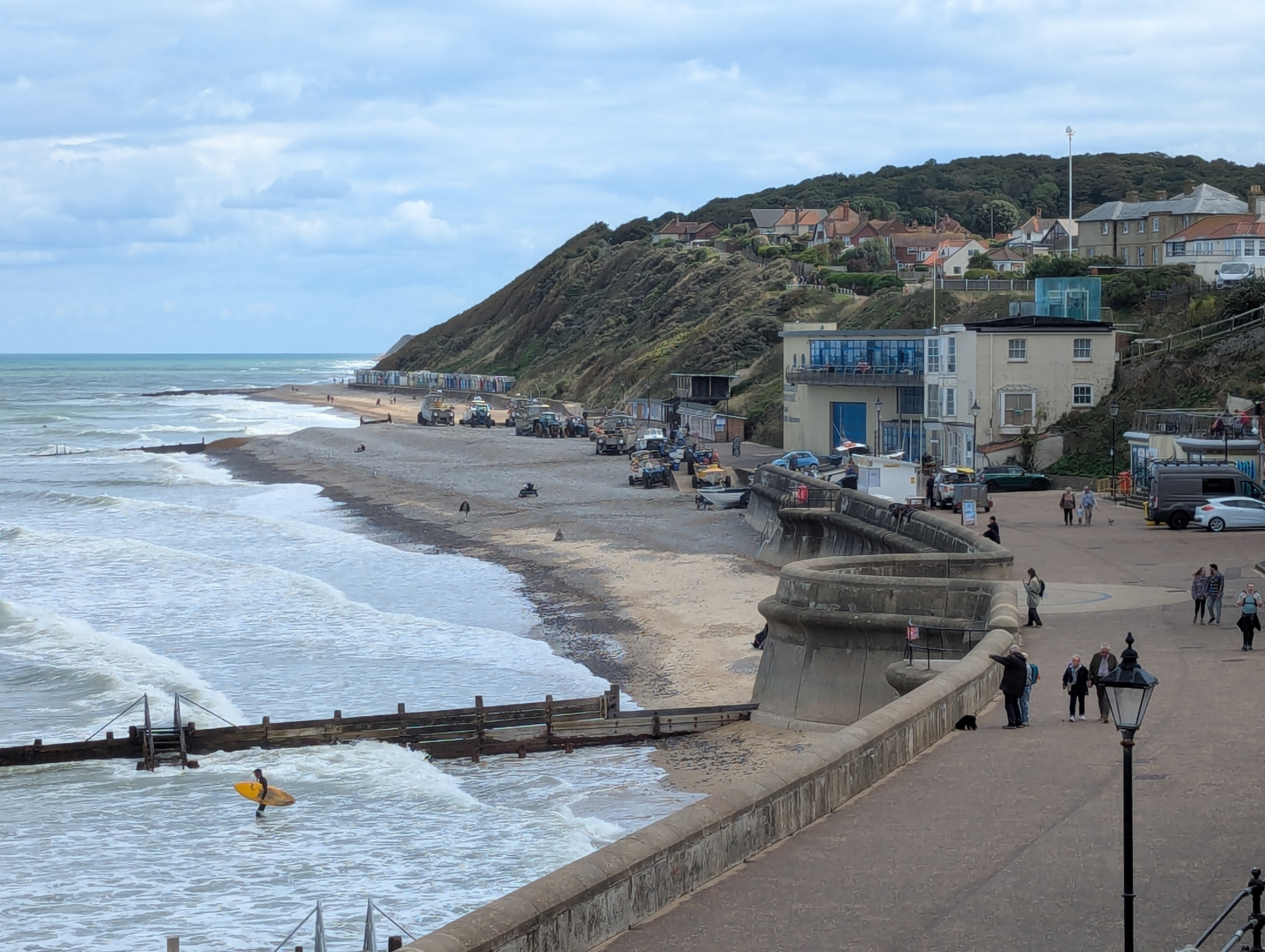
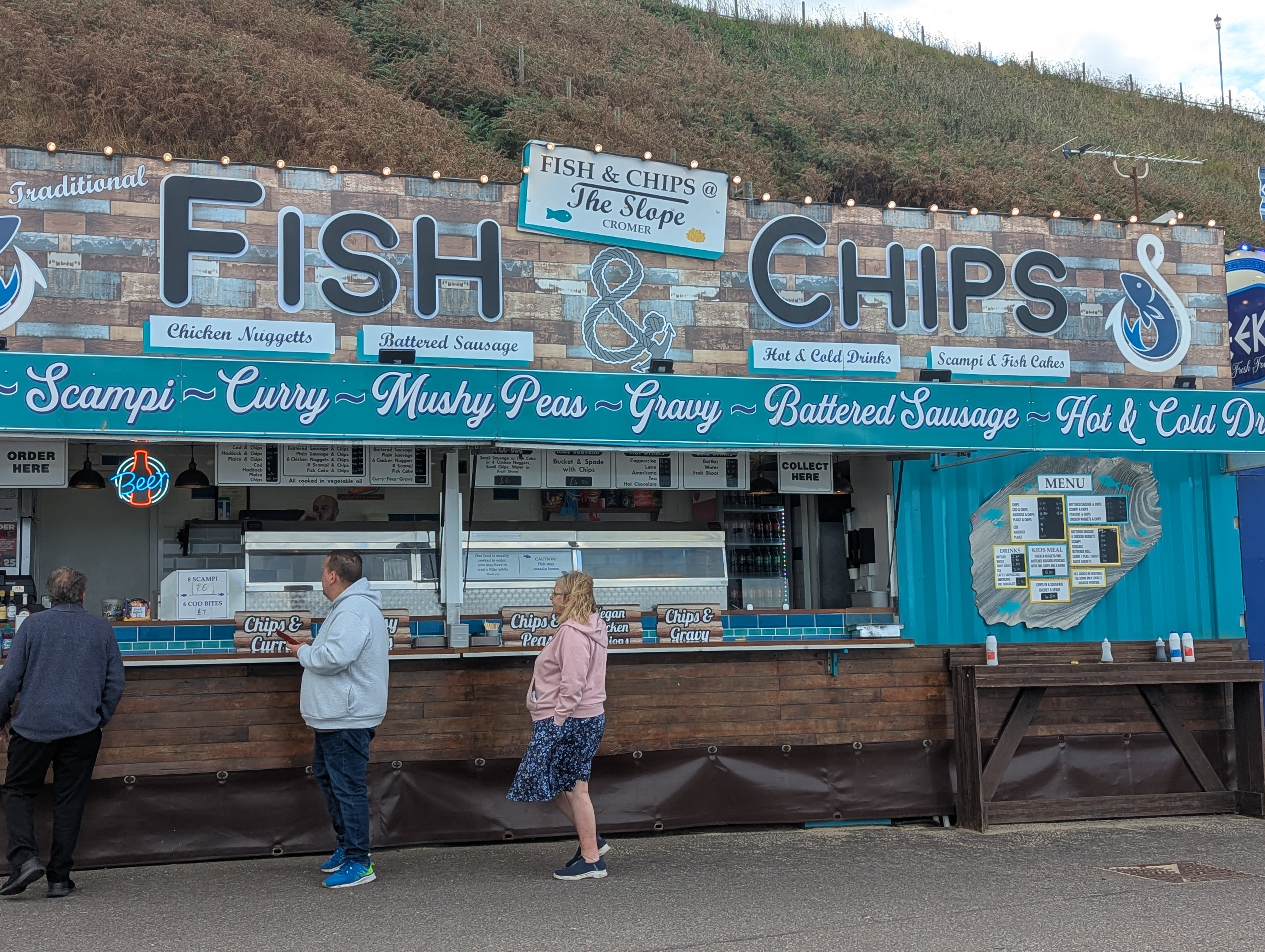
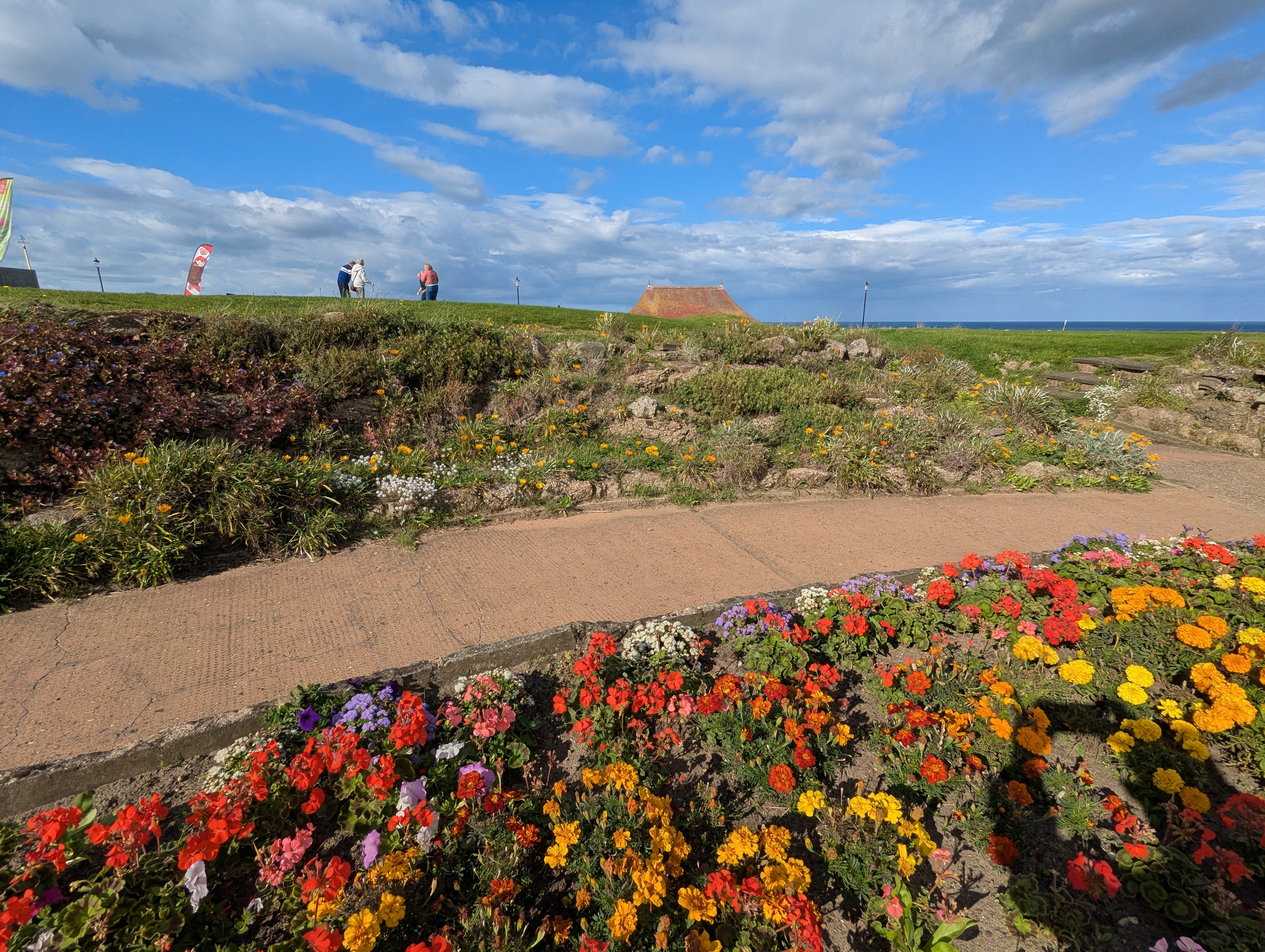
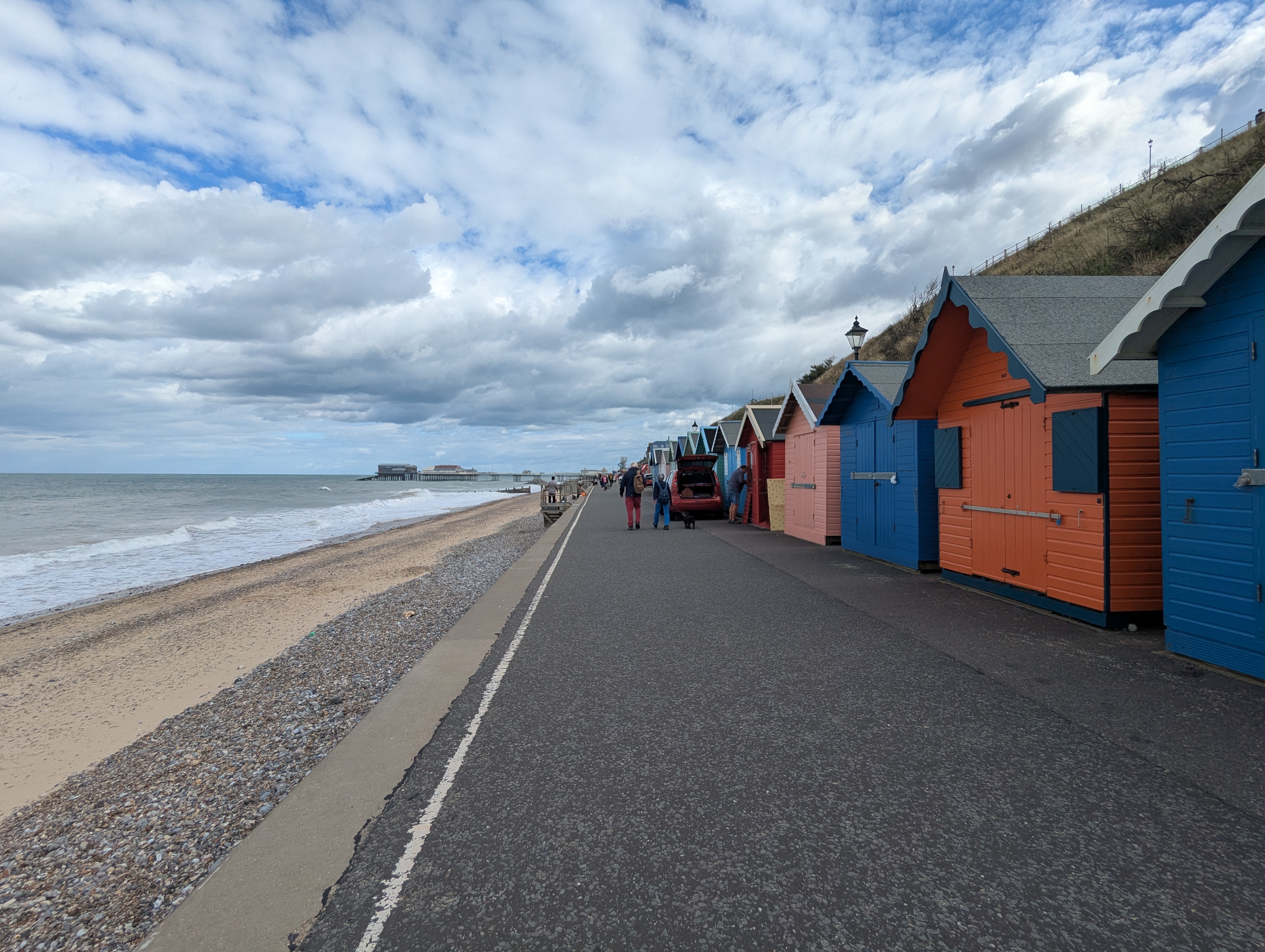
After lunch, we wandered over to the seashore. The wind and waves were wild. A group of wet-suited surfers were having some great rides. We walked on the promenade along the shore and Cromer Pier. Our fellow wanderers included a lot of dogs who were enjoying the walk and the beach. We took a small detour back to town and The Craft Bakery in search of a baked good. I had a delicious Orange shortbread cookie and my husband had something called a white chocolate rocky road cookie which was kind of like a giant block of fudge. (It was so good that on a later date on the trip my husband said “maybe we should go back to Cromer for a cookie?”) We had to work that off, so back to the beach and to a very cool miniature gold course on a bluff above the ocean.
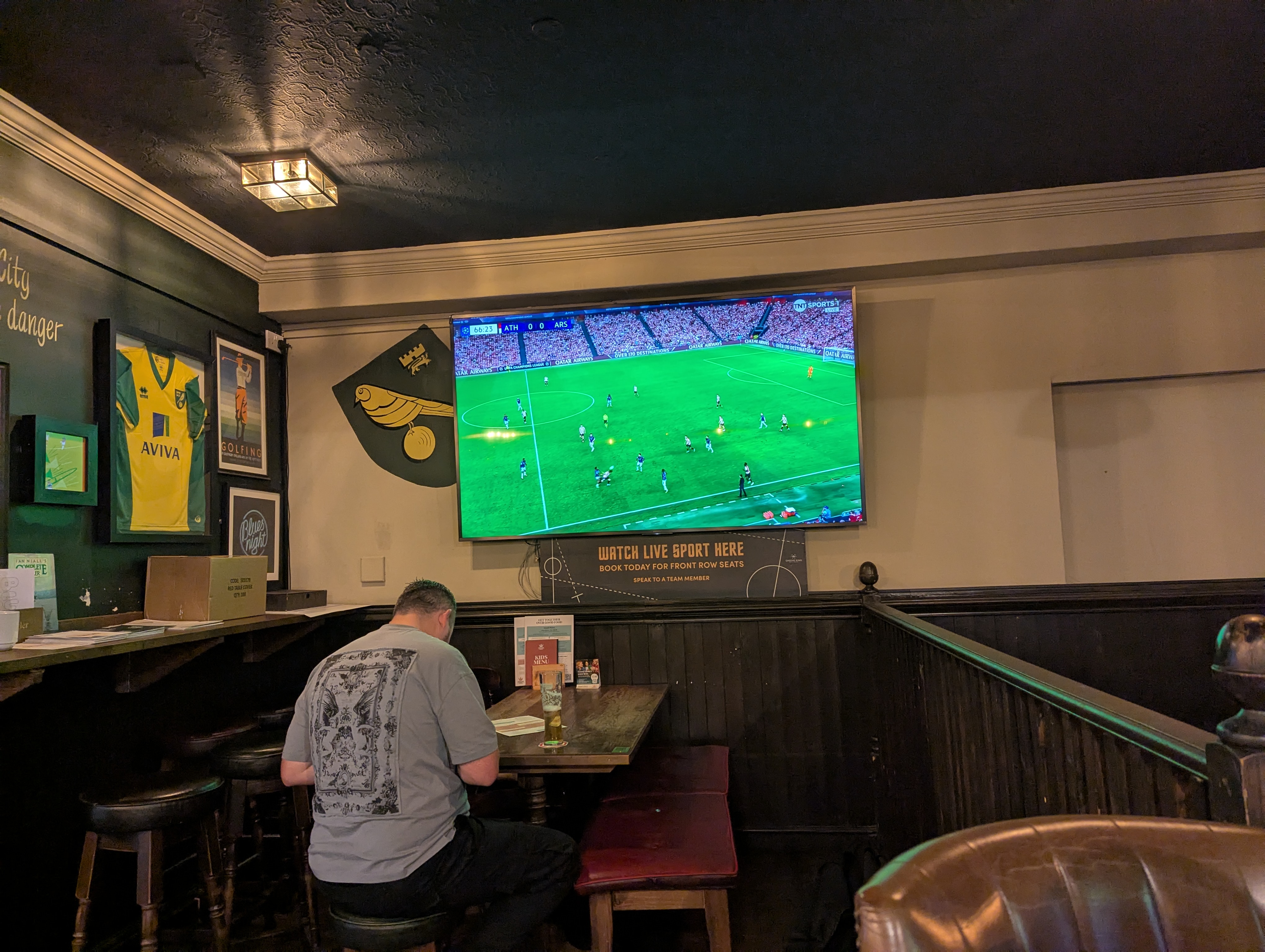
The planned activity for the evening was to watch Arsenal’s first round Champion’s League match against Athletic Bilbao. It was being played in Spain rather than home. Upon returning on the train to Norwich we had to nail down a pub option where the match would be televised. We’ve found using internet search engines to produce unreliable results, so we made an insurance stop at the pub we’d chosen to make sure. It was on the way from the Norwich train station to our hotel. Sure enough, The Compleat Angler intended to televise the match. After quickly checking into our hotel we doubled back to the pub where a kind bartender had reserved us a table.

It was a pretty interesting match. Manager Mikel Arteta selected the same forward line and the same back line as for Nottingham Forest but obviously had to make a decision about what to do in the midfield in the absence of Martin Odegaard. He’d been re-injured in the Nottingham Forest match and didn’t even take the trip to Spain. In the Nottingham Forest match Arteta had replaced Odegaard with 18-year-old Ethan Nwaneri and he did quite well, but in this match he chose Declan Rice along side an unchanged Martin Zubimendi and Mikel Merino. That Declan Rice did NOT start against Nottingham Forest was a bit of a surprise.

The atmosphere in Bilbao was nuts. That must be a wonderful place to attend a match if you’re a fan of the home side. Arsenal dominated possession for most of the match but struggled to produce a goal. Eberechi Eze, who was so wonderful against Nottingham Forest really struggled in this match. Noni Madueke continued to impress. Viktor Gyokeres struggled and, in the second half, also took a blow to the head that produced a big gash that was taped up. Lots of tape. He was ultimately removed, replaced by Leandro Trossard, as was Eze, replaced by Gabriel Martinelli. Good changes that sparked something in Arsenal. About 70 minutes into the match, the Athletic keeper kicked a ball into Arsenal’s defensive half which we cleared out to the halfway line. Trossard dinked it over the defender, perfect for Martinelli to run on to. Keeping two defenders at bay he slotted it under the Athletic keeper into the net. Later Martinelli returned the favor, driving toward the left corner and passing to Trossard who’d made great movement to open up space. Trossard’s shot bounced off a guy’s foot and into the goal. The match ended 0-2, not a bad outing.

Meanwhile, beer and dinner for us.

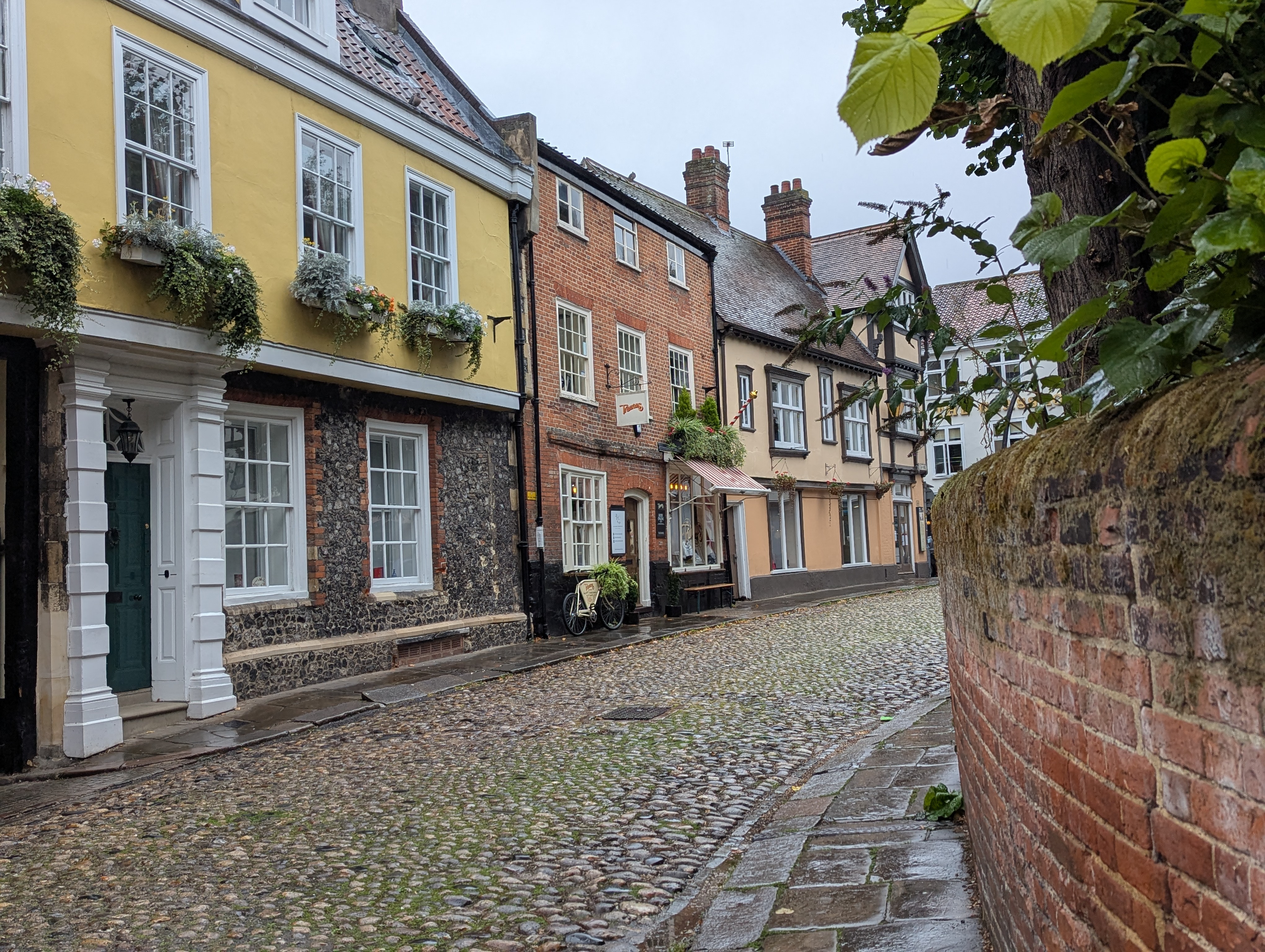
The weather forecast had been accurate. Rain had started early on Wednesday and our new plan was to see Norwich during that rain. Our hotel was very close to a historic area in Norwich called Elm Hill. Like all “Elm” hills in all the world, there are very few remaining Elms due to Dutch Elm disease, but there are cool cobbled streets and interesting old buildings.

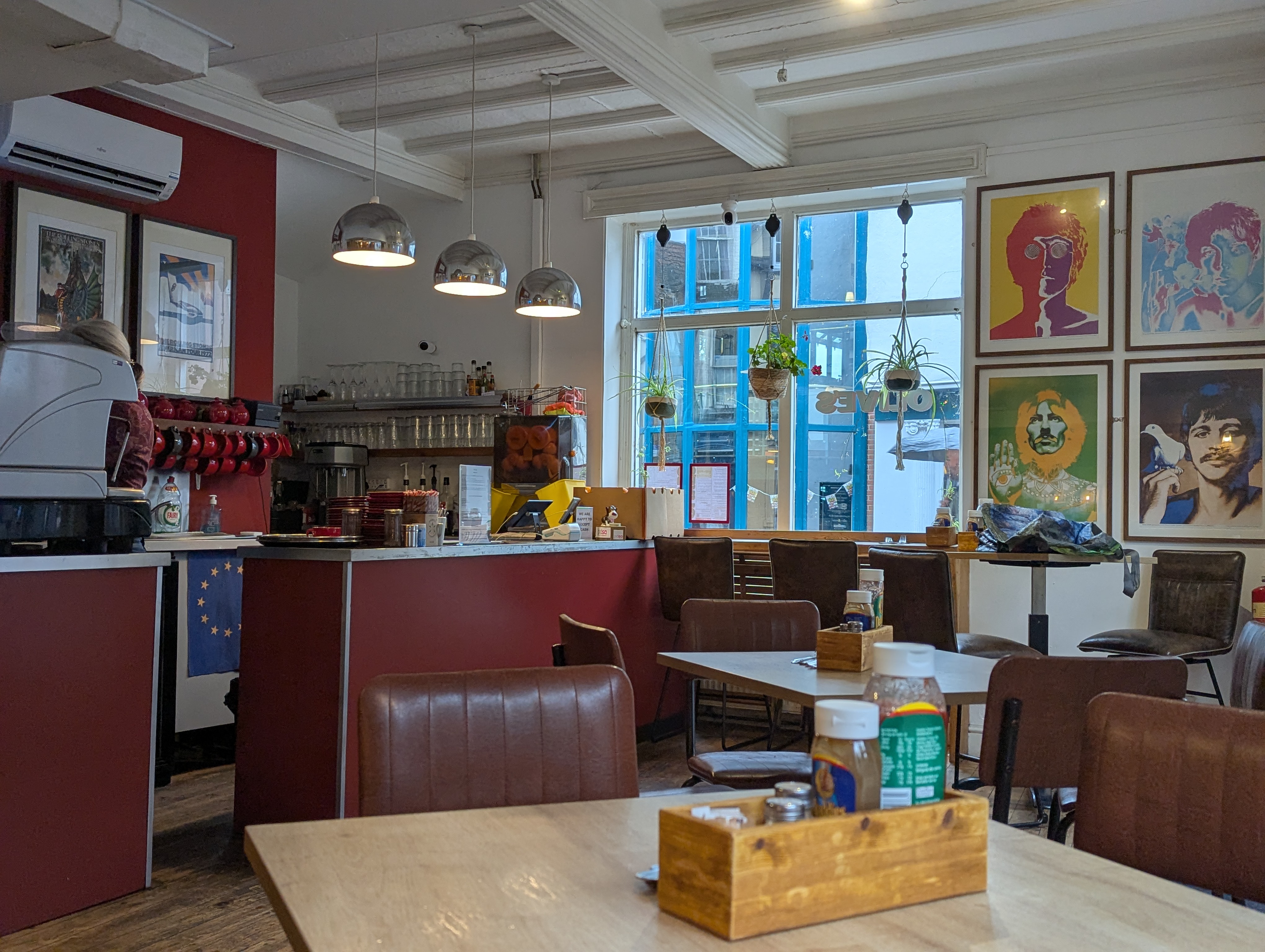
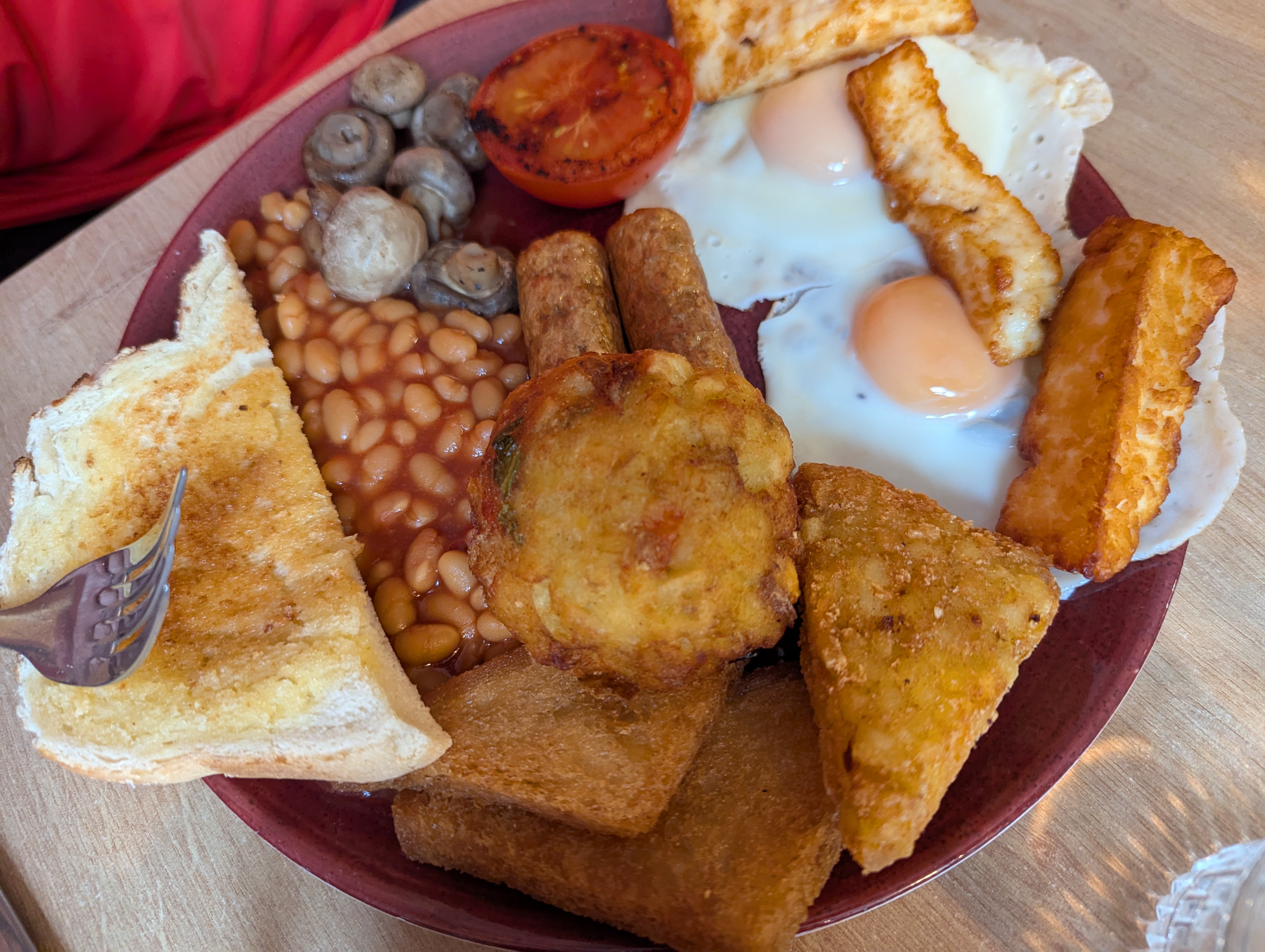
We stopped for breakfast at a place called Olive’s. Mostly traditional British fare. I had a Benedict that had hash browns in place of the usual English muffin. My husband had the veg version of a traditional English breakfast: eggs, sausage, baked beans, bubble & squeak. We had long heard about the thing called “bubble & squeak” but never had it and did not know what it was. Our helpful server pointed it out on the plate and explained it. It’s kind of like hashbrowns but includes cabbage. It was pretty delicious.

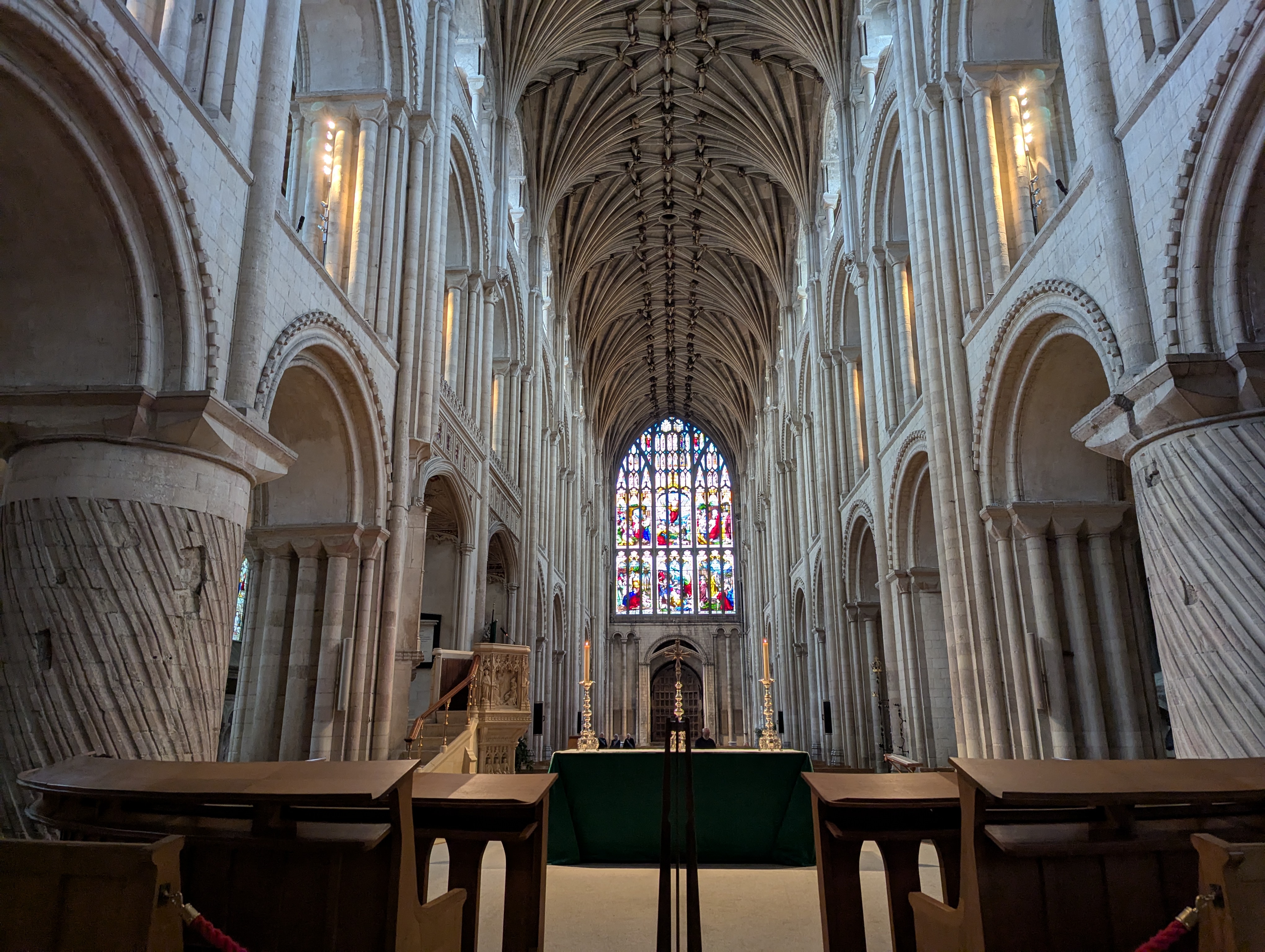
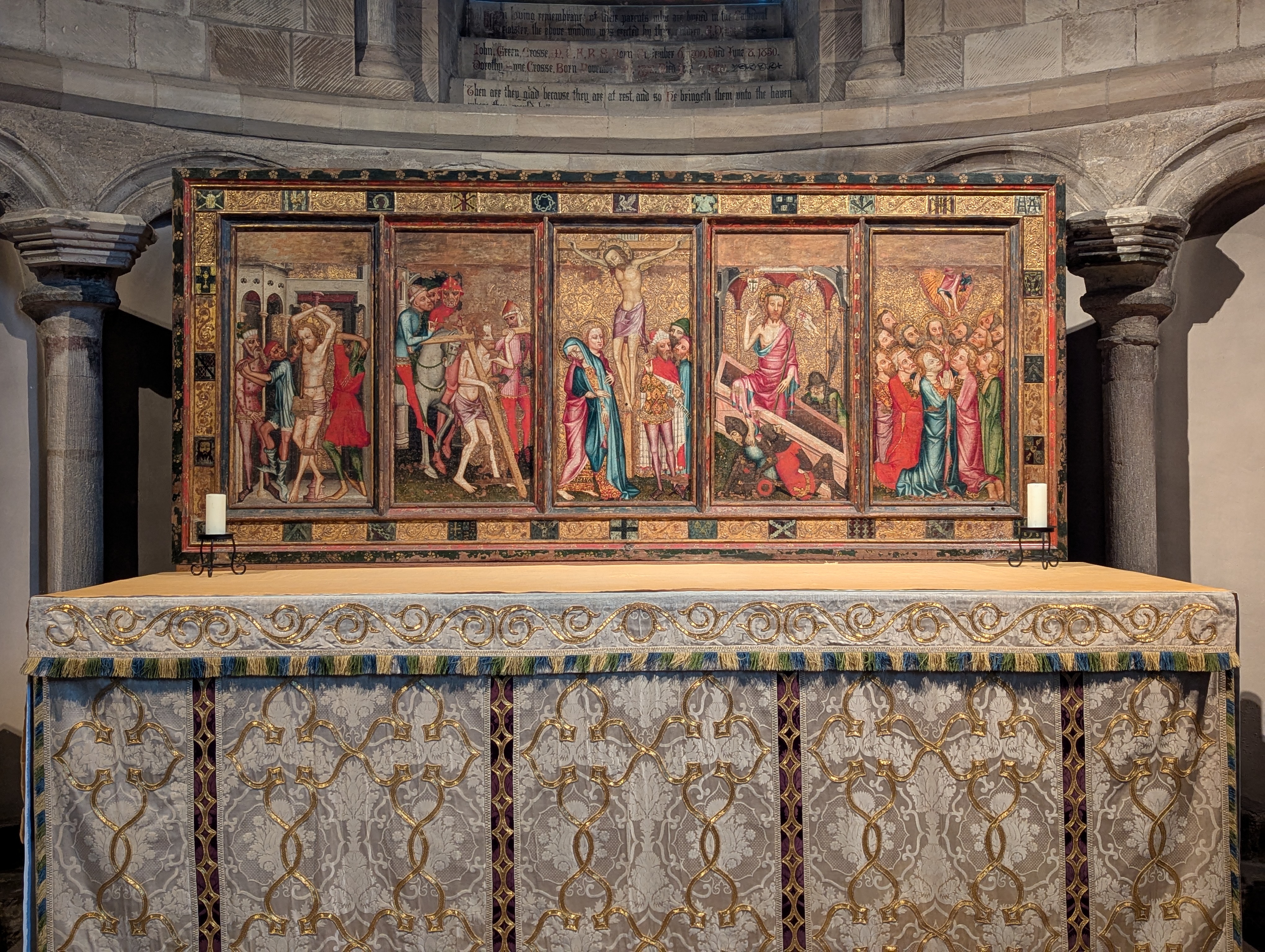
Because it was very rainy by this point, we took our tour inside to the Norwich Cathedral. This cathedral is not quite as old as the one in Ely but it’s old, 900 years worth. We were given a wonderful 1-hour tour of the cathedral by an enthusiastic, elderly volunteer and member of the active church since childhood. Not only did we learn about the very interesting history of the cathedral, she pointed out interesting details, like ancient graffiti, the cool glow from the McClean stained glass windows that were installed in 2014, the misericord in the choir that’s intended for the assistant dean and includes a carving of the Norwich Canaries football team logo, and the amazing 12th century Despenser Reredos that was protected and preserved from destruction allegedly by hiding it as the bottom of a table. We also heard about the cat called Budge that lives in the Cathedral and unofficially serves as the Bishop. Budge did not make an appearance while we were there.

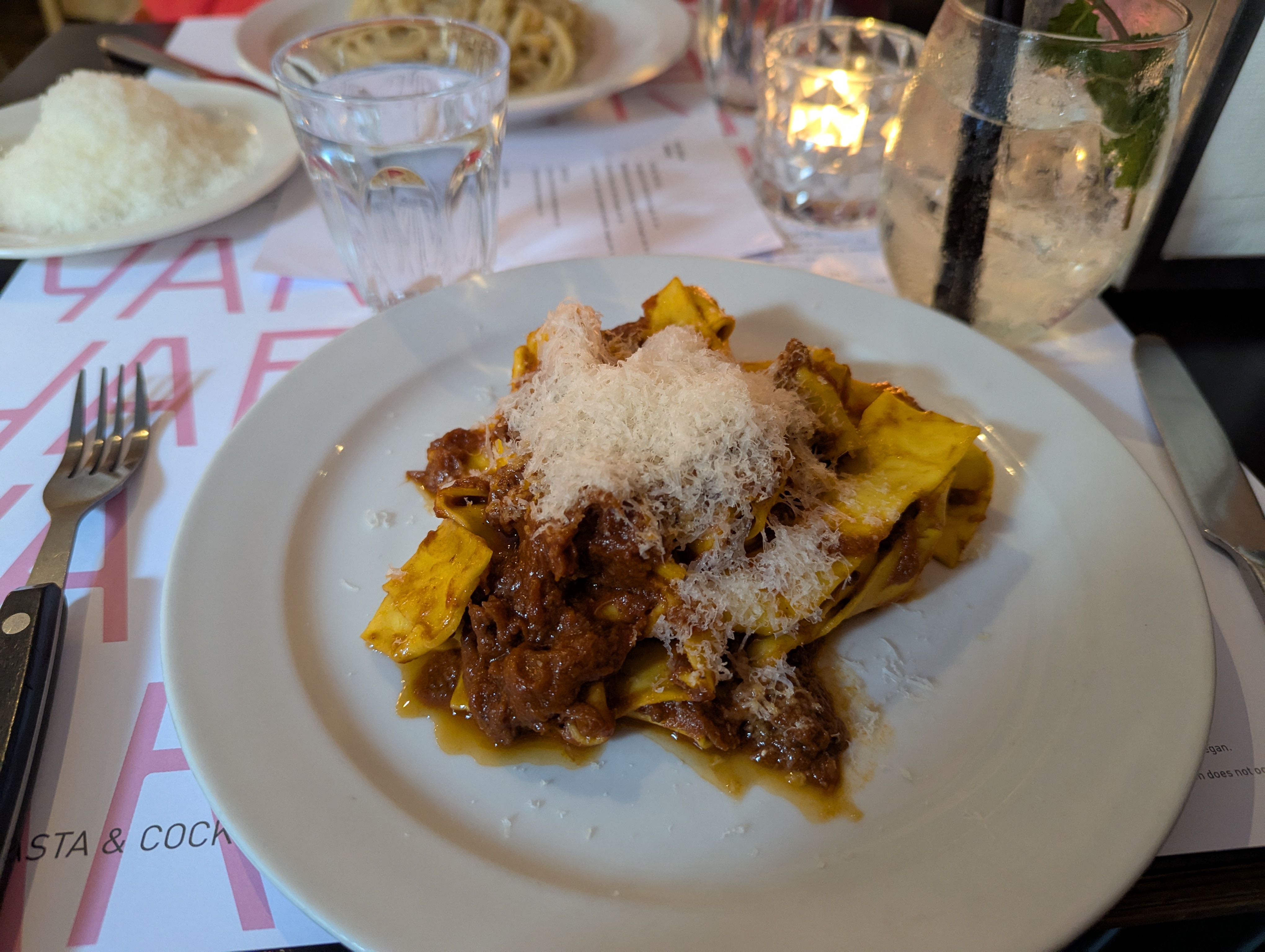
Following our tour we walked near the city center for lunch at an Italian restaurant called Yard. Freshly-made pasta with delicious sauces. I had the Pappardelle with 12-hour beef shin ragu and my husband had Bucatini cacio e pepe. I followed mine up with this crazy and amazing dessert that was a croissant filled with salted caramel ice cream. Oof. Very delicious lunch.

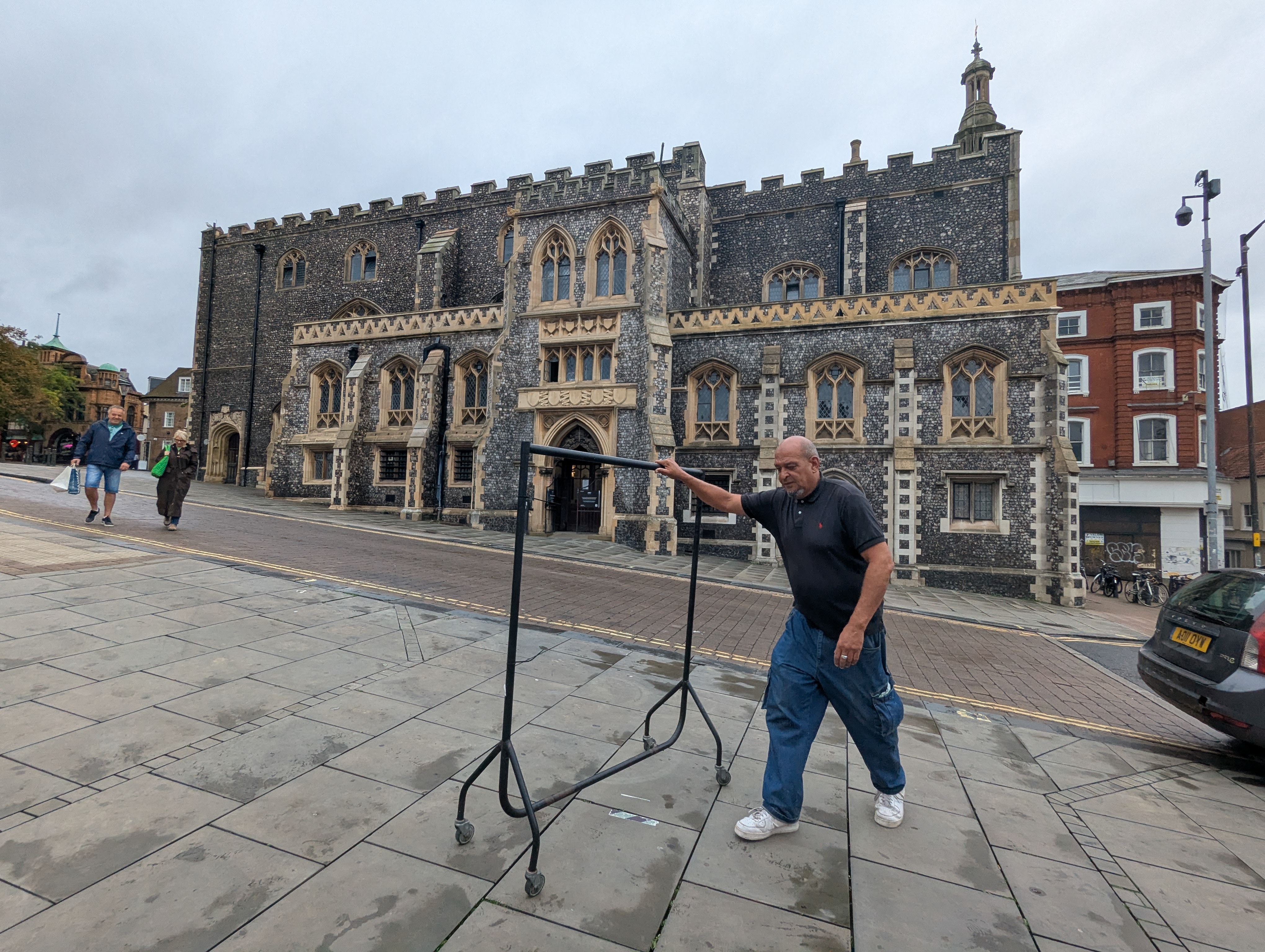
We walked by the beautiful medieval Guildhall and art deco City Hall City Hall and walked through the cool Norwich market. It was a bit late so many stalls were closed but enough was open that you got a flavor for the diverse products on offer. Spices, wine, prepared food, produce, clothes.

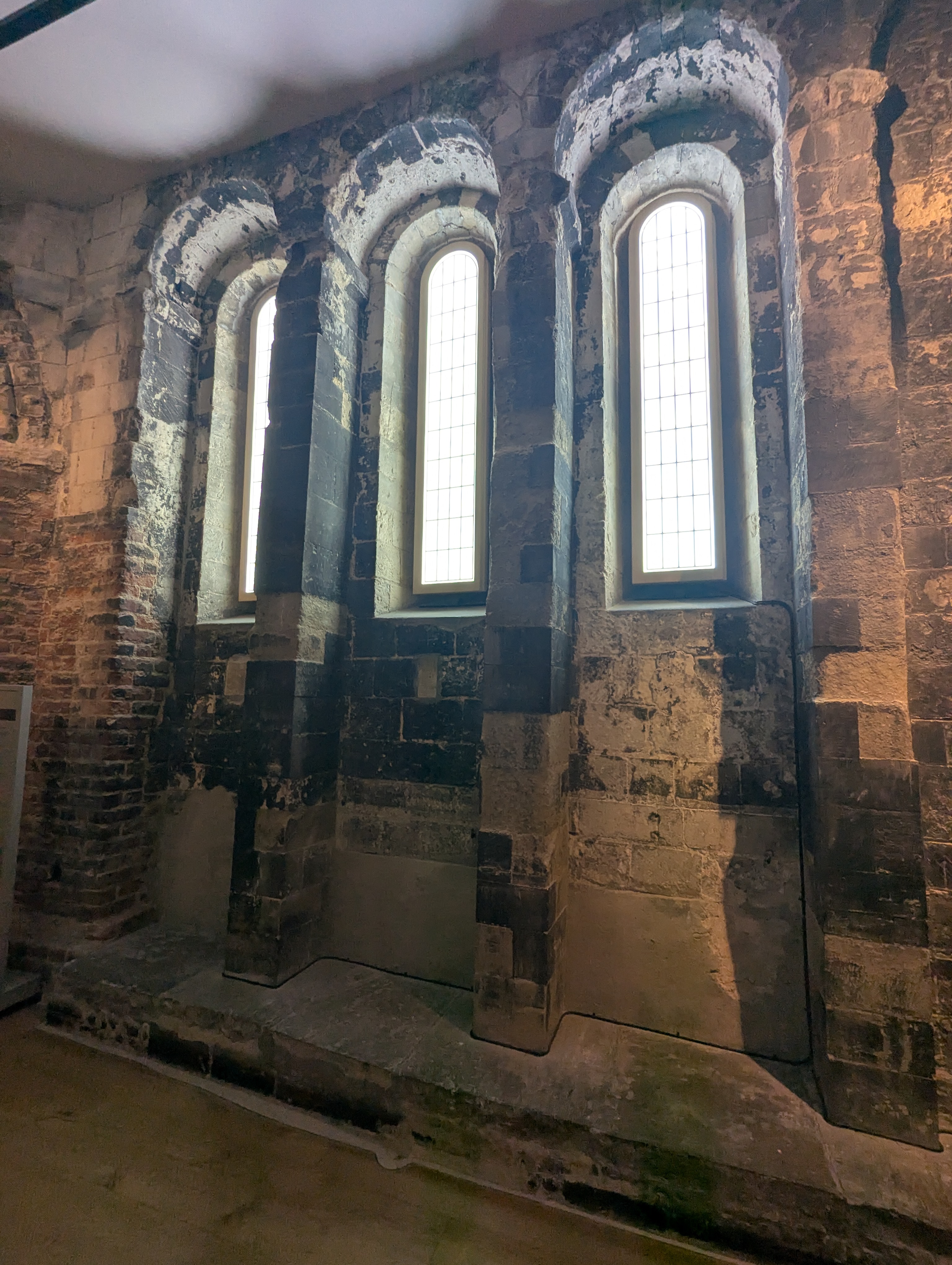
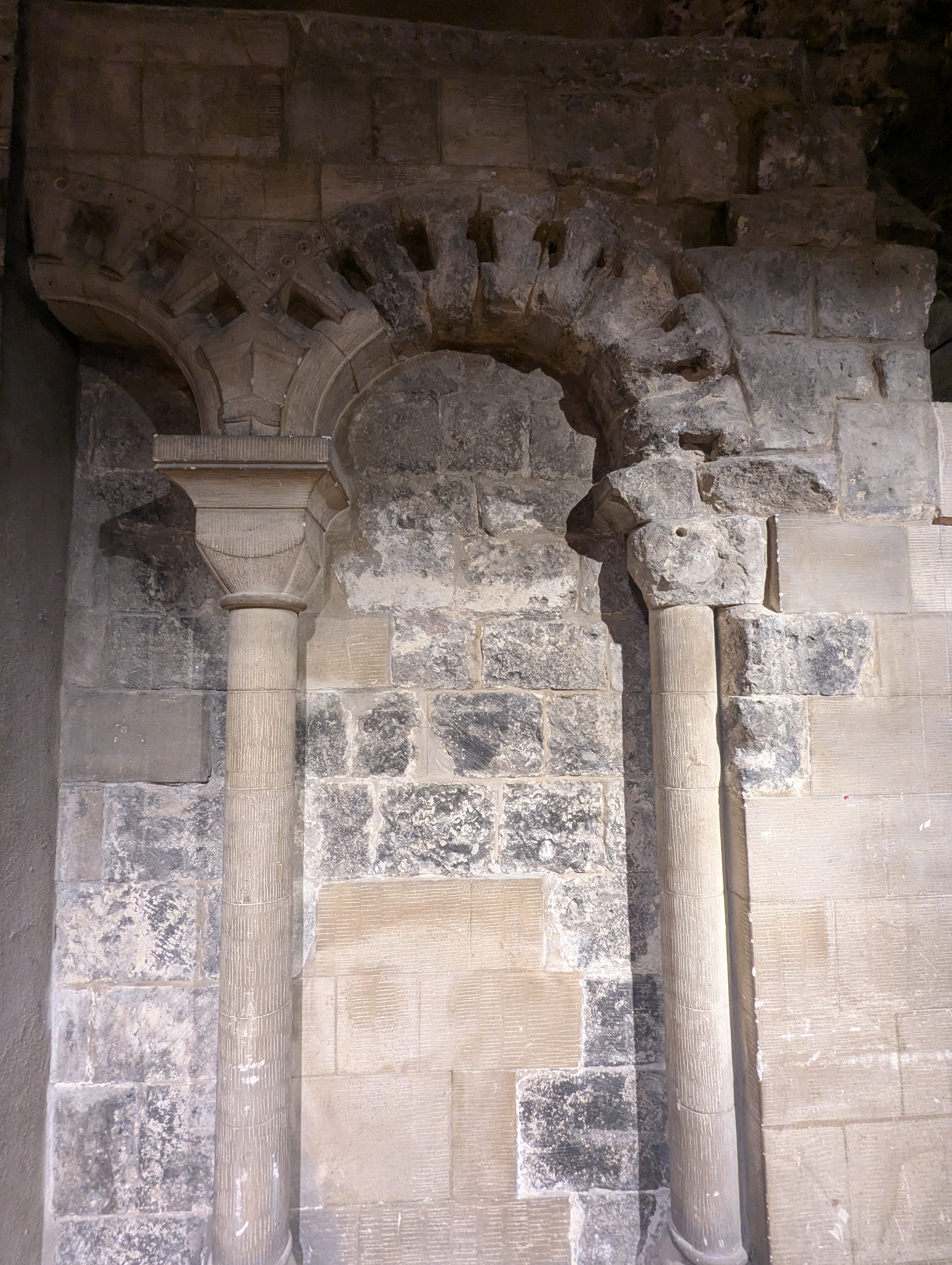
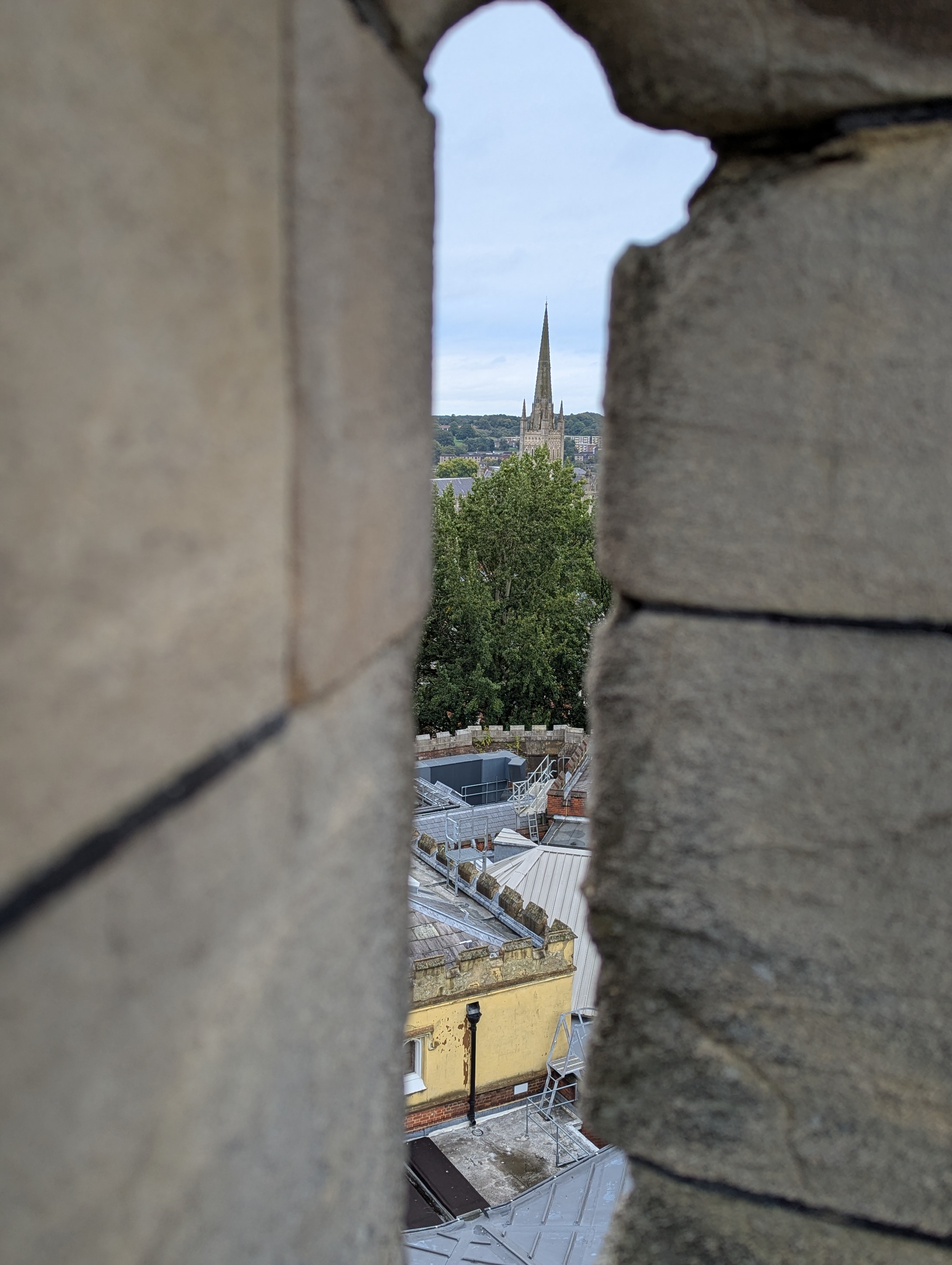
Our last big stop for the day was at the Norwich Castle. This was kind of a crazy, interesting experience. It is a museum that’s built in and around the ruins of an actual Norman castle. The castle was started by order of William the Conqueror in the late 11th century and was only briefly and very occasionally used by a monarch. It also was used as a jail. Where the museum can include the actual remnants of the castle it does; where it cannot, it includes recent building intended to help depict what the original castle looked like. When you stand within any one room you might see one original wall (it’s very clear which one that is) with three new walls that help you imagine what it must have been like. You can also go to the rooftop to see the defensive structure. From the rooftop, I could see all the sights we had seen that day.

We did a quick refresh at our hotel after visiting the castle and then went back over to the Norwich Cathedral for the Evensong service. Our guide from the morning had told us that the Cathedral had had Evensong services every day for the last 900 years. One of them included us. The music was quite beautiful, from a choir of adults and children.

After the service, we went to dinner at St. Andrew’s Brew House, so named because it’s across from a church called St. Andrew’s. A bit comical since they were out of almost everything we wanted to order for dinner. We were together able to cobble something together that worked.

Norwich surprised me. I’m not sure what I expected but it was not that. Such a great city! We thoroughly enjoyed our time there.

New territories, Cambridge edition

Now that I’m retired it’s less important to keep our trips to London brief. It occurred to us that when we are able to get tickets for two Arsenal matches a weekend apart it would be possible for us to travel outside of London during the week. In planning for this trip, we looked at possibly going to Sicily or Norway between the two matches. However, my husband got the idea of visiting East Anglia, the area in England northeast of London. He did some work with Chat GPT to plan out the trip, ultimately settling on a trip that would involve touring from bases in Cambridge and Norwich. We’ve done very little touring outside of London and were both excited about seeing more of the country.

So bright and early Sunday morning we headed over to Liverpool Street Station with our suitcases to confirm our plan with the train ticket agent. My husband had scouted out a train pass for train routes in East Anglia that allow 3 days of unlimited travel in a 7-day period. We also needed to buy tickets separately to get from London to Cambridge. The ticket agent helpfully uncovered that a one-way ticket was more expensive than a round trip ticket, so we bought the round trip ticket with the intention of not using the return trip.

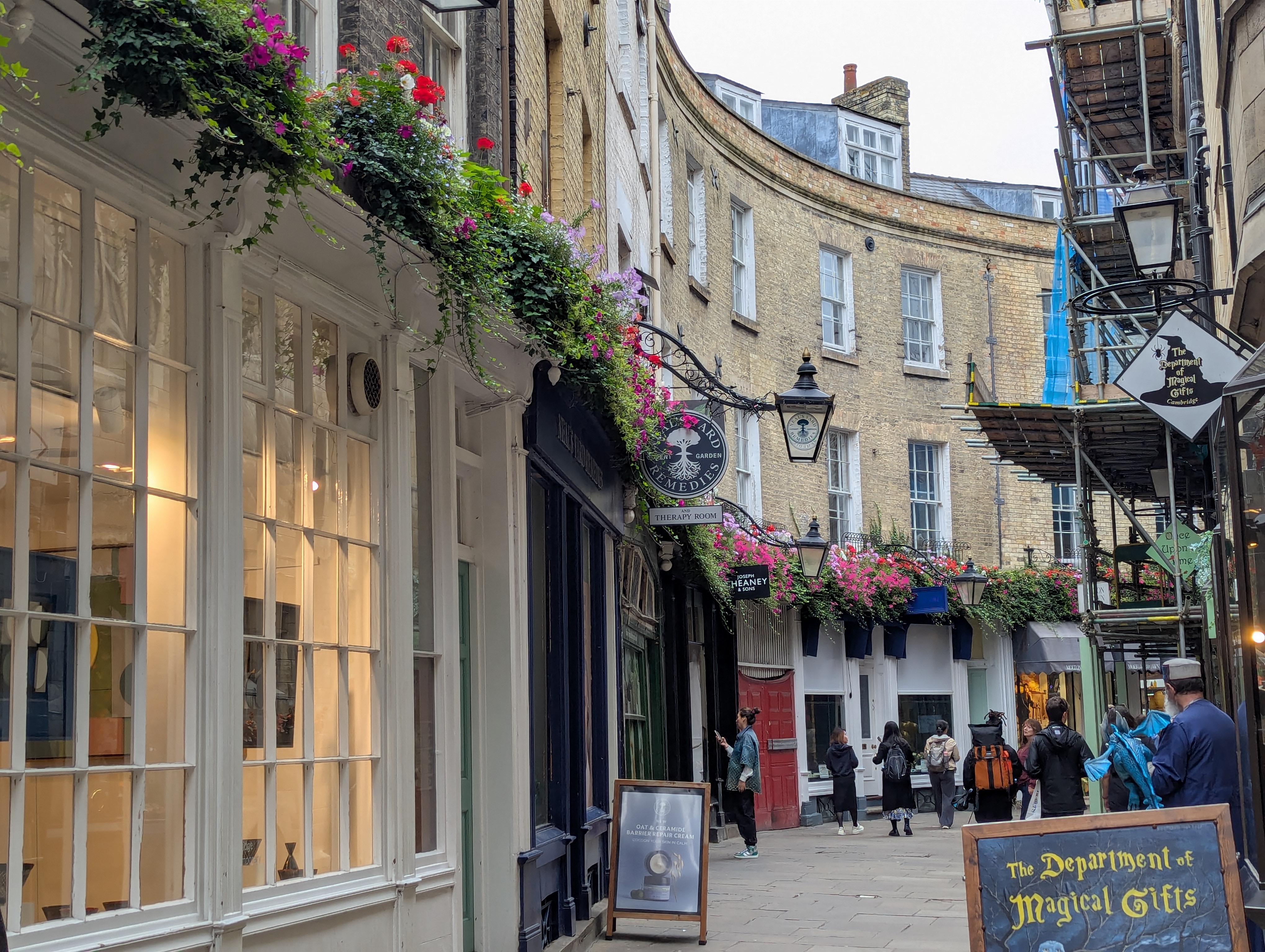
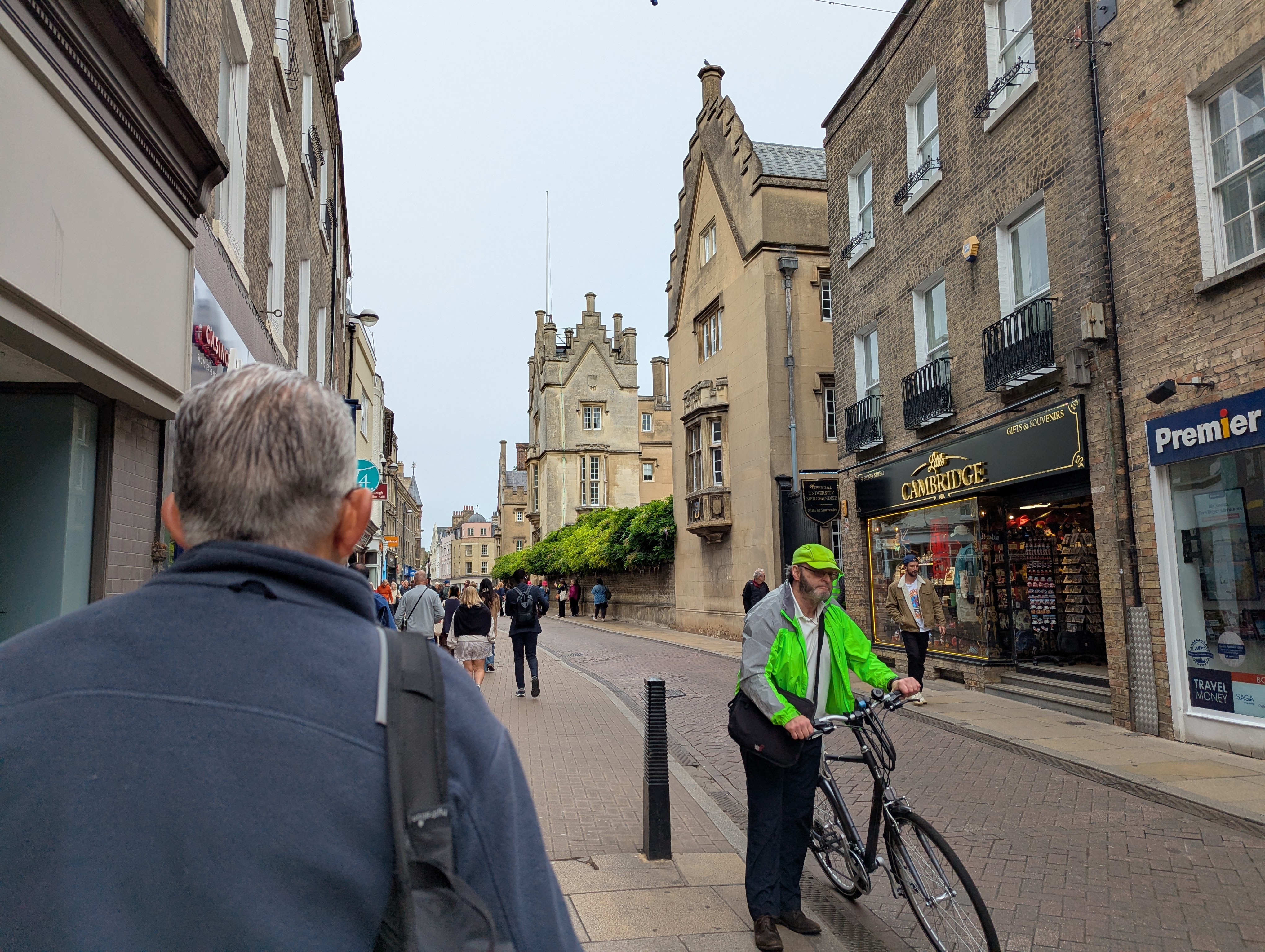
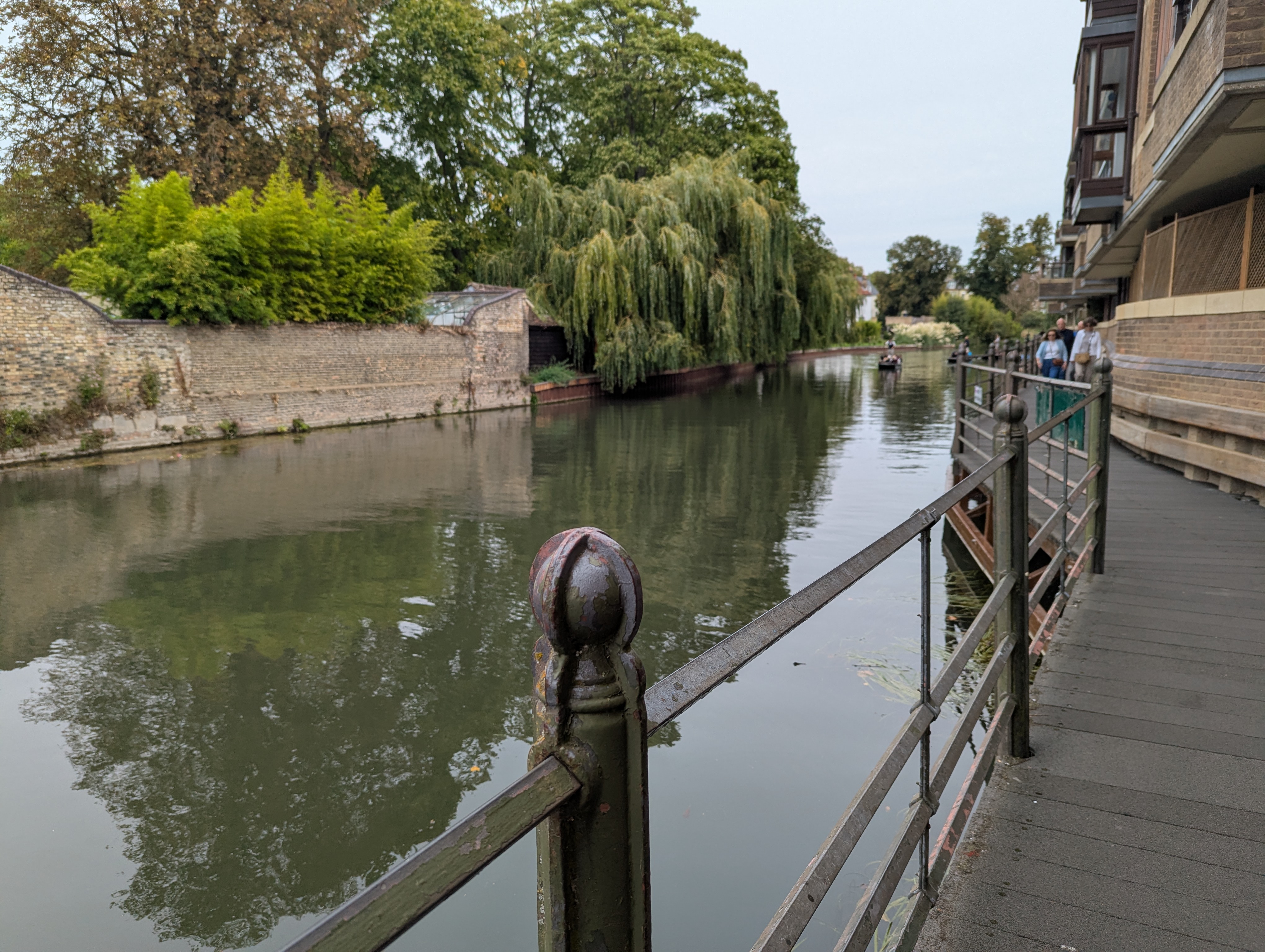
One of the things people do when visiting Cambridge is take a punt boat tour on the River Cam. When we arrived at the Cambridge station mid-morning, we encountered an employee of a punt boat touring company who was speaking to another tourist about the fact that it was expected to rain in the afternoon and that would not be a good time to take a tour. So, upon arriving at out hotel and leaving our bags at the desk, we set out to see the city center and River Cam and scope things out. Our hotel was walking distance from the city center and we were able to look at the lovely old buildings and churches and shops as we walked along.

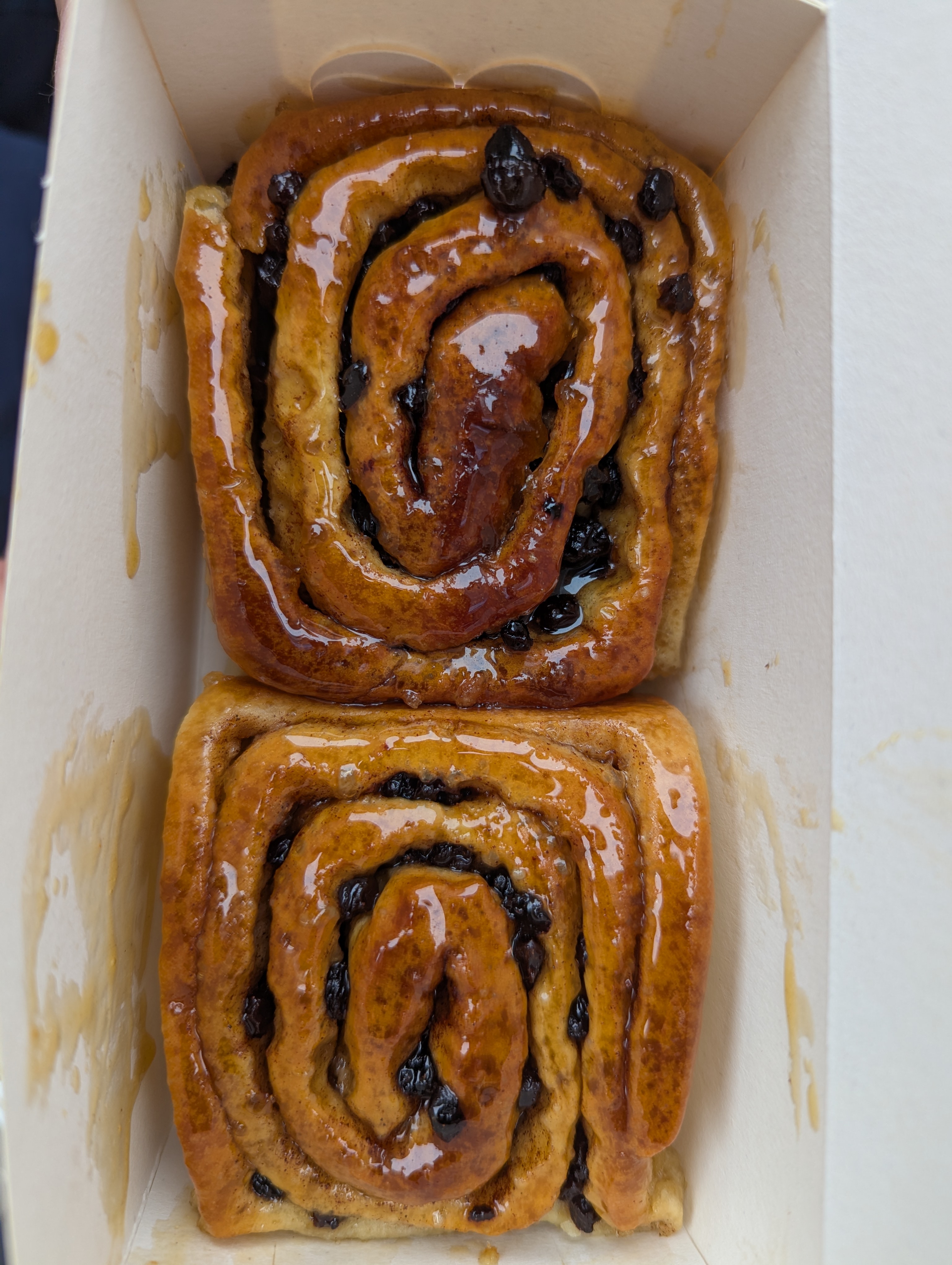
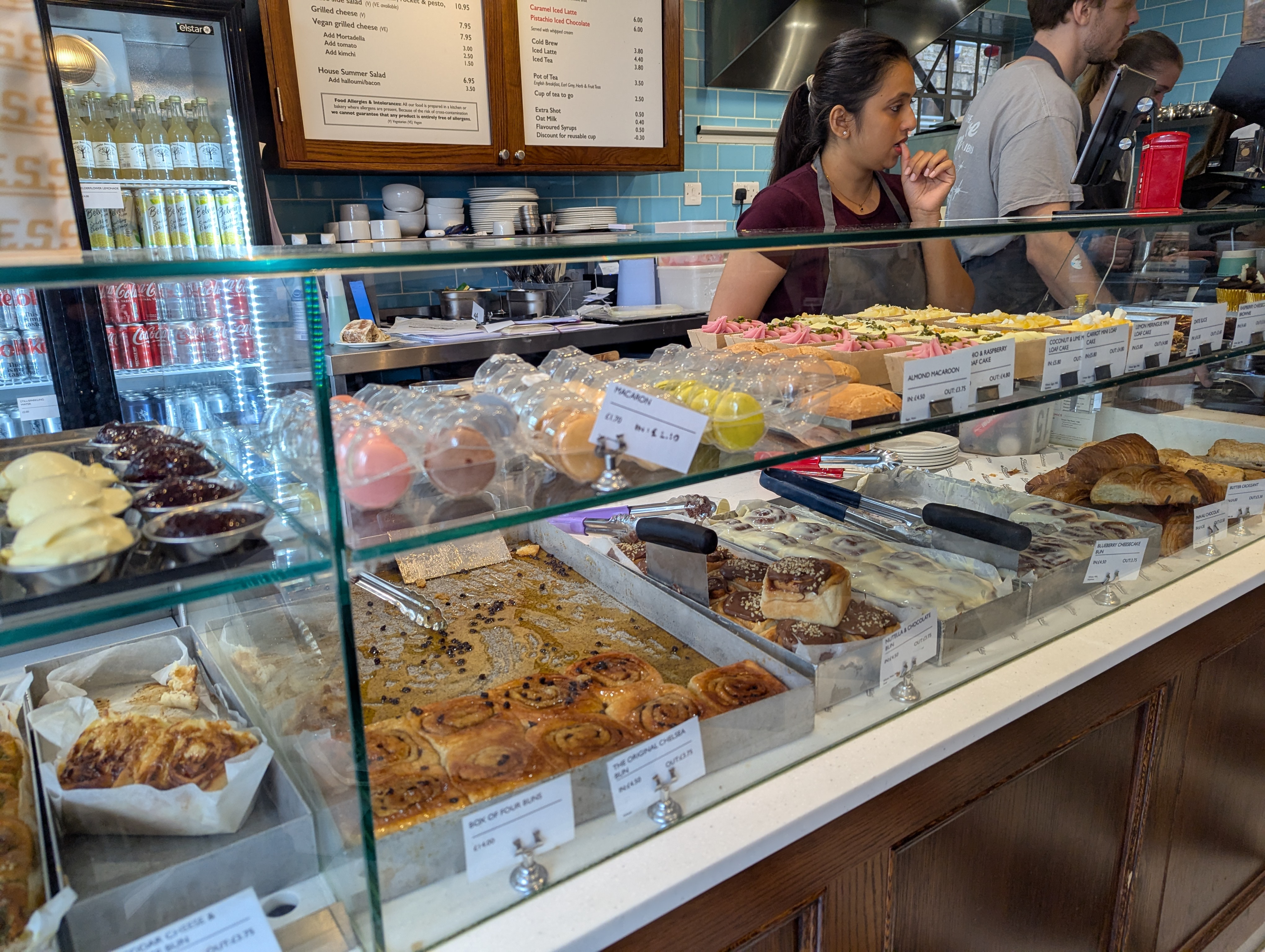
Once at the city center we followed a path along the River Cam where we encountered a great many punting companies soliciting business. We ended up selecting a tour from Cambridge Punt Company. The operator suggested we bide our time until the tour started by visiting Fitzbillies bakery and ordering the Chelsea buns. It was a messy but delicious suggestion.

Upon arriving back at the Cambridge Punt Company’s dock we boarded the boat. A punt boat is kind of awkward to board. The seats are near to the bottom and you sit with your legs stretched out in front of you, lounge style. Our boat could hold 8 -10 people. The guide stands at the back of the boat and uses a big pole to muscle the boat along the river. It looked like a tremendous amount of work. But that is work for someone else. For me it was delightful, floating down the river past university buildings and hearing all about the river and the town and Cambridge college.

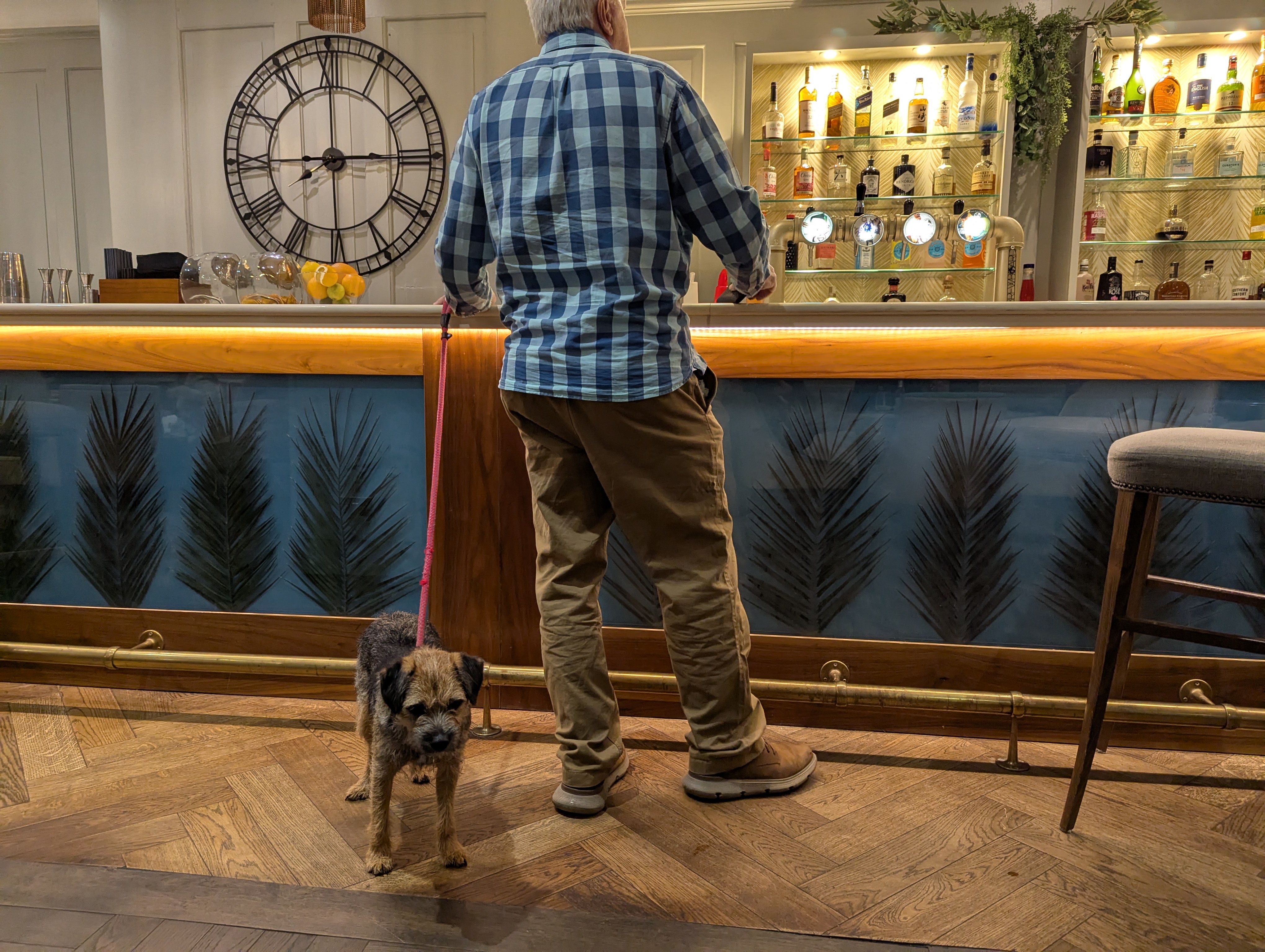
After the punt tour we walked around the city center some more and then returned to our hotel. They were still not quite ready to check us in and suggested that we get lunch at The Old Bicycle Shop, which was a few blocks away. This pub actually is in the same spot as a historic bike shop where supposedly Charles Darwin bought a bike in the 1800s. It was a Sunday so they did have Sunday Roast, which I happily ordered. My husband had risotto. We both had dessert, Eton Mess for me and Sticky Toffee Pudding for him.

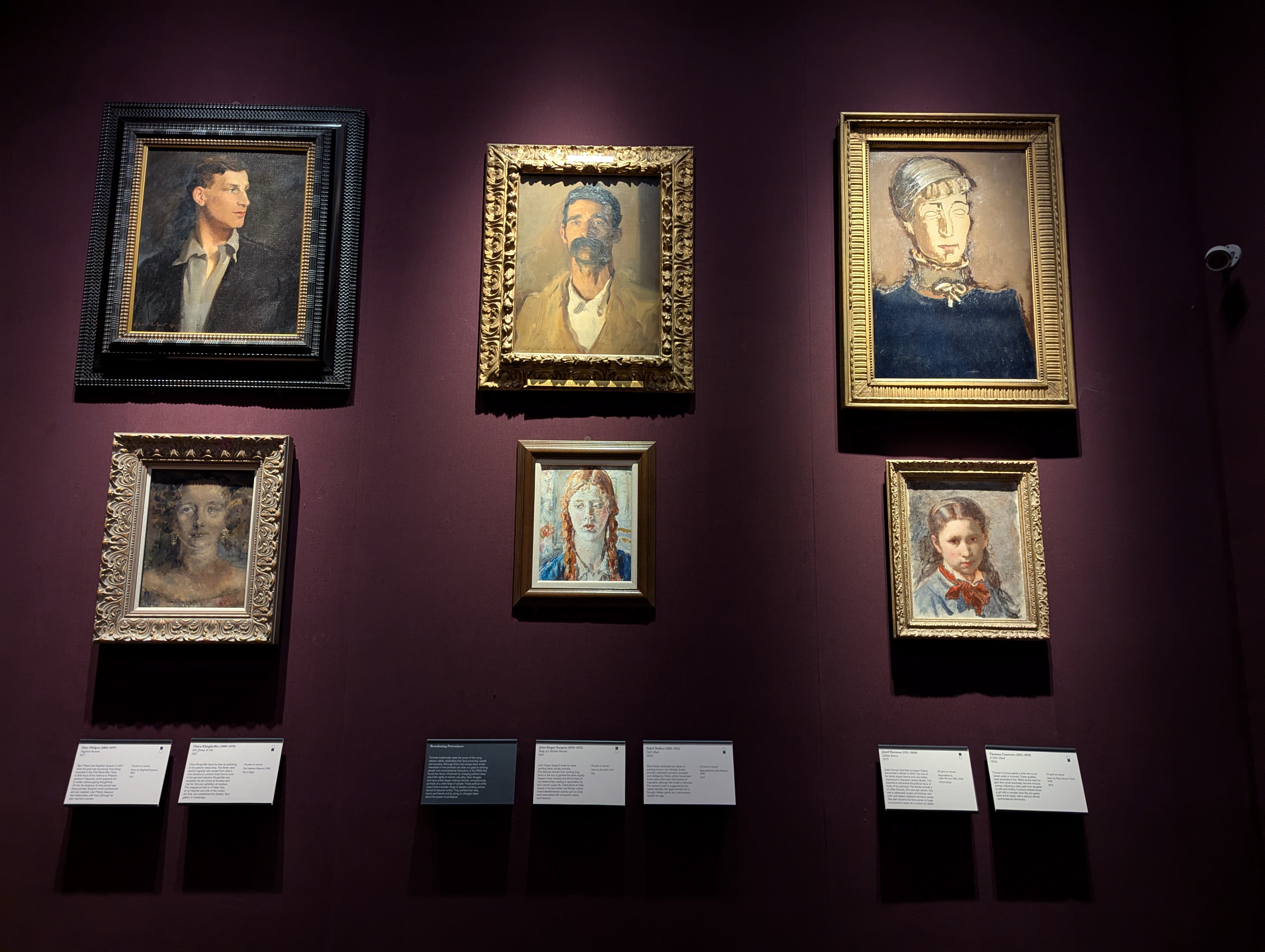
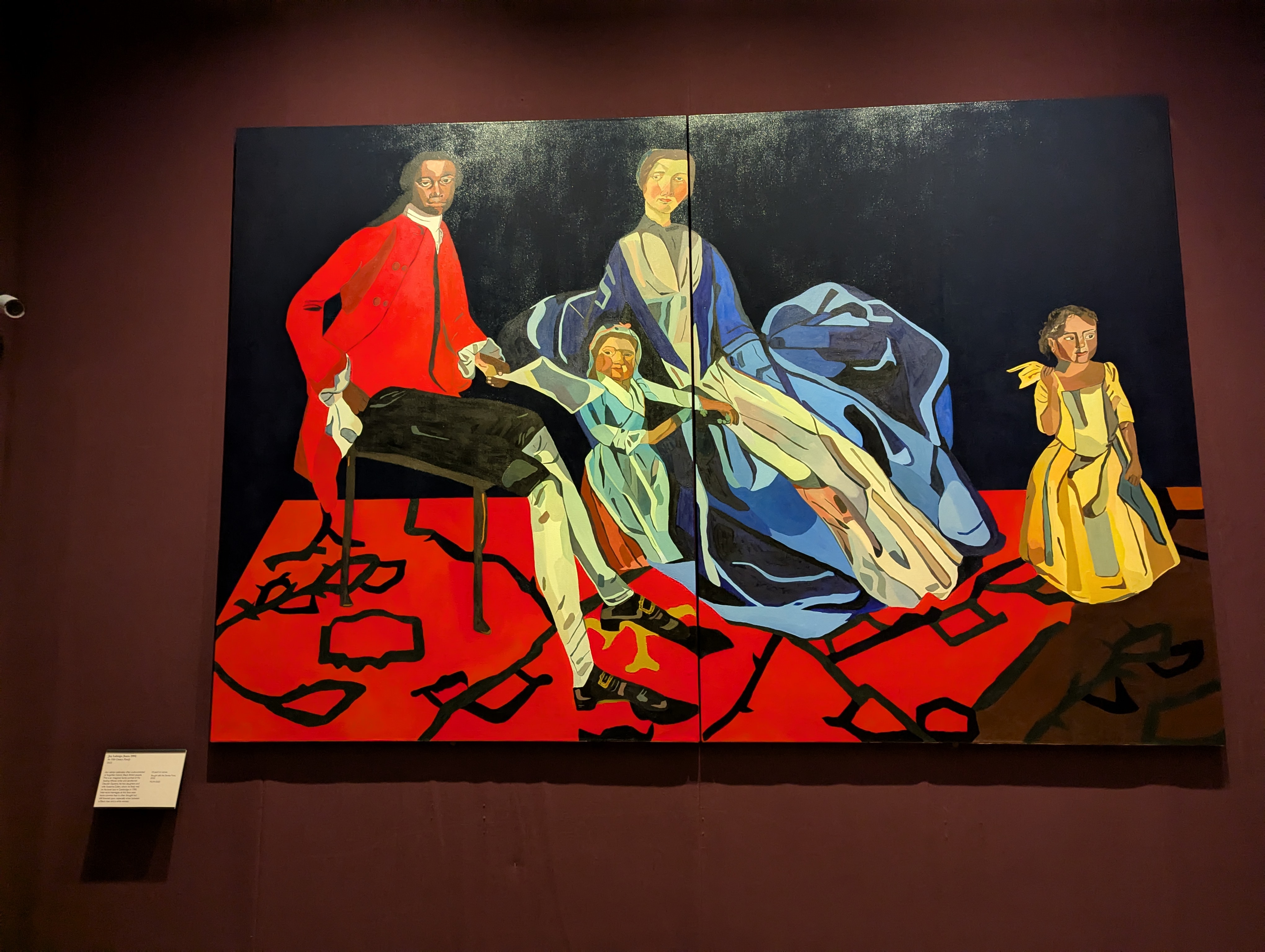
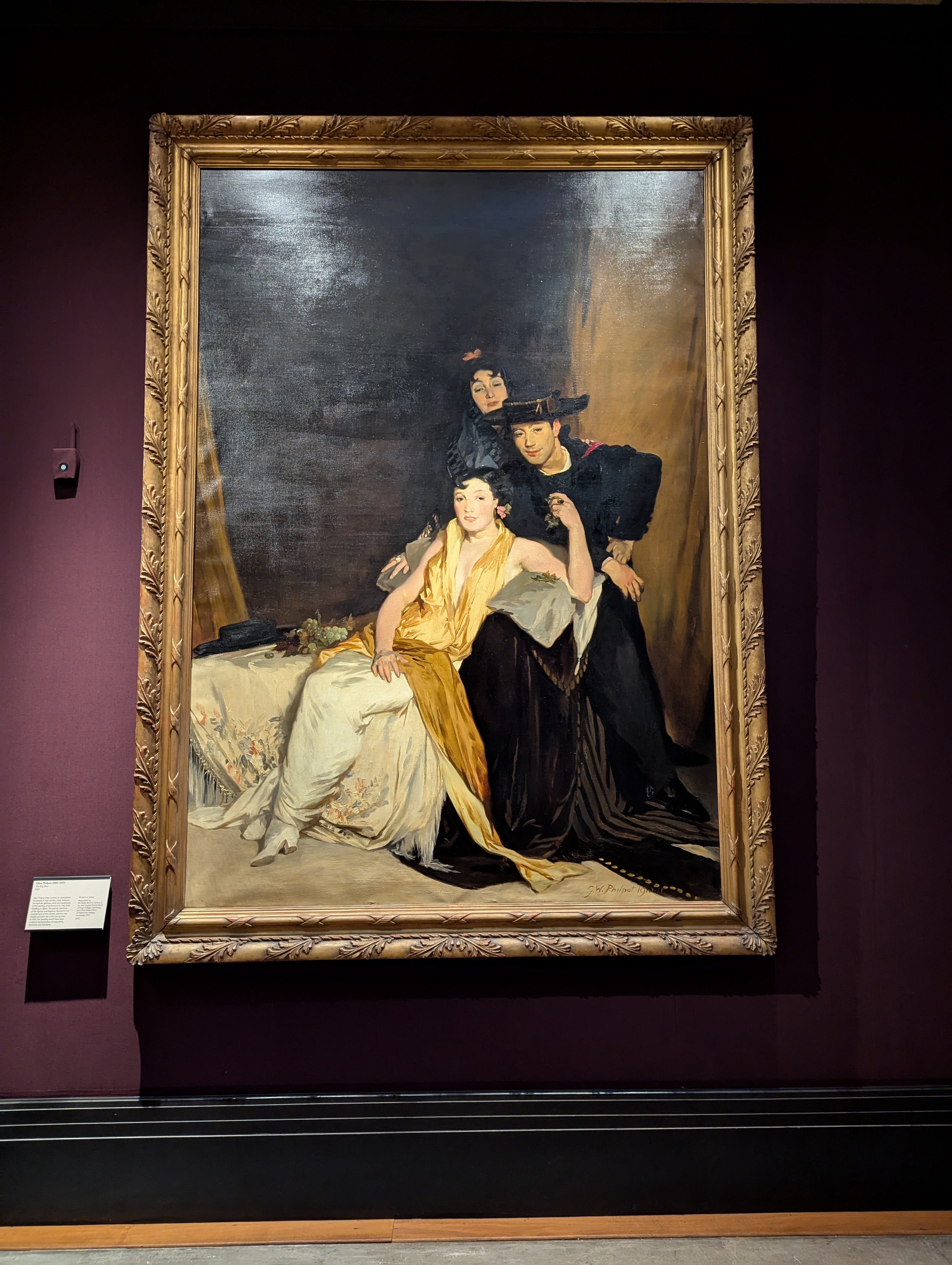
The pace of service and eating at The Old Bicycle Shop had been on the leisurely side and we found that we had about an hour before the Fitzwilliam Museum was to close. The Fitzwilliam museum has collections of objects and art and is operated by Cambridge University. It was started with a bequest of art, books, and money by the Irish-born British Parliamentarian Richard Fitzwilliam in the early 1800s. We walked the few blocks to the museum and went our separate ways inside it. My husband really enjoyed the exhibits on ancient Egypt. I spent some time in the exhibits about domestic objects before moving on to look at the art collection. The exhibit mostly included artists I’m not familiar with but it does have some paintings by Degas, Seurat, Renoir, Picasso, and Cezanne. Yes, I have heard of them. I found the paintings below to be interesting.

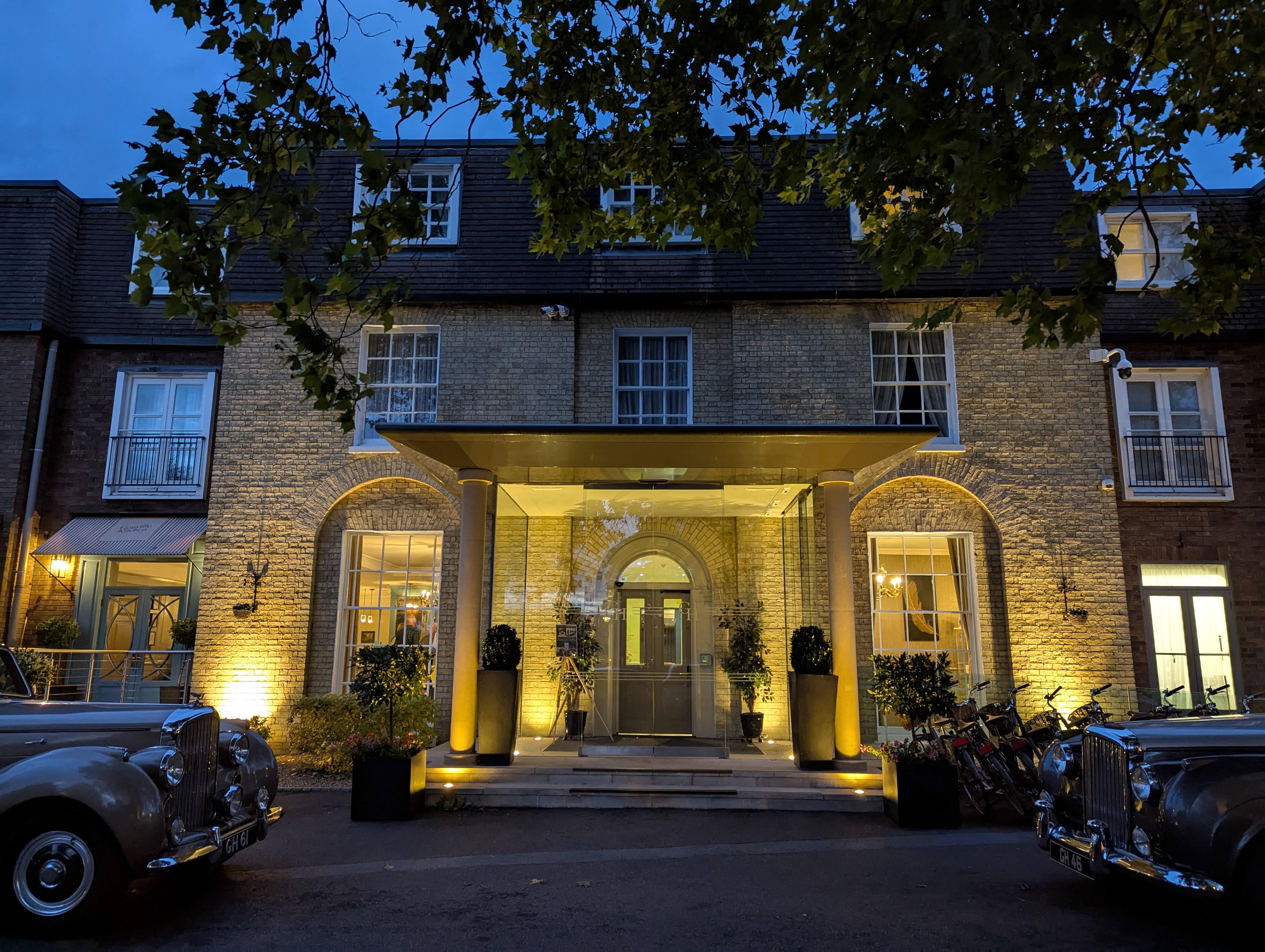
We were shooed out of the exhibit at 5 p.m. with our fellow museum goers into a driving rain. By the time we got back to our hotel, The Gonville Hotel we were drenched. But our room was ready and our suitcases had been ferried to it. We changed into dry clothes and tried to figure out dinner plans. Hopefully dinner plans that did not involve going out again into the rain. In the end we went to the Gonville Bar where they were serving a limited menu that was good enough for us. I had a delicious white onion soup and my husband had a chicken sandwich. The Gonville Hotel is nothing fancy but we found it charming and well located.

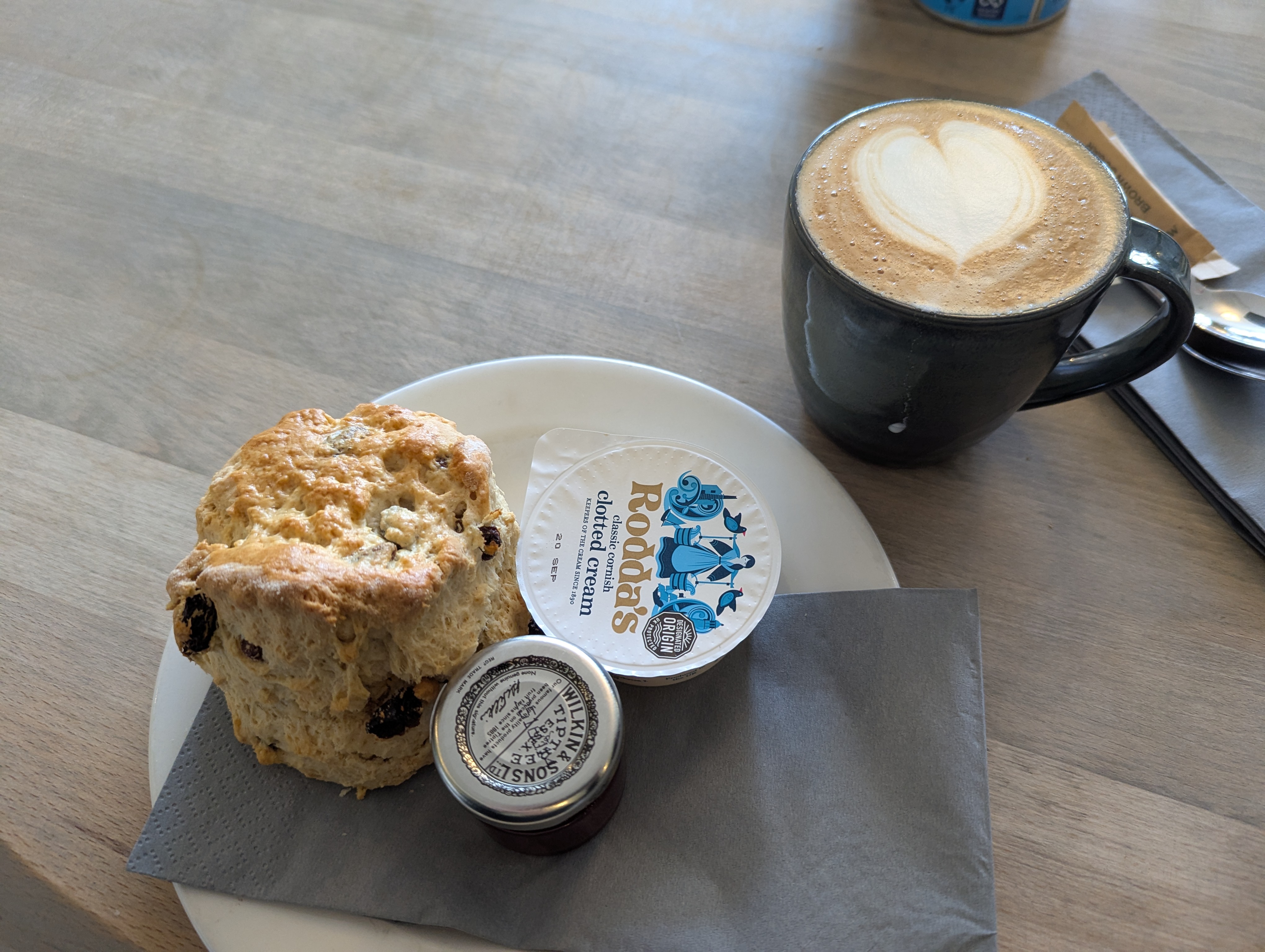
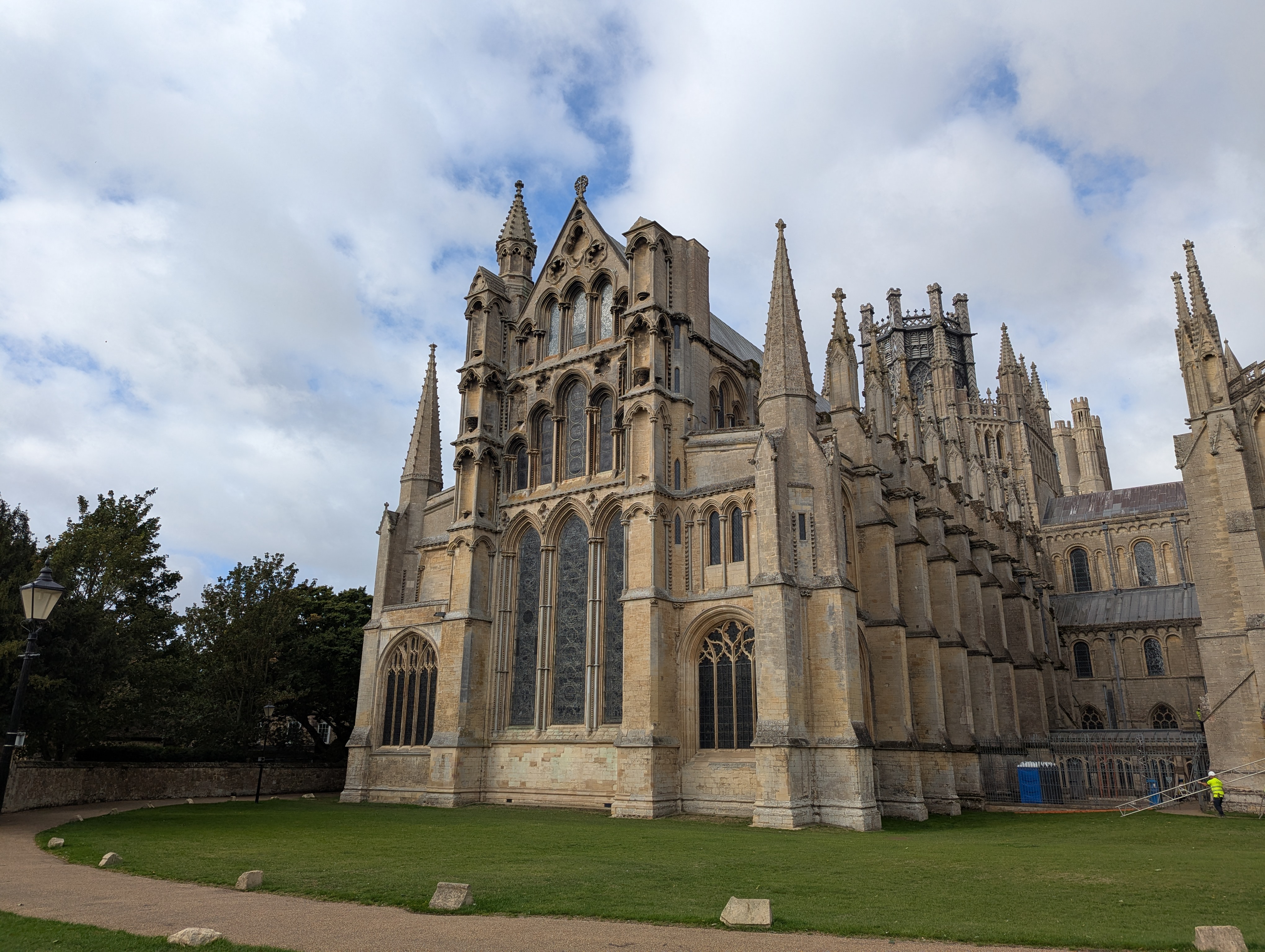
In the morning we headed back to the train station with our Anglia Plus passes and took the train to Ely. The main attraction in Ely is the Ely Cathedral, built in the early 11th century and still in active use. Upon walking out of the train station in Ely we could see it towering over the village. We walked though town, stopping into the Almonry Kitchen just outside of the cathedral for breakfast of scones, clotted cream, and strawberry jam. Really yummy. As I’ve explained before, my husband is always alert to Italians we might meet as we travel so he can practice speaking Italian with them. The Almonry had such a person on staff so my husband started his day happy.

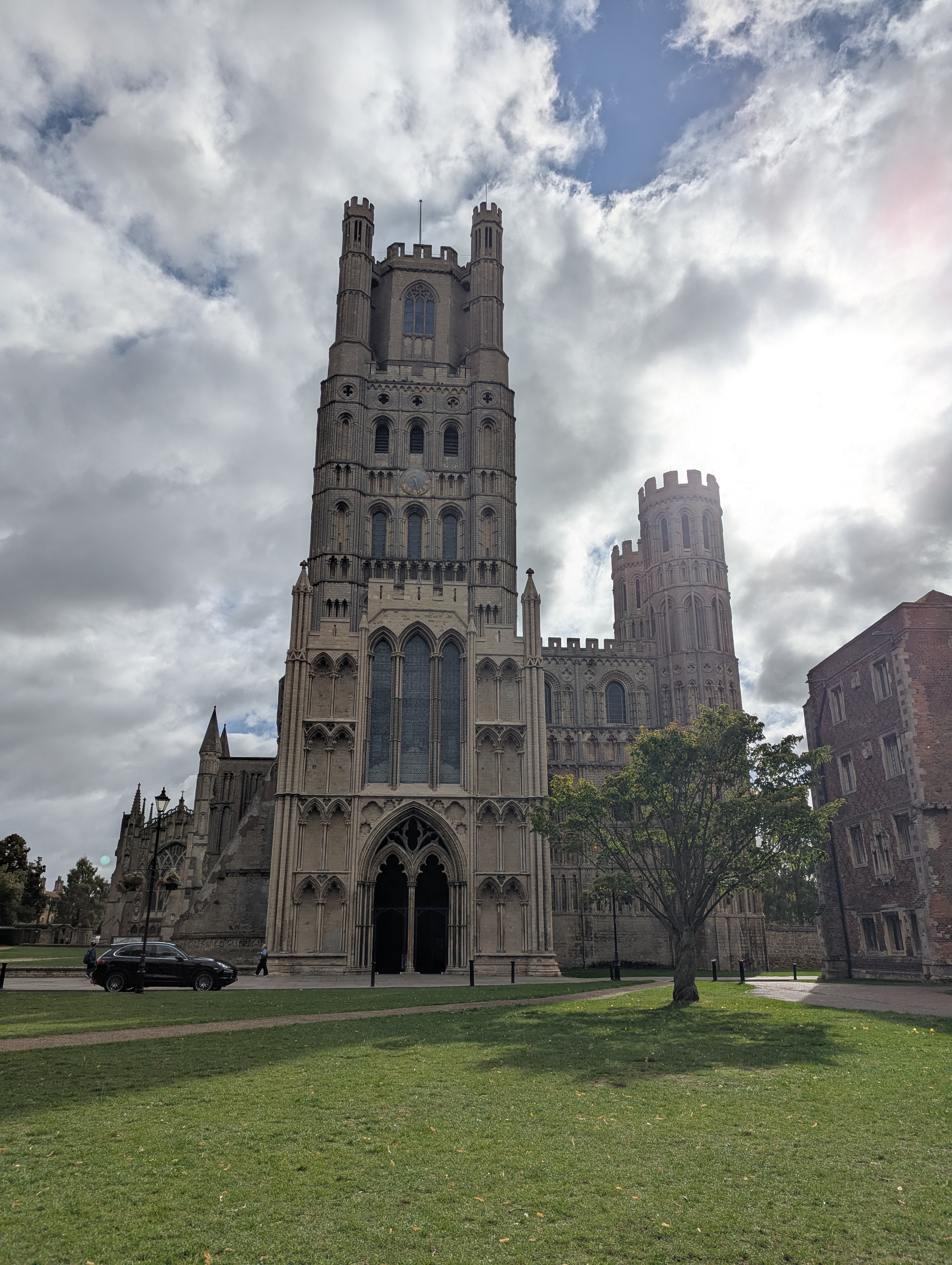
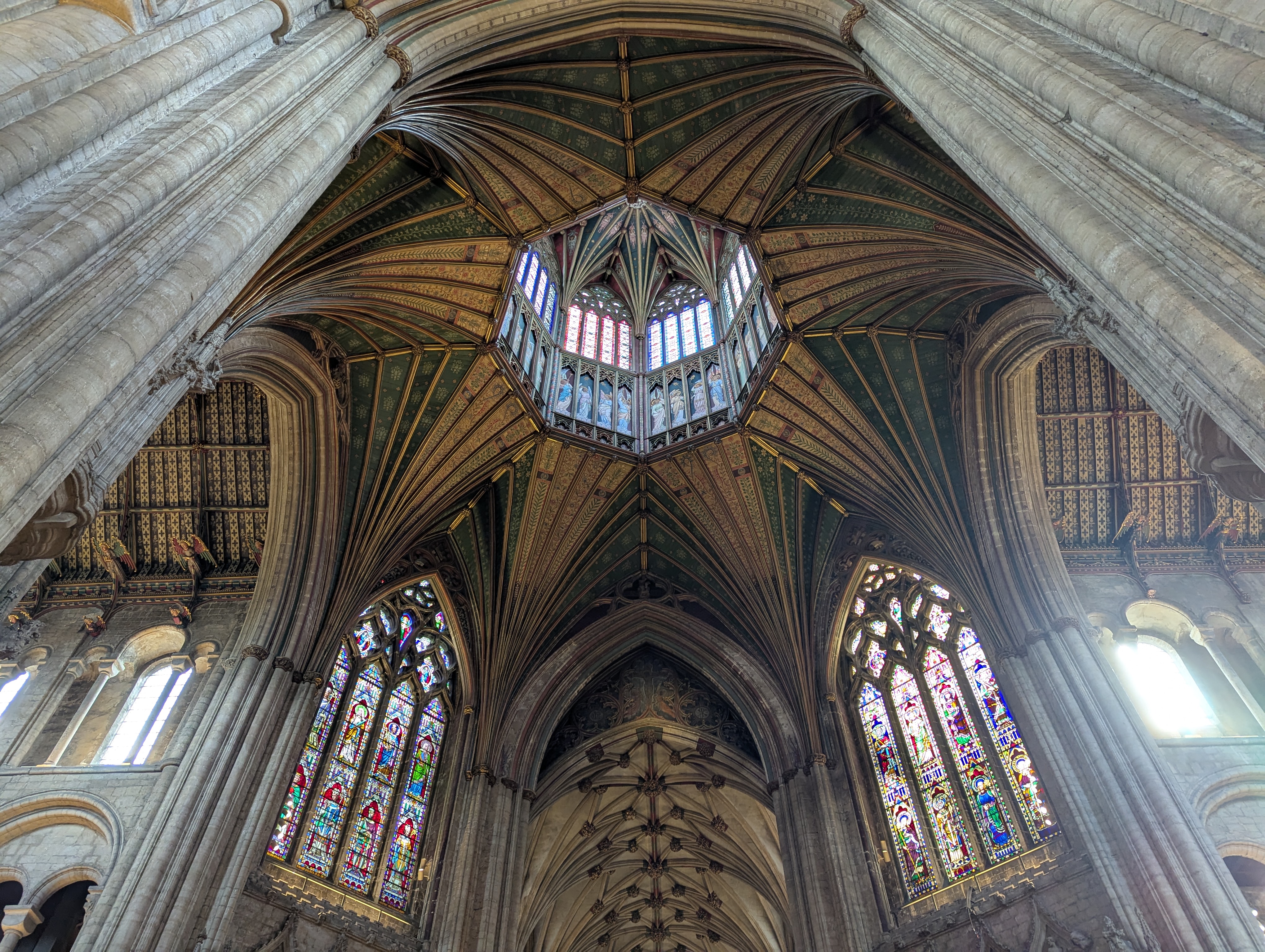
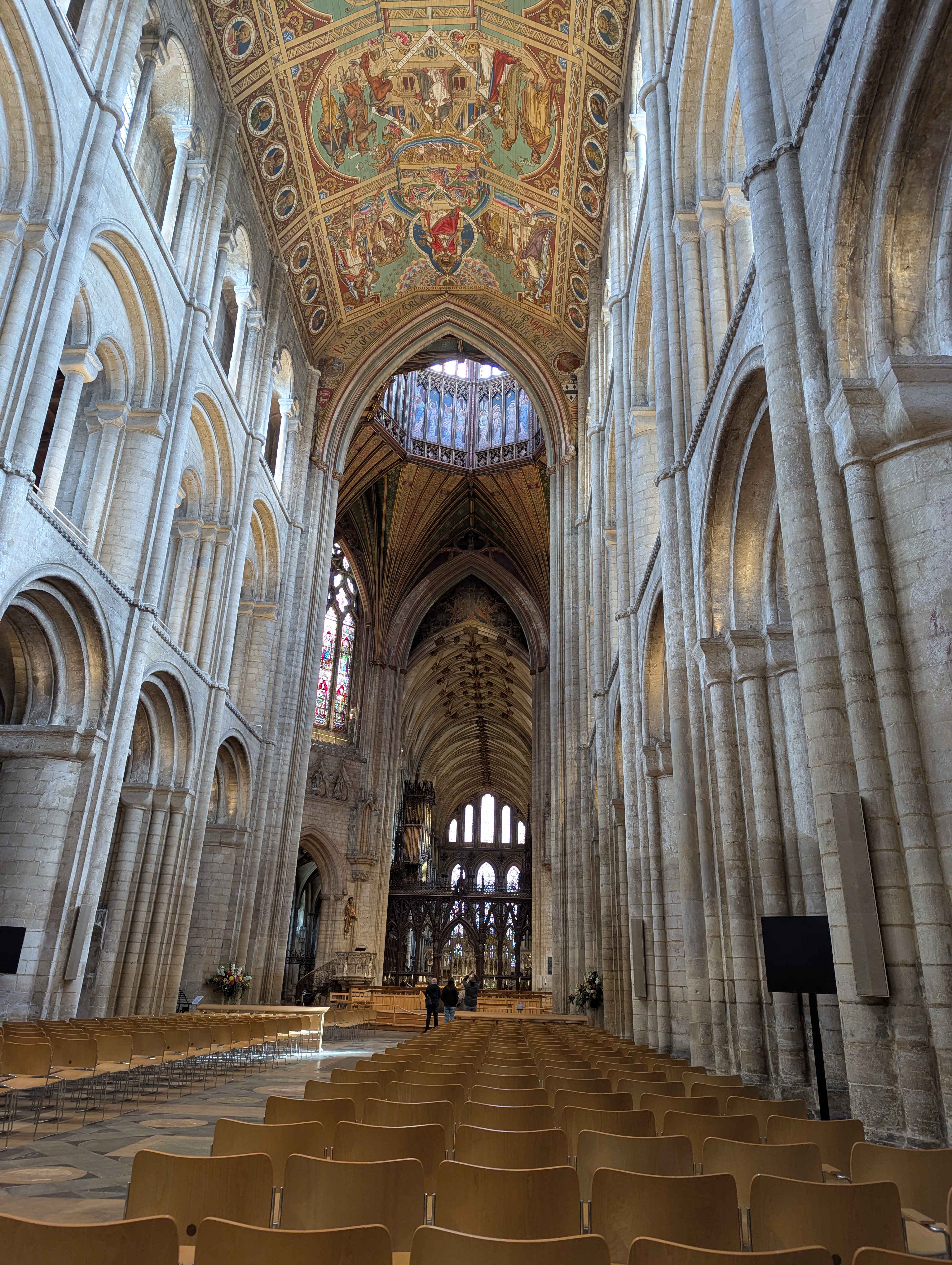
The Cathedral offered audio tours so we could proceed at our own pace and listen to as much or as little as we chose. The audio guide was very well done and I highly recommend using it. We learned all about the history of the cathedral which stood on the grounds of an Abbey founded in the 600s by Etheldreda, the daughter of an East Anglia King. More about her in a later post. The cathedral architecture heavily reflects influences of the Normans who conquered England not long before building occurred. But England history has been tumultuous and the cathedral has been impacted by all of it. Fascinating tour. We spent way more time there than we had planned.

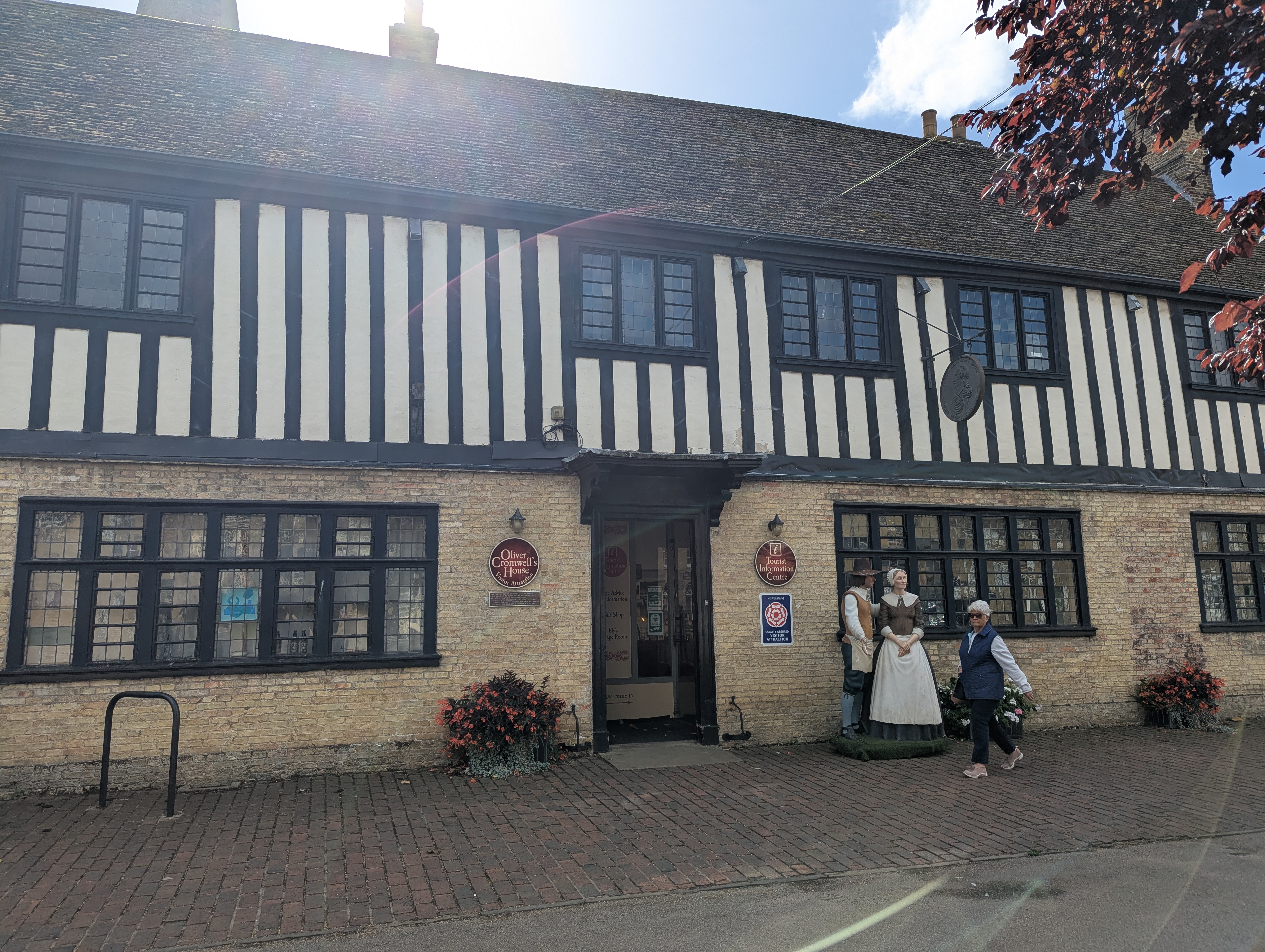
To keep our day on schedule we decide not to tour the Oliver Cromwell house in Ely but we did walk by it and snap a photo. Oliver Cromwell was a controversial figure and Parliamentarian who participated in and led incidents that resulted in overthrowing the monarchy in the 1600s. He was ultimately named “Lord Protector,” kind of like a President. But he behaved pretty much like a King. He was a complete killjoy, outlawing everything fun in England. Fun fact: after he died (of natural causes) and his son, who was named the new Lord Protector was himself overthrown, Oliver Cromwell’s body was dug up and publicly hung. His head was cut off and publicly displayed on a roof for more than 20 years.

Good times.

We walked back toward the train station and, in the few spare moments we had, walked along a fen by the River Ouse.

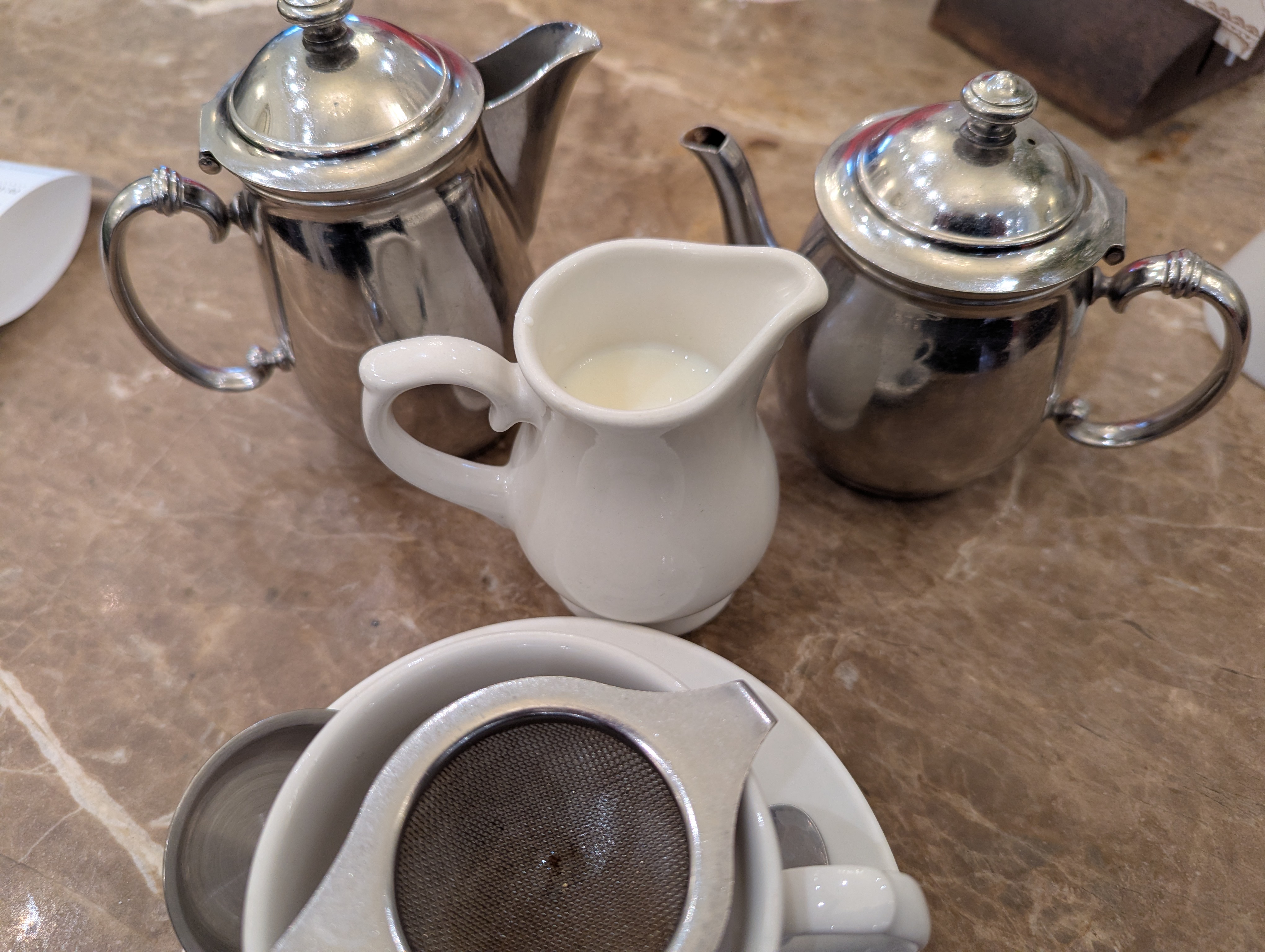
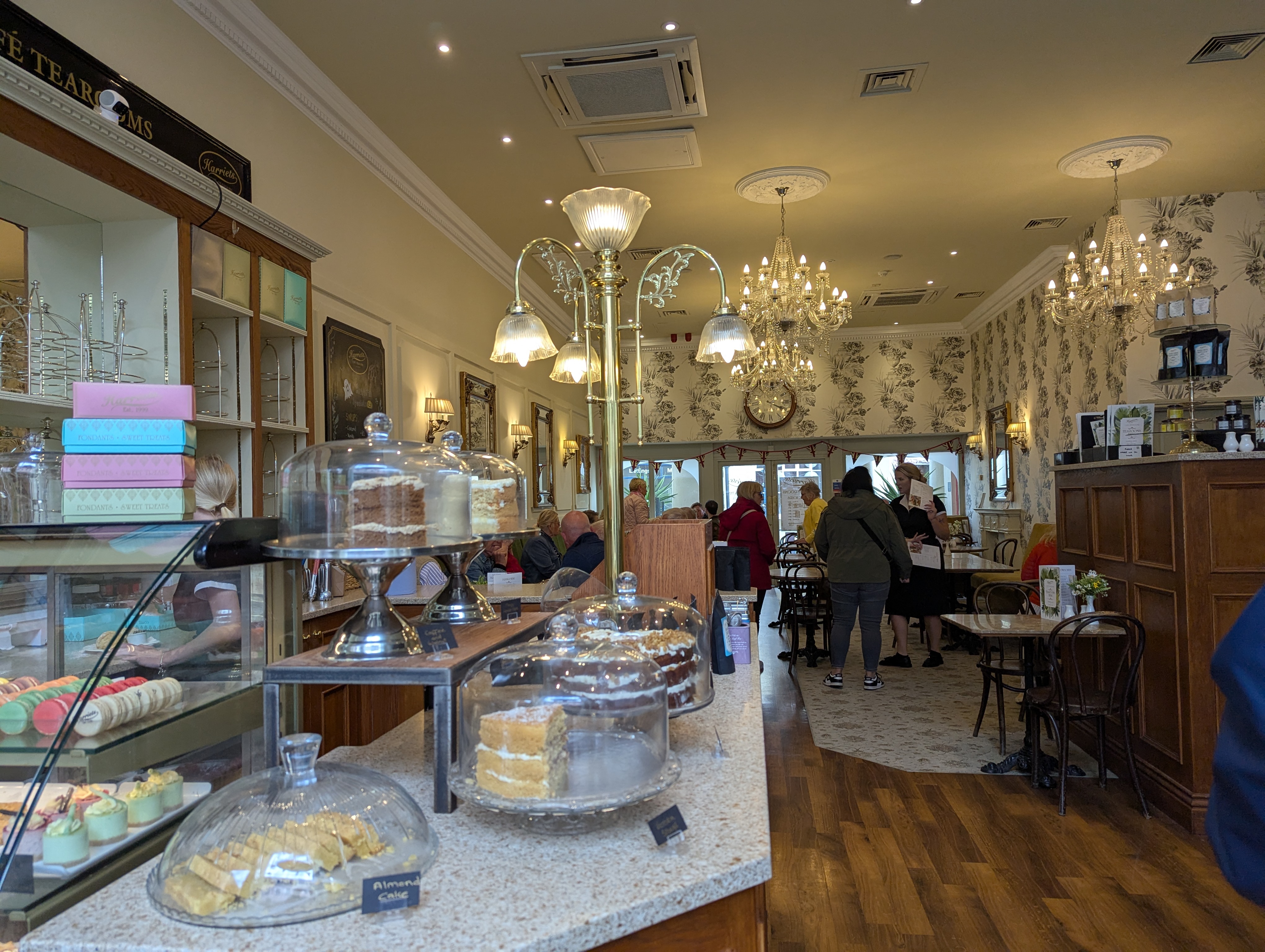
Our next train ride was to a town called Bury St. Edmunds. We stopped to have lunch in a chain called Harriet’s Cafe and Tearooms. We had been wandering about the town trying to find someplace that looked interesting and that place appealed to me. I’d been noticing throughout the trip how much tea rooms seemed to be taking on greater prominence in the towns away from London. Maybe they just attracted more of my attention outside of London. In any case I did have delicious tea with milk along with my cheddar cheese sandwich.

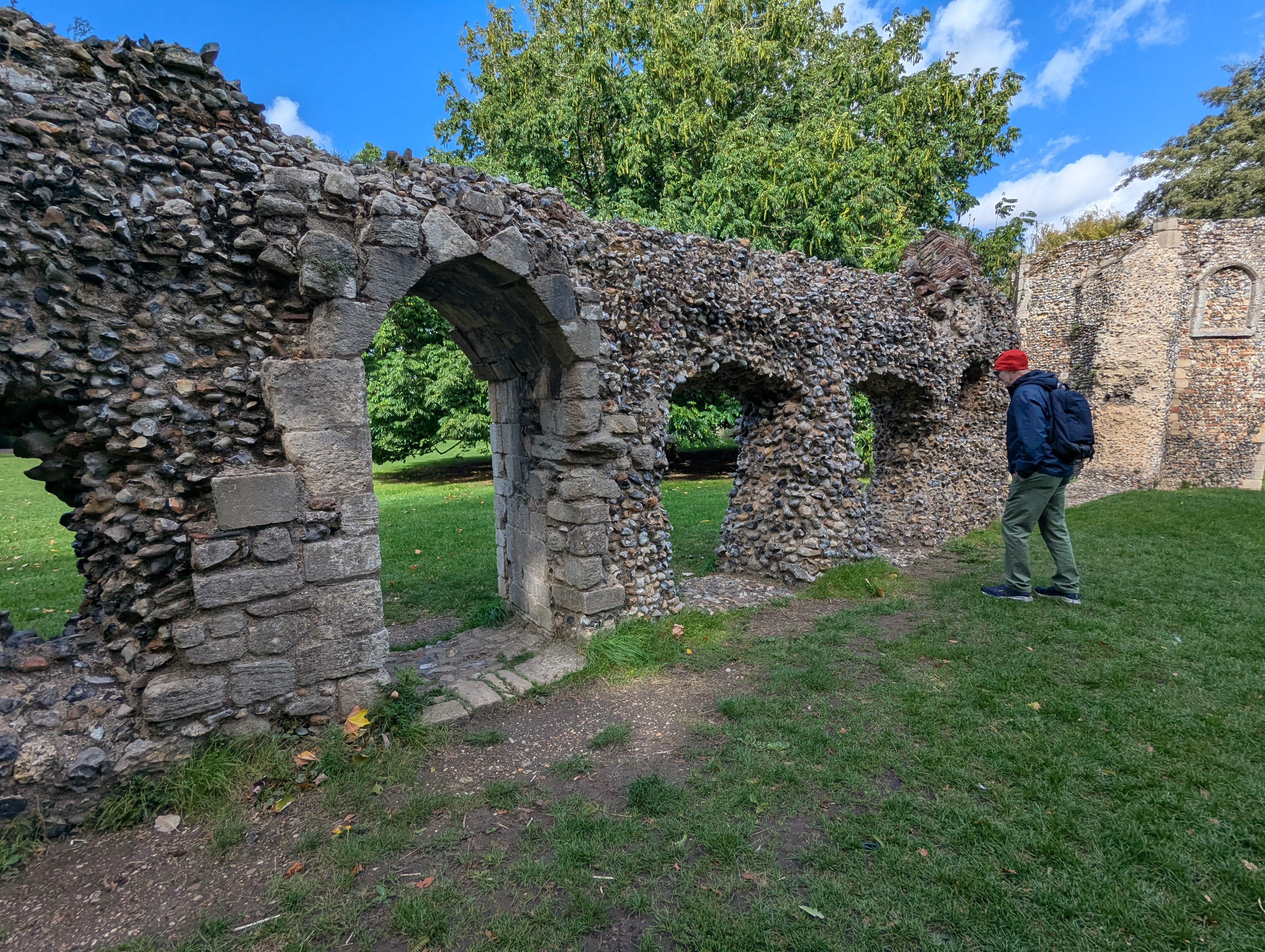
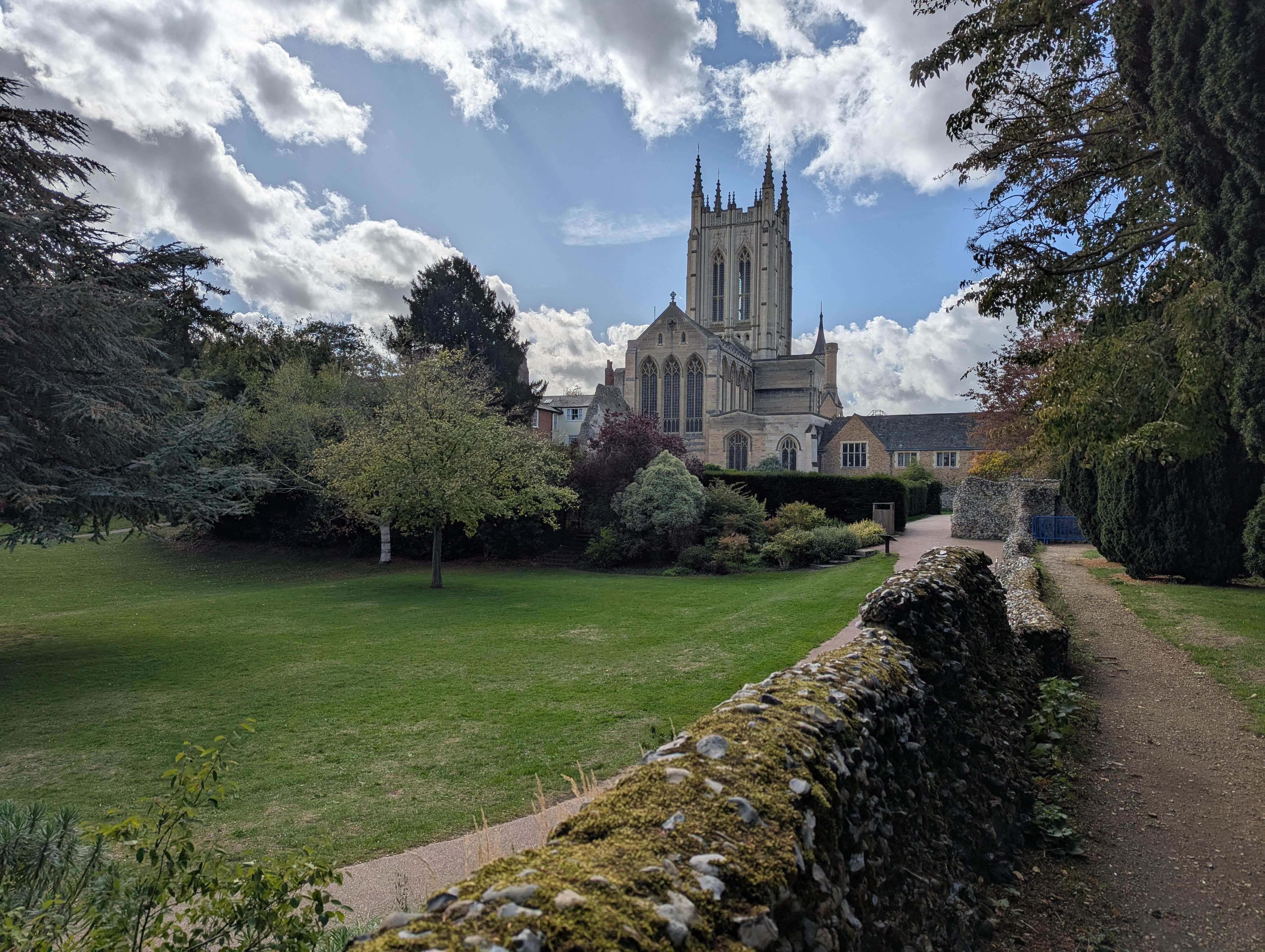
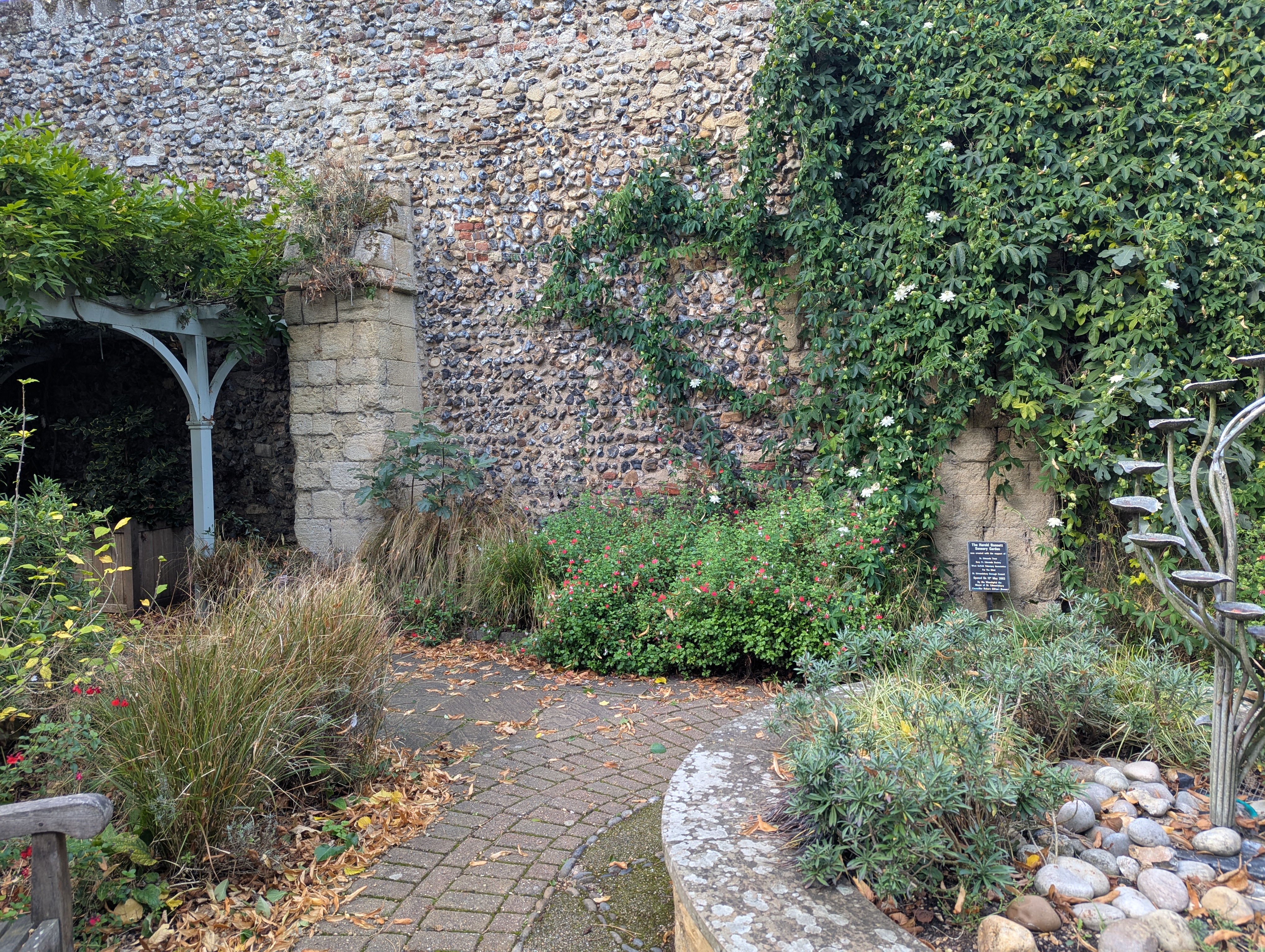
Our main destination in Bury St. Edmonds was Abby Gardens, a lovely garden near the St. Edmundsbury Cathedral. We did spend some time in the Cathedral, but the real attraction is the visible ruins within the garden of an 11th century monastery.

In our final stop in Bury St. Edmunds we wandered over to the Greene King Brewery. We had hoped to tour it and sample their beer, but it was closed, at least for the day. A man passing by told us it had been recently closed permanently. With all due respect to the passerby, it looked like an active brewery. But not on the day we were there, so back to the train station and back to Cambridge for a relaxing dinner at The Pickerell Inn, a delicious and beautiful gelato at Amorino, and a good night’s sleep.

Our footprint in East Anglia by this time looked something like this:

You’re getting sacked in the morning

Although we arrived in London on the Friday before a Saturday match, pretty typical timeline, we had an unusually quiet time before the match. We had selected a hotel we’d never stayed in, the Montcalm East, located in Shoreditch. As with many recent trips, a hotel nicer than our normal budget would allow but that came into our price point for this trip. Very nice hotel. In my top 5.

After checking in, we relaxed a bit and then had lunch at Pizza Union. My husband had to call in for an Italian class, during which I made up for the sleep I failed to get on the plane. Afterward, we walked over to The Artillery Arms for a beer and dinner. The kitchen was closed by then, so it ended up being beer alone. Cute place, a Fuller pub, naturally. We selected snacks from an Aldi along the way back to the hotel to get through the night.

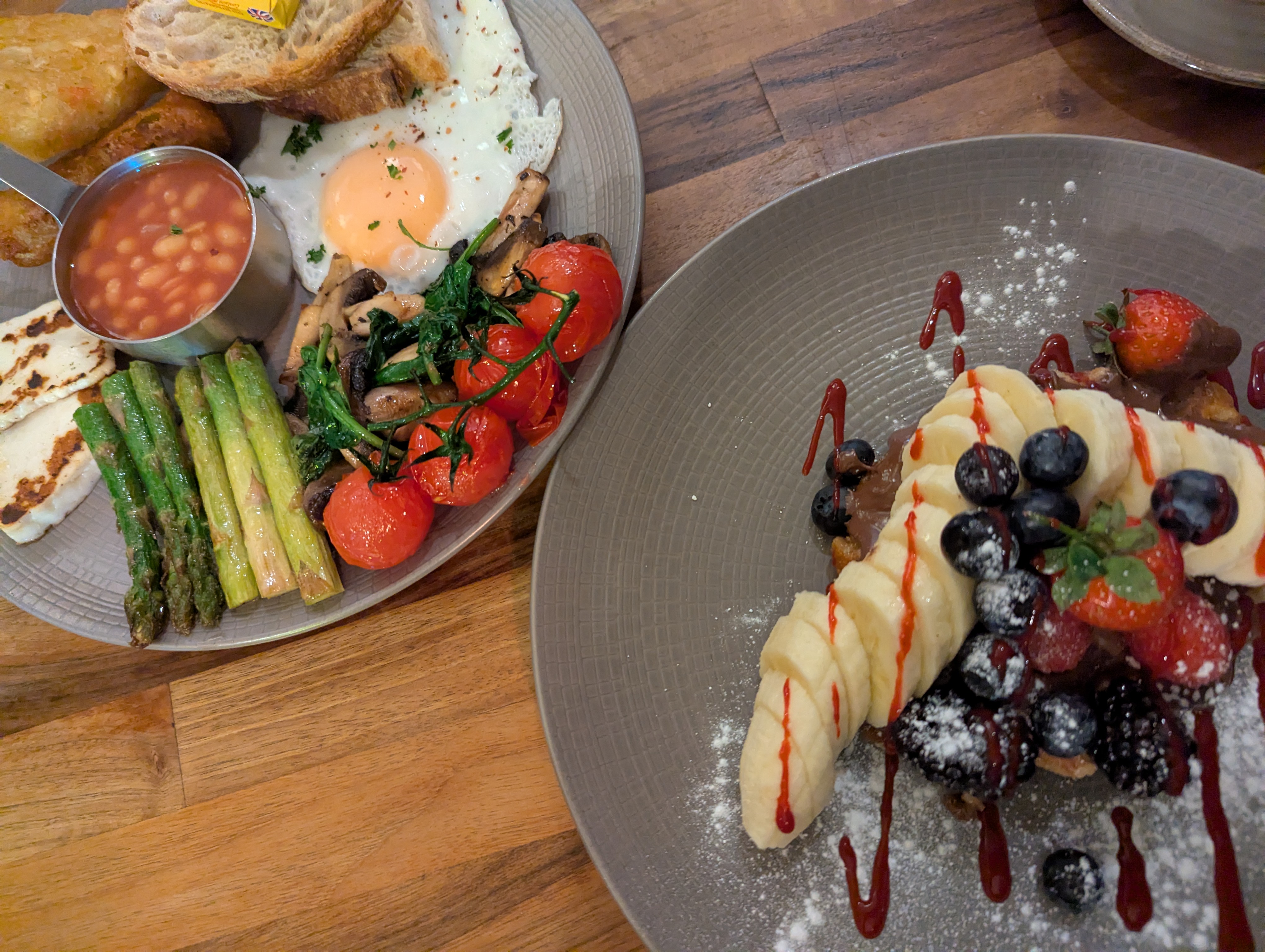
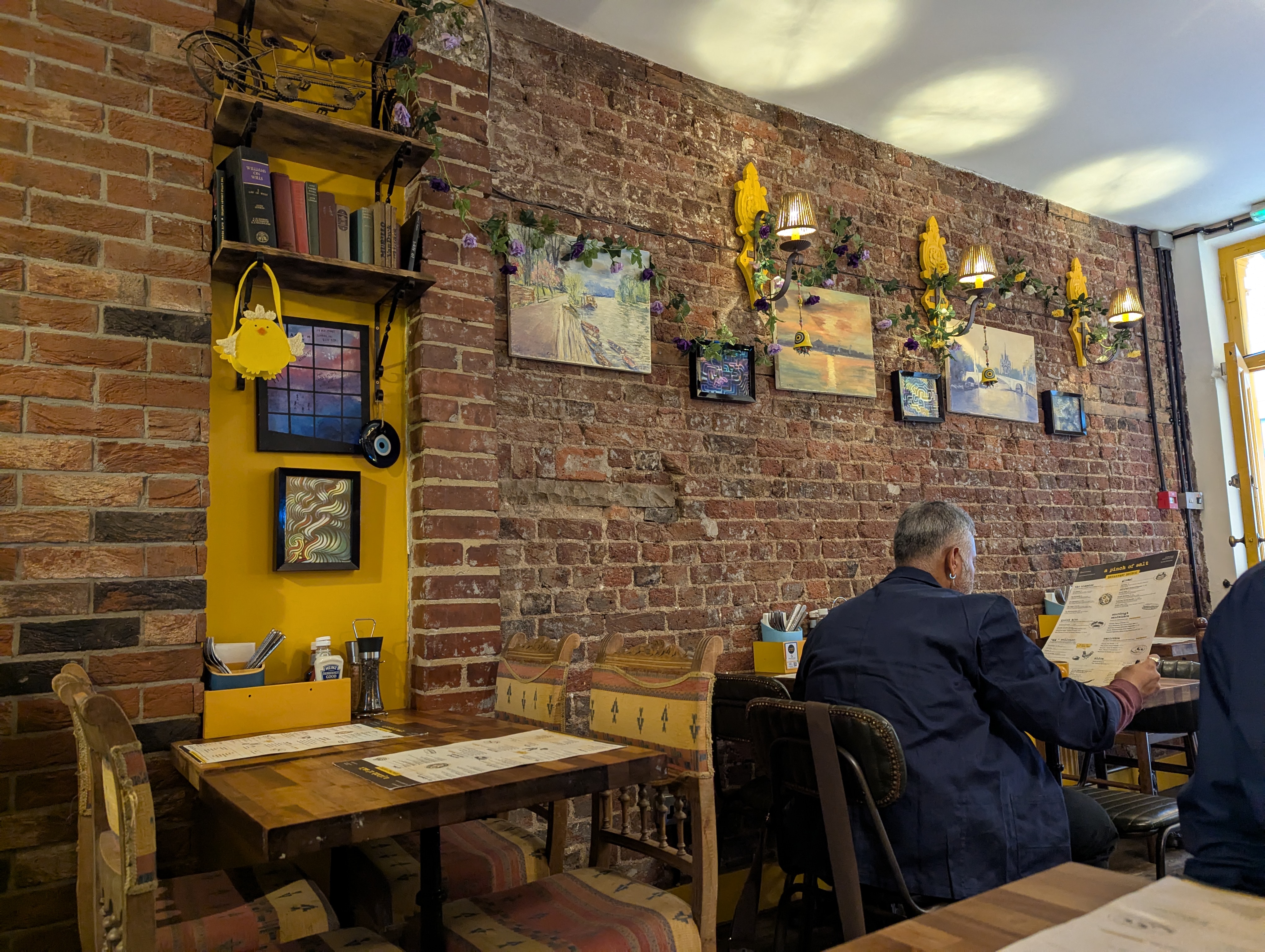
As much sleep as I got in the late afternoon and evening you’d think it would be a struggle to sleep at night. It was not. I slept like a baby. We awoke in the morning and had a delicious breakfast at A Pinch of Salt Cafe.

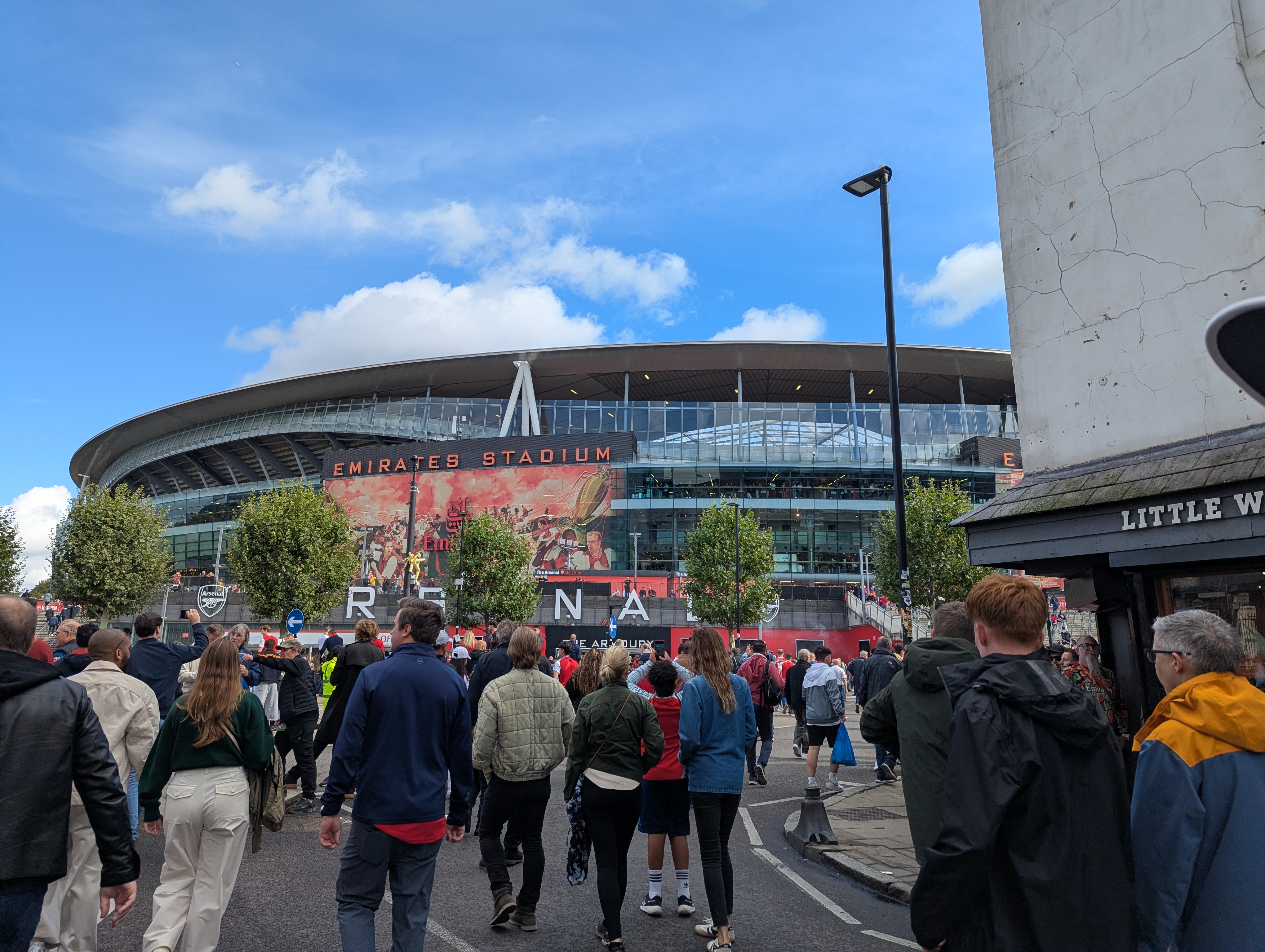
The match against Nottingham Forest was early, 12:30, so we headed to the Emirates soon thereafter. Spent a bit of time in Arsenal’s merch shop, The Armoury, just checking out the new stuff. There is always new stuff.

My seat was in the North Bank, really my favorite place to watch a match. You can see play developing and the crowd is almost always quite enthusiastic. This was true on Saturday as well. It’s a pleasure sitting near supporters who are–well–supportive. The North Bank also is prime positioning for offensive actions by Arsenal in the second half. Nothing more fun than having a goal scored right in front of you.

Arteta changed up the lineup in a somewhat surprising way, bringing new guy Eberechi Eze into the left wing and using Mikel Merino instead of Declan Rice. In midfield with Merino was Martin Odegaard, back in the lineup after his shoulder injury during the Leeds match, and other new guy, Martin Zubimendi. The other starters were a bit less surprising given our poor injury record this season.

I would think the changes Arteta made would not have been anticipated by a rival manager. However, in this case, the rival manager didn’t have much time to anticipate anything at all, having been hired only the week before the match. It was our old nemesis from Tottenham, Ange Postecoglou. Tottenham sacked him at the end of last season. Even though he did manage to win the Europa League, the rest of the season was pretty bad for Tottenham. Nottingham Forest only recently fired their manager, Nuno Espírito Santo. He’d been a good manager for Nottingham Forest but seemed to have been done in mostly by office politics. I’d rather face an Ange team than a Santo team, but was a bit nervous about the possibility of the dreaded new manager bounce that can occur sometimes.

Needn’t have worried because Arsenal were excellent right from the start. We dominated possession and looked really, really dangerous. And naturally, because Ange is (to us) Tottenham, we supporters were up for it also. Loud, loud, loud, and quite obnoxious.

Sadly, after losing Martin Odegaard to a shoulder injury in the first 10 minutes in the Leeds match, we lost him again early in this match after he fell awkwardly on the same shoulder. Ethan Nwaneri again came on and deputized him well.

Martin Zubimendi joined up with Arsenal over the summer from Spanish team Real Sociedad. Technically, his deal was agreed across all parties in March, but for financial reasons Real Sociedad wanted it to go through in their fiscal year starting in July. His move to Arsenal was kept relatively quiet although we believed he was likely coming into the team. We were excited—he looked like a great replacement for Thomas Partey, who was to be out of contract over the summer. But the longer the announcement was delayed, and with Arsenal’s surprising move to briefly pursue Partey at the end of last season, the more I worried Zubimendi might not come at all. But you know how it is. Once it’s finally done you rewrite history in your head. Of course he was always coming to Arsenal.

As I recall it, he was the first signing of a busy July for Arsenal. Shortly after Martin Zubimendi was signed, so was Christian Norgaard and Noni Madueke. And it seemed we would also bring in Viktor Gyokeres. Gyokeres was the most exciting signing for fans because he’s a striker, and we have sooooo needed one. Plus, he was lighting up the Portuguese league with goal after goal. When Gyokeres was announced as an Arsenal player, sales of shirts with his name on the back broke the existing record for shirt sales at Arsenal. So with all the other excitement, while I was happy Zubimendi signed, it went a bit under my radar as an important development.

In the pre season and first two matches, Martin Zubimendi was quietly excellent as a player. Mikel Arteta put him right into the lineup and he was solid defensively and reasonably creative offensively. Easy to take for granted. And I think we did just that.

In the match against Nottingham Forest, Martin Zubimendi’s excellence went loud. Very, very loud.

Despite Arsenal’s superiority, it took a while to deliver a goal. It finally came about 30 minutes in in the aftermath of a corner kick. Madueke put up a nice one, but it was headed by a Nottingham Forest defender. It was not a bad clearance–beyond the penalty area–except for one big problem. Apparently Martin Zubimendi is able to volley such a ball into the net from that distance. And he did exactly that. A gorgeous goal. Every time they showed it in the stadium—and they showed it on the giant stadium screens more times than usual—every fan watching it again said “Whoa!” in unison when he again struck that ball and it again flew into the net. It might have grazed a defender on the way in, but no way was any goalkeeper keeping that ball out.

1 – 0. Cue chants of “1 nil to the Arsenal.”

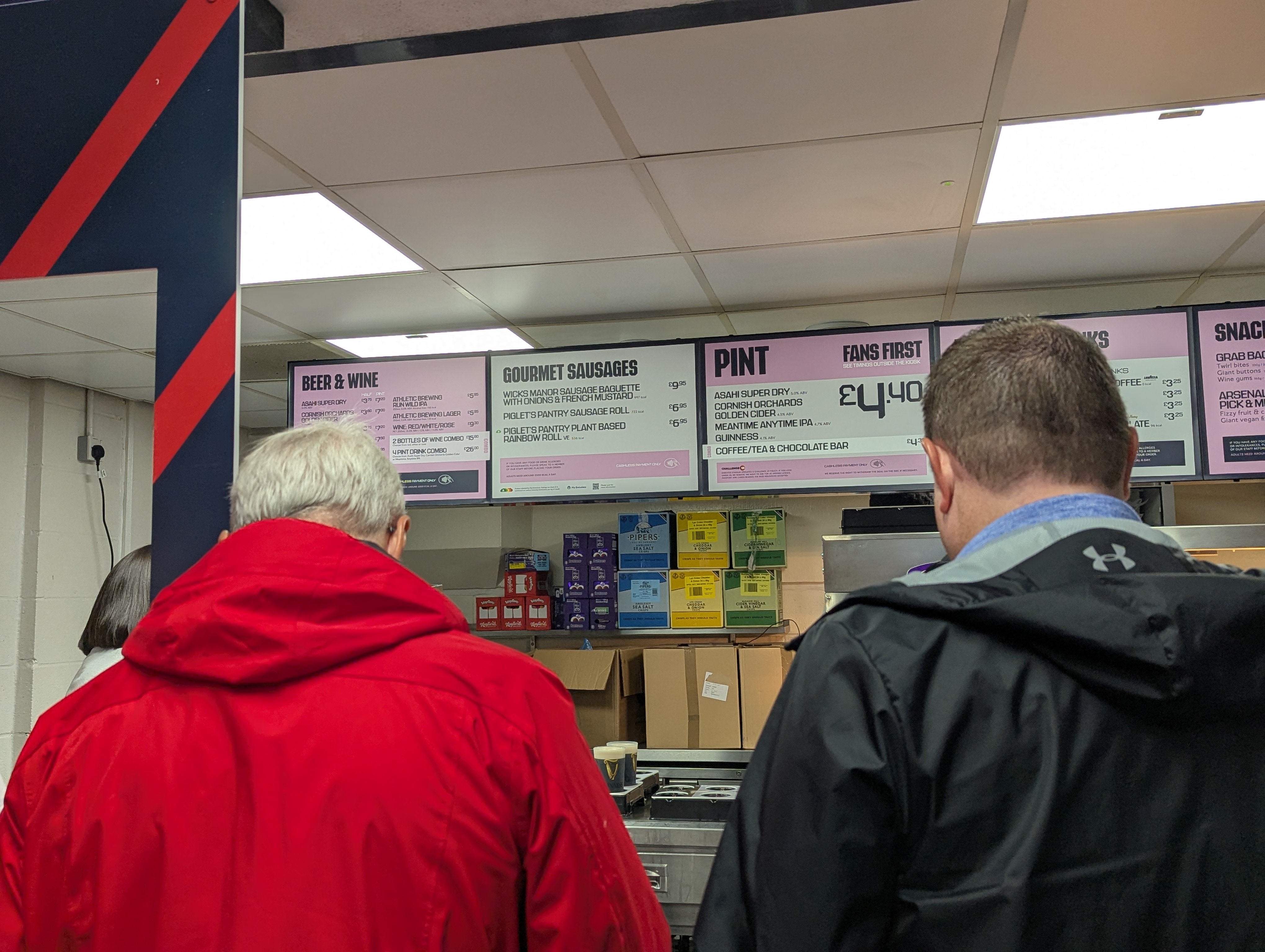
At halftime I stepped away for the typical bathroom break and an atypical wait in the concessions line for a cup of tea. Although you can’t bring beer into the stadium, you can bring tea. I heard the announcer say the teams were back on the field and I carried my newly-acquired tea back to my seat in the North bank.

It was a good thing I did because, just as Viktor Gyokeres scored a quick goal right after halftime in the Leeds match, in this match Eberechi Eze received a perfect through ball from Ricardo Califiori within minutes of the restart. He put up a perfect cross for Gyokeres who rammed it in the back of the net from close range. Like the Leeds match, a lot of people who didn’t make their way back into the stadium missed seeing that live. 2 – 0.

At this point, the chanting in the stadium became bifurcated.

Chant 1: the Viktor Gyokeres chant:

He comes from Sweden, the girls are really nice
He dumped his girlfriend to play in red and white
He’s scoring goals with a cannon on his chest
His name is Viktor, Viktor Gyokeres

(I’ll spare you the gratuitous “De de de”s.)

Chant 2: abuse of Nottingham Forest’s new manager, Ange Postecoglou. No need to update the chant Arsenal fans created for Tottenham when he was the manager there, the lyrics still work. It’s too rude for me to repeat here and goes after not only the manager but also the team. I would suspect the Nottingham Forest players have ever felt quite so reviled at the Emirates. Just caught in the bad blood of an old relationship.

The third Arsenal goal came when Arsenal won a free kick for a foul. Arsenal worked it in and Leandro Trossard, who had come on as a sub, put up a nice looping cross toward the goal. Martin Zubimendi, who I don’t perceive as a particularly tall guy, met it with his head and into the back of the net.

With the requisite chants for Zubimendi completed by the Arsenal fans, they turned their attention to hapless manager Ange Postecoglou on his inaugural match with Nottingham Forest:

Sacked in the morning
You're getting sacked in the morning

Despite the fact that Zubimendi scored 2 goals and Viktor Gyokeres scored only 1, at the ending whistle the stadium DJ cued up Salt-n-Pepa’s Push it, the musical inspiration for the Gyokeres chant. We note that the DJ can only work with the materials he’s been given. A player is endowed with a chant by the supporters. It may be based on commercially-created music or some traditional chant or some new invention. Much like your family, you can’t chose your own chant. Zubimendi’s chant isn’t based on commercially-available music.

He’ll just have to be happy with being named man of the match. That, and our love and admiration.

Friends in low/high places

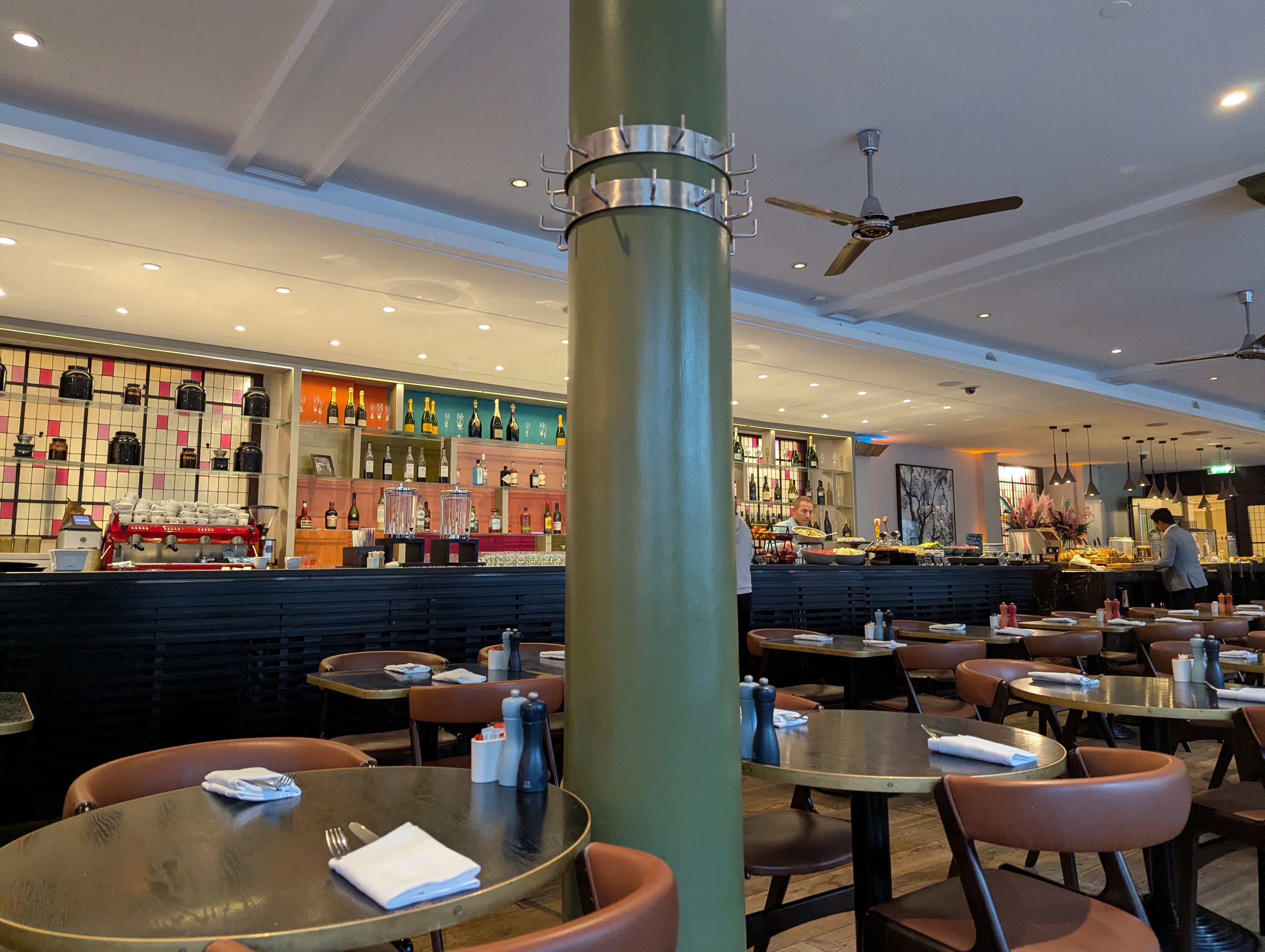
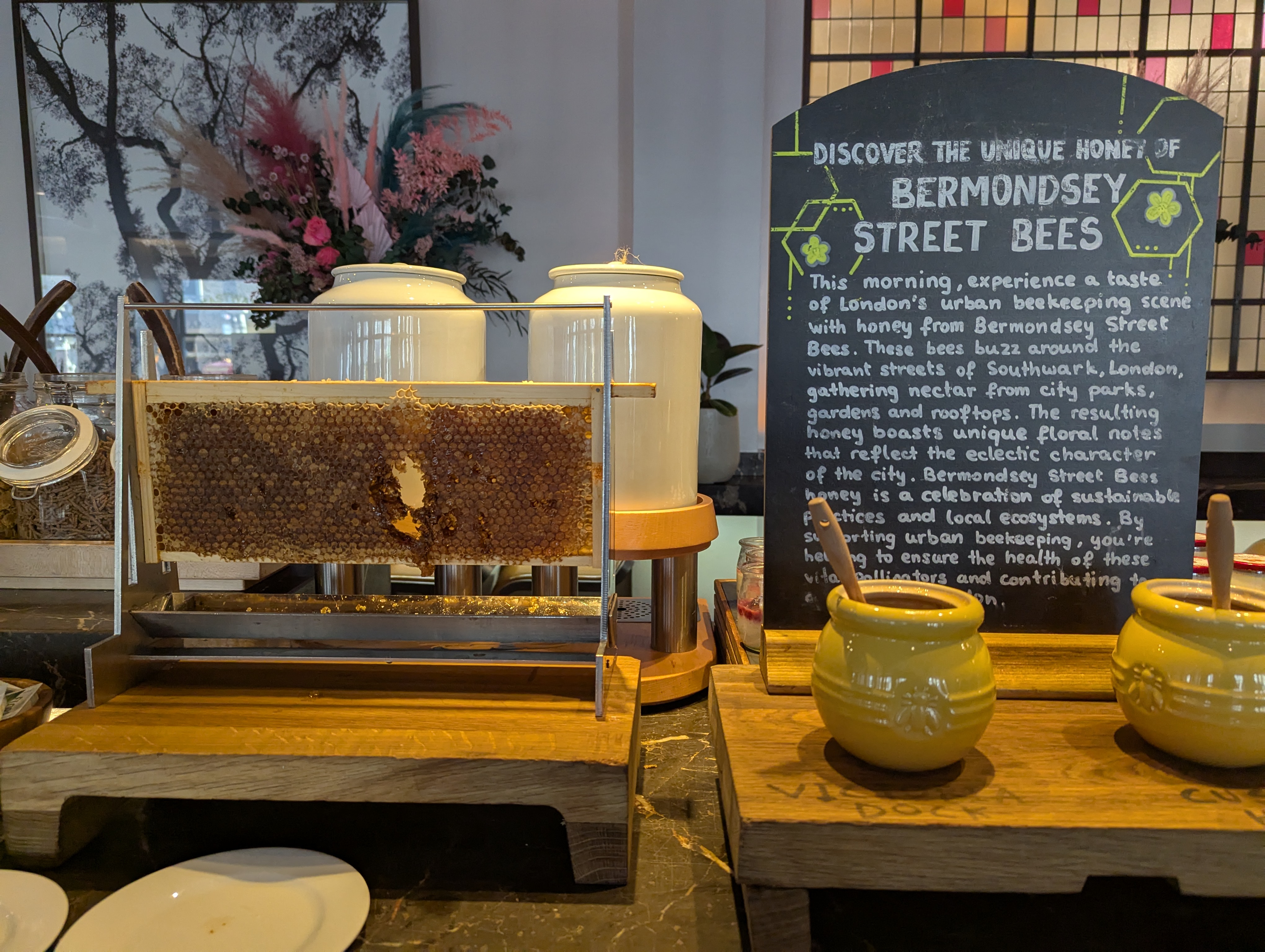
We stayed this time at the Andaz London, a very nice hotel on Liverpool street that briefly came into our price point during this trip. On only one other occasion while visiting London was breakfast included in the price of the room, but the Andaz’s breakfast had such interesting and extensive options I feel like I want to pay more attention to this feature when selecting hotels in the future. Although it’s fun finding new places to eat for each meal, it was very relaxing to start the day in our own restaurant and fun to try the many different options they offered. For example, salad. Charcuterie. Also the usual stuff–toast, croissants, waffles, eggs, smoothies, fruit, yogurt.

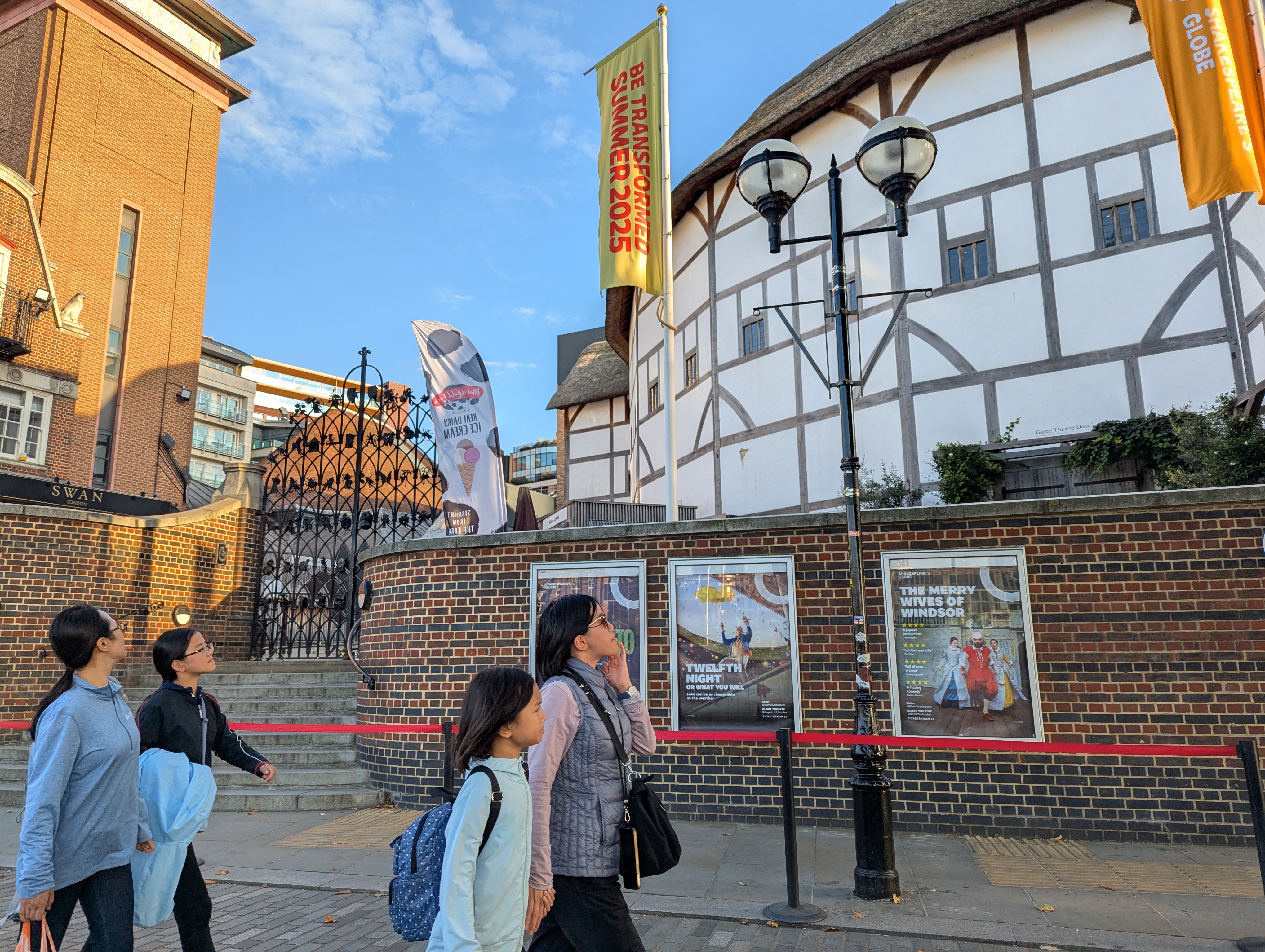
I’ve often felt that my favorite, most meaningful activities in London have been the cheapest and this trip also had those cheap–and free–moments. Although it’s been our rule not to go to a theatre production on the night we arrive in London, lately it’s more like a guideline. As soon as we booked our flights we checked in on what was playing at Shakespeare’s Globe Theatre since the outdoor theatre is only in use during seasons in which temperate weather can be expected. In the course of the football season that’s usually only possible early on. There was only one performance that would work for us, the one on the Friday night we arrived in London, which turned out to be a late arrival after significant flight delays.

The reason for the rule not to attend theatre is simple: we are usually seriously jet-lagged and can’t keep our eyes open after the lights come down. I felt we’d be able to stay alert and enjoy this play for two reasons. First, The Merry Wives of Windsor is a comedy, albeit one I knew very little about (with apologies to instructors of the two semesters of Shakespeare I took in college). Second, we bought tickets as groundings, the peasants that traditionally stood in front of the stage during a play in Shakespeare’s time (in contrast to the wealthy, who sat in seats above the groundlings). I felt that we’d be forced to stay awake while standing, but if we became too tired to continue we could always depart at intermission. Tickets for groundlings are about $10 each so the sunk costs are reasonable enough to walk away from.

My husband, who clearly paid more attention in his Shakespeare’s classes, recalled that this play had been written by Shakespeare over just a few days at the insistence of Queen Elizabeth. As a result, possibly not his best work. One of few plays set in what would have been Shakespeare’s current day, it’s the story of a man who seeks to seduce the wives of two gentlemen. The wives compare notes and conspire to seek revenge against him. It’s kind of a weird play, but mostly light and enjoyable. Shakespeare often played to the groundlings in his plays and this is expertly done at Shakespeare’s Globe Theatre. Groundlings find themselves in the play and it makes the experience both authentic and a lot of fun. We’ve been to a few plays at the theatre and they are always excellent and well-acted. This one was no exception. We were tired but made it through the performance and felt that we got tremendous entertainment value for a very reasonable price. I never intend to sit in a seat at the Globe.

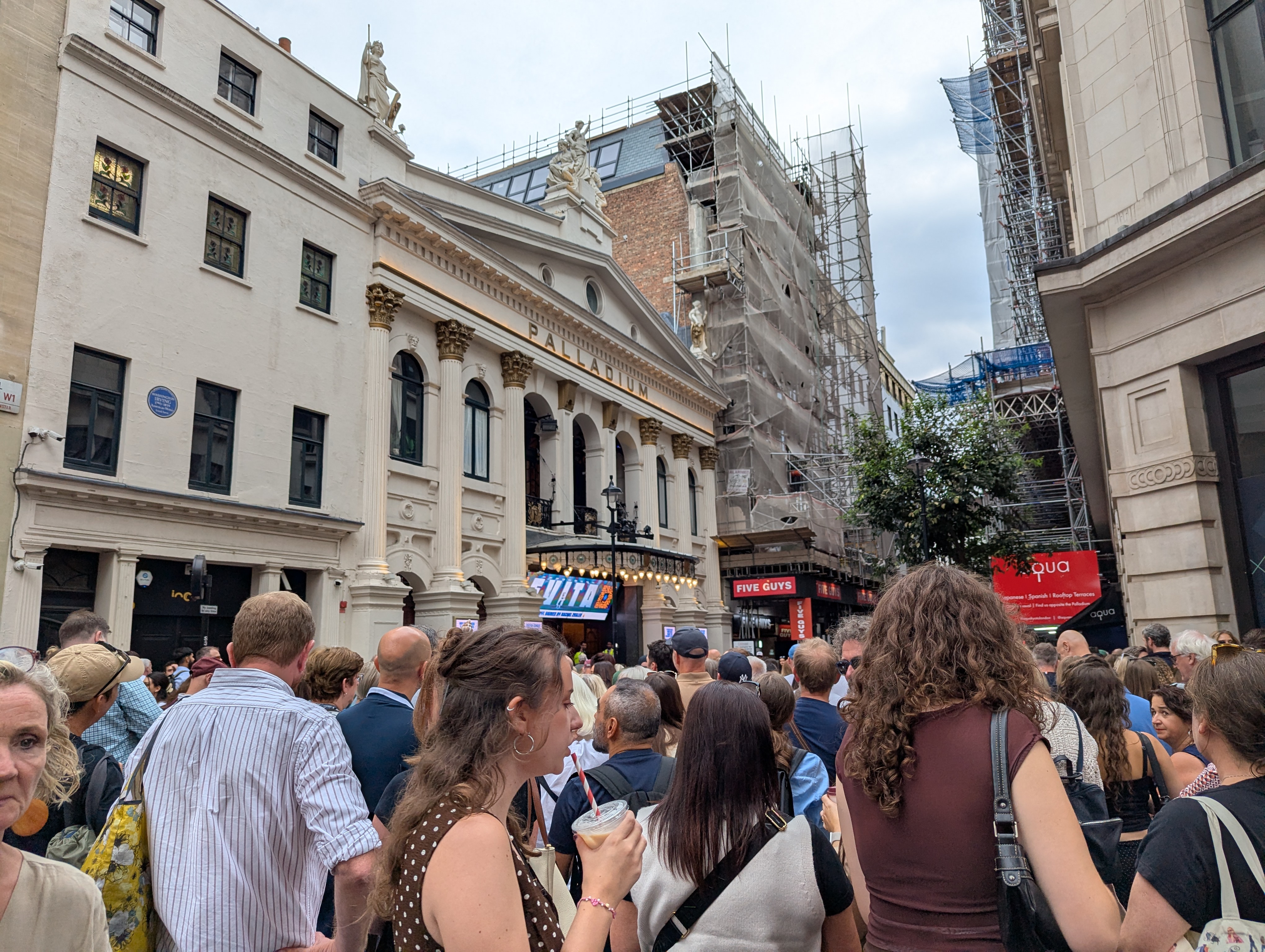
Our second peasant experience of the weekend was trekking over to the Palladium Theatre and seeing Rachel Zegler sing “Don’t Cry for Me Argentina” from the balcony during the matinee performance of Evita. She literally sings to a gathered crowd below the theatre balcony while, for paying customers inside the theatre, they stream live video of her doing this. When we arrived about an hour before the scene would occur there were already thousands gathered on Argyll Street. While we were waiting, the silly thing that kept coming to my mind was the old, comical sketch about Father Guido Sarducci’s Five Minute University, where he advocates for a college experience where he’ll teach you in five minutes only the things you’ll remember five years after you graduate. I know the outline of what happens in Evita, but literally the only song I’ve ever heard of in a musical of dozens of songs is “Don’t Cry for Me Argentina.” To be able to spend $0 hearing Rachel Zegler sing this song beautifully in 5 minutes in this amazing setting instead of watching the whole musical for $600+ is pretty great. I wasn’t prepared for how moving it would be. The video I linked above is not my video or from the day we were present, but it gives you an idea of the experience. I really wanted to be in the moment (and I was).

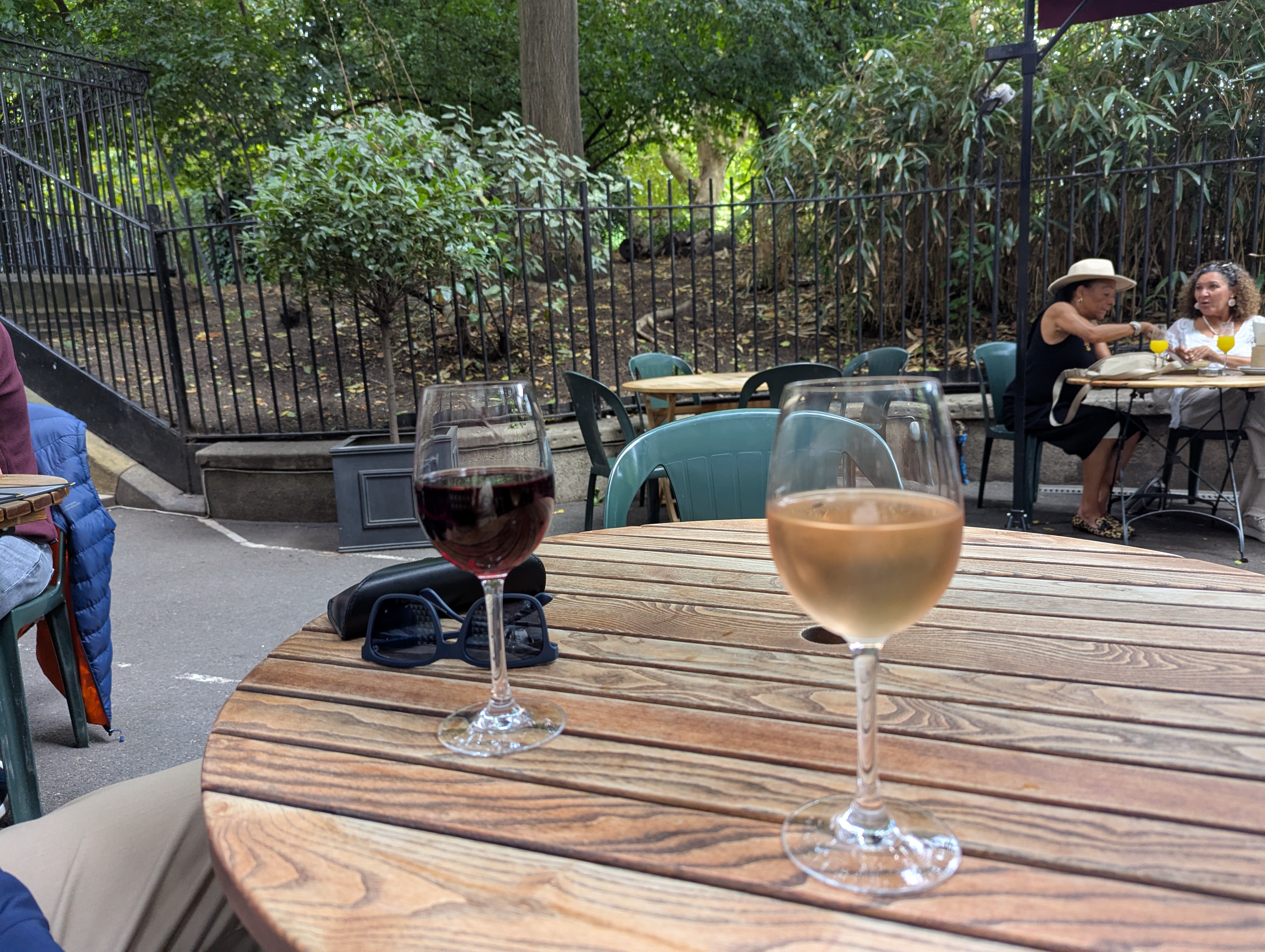
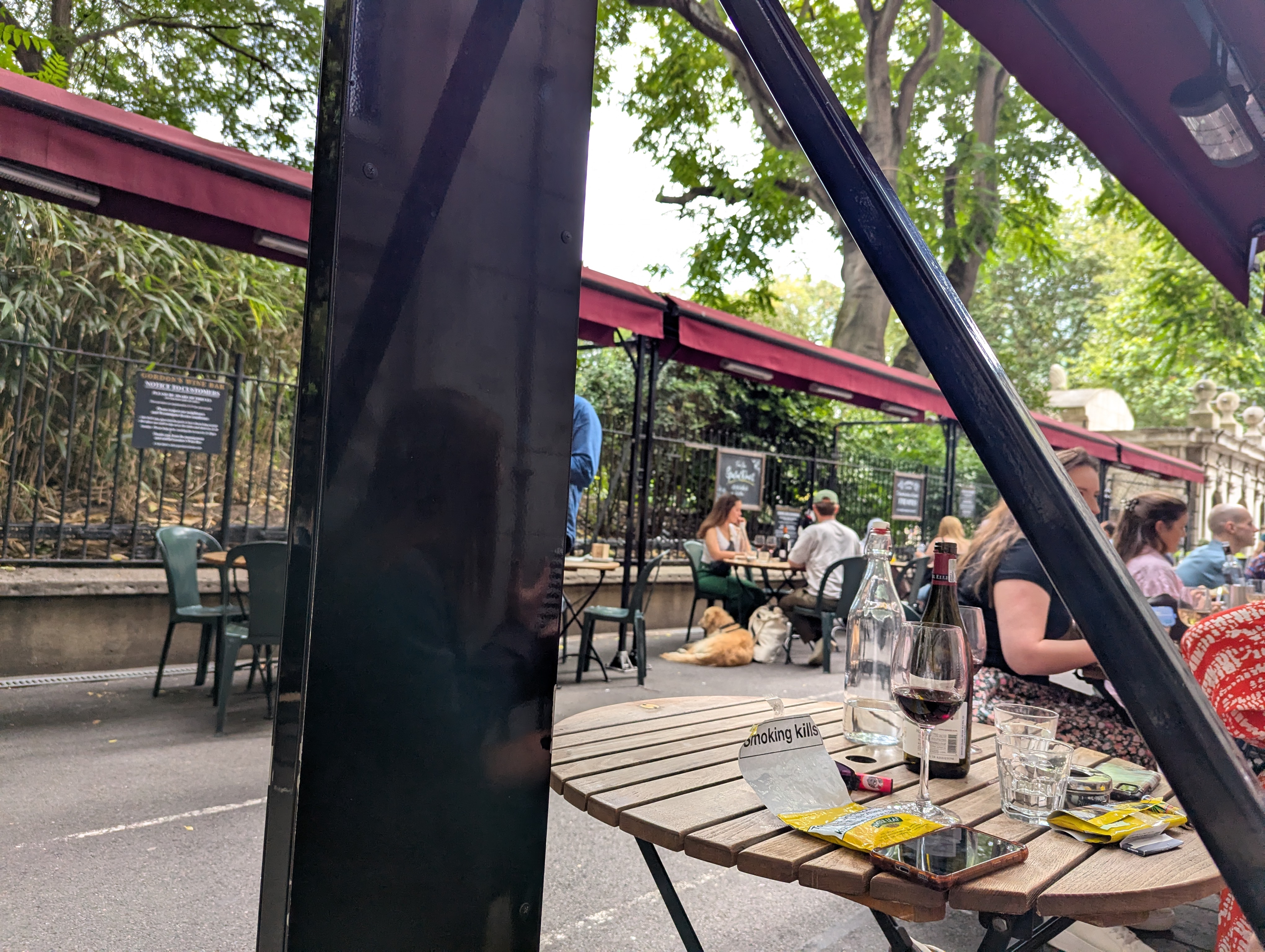
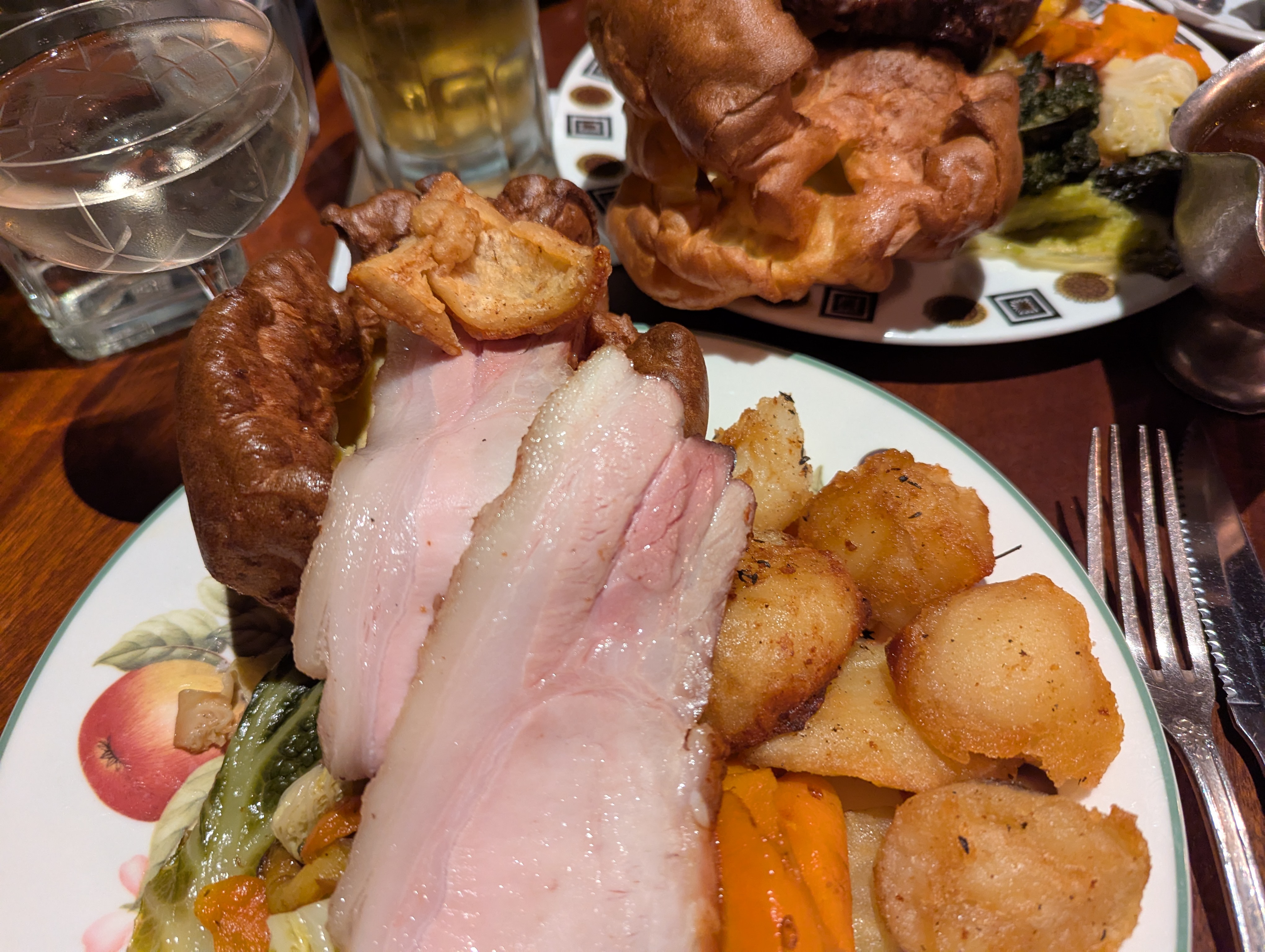
Although my favorite things to do in London are almost always the cheapest things, we were in London, so we also did some fancy things. Had a perfect glass of wine in historic Gordon’s Wine Bar on a day so beautiful the ubiquitous line outside was for the garden instead of the wine cave. (We waited for the garden.) Had a delicious Sunday Roast at a pub chain we hadn’t tried before, Blacklock.

We also attended the BBC Proms 2025 piano performance of Bach’s “The Art of Fugue” played by Andras Schiff at the Royal Albert Hall. Many years ago we toured this facility and I had always hoped we’d be able to attend a performance there. It gave me chills to be part of a crowd walking blocks together toward the concert hall to hear music and then, afterward to be walking away together, everyone chatting about the performance. We were seated in a stall to the left of the piano, selected so that we could see Andras Schiff’s hands while he performed. Unfortunately, the positioning of the piano only allowed us to see his back. Best laid plans…. There was a “groundling” equivalent available for the concert, but I was happy not to be standing during this performance. A lady in the first row of the “groundlings” actually seemed to lose consciousness and collapse. For a passed-out person she was quite well-behaved. She seemed to ultimately get back on her feet, the pianist seemingly never knowing that it had happened and continuing on. The acoustics in the hall were great and the music was beautiful. Schiff has claimed that he’s waited 70 years to be ready to play this piece, likened to Mount Everest. I’m a lazy person, but I don’t mind watching someone else scale Mount Everest.

On Sunday before Roast, we visited the Barbican’s “Feel the Sound” immersive exhibit. The exhibit was focused on how we experience sound, not just with our ears but with our whole bodies, and how sound can be created, including with pulses inside our bodies. Super interesting and interactive exhibit.

Each time we go to London I wonder how we’ll continue to find interesting and fun things to do and experience.

It’s a baseless worry. While Arsenal can sometimes be disappointing, London never is.

A hopeful fool and her money are soon parted

After a fairly barren soccer summer the Premier League is–at last–back in session. I had plenty of time on my hands, having retired from working at the end of May. I am a person of very few hobbies and one for whom most of my social contacts were established through my work. Therefore, it’s been somewhat of an uphill battle keeping busy, let alone Finding Purpose. I did a lot of gardening, helped some friends and family members with financial questions, and experimented with volunteering. Got plenty of exercise, more than I ever did while working. (I daresay that if I had exercised as much while I was still working maybe I could have tolerated Work BS a few years longer. That’s a theory I don’t feel compelled to test.) Still, I would say there has been a lot of floundering and too much doom scrolling. It’s such a terrible time for scrolling, so hard to keep it mindless and not take in all the nonsense/doom. In short, I have work to do to have a retirement I feel good about.

I couldn’t force myself to watch the Club World Cup–such an abomination–but I did invest in watching almost all of the Women’s Euros. Delightful and worthwhile in every way. I didn’t gravitate to any one team as I usually do while watching international competition, just enjoyed watching women play great soccer, have high highs and low lows. Kudos to Team England for winning the competition. They ground out result after result, never looking comfortable until it was all over.

A lot of my doom scrolling of the summer was focused on Premier League transfer rumors, especially for Arsenal. I see ESPN and other media outlets grading Arsenal’s transfer window as a B-. First, let’s acknowledge the ridiculousness of grading transfer business. Then let’s take exception to the grade Arsenal got. I can’t remember a better overall transfer window in my time as a fan. We’ve brought in six players that would make it possible to replace a future injured first-choice player with a solid second choice option, to successfully rotate to prevent those injuries, to be able to bring different energy from the bench when needed in a match, and to just make us better in key positions.

We successfully brought in a new dedicated striker, Viktor Gyokeres, where both previously available options had been repurposed under desperate circumstances from other positions. In my opinion, both of those options worked out pretty well. But having a guy who has a history of scoring a goal on average in every match is pretty exciting. We also brought in Martin Zubimendi to replace the position formerly filled by Thomas Partey, whose contract expired at the end of the season. Against its better judgment, Arsenal did try to re-sign him, more as a replacement of Jorginho, a solid second-choice defensive midfielder. Partey is an excellent defensive midfielder but has legal–and possibly moral–baggage that we’d have been smart to be freed of. Not by Arsenal intention but because Partey wanted higher pay than Arsenal could stomach, it seems we have been freed.

Zubimendi has been very exciting to watch in the pre-season and will make a great difference immediately. How long it will take Gyokeres to kick in as a valuable option is an open question. He came from a weaker and less physical league and has a style that isn’t exactly a fit for Arsenal. I back him and Arsenal to figure out how to get the best of him.

As I write, Arsenal appear to be in final stages of signing Eberechi Eze from Crystal Palace, out from under the noses of our fiercest rivals, Tottenham. He’s a magnificent creative midfielder but where he fits in Arsenal with its very solid existing midfield is a bit mysterious. I’m going to trust the process, here.

The primary wild card is that other teams were unfairly able to strengthen over the summer as well. The future is contingent on alchemy, ours vs. theirs.

We’ve already played one game in the season, an away fixture at Manchester United on Sunday. That is always a tough game. No matter how badly Manchester United are they always seem to have a good day when we play them at their home. Last Sunday Manchester United played pretty well and Arsenal played pretty shit, but Arsenal still won, 0 – 1. The goal came via a header from an unmarked Riccardo Calafiori on a corner kick routine that has produced more than its fair share of whining. In every corner kick situation in the Premier League there is grappling in the box by both teams, and this kick was no exception. I don’t know how VAR could rule a possible foul by an Arsenal player as more important than fouls on 3 Arsenal players in the same moment, and this time they did not. The goal stood and Manchester United couldn’t break us down for the 80+ minutes after the goal. We’ll take the win.

On that backdrop, my husband and I managed to score tickets to the Leeds match on Saturday. You know the drill, we have to enter the ballot and, once we inevitably lose, that allows us to use the exchange to try to find tickets being sold by others. This is the home opener (not sure they call it that in soccer!) so it was a very popular ticket and arguably hard to get. You know why–because we are going to win the league this year. Everyone wants to say they were at the first game.

For me it was quite easy to get. I was chatting with my mother on the phone and the conversation was nearing its end when she started to tell me a story I had heard before. I am an old person so I appreciate being able to repeat my stories again and again to any person not bold enough to stop me from re-telling them. Therefore, I allowed her to tell the story without interruption while concluding that it might be acceptable to multi-task a bit on the exchange. A ticket came up on my first click. It’s Club (you know I don’t love Club) but the price was decent, I bought it, and a trip could be planned.

Airfare prices are pretty great right now and we were able to book a hotel that’s never before been in our price point. That said, going to London for Arsenal matches is a pretty expensive hobby for someone with no income. Well worth it if you know for a fact you are going to win the league that year. I do know it. You know I know it.

Luckily, while a hopeful fool and her money are soon parted, it takes a whole season to part her from all her money. Let’s rejoice in the fun to be had along the way.