
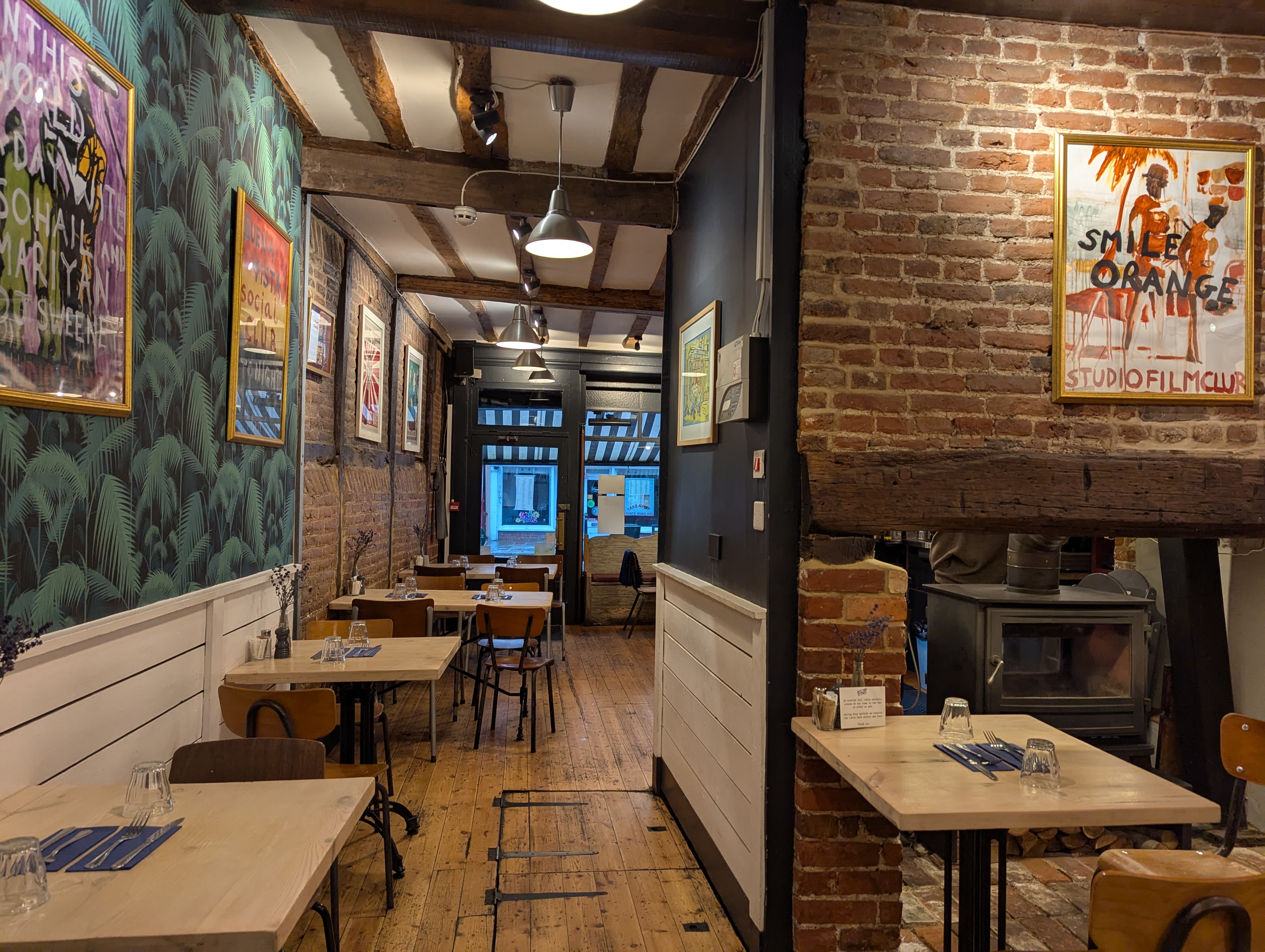
We woke to a raw, wet day, endured the cold showers I mentioned in my last post, and then walked several blocks to the highly recommended Refectory Kitchen for breakfast. We made a point to sit far from the door and were quickly served a much-needed warm drink. My husband had a dish called “Green eggs and ham” (green because of pesto) and I had a French toast with blueberry compote. Great way to start the day.
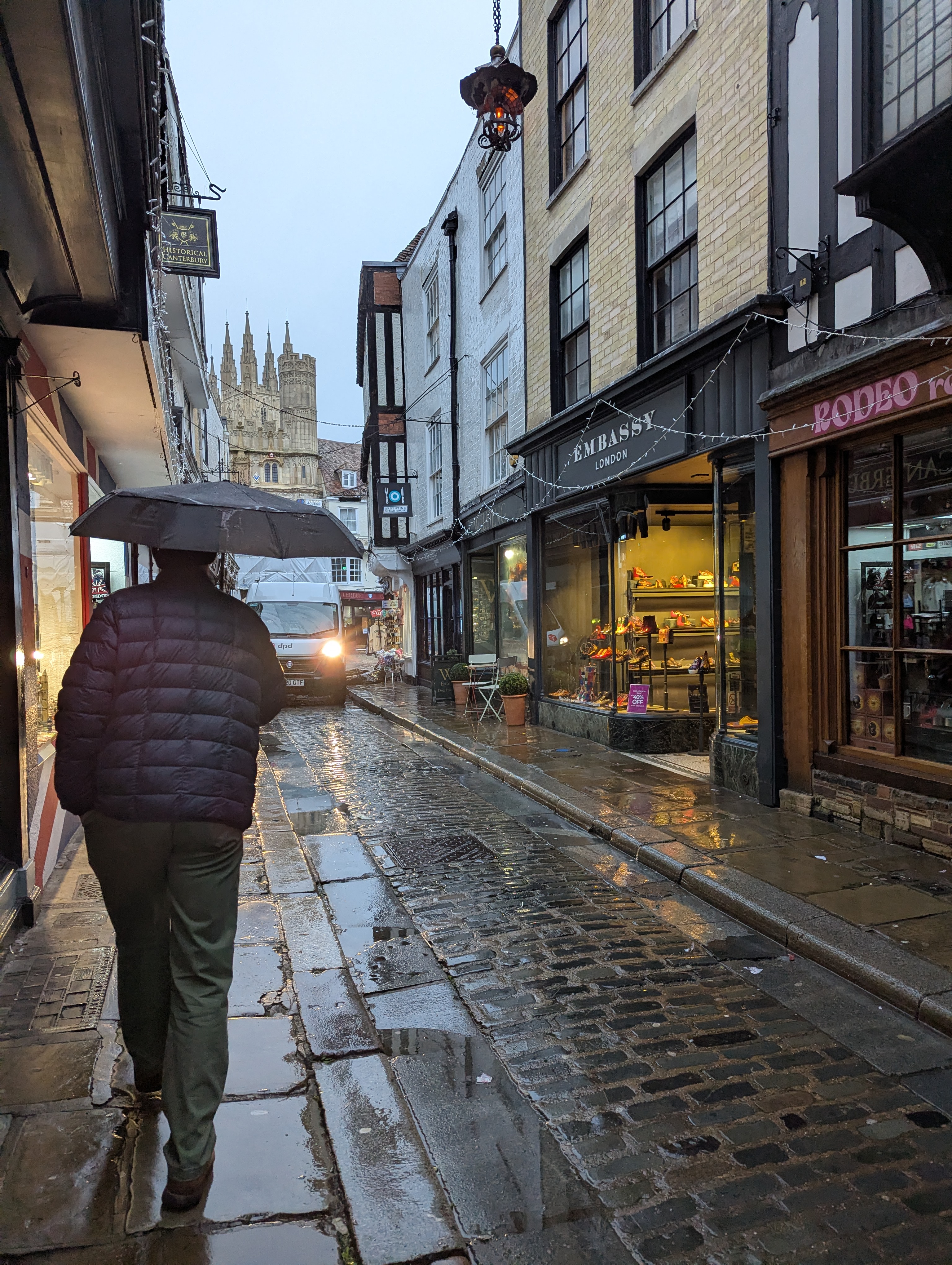


We steeled ourselves and walked through the rain in our practical footwear over to the Canterbury Cathedral. We’ve seen a lot of Cathedrals lately and I know that, to some people, they start to be all alike. While it may be true that many parts of the physical cathedral are similar to others, what I usually find so interesting is the unique history of the people connected with the Cathedral. The Cathedral at Canterbury has a notably colorful history. We used the audio tour available and found it interesting and useful.
Canterbury Tales by Geoffrey Chaucer includes imagined stories of pilgrims who traveled to Canterbury Cathedral. I read parts of it either in high school or college and, although I’ve forgotten so much from many books I’ve read, the details in some of those stories are still fresh in my mind.
People made the pilgrimage to Canterbury in homage to Thomas Becket. Thomas Becket had been a nobleman and friend of King Henry II who was made Archbishop Of Canterbury. Kings and archbishops had great power over the subjects and King Henry II had reason to believe that by installing the like-minded Becket he would be able to exert more influence on the church. But as soon as Becket was made Archbishop, he began to go his own way to the great frustration of the king.
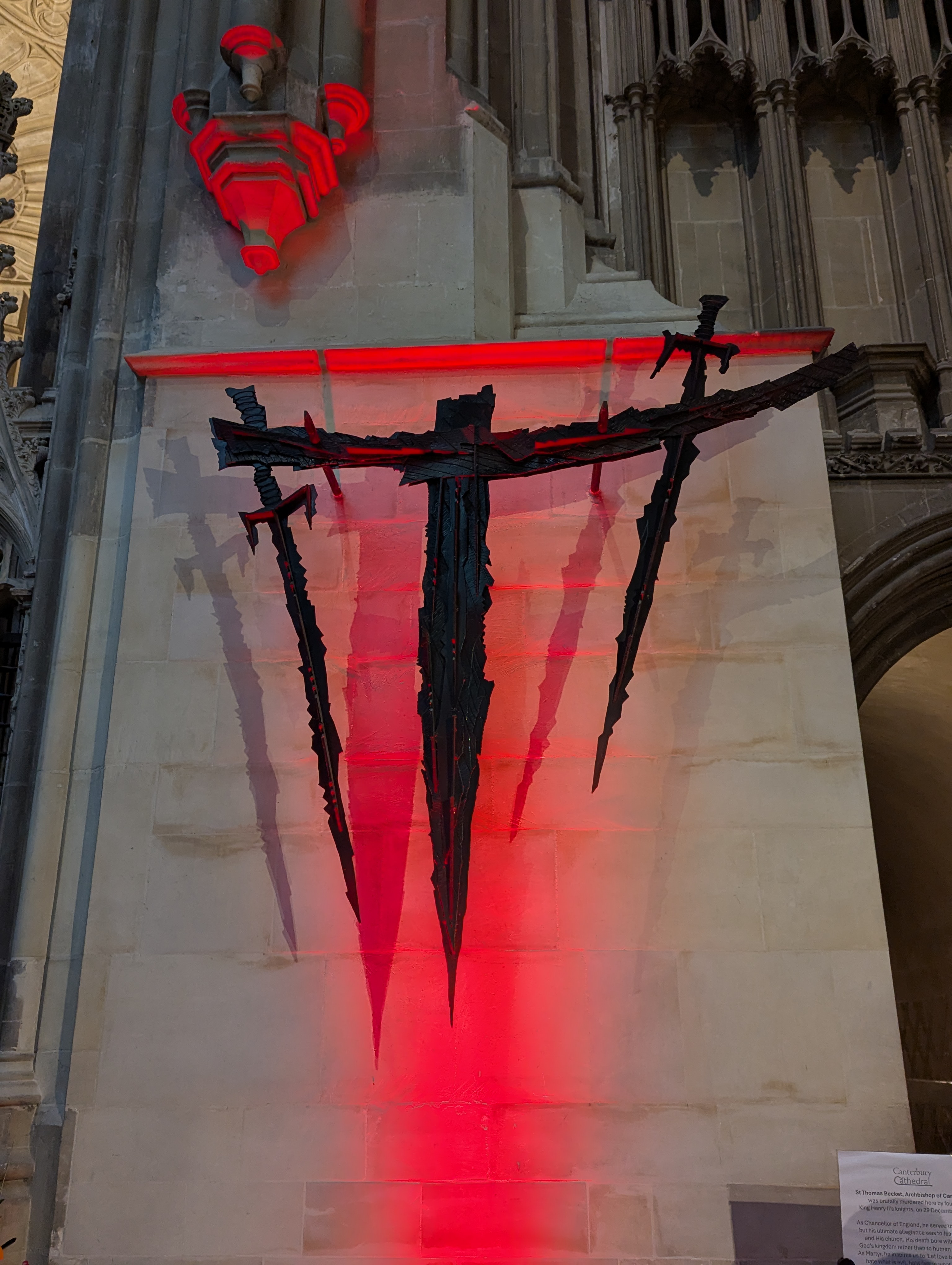
What happened ultimately is in dispute. Henry II either A) sent soldiers to kill Becket or B) said something innocuous that made the soldiers incorrectly believe they were being sent to kill Becket. Regardless of Henry II’s actual intent, the soldiers went to Canterbury and killed Becket inside the Cathedral.
Now martyred, he was named a saint by the Pope. And although pilgrims previously trickled to Canterbury Cathedral, Becket’s martyrdom and subsequent canonization turned that trickle into a deluge. Becket’s remains are buried in the cathedral and formerly could be viewed by visitors who were willing to pay for the privilege. I believe that is not possible today. (Maybe I should have displayed my crypto.)
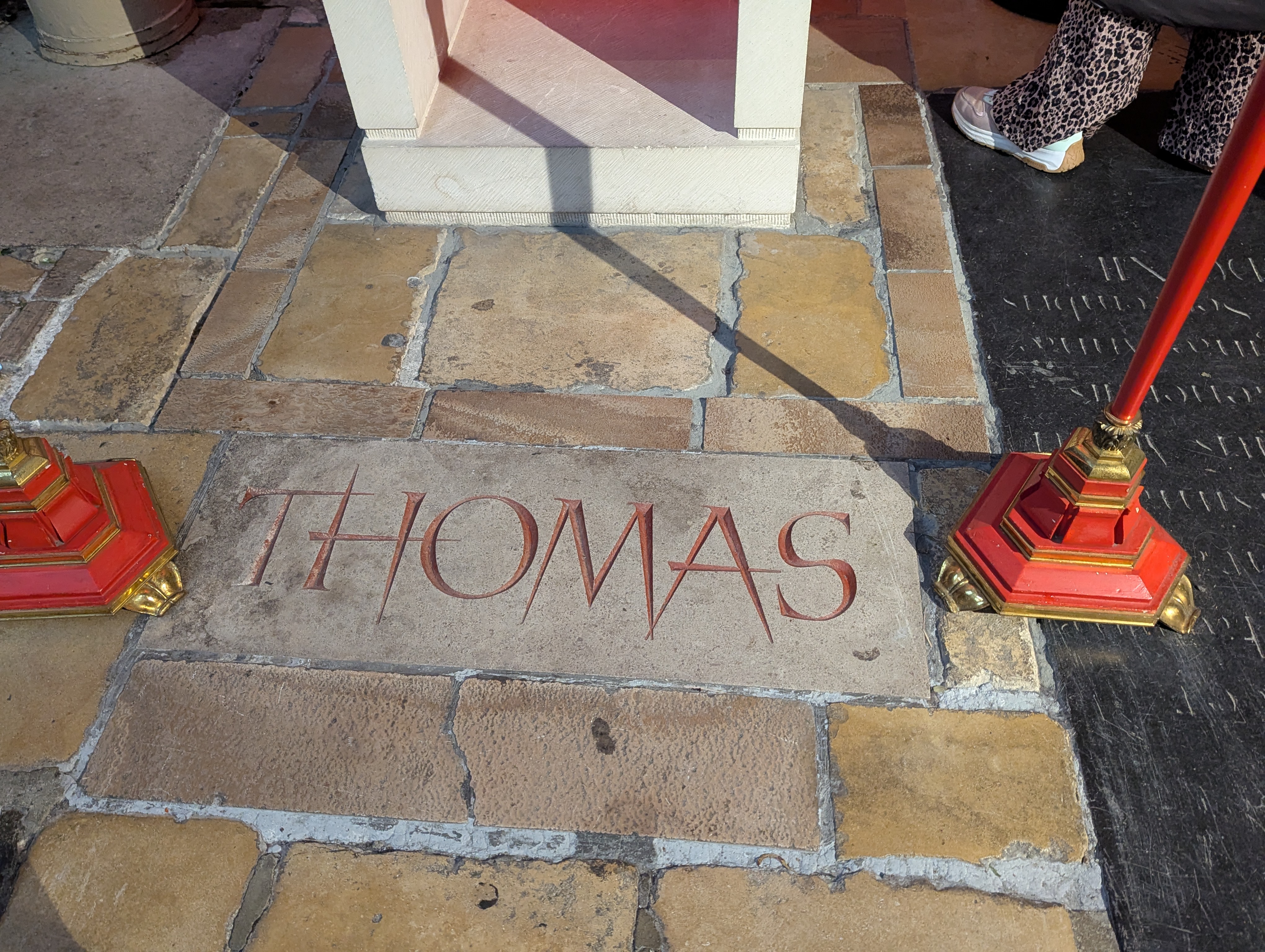
The site where Becket was murdered is commemorated with some art that includes representations of the swords of the soldiers.
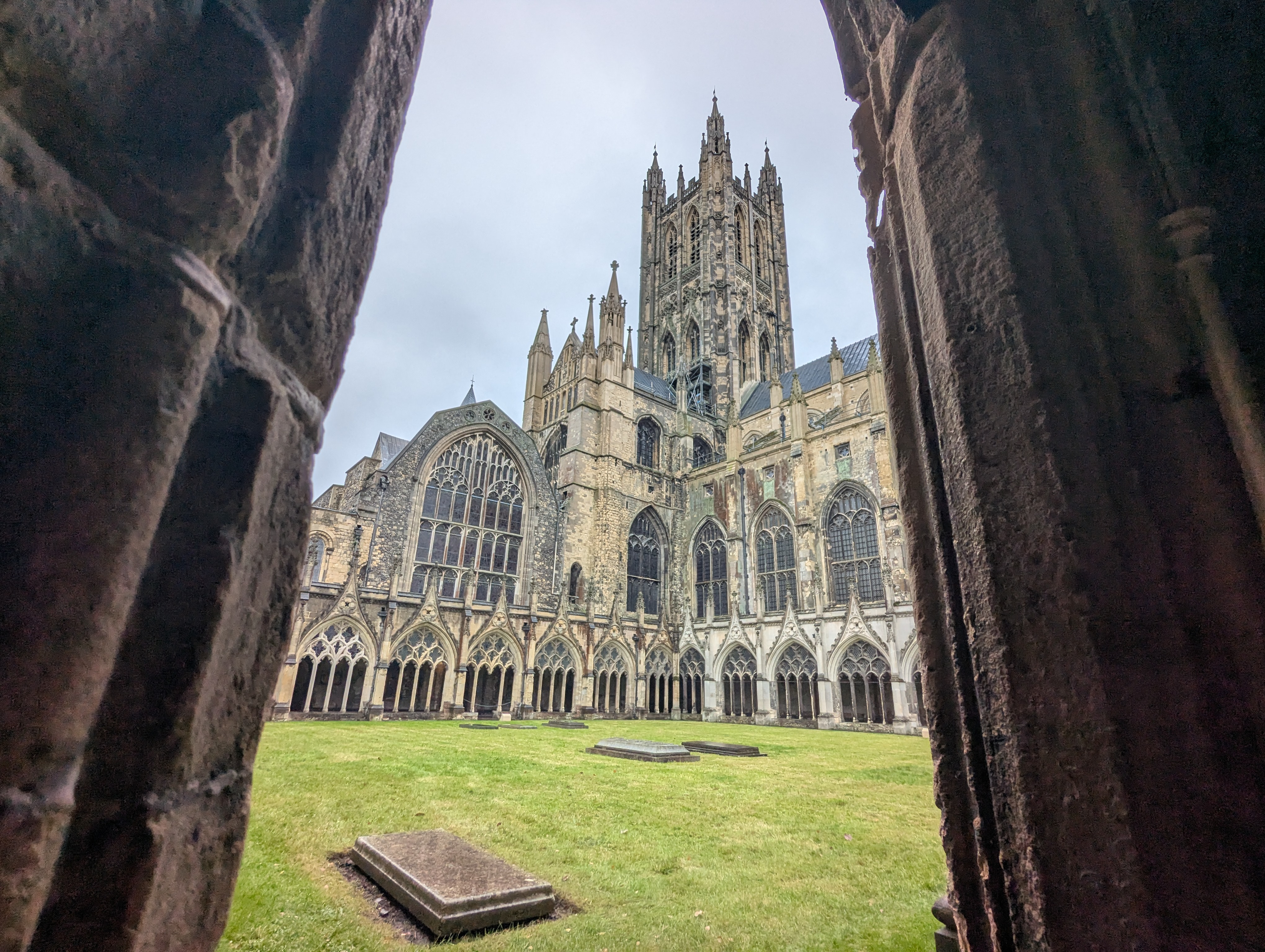
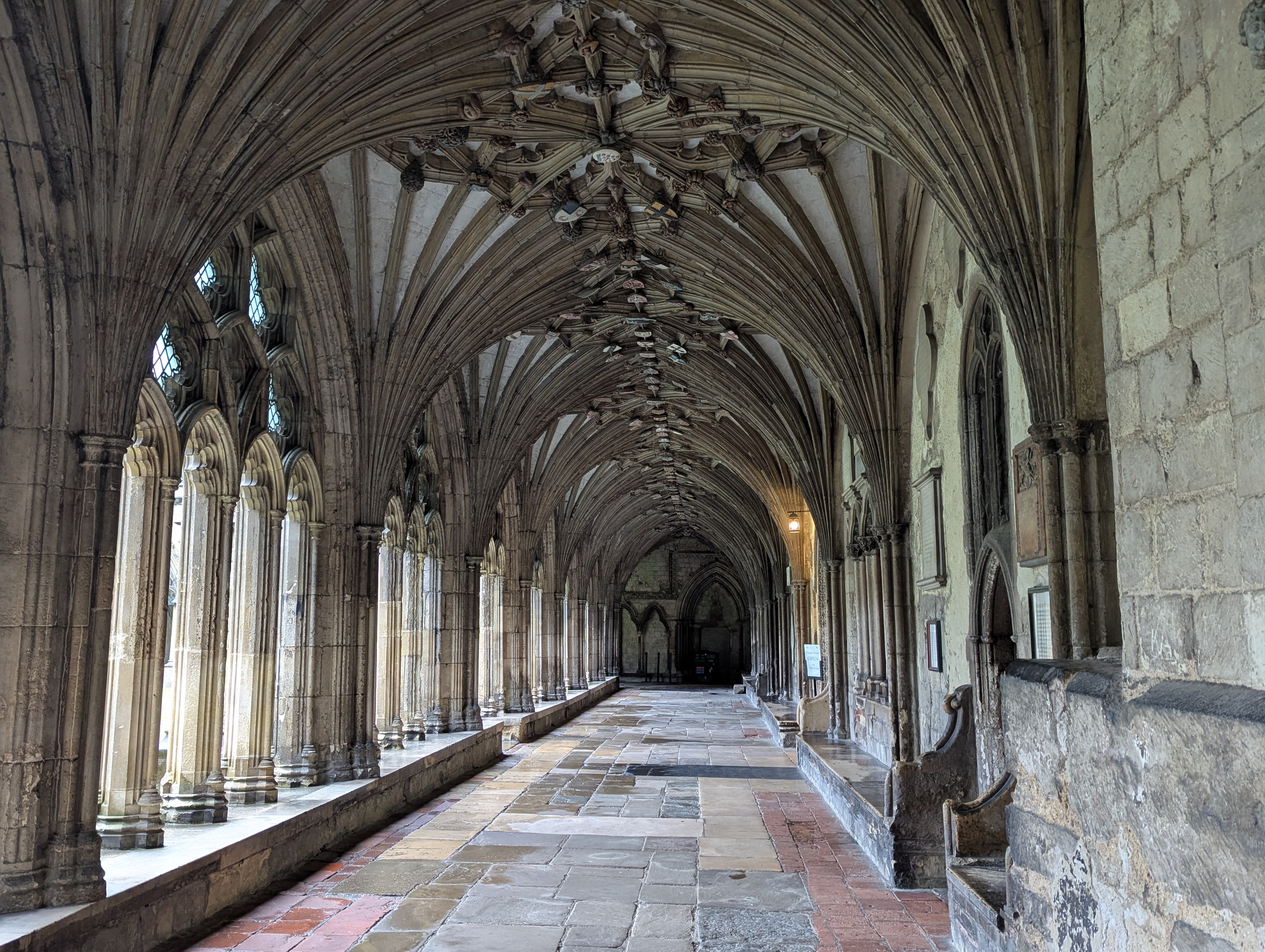
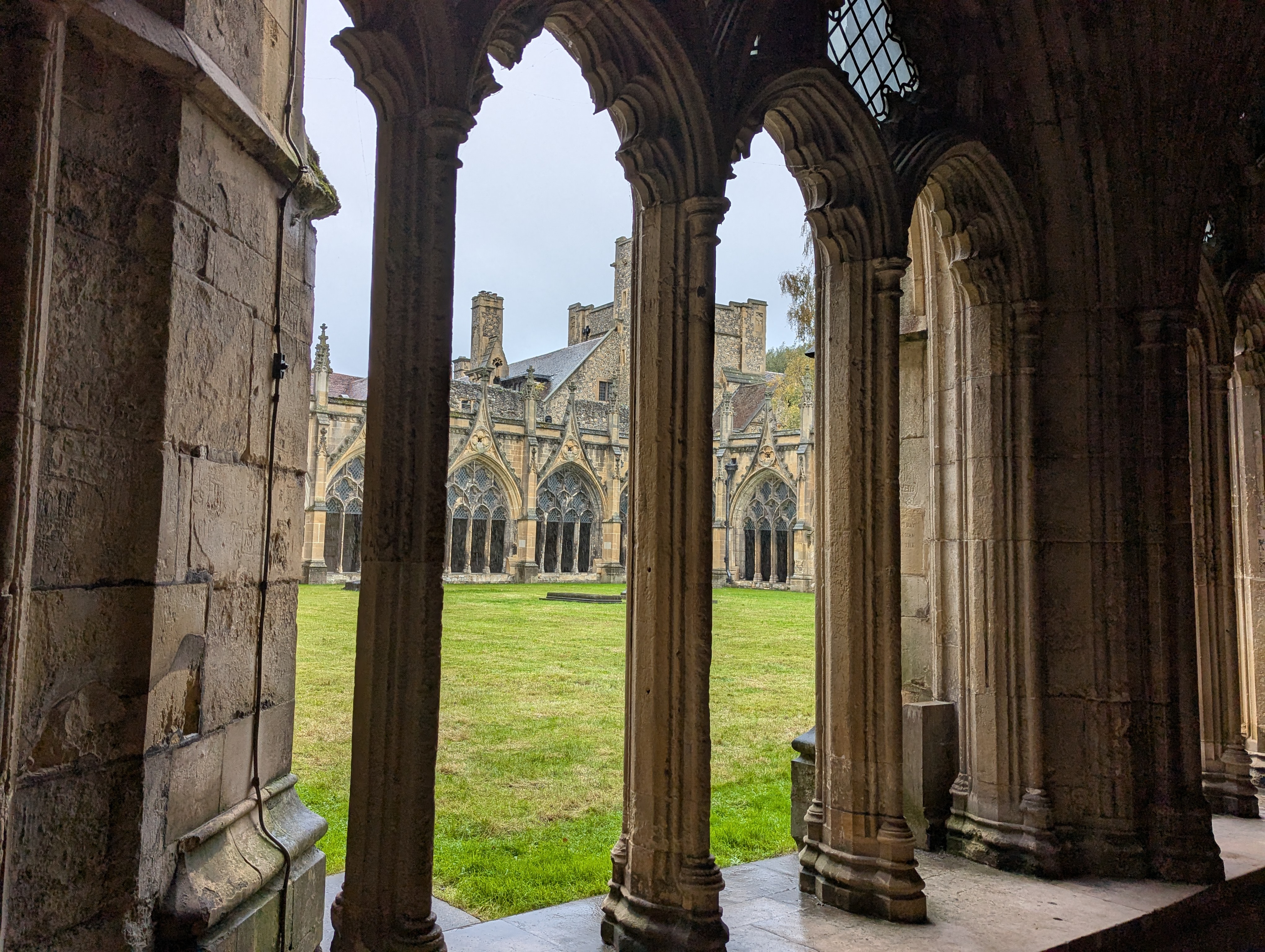
I’m a sucker for the cloisters in a Cathedral. It was still dark and rainy when I stepped out and took these photos which I think made them feel even more alive. You can just picture hundreds of years of monks coming and going.

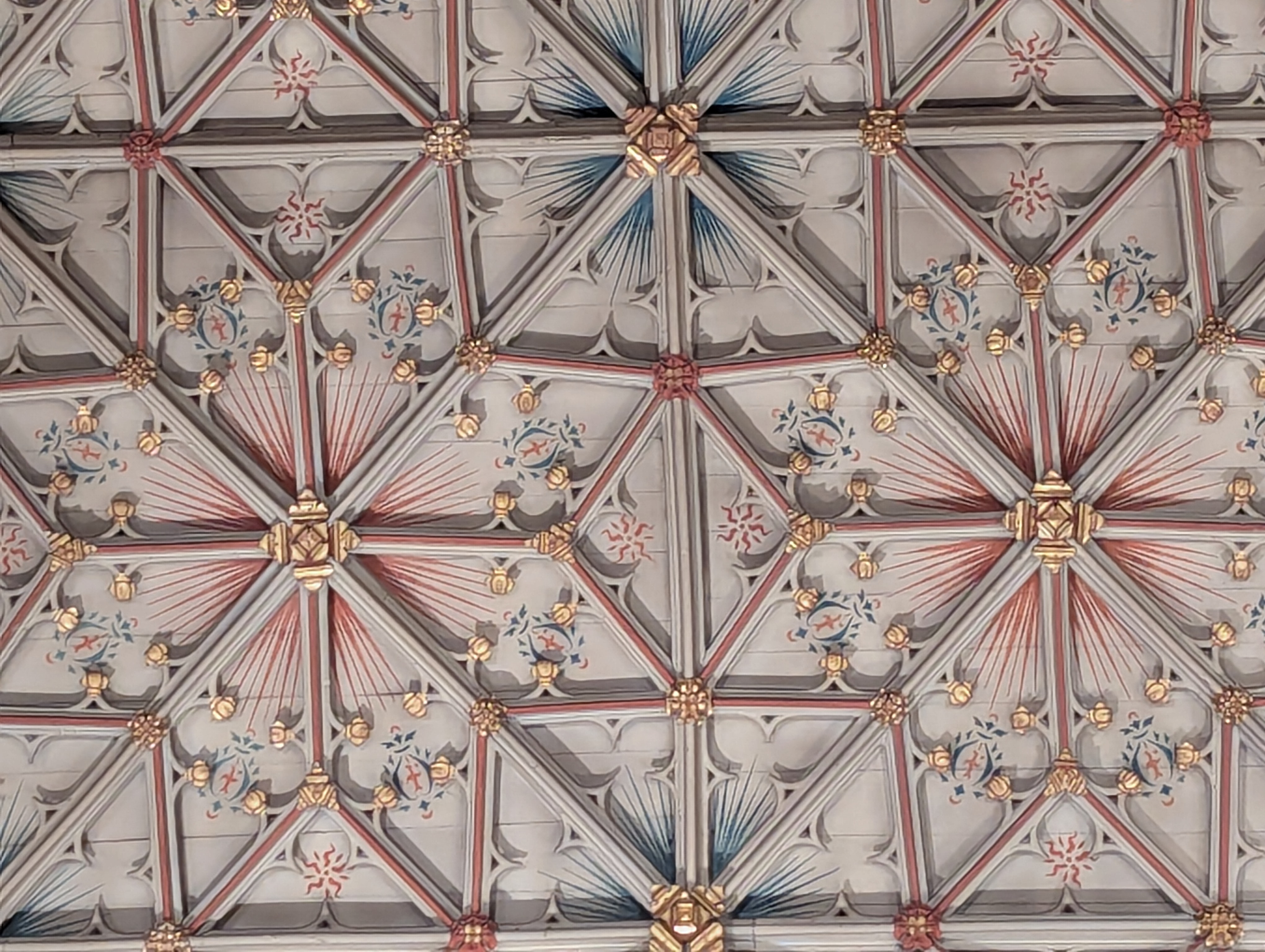
My husband and I also loved the area called the Chapter House, which served as a place where monks learned the rules of the order. The carvings in the ceiling are gorgeous.
In the crypts, the sculpture called Transport is especially interesting. Created by British artist Antony Gormley, it’s made of nails from the Cathedral formed in the shape and size of a typical human body. It hangs from the ceiling using wires or strings. Photos aren’t allowed in the crypt but I found a picture of the sculpture online here. My husband enjoyed the display in the Water Tower that described how ink was made back in the day and also included a pocket sundial.
There is only one monarch entombed in the Cathedral, Henry IV. His uncle Edward, referred to as the Black Prince, is entombed close by. The Black Prince has an inscription on his tomb: “Such as thou art, sometimes was I, Such as I am such thou shalt be.” There is a lot more gory detail in the inscription, but that’s a good summary. You’re no different from me. The end is coming and you can’t avoid it.
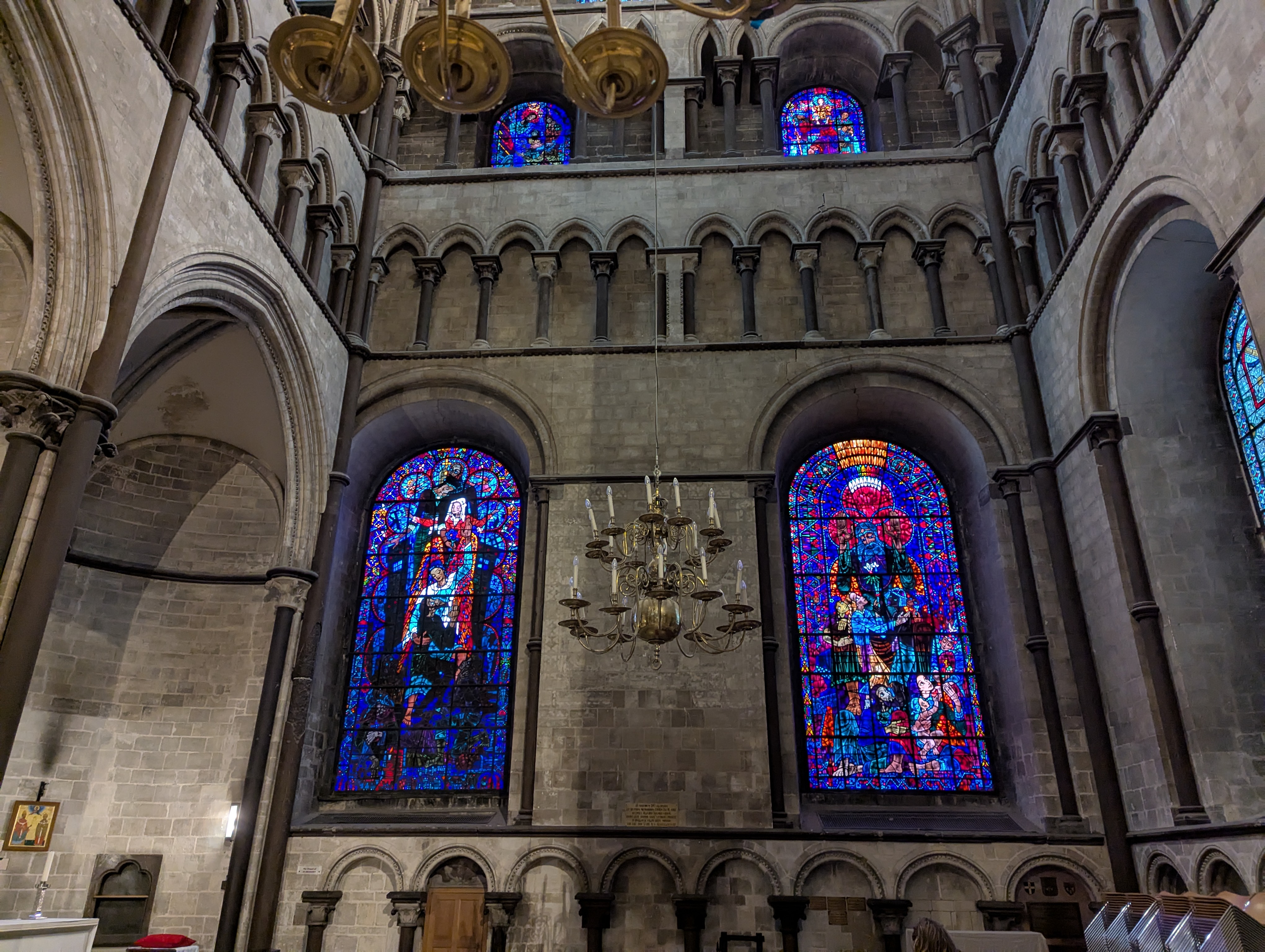
As with all Cathedrals, there are some beautiful stained glass windows as well as some very plain windows that were forced into place during periods in history in which the powers that be disliked color in church and got rid of it. Or that had been removed to protect them from bombing in World War II and then had to be painstakingly reinstalled. Or that had not been removed and had been bombed and replaced. I particularly enjoyed the windows created by the Hungarian artist Ervin Bossanyi that were installed in 1960 and commemorate themes around World War II, salvation and peace.
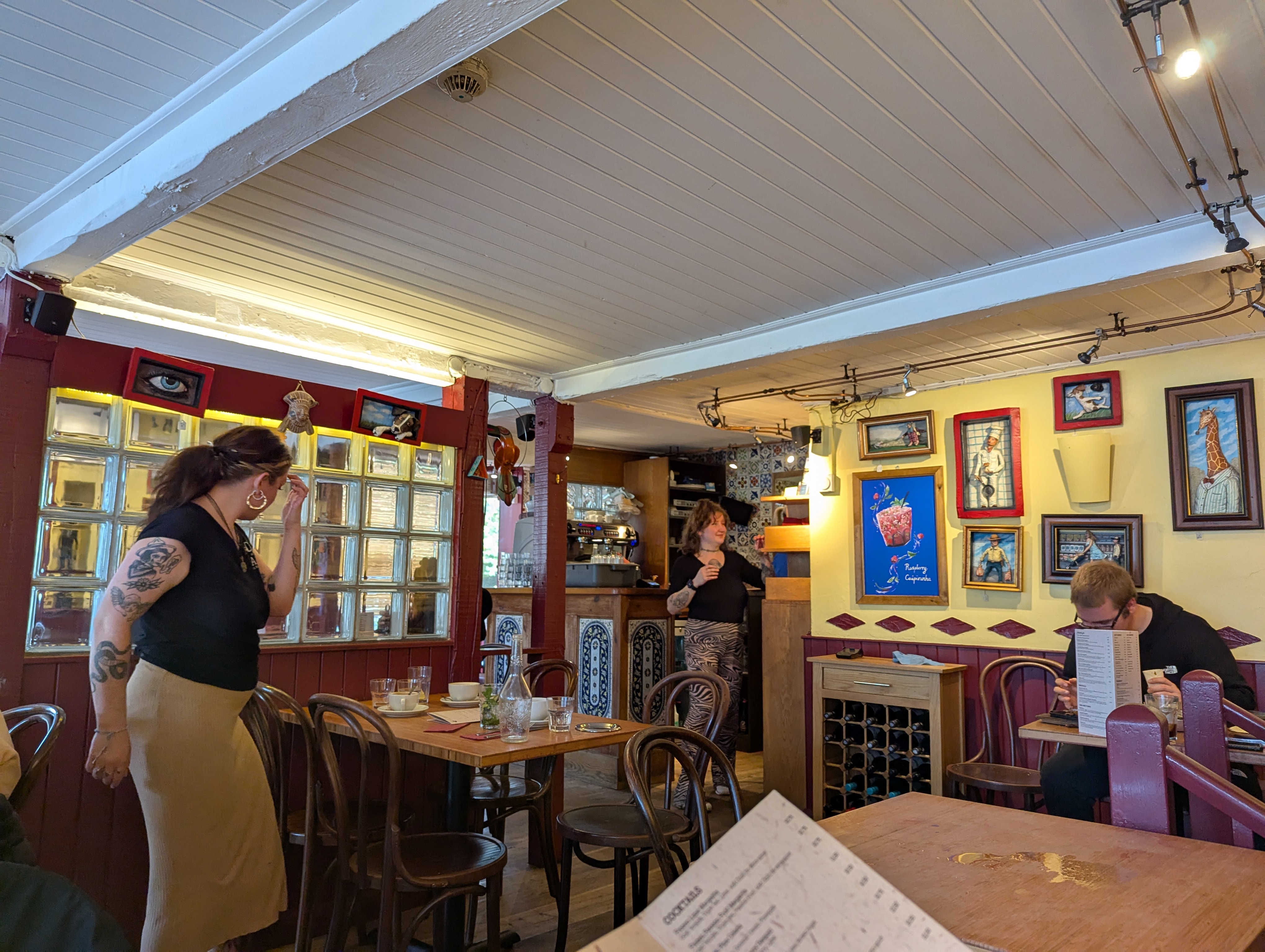
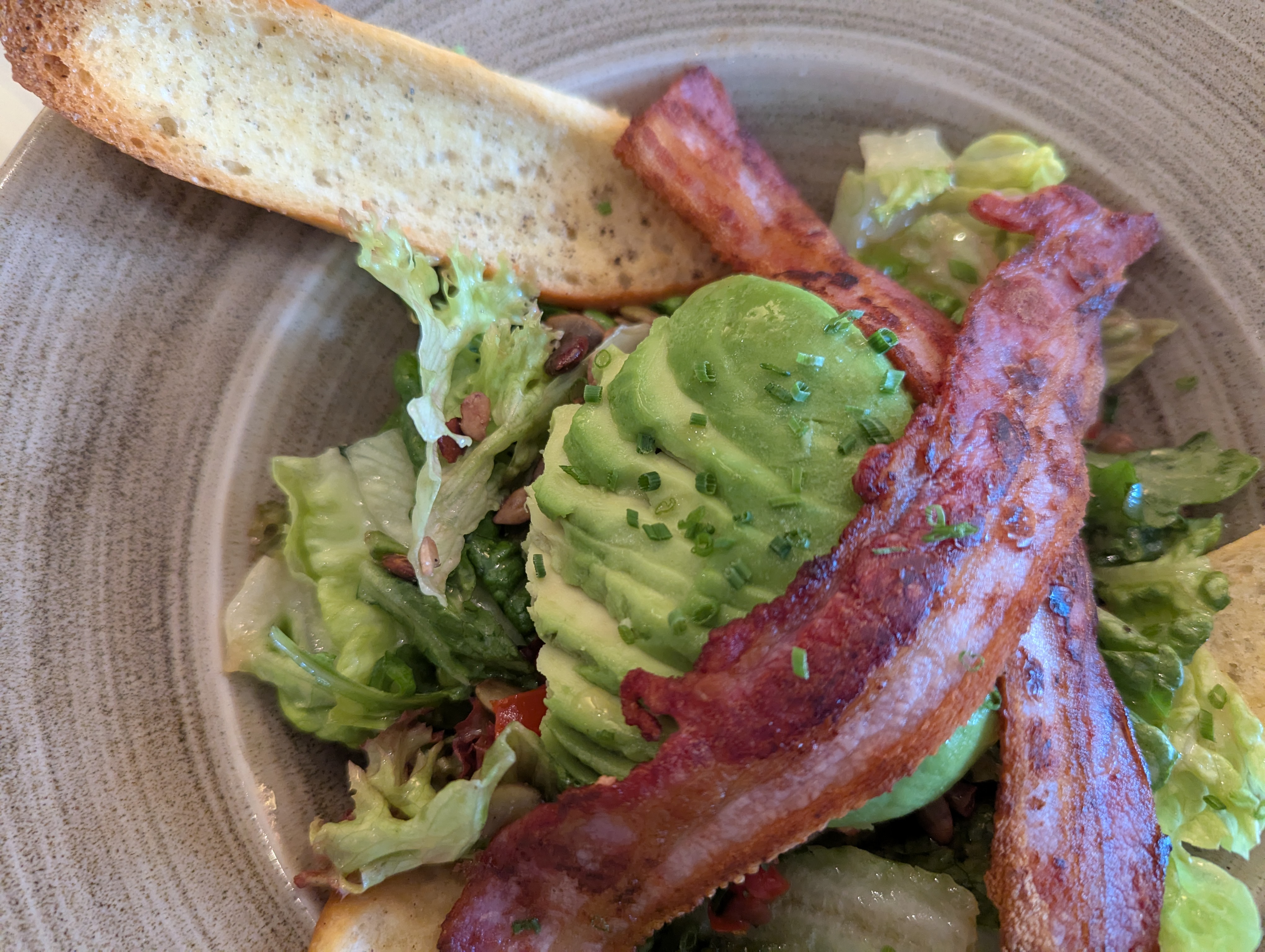
We took a lunch break at a cute Mexican restaurant called Cafe des Amis du Mexique. I had a salad that was so yummy I’ve tried to recreate it at home. Don’t quite have it right as of this writing. I really enjoyed the papier mache art on the walls by Total Pap, which was available for sale.


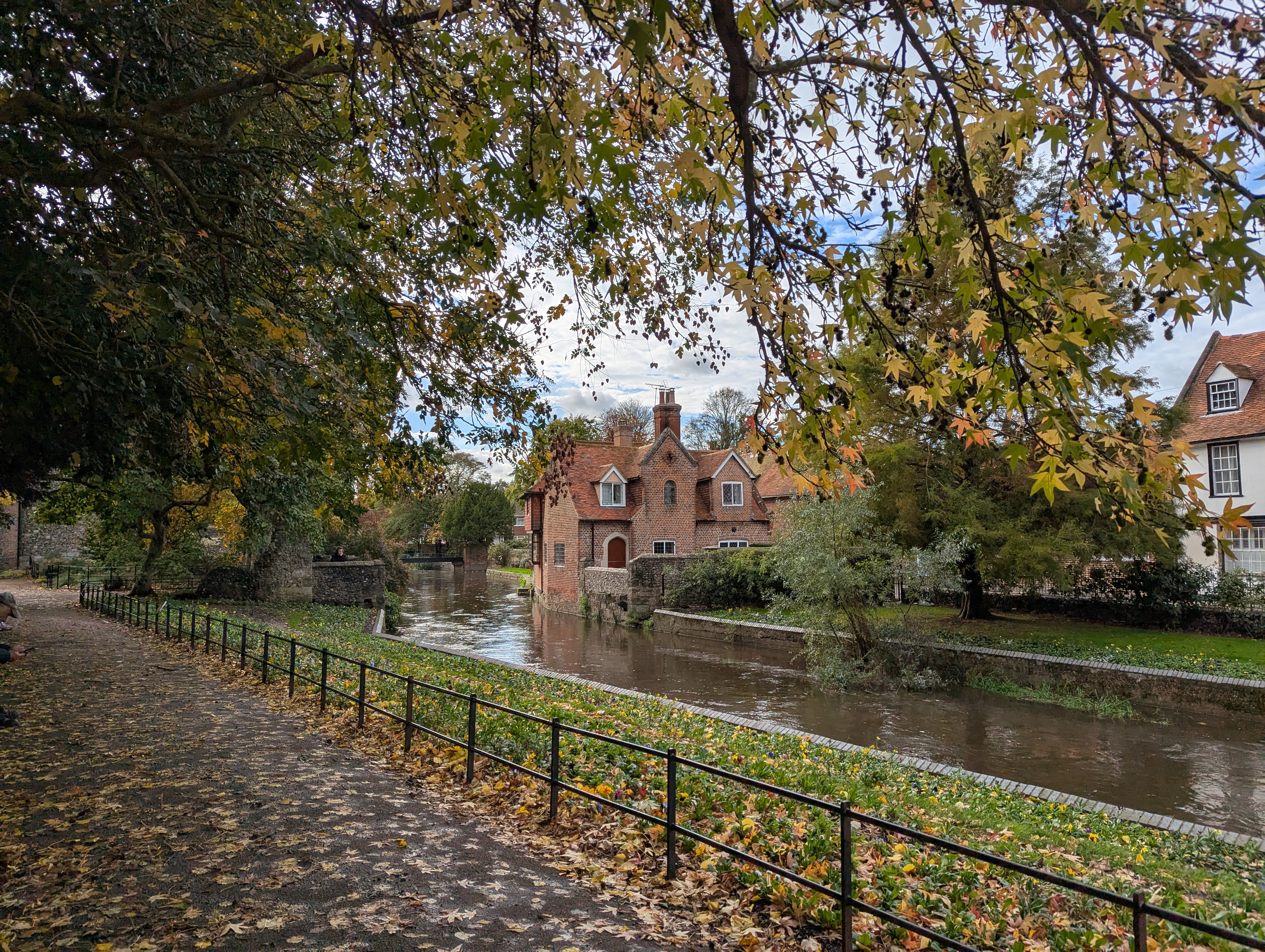
With the rain now stopped, we took a short walk along the River Stour.
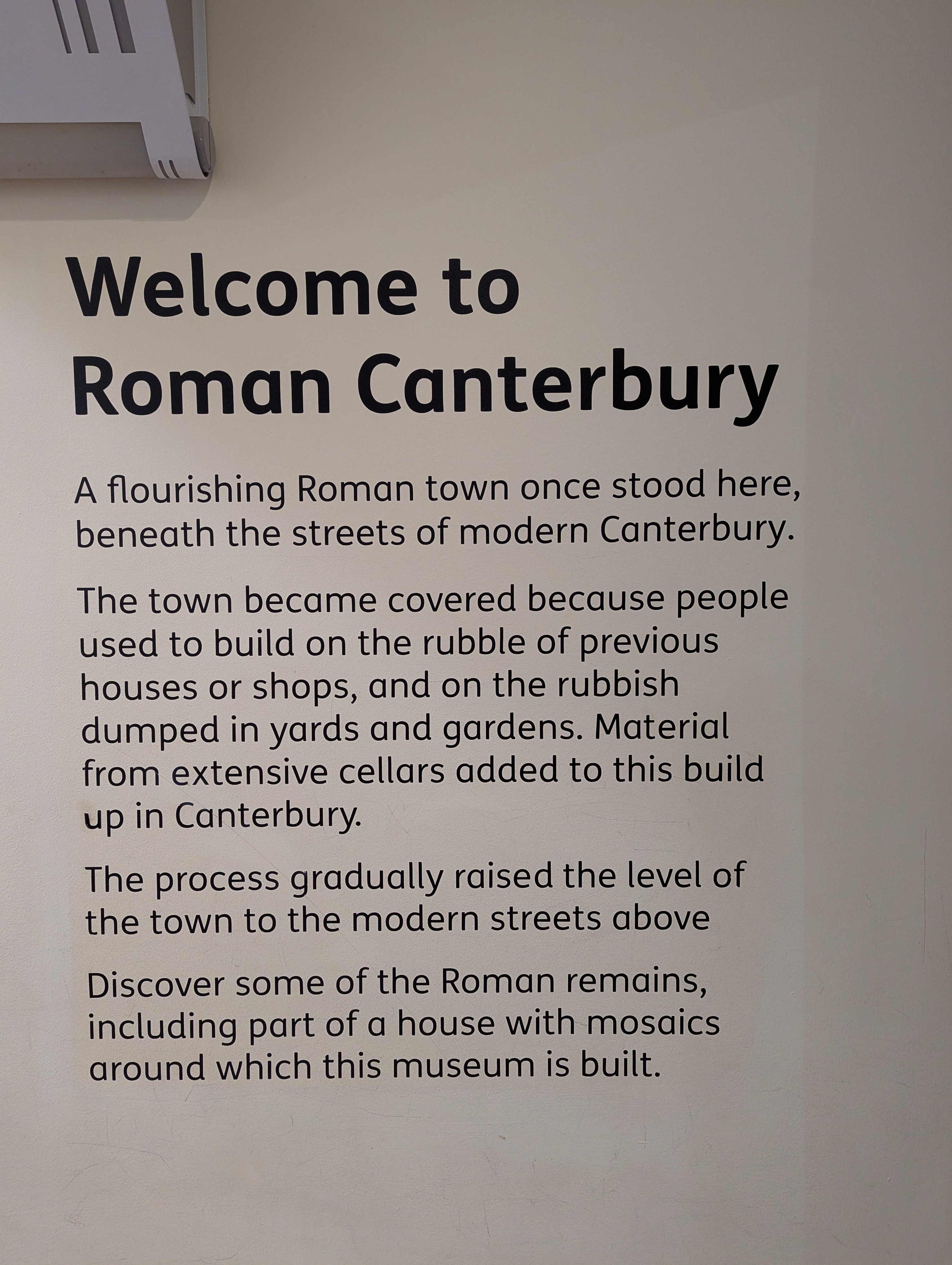
Our final serious destination for the afternoon was the Canterbury Roman museum.
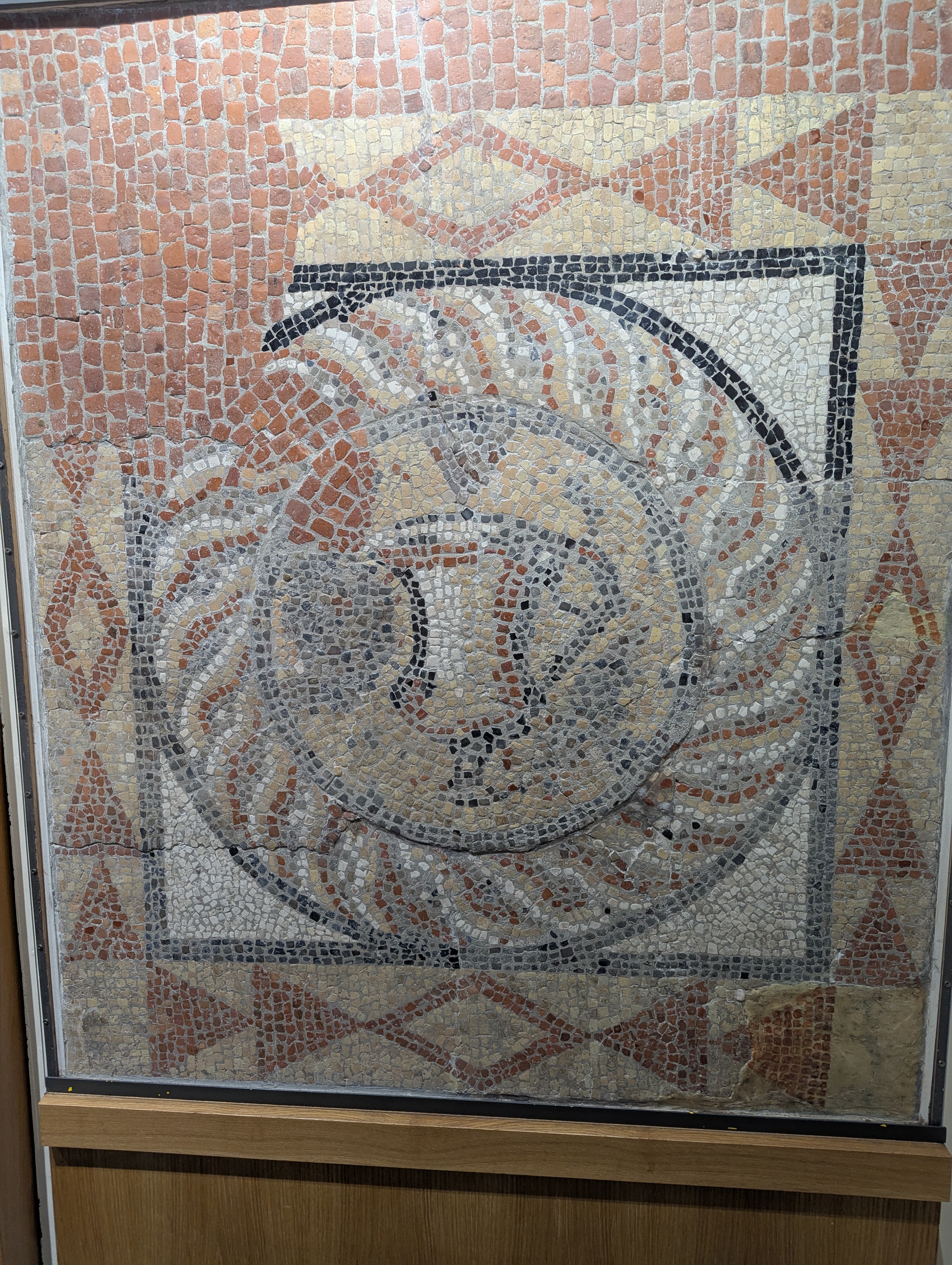
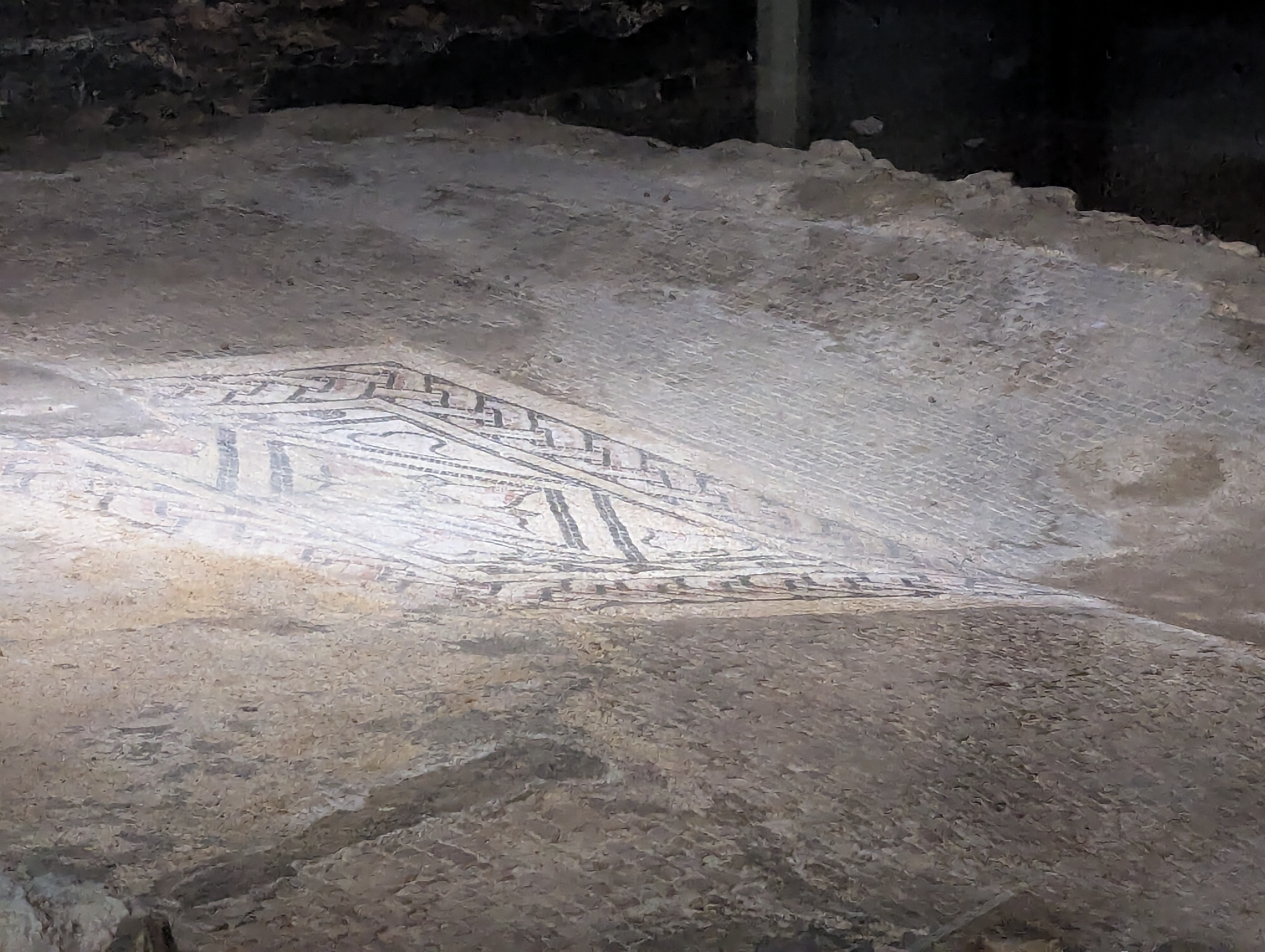
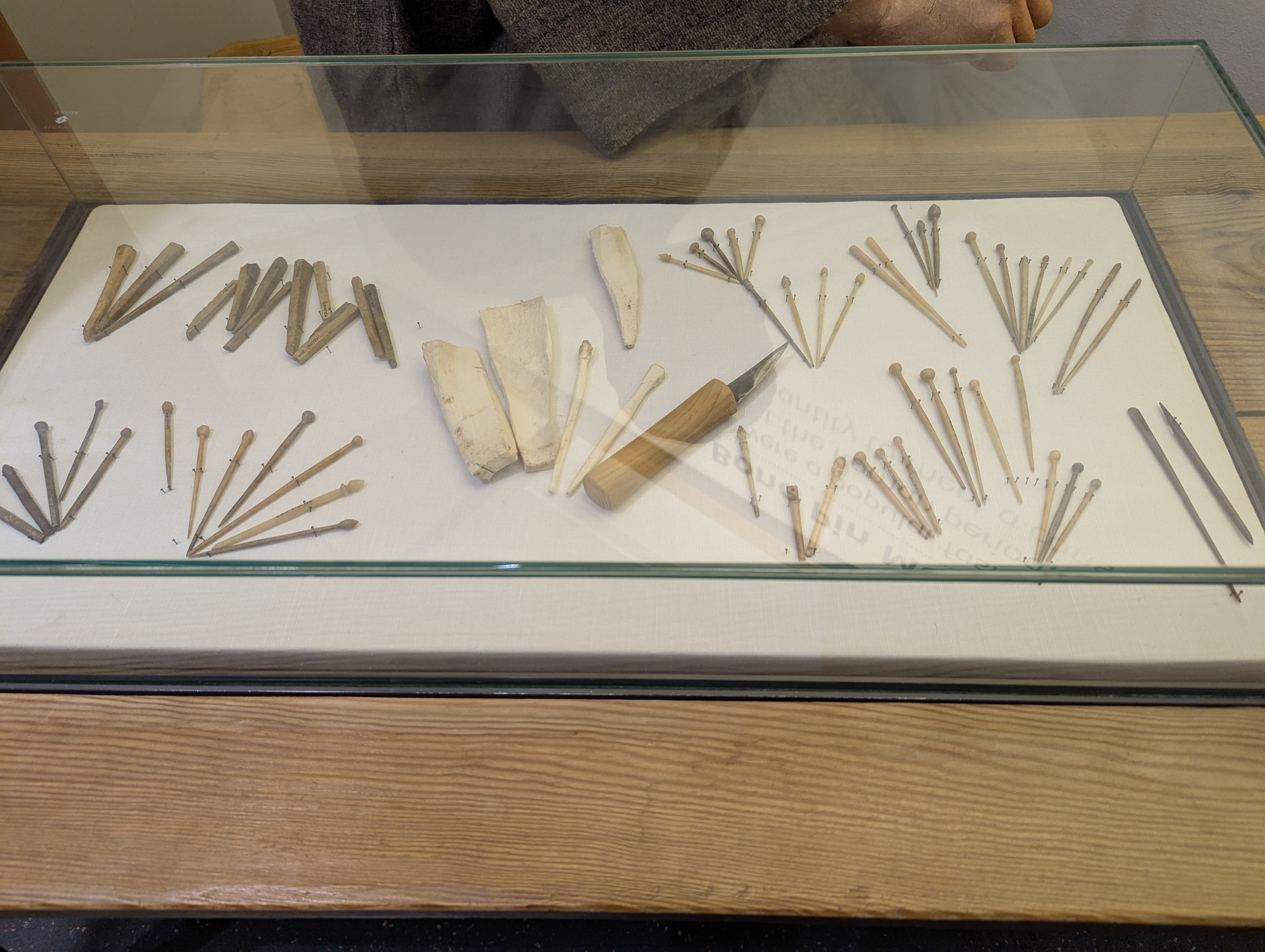
This museum is built on the site where a Roman floor mosaic was unearthed by a public works drainage modernization project. Later, work to excavate rubble from World War II bombings exposed further elements of a Roman home on the same site. These elements are encased and visible for viewing in the museum. Prior to the section of the museum that contains the Roman house, there are interesting exhibits about Roman history in England and Roman life. By the time you get to the excavation site, you feel awfully darned smart about the Romans.
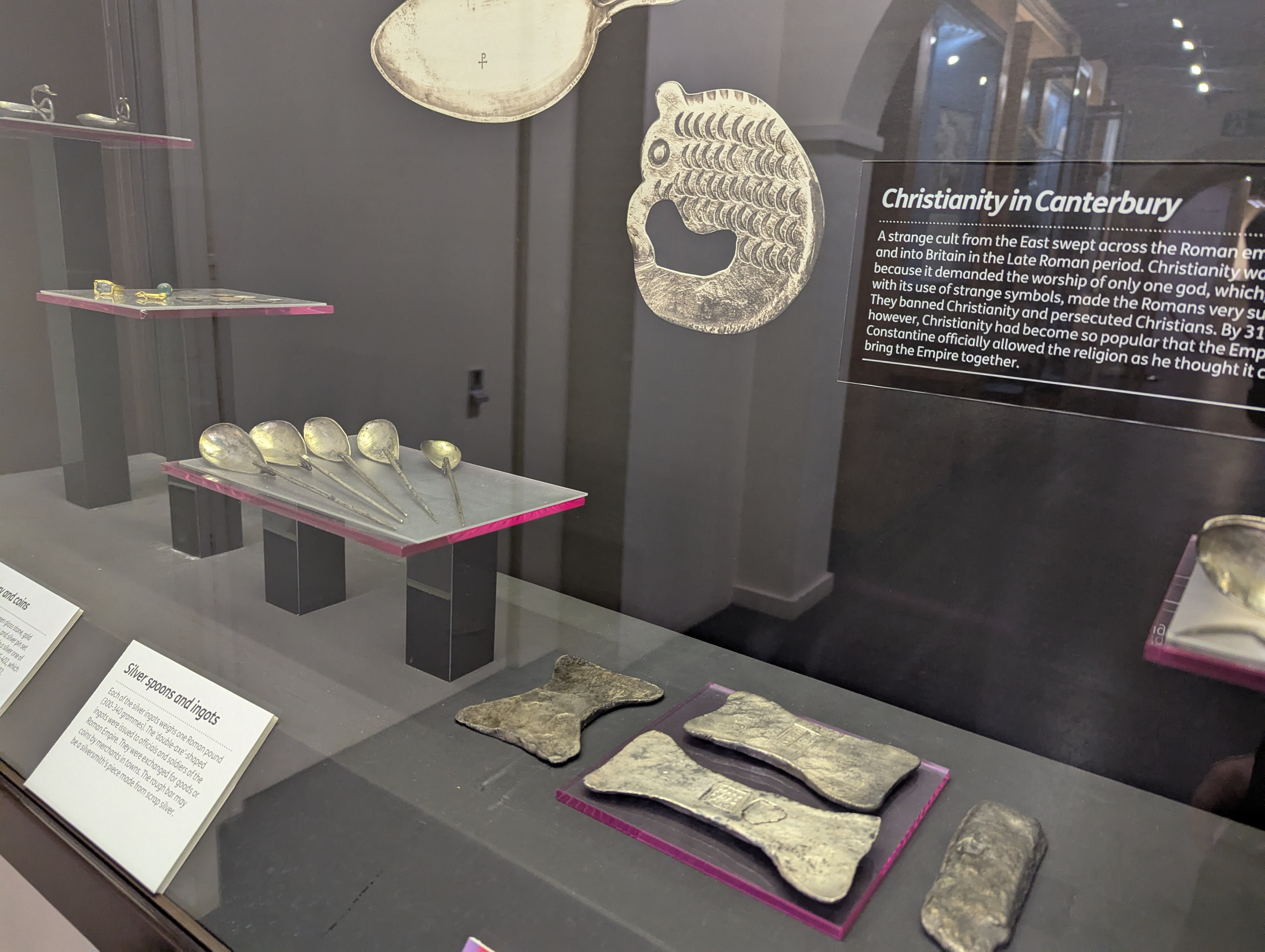
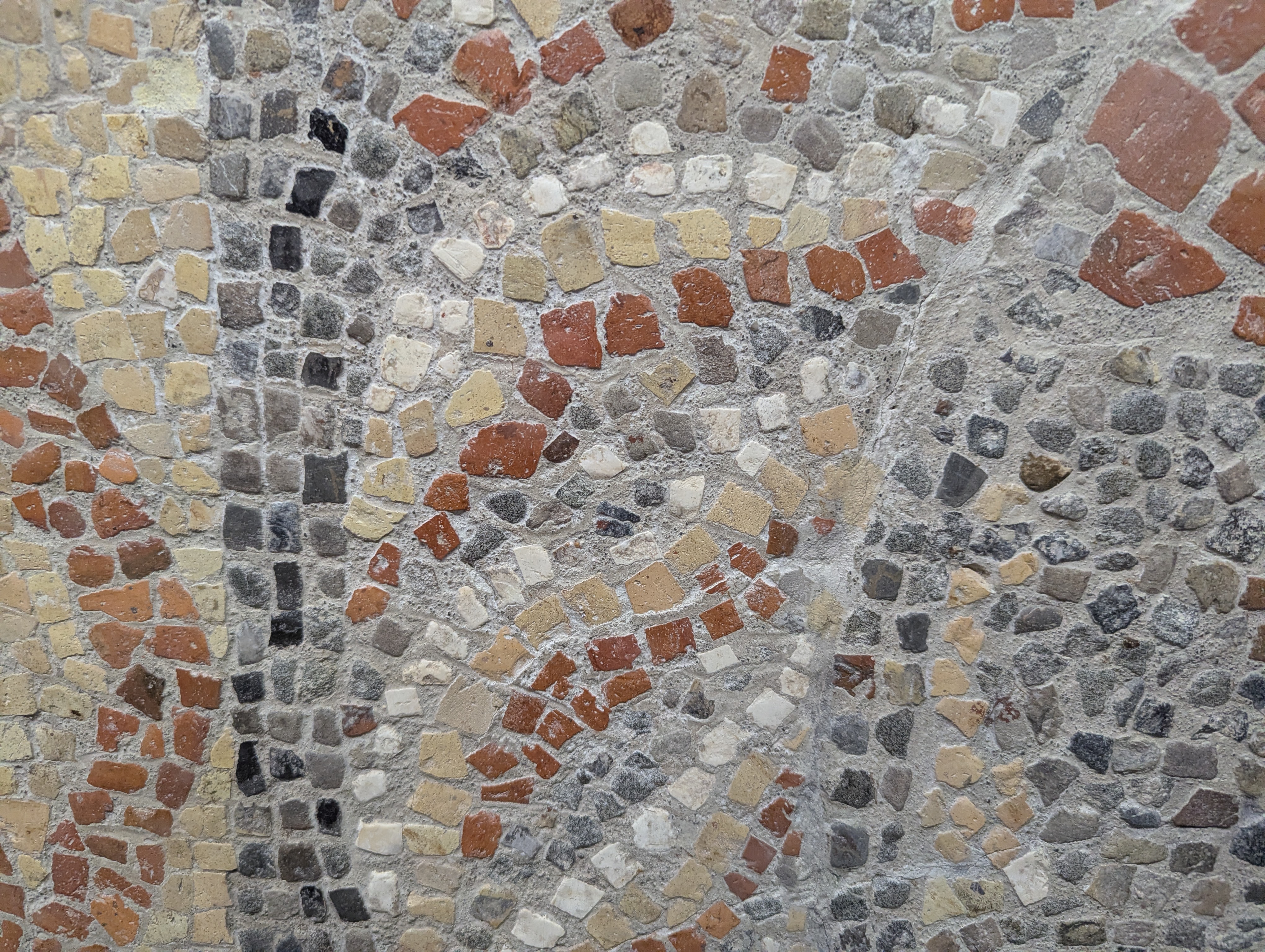
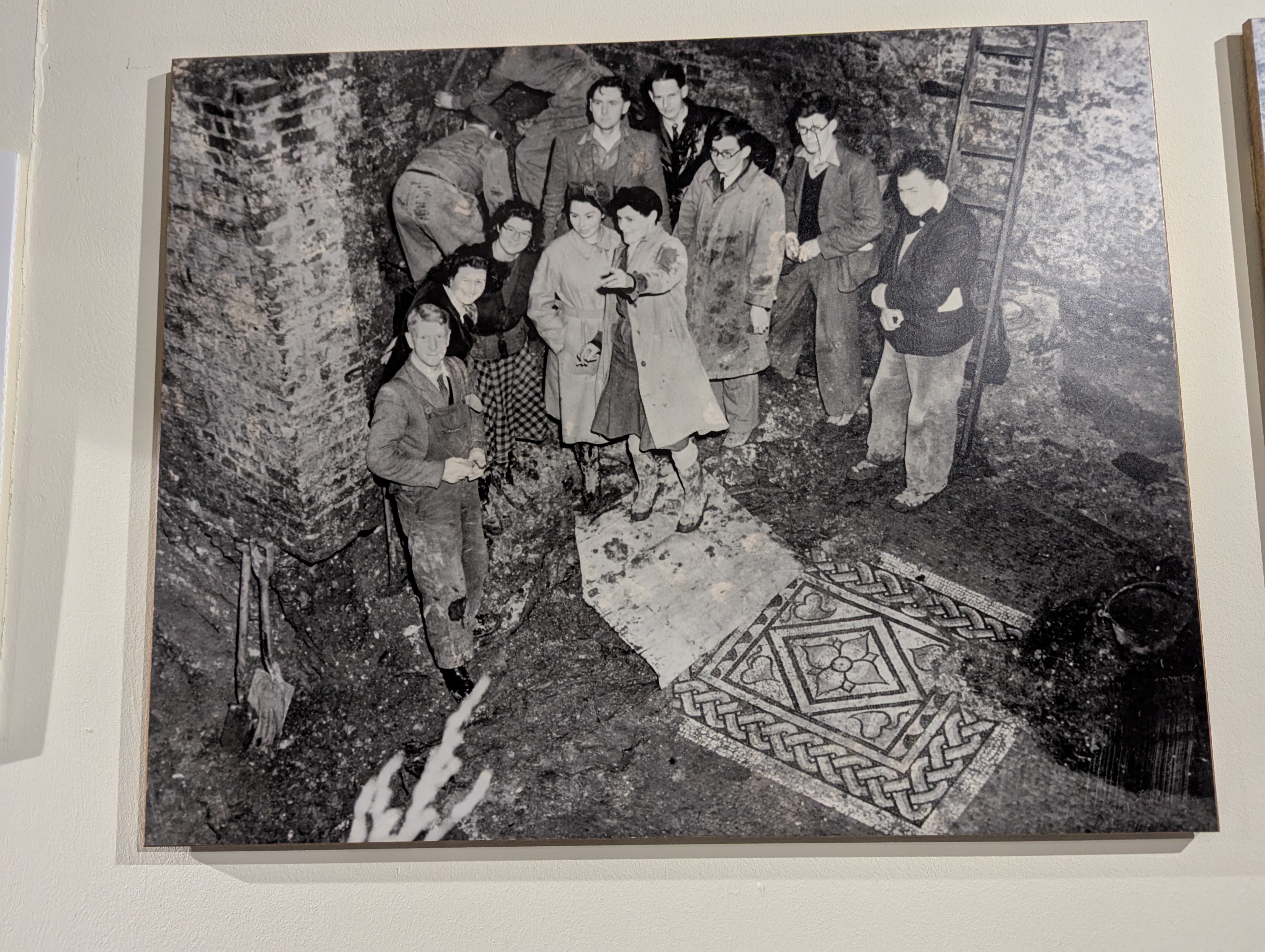

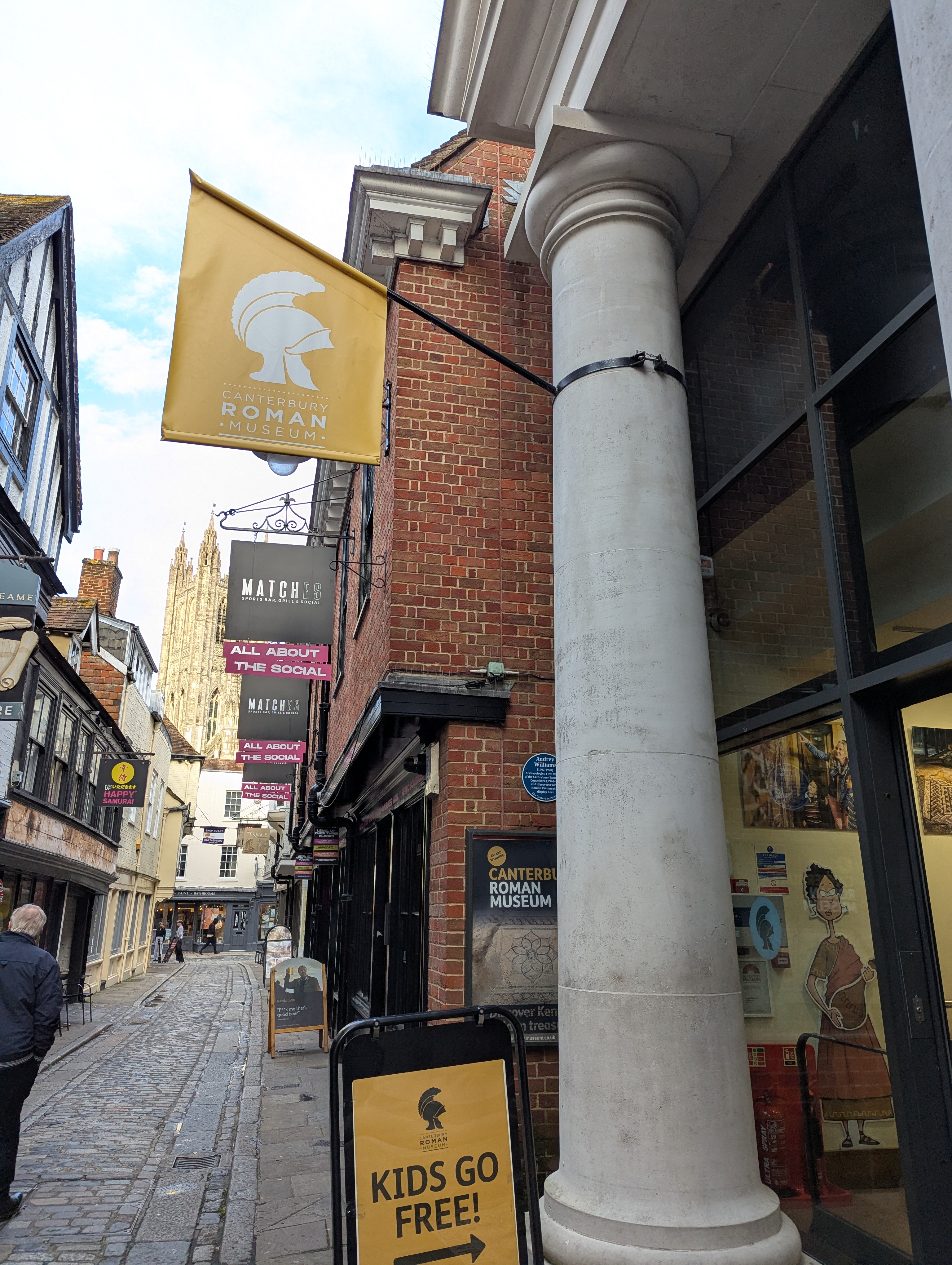
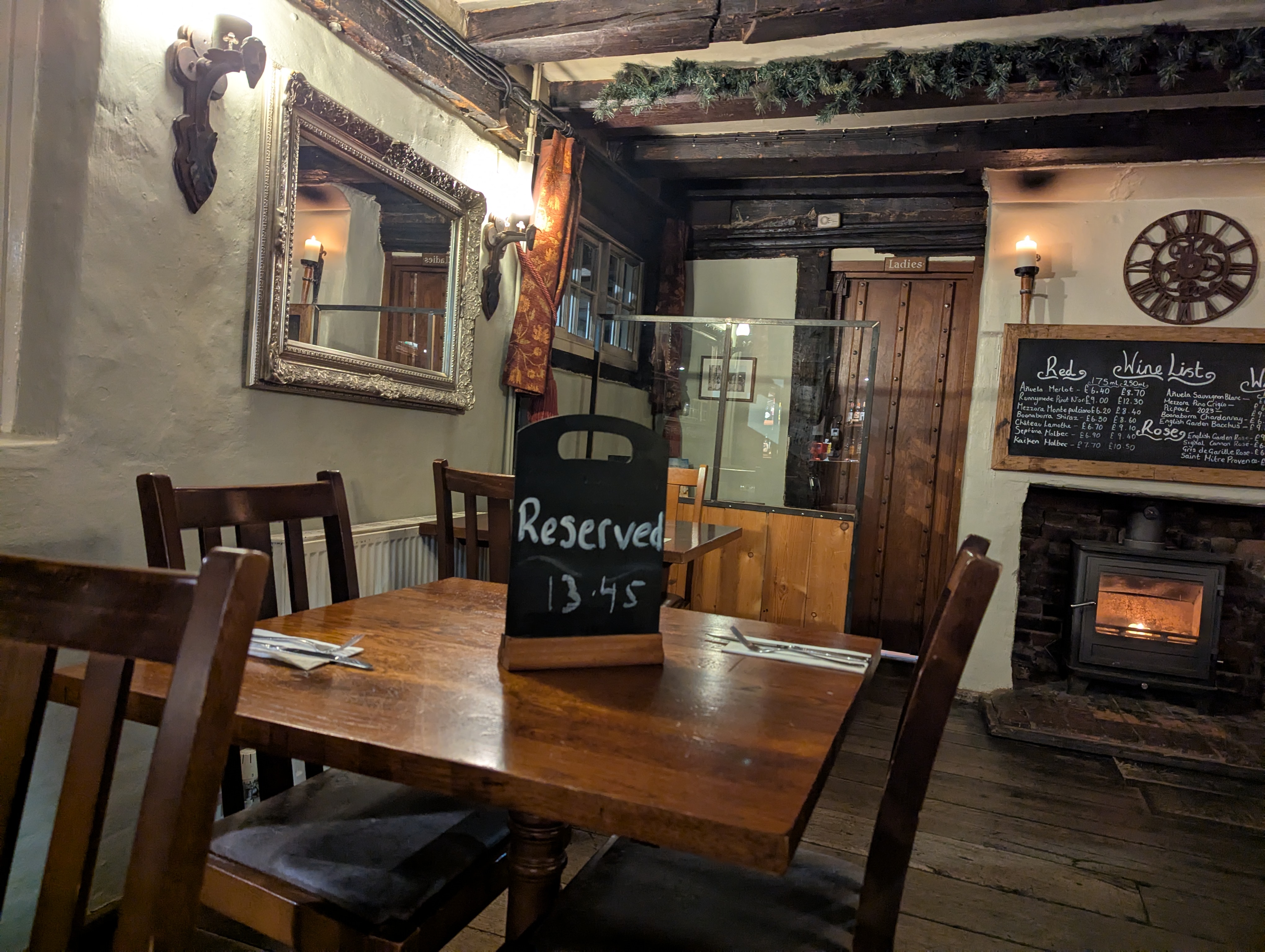
We ended the day with a nice walk through town and along the river and dinner at the oldest pub in Canterbury, the Parrot, dating back to the 1400s. Pretty cool place for a pint.



 WholeArsed
That breakfast looks like a great way to start the day off. The cathedral is amazing – great shots all. So much history. I’m rusty on the Canterbury Tale readings myself, but I recognize how special this area is to those works. The Total Pap papier mache really looks cool and I jumped over to check out their site. I really had no idea the Romans “had the floor” to that extent there. The Parrot’s been around a while, hasn’t it? Wow.
LikeLiked by 1 person
The Roman stuff is cool (for us). I would bet people come to dread doing subterranean projects because when Roman stuff is discovered they have to be so careful with it. I find it interesting how little variation there is from Roman house to house. It’s like there was exactly one way to build a house.
LikeLiked by 1 person