We gave our today

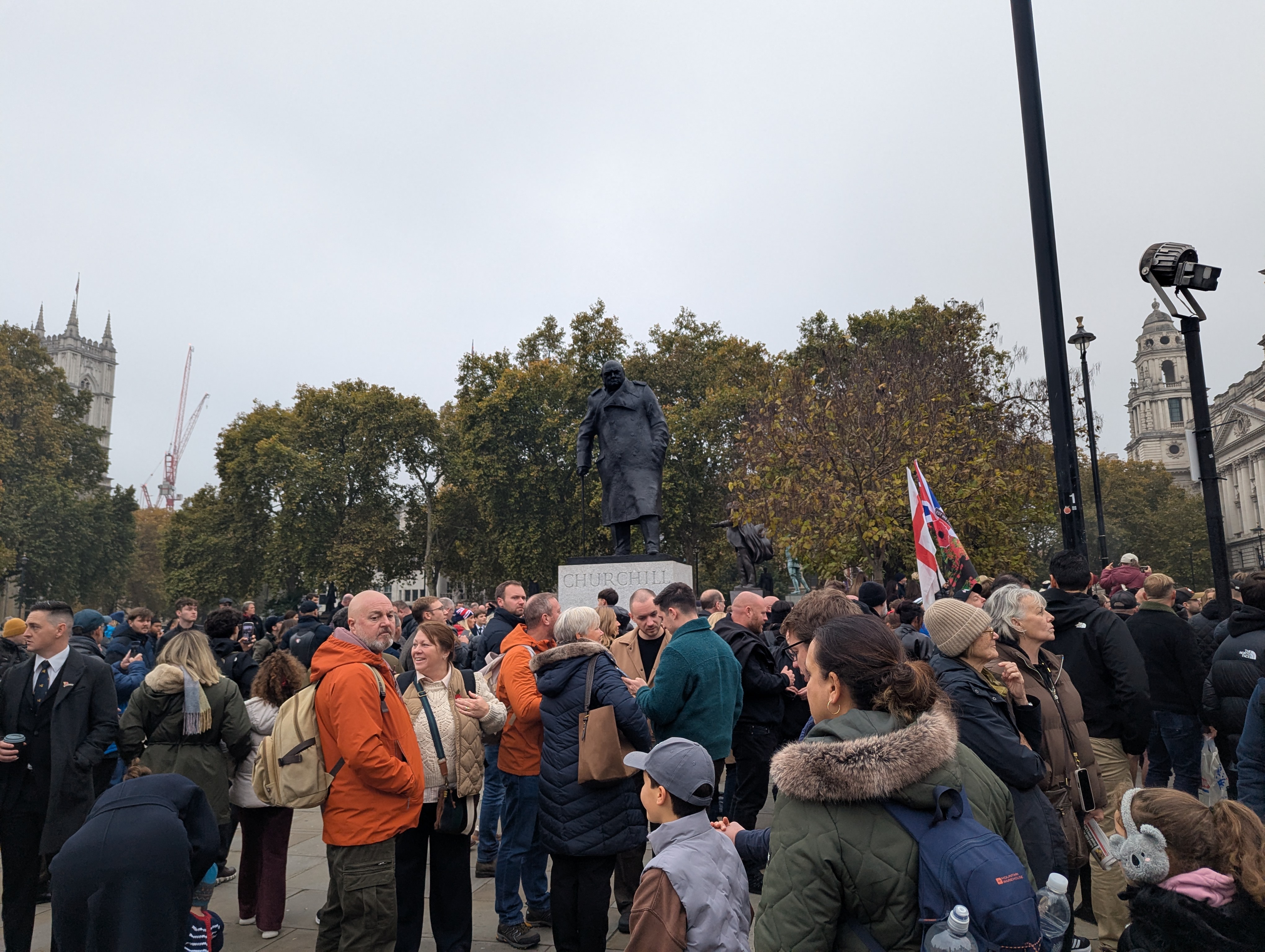
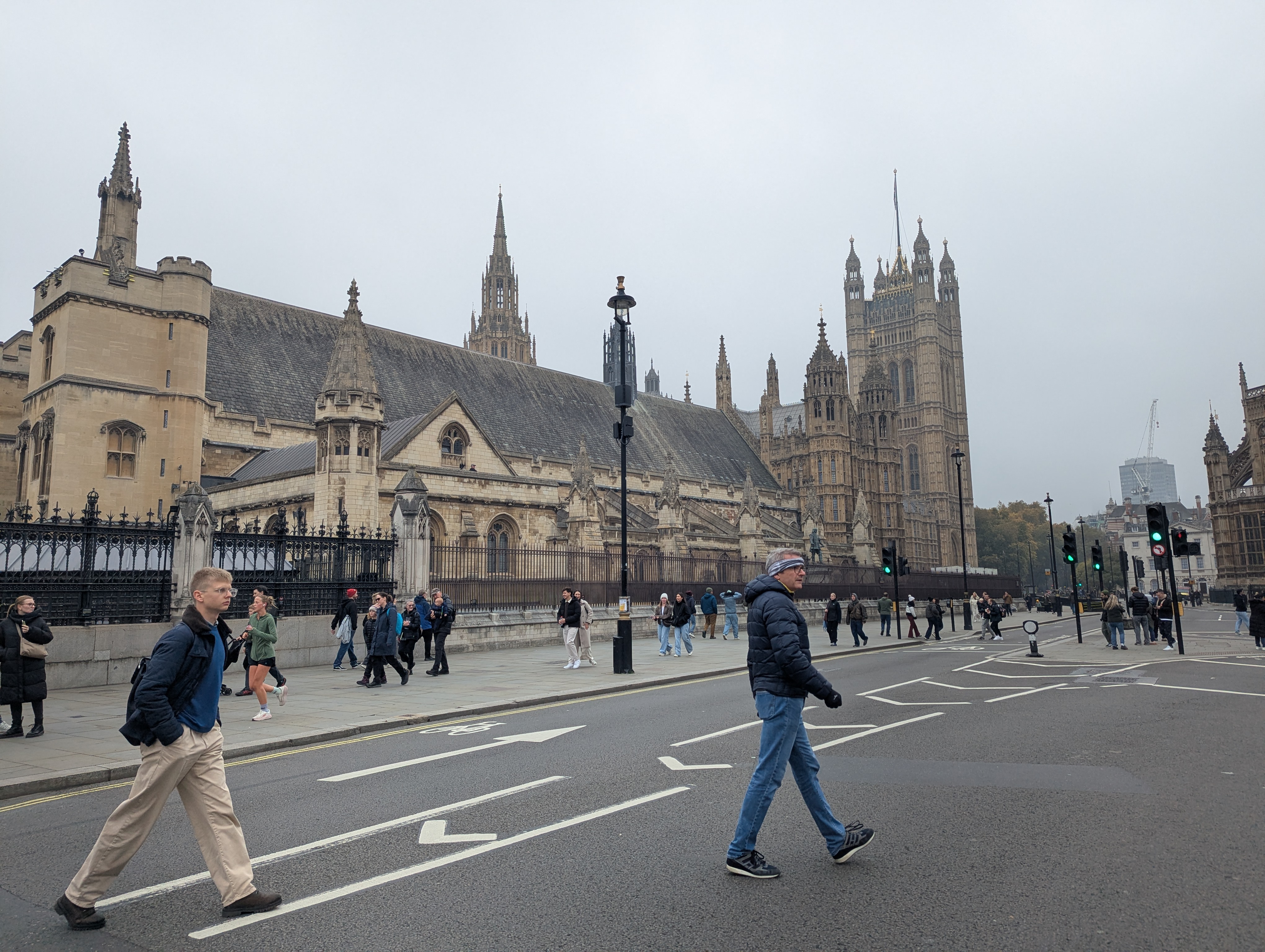
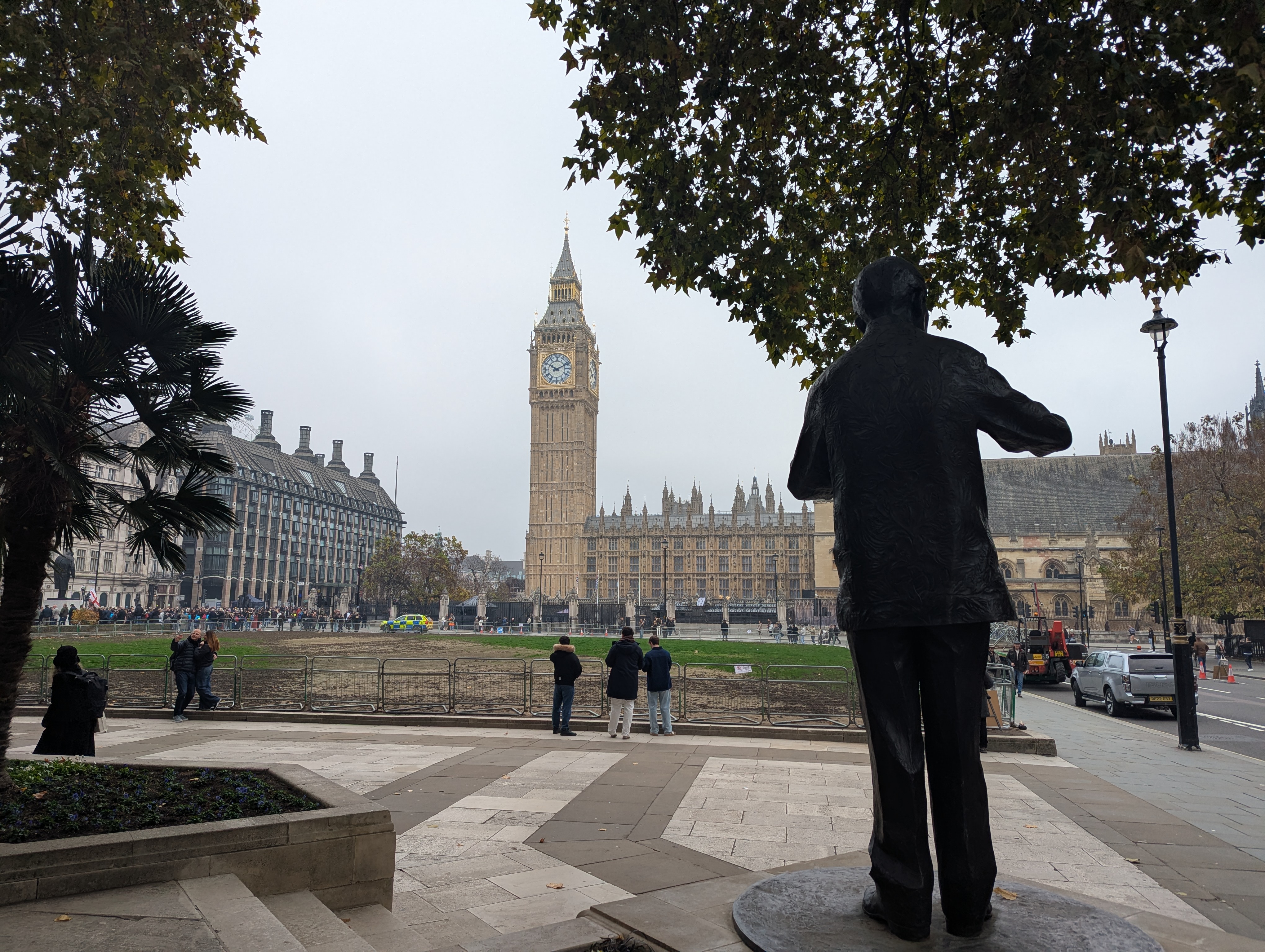
It was Remembrance Day in the UK on Sunday and we decided to get over to the Cenotaph, or as close to it as possible, to watch the wreath-laying ceremony in tribute to the war dead. As we approached the area near Westminster Abbey, Big Ben, and the Houses of Parliament many roads were blocked off to accommodate the thousands who came to watch the ceremony and the military bands marching along the street. We found a place to watch but there were at least 5 rows of people in front of us and the Cenotaph was quite far in the distance. I was able to view the parading bands, the arrival of the King, and the ceremony mostly through the camera of the very tall man in front of me. Not only was his camera very bright and clear, he was very professional about getting the right view, and proficient with zooming in and out as needed.

Unfortunately, at some point a short man barged in front of him. He, too, was holding up his phone to camera mode, which should have allowed me to view what was going on, but he just wasn’t as good. His camera was often not even pointing at anything interesting. And, because he was in front of the original guy, that guy stopped recording. Still, I had seen far more than I expected when we entered the crowd.

At one point of the ceremony there was a moment of silence. It was so very strange to be in such a large crowd of people–thousands–in the middle of a giant city and experience such silence.

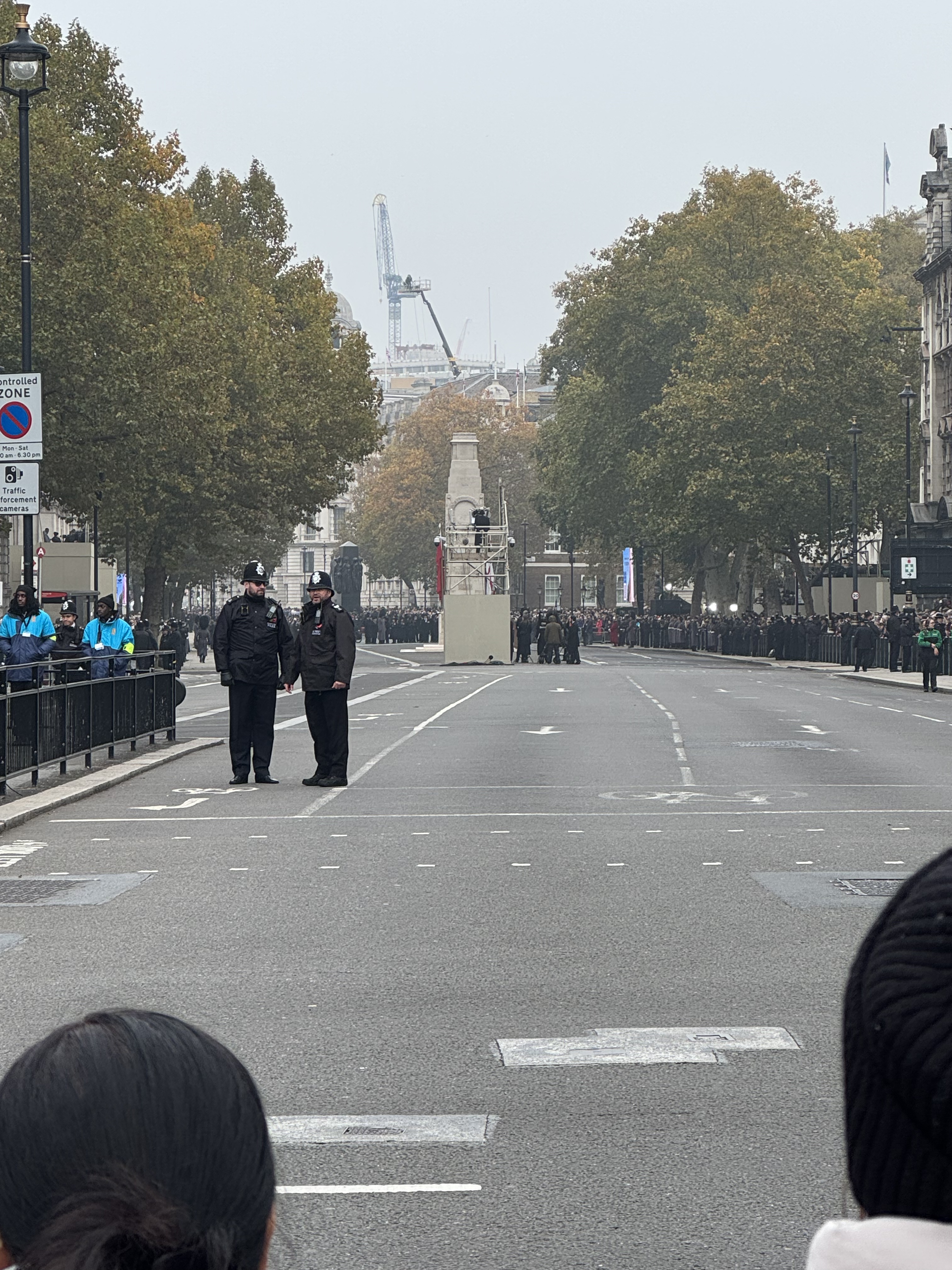
My pictures below took place near where we watched the ceremony. There was nothing I could photograph of the ceremony, unfortunately. (It would just be a guy holding a phone in front of me.) 🙂 I did add a photo my husband took of the Cenotaph from great distance.
“We gave our today” that I used as the title of this post is from an epitaph in the 2nd British Division Memorial at the WWII Battle of Kohima. “When you go home. tell them of us and say, for your tomorrow, we gave our today.”

I hope it is taken as no disrespect to members of the military who have made or offered a unique and complete sacrifice of life that has given all of us a future we would not have without it. But I note that some people who have not offered full sacrifice of their very lives have given their today in a way that impacts our tomorrow. It may not have been uniformly selfless nor was it always clear to them that what they did and gave might have an impact. Or even that it was “giving” at the time. But impact us they have. As we look at what they delivered we can distinguish the things that have been a force for good.

We had a few other experiences in London that reminded me of this.

The Tate Britain

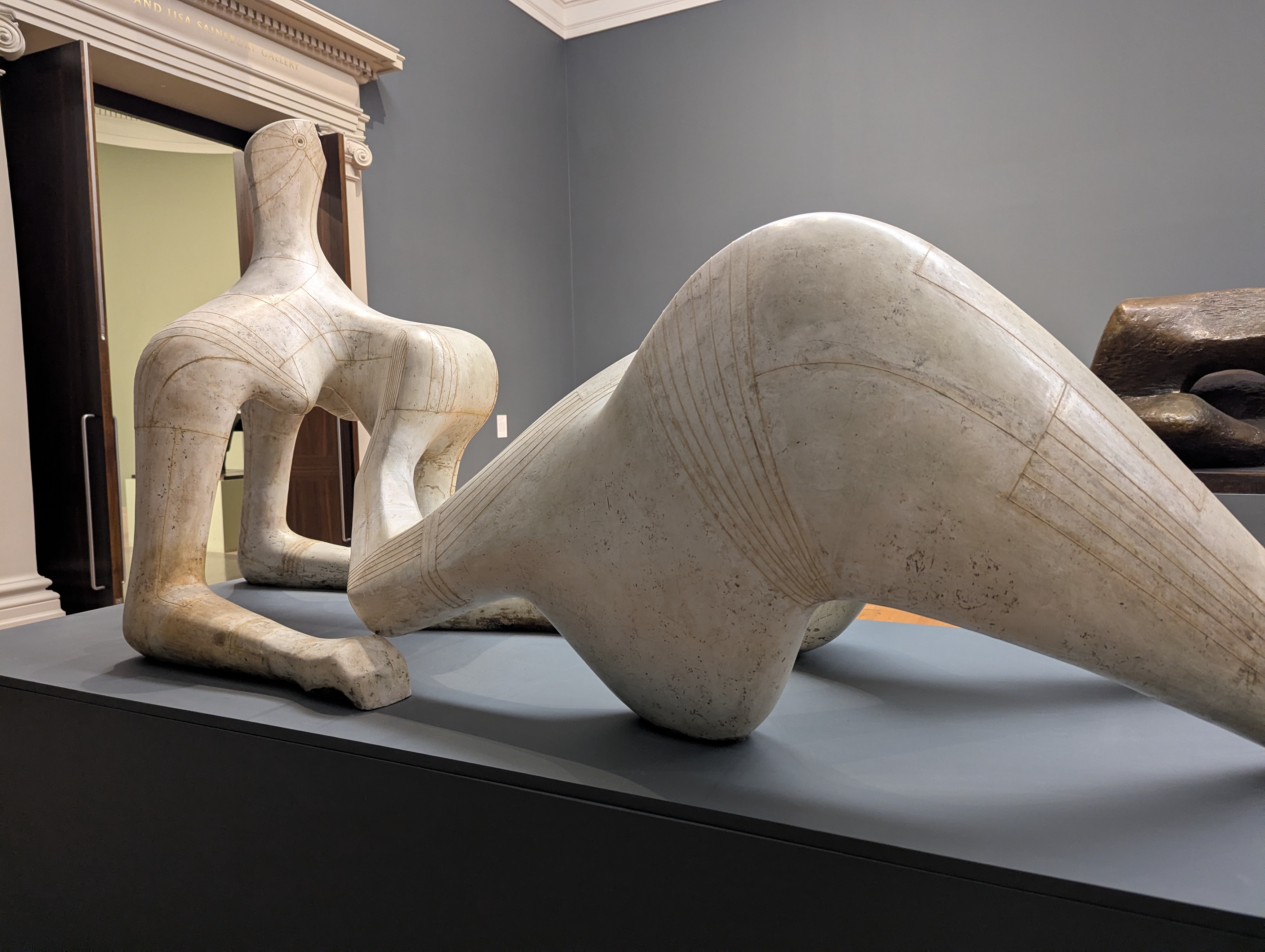
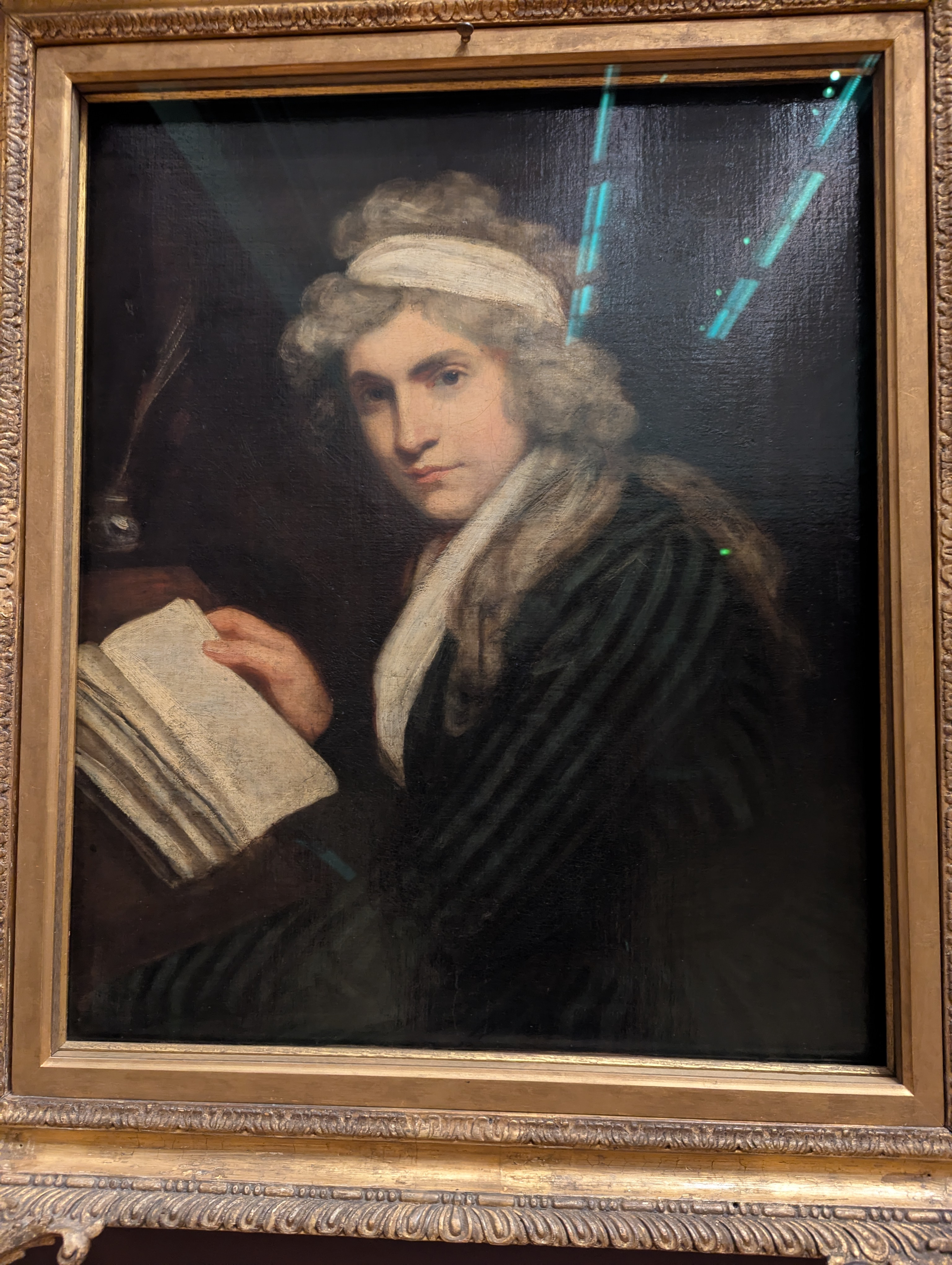
After we visited the Jugged Hare, we walked over to the Tate Britain, an art gallery my husband had visited long ago, but I never had. The Tate Britain focuses on British artists. There was a helpful poster explaining the “don’t miss” pieces in the museum. We saw some of them by happenstance and the David Hockney work, A Bigger Splash, by painstakingly tracking down the proper gallery. I feel like all galleries have the same system. The rooms are numbered and mapped but finding them is impossible. A picture of Hockney’s work is shown below.

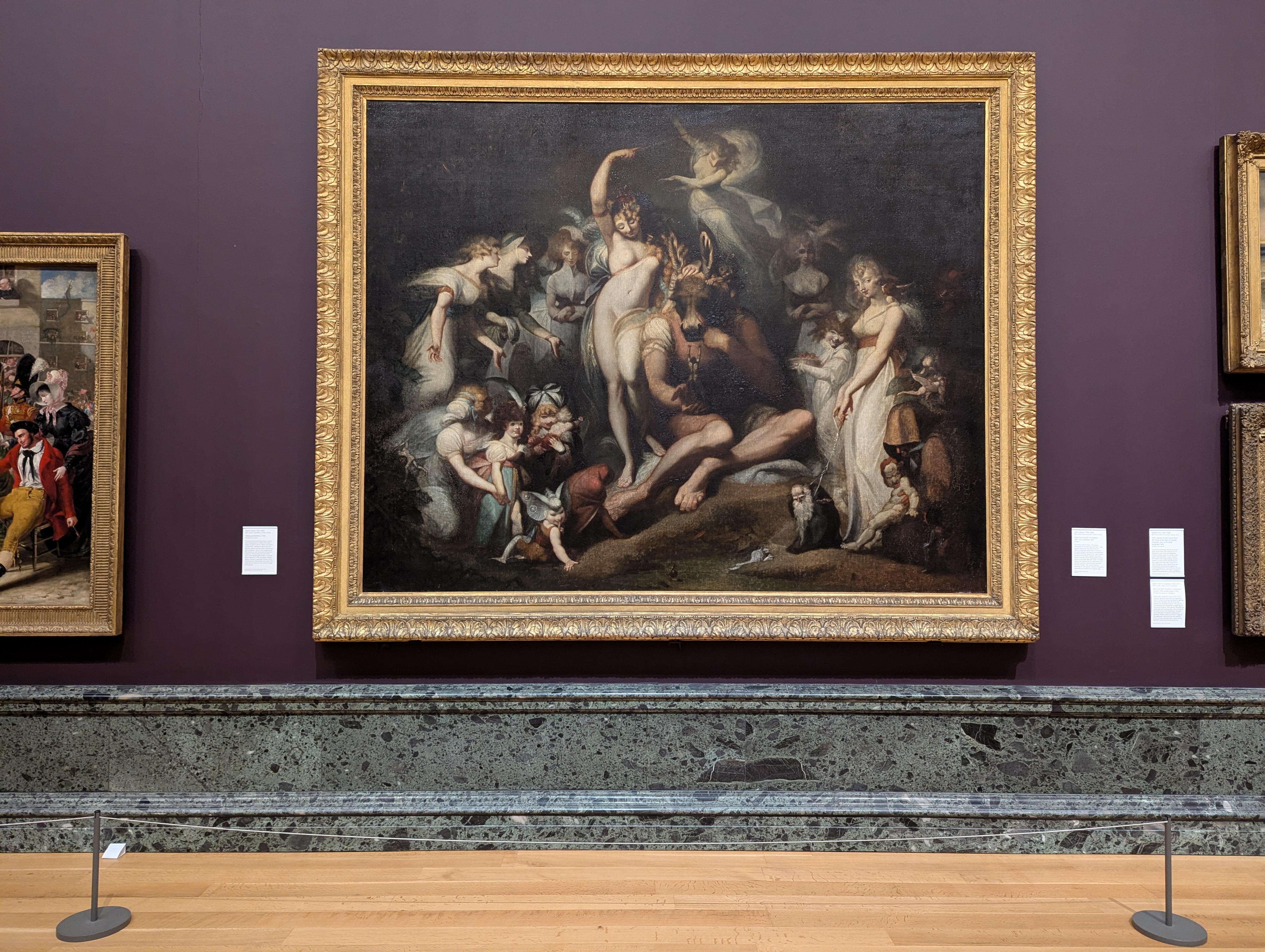
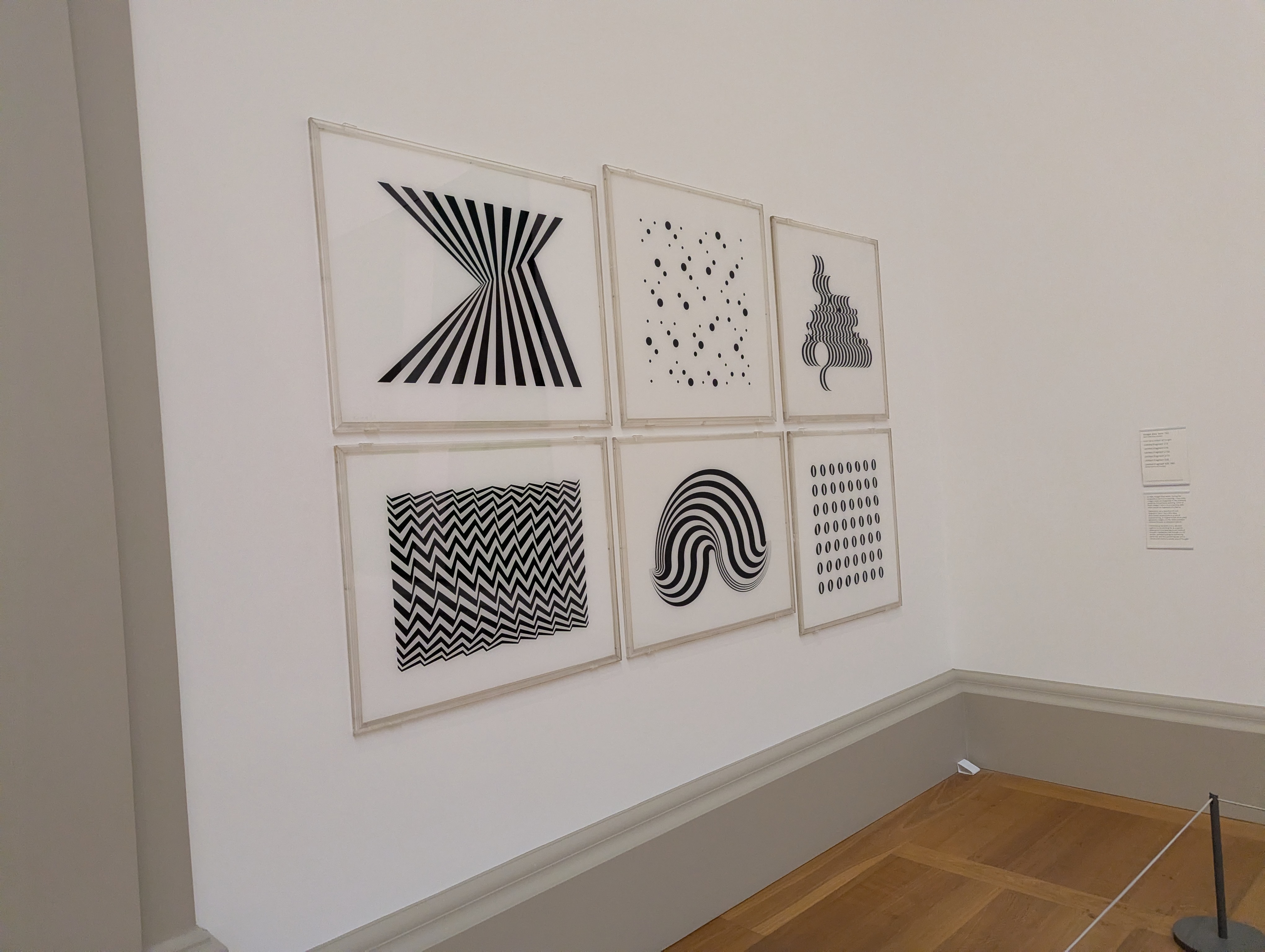
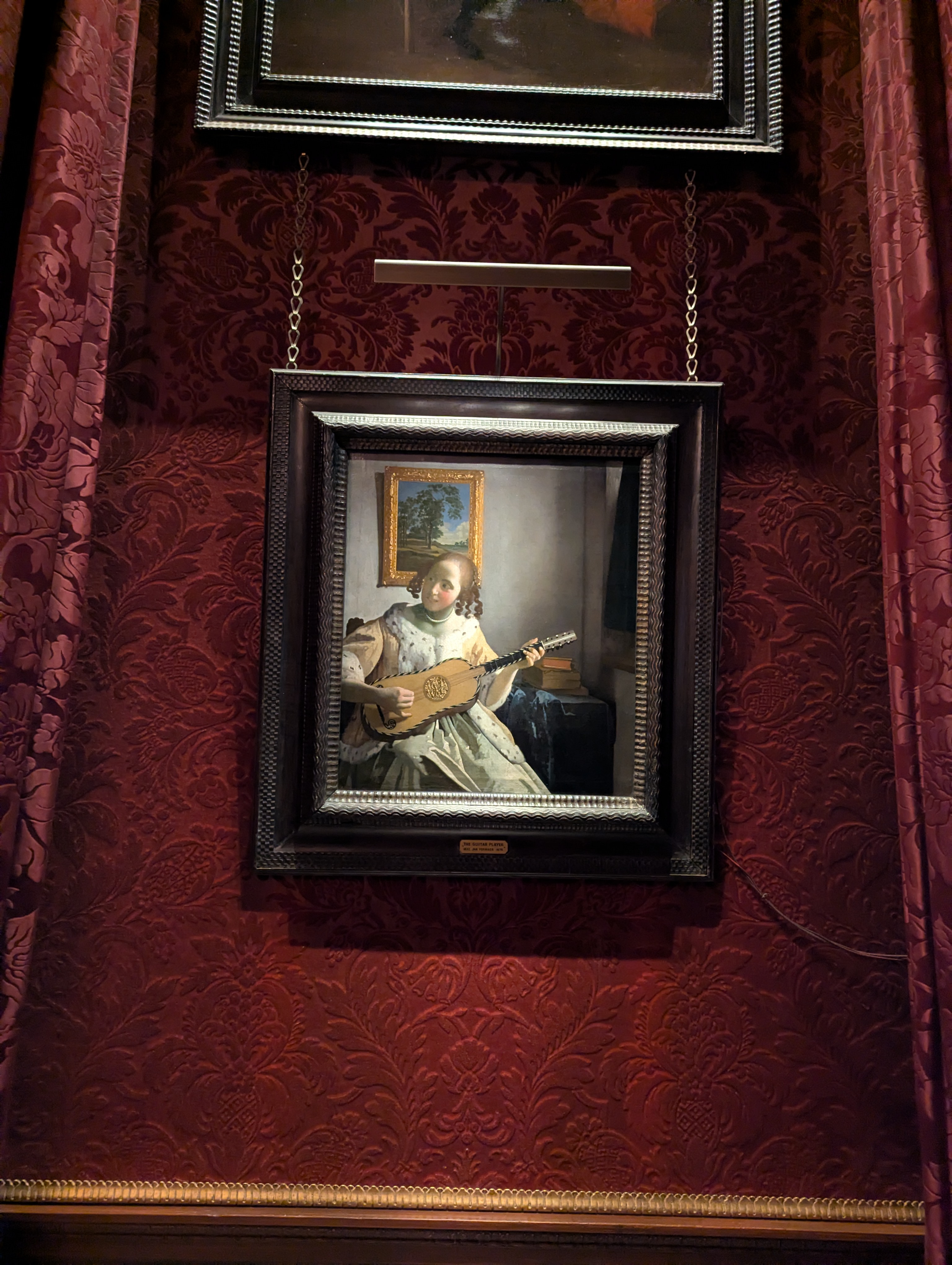
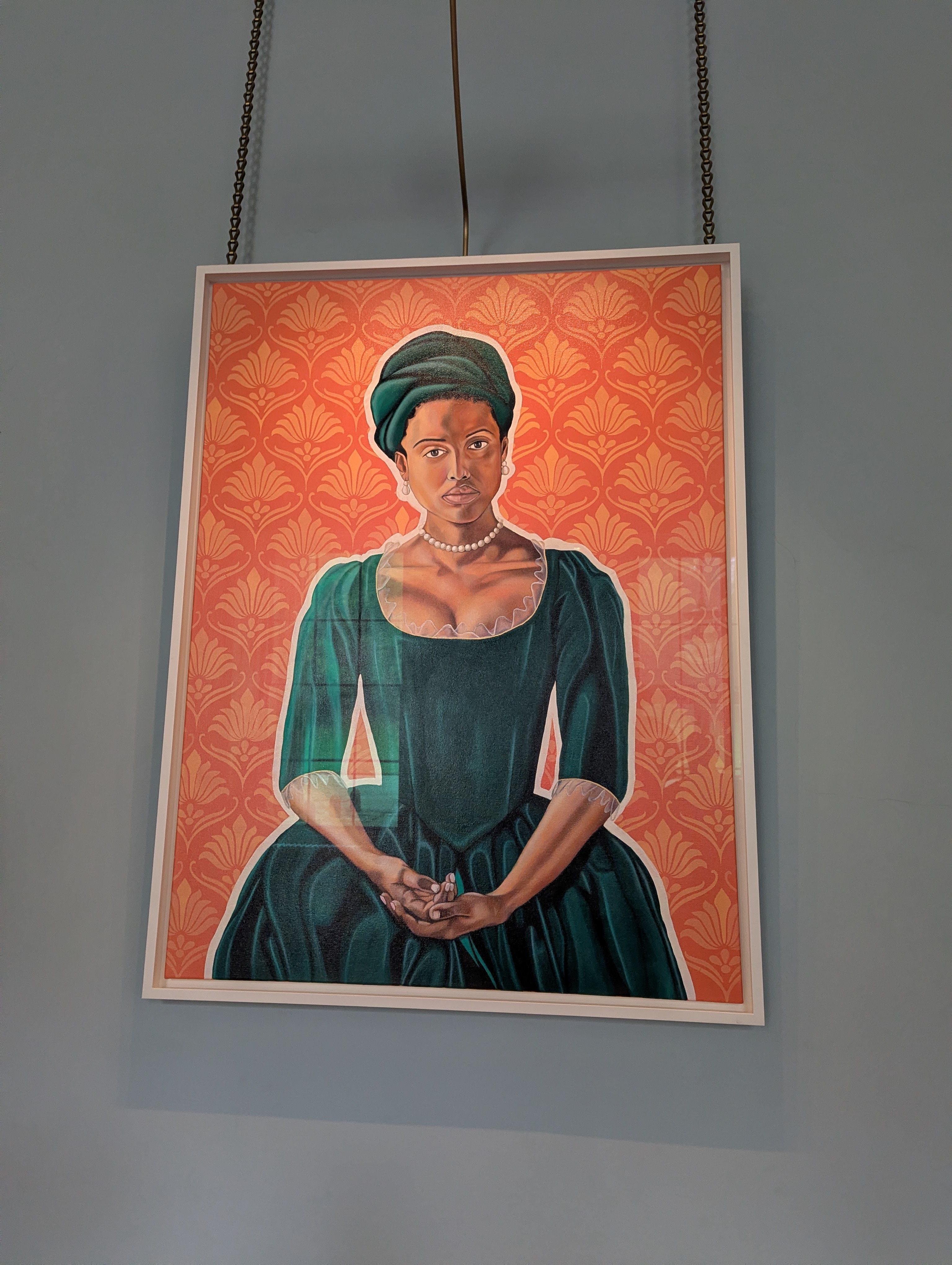
In my photos below, I see that I tended to focus on modern art during our visit, not really a perfect representation of what the Tate Britain offers.

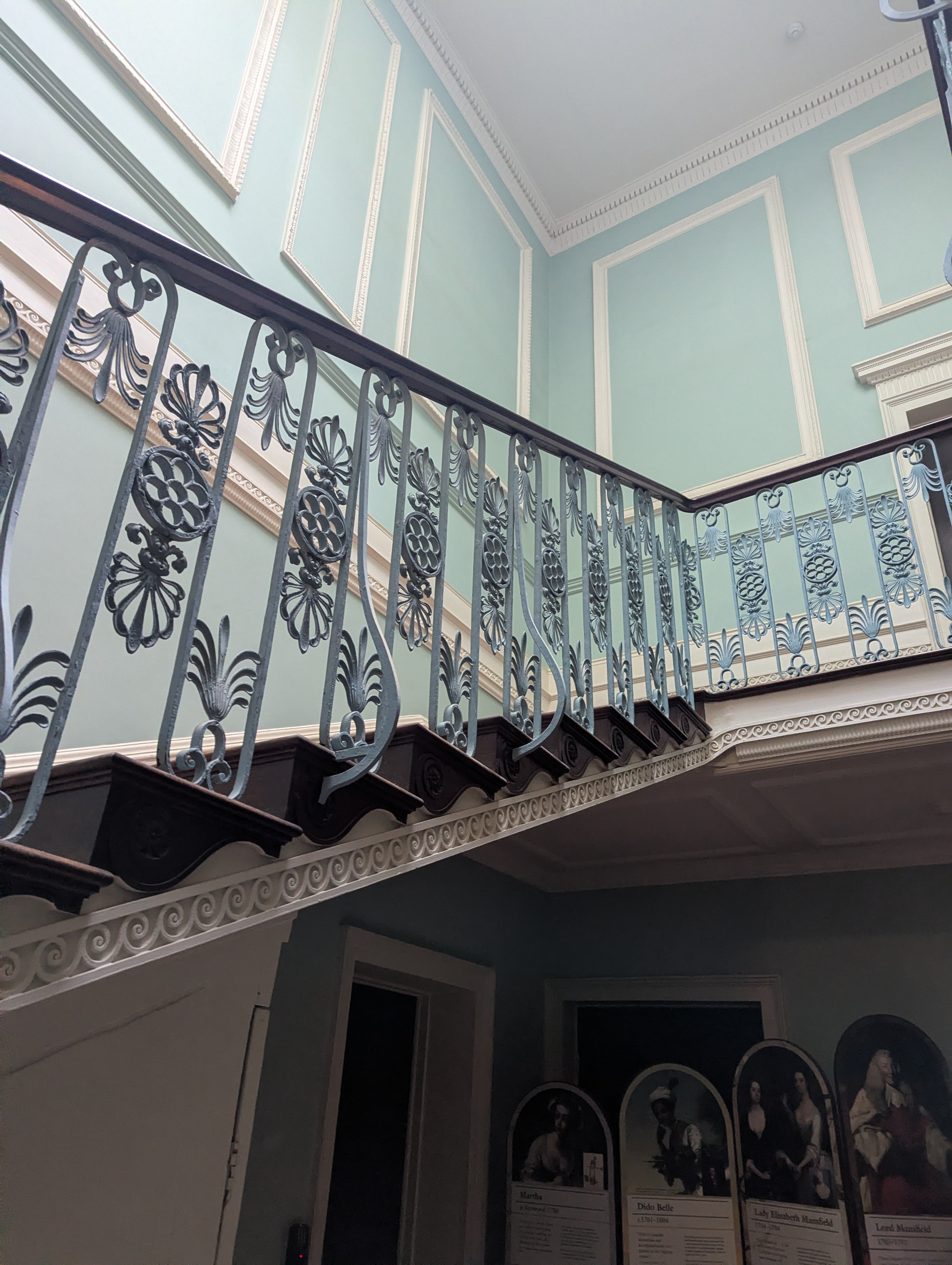
It’s finally starting to dawn on me that art isn’t just being able to execute techniques. The best art says something the artist feels we need to hear, see. My favorite display was in the stairwell close to where we entered the museum, a depiction by Chris Ofili called Requiem that offered tribute to another artist, Khadija Saye, who died in the Grenfell Tower fire in 2017. Painted on all walls of the stairwell, it not only honors Saye, an artist Ofili met only briefly, shortly before she died, it reminds us that we are witnesses. Witnesses of all that led to the tragedy, a perfect storm of greed, hubris, incompetence, complacency. Witnesses, too, of unspeakable human loss. Saye, of course, and many others whose gifts we may never know. As witnesses, we cannot look away from what happened here. One wall evokes redemption, peace, transformation we seek as we collectively process this tragedy. I posted a photo of only part of the exhibit below.

Kenwood House

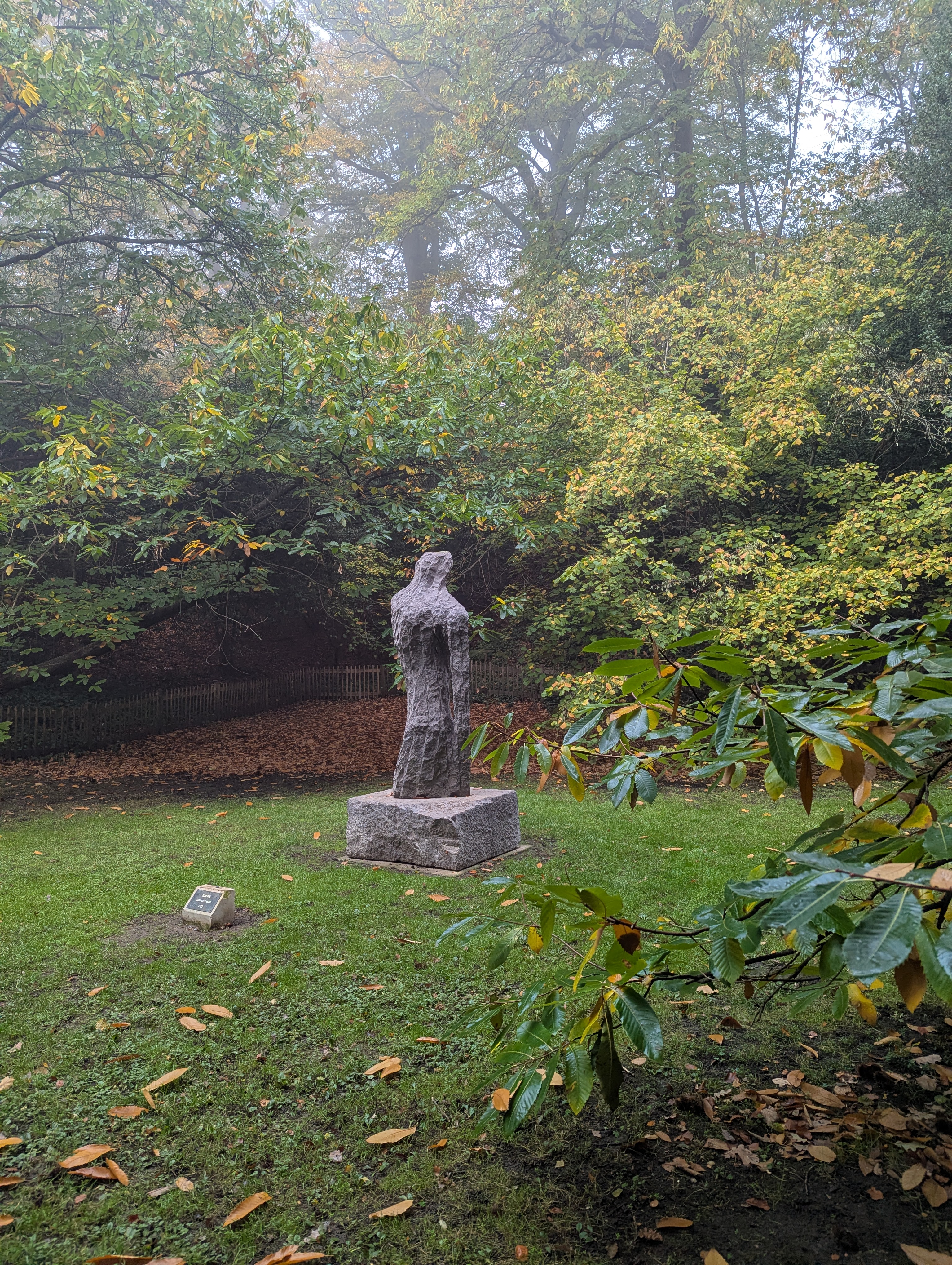
Our first appointment on Saturday before the match was at Kenwood House. It didn’t open until 10 a.m. but we arrived a bit early and walked the grounds. It was a very foggy morning and hard to get good pictures of the house exterior. The house is situated on a large property at the edge of Hampstead Heath. In the fog it was hard to tell where the property ended and the heath began. We found ourself on a path on the heath and every so often a dog being walked on the heath would come bounding toward us. There were a lot of dogs out enjoying themselves.

Kenwood house, as it is now called, was built in the 1600s by a guy named John Bill who was, ahem, the king’s “printer.” Basically the publisher for the Crown’s documents, news and religious texts (like the King James Bible) at a time when publishing was probably pretty effort-intensive. The home was owned and modified by several different families. The last private owner was Edward Guinness. Yes, that Guinness. He bought it in 1925 to house his art collection. He set up his estate to donate the property and all of his art to the British public. That happened very soon after he bought the house, only two years later. It’s now operated by the English Heritage trust.

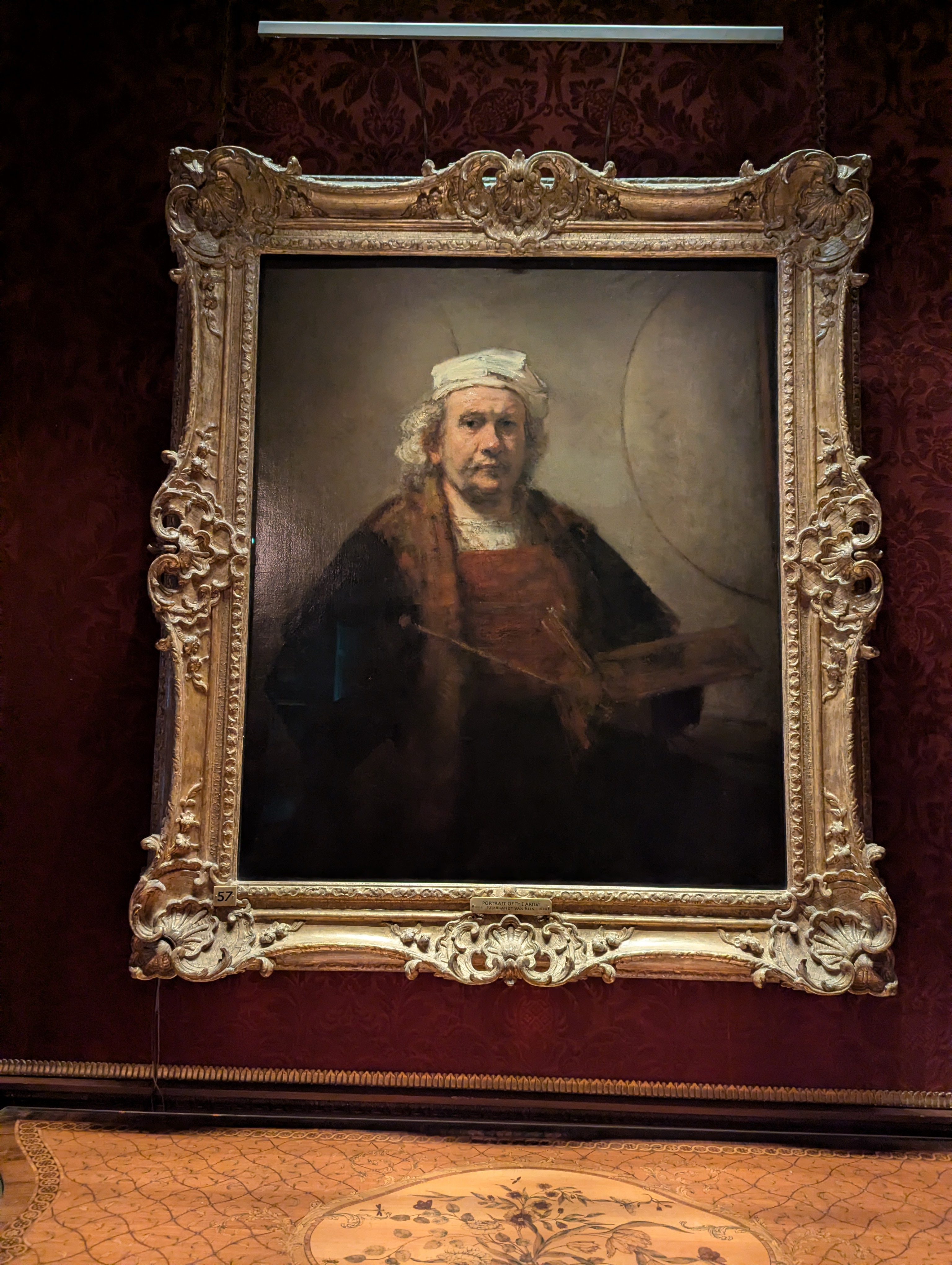
We were greeted at the door by a guide who told us all about the house and then were invited to wander about. Many of the rooms had a guide who could tell us about the work in the room. This was useful because we needed to keep our visit brief and they were great about providing information and artistic interpretations. The most famous piece displayed is a Rembrandt self-portrait.

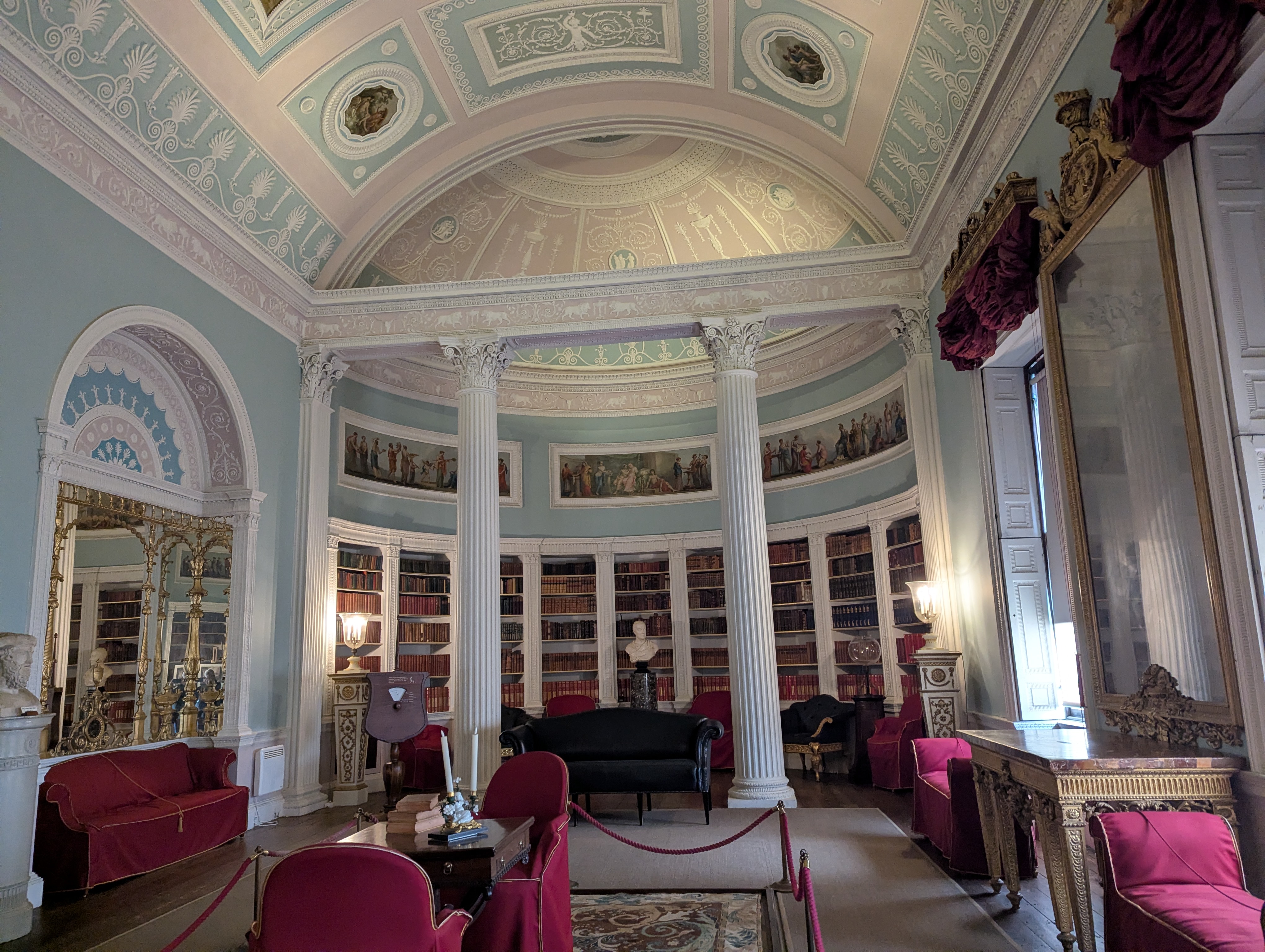
Although Guinness didn’t much use the house as a home to live in, the guides also pointed out how the house would have been used by families before him, for example, where an orchestra might have been located near the formal dining room. There was a cool, old piano, pipe organ, and harp in the music room among the art. And the library, which I have a picture of below, was very, very cool.

We’ve visited a number of homes and/or museums in England that are in place because a wealthy person had a collection of art or ancient artifacts that they ultimately left to the public. I love being able to visit them and see the collections and/or the way they lived. They provide a picture that I would not otherwise be able to see and experience and that I think is a force for enriching my life. I’m honestly not sure how I feel about them from a moral point of view. I’m a bit uncomfortable in the idea of so much excess wealth that you can engage in an activity that has profoundly little value to anyone else while you are alive. And is given when you can no longer use it. But would these things exist for us to enjoy without the initial imbalance of wealth? I have to give some credit to the rich guy.
Highgate Cemetery

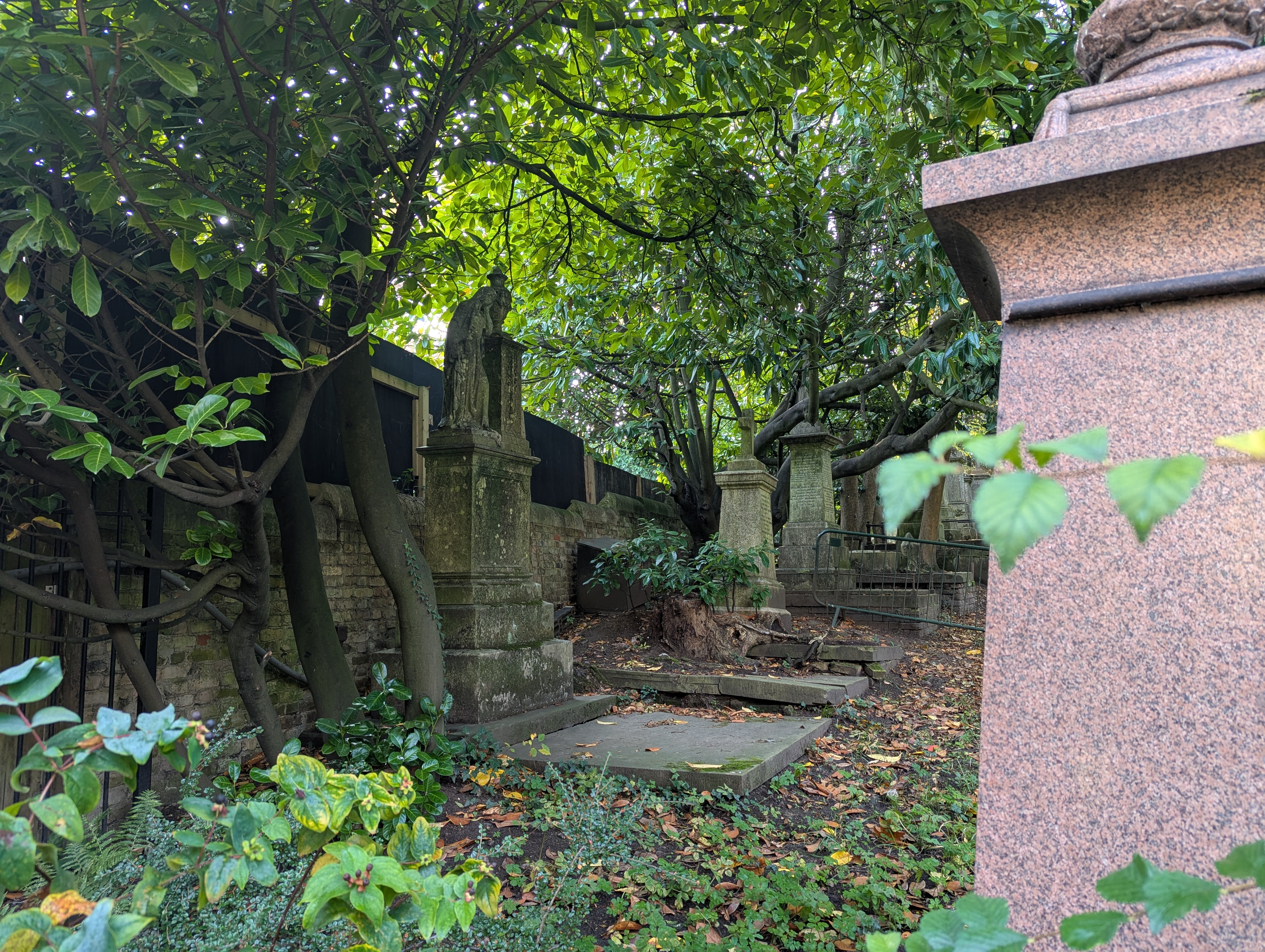
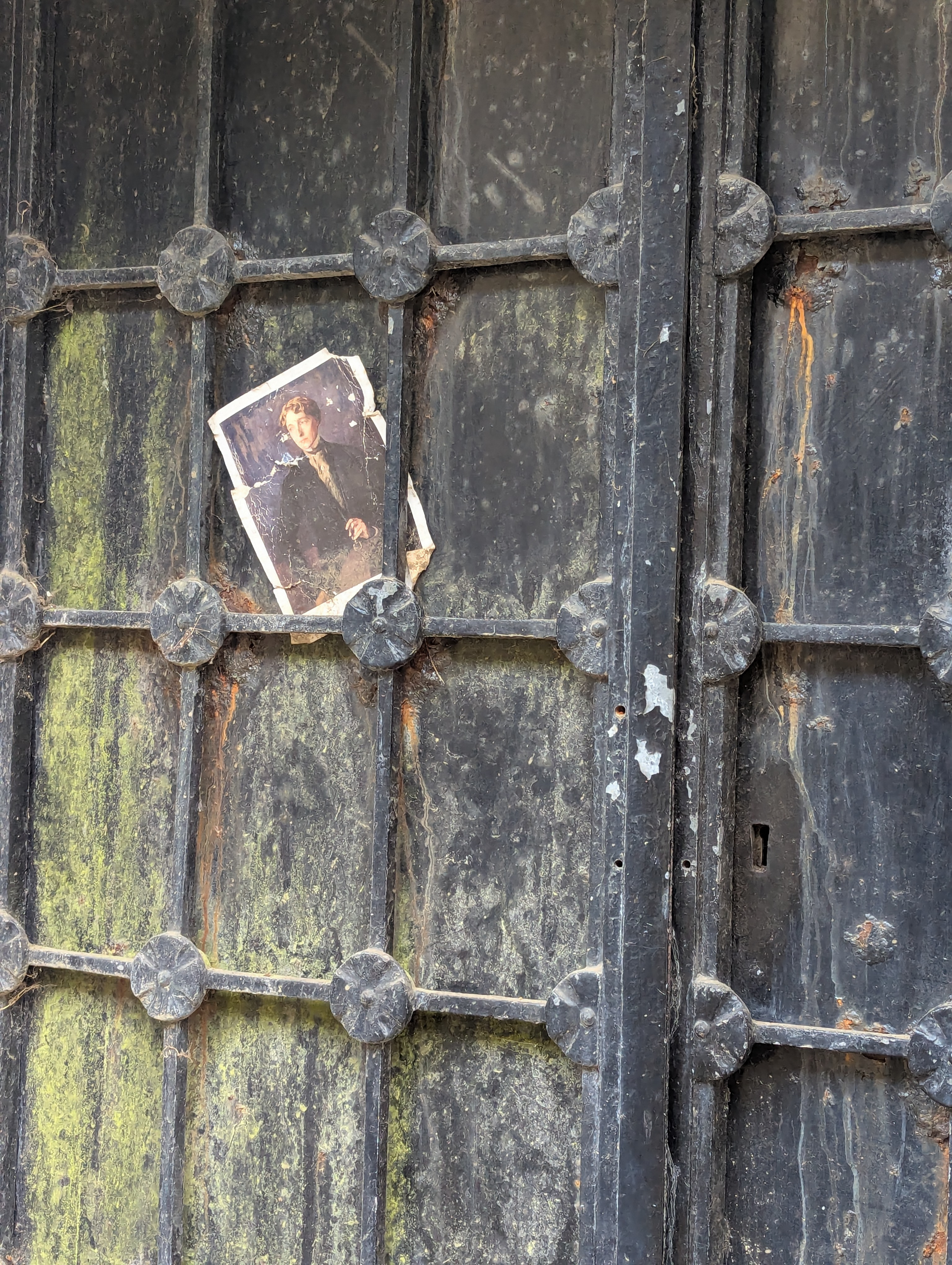
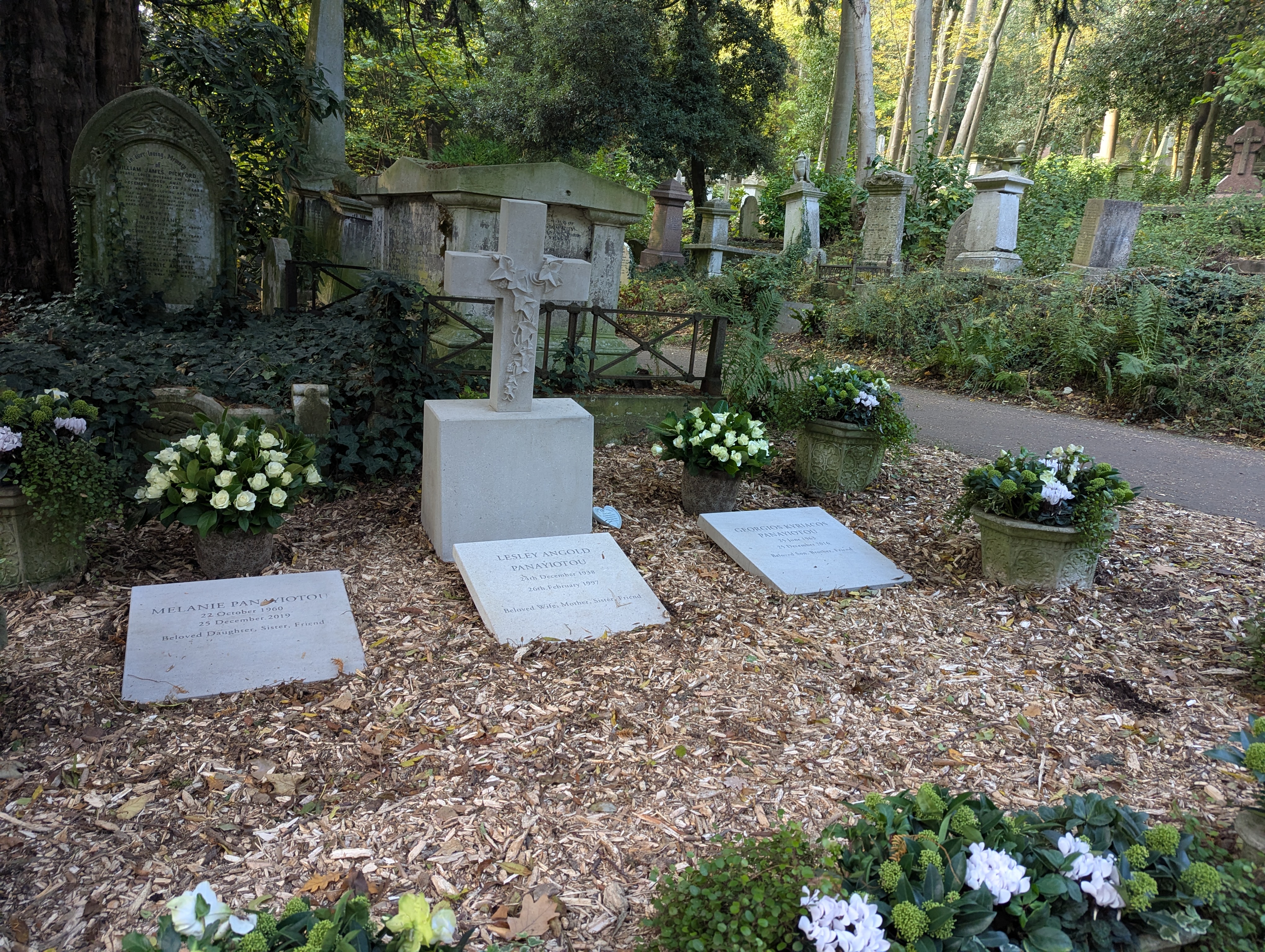
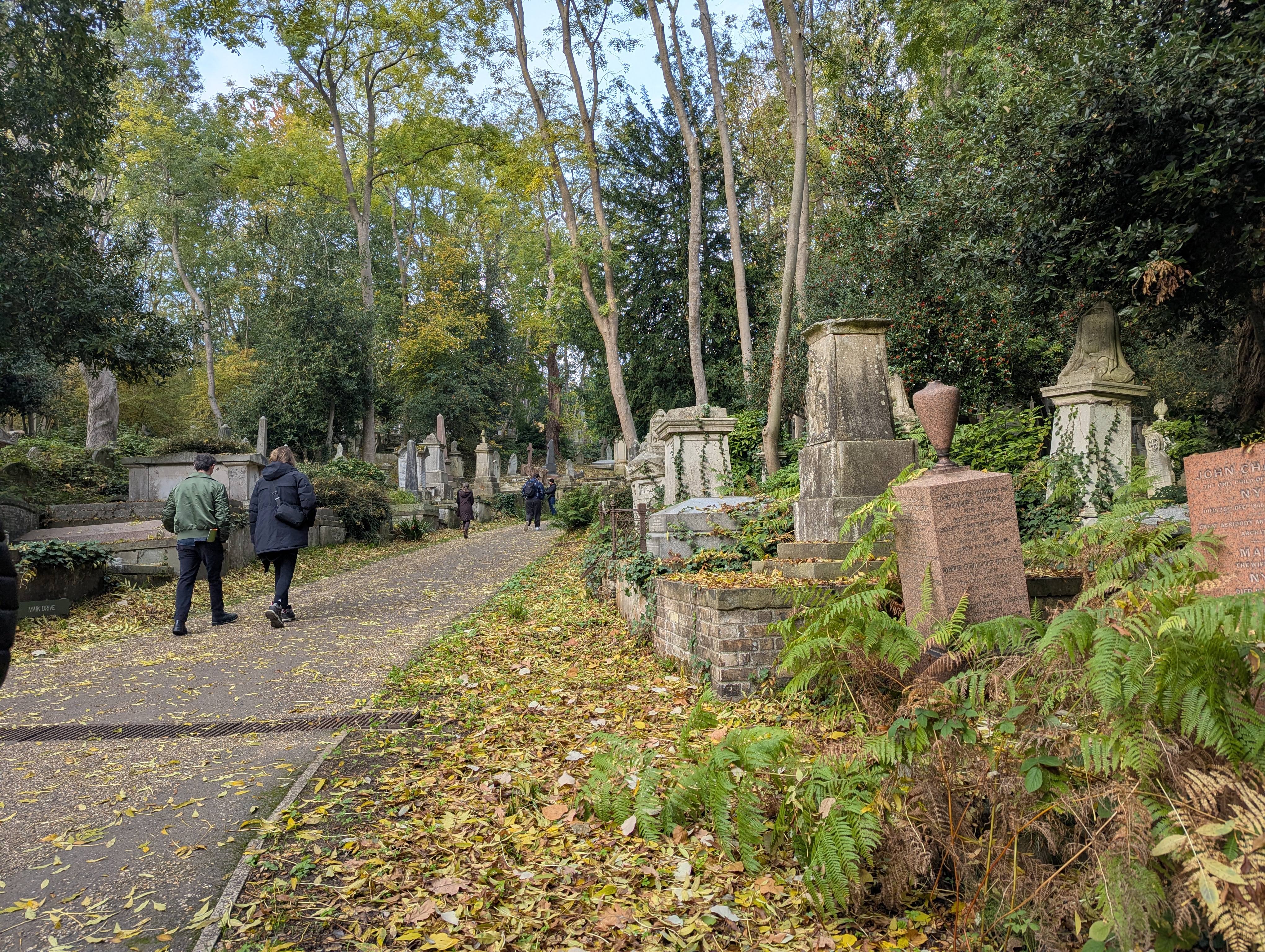
Visiting a cemetery is literally morbid, but it can also be quite interesting. In how we treated our dead, we learn lot about how we lived, what we believed. And a cemetery is almost always a peaceful place. You can visit the famous Victorian Highgate Cemetery using a day pass and it’s also possible to take a tour. We decided on the 90-minute “Highlights” tour. The tour is through the “west” cemetery which does not include one of the most arguably well-known inhabitants of the cemetery, Karl Marx. Unfortunately, we didn’t have enough time to find his grave in the East cemetery. Another day. I have it on good authority he’ll be there for a while.

The tour gave a flavor for burial practices in the Victorian era, some of which were intended to foil grave robbing which was a thing at the time. Our guide took us through grave sites with stories he found interesting, for example, the grave of James Selby, a famous stagecoach driver. Let’s first marvel that one could become famous as a stagecoach driver. Apparently, in 1888, Selby was involved in a bet worth £1,000 to himself that he could drive a horse-drawn carriage to Brighton and back in under 8 hours. He succeeded with a margin of 10 minutes in his favor, using multiple teams of horses that were changed out with the near-efficiency of a NASCAR pitstop. Unfortunately, he died within months of receiving the prize. It appears that some of the winnings were used for his grave marker, which is decorated with imagery of upside-down horseshoes, symbolic of luck running dry, and a whip.

We also saw the mausoleum where supposedly Bram Stoker, the author of Dracula, was walking past and heard voices coming from a large family vault. The story goes that he peeked inside and saw the living family having tea among the dead. This appears to be nothing more than a fun story. Bram Stoker did have some history of being in the area near Highgate and maybe was inspired by Highgate in some way, and it is true that families of the Victorian dead would visit the cemetery and picnic, but the actual details of the tea story? Perhaps a “truth” story rather than a true story.

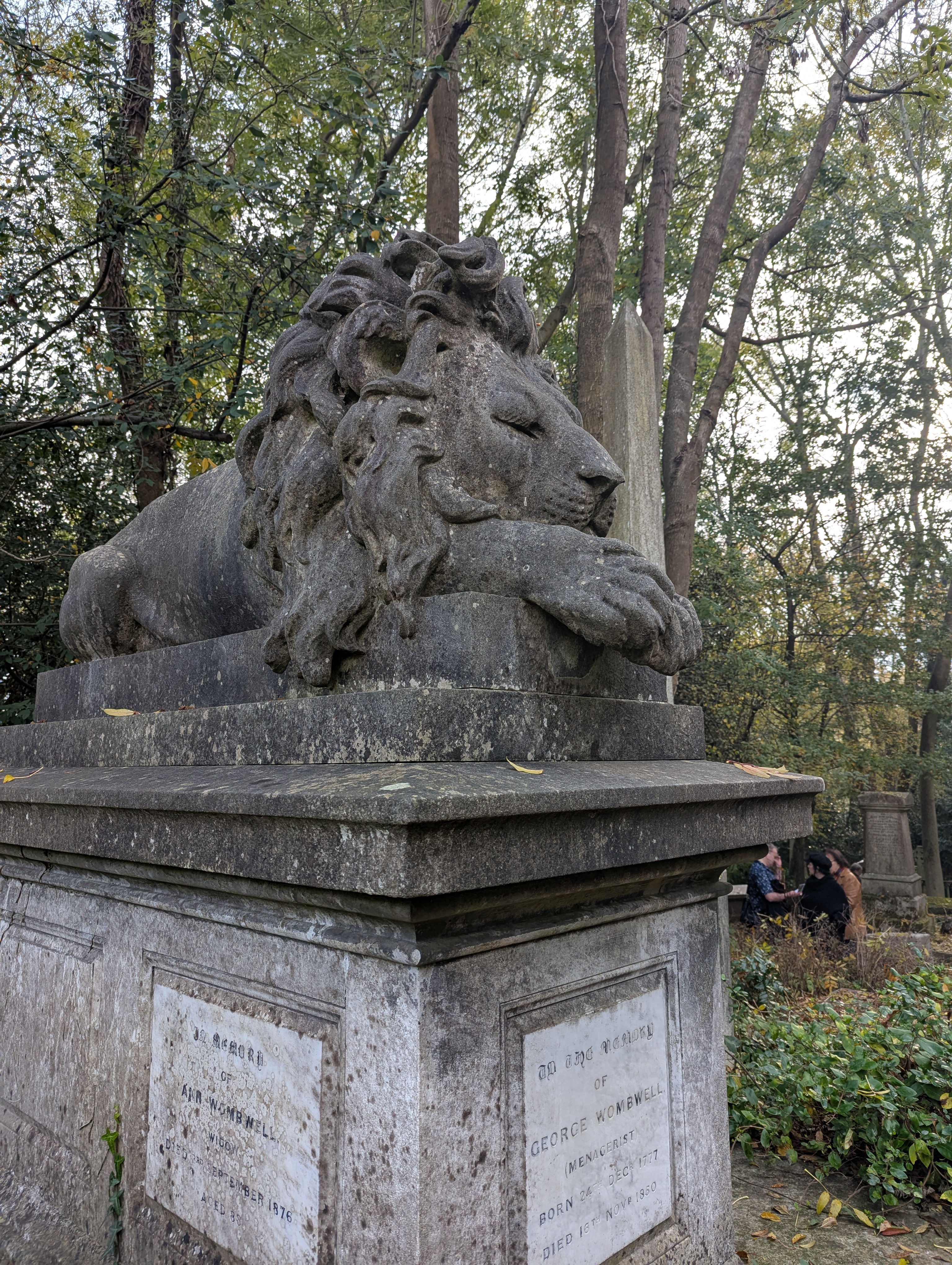
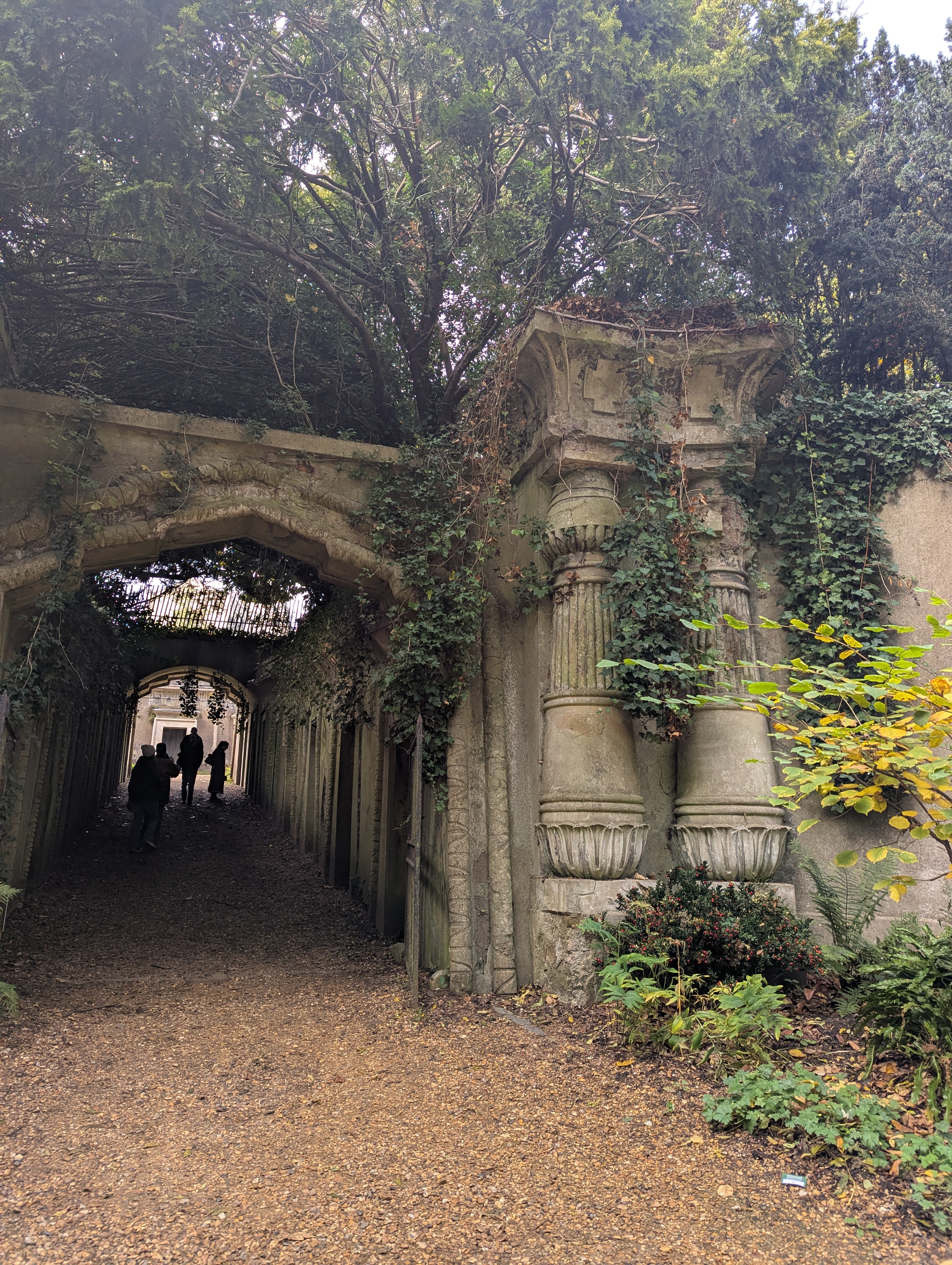
That vault is very close to the much newer graves of the Russian journalist and former intelligence officer, Alexander Litvinenko, who was poisoned by Russian agents in 2006, and also to the pop music star, George Michael. The tour also goes into the beautifully creepy Egyptian Avenue and Terrace catacombs. The picture of the grave with a lion on the grave stone, below, was from the grave of George Wombwell, an 1800s collector and exhibitor of wild animals. The lion on his grave was intended to be a likeness of his tame and very docile lion, Nero.
Temple of Mithras

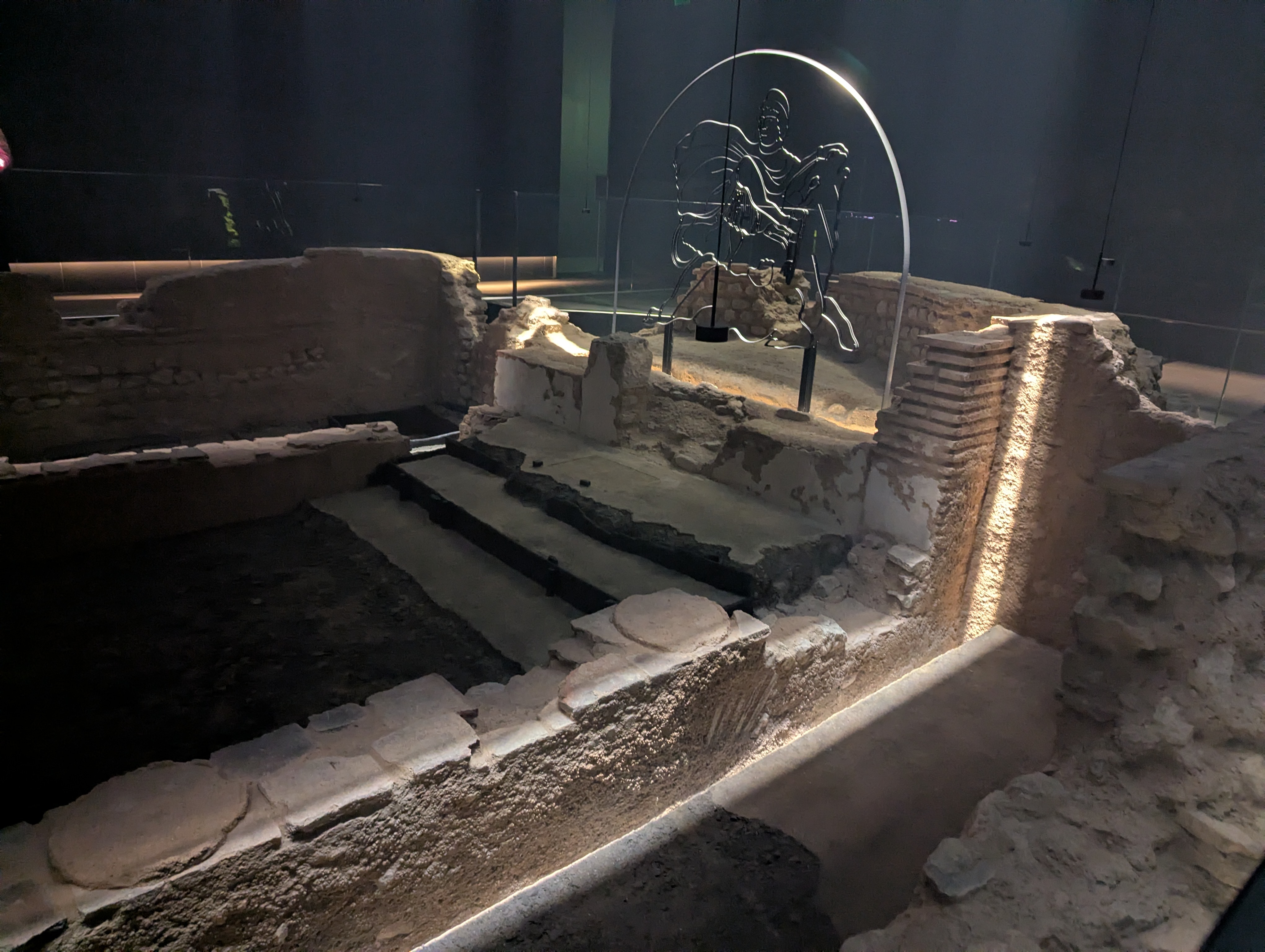
We’ve been to a few sites around London (and elsewhere in England) where ruins from the Roman occupation during the first few centuries AD have been found underground. Sometimes because of bombing during WWII and sometimes because of commercial development. Ruins from the Temple of Mithras were found in 1954 during a construction project and the temple was believed to have been built in 240 AD. It was used by a secretive cult that honored a god named Mithras. The head of a marble statue of Mithras was found near the temple excavation.

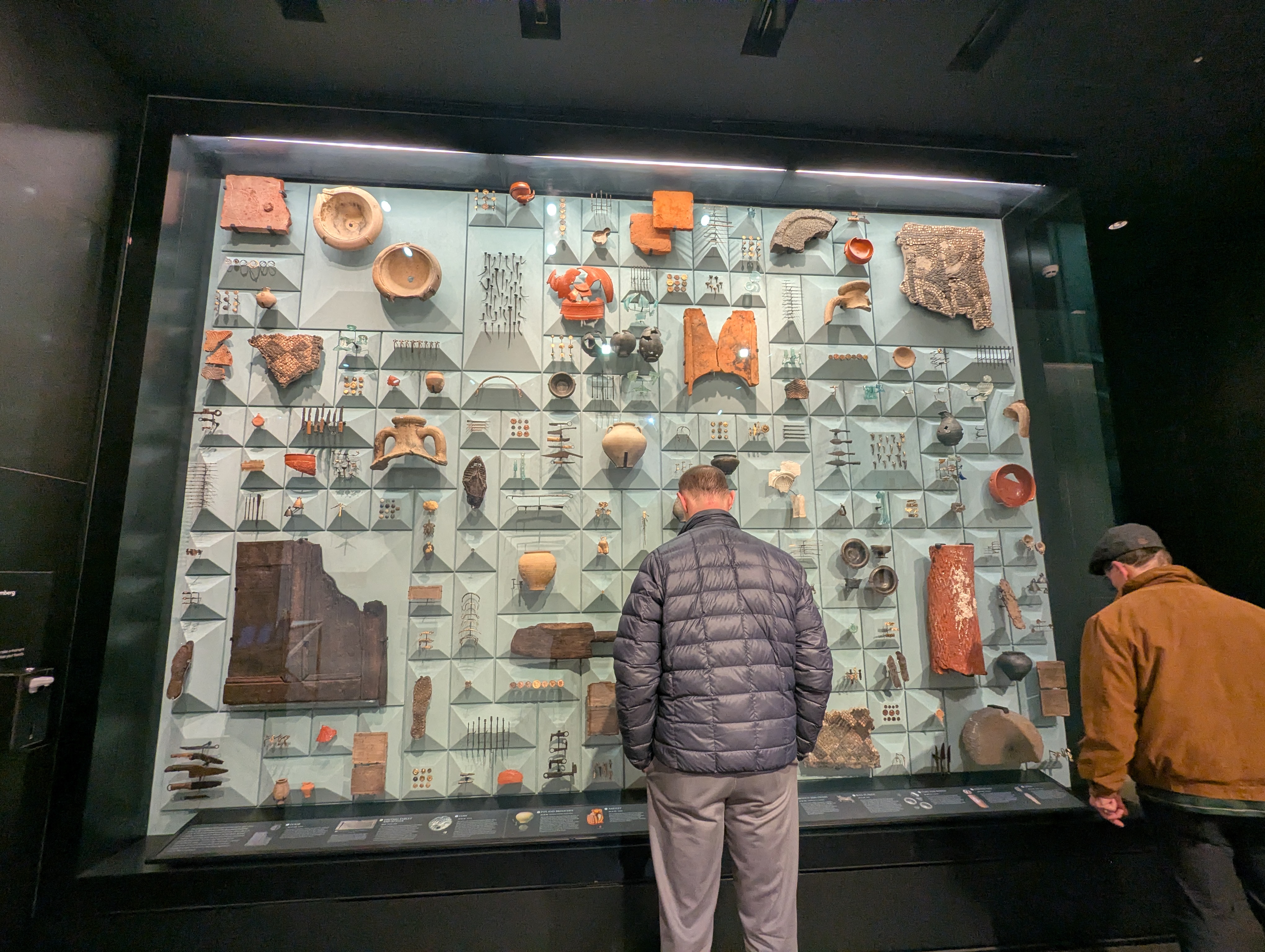
The actual remnants of the temple are stored in the London Museum which has been closed pending a move. What you are able to visit is an authentic model of the temple in close proximity to where the real temple was found. It’s accessed from the very modern Bloomberg building. There is also a model of the Mithras head. In the upper lobby of the Bloomberg building are actual artifacts found at the site. What I loved about the artifact display was that it is very, very concise. One wall. Sometimes displays of Roman artifacts are so extensive you kind of lose yourself. This one gives good samples of everyday objects, well organized and easy to digest.

I enjoy looking at these ruins and ancient objects–pins, buttons, pots, jewelry–because they remind me in so many ways that how we live is similar to these ancient ones. We haven’t much changed some objects we have used for thousands of years, just made them more uniform and easier to produce. And humans still are drawn to religious orders and cults which offer much the same as they did thousands of years ago.

Conversely, we can also see ways in which human lives are much changed. For someone to have found these ruins and known they were worth preserving for all: credit is due.

The lobby also currently has an art display by American artist Anne Ryan, called Folkmoot, an old English word representing a public gathering. The imagery is intended to reflect the city’s ongoing rebuilding across time. Quite interesting.
Ah, London. We never seem to exhaust what there is to take in and experience in this city and the people and events who have shaped it.

And that’s a good thing because there is nothing more we want to do than come back again and keep exploring. As of this writing we have no firm plans to return but what we know with certainty: we will be back.

Good/same old Arsenal

We had an immensely busy day before the match against Hull on Saturday and got there with just a few minutes to spare. Arsenal discourages people from bringing bags to the stadium because they have to be checked and tagged which supposedly creates delays. The true secret is that going through the bag check line is remarkably faster than entering the stadium any other way. Without the tiny line I had to enter for the contents of my purse to be reviewed and to endure a half-hearted body frisk, I would have probably missed kickoff.

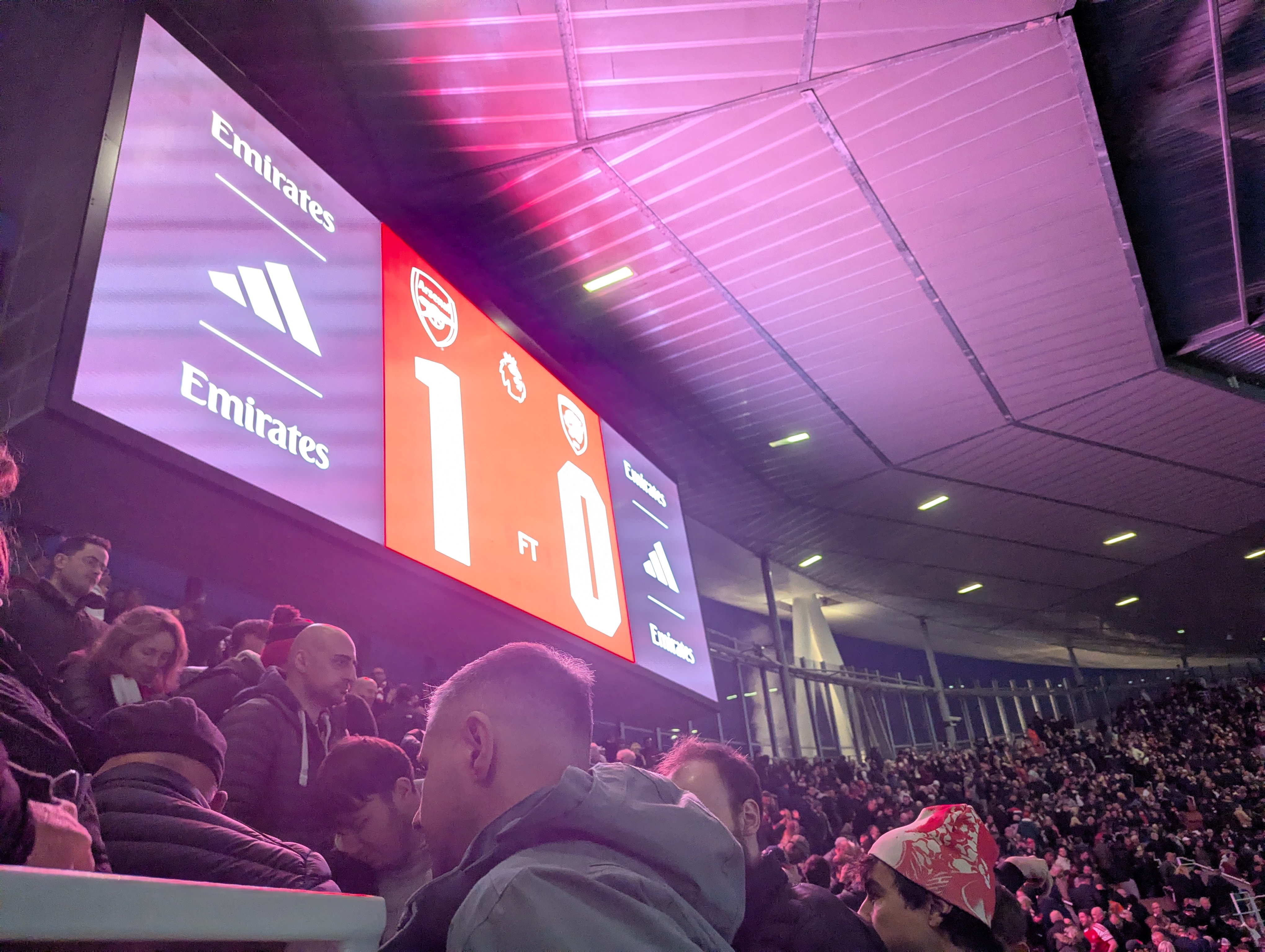
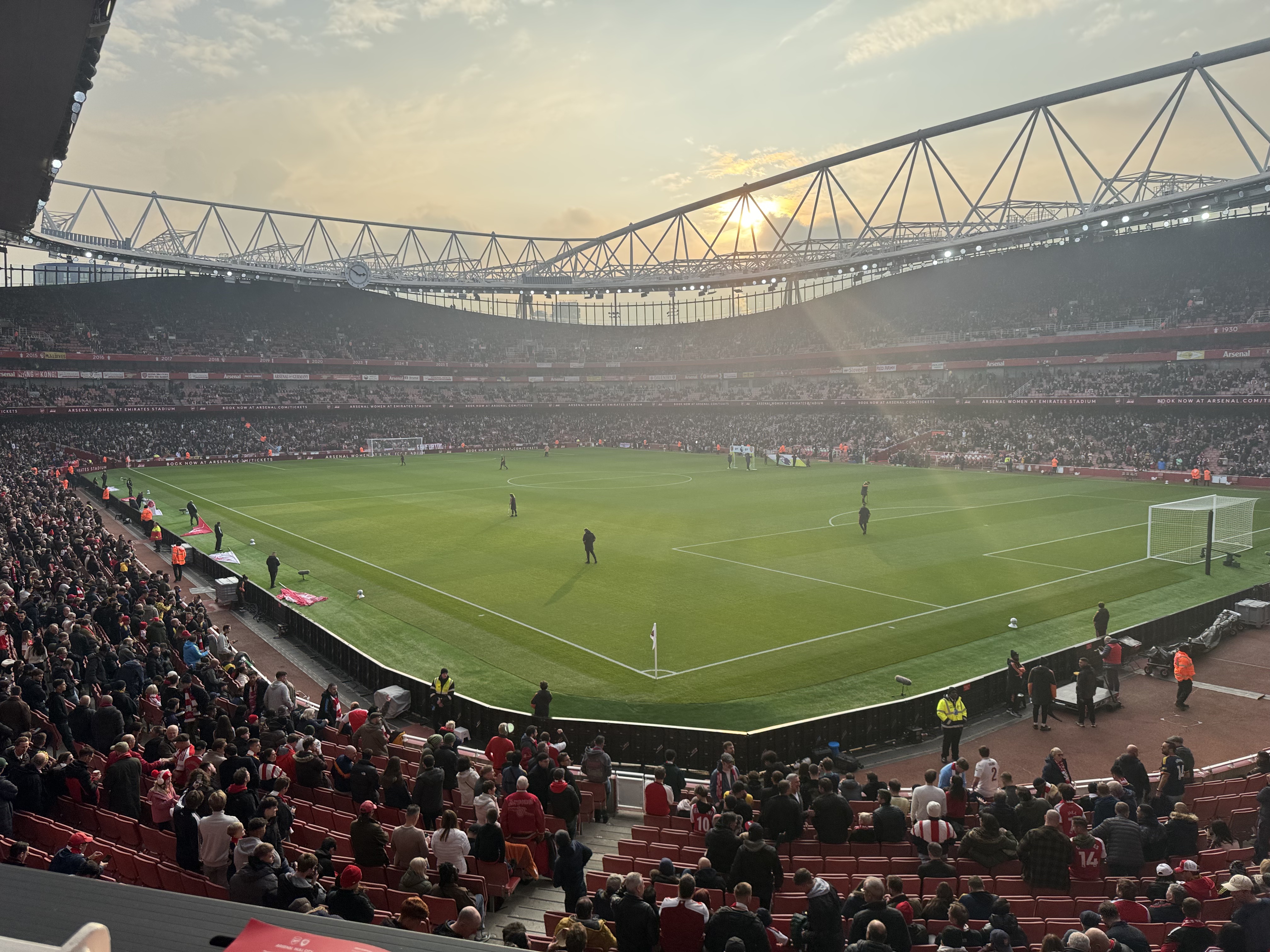
As it was, I was in my seat in the North bank, kind of in the northwest corner even with the goal line, when the teams entered the field. My seat was quite low in the upper bowl, with a great view of the field. My husband’s tickets were in the northeast corner in the first row of the club section. Although you are technically in the stadium “by yourself,” it feels anything but. You are part of the crowd and not lonely. In my case, I often seem to be sitting near someone who initiates conversation and mutual emoting about the match that continues throughout the 90 minutes. There are often hugs or high fives after the match as we go our separate ways at the end. This was the case on Saturday. The seat to my left was empty but the seat next to that held my designated match buddy for the day.

Emirates stadium from my husband’s seat.

Britain’s Remembrance Day honoring war dead was on Sunday and each of the Premier League games included a brief tribute in advance of the official Remembrance Day. There was a tribute before Liverpool’s match with Arsenal last weekend and there was one before the Arsenal/Hull City match on Saturday. The tribute features a military unit presenting the colors, a horn playing a tune called The Last Post, and a minute of silence. The thing there was not, much to my satisfaction, was the playing of “Good Old Arsenal,” which you know is my least favorite Arsenal tradition. I wasn’t sure whether that is a new development at Arsenal matches this season or whether it was not done because something had to be cut to accommodate the extra time required for the Remembrance Day tribute. (A new theory emerged the day after the match because we heard the tune played at the wreath-laying ceremonies at the Cenotaph the next day. “Good Old Arsenal” apparently borrows the tune from a patriotic song called “Rule, Britannia!” Perhaps it would have been considered disrespectful?)

Hull City were promoted to the Premier League at the end of last season and so far have been the team with the least ball possession in the Premier League this season. It hasn’t harmed them terribly. They were in 13th position out of 20 teams in advance of the match, having won a few matches and tying most of their matches. In recent years it’s often been the case that newly-promoted teams finish in positions 18-20 and are relegated within one season. 13th is not bad if they can maintain it. The expectation coming into the match was that Hull City would likely perform the dreaded low block that Arsenal struggle to overcome so much. Mikel Arteta selected the players who are most believed capable of picking that tactic apart.

Hull City had a surprise in store and started the match pressing Arsenal. They dominated Arsenal over the first few minutes and looked pretty dangerous. Arsenal grew into the match and had long periods of domination and ultimately Hull often did deploy a low block. Lots of good things happened, but Arsenal just didn’t seem uniformly sharp. Good passing sequences ending with that one wayward pass. That one extra touch before shooting that caused space to close down too much. Being pressured off the ball. Our striker, Kai Havertz, finding himself offside before being on the receiving end of a pass. Some badly errant shots. Our new left winger, Christos Tzolis, received a beautiful pass from Jurien Timber right in front of the goal and skied it into the Club seats. My neighbor said, “It looks like it’s going to be one of those nights!”

Arsenal were attacking the goal farther from me in the first half and Kai had a few falls that looked like dives even from where I was. A guy sitting in the row behind me was in apoplexy about the falls. “This is embarrassing.” “This is every week.” And so forth. It was not lost on the away fans either. Like the visitors so often do, every time they think Arsenal have gotten away with something–or tried to–they sing a super annoying song: “Same old Arsenal, always cheating.”

Have to say I love the way Brits enunciate the “t” in “cheating.” It’s very clear.

You’ve watched soccer so you know there can be exaggeration to get a referee’s attention. And referees get stuff wrong. Arsenal did not invent or perfect this. Nor do Arsenal players do it more than players of other teams. However, the chant is for sure Arsenal-specific. Supposedly, the origins of the chant are in Arsenal being controversially promoted into the first division in 1919, possibly via bribery, and at the expense of Tottenham. Yes, more than a century ago. The wronged have long memories.

Some people have speculated that the chant became more frequently deployed after an incident in 1999 when a Sheffield United player went down injured during an FA Cup match against Arsenal. So that he could receive treatment, a Sheffield United player kicked the ball out of play. The established sporting behavior for an opposing team’s subsequent throw-in is to throw it toward the goalkeeper of the injured player’s team so he can then start play with a kick. In this instance, an Arsenal player threw the ball toward the Sheffield United keeper, as custom encouraged, but one of Arsenal’s foreign players (who later said he didn’t know there was such a custom), ran onto the ball and scored a goal. It couldn’t be called back by the referee because the throw-in regimen was just a custom and not a rule. Arsenal won the match 2-1. In the aftermath of a bunch of on-field drama, Arsene Wenger suggested that the teams play the match again, which did happen. Arsenal won that match, same score.

There are people that consider the many goals Arsenal scored last year by set plays a form of cheating. Ridiculous, of course, but hey. Fans chant. That’s our job.

Anyway, every time Kai hit the dirt, the Hull City fans raised the “always cheating” chant. Also every time Arsenal were fouled, or Arsenal fouled Hull City, or a Hull City player simply collapsed on the grass. Arsenal fans responded without a second’s delay: “Champions of England, we know what we are.” Such a nice, all-occasion chant to have in your back pocket. And so much more satisfying than “We are top of the league.” Top of the league can be taken away from you.

With about five minutes left in the first half, another incident happened where Kai Havertz fell in the box and remonstrated that he’d been fouled. The Arsenal fan near me who was not having Kai today yelled, “He’s fallen like a sack of shit every week!” Quite a bit of time went by and Hull City had a rare moment of play in our end. And then, quite suddenly, the referee stopped the match. We understood there was a VAR review but were wracking our brains to understand whether that was possibly a penalty against us. We couldn’t think of a time a Hull City player was near the goal. At some point, it dawned on us in the stands that the play being reviewed was the one where Kai said he was fouled, long ago. When the referee is called to review a play onscreen, the result is almost always a penalty being declared. All the fans near me started ribbing the fan who’d made the “sack of shit” commentary.

While the officiating team took their time reviewing the monitor showing the play over and over the stadium became very, very quiet. Like a tennis match, everyone whispering. As it turned out, the referee and VAR ultimately concluded that Kai Havertz had been fouled by being pulled back by his shirt but that he was in an offside position when he was fouled, so no penalty was awarded. Many people think the referees got that call wrong. Kai did not make a play for the ball while in an offside position, so technically he was not offside. And a foul in the box is a foul in the box.

There was a part of me that was a little relieved Arsenal weren’t rewarded a penalty only a week after Jurien Timber committed a similar foul against Liverpool that we were not penalized for. Then again, it’s easy to magnanimously give up a clear penalty when we ultimately managed an undisputed goal far into the second half. Noni Madueke had a pretty good match, finding ways to drive past his defender. He hit a hard shot and the keeper spilled the ball. It was slammed into the net by Martin Odegaard.

Not the prettiest goal but it was a goal. We enjoyed it as much as a pretty one.

At this point the hope was that we would now challenge for a second goal and that is what Arsenal apparently decided to do. But the same little niggles that kept the game tight persisted during the period after the goal. It was good to see us not just try to defend and waste time but there was certainly some risk. The clock ticked down second by second. Nightmare.

That said, a shocking number of Arsenal fans left early. It’s as if they know Arsenal can hold a 1-0 lead. For days. And thus, surely, for 15 minutes.

That is a level of surety I cannot hold. Mikel Arteta was looking as stressed out as he’d been since the beginning of the match. He strayed from his technical area while an assistant encouraged him back in. He looked like he did not appreciate the reminder. I did not see this, but I heard after the match that a foul late in the game had him kicking a chair in frustration.

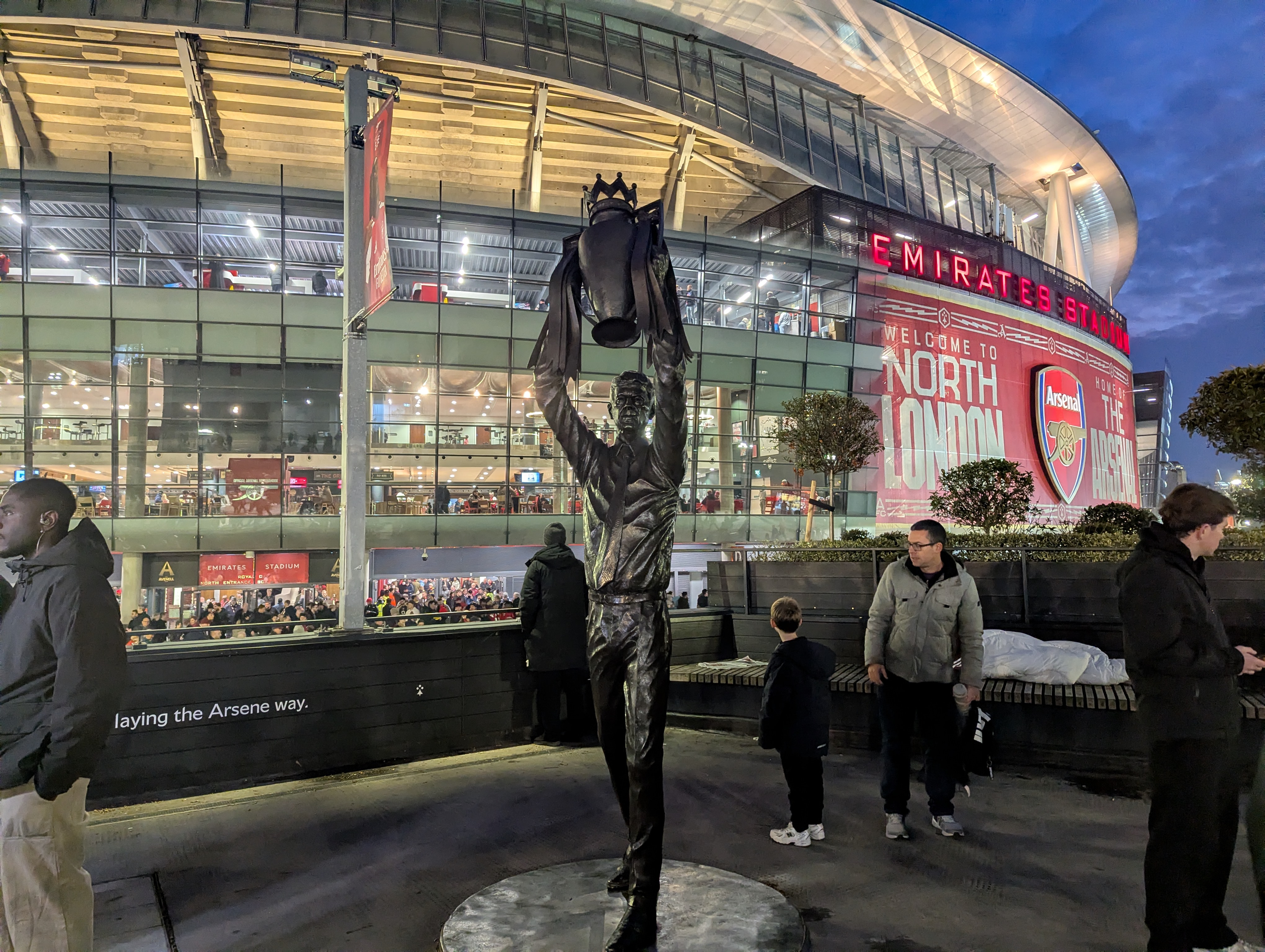
I stayed until the end. A hug with my neighbor, and then I ran out to meet my husband by the Wenger statue.

It was a funny, quiet crowd we were walking among back to Arsenal station. So used to a 1-0 score line? Too early in the day to have enough beer to be boisterous? More relieved than happy? Hard to say.

It felt so good to be back in the stadium even for–in retrospect–a fairly routine win. Now to try to somehow get tickets again.

Made of London

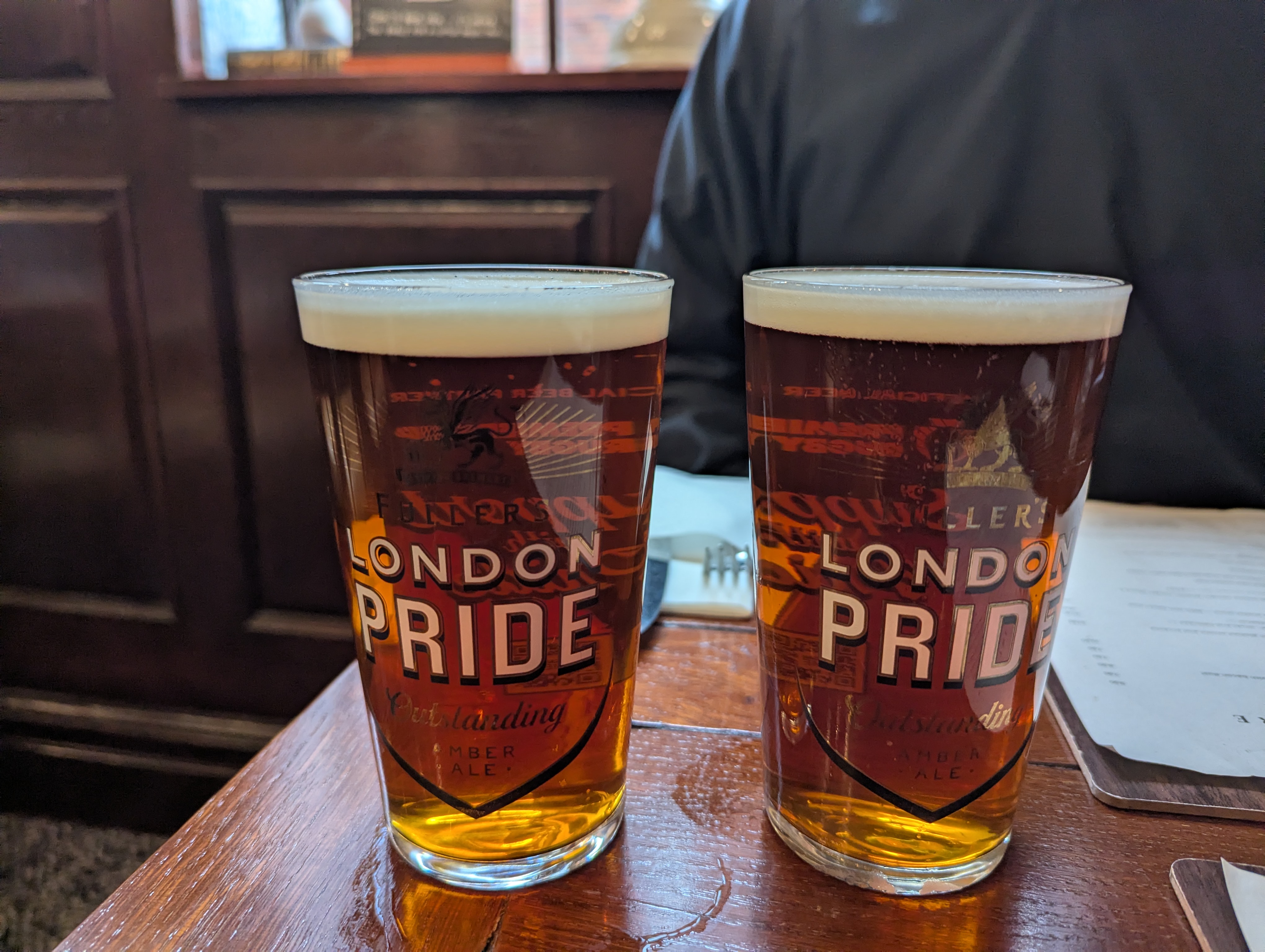
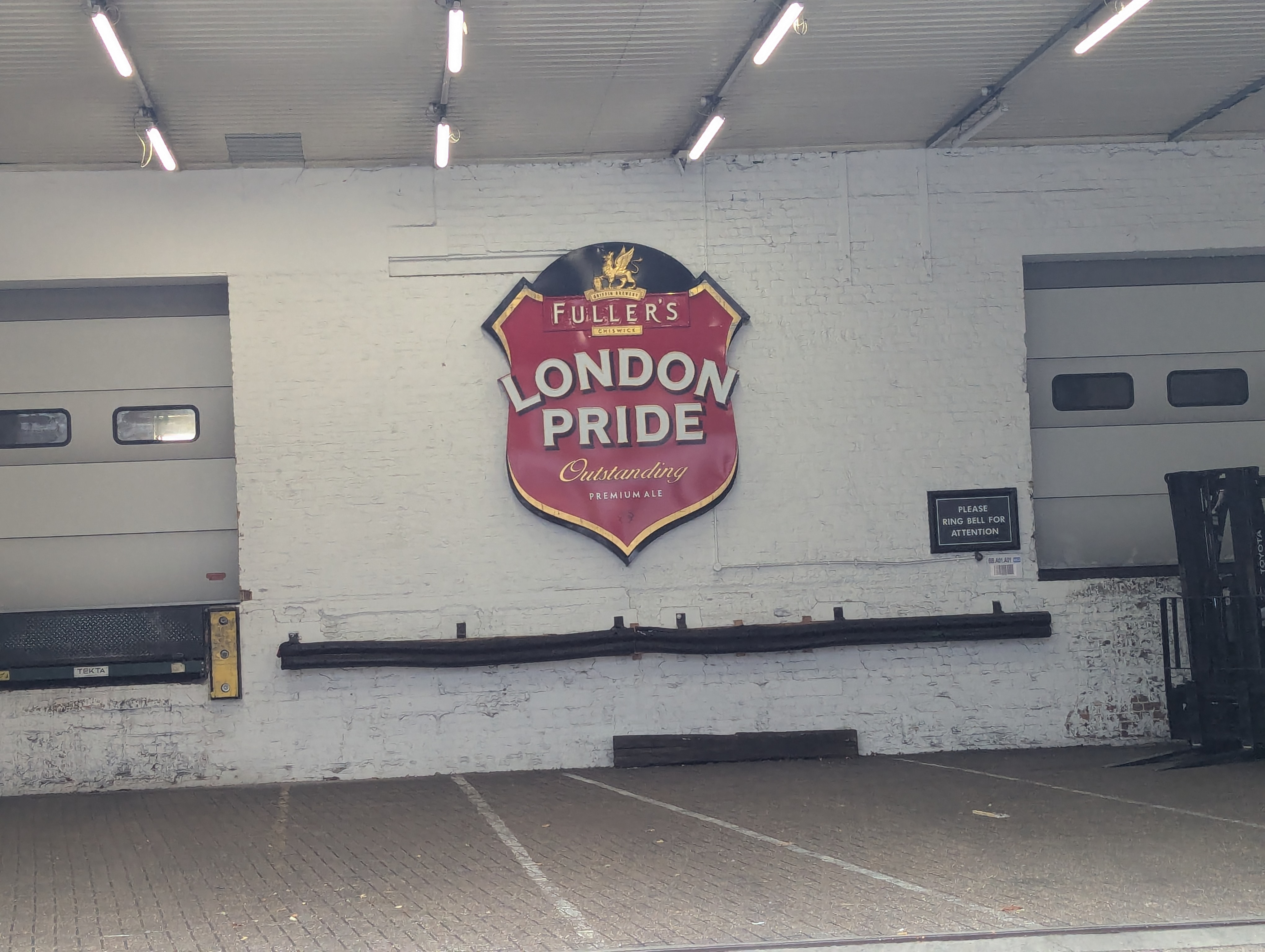
When we visit London, my husband always wants to enjoy a London Pride, a cask ale that is made by Fuller’s brewery in London and served in pubs. Fuller’s not only brews beer, it owns many pubs in Southern England. London Pride is sometimes available in pubs that are not run by Fuller’s, but it’s always available in a Fuller’s-owned pub.

A “cask ale” is a form of beer that is unfiltered and unpasteurized and experiences a second fermentation inside the barrel. The barrel is delivered to the pub and, traditionally, placed in the basement where it would be chilled to the temperature of that basement. It’s drawn to the glass using gravity (if stored above the bar) or a hand pump (if stored below the bar).

I enjoy London Pride as well, but I’m not as committed to it as my husband. I like Guinness and, while in London, I enjoy exploring drinks with gin, a popular option in England. These are available everywhere. But when the spouse wants a London Pride, the pub scene is more limited.

At some point, we started making it a point to visit the local Fuller’s pubs in any neighborhood we are temporarily living in while we visit London. And later, that became trying to have a London Pride in every Fuller’s pub in London.

There are a lot of Fuller’s pubs in London and there is virtually no way we will hit them all, but we are making an honest attempt. And while I am not quite the London Pride afficionado my husband is, the more I find out about Fuller’s the more I really appreciate what they have done in building out their line of pubs. What I love most of all is that there is no attempt to make every pub like any other pub. Instead, Fuller’s often leans into the history of the pub’s building or neighborhood when naming and decorating the pub. Many of the pubs are in old, historic buildings or spaces that have been pubs for decades or even centuries.

When we arrived in London, we attempted to check into out hotel near Victoria Station, the July Victoria. We were a few hours before official check-in. Interesting and strange: our room was ready and they would be willing to check us in early, but for £15 an hour. We checked our bags and decided to go out and find a pub for lunch.

The nearest Fuller’s pub, The Jugged Hare, was a short walk away. We entered and walked over to the bar and requested a pint of London Pride, but were told that they didn’t have any currently available. One worker went downstairs to find out when London Pride would be available while the other helped us find another Fuller’s pub. We had a long chat with that worker. At last, the other worker came back and announced that he’d hooked up the next barrel. London Pride could now flow freely.

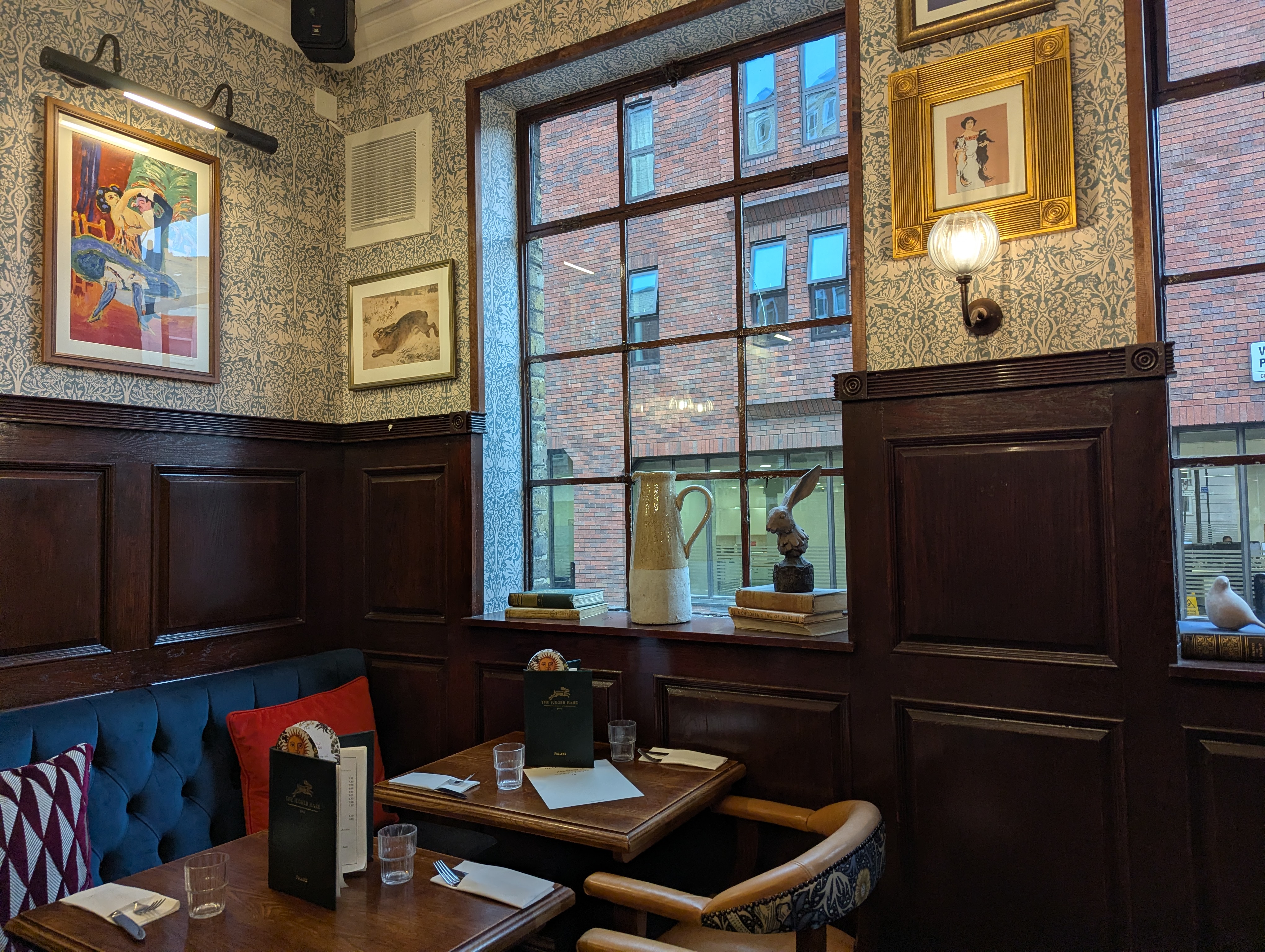
So we found seats and enjoyed our London Pride while perusing the menu for lunch. We also looked up the meaning behind “jugged hare.” Apparently, it’s a dish of old England in which a rabbit was cut up and placed in a jug. The jug was placed in boiling water and cooked for hours. The pub was located in a refurbished bank and had beautiful, dark wood panels. Decor included many different kinds of jugs and rabbit imagery.

No rabbit on the menu. My husband had a steak pie and I had a cheeseburger. My husband asked our server if the pub sold London Pride glasses. She disappeared for a long time and then came back with a glass. A gift from management. It looked like it had been through some things, and we were delighted to have it.

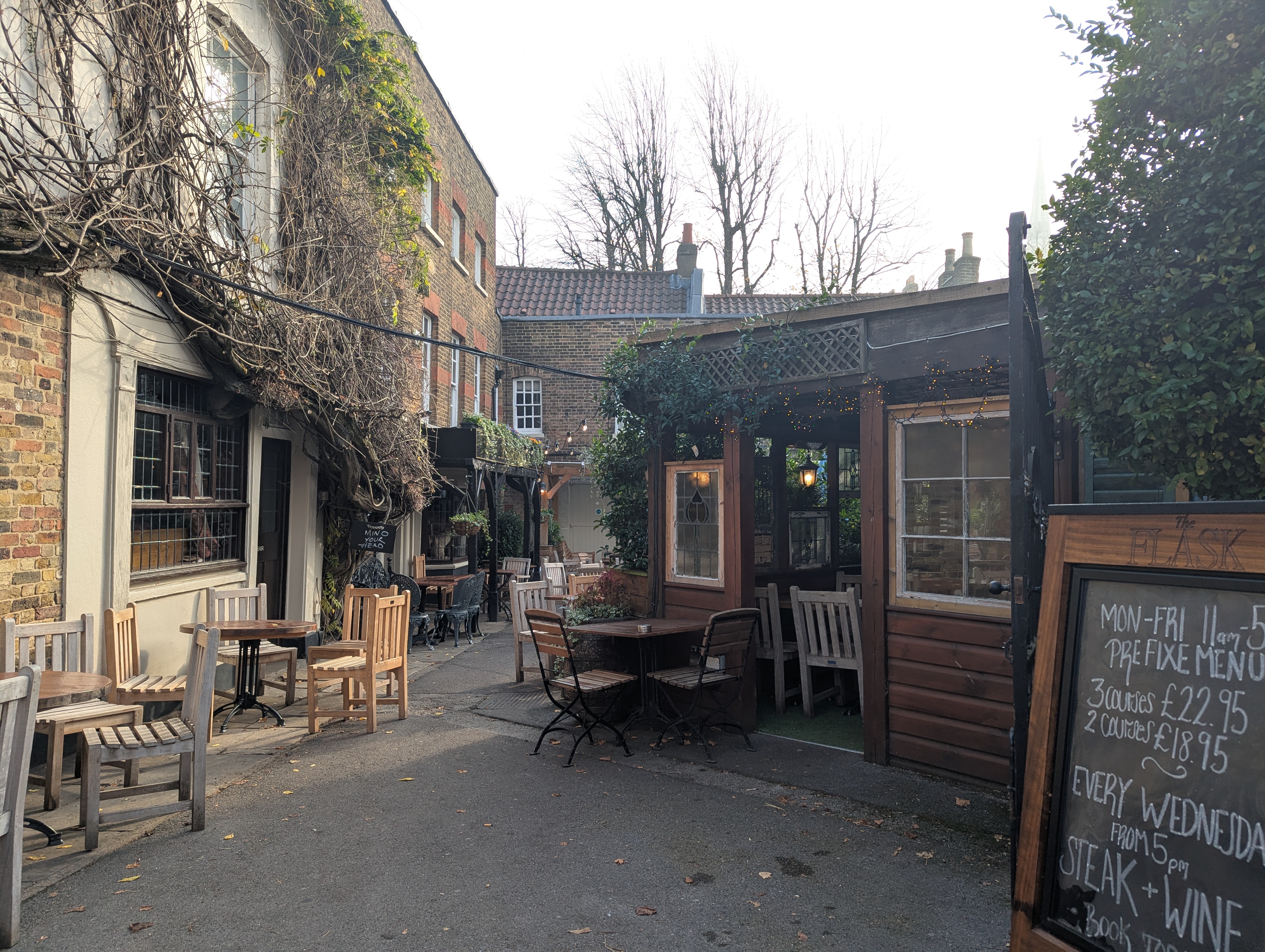
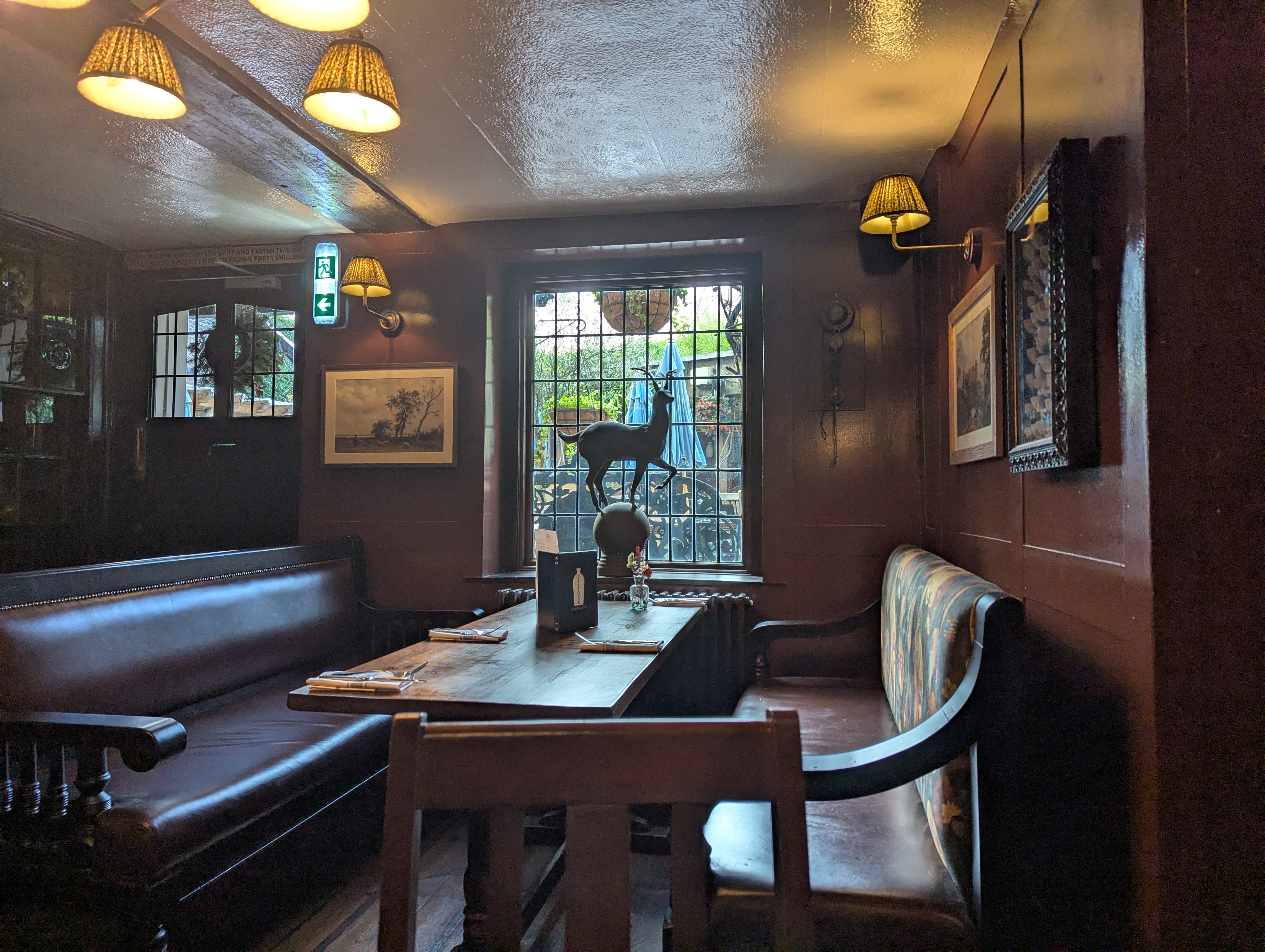
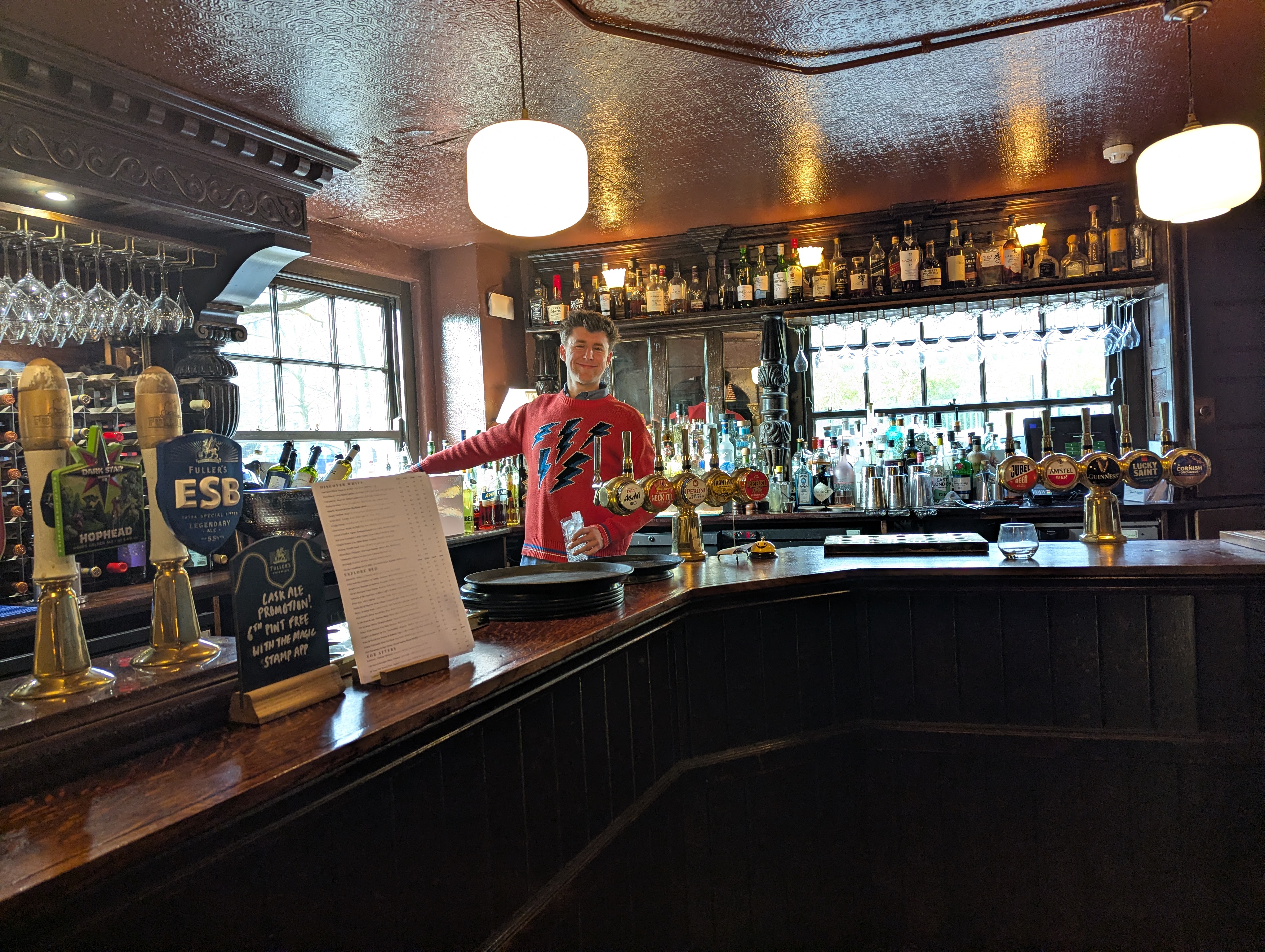
The next day, my husband and I were planning to engage in a number of activities around Highgate in North London (including the Arsenal match), so I’d made reservations at a Fuller’s pub called The Flask. We were threading the needle on timing between visiting a historic house and touring a historic cemetery, and were at the pub at a time that was certainly before the lunch rush. Beautiful historic pub with plenty of seating inside and a beautiful garden with seating outside.

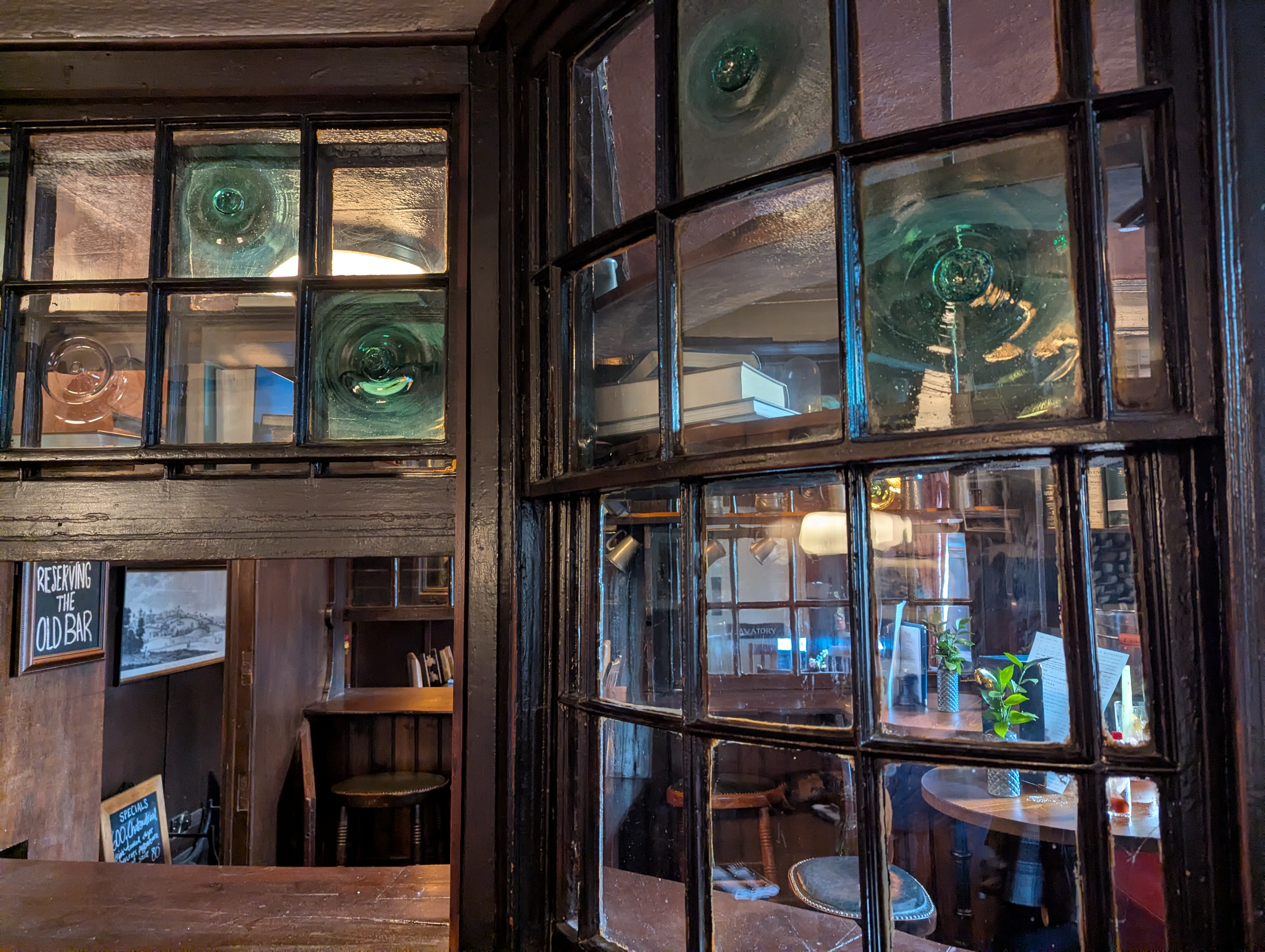
We were seated near a toasty fireplace and served our beer. Our server was friendly and personable and when he heard about our mission to visit many Fuller’s pubs made some suggestions for ones we should target soon. He also told us some about The Flask, parts of which are very historic. The property includes a former stable that has been on the property since 1663 and some of the parts of the building housing the pub date to the 1700s, including what was until only recently the main bar. That area is now a small seating area. It still is surrounded with “bullseye glass” panels from the 1700s.

The name, “The Flask,” references water collection vessels sold by the pub many years ago that people would use to get water from a natural spring nearby.

The pub has a very colorful history and has served famous writers like Byron, Shelley, and Keats. More recently, it’s served the famous songwriters George Michael and Taylor Swift. My husband was shown the exact chair Taylor Swift sat in when she enjoyed her own London Pride. I have great admiration for Taylor Swift but I left her memory alone by remaining by the fire. Our server also told us Taylor had visited a kebab shop in Kentish Town. According to our server there are some amazing kebab shops in Kentish Town, but she went to the worst one.

Taylor, speak with your servers. They will never steer you to bad kebabs.

The Flask also has some resident ghosts, including a barmaid who hanged herself in the basement and a 17th century Cavalier who has been known to show up in uniform. Our server told us he’s never seen a ghost but sometimes at night he’s heard strange noises.

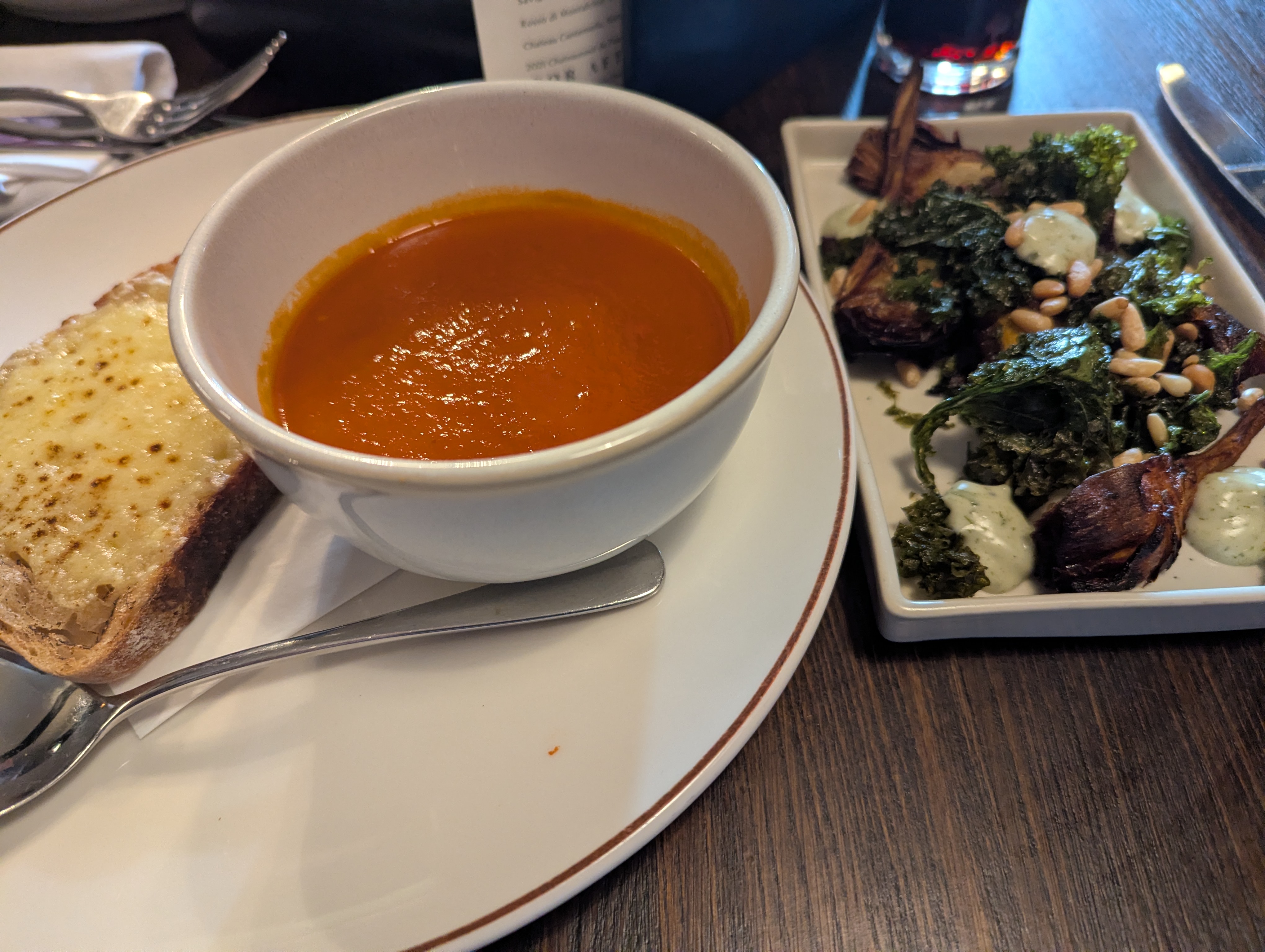
It was so early for lunch I just had a roasted tomato soup with a cheese toasty and an appetizer of roasted artichokes and kale. It was one of the yummiest things I ate on this trip.

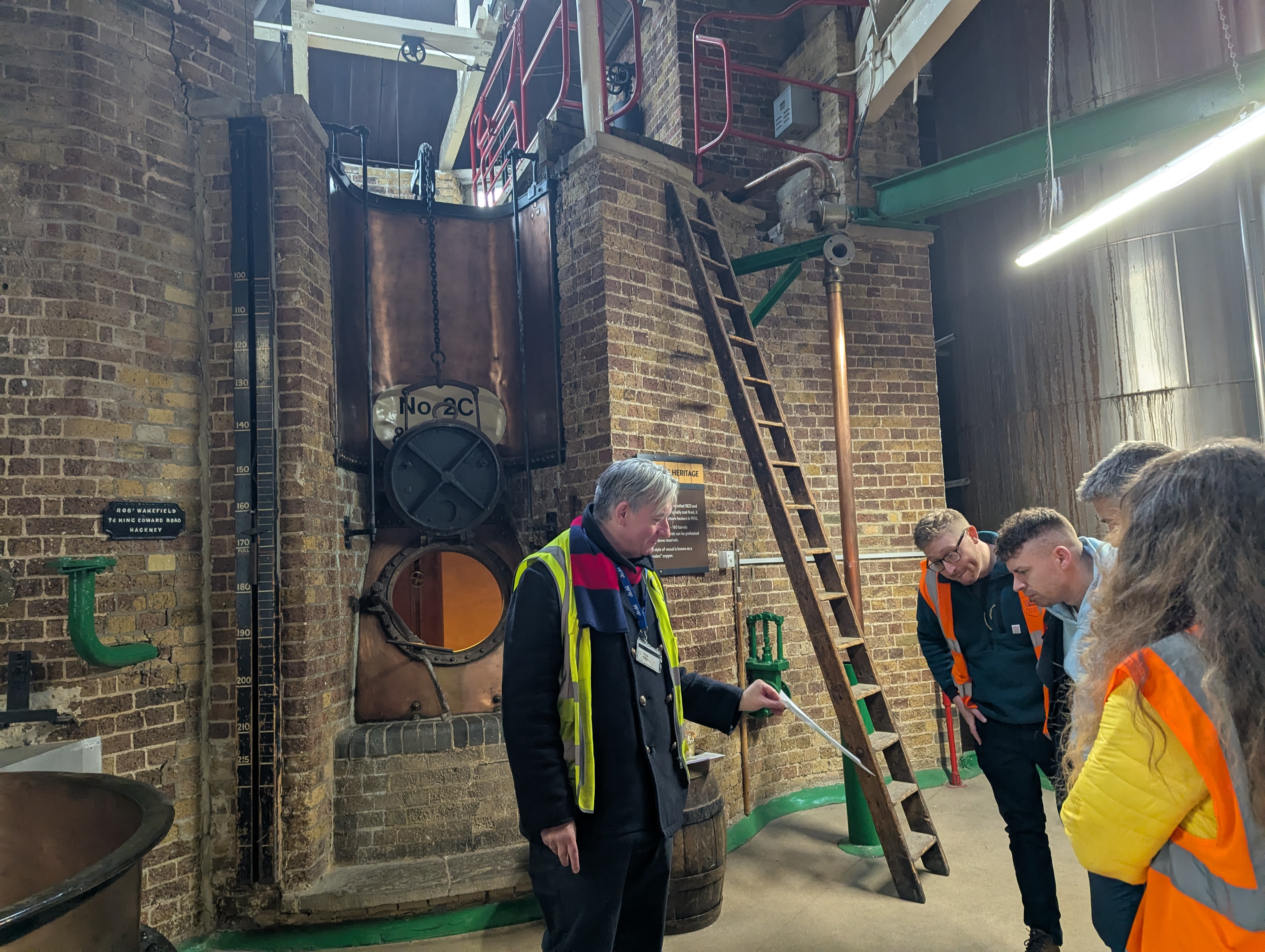
Our server not only gave us some recommendations for Fuller’s pubs, he also suggested that we take a tour of the Fuller’s brewery. It had not occurred to us you could do that. So the next day, we trashed our plans for Sunday Roast and made reservations for a tour.

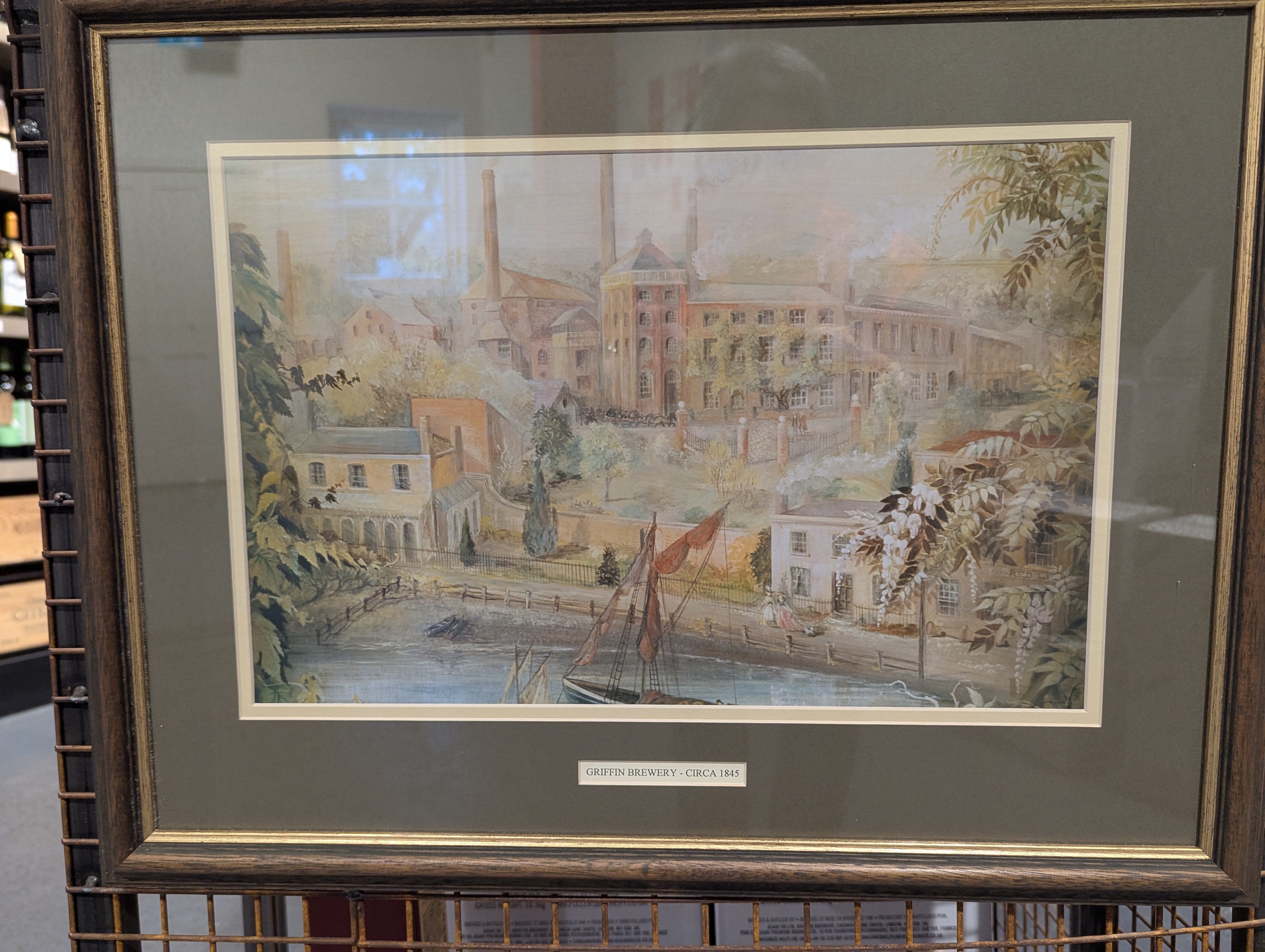
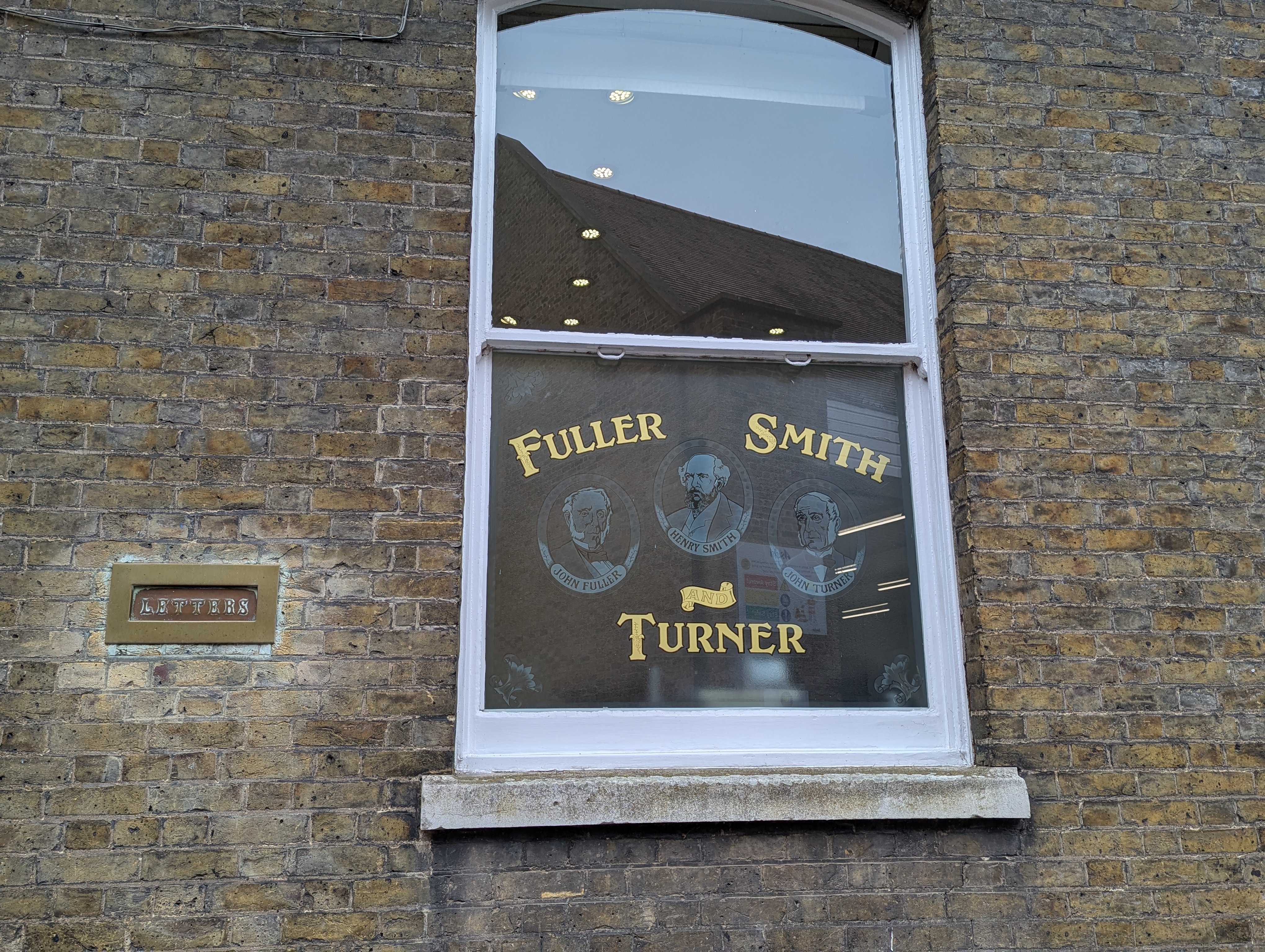
The Fuller’s brewery is in Chiswick and was formerly known as The Griffin brewery, lending to the griffin imagery that is associated with Fuller’s pubs. A brewery has been on site since the 1600s. John Fuller did not become involved in the brewery until the 1800s when the then-owners were in financial distress. His son, John Bird Fuller, was a founding father of the current iteration of the brewery, a joint operation with Henry Smith and John Turner, who had expertise in running breweries and brewing beer, respectively. Fuller, Smith & Turner was formed and has operated the brewery as of that partnership that started in the mid 1800s. The brewery currently operates as a subsidiary of the Japanese company Asahi since 2019. However, Fuller, Smith & Turner continue to own and operate the pubs we know as “Fuller’s pubs,” independently of the brewery.

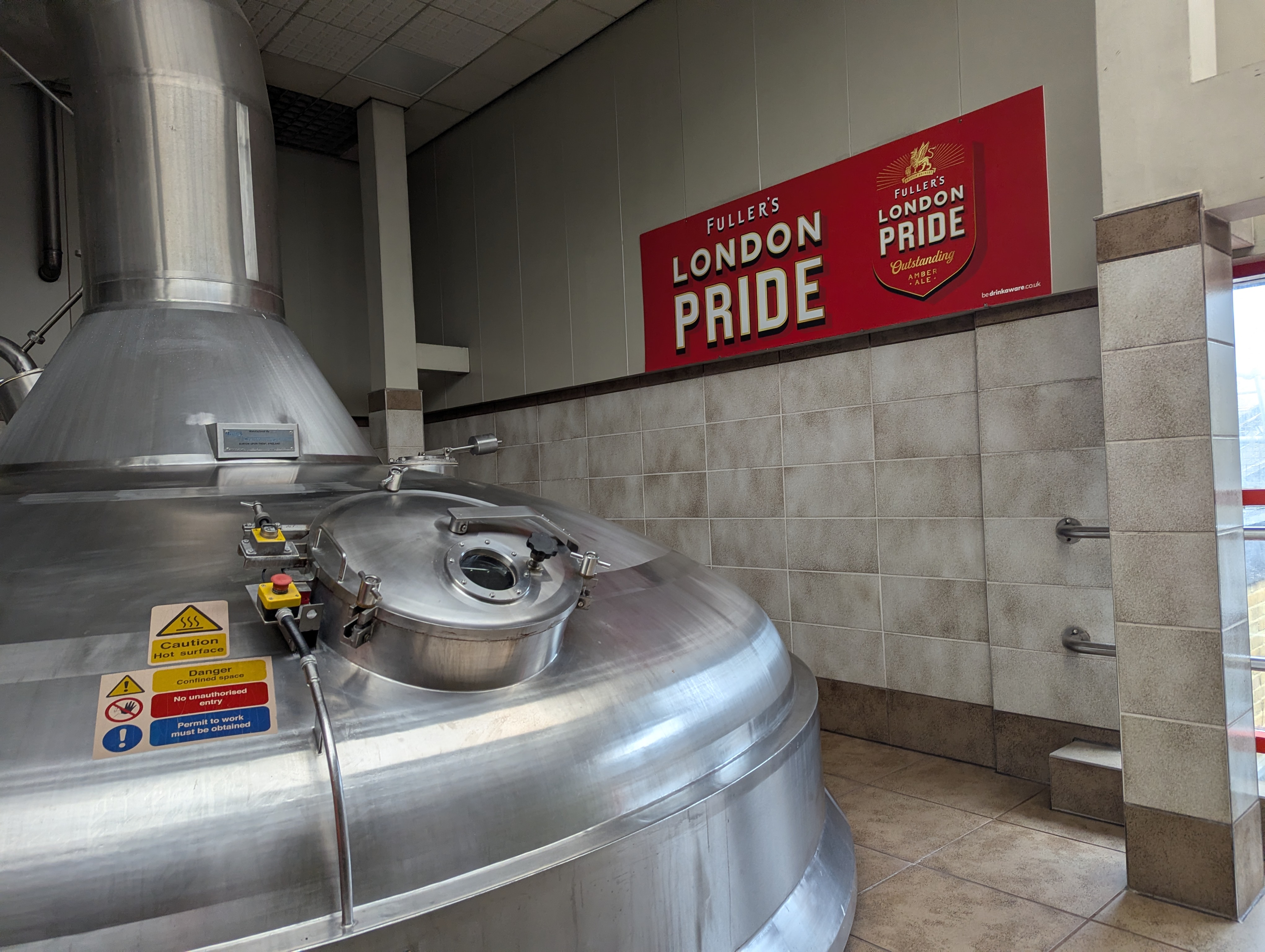
Our tour took place on a Sunday so equipment was not operating but we were given an education on how beer is made and how “ale” differs from “beer” (used to be no hops in ale but now there is no difference). We were shown how the ingredients of the beer are processed. For example, water from the Thames is treated with gypsum to improve the taste and appearance and barley is toasted and milled to produce flavoring of various beers. We saw giant vats where barley and water are combined and processed to produce mash and the stainless steel vessels (formerly copper) in which the results are boiled and enhanced with hops and yeast. We also learned about the difference between barrels and kegs. We saw where the beer is placed in barrels and left to ferment further and the trucks that transport Fuller’s beer all around Southern England.

The tour concludes with a tasting. Our tour had about 8 people in it and by the time we found ourself in the tasting room, my husband had befriended four of them already. We enjoyed sampling Fuller’s various products while chatting with our new acquaintances.

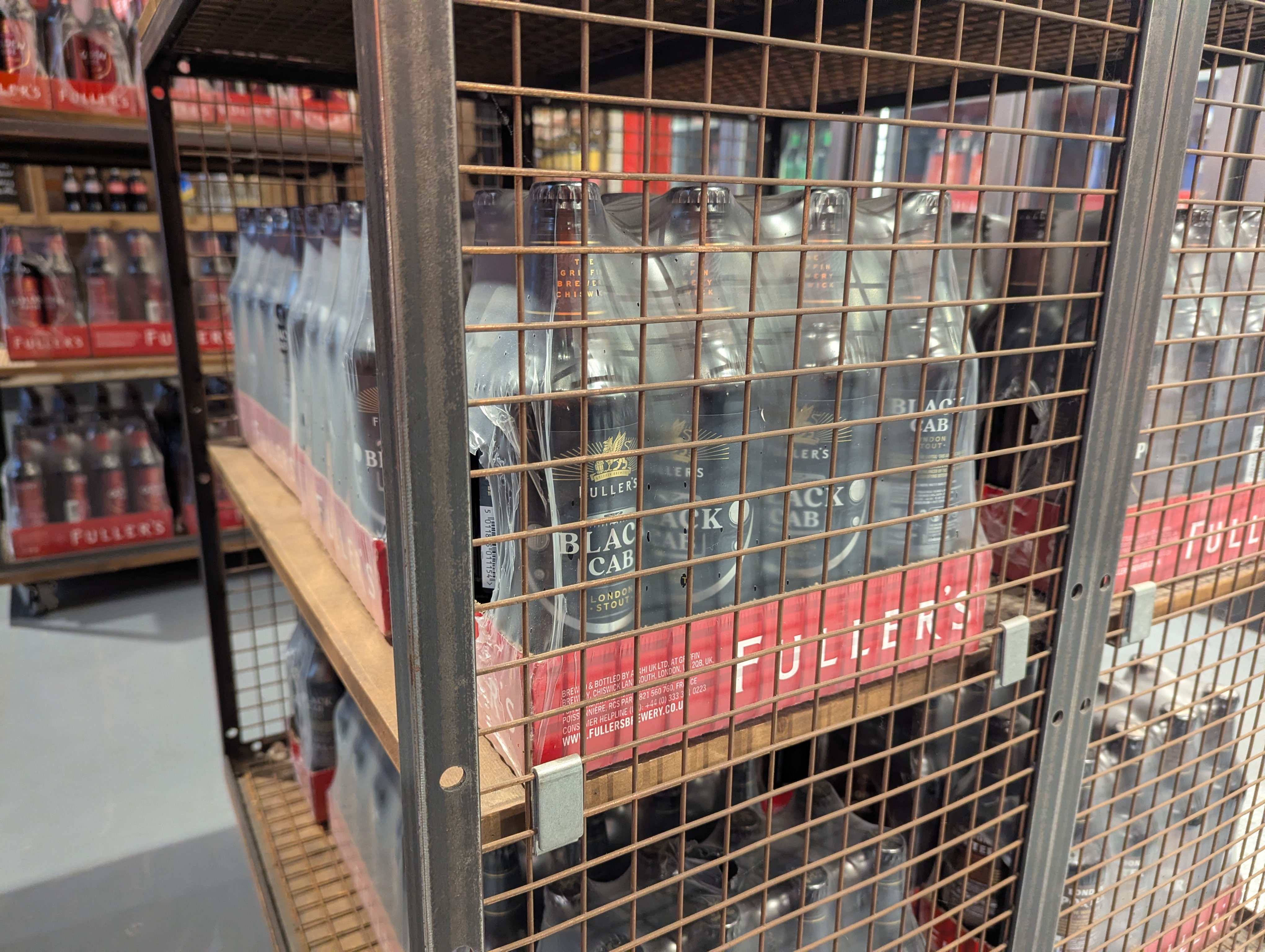
I hadn’t realized until the tour that Fuller’s has two dark brews normally available, London Porter and Black Cab Stout. That London Porter is going to give my Guinness habit a run for its money.

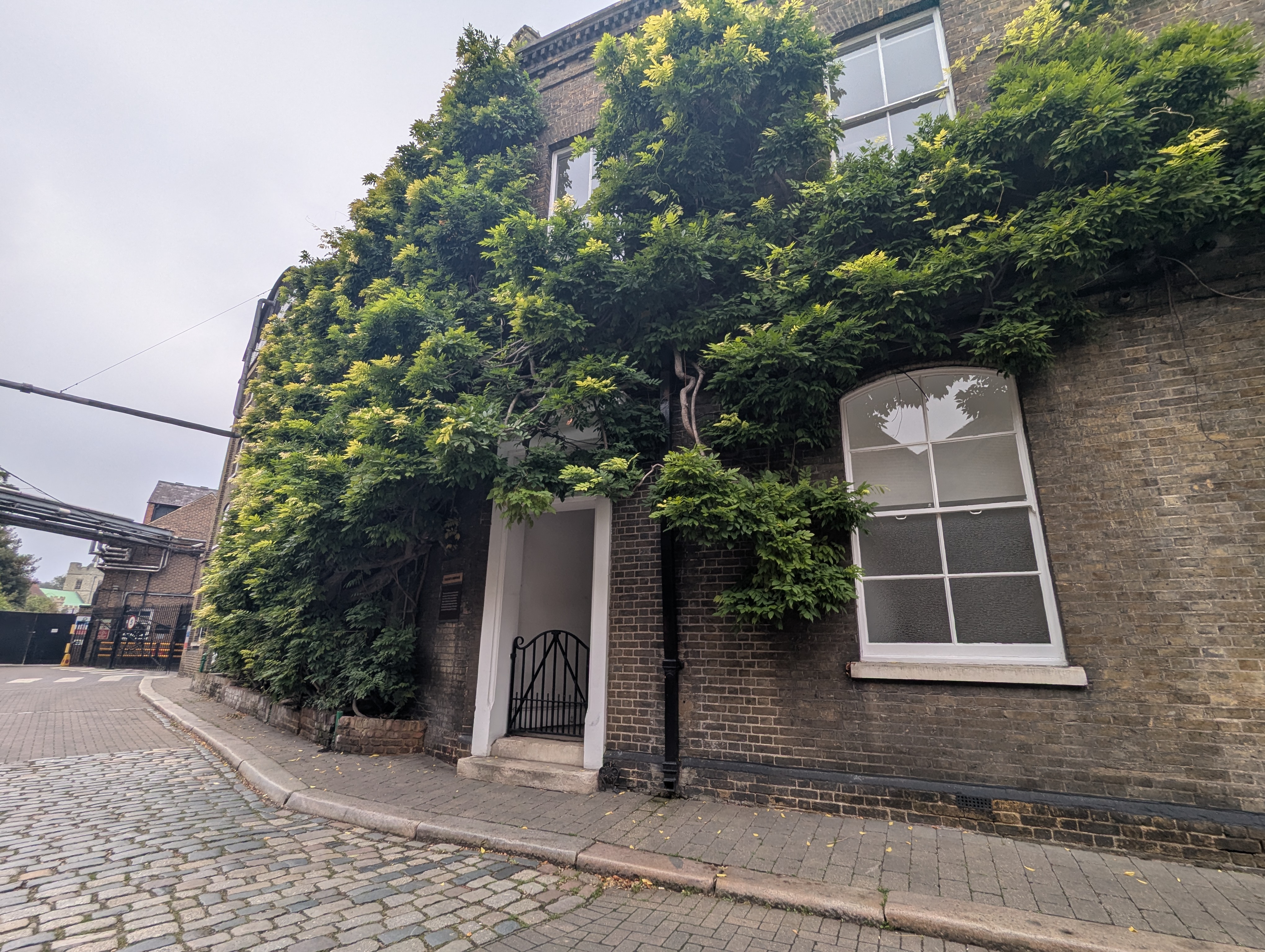
And as for the London Pride name. There is the obvious connotation, but the beer also shares a name with a perennial flower that grew out of bombing sites during WWII that came to be known as a symbol of resilience. We saw a little planter on site containing the plants, although not blooming in November, of course. (There was also an amazing, centuries old wisteria vine, supposedly the oldest in the UK, growing up the side of one of the buildings. It was not blooming but that must be beautiful in the summer.)

The title of my post comes from a 2013 London Pride ad campaign. Given the history of the brewery, how Fuller’s is made with water from the Thames, and how Fuller’s honors London’s history with the pubs it owns, it really seems like more than a slogan to say it’s “Made of London.”

I created a new page to track our progress through Fuller’s pubs, here, if you’d like to follow along. Many, many more to go!

Mikel Arteta has pictures.

I’m learning for the first time in nearly 20 years that you only get to bask in a winning football campaign for so long. Inevitably, the next one starts and you find yourself, more than you want to be, back in the moment. Back in the grind of watching your team trying to eke out wins and defend the title.

I did bask. I basked all summer. All during the World Cup, all during the pre-season. I still find myself basking even with the new season being not so new. Best as I can tell, I’m not special. At every match, home or away, we hear Arsenal fans chanting “We know what we are! We know what we are! Champions of England, we know what we are!”

It has been mostly sweet but a little bitter. The new season has come with a few goodbyes to players who were important in achieving our goal. Their replacements are mostly solid but I have little pangs of sadness when I look at videos of how we achieved the title and see players I love no longer among us.

I know, I know. Time to stop looking at videos.

Manager Mikel Arteta disagrees with the phrasing in my first paragraph up there. He says we are attacking the title, not defending it. However, having watched every game of the season–with our solid defending and not-as-impressive attacking–well, it’s entirely possible Arteta knows something about what we’ll be doing at some later point of the season.

“Attacking” the title or no, we are having a good season. With nine games under our belt, Arsenal are narrowly in top position, followed by Manchester City. Recently, it came out that Manchester City were found guilty of 114 of 115 charges against them for running roughshod over financial fair play rules starting in 2010. As the club attempts to appeal the charges, the team has played with defiance for most of the season, dropping points only in the last two matches. At some point it seems likely they will face a substantial points drop, but whether it will be this season or some season in the future is anyone’s guess. Whatever the situation, we have to aim to beat them. And a few other teams that are performing well. Brighton beat both Arsenal and Manchester City and sit in third. I have some confidence they will ultimately be sorted out by the Premier League, but we shall see.

With many managerial changes in the Premier League over the summer, Mikel Arteta at 44 is now the Premier League’s longest tenured manager. As careful as he’s been over the past couple of years to give no ammunition to anyone else about what he really thinks about other teams, what he thinks about refereeing decisions, or the unusual methods he’s deployed to get the best out of the team, he’s had two weeks of hilarious commentary after matches. After a match in which he received a yellow card for leaving the manager’s area, it was reported that he claimed he has files of photographic evidence of other managers leaving their area with no charge. After a match in which an Arsenal defender was extremely lucky not to give up a penalty when pulling back an opponent by the shirt just as he was close to heading the ball into the net, it was reported that Arteta claimed he has files of photographic evidence of defenders doing the same without punishment.

I read a summary of the first comment on social media and thought, “That must be made up.” It was not. Nor was the second one. He really did say that. Leaving us to wonder if he has made his own library of files or, Trump-style, has some hapless “human printer”-like person on staff.

Very little Mikel Arteta can say would make me love him less, even when I can recognize the thing he said requires somewhat blind love. There are photographs and videos a man might possess that would make me rethink my admiration, but these photographs and videos? I can let this slide.

Meanwhile, I have not a single photo of the Emirates while it’s been the home of the champions. Are you tired of me saying so?: Match tickets have been extremely hard to come by. My husband and I have failed in the lottery every match, followed up by failing on the exchange every match. Even for some pretty pedestrian matches. Meanwhile, the price of airfare has been terrible. Even if we had been lucky enough to get tickets, it’s not clear that we would have been able to justify the cost of getting to London.

But all that is about to change. As hard as it’s been to get tickets to any Arsenal home match, it was reasonably easy to get tickets on the exchange for this weekend’s match against Hull City. And airfare was blessedly ok.

There will be pictures.