
It was Remembrance Day in the UK on Sunday and we decided to get over to the Cenotaph, or as close to it as possible–to watch the wreath-laying ceremony in tribute to the war dead. As we approached the area near Westminster Abbey, Big Ben, and the Houses of Parliament many roads were blocked off to accommodate the thousands who came to watch the ceremony and the military bands marching along the street. We found a place to watch but there were at least 5 rows of people in front of us and the Cenotaph was quite far in the distance. I was able to view the parading bands, the arrival of the King, and the ceremony mostly through the camera of the very tall man in front of me. Not only was his camera very bright and clear, he was very professional about getting the right view, and proficient with zooming in and out as needed.
Unfortunately, at some point a short man barged in front of him. He, too, was holding up his phone to camera mode, which should have allowed me to view what was going on, but he just wasn’t as good. His camera was often not even pointing at anything interesting. And, because he was in front of the original guy, that guy stopped recording. Still, I had seen far more than I expected when we entered the crowd.
At one point of the ceremony there was a moment of silence. It was so very strange to be in such a large crowd of people–thousands–in the middle of a giant city and experience such silence.
My pictures below took place near where we watched the ceremony. There was nothing I could photograph of the ceremony, unfortunately. (It would just be a guy holding a phone in front of me.) 🙂 I did add a photo my husband took of the Cenotaph from great distance.
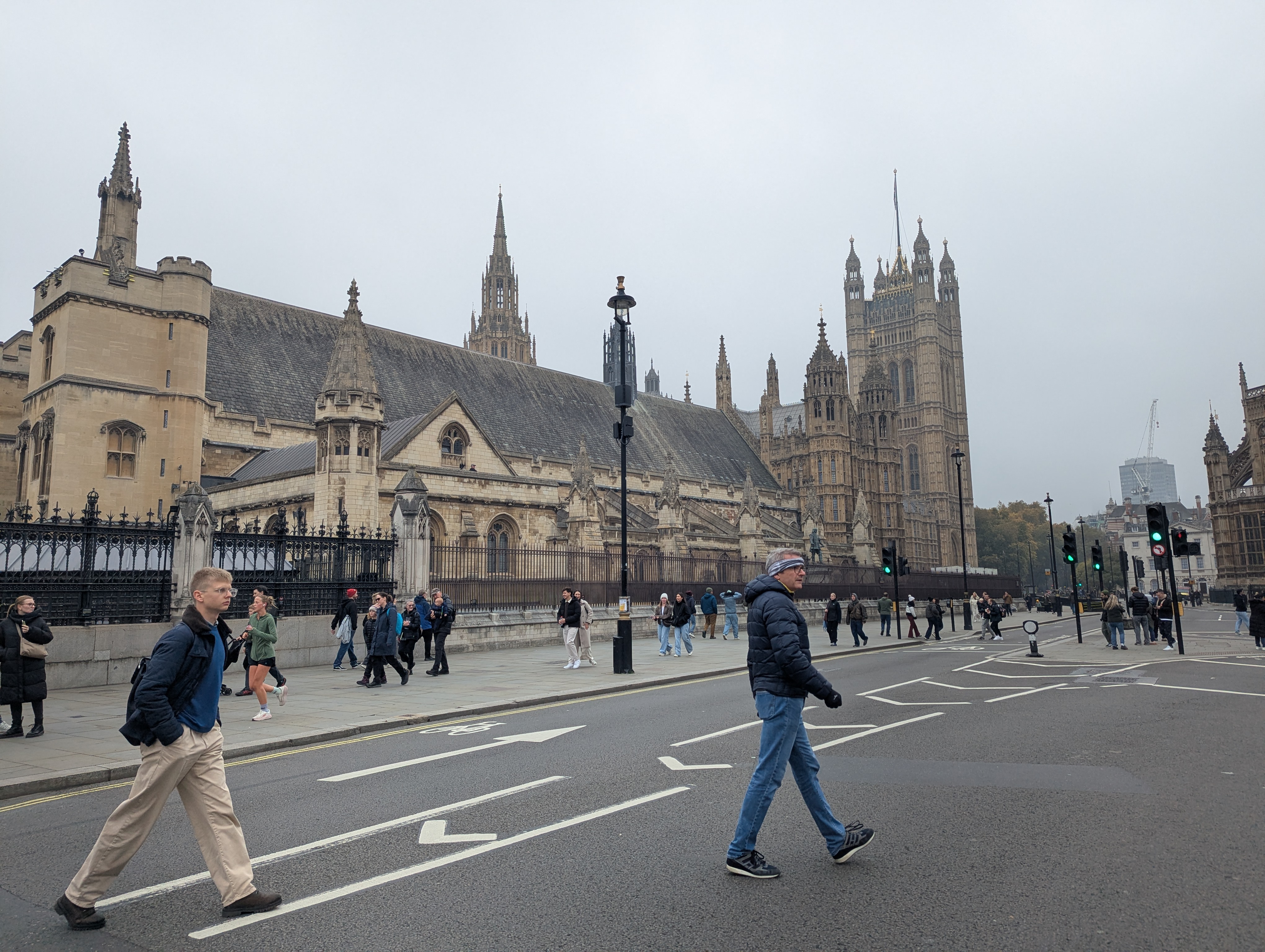
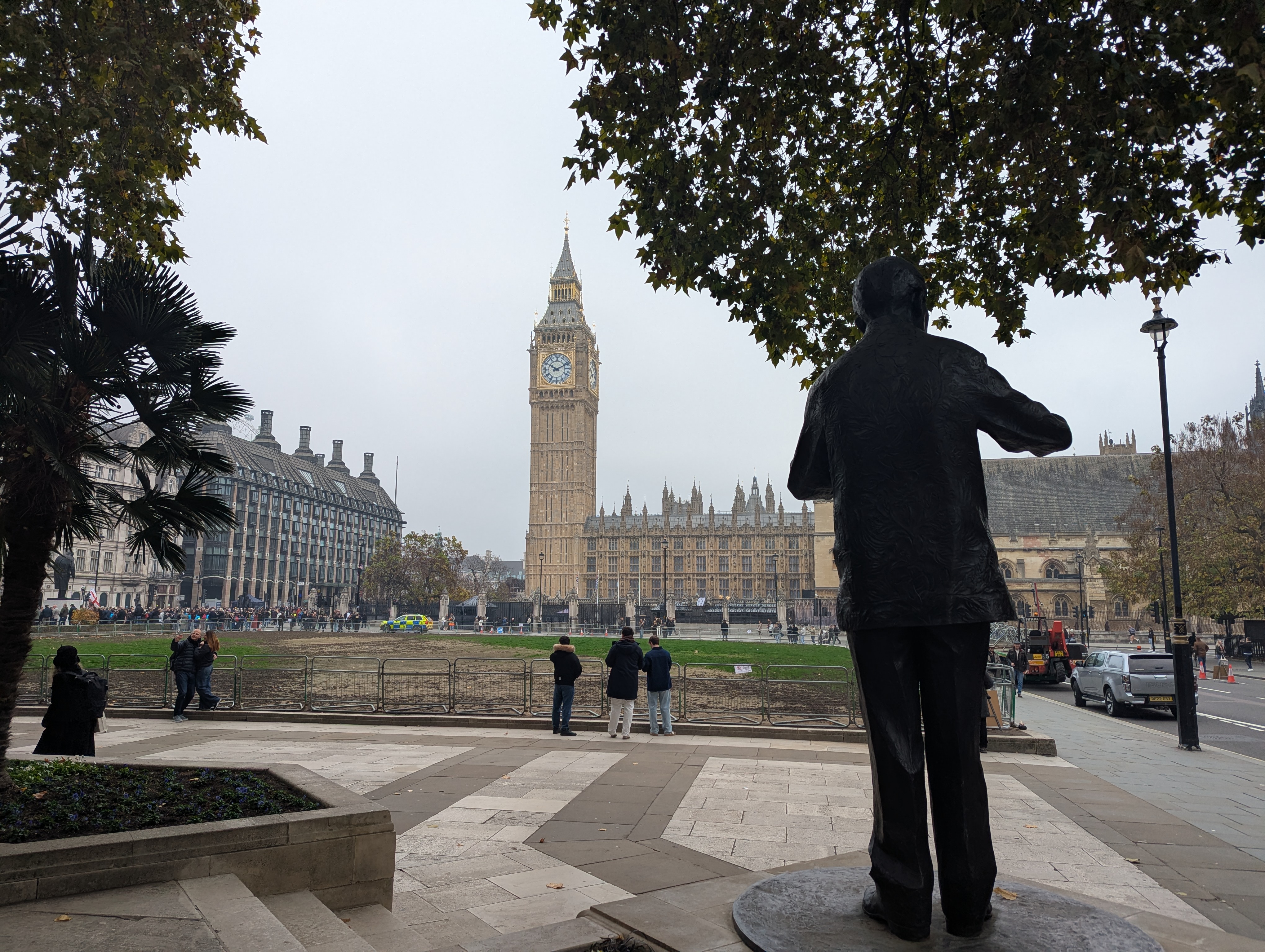
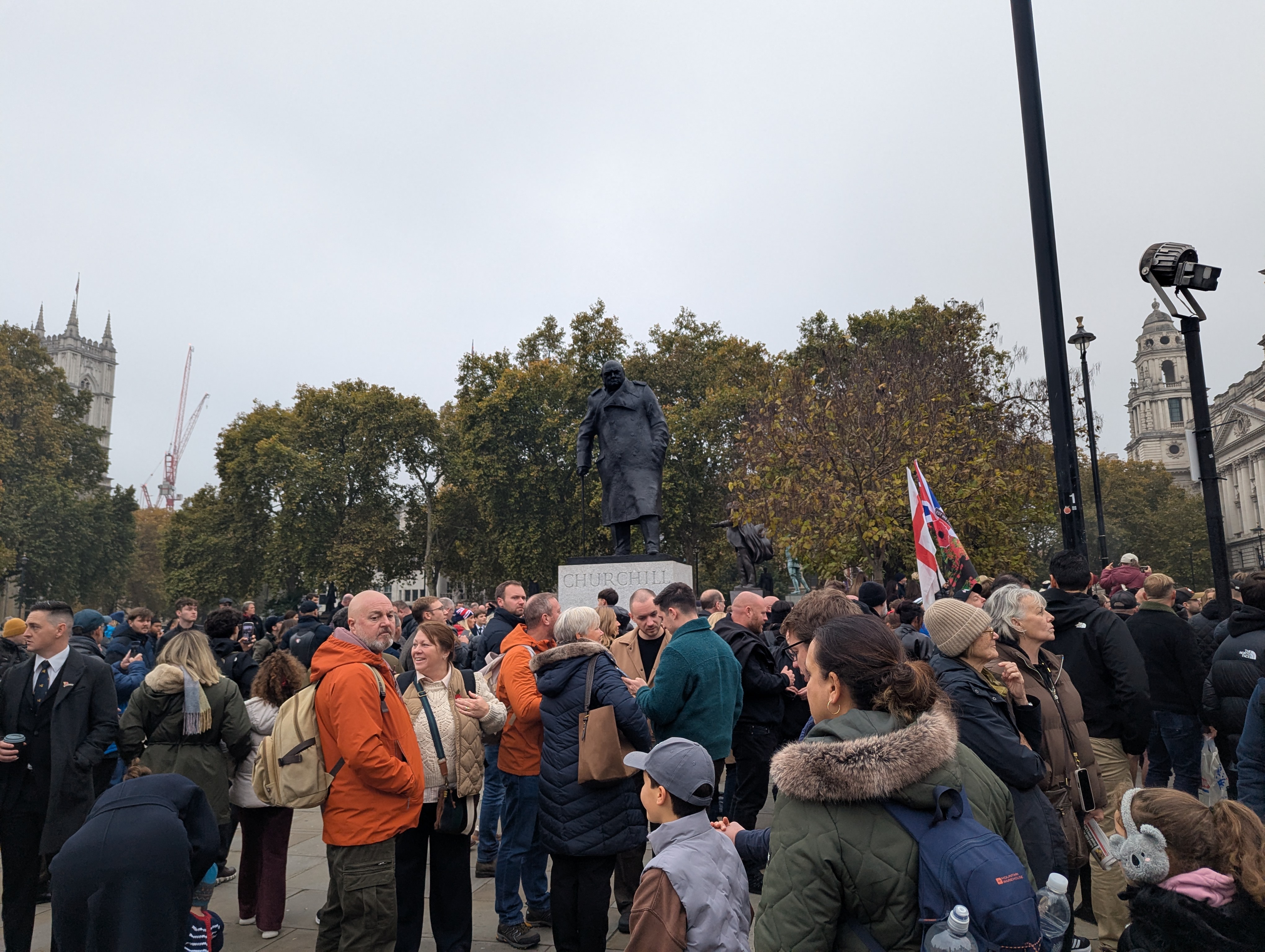
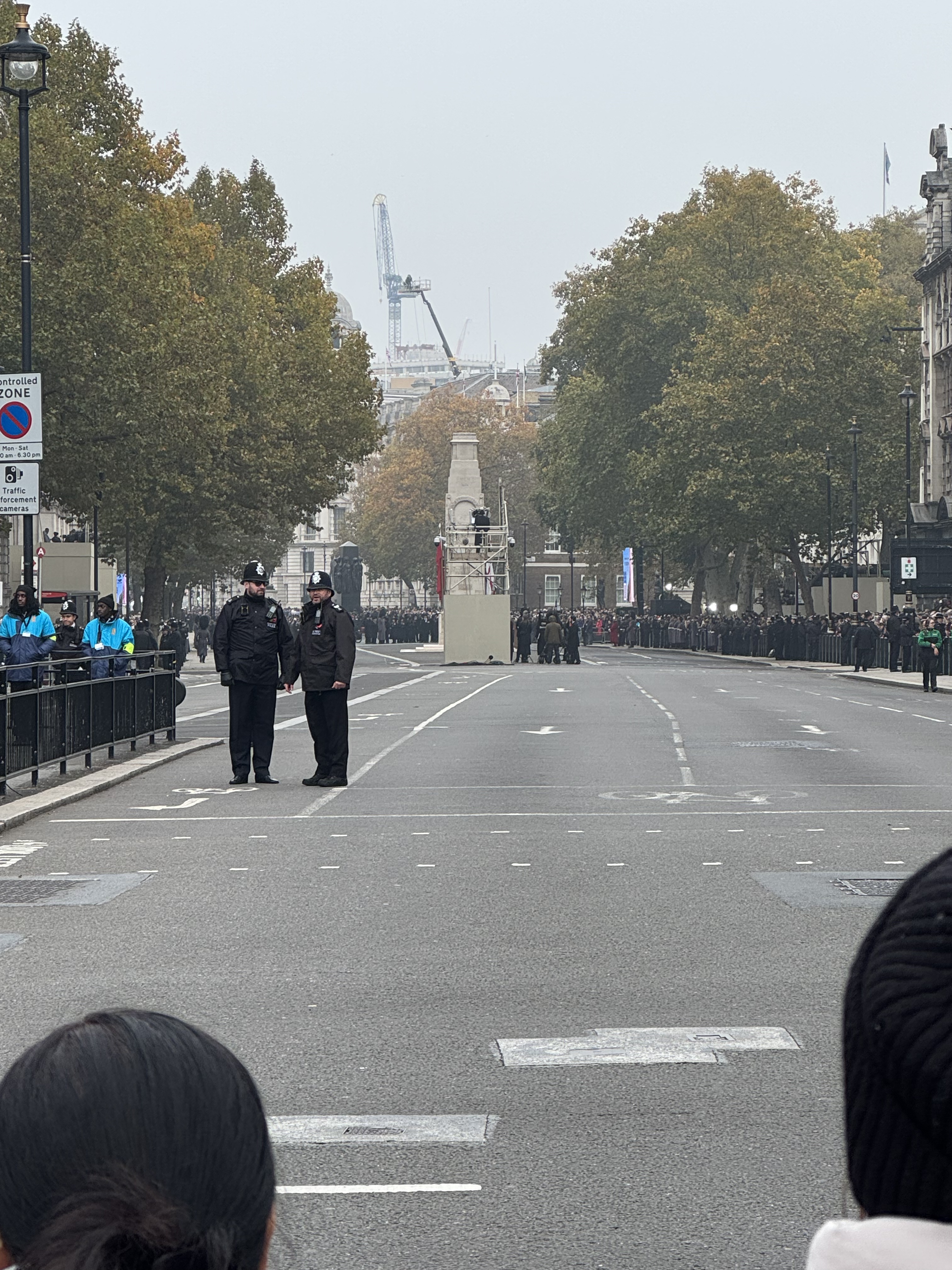
“We gave our today” that I used as the title of this post is from an epitaph in the 2nd British Division Memorial at the WWII Battle of Kohima. “When you go home. tell them of us and say, for your tomorrow, we gave our today.”
I hope it is taken as no disrespect to members of the military who have made or offered a unique and complete sacrifice of life that has given all of us a future we would not have without it. But I note that some people who have not offered full sacrifice of their very lives have given their today in a way that impacts our tomorrow. It may not have been uniformly selfless nor was it always clear to them that what they did and gave might have an impact. Or even that it was “giving” at the time. But impact us they have. As we look at what they delivered we can distinguish the things that have been a force for good.
We had a few other experiences in London that reminded me of this.
The Tate Britain
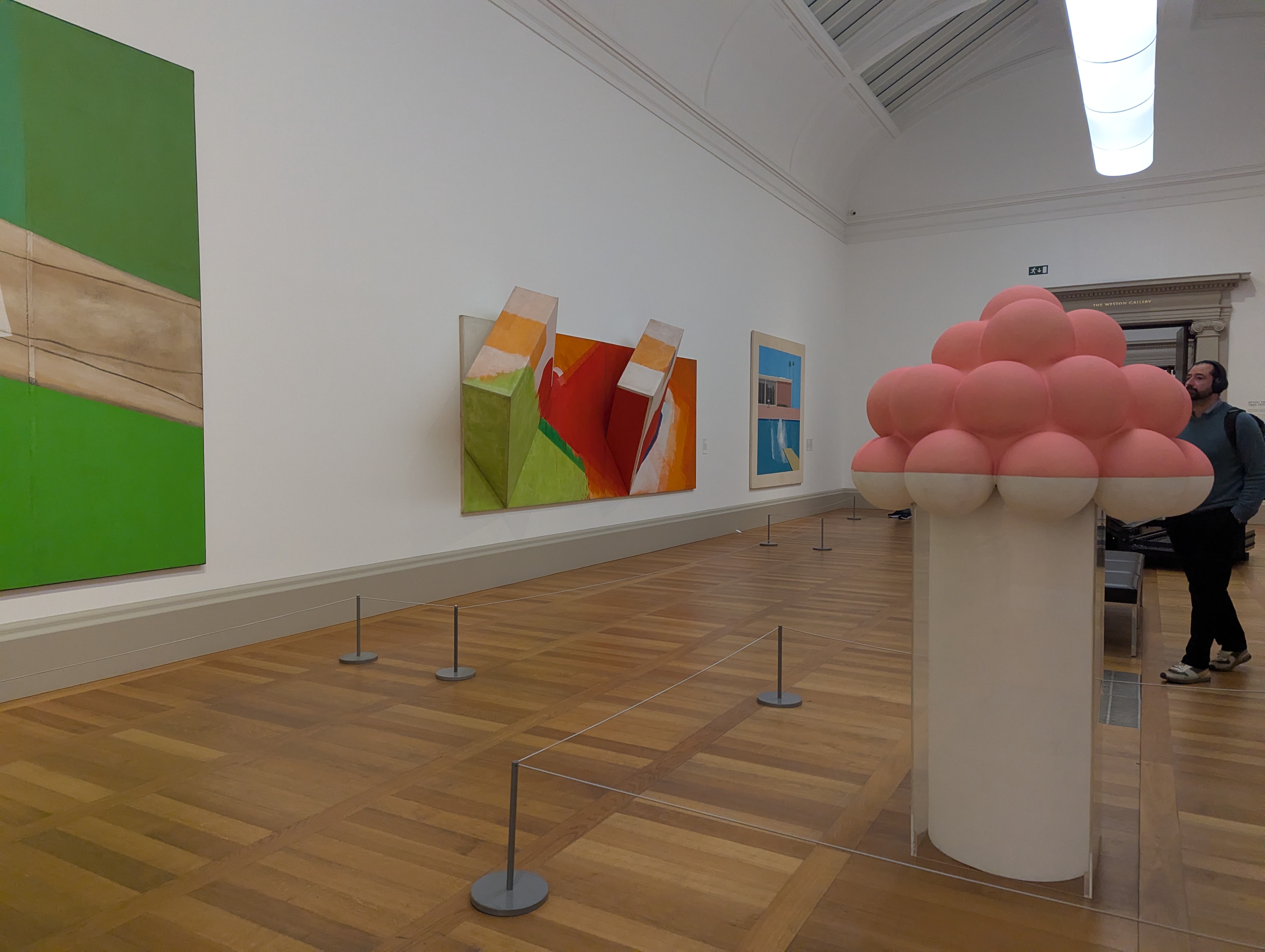
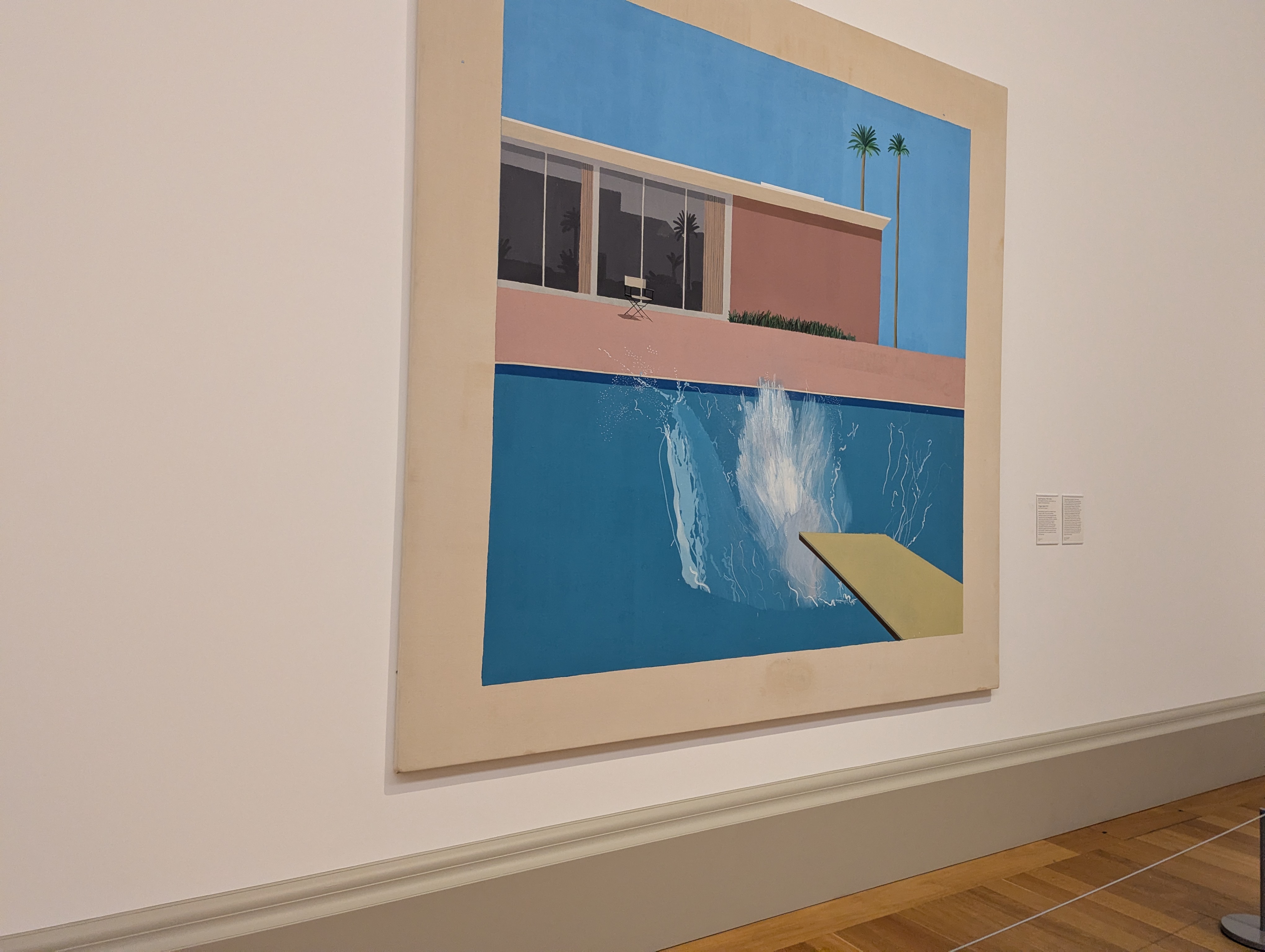
After we visited the Jugged Hare, we walked over to the Tate Britain, an art gallery my husband had visited long ago, but I never had. The Tate Britain focuses on British artists. There was a helpful poster explaining the “don’t miss” pieces in the museum. We saw some of them by happenstance and the David Hockney work, A Bigger Splash, by painstakingly tracking down the proper gallery. I feel like all galleries have the same system. The rooms are numbered and mapped but finding them is impossible. A picture of Hockney’s work is shown below.
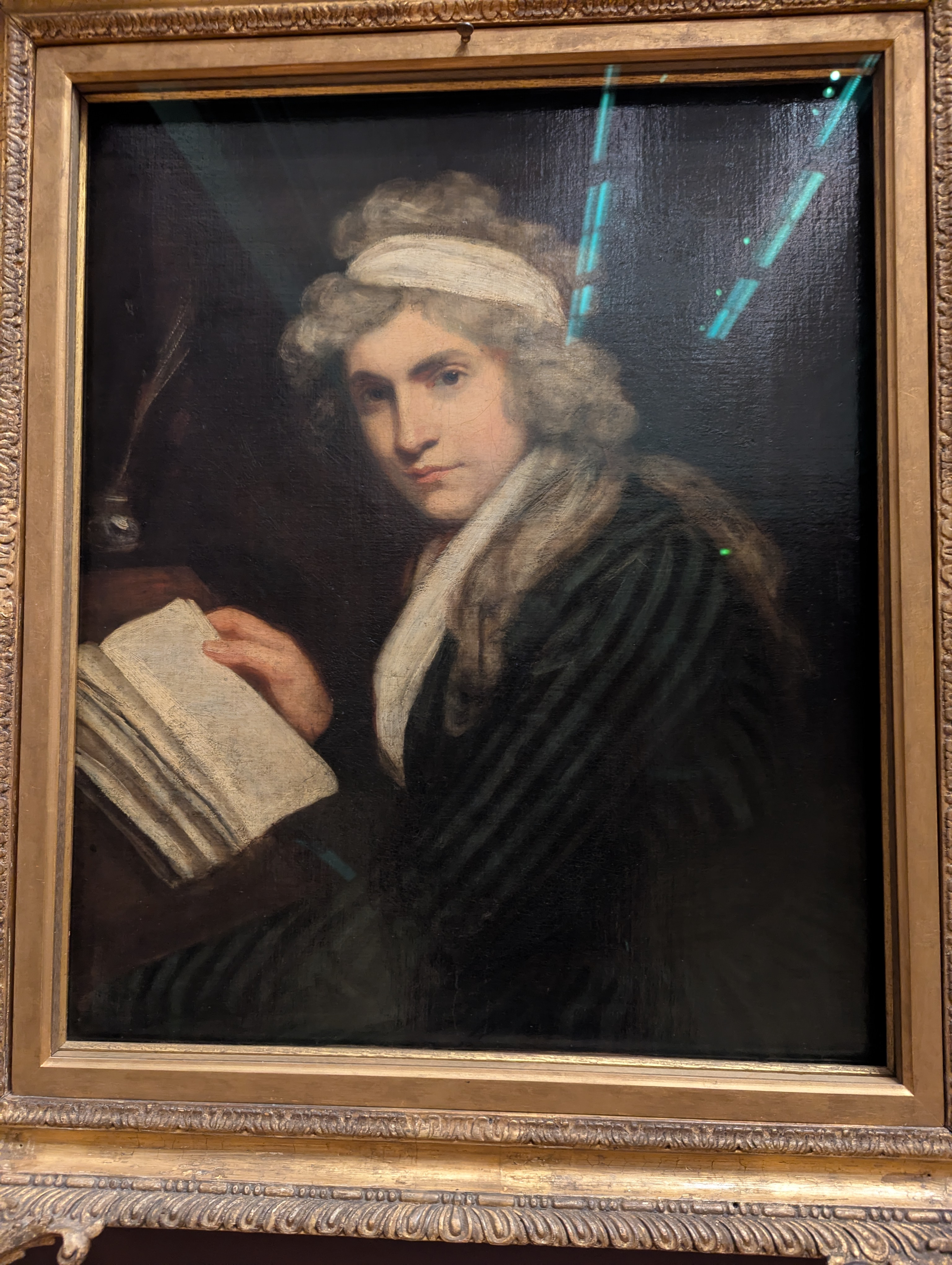
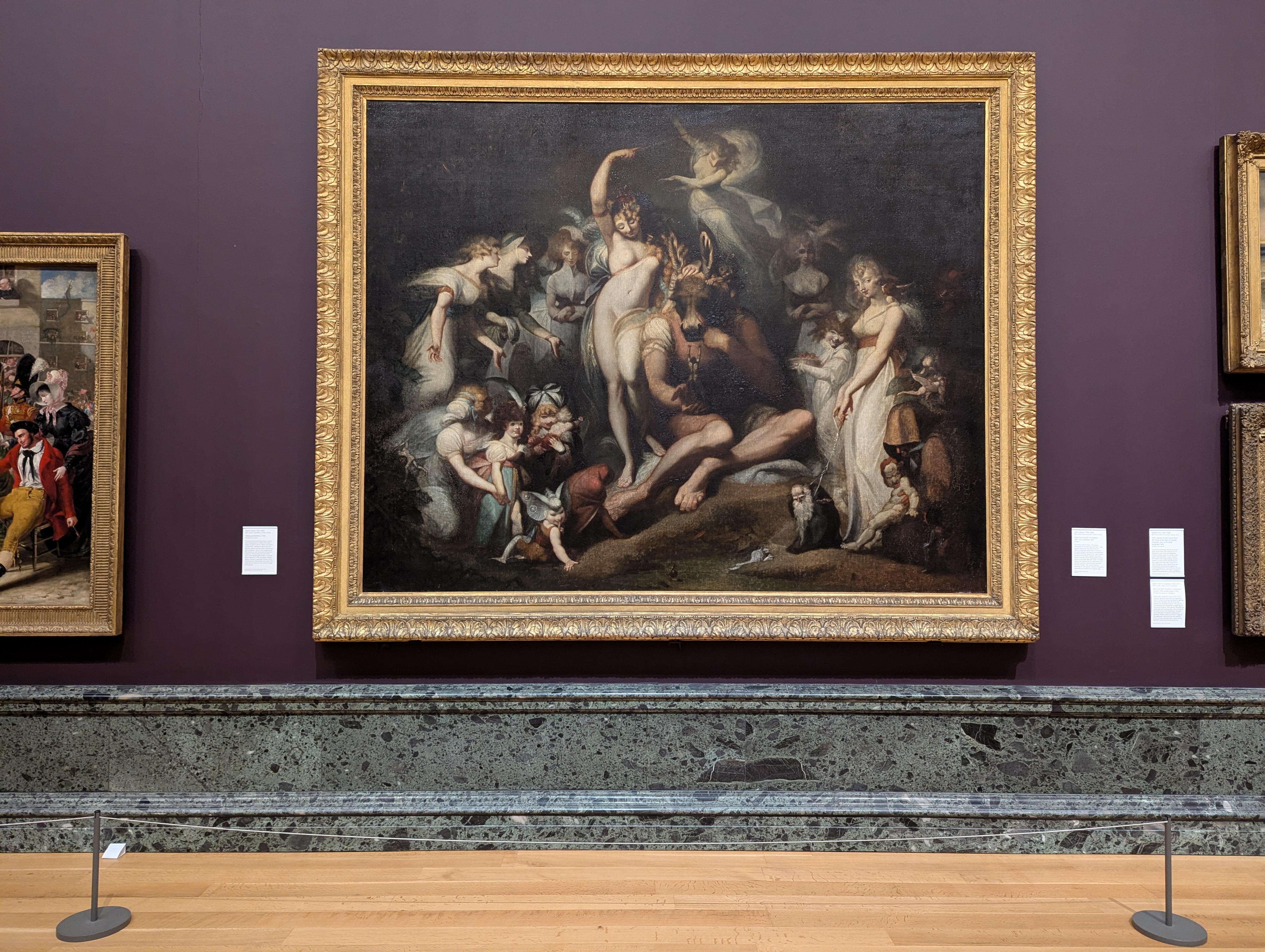
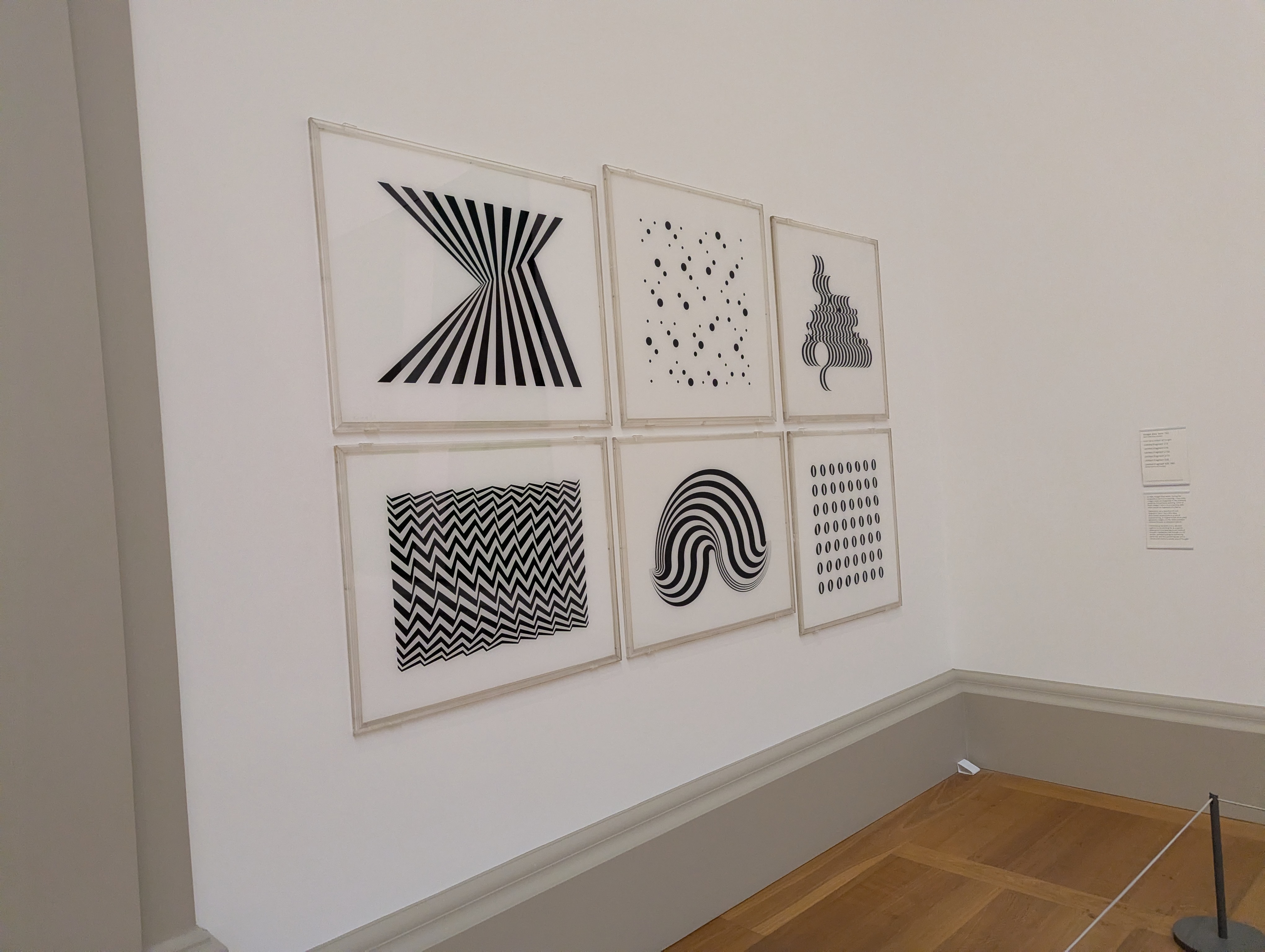
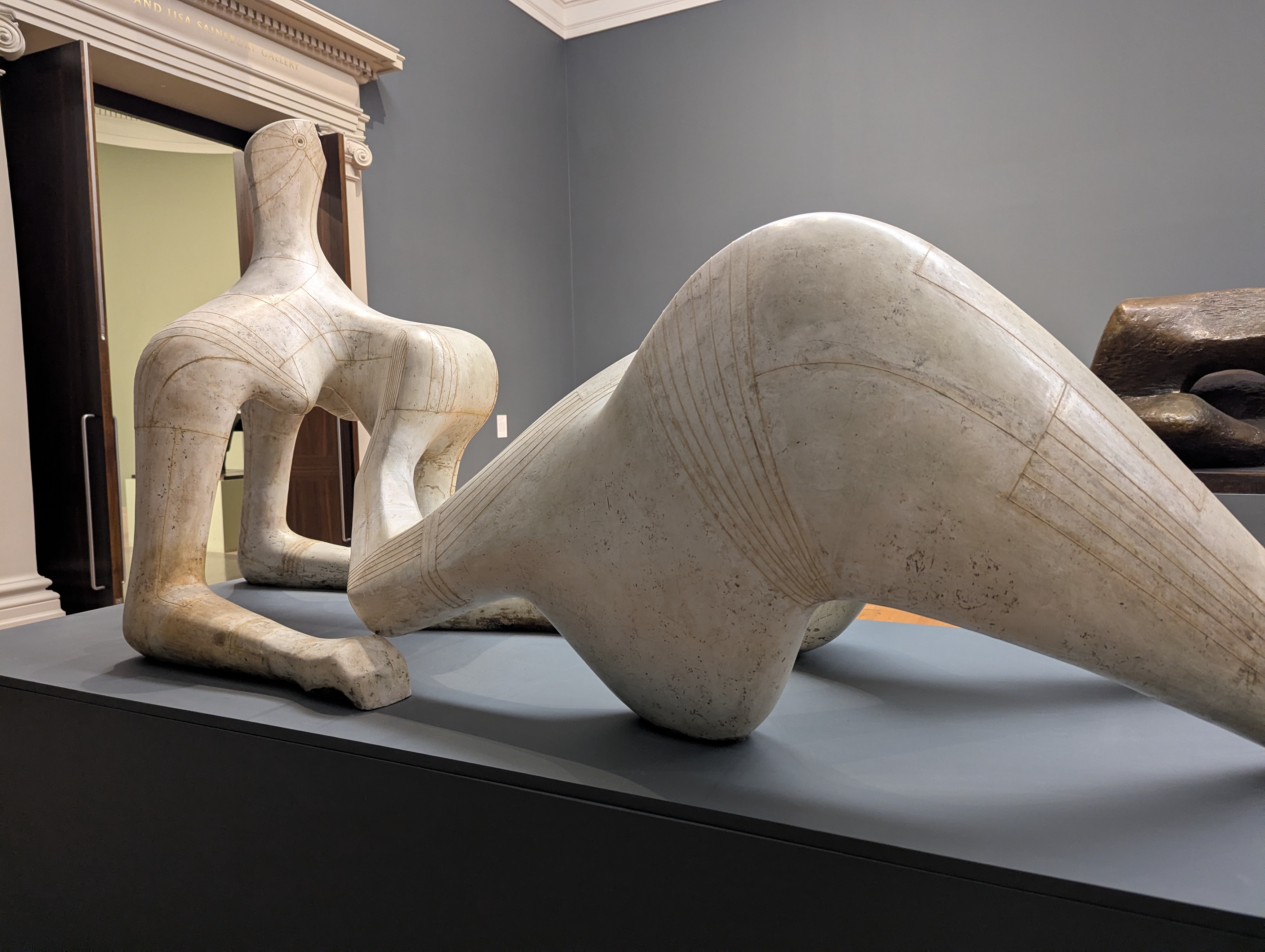
In my photos below, I see that I tended to focus on modern art during our visit, not really a perfect representation of what the Tate Britain offers.
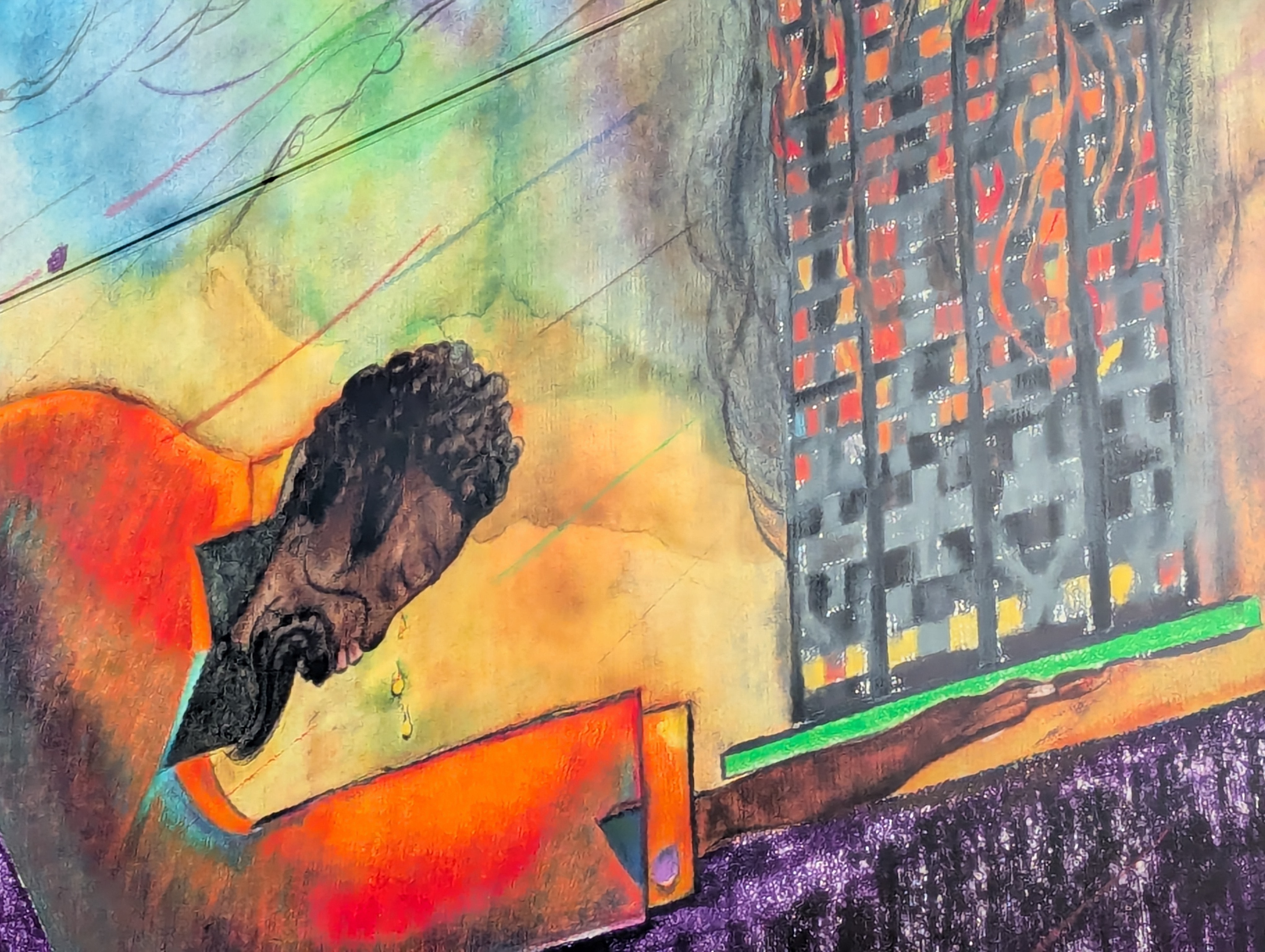
It’s finally starting to dawn on me that art isn’t just being able to execute techniques. The best art says something the artist feels we need to hear, see. My favorite display was in the stairwell close to where we entered the museum, a depiction by Chris Ofili called Requiem that offered tribute to another artist, Khadija Saye, who died in the Grenfell Tower fire in 2017. Painted on all walls of the stairwell, it not only honors Saye, an artist Ofili met only briefly, shortly before she died, it reminds us that we are witnesses. Witnesses of all that led to the tragedy, a perfect storm of greed, hubris, incompetence, complacency. Witnesses, too, of unspeakable human loss. Saye, of course, and many others whose gifts we may never know. As witnesses, we cannot look away from what happened here. One wall evokes redemption, peace, transformation we seek as we collectively process this tragedy. I posted a photo of only part of the exhibit below.
Kenwood House
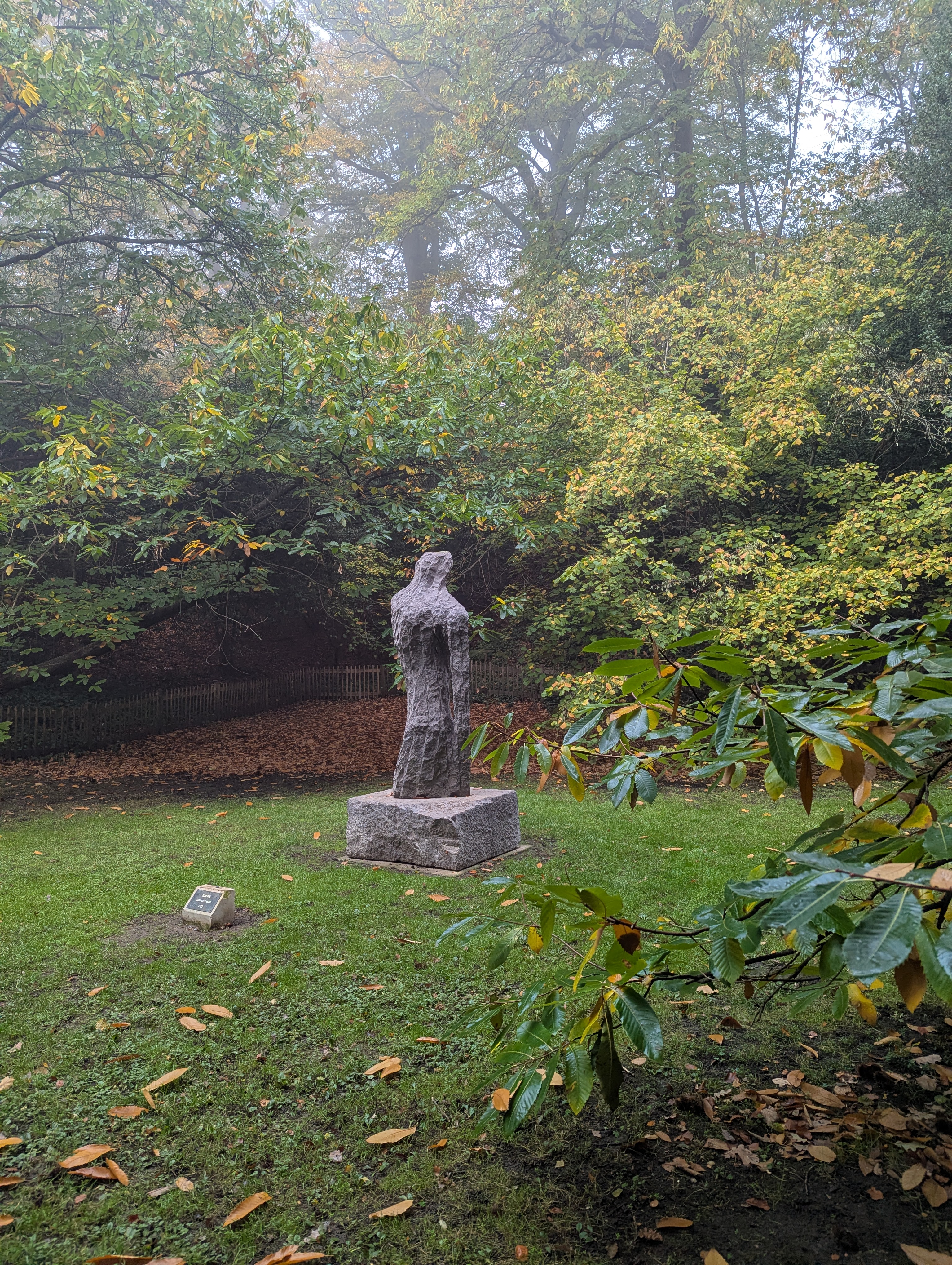
Our first appointment on Saturday before the match was at Kenwood House. It didn’t open until 10 a.m. but we arrived a bit early and walked the grounds. It was a very foggy morning and hard to get good pictures of the house exterior. The house is situated on a large property at the edge of Hampstead Heath. In the fog it was hard to tell where the property ended and the heath began. We found ourself on a path on the heath and every so often a dog being walked on the heath would come bounding toward us. There were a lot of dogs out enjoying themselves.
Kenwood house, as it is now called, was built in the 1600s by a guy named John Bill who was, ahem, the king’s “printer.” Basically the publisher for the Crown’s documents, news and religious texts (like the King James Bible) at a time when publishing was probably pretty effort-intensive. The home was owned and modified by several different families. The last private owner was Edward Guinness. Yes, that Guinness. He bought it in 1925 to house his art collection. He set up his estate to donate the property and all of his art to the British public. That happened very soon after he bought the house, only two years later. It’s now operated by the English Heritage trust.
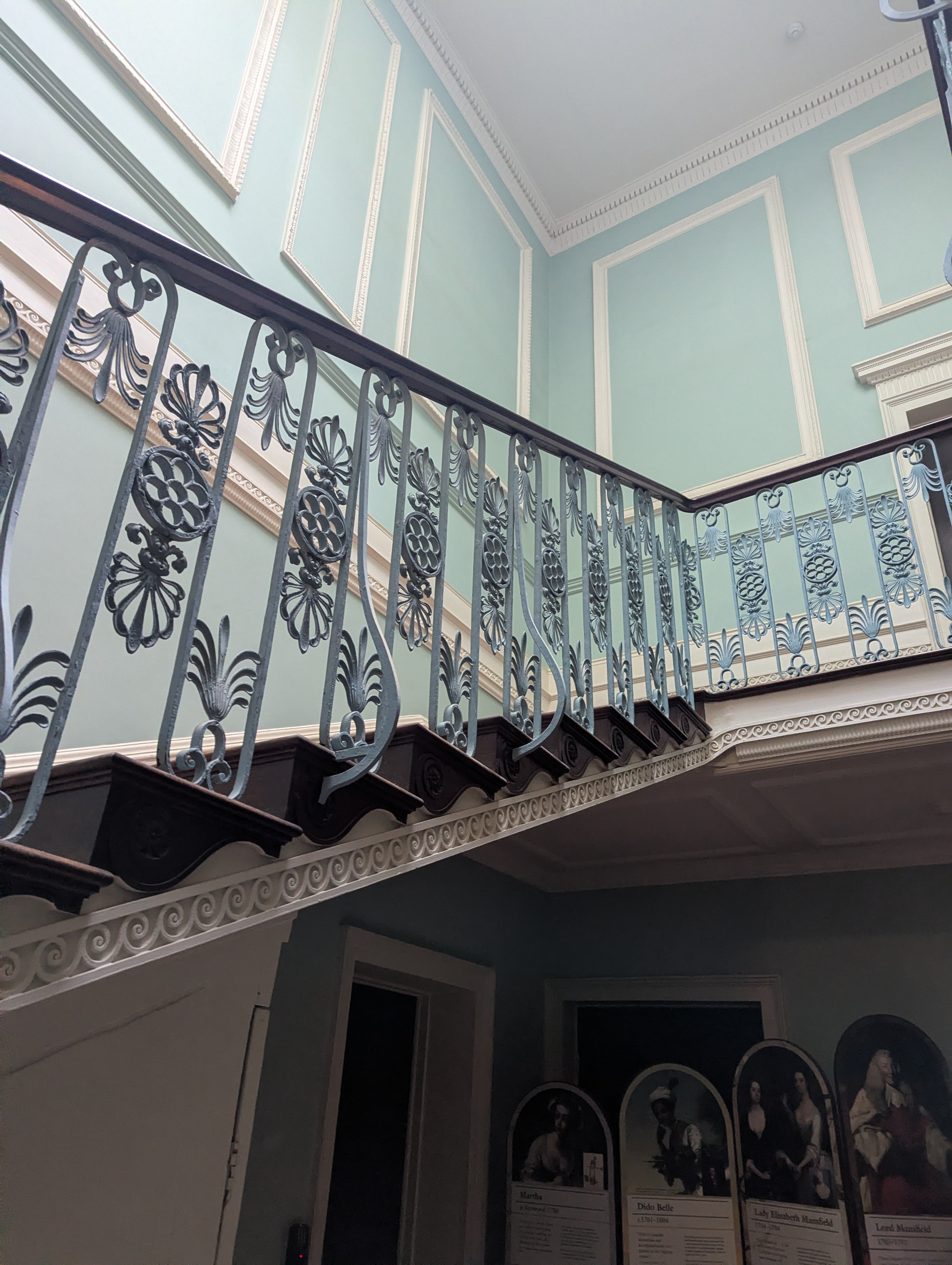
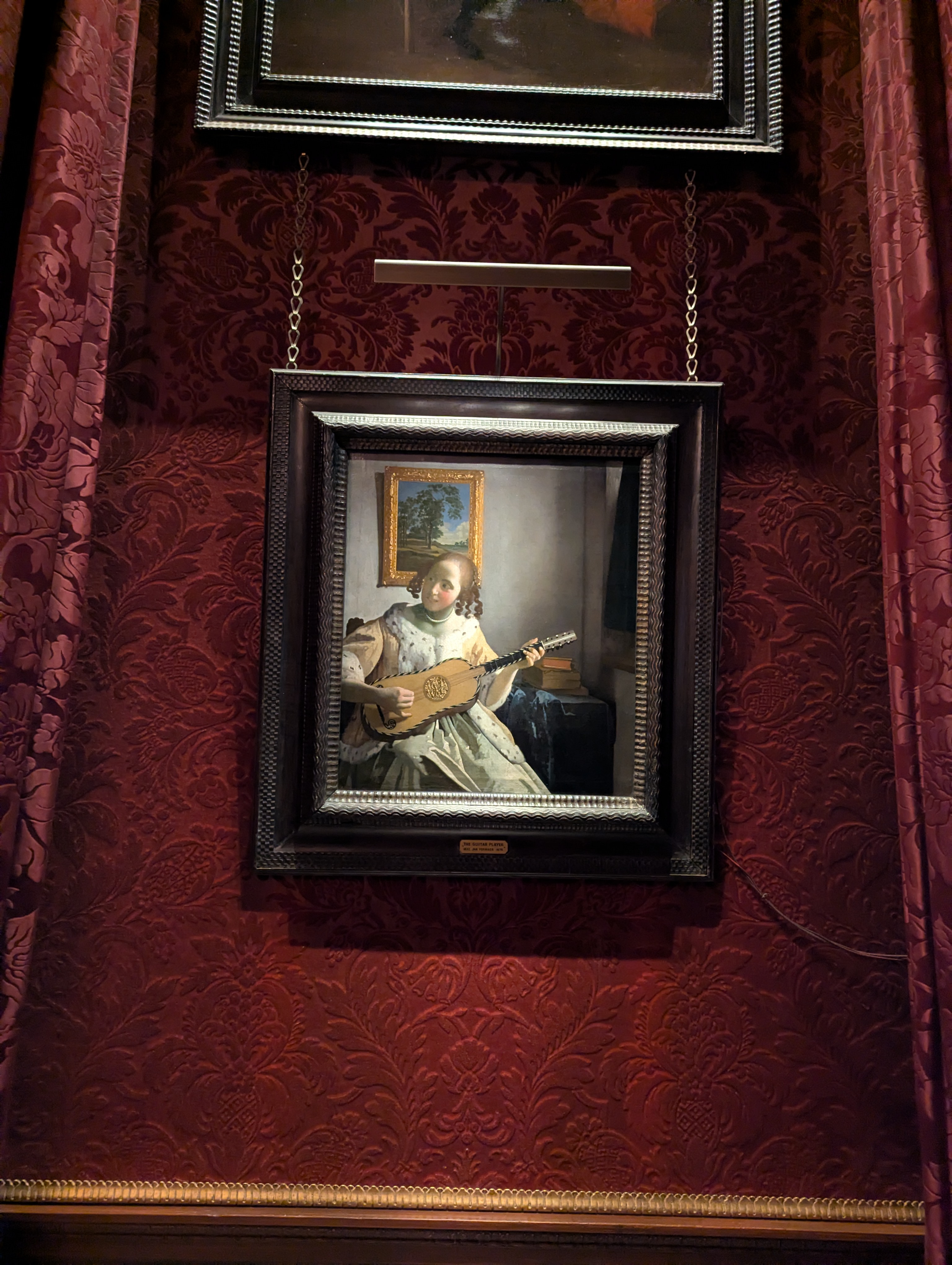
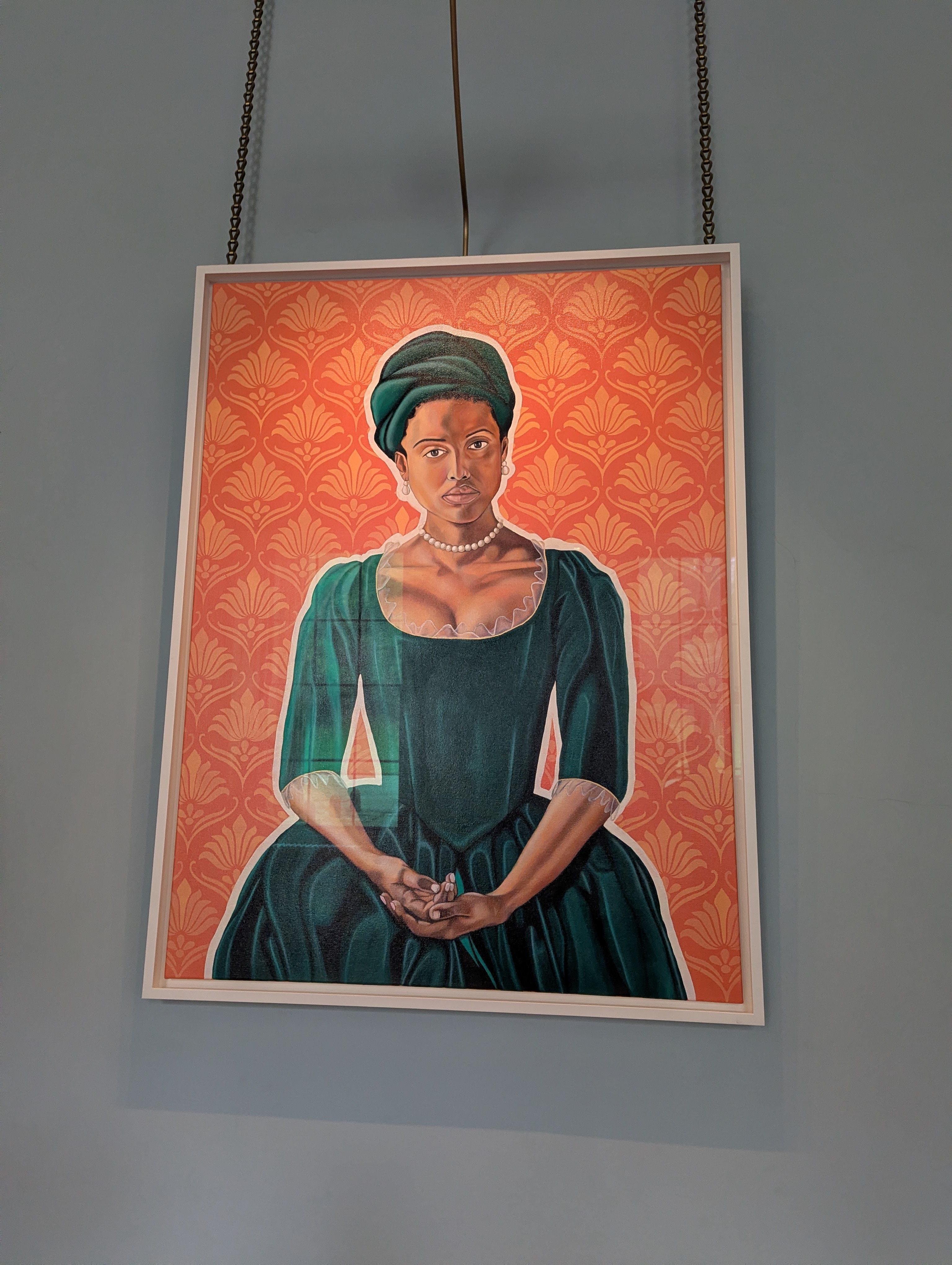
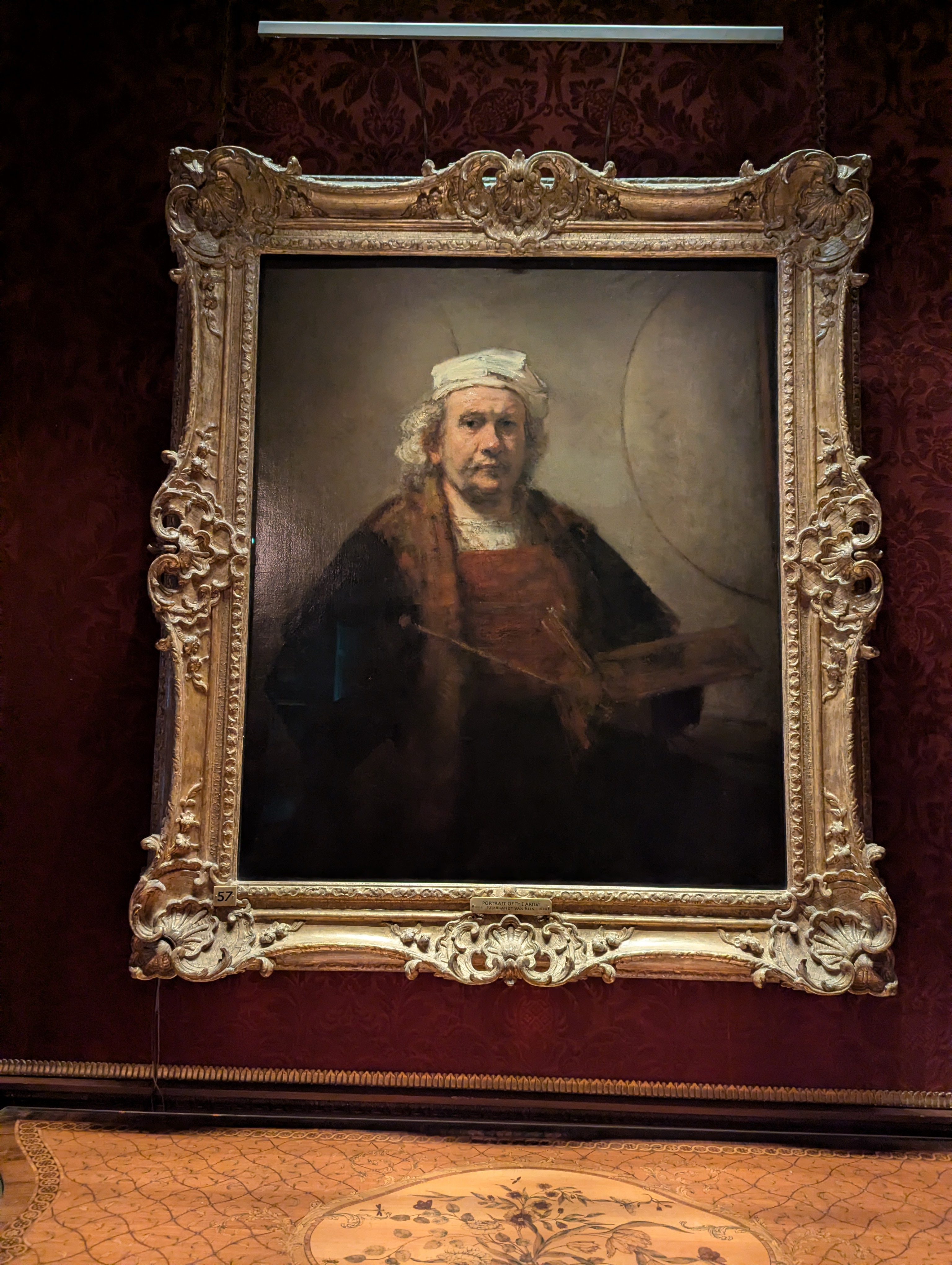
We were greeted at the door by a guide who told us all about the house and then were invited to wander about. Many of the rooms had a guide who could tell us about the work in the room. This was useful because we needed to keep our visit brief and they were great about providing information and artistic interpretations. The most famous piece displayed is a Rembrandt self-portrait.
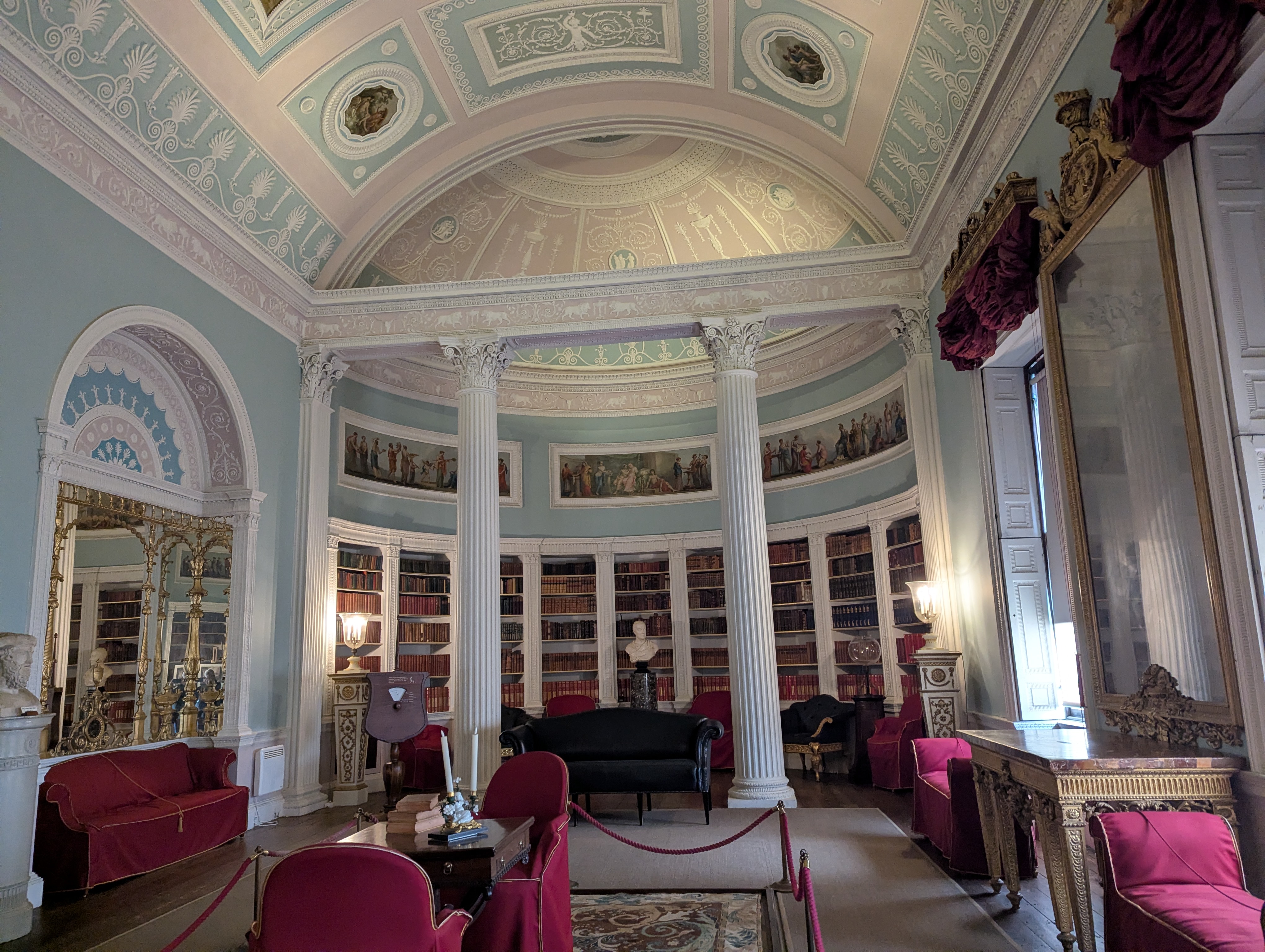
Although Guinness didn’t much use the house as a home to live in, the guides also pointed out how the house would have been used by families before him, for example, where an orchestra might have been located near the formal dining room. There was a cool, old piano, pipe organ, and harp in the music room among the art. And the library, which I have a picture of below, was very, very cool.
We’ve visited a number of homes and/or museums in England that are in place because a wealthy person had a collection of art or ancient artifacts that they ultimately left to the public. I love being able to visit them and see the collections and/or the way they lived. They provide a picture that I would not otherwise be able to see and experience and that I think is a force for enriching my life. I’m honestly not sure how I feel about them from a moral point of view. I’m a bit uncomfortable in the idea of so much excess wealth that you can engage in an activity that has profoundly little value to anyone else while you are alive. And is given when you can no longer use it. But would these things exist for us to enjoy without the initial imbalance of wealth? I have to give some credit to the rich guy.
Highgate Cemetery
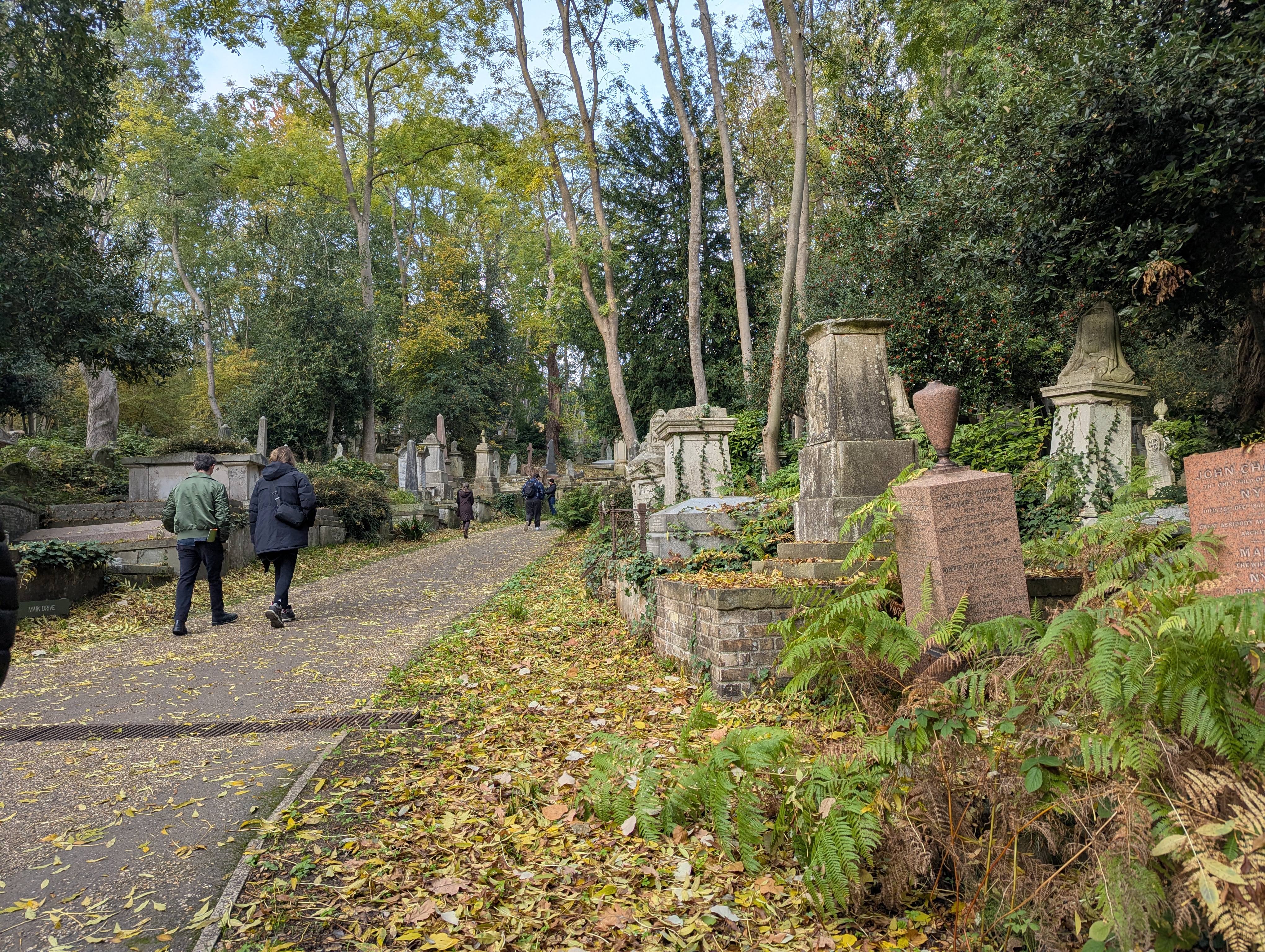
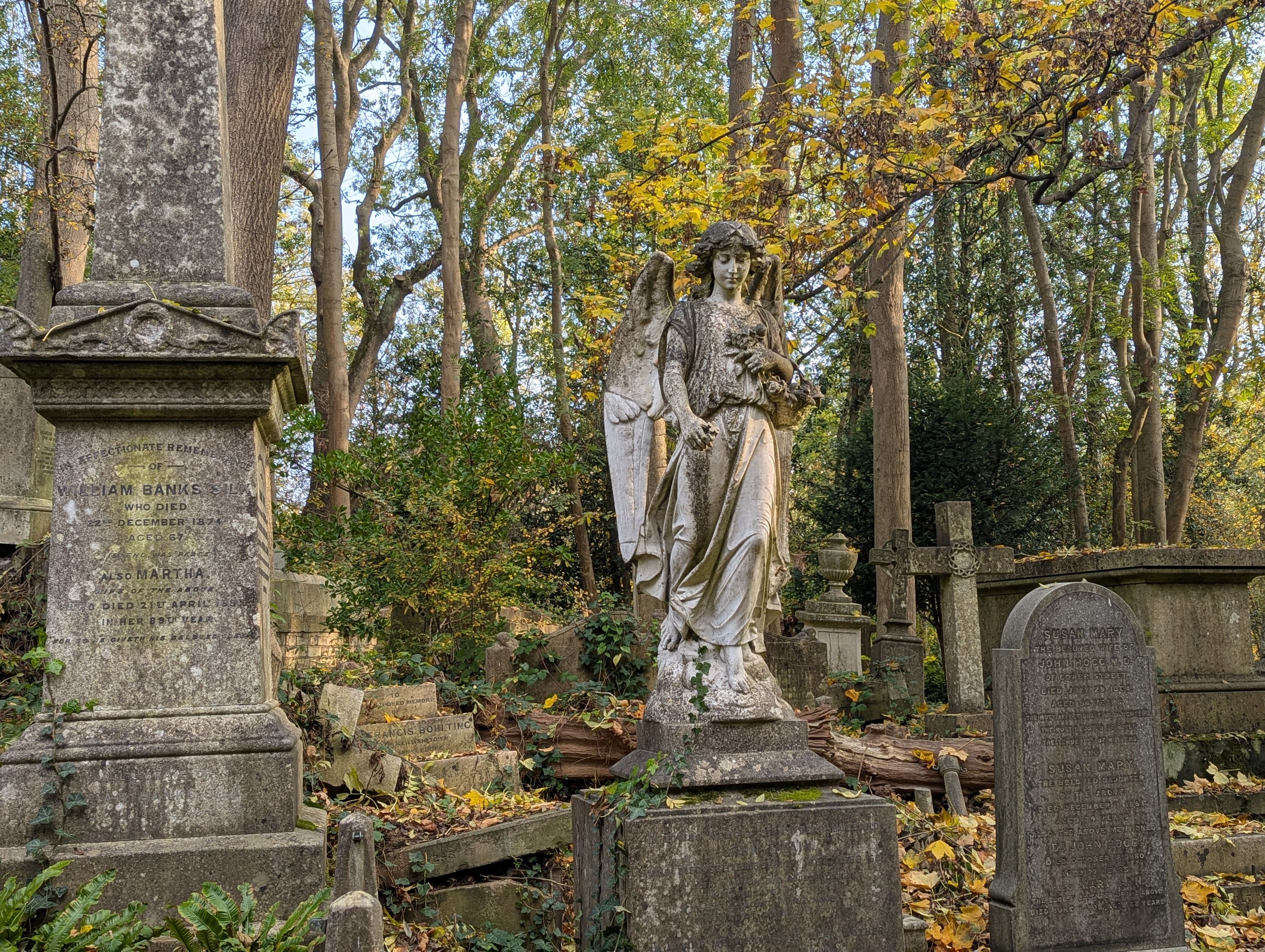
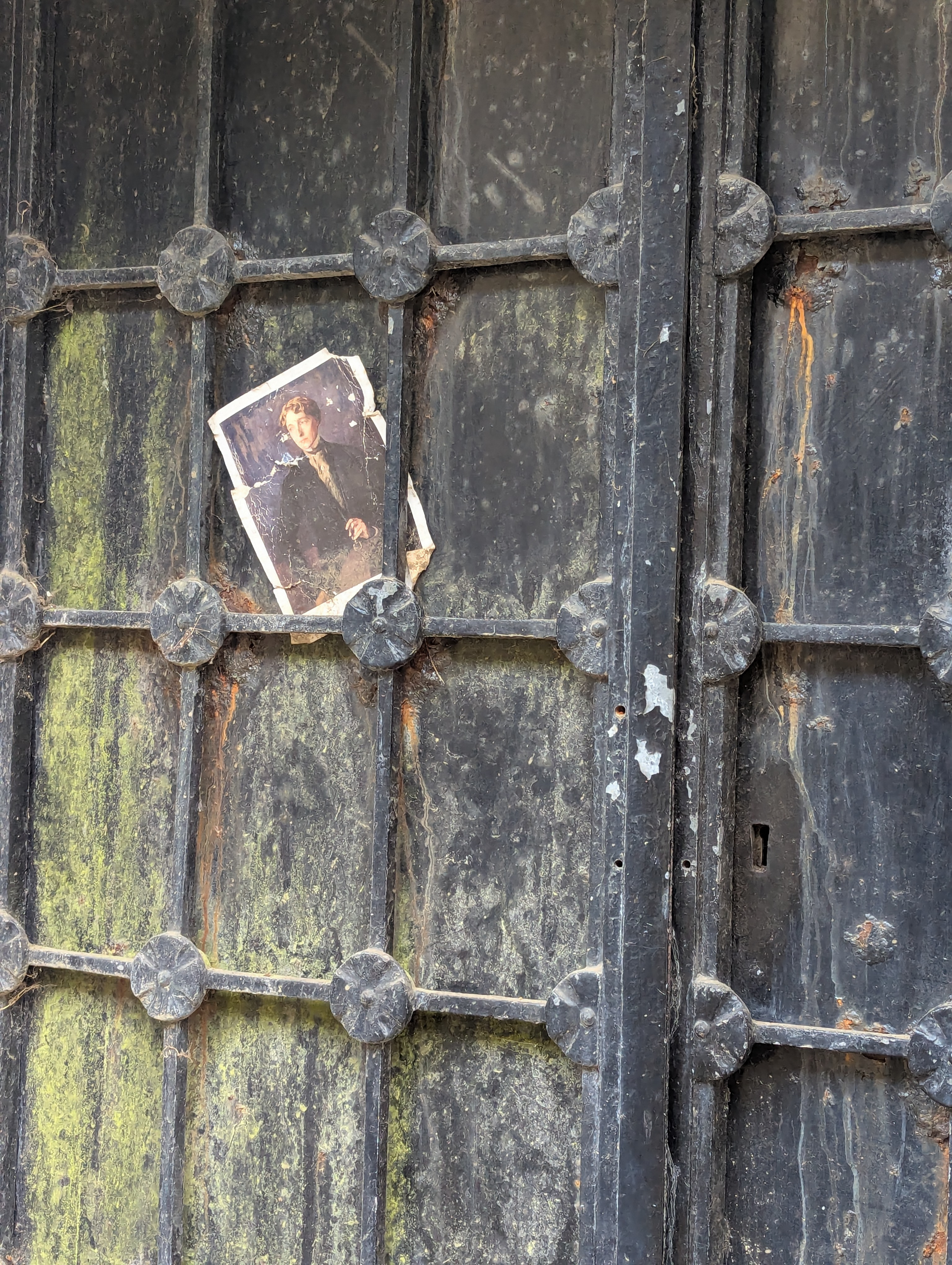
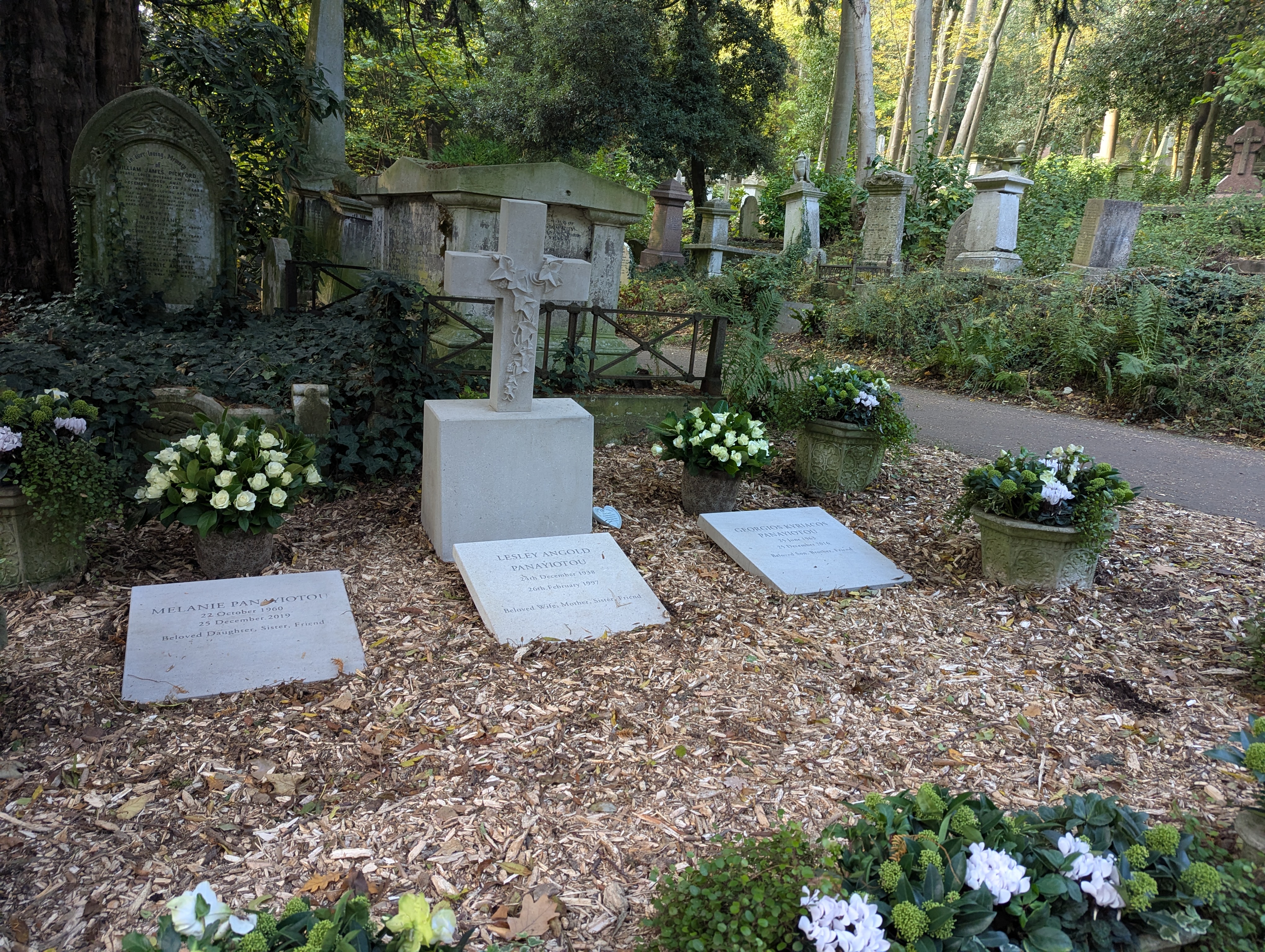
Visiting a cemetery is literally morbid, but it can also be quite interesting. In how we treated our dead, we learn lot about how we lived, what we believed. And a cemetery is almost always a peaceful place. You can visit the famous Victorian Highgate Cemetery using a day pass and it’s also possible to take a tour. We decided on the 90-minute “Highlights” tour. The tour is through the “west” cemetery which does not include one of the most arguably well-known inhabitants of the cemetery, Karl Marx. Unfortunately, we didn’t have enough time to find his grave in the East cemetery. Another day. I have it on good authority he’ll be there for a while.
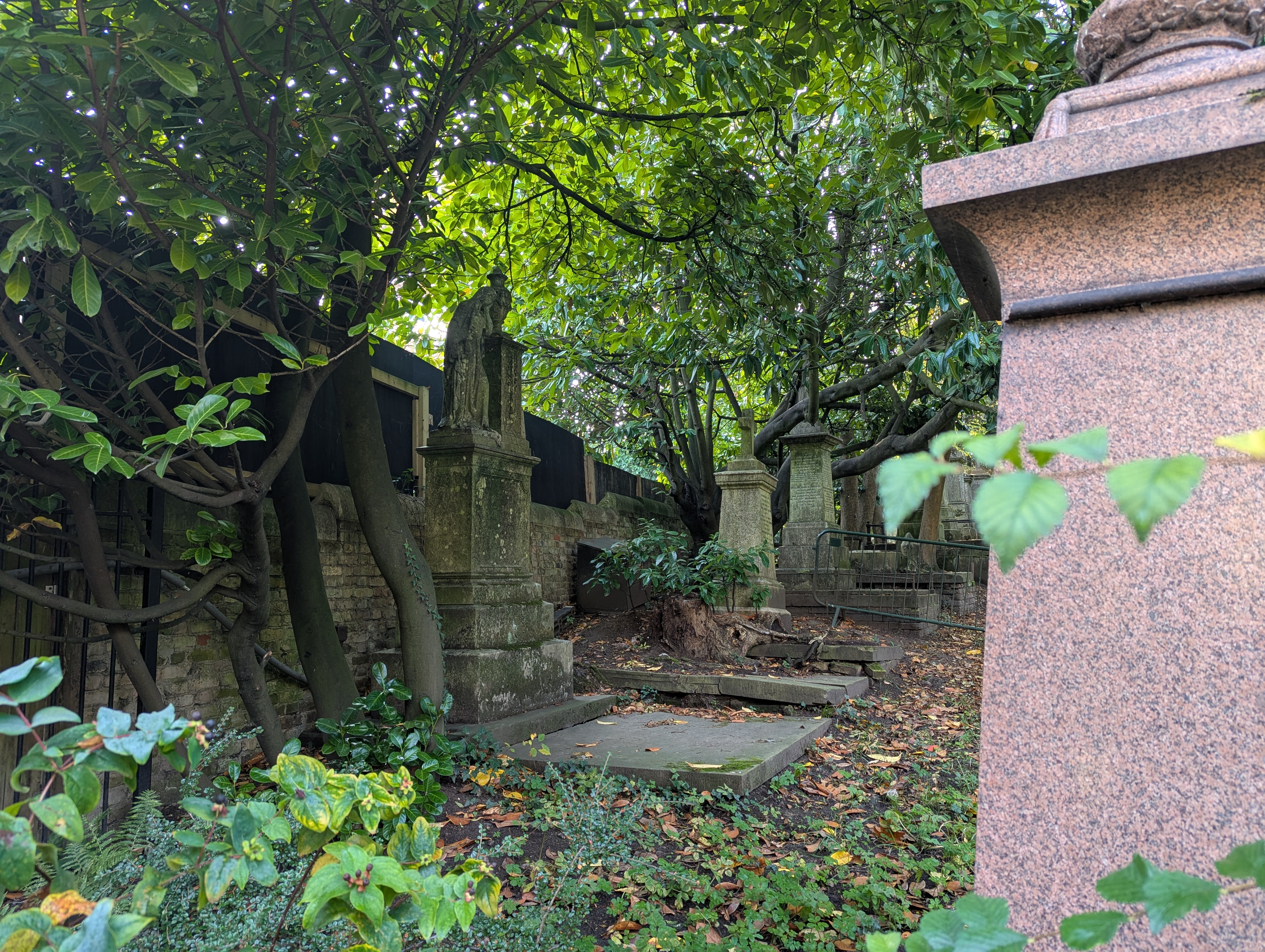
The tour gave a flavor for burial practices in the Victorian era, some of which were intended to foil grave robbing which was a thing at the time. Our guide took us through grave sites with stories he found interesting, for example, the grave of James Selby, a famous stagecoach driver. Let’s first marvel that one could become famous as a stagecoach driver. Apparently, in 1888, Selby was involved in a bet worth £1,000 to himself that he could drive a horse-drawn carriage to Brighton and back in under 8 hours. He succeeded with a margin of 10 minutes in his favor, using multiple teams of horses that were changed out with the near-efficiency of a NASCAR pitstop. Unfortunately, he died within months of receiving the prize. It appears that some of the winnings were used for his grave marker, which is decorated with imagery of upside-down horseshoes, symbolic of luck running dry, and a whip.
We also saw the mausoleum where supposedly Bram Stoker, the author of Dracula, was walking past and heard voices coming from a large family vault. The story goes that he peeked inside and saw the living family having tea among the dead. This appears to be nothing more than a fun story. Bram Stoker did have some history of being in the area near Highgate and maybe was inspired by Highgate in some way, and it is true that families of the Victorian dead would visit the cemetery and picnic, but the actual details of the tea story? Perhaps a “truth” story rather than a true story.
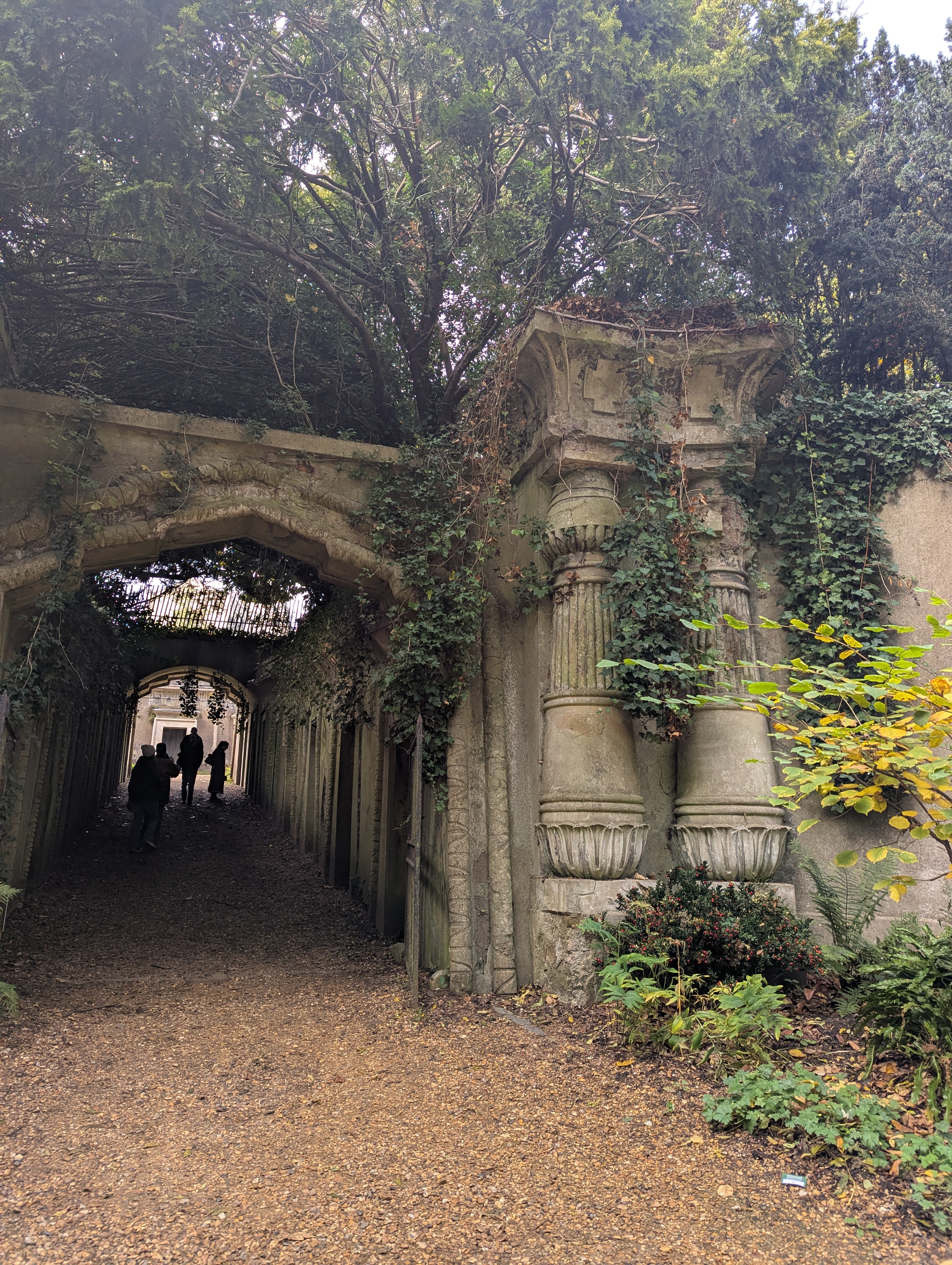
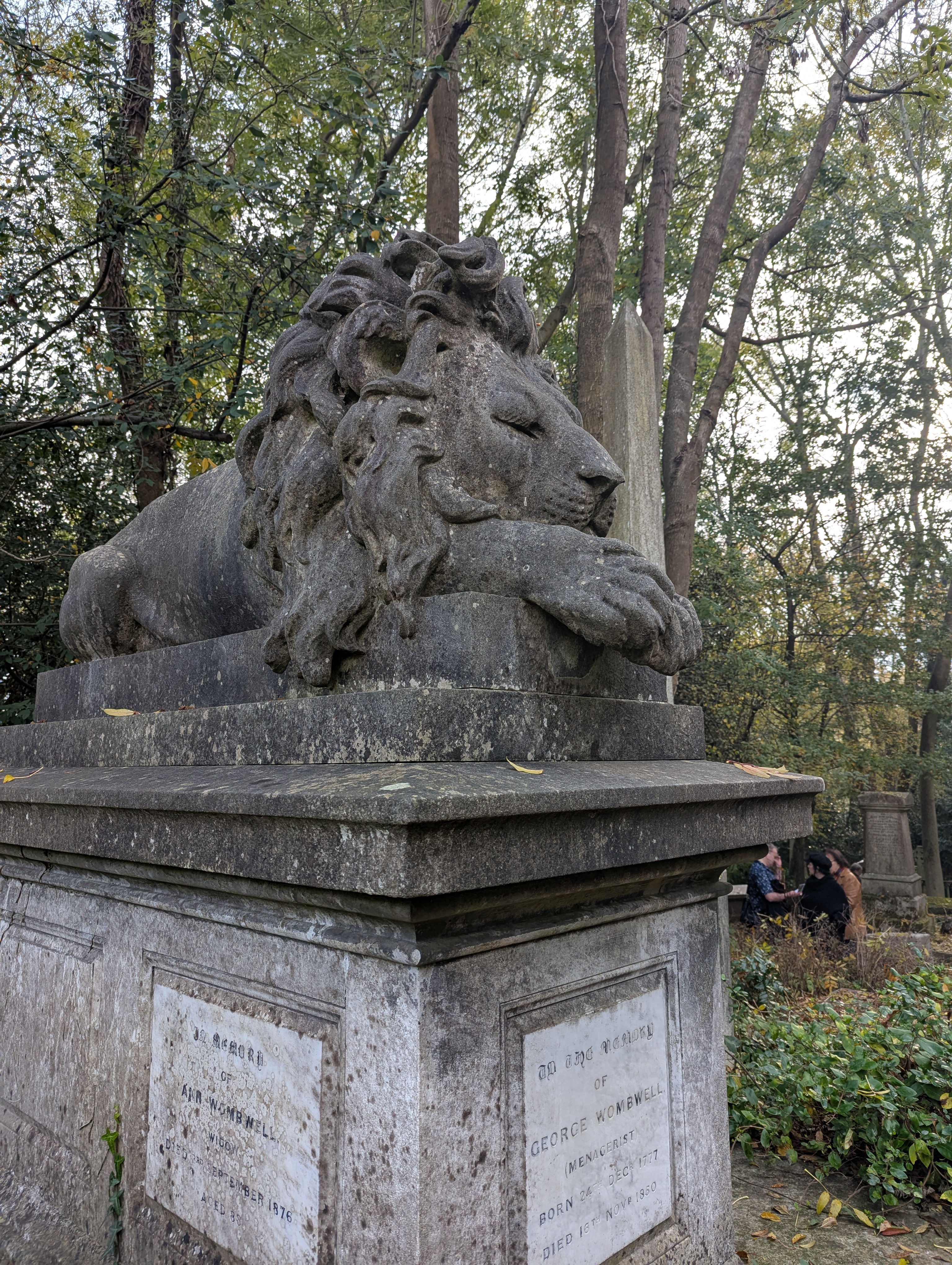
That vault is very close to the much newer graves of the Russian journalist and former intelligence officer, Alexander Litvinenko, who was poisoned by Russian agents in 2006, and also to the pop music star, George Michael. The tour also goes into the beautifully creepy Egyptian Avenue and Terrace catacombs. The picture of the grave with a lion on the grave stone, below, was from the grave of George Wombwell, an 1800s collector and exhibitor of wild animals. The lion on his grave was intended to be a likeness of his tame and very docile lion, Nero.
Temple of Mithras
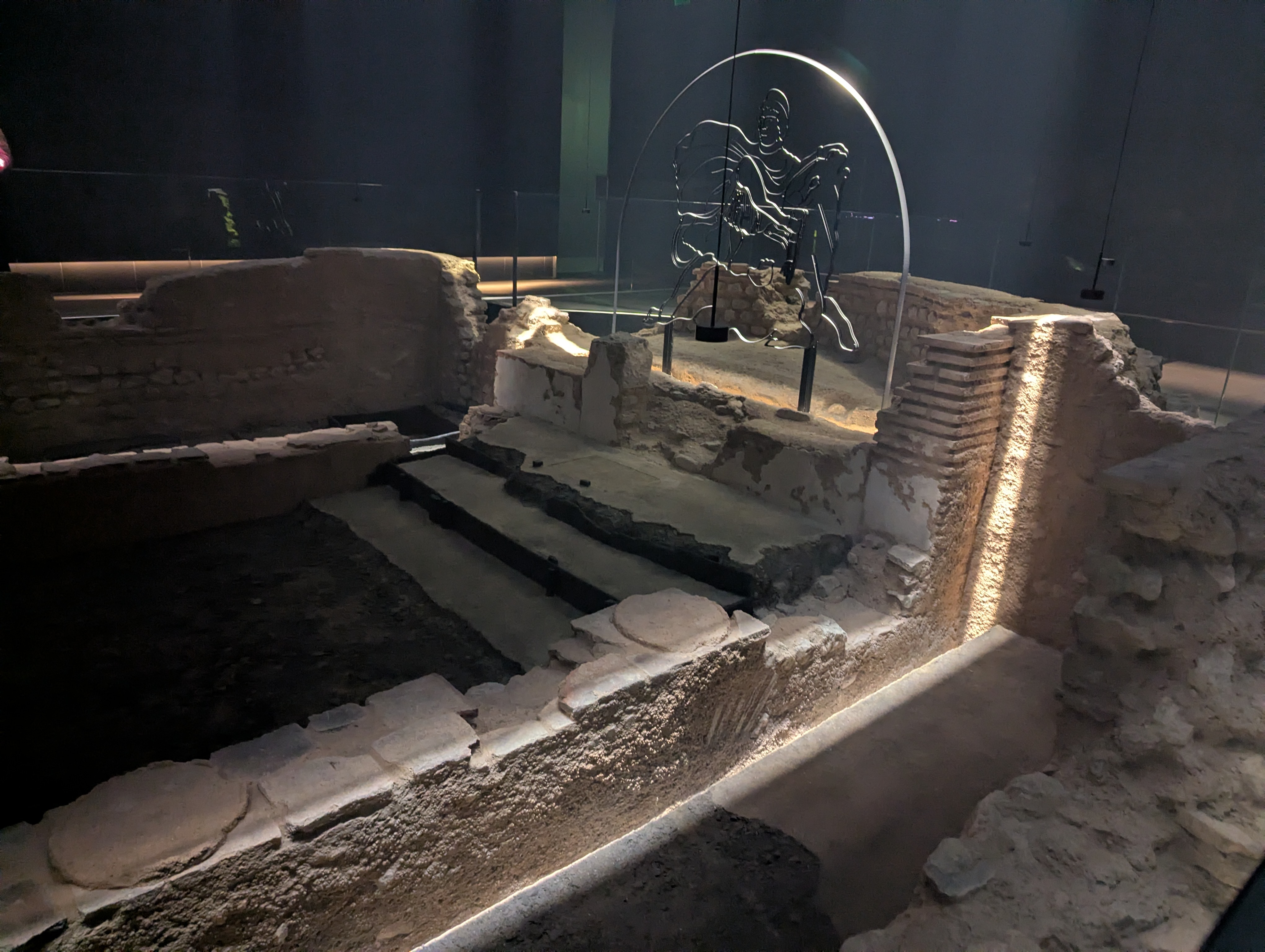
We’ve been to a few sites around London (and elsewhere in England) where ruins from the Roman occupation during the first few centuries AD have been found underground. Sometimes because of bombing during WWII and sometimes because of commercial development. Ruins from the Temple of Mithras were found in 1954 during a construction project and the temple was believed to have been built in 240 AD. It was used by a secretive cult that honored a god named Mithras. The head of a marble statue of Mithras was found near the temple excavation.
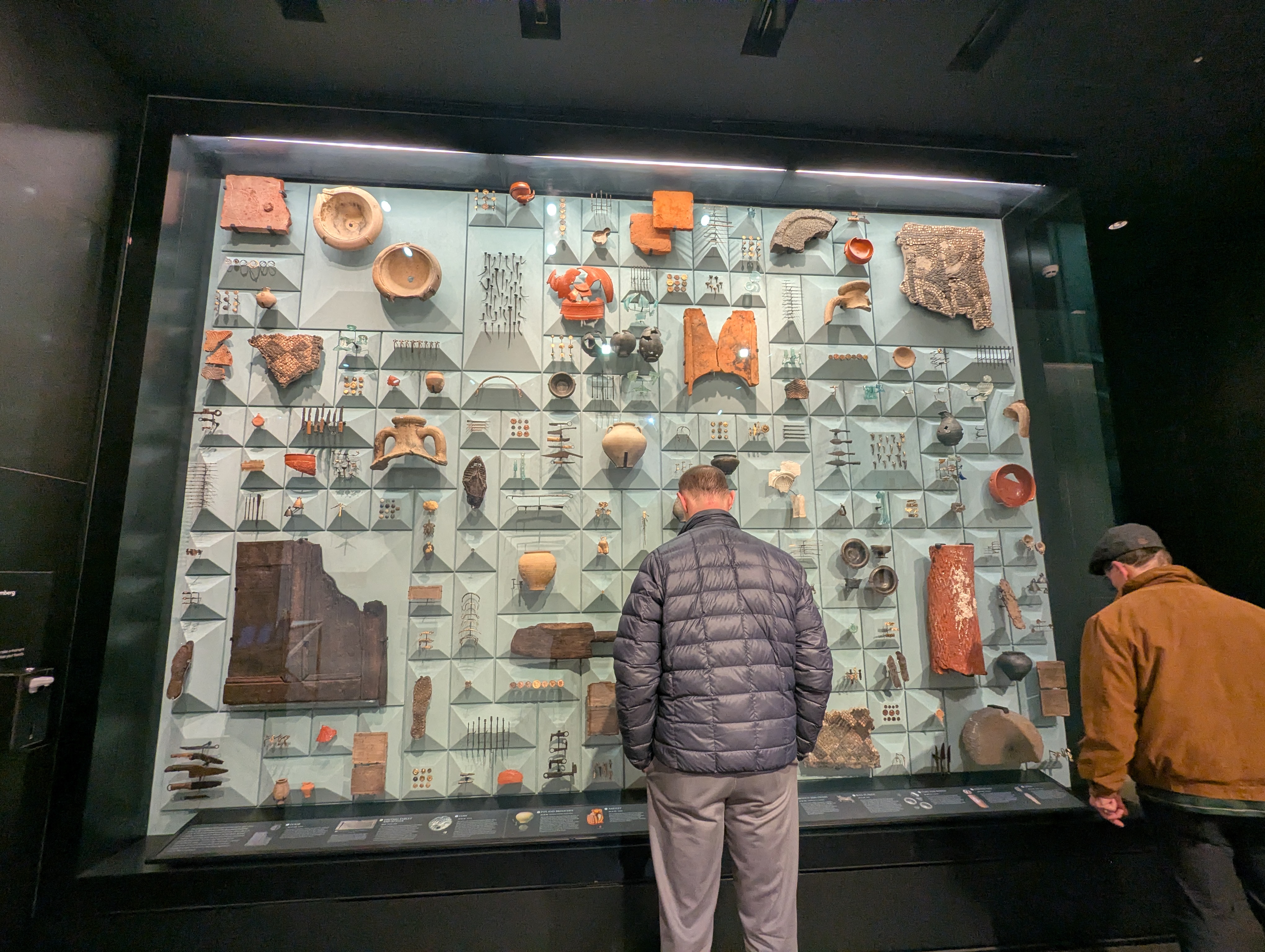
The actual remnants of the temple are stored in the London Museum which has been closed pending a move. What you are able to visit is an authentic model of the temple in close proximity to where the real temple was found. It’s accessed from the very modern Bloomberg building. There is also a model of the Mithras head. In the upper lobby of the Bloomberg building are actual artifacts found at the site. What I loved about the artifact display was that it is very, very concise. One wall. Sometimes displays of Roman artifacts are so extensive you kind of lose yourself. This one gives good samples of everyday objects, well organized and easy to digest.
I enjoy looking at these ruins and ancient objects–pins, buttons, pots, jewelry–because they remind me in so many ways that how we live is similar to these ancient ones. We haven’t much changed some objects we have used for thousands of years, just made them more uniform and easier to produce. And humans still are drawn to religious orders and cults which offer much the same as they did thousands of years ago.
Conversely, we can also see ways in which human lives are much changed. For someone to have found these ruins and known they were worth preserving for all: credit is due.
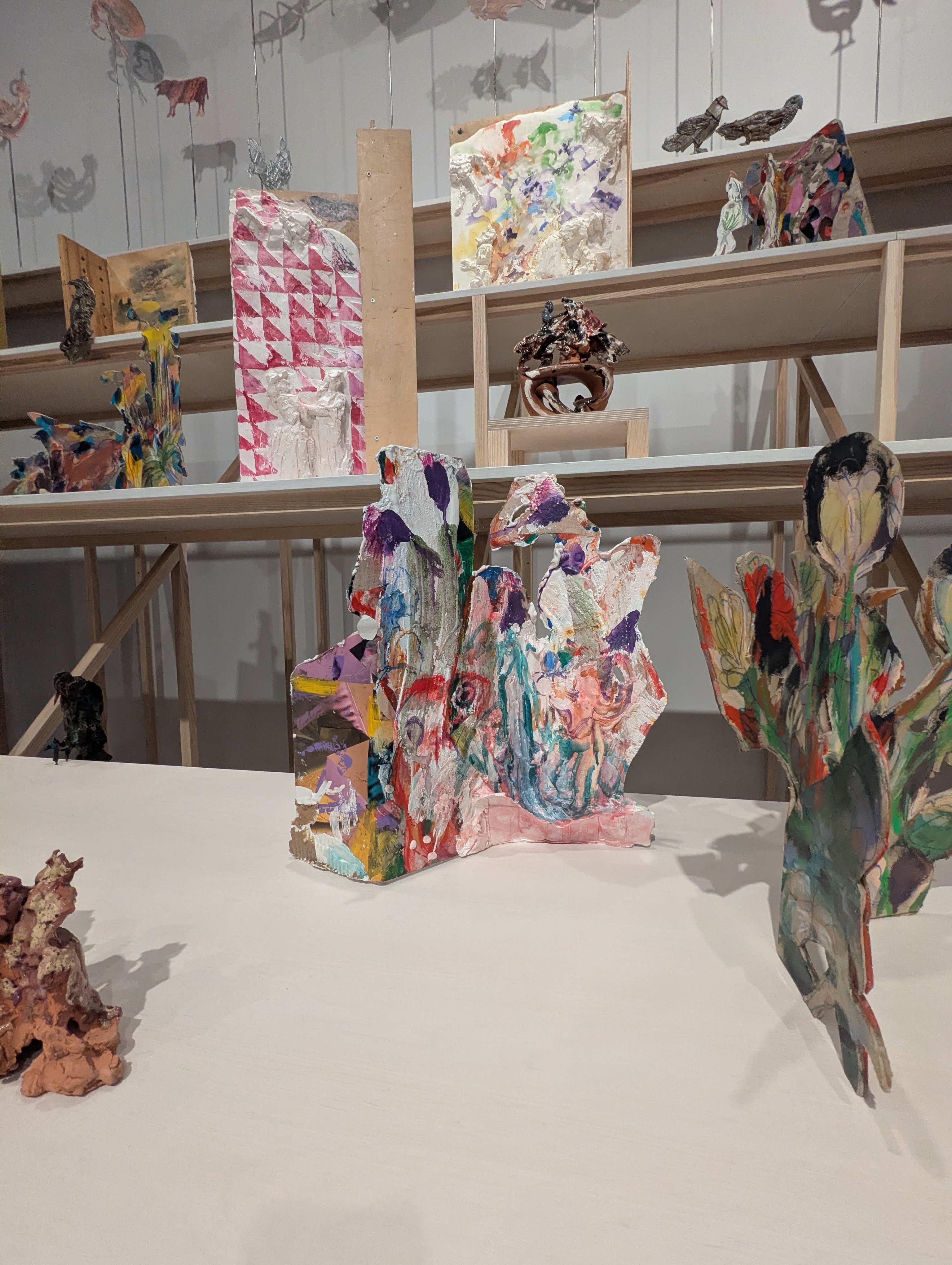
The lobby also currently has an art display by American artist Anne Ryan, called Folkmoot, an old English word representing a public gathering. The imagery is intended to reflect the city’s ongoing rebuilding across time. Quite interesting.
Ah, London. We never seem to exhaust what there is to take in and experience in this city and the people and events who have shaped it.
And that’s a good thing because there is nothing more we want to do than come back again and keep exploring. As of this writing we have no firm plans to return but what we know with certainty: we will be back.

