
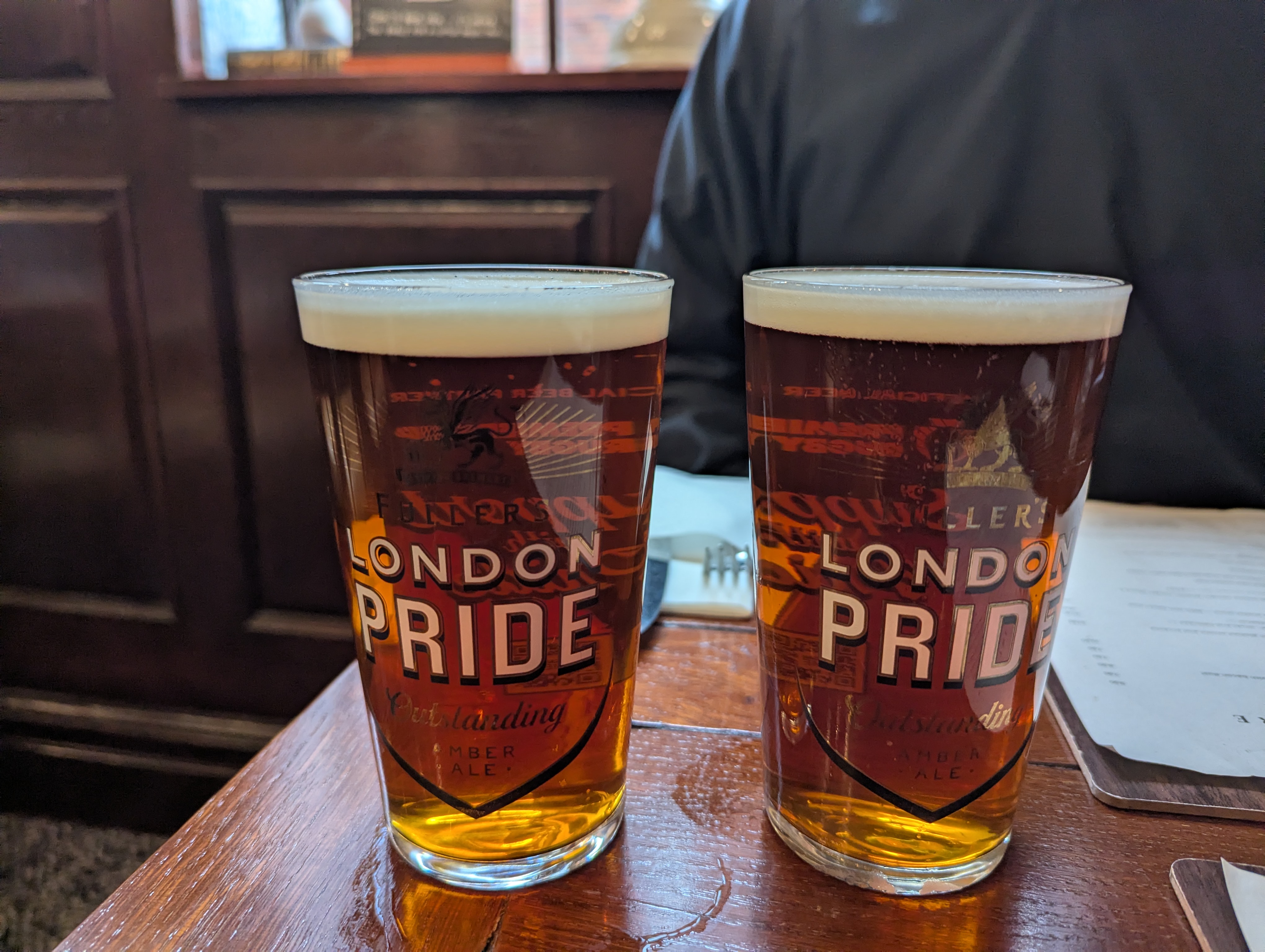
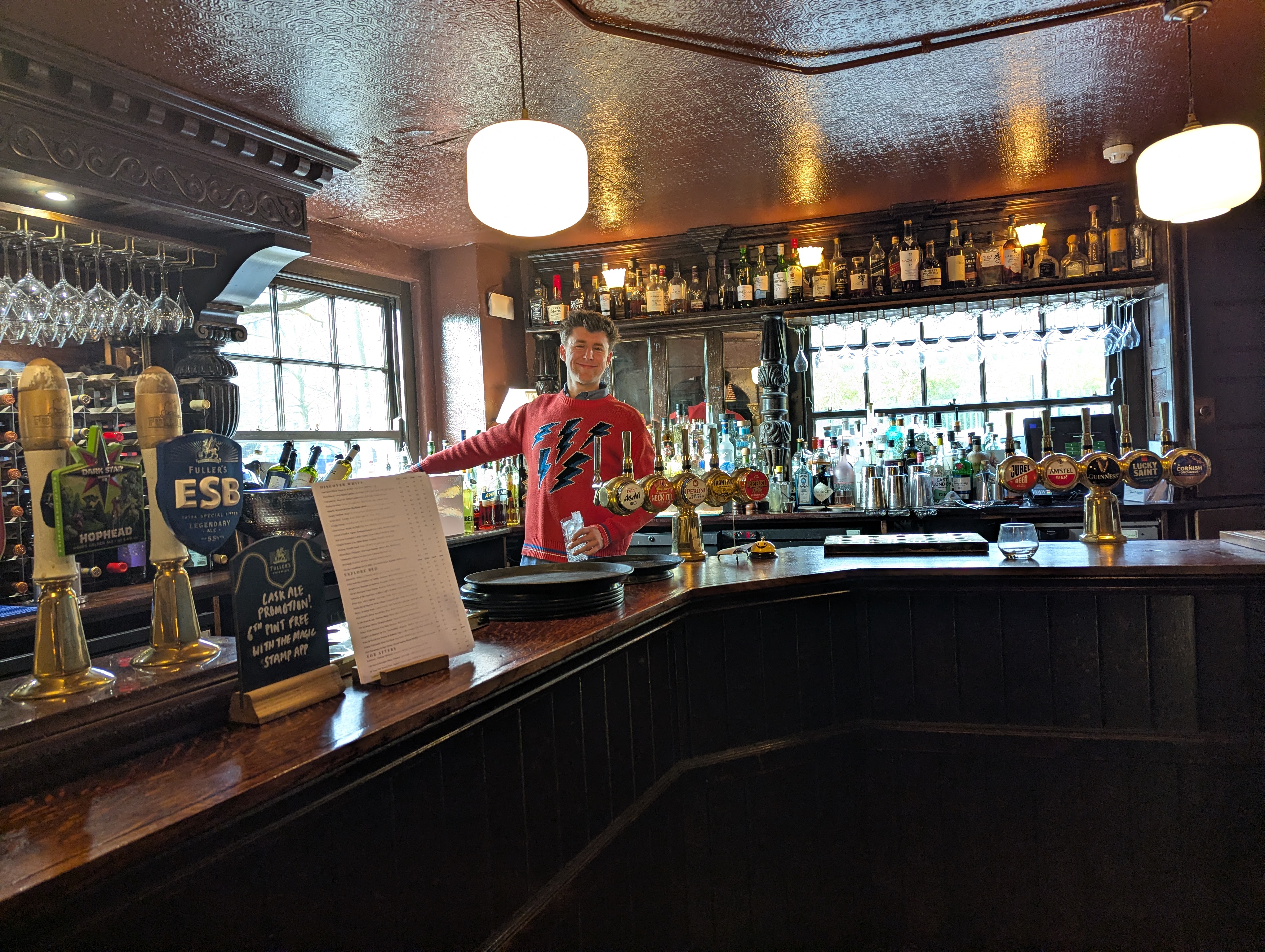
When we visit London, my husband always wants to enjoy a London Pride, a cask ale that is made by Fuller’s brewery in London and served in pubs. Fuller’s not only brews beer, it owns many pubs in Southern England. London Pride is sometimes available in pubs that are not run by Fuller’s, but it’s always available in a Fuller’s-owned pub.
A “cask ale” is a form of beer that is unfiltered and unpasteurized and experiences a second fermentation inside the barrel. The barrel is delivered to the pub and, traditionally, placed in the basement where it would be chilled to the temperature of that basement. It’s drawn to the glass using gravity (if stored above the bar) or a hand pump (if stored below the bar).
I enjoy London Pride as well, but I’m not as committed to it as my husband. I like Guinness and, while in London, I enjoy exploring drinks with gin, a popular option in England. These are available everywhere. But when the spouse wants a London Pride, the pub scene is more limited.
At some point, we started making it a point to visit the local Fuller’s pubs in any neighborhood we are temporarily living in while we visit London. And later, that became trying to have a London Pride in every Fuller’s pub in London.
There are a lot of Fuller’s pubs in London and there is virtually no way we will hit them all, but we are making an honest attempt. And while I am not quite the London Pride afficionado my husband is, the more I find out about Fuller’s the more I really appreciate what they have done in building out their line of pubs. What I love most of all is that there is no attempt to make every pub like any other pub. Instead, Fuller’s often leans into the history of the pub’s building or neighborhood when naming and decorating the pub. Many of the pubs are in old, historic buildings or spaces that have been pubs for decades or even centuries.
When we arrived in London, we attempted to check into out hotel near Victoria Station, the July Victoria. We were a few hours before official check-in. Interesting and strange: our room was ready and they would be willing to check us in early, but for £15 an hour. We checked our bags and decided to go out and find a pub for lunch.
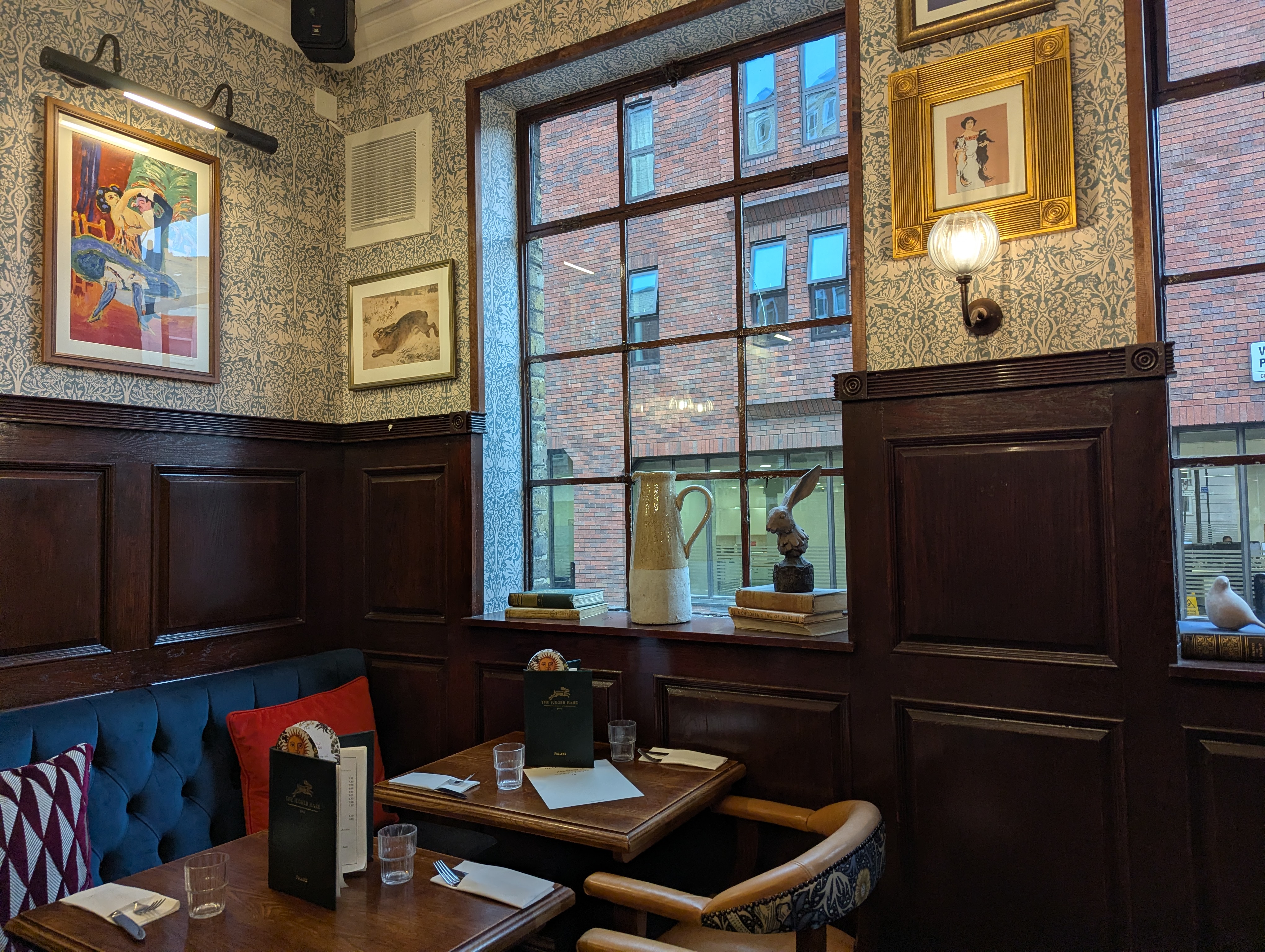
The nearest Fuller’s pub, The Jugged Hare, was a short walk away. We entered and walked over to the bar and requested a pint of London Pride, but were told that they didn’t have any currently available. One worker went downstairs to find out when London Pride would be available while the other helped us find another Fuller’s pub. We had a long chat with that worker. At last, the other worker came back and announced that he’d hooked up the next barrel. London Pride could now flow freely.
So we found seats and enjoyed our London Pride while perusing the menu for lunch. We also looked up the meaning behind “jugged hare.” Apparently, it’s a dish of old England in which a rabbit was cut up and placed in a jug. The jug was placed in boiling water and cooked for hours. The pub was located in a refurbished bank and had beautiful, dark wood panels. Decor included many different kinds of jugs and rabbit imagery.
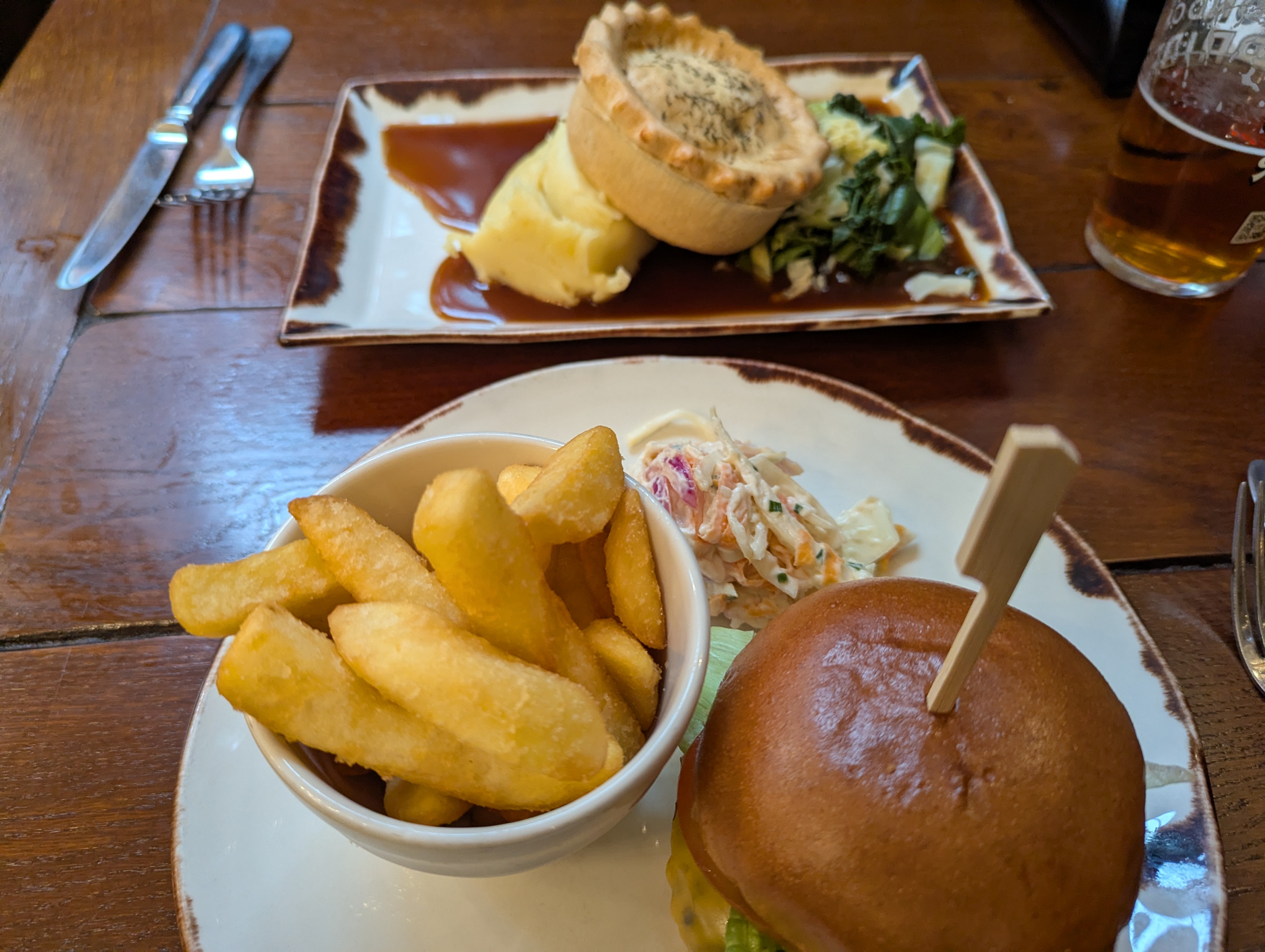
No rabbit on the menu. My husband had a steak pie and I had a cheeseburger. My husband asked our server if the pub sold London Pride glasses. She disappeared for a long time and then came back with a glass. A gift from management. It looked like it had been through some things, and we were delighted to have it.
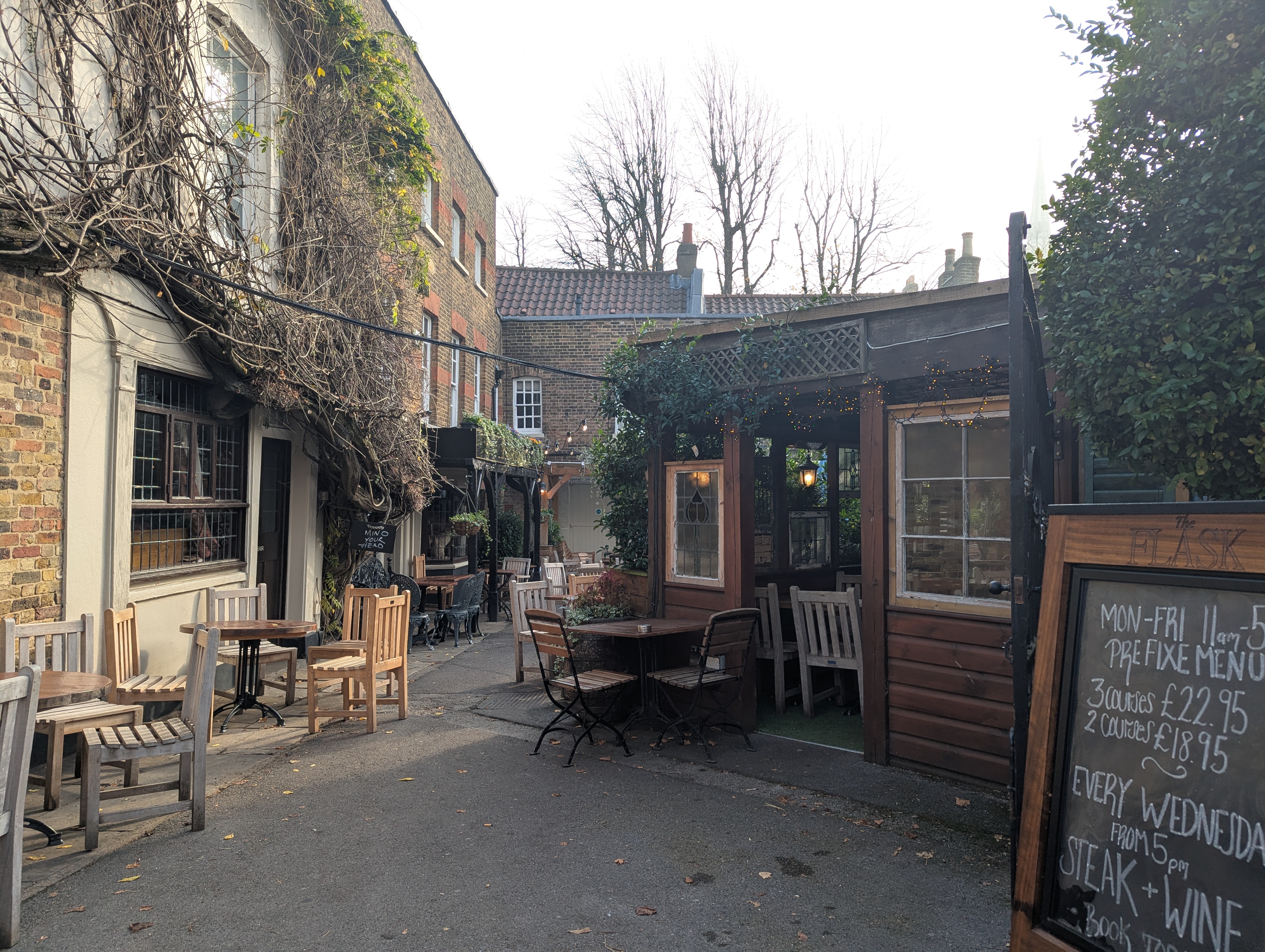
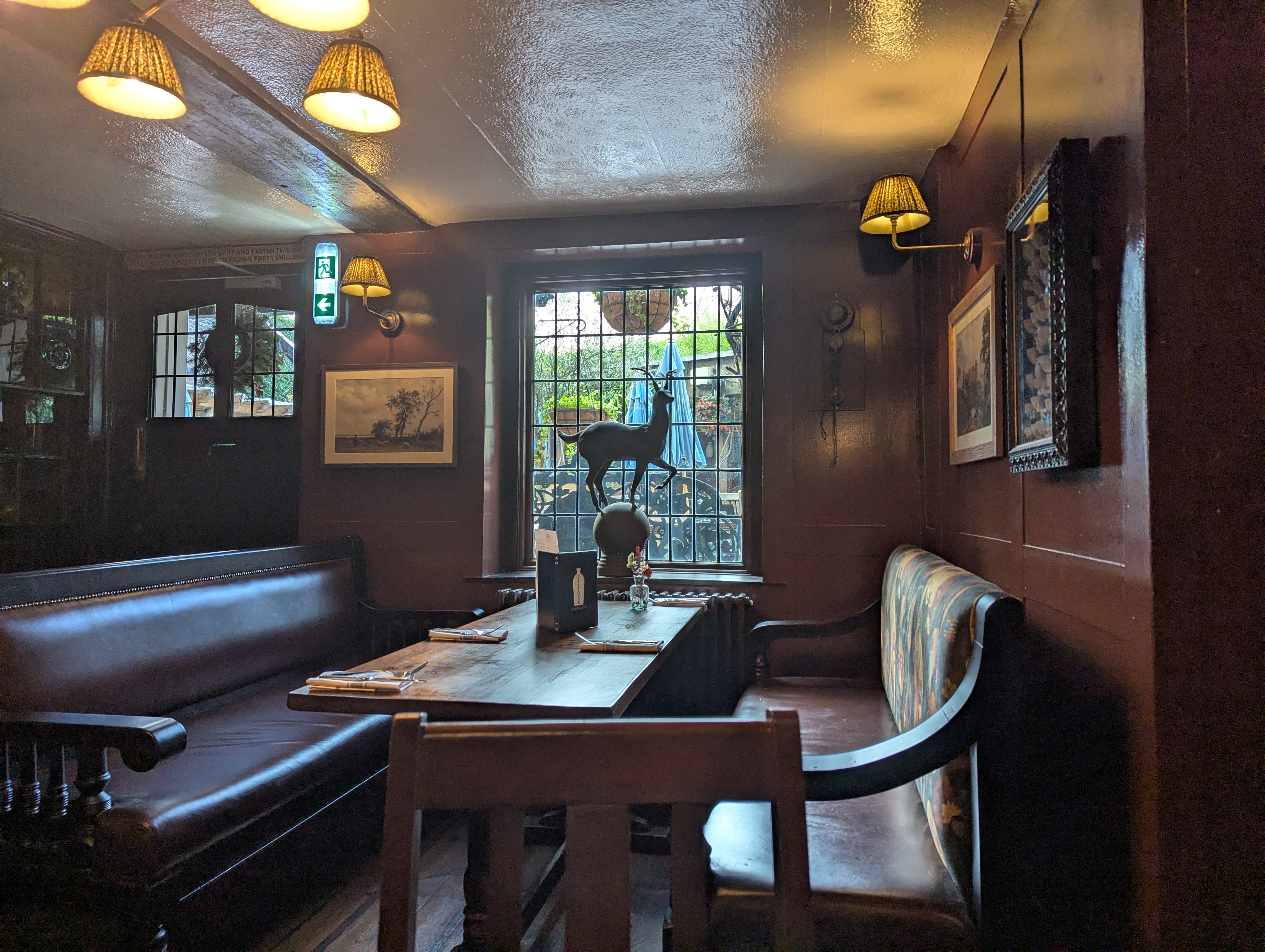
The next day, my husband and I were planning to engage in a number of activities around Highgate in North London (including the Arsenal match), so I’d made reservations at a Fuller’s pub called The Flask. We were threading the needle on timing between visiting a historic house and touring a historic cemetery, and were at the pub at a time that was certainly before the lunch rush. Beautiful historic pub with plenty of seating inside and a beautiful garden with seating outside.
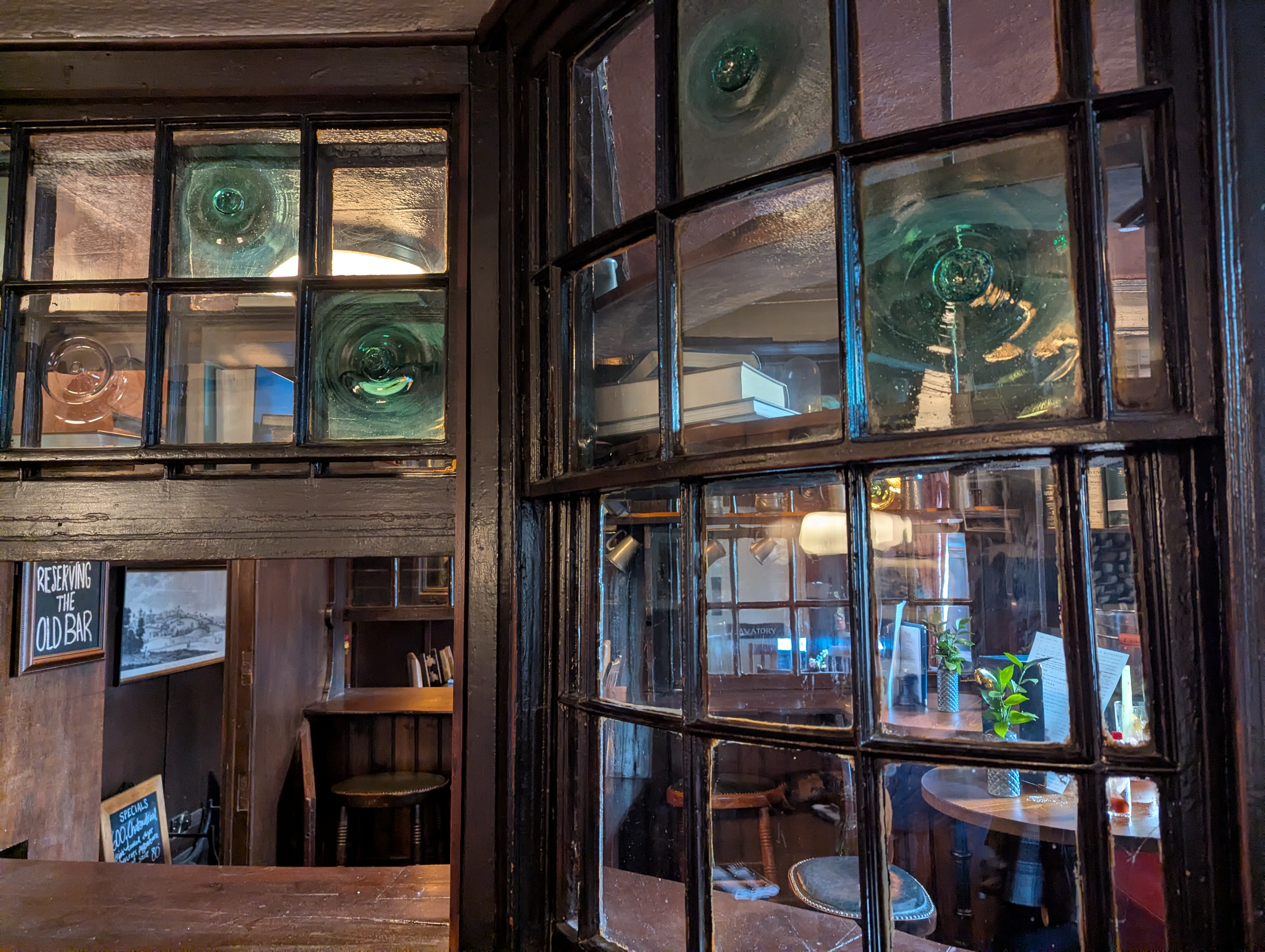
We were seated near a toasty fireplace and served our beer. Our server was friendly and personable and when he heard about our mission to visit many Fuller’s pubs made some suggestions for ones we should target soon. He also told us some about The Flask, parts of which are very historic. The property includes a former stable that has been on the property since 1663 and some of the parts of the building housing the pub date to the 1700s, including what was until only recently the main bar. That area is now a small seating area. It still is surrounded with “bullseye glass” panels from the 1700s.
The name, “The Flask,” references water collection vessels sold by the pub many years ago that people would use to get water from a natural spring nearby.
The pub has a very colorful history and has served famous writers like Byron, Shelley, and Keats. More recently, it’s served the famous songwriters George Michael and Taylor Swift. My husband was shown the exact chair Taylor Swift sat in when she enjoyed her own London Pride. I have great admiration for Taylor Swift but I left her memory alone by remaining by the fire. Our server also told us Taylor had visited a kebab shop in Kentish Town. According to our server there are some amazing kebab shops in Kentish Town, but she went to the worst one.
Taylor, speak with your servers. They will never steer you to bad kebabs.
The Flask also has some resident ghosts, including a barmaid who hanged herself in the basement and a 17th century Cavalier who has been known to show up in uniform. Our server told us he’s never seen a ghost but sometimes at night he’s heard strange noises.
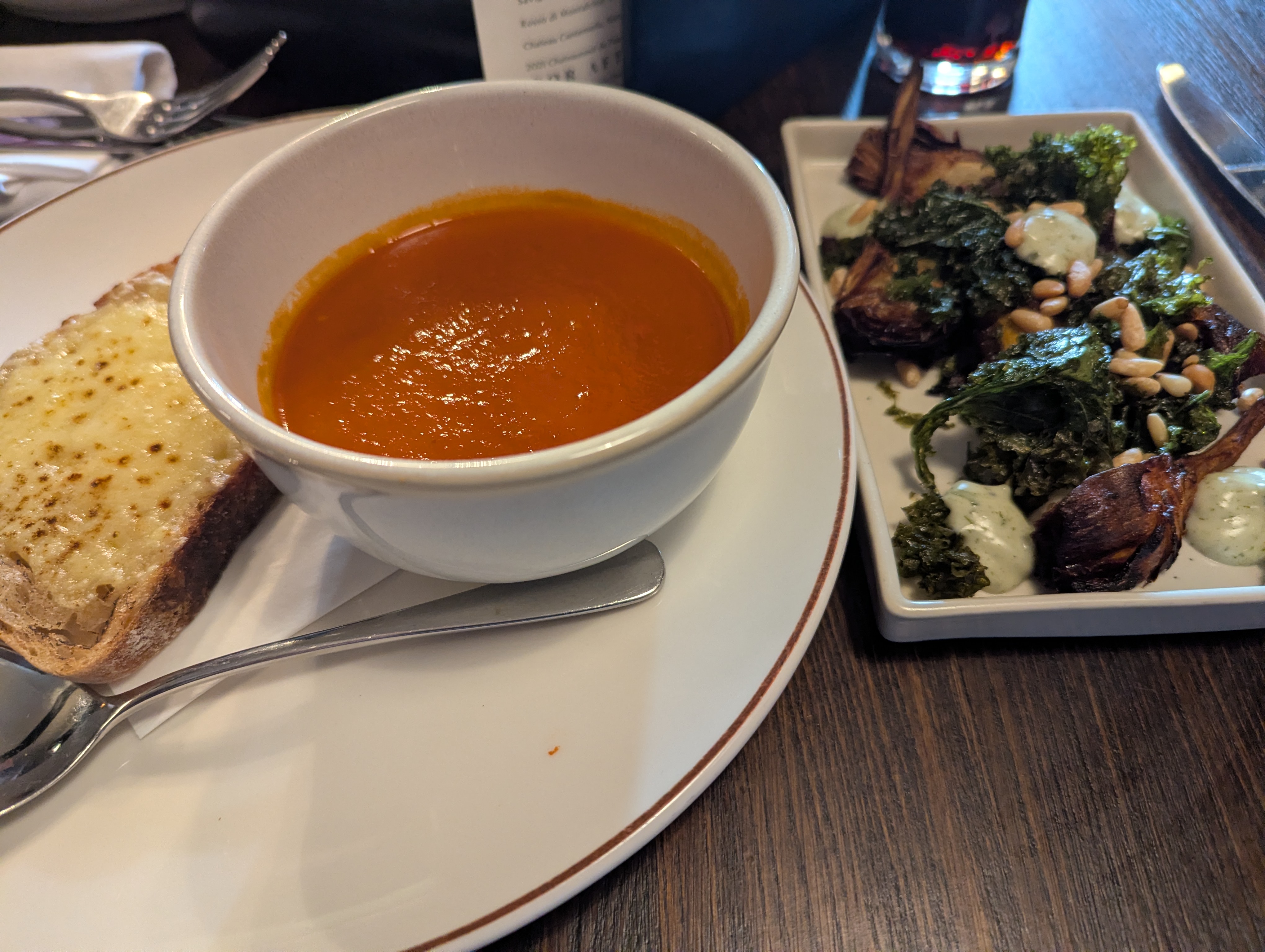
It was so early for lunch I just had a roasted tomato soup with a cheese toasty and an appetizer of roasted artichokes and kale. It was one of the yummiest things I ate on this trip.
Our server not only gave us some recommendations for Fuller’s pubs, he also suggested that we take a tour of the Fuller’s brewery. It had not occurred to us you could do that. So the next day, we trashed our plans for Sunday Roast and made reservations for a tour.
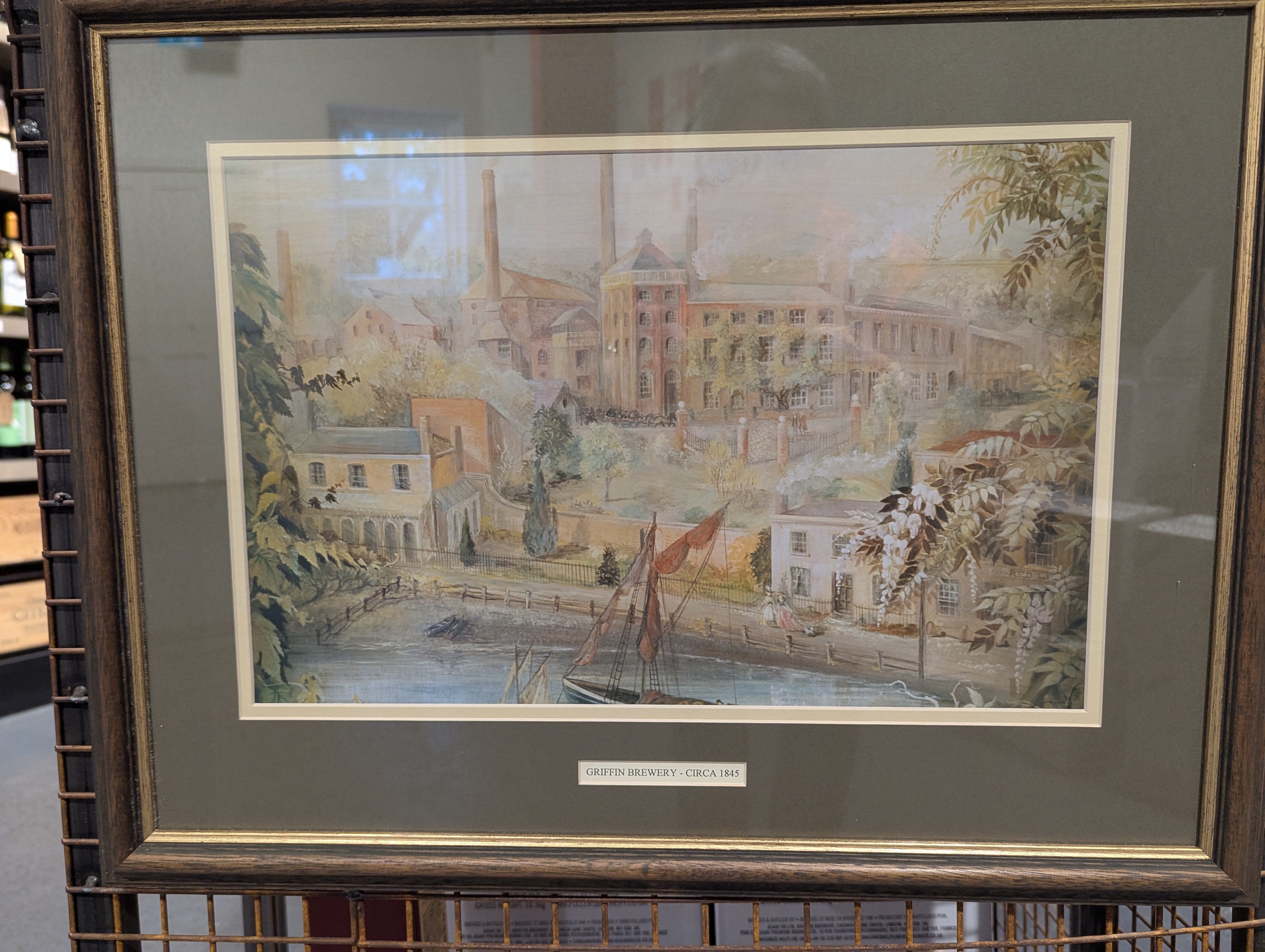
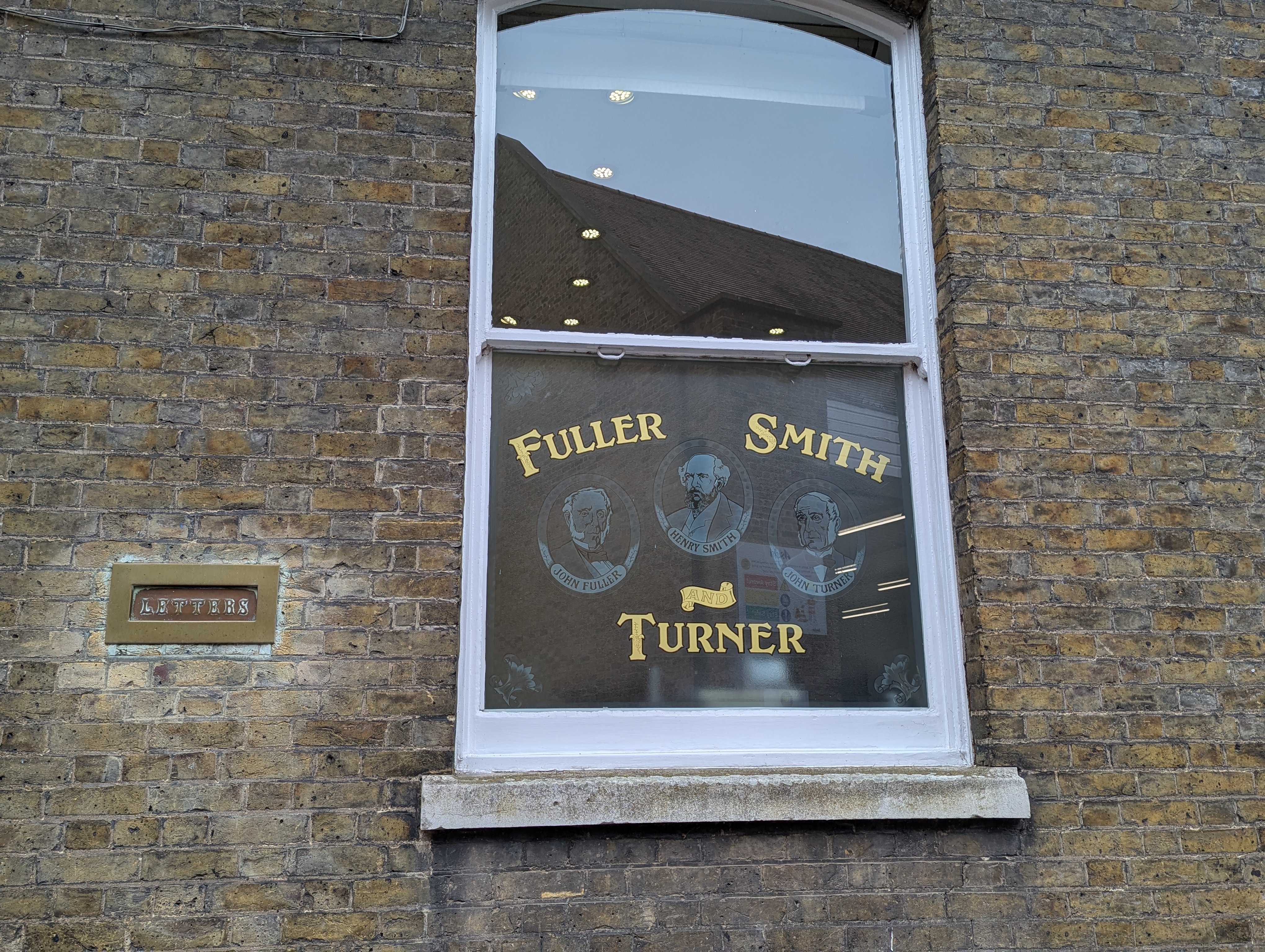
The Fuller’s brewery is in Chiswick and was formerly known as The Griffin brewery, lending to the griffin imagery that is associated with Fuller’s pubs. A brewery has been on site since the 1600s. John Fuller did not become involved in the brewery until the 1800s when the then-owners were in financial distress. His son, John Bird Fuller, was a founding father of the current iteration of the brewery, a joint operation with Henry Smith and John Turner, who had expertise in running breweries and brewing beer, respectively. Fuller, Smith & Turner was formed and has operated the brewery as of that partnership that started in the mid 1800s. The brewery currently operates as a subsidiary of the Japanese company Asahi since 2019. However, Fuller, Smith & Turner continue to own and operate the pubs we know as “Fuller’s pubs,” independently of the brewery.
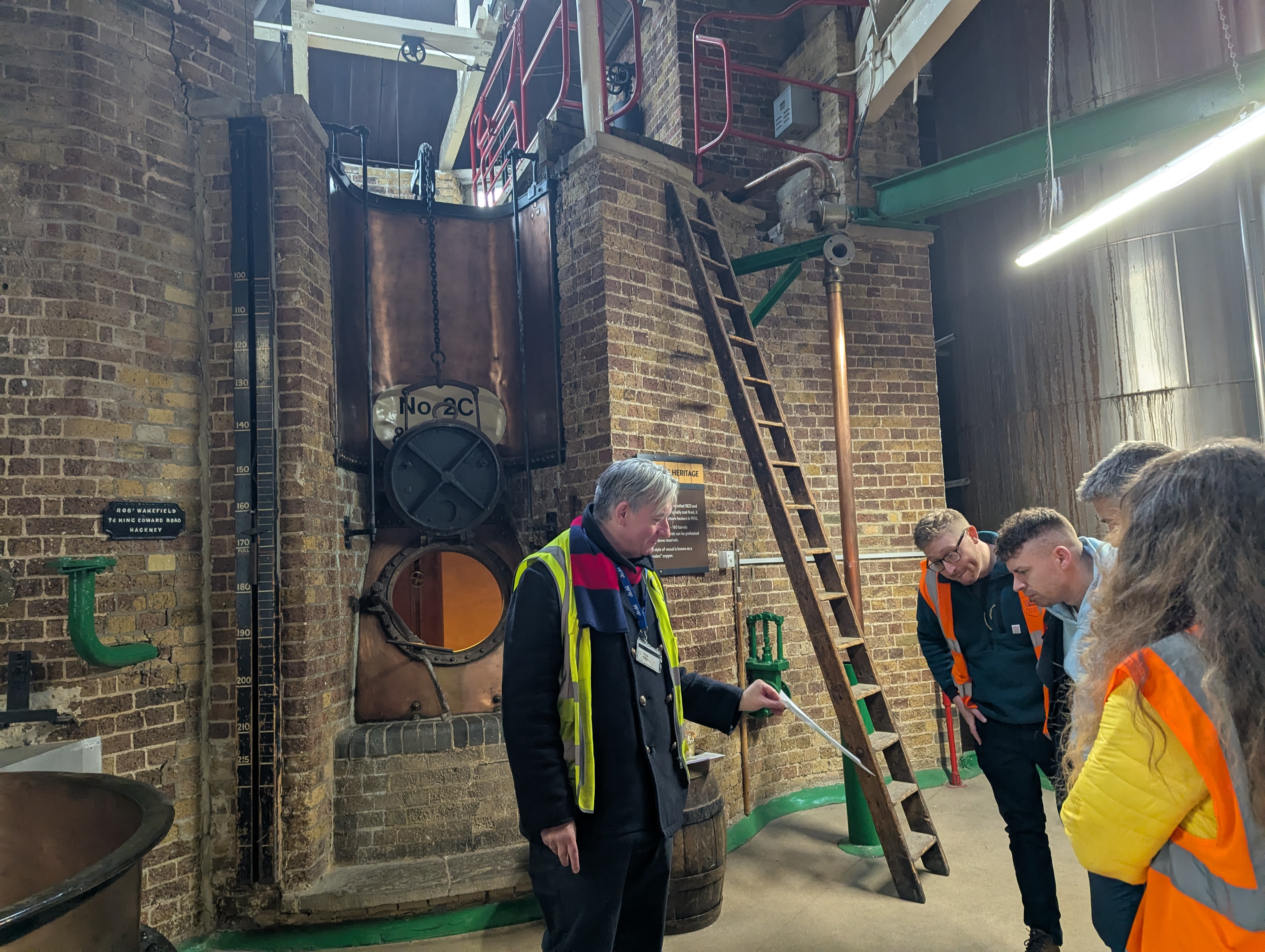
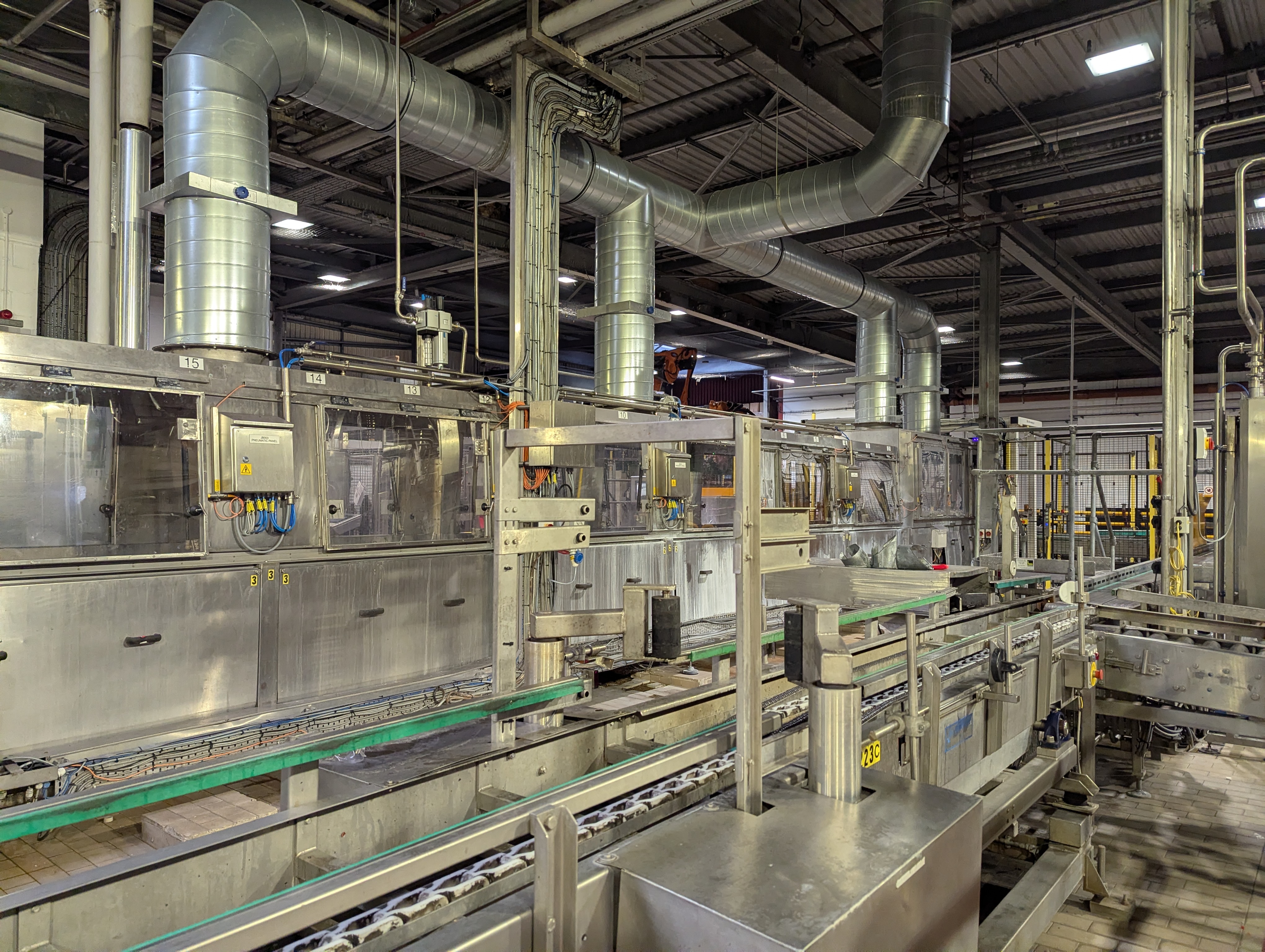
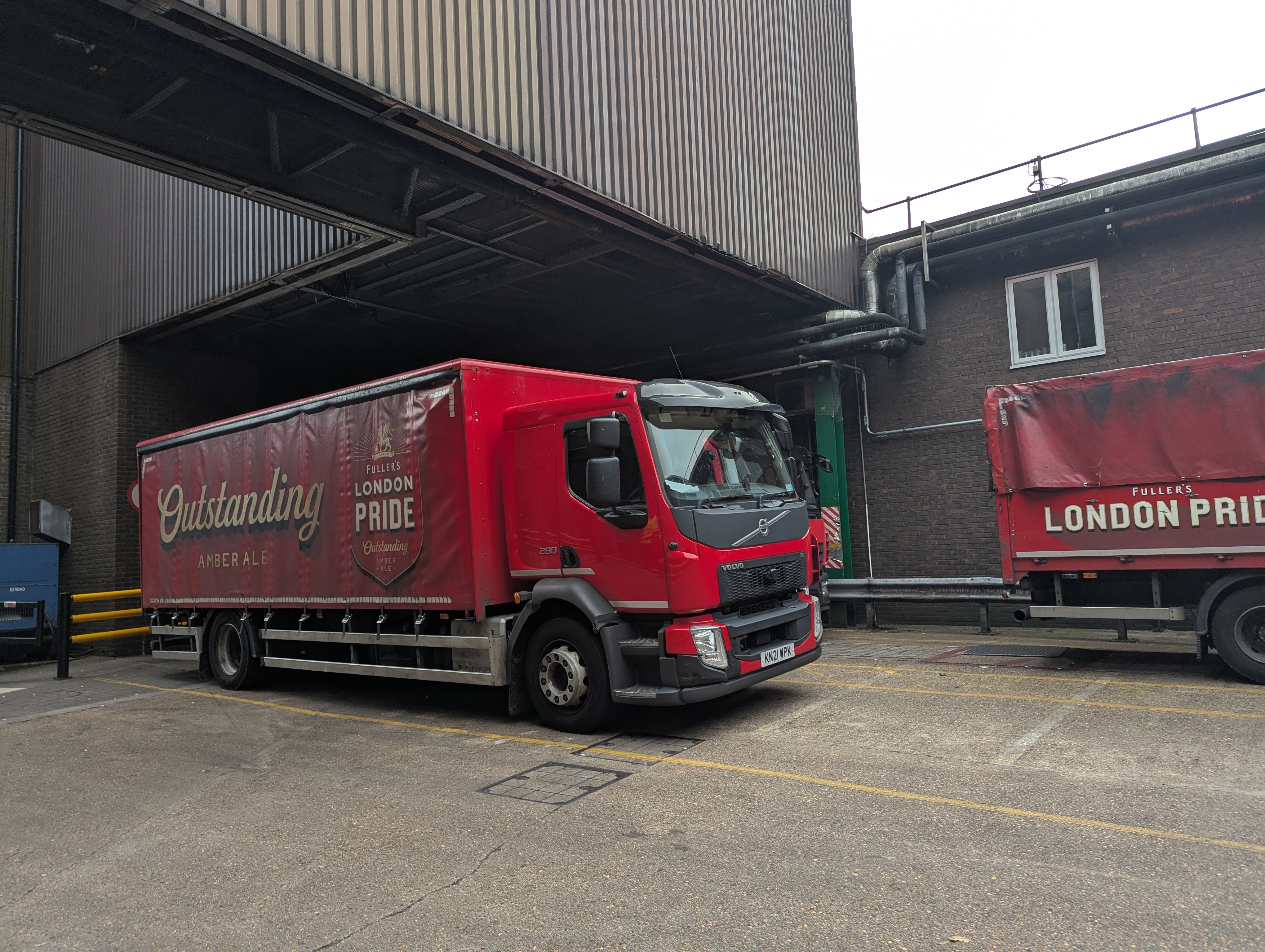
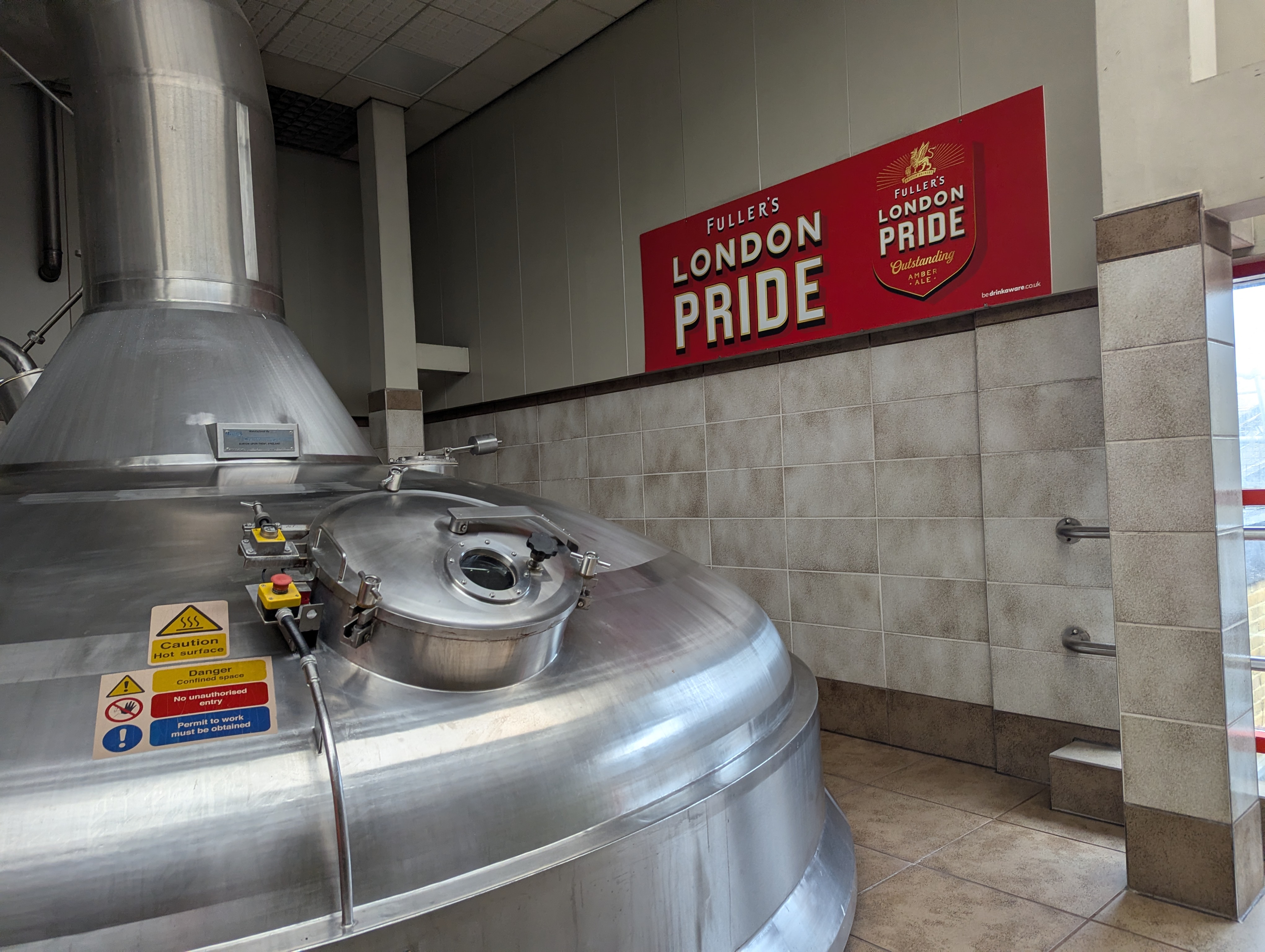
Our tour took place on a Sunday so equipment was not operating but we were given an education on how beer is made and how “ale” differs from “beer” (used to be no hops in ale but now there is no difference). We were shown how the ingredients of the beer are processed. For example, water from the Thames is treated with gypsum to improve the taste and appearance and barley is toasted and milled to produce flavoring of various beers. We saw giant vats where barley and water are combined and processed to produce mash and the stainless steel vessels (formerly copper) in which the results are boiled and enhanced with hops and yeast. We also learned about the difference between barrels and kegs. We saw where the beer is placed in barrels and left to ferment further and the trucks that transport Fuller’s beer all around Southern England.
The tour concludes with a tasting. Our tour had about 8 people in it and by the time we found ourself in the tasting room, my husband had befriended four of them already. We enjoyed sampling Fuller’s various products while chatting with our new acquaintances.
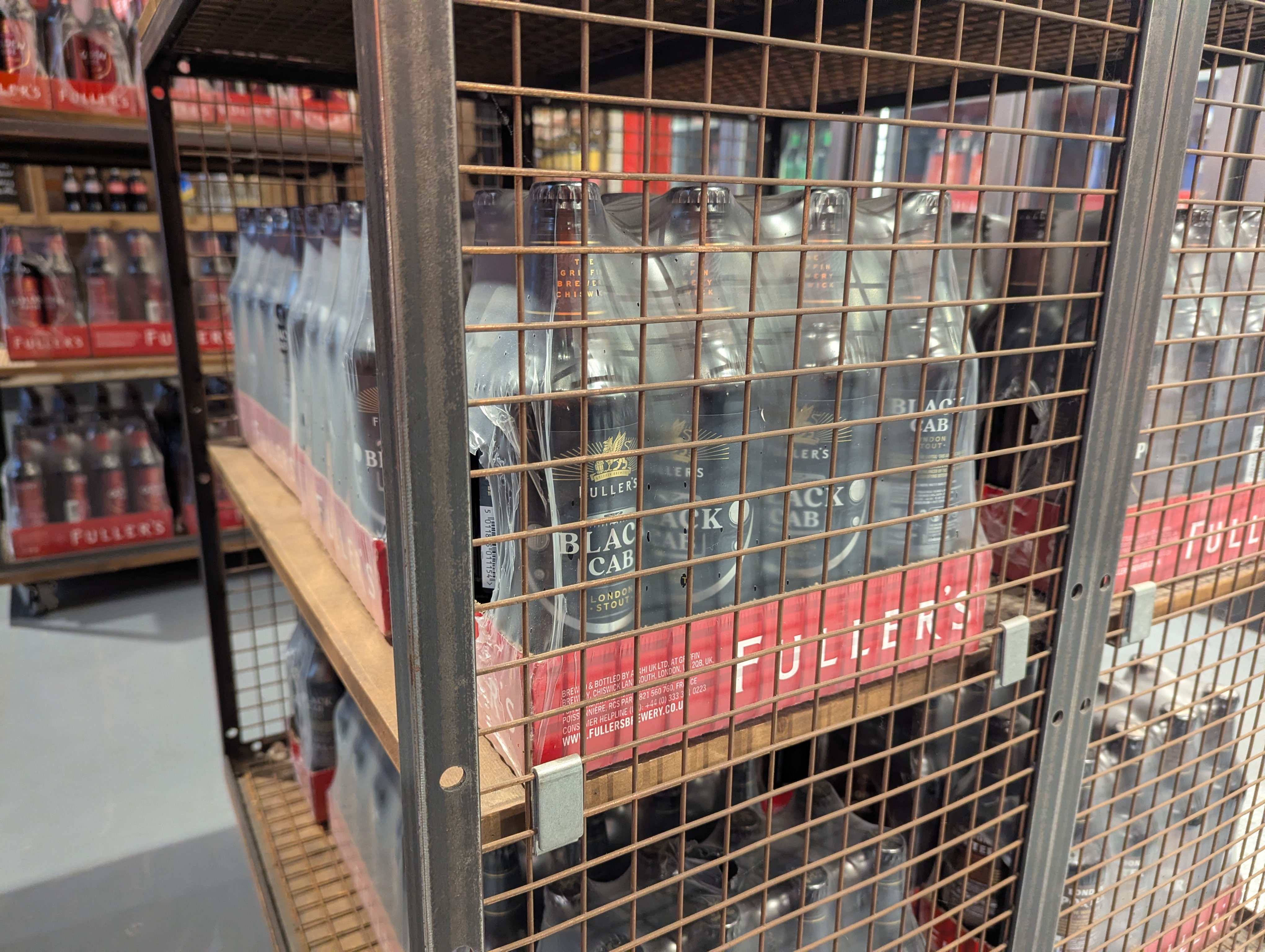
I hadn’t realized until the tour that Fuller’s has two dark brews normally available, London Porter and Black Cab Stout. That London Porter is going to give my Guinness habit a run for its money.
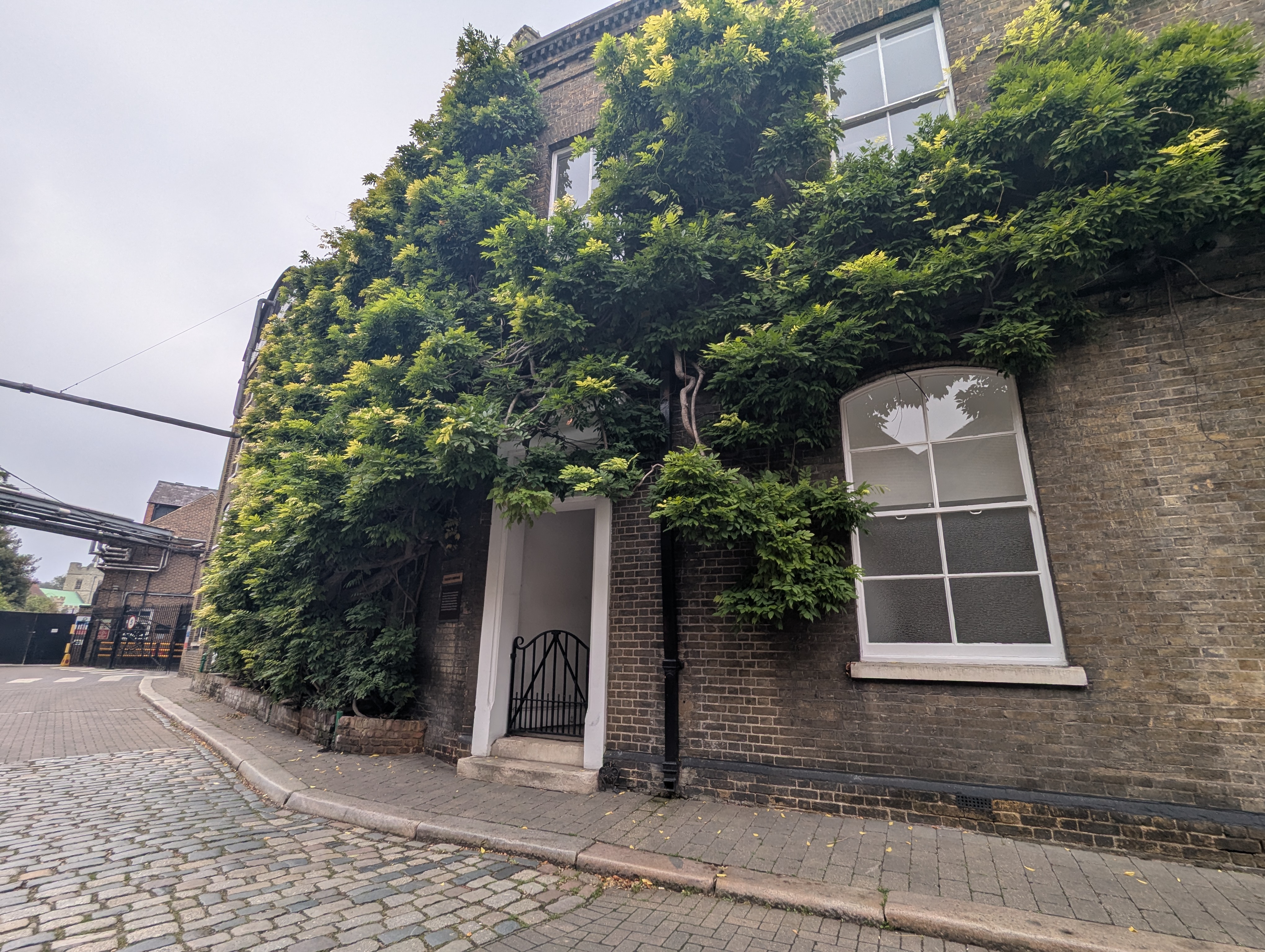
And as for the London Pride name. There is the obvious connotation, but the beer also shares a name with a perennial flower that grew out of bombing sites during WWII that came to be known as a symbol of resilience. We saw a little planter on site containing the plants, although not blooming in November, of course. (There was also an amazing, centuries old wisteria vine, supposedly the oldest in the UK, growing up the side of one of the buildings. It was not blooming but that must be beautiful in the summer.)
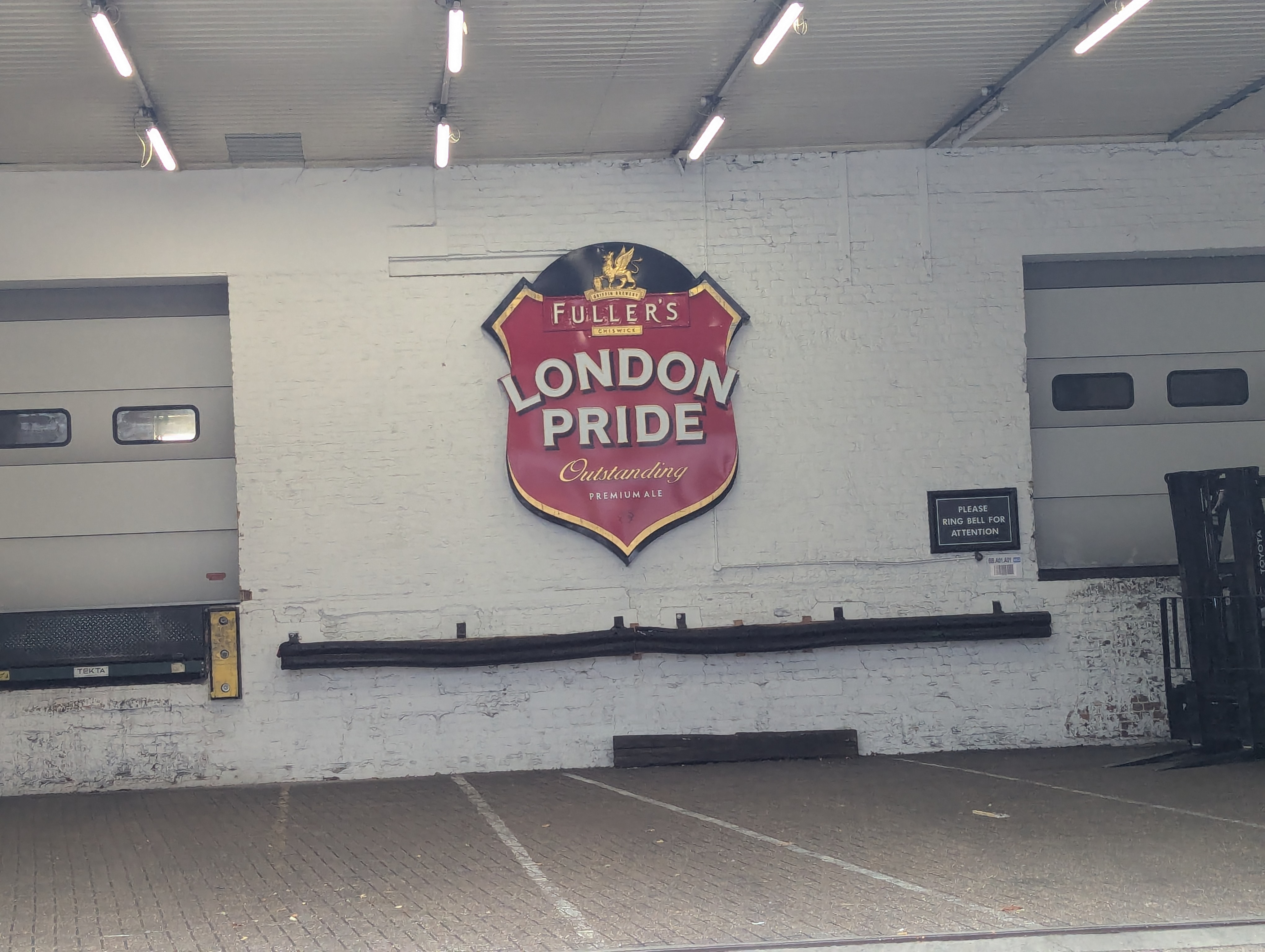
The title of my post comes from a 2013 London Pride ad campaign. Given the history of the brewery, how Fuller’s is made with water from the Thames, and how Fuller’s honors London’s history with the pubs it owns, it really seems like more than a slogan to say it’s “Made of London.”
I created a new page to track our progress through Fuller’s pubs, here, if you’d like to follow along. Many, many more to go!

